







 تكلم مع الذكاء الاصطناعي


Deck 25: The Keynesian Perspective
ملء الشاشة (f)

سؤال

سؤال
سؤال
سؤال
سؤال
سؤال
سؤال
سؤال
سؤال
سؤال
سؤال
سؤال
سؤال
سؤال
سؤال
سؤال
سؤال
سؤال
سؤال
سؤال
سؤال
سؤال
سؤال
سؤال
سؤال
سؤال
سؤال
سؤال
سؤال
سؤال
Figure 10-1 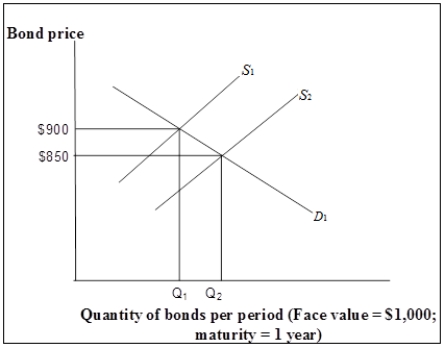
Refer to Figure 10-1. Given a face value of $1,000, a price of $900, and quantity of Q1, the interest rate on the bond is
A) 1.11%.
B) 10.0%.
C) 11.1%.
D) 17.6%.
Refer to Figure 10-1. Given a face value of $1,000, a price of $900, and quantity of Q1, the interest rate on the bond is
A) 1.11%.
B) 10.0%.
C) 11.1%.
D) 17.6%.
سؤال
سؤال
سؤال
Figure 10-1
Refer to Figure 10-1. A movement from S1 to S2, means there was
A) a decrease in borrowing.
B) an increase in borrowing.
C) a decrease in lending.
D) a decrease in the interest rate.
Refer to Figure 10-1. A movement from S1 to S2, means there was
A) a decrease in borrowing.
B) an increase in borrowing.
C) a decrease in lending.
D) a decrease in the interest rate.
سؤال
سؤال
سؤال
سؤال
Figure 10-1
Refer to Figure 10-1. Following the increase in supply from S1 to S2, at a price of $850, what is the interest rate?
A) 6.6%
B) 15%
C) 17.6%
D) 23.5%
Refer to Figure 10-1. Following the increase in supply from S1 to S2, at a price of $850, what is the interest rate?
A) 6.6%
B) 15%
C) 17.6%
D) 23.5%
سؤال
سؤال
سؤال
سؤال
سؤال
سؤال
سؤال
سؤال
Figure 10-2 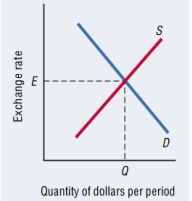
Refer to Figure 10-2. The demand for dollars curve slopes downwards because
A) a higher exchange rate tends to make U.S. goods and services more expensive for foreigners, thereby generating a lower quantity of dollars in the foreign exchange market.
B) a higher exchange rate tends to make U.S. goods and services cheaper for foreigners, thereby generating a lower quantity of dollars in the foreign exchange market.
C) a lower exchange rate tends to decrease U.S. exports, which raises the price of foreign currency in the foreign exchange market.
D) a lower exchange rate tends to increase U.S. imports, thereby raising the price of foreign currency in the foreign exchange market.
Refer to Figure 10-2. The demand for dollars curve slopes downwards because
A) a higher exchange rate tends to make U.S. goods and services more expensive for foreigners, thereby generating a lower quantity of dollars in the foreign exchange market.
B) a higher exchange rate tends to make U.S. goods and services cheaper for foreigners, thereby generating a lower quantity of dollars in the foreign exchange market.
C) a lower exchange rate tends to decrease U.S. exports, which raises the price of foreign currency in the foreign exchange market.
D) a lower exchange rate tends to increase U.S. imports, thereby raising the price of foreign currency in the foreign exchange market.
سؤال
سؤال
Figure 10-2
Refer to Figure 10-2. Who generates a demand for dollars in the foreign exchange market?
A) U.S. residents who demand foreign goods, services, and assets.
B) U.S. residents who demand domestically produced goods, services, and assets.
C) Foreign residents abroad who demand U.S. goods, services, and assets.
D) Foreign banks and citizens who wish to reduce their holdings of foreign currencies.
Refer to Figure 10-2. Who generates a demand for dollars in the foreign exchange market?
A) U.S. residents who demand foreign goods, services, and assets.
B) U.S. residents who demand domestically produced goods, services, and assets.
C) Foreign residents abroad who demand U.S. goods, services, and assets.
D) Foreign banks and citizens who wish to reduce their holdings of foreign currencies.
سؤال
Figure 10-2
Refer to Figure 10-2. Who generates a supply of dollars in the foreign exchange market?
A) U.S. residents who demand foreign goods, services, and assets.
B) U.S. residents and firms who wish to sell domestic assets to foreigners.
C) Foreign residents abroad who demand U.S. goods, services, and assets.
D) Foreign banks and citizens who wish to increase their holdings of a reserve currency.
Refer to Figure 10-2. Who generates a supply of dollars in the foreign exchange market?
A) U.S. residents who demand foreign goods, services, and assets.
B) U.S. residents and firms who wish to sell domestic assets to foreigners.
C) Foreign residents abroad who demand U.S. goods, services, and assets.
D) Foreign banks and citizens who wish to increase their holdings of a reserve currency.
سؤال
سؤال
سؤال
سؤال
سؤال
سؤال
سؤال
سؤال
سؤال
سؤال
Figure 10-2
Refer to Figure 10-2. The supply of dollars curve slopes upwards because
A) a higher exchange rate tends to make foreign goods and services more expensive for U.S. buyers, thereby raising the price of foreign currency in the foreign exchange market.
B) a higher exchange rate tends to make foreign goods and services cheaper to U.S. buyers, thereby generating a higher quantity of dollars in the foreign exchange market.
C) a lower exchange rate tends to decrease U.S. exports, thereby generating a lower quantity of dollars in the foreign exchange market.
D) a lower exchange rate tends to increase U.S. imports, thereby raising the price of foreign currency in the foreign exchange market.
Refer to Figure 10-2. The supply of dollars curve slopes upwards because
A) a higher exchange rate tends to make foreign goods and services more expensive for U.S. buyers, thereby raising the price of foreign currency in the foreign exchange market.
B) a higher exchange rate tends to make foreign goods and services cheaper to U.S. buyers, thereby generating a higher quantity of dollars in the foreign exchange market.
C) a lower exchange rate tends to decrease U.S. exports, thereby generating a lower quantity of dollars in the foreign exchange market.
D) a lower exchange rate tends to increase U.S. imports, thereby raising the price of foreign currency in the foreign exchange market.
سؤال
سؤال
سؤال
سؤال
سؤال
سؤال
سؤال
سؤال
سؤال
سؤال
سؤال
سؤال
سؤال
سؤال
سؤال
سؤال
سؤال
سؤال
سؤال
سؤال
سؤال
سؤال

فتح الحزمة
قم بالتسجيل لفتح البطاقات في هذه المجموعة!
Unlock Deck
Unlock Deck
1/175

العب

ملء الشاشة (f)
Deck 25: The Keynesian Perspective
1
All else constant, an increase in the supply of
A) increases the equilibrium quantity and the equilibrium price of bonds.
B) increases the equilibrium quantity and decreases the equilibrium price of bonds.
C) decreases the equilibrium quantity and increases the equilibrium price of bonds.
D) decreases the equilibrium quantity and the equilibrium price of bonds.
A) increases the equilibrium quantity and the equilibrium price of bonds.
B) increases the equilibrium quantity and decreases the equilibrium price of bonds.
C) decreases the equilibrium quantity and increases the equilibrium price of bonds.
D) decreases the equilibrium quantity and the equilibrium price of bonds.
increases the equilibrium quantity and decreases the equilibrium price of bonds.
2
Which of the following statements is true about bonds?
A) Sellers of newly issued bonds are borrowers.
B) When the government and large corporations want to borrow money they buy bonds.
C) A bond owner must hold a bond until it matures.
D) The interest rate on a bond is directly related to its price.
A) Sellers of newly issued bonds are borrowers.
B) When the government and large corporations want to borrow money they buy bonds.
C) A bond owner must hold a bond until it matures.
D) The interest rate on a bond is directly related to its price.
Sellers of newly issued bonds are borrowers.
3
The face value of a bond is
A) the price an individual pays to purchase the bond.
B) the amount that the issuer will have to pay upon maturity.
C) the market value of the bond.
D) the rate of return on the bond.
A) the price an individual pays to purchase the bond.
B) the amount that the issuer will have to pay upon maturity.
C) the market value of the bond.
D) the rate of return on the bond.
the amount that the issuer will have to pay upon maturity.
4
A buyer of a newly-issued bond
A) is a borrower of funds.
B) is a lender of funds.
C) is purchasing ownership in the institution that issues the bonds.
D) must be a producer and not a consumer.
A) is a borrower of funds.
B) is a lender of funds.
C) is purchasing ownership in the institution that issues the bonds.
D) must be a producer and not a consumer.
فتح الحزمة
افتح القفل للوصول البطاقات البالغ عددها 175 في هذه المجموعة.
فتح الحزمة
k this deck
5
A $100 bond, which matures in one year, has a price of $75. The interest rate on this bond is
A) 20%.
B) 25%.
C) 33 1/3%.
D) 50%.
A) 20%.
B) 25%.
C) 33 1/3%.
D) 50%.
فتح الحزمة
افتح القفل للوصول البطاقات البالغ عددها 175 في هذه المجموعة.
فتح الحزمة
k this deck
6
A $1,000 bond, which matures in one year, has a price of $925. The interest rate on this bond is
A) 7.5%.
B) 8.11%.
C) 9.25%.
D) 9.20%.
A) 7.5%.
B) 8.11%.
C) 9.25%.
D) 9.20%.
فتح الحزمة
افتح القفل للوصول البطاقات البالغ عددها 175 في هذه المجموعة.
فتح الحزمة
k this deck
7
The price of a bond is determined by
A) the seller.
B) the buyer.
C) the demand for and supply of bonds.
D) the investment bank that auctions off the bonds.
A) the seller.
B) the buyer.
C) the demand for and supply of bonds.
D) the investment bank that auctions off the bonds.
فتح الحزمة
افتح القفل للوصول البطاقات البالغ عددها 175 في هذه المجموعة.
فتح الحزمة
k this deck
8
The interest rate on a bond is
A) inversely related to its price.
B) directly related to its price.
C) determined by its face value.
D) determined by the time to maturity.
A) inversely related to its price.
B) directly related to its price.
C) determined by its face value.
D) determined by the time to maturity.
فتح الحزمة
افتح القفل للوصول البطاقات البالغ عددها 175 في هذه المجموعة.
فتح الحزمة
k this deck
9
Financial markets are
A) markets where money is traded between the Fed and economic agents.
B) markets where funds accumulated by one group are made available to another group.
C) banks interact to lend and borrow reserves.
D) the market where capital goods are traded.
A) markets where money is traded between the Fed and economic agents.
B) markets where funds accumulated by one group are made available to another group.
C) banks interact to lend and borrow reserves.
D) the market where capital goods are traded.
فتح الحزمة
افتح القفل للوصول البطاقات البالغ عددها 175 في هذه المجموعة.
فتح الحزمة
k this deck
10
Since the late 1970s, the United States
A) has experienced only moderate inflation, usually between 2 to 3 percent.
B) has seen a steadily increasing rate of inflation.
C) has experienced low inflation, except for a seven-year period between 1979 and 1986.
D) has experienced high inflation followed by a long period of deflation.
A) has experienced only moderate inflation, usually between 2 to 3 percent.
B) has seen a steadily increasing rate of inflation.
C) has experienced low inflation, except for a seven-year period between 1979 and 1986.
D) has experienced high inflation followed by a long period of deflation.
فتح الحزمة
افتح القفل للوصول البطاقات البالغ عددها 175 في هذه المجموعة.
فتح الحزمة
k this deck
11
Which of the following statements is true about bonds?
A) Buyers of newly issued bonds are borrowers.
B) When the government and large corporations want to borrow money they buy bonds.
C) A bond owner must hold a bond until it matures.
D) The interest rate on a bond is inversely related to its price.
A) Buyers of newly issued bonds are borrowers.
B) When the government and large corporations want to borrow money they buy bonds.
C) A bond owner must hold a bond until it matures.
D) The interest rate on a bond is inversely related to its price.
فتح الحزمة
افتح القفل للوصول البطاقات البالغ عددها 175 في هذه المجموعة.
فتح الحزمة
k this deck
12
Suppose you buy a bond with a face value of $1,000 for $800. What is the interest rate you receive on the bond?
A) 0.8%
B) 1.25%
C) 20%
D) 25%
A) 0.8%
B) 1.25%
C) 20%
D) 25%
فتح الحزمة
افتح القفل للوصول البطاقات البالغ عددها 175 في هذه المجموعة.
فتح الحزمة
k this deck
13
Which of the following statements is true?
A) The lower the price of a bond, relative to its face value, the lower the interest rate.
B) The lower the price of a bond, relative to its maturity, the lower the interest rate.
C) The higher the price of a bond, relative to its face value, the higher the interest rate.
D) The lower the price of a bond, relative to its face value, the higher the interest rate.
A) The lower the price of a bond, relative to its face value, the lower the interest rate.
B) The lower the price of a bond, relative to its maturity, the lower the interest rate.
C) The higher the price of a bond, relative to its face value, the higher the interest rate.
D) The lower the price of a bond, relative to its face value, the higher the interest rate.
فتح الحزمة
افتح القفل للوصول البطاقات البالغ عددها 175 في هذه المجموعة.
فتح الحزمة
k this deck
14
Which of the following is true with regard to bonds?
A) As the price of a bond falls, the interest rates rises.
B) As the price of a bond rises, the interest rates rises.
C) As the price of a bond falls, the interest rates remains unchanged.
D) As the price of a bond falls, the interest rates falls.
A) As the price of a bond falls, the interest rates rises.
B) As the price of a bond rises, the interest rates rises.
C) As the price of a bond falls, the interest rates remains unchanged.
D) As the price of a bond falls, the interest rates falls.
فتح الحزمة
افتح القفل للوصول البطاقات البالغ عددها 175 في هذه المجموعة.
فتح الحزمة
k this deck
15
The demand for bonds curve slopes downwards because
A) at higher prices, bonds pay higher interest which makes them more attractive to buyers.
B) lower prices reduce the cost of borrowing which makes them less attractive to buyers.
C) at lower prices, bonds pay higher interest which makes them more attractive to buyers.
D) higher prices raise the cost of borrowing which makes them less attractive to buyers.
A) at higher prices, bonds pay higher interest which makes them more attractive to buyers.
B) lower prices reduce the cost of borrowing which makes them less attractive to buyers.
C) at lower prices, bonds pay higher interest which makes them more attractive to buyers.
D) higher prices raise the cost of borrowing which makes them less attractive to buyers.
فتح الحزمة
افتح القفل للوصول البطاقات البالغ عددها 175 في هذه المجموعة.
فتح الحزمة
k this deck
16
Suppose you sell a $1,000 bond that matures in 1 year for $950. Calculate the interest rate you will have to pay on this bond.
A) 0.95%
B) 5.0%
C) 5.3%
D) 95%
A) 0.95%
B) 5.0%
C) 5.3%
D) 95%
فتح الحزمة
افتح القفل للوصول البطاقات البالغ عددها 175 في هذه المجموعة.
فتح الحزمة
k this deck
17
The interest rate on a bond is
A) the difference between the face value and the bond price, expressed as a percentage of the face value.
B) the difference between the face value and the bond price, expressed as a percentage of the bond price.
C) the ratio of the face value and the bond price, expressed as a percentage.
D) the difference between the face value and the yield, expressed as a percentage of the bond price.
A) the difference between the face value and the bond price, expressed as a percentage of the face value.
B) the difference between the face value and the bond price, expressed as a percentage of the bond price.
C) the ratio of the face value and the bond price, expressed as a percentage.
D) the difference between the face value and the yield, expressed as a percentage of the bond price.
فتح الحزمة
افتح القفل للوصول البطاقات البالغ عددها 175 في هذه المجموعة.
فتح الحزمة
k this deck
18
All else constant, an increase in the demand for bonds
A) increases the equilibrium quantity and the equilibrium price of bonds.
B) increases the equilibrium quantity and decreases the equilibrium price of bonds.
C) decreases the equilibrium quantity and increases the equilibrium price of bonds.
D) decreases the equilibrium quantity and the equilibrium price of bonds.
A) increases the equilibrium quantity and the equilibrium price of bonds.
B) increases the equilibrium quantity and decreases the equilibrium price of bonds.
C) decreases the equilibrium quantity and increases the equilibrium price of bonds.
D) decreases the equilibrium quantity and the equilibrium price of bonds.
فتح الحزمة
افتح القفل للوصول البطاقات البالغ عددها 175 في هذه المجموعة.
فتح الحزمة
k this deck
19
The supply of bonds curve slopes upwards because
A) at higher prices, bonds pay higher interest which makes them more attractive to suppliers.
B) lower prices raises the cost of borrowing which makes them less attractive to suppliers.
C) at lower prices, bonds pay higher interest which makes them more attractive to suppliers.
D) higher prices raise the cost of borrowing which makes them less attractive to suppliers.
A) at higher prices, bonds pay higher interest which makes them more attractive to suppliers.
B) lower prices raises the cost of borrowing which makes them less attractive to suppliers.
C) at lower prices, bonds pay higher interest which makes them more attractive to suppliers.
D) higher prices raise the cost of borrowing which makes them less attractive to suppliers.
فتح الحزمة
افتح القفل للوصول البطاقات البالغ عددها 175 في هذه المجموعة.
فتح الحزمة
k this deck
20
A bond is
A) a debt instrument, that is, the issuer has taken out a loan.
B) an equity instrument, that is, the buyer has purchased ownership in the issuer's firm.
C) the same thing as a stock.
D) a short-term loan from the government.
A) a debt instrument, that is, the issuer has taken out a loan.
B) an equity instrument, that is, the buyer has purchased ownership in the issuer's firm.
C) the same thing as a stock.
D) a short-term loan from the government.
فتح الحزمة
افتح القفل للوصول البطاقات البالغ عددها 175 في هذه المجموعة.
فتح الحزمة
k this deck
21
Suppose the United States experiences a rise in the U.S. dollar price of foreign exchange.
A) This means that the U.S. exchange rate has risen and the U.S. dollar buys more foreign currency.
B) This means that the U.S. exchange rate has risen and the U.S. dollar buys less foreign currency.
C) This means that the U.S. exchange rate has fallen and the U.S. dollar buys more foreign currency.
D) This means that the U.S. exchange rate has fallen and the U.S. dollar buys less foreign currency.
A) This means that the U.S. exchange rate has risen and the U.S. dollar buys more foreign currency.
B) This means that the U.S. exchange rate has risen and the U.S. dollar buys less foreign currency.
C) This means that the U.S. exchange rate has fallen and the U.S. dollar buys more foreign currency.
D) This means that the U.S. exchange rate has fallen and the U.S. dollar buys less foreign currency.
فتح الحزمة
افتح القفل للوصول البطاقات البالغ عددها 175 في هذه المجموعة.
فتح الحزمة
k this deck
22
Currency rates of exchange are determined by
A) agreements among governments.
B) the nations with the strongest armies.
C) the demand and supply of the currency.
D) multilateral business agreements.
A) agreements among governments.
B) the nations with the strongest armies.
C) the demand and supply of the currency.
D) multilateral business agreements.
فتح الحزمة
افتح القفل للوصول البطاقات البالغ عددها 175 في هذه المجموعة.
فتح الحزمة
k this deck
23
Which of the following events is likely to generate a supply of U.S. dollars in the foreign exchange market?
A) A Saudi Arabian citizen buys a condominium in New York.
B) An American student will pay her way to attend her first year of college at Oxford, England.
C) Alabama Mills exports 5,000 bales of cotton to Pakistan.
D) Hans Meyer, a German citizen, plans to spend a month in California, sampling wines.
A) A Saudi Arabian citizen buys a condominium in New York.
B) An American student will pay her way to attend her first year of college at Oxford, England.
C) Alabama Mills exports 5,000 bales of cotton to Pakistan.
D) Hans Meyer, a German citizen, plans to spend a month in California, sampling wines.
فتح الحزمة
افتح القفل للوصول البطاقات البالغ عددها 175 في هذه المجموعة.
فتح الحزمة
k this deck
24
An increase in the supply of bonds
A) raises the interest rate and increases equilibrium quantity of bonds.
B) raises the interest rate and decreases equilibrium quantity of bonds.
C) lowers the interest rate and decreases equilibrium quantity of bonds.
D) lowers the interest rate and increases equilibrium quantity of bonds.
A) raises the interest rate and increases equilibrium quantity of bonds.
B) raises the interest rate and decreases equilibrium quantity of bonds.
C) lowers the interest rate and decreases equilibrium quantity of bonds.
D) lowers the interest rate and increases equilibrium quantity of bonds.
فتح الحزمة
افتح القفل للوصول البطاقات البالغ عددها 175 في هذه المجموعة.
فتح الحزمة
k this deck
25
Suppose the government issues bonds to finance an increase in government spending. In the bond market,
A) the demand curve shifts right, leading to an increase in bond prices, and a decrease in interest rates.
B) the supply curve shifts right, leading to a decrease in bond prices, and an increase in interest rates.
C) the demand curve shifts left, leading to a decrease in bond prices, and an increase in interest rates.
D) the supply curve shifts left, leading to an increase in bond prices, and an increase in interest rates.
A) the demand curve shifts right, leading to an increase in bond prices, and a decrease in interest rates.
B) the supply curve shifts right, leading to a decrease in bond prices, and an increase in interest rates.
C) the demand curve shifts left, leading to a decrease in bond prices, and an increase in interest rates.
D) the supply curve shifts left, leading to an increase in bond prices, and an increase in interest rates.
فتح الحزمة
افتح القفل للوصول البطاقات البالغ عددها 175 في هذه المجموعة.
فتح الحزمة
k this deck
26
The foreign exchange market
A) is a government-run market where foreign currencies are traded.
B) is a bank-owned market through which people buy and sell currencies.
C) refers to the entire array of institutions through which people buy and sell currencies.
D) an open market run by the Federal Reserve through which banks buy and sell currencies.
A) is a government-run market where foreign currencies are traded.
B) is a bank-owned market through which people buy and sell currencies.
C) refers to the entire array of institutions through which people buy and sell currencies.
D) an open market run by the Federal Reserve through which banks buy and sell currencies.
فتح الحزمة
افتح القفل للوصول البطاقات البالغ عددها 175 في هذه المجموعة.
فتح الحزمة
k this deck
27
A higher exchange rate for the U.S. dollar means that
A) the U.S. dollar trades for less foreign currency.
B) the U.S. dollar trades for more foreign currency.
C) foreign currency has risen in value relative to the dollar.
D) the U.S. dollar has fallen in value relative to the foreign currency.
A) the U.S. dollar trades for less foreign currency.
B) the U.S. dollar trades for more foreign currency.
C) foreign currency has risen in value relative to the dollar.
D) the U.S. dollar has fallen in value relative to the foreign currency.
فتح الحزمة
افتح القفل للوصول البطاقات البالغ عددها 175 في هذه المجموعة.
فتح الحزمة
k this deck
28
If bond prices rise,
A) interest rates rise, which in turn, discourage investment.
B) interest rates fall, which in turn, discourage investment.
C) interest rates rise, which in turn, stimulate investment.
D) interest rates fall, which in turn, stimulate investment.
A) interest rates rise, which in turn, discourage investment.
B) interest rates fall, which in turn, discourage investment.
C) interest rates rise, which in turn, stimulate investment.
D) interest rates fall, which in turn, stimulate investment.
فتح الحزمة
افتح القفل للوصول البطاقات البالغ عددها 175 في هذه المجموعة.
فتح الحزمة
k this deck
29
Which of the following statements is true? All other things unchanged,
A) when bond prices rise, real GDP and the price level rise.
B) when bond prices fall, real GDP rises and the price level falls.
C) when bond prices rise, the interest rate rises, and aggregate demand and the price level fall.
D) when bond prices fall, the interest rate and aggregate demand fall.
A) when bond prices rise, real GDP and the price level rise.
B) when bond prices fall, real GDP rises and the price level falls.
C) when bond prices rise, the interest rate rises, and aggregate demand and the price level fall.
D) when bond prices fall, the interest rate and aggregate demand fall.
فتح الحزمة
افتح القفل للوصول البطاقات البالغ عددها 175 في هذه المجموعة.
فتح الحزمة
k this deck
30
Figure 10-1
Refer to Figure 10-1. Given a face value of $1,000, a price of $900, and quantity of Q1, the interest rate on the bond is
A) 1.11%.
B) 10.0%.
C) 11.1%.
D) 17.6%.
Refer to Figure 10-1. Given a face value of $1,000, a price of $900, and quantity of Q1, the interest rate on the bond is
A) 1.11%.
B) 10.0%.
C) 11.1%.
D) 17.6%.
فتح الحزمة
افتح القفل للوصول البطاقات البالغ عددها 175 في هذه المجموعة.
فتح الحزمة
k this deck
31
Which of the following is an index of exchange rates?
A) import-export ratio
B) trade-weighted exchange rate
C) trade balance index
D) foreign price-domestic price ratio
A) import-export ratio
B) trade-weighted exchange rate
C) trade balance index
D) foreign price-domestic price ratio
فتح الحزمة
افتح القفل للوصول البطاقات البالغ عددها 175 في هذه المجموعة.
فتح الحزمة
k this deck
32
A country's exchange rate is the
A) price of its currency in terms of another currency.
B) ratio of imports to exports.
C) ratio of exports to imports.
D) ratio of net exports to real GDP.
A) price of its currency in terms of another currency.
B) ratio of imports to exports.
C) ratio of exports to imports.
D) ratio of net exports to real GDP.
فتح الحزمة
افتح القفل للوصول البطاقات البالغ عددها 175 في هذه المجموعة.
فتح الحزمة
k this deck
33
Figure 10-1
Refer to Figure 10-1. A movement from S1 to S2, means there was
A) a decrease in borrowing.
B) an increase in borrowing.
C) a decrease in lending.
D) a decrease in the interest rate.
Refer to Figure 10-1. A movement from S1 to S2, means there was
A) a decrease in borrowing.
B) an increase in borrowing.
C) a decrease in lending.
D) a decrease in the interest rate.
فتح الحزمة
افتح القفل للوصول البطاقات البالغ عددها 175 في هذه المجموعة.
فتح الحزمة
k this deck
34
An increase in the demand for bonds leads to
A) a decrease in the price of bonds, a decrease in the interest rate, and a decrease in aggregate demand.
B) an increase in the price of bonds, an increase in the interest rate, and an increase in aggregate demand.
C) an increase in the price of bonds, a decrease in the interest rate, and an increase in aggregate demand.
D) a decrease in the price of bonds, an increase in the interest rate, and an increase in aggregate demand.
A) a decrease in the price of bonds, a decrease in the interest rate, and a decrease in aggregate demand.
B) an increase in the price of bonds, an increase in the interest rate, and an increase in aggregate demand.
C) an increase in the price of bonds, a decrease in the interest rate, and an increase in aggregate demand.
D) a decrease in the price of bonds, an increase in the interest rate, and an increase in aggregate demand.
فتح الحزمة
افتح القفل للوصول البطاقات البالغ عددها 175 في هذه المجموعة.
فتح الحزمة
k this deck
35
If a British student pays her way to attend Harvard University, her action will:
A) cause the exchange rate of the British pound to rise.
B) cause the exchange rate of the U.S. dollar to fall.
C) change the supply of dollars in the foreign currency market.
D) change the supply of pounds in the foreign currency market.
A) cause the exchange rate of the British pound to rise.
B) cause the exchange rate of the U.S. dollar to fall.
C) change the supply of dollars in the foreign currency market.
D) change the supply of pounds in the foreign currency market.
فتح الحزمة
افتح القفل للوصول البطاقات البالغ عددها 175 في هذه المجموعة.
فتح الحزمة
k this deck
36
An increase in the supply of bonds leads to
A) an increase in the price of bonds, a decrease in the interest rate, and an increase in aggregate demand.
B) an increase in the price of bonds, an increase in the interest rate, and an increase in aggregate demand.
C) a decrease in the price of bonds, an increase in the interest rate, and an increase in aggregate demand.
D) a decrease in the price of bonds, an increase in the interest rate, and a decrease in aggregate demand.
A) an increase in the price of bonds, a decrease in the interest rate, and an increase in aggregate demand.
B) an increase in the price of bonds, an increase in the interest rate, and an increase in aggregate demand.
C) a decrease in the price of bonds, an increase in the interest rate, and an increase in aggregate demand.
D) a decrease in the price of bonds, an increase in the interest rate, and a decrease in aggregate demand.
فتح الحزمة
افتح القفل للوصول البطاقات البالغ عددها 175 في هذه المجموعة.
فتح الحزمة
k this deck
37
Figure 10-1
Refer to Figure 10-1. Following the increase in supply from S1 to S2, at a price of $850, what is the interest rate?
A) 6.6%
B) 15%
C) 17.6%
D) 23.5%
Refer to Figure 10-1. Following the increase in supply from S1 to S2, at a price of $850, what is the interest rate?
A) 6.6%
B) 15%
C) 17.6%
D) 23.5%
فتح الحزمة
افتح القفل للوصول البطاقات البالغ عددها 175 في هذه المجموعة.
فتح الحزمة
k this deck
38
Which of the following events is likely to generate a demand for U.S. dollars in the foreign exchange market?
A) A Saudi Arabian citizen buys a condominium in New York.
B) An American student will begin her first year of college at Oxford, England.
C) Wal-Mart imports 5,000 bicycles from China to sell in its stores.
D) The Illinois Chamber of Commerce will finance and lead a trade mission to India.
A) A Saudi Arabian citizen buys a condominium in New York.
B) An American student will begin her first year of college at Oxford, England.
C) Wal-Mart imports 5,000 bicycles from China to sell in its stores.
D) The Illinois Chamber of Commerce will finance and lead a trade mission to India.
فتح الحزمة
افتح القفل للوصول البطاقات البالغ عددها 175 في هذه المجموعة.
فتح الحزمة
k this deck
39
An increase in the demand for bonds
A) raises the interest rate and increases equilibrium quantity of bonds.
B) raises the interest rate and decreases equilibrium quantity of bonds.
C) lowers the interest rate and decreases equilibrium quantity of bonds.
D) lowers the interest rate and increases equilibrium quantity of bonds.
A) raises the interest rate and increases equilibrium quantity of bonds.
B) raises the interest rate and decreases equilibrium quantity of bonds.
C) lowers the interest rate and decreases equilibrium quantity of bonds.
D) lowers the interest rate and increases equilibrium quantity of bonds.
فتح الحزمة
افتح القفل للوصول البطاقات البالغ عددها 175 في هذه المجموعة.
فتح الحزمة
k this deck
40
If bond prices fall,
A) interest rates rise, which in turn, discourage investment.
B) interest rates fall, which in turn, discourage investment.
C) interest rates rise, which in turn, stimulate investment.
D) interest rates fall, which in turn, stimulate investment.
A) interest rates rise, which in turn, discourage investment.
B) interest rates fall, which in turn, discourage investment.
C) interest rates rise, which in turn, stimulate investment.
D) interest rates fall, which in turn, stimulate investment.
فتح الحزمة
افتح القفل للوصول البطاقات البالغ عددها 175 في هذه المجموعة.
فتح الحزمة
k this deck
41
Holding everything else unchanged, higher interest rates in foreign countries relative to U.S. interest rates
A) increase the demand and reduce the supply of dollars leading to an increase in the exchange rate.
B) decrease the demand and the supply of dollars leading to an decrease in the exchange rate.
C) increase the demand and the supply of dollars leading to an increase in the exchange rate.
D) decrease the demand and increase the supply of dollars leading to a decrease in the exchange rate.
A) increase the demand and reduce the supply of dollars leading to an increase in the exchange rate.
B) decrease the demand and the supply of dollars leading to an decrease in the exchange rate.
C) increase the demand and the supply of dollars leading to an increase in the exchange rate.
D) decrease the demand and increase the supply of dollars leading to a decrease in the exchange rate.
فتح الحزمة
افتح القفل للوصول البطاقات البالغ عددها 175 في هذه المجموعة.
فتح الحزمة
k this deck
42
A higher U.S. exchange rate means that
A) foreign products are now more expensive to U.S. citizens.
B) foreign products are now cheaper to U.S. citizens.
C) U.S. products are now more expensive to U.S. citizens.
D) U.S. products are now cheaper to foreign countries.
A) foreign products are now more expensive to U.S. citizens.
B) foreign products are now cheaper to U.S. citizens.
C) U.S. products are now more expensive to U.S. citizens.
D) U.S. products are now cheaper to foreign countries.
فتح الحزمة
افتح القفل للوصول البطاقات البالغ عددها 175 في هذه المجموعة.
فتح الحزمة
k this deck
43
If the demand for U. S. dollars goes down, the exchange rate will .
A) increase and, as a result, net exports in the United States will decrease.
B) decrease and, as a result, net exports in the United States will increase
C) increase and, as a result, net exports in the United States will increase
D) decrease and, as a result, net exports in the United States will decrease
A) increase and, as a result, net exports in the United States will decrease.
B) decrease and, as a result, net exports in the United States will increase
C) increase and, as a result, net exports in the United States will increase
D) decrease and, as a result, net exports in the United States will decrease
فتح الحزمة
افتح القفل للوصول البطاقات البالغ عددها 175 في هذه المجموعة.
فتح الحزمة
k this deck
44
Suppose the U.S. dollar price of the Euro falls. This means that
A) the U.S. exchange rate has risen and the U.S. dollar buys more euros.
B) the U.S. exchange rate has risen and the U.S. dollar buys less euros
C) the U.S. exchange rate has fallen and the U.S. dollar buys more euros.
D) the U.S. exchange rate has fallen and the U.S. dollar buys less euros.
A) the U.S. exchange rate has risen and the U.S. dollar buys more euros.
B) the U.S. exchange rate has risen and the U.S. dollar buys less euros
C) the U.S. exchange rate has fallen and the U.S. dollar buys more euros.
D) the U.S. exchange rate has fallen and the U.S. dollar buys less euros.
فتح الحزمة
افتح القفل للوصول البطاقات البالغ عددها 175 في هذه المجموعة.
فتح الحزمة
k this deck
45
Figure 10-2
Refer to Figure 10-2. The demand for dollars curve slopes downwards because
A) a higher exchange rate tends to make U.S. goods and services more expensive for foreigners, thereby generating a lower quantity of dollars in the foreign exchange market.
B) a higher exchange rate tends to make U.S. goods and services cheaper for foreigners, thereby generating a lower quantity of dollars in the foreign exchange market.
C) a lower exchange rate tends to decrease U.S. exports, which raises the price of foreign currency in the foreign exchange market.
D) a lower exchange rate tends to increase U.S. imports, thereby raising the price of foreign currency in the foreign exchange market.
Refer to Figure 10-2. The demand for dollars curve slopes downwards because
A) a higher exchange rate tends to make U.S. goods and services more expensive for foreigners, thereby generating a lower quantity of dollars in the foreign exchange market.
B) a higher exchange rate tends to make U.S. goods and services cheaper for foreigners, thereby generating a lower quantity of dollars in the foreign exchange market.
C) a lower exchange rate tends to decrease U.S. exports, which raises the price of foreign currency in the foreign exchange market.
D) a lower exchange rate tends to increase U.S. imports, thereby raising the price of foreign currency in the foreign exchange market.
فتح الحزمة
افتح القفل للوصول البطاقات البالغ عددها 175 في هذه المجموعة.
فتح الحزمة
k this deck
46
An investor who felt that the U.S. and world economies were about to improve, would be likely to
A) avoid investing in U.S. treasury bonds because interest rates would soon fall causing bond prices to rise.
B) avoid investing in U.S. treasury bonds because interest rates would soon rise causing bond prices to fall.
C) invest in U.S. treasury bonds because interest rates would soon fall causing bond prices to rise.
D) invest in U.S. treasury bonds because interest rates would soon rise causing bond prices to fall.
A) avoid investing in U.S. treasury bonds because interest rates would soon fall causing bond prices to rise.
B) avoid investing in U.S. treasury bonds because interest rates would soon rise causing bond prices to fall.
C) invest in U.S. treasury bonds because interest rates would soon fall causing bond prices to rise.
D) invest in U.S. treasury bonds because interest rates would soon rise causing bond prices to fall.
فتح الحزمة
افتح القفل للوصول البطاقات البالغ عددها 175 في هذه المجموعة.
فتح الحزمة
k this deck
47
Figure 10-2
Refer to Figure 10-2. Who generates a demand for dollars in the foreign exchange market?
A) U.S. residents who demand foreign goods, services, and assets.
B) U.S. residents who demand domestically produced goods, services, and assets.
C) Foreign residents abroad who demand U.S. goods, services, and assets.
D) Foreign banks and citizens who wish to reduce their holdings of foreign currencies.
Refer to Figure 10-2. Who generates a demand for dollars in the foreign exchange market?
A) U.S. residents who demand foreign goods, services, and assets.
B) U.S. residents who demand domestically produced goods, services, and assets.
C) Foreign residents abroad who demand U.S. goods, services, and assets.
D) Foreign banks and citizens who wish to reduce their holdings of foreign currencies.
فتح الحزمة
افتح القفل للوصول البطاقات البالغ عددها 175 في هذه المجموعة.
فتح الحزمة
k this deck
48
Figure 10-2
Refer to Figure 10-2. Who generates a supply of dollars in the foreign exchange market?
A) U.S. residents who demand foreign goods, services, and assets.
B) U.S. residents and firms who wish to sell domestic assets to foreigners.
C) Foreign residents abroad who demand U.S. goods, services, and assets.
D) Foreign banks and citizens who wish to increase their holdings of a reserve currency.
Refer to Figure 10-2. Who generates a supply of dollars in the foreign exchange market?
A) U.S. residents who demand foreign goods, services, and assets.
B) U.S. residents and firms who wish to sell domestic assets to foreigners.
C) Foreign residents abroad who demand U.S. goods, services, and assets.
D) Foreign banks and citizens who wish to increase their holdings of a reserve currency.
فتح الحزمة
افتح القفل للوصول البطاقات البالغ عددها 175 في هذه المجموعة.
فتح الحزمة
k this deck
49
If the demand for U.S. dollars goes up, the exchange rate will.
A) increase and, as a result, net exports in the United States will decrease.
B) decrease and, as a result, net exports in the United States will increase.
C) increase and, as a result, net exports in the United States will increase.
D) decrease and, as a result, net exports in the United States will decrease.
A) increase and, as a result, net exports in the United States will decrease.
B) decrease and, as a result, net exports in the United States will increase.
C) increase and, as a result, net exports in the United States will increase.
D) decrease and, as a result, net exports in the United States will decrease.
فتح الحزمة
افتح القفل للوصول البطاقات البالغ عددها 175 في هذه المجموعة.
فتح الحزمة
k this deck
50
An increase in the supply of bonds generates
A) an increase in both the interest rate and the exchange rate.
B) a decrease in both the interest rate and the exchange rate.
C) an increase in the interest rate and a decrease in the exchange rate.
D) a decrease in the interest rate and an increase in the exchange rate.
A) an increase in both the interest rate and the exchange rate.
B) a decrease in both the interest rate and the exchange rate.
C) an increase in the interest rate and a decrease in the exchange rate.
D) a decrease in the interest rate and an increase in the exchange rate.
فتح الحزمة
افتح القفل للوصول البطاقات البالغ عددها 175 في هذه المجموعة.
فتح الحزمة
k this deck
51
If the U.S. exchange rate falls,
A) foreign products are now more expensive toforeigners.
B) foreign products are now cheaper to U.S. citizens.
C) U.S. products are now more expensive to U.S. citizens.
D) U.S. products are now cheaper to foreign countries.
A) foreign products are now more expensive toforeigners.
B) foreign products are now cheaper to U.S. citizens.
C) U.S. products are now more expensive to U.S. citizens.
D) U.S. products are now cheaper to foreign countries.
فتح الحزمة
افتح القفل للوصول البطاقات البالغ عددها 175 في هذه المجموعة.
فتح الحزمة
k this deck
52
An increase in the U.S. exchange rate will make U.S. exports.
A) less attractive to foreigners and imports from other countries less attractive to the United States.
B) less attractive to foreigners and imports from other countries more attractive to the United States.
C) more attractive to foreigners and imports from other countries more attractive to the United States.
D) more attractive to foreigners and imports from other countries less attractive to the United States.
A) less attractive to foreigners and imports from other countries less attractive to the United States.
B) less attractive to foreigners and imports from other countries more attractive to the United States.
C) more attractive to foreigners and imports from other countries more attractive to the United States.
D) more attractive to foreigners and imports from other countries less attractive to the United States.
فتح الحزمة
افتح القفل للوصول البطاقات البالغ عددها 175 في هذه المجموعة.
فتح الحزمة
k this deck
53
An increase in the demand for bonds generates
A) an increase in both the interest rate and the exchange rate.
B) a decrease in both the interest rate and the exchange rate.
C) an increase in the interest rate and a decrease in the exchange rate.
D) a decrease in the interest rate and an increase in the exchange rate.
A) an increase in both the interest rate and the exchange rate.
B) a decrease in both the interest rate and the exchange rate.
C) an increase in the interest rate and a decrease in the exchange rate.
D) a decrease in the interest rate and an increase in the exchange rate.
فتح الحزمة
افتح القفل للوصول البطاقات البالغ عددها 175 في هذه المجموعة.
فتح الحزمة
k this deck
54
If the supply of bonds in the United States decreases, bond prices will rise. When bond prices rise interest rates will
A) fall, which will make U.S. financial assets more attractive to foreigners.
B) rise, which will make U.S. financial assets more attractive to foreigners.
C) fall, which will make U.S. financial assets less attractive to foreigners.
D) rise, which will make U.S. financial assets less attractive to foreigners.
A) fall, which will make U.S. financial assets more attractive to foreigners.
B) rise, which will make U.S. financial assets more attractive to foreigners.
C) fall, which will make U.S. financial assets less attractive to foreigners.
D) rise, which will make U.S. financial assets less attractive to foreigners.
فتح الحزمة
افتح القفل للوصول البطاقات البالغ عددها 175 في هذه المجموعة.
فتح الحزمة
k this deck
55
A fall in the price of bonds may lead to a(n):
A) decrease in aggregate demand and the price level due to a decrease in net exports.
B) decrease in aggregate demand and an increase in the price level due to a decrease in investment.
C) increase in aggregate demand due to an increase in net exports.
D) increase in aggregate demand due to an increase in investment.
A) decrease in aggregate demand and the price level due to a decrease in net exports.
B) decrease in aggregate demand and an increase in the price level due to a decrease in investment.
C) increase in aggregate demand due to an increase in net exports.
D) increase in aggregate demand due to an increase in investment.
فتح الحزمة
افتح القفل للوصول البطاقات البالغ عددها 175 في هذه المجموعة.
فتح الحزمة
k this deck
56
Holding everything else unchanged, higher interest rates in the U.S.
A) increase the demand and reduce the supply of dollars leading to an increase in the exchange rate.
B) decrease the demand and the supply of dollars leading to an decrease in the exchange rate.
C) increase the demand and the supply of dollars leading to an increase in the exchange rate.
D) decrease the demand and increase the supply of dollars leading to a decrease in the exchange rate.
A) increase the demand and reduce the supply of dollars leading to an increase in the exchange rate.
B) decrease the demand and the supply of dollars leading to an decrease in the exchange rate.
C) increase the demand and the supply of dollars leading to an increase in the exchange rate.
D) decrease the demand and increase the supply of dollars leading to a decrease in the exchange rate.
فتح الحزمة
افتح القفل للوصول البطاقات البالغ عددها 175 في هذه المجموعة.
فتح الحزمة
k this deck
57
Which of the following would cause the price of the dollar to rise?
A) a fall in bond prices
B) an increase in bond prices
C) a decrease in interest rates
D) a fall in the exchange rate
A) a fall in bond prices
B) an increase in bond prices
C) a decrease in interest rates
D) a fall in the exchange rate
فتح الحزمة
افتح القفل للوصول البطاقات البالغ عددها 175 في هذه المجموعة.
فتح الحزمة
k this deck
58
Figure 10-2
Refer to Figure 10-2. The supply of dollars curve slopes upwards because
A) a higher exchange rate tends to make foreign goods and services more expensive for U.S. buyers, thereby raising the price of foreign currency in the foreign exchange market.
B) a higher exchange rate tends to make foreign goods and services cheaper to U.S. buyers, thereby generating a higher quantity of dollars in the foreign exchange market.
C) a lower exchange rate tends to decrease U.S. exports, thereby generating a lower quantity of dollars in the foreign exchange market.
D) a lower exchange rate tends to increase U.S. imports, thereby raising the price of foreign currency in the foreign exchange market.
Refer to Figure 10-2. The supply of dollars curve slopes upwards because
A) a higher exchange rate tends to make foreign goods and services more expensive for U.S. buyers, thereby raising the price of foreign currency in the foreign exchange market.
B) a higher exchange rate tends to make foreign goods and services cheaper to U.S. buyers, thereby generating a higher quantity of dollars in the foreign exchange market.
C) a lower exchange rate tends to decrease U.S. exports, thereby generating a lower quantity of dollars in the foreign exchange market.
D) a lower exchange rate tends to increase U.S. imports, thereby raising the price of foreign currency in the foreign exchange market.
فتح الحزمة
افتح القفل للوصول البطاقات البالغ عددها 175 في هذه المجموعة.
فتح الحزمة
k this deck
59
In the textbook model, wealth is held in two forms: money and in bond funds. Which of the following statements are true?
I. Money and bond funds earn the same interest rates in a well functioning money market.
II. Money is a more liquid asset compared to bond funds.
III. Bond funds are interest earning assets while money generally is not.
IV. The difference between the interest rates paid on money deposits and the interest return available from bonds is the cost of holding money.
A) I, II, and IV
B) I and IV
C) II, III, and IV
D) III and IV
I. Money and bond funds earn the same interest rates in a well functioning money market.
II. Money is a more liquid asset compared to bond funds.
III. Bond funds are interest earning assets while money generally is not.
IV. The difference between the interest rates paid on money deposits and the interest return available from bonds is the cost of holding money.
A) I, II, and IV
B) I and IV
C) II, III, and IV
D) III and IV
فتح الحزمة
افتح القفل للوصول البطاقات البالغ عددها 175 في هذه المجموعة.
فتح الحزمة
k this deck
60
Higher interest rates in the United States will attract foreigners to U.S interest-earning assets. This
A) decreases U.S. net exports.
B) increases U.S. net exports.
C) decreases U.S. imports.
D) will have no effect on net exports.
A) decreases U.S. net exports.
B) increases U.S. net exports.
C) decreases U.S. imports.
D) will have no effect on net exports.
فتح الحزمة
افتح القفل للوصول البطاقات البالغ عددها 175 في هذه المجموعة.
فتح الحزمة
k this deck
61
Suppose you earn $4,800 a month and spend exactly $160 in each of the 30 days. If you deposit $1, 600 into your checking account on the first day, eleventh day, and twenty-first day of the month, then your average quantity of money demanded is
A) $800.
B) $1,200.
C) $2,400.
D) $4,800.
A) $800.
B) $1,200.
C) $2,400.
D) $4,800.
فتح الحزمة
افتح القفل للوصول البطاقات البالغ عددها 175 في هذه المجموعة.
فتح الحزمة
k this deck
62
Keeping an extra $200 in your checking account to pay for possible car repairs illustrates the
A) speculative demand for money.
B) transfer demand for money.
C) precautionary demand for money.
D) transactions demand for money.
A) speculative demand for money.
B) transfer demand for money.
C) precautionary demand for money.
D) transactions demand for money.
فتح الحزمة
افتح القفل للوصول البطاقات البالغ عددها 175 في هذه المجموعة.
فتح الحزمة
k this deck
63
Money held for contingencies reflects the _______ demand for money.
A) speculative
B) exchange
C) transactions
D) precautionary
A) speculative
B) exchange
C) transactions
D) precautionary
فتح الحزمة
افتح القفل للوصول البطاقات البالغ عددها 175 في هذه المجموعة.
فتح الحزمة
k this deck
64
In deciding how much money to hold, individuals
A) must understand the velocity of the money and its role in the economy.
B) compare the inflation rate with the market interest rate.
C) base their decisions on what others are doing.
D) evaluate the relative costs and benefits of holding money versus other assets.
A) must understand the velocity of the money and its role in the economy.
B) compare the inflation rate with the market interest rate.
C) base their decisions on what others are doing.
D) evaluate the relative costs and benefits of holding money versus other assets.
فتح الحزمة
افتح القفل للوصول البطاقات البالغ عددها 175 في هذه المجموعة.
فتح الحزمة
k this deck
65
The opportunity cost of holding money is
A) the liquidity foregone.
B) the higher interest rates that can be earned by holding a bond fund.
C) the decrease in risk from holding money rather than a bond fund.
D) the liquidity gained by holding ready cash.
A) the liquidity foregone.
B) the higher interest rates that can be earned by holding a bond fund.
C) the decrease in risk from holding money rather than a bond fund.
D) the liquidity gained by holding ready cash.
فتح الحزمة
افتح القفل للوصول البطاقات البالغ عددها 175 في هذه المجموعة.
فتح الحزمة
k this deck
66
Which of the following decreases the demand for money?
A) an increase in income
B) a decrease in real GDP
C) an increase in the price level
D) expectations of higher bond prices
A) an increase in income
B) a decrease in real GDP
C) an increase in the price level
D) expectations of higher bond prices
فتح الحزمة
افتح القفل للوصول البطاقات البالغ عددها 175 في هذه المجموعة.
فتح الحزمة
k this deck
67
Scenario 1
Consider two money management strategies. The first strategy is called the cash strategy in which an individual deposits her monthly earnings in a checking account and draws down equal amounts each day to finance her daily expenditures. Assume that she earns no interest on her checking accounts and funds are exhausted at the end of the month. The second strategy is called the bond fund strategy. Here the individual deposits one-quarter of her earnings in a checking account and the remaining three-quarters in a bond fund. The bond fund pays 1% interest per month. At the end of the week when the money in the checking account is exhausted, the individual replenishes it by withdrawing another one-quarter of her earnings from the bond fund for the next week. This process is repeated at the end of the second week and third week until the bond fund is exhausted.
Refer to Scenario 1. An individual is more likely to adopt the bond fund strategy when
A) the inflation rate falls.
B) the interest rate is higher.
C) the cost of transferring funds between interest earning assets and checkable deposits is high.
D) bond funds become less liquid.
Consider two money management strategies. The first strategy is called the cash strategy in which an individual deposits her monthly earnings in a checking account and draws down equal amounts each day to finance her daily expenditures. Assume that she earns no interest on her checking accounts and funds are exhausted at the end of the month. The second strategy is called the bond fund strategy. Here the individual deposits one-quarter of her earnings in a checking account and the remaining three-quarters in a bond fund. The bond fund pays 1% interest per month. At the end of the week when the money in the checking account is exhausted, the individual replenishes it by withdrawing another one-quarter of her earnings from the bond fund for the next week. This process is repeated at the end of the second week and third week until the bond fund is exhausted.
Refer to Scenario 1. An individual is more likely to adopt the bond fund strategy when
A) the inflation rate falls.
B) the interest rate is higher.
C) the cost of transferring funds between interest earning assets and checkable deposits is high.
D) bond funds become less liquid.
فتح الحزمة
افتح القفل للوصول البطاقات البالغ عددها 175 في هذه المجموعة.
فتح الحزمة
k this deck
68
When people hold money to make anticipated purchases of goods and services, they are exercising the _______ demand for money.
A) speculative
B) exchange
C) transactions
D) precautionary
A) speculative
B) exchange
C) transactions
D) precautionary
فتح الحزمة
افتح القفل للوصول البطاقات البالغ عددها 175 في هذه المجموعة.
فتح الحزمة
k this deck
69
Alexa keeps $500 readily accessible in her checking account so that she can take advantage of changes in the prices of other financial assets. This illustrates the
A) speculative demand for money.
B) transfer demand for money.
C) precautionary demand for money.
D) transactions demand for money.
A) speculative demand for money.
B) transfer demand for money.
C) precautionary demand for money.
D) transactions demand for money.
فتح الحزمة
افتح القفل للوصول البطاقات البالغ عددها 175 في هذه المجموعة.
فتح الحزمة
k this deck
70
The demand for money curve shows
A) the quantity of money demanded at each interest rate, holding all other determinants unchanged.
B) the quantity of money made available by the Federal Reserves, holding all other determinants unchanged.
C) the quantity of money demanded at each bond price, holding all other determinants unchanged.
D) the quantity of money demanded at price level, holding all other determinants unchanged.
A) the quantity of money demanded at each interest rate, holding all other determinants unchanged.
B) the quantity of money made available by the Federal Reserves, holding all other determinants unchanged.
C) the quantity of money demanded at each bond price, holding all other determinants unchanged.
D) the quantity of money demanded at price level, holding all other determinants unchanged.
فتح الحزمة
افتح القفل للوصول البطاقات البالغ عددها 175 في هذه المجموعة.
فتح الحزمة
k this deck
71
When the money demand curve is drawn with interest rate on the vertical axis and the quantity of money on the horizontal axis, the slope of the demand curve for money is
A) vertical.
B) horizontal.
C) positive.
D) negative.
A) vertical.
B) horizontal.
C) positive.
D) negative.
فتح الحزمة
افتح القفل للوصول البطاقات البالغ عددها 175 في هذه المجموعة.
فتح الحزمة
k this deck
72
The demand for money is negatively related to
A) the interest rate and positively related to real GDP.
B) the interest rate and positively related to unemployment.
C) real GDP and positively related to the interest rate.
D) real GDP and positively related to the money supply.
A) the interest rate and positively related to real GDP.
B) the interest rate and positively related to unemployment.
C) real GDP and positively related to the interest rate.
D) real GDP and positively related to the money supply.
فتح الحزمة
افتح القفل للوصول البطاقات البالغ عددها 175 في هذه المجموعة.
فتح الحزمة
k this deck
73
Scenario 1
Consider two money management strategies. The first strategy is called the cash strategy in which an individual deposits her monthly earnings in a checking account and draws down equal amounts each day to finance her daily expenditures. Assume that she earns no interest on her checking accounts and funds are exhausted at the end of the month. The second strategy is called the bond fund strategy. Here the individual deposits one-quarter of her earnings in a checking account and the remaining three-quarters in a bond fund. The bond fund pays 1% interest per month. At the end of the week when the money in the checking account is exhausted, the individual replenishes it by withdrawing another one-quarter of her earnings from the bond fund for the next week. This process is repeated at the end of the second week and third week until the bond fund is exhausted.
Refer to Scenario 1. At low interest rates, an individual
A) is more likely to adopt the bond fund strategy.
B) might favor the simple cash strategy because the opportunity cost has increased.
C) might favor the simple cash strategy because the interest foregone is minimal.
D) might be indifferent between the two strategies because the cost of transferring funds between interest earning assets and checkable deposits falls.
Consider two money management strategies. The first strategy is called the cash strategy in which an individual deposits her monthly earnings in a checking account and draws down equal amounts each day to finance her daily expenditures. Assume that she earns no interest on her checking accounts and funds are exhausted at the end of the month. The second strategy is called the bond fund strategy. Here the individual deposits one-quarter of her earnings in a checking account and the remaining three-quarters in a bond fund. The bond fund pays 1% interest per month. At the end of the week when the money in the checking account is exhausted, the individual replenishes it by withdrawing another one-quarter of her earnings from the bond fund for the next week. This process is repeated at the end of the second week and third week until the bond fund is exhausted.
Refer to Scenario 1. At low interest rates, an individual
A) is more likely to adopt the bond fund strategy.
B) might favor the simple cash strategy because the opportunity cost has increased.
C) might favor the simple cash strategy because the interest foregone is minimal.
D) might be indifferent between the two strategies because the cost of transferring funds between interest earning assets and checkable deposits falls.
فتح الحزمة
افتح القفل للوصول البطاقات البالغ عددها 175 في هذه المجموعة.
فتح الحزمة
k this deck
74
Scenario 1
Consider two money management strategies. The first strategy is called the cash strategy in which an individual deposits her monthly earnings in a checking account and draws down equal amounts each day to finance her daily expenditures. Assume that she earns no interest on her checking accounts and funds are exhausted at the end of the month. The second strategy is called the bond fund strategy. Here the individual deposits one-quarter of her earnings in a checking account and the remaining three-quarters in a bond fund. The bond fund pays 1% interest per month. At the end of the week when the money in the checking account is exhausted, the individual replenishes it by withdrawing another one-quarter of her earnings from the bond fund for the next week. This process is repeated at the end of the second week and third week until the bond fund is exhausted.
Refer to Scenario 1. In which strategy will the quantity of money demanded be greater?
A) the cash strategy
B) the bond fund strategy
C) It will be the same in either strategy.
D) There is insufficient information to answer the question.
Consider two money management strategies. The first strategy is called the cash strategy in which an individual deposits her monthly earnings in a checking account and draws down equal amounts each day to finance her daily expenditures. Assume that she earns no interest on her checking accounts and funds are exhausted at the end of the month. The second strategy is called the bond fund strategy. Here the individual deposits one-quarter of her earnings in a checking account and the remaining three-quarters in a bond fund. The bond fund pays 1% interest per month. At the end of the week when the money in the checking account is exhausted, the individual replenishes it by withdrawing another one-quarter of her earnings from the bond fund for the next week. This process is repeated at the end of the second week and third week until the bond fund is exhausted.
Refer to Scenario 1. In which strategy will the quantity of money demanded be greater?
A) the cash strategy
B) the bond fund strategy
C) It will be the same in either strategy.
D) There is insufficient information to answer the question.
فتح الحزمة
افتح القفل للوصول البطاقات البالغ عددها 175 في هذه المجموعة.
فتح الحزمة
k this deck
75
The _______ demand for money is holding money in expectation that bond prices and the prices of other assets might change.
A) speculative
B) exchange
C) transactions
D) precautionary
A) speculative
B) exchange
C) transactions
D) precautionary
فتح الحزمة
افتح القفل للوصول البطاقات البالغ عددها 175 في هذه المجموعة.
فتح الحزمة
k this deck
76
What are the three motives for holding money?
A) the medium of exchange motive, the store of value motive, and the unit of account motive
B) the transaction motive, the speculative motive, and the liquidity motive
C) the transaction motive, the investment motive, and the liquidity motive
D) the transaction motive, the speculative motive, and the precautionary motive
A) the medium of exchange motive, the store of value motive, and the unit of account motive
B) the transaction motive, the speculative motive, and the liquidity motive
C) the transaction motive, the investment motive, and the liquidity motive
D) the transaction motive, the speculative motive, and the precautionary motive
فتح الحزمة
افتح القفل للوصول البطاقات البالغ عددها 175 في هذه المجموعة.
فتح الحزمة
k this deck
77
Suppose you earn $4,800 a month and spend exactly $160 in each of the 30 days. If your entire earnings are deposited in your checking account at the beginning of the month, then your average quantity of money demanded is
A) $160.
B) $1,200.
C) $2,400.
D) $4,800.
A) $160.
B) $1,200.
C) $2,400.
D) $4,800.
فتح الحزمة
افتح القفل للوصول البطاقات البالغ عددها 175 في هذه المجموعة.
فتح الحزمة
k this deck
78
Holding $10 in your pocket to purchase a piping hot pizza illustrates the
A) speculative demand for money.
B) transfer demand for money.
C) precautionary demand for money.
D) transactions demand for money.
A) speculative demand for money.
B) transfer demand for money.
C) precautionary demand for money.
D) transactions demand for money.
فتح الحزمة
افتح القفل للوصول البطاقات البالغ عددها 175 في هذه المجموعة.
فتح الحزمة
k this deck
79
The demand curve for money curve shows, all other things unchanged, the
A) quantity of money demanded at each price.
B) quantity of money demanded at each bond rate.
C) quantity of money demanded at each interest rate.
D) amount of money people demand at a specific interest rate.
A) quantity of money demanded at each price.
B) quantity of money demanded at each bond rate.
C) quantity of money demanded at each interest rate.
D) amount of money people demand at a specific interest rate.
فتح الحزمة
افتح القفل للوصول البطاقات البالغ عددها 175 في هذه المجموعة.
فتح الحزمة
k this deck
80
Which of the following decreases the demand for money?
A) an increase in income
B) an increase in real GDP
C) a decrease in the price level
D) expectations of higher bond prices
A) an increase in income
B) an increase in real GDP
C) a decrease in the price level
D) expectations of higher bond prices
فتح الحزمة
افتح القفل للوصول البطاقات البالغ عددها 175 في هذه المجموعة.
فتح الحزمة
k this deck
فتح الحزمة
افتح القفل للوصول البطاقات البالغ عددها 175 في هذه المجموعة.






