







 تكلم مع الذكاء الاصطناعي


Deck 10: Food and Agriculture
ملء الشاشة (f)

سؤال

سؤال
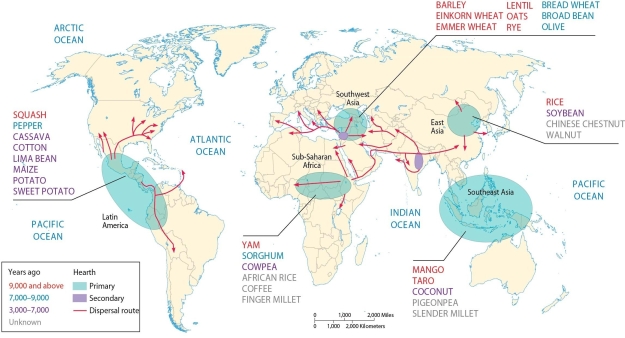
The map of crop hearths indicates that
A) rye, lentils, olives, and oats were first domesticated in Southwest Asia.
B) maize, potatoes, squash, and Lima beans were first domesticated in Southwest Asia.
C) yams, sorghum, and cowpeas were first domesticated in Southwest Asia.
D) coconuts, pigeonpeas, cowpeas, and coffee were first domesticated in Southwest Asia.
E) mango, taro, and coconuts were first domesticated in Southwest Asia.
سؤال
سؤال
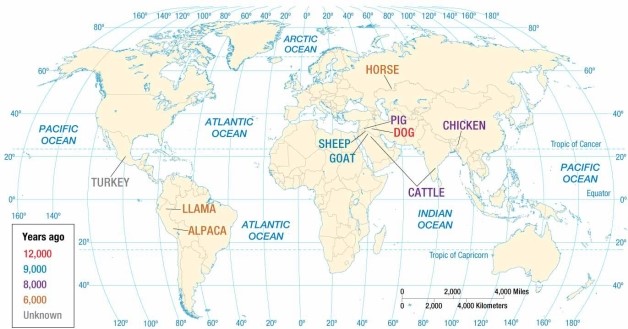
The map of animal hearths indicates that
A) llamas, alpacas, and turkeys were domesticated in the Southwest Asia.
B) cattle were domesticated in the Americas.
C) pigs, goats, and sheep were domesticated in the Southwest Asia.
D) chickens were domesticated in Southwest Asia.
E) horses were domesticated in the Americas.
سؤال
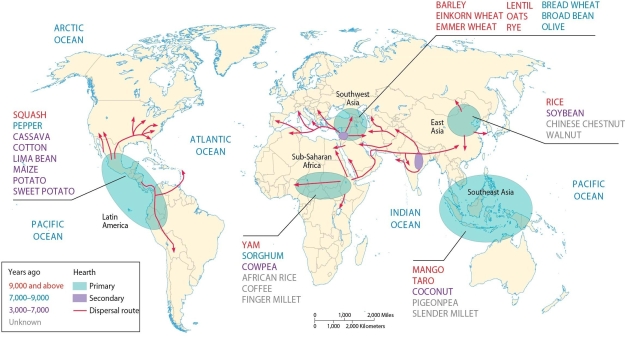
The map of crop hearths indicates that
A) rice, soybeans, and walnuts were first domesticated in East Asia.
B) maize, potatoes, squash, and peppers were first domesticated in East Asia.
C) yams, sorghum, and cowpeas were first domesticated in East Asia.
D) coconuts, pigeonpeas, cowpeas, and coffee were first domesticated in East Asia.
E) mango, taro, and coconuts were first domesticated in East Asia.
سؤال
سؤال
سؤال
سؤال
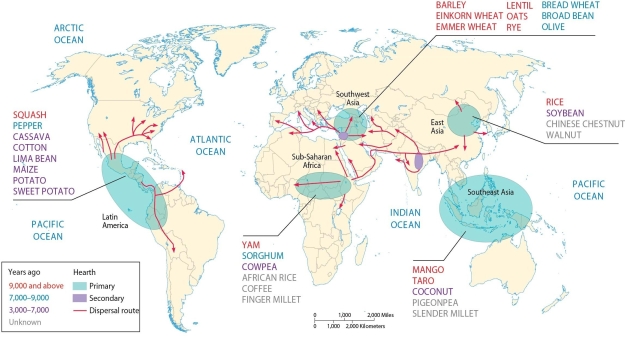
The map of crop hearths indicates that
A) maize, potatoes, squash, and peppers were first domesticated in the Americas.
B) specific crops can be grown only in and near their crop hearths.
C) potatoes, peppers, and sorghum were first domesticated in Europe.
D) coconuts, pigeonpeas, maize, and tomatoes were first domesticated in Southeast Asia.
E) soybeans, rice, squash, coconuts, and sorghum were first domesticated in East Asia.
سؤال
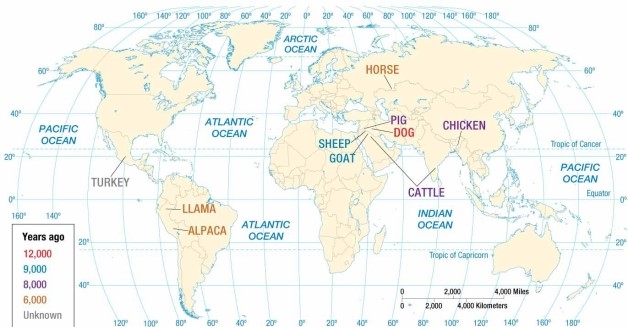
The map of animal hearths indicates that
A) llamas, alpacas, and turkeys were domesticated in the Americas.
B) animals can be raised only in and near specific hearths, owing to the limited number of climates in the world.
C) pigs, goats, and sheep were domesticated in the Americas.
D) chickens were domesticated in the Americas.
E) horses were domesticated in the Americas.
سؤال
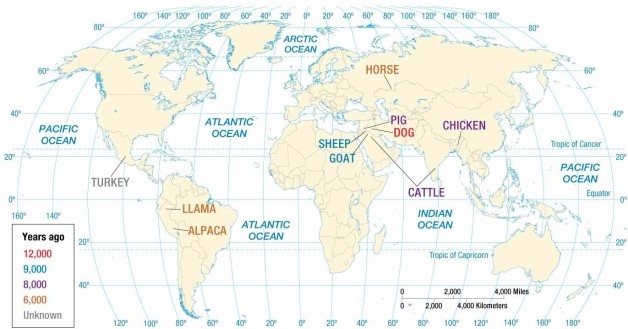
The map of animal hearths indicates that
A) llamas, alpacas, and turkeys were domesticated in Europe.
B) cattle were domesticated in China.
C) pigs, goats, and sheep were domesticated in the Americas.
D) chickens were domesticated in Europe.
E) horses were domesticated in Asia.
سؤال
سؤال
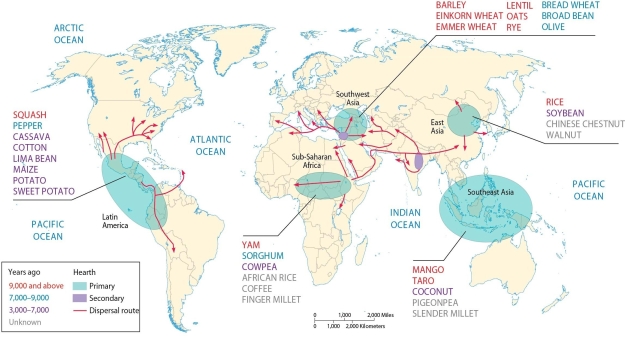
The map of crop hearths indicates that
A) yams, sorghum, coffee, and cowpeas were first domesticated in Sub-Saharan Africa.
B) maize, potatoes, squash, and taro were first domesticated in Sub-Saharan Africa.
C) potatoes, tomatoes, peppers, and sorghum were first domesticated in Sub-Saharan Africa.
D) coconuts, pigeonpeas, cowpeas, and coffee were first domesticated in Sub-Saharan Africa.
E) soybeans, rice, squash, coconuts, and sorghum were first domesticated in Sub-Saharan Africa.
سؤال
سؤال
سؤال
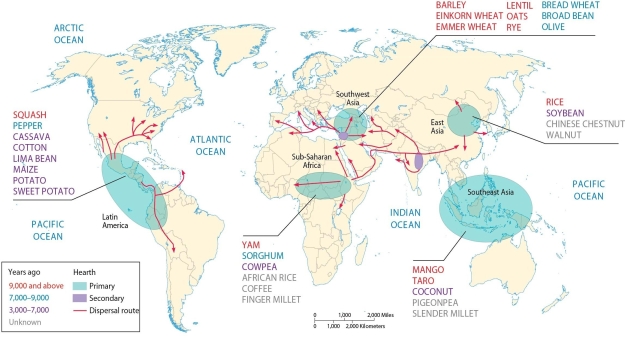
The map of crop hearths indicates that
A) coconuts, pigeonpeas, mango, and taro were first domesticated in Southeast Asia.
B) specific crops can be grown only in and near their crop hearths.
C) potatoes, peppers, and sorghum were first domesticated in Europe.
D) potatoes, peppers, squash, soybeans, and rice were first domesticated in the Americas.
E) soybeans, rice, squash, coconuts, and sorghum were first domesticated in East Asia.
سؤال
سؤال
سؤال
سؤال
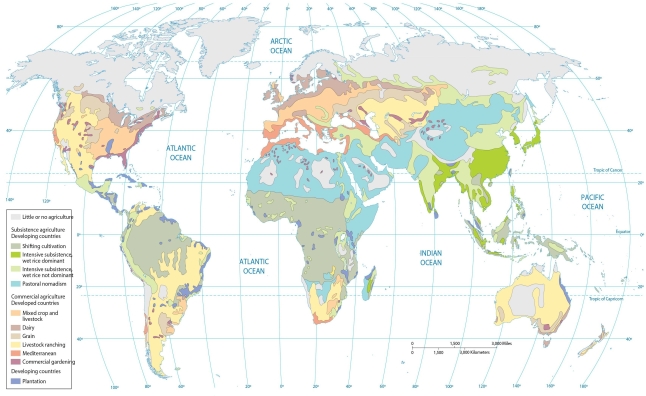
As indicated by the map of agricultural regions, the largest proportion of farmers in Asia practice
A) hunting and gathering.
B) intensive subsistence.
C) pastoral nomadism.
D) shifting cultivation.
E) plantation agriculture.
سؤال
سؤال
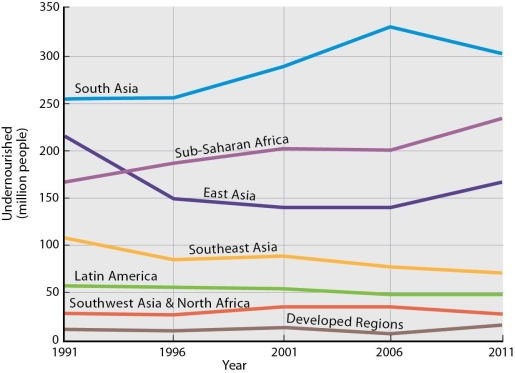
According to the "Change in Undernourishment" chart, there has been a recent decrease in undernourishment in
A) Southeast Asia.
B) South Asia.
C) East Asia.
D) Sub-Saharan Africa.
E) North Africa.
سؤال
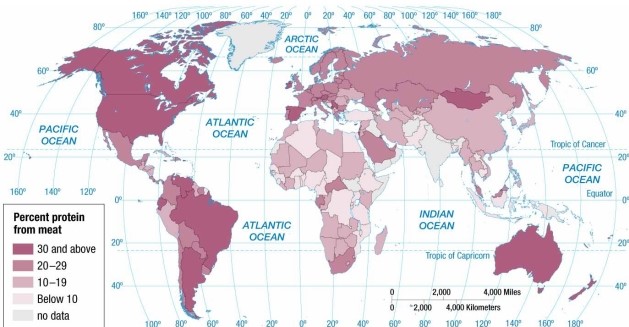
According to the map of protein from meat, meats provide at least 25 percent of the protein consumed in
A) Brazil, Argentina, and Spain.
B) Ethiopia, Iran, and India.
C) Argentina, Australia, and South Africa.
D) Brazil, Australia, and India.
E) Brazil, Canada, and India.
سؤال
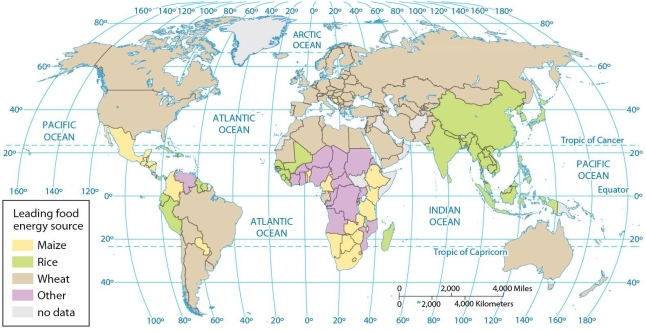
According to the map of dietary energy by source, wheat is the leading energy source in
A) Pakistan, Iran, and Saudi Arabia.
B) Pakistan, Afghanistan, and India.
C) Algeria, Sudan, and Ethiopia.
D) Bolivia, Peru, and Brazil.
E) Mexico, Canada, and the United States.
سؤال
سؤال
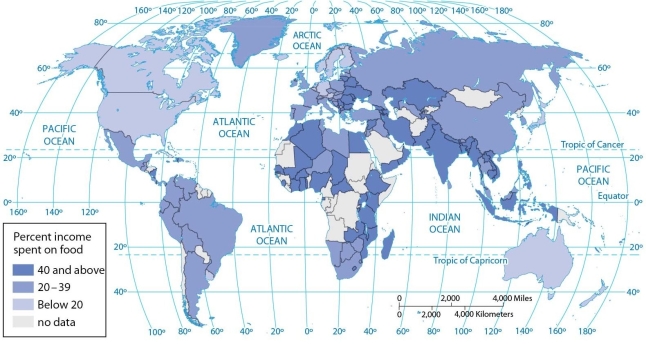
According to the map of income spent on food, less than 20 percent of average income is spent on food in
A) Sweden, Finland, the United States, Canada, Australia, and Germany.
B) Sweden, Finland, Canada, Afghanistan, the United States, and Mexico.
C) Germany, Finland, Canada, Australia, Mongolia, and Saudi Arabia.
D) Canada, Australia, the United States, and Mexico.
E) the United States, Argentina, Peru, Ecuador, and Brazil.
سؤال
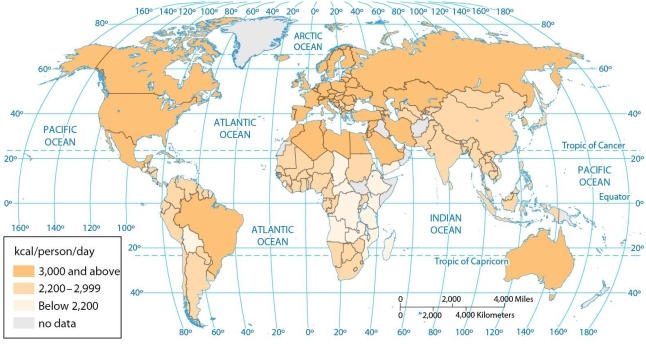
Using the map of dietary energy consumption as a reference (and momentarily ignoring other cultural and economic factors), we could predict that among the following countries, those most likely to suffer an obesity epidemic in the near future would be
A) the United States, Mexico, Canada, Australia, and Russia.
B) the United States, Canada, Australia, Egypt, and Iraq.
C) the United States, Spain, the United Kingdom, and Argentina.
D) the United States, Mexico, Argentina, Peru, Brazil, and Ecuador.
E) the United States, Australia, China, Russia, Pakistan, and India.
سؤال
سؤال
سؤال
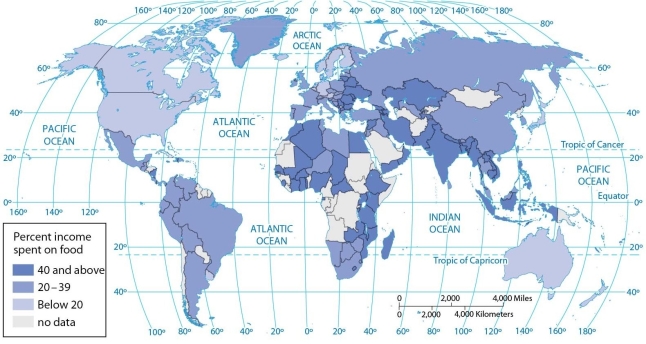
A choropleth map such as the map of "Income Spent on Food" might conceal details such as which of the following?
A) Even in developed countries where the average person spends less than 20 percent of their income on food, inequalities of income may be great enough for many people to remain undernourished.
B) In developed countries where the average person spends less than 20 percent of their income on food, the average upper-class person may spend more than 40 percent of their income on food.
C) Even in developed countries where the average person spends less than 20 percent of their income on food, less food is available than in developing countries.
D) Even in developing countries where the average person spends more than 40 percent of their income on food, wealthy people must also spend more than 40 percent of their income on food.
E) In developed countries where the average person spends more than 40 percent of their income on food, other prices are so low that undernourishment is hardly ever a problem.
سؤال
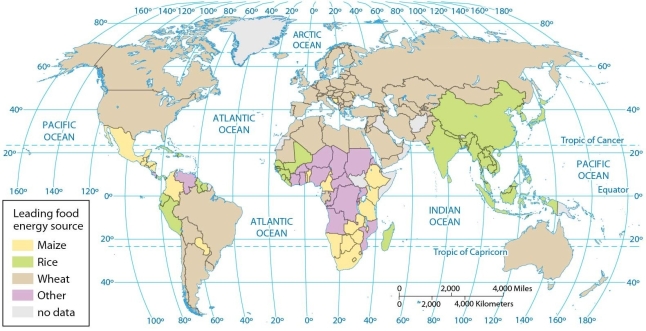
According to the map of dietary energy by source, maize is the leading energy source in
A) Ethiopia, Mexico, and Guatemala.
B) Ethiopia, Iran, and India.
C) Ethiopia, Sudan, and South Africa.
D) Mexico, Peru, and Brazil.
E) Mexico, Canada, and the United States.
سؤال
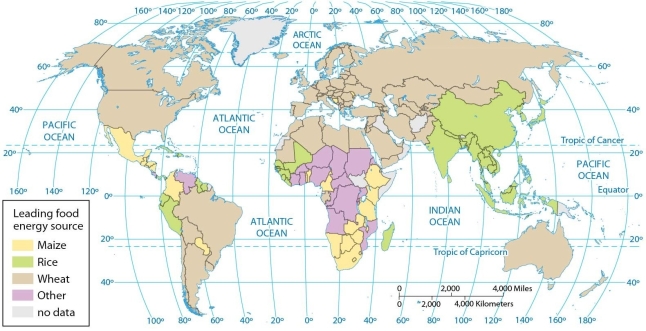
According to the map of dietary energy by source, rice is the leading energy source in
A) Peru, India, and Ecuador.
B) Pakistan, Iran, and India.
C) Algeria, Sudan, and Ethiopia.
D) Bolivia, Peru, and Brazil.
E) Peru, Brazil, and Mexico.
سؤال
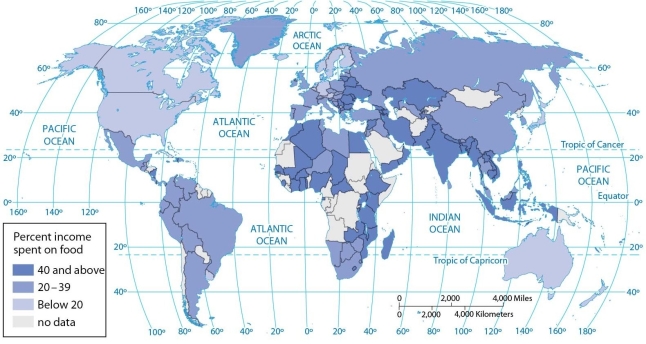
According to the map of income spent on food, more than 40 percent of average income is spent on food in
A) Algeria, Syria, Madagascar, and Laos.
B) Syria, Iraq, Laos, Mexico, and Canada.
C) Syria, Malawi, Kenya, Australia, and Madagascar.
D) Madagascar, Mexico, Brazil, Guatemala, Syria, and Laos.
E) Laos, Cuba, Brazil, and Madagascar.
سؤال
سؤال
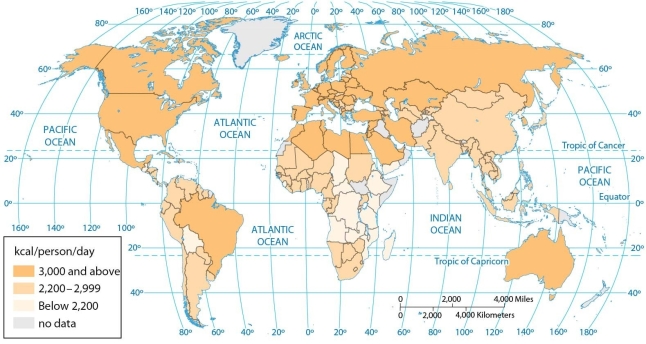
Using the map of dietary energy consumption as a reference (and momentarily ignoring other factors), we could predict that among the following countries, those most likely to suffer food shortages and/or undernourishment in the near future would be
A) Kenya, Ethiopia, Yemen, and Chad.
B) Kenya, Ethiopia, India, and Brazil.
C) Ethiopia, Somalia, South Sudan, and Yemen.
D) Kenya, Canada, Mexico, and Brazil.
E) Bolivia, Mexico, Guatemala, Peru, and Ecuador.
سؤال
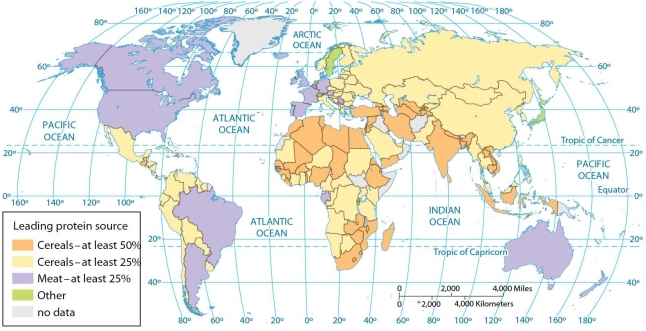
According to the map of protein sources, cereals provide at least 50 percent of the protein consumed in
A) Ethiopia and India.
B) Ethiopia and Brazil.
C) Egypt and Australia.
D) Brazil and Egypt.
E) Mexico and Argentina.
سؤال
سؤال
سؤال
سؤال
سؤال
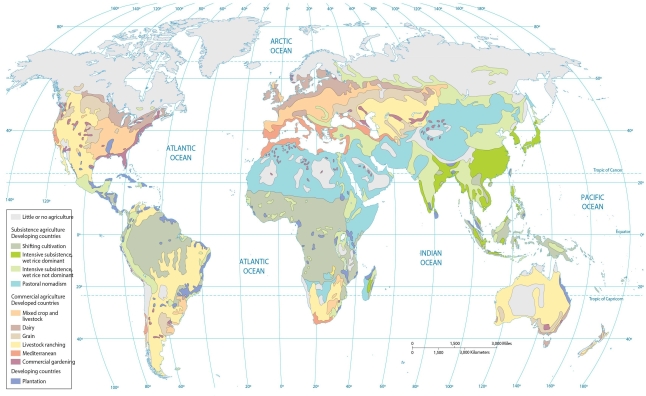
Judging from the map of agricultural regions, which type of agriculture occupies the largest percentage of southeastern China?
A) mixed crop and livestock
B) intensive subsistence
C) shifting cultivation
D) pastoral nomadism
E) plantation
سؤال
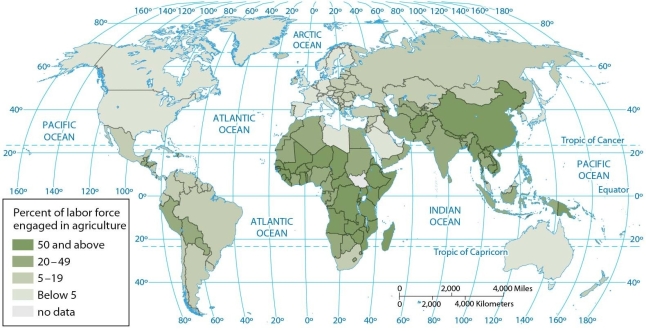
According to the map of agricultural workers, from 20 to 49 percent of the labor force is engaged in agriculture in
A) Pakistan, Iran, and Algeria.
B) Pakistan, Afghanistan, and India.
C) Algeria, Sudan, and Ethiopia.
D) Bolivia, Peru, and Brazil.
E) Mexico, Canada, and Brazil.
سؤال
سؤال
سؤال
سؤال
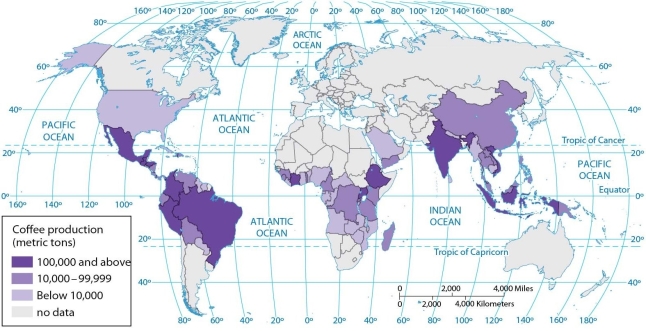
According to the map of coffee bean production, more than 100,000 metric tons of coffee beans are harvested annually in which countries?
A) Brazil, Mexico, Peru, Indonesia, and Ethiopia.
B) China, Ethiopia, Colombia, and India.
C) Iran, Iraq, Colombia, Brazil, and Indonesia.
D) Colombia, Brazil, Thailand, India, Japan, and China.
E) Colombia, the United States, Indonesia, and Ethiopia.
سؤال
سؤال
سؤال
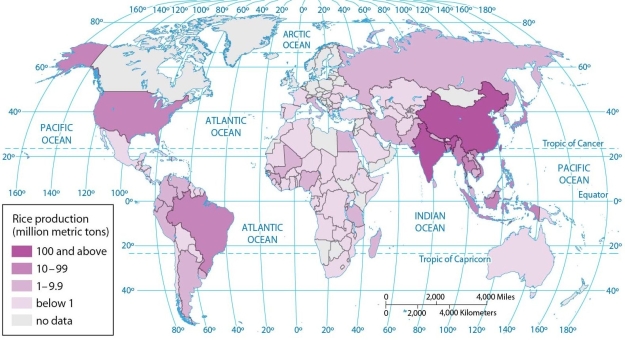
According to the map of world rice production, between 10 and 99 million metric tons of rice are produced annually in
A) Brazil, Thailand, and the United States.
B) China and India.
C) Iran, Iraq, and Afghanistan.
D) Brazil, Thailand, India, Japan, and China.
E) the United States, China, and India.
سؤال
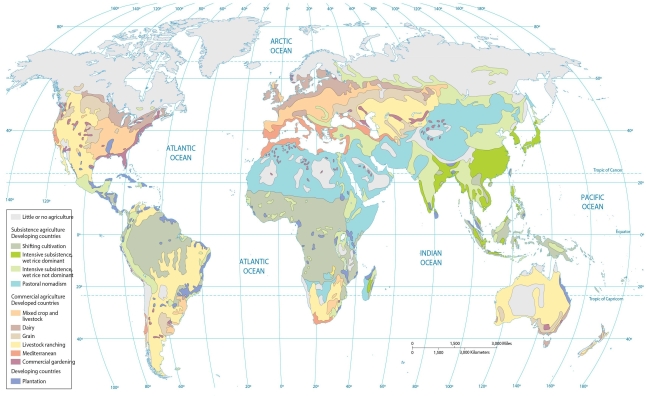
Judging from the map of agricultural regions, which type of agriculture occupies the largest percentage of central Africa?
A) mixed crop and livestock
B) shifting cultivation
C) pastoral nomadism
D) intensive subsistence
E) plantation
سؤال
سؤال
سؤال
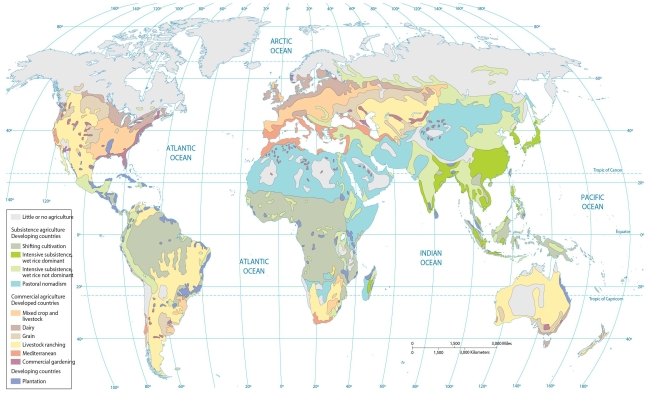
Judging from the map of agricultural regions, which type of agriculture occupies the largest percentage of eastern India?
A) mixed crop and livestock
B) intensive subsistence
C) shifting cultivation
D) pastoral nomadism
E) plantation
سؤال
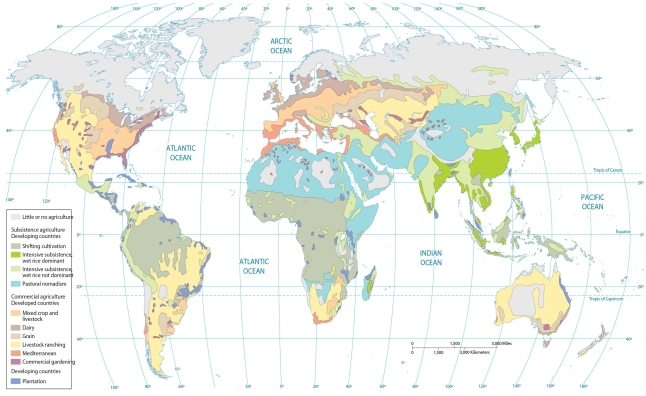
Judging from the map of agricultural regions, which type of agriculture occupies the largest percentage of Somalia?
A) mixed crop and livestock
B) pastoral nomadism
C) shifting cultivation
D) intensive subsistence
E) plantation
سؤال
سؤال
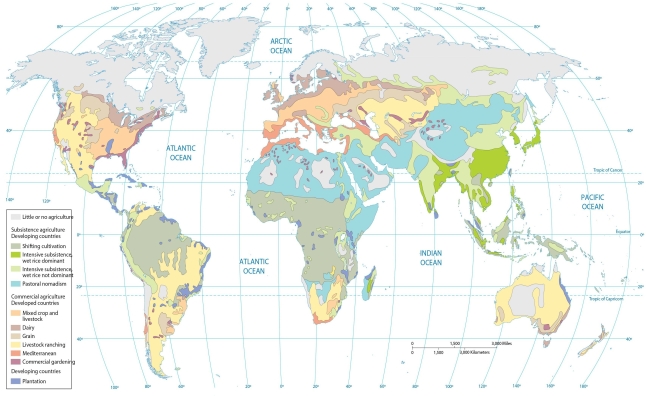
Judging from the map of agricultural regions, which type of agriculture occupies the largest percentage of eastern Peru?
A) mixed crop and livestock
B) shifting cultivation
C) pastoral nomadism
D) intensive subsistence
E) plantation
سؤال
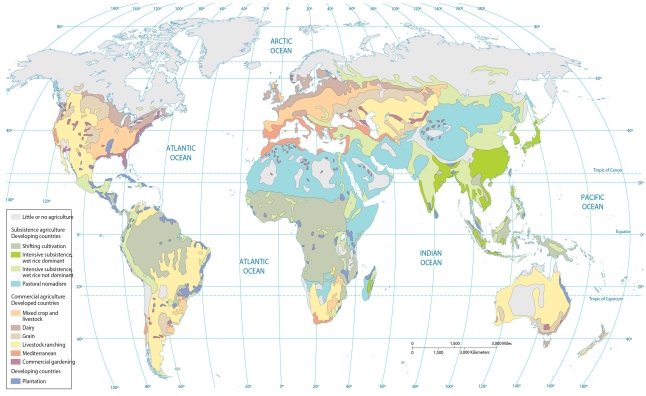
Judging from the map of agricultural regions, which type of agriculture occupies the largest percentage of Iran?
A) mixed crop and livestock
B) pastoral nomadism
C) shifting cultivation
D) intensive subsistence
E) plantation
سؤال
سؤال
سؤال
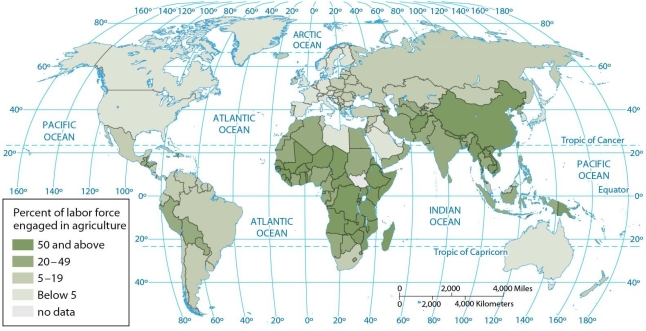
According to the map of agricultural workers, more than 50 percent of the labor force is engaged in agriculture in
A) Kenya, Tanzania, and Zimbabwe.
B) Afghanistan, Iran, and Iraq.
C) Kenya, Namibia, and South Africa.
D) Tanzania, Zimbabwe, and Nigeria.
E) Chad, Libya, and Egypt.
سؤال
سؤال
سؤال
سؤال
سؤال
سؤال
سؤال

According to the map of world milk production, less than 1 million metric tons of milk are produced annually in
A) Iraq.
B) India.
C) Iran.
D) Peru.
E) Mexico.
سؤال
سؤال
سؤال
سؤال
سؤال
سؤال
سؤال
سؤال
سؤال
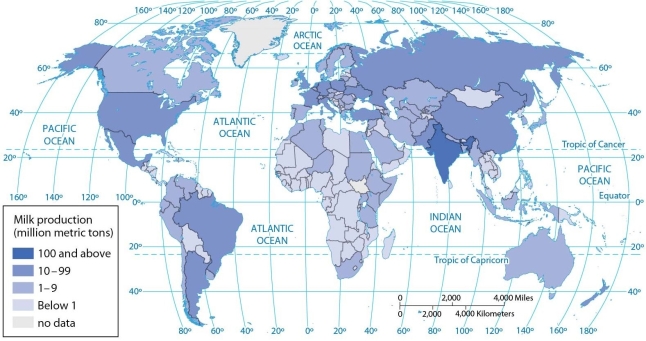
According to the map of world milk production, between 1 and 9 million metric tons of milk are produced annually in
A) Iran.
B) Iraq.
C) Mexico.
D) Libya.
E) Bolivia.
سؤال
سؤال
سؤال
سؤال
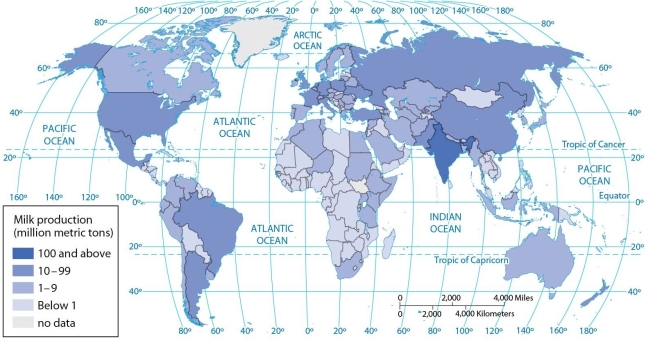
According to the map of world milk production, more than 100 million metric tons of milk are produced annually in
A) India.
B) Iraq.
C) Iran.
D) Bolivia.
E) Mexico.

فتح الحزمة
قم بالتسجيل لفتح البطاقات في هذه المجموعة!
Unlock Deck
Unlock Deck
1/132

العب

ملء الشاشة (f)
Deck 10: Food and Agriculture
1
Geographer Derwent Whittlesey divided the world into agricultural regions (not including his area of nonexistent agriculture), ________ of which were classified as found in MDCs and ________ as found in LDCs.
A) 6; 5
B) 1; 10
C) 8; 11
D) 10; 1
E) 11; 1
A) 6; 5
B) 1; 10
C) 8; 11
D) 10; 1
E) 11; 1
A
2
The map of crop hearths indicates that
A) rye, lentils, olives, and oats were first domesticated in Southwest Asia.
B) maize, potatoes, squash, and Lima beans were first domesticated in Southwest Asia.
C) yams, sorghum, and cowpeas were first domesticated in Southwest Asia.
D) coconuts, pigeonpeas, cowpeas, and coffee were first domesticated in Southwest Asia.
E) mango, taro, and coconuts were first domesticated in Southwest Asia.
A
3
Seed agriculture probably reached Europe from
A) western India.
B) northern China.
C) Ethiopia.
D) Southwest Asia.
E) Southeast Asia.
A) western India.
B) northern China.
C) Ethiopia.
D) Southwest Asia.
E) Southeast Asia.
D
4
The map of animal hearths indicates that
A) llamas, alpacas, and turkeys were domesticated in the Southwest Asia.
B) cattle were domesticated in the Americas.
C) pigs, goats, and sheep were domesticated in the Southwest Asia.
D) chickens were domesticated in Southwest Asia.
E) horses were domesticated in the Americas.
فتح الحزمة
افتح القفل للوصول البطاقات البالغ عددها 132 في هذه المجموعة.
فتح الحزمة
k this deck
5
The map of crop hearths indicates that
A) rice, soybeans, and walnuts were first domesticated in East Asia.
B) maize, potatoes, squash, and peppers were first domesticated in East Asia.
C) yams, sorghum, and cowpeas were first domesticated in East Asia.
D) coconuts, pigeonpeas, cowpeas, and coffee were first domesticated in East Asia.
E) mango, taro, and coconuts were first domesticated in East Asia.
فتح الحزمة
افتح القفل للوصول البطاقات البالغ عددها 132 في هذه المجموعة.
فتح الحزمة
k this deck
6
The earliest known domesticated squash crops are thought to have originated in the Americas more than
A) 9,000 years ago.
B) 90,000 years ago.
C) 1.1 million years ago.
D) 900 years ago.
E) 10 million years ago.
A) 9,000 years ago.
B) 90,000 years ago.
C) 1.1 million years ago.
D) 900 years ago.
E) 10 million years ago.
فتح الحزمة
افتح القفل للوصول البطاقات البالغ عددها 132 في هذه المجموعة.
فتح الحزمة
k this deck
7
The first people to domesticate lentils and olives were in
A) western India.
B) northern China.
C) Ethiopia.
D) Southwest Asia.
E) South America.
A) western India.
B) northern China.
C) Ethiopia.
D) Southwest Asia.
E) South America.
فتح الحزمة
افتح القفل للوصول البطاقات البالغ عددها 132 في هذه المجموعة.
فتح الحزمة
k this deck
8
Lima beans were domesticated in
A) Southeast Asia.
B) Southwest Asia.
C) Ethiopia.
D) northern China.
E) the Americas.
A) Southeast Asia.
B) Southwest Asia.
C) Ethiopia.
D) northern China.
E) the Americas.
فتح الحزمة
افتح القفل للوصول البطاقات البالغ عددها 132 في هذه المجموعة.
فتح الحزمة
k this deck
9
The map of crop hearths indicates that
A) maize, potatoes, squash, and peppers were first domesticated in the Americas.
B) specific crops can be grown only in and near their crop hearths.
C) potatoes, peppers, and sorghum were first domesticated in Europe.
D) coconuts, pigeonpeas, maize, and tomatoes were first domesticated in Southeast Asia.
E) soybeans, rice, squash, coconuts, and sorghum were first domesticated in East Asia.
فتح الحزمة
افتح القفل للوصول البطاقات البالغ عددها 132 في هذه المجموعة.
فتح الحزمة
k this deck
10
The map of animal hearths indicates that
A) llamas, alpacas, and turkeys were domesticated in the Americas.
B) animals can be raised only in and near specific hearths, owing to the limited number of climates in the world.
C) pigs, goats, and sheep were domesticated in the Americas.
D) chickens were domesticated in the Americas.
E) horses were domesticated in the Americas.
فتح الحزمة
افتح القفل للوصول البطاقات البالغ عددها 132 في هذه المجموعة.
فتح الحزمة
k this deck
11
The map of animal hearths indicates that
A) llamas, alpacas, and turkeys were domesticated in Europe.
B) cattle were domesticated in China.
C) pigs, goats, and sheep were domesticated in the Americas.
D) chickens were domesticated in Europe.
E) horses were domesticated in Asia.
فتح الحزمة
افتح القفل للوصول البطاقات البالغ عددها 132 في هذه المجموعة.
فتح الحزمة
k this deck
12
Potatoes were domesticated in
A) Southeast Asia.
B) Southwest Asia.
C) Ethiopia.
D) northern China.
E) the Americas.
A) Southeast Asia.
B) Southwest Asia.
C) Ethiopia.
D) northern China.
E) the Americas.
فتح الحزمة
افتح القفل للوصول البطاقات البالغ عددها 132 في هذه المجموعة.
فتح الحزمة
k this deck
13
The map of crop hearths indicates that
A) yams, sorghum, coffee, and cowpeas were first domesticated in Sub-Saharan Africa.
B) maize, potatoes, squash, and taro were first domesticated in Sub-Saharan Africa.
C) potatoes, tomatoes, peppers, and sorghum were first domesticated in Sub-Saharan Africa.
D) coconuts, pigeonpeas, cowpeas, and coffee were first domesticated in Sub-Saharan Africa.
E) soybeans, rice, squash, coconuts, and sorghum were first domesticated in Sub-Saharan Africa.
فتح الحزمة
افتح القفل للوصول البطاقات البالغ عددها 132 في هذه المجموعة.
فتح الحزمة
k this deck
14
Hunting and gathering societies
A) include about 15 percent of the world's people.
B) are found in isolated places in the world.
C) are characterized by large concentrations of people.
D) occur nearly everywhere but are especially common in Europe.
E) are responsible for most of the environmental degradation of the planet.
A) include about 15 percent of the world's people.
B) are found in isolated places in the world.
C) are characterized by large concentrations of people.
D) occur nearly everywhere but are especially common in Europe.
E) are responsible for most of the environmental degradation of the planet.
فتح الحزمة
افتح القفل للوصول البطاقات البالغ عددها 132 في هذه المجموعة.
فتح الحزمة
k this deck
15
Geographer Derwent Whittlesey divided the world into ________ agricultural regions (not including his area of nonexistent agriculture).
A) 11
B) 12
C) 5
D) 3
E) 16
A) 11
B) 12
C) 5
D) 3
E) 16
فتح الحزمة
افتح القفل للوصول البطاقات البالغ عددها 132 في هذه المجموعة.
فتح الحزمة
k this deck
16
The map of crop hearths indicates that
A) coconuts, pigeonpeas, mango, and taro were first domesticated in Southeast Asia.
B) specific crops can be grown only in and near their crop hearths.
C) potatoes, peppers, and sorghum were first domesticated in Europe.
D) potatoes, peppers, squash, soybeans, and rice were first domesticated in the Americas.
E) soybeans, rice, squash, coconuts, and sorghum were first domesticated in East Asia.
فتح الحزمة
افتح القفل للوصول البطاقات البالغ عددها 132 في هذه المجموعة.
فتح الحزمة
k this deck
17
Which is not a form of subsistence agriculture?
A) Mediterranean
B) shifting cultivation
C) pastoral nomadism
D) intensive
E) All of the above are forms of subsistence agriculture.
A) Mediterranean
B) shifting cultivation
C) pastoral nomadism
D) intensive
E) All of the above are forms of subsistence agriculture.
فتح الحزمة
افتح القفل للوصول البطاقات البالغ عددها 132 في هذه المجموعة.
فتح الحزمة
k this deck
18
The earliest known domesticated wheat, barley, and rice crops are thought to have originated in Asia about
A) 10,000 years ago.
B) 100,000 years ago.
C) 1.1 million years ago.
D) 1,000 years ago.
E) 10 million years ago.
A) 10,000 years ago.
B) 100,000 years ago.
C) 1.1 million years ago.
D) 1,000 years ago.
E) 10 million years ago.
فتح الحزمة
افتح القفل للوصول البطاقات البالغ عددها 132 في هذه المجموعة.
فتح الحزمة
k this deck
19
Pigs were domesticated in
A) Southeast Asia.
B) South America.
C) Ethiopia.
D) northern China.
E) Southwest Asia
A) Southeast Asia.
B) South America.
C) Ethiopia.
D) northern China.
E) Southwest Asia
فتح الحزمة
افتح القفل للوصول البطاقات البالغ عددها 132 في هذه المجموعة.
فتح الحزمة
k this deck
20
As indicated by the map of agricultural regions, the largest proportion of farmers in Asia practice
A) hunting and gathering.
B) intensive subsistence.
C) pastoral nomadism.
D) shifting cultivation.
E) plantation agriculture.
فتح الحزمة
افتح القفل للوصول البطاقات البالغ عددها 132 في هذه المجموعة.
فتح الحزمة
k this deck
21
Which type of agriculture is practiced by the largest percentage of the world's people?
A) hunting and gathering
B) shifting cultivation
C) pastoral nomadism
D) intensive subsistence
E) plantation
A) hunting and gathering
B) shifting cultivation
C) pastoral nomadism
D) intensive subsistence
E) plantation
فتح الحزمة
افتح القفل للوصول البطاقات البالغ عددها 132 في هذه المجموعة.
فتح الحزمة
k this deck
22
According to the "Change in Undernourishment" chart, there has been a recent decrease in undernourishment in
A) Southeast Asia.
B) South Asia.
C) East Asia.
D) Sub-Saharan Africa.
E) North Africa.
فتح الحزمة
افتح القفل للوصول البطاقات البالغ عددها 132 في هذه المجموعة.
فتح الحزمة
k this deck
23
According to the map of protein from meat, meats provide at least 25 percent of the protein consumed in
A) Brazil, Argentina, and Spain.
B) Ethiopia, Iran, and India.
C) Argentina, Australia, and South Africa.
D) Brazil, Australia, and India.
E) Brazil, Canada, and India.
فتح الحزمة
افتح القفل للوصول البطاقات البالغ عددها 132 في هذه المجموعة.
فتح الحزمة
k this deck
24
According to the map of dietary energy by source, wheat is the leading energy source in
A) Pakistan, Iran, and Saudi Arabia.
B) Pakistan, Afghanistan, and India.
C) Algeria, Sudan, and Ethiopia.
D) Bolivia, Peru, and Brazil.
E) Mexico, Canada, and the United States.
فتح الحزمة
افتح القفل للوصول البطاقات البالغ عددها 132 في هذه المجموعة.
فتح الحزمة
k this deck
25
Shifting cultivation is most commonly found in which climate region?
A) humid low-latitude
B) dry
C) warm mid-latitude
D) cold mid-latitude
E) highlands
A) humid low-latitude
B) dry
C) warm mid-latitude
D) cold mid-latitude
E) highlands
فتح الحزمة
افتح القفل للوصول البطاقات البالغ عددها 132 في هذه المجموعة.
فتح الحزمة
k this deck
26
According to the map of income spent on food, less than 20 percent of average income is spent on food in
A) Sweden, Finland, the United States, Canada, Australia, and Germany.
B) Sweden, Finland, Canada, Afghanistan, the United States, and Mexico.
C) Germany, Finland, Canada, Australia, Mongolia, and Saudi Arabia.
D) Canada, Australia, the United States, and Mexico.
E) the United States, Argentina, Peru, Ecuador, and Brazil.
فتح الحزمة
افتح القفل للوصول البطاقات البالغ عددها 132 في هذه المجموعة.
فتح الحزمة
k this deck
27
Using the map of dietary energy consumption as a reference (and momentarily ignoring other cultural and economic factors), we could predict that among the following countries, those most likely to suffer an obesity epidemic in the near future would be
A) the United States, Mexico, Canada, Australia, and Russia.
B) the United States, Canada, Australia, Egypt, and Iraq.
C) the United States, Spain, the United Kingdom, and Argentina.
D) the United States, Mexico, Argentina, Peru, Brazil, and Ecuador.
E) the United States, Australia, China, Russia, Pakistan, and India.
فتح الحزمة
افتح القفل للوصول البطاقات البالغ عددها 132 في هذه المجموعة.
فتح الحزمة
k this deck
28
The most important reason why most farmers in northeast China grow crops other than wet rice is
A) cultural preference.
B) tradition.
C) climate.
D) soil.
E) harvesting wet rice requires expensive machinery.
A) cultural preference.
B) tradition.
C) climate.
D) soil.
E) harvesting wet rice requires expensive machinery.
فتح الحزمة
افتح القفل للوصول البطاقات البالغ عددها 132 في هذه المجموعة.
فتح الحزمة
k this deck
29
Which type of agriculture is found primarily in less developed countries?
A) Mediterranean
B) plantation
C) truck farming
D) commercial gardening
E) mechanized
A) Mediterranean
B) plantation
C) truck farming
D) commercial gardening
E) mechanized
فتح الحزمة
افتح القفل للوصول البطاقات البالغ عددها 132 في هذه المجموعة.
فتح الحزمة
k this deck
30
A choropleth map such as the map of "Income Spent on Food" might conceal details such as which of the following?
A) Even in developed countries where the average person spends less than 20 percent of their income on food, inequalities of income may be great enough for many people to remain undernourished.
B) In developed countries where the average person spends less than 20 percent of their income on food, the average upper-class person may spend more than 40 percent of their income on food.
C) Even in developed countries where the average person spends less than 20 percent of their income on food, less food is available than in developing countries.
D) Even in developing countries where the average person spends more than 40 percent of their income on food, wealthy people must also spend more than 40 percent of their income on food.
E) In developed countries where the average person spends more than 40 percent of their income on food, other prices are so low that undernourishment is hardly ever a problem.
فتح الحزمة
افتح القفل للوصول البطاقات البالغ عددها 132 في هذه المجموعة.
فتح الحزمة
k this deck
31
According to the map of dietary energy by source, maize is the leading energy source in
A) Ethiopia, Mexico, and Guatemala.
B) Ethiopia, Iran, and India.
C) Ethiopia, Sudan, and South Africa.
D) Mexico, Peru, and Brazil.
E) Mexico, Canada, and the United States.
فتح الحزمة
افتح القفل للوصول البطاقات البالغ عددها 132 في هذه المجموعة.
فتح الحزمة
k this deck
32
According to the map of dietary energy by source, rice is the leading energy source in
A) Peru, India, and Ecuador.
B) Pakistan, Iran, and India.
C) Algeria, Sudan, and Ethiopia.
D) Bolivia, Peru, and Brazil.
E) Peru, Brazil, and Mexico.
فتح الحزمة
افتح القفل للوصول البطاقات البالغ عددها 132 في هذه المجموعة.
فتح الحزمة
k this deck
33
According to the map of income spent on food, more than 40 percent of average income is spent on food in
A) Algeria, Syria, Madagascar, and Laos.
B) Syria, Iraq, Laos, Mexico, and Canada.
C) Syria, Malawi, Kenya, Australia, and Madagascar.
D) Madagascar, Mexico, Brazil, Guatemala, Syria, and Laos.
E) Laos, Cuba, Brazil, and Madagascar.
فتح الحزمة
افتح القفل للوصول البطاقات البالغ عددها 132 في هذه المجموعة.
فتح الحزمة
k this deck
34
The direction and frequency of hunter-gatherer migration depended on
A) the movement of game and the seasonal growth of plants.
B) the shifting of climate patterns.
C) the arrival of imperial armies and other invading forces.
D) each group's size and the ability to run over long distances.
E) mathematical processes.
A) the movement of game and the seasonal growth of plants.
B) the shifting of climate patterns.
C) the arrival of imperial armies and other invading forces.
D) each group's size and the ability to run over long distances.
E) mathematical processes.
فتح الحزمة
افتح القفل للوصول البطاقات البالغ عددها 132 في هذه المجموعة.
فتح الحزمة
k this deck
35
Using the map of dietary energy consumption as a reference (and momentarily ignoring other factors), we could predict that among the following countries, those most likely to suffer food shortages and/or undernourishment in the near future would be
A) Kenya, Ethiopia, Yemen, and Chad.
B) Kenya, Ethiopia, India, and Brazil.
C) Ethiopia, Somalia, South Sudan, and Yemen.
D) Kenya, Canada, Mexico, and Brazil.
E) Bolivia, Mexico, Guatemala, Peru, and Ecuador.
فتح الحزمة
افتح القفل للوصول البطاقات البالغ عددها 132 في هذه المجموعة.
فتح الحزمة
k this deck
36
According to the map of protein sources, cereals provide at least 50 percent of the protein consumed in
A) Ethiopia and India.
B) Ethiopia and Brazil.
C) Egypt and Australia.
D) Brazil and Egypt.
E) Mexico and Argentina.
فتح الحزمة
افتح القفل للوصول البطاقات البالغ عددها 132 في هذه المجموعة.
فتح الحزمة
k this deck
37
Pastoral nomadism is most commonly found in which climate region?
A) humid low-latitude
B) dry
C) warm mid-latitude
D) cold mid-latitude
E) polar
A) humid low-latitude
B) dry
C) warm mid-latitude
D) cold mid-latitude
E) polar
فتح الحزمة
افتح القفل للوصول البطاقات البالغ عددها 132 في هذه المجموعة.
فتح الحزمة
k this deck
38
Which of the following is a typical practice in growing rice in Asia?
A) preparing fields with a plow drawn by oxen
B) flooding the plowed field with water
C) growing seedlings in a nursery
D) transplanting seedlings into the flooded field
E) All of these answers are correct.
A) preparing fields with a plow drawn by oxen
B) flooding the plowed field with water
C) growing seedlings in a nursery
D) transplanting seedlings into the flooded field
E) All of these answers are correct.
فتح الحزمة
افتح القفل للوصول البطاقات البالغ عددها 132 في هذه المجموعة.
فتح الحزمة
k this deck
39
Compared to shifting cultivation, intensive subsistence agriculture is characterized by which of the following?
A) smaller farms
B) lower population densities
C) greater use of animal power
D) more diversified cropping
E) greater use of land in rainforests
A) smaller farms
B) lower population densities
C) greater use of animal power
D) more diversified cropping
E) greater use of land in rainforests
فتح الحزمة
افتح القفل للوصول البطاقات البالغ عددها 132 في هذه المجموعة.
فتح الحزمة
k this deck
40
The seasonal migration of livestock between mountains and lowland pastures is
A) pastoral nomadism.
B) transnomadism.
C) transhumance.
D) practiced mostly in the tropics.
E) livestock ranching.
A) pastoral nomadism.
B) transnomadism.
C) transhumance.
D) practiced mostly in the tropics.
E) livestock ranching.
فتح الحزمة
افتح القفل للوصول البطاقات البالغ عددها 132 في هذه المجموعة.
فتح الحزمة
k this deck
41
Judging from the map of agricultural regions, which type of agriculture occupies the largest percentage of southeastern China?
A) mixed crop and livestock
B) intensive subsistence
C) shifting cultivation
D) pastoral nomadism
E) plantation
فتح الحزمة
افتح القفل للوصول البطاقات البالغ عددها 132 في هذه المجموعة.
فتح الحزمة
k this deck
42
According to the map of agricultural workers, from 20 to 49 percent of the labor force is engaged in agriculture in
A) Pakistan, Iran, and Algeria.
B) Pakistan, Afghanistan, and India.
C) Algeria, Sudan, and Ethiopia.
D) Bolivia, Peru, and Brazil.
E) Mexico, Canada, and Brazil.
فتح الحزمة
افتح القفل للوصول البطاقات البالغ عددها 132 في هذه المجموعة.
فتح الحزمة
k this deck
43
The number of farms in the United States declined from about 6 million in 1940 to ________ in 1980.
A) 2 million
B) 5.5 million
C) 10 million
D) 1 million
E) 20,000
A) 2 million
B) 5.5 million
C) 10 million
D) 1 million
E) 20,000
فتح الحزمة
افتح القفل للوصول البطاقات البالغ عددها 132 في هذه المجموعة.
فتح الحزمة
k this deck
44
Mixing crops and livestock allows farmers to
A) distribute the workload of the crops and livestock so that farmers hardly need to work during the summer season.
B) generate 90 percent of their income from the sale of livestock.
C) doublecrop.
D) create a system where crops provide food for livestock and the livestock provide manure for crop fertilization.
E) circumvent market forces that determine the prices of livestock and crops.
A) distribute the workload of the crops and livestock so that farmers hardly need to work during the summer season.
B) generate 90 percent of their income from the sale of livestock.
C) doublecrop.
D) create a system where crops provide food for livestock and the livestock provide manure for crop fertilization.
E) circumvent market forces that determine the prices of livestock and crops.
فتح الحزمة
افتح القفل للوصول البطاقات البالغ عددها 132 في هذه المجموعة.
فتح الحزمة
k this deck
45
Unlike other forms of commercial agriculture, plantations are
A) part of agribusiness.
B) owned by day laborers in less developed countries.
C) found primarily in less developed countries.
D) situated in densely populated locations.
E) found primarily in more developed countries.
A) part of agribusiness.
B) owned by day laborers in less developed countries.
C) found primarily in less developed countries.
D) situated in densely populated locations.
E) found primarily in more developed countries.
فتح الحزمة
افتح القفل للوصول البطاقات البالغ عددها 132 في هذه المجموعة.
فتح الحزمة
k this deck
46
According to the map of coffee bean production, more than 100,000 metric tons of coffee beans are harvested annually in which countries?
A) Brazil, Mexico, Peru, Indonesia, and Ethiopia.
B) China, Ethiopia, Colombia, and India.
C) Iran, Iraq, Colombia, Brazil, and Indonesia.
D) Colombia, Brazil, Thailand, India, Japan, and China.
E) Colombia, the United States, Indonesia, and Ethiopia.
فتح الحزمة
افتح القفل للوصول البطاقات البالغ عددها 132 في هذه المجموعة.
فتح الحزمة
k this deck
47
In the winter wheat area of the U.S., the crop is planted in
A) autumn and harvested in summer.
B) winter and harvested in spring.
C) winter and harvested in autumn.
D) spring and harvested in summer.
E) spring and harvested in autumn.
A) autumn and harvested in summer.
B) winter and harvested in spring.
C) winter and harvested in autumn.
D) spring and harvested in summer.
E) spring and harvested in autumn.
فتح الحزمة
افتح القفل للوصول البطاقات البالغ عددها 132 في هذه المجموعة.
فتح الحزمة
k this deck
48
The decline in the number of farmers in MDCs can best be described as a consequence of
A) push/pull economic factors, including the lack of opportunity in rural areas and higher-paying jobs in urban areas.
B) urban sprawl, including the development of rings of suburbs and exurbs around major metropolitan areas, which required larger amounts of farm production.
C) push/pull economic factors, including greater opportunities in rural areas and lower-paying jobs in urban areas.
D) the increase of populations in urban areas and the reduced population in rural areas.
E) the spread of disease and starvation in rural areas, which quickly reduced the populations of farmers.
A) push/pull economic factors, including the lack of opportunity in rural areas and higher-paying jobs in urban areas.
B) urban sprawl, including the development of rings of suburbs and exurbs around major metropolitan areas, which required larger amounts of farm production.
C) push/pull economic factors, including greater opportunities in rural areas and lower-paying jobs in urban areas.
D) the increase of populations in urban areas and the reduced population in rural areas.
E) the spread of disease and starvation in rural areas, which quickly reduced the populations of farmers.
فتح الحزمة
افتح القفل للوصول البطاقات البالغ عددها 132 في هذه المجموعة.
فتح الحزمة
k this deck
49
According to the map of world rice production, between 10 and 99 million metric tons of rice are produced annually in
A) Brazil, Thailand, and the United States.
B) China and India.
C) Iran, Iraq, and Afghanistan.
D) Brazil, Thailand, India, Japan, and China.
E) the United States, China, and India.
فتح الحزمة
افتح القفل للوصول البطاقات البالغ عددها 132 في هذه المجموعة.
فتح الحزمة
k this deck
50
Judging from the map of agricultural regions, which type of agriculture occupies the largest percentage of central Africa?
A) mixed crop and livestock
B) shifting cultivation
C) pastoral nomadism
D) intensive subsistence
E) plantation
فتح الحزمة
افتح القفل للوصول البطاقات البالغ عددها 132 في هذه المجموعة.
فتح الحزمة
k this deck
51
Which of the following have aided commercial farmers in MDCs?
A) transportation improvements and the rise of sea levels
B) scientific advances, the reduction in the need for electronics, and
C) ancient irrigation projects that can be refitted for modern farming
D) transportation improvements, scientific advances, and electronics
E) climate change, scientific advances, and transportation improvements
A) transportation improvements and the rise of sea levels
B) scientific advances, the reduction in the need for electronics, and
C) ancient irrigation projects that can be refitted for modern farming
D) transportation improvements, scientific advances, and electronics
E) climate change, scientific advances, and transportation improvements
فتح الحزمة
افتح القفل للوصول البطاقات البالغ عددها 132 في هذه المجموعة.
فتح الحزمة
k this deck
52
Which of the following is the most common form of commercial agriculture in Europe?
A) mixed crop and livestock farming
B) dairy farming
C) grain farming
D) livestock ranching
E) Mediterranean agriculture
A) mixed crop and livestock farming
B) dairy farming
C) grain farming
D) livestock ranching
E) Mediterranean agriculture
فتح الحزمة
افتح القفل للوصول البطاقات البالغ عددها 132 في هذه المجموعة.
فتح الحزمة
k this deck
53
Judging from the map of agricultural regions, which type of agriculture occupies the largest percentage of eastern India?
A) mixed crop and livestock
B) intensive subsistence
C) shifting cultivation
D) pastoral nomadism
E) plantation
فتح الحزمة
افتح القفل للوصول البطاقات البالغ عددها 132 في هذه المجموعة.
فتح الحزمة
k this deck
54
Judging from the map of agricultural regions, which type of agriculture occupies the largest percentage of Somalia?
A) mixed crop and livestock
B) pastoral nomadism
C) shifting cultivation
D) intensive subsistence
E) plantation
فتح الحزمة
افتح القفل للوصول البطاقات البالغ عددها 132 في هذه المجموعة.
فتح الحزمة
k this deck
55
Ranching is practiced in a climate region most similar to that of which other type of agriculture?
A) dairying
B) grain
C) pastoral nomadism
D) shifting cultivation
E) Mediterranean agriculture
A) dairying
B) grain
C) pastoral nomadism
D) shifting cultivation
E) Mediterranean agriculture
فتح الحزمة
افتح القفل للوصول البطاقات البالغ عددها 132 في هذه المجموعة.
فتح الحزمة
k this deck
56
Judging from the map of agricultural regions, which type of agriculture occupies the largest percentage of eastern Peru?
A) mixed crop and livestock
B) shifting cultivation
C) pastoral nomadism
D) intensive subsistence
E) plantation
فتح الحزمة
افتح القفل للوصول البطاقات البالغ عددها 132 في هذه المجموعة.
فتح الحزمة
k this deck
57
Judging from the map of agricultural regions, which type of agriculture occupies the largest percentage of Iran?
A) mixed crop and livestock
B) pastoral nomadism
C) shifting cultivation
D) intensive subsistence
E) plantation
فتح الحزمة
افتح القفل للوصول البطاقات البالغ عددها 132 في هذه المجموعة.
فتح الحزمة
k this deck
58
The United States had about 60 percent fewer farms and ________ percent fewer farmers in 2000 than in 1900.
A) 85
B) 52
C) 15
D) 25
E) 99
A) 85
B) 52
C) 15
D) 25
E) 99
فتح الحزمة
افتح القفل للوصول البطاقات البالغ عددها 132 في هذه المجموعة.
فتح الحزمة
k this deck
59
After maize, the most important crop in the U.S. mixed crop and livestock region is
A) wheat.
B) soybeans.
C) barley.
D) fruits and vegetables.
E) sugar beets.
A) wheat.
B) soybeans.
C) barley.
D) fruits and vegetables.
E) sugar beets.
فتح الحزمة
افتح القفل للوصول البطاقات البالغ عددها 132 في هذه المجموعة.
فتح الحزمة
k this deck
60
According to the map of agricultural workers, more than 50 percent of the labor force is engaged in agriculture in
A) Kenya, Tanzania, and Zimbabwe.
B) Afghanistan, Iran, and Iraq.
C) Kenya, Namibia, and South Africa.
D) Tanzania, Zimbabwe, and Nigeria.
E) Chad, Libya, and Egypt.
فتح الحزمة
افتح القفل للوصول البطاقات البالغ عددها 132 في هذه المجموعة.
فتح الحزمة
k this deck
61
To increase crop yields, farmers in South China commonly practice
A) double cropping.
B) transhumance.
C) threshing.
D) pastoral nomadism.
E) shifting cultivation.
A) double cropping.
B) transhumance.
C) threshing.
D) pastoral nomadism.
E) shifting cultivation.
فتح الحزمة
افتح القفل للوصول البطاقات البالغ عددها 132 في هذه المجموعة.
فتح الحزمة
k this deck
62
Truck farming is a term that derives from the Middle-English word truck, meaning
A) "cart."
B) "mobility" or "movement."
C) "subsiding" as in "subsistence agriculture."
D) "bartering" or "exchange of commodities."
E) "horse" or "horse-drawn."
A) "cart."
B) "mobility" or "movement."
C) "subsiding" as in "subsistence agriculture."
D) "bartering" or "exchange of commodities."
E) "horse" or "horse-drawn."
فتح الحزمة
افتح القفل للوصول البطاقات البالغ عددها 132 في هذه المجموعة.
فتح الحزمة
k this deck
63
Which statement correctly describes hunting and gathering?
A) All humans began to obtain their food this way after agriculture was invented.
B) It is a form of nomadism that disappeared in the late 1900s after the fall of the Soviet Union.
C) This form of subsistence disappeared in the mid-1900s owing to industrialization and modernized agriculture.
D) Hunter gatherers cannot live for long in groups of less than 100 people owing to the necessary division of labor.
E) This form of subsistence is still practiced despite the modernization of agriculture in some areas.
A) All humans began to obtain their food this way after agriculture was invented.
B) It is a form of nomadism that disappeared in the late 1900s after the fall of the Soviet Union.
C) This form of subsistence disappeared in the mid-1900s owing to industrialization and modernized agriculture.
D) Hunter gatherers cannot live for long in groups of less than 100 people owing to the necessary division of labor.
E) This form of subsistence is still practiced despite the modernization of agriculture in some areas.
فتح الحزمة
افتح القفل للوصول البطاقات البالغ عددها 132 في هذه المجموعة.
فتح الحزمة
k this deck
64
The primary factor in von Thünen's model for choosing commercial farm products is
A) land price.
B) market location.
C) climate.
D) soil character.
E) labor cost.
A) land price.
B) market location.
C) climate.
D) soil character.
E) labor cost.
فتح الحزمة
افتح القفل للوصول البطاقات البالغ عددها 132 في هذه المجموعة.
فتح الحزمة
k this deck
65
The predominant form of agriculture in the U.S. Southeast is
A) mixed crop and livestock.
B) dairy farming.
C) Mediterranean agriculture.
D) commercial gardening.
E) plantation farming.
A) mixed crop and livestock.
B) dairy farming.
C) Mediterranean agriculture.
D) commercial gardening.
E) plantation farming.
فتح الحزمة
افتح القفل للوصول البطاقات البالغ عددها 132 في هذه المجموعة.
فتح الحزمة
k this deck
66
Afghanistan is important to the world drug trade primarily because
A) it produces about 90 percent of the world's opium.
B) U.S. troops consume most of the opium grown there.
C) of the inability to grow maize.
D) of the proximity of the Russian market for illicit drugs.
E) of the desire of local farmers to fund terrorist organizations.
A) it produces about 90 percent of the world's opium.
B) U.S. troops consume most of the opium grown there.
C) of the inability to grow maize.
D) of the proximity of the Russian market for illicit drugs.
E) of the desire of local farmers to fund terrorist organizations.
فتح الحزمة
افتح القفل للوصول البطاقات البالغ عددها 132 في هذه المجموعة.
فتح الحزمة
k this deck
67
According to the map of world milk production, less than 1 million metric tons of milk are produced annually in
A) Iraq.
B) India.
C) Iran.
D) Peru.
E) Mexico.
فتح الحزمة
افتح القفل للوصول البطاقات البالغ عددها 132 في هذه المجموعة.
فتح الحزمة
k this deck
68
The type of agriculture practiced near large cities, which includes producing fruits and vegetables, is called
A) sawah.
B) truck agriculture.
C) subsistence agriculture.
D) truck farming.
E) truck hybridization.
A) sawah.
B) truck agriculture.
C) subsistence agriculture.
D) truck farming.
E) truck hybridization.
فتح الحزمة
افتح القفل للوصول البطاقات البالغ عددها 132 في هذه المجموعة.
فتح الحزمة
k this deck
69
Which of the following is not a strategy for increasing food supply?
A) expanding arable land area
B) ensuring sustainable land productivity for future generations
C) identifying new food sources
D) increasing tariffs on grain exports
E) increasing exports of surplus production
A) expanding arable land area
B) ensuring sustainable land productivity for future generations
C) identifying new food sources
D) increasing tariffs on grain exports
E) increasing exports of surplus production
فتح الحزمة
افتح القفل للوصول البطاقات البالغ عددها 132 في هذه المجموعة.
فتح الحزمة
k this deck
70
Von Thünen's model can best be used to explain the location of which of the following types of agriculture?
A) dairying in the Northeast United States
B) ranching in the dry lands of North Africa
C) shifting cultivation in the tropics of South America
D) intensive subsistence in South China
E) mediterranean agriculture in central Chile
A) dairying in the Northeast United States
B) ranching in the dry lands of North Africa
C) shifting cultivation in the tropics of South America
D) intensive subsistence in South China
E) mediterranean agriculture in central Chile
فتح الحزمة
افتح القفل للوصول البطاقات البالغ عددها 132 في هذه المجموعة.
فتح الحزمة
k this deck
71
Farmers in more developed and less developed countries share which of the following problems?
A) access to fertilizers
B) inadequate income
C) lack of equipment
D) surplus production
E) the declining importance of world markets
A) access to fertilizers
B) inadequate income
C) lack of equipment
D) surplus production
E) the declining importance of world markets
فتح الحزمة
افتح القفل للوصول البطاقات البالغ عددها 132 في هذه المجموعة.
فتح الحزمة
k this deck
72
________ model is used by geographers to explain the importance of proximity to the market in the choice of crops to the commercial farm.
A) von Thünen's
B) Whittlesey's
C) Iqbel's
D) McKinley's
E) von Helsing's
A) von Thünen's
B) Whittlesey's
C) Iqbel's
D) McKinley's
E) von Helsing's
فتح الحزمة
افتح القفل للوصول البطاقات البالغ عددها 132 في هذه المجموعة.
فتح الحزمة
k this deck
73
Which of the following is least likely to be produced in Mediterranean agriculture?
A) butter
B) fruits
C) grapes
D) olives
E) cereals
A) butter
B) fruits
C) grapes
D) olives
E) cereals
فتح الحزمة
افتح القفل للوصول البطاقات البالغ عددها 132 في هذه المجموعة.
فتح الحزمة
k this deck
74
Farmers in LDCs choose to grow drug crops for export primarily because of
A) their market value in MDCs.
B) their proximity to local markets.
C) their inability to grow maize.
D) their disdain for the freedoms enjoyed by developed countries.
E) their desire to fund terrorist organizations.
A) their market value in MDCs.
B) their proximity to local markets.
C) their inability to grow maize.
D) their disdain for the freedoms enjoyed by developed countries.
E) their desire to fund terrorist organizations.
فتح الحزمة
افتح القفل للوصول البطاقات البالغ عددها 132 في هذه المجموعة.
فتح الحزمة
k this deck
75
Asian agriculture is characterized by shortages of all but which of the following?
A) equipment
B) funds and land
C) labor
D) land
E) funds
A) equipment
B) funds and land
C) labor
D) land
E) funds
فتح الحزمة
افتح القفل للوصول البطاقات البالغ عددها 132 في هذه المجموعة.
فتح الحزمة
k this deck
76
According to the map of world milk production, between 1 and 9 million metric tons of milk are produced annually in
A) Iran.
B) Iraq.
C) Mexico.
D) Libya.
E) Bolivia.
فتح الحزمة
افتح القفل للوصول البطاقات البالغ عددها 132 في هذه المجموعة.
فتح الحزمة
k this deck
77
In the United States many farms are integrated into a large food production industry. This is known as
A) agribusiness.
B) commercial farming.
C) food processing.
D) mechanized farming.
E) mixed crop and livestock farming.
A) agribusiness.
B) commercial farming.
C) food processing.
D) mechanized farming.
E) mixed crop and livestock farming.
فتح الحزمة
افتح القفل للوصول البطاقات البالغ عددها 132 في هذه المجموعة.
فتح الحزمة
k this deck
78
The different areas of the world where Mediterranean agriculture predominates have similar
A) climate.
B) cultural beliefs.
C) broad expanses of flat land along sea coasts.
D) social customs.
E) levels of livestock production with the mixed crop and livestock regions.
A) climate.
B) cultural beliefs.
C) broad expanses of flat land along sea coasts.
D) social customs.
E) levels of livestock production with the mixed crop and livestock regions.
فتح الحزمة
افتح القفل للوصول البطاقات البالغ عددها 132 في هذه المجموعة.
فتح الحزمة
k this deck
79
Which is a characteristic of shifting cultivation?
A) Land is cleared by tractors or large work crews.
B) Debris is mulched to provide the soil with nutrients.
C) A new site is designated every 50 years.
D) Swiddens not under cultivation are used for mining operations.
E) A new site is designated every few years.
A) Land is cleared by tractors or large work crews.
B) Debris is mulched to provide the soil with nutrients.
C) A new site is designated every 50 years.
D) Swiddens not under cultivation are used for mining operations.
E) A new site is designated every few years.
فتح الحزمة
افتح القفل للوصول البطاقات البالغ عددها 132 في هذه المجموعة.
فتح الحزمة
k this deck
80
According to the map of world milk production, more than 100 million metric tons of milk are produced annually in
A) India.
B) Iraq.
C) Iran.
D) Bolivia.
E) Mexico.
فتح الحزمة
افتح القفل للوصول البطاقات البالغ عددها 132 في هذه المجموعة.
فتح الحزمة
k this deck
فتح الحزمة
افتح القفل للوصول البطاقات البالغ عددها 132 في هذه المجموعة.






