







 تكلم مع الذكاء الاصطناعي


Deck 7: Vital Harvest: Deriving Energy From Food
ملء الشاشة (f)

سؤال

سؤال
سؤال
سؤال
سؤال
سؤال
سؤال
سؤال
سؤال
سؤال
سؤال
سؤال
سؤال
سؤال
سؤال
سؤال
سؤال
سؤال
سؤال
سؤال
سؤال
سؤال
سؤال
سؤال
سؤال
سؤال
سؤال
سؤال
سؤال
سؤال
سؤال
سؤال
سؤال
سؤال
سؤال
سؤال
سؤال
سؤال
سؤال
سؤال
سؤال
سؤال
سؤال
سؤال
سؤال
سؤال
سؤال
سؤال
سؤال
سؤال
سؤال
سؤال
سؤال
سؤال
سؤال
سؤال
سؤال
سؤال
سؤال
سؤال
سؤال
سؤال
Refer to the figure below, and then answer the question that follows. 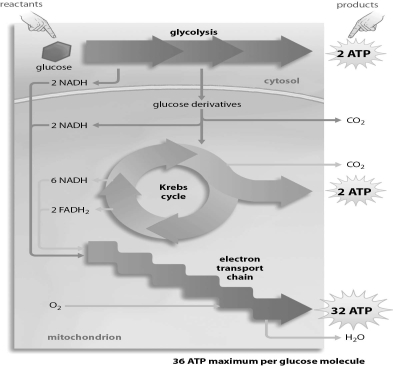
Which stage or stages of aerobic respiration require both NAD+ and ADP as reactants?
A) glycolysis
B) the Krebs cycle
C) the electron transport chain
D) the Krebs cycle and the electron transport chain
E) glycolysis and the Krebs cycle
Which stage or stages of aerobic respiration require both NAD+ and ADP as reactants?
A) glycolysis
B) the Krebs cycle
C) the electron transport chain
D) the Krebs cycle and the electron transport chain
E) glycolysis and the Krebs cycle
سؤال
سؤال
Refer to the figure below, and then answer the question that follows. 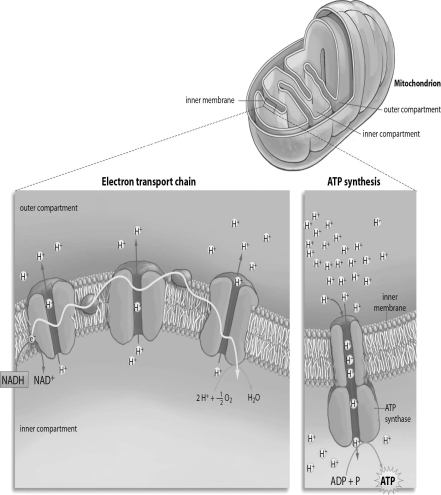
As electrons move through the electron transport chain, which of the following occurs?
A) Electrons are pumped from the inner compartment of the mitochondrion to the outer compartment of the mitochondrion.
B) Hydrogen ions move down their concentration gradient from the inner compartment of the mitochondrion to the outer compartment of the mitochondrion.
C) Energy from ATP is used to pump hydrogen ions across the inner membrane of the mitochondrion.
D) ATP is synthesized from ADP and P as hydrogen ions flow down the electron transport chain.
E) Hydrogen ions are pumped from the inner compartment of the mitochondrion to the outer compartment of the mitochondrion.
As electrons move through the electron transport chain, which of the following occurs?
A) Electrons are pumped from the inner compartment of the mitochondrion to the outer compartment of the mitochondrion.
B) Hydrogen ions move down their concentration gradient from the inner compartment of the mitochondrion to the outer compartment of the mitochondrion.
C) Energy from ATP is used to pump hydrogen ions across the inner membrane of the mitochondrion.
D) ATP is synthesized from ADP and P as hydrogen ions flow down the electron transport chain.
E) Hydrogen ions are pumped from the inner compartment of the mitochondrion to the outer compartment of the mitochondrion.
سؤال
سؤال
سؤال
سؤال
سؤال
سؤال
سؤال
سؤال
سؤال
سؤال
سؤال
سؤال
سؤال
سؤال
سؤال

فتح الحزمة
قم بالتسجيل لفتح البطاقات في هذه المجموعة!
Unlock Deck
Unlock Deck
1/79

العب

ملء الشاشة (f)
Deck 7: Vital Harvest: Deriving Energy From Food
1
The chemical equation that summarizes the process of cellular respiration is:
A) C6H12O6 + 6CO2 + 36ADP + 36P → 6O2 + 6H2O + 36ATP
B) 6O2 + 6H2O + 36 ATP → C6H12O6 + O2 + 36ADP + 36P
C) C6H12O6 + 6O2 + 36ATP → 6O2 + 6H2O + 36 ADP + 36P
D) C6H12O6 + 6O2 + 36ADP + 36P → 6O2 + 6H2O + 36ATP
A) C6H12O6 + 6CO2 + 36ADP + 36P → 6O2 + 6H2O + 36ATP
B) 6O2 + 6H2O + 36 ATP → C6H12O6 + O2 + 36ADP + 36P
C) C6H12O6 + 6O2 + 36ATP → 6O2 + 6H2O + 36 ADP + 36P
D) C6H12O6 + 6O2 + 36ADP + 36P → 6O2 + 6H2O + 36ATP
D
2
Glycolysis produces how many molecules of NADH?
A) one
B) two
C) three
D) four
A) one
B) two
C) three
D) four
B
3
What does oxygen allow humans to do?
A) breathe
B) produce food
C) digest food
D) produce ATP from food
A) breathe
B) produce food
C) digest food
D) produce ATP from food
D
4
Energy is required to link a phosphate group to ADP to make ATP. Where does the energy come from?
A) vitamins
B) enzymes
C) food we eat
D) breathing
A) vitamins
B) enzymes
C) food we eat
D) breathing
فتح الحزمة
افتح القفل للوصول البطاقات البالغ عددها 79 في هذه المجموعة.
فتح الحزمة
k this deck
5
The term aerobic means:
A) ATP-dependent.
B) carbon dioxide-dependent.
C) oxygen-dependent.
D) oxygen-independent.
A) ATP-dependent.
B) carbon dioxide-dependent.
C) oxygen-dependent.
D) oxygen-independent.
فتح الحزمة
افتح القفل للوصول البطاقات البالغ عددها 79 في هذه المجموعة.
فتح الحزمة
k this deck
6
The Krebs cycle extracts most of the energy in a glucose molecule and stores it in:
A) pyruvic acid.
B) ATP.
C) CO2.
D) NADH.
E) O2.
A) pyruvic acid.
B) ATP.
C) CO2.
D) NADH.
E) O2.
فتح الحزمة
افتح القفل للوصول البطاقات البالغ عددها 79 في هذه المجموعة.
فتح الحزمة
k this deck
7
Which of the following is an example of a molecule being oxidized?
A) oxygen being converted into H2O
B) pyruvate being converted into lactic acid
C) FAD being converted into FADH2
D) NADH being converted into NAD+
A) oxygen being converted into H2O
B) pyruvate being converted into lactic acid
C) FAD being converted into FADH2
D) NADH being converted into NAD+
فتح الحزمة
افتح القفل للوصول البطاقات البالغ عددها 79 في هذه المجموعة.
فتح الحزمة
k this deck
8
In which of the following reactions is reduction taking place?
A) NAD+ → NADH
B) FADH → FAD+
C) NADH → NAD+
A) NAD+ → NADH
B) FADH → FAD+
C) NADH → NAD+
فتح الحزمة
افتح القفل للوصول البطاقات البالغ عددها 79 في هذه المجموعة.
فتح الحزمة
k this deck
9
When NADH donates its electrons to the electron transport chain, which of the following is true?
A) NADH is reduced to NAD+.
B) NADH is oxidized to NADH2.
C) NADH is reduced to NADH2.
D) NADH is oxidized to NAD+.
A) NADH is reduced to NAD+.
B) NADH is oxidized to NADH2.
C) NADH is reduced to NADH2.
D) NADH is oxidized to NAD+.
فتح الحزمة
افتح القفل للوصول البطاقات البالغ عددها 79 في هذه المجموعة.
فتح الحزمة
k this deck
10
There is an energy investment step needed to get glycolysis started, requiring the use of ________ ATPs.
A) zero
B) four
C) two
D) three
E) one
A) zero
B) four
C) two
D) three
E) one
فتح الحزمة
افتح القفل للوصول البطاقات البالغ عددها 79 في هذه المجموعة.
فتح الحزمة
k this deck
11
How many pyruvic acid molecules are generated during the oxidation of one glucose molecule during cellular respiration?
A) three
B) two
C) zero
D) one
E) four
A) three
B) two
C) zero
D) one
E) four
فتح الحزمة
افتح القفل للوصول البطاقات البالغ عددها 79 في هذه المجموعة.
فتح الحزمة
k this deck
12
During cellular respiration, what molecule collects the majority of the electrons from the food that we eat?
A) CO2
B) FAD+
C) NAD+
D) glucose
E) ATP
A) CO2
B) FAD+
C) NAD+
D) glucose
E) ATP
فتح الحزمة
افتح القفل للوصول البطاقات البالغ عددها 79 في هذه المجموعة.
فتح الحزمة
k this deck
13
Glycolysis occurs in the cell's:
A) cytosol.
B) mitochondria.
C) Golgi apparatus.
D) plasma membrane.
E) nucleus.
A) cytosol.
B) mitochondria.
C) Golgi apparatus.
D) plasma membrane.
E) nucleus.
فتح الحزمة
افتح القفل للوصول البطاقات البالغ عددها 79 في هذه المجموعة.
فتح الحزمة
k this deck
14
Cells capture the energy from food and store it in the form of:
A) glucose.
B) ATP.
C) oxygen.
D) heat.
E) carbon dioxide.
A) glucose.
B) ATP.
C) oxygen.
D) heat.
E) carbon dioxide.
فتح الحزمة
افتح القفل للوصول البطاقات البالغ عددها 79 في هذه المجموعة.
فتح الحزمة
k this deck
15
Why do biologists believe glycolysis evolved before the Krebs cycle and the electron transport chain?
A) Glycolysis occurs in the mitochondria, which all organisms have.
B) Glycolysis requires oxygen, which was one of the first elements on Earth.
C) All organisms use glycolysis; not all use the Krebs cycle and the electron transport chain.
D) Glycolysis is the most efficient at producing energy.
A) Glycolysis occurs in the mitochondria, which all organisms have.
B) Glycolysis requires oxygen, which was one of the first elements on Earth.
C) All organisms use glycolysis; not all use the Krebs cycle and the electron transport chain.
D) Glycolysis is the most efficient at producing energy.
فتح الحزمة
افتح القفل للوصول البطاقات البالغ عددها 79 في هذه المجموعة.
فتح الحزمة
k this deck
16
The majority of ATP in aerobic respiration is produced by:
A) the Krebs cycle.
B) glycolysis.
C) the electron transport chain.
A) the Krebs cycle.
B) glycolysis.
C) the electron transport chain.
فتح الحزمة
افتح القفل للوصول البطاقات البالغ عددها 79 في هذه المجموعة.
فتح الحزمة
k this deck
17
Oxidation involves the ________ , and reduction involves the
A) gain of oxygen; loss of oxygen
B) loss of oxygen; gain of oxygen
C) loss of electrons; gain of electrons
D) gain of electrons; loss of electrons
A) gain of oxygen; loss of oxygen
B) loss of oxygen; gain of oxygen
C) loss of electrons; gain of electrons
D) gain of electrons; loss of electrons
فتح الحزمة
افتح القفل للوصول البطاقات البالغ عددها 79 في هذه المجموعة.
فتح الحزمة
k this deck
18
The three main products of glycolysis are:
A) ATP, NAD+, and CO2.
B) ATP, pyruvic acid, and CO2.
C) ATP, NADH, and CO2.
D) ATP. NADH, and pyruvic acid.
E) NAD+, pyruvic acid, and CO2.
A) ATP, NAD+, and CO2.
B) ATP, pyruvic acid, and CO2.
C) ATP, NADH, and CO2.
D) ATP. NADH, and pyruvic acid.
E) NAD+, pyruvic acid, and CO2.
فتح الحزمة
افتح القفل للوصول البطاقات البالغ عددها 79 في هذه المجموعة.
فتح الحزمة
k this deck
19
During the Krebs cycle, acetyl CoA covalently binds to oxaloacetate to form citrate, a ________ -carbon molecule.
A) six
B) three
C) five
D) two
E) four
A) six
B) three
C) five
D) two
E) four
فتح الحزمة
افتح القفل للوصول البطاقات البالغ عددها 79 في هذه المجموعة.
فتح الحزمة
k this deck
20
During glycolysis, a glucose molecule will be split into two, three-carbon ________ molecules.
A) acetyl CoA
B) pyruvic acid
C) ATP
D) oxaloacetatic acid
A) acetyl CoA
B) pyruvic acid
C) ATP
D) oxaloacetatic acid
فتح الحزمة
افتح القفل للوصول البطاقات البالغ عددها 79 في هذه المجموعة.
فتح الحزمة
k this deck
21
The enzymes used by the Krebs cycle are located:
A) in the cytosol.
B) in the inner compartment of the mitochondrion.
C) attached to the inner mitochondrial membrane.
D) between the inner membrane and outer mitochondrial membrane.
A) in the cytosol.
B) in the inner compartment of the mitochondrion.
C) attached to the inner mitochondrial membrane.
D) between the inner membrane and outer mitochondrial membrane.
فتح الحزمة
افتح القفل للوصول البطاقات البالغ عددها 79 في هذه المجموعة.
فتح الحزمة
k this deck
22
The end products that come out of the Krebs cycle include all of the following except:
A) NADH.
B) pyruvic acid.
C) FADH2.
D) CO2.
E) ATP.
A) NADH.
B) pyruvic acid.
C) FADH2.
D) CO2.
E) ATP.
فتح الحزمة
افتح القفل للوصول البطاقات البالغ عددها 79 في هذه المجموعة.
فتح الحزمة
k this deck
23
Which of the following statements concerning the electron transport chain is false?
A) The final electron acceptor is oxygen.
B) Each NADH yields three ATP molecules.
C) Each FADH2 yields two ATP molecules.
D) The electron transport chain will work whether oxygen is present or not.
A) The final electron acceptor is oxygen.
B) Each NADH yields three ATP molecules.
C) Each FADH2 yields two ATP molecules.
D) The electron transport chain will work whether oxygen is present or not.
فتح الحزمة
افتح القفل للوصول البطاقات البالغ عددها 79 في هذه المجموعة.
فتح الحزمة
k this deck
24
Eukaryotic cells require oxygen to:
A) enter the Krebs cycle as an intermediate.
B) perform fermentation.
C) breathe.
D) serve as an electron acceptor in the electron transport chain.
E) start glycolysis.
A) enter the Krebs cycle as an intermediate.
B) perform fermentation.
C) breathe.
D) serve as an electron acceptor in the electron transport chain.
E) start glycolysis.
فتح الحزمة
افتح القفل للوصول البطاقات البالغ عددها 79 في هذه المجموعة.
فتح الحزمة
k this deck
25
Certain drugs prevent the formation of a hydrogen ion gradient across the inner mitochondrial membrane. What is the most likely consequence?
A) Most ATP production will stop, and the cell will die.
B) ATP production will increase.
C) Glycolysis will stop.
D) Fermentation will stop.
A) Most ATP production will stop, and the cell will die.
B) ATP production will increase.
C) Glycolysis will stop.
D) Fermentation will stop.
فتح الحزمة
افتح القفل للوصول البطاقات البالغ عددها 79 في هذه المجموعة.
فتح الحزمة
k this deck
26
During electron transport, how many ATP molecules are produced per NADH molecule and FADH2 molecule?
A) three per NADH and three per FADH2
B) two per NADH and two per FADH2
C) three per NADH and two per FADH2
D) two per NADH and three per FADH2
A) three per NADH and three per FADH2
B) two per NADH and two per FADH2
C) three per NADH and two per FADH2
D) two per NADH and three per FADH2
فتح الحزمة
افتح القفل للوصول البطاقات البالغ عددها 79 في هذه المجموعة.
فتح الحزمة
k this deck
27
All of the following occur as glucose moves through glycolysis and the Krebs cycle except:
A) NAD+ is converted to NADH.
B) CO2 is released.
C) actely CoA is removed to form pyruvate.
D) acetyl CoA enters the Krebs cycle.
A) NAD+ is converted to NADH.
B) CO2 is released.
C) actely CoA is removed to form pyruvate.
D) acetyl CoA enters the Krebs cycle.
فتح الحزمة
افتح القفل للوصول البطاقات البالغ عددها 79 في هذه المجموعة.
فتح الحزمة
k this deck
28
Oxygen is reduced to water in the cell's:
A) nucleus.
B) mitochondria.
C) cytoplasm.
D) Golgi apparatus.
E) plasma membrane.
A) nucleus.
B) mitochondria.
C) cytoplasm.
D) Golgi apparatus.
E) plasma membrane.
فتح الحزمة
افتح القفل للوصول البطاقات البالغ عددها 79 في هذه المجموعة.
فتح الحزمة
k this deck
29
Which of the following are electron carriers produced by the Krebs cycle?
A) ATP and FADH2
B) ATP and CO2
C) NADH and ATP
D) NADH and FADH2
A) ATP and FADH2
B) ATP and CO2
C) NADH and ATP
D) NADH and FADH2
فتح الحزمة
افتح القفل للوصول البطاقات البالغ عددها 79 في هذه المجموعة.
فتح الحزمة
k this deck
30
How many NADH molecules are created during one turn of the Krebs cycle? (Assume the Krebs cycle begins with one acetyl CoA molecule.)
A) four
B) six
C) one
D) three
E) eight
A) four
B) six
C) one
D) three
E) eight
فتح الحزمة
افتح القفل للوصول البطاقات البالغ عددها 79 في هذه المجموعة.
فتح الحزمة
k this deck
31
How many NADH are produced in the Krebs cycle for each glucose molecule used?
A) one
B) three
C) six
D) eight
A) one
B) three
C) six
D) eight
فتح الحزمة
افتح القفل للوصول البطاقات البالغ عددها 79 في هذه المجموعة.
فتح الحزمة
k this deck
32
Glycolysis occurs in the ________, the Krebs cycle occurs in the ________, and the electron transport chain occurs in the ________ membrane.
A) mitochondria; mitochondria; mitochondrial
B) cytoplasm; mitochondria; mitochondrial
C) mitochondria; cytoplasm; plasma
D) cytoplasm; cytoplasm; plasma
E) cytoplasm; mitochondria; plasma
A) mitochondria; mitochondria; mitochondrial
B) cytoplasm; mitochondria; mitochondrial
C) mitochondria; cytoplasm; plasma
D) cytoplasm; cytoplasm; plasma
E) cytoplasm; mitochondria; plasma
فتح الحزمة
افتح القفل للوصول البطاقات البالغ عددها 79 في هذه المجموعة.
فتح الحزمة
k this deck
33
Which of the following molecules is produced in the intermediate step between glycolysis and the Krebs cycle?
A) ATP
B) oxaloacetate
C) pyruvic acid
D) acetyl CoA
E) citric acid
A) ATP
B) oxaloacetate
C) pyruvic acid
D) acetyl CoA
E) citric acid
فتح الحزمة
افتح القفل للوصول البطاقات البالغ عددها 79 في هذه المجموعة.
فتح الحزمة
k this deck
34
The enzymes used by the electron transport chain are located:
A) in the cytosol.
B) in the outer membrane of the mitochondrion.
C) in the inner membrane of the mitochondrion.
D) between the inner and outer membranes of the mitochondrion.
A) in the cytosol.
B) in the outer membrane of the mitochondrion.
C) in the inner membrane of the mitochondrion.
D) between the inner and outer membranes of the mitochondrion.
فتح الحزمة
افتح القفل للوصول البطاقات البالغ عددها 79 في هذه المجموعة.
فتح الحزمة
k this deck
35
When glucose is the fuel source, what is the correct sequence of stages in cellular respiration?
A) glycolysis, Krebs cycle, electron transport
B) electron transport, Krebs cycle, glycolysis
C) Krebs cycle, glycolysis, electron transport
D) electron transport, glycolysis, Krebs cycle
E) Krebs cycle, electron transport, glycolysis
A) glycolysis, Krebs cycle, electron transport
B) electron transport, Krebs cycle, glycolysis
C) Krebs cycle, glycolysis, electron transport
D) electron transport, glycolysis, Krebs cycle
E) Krebs cycle, electron transport, glycolysis
فتح الحزمة
افتح القفل للوصول البطاقات البالغ عددها 79 في هذه المجموعة.
فتح الحزمة
k this deck
36
The enzyme that creates ATP during electron transport is called:
A) ADP phosphotransferase.
B) ATP creatase.
C) ATP polymerase.
D) ATP synthase.
A) ADP phosphotransferase.
B) ATP creatase.
C) ATP polymerase.
D) ATP synthase.
فتح الحزمة
افتح القفل للوصول البطاقات البالغ عددها 79 في هذه المجموعة.
فتح الحزمة
k this deck
37
When acetyl CoA enters the Krebs cycle, the first molecule produced is:
A) citric acid.
B) α-ketoglutaric acid.
C) succinic acid.
D) malic acid.
E) oxaloacetatic acid.
A) citric acid.
B) α-ketoglutaric acid.
C) succinic acid.
D) malic acid.
E) oxaloacetatic acid.
فتح الحزمة
افتح القفل للوصول البطاقات البالغ عددها 79 في هذه المجموعة.
فتح الحزمة
k this deck
38
The electron transport chain is used during which of the following processes?
A) lactate fermentation
B) aerobic cellular respiration
C) glycolysis
D) alcoholic fermentation
A) lactate fermentation
B) aerobic cellular respiration
C) glycolysis
D) alcoholic fermentation
فتح الحزمة
افتح القفل للوصول البطاقات البالغ عددها 79 في هذه المجموعة.
فتح الحزمة
k this deck
39
A total of four ATP molecules have to be used by aerobic respiration in eukaryotic cells. Where are these four ATP molecules used?
A) One molecule is used to start glycolysis, and three are used to move NADH made during glycolysis into the mitochondria.
B) Three molecules are used to start glycolysis, and one is used to move NADH made during glycolysis into the mitochondria.
C) Two molecules are used to start glycolysis, and two are used to move NADH made during glycolysis into the mitochondria.
D) All four molecules are used to start glycolysis.
E) All four molecules are used to move NADH made during glycolysis into the mitochondria.
A) One molecule is used to start glycolysis, and three are used to move NADH made during glycolysis into the mitochondria.
B) Three molecules are used to start glycolysis, and one is used to move NADH made during glycolysis into the mitochondria.
C) Two molecules are used to start glycolysis, and two are used to move NADH made during glycolysis into the mitochondria.
D) All four molecules are used to start glycolysis.
E) All four molecules are used to move NADH made during glycolysis into the mitochondria.
فتح الحزمة
افتح القفل للوصول البطاقات البالغ عددها 79 في هذه المجموعة.
فتح الحزمة
k this deck
40
How many turns of the Krebs cycle are needed to completely break down one molecule of glucose?
A) one
B) two
C) three
D) four
A) one
B) two
C) three
D) four
فتح الحزمة
افتح القفل للوصول البطاقات البالغ عددها 79 في هذه المجموعة.
فتح الحزمة
k this deck
41
Match the following.
A) acetyl CoA
B) citric acid
C) NADH
D) coenzyme A
E) oxaloacetic acid
F) pyruvic acid
A three-carbon molecule that gets shuttled into the mitochondria
A) acetyl CoA
B) citric acid
C) NADH
D) coenzyme A
E) oxaloacetic acid
F) pyruvic acid
A three-carbon molecule that gets shuttled into the mitochondria
فتح الحزمة
افتح القفل للوصول البطاقات البالغ عددها 79 في هذه المجموعة.
فتح الحزمة
k this deck
42
A molecule that has lost electrons has been reduced.
فتح الحزمة
افتح القفل للوصول البطاقات البالغ عددها 79 في هذه المجموعة.
فتح الحزمة
k this deck
43
Match the following.
A) acetyl CoA
B) citric acid
C) NADH
D) coenzyme A
E) oxaloacetic acid
F) pyruvic acid
Combines with oxaloacetic acid in the first step of the Krebs cycle
A) acetyl CoA
B) citric acid
C) NADH
D) coenzyme A
E) oxaloacetic acid
F) pyruvic acid
Combines with oxaloacetic acid in the first step of the Krebs cycle
فتح الحزمة
افتح القفل للوصول البطاقات البالغ عددها 79 في هذه المجموعة.
فتح الحزمة
k this deck
44
Organisms exist that can survive using only glycolysis.
فتح الحزمة
افتح القفل للوصول البطاقات البالغ عددها 79 في هذه المجموعة.
فتح الحزمة
k this deck
45
Proteins are not oxidized by aerobic respiration.
فتح الحزمة
افتح القفل للوصول البطاقات البالغ عددها 79 في هذه المجموعة.
فتح الحزمة
k this deck
46
In order for one molecule to be oxidized, another molecule must be reduced.
فتح الحزمة
افتح القفل للوصول البطاقات البالغ عددها 79 في هذه المجموعة.
فتح الحزمة
k this deck
47
Which of the following types of foods can be oxidized by aerobic respiration?
A) only glucose
B) only fats
C) only proteins
D) only glucose and fats
E) glucose, fats, and proteins
A) only glucose
B) only fats
C) only proteins
D) only glucose and fats
E) glucose, fats, and proteins
فتح الحزمة
افتح القفل للوصول البطاقات البالغ عددها 79 في هذه المجموعة.
فتح الحزمة
k this deck
48
Before starch can be used for cellular respiration, it must be broken down into:
A) pyruvate.
B) fatty acid.
C) oxaloacetatic acid.
D) amino acids.
E) glucose.
A) pyruvate.
B) fatty acid.
C) oxaloacetatic acid.
D) amino acids.
E) glucose.
فتح الحزمة
افتح القفل للوصول البطاقات البالغ عددها 79 في هذه المجموعة.
فتح الحزمة
k this deck
49
Which of the following statements is true of aerobic respiration?
A) Fats proceed through aerobic respiration in exactly the same manner as glucose.
B) Proteins proceed through aerobic respiration in exactly the same manner as glucose.
C) Glucose will be completely broken down even if oxygen is not present.
D) Glucose, fats, and proteins can be oxidized by aerobic respiration
A) Fats proceed through aerobic respiration in exactly the same manner as glucose.
B) Proteins proceed through aerobic respiration in exactly the same manner as glucose.
C) Glucose will be completely broken down even if oxygen is not present.
D) Glucose, fats, and proteins can be oxidized by aerobic respiration
فتح الحزمة
افتح القفل للوصول البطاقات البالغ عددها 79 في هذه المجموعة.
فتح الحزمة
k this deck
50
Electrons lose energy as they pass down the electron transport chain. What is this energy used for?
A) to power hydrogen ion pumps
B) to link oxygen to hydrogen ions
C) to power water pumps
D) to directly power ATP synthase
A) to power hydrogen ion pumps
B) to link oxygen to hydrogen ions
C) to power water pumps
D) to directly power ATP synthase
فتح الحزمة
افتح القفل للوصول البطاقات البالغ عددها 79 في هذه المجموعة.
فتح الحزمة
k this deck
51
Before proteins can be used for cellular respiration, they must be broken down into:
A) pyruvate.
B) fatty acids.
C) amino acids.
D) glucose.
A) pyruvate.
B) fatty acids.
C) amino acids.
D) glucose.
فتح الحزمة
افتح القفل للوصول البطاقات البالغ عددها 79 في هذه المجموعة.
فتح الحزمة
k this deck
52
The majority of ATP produced during aerobic respiration is produced during glycolysis.
فتح الحزمة
افتح القفل للوصول البطاقات البالغ عددها 79 في هذه المجموعة.
فتح الحزمة
k this deck
53
The Krebs cycle must turn six times for each glucose molecule.
فتح الحزمة
افتح القفل للوصول البطاقات البالغ عددها 79 في هذه المجموعة.
فتح الحزمة
k this deck
54
Glycolysis probably evolved before the Krebs cycle.
فتح الحزمة
افتح القفل للوصول البطاقات البالغ عددها 79 في هذه المجموعة.
فتح الحزمة
k this deck
55
What is the energy source used to drive ATP synthase to produce ATP?
A) glucose coming across the mitochondrial inner membrane
B) H+ ions flowing across the mitochondrial inner membrane
C) acetyl CoA coming across the mitochondrial inner membrane
D) NADH coming across the mitochondrial inner membrane
E) electrons flowing through the electron transport chain
A) glucose coming across the mitochondrial inner membrane
B) H+ ions flowing across the mitochondrial inner membrane
C) acetyl CoA coming across the mitochondrial inner membrane
D) NADH coming across the mitochondrial inner membrane
E) electrons flowing through the electron transport chain
فتح الحزمة
افتح القفل للوصول البطاقات البالغ عددها 79 في هذه المجموعة.
فتح الحزمة
k this deck
56
During cellular respiration:
A) glucose is reduced and oxygen is oxidized.
B) glucose is oxidized and oxygen is reduced.
C) oxygen oxidizes glucose directly.
D) both glucose and oxygen get reduced.
A) glucose is reduced and oxygen is oxidized.
B) glucose is oxidized and oxygen is reduced.
C) oxygen oxidizes glucose directly.
D) both glucose and oxygen get reduced.
فتح الحزمة
افتح القفل للوصول البطاقات البالغ عددها 79 في هذه المجموعة.
فتح الحزمة
k this deck
57
Adding phosphate to ADP to form ATP requires an input of energy.
فتح الحزمة
افتح القفل للوصول البطاقات البالغ عددها 79 في هذه المجموعة.
فتح الحزمة
k this deck
58
What is the final net number of ATP molecules that can be produced per glucose molecule by cellular respiration?
A) 36
B) 4
C) 8
D) 2
E) 38
A) 36
B) 4
C) 8
D) 2
E) 38
فتح الحزمة
افتح القفل للوصول البطاقات البالغ عددها 79 في هذه المجموعة.
فتح الحزمة
k this deck
59
What role do hydrogen ions (H+) play in the electron transport chain?
A) They are pumped across the mitochondrial inner membrane against their concentration gradient (to where their concentration is high); as the H+ ions flow back to where their concentration is low, they drive ATP synthase to form ATP.
B) They are pumped across the mitochondrial inner membrane against their concentration gradient (to where their concentration is low); as the H+ ions flow back to where their concentration is high, they drive ATP synthase to form ATP.
C) They add phosphate groups on ADP to form ATP.
D) They transfer electrons to the electron transport chain.
A) They are pumped across the mitochondrial inner membrane against their concentration gradient (to where their concentration is high); as the H+ ions flow back to where their concentration is low, they drive ATP synthase to form ATP.
B) They are pumped across the mitochondrial inner membrane against their concentration gradient (to where their concentration is low); as the H+ ions flow back to where their concentration is high, they drive ATP synthase to form ATP.
C) They add phosphate groups on ADP to form ATP.
D) They transfer electrons to the electron transport chain.
فتح الحزمة
افتح القفل للوصول البطاقات البالغ عددها 79 في هذه المجموعة.
فتح الحزمة
k this deck
60
In order for a fat to be used for energy, it must first be broken down into:
A) amino acids.
B) glucose.
C) fatty acids and sugars.
D) fatty acids and glycerol.
A) amino acids.
B) glucose.
C) fatty acids and sugars.
D) fatty acids and glycerol.
فتح الحزمة
افتح القفل للوصول البطاقات البالغ عددها 79 في هذه المجموعة.
فتح الحزمة
k this deck
61
________ is the first product of the Krebs cycle.
فتح الحزمة
افتح القفل للوصول البطاقات البالغ عددها 79 في هذه المجموعة.
فتح الحزمة
k this deck
62
Refer to the figure below, and then answer the question that follows.
Which stage or stages of aerobic respiration require both NAD+ and ADP as reactants?
A) glycolysis
B) the Krebs cycle
C) the electron transport chain
D) the Krebs cycle and the electron transport chain
E) glycolysis and the Krebs cycle
Which stage or stages of aerobic respiration require both NAD+ and ADP as reactants?
A) glycolysis
B) the Krebs cycle
C) the electron transport chain
D) the Krebs cycle and the electron transport chain
E) glycolysis and the Krebs cycle
فتح الحزمة
افتح القفل للوصول البطاقات البالغ عددها 79 في هذه المجموعة.
فتح الحزمة
k this deck
63
When fats are metabolized by aerobic respiration, they are first split into ________ and ________ molecules.
فتح الحزمة
افتح القفل للوصول البطاقات البالغ عددها 79 في هذه المجموعة.
فتح الحزمة
k this deck
64
Refer to the figure below, and then answer the question that follows.
As electrons move through the electron transport chain, which of the following occurs?
A) Electrons are pumped from the inner compartment of the mitochondrion to the outer compartment of the mitochondrion.
B) Hydrogen ions move down their concentration gradient from the inner compartment of the mitochondrion to the outer compartment of the mitochondrion.
C) Energy from ATP is used to pump hydrogen ions across the inner membrane of the mitochondrion.
D) ATP is synthesized from ADP and P as hydrogen ions flow down the electron transport chain.
E) Hydrogen ions are pumped from the inner compartment of the mitochondrion to the outer compartment of the mitochondrion.
As electrons move through the electron transport chain, which of the following occurs?
A) Electrons are pumped from the inner compartment of the mitochondrion to the outer compartment of the mitochondrion.
B) Hydrogen ions move down their concentration gradient from the inner compartment of the mitochondrion to the outer compartment of the mitochondrion.
C) Energy from ATP is used to pump hydrogen ions across the inner membrane of the mitochondrion.
D) ATP is synthesized from ADP and P as hydrogen ions flow down the electron transport chain.
E) Hydrogen ions are pumped from the inner compartment of the mitochondrion to the outer compartment of the mitochondrion.
فتح الحزمة
افتح القفل للوصول البطاقات البالغ عددها 79 في هذه المجموعة.
فتح الحزمة
k this deck
65
Cyanide is a deadly poison that reacts with hemoglobin in our blood and prevents it from binding oxygen. Cyanide also binds to a molecule in the electron transport chain and blocks the flow of electrons down the chain. Explain why both these mechanisms will stop ATP synthesis.
فتح الحزمة
افتح القفل للوصول البطاقات البالغ عددها 79 في هذه المجموعة.
فتح الحزمة
k this deck
66
Match the following.
A) acetyl CoA
B) citric acid
C) NADH
D) coenzyme A
E) oxaloacetic acid
F) pyruvic acid
The first molecule produced during the Krebs cycle
A) acetyl CoA
B) citric acid
C) NADH
D) coenzyme A
E) oxaloacetic acid
F) pyruvic acid
The first molecule produced during the Krebs cycle
فتح الحزمة
افتح القفل للوصول البطاقات البالغ عددها 79 في هذه المجموعة.
فتح الحزمة
k this deck
67
The three-carbon ________ combines with coenzyme A to form ________.
فتح الحزمة
افتح القفل للوصول البطاقات البالغ عددها 79 في هذه المجموعة.
فتح الحزمة
k this deck
68
As you know, all living things require a source of nutrients. Using animals as an example, explain what these nutrients are used for once they leave the digestive tract.
فتح الحزمة
افتح القفل للوصول البطاقات البالغ عددها 79 في هذه المجموعة.
فتح الحزمة
k this deck
69
A molecule that has gained electrons has been ________.
فتح الحزمة
افتح القفل للوصول البطاقات البالغ عددها 79 في هذه المجموعة.
فتح الحزمة
k this deck
70
One of the most common misconceptions about cellular respiration is that we inhale oxygen and that this oxygen is converted to carbon dioxide, which we exhale. Explain what happens to the oxygen we inhale during cellular respiration. Then explain where the carbon dioxide we exhale comes from in cellular respiration.
فتح الحزمة
افتح القفل للوصول البطاقات البالغ عددها 79 في هذه المجموعة.
فتح الحزمة
k this deck
71
The last step of the Krebs cycle produces this
فتح الحزمة
افتح القفل للوصول البطاقات البالغ عددها 79 في هذه المجموعة.
فتح الحزمة
k this deck
72
Human babies and animals adapted to the cold are able to maintain their body temperatures because of the presence of brown fat. The mitochondria in brown fat have a protein in them called thermogenin, which allows the flow of hydrogen ions back through the inner mitochondrial membrane (bypassing the ATP synthase). Based on this and your understanding of cellular respiration, propose a mechanism by which brown fat helps keep babies and other animals warm.
فتح الحزمة
افتح القفل للوصول البطاقات البالغ عددها 79 في هذه المجموعة.
فتح الحزمة
k this deck
73
The most important electron carrier in cellular respiration is ________.
فتح الحزمة
افتح القفل للوصول البطاقات البالغ عددها 79 في هذه المجموعة.
فتح الحزمة
k this deck
74
Match the following.
A) acetyl CoA
B) citric acid
C) NADH
D) coenzyme A
E) oxaloacetic acid
F) pyruvic acid
Combines with pyruvic acid in an intermediate step
A) acetyl CoA
B) citric acid
C) NADH
D) coenzyme A
E) oxaloacetic acid
F) pyruvic acid
Combines with pyruvic acid in an intermediate step
فتح الحزمة
افتح القفل للوصول البطاقات البالغ عددها 79 في هذه المجموعة.
فتح الحزمة
k this deck
75
Match the following.
A) acetyl CoA
B) citric acid
C) NADH
D) coenzyme A
E) oxaloacetic acid
F) pyruvic acid
Carries electrons away from the Krebs cycle
A) acetyl CoA
B) citric acid
C) NADH
D) coenzyme A
E) oxaloacetic acid
F) pyruvic acid
Carries electrons away from the Krebs cycle
فتح الحزمة
افتح القفل للوصول البطاقات البالغ عددها 79 في هذه المجموعة.
فتح الحزمة
k this deck
76
During aerobic respiration, the final electron acceptor is ________.
فتح الحزمة
افتح القفل للوصول البطاقات البالغ عددها 79 في هذه المجموعة.
فتح الحزمة
k this deck
77
The electron transport chain occurs in the ________ of the mitochondria.
فتح الحزمة
افتح القفل للوصول البطاقات البالغ عددها 79 في هذه المجموعة.
فتح الحزمة
k this deck
78
________ means "sugar splitting."
فتح الحزمة
افتح القفل للوصول البطاقات البالغ عددها 79 في هذه المجموعة.
فتح الحزمة
k this deck
79
Mitochondria can be isolated from cells and their production of ATP measured. You want to identify the mechanism of ATP production, so you isolate mitochondria, remove the outer membrane, and place them in a high pH solution. What will happen to the ATP production if you start to lower the pH by adding hydrogen ions to the solution?
فتح الحزمة
افتح القفل للوصول البطاقات البالغ عددها 79 في هذه المجموعة.
فتح الحزمة
k this deck
فتح الحزمة
افتح القفل للوصول البطاقات البالغ عددها 79 في هذه المجموعة.






