







 تكلم مع الذكاء الاصطناعي


Deck 24: Monopoly
ملء الشاشة (f)

سؤال

سؤال
سؤال
سؤال
سؤال
سؤال
سؤال
سؤال
سؤال
سؤال
سؤال
سؤال
سؤال
سؤال
سؤال
سؤال
سؤال
سؤال
سؤال
سؤال
سؤال
سؤال
سؤال
سؤال
سؤال
سؤال
سؤال
سؤال
سؤال
سؤال
سؤال
سؤال
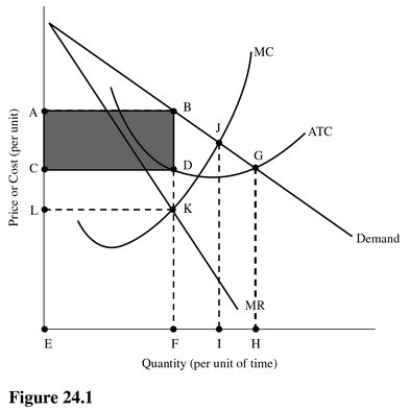 The profit-maximizing rate of output in Figure 24.1 is
A)I.
B)H.
C)E.
D)F.
سؤال
سؤال
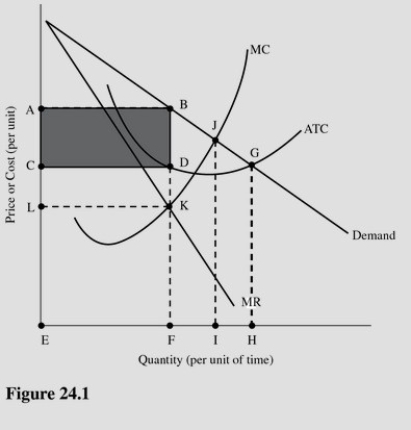 In Figure 24.1,the profit-maximizing monopolist will charge a price of
A)J.
B)L.
C)C.
D)A.
سؤال
سؤال
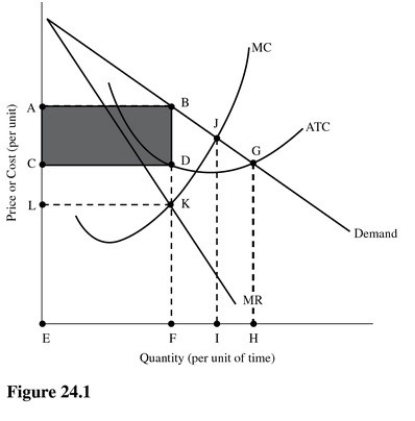 In Figure 24.1,total revenue is represented by the area
A)ABFE.
B)CDFE.
C)ABGHE.
D)ABDC.
سؤال
سؤال
سؤال
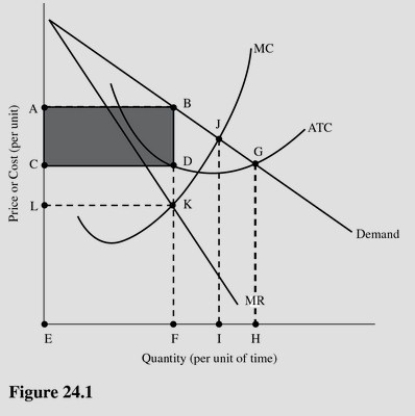 The shaded area in Figure 24.1 represents
A)Total revenue.
B)Total cost.
C)Total profit.
D)Total loss.
سؤال
سؤال
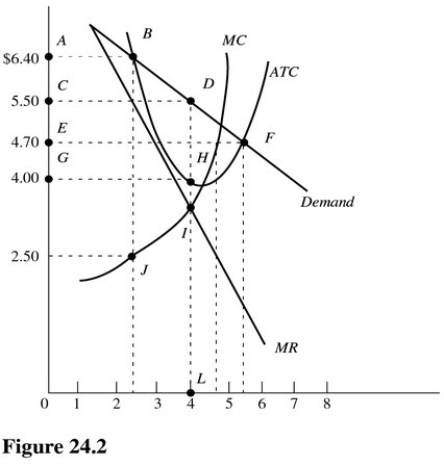 In Figure 24.2,total cost at the profit-maximizing rate of output is
A)$16.00.
B)$18.80.
C)$22.00.
D)$25.60.
سؤال
سؤال
سؤال
سؤال
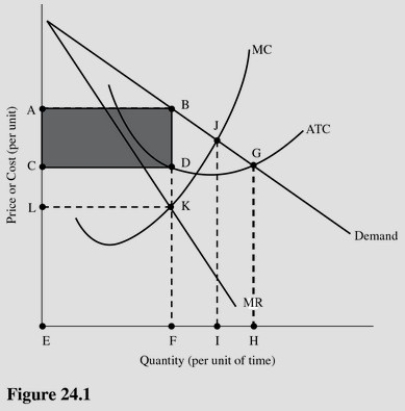 In Figure 24.1,total profit is represented by the area
A)ABFE.
B)CDFE.
C)ABGHE.
D)ABDC.
سؤال
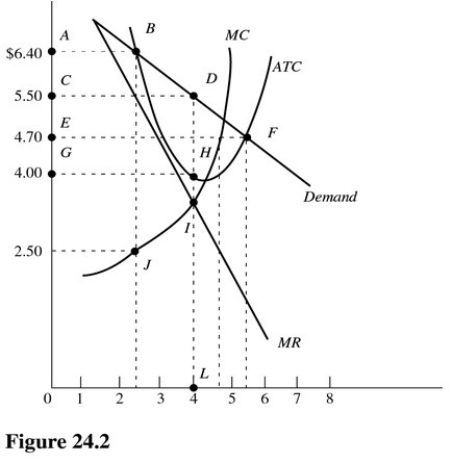 In Figure 24.2,the profit-maximizing monopolist will earn a profit per unit of
A)$1.50.
B)$4.00.
C)$4.70.
D)$5.50.
سؤال
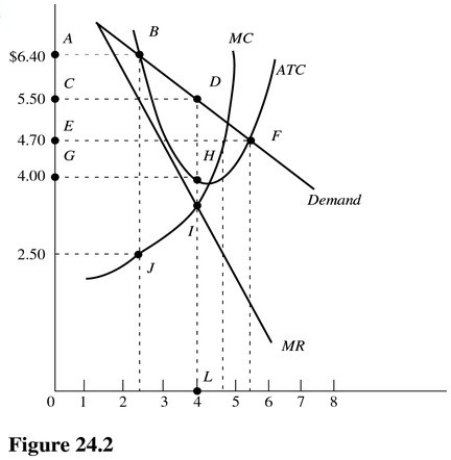 In Figure 24.2,total profit at the profit-maximizing rate of output is
A)$16.00.
B)$5.50.
C)$6.00.
D)$22.00.
سؤال
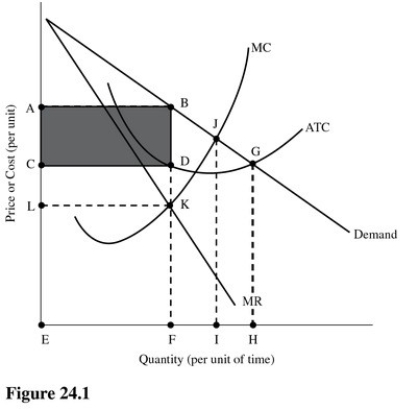 In Figure 24.1 total cost is represented by the area
A)ABFE.
B)CDFE.
C)ABGHE.
D)ABDC.
سؤال
سؤال
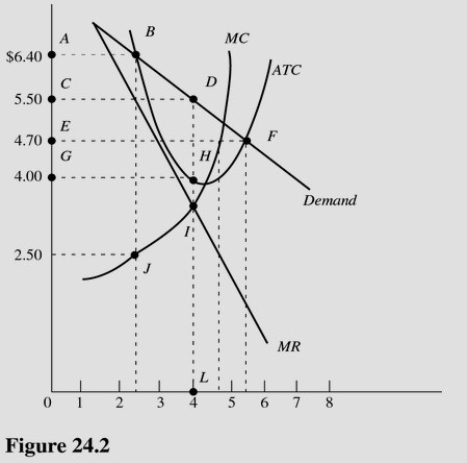 In Figure 24.2,total profit at the profit-maximizing rate of output is
A)CDLK.
B)CDHG.
C)ABDLK.
D)GHLK.
سؤال
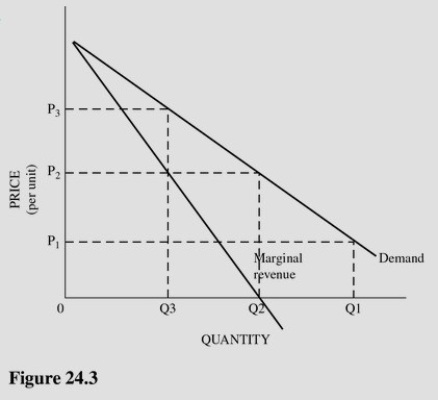 Refer to Figure 24.3.Suppose this good could somehow be produced at no cost (that is,the total cost at any level of output was zero).This single-price monopoly firm would maximize profit by
A)Raising the price as high as possible until the quantity demanded began to decrease.
B)Producing an infinite amount and selling at the highest price possible.
C)Producing Q2 and charging P2.
D)Producing Q3 and charging P3.
سؤال
سؤال
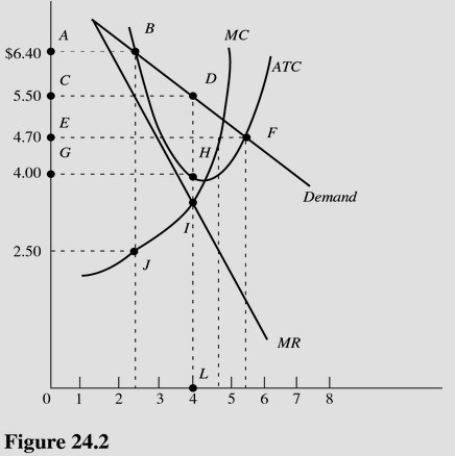 In Figure 24.2,total revenue at the profit-maximizing rate of output is
A)$22.00.
B)$6.40.
C)$4.00.
D)$16.00.
سؤال
سؤال
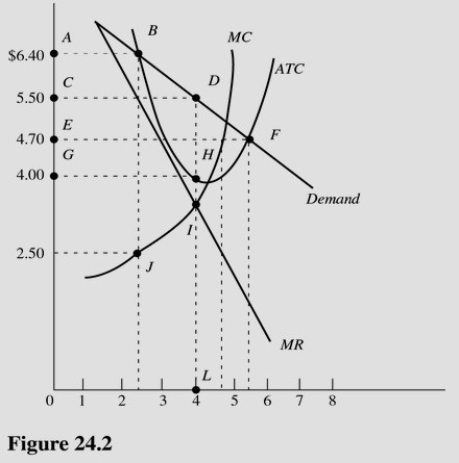 In Figure 24.2,a profit-maximizing monopolist will charge a price of
A)$6.40.
B)$4.70.
C)$4.00.
D)$5.50.
سؤال
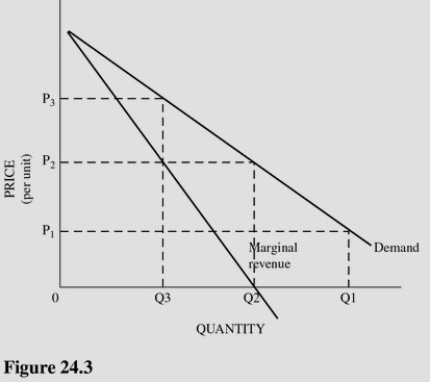 Refer to Figure 24.3.Which of the following statements is true about the price elasticity of demand at price P3?
A)The price elasticity is elastic.
B)The price elasticity is unitary.
C)The price elasticity is inelastic.
D)The price elasticity is zero.
سؤال
سؤال
سؤال
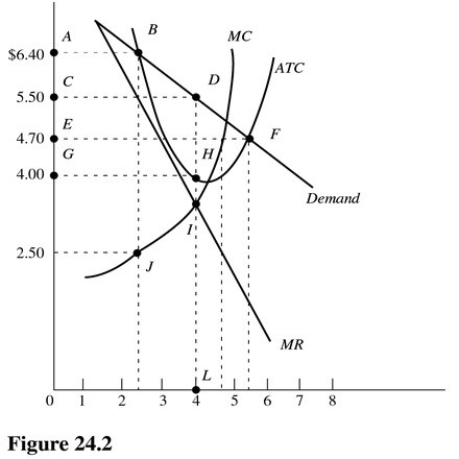 In Figure 24.2,the profit-maximizing level of output is
A)Between 2 and 3 units.
B)Between 4 and 5 units.
C)4 units.
D)Between 5 and 6 units.
سؤال
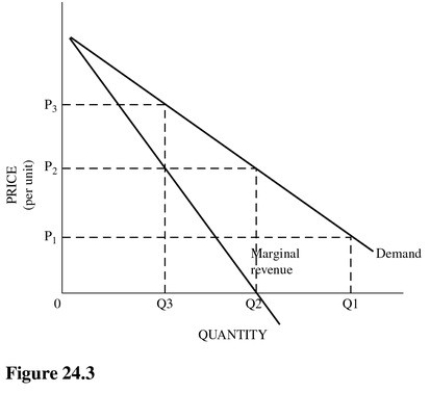 Refer to Figure 24.3.Which of the following statements is true about the price elasticity of demand at price P2?
A)The price elasticity is elastic.
B)The price elasticity is unitary.
C)The price elasticity is inelastic.
D)The price elasticity is zero.
سؤال
سؤال
سؤال
سؤال
سؤال
سؤال
سؤال
سؤال
سؤال
سؤال
سؤال
سؤال
سؤال
سؤال
سؤال
سؤال
سؤال
سؤال
سؤال
سؤال

فتح الحزمة
قم بالتسجيل لفتح البطاقات في هذه المجموعة!
Unlock Deck
Unlock Deck
1/147

العب

ملء الشاشة (f)
Deck 24: Monopoly
1
Market power is
A)A characteristic of all market structures.
B)The ability to alter the market price of a good or service.
C)Most common for competitive firms.
D)Enjoyed by all firms at high levels of output.
A)A characteristic of all market structures.
B)The ability to alter the market price of a good or service.
C)Most common for competitive firms.
D)Enjoyed by all firms at high levels of output.
B
2
Which of the following rules is satisfied when a monopoly maximizes profits?
A)Price = AVC.
B)Price < MC.
C)MR = MC.
D)MR > MC.
A)Price = AVC.
B)Price < MC.
C)MR = MC.
D)MR > MC.
C
3
Monopolists set prices
A)On the marginal revenue curve.
B)Without constraints since there is no competition.
C)At the output where marginal revenue equals marginal cost.
D)At the minimum of the long-run average total cost curve.
A)On the marginal revenue curve.
B)Without constraints since there is no competition.
C)At the output where marginal revenue equals marginal cost.
D)At the minimum of the long-run average total cost curve.
C
4
Which of the following is true for a monopolist?
A)It faces a perfectly elastic demand curve.
B)It must lower its price on all of its units in order to sell any additional units.
C)Its marginal revenue curve is equal to its demand curve.
D)It faces many competitors.
A)It faces a perfectly elastic demand curve.
B)It must lower its price on all of its units in order to sell any additional units.
C)Its marginal revenue curve is equal to its demand curve.
D)It faces many competitors.
فتح الحزمة
افتح القفل للوصول البطاقات البالغ عددها 147 في هذه المجموعة.
فتح الحزمة
k this deck
5
If a monopolist is producing a level of output where MR exceeds MC,then it should
A)Raise its price.
B)Increase its output.
C)Lower its output.
D)Shift its marginal cost curve upward.
A)Raise its price.
B)Increase its output.
C)Lower its output.
D)Shift its marginal cost curve upward.
فتح الحزمة
افتح القفل للوصول البطاقات البالغ عددها 147 في هذه المجموعة.
فتح الحزمة
k this deck
6
A monopolist will find that its marginal revenue curve
A)Is the same as its demand curve.
B)Lies above its demand curve and is flatter than its demand curve.
C)Lies below its demand curve and is steeper than its demand curve.
D)Lies below its demand curve and has the same slope as its demand curve.
A)Is the same as its demand curve.
B)Lies above its demand curve and is flatter than its demand curve.
C)Lies below its demand curve and is steeper than its demand curve.
D)Lies below its demand curve and has the same slope as its demand curve.
فتح الحزمة
افتح القفل للوصول البطاقات البالغ عددها 147 في هذه المجموعة.
فتح الحزمة
k this deck
7
A monopolist has market power because it
A)Faces a downward-sloping demand curve for its own output.
B)Can raise price as much as it wishes and not lose any customers.
C)Is a price taker.
D)Is regulated by the government.
A)Faces a downward-sloping demand curve for its own output.
B)Can raise price as much as it wishes and not lose any customers.
C)Is a price taker.
D)Is regulated by the government.
فتح الحزمة
افتح القفل للوصول البطاقات البالغ عددها 147 في هذه المجموعة.
فتح الحزمة
k this deck
8
For a monopolist,marginal revenue equals
A)Price.
B)Price times quantity.
C)The change in quantity divided by the change in total revenue.
D)The change in total revenue divided by the change in quantity.
A)Price.
B)Price times quantity.
C)The change in quantity divided by the change in total revenue.
D)The change in total revenue divided by the change in quantity.
فتح الحزمة
افتح القفل للوصول البطاقات البالغ عددها 147 في هذه المجموعة.
فتح الحزمة
k this deck
9
The marginal revenue of a monopolist falls below price because the firm
A)Is not limited by market demand.
B)Faces a market demand curve that is inelastic.
C)Confronts a downward-sloping demand curve.
D)Has an upward-sloping marginal cost curve.
A)Is not limited by market demand.
B)Faces a market demand curve that is inelastic.
C)Confronts a downward-sloping demand curve.
D)Has an upward-sloping marginal cost curve.
فتح الحزمة
افتح القفل للوصول البطاقات البالغ عددها 147 في هذه المجموعة.
فتح الحزمة
k this deck
10
Which of the following is likely to be a monopolist?
A)A drug firm that has a patent granting it the exclusive right to produce a drug.
B)A large firm like GM,which has a substantial portion of the car market.
C)The Boeing Company,which is one of the largest producers of airplanes.
D)An Indonesian restaurant in a large city.
A)A drug firm that has a patent granting it the exclusive right to produce a drug.
B)A large firm like GM,which has a substantial portion of the car market.
C)The Boeing Company,which is one of the largest producers of airplanes.
D)An Indonesian restaurant in a large city.
فتح الحزمة
افتح القفل للوصول البطاقات البالغ عددها 147 في هذه المجموعة.
فتح الحزمة
k this deck
11
Both a competitive industry and a monopoly
A)Use marginal cost pricing.
B)Maximize profit per unit where P = MC.
C)Face downward-sloping market demand curves.
D)Produce products that have many identical substitutes.
A)Use marginal cost pricing.
B)Maximize profit per unit where P = MC.
C)Face downward-sloping market demand curves.
D)Produce products that have many identical substitutes.
فتح الحزمة
افتح القفل للوصول البطاقات البالغ عددها 147 في هذه المجموعة.
فتح الحزمة
k this deck
12
Suppose a monopoly firm produces bicycles and can sell 10 bicycles per month at a price of $700 per bicycle.In order to increase sales by one bicycle per month,the monopolist must lower the price of its bicycles by $50 to $650 per bicycle.The marginal revenue of the 11th bicycle is
A)$150.
B)-$50.
C)$50.
D)$7,150.
A)$150.
B)-$50.
C)$50.
D)$7,150.
فتح الحزمة
افتح القفل للوصول البطاقات البالغ عددها 147 في هذه المجموعة.
فتح الحزمة
k this deck
13
If the entire output of a market is produced by a single seller,the firm
A)Is a monopoly.
B)Faces perfectly inelastic demand.
C)Can charge any price it wants and not lose customers.
D)Is producing a new product.
A)Is a monopoly.
B)Faces perfectly inelastic demand.
C)Can charge any price it wants and not lose customers.
D)Is producing a new product.
فتح الحزمة
افتح القفل للوصول البطاقات البالغ عددها 147 في هذه المجموعة.
فتح الحزمة
k this deck
14
Monopolists are price
A)Takers,as are competitive firms.
B)Takers,but competitive firms are price makers.
C)Makers,but competitive firms are price takers.
D)Makers,as are competitive firms.
A)Takers,as are competitive firms.
B)Takers,but competitive firms are price makers.
C)Makers,but competitive firms are price takers.
D)Makers,as are competitive firms.
فتح الحزمة
افتح القفل للوصول البطاقات البالغ عددها 147 في هذه المجموعة.
فتح الحزمة
k this deck
15
Suppose a monopoly concrete contractor builds 20 driveways per month for $10,000 each.In order to increase sales to 21 driveways,the contractor must lower the price of driveways to $9,500.The marginal revenue of the 21st driveway is
A)$500.
B)$199,500.
C)-$500.
D)$9,500.
A)$500.
B)$199,500.
C)-$500.
D)$9,500.
فتح الحزمة
افتح القفل للوصول البطاقات البالغ عددها 147 في هذه المجموعة.
فتح الحزمة
k this deck
16
If a firm can change market prices by altering its output,then it
A)Has market power.
B)Faces a flat demand curve.
C)Is a price taker.
D)Engages in marginal cost pricing.
A)Has market power.
B)Faces a flat demand curve.
C)Is a price taker.
D)Engages in marginal cost pricing.
فتح الحزمة
افتح القفل للوصول البطاقات البالغ عددها 147 في هذه المجموعة.
فتح الحزمة
k this deck
17
The marginal revenue curve is below the demand curve
A)If a firm must lower its price to sell additional output.
B)For a competitive firm.
C)When a market is characterized by economies of scale.
D)For all firms.
A)If a firm must lower its price to sell additional output.
B)For a competitive firm.
C)When a market is characterized by economies of scale.
D)For all firms.
فتح الحزمة
افتح القفل للوصول البطاقات البالغ عددها 147 في هذه المجموعة.
فتح الحزمة
k this deck
18
In monopoly and perfect competition,a firm should expand production when
A)Marginal revenue is below marginal cost.
B)Price is below marginal cost.
C)Marginal revenue is above marginal cost.
D)Price is above marginal cost.
A)Marginal revenue is below marginal cost.
B)Price is below marginal cost.
C)Marginal revenue is above marginal cost.
D)Price is above marginal cost.
فتح الحزمة
افتح القفل للوصول البطاقات البالغ عددها 147 في هذه المجموعة.
فتح الحزمة
k this deck
19
The marginal revenue of a monopolist
A)Is equal to price at all output levels.
B)Is above a downward-sloping demand curve.
C)Is positive up to the rate of output that maximizes total revenue.
D)Is negative up to the rate of output that maximizes total revenue.
A)Is equal to price at all output levels.
B)Is above a downward-sloping demand curve.
C)Is positive up to the rate of output that maximizes total revenue.
D)Is negative up to the rate of output that maximizes total revenue.
فتح الحزمة
افتح القفل للوصول البطاقات البالغ عددها 147 في هذه المجموعة.
فتح الحزمة
k this deck
20
If a firm can raise market price by reducing its output,then
A)It has no market power.
B)It faces a downward-sloping demand curve.
C)It is a price taker.
D)It engages in marginal cost pricing.
A)It has no market power.
B)It faces a downward-sloping demand curve.
C)It is a price taker.
D)It engages in marginal cost pricing.
فتح الحزمة
افتح القفل للوصول البطاقات البالغ عددها 147 في هذه المجموعة.
فتح الحزمة
k this deck
21
Table 24.1 Monopoly Costs and Revenue
In Table 24.1,according to the profit maximization rule,at the profit-maximizing level of output,the average total cost is
A)$316.67.
B)$325.
C)$400.
D)$340.
In Table 24.1,according to the profit maximization rule,at the profit-maximizing level of output,the average total cost is
A)$316.67.
B)$325.
C)$400.
D)$340.
فتح الحزمة
افتح القفل للوصول البطاقات البالغ عددها 147 في هذه المجموعة.
فتح الحزمة
k this deck
22
Table 24.1 Monopoly Costs and Revenue
In Table 24.1,according to the profit maximization rule,at the profit-maximizing level of output marginal,cost is
A)$200.
B)$250.
C)$300.
D)$350.
In Table 24.1,according to the profit maximization rule,at the profit-maximizing level of output marginal,cost is
A)$200.
B)$250.
C)$300.
D)$350.
فتح الحزمة
افتح القفل للوصول البطاقات البالغ عددها 147 في هذه المجموعة.
فتح الحزمة
k this deck
23
Table 24.1 Monopoly Costs and Revenue
In Table 24.1,according to the profit maximization rule,at the profit-maximizing level of output,total cost is
A)$900.
B)$1,200.
C)$650.
D)$950.
In Table 24.1,according to the profit maximization rule,at the profit-maximizing level of output,total cost is
A)$900.
B)$1,200.
C)$650.
D)$950.
فتح الحزمة
افتح القفل للوصول البطاقات البالغ عددها 147 في هذه المجموعة.
فتح الحزمة
k this deck
24
A profit-maximizing monopolist produces the rate of output where
A)MR = MC and determines price based on the demand curve.
B)Price = MC.
C)MR = MC and can set price at any amount it chooses.
D)MR = MC and determines price based on ATC.
A)MR = MC and determines price based on the demand curve.
B)Price = MC.
C)MR = MC and can set price at any amount it chooses.
D)MR = MC and determines price based on ATC.
فتح الحزمة
افتح القفل للوصول البطاقات البالغ عددها 147 في هذه المجموعة.
فتح الحزمة
k this deck
25
Table 24.1 Monopoly Costs and Revenue
In Table 24.1,using the profit maximization rule,a monopolist will produce
A)1 unit.
B)3 units.
C)4 units.
D)5 units.
In Table 24.1,using the profit maximization rule,a monopolist will produce
A)1 unit.
B)3 units.
C)4 units.
D)5 units.
فتح الحزمة
افتح القفل للوصول البطاقات البالغ عددها 147 في هذه المجموعة.
فتح الحزمة
k this deck
26
If a monopolist is producing a level of output where MR is less than MC,then it should
A)Shift its marginal cost curve upward.
B)Increase its output.
C)Lower its output.
D)Lower its price.
A)Shift its marginal cost curve upward.
B)Increase its output.
C)Lower its output.
D)Lower its price.
فتح الحزمة
افتح القفل للوصول البطاقات البالغ عددها 147 في هذه المجموعة.
فتح الحزمة
k this deck
27
Table 24.1 Monopoly Costs and Revenue
In Table 24.1,according to the profit maximization rule,at the profit-maximizing level of output,marginal revenue is
A)$300.
B)$200.
C)$100.
D)$250.
In Table 24.1,according to the profit maximization rule,at the profit-maximizing level of output,marginal revenue is
A)$300.
B)$200.
C)$100.
D)$250.
فتح الحزمة
افتح القفل للوصول البطاقات البالغ عددها 147 في هذه المجموعة.
فتح الحزمة
k this deck
28
Table 24.1 Monopoly Costs and Revenue
In Table 24.1,marginal revenue at the profit-maximizing level of output is
A)$150.00
B)$250.00
C)$300.00
D)$550.00
In Table 24.1,marginal revenue at the profit-maximizing level of output is
A)$150.00
B)$250.00
C)$300.00
D)$550.00
فتح الحزمة
افتح القفل للوصول البطاقات البالغ عددها 147 في هذه المجموعة.
فتح الحزمة
k this deck
29
Table 24.1 Monopoly Costs and Revenue
In Table 24.1,according to the profit maximization rule,at the profit-maximizing level of output,total revenue is
A)$900.
B)$1,200.
C)$650.
D)$950.
In Table 24.1,according to the profit maximization rule,at the profit-maximizing level of output,total revenue is
A)$900.
B)$1,200.
C)$650.
D)$950.
فتح الحزمة
افتح القفل للوصول البطاقات البالغ عددها 147 في هذه المجموعة.
فتح الحزمة
k this deck
30
Table 24.1 Monopoly Costs and Revenue
In Table 24.1,the maximum profit that can be achieved is
A)-$200.
B)$100.
C)$250.
D)$500.
In Table 24.1,the maximum profit that can be achieved is
A)-$200.
B)$100.
C)$250.
D)$500.
فتح الحزمة
افتح القفل للوصول البطاقات البالغ عددها 147 في هذه المجموعة.
فتح الحزمة
k this deck
31
Table 24.1 Monopoly Costs and Revenue
In Table 24.1,using the profit maximization rule,a monopolist will charge a price of
A)$500.
B)$400.
C)$350.
D)$300.
In Table 24.1,using the profit maximization rule,a monopolist will charge a price of
A)$500.
B)$400.
C)$350.
D)$300.
فتح الحزمة
افتح القفل للوصول البطاقات البالغ عددها 147 في هذه المجموعة.
فتح الحزمة
k this deck
32
The profit-maximizing rate of output in Figure 24.1 isA)I.
B)H.
C)E.
D)F.
فتح الحزمة
افتح القفل للوصول البطاقات البالغ عددها 147 في هذه المجموعة.
فتح الحزمة
k this deck
33
Which of the following is true about the output level where marginal revenue equals marginal cost?
A)Economic profits are equal to zero.
B)The firm should increase its output.
C)The firm is maximizing profit.
D)The firm should reduce its output.
A)Economic profits are equal to zero.
B)The firm should increase its output.
C)The firm is maximizing profit.
D)The firm should reduce its output.
فتح الحزمة
افتح القفل للوصول البطاقات البالغ عددها 147 في هذه المجموعة.
فتح الحزمة
k this deck
34
In Figure 24.1,the profit-maximizing monopolist will charge a price ofA)J.
B)L.
C)C.
D)A.
فتح الحزمة
افتح القفل للوصول البطاقات البالغ عددها 147 في هذه المجموعة.
فتح الحزمة
k this deck
35
Table 24.1 Monopoly Costs and Revenue
In Table 24.1,using the profit maximization rule,a monopolist that is able to practice price discrimination will charge
A)A price of $450.
B)A price of $400.
C)A price of $500.
D)Different prices to different customers.
In Table 24.1,using the profit maximization rule,a monopolist that is able to practice price discrimination will charge
A)A price of $450.
B)A price of $400.
C)A price of $500.
D)Different prices to different customers.
فتح الحزمة
افتح القفل للوصول البطاقات البالغ عددها 147 في هذه المجموعة.
فتح الحزمة
k this deck
36
In Figure 24.1,total revenue is represented by the areaA)ABFE.
B)CDFE.
C)ABGHE.
D)ABDC.
فتح الحزمة
افتح القفل للوصول البطاقات البالغ عددها 147 في هذه المجموعة.
فتح الحزمة
k this deck
37
Which of the following is the same for monopoly and competition under the same cost and demand conditions?
A)The amount of output that is produced.
B)Economic profits.
C)The goal of maximizing profits.
D)Efficiency of production at the profit-maximizing output.
A)The amount of output that is produced.
B)Economic profits.
C)The goal of maximizing profits.
D)Efficiency of production at the profit-maximizing output.
فتح الحزمة
افتح القفل للوصول البطاقات البالغ عددها 147 في هذه المجموعة.
فتح الحزمة
k this deck
38
Which of the following would definitely not be used by any unregulated monopolist?
A)Marginal cost pricing.
B)The profit-maximizing rule.
C)Price discrimination.
D)Economies of scale.
A)Marginal cost pricing.
B)The profit-maximizing rule.
C)Price discrimination.
D)Economies of scale.
فتح الحزمة
افتح القفل للوصول البطاقات البالغ عددها 147 في هذه المجموعة.
فتح الحزمة
k this deck
39
The shaded area in Figure 24.1 representsA)Total revenue.
B)Total cost.
C)Total profit.
D)Total loss.
فتح الحزمة
افتح القفل للوصول البطاقات البالغ عددها 147 في هذه المجموعة.
فتح الحزمة
k this deck
40
Which of the following statements is not correct?
A)A monopolist's ability to act as a price setter guarantees economic profits in the short run.
B)The monopolist's marginal revenue is less than the price for any output greater than one.
C)A monopolist's demand curve is the same as the market demand curve for the product.
D)In the long run,a monopolist will experience only positive or zero economic profits.
A)A monopolist's ability to act as a price setter guarantees economic profits in the short run.
B)The monopolist's marginal revenue is less than the price for any output greater than one.
C)A monopolist's demand curve is the same as the market demand curve for the product.
D)In the long run,a monopolist will experience only positive or zero economic profits.
فتح الحزمة
افتح القفل للوصول البطاقات البالغ عددها 147 في هذه المجموعة.
فتح الحزمة
k this deck
41
In Figure 24.2,total cost at the profit-maximizing rate of output isA)$16.00.
B)$18.80.
C)$22.00.
D)$25.60.
فتح الحزمة
افتح القفل للوصول البطاقات البالغ عددها 147 في هذه المجموعة.
فتح الحزمة
k this deck
42
Which of the following is a common barrier to entry in a monopoly market?
A)Economic profit of the monopolist.
B)Antitrust laws.
C)A rising long-run average total cost curve.
D)Economies of scale.
A)Economic profit of the monopolist.
B)Antitrust laws.
C)A rising long-run average total cost curve.
D)Economies of scale.
فتح الحزمة
افتح القفل للوصول البطاقات البالغ عددها 147 في هذه المجموعة.
فتح الحزمة
k this deck
43
Which of the following is likely to occur if a monopoly suddenly loses its ability to deny potential competitors entry into the market?
A)The market price of the product will fall.
B)The total market quantity of output produced will fall.
C)Profits for the market will increase.
D)The industry demand curve for the product will shift.
A)The market price of the product will fall.
B)The total market quantity of output produced will fall.
C)Profits for the market will increase.
D)The industry demand curve for the product will shift.
فتح الحزمة
افتح القفل للوصول البطاقات البالغ عددها 147 في هذه المجموعة.
فتح الحزمة
k this deck
44
Like a competitive industry,a monopoly must
A)Practice marginal cost pricing.
B)Deal with the law of demand.
C)Confront a demand curve equal to its marginal revenue curve.
D)Earn only zero economic profit in the long run.
A)Practice marginal cost pricing.
B)Deal with the law of demand.
C)Confront a demand curve equal to its marginal revenue curve.
D)Earn only zero economic profit in the long run.
فتح الحزمة
افتح القفل للوصول البطاقات البالغ عددها 147 في هذه المجموعة.
فتح الحزمة
k this deck
45
In Figure 24.1,total profit is represented by the areaA)ABFE.
B)CDFE.
C)ABGHE.
D)ABDC.
فتح الحزمة
افتح القفل للوصول البطاقات البالغ عددها 147 في هذه المجموعة.
فتح الحزمة
k this deck
46
In Figure 24.2,the profit-maximizing monopolist will earn a profit per unit ofA)$1.50.
B)$4.00.
C)$4.70.
D)$5.50.
فتح الحزمة
افتح القفل للوصول البطاقات البالغ عددها 147 في هذه المجموعة.
فتح الحزمة
k this deck
47
In Figure 24.2,total profit at the profit-maximizing rate of output isA)$16.00.
B)$5.50.
C)$6.00.
D)$22.00.
فتح الحزمة
افتح القفل للوصول البطاقات البالغ عددها 147 في هذه المجموعة.
فتح الحزمة
k this deck
48
In Figure 24.1 total cost is represented by the areaA)ABFE.
B)CDFE.
C)ABGHE.
D)ABDC.
فتح الحزمة
افتح القفل للوصول البطاقات البالغ عددها 147 في هذه المجموعة.
فتح الحزمة
k this deck
49
A barrier to entry is
A)A law established by the government to protect new industries.
B)A commitment on the part of big business to allow smaller companies to compete.
C)An obstacle that prevents additional workers from entering an industry,such as a union.
D)An obstacle that makes it difficult for new firms to enter a market.
A)A law established by the government to protect new industries.
B)A commitment on the part of big business to allow smaller companies to compete.
C)An obstacle that prevents additional workers from entering an industry,such as a union.
D)An obstacle that makes it difficult for new firms to enter a market.
فتح الحزمة
افتح القفل للوصول البطاقات البالغ عددها 147 في هذه المجموعة.
فتح الحزمة
k this deck
50
In Figure 24.2,total profit at the profit-maximizing rate of output isA)CDLK.
B)CDHG.
C)ABDLK.
D)GHLK.
فتح الحزمة
افتح القفل للوصول البطاقات البالغ عددها 147 في هذه المجموعة.
فتح الحزمة
k this deck
51
Refer to Figure 24.3.Suppose this good could somehow be produced at no cost (that is,the total cost at any level of output was zero).This single-price monopoly firm would maximize profit byA)Raising the price as high as possible until the quantity demanded began to decrease.
B)Producing an infinite amount and selling at the highest price possible.
C)Producing Q2 and charging P2.
D)Producing Q3 and charging P3.
فتح الحزمة
افتح القفل للوصول البطاقات البالغ عددها 147 في هذه المجموعة.
فتح الحزمة
k this deck
52
Reductions in minimum average costs that come about through increases in the size of plants and equipment are called
A)Barriers to entry.
B)Economies to monopoly power.
C)Economies of scale.
D)Diseconomies of entry.
A)Barriers to entry.
B)Economies to monopoly power.
C)Economies of scale.
D)Diseconomies of entry.
فتح الحزمة
افتح القفل للوصول البطاقات البالغ عددها 147 في هذه المجموعة.
فتح الحزمة
k this deck
53
In Figure 24.2,total revenue at the profit-maximizing rate of output isA)$22.00.
B)$6.40.
C)$4.00.
D)$16.00.
فتح الحزمة
افتح القفل للوصول البطاقات البالغ عددها 147 في هذه المجموعة.
فتح الحزمة
k this deck
54
Which of the following is a common barrier to entry in a monopoly market?
A)Economic profits greater than zero for the monopolist.
B)A rising long-run average total cost curve.
C)A patent on a new product.
D)A vertical supply curve.
A)Economic profits greater than zero for the monopolist.
B)A rising long-run average total cost curve.
C)A patent on a new product.
D)A vertical supply curve.
فتح الحزمة
افتح القفل للوصول البطاقات البالغ عددها 147 في هذه المجموعة.
فتح الحزمة
k this deck
55
In Figure 24.2,a profit-maximizing monopolist will charge a price ofA)$6.40.
B)$4.70.
C)$4.00.
D)$5.50.
فتح الحزمة
افتح القفل للوصول البطاقات البالغ عددها 147 في هذه المجموعة.
فتح الحزمة
k this deck
56
Refer to Figure 24.3.Which of the following statements is true about the price elasticity of demand at price P3?A)The price elasticity is elastic.
B)The price elasticity is unitary.
C)The price elasticity is inelastic.
D)The price elasticity is zero.
فتح الحزمة
افتح القفل للوصول البطاقات البالغ عددها 147 في هذه المجموعة.
فتح الحزمة
k this deck
57
Any firm that has economies of scale will
A)Try to spread production over many plants.
B)Be able to produce at a lower unit cost as it increases production.
C)Face an upward-sloping long-run average total cost curve.
D)Prefer to produce a small amount of total industry output.
A)Try to spread production over many plants.
B)Be able to produce at a lower unit cost as it increases production.
C)Face an upward-sloping long-run average total cost curve.
D)Prefer to produce a small amount of total industry output.
فتح الحزمة
افتح القفل للوصول البطاقات البالغ عددها 147 في هذه المجموعة.
فتح الحزمة
k this deck
58
A firm can take advantage of economies of scale through
A)Investment decisions to increase capacity.
B)A production decision to increase capacity.
C)Investment decisions to reduce capacity.
D)A production decision to increase output.
A)Investment decisions to increase capacity.
B)A production decision to increase capacity.
C)Investment decisions to reduce capacity.
D)A production decision to increase output.
فتح الحزمة
افتح القفل للوصول البطاقات البالغ عددها 147 في هذه المجموعة.
فتح الحزمة
k this deck
59
In Figure 24.2,the profit-maximizing level of output isA)Between 2 and 3 units.
B)Between 4 and 5 units.
C)4 units.
D)Between 5 and 6 units.
فتح الحزمة
افتح القفل للوصول البطاقات البالغ عددها 147 في هذه المجموعة.
فتح الحزمة
k this deck
60
Refer to Figure 24.3.Which of the following statements is true about the price elasticity of demand at price P2?A)The price elasticity is elastic.
B)The price elasticity is unitary.
C)The price elasticity is inelastic.
D)The price elasticity is zero.
فتح الحزمة
افتح القفل للوصول البطاقات البالغ عددها 147 في هذه المجموعة.
فتح الحزمة
k this deck
61
Which of the following is an argument in favor of a competitive market structure rather than monopoly?
A)Monopolies have greater ability to pursue research and design.
B)The lure of monopoly power provides a greater incentive for invention and innovation.
C)Monopolies produce less goods at a higher price than competitive markets,ceteris paribus.
D)Economies of scale allow a single firm to produce at lower cost than in a competitive market,ceteris paribus.
A)Monopolies have greater ability to pursue research and design.
B)The lure of monopoly power provides a greater incentive for invention and innovation.
C)Monopolies produce less goods at a higher price than competitive markets,ceteris paribus.
D)Economies of scale allow a single firm to produce at lower cost than in a competitive market,ceteris paribus.
فتح الحزمة
افتح القفل للوصول البطاقات البالغ عددها 147 في هذه المجموعة.
فتح الحزمة
k this deck
62
Which of the following is not an example of price discrimination by the only movie theater in town?
A)Charging a lower price for children under the age of 12.
B)Charging a lower price for matinees.
C)Charging a lower price for people over the age of 65.
D)Charging one price at all times for all customers.
A)Charging a lower price for children under the age of 12.
B)Charging a lower price for matinees.
C)Charging a lower price for people over the age of 65.
D)Charging one price at all times for all customers.
فتح الحزمة
افتح القفل للوصول البطاقات البالغ عددها 147 في هذه المجموعة.
فتح الحزمة
k this deck
63
Assume a monopoly confronts the same costs and demand as a competitive industry.In this case,the monopolist produces
A)The same output and charges the same price as the competitive industry.
B)More output and charges a higher price than the competitive industry.
C)Less output and charges a lower price than the competitive industry.
D)Less output and charges a higher price than the competitive industry.
A)The same output and charges the same price as the competitive industry.
B)More output and charges a higher price than the competitive industry.
C)Less output and charges a lower price than the competitive industry.
D)Less output and charges a higher price than the competitive industry.
فتح الحزمة
افتح القفل للوصول البطاقات البالغ عددها 147 في هذه المجموعة.
فتح الحزمة
k this deck
64
The ultimate market constraint on the exercise of market power
A)Is the demand curve facing the monopolist.
B)Is marginal cost pricing.
C)Is the ATC curve facing the monopolist.
D)Is barriers to entry.
A)Is the demand curve facing the monopolist.
B)Is marginal cost pricing.
C)Is the ATC curve facing the monopolist.
D)Is barriers to entry.
فتح الحزمة
افتح القفل للوصول البطاقات البالغ عددها 147 في هذه المجموعة.
فتح الحزمة
k this deck
65
Compared with a competitive market with the same cost and market demand circumstances,a monopolist has
A)Less pressure to reduce costs and less reason to improve quality.
B)Less pressure to reduce costs and more reason to improve quality.
C)More pressure to reduce costs and less reason to improve quality.
D)More pressure to reduce costs and more reason to improve quality.
A)Less pressure to reduce costs and less reason to improve quality.
B)Less pressure to reduce costs and more reason to improve quality.
C)More pressure to reduce costs and less reason to improve quality.
D)More pressure to reduce costs and more reason to improve quality.
فتح الحزمة
افتح القفل للوصول البطاقات البالغ عددها 147 في هذه المجموعة.
فتح الحزمة
k this deck
66
Price discrimination does not allow a producer to
A)Obtain greater total revenue.
B)Charge both higher and lower prices.
C)Obtain higher profits.
D)Designate a point above the market demand curve as the new equilibrium.
A)Obtain greater total revenue.
B)Charge both higher and lower prices.
C)Obtain higher profits.
D)Designate a point above the market demand curve as the new equilibrium.
فتح الحزمة
افتح القفل للوصول البطاقات البالغ عددها 147 في هذه المجموعة.
فتح الحزمة
k this deck
67
A monopoly
A)Maximizes profits at the output level where P = MC.
B)Is one of many sellers in a given market.
C)Charges higher prices than competitive firms,ceteris paribus.
D)Maximizes profits at the output level where P = MR.
A)Maximizes profits at the output level where P = MC.
B)Is one of many sellers in a given market.
C)Charges higher prices than competitive firms,ceteris paribus.
D)Maximizes profits at the output level where P = MR.
فتح الحزمة
افتح القفل للوصول البطاقات البالغ عددها 147 في هذه المجموعة.
فتح الحزمة
k this deck
68
A monopoly realizes larger profits than a comparable competitive market by
A)Setting a higher price at the competitive level of output,thereby increasing total revenue.
B)Producing a greater quantity at the competitive price,thereby increasing profits.
C)Producing at output levels with more favorable cost structures and charging the competitive market price,thereby increasing profits per unit.
D)Reducing production and pushing prices up.
A)Setting a higher price at the competitive level of output,thereby increasing total revenue.
B)Producing a greater quantity at the competitive price,thereby increasing profits.
C)Producing at output levels with more favorable cost structures and charging the competitive market price,thereby increasing profits per unit.
D)Reducing production and pushing prices up.
فتح الحزمة
افتح القفل للوصول البطاقات البالغ عددها 147 في هذه المجموعة.
فتح الحزمة
k this deck
69
A monopolist that does not practice price discrimination should never produce in the
A)Elastic portion of its demand curve because it can increase total revenue and reduce total costs by lowering the price.
B)Inelastic portion of its demand curve because it can increase total revenue and reduce total costs by increasing the price.
C)Inelastic portion of its demand curve because it can increase total revenue by more than it increases total cost by reducing the price.
D)Segment of its demand curve where the price elasticity of demand is greater than 1.
A)Elastic portion of its demand curve because it can increase total revenue and reduce total costs by lowering the price.
B)Inelastic portion of its demand curve because it can increase total revenue and reduce total costs by increasing the price.
C)Inelastic portion of its demand curve because it can increase total revenue by more than it increases total cost by reducing the price.
D)Segment of its demand curve where the price elasticity of demand is greater than 1.
فتح الحزمة
افتح القفل للوصول البطاقات البالغ عددها 147 في هذه المجموعة.
فتح الحزمة
k this deck
70
The price charged by a profit-maximizing monopolist occurs
A)At the minimum of the long-run average total cost curve.
B)Where P = MR = MC.
C)At a price on the demand curve above the intersection where MR = MC.
D)At a price on the long-run average total cost curve below the point where MR = MC.
A)At the minimum of the long-run average total cost curve.
B)Where P = MR = MC.
C)At a price on the demand curve above the intersection where MR = MC.
D)At a price on the long-run average total cost curve below the point where MR = MC.
فتح الحزمة
افتح القفل للوصول البطاقات البالغ عددها 147 في هذه المجموعة.
فتح الحزمة
k this deck
71
If tourists are charged a much higher price than the natives of a country for exactly the same item,what kind of pricing is involved?
A)Monopoly pricing.
B)Price discrimination.
C)Competitive pricing.
D)MC = MR pricing.
A)Monopoly pricing.
B)Price discrimination.
C)Competitive pricing.
D)MC = MR pricing.
فتح الحزمة
افتح القفل للوصول البطاقات البالغ عددها 147 في هذه المجموعة.
فتح الحزمة
k this deck
72
Price discrimination allows a producer to
A)Reap the highest possible average price for the quantity supplied.
B)Increase the elasticity of consumer demand.
C)Minimize marginal costs.
D)Decrease total costs.
A)Reap the highest possible average price for the quantity supplied.
B)Increase the elasticity of consumer demand.
C)Minimize marginal costs.
D)Decrease total costs.
فتح الحزمة
افتح القفل للوصول البطاقات البالغ عددها 147 في هذه المجموعة.
فتح الحزمة
k this deck
73
Price discrimination is best defined as
A)Charging an excessive price for a product.
B)The charging of different prices by different companies for the same product.
C)The selling of an individual good at different prices to different consumers by a single seller.
D)The selling of differentiated goods to consumers at different prices.
A)Charging an excessive price for a product.
B)The charging of different prices by different companies for the same product.
C)The selling of an individual good at different prices to different consumers by a single seller.
D)The selling of differentiated goods to consumers at different prices.
فتح الحزمة
افتح القفل للوصول البطاقات البالغ عددها 147 في هذه المجموعة.
فتح الحزمة
k this deck
74
Price-discriminating firms charge higher prices to those who
A)Have greater incomes.
B)Have lower price elasticities of demand.
C)Have many substitutes available to them.
D)Want the product less.
A)Have greater incomes.
B)Have lower price elasticities of demand.
C)Have many substitutes available to them.
D)Want the product less.
فتح الحزمة
افتح القفل للوصول البطاقات البالغ عددها 147 في هذه المجموعة.
فتح الحزمة
k this deck
75
Which of the following markets best illustrates the practice of price discrimination?
A)The airline market.
B)The fast-food market.
C)Wheat farming.
D)The personal computer market.
A)The airline market.
B)The fast-food market.
C)Wheat farming.
D)The personal computer market.
فتح الحزمة
افتح القفل للوصول البطاقات البالغ عددها 147 في هذه المجموعة.
فتح الحزمة
k this deck
76
There is lack of strong incentives in a monopoly industry,relative to a competitive industry to
A)Lower prices and increase output.
B)Inhibit productivity advances.
C)Increase innovation.
D)Use minimum average cost pricing.
A)Lower prices and increase output.
B)Inhibit productivity advances.
C)Increase innovation.
D)Use minimum average cost pricing.
فتح الحزمة
افتح القفل للوصول البطاقات البالغ عددها 147 في هذه المجموعة.
فتح الحزمة
k this deck
77
All of the following are limitations on the market power of a monopoly except
A)The elasticity of demand.
B)The inability of a firm to control demand.
C)The ability of a company to control the quantity supplied.
D)The demand curve.
A)The elasticity of demand.
B)The inability of a firm to control demand.
C)The ability of a company to control the quantity supplied.
D)The demand curve.
فتح الحزمة
افتح القفل للوصول البطاقات البالغ عددها 147 في هذه المجموعة.
فتح الحزمة
k this deck
78
Price-discriminating firms that sell in two markets will charge higher prices in the market,ceteris paribus,
A)With a higher positive cross-price elasticity of demand with respect to substitutes.
B)With the more price-inelastic demand.
C)With the more income-elastic demand.
D)With lower incomes.
A)With a higher positive cross-price elasticity of demand with respect to substitutes.
B)With the more price-inelastic demand.
C)With the more income-elastic demand.
D)With lower incomes.
فتح الحزمة
افتح القفل للوصول البطاقات البالغ عددها 147 في هذه المجموعة.
فتح الحزمة
k this deck
79
At equilibrium in a monopoly,economic profits will most likely be
A)Greater than zero.
B)Zero.
C)Normal.
D)Negative.
A)Greater than zero.
B)Zero.
C)Normal.
D)Negative.
فتح الحزمة
افتح القفل للوصول البطاقات البالغ عددها 147 في هذه المجموعة.
فتح الحزمة
k this deck
80
A monopoly
A)Maximizes profits at the output level where MR > MC.
B)Produces less output than a competitive industry,ceteris paribus.
C)Charges the same price as a competitive industry,ceteris paribus.
D)Maximizes profits at the output where P = MR.
A)Maximizes profits at the output level where MR > MC.
B)Produces less output than a competitive industry,ceteris paribus.
C)Charges the same price as a competitive industry,ceteris paribus.
D)Maximizes profits at the output where P = MR.
فتح الحزمة
افتح القفل للوصول البطاقات البالغ عددها 147 في هذه المجموعة.
فتح الحزمة
k this deck
فتح الحزمة
افتح القفل للوصول البطاقات البالغ عددها 147 في هذه المجموعة.






