







 تكلم مع الذكاء الاصطناعي


Deck 1: Ancient America Before
ملء الشاشة (f)

سؤال

سؤال
سؤال
سؤال
سؤال
سؤال
سؤال
سؤال
سؤال
سؤال
سؤال
سؤال
سؤال
سؤال
سؤال
سؤال
سؤال
سؤال
سؤال
سؤال
سؤال
سؤال
سؤال
سؤال
سؤال
سؤال
سؤال
سؤال
سؤال
سؤال
سؤال
What does this ancient petroglyph tell us about the people who made it? 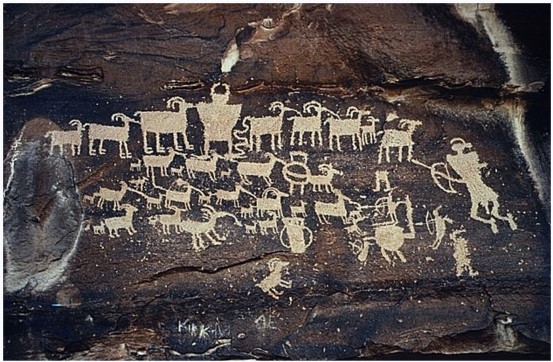
A) The people who crafted this were part of a farming society.
B) The people who crafted this were part of a hunting society.
C) Only women were hunters in this society.
D) This society honored its dead with large murals.
A) The people who crafted this were part of a farming society.
B) The people who crafted this were part of a hunting society.
C) Only women were hunters in this society.
D) This society honored its dead with large murals.
سؤال
سؤال
What can be inferred from the drawing "Florida Woman"? 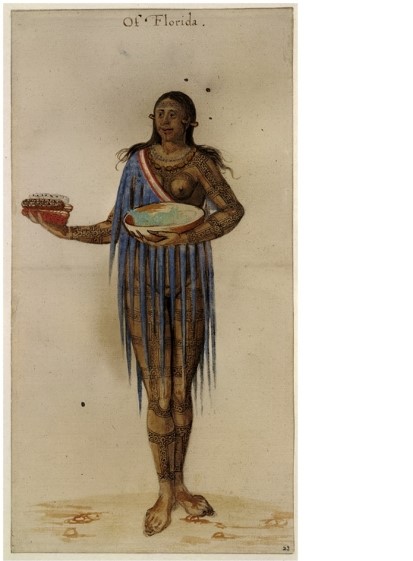
A) That Florida had unique crops not found in other parts of America
B) That Native American women were more associated with food practices than their male counterparts
C) That corn was a major contribution of Native Americans to the rest of the world
D) That native people had many varied ways of preparing corn
A) That Florida had unique crops not found in other parts of America
B) That Native American women were more associated with food practices than their male counterparts
C) That corn was a major contribution of Native Americans to the rest of the world
D) That native people had many varied ways of preparing corn
سؤال
سؤال
سؤال
The European artist of "Ancient Agriculture" misrepresented native agricultural practices in what way? 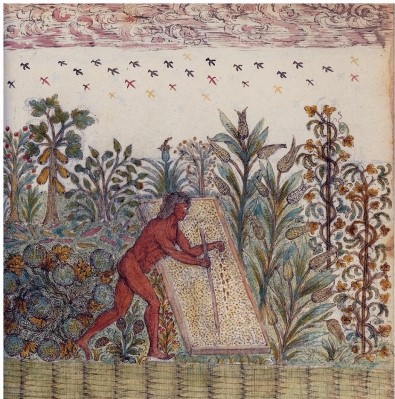
A) The person in the drawing is male, whereas women did the bulk of agricultural work.
B) The person in the drawing is alone, whereas agricultural work was always done in groups.
C) The drawing includes corn, which was not a staple of Native American agriculture.
D) The farmer would not have been sowing new crops while other crops were bearing fruit for harvest.
A) The person in the drawing is male, whereas women did the bulk of agricultural work.
B) The person in the drawing is alone, whereas agricultural work was always done in groups.
C) The drawing includes corn, which was not a staple of Native American agriculture.
D) The farmer would not have been sowing new crops while other crops were bearing fruit for harvest.
سؤال
سؤال
What can historians learn about the Anasazi people from their effigy figures? 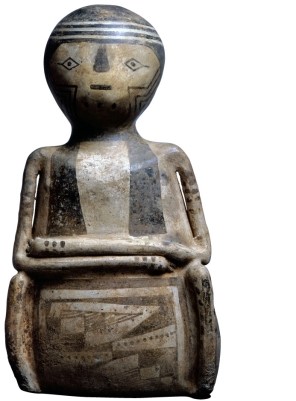
A) That the Anasazi demonstrated sophisticated pottery methods
B) That human effigies were extremely common among the Anasazi
C) That the Anasazi people held unique burial practices that were not found elsewhere in America
D) That the Anasazi were a warlike people
A) That the Anasazi demonstrated sophisticated pottery methods
B) That human effigies were extremely common among the Anasazi
C) That the Anasazi people held unique burial practices that were not found elsewhere in America
D) That the Anasazi were a warlike people
سؤال
According to Map 1.2: Native North American Cultures, what was among the most important factors in setting boundaries between ancient cultures? 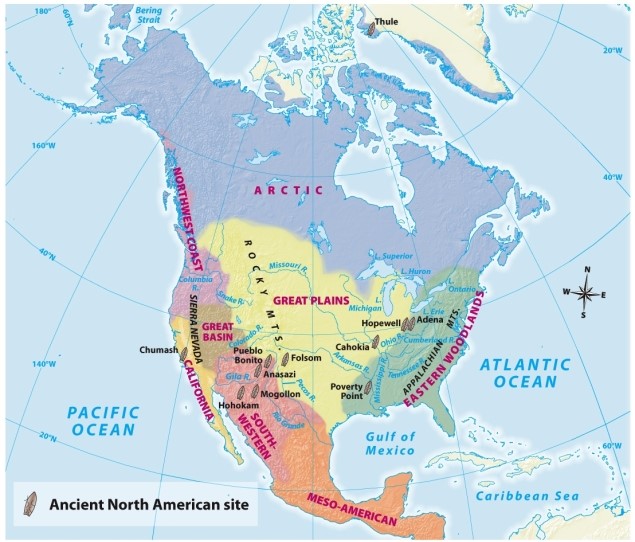
A) Different environmental features
B) Distinct political systems
C) Distinct language systems
D) Different religions
A) Different environmental features
B) Distinct political systems
C) Distinct language systems
D) Different religions
سؤال
سؤال
سؤال
سؤال
سؤال
سؤال
سؤال
سؤال
سؤال
سؤال
سؤال
سؤال
سؤال
سؤال
سؤال
سؤال
سؤال
سؤال
سؤال
سؤال
سؤال
سؤال
سؤال
سؤال
سؤال
سؤال
سؤال
سؤال
سؤال
سؤال
سؤال
سؤال
سؤال
سؤال
سؤال
سؤال
سؤال
سؤال

فتح الحزمة
قم بالتسجيل لفتح البطاقات في هذه المجموعة!
Unlock Deck
Unlock Deck
1/77

العب

ملء الشاشة (f)
Deck 1: Ancient America Before
1
How did climate change allow hunters to reach the Western Hemisphere?
A) It raised the sea level of the Bering Strait to allow ships to pass submerged icebergs.
B) More moderate temperatures allowed people to live farther north and east.
C) A long cold spell created the wide land bridge of Beringia.
D) The change in climate killed off threatening herds of mammoths and bison.
A) It raised the sea level of the Bering Strait to allow ships to pass submerged icebergs.
B) More moderate temperatures allowed people to live farther north and east.
C) A long cold spell created the wide land bridge of Beringia.
D) The change in climate killed off threatening herds of mammoths and bison.
A long cold spell created the wide land bridge of Beringia.
2
How do historians study the past?
A) They mainly concentrate on written documents to determine the attitudes of a people.
B) They privilege physical artifacts, such as bones and buildings, over written documents.
C) They use the same methods as archaeologists to obtain information.
D) They study only public writings and ignore biased personal writings.
A) They mainly concentrate on written documents to determine the attitudes of a people.
B) They privilege physical artifacts, such as bones and buildings, over written documents.
C) They use the same methods as archaeologists to obtain information.
D) They study only public writings and ignore biased personal writings.
They mainly concentrate on written documents to determine the attitudes of a people.
3
How long did it take Paleo-Indians to migrate throughout the Western Hemisphere after their initial arrival?
A) 50 years
B) 100 years
C) 1,000 years
D) 10,000 years
A) 50 years
B) 100 years
C) 1,000 years
D) 10,000 years
1,000 years
4
Though ancient Americans lacked writing skills, they
A) knew how to read.
B) shared a common spoken language.
C) left detailed records of births and deaths.
D) used other kinds of symbolic representation.
A) knew how to read.
B) shared a common spoken language.
C) left detailed records of births and deaths.
D) used other kinds of symbolic representation.
فتح الحزمة
افتح القفل للوصول البطاقات البالغ عددها 77 في هذه المجموعة.
فتح الحزمة
k this deck
5
What was the main source of food for Archaic peoples inhabiting the Great Basin?
A) Bison
B) Fish
C) Plants
D) Waterfowl
A) Bison
B) Fish
C) Plants
D) Waterfowl
فتح الحزمة
افتح القفل للوصول البطاقات البالغ عددها 77 في هذه المجموعة.
فتح الحزمة
k this deck
6
How do modern archaeologists study ancient peoples?
A) They rely only on written documents.
B) They rely only on what they can learn from artifacts.
C) They combine a variety of approaches.
D) They make an educated guess based on a specific natural environment.
A) They rely only on written documents.
B) They rely only on what they can learn from artifacts.
C) They combine a variety of approaches.
D) They make an educated guess based on a specific natural environment.
فتح الحزمة
افتح القفل للوصول البطاقات البالغ عددها 77 في هذه المجموعة.
فتح الحزمة
k this deck
7
About 11,000 years ago, the Paleo-Indians faced a major crisis because
A) the temperature cooled dramatically, making it more difficult to live.
B) the large animals they hunted had difficulty adapting to a warming climate.
C) hunters had killed too many small animals, eliminating the food sources of the large mammals.
D) a lengthy drought led to a massive shortage of edible plants.
A) the temperature cooled dramatically, making it more difficult to live.
B) the large animals they hunted had difficulty adapting to a warming climate.
C) hunters had killed too many small animals, eliminating the food sources of the large mammals.
D) a lengthy drought led to a massive shortage of edible plants.
فتح الحزمة
افتح القفل للوصول البطاقات البالغ عددها 77 في هذه المجموعة.
فتح الحزمة
k this deck
8
What was the reason for the early, prolonged absence of humans in the Western Hemisphere?
A) The warm climate of Africa attracted most of the earth's population.
B) Large herds of mammoths made migration to the Americas too dangerous.
C) North and South America had become detached from the continent of Pangaea.
D) Plentiful food made it unnecessary for northern European tribes to seek a different home.
A) The warm climate of Africa attracted most of the earth's population.
B) Large herds of mammoths made migration to the Americas too dangerous.
C) North and South America had become detached from the continent of Pangaea.
D) Plentiful food made it unnecessary for northern European tribes to seek a different home.
فتح الحزمة
افتح القفل للوصول البطاقات البالغ عددها 77 في هذه المجموعة.
فتح الحزمة
k this deck
9
Which of the following is an accurate description of Archaic Indians?
A) They depended solely on agriculture for food.
B) Most established permanent, though small, villages.
C) They hunted smaller game with traps, nets, and hooks.
D) They domesticated animals as a food source.
A) They depended solely on agriculture for food.
B) Most established permanent, though small, villages.
C) They hunted smaller game with traps, nets, and hooks.
D) They domesticated animals as a food source.
فتح الحزمة
افتح القفل للوصول البطاقات البالغ عددها 77 في هذه المجموعة.
فتح الحزمة
k this deck
10
Although experts debate the exact time people began migrating to North America, the first migrants probably arrived
A) around 25,000 BP.
B) around 15,000 BP.
C) more than 1.5 million years ago.
D) fewer than 5,000 years ago.
A) around 25,000 BP.
B) around 15,000 BP.
C) more than 1.5 million years ago.
D) fewer than 5,000 years ago.
فتح الحزمة
افتح القفل للوصول البطاقات البالغ عددها 77 في هذه المجموعة.
فتح الحزمة
k this deck
11
Archaic Indians who hunted the bison herds of the Great Plains were
A) skilled horsemen who utilized speed to catch animals.
B) nomads who moved constantly with their prey.
C) solitary hunters who attacked animals as they slept.
D) cautious hunters who avoided stampeding the herds.
A) skilled horsemen who utilized speed to catch animals.
B) nomads who moved constantly with their prey.
C) solitary hunters who attacked animals as they slept.
D) cautious hunters who avoided stampeding the herds.
فتح الحزمة
افتح القفل للوصول البطاقات البالغ عددها 77 في هذه المجموعة.
فتح الحزمة
k this deck
12
The distinction between the study of humans by archaeologists and the study of humans by historians is often denoted by the
A) development of architecture.
B) use of fire.
C) invention of writing.
D) use of verbal language.
A) development of architecture.
B) use of fire.
C) invention of writing.
D) use of verbal language.
فتح الحزمة
افتح القفل للوصول البطاقات البالغ عددها 77 في هذه المجموعة.
فتح الحزمة
k this deck
13
The Archaic Indians in the Great Basin inhabited a region with
A) moderate temperature variations.
B) few game animals and waterfowl.
C) predominantly desert topography.
D) great environmental diversity.
A) moderate temperature variations.
B) few game animals and waterfowl.
C) predominantly desert topography.
D) great environmental diversity.
فتح الحزمة
افتح القفل للوصول البطاقات البالغ عددها 77 في هذه المجموعة.
فتح الحزمة
k this deck
14
When Europeans arrived in 1492, Native American cultures were
A) dying off due to lack of food and environmental problems.
B) characterized by an impressive level of similarity and unity.
C) divided into about twenty groups whose members shared cultural traits.
D) so varied that they defy easy and simple description.
A) dying off due to lack of food and environmental problems.
B) characterized by an impressive level of similarity and unity.
C) divided into about twenty groups whose members shared cultural traits.
D) so varied that they defy easy and simple description.
فتح الحزمة
افتح القفل للوصول البطاقات البالغ عددها 77 في هذه المجموعة.
فتح الحزمة
k this deck
15
How did the introduction of bows and arrows affect Archaic Indians?
A) Bows permitted hunters to wound animals from farther away.
B) Indians traded the costly bows and arrows for food.
C) Arrowheads were larger and heavier than spear points but equally effective.
D) New weapons allowed Great Plains hunters to abandon their nomadic lifestyle.
A) Bows permitted hunters to wound animals from farther away.
B) Indians traded the costly bows and arrows for food.
C) Arrowheads were larger and heavier than spear points but equally effective.
D) New weapons allowed Great Plains hunters to abandon their nomadic lifestyle.
فتح الحزمة
افتح القفل للوصول البطاقات البالغ عددها 77 في هذه المجموعة.
فتح الحزمة
k this deck
16
What do the artifacts that have survived from the Paleo-Indian era suggest about the first Americans?
A) They specialized in hunting big mammals.
B) They developed permanent settlements along the Canadian Rockies.
C) They used bows and arrows to kill small animals.
D) They ate no plant foods.
A) They specialized in hunting big mammals.
B) They developed permanent settlements along the Canadian Rockies.
C) They used bows and arrows to kill small animals.
D) They ate no plant foods.
فتح الحزمة
افتح القفل للوصول البطاقات البالغ عددها 77 في هذه المجموعة.
فتح الحزمة
k this deck
17
Archaeological evidence indicates that the California Chumash culture was characterized by
A) a highly nomadic existence.
B) a surprisingly peaceful society.
C) relatively permanent villages.
D) a population living on the edge of starvation.
A) a highly nomadic existence.
B) a surprisingly peaceful society.
C) relatively permanent villages.
D) a population living on the edge of starvation.
فتح الحزمة
افتح القفل للوصول البطاقات البالغ عددها 77 في هذه المجموعة.
فتح الحزمة
k this deck
18
What does the term Archaic describe?
A) Hunting and gathering cultures that descended from Paleo-Indians
B) Agricultural cultures that preceded the Paleo-Indians before 13,000 BP
C) The historical events that occurred from AD 800 to AD1500
D) The historical era that begins with the development of agriculture
A) Hunting and gathering cultures that descended from Paleo-Indians
B) Agricultural cultures that preceded the Paleo-Indians before 13,000 BP
C) The historical events that occurred from AD 800 to AD1500
D) The historical era that begins with the development of agriculture
فتح الحزمة
افتح القفل للوصول البطاقات البالغ عددها 77 في هذه المجموعة.
فتح الحزمة
k this deck
19
How did Native American cultures adapt to the extinction of big game?
A) Native Americans adopted stationary agriculture.
B) Paleo-Indians domesticated larger animals.
C) Native Americans moved only to warm climates.
D) Paleo-Indians began foraging wild plant foods.
A) Native Americans adopted stationary agriculture.
B) Paleo-Indians domesticated larger animals.
C) Native Americans moved only to warm climates.
D) Paleo-Indians began foraging wild plant foods.
فتح الحزمة
افتح القفل للوصول البطاقات البالغ عددها 77 في هذه المجموعة.
فتح الحزمة
k this deck
20
Why did native peoples in California remain hunters and gatherers for hundreds of years after Europeans arrived in the Western Hemisphere?
A) Little competition existed for food sources in California.
B) Both land and ocean provided an abundant food supply.
C) The California peoples ate only fish and marine life.
D) The few tribes in the region shared acorn-gathering territory.
A) Little competition existed for food sources in California.
B) Both land and ocean provided an abundant food supply.
C) The California peoples ate only fish and marine life.
D) The few tribes in the region shared acorn-gathering territory.
فتح الحزمة
افتح القفل للوصول البطاقات البالغ عددها 77 في هذه المجموعة.
فتح الحزمة
k this deck
21
Why did Archaic cultures in the Southwest adopt agriculture?
A) Their climate produced predictable amounts of rainfall.
B) Fertile soil yielded surplus quantities of wild plant food.
C) There were fewer animals for hunting in the Southwest.
D) The supply of wild plant food was highly unreliable.
A) Their climate produced predictable amounts of rainfall.
B) Fertile soil yielded surplus quantities of wild plant food.
C) There were fewer animals for hunting in the Southwest.
D) The supply of wild plant food was highly unreliable.
فتح الحزمة
افتح القفل للوصول البطاقات البالغ عددها 77 في هذه المجموعة.
فتح الحزمة
k this deck
22
Scholars speculate that Hopewell culture declined because
A) farming and new weapons made central authority unnecessary.
B) repeated droughts wiped out the local food supply.
C) a mysterious disease suddenly killed the entire population.
D) their desire for conquest led them to overextend their military forces.
A) farming and new weapons made central authority unnecessary.
B) repeated droughts wiped out the local food supply.
C) a mysterious disease suddenly killed the entire population.
D) their desire for conquest led them to overextend their military forces.
فتح الحزمة
افتح القفل للوصول البطاقات البالغ عددها 77 في هذه المجموعة.
فتح الحزمة
k this deck
23
Early Woodland Indians obtained food by
A) hunting deer.
B) harvesting wild corn.
C) fishing for salmon.
D) growing a variety of crops.
A) hunting deer.
B) harvesting wild corn.
C) fishing for salmon.
D) growing a variety of crops.
فتح الحزمة
افتح القفل للوصول البطاقات البالغ عددها 77 في هذه المجموعة.
فتح الحزمة
k this deck
24
When did corn become a food crop for southwestern cultures?
A) AD 1620
B) AD 1492
C) 3500 BP
D) 6000 BP
A) AD 1620
B) AD 1492
C) 3500 BP
D) 6000 BP
فتح الحزمة
افتح القفل للوصول البطاقات البالغ عددها 77 في هذه المجموعة.
فتح الحزمة
k this deck
25
What feature characterized the settlements of the Mogollon culture?
A) Hierarchical political organization
B) Mound-building
C) Elaborate irrigation systems
D) Pit houses
A) Hierarchical political organization
B) Mound-building
C) Elaborate irrigation systems
D) Pit houses
فتح الحزمة
افتح القفل للوصول البطاقات البالغ عددها 77 في هذه المجموعة.
فتح الحزمة
k this deck
26
What does analysis of artifacts in burial mounds reveal about the Hopewell chiefdom?
A) The people did not engage in trade with other tribes.
B) The people lacked sophisticated artisan skills.
C) Its trade network stretched across the continent.
D) Most chiefs rejected lavish personal effects.
A) The people did not engage in trade with other tribes.
B) The people lacked sophisticated artisan skills.
C) Its trade network stretched across the continent.
D) Most chiefs rejected lavish personal effects.
فتح الحزمة
افتح القفل للوصول البطاقات البالغ عددها 77 في هذه المجموعة.
فتح الحزمة
k this deck
27
The Anasazi culture disappeared due to
A) a drought that lasted more than fifty years.
B) the Anasazi's loss of a series of wars with neighboring groups.
C) reasons that remain a mystery to scholars.
D) the exodus of Anasazi to the land of the great bison.
A) a drought that lasted more than fifty years.
B) the Anasazi's loss of a series of wars with neighboring groups.
C) reasons that remain a mystery to scholars.
D) the exodus of Anasazi to the land of the great bison.
فتح الحزمة
افتح القفل للوصول البطاقات البالغ عددها 77 في هذه المجموعة.
فتح الحزمة
k this deck
28
Archaic Northwest peoples took advantage of which plentiful resource for sustenance and for trade?
A) Fish
B) Acorns
C) Bison
D) Deer
A) Fish
B) Acorns
C) Bison
D) Deer
فتح الحزمة
افتح القفل للوصول البطاقات البالغ عددها 77 في هذه المجموعة.
فتح الحزمة
k this deck
29
What is a prudent estimate of the population of Native Americans in North America at the time of Columbus's arrival in the New World?
A) 500,000
B) 1 million
C) 4 million
D) 15 million
A) 500,000
B) 1 million
C) 4 million
D) 15 million
فتح الحزمة
افتح القفل للوصول البطاقات البالغ عددها 77 في هذه المجموعة.
فتح الحزمة
k this deck
30
Why do archaeologists believe that the first ancient Woodland mound builders were organized into chiefdoms?
A) The legend of one chief has survived for thousands of years in the local Indian culture.
B) The lack of artifacts inside the mounds indicates that chiefs seized all valuables.
C) The complexity of the mounds suggests that one chief commanded labor from others.
D) Ancient peoples had a tendency to organize themselves into chiefdoms.
A) The legend of one chief has survived for thousands of years in the local Indian culture.
B) The lack of artifacts inside the mounds indicates that chiefs seized all valuables.
C) The complexity of the mounds suggests that one chief commanded labor from others.
D) Ancient peoples had a tendency to organize themselves into chiefdoms.
فتح الحزمة
افتح القفل للوصول البطاقات البالغ عددها 77 في هذه المجموعة.
فتح الحزمة
k this deck
31
What does this ancient petroglyph tell us about the people who made it?
A) The people who crafted this were part of a farming society.
B) The people who crafted this were part of a hunting society.
C) Only women were hunters in this society.
D) This society honored its dead with large murals.
A) The people who crafted this were part of a farming society.
B) The people who crafted this were part of a hunting society.
C) Only women were hunters in this society.
D) This society honored its dead with large murals.
فتح الحزمة
افتح القفل للوصول البطاقات البالغ عددها 77 في هذه المجموعة.
فتح الحزمة
k this deck
32
Although the two regions had roughly the same population in 1492, the population density of North America was
A) much greater than that of England.
B) much less than that of England.
C) about the same as that of England.
D) greater than that of England in some areas and less than that of England in others.
A) much greater than that of England.
B) much less than that of England.
C) about the same as that of England.
D) greater than that of England in some areas and less than that of England in others.
فتح الحزمة
افتح القفل للوصول البطاقات البالغ عددها 77 في هذه المجموعة.
فتح الحزمة
k this deck
33
What can be inferred from the drawing "Florida Woman"?
A) That Florida had unique crops not found in other parts of America
B) That Native American women were more associated with food practices than their male counterparts
C) That corn was a major contribution of Native Americans to the rest of the world
D) That native people had many varied ways of preparing corn
A) That Florida had unique crops not found in other parts of America
B) That Native American women were more associated with food practices than their male counterparts
C) That corn was a major contribution of Native Americans to the rest of the world
D) That native people had many varied ways of preparing corn
فتح الحزمة
افتح القفل للوصول البطاقات البالغ عددها 77 في هذه المجموعة.
فتح الحزمة
k this deck
34
Experts believe that the Cahokians used woodhenges for
A) political ceremonies.
B) religious rituals.
C) burial sites.
D) celestial observations.
A) political ceremonies.
B) religious rituals.
C) burial sites.
D) celestial observations.
فتح الحزمة
افتح القفل للوصول البطاقات البالغ عددها 77 في هذه المجموعة.
فتح الحزمة
k this deck
35
How did agriculture change Archaic cultures?
A) It encouraged the gradual establishment of permanent settlements.
B) It discouraged permanent settlements and encouraged mobility.
C) It quickly led to the disappearance of the hunter-gatherer lifestyle.
D) It made Native Americans more vulnerable to disease.
A) It encouraged the gradual establishment of permanent settlements.
B) It discouraged permanent settlements and encouraged mobility.
C) It quickly led to the disappearance of the hunter-gatherer lifestyle.
D) It made Native Americans more vulnerable to disease.
فتح الحزمة
افتح القفل للوصول البطاقات البالغ عددها 77 في هذه المجموعة.
فتح الحزمة
k this deck
36
The European artist of "Ancient Agriculture" misrepresented native agricultural practices in what way?
A) The person in the drawing is male, whereas women did the bulk of agricultural work.
B) The person in the drawing is alone, whereas agricultural work was always done in groups.
C) The drawing includes corn, which was not a staple of Native American agriculture.
D) The farmer would not have been sowing new crops while other crops were bearing fruit for harvest.
A) The person in the drawing is male, whereas women did the bulk of agricultural work.
B) The person in the drawing is alone, whereas agricultural work was always done in groups.
C) The drawing includes corn, which was not a staple of Native American agriculture.
D) The farmer would not have been sowing new crops while other crops were bearing fruit for harvest.
فتح الحزمة
افتح القفل للوصول البطاقات البالغ عددها 77 في هذه المجموعة.
فتح الحزمة
k this deck
37
What environmental factor shaped the cultures of the Archaic peoples of the Eastern Woodland?
A) Mountains
B) Forests
C) A desert
D) The seacoast
A) Mountains
B) Forests
C) A desert
D) The seacoast
فتح الحزمة
افتح القفل للوصول البطاقات البالغ عددها 77 في هذه المجموعة.
فتح الحزمة
k this deck
38
What can historians learn about the Anasazi people from their effigy figures?
A) That the Anasazi demonstrated sophisticated pottery methods
B) That human effigies were extremely common among the Anasazi
C) That the Anasazi people held unique burial practices that were not found elsewhere in America
D) That the Anasazi were a warlike people
A) That the Anasazi demonstrated sophisticated pottery methods
B) That human effigies were extremely common among the Anasazi
C) That the Anasazi people held unique burial practices that were not found elsewhere in America
D) That the Anasazi were a warlike people
فتح الحزمة
افتح القفل للوصول البطاقات البالغ عددها 77 في هذه المجموعة.
فتح الحزمة
k this deck
39
According to Map 1.2: Native North American Cultures, what was among the most important factors in setting boundaries between ancient cultures?
A) Different environmental features
B) Distinct political systems
C) Distinct language systems
D) Different religions
A) Different environmental features
B) Distinct political systems
C) Distinct language systems
D) Different religions
فتح الحزمة
افتح القفل للوصول البطاقات البالغ عددها 77 في هذه المجموعة.
فتح الحزمة
k this deck
40
How did the diet and culture of Woodland peoples change around 4000 BP?
A) They stopped eating wild plants, seeds, and nuts.
B) They abandoned their hunting-gathering lifestyle.
C) They began focusing less on hunting and more on plant gathering.
D) They adopted limited forms of plant growing.
A) They stopped eating wild plants, seeds, and nuts.
B) They abandoned their hunting-gathering lifestyle.
C) They began focusing less on hunting and more on plant gathering.
D) They adopted limited forms of plant growing.
فتح الحزمة
افتح القفل للوصول البطاقات البالغ عددها 77 في هذه المجموعة.
فتح الحزمة
k this deck
41
The Mexica used an extensive tribute system to redistribute wealth from
A) the poor to the rich.
B) the nobles to the poor.
C) political leaders to religious leaders.
D) the common people to warriors.
A) the poor to the rich.
B) the nobles to the poor.
C) political leaders to religious leaders.
D) the common people to warriors.
فتح الحزمة
افتح القفل للوصول البطاقات البالغ عددها 77 في هذه المجموعة.
فتح الحزمة
k this deck
42
Eastern Woodland peoples around the time of Columbus's arrival in 1492 clustered into which three major groups?
A) Algonquian, Iroquoian, and Muskogean peoples
B) Pawnee, Mandan, and Comanche tribes
C) Apache, Navajo, and Hopi tribes
D) Sioux, Cheyenne, and Blackfeet peoples
A) Algonquian, Iroquoian, and Muskogean peoples
B) Pawnee, Mandan, and Comanche tribes
C) Apache, Navajo, and Hopi tribes
D) Sioux, Cheyenne, and Blackfeet peoples
فتح الحزمة
افتح القفل للوصول البطاقات البالغ عددها 77 في هذه المجموعة.
فتح الحزمة
k this deck
43
Discuss how climate shaped the lives of Ancient Americans in present-day Arizona, New Mexico, and southern portions of Utah and Colorado. How did southwestern Indians confront climate problems? How did they remain vulnerable?
فتح الحزمة
افتح القفل للوصول البطاقات البالغ عددها 77 في هذه المجموعة.
فتح الحزمة
k this deck
44
Spanish conquerors exploited which weakness of the Mexica empire?
A) The empire's subjects did not see the Mexica as legitimate or fair rulers.
B) The Mexica relied too heavily on trade with neighboring cultures.
C) The political leaders were beginning a democratic reform movement.
D) Diverse tribal factions were often in conflict with one another.
A) The empire's subjects did not see the Mexica as legitimate or fair rulers.
B) The Mexica relied too heavily on trade with neighboring cultures.
C) The political leaders were beginning a democratic reform movement.
D) Diverse tribal factions were often in conflict with one another.
فتح الحزمة
افتح القفل للوصول البطاقات البالغ عددها 77 في هذه المجموعة.
فتح الحزمة
k this deck
45
Evidence indicates that before 1492, Native Americans
A) lived in peace and harmony with one another.
B) endured constant ethnic conflicts.
C) engaged in extensive religious conflicts.
D) practiced human sacrifice.
A) lived in peace and harmony with one another.
B) endured constant ethnic conflicts.
C) engaged in extensive religious conflicts.
D) practiced human sacrifice.
فتح الحزمة
افتح القفل للوصول البطاقات البالغ عددها 77 في هذه المجموعة.
فتح الحزمة
k this deck
46
Around 2500 BP, members of Woodland cultures in the vast Mississippi Valley began to construct burial mounds and other earthworks, suggesting the existence of social and political hierarchies that archaeologists term chiefdoms. Define chiefdoms and briefly explain what archaeologists have found in burial mounds and what these objects reveal about Woodland cultures.
فتح الحزمة
افتح القفل للوصول البطاقات البالغ عددها 77 في هذه المجموعة.
فتح الحزمة
k this deck
47
Describe the two major adaptations the Paleo-Indians made in their way of life as the mammoths and other large game they hunted became extinct.
فتح الحزمة
افتح القفل للوصول البطاقات البالغ عددها 77 في هذه المجموعة.
فتح الحزمة
k this deck
48
The League of Five Nations, which remained powerful well into the eighteenth century, was formed as
A) an alliance among European nations to promote New World exploration.
B) a confederation of the Aztec tribes for the purpose of establishing a trade network.
C) an alliance of Algonquian tribes to perpetuate their nomadic existence.
D) a confederation of the Iroquoian tribes for the purposes of war and diplomacy.
A) an alliance among European nations to promote New World exploration.
B) a confederation of the Aztec tribes for the purpose of establishing a trade network.
C) an alliance of Algonquian tribes to perpetuate their nomadic existence.
D) a confederation of the Iroquoian tribes for the purposes of war and diplomacy.
فتح الحزمة
افتح القفل للوصول البطاقات البالغ عددها 77 في هذه المجموعة.
فتح الحزمة
k this deck
49
Describe the two major developments that made it possible for human beings to migrate to the Western Hemisphere from Asia.
فتح الحزمة
افتح القفل للوصول البطاقات البالغ عددها 77 في هذه المجموعة.
فتح الحزمة
k this deck
50
The 4 million Native Americans in North America in 1492 differed in where they lived and how their cultures had adapted to their local natural environments, but they also had many similarities. Describe how these cultures were similar to one another and how they differed from the culture of Europe at the time.
فتح الحزمة
افتح القفل للوصول البطاقات البالغ عددها 77 في هذه المجموعة.
فتح الحزمة
k this deck
51
Explain how the adoption of bows and arrows affected Great Plains hunters' livelihoods.
فتح الحزمة
افتح القفل للوصول البطاقات البالغ عددها 77 في هذه المجموعة.
فتح الحزمة
k this deck
52
Evaluate the following statement about ancient Americans: The absence of written sources means that ancient human beings' history cannot be reconstructed with the detail and certainty made possible by writing.
فتح الحزمة
افتح القفل للوصول البطاقات البالغ عددها 77 في هذه المجموعة.
فتح الحزمة
k this deck
53
Describe the ways that Eastern Woodland cultures interacted with the natural environment. What challenges and opportunities did they encounter?
فتح الحزمة
افتح القفل للوصول البطاقات البالغ عددها 77 في هذه المجموعة.
فتح الحزمة
k this deck
54
Explain the factors that contributed to cultural diversity among ancient peoples of present-day California. How did this compare with other regions of ancient America?
فتح الحزمة
افتح القفل للوصول البطاقات البالغ عددها 77 في هذه المجموعة.
فتح الحزمة
k this deck
55
Describe the size and scope of the Mexica Empire at the time of its discovery by the Europeans after 1492, and explain how it got to be so large in physical size and population.
فتح الحزمة
افتح القفل للوصول البطاقات البالغ عددها 77 في هذه المجموعة.
فتح الحزمة
k this deck
56
The Athapascan tribes-mainly Apache and Navajo-were
A) migrants from Mesoamerica who invaded the Southwest.
B) skillful warriors who preyed on the sedentary Pueblo Indians.
C) successful farmers who grew both corn and sunflowers.
D) descendants of the Anasazi who lived in settled communities.
A) migrants from Mesoamerica who invaded the Southwest.
B) skillful warriors who preyed on the sedentary Pueblo Indians.
C) successful farmers who grew both corn and sunflowers.
D) descendants of the Anasazi who lived in settled communities.
فتح الحزمة
افتح القفل للوصول البطاقات البالغ عددها 77 في هذه المجموعة.
فتح الحزمة
k this deck
57
In AD 1492, the empire of the Mexica
A) stretched from Brazil to Mexico.
B) encompassed up to 25 million people.
C) possessed land roughly equal to that of Spain.
D) traded peacefully with neighboring groups.
A) stretched from Brazil to Mexico.
B) encompassed up to 25 million people.
C) possessed land roughly equal to that of Spain.
D) traded peacefully with neighboring groups.
فتح الحزمة
افتح القفل للوصول البطاقات البالغ عددها 77 في هذه المجموعة.
فتح الحزمة
k this deck
58
What characteristic was common across the many tribes inhabiting North America at the dawn of European colonization?
A) The use of some form of written language
B) Dependence on hunting and gathering for most of their food
C) The use of domesticated animals for hunting and agricultural production
D) A culture developed according to local natural environments
A) The use of some form of written language
B) Dependence on hunting and gathering for most of their food
C) The use of domesticated animals for hunting and agricultural production
D) A culture developed according to local natural environments
فتح الحزمة
افتح القفل للوصول البطاقات البالغ عددها 77 في هذه المجموعة.
فتح الحزمة
k this deck
59
Which group held the most exalted position in Mexican society?
A) Priests
B) Traders
C) Warriors
D) Merchants
A) Priests
B) Traders
C) Warriors
D) Merchants
فتح الحزمة
افتح القفل للوصول البطاقات البالغ عددها 77 في هذه المجموعة.
فتح الحزمة
k this deck
60
How did Native Americans relate to the natural environment?
A) They passively lived in harmony with the environment.
B) They adapted to it in order to make their lives easier without depleting resources.
C) They changed the environment in a variety of ways that served their own interests.
D) They deliberately and continually depleted resources while migrating to new areas.
A) They passively lived in harmony with the environment.
B) They adapted to it in order to make their lives easier without depleting resources.
C) They changed the environment in a variety of ways that served their own interests.
D) They deliberately and continually depleted resources while migrating to new areas.
فتح الحزمة
افتح القفل للوصول البطاقات البالغ عددها 77 في هذه المجموعة.
فتح الحزمة
k this deck
61
Use the following to answer questions :
The land bridge between Siberia and Alaska that was exposed by the Wisconsin glaciation, allowing people to migrate into the Western Hemisphere.
A)pueblos
B)burial mounds
C)Clovis points
D)Mexica
E)Pueblo Bonito
F)Archaic Indians
G)Cahokia
H)Paleo-Indians
I)Beringia
J)tribute
K)chiefdom
L)hunter-gatherer
The land bridge between Siberia and Alaska that was exposed by the Wisconsin glaciation, allowing people to migrate into the Western Hemisphere.
A)pueblos
B)burial mounds
C)Clovis points
D)Mexica
E)Pueblo Bonito
F)Archaic Indians
G)Cahokia
H)Paleo-Indians
I)Beringia
J)tribute
K)chiefdom
L)hunter-gatherer
فتح الحزمة
افتح القفل للوصول البطاقات البالغ عددها 77 في هذه المجموعة.
فتح الحزمة
k this deck
62
Use the following to answer questions :
The largest residential and ceremonial site, containing more than 600 rooms and 35 kivas, in the major Anasazi cultural center of Chaco Canyon in present-day New Mexico.
A)pueblos
B)burial mounds
C)Clovis points
D)Mexica
E)Pueblo Bonito
F)Archaic Indians
G)Cahokia
H)Paleo-Indians
I)Beringia
J)tribute
K)chiefdom
L)hunter-gatherer
The largest residential and ceremonial site, containing more than 600 rooms and 35 kivas, in the major Anasazi cultural center of Chaco Canyon in present-day New Mexico.
A)pueblos
B)burial mounds
C)Clovis points
D)Mexica
E)Pueblo Bonito
F)Archaic Indians
G)Cahokia
H)Paleo-Indians
I)Beringia
J)tribute
K)chiefdom
L)hunter-gatherer
فتح الحزمة
افتح القفل للوصول البطاقات البالغ عددها 77 في هذه المجموعة.
فتح الحزمة
k this deck
63
Use the following to answer questions :
An empire that stretched from coast to coast across central Mexico and encompassed as many as 25 million people. Their culture was characterized by steep hierarchy and devotion to the war god Huitzilopochtli.
A)pueblos
B)burial mounds
C)Clovis points
D)Mexica
E)Pueblo Bonito
F)Archaic Indians
G)Cahokia
H)Paleo-Indians
I)Beringia
J)tribute
K)chiefdom
L)hunter-gatherer
An empire that stretched from coast to coast across central Mexico and encompassed as many as 25 million people. Their culture was characterized by steep hierarchy and devotion to the war god Huitzilopochtli.
A)pueblos
B)burial mounds
C)Clovis points
D)Mexica
E)Pueblo Bonito
F)Archaic Indians
G)Cahokia
H)Paleo-Indians
I)Beringia
J)tribute
K)chiefdom
L)hunter-gatherer
فتح الحزمة
افتح القفل للوصول البطاقات البالغ عددها 77 في هذه المجموعة.
فتح الحزمة
k this deck
64
Use the following to answer questions :
Multi-unit dwellings, storage spaces, and ceremonial centers-often termed kivas-built by ancient Americans in the Southwest for centuries around a.d. 1000.
A)pueblos
B)burial mounds
C)Clovis points
D)Mexica
E)Pueblo Bonito
F)Archaic Indians
G)Cahokia
H)Paleo-Indians
I)Beringia
J)tribute
K)chiefdom
L)hunter-gatherer
Multi-unit dwellings, storage spaces, and ceremonial centers-often termed kivas-built by ancient Americans in the Southwest for centuries around a.d. 1000.
A)pueblos
B)burial mounds
C)Clovis points
D)Mexica
E)Pueblo Bonito
F)Archaic Indians
G)Cahokia
H)Paleo-Indians
I)Beringia
J)tribute
K)chiefdom
L)hunter-gatherer
فتح الحزمة
افتح القفل للوصول البطاقات البالغ عددها 77 في هذه المجموعة.
فتح الحزمة
k this deck
65
Use the following to answer questions :
Distinctively shaped spearheads used by Paleo-Indians and named for the place in New Mexico where they were first excavated.
A)pueblos
B)burial mounds
C)Clovis points
D)Mexica
E)Pueblo Bonito
F)Archaic Indians
G)Cahokia
H)Paleo-Indians
I)Beringia
J)tribute
K)chiefdom
L)hunter-gatherer
Distinctively shaped spearheads used by Paleo-Indians and named for the place in New Mexico where they were first excavated.
A)pueblos
B)burial mounds
C)Clovis points
D)Mexica
E)Pueblo Bonito
F)Archaic Indians
G)Cahokia
H)Paleo-Indians
I)Beringia
J)tribute
K)chiefdom
L)hunter-gatherer
فتح الحزمة
افتح القفل للوصول البطاقات البالغ عددها 77 في هذه المجموعة.
فتح الحزمة
k this deck
66
Use the following to answer questions :
Earthen constructions by ancient American peoples, especially throughout the gigantic drainage of the Ohio and Mississippi rivers, after about 2500 b.p.; they were often used to bury important leaders and to enact major ceremonies.
A)pueblos
B)burial mounds
C)Clovis points
D)Mexica
E)Pueblo Bonito
F)Archaic Indians
G)Cahokia
H)Paleo-Indians
I)Beringia
J)tribute
K)chiefdom
L)hunter-gatherer
Earthen constructions by ancient American peoples, especially throughout the gigantic drainage of the Ohio and Mississippi rivers, after about 2500 b.p.; they were often used to bury important leaders and to enact major ceremonies.
A)pueblos
B)burial mounds
C)Clovis points
D)Mexica
E)Pueblo Bonito
F)Archaic Indians
G)Cahokia
H)Paleo-Indians
I)Beringia
J)tribute
K)chiefdom
L)hunter-gatherer
فتح الحزمة
افتح القفل للوصول البطاقات البالغ عددها 77 في هذه المجموعة.
فتح الحزمة
k this deck
67
Use the following to answer questions :
Hierarchical social organization headed by a chief. Archaeologists posit that the Woodland cultures were organized in this way because the construction of their characteristic burial mounds likely required one person having command over the labor of others.
A)pueblos
B)burial mounds
C)Clovis points
D)Mexica
E)Pueblo Bonito
F)Archaic Indians
G)Cahokia
H)Paleo-Indians
I)Beringia
J)tribute
K)chiefdom
L)hunter-gatherer
Hierarchical social organization headed by a chief. Archaeologists posit that the Woodland cultures were organized in this way because the construction of their characteristic burial mounds likely required one person having command over the labor of others.
A)pueblos
B)burial mounds
C)Clovis points
D)Mexica
E)Pueblo Bonito
F)Archaic Indians
G)Cahokia
H)Paleo-Indians
I)Beringia
J)tribute
K)chiefdom
L)hunter-gatherer
فتح الحزمة
افتح القفل للوصول البطاقات البالغ عددها 77 في هذه المجموعة.
فتح الحزمة
k this deck
68
Ancient Americans and their descendants resided in North America for thousands of years before Europeans arrived. Write an essay in which you describe how archaeological discoveries helped scholars better understand the migration of humans into the Americas, provide an overview of the origins of these first Americans and the geological conditions that facilitated their migration, and explain how the interaction between Native Americans and the environment created the astounding variety of cultures that existed when Europeans began to explore the New World.
فتح الحزمة
افتح القفل للوصول البطاقات البالغ عددها 77 في هذه المجموعة.
فتح الحزمة
k this deck
69
Use the following to answer questions :
The goods the Mexica collected from conquered peoples, from basic food products to candidates for human sacrifice.
A)pueblos
B)burial mounds
C)Clovis points
D)Mexica
E)Pueblo Bonito
F)Archaic Indians
G)Cahokia
H)Paleo-Indians
I)Beringia
J)tribute
K)chiefdom
L)hunter-gatherer
The goods the Mexica collected from conquered peoples, from basic food products to candidates for human sacrifice.
A)pueblos
B)burial mounds
C)Clovis points
D)Mexica
E)Pueblo Bonito
F)Archaic Indians
G)Cahokia
H)Paleo-Indians
I)Beringia
J)tribute
K)chiefdom
L)hunter-gatherer
فتح الحزمة
افتح القفل للوصول البطاقات البالغ عددها 77 في هذه المجموعة.
فتح الحزمة
k this deck
70
Use the following to answer questions :
Archaeologists' term for the first migrants into North America and their descendants who spread across the Americas between approximately 15,000 b.p. and 13,500 b.p.
A)pueblos
B)burial mounds
C)Clovis points
D)Mexica
E)Pueblo Bonito
F)Archaic Indians
G)Cahokia
H)Paleo-Indians
I)Beringia
J)tribute
K)chiefdom
L)hunter-gatherer
Archaeologists' term for the first migrants into North America and their descendants who spread across the Americas between approximately 15,000 b.p. and 13,500 b.p.
A)pueblos
B)burial mounds
C)Clovis points
D)Mexica
E)Pueblo Bonito
F)Archaic Indians
G)Cahokia
H)Paleo-Indians
I)Beringia
J)tribute
K)chiefdom
L)hunter-gatherer
فتح الحزمة
افتح القفل للوصول البطاقات البالغ عددها 77 في هذه المجموعة.
فتح الحزمة
k this deck
71
Beginning about 4000 BP, distinctive southwestern cultures began to depend on agriculture and build permanent settlements. Discuss the cultures and challenges of the ancient Americans found in present-day Arizona, New Mexico, Utah, and Colorado.
فتح الحزمة
افتح القفل للوصول البطاقات البالغ عددها 77 في هذه المجموعة.
فتح الحزمة
k this deck
72
Use the following to answer questions :
Hunting-gathering peoples who descended from Paleo-Indians and dominated the Americas from approximately 10,000 b.p. to between 4000 b.p. and 3000 b.p.
A)pueblos
B)burial mounds
C)Clovis points
D)Mexica
E)Pueblo Bonito
F)Archaic Indians
G)Cahokia
H)Paleo-Indians
I)Beringia
J)tribute
K)chiefdom
L)hunter-gatherer
Hunting-gathering peoples who descended from Paleo-Indians and dominated the Americas from approximately 10,000 b.p. to between 4000 b.p. and 3000 b.p.
A)pueblos
B)burial mounds
C)Clovis points
D)Mexica
E)Pueblo Bonito
F)Archaic Indians
G)Cahokia
H)Paleo-Indians
I)Beringia
J)tribute
K)chiefdom
L)hunter-gatherer
فتح الحزمة
افتح القفل للوصول البطاقات البالغ عددها 77 في هذه المجموعة.
فتح الحزمة
k this deck
73
Use the following to answer questions :
A way of life that involved procuring game and vegetation naturally, as opposed to engaging in agriculture and animal husbandry. Archaic Indians and their descendants in North America used this means of subsistence for centuries.
A)pueblos
B)burial mounds
C)Clovis points
D)Mexica
E)Pueblo Bonito
F)Archaic Indians
G)Cahokia
H)Paleo-Indians
I)Beringia
J)tribute
K)chiefdom
L)hunter-gatherer
A way of life that involved procuring game and vegetation naturally, as opposed to engaging in agriculture and animal husbandry. Archaic Indians and their descendants in North America used this means of subsistence for centuries.
A)pueblos
B)burial mounds
C)Clovis points
D)Mexica
E)Pueblo Bonito
F)Archaic Indians
G)Cahokia
H)Paleo-Indians
I)Beringia
J)tribute
K)chiefdom
L)hunter-gatherer
فتح الحزمة
افتح القفل للوصول البطاقات البالغ عددها 77 في هذه المجموعة.
فتح الحزمة
k this deck
74
When the first European explorers encountered the culture of the Mexica in the late fifteenth century, they were astounded at the complexity of Mexican society and the wealth of their empire. Explain the conditions existing within this culture that made possible the achievements of the Mexica. Include a discussion of the power structure that permeated and controlled their society.
فتح الحزمة
افتح القفل للوصول البطاقات البالغ عددها 77 في هذه المجموعة.
فتح الحزمة
k this deck
75
Use the following to answer questions :
The largest ceremonial site in ancient North America-located on the eastern bank of the Mississippi River, across from present-day St. Louis-where thousands of inhabitants built hundreds of earthen mounds between about a.d. 800 and a.d. 1500.
A)pueblos
B)burial mounds
C)Clovis points
D)Mexica
E)Pueblo Bonito
F)Archaic Indians
G)Cahokia
H)Paleo-Indians
I)Beringia
J)tribute
K)chiefdom
L)hunter-gatherer
The largest ceremonial site in ancient North America-located on the eastern bank of the Mississippi River, across from present-day St. Louis-where thousands of inhabitants built hundreds of earthen mounds between about a.d. 800 and a.d. 1500.
A)pueblos
B)burial mounds
C)Clovis points
D)Mexica
E)Pueblo Bonito
F)Archaic Indians
G)Cahokia
H)Paleo-Indians
I)Beringia
J)tribute
K)chiefdom
L)hunter-gatherer
فتح الحزمة
افتح القفل للوصول البطاقات البالغ عددها 77 في هذه المجموعة.
فتح الحزمة
k this deck
76
Archaic hunters and gatherers throughout North America shared some common traits but also lived very differently. Write an essay that explains how various natural environments produced differing hunter-gatherer cultures. What implications did the variation in cultures have for archaic peoples?
فتح الحزمة
افتح القفل للوصول البطاقات البالغ عددها 77 في هذه المجموعة.
فتح الحزمة
k this deck
77
Scholars believe that around 2500 BP, some Woodland cultures organized as chiefdoms. These chiefdoms produced hierarchical and centralized power structures. What do the artifacts from these cultures suggest about the roles played by chiefs? Why were these cultures not in existence at the time of European arrival?
فتح الحزمة
افتح القفل للوصول البطاقات البالغ عددها 77 في هذه المجموعة.
فتح الحزمة
k this deck
فتح الحزمة
افتح القفل للوصول البطاقات البالغ عددها 77 في هذه المجموعة.






