







 تكلم مع الذكاء الاصطناعي


Deck 14: The Ecology of Human Population Growth, Disease, and Food Supply
ملء الشاشة (f)

سؤال
According to Figure 14.5b,what is the range of values the global population is estimated to be in 2100 using current and medium fertility rates? 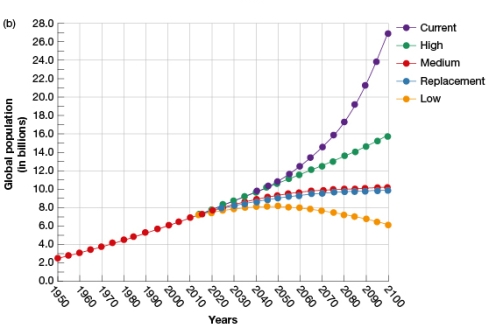
A) Approximately 6 to 27 billion
B) Approximately 16 to 27 billion
C) Approximately 10 to 27 billion
D) Approximately 6 to 27 billion
A) Approximately 6 to 27 billion
B) Approximately 16 to 27 billion
C) Approximately 10 to 27 billion
D) Approximately 6 to 27 billion

سؤال
سؤال
سؤال
سؤال
سؤال
سؤال
سؤال
سؤال
سؤال
سؤال
سؤال
سؤال
سؤال
Using Figure 14.5a,under what fertility scenario would there be the largest predicted percentage rate of increase in the world population? 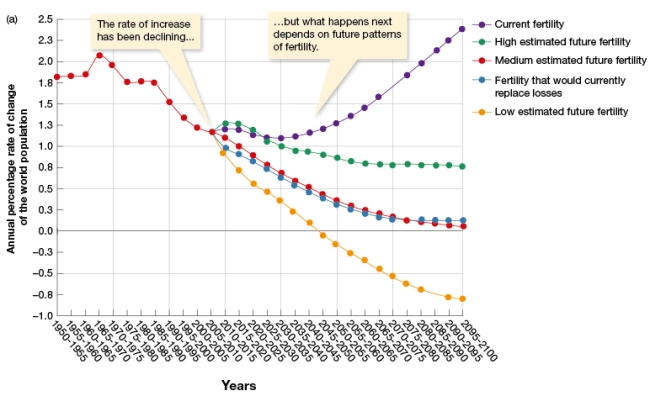
A) Current fertility
B) High estimated future fertility
C) Medium estimated future fertility
D) Low estimated future fertility
A) Current fertility
B) High estimated future fertility
C) Medium estimated future fertility
D) Low estimated future fertility
سؤال
سؤال
سؤال
سؤال
سؤال
سؤال
سؤال
سؤال
سؤال
سؤال
سؤال
سؤال
سؤال
سؤال
سؤال
سؤال
سؤال
سؤال
سؤال
سؤال
سؤال
سؤال
سؤال
سؤال
سؤال
سؤال
سؤال
سؤال
سؤال
سؤال
سؤال
سؤال
سؤال
سؤال
سؤال
سؤال
سؤال

فتح الحزمة
قم بالتسجيل لفتح البطاقات في هذه المجموعة!
Unlock Deck
Unlock Deck
1/51

العب

ملء الشاشة (f)
Deck 14: The Ecology of Human Population Growth, Disease, and Food Supply
1
According to Figure 14.5b,what is the range of values the global population is estimated to be in 2100 using current and medium fertility rates?
A) Approximately 6 to 27 billion
B) Approximately 16 to 27 billion
C) Approximately 10 to 27 billion
D) Approximately 6 to 27 billion
A) Approximately 6 to 27 billion
B) Approximately 16 to 27 billion
C) Approximately 10 to 27 billion
D) Approximately 6 to 27 billion
C
2
What is one reason that global hunger persists?
A) Lack of synthetic nitrogen fertilizer
B) Inadequate global food production
C) Unequal distribution of food produced
D) Under consumption when food is available
A) Lack of synthetic nitrogen fertilizer
B) Inadequate global food production
C) Unequal distribution of food produced
D) Under consumption when food is available
C
3
If a population switched from high birth and death rates to low birth and death rates,what would this be referred to as?
A) A population regression
B) A demographic transition
C) A demographic reversal
D) A population transition
A) A population regression
B) A demographic transition
C) A demographic reversal
D) A population transition
B
4
Age pyramids help us visually see what trends?
A) That pyramids with wide bases reflect growing populations
B) That pyramids that are wider near the top have large numbers of older individuals
C) That pyramids with narrow bases may be populations that are not growing or even declining
D) All of the above
A) That pyramids with wide bases reflect growing populations
B) That pyramids that are wider near the top have large numbers of older individuals
C) That pyramids with narrow bases may be populations that are not growing or even declining
D) All of the above
فتح الحزمة
افتح القفل للوصول البطاقات البالغ عددها 51 في هذه المجموعة.
فتح الحزمة
k this deck
5
Which statement about global population is true?
A) Both urban and rural populations have been increasing gradually since 2000.
B) Urban populations have remained steady since 2000.
C) Urban populations have increased steadily since 2000 while rural populations are predicted to decrease.
D) Rural populations have decreased since 2000 but are predicted to increase.
A) Both urban and rural populations have been increasing gradually since 2000.
B) Urban populations have remained steady since 2000.
C) Urban populations have increased steadily since 2000 while rural populations are predicted to decrease.
D) Rural populations have decreased since 2000 but are predicted to increase.
فتح الحزمة
افتح القفل للوصول البطاقات البالغ عددها 51 في هذه المجموعة.
فتح الحزمة
k this deck
6
In which year did the world's population of people living in cities match the number of people living in rural environments?
A) 1950
B) 1750
C) 2010
D) 2050 (predicted)
A) 1950
B) 1750
C) 2010
D) 2050 (predicted)
فتح الحزمة
افتح القفل للوصول البطاقات البالغ عددها 51 في هذه المجموعة.
فتح الحزمة
k this deck
7
How much has the average consumption of calories per day per person changed from the 1960s to present day?
A) From 2,360 calories per day to 2,940 calories per day
B) From 1,536 calories per day to 2,610 calories per day
C) From 3,610 calories per day to 2,940 calories per day
D) From 2,610 calories per day to 1,536 calories per day
A) From 2,360 calories per day to 2,940 calories per day
B) From 1,536 calories per day to 2,610 calories per day
C) From 3,610 calories per day to 2,940 calories per day
D) From 2,610 calories per day to 1,536 calories per day
فتح الحزمة
افتح القفل للوصول البطاقات البالغ عددها 51 في هذه المجموعة.
فتح الحزمة
k this deck
8
Population growth is increasingly stressing the environment and this is also correlated to which of the following?
A) Global gross domestic production and affluence
B) The number of patent applications and global gross domestic production
C) Global primary productivity and number of patent applications
D) The number of patent applications and affluence
A) Global gross domestic production and affluence
B) The number of patent applications and global gross domestic production
C) Global primary productivity and number of patent applications
D) The number of patent applications and affluence
فتح الحزمة
افتح القفل للوصول البطاقات البالغ عددها 51 في هذه المجموعة.
فتح الحزمة
k this deck
9
Extreme weather events have
A) Decreased in number since the 1980s
B) Likely killed more people in the 1980s than they did in the 1970s
C) Are likely connected to changes in global climate patterns
D) All of the above
A) Decreased in number since the 1980s
B) Likely killed more people in the 1980s than they did in the 1970s
C) Are likely connected to changes in global climate patterns
D) All of the above
فتح الحزمة
افتح القفل للوصول البطاقات البالغ عددها 51 في هذه المجموعة.
فتح الحزمة
k this deck
10
Which of the following is true of the trend to move from rural to urban cities?
A) They increase pressures on the environment
B) They decrease pressures on the environment by producing less greenhouse gas per resident
C) They are not sites of concentrated uses of energy
D) They are not sites of concentrated air pollution
A) They increase pressures on the environment
B) They decrease pressures on the environment by producing less greenhouse gas per resident
C) They are not sites of concentrated uses of energy
D) They are not sites of concentrated air pollution
فتح الحزمة
افتح القفل للوصول البطاقات البالغ عددها 51 في هذه المجموعة.
فتح الحزمة
k this deck
11
The two global areas that are predicted to most contribute to global population in the next 50 years are
A) Latin America and Africa
B) Asia and Africa
C) Africa and Europe
D) Europe and North America
A) Latin America and Africa
B) Asia and Africa
C) Africa and Europe
D) Europe and North America
فتح الحزمة
افتح القفل للوصول البطاقات البالغ عددها 51 في هذه المجموعة.
فتح الحزمة
k this deck
12
In the first half of the 20th century,by what percentage did the global population change?
A) There was a 10% increase in the global population
B) There was a 40% increase in the global population
C) There was a 10% decrease in the global population
D) There was a 40% decrease in the global population
A) There was a 10% increase in the global population
B) There was a 40% increase in the global population
C) There was a 10% decrease in the global population
D) There was a 40% decrease in the global population
فتح الحزمة
افتح القفل للوصول البطاقات البالغ عددها 51 في هذه المجموعة.
فتح الحزمة
k this deck
13
Predicting the future global population is difficult because
A) The earth has a fixed carrying capacity
B) Food production capabilities fluctuate
C) North American populations are unpredictable
D) It is difficult to know future fertility rates
A) The earth has a fixed carrying capacity
B) Food production capabilities fluctuate
C) North American populations are unpredictable
D) It is difficult to know future fertility rates
فتح الحزمة
افتح القفل للوصول البطاقات البالغ عددها 51 في هذه المجموعة.
فتح الحزمة
k this deck
14
Using Figure 14.5a,under what fertility scenario would there be the largest predicted percentage rate of increase in the world population?
A) Current fertility
B) High estimated future fertility
C) Medium estimated future fertility
D) Low estimated future fertility
A) Current fertility
B) High estimated future fertility
C) Medium estimated future fertility
D) Low estimated future fertility
فتح الحزمة
افتح القفل للوصول البطاقات البالغ عددها 51 في هذه المجموعة.
فتح الحزمة
k this deck
15
What is one reason why increased urbanization occurred?
A) Reproductive rates of rural residents
B) The invention of skyscrapers
C) Intensification of agriculture requiring fewer workers
D) Urbanization has not increased
A) Reproductive rates of rural residents
B) The invention of skyscrapers
C) Intensification of agriculture requiring fewer workers
D) Urbanization has not increased
فتح الحزمة
افتح القفل للوصول البطاقات البالغ عددها 51 في هذه المجموعة.
فتح الحزمة
k this deck
16
Relative to more developed countries,how does the trend in the amount of calories consumed per person per day in developing countries compare?
A) The trend is opposite more developed countries
B) The trend is similar and both consume on average per day nearly the same amount of calories
C) The trend is not similar and more developed countries consume nearly twice the amount of calories on average per day compared to less developed countries.
D) The trend is similar and but less developed countries consume on average per day twice the amount of calories on average per day compared to more developed countries.
A) The trend is opposite more developed countries
B) The trend is similar and both consume on average per day nearly the same amount of calories
C) The trend is not similar and more developed countries consume nearly twice the amount of calories on average per day compared to less developed countries.
D) The trend is similar and but less developed countries consume on average per day twice the amount of calories on average per day compared to more developed countries.
فتح الحزمة
افتح القفل للوصول البطاقات البالغ عددها 51 في هذه المجموعة.
فتح الحزمة
k this deck
17
The major cause of ozone depletion in the stratosphere was
A) CFCs
B) Lead paints
C) DDT
D) Excessive nutrients
A) CFCs
B) Lead paints
C) DDT
D) Excessive nutrients
فتح الحزمة
افتح القفل للوصول البطاقات البالغ عددها 51 في هذه المجموعة.
فتح الحزمة
k this deck
18
Currently,a major concern with regard to limited resources as the global population grows is overconsumption.How has the global incidence of obesity changed since the 1980s?
A) It has doubled
B) It has been reduced by 50%
C) It has tripled
D) It has not changed
A) It has doubled
B) It has been reduced by 50%
C) It has tripled
D) It has not changed
فتح الحزمة
افتح القفل للوصول البطاقات البالغ عددها 51 في هذه المجموعة.
فتح الحزمة
k this deck
19
Ozone depletion is likely responsible for
A) An increase in human skin cancer
B) An increase in plant diseases
C) A decrease in global climate change
D) A decrease in amphibian populations
A) An increase in human skin cancer
B) An increase in plant diseases
C) A decrease in global climate change
D) A decrease in amphibian populations
فتح الحزمة
افتح القفل للوصول البطاقات البالغ عددها 51 في هذه المجموعة.
فتح الحزمة
k this deck
20
In Europe which statement is correct?
A) Both the death rate and the birth rate have been increasing since 1890.
B) Both the death rate and birth rate have been declining since 1890.
C) The death rate has been increasing while the birth rate has been decreasing since 1890.
D) The death rate has been decreasing while the birth rate has been steady since 1890.
A) Both the death rate and the birth rate have been increasing since 1890.
B) Both the death rate and birth rate have been declining since 1890.
C) The death rate has been increasing while the birth rate has been decreasing since 1890.
D) The death rate has been decreasing while the birth rate has been steady since 1890.
فتح الحزمة
افتح القفل للوصول البطاقات البالغ عددها 51 في هذه المجموعة.
فتح الحزمة
k this deck
21
What led to the banning of chlorofluorocarbons once it was determined they were contributing to the destruction of the ozone layer?
A) The Convention on International Trade in Endangered Species
B) The Montreal Protocol
C) International Union for the Conservation of Nature
D) The Intergovernmental Panel on Climate Change
A) The Convention on International Trade in Endangered Species
B) The Montreal Protocol
C) International Union for the Conservation of Nature
D) The Intergovernmental Panel on Climate Change
فتح الحزمة
افتح القفل للوصول البطاقات البالغ عددها 51 في هذه المجموعة.
فتح الحزمة
k this deck
22
Infectious diseases are affected by climate change in which ways?
A) Their local and global distributions
B) Intensity
C) Prevalence
D) Load
A) Their local and global distributions
B) Intensity
C) Prevalence
D) Load
فتح الحزمة
افتح القفل للوصول البطاقات البالغ عددها 51 في هذه المجموعة.
فتح الحزمة
k this deck
23
The commonly proposed explanation for demographic transition is/are :
A) Industrialization
B) Education
C) Excess agricultural products
D) Medical advances
A) Industrialization
B) Education
C) Excess agricultural products
D) Medical advances
فتح الحزمة
افتح القفل للوصول البطاقات البالغ عددها 51 في هذه المجموعة.
فتح الحزمة
k this deck
24
What percentage of zoonoses originate in wildlife?
A) 70%
B) 50%
C) 10%
D) 30%
A) 70%
B) 50%
C) 10%
D) 30%
فتح الحزمة
افتح القفل للوصول البطاقات البالغ عددها 51 في هذه المجموعة.
فتح الحزمة
k this deck
25
The projected increased spread of human diseases can be
A) Related to global climate change
B) Related to increased mutation rates in humans
C) Related to a decrease in vertebrate hosts
D) Unrelated to disease vectors
A) Related to global climate change
B) Related to increased mutation rates in humans
C) Related to a decrease in vertebrate hosts
D) Unrelated to disease vectors
فتح الحزمة
افتح القفل للوصول البطاقات البالغ عددها 51 في هذه المجموعة.
فتح الحزمة
k this deck
26
What environmental problem(s)is/are related to increased corn production in the U.S.?
A) Air pollution
B) Nutrient pollution of waterways
C) Ozone depletion
D) Infectious disease spread
A) Air pollution
B) Nutrient pollution of waterways
C) Ozone depletion
D) Infectious disease spread
فتح الحزمة
افتح القفل للوصول البطاقات البالغ عددها 51 في هذه المجموعة.
فتح الحزمة
k this deck
27
Under what conditions would a pesticide be most polluting?
A) If it is unselective and persistent
B) If it is selective and has a short half life
C) If it does not biomagnify in the food chain
D) If it biomagnifies in the food chain
A) If it is unselective and persistent
B) If it is selective and has a short half life
C) If it does not biomagnify in the food chain
D) If it biomagnifies in the food chain
فتح الحزمة
افتح القفل للوصول البطاقات البالغ عددها 51 في هذه المجموعة.
فتح الحزمة
k this deck
28
Emerging infectious diseases are defined as
A) Diseases that particularly impact developed countries
B) Diseases that easily treated with antibiotics
C) Diseases that are new to human populations or are expanding their range of incidence
D) All of the above
A) Diseases that particularly impact developed countries
B) Diseases that easily treated with antibiotics
C) Diseases that are new to human populations or are expanding their range of incidence
D) All of the above
فتح الحزمة
افتح القفل للوصول البطاقات البالغ عددها 51 في هذه المجموعة.
فتح الحزمة
k this deck
29
When modeling fisheries:
A) Fixed quota models are risky because slight miscalculations can result in fish population extinction
B) Fixed quota models result in multiple maximum sustainable yield population levels
C) Fixed effort harvesting reduces the risk of population extinction
D) Fixed effort models result in an inability to harvest at maximum sustainable yield
A) Fixed quota models are risky because slight miscalculations can result in fish population extinction
B) Fixed quota models result in multiple maximum sustainable yield population levels
C) Fixed effort harvesting reduces the risk of population extinction
D) Fixed effort models result in an inability to harvest at maximum sustainable yield
فتح الحزمة
افتح القفل للوصول البطاقات البالغ عددها 51 في هذه المجموعة.
فتح الحزمة
k this deck
30
An increase in the percentage of meat consumption and intensification of animal agriculture is related to which of the following?
A) A countries' wealth
B) A countries' population
C) A countries' number of patents
D) A countries' latitudinal position
A) A countries' wealth
B) A countries' population
C) A countries' number of patents
D) A countries' latitudinal position
فتح الحزمة
افتح القفل للوصول البطاقات البالغ عددها 51 في هذه المجموعة.
فتح الحزمة
k this deck
31
Which of the following are examples of emerging infectious diseases?
A) Ebola
B) Human Immunodeficiency Virus
C) Severe acute respiratory syndrome
D) Malaria
A) Ebola
B) Human Immunodeficiency Virus
C) Severe acute respiratory syndrome
D) Malaria
فتح الحزمة
افتح القفل للوصول البطاقات البالغ عددها 51 في هذه المجموعة.
فتح الحزمة
k this deck
32
Changing global patterns have affected patterns of infection.Even in countries with sophisticated sanitation,there are still thousands of fatalities and hospitalizations due to what?
A) Heat stroke
B) Smog poisoning
C) Sports injuries
D) Food-borne illness
A) Heat stroke
B) Smog poisoning
C) Sports injuries
D) Food-borne illness
فتح الحزمة
افتح القفل للوصول البطاقات البالغ عددها 51 في هذه المجموعة.
فتح الحزمة
k this deck
33
Which of the following outcomes of climate change will likely affect infectious disease vectors?
A) The change in average temperatures and uncertain yearly patterns
B) The changes in average rainfall and uncertain yearly patterns
C) The changes in average water temperatures
D) The amount of calories consumed on average per day per person
A) The change in average temperatures and uncertain yearly patterns
B) The changes in average rainfall and uncertain yearly patterns
C) The changes in average water temperatures
D) The amount of calories consumed on average per day per person
فتح الحزمة
افتح القفل للوصول البطاقات البالغ عددها 51 في هذه المجموعة.
فتح الحزمة
k this deck
34
According to the Expert Team on Climate Change Detection Monitoring and Indices,the change in global climate patterns has led to an increase in:
A) Heat waves
B) High winds
C) Floods
D) Droughts
A) Heat waves
B) High winds
C) Floods
D) Droughts
فتح الحزمة
افتح القفل للوصول البطاقات البالغ عددها 51 في هذه المجموعة.
فتح الحزمة
k this deck
35
Which of the following are results of intensified agriculture?
A) Monoculture
B) Biomagnification
C) Increased disease transmission as a result of monoculture
D) A reduction in feedlots
A) Monoculture
B) Biomagnification
C) Increased disease transmission as a result of monoculture
D) A reduction in feedlots
فتح الحزمة
افتح القفل للوصول البطاقات البالغ عددها 51 في هذه المجموعة.
فتح الحزمة
k this deck
36
In what decade was an ozone hole detected over the Antarctic?
A) 1990s
B) 2000s
C) 1880s
D) 1970s
A) 1990s
B) 2000s
C) 1880s
D) 1970s
فتح الحزمة
افتح القفل للوصول البطاقات البالغ عددها 51 في هذه المجموعة.
فتح الحزمة
k this deck
37
Which of the following choices defines a zoonose?
A) An infection that circulates in human hosts and cannot be transmitted to other animals
B) An infection that circulates in nonhuman hosts and cannot be transmitted to other animals
C) An infection that circulates in nonhuman vertebrate hosts but can be transmitted to humans
D) None of the above.
A) An infection that circulates in human hosts and cannot be transmitted to other animals
B) An infection that circulates in nonhuman hosts and cannot be transmitted to other animals
C) An infection that circulates in nonhuman vertebrate hosts but can be transmitted to humans
D) None of the above.
فتح الحزمة
افتح القفل للوصول البطاقات البالغ عددها 51 في هذه المجموعة.
فتح الحزمة
k this deck
38
Which of the following terms is used to explain a disease that appears in the human population for the first time or expands rapidly in incidence or geographic range?
A) Emerging infectious disease
B) Emergent zoospore
C) Emerging destructive disease
D) Emigrating disease propagule
A) Emerging infectious disease
B) Emergent zoospore
C) Emerging destructive disease
D) Emigrating disease propagule
فتح الحزمة
افتح القفل للوصول البطاقات البالغ عددها 51 في هذه المجموعة.
فتح الحزمة
k this deck
39
Which is true about the human consumption of fish?
A) Wild capture continues to supply the majority of fish
B) Aquaculture supplies have increased dramatically in the last 30 years
C) Wild fisheries have uniformly been underexploited
D) Wild fisheries have increased dramatically in the last 30 years
A) Wild capture continues to supply the majority of fish
B) Aquaculture supplies have increased dramatically in the last 30 years
C) Wild fisheries have uniformly been underexploited
D) Wild fisheries have increased dramatically in the last 30 years
فتح الحزمة
افتح القفل للوصول البطاقات البالغ عددها 51 في هذه المجموعة.
فتح الحزمة
k this deck
40
In the United States,after the Second World War,which of following occurred?
A) There was a spatial segregation of crop production and animal production
B) As a result of A, animal agriculture intensified
C) As a result of A and B, there was an increase in the consumption of meat
D) As a result of A, B, and C, the human population in more developed countries has decreased
A) There was a spatial segregation of crop production and animal production
B) As a result of A, animal agriculture intensified
C) As a result of A and B, there was an increase in the consumption of meat
D) As a result of A, B, and C, the human population in more developed countries has decreased
فتح الحزمة
افتح القفل للوصول البطاقات البالغ عددها 51 في هذه المجموعة.
فتح الحزمة
k this deck
41
What fishery management practice promotes harvesting the highest possible number of fish that still allows for the population to replenish itself _______?
A) Fixed quota harvest
B) Carrying capacity management
C) Intermediate take quota
D) Maximum sustainable yield
A) Fixed quota harvest
B) Carrying capacity management
C) Intermediate take quota
D) Maximum sustainable yield
فتح الحزمة
افتح القفل للوصول البطاقات البالغ عددها 51 في هذه المجموعة.
فتح الحزمة
k this deck
42
Growing organic crops _________ the environment because _________.
A) Benefits; it produces better food
B) Destroys; it produces more nitrogen in agricultural runoff
C) Benefits; it reduces the amount of nitrogen in agricultural runoff
D) Destroys; it reduces the amount of nitrogen in agricultural runoff
A) Benefits; it produces better food
B) Destroys; it produces more nitrogen in agricultural runoff
C) Benefits; it reduces the amount of nitrogen in agricultural runoff
D) Destroys; it reduces the amount of nitrogen in agricultural runoff
فتح الحزمة
افتح القفل للوصول البطاقات البالغ عددها 51 في هذه المجموعة.
فتح الحزمة
k this deck
43
The root of most,if not all,global environmental problems are due to _________.
A) Global climate change
B) Population growth
C) Greenhouse gases
D) Ocean acidification
A) Global climate change
B) Population growth
C) Greenhouse gases
D) Ocean acidification
فتح الحزمة
افتح القفل للوصول البطاقات البالغ عددها 51 في هذه المجموعة.
فتح الحزمة
k this deck
44
Like many environmental issues the solutions are complex.While aquaculture provides much needed additional food it also __________
A) Releases excess nutrients and antibiotics into the environment
B) Requires jobs that few are interested in taking
C) Produces excess food that goes to waste
D) Will put fisheries out of business
A) Releases excess nutrients and antibiotics into the environment
B) Requires jobs that few are interested in taking
C) Produces excess food that goes to waste
D) Will put fisheries out of business
فتح الحزمة
افتح القفل للوصول البطاقات البالغ عددها 51 في هذه المجموعة.
فتح الحزمة
k this deck
45
Maximum sustainable yields are usually seen when population sizes are ___________.
A) Near their carrying capacity
B) Very low
C) At medium population densities
D) None of the above
A) Near their carrying capacity
B) Very low
C) At medium population densities
D) None of the above
فتح الحزمة
افتح القفل للوصول البطاقات البالغ عددها 51 في هذه المجموعة.
فتح الحزمة
k this deck
46
When ___________ occurs a pest population will grow exponentially after a pesticide treatment kills large populations of the pest plus their predator,and as a result any survivors are able to proliferate in the absence of competition and natural predators,and an abundance of food resources.
A) Infiltration
B) Target pest resurgence
C) Biomagnification
D) Exponential pest resurgence
A) Infiltration
B) Target pest resurgence
C) Biomagnification
D) Exponential pest resurgence
فتح الحزمة
افتح القفل للوصول البطاقات البالغ عددها 51 في هذه المجموعة.
فتح الحزمة
k this deck
47
Most aquaculture occurs in ______________.
A) The North Atlantic
B) Asia
C) The tropics
D) The United States
A) The North Atlantic
B) Asia
C) The tropics
D) The United States
فتح الحزمة
افتح القفل للوصول البطاقات البالغ عددها 51 في هذه المجموعة.
فتح الحزمة
k this deck
48
While aquaculture provides more food for people there may be a cost if____________.
A) Farmed fish are less nutritious than wild caught fish
B) Farmed fish are smaller than wild caught fish
C) Farmed fish are more diseased than wild caught fish
D) None of the above
A) Farmed fish are less nutritious than wild caught fish
B) Farmed fish are smaller than wild caught fish
C) Farmed fish are more diseased than wild caught fish
D) None of the above
فتح الحزمة
افتح القفل للوصول البطاقات البالغ عددها 51 في هذه المجموعة.
فتح الحزمة
k this deck
49
Fisheries models that include fixed effort and fixed quotas are based heavily on knowing the population's ________.
A) Range
B) Food distribution
C) Recruitment curve
D) Conservation status
A) Range
B) Food distribution
C) Recruitment curve
D) Conservation status
فتح الحزمة
افتح القفل للوصول البطاقات البالغ عددها 51 في هذه المجموعة.
فتح الحزمة
k this deck
50
Agricultural intensification has worsened pest problems as a result of _________________.
A) Genetically modified organisms
B) Monocultures
C) Chemical warfare
D) All of the above
A) Genetically modified organisms
B) Monocultures
C) Chemical warfare
D) All of the above
فتح الحزمة
افتح القفل للوصول البطاقات البالغ عددها 51 في هذه المجموعة.
فتح الحزمة
k this deck
51
As a result of global climate change,_______________ will likely be significantly affected by disrupted environmental temperature because they involve ectotherms.
A) Communicable diseases like malaria
B) Vector-borne diseases like malaria
C) Incommunicable diseases like ebola
D) All of the above
A) Communicable diseases like malaria
B) Vector-borne diseases like malaria
C) Incommunicable diseases like ebola
D) All of the above
فتح الحزمة
افتح القفل للوصول البطاقات البالغ عددها 51 في هذه المجموعة.
فتح الحزمة
k this deck
فتح الحزمة
افتح القفل للوصول البطاقات البالغ عددها 51 في هذه المجموعة.






