







 تكلم مع الذكاء الاصطناعي


Deck 7: Lower Extremity
ملء الشاشة (f)

سؤال
The bone part identified in this figure is the: 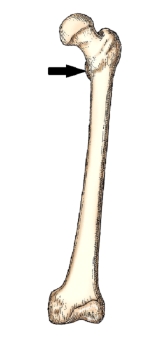
A) lateral condyle.
B) medial condyle.
C) greater trochanter.
D) lesser trochanter.
A) lateral condyle.
B) medial condyle.
C) greater trochanter.
D) lesser trochanter.

سؤال
سؤال
سؤال
The area identified on the patella in this figure is the: 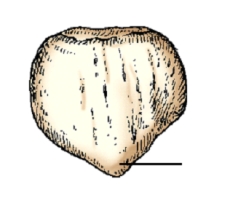
A) apex.
B) base.
C) inferior articulating surface.
D) superior articulating surface.
A) apex.
B) base.
C) inferior articulating surface.
D) superior articulating surface.
سؤال
سؤال
سؤال
The aspect of the foot shown in this figure is the: 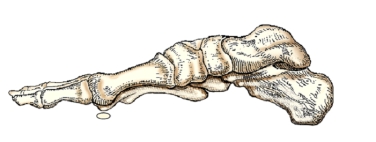
A) dorsal.
B) plantar.
C) medial.
D) lateral.
A) dorsal.
B) plantar.
C) medial.
D) lateral.
سؤال
The bone of the foot indicated by the arrow in this figure is the: 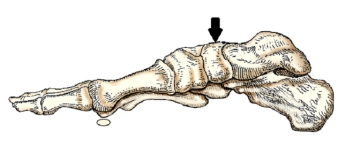
A) navicular.
B) talus.
C) calcaneus.
D) medial cuneiform.
A) navicular.
B) talus.
C) calcaneus.
D) medial cuneiform.
سؤال
سؤال
سؤال
سؤال
The bone part identified by the arrow in this figure is the: 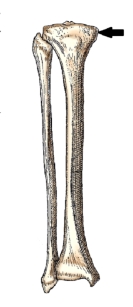
A) medial epicondyle.
B) tibial tuberosity.
C) medial malleolus.
D) medial condyle.
A) medial epicondyle.
B) tibial tuberosity.
C) medial malleolus.
D) medial condyle.
سؤال
The bone part identified in this figure is the: 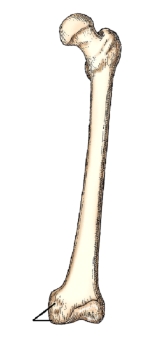
A) lateral condyle.
B) lateral malleolus.
C) medial condyle.
D) medial epicondyle.
A) lateral condyle.
B) lateral malleolus.
C) medial condyle.
D) medial epicondyle.
سؤال
سؤال
سؤال
سؤال
The bone of the foot indicated by the arrow in this figure is the: 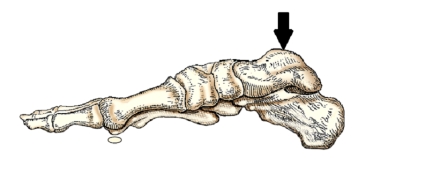
A) navicular.
B) talus.
C) calcaneus.
D) medial cuneiform.
A) navicular.
B) talus.
C) calcaneus.
D) medial cuneiform.
سؤال
سؤال
The bone part identified by the arrow in this figure is the: 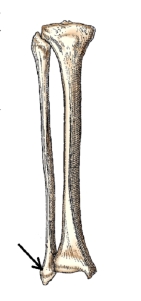
A) lateral condyle.
B) medial condyle.
C) lateral malleolus.
D) medial malleolus.
A) lateral condyle.
B) medial condyle.
C) lateral malleolus.
D) medial malleolus.
سؤال
سؤال
سؤال
سؤال
سؤال
سؤال
سؤال
The bone identified by the arrow in this figure is the: 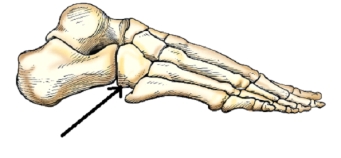
A) tibia.
B) cuboid.
C) talus.
D) navicular.
A) tibia.
B) cuboid.
C) talus.
D) navicular.
سؤال
سؤال
سؤال
سؤال
سؤال
Which projection is demonstrated in this photograph? 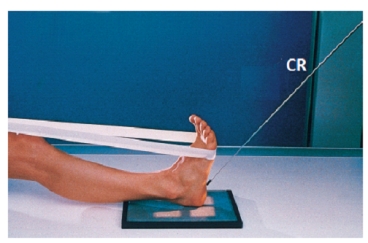
A) PA foot
B) AP axial foot
C) Axial calcaneus (plantodorsal)
D) Axial calcaneus (dorsoplantar)
A) PA foot
B) AP axial foot
C) Axial calcaneus (plantodorsal)
D) Axial calcaneus (dorsoplantar)
سؤال
سؤال
سؤال
سؤال
سؤال
سؤال
سؤال
سؤال
سؤال
سؤال
سؤال
سؤال
سؤال
سؤال
سؤال
سؤال
سؤال
سؤال
سؤال
سؤال
سؤال
سؤال
سؤال
سؤال
سؤال
سؤال
سؤال
سؤال
سؤال
سؤال
سؤال
سؤال
The patient position and central-ray method demonstrated in this figure is the: 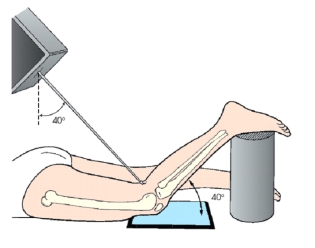
A) Holmblad (intercondylar fossa).
B) Camp-Coventry (intercondylar fossa).
C) Settegast (patellofemoral joint).
D) Hughston (patellofemoral joint).
A) Holmblad (intercondylar fossa).
B) Camp-Coventry (intercondylar fossa).
C) Settegast (patellofemoral joint).
D) Hughston (patellofemoral joint).
سؤال
سؤال
سؤال
سؤال
سؤال
سؤال
سؤال
The patient position and central ray shown in this figure will demonstrate the: 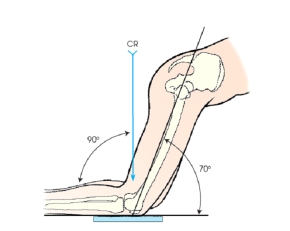
A) patella.
B) patellofemoral joint.
C) intercondylar fossa.
D) tibiofibular joint space.
A) patella.
B) patellofemoral joint.
C) intercondylar fossa.
D) tibiofibular joint space.
سؤال
سؤال
سؤال
سؤال
سؤال
سؤال
سؤال
سؤال
سؤال
سؤال

فتح الحزمة
قم بالتسجيل لفتح البطاقات في هذه المجموعة!
Unlock Deck
Unlock Deck
1/154

العب

ملء الشاشة (f)
Deck 7: Lower Extremity
1
The bone part identified in this figure is the:
A) lateral condyle.
B) medial condyle.
C) greater trochanter.
D) lesser trochanter.
A) lateral condyle.
B) medial condyle.
C) greater trochanter.
D) lesser trochanter.
lesser trochanter.
2
How many metatarsal bones are in the foot?
A) Four
B) Five
C) Six
D) Seven
A) Four
B) Five
C) Six
D) Seven
Five
3
The largest and strongest bone in the body is the:
A) tibia.
B) femur.
C) hip.
D) skull.
A) tibia.
B) femur.
C) hip.
D) skull.
femur.
4
The area identified on the patella in this figure is the:
A) apex.
B) base.
C) inferior articulating surface.
D) superior articulating surface.
A) apex.
B) base.
C) inferior articulating surface.
D) superior articulating surface.
فتح الحزمة
افتح القفل للوصول البطاقات البالغ عددها 154 في هذه المجموعة.
فتح الحزمة
k this deck
5
The superior surface of the foot is termed the _____ surface.
A) dorsal
B) plantar
C) anterior
D) superior
A) dorsal
B) plantar
C) anterior
D) superior
فتح الحزمة
افتح القفل للوصول البطاقات البالغ عددها 154 في هذه المجموعة.
فتح الحزمة
k this deck
6
How many bones make up the leg?
A) Two
B) Three
C) Four
D) Five
A) Two
B) Three
C) Four
D) Five
فتح الحزمة
افتح القفل للوصول البطاقات البالغ عددها 154 في هذه المجموعة.
فتح الحزمة
k this deck
7
The aspect of the foot shown in this figure is the:
A) dorsal.
B) plantar.
C) medial.
D) lateral.
A) dorsal.
B) plantar.
C) medial.
D) lateral.
فتح الحزمة
افتح القفل للوصول البطاقات البالغ عددها 154 في هذه المجموعة.
فتح الحزمة
k this deck
8
The bone of the foot indicated by the arrow in this figure is the:
A) navicular.
B) talus.
C) calcaneus.
D) medial cuneiform.
A) navicular.
B) talus.
C) calcaneus.
D) medial cuneiform.
فتح الحزمة
افتح القفل للوصول البطاقات البالغ عددها 154 في هذه المجموعة.
فتح الحزمة
k this deck
9
The second largest bone in the body is the:
A) hip.
B) tibia.
C) femur.
D) skull.
A) hip.
B) tibia.
C) femur.
D) skull.
فتح الحزمة
افتح القفل للوصول البطاقات البالغ عددها 154 في هذه المجموعة.
فتح الحزمة
k this deck
10
The largest and strongest tarsal bone is the:
A) calcaneus.
B) navicular.
C) medial cuneiform.
D) lateral cuneiform.
A) calcaneus.
B) navicular.
C) medial cuneiform.
D) lateral cuneiform.
فتح الحزمة
افتح القفل للوصول البطاقات البالغ عددها 154 في هذه المجموعة.
فتح الحزمة
k this deck
11
How many phalanges are in the great toe?
A) None
B) One
C) Two
D) Three
A) None
B) One
C) Two
D) Three
فتح الحزمة
افتح القفل للوصول البطاقات البالغ عددها 154 في هذه المجموعة.
فتح الحزمة
k this deck
12
The bone part identified by the arrow in this figure is the:
A) medial epicondyle.
B) tibial tuberosity.
C) medial malleolus.
D) medial condyle.
A) medial epicondyle.
B) tibial tuberosity.
C) medial malleolus.
D) medial condyle.
فتح الحزمة
افتح القفل للوصول البطاقات البالغ عددها 154 في هذه المجموعة.
فتح الحزمة
k this deck
13
The bone part identified in this figure is the:
A) lateral condyle.
B) lateral malleolus.
C) medial condyle.
D) medial epicondyle.
A) lateral condyle.
B) lateral malleolus.
C) medial condyle.
D) medial epicondyle.
فتح الحزمة
افتح القفل للوصول البطاقات البالغ عددها 154 في هذه المجموعة.
فتح الحزمة
k this deck
14
The second largest tarsal bone,and the one that occupies the highest position in the foot,is the:
A) talus.
B) navicular.
C) calcaneus.
D) medial cuneiform.
A) talus.
B) navicular.
C) calcaneus.
D) medial cuneiform.
فتح الحزمة
افتح القفل للوصول البطاقات البالغ عددها 154 في هذه المجموعة.
فتح الحزمة
k this deck
15
How many bones are in the foot?
A) 14
B) 26
C) 27
D) 29
A) 14
B) 26
C) 27
D) 29
فتح الحزمة
افتح القفل للوصول البطاقات البالغ عددها 154 في هذه المجموعة.
فتح الحزمة
k this deck
16
How many tarsal bones are in the foot?
A) Four
B) Five
C) Six
D) Seven
A) Four
B) Five
C) Six
D) Seven
فتح الحزمة
افتح القفل للوصول البطاقات البالغ عددها 154 في هذه المجموعة.
فتح الحزمة
k this deck
17
The bone of the foot indicated by the arrow in this figure is the:
A) navicular.
B) talus.
C) calcaneus.
D) medial cuneiform.
A) navicular.
B) talus.
C) calcaneus.
D) medial cuneiform.
فتح الحزمة
افتح القفل للوصول البطاقات البالغ عددها 154 في هذه المجموعة.
فتح الحزمة
k this deck
18
How many phalanges are in the foot?
A) 5
B) 7
C) 14
D) 26
A) 5
B) 7
C) 14
D) 26
فتح الحزمة
افتح القفل للوصول البطاقات البالغ عددها 154 في هذه المجموعة.
فتح الحزمة
k this deck
19
The bone part identified by the arrow in this figure is the:
A) lateral condyle.
B) medial condyle.
C) lateral malleolus.
D) medial malleolus.
A) lateral condyle.
B) medial condyle.
C) lateral malleolus.
D) medial malleolus.
فتح الحزمة
افتح القفل للوصول البطاقات البالغ عددها 154 في هذه المجموعة.
فتح الحزمة
k this deck
20
The inferior aspect of the foot is termed the _____ surface.
A) posterior
B) caudal
C) dorsal
D) plantar
A) posterior
B) caudal
C) dorsal
D) plantar
فتح الحزمة
افتح القفل للوصول البطاقات البالغ عددها 154 في هذه المجموعة.
فتح الحزمة
k this deck
21
For a lateral projection of the foot,the central ray is directed to the:
A) head of the third metatarsal.
B) base of the third metatarsal.
C) tibiotalar joint.
D) navicular.
A) head of the third metatarsal.
B) base of the third metatarsal.
C) tibiotalar joint.
D) navicular.
فتح الحزمة
افتح القفل للوصول البطاقات البالغ عددها 154 في هذه المجموعة.
فتح الحزمة
k this deck
22
The name of the small round bones located on the plantar surface of the foot,typically beneath the first MTP joint,is the:
A) cuneiforms.
B) sesamoids.
C) tarsals.
D) epicondyles.
A) cuneiforms.
B) sesamoids.
C) tarsals.
D) epicondyles.
فتح الحزمة
افتح القفل للوصول البطاقات البالغ عددها 154 في هذه المجموعة.
فتح الحزمة
k this deck
23
How many degrees are the lower leg and foot rotated for the AP oblique projection of the toes in medial rotation?
A) 10 to 15
B) 20 to 25
C) 40 to 60
D) 30 to 45
A) 10 to 15
B) 20 to 25
C) 40 to 60
D) 30 to 45
فتح الحزمة
افتح القفل للوصول البطاقات البالغ عددها 154 في هذه المجموعة.
فتح الحزمة
k this deck
24
The central-ray angulation for an AP oblique projection of the toes is:
A) 0 degrees.
B) 5 degrees posteriorly.
C) 10 degrees posteriorly.
D) 15 degrees posteriorly.
A) 0 degrees.
B) 5 degrees posteriorly.
C) 10 degrees posteriorly.
D) 15 degrees posteriorly.
فتح الحزمة
افتح القفل للوصول البطاقات البالغ عددها 154 في هذه المجموعة.
فتح الحزمة
k this deck
25
Which lateral projection of the foot is the most commonly performed?
A) Lateromedial (lateral recumbent position)
B) Mediolateral (lateral recumbent position)
C) Lateromedial (standing weight-bearing)
D) Mediolateral (standing weight-bearing)
A) Lateromedial (lateral recumbent position)
B) Mediolateral (lateral recumbent position)
C) Lateromedial (standing weight-bearing)
D) Mediolateral (standing weight-bearing)
فتح الحزمة
افتح القفل للوصول البطاقات البالغ عددها 154 في هذه المجموعة.
فتح الحزمة
k this deck
26
The bone identified by the arrow in this figure is the:
A) tibia.
B) cuboid.
C) talus.
D) navicular.
A) tibia.
B) cuboid.
C) talus.
D) navicular.
فتح الحزمة
افتح القفل للوصول البطاقات البالغ عددها 154 في هذه المجموعة.
فتح الحزمة
k this deck
27
Which projections of the foot will best demonstrate the structural status of the longitudinal arch?
A) AP axial
B) AP oblique medial rotation
C) Lateral (lateromedial)
D) Lateral (lateromedial)weight-bearing
A) AP axial
B) AP oblique medial rotation
C) Lateral (lateromedial)
D) Lateral (lateromedial)weight-bearing
فتح الحزمة
افتح القفل للوصول البطاقات البالغ عددها 154 في هذه المجموعة.
فتح الحزمة
k this deck
28
For an AP oblique projection of the foot in either medial or lateral rotation,the plantar surface of the foot should form an angle of:
A) 15 degrees.
B) 30 degrees.
C) 45 degrees.
D) 60 degrees.
A) 15 degrees.
B) 30 degrees.
C) 45 degrees.
D) 60 degrees.
فتح الحزمة
افتح القفل للوصول البطاقات البالغ عددها 154 في هذه المجموعة.
فتح الحزمة
k this deck
29
How many degrees of angulation are required to open the IP joint spaces of the toes on an AP projection?
A) 0
B) 10
C) 15
D) 20
A) 0
B) 10
C) 15
D) 20
فتح الحزمة
افتح القفل للوصول البطاقات البالغ عددها 154 في هذه المجموعة.
فتح الحزمة
k this deck
30
The central ray is directed to which of the following for an AP or AP axial projection of the foot?
A) Head of the second metatarsal
B) Head of the third metatarsal
C) Base of the third metatarsal
D) Base of the fourth metatarsal
A) Head of the second metatarsal
B) Head of the third metatarsal
C) Base of the third metatarsal
D) Base of the fourth metatarsal
فتح الحزمة
افتح القفل للوصول البطاقات البالغ عددها 154 في هذه المجموعة.
فتح الحزمة
k this deck
31
Which projection is demonstrated in this photograph?
A) PA foot
B) AP axial foot
C) Axial calcaneus (plantodorsal)
D) Axial calcaneus (dorsoplantar)
A) PA foot
B) AP axial foot
C) Axial calcaneus (plantodorsal)
D) Axial calcaneus (dorsoplantar)
فتح الحزمة
افتح القفل للوصول البطاقات البالغ عددها 154 في هذه المجموعة.
فتح الحزمة
k this deck
32
What is the central-ray angulation for the axial (plantodorsal)projection of the calcaneus?
A) 25 degrees
B) 30 degrees
C) 35 degrees
D) 40 degrees
A) 25 degrees
B) 30 degrees
C) 35 degrees
D) 40 degrees
فتح الحزمة
افتح القفل للوصول البطاقات البالغ عددها 154 في هذه المجموعة.
فتح الحزمة
k this deck
33
How is the patient placed for a lateral projection of the great toe and second toe?
A) Supine,with the affected leg turned out
B) Supine,with the affected leg turned in
C) Lateral,on the affected side
D) Recumbent,on the unaffected side
A) Supine,with the affected leg turned out
B) Supine,with the affected leg turned in
C) Lateral,on the affected side
D) Recumbent,on the unaffected side
فتح الحزمة
افتح القفل للوصول البطاقات البالغ عددها 154 في هذه المجموعة.
فتح الحزمة
k this deck
34
To better demonstrate the TMT joint spaces of the foot,a posterior angulation of how many degrees is required?
A) 0
B) 10
C) 15
D) 20
A) 0
B) 10
C) 15
D) 20
فتح الحزمة
افتح القفل للوصول البطاقات البالغ عددها 154 في هذه المجموعة.
فتح الحزمة
k this deck
35
All of the following forms the ankle mortise,except:
A) lateral malleolus of the fibula.
B) medial surface of the tibia.
C) inferior surface of the tibia.
D) medial malleolus of the tibia.
A) lateral malleolus of the fibula.
B) medial surface of the tibia.
C) inferior surface of the tibia.
D) medial malleolus of the tibia.
فتح الحزمة
افتح القفل للوصول البطاقات البالغ عددها 154 في هذه المجموعة.
فتح الحزمة
k this deck
36
The central ray for an AP oblique projection of the foot is:
A) 0 degrees.
B) 5 degrees posteriorly.
C) 10 degrees posteriorly.
D) 15 degrees posteriorly.
A) 0 degrees.
B) 5 degrees posteriorly.
C) 10 degrees posteriorly.
D) 15 degrees posteriorly.
فتح الحزمة
افتح القفل للوصول البطاقات البالغ عددها 154 في هذه المجموعة.
فتح الحزمة
k this deck
37
Which of the following will clearly demonstrate the cuboid?
A) AP
B) Lateral
C) AP oblique in lateral rotation
D) AP oblique in medial rotation
A) AP
B) Lateral
C) AP oblique in lateral rotation
D) AP oblique in medial rotation
فتح الحزمة
افتح القفل للوصول البطاقات البالغ عددها 154 في هذه المجموعة.
فتح الحزمة
k this deck
38
For an AP projection of the toes,the central ray is directed to the:
A) second IP joint
B) second MTP joint
C) third MTP joint
D) base of the third metatarsal
A) second IP joint
B) second MTP joint
C) third MTP joint
D) base of the third metatarsal
فتح الحزمة
افتح القفل للوصول البطاقات البالغ عددها 154 في هذه المجموعة.
فتح الحزمة
k this deck
39
What is the patient position for a lateral projection of the third,fourth,or fifth toes?
A) Supine,with the leg and foot laterally rotated
B) 45 degrees oblique,with the leg and foot laterally rotated
C) Lateral recumbent,on the affected side
D) Lateral recumbent,on the unaffected side
A) Supine,with the leg and foot laterally rotated
B) 45 degrees oblique,with the leg and foot laterally rotated
C) Lateral recumbent,on the affected side
D) Lateral recumbent,on the unaffected side
فتح الحزمة
افتح القفل للوصول البطاقات البالغ عددها 154 في هذه المجموعة.
فتح الحزمة
k this deck
40
The most commonly performed oblique projection of the foot is the _____ oblique in _____.
A) AP; medial rotation
B) AP; lateral rotation
C) PA; medial rotation
D) PA; Grashey method
A) AP; medial rotation
B) AP; lateral rotation
C) PA; medial rotation
D) PA; Grashey method
فتح الحزمة
افتح القفل للوصول البطاقات البالغ عددها 154 في هذه المجموعة.
فتح الحزمة
k this deck
41
The medial and lateral oblique projections of the ankle require the leg and foot to be rotated how many degrees?
A) 15
B) 20
C) 45
D) 30
A) 15
B) 20
C) 45
D) 30
فتح الحزمة
افتح القفل للوصول البطاقات البالغ عددها 154 في هذه المجموعة.
فتح الحزمة
k this deck
42
Which ankle projection will clearly demonstrate the ankle mortise in profile?
A) AP
B) AP oblique,15- to 20-degree internal rotation
C) AP oblique,45-degree internal rotation
D) AP oblique,45-degree external rotation
A) AP
B) AP oblique,15- to 20-degree internal rotation
C) AP oblique,45-degree internal rotation
D) AP oblique,45-degree external rotation
فتح الحزمة
افتح القفل للوصول البطاقات البالغ عددها 154 في هذه المجموعة.
فتح الحزمة
k this deck
43
What is the position of the femoral condyles when the leg is properly positioned for an AP projection?
A) Perpendicular to the IR
B) Parallel to the IR
C) At a 15- to 20-degree oblique position (laterally)
D) At a 15- to 20-degree oblique position (medially)
A) Perpendicular to the IR
B) Parallel to the IR
C) At a 15- to 20-degree oblique position (laterally)
D) At a 15- to 20-degree oblique position (medially)
فتح الحزمة
افتح القفل للوصول البطاقات البالغ عددها 154 في هذه المجموعة.
فتح الحزمة
k this deck
44
Which of the following is the essential lateral projection of the calcaneus?
A) Lateral (lateromedial)
B) Lateral (mediolateral)
C) Lateromedial oblique
D) Lateromedial oblique,weight-bearing
A) Lateral (lateromedial)
B) Lateral (mediolateral)
C) Lateromedial oblique
D) Lateromedial oblique,weight-bearing
فتح الحزمة
افتح القفل للوصول البطاقات البالغ عددها 154 في هذه المجموعة.
فتح الحزمة
k this deck
45
Which projections of the ankle are performed on a patient following an inversion or eversion injury?
A) AP and lateral
B) AP and both obliques
C) AP stress studies
D) AP,lateral,and both obliques
A) AP and lateral
B) AP and both obliques
C) AP stress studies
D) AP,lateral,and both obliques
فتح الحزمة
افتح القفل للوصول البطاقات البالغ عددها 154 في هذه المجموعة.
فتح الحزمة
k this deck
46
Where will the fibula be located on a properly positioned lateral radiograph of the ankle?
A) Directly over the tibia
B) Behind the tibia
C) Over the anterior half of the tibia
D) Over the posterior half of the tibia
A) Directly over the tibia
B) Behind the tibia
C) Over the anterior half of the tibia
D) Over the posterior half of the tibia
فتح الحزمة
افتح القفل للوصول البطاقات البالغ عددها 154 في هذه المجموعة.
فتح الحزمة
k this deck
47
The central-ray angle for a lateral projection of the ankle is:
A) 0 degrees.
B) 5 degrees cephalad.
C) 7 degrees cephalad.
D) 10 degrees caudad.
A) 0 degrees.
B) 5 degrees cephalad.
C) 7 degrees cephalad.
D) 10 degrees caudad.
فتح الحزمة
افتح القفل للوصول البطاقات البالغ عددها 154 في هذه المجموعة.
فتح الحزمة
k this deck
48
Which projection will clearly demonstrate the joint spaces between the talus and both malleoli?
A) AP
B) AP oblique,15- to 20-degree internal rotation
C) AP oblique,45-degree internal rotation
D) AP oblique,45-degree external rotation
A) AP
B) AP oblique,15- to 20-degree internal rotation
C) AP oblique,45-degree internal rotation
D) AP oblique,45-degree external rotation
فتح الحزمة
افتح القفل للوصول البطاقات البالغ عددها 154 في هذه المجموعة.
فتح الحزمة
k this deck
49
The central-ray angulation for an AP oblique projection of the ankle is:
A) 0 degrees.
B) 5 degrees caudad.
C) 7 degrees caudad.
D) 15 degrees caudad.
A) 0 degrees.
B) 5 degrees caudad.
C) 7 degrees caudad.
D) 15 degrees caudad.
فتح الحزمة
افتح القفل للوصول البطاقات البالغ عددها 154 في هذه المجموعة.
فتح الحزمة
k this deck
50
To demonstrate the ankle mortise,the leg and foot should be rotated medially how many degrees?
A) 10
B) 25
C) 45
D) 15 to 20
A) 10
B) 25
C) 45
D) 15 to 20
فتح الحزمة
افتح القفل للوصول البطاقات البالغ عددها 154 في هذه المجموعة.
فتح الحزمة
k this deck
51
When the malleoli of the ankle are positioned parallel with the IR,the ankle is in position for which projection?
A) AP
B) AP oblique,45-degree lateral rotation
C) AP oblique,45-degree medial rotation
D) AP oblique,15- to 20-degree medial rotation for the ankle mortise
A) AP
B) AP oblique,45-degree lateral rotation
C) AP oblique,45-degree medial rotation
D) AP oblique,15- to 20-degree medial rotation for the ankle mortise
فتح الحزمة
افتح القفل للوصول البطاقات البالغ عددها 154 في هذه المجموعة.
فتح الحزمة
k this deck
52
What is the central-ray angle for an AP projection of the leg?
A) 0 degrees
B) 5 degrees caudad
C) 7 degrees caudad
D) 5 to 7 degrees cephalad
A) 0 degrees
B) 5 degrees caudad
C) 7 degrees caudad
D) 5 to 7 degrees cephalad
فتح الحزمة
افتح القفل للوصول البطاقات البالغ عددها 154 في هذه المجموعة.
فتح الحزمة
k this deck
53
Which of the following is not clearly demonstrated on an AP projection of the ankle?
A) Tibiotalar
B) Lateral malleoli
C) Ankle mortise
D) Tibiofibular overlapping
A) Tibiotalar
B) Lateral malleoli
C) Ankle mortise
D) Tibiofibular overlapping
فتح الحزمة
افتح القفل للوصول البطاقات البالغ عددها 154 في هذه المجموعة.
فتح الحزمة
k this deck
54
The central-ray angulation for a lateral projection of the calcaneus is:
A) 0 degrees.
B) 5 degrees cephalad.
C) 10 degrees cephalad.
D) 5 to 10 degrees cephalad.
A) 0 degrees.
B) 5 degrees cephalad.
C) 10 degrees cephalad.
D) 5 to 10 degrees cephalad.
فتح الحزمة
افتح القفل للوصول البطاقات البالغ عددها 154 في هذه المجموعة.
فتح الحزمة
k this deck
55
For an AP projection of the ankle,the central ray must enter the:
A) talus.
B) subtalar joint.
C) talofibular joint.
D) ankle joint,midway between the malleoli.
A) talus.
B) subtalar joint.
C) talofibular joint.
D) ankle joint,midway between the malleoli.
فتح الحزمة
افتح القفل للوصول البطاقات البالغ عددها 154 في هذه المجموعة.
فتح الحزمة
k this deck
56
All of the following must be rotated for all oblique projections of the ankle,except:
A) pelvis.
B) knee joint.
C) foot.
D) leg.
A) pelvis.
B) knee joint.
C) foot.
D) leg.
فتح الحزمة
افتح القفل للوصول البطاقات البالغ عددها 154 في هذه المجموعة.
فتح الحزمة
k this deck
57
For a lateral projection of the ankle,the central ray must enter the:
A) navicular.
B) tibiofibular joint.
C) medial malleolus.
D) lateral malleolus.
A) navicular.
B) tibiofibular joint.
C) medial malleolus.
D) lateral malleolus.
فتح الحزمة
افتح القفل للوصول البطاقات البالغ عددها 154 في هذه المجموعة.
فتح الحزمة
k this deck
58
For an axial projection of the calcaneus,the ankle should be dorsiflexed so the plantar surface of the foot is:
A) parallel with the central ray.
B) perpendicular to the central ray.
C) 70 degrees from the plane of the IR.
D) 90 degrees from the plane of the IR.
A) parallel with the central ray.
B) perpendicular to the central ray.
C) 70 degrees from the plane of the IR.
D) 90 degrees from the plane of the IR.
فتح الحزمة
افتح القفل للوصول البطاقات البالغ عددها 154 في هذه المجموعة.
فتح الحزمة
k this deck
59
To prevent lateral rotation,how should the foot be positioned for a lateral projection of the ankle?
A) In dorsiflexion
B) In plantar flexion
C) On a 10-degree angle wedge
D) On a 15-degree angle wedge
A) In dorsiflexion
B) In plantar flexion
C) On a 10-degree angle wedge
D) On a 15-degree angle wedge
فتح الحزمة
افتح القفل للوصول البطاقات البالغ عددها 154 في هذه المجموعة.
فتح الحزمة
k this deck
60
The central-ray angulation for the AP ankle projection is:
A) 0 degrees.
B) 5 degrees caudad.
C) 10 degrees caudad.
D) 15 to 20 degrees caudad.
A) 0 degrees.
B) 5 degrees caudad.
C) 10 degrees caudad.
D) 15 to 20 degrees caudad.
فتح الحزمة
افتح القفل للوصول البطاقات البالغ عددها 154 في هذه المجموعة.
فتح الحزمة
k this deck
61
The central-ray angle for AP oblique projections of the knee is:
A) 0 degrees.
B) 5 degrees caudad.
C) 7 degrees cephalad.
D) variable,depending on the ASIS-to-tabletop distance.
A) 0 degrees.
B) 5 degrees caudad.
C) 7 degrees cephalad.
D) variable,depending on the ASIS-to-tabletop distance.
فتح الحزمة
افتح القفل للوصول البطاقات البالغ عددها 154 في هذه المجموعة.
فتح الحزمة
k this deck
62
When the ASIS-to-tabletop measurement is greater than 24 cm,the central-ray angulation for an AP knee is:
A) 0 degrees.
B) 5 degrees cephalad.
C) 5 degrees caudad.
D) 7 degrees cephalad.
A) 0 degrees.
B) 5 degrees cephalad.
C) 5 degrees caudad.
D) 7 degrees cephalad.
فتح الحزمة
افتح القفل للوصول البطاقات البالغ عددها 154 في هذه المجموعة.
فتح الحزمة
k this deck
63
The patient position and central-ray method demonstrated in this figure is the:
A) Holmblad (intercondylar fossa).
B) Camp-Coventry (intercondylar fossa).
C) Settegast (patellofemoral joint).
D) Hughston (patellofemoral joint).
A) Holmblad (intercondylar fossa).
B) Camp-Coventry (intercondylar fossa).
C) Settegast (patellofemoral joint).
D) Hughston (patellofemoral joint).
فتح الحزمة
افتح القفل للوصول البطاقات البالغ عددها 154 في هذه المجموعة.
فتح الحزمة
k this deck
64
When the ASIS-to-tabletop measurement is less than 19 cm,the central-ray angulation for an AP knee is:
A) 0 degrees.
B) 5 degrees cephalad.
C) 5 degrees caudad.
D) 7 degrees caudad.
A) 0 degrees.
B) 5 degrees cephalad.
C) 5 degrees caudad.
D) 7 degrees caudad.
فتح الحزمة
افتح القفل للوصول البطاقات البالغ عددها 154 في هذه المجموعة.
فتح الحزمة
k this deck
65
Valgus and varus deformities of the knee can be evaluated with which of the following projections?
A) AP
B) AP oblique
C) PA,bilateral weight-bearing
D) AP,bilateral weight-bearing
A) AP
B) AP oblique
C) PA,bilateral weight-bearing
D) AP,bilateral weight-bearing
فتح الحزمة
افتح القفل للوصول البطاقات البالغ عددها 154 في هذه المجموعة.
فتح الحزمة
k this deck
66
How far should the IR or collimated field extend beyond the ankle or knee joint for an AP projection of the leg?
A) to 1 inch
B) 1 to 2 inches
C) 1 to 1inches
D) 2 to 2inches
A) to 1 inch
B) 1 to 2 inches
C) 1 to 1inches
D) 2 to 2inches
فتح الحزمة
افتح القفل للوصول البطاقات البالغ عددها 154 في هذه المجموعة.
فتح الحزمة
k this deck
67
How is the central ray directed for the PA axial projection (Holmblad method)of the intercondylar fossa?
A) Perpendicular to the lower leg
B) Perpendicular to the femur
C) 40 to 50 degrees to lower leg
D) 40 to 50 degrees to the femur
A) Perpendicular to the lower leg
B) Perpendicular to the femur
C) 40 to 50 degrees to lower leg
D) 40 to 50 degrees to the femur
فتح الحزمة
افتح القفل للوصول البطاقات البالغ عددها 154 في هذه المجموعة.
فتح الحزمة
k this deck
68
The central-ray angulation for a lateral projection of the knee is:
A) 0 degrees.
B) 3 to 5 degrees cephalad.
C) dependent upon the ASIS-to-tabletop measurement.
D) 5 to 7 degrees cephalad.
A) 0 degrees.
B) 3 to 5 degrees cephalad.
C) dependent upon the ASIS-to-tabletop measurement.
D) 5 to 7 degrees cephalad.
فتح الحزمة
افتح القفل للوصول البطاقات البالغ عددها 154 في هذه المجموعة.
فتح الحزمة
k this deck
69
Where is the central ray directed for an AP projection of the knee?
A) inch above the patellar base
B) inch above the patellar apex
C) inch below the patellar base
D) inch below the patellar apex
A) inch above the patellar base
B) inch above the patellar apex
C) inch below the patellar base
D) inch below the patellar apex
فتح الحزمة
افتح القفل للوصول البطاقات البالغ عددها 154 في هذه المجموعة.
فتح الحزمة
k this deck
70
The patient position and central ray shown in this figure will demonstrate the:
A) patella.
B) patellofemoral joint.
C) intercondylar fossa.
D) tibiofibular joint space.
A) patella.
B) patellofemoral joint.
C) intercondylar fossa.
D) tibiofibular joint space.
فتح الحزمة
افتح القفل للوصول البطاقات البالغ عددها 154 في هذه المجموعة.
فتح الحزمة
k this deck
71
Often,the leg is too long to fit on one IR for radiographs.Which joint or joints should be included on the IR when the site of a lesion is known?
A) The ankle joint
B) The knee joint
C) Both joints on two IRs
D) The joint closest to the lesion
A) The ankle joint
B) The knee joint
C) Both joints on two IRs
D) The joint closest to the lesion
فتح الحزمة
افتح القفل للوصول البطاقات البالغ عددها 154 في هذه المجموعة.
فتح الحزمة
k this deck
72
Which of the following projections of the knee best demonstrates the narrowing of a joint space?
A) AP
B) AP oblique
C) Lateral
D) AP of both knees with weight-bearing
A) AP
B) AP oblique
C) Lateral
D) AP of both knees with weight-bearing
فتح الحزمة
افتح القفل للوصول البطاقات البالغ عددها 154 في هذه المجموعة.
فتح الحزمة
k this deck
73
For an AP oblique projection of the knee,the limb is rotated _____ degrees.
A) 25
B) 30
C) 45
D) 40
A) 25
B) 30
C) 45
D) 40
فتح الحزمة
افتح القفل للوصول البطاقات البالغ عددها 154 في هذه المجموعة.
فتح الحزمة
k this deck
74
When the ASIS-to-tabletop measurement is between 19 and 24 cm,the central-ray angulation for an AP knee is:
A) 0 degrees.
B) 5 degrees cephalad.
C) 5 degrees caudad.
D) 7 degrees cephalad.
A) 0 degrees.
B) 5 degrees cephalad.
C) 5 degrees caudad.
D) 7 degrees cephalad.
فتح الحزمة
افتح القفل للوصول البطاقات البالغ عددها 154 في هذه المجموعة.
فتح الحزمة
k this deck
75
In which position is the patient placed for a PA projection of the patella?
A) Supine
B) Prone
C) Lateral
D) Upright
A) Supine
B) Prone
C) Lateral
D) Upright
فتح الحزمة
افتح القفل للوصول البطاقات البالغ عددها 154 في هذه المجموعة.
فتح الحزمة
k this deck
76
Where is the IR centered for an AP projection of the knee?
A) inch above the patellar apex
B) 1 inch above the patellar apex
C) inch below the patellar apex
D) 1 inch below the patellar apex
A) inch above the patellar apex
B) 1 inch above the patellar apex
C) inch below the patellar apex
D) 1 inch below the patellar apex
فتح الحزمة
افتح القفل للوصول البطاقات البالغ عددها 154 في هذه المجموعة.
فتح الحزمة
k this deck
77
How much should the leg be flexed for a lateral projection of the knee?
A) 10 degrees
B) 45 degrees
C) 10 to 20 degrees
D) 20 to 30 degrees
A) 10 degrees
B) 45 degrees
C) 10 to 20 degrees
D) 20 to 30 degrees
فتح الحزمة
افتح القفل للوصول البطاقات البالغ عددها 154 في هذه المجموعة.
فتح الحزمة
k this deck
78
When the knee is properly positioned for an AP projection,the patella will lie:
A) directly in the center of the limb.
B) slightly to the medial side.
C) slightly to the lateral side.
D) parallel with the tabletop.
A) directly in the center of the limb.
B) slightly to the medial side.
C) slightly to the lateral side.
D) parallel with the tabletop.
فتح الحزمة
افتح القفل للوصول البطاقات البالغ عددها 154 في هذه المجموعة.
فتح الحزمة
k this deck
79
Which of the following is clearly demonstrated on an AP oblique projection of the knee in medial rotation?
A) Distal fibula
B) Tibiotalar articulation
C) Patellofemoral joint space
D) Tibiofibular articulation
A) Distal fibula
B) Tibiotalar articulation
C) Patellofemoral joint space
D) Tibiofibular articulation
فتح الحزمة
افتح القفل للوصول البطاقات البالغ عددها 154 في هذه المجموعة.
فتح الحزمة
k this deck
80
The central-ray angle for an AP,bilateral weight-bearing knee is:
A) 0 degrees.
B) 5 to 7 degrees cephalad.
C) 5 to 7 degrees caudad.
D) dependent upon the ASIS-to-tabletop measurement.
A) 0 degrees.
B) 5 to 7 degrees cephalad.
C) 5 to 7 degrees caudad.
D) dependent upon the ASIS-to-tabletop measurement.
فتح الحزمة
افتح القفل للوصول البطاقات البالغ عددها 154 في هذه المجموعة.
فتح الحزمة
k this deck
فتح الحزمة
افتح القفل للوصول البطاقات البالغ عددها 154 في هذه المجموعة.






