







 تكلم مع الذكاء الاصطناعي


Deck 11: Chromosome Structure and Organelle Dna
ملء الشاشة (f)

سؤال

سؤال
سؤال
سؤال
سؤال
سؤال
سؤال
سؤال
سؤال
سؤال
سؤال
سؤال
سؤال
سؤال
سؤال
سؤال
سؤال
سؤال
سؤال
سؤال
سؤال
سؤال
سؤال
سؤال
سؤال
سؤال
سؤال
سؤال
سؤال
سؤال
سؤال
سؤال
سؤال
سؤال
سؤال
سؤال
سؤال
سؤال
سؤال
سؤال
سؤال
سؤال
سؤال
سؤال
DNA can be isolated from cells, and the different types of DNA from the cell can be separated by density gradient centrifugation. The following figures show the density gradient centrifugation profiles for DNA isolated from four different cell types: plant, animal, wild-type yeast with a plasmid, and petite yeast. 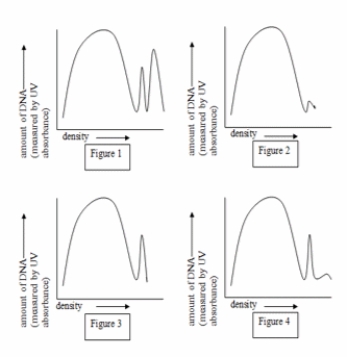
- Which figure has the DNA profile that would most closely match DNA from a human cell?
A) 1
B) 2
C) 3
D) 4
- Which figure has the DNA profile that would most closely match DNA from a human cell?
A) 1
B) 2
C) 3
D) 4
سؤال
Assuming there are no heteroplasmic individuals but that people from different families have different DNA, how many different mitochondrial DNAs are there in the pedigree below? 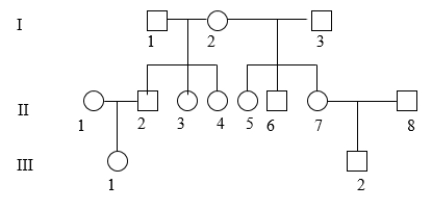
A) 2
B) 4
C) 5
D) 6
E) 7
A) 2
B) 4
C) 5
D) 6
E) 7
سؤال
DNA can be isolated from cells, and the different types of DNA from the cell can be separated by density gradient centrifugation. The following figures show the density gradient centrifugation profiles for DNA isolated from four different cell types: plant, animal, wild-type yeast with a plasmid, and petite yeast. 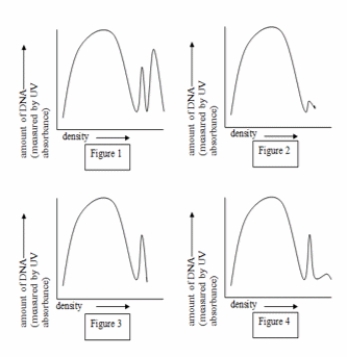
-The peak farthest to the right in Figure 1 is:
A) plasmids.
B) mitochondrial DNA.
C) genomic DNA.
D) chloroplast DNA.
-The peak farthest to the right in Figure 1 is:
A) plasmids.
B) mitochondrial DNA.
C) genomic DNA.
D) chloroplast DNA.
سؤال
سؤال
DNA can be isolated from cells, and the different types of DNA from the cell can be separated by density gradient centrifugation. The following figures show the density gradient centrifugation profiles for DNA isolated from four different cell types: plant, animal, wild-type yeast with a plasmid, and petite yeast. 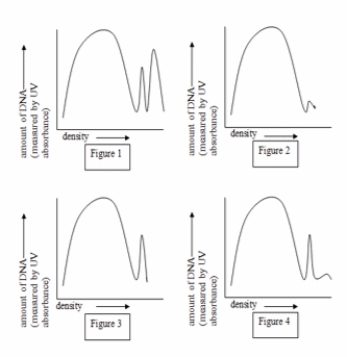
-The large peak to the left in all the figures is:
A) mitochondrial DNA.
B) genomic DNA.
C) chloroplast DNA.
D) plasmids.
-The large peak to the left in all the figures is:
A) mitochondrial DNA.
B) genomic DNA.
C) chloroplast DNA.
D) plasmids.
سؤال
سؤال
Which pair in the pedigree shares the same mitochondrial DNA? 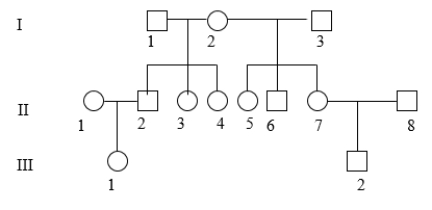
A) I-2 and III-1
B) II-2 and III-2
C) III-1 and III-2
D) II-2 and III-1
E) I-3 and II-6
A) I-2 and III-1
B) II-2 and III-2
C) III-1 and III-2
D) II-2 and III-1
E) I-3 and II-6
سؤال
سؤال
سؤال
The classic experiment that examined DNAse I sensitivity of chicken embryonic DNA from different tissues and at different developmental stages shows that: (Select all that apply.) 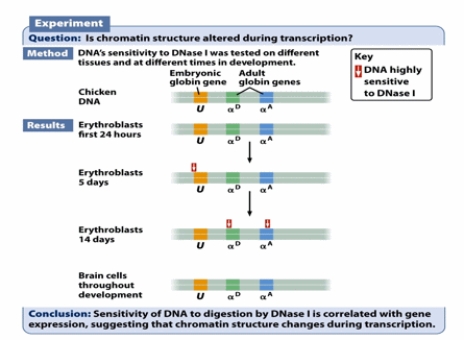
A) the chromatin structure changes in the course of development.
B) the gene expression pattern changes during development.
C) DNAse I sensitivity comes from sporadic mutations occurred during development.
D) DNAse I sensitivity only occurs in chicken but in no other organisms.
A) the chromatin structure changes in the course of development.
B) the gene expression pattern changes during development.
C) DNAse I sensitivity comes from sporadic mutations occurred during development.
D) DNAse I sensitivity only occurs in chicken but in no other organisms.
سؤال
سؤال
سؤال
DNA can be isolated from cells, and the different types of DNA from the cell can be separated by density gradient centrifugation. The following figures show the density gradient centrifugation profiles for DNA isolated from four different cell types: plant, animal, wild-type yeast with a plasmid, and petite yeast. 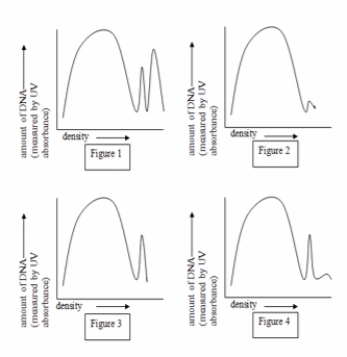
- Which figure has the DNA profile for the petite yeast?
A) 1
B) 2
C) 3
D) 4
- Which figure has the DNA profile for the petite yeast?
A) 1
B) 2
C) 3
D) 4
سؤال
DNA can be isolated from cells, and the different types of DNA from the cell can be separated by density gradient centrifugation. The following figures show the density gradient centrifugation profiles for DNA isolated from four different cell types: plant, animal, wild-type yeast with a plasmid, and petite yeast. 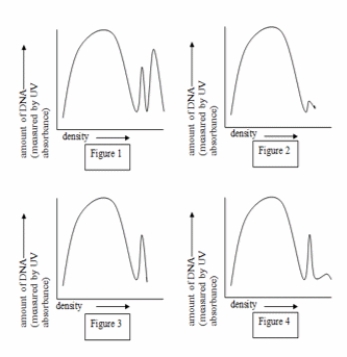
- Which figure has the DNA profile for the plant cell?
A) 1
B) 2
C) 3
D) 4
- Which figure has the DNA profile for the plant cell?
A) 1
B) 2
C) 3
D) 4
سؤال
سؤال
سؤال
سؤال
سؤال
سؤال
سؤال
A new Drosophila phenotype is investigated with a series of crosses. P (parental) organisms are true-breeding. The following is the first cross: 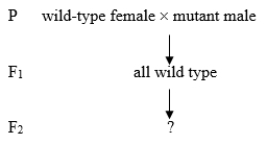 Predict the F2 results if the allele that causes the mutant phenotype is X-linked recessive. Then predict the results if the allele causing the mutant phenotype is mitochondrial.
Predict the F2 results if the allele that causes the mutant phenotype is X-linked recessive. Then predict the results if the allele causing the mutant phenotype is mitochondrial. سؤال
سؤال
سؤال
سؤال
The petite mutations in S. cerevisiae, was discovered by Boris Ephrussi and his colleagues in the late 1940s, result in much smaller colony size, reflecting the defect in the cellular growth rate (Figure 11.15). Most petite mutations are known to occur on mitochondrial DNA. Which of the following statements offer a logical explanation of the petite phenotype? Select all that apply. (Photo credit: [From Xin Jie Chen and G. Desmond Clark-Walker, Genetics 144: 1445-1454, Fig 1, 1996. © Genetics Society of America. Courtesy of Xin Jie Chen, Department of Biochemistry and Molecular Biology, SUNY Upstate Medical University.]) ![<strong>The petite mutations in S. cerevisiae, was discovered by Boris Ephrussi and his colleagues in the late 1940s, result in much smaller colony size, reflecting the defect in the cellular growth rate (Figure 11.15). Most petite mutations are known to occur on mitochondrial DNA. Which of the following statements offer a logical explanation of the petite phenotype? Select all that apply. (Photo credit: [From Xin Jie Chen and G. Desmond Clark-Walker, Genetics 144: 1445-1454, Fig 1, 1996. © Genetics Society of America. Courtesy of Xin Jie Chen, Department of Biochemistry and Molecular Biology, SUNY Upstate Medical University.]) </strong> A) The defect in the cellular growth comes from an inability to generate enough ATP. B) The growth defect is known to come from having excessive copies of mitochondria, resulting in toxicity from excess ATP. C) The mutations on the mtDNA can result in deficiency of the enzymes involved in aerobic respiration. D) They have no means to make any ATP because of mtDNA defects that affect the normal mitochondrial functions. E) The petite mutants only have to rely on anaerobic processes such as fermentation and glycolysis. <div style=padding-top: 35px>](https://d2lvgg3v3hfg70.cloudfront.net/TB7685/11eae129_902f_02e7_92b4_092774a4d09b_TB7685_00.jpg)
A) The defect in the cellular growth comes from an inability to generate enough ATP.
B) The growth defect is known to come from having excessive copies of mitochondria, resulting in toxicity from excess ATP.
C) The mutations on the mtDNA can result in deficiency of the enzymes involved in aerobic respiration.
D) They have no means to make any ATP because of mtDNA defects that affect the normal mitochondrial functions.
E) The petite mutants only have to rely on anaerobic processes such as fermentation and glycolysis.
A) The defect in the cellular growth comes from an inability to generate enough ATP.
B) The growth defect is known to come from having excessive copies of mitochondria, resulting in toxicity from excess ATP.
C) The mutations on the mtDNA can result in deficiency of the enzymes involved in aerobic respiration.
D) They have no means to make any ATP because of mtDNA defects that affect the normal mitochondrial functions.
E) The petite mutants only have to rely on anaerobic processes such as fermentation and glycolysis.
سؤال
While doing fieldwork, you discover two new closely related species of oysters. You measure the DNA content per cell of each species and find that the second species has significantly more DNA than the first species. DNA hybridization analysis of both species yields the following results. Based on the graphs shown, suggest an explanation for the difference in C-value between the species. 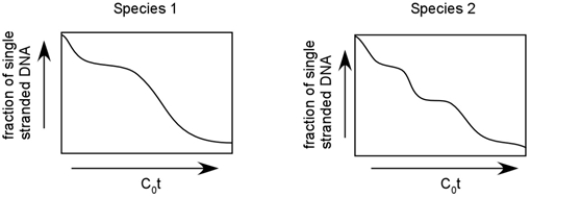
سؤال
سؤال
سؤال
A new Drosophila phenotype is investigated with a series of crosses. P (parental) organisms are true-breeding. The following is the first cross: 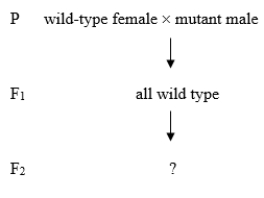 A reciprocal cross to the one just shown is performed. Predict the results in the F1 and F2 generations if the mutant phenotype is X-linked recessive. Then predict the results if the allele causing the phenotype is mitochondrial.
A reciprocal cross to the one just shown is performed. Predict the results in the F1 and F2 generations if the mutant phenotype is X-linked recessive. Then predict the results if the allele causing the phenotype is mitochondrial. سؤال
Based on the pedigree below, which of the following statements correctly interpreted the pedigree with respect to X-linked dominant, X-linked recessive, Y-linked, mitochondrial, autosomal recessive, and autosomal dominant inheritance? (Select all that apply.) 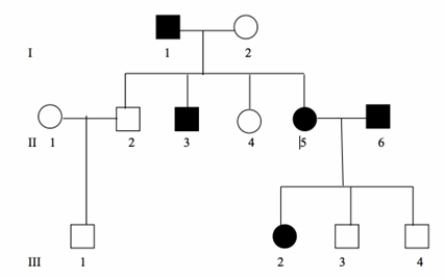
A) The phenotype presented is X-linked dominant because II-3 has the same phenotype as I-1.
B) The phenotype presented is X-linked recessive because III-3 and III-4 do not have the same phenotype as II-5.
C) The phenotype cannot be Y-linked because II-2 doesn't have the same phenotype as I-1.
D) The phenotype could be autosomal recessive as III-3 and III-4 don't have the same phenotype as II-5.
E) The phenotype could be autosomal dominant if II-5 and II-6 are heterozygotes, and III-3 and III-4 are homozygous recessive.
A) The phenotype presented is X-linked dominant because II-3 has the same phenotype as I-1.
B) The phenotype presented is X-linked recessive because III-3 and III-4 do not have the same phenotype as II-5.
C) The phenotype cannot be Y-linked because II-2 doesn't have the same phenotype as I-1.
D) The phenotype could be autosomal recessive as III-3 and III-4 don't have the same phenotype as II-5.
E) The phenotype could be autosomal dominant if II-5 and II-6 are heterozygotes, and III-3 and III-4 are homozygous recessive.
سؤال
Two haploid strains of petite yeast mutants are obtained independently. Each is crossed to a wild-type strain, and the resulting diploid is sporulated (goes through meiosis to produce haploid spores). Use the following results to explain the difference between the two strains and why the crosses give different results. 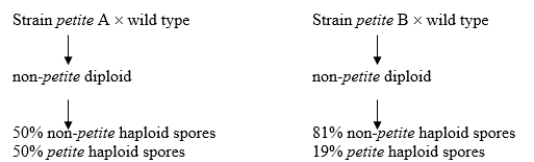
سؤال
سؤال
سؤال
A new Drosophila phenotype is investigated with a series of crosses. P (parental) organisms are true-breeding. The following is the first cross: 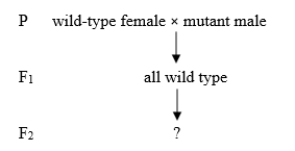 Which of the following CORRECTLY predict(s) the F2 results, if the allele that causes the mutant phenotype is X-linked recessive? (Select all that apply.)
A) 1/4 of the F2 will be wild type and 3/4 will be mutant.
B) 2/3 of the wild type will be female and 1/3 will be male.
C) 1/2 of the F2 will be mutant and all will be male.
D) 1/4 of the F2 will be mutant and all will be male.
E) 3/4 of the F2 will be wild type.
Which of the following CORRECTLY predict(s) the F2 results, if the allele that causes the mutant phenotype is X-linked recessive? (Select all that apply.)A) 1/4 of the F2 will be wild type and 3/4 will be mutant.
B) 2/3 of the wild type will be female and 1/3 will be male.
C) 1/2 of the F2 will be mutant and all will be male.
D) 1/4 of the F2 will be mutant and all will be male.
E) 3/4 of the F2 will be wild type.
سؤال
سؤال
Using the pedigree below, explain whether each of the following inheritance patterns is possible for the phenotype being followed citing specific individuals in your answer: X-linked dominant, X-linked recessive, Y-linked, mitochondrial, autosomal recessive, and autosomal dominant. 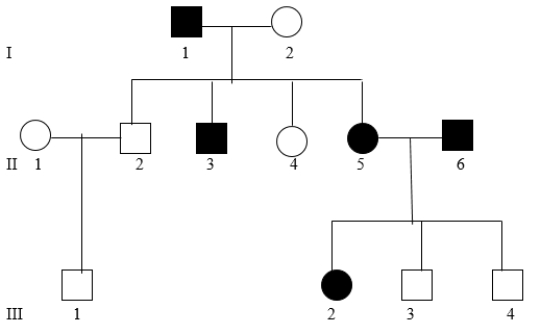
سؤال

فتح الحزمة
قم بالتسجيل لفتح البطاقات في هذه المجموعة!
Unlock Deck
Unlock Deck
1/83

العب

ملء الشاشة (f)
Deck 11: Chromosome Structure and Organelle Dna
1
Which of the following amino acids has a positive charge that helps to hold the DNA in contact with the histones?
A) alanine
B) arginine
C) leucine
D) valine
E) serine
A) alanine
B) arginine
C) leucine
D) valine
E) serine
B
2
While working on Drosophila, you find a new mutant strain with an abnormal histone H3 gene. This novel histone mutant is predicted to cause the nucleosomes to bind an extra 15 bp of DNA compared to wild type. If you digest isolated chromatin with a nuclease to release the core nucleosomes, what size DNA fragments would you expect from wild-type and mutant flies?
not answered
3
How does histone acetylation affect chromatin?
A) It loosens the chromatin and allows increased transcription.
B) It allows DNA to become resistant to damage.
C) It helps the histones have a greater affinity for DNA.
D) It inhibits DNA replication by making it more difficult to separate the DNA strands.
E) It causes the chromatin to become more condensed in preparation for metaphase.
A) It loosens the chromatin and allows increased transcription.
B) It allows DNA to become resistant to damage.
C) It helps the histones have a greater affinity for DNA.
D) It inhibits DNA replication by making it more difficult to separate the DNA strands.
E) It causes the chromatin to become more condensed in preparation for metaphase.
A
4
The agouti locus helps determine coat color in mice, and this phenotype can vary from light to dark between genetically identical individuals. You have discovered a drug that reduces the variation in the agouti phenotype. What is a likely explanation for this drug's mechanism of action?
A) It inhibits DNA polymerases.
B) It inhibits DNA methyl transferases.
C) It activates shelterin proteins.
D) It activates mitochondrial transcription.
E) It causes DNA damage.
A) It inhibits DNA polymerases.
B) It inhibits DNA methyl transferases.
C) It activates shelterin proteins.
D) It activates mitochondrial transcription.
E) It causes DNA damage.
فتح الحزمة
افتح القفل للوصول البطاقات البالغ عددها 83 في هذه المجموعة.
فتح الحزمة
k this deck
5
You are studying a small eukaryotic gene of about 2000 bp in length. Estimate how many copies of histone H1 you would find along this region of the chromosome.
A) 10
B) 20
C) 40
D) 80
E) 100
A) 10
B) 20
C) 40
D) 80
E) 100
فتح الحزمة
افتح القفل للوصول البطاقات البالغ عددها 83 في هذه المجموعة.
فتح الحزمة
k this deck
6
How many base pairs per turn of the helix would MOST likely correspond to a positively supercoiled DNA molecule?
A) 0
B) 5
C) 10
D) 15
E) 100
A) 0
B) 5
C) 10
D) 15
E) 100
فتح الحزمة
افتح القفل للوصول البطاقات البالغ عددها 83 في هذه المجموعة.
فتح الحزمة
k this deck
7
If a bacterial chromosome were inserted into a eukaryotic cell, would it be stable? Would it segregate like eukaryotic chromosomes do during mitosis and meiosis? Why or why not?
فتح الحزمة
افتح القفل للوصول البطاقات البالغ عددها 83 في هذه المجموعة.
فتح الحزمة
k this deck
8
How many complete rotations would MOST likely correspond to a positively supercoiled DNA molecule that is 100 bp in length?
A) 0
B) 5
C) 10
D) 15
E) 100
A) 0
B) 5
C) 10
D) 15
E) 100
فتح الحزمة
افتح القفل للوصول البطاقات البالغ عددها 83 في هذه المجموعة.
فتح الحزمة
k this deck
9
Which of the following descriptions is NOT true of heterochromatin?
A) It remains in a highly condensed state throughout the cell cycle.
B) It makes up most chromosomal material and is where most transcription occurs.
C) It exists at the centromeres and telomeres.
D) It occurs along one entire X chromosome in female mammals when this X becomes inactivated.
E) It is characterized by the absence of crossing over and replication late in the S phase.
A) It remains in a highly condensed state throughout the cell cycle.
B) It makes up most chromosomal material and is where most transcription occurs.
C) It exists at the centromeres and telomeres.
D) It occurs along one entire X chromosome in female mammals when this X becomes inactivated.
E) It is characterized by the absence of crossing over and replication late in the S phase.
فتح الحزمة
افتح القفل للوصول البطاقات البالغ عددها 83 في هذه المجموعة.
فتح الحزمة
k this deck
10
When chromatin from any eukaryote is digested with micrococcal nuclease (an endonuclease) and fractionated using electrophoresis, DNA fragments of approximately 200 base pairs in length are observed. Explain this result.
فتح الحزمة
افتح القفل للوصول البطاقات البالغ عددها 83 في هذه المجموعة.
فتح الحزمة
k this deck
11
Describe the structure and packing of a bacterial chromosome.
فتح الحزمة
افتح القفل للوصول البطاقات البالغ عددها 83 في هذه المجموعة.
فتح الحزمة
k this deck
12
Which of the following is an example of an epigenetic change in eukaryotes?
A) a loss of an AT base pair from a gene
B) the addition of methyl groups to cytosines in the promoter region of a gene
C) the substitution of an AT base pair by a GC base pair in a gene as a result of a mistake during DNA replication
D) a deletion that simultaneously removes two genes from the genome
E) None of these examples represents epigenetic changes.
A) a loss of an AT base pair from a gene
B) the addition of methyl groups to cytosines in the promoter region of a gene
C) the substitution of an AT base pair by a GC base pair in a gene as a result of a mistake during DNA replication
D) a deletion that simultaneously removes two genes from the genome
E) None of these examples represents epigenetic changes.
فتح الحزمة
افتح القفل للوصول البطاقات البالغ عددها 83 في هذه المجموعة.
فتح الحزمة
k this deck
13
The human Y chromosome is about 50 million base pairs long. About how many nucleosomes would you expect to find associated with this chromosome?
A) 2,500
B) 50,000
C) 250,000
D) 1,000,000
E) 50,000,000
A) 2,500
B) 50,000
C) 250,000
D) 1,000,000
E) 50,000,000
فتح الحزمة
افتح القفل للوصول البطاقات البالغ عددها 83 في هذه المجموعة.
فتح الحزمة
k this deck
14
How many base pairs per turn of the helix would MOST likely correspond to a negatively supercoiled DNA molecule?
A) 0
B) 5
C) 10
D) 15
E) 100
A) 0
B) 5
C) 10
D) 15
E) 100
فتح الحزمة
افتح القفل للوصول البطاقات البالغ عددها 83 في هذه المجموعة.
فتح الحزمة
k this deck
15
Which statement is NOT true of negatively supercoiled DNA?
A) It eases the separation of nucleotide strands during replication and transcription.
B) It allows DNA to be packed into small spaces.
C) It has less than 10 bp per turn of its helix.
D) It is more negatively charged due to additional phosphates per turn of the helix.
E) It is found in most cells.
A) It eases the separation of nucleotide strands during replication and transcription.
B) It allows DNA to be packed into small spaces.
C) It has less than 10 bp per turn of its helix.
D) It is more negatively charged due to additional phosphates per turn of the helix.
E) It is found in most cells.
فتح الحزمة
افتح القفل للوصول البطاقات البالغ عددها 83 في هذه المجموعة.
فتح الحزمة
k this deck
16
How many complete rotations would MOST likely correspond to a negatively supercoiled DNA molecule that is 100 bp in length?
A) 0
B) 5
C) 10
D) 15
E) 100
A) 0
B) 5
C) 10
D) 15
E) 100
فتح الحزمة
افتح القفل للوصول البطاقات البالغ عددها 83 في هذه المجموعة.
فتح الحزمة
k this deck
17
Which of the following statements is NOT true of bacterial DNA?
A) Most bacterial genomes consist of a single circular DNA molecule.
B) Bacterial DNA is not attached to any proteins that help to compact it.
C) Bacterial DNA is confined to a region in the cell called the nucleoid.
D) Many bacteria contain additional DNA in the form of small circular molecules called plasmids.
E) About 3 to 4 million base pairs of DNA are found in a typical bacterial genome.
A) Most bacterial genomes consist of a single circular DNA molecule.
B) Bacterial DNA is not attached to any proteins that help to compact it.
C) Bacterial DNA is confined to a region in the cell called the nucleoid.
D) Many bacteria contain additional DNA in the form of small circular molecules called plasmids.
E) About 3 to 4 million base pairs of DNA are found in a typical bacterial genome.
فتح الحزمة
افتح القفل للوصول البطاقات البالغ عددها 83 في هذه المجموعة.
فتح الحزمة
k this deck
18
How many base pairs per turn of the helix would MOST likely correspond to a relaxed DNA molecule?
A) 0
B) 5
C) 10
D) 15
E) 100
A) 0
B) 5
C) 10
D) 15
E) 100
فتح الحزمة
افتح القفل للوصول البطاقات البالغ عددها 83 في هذه المجموعة.
فتح الحزمة
k this deck
19
You are studying a small eukaryotic gene of about 2000 bp in length. Estimate how many copies of histone H4 you would find along this region of the chromosome.
A) 10
B) 20
C) 40
D) 80
E) 100
A) 10
B) 20
C) 40
D) 80
E) 100
فتح الحزمة
افتح القفل للوصول البطاقات البالغ عددها 83 في هذه المجموعة.
فتح الحزمة
k this deck
20
How many complete rotations would MOST likely correspond to a relaxed DNA molecule that is 100 bp in length?
A) 0
B) 5
C) 10
D) 15
E) 100
A) 0
B) 5
C) 10
D) 15
E) 100
فتح الحزمة
افتح القفل للوصول البطاقات البالغ عددها 83 في هذه المجموعة.
فتح الحزمة
k this deck
21
A tRNA gene is an example of which type of DNA sequence in eukaryotes?
A) moderately repetitive DNA
B) highly repetitive DNA
C) short interspersed elements
D) long interspersed elements
E) unique-sequence DNA
A) moderately repetitive DNA
B) highly repetitive DNA
C) short interspersed elements
D) long interspersed elements
E) unique-sequence DNA
فتح الحزمة
افتح القفل للوصول البطاقات البالغ عددها 83 في هذه المجموعة.
فتح الحزمة
k this deck
22
A ribosomal RNA gene is an example of which type of DNA sequence in eukaryotes?
A) moderately repetitive DNA
B) highly repetitive DNA
C) short interspersed elements
D) long interspersed elements
E) unique-sequence DNA
A) moderately repetitive DNA
B) highly repetitive DNA
C) short interspersed elements
D) long interspersed elements
E) unique-sequence DNA
فتح الحزمة
افتح القفل للوصول البطاقات البالغ عددها 83 في هذه المجموعة.
فتح الحزمة
k this deck
23
Telomeres exist to help with the _____ of the ends of eukaryotic chromosomes.
A) transcription
B) replication
C) metabolism
D) destabilization
E) translation
A) transcription
B) replication
C) metabolism
D) destabilization
E) translation
فتح الحزمة
افتح القفل للوصول البطاقات البالغ عددها 83 في هذه المجموعة.
فتح الحزمة
k this deck
24
Where would you expect to find the variant histone CenH3?
A) telomere
B) euchromatin
C) centromere
D) mitochondria
E) chloroplast
A) telomere
B) euchromatin
C) centromere
D) mitochondria
E) chloroplast
فتح الحزمة
افتح القفل للوصول البطاقات البالغ عددها 83 في هذه المجموعة.
فتح الحزمة
k this deck
25
The presence of more than one variation of DNA in the organelles of a single cell is called:
A) homoplasmy.
B) heteroplasmy.
C) hemiplasmy.
D) pseudoplasmy.
E) paraplasmy.
A) homoplasmy.
B) heteroplasmy.
C) hemiplasmy.
D) pseudoplasmy.
E) paraplasmy.
فتح الحزمة
افتح القفل للوصول البطاقات البالغ عددها 83 في هذه المجموعة.
فتح الحزمة
k this deck
26
How many membranes separate the mitochondrial matrix from the cytoplasm?
A) zero
B) one
C) two
D) three
E) four
A) zero
B) one
C) two
D) three
E) four
فتح الحزمة
افتح القفل للوصول البطاقات البالغ عددها 83 في هذه المجموعة.
فتح الحزمة
k this deck
27
Which of the following has/have repetitive DNA sequences in heterochromatin state? (Select all that apply.)
A) telomere
B) centromere
C) mitochondria
D) chloroplast
A) telomere
B) centromere
C) mitochondria
D) chloroplast
فتح الحزمة
افتح القفل للوصول البطاقات البالغ عددها 83 في هذه المجموعة.
فتح الحزمة
k this deck
28
A telomere is an example of which type of DNA sequence in eukaryotes?
A) moderately repetitive DNA
B) highly repetitive DNA
C) short interspersed elements
D) long interspersed elements
E) unique-sequence DNA
A) moderately repetitive DNA
B) highly repetitive DNA
C) short interspersed elements
D) long interspersed elements
E) unique-sequence DNA
فتح الحزمة
افتح القفل للوصول البطاقات البالغ عددها 83 في هذه المجموعة.
فتح الحزمة
k this deck
29
A gene-encoding sequence is an example of which type of DNA sequence in eukaryotes?
A) moderately repetitive DNA
B) highly repetitive DNA
C) short interspersed elements
D) long interspersed elements
E) unique-sequence DNA
A) moderately repetitive DNA
B) highly repetitive DNA
C) short interspersed elements
D) long interspersed elements
E) unique-sequence DNA
فتح الحزمة
افتح القفل للوصول البطاقات البالغ عددها 83 في هذه المجموعة.
فتح الحزمة
k this deck
30
An Alu sequence is an example of which type of DNA sequence in eukaryotes?
A) moderately repetitive DNA
B) highly repetitive DNA
C) short interspersed elements
D) long interspersed elements
E) unique-sequence DNA
A) moderately repetitive DNA
B) highly repetitive DNA
C) short interspersed elements
D) long interspersed elements
E) unique-sequence DNA
فتح الحزمة
افتح القفل للوصول البطاقات البالغ عددها 83 في هذه المجموعة.
فتح الحزمة
k this deck
31
There are some genomes that have been reported to be positively coiled instead of negatively supercoiled, which is the status of most genomes that we have studied. The genomes that are positively supercoiled seem to belong to viruses and cells that exist at very high temperatures. Why might positive supercoiling be an advantage at high temperatures?
فتح الحزمة
افتح القفل للوصول البطاقات البالغ عددها 83 في هذه المجموعة.
فتح الحزمة
k this deck
32
A centromere is an example of which type of DNA sequence in eukaryotes?
A) moderately repetitive DNA
B) highly repetitive DNA
C) short interspersed elements
D) long interspersed elements
E) unique-sequence DNA
A) moderately repetitive DNA
B) highly repetitive DNA
C) short interspersed elements
D) long interspersed elements
E) unique-sequence DNA
فتح الحزمة
افتح القفل للوصول البطاقات البالغ عددها 83 في هذه المجموعة.
فتح الحزمة
k this deck
33
How does the organization of the eukaryotic chromosome differ from the organization of a bacterial chromosome? Include in your answer (a) classes of DNA sequences, (b) special features of the chromosome, (c) organization of the genes within the chromosome, and (d) proteins that interact with chromosomal DNA.
فتح الحزمة
افتح القفل للوصول البطاقات البالغ عددها 83 في هذه المجموعة.
فتح الحزمة
k this deck
34
How many different types of histones are found in the nucleosome that packages mitochondrial DNA?
A) zero
B) one
C) two
D) three
E) four
A) zero
B) one
C) two
D) three
E) four
فتح الحزمة
افتح القفل للوصول البطاقات البالغ عددها 83 في هذه المجموعة.
فتح الحزمة
k this deck
35
Copies of a gene that arose by gene duplication are part of a gene:
A) complex.
B) family.
C) tandemoplex.
D) structure.
E) chromosome.
A) complex.
B) family.
C) tandemoplex.
D) structure.
E) chromosome.
فتح الحزمة
افتح القفل للوصول البطاقات البالغ عددها 83 في هذه المجموعة.
فتح الحزمة
k this deck
36
A normal chromosome in a higher eukaryotic species would NOT be expected to contain:
A) one centromere.
B) one copy of telomere.
C) two copies of histone 2A per nucleosome.
D) satellite DNA.
E) tandem repeat sequences.
A) one centromere.
B) one copy of telomere.
C) two copies of histone 2A per nucleosome.
D) satellite DNA.
E) tandem repeat sequences.
فتح الحزمة
افتح القفل للوصول البطاقات البالغ عددها 83 في هذه المجموعة.
فتح الحزمة
k this deck
37
The _____ membrane of the chloroplast bears the enzymes and pigments required for photophosphorylation.
A) outer
B) middle
C) thylakoid
D) plasma
E) double
A) outer
B) middle
C) thylakoid
D) plasma
E) double
فتح الحزمة
افتح القفل للوصول البطاقات البالغ عددها 83 في هذه المجموعة.
فتح الحزمة
k this deck
38
Which of the following statements is NOT true?
A) Both the mitochondria and the chloroplast generate ATP.
B) A single eukaryotic cell may contain thousands of copies of the mitochondrial genome.
C) According to the endosymbiotic theory, chloroplasts are thought to have evolved from cyanobacteria.
D) The mutation rate of mitochondrial DNA is higher than the mutation rate of nuclear DNA.
E) Oxidative phosphorylation capacity is constant throughout a person's lifetime.
A) Both the mitochondria and the chloroplast generate ATP.
B) A single eukaryotic cell may contain thousands of copies of the mitochondrial genome.
C) According to the endosymbiotic theory, chloroplasts are thought to have evolved from cyanobacteria.
D) The mutation rate of mitochondrial DNA is higher than the mutation rate of nuclear DNA.
E) Oxidative phosphorylation capacity is constant throughout a person's lifetime.
فتح الحزمة
افتح القفل للوصول البطاقات البالغ عددها 83 في هذه المجموعة.
فتح الحزمة
k this deck
39
Which of the following statements is TRUE?
A) Most proteins in the human mitochondrion are encoded by nuclear genes.
B) One piece of evidence supporting the endosymbiotic theory is the extreme similarity between mitochondrial DNAs from different organisms.
C) Heteroplasmy refers to the presence of different alleles in a single organelle.
D) Plants contain chloroplasts, not mitochondria.
E) cpDNA evolves faster than nuclear DNA.
A) Most proteins in the human mitochondrion are encoded by nuclear genes.
B) One piece of evidence supporting the endosymbiotic theory is the extreme similarity between mitochondrial DNAs from different organisms.
C) Heteroplasmy refers to the presence of different alleles in a single organelle.
D) Plants contain chloroplasts, not mitochondria.
E) cpDNA evolves faster than nuclear DNA.
فتح الحزمة
افتح القفل للوصول البطاقات البالغ عددها 83 في هذه المجموعة.
فتح الحزمة
k this deck
40
The _____ theory states that the ancestors of mitochondria and chloroplasts were free-living bacteria.
A) phylogenetic
B) endosymbiotic
C) cell
D) cytoplasmic inheritance
E) old world
A) phylogenetic
B) endosymbiotic
C) cell
D) cytoplasmic inheritance
E) old world
فتح الحزمة
افتح القفل للوصول البطاقات البالغ عددها 83 في هذه المجموعة.
فتح الحزمة
k this deck
41
If a bacterial chromosome were inserted into a eukaryotic cell, would it be stable and segregate like eukaryotic chromosomes do during mitosis and meiosis? (Select all that apply.)
A) It would not be stable due to the lack of a eukaryotic-specific origin of replication; hence, it could not replicate properly in a eukaryotic cell.
B) It would be generally stable because the chemical nature of DNA is the same regardless of the cell type.
C) Due to the lack of centromeres on prokaryotic chromosomes, the chromosomes will not segregate normally during cell division.
D) The prokaryotic chromosome can be induced to be stabilized by cleavage of circular form to mimic linear eukaryotic chromosome.
E) The bacterial chromosome would be lost and eventually degraded.
A) It would not be stable due to the lack of a eukaryotic-specific origin of replication; hence, it could not replicate properly in a eukaryotic cell.
B) It would be generally stable because the chemical nature of DNA is the same regardless of the cell type.
C) Due to the lack of centromeres on prokaryotic chromosomes, the chromosomes will not segregate normally during cell division.
D) The prokaryotic chromosome can be induced to be stabilized by cleavage of circular form to mimic linear eukaryotic chromosome.
E) The bacterial chromosome would be lost and eventually degraded.
فتح الحزمة
افتح القفل للوصول البطاقات البالغ عددها 83 في هذه المجموعة.
فتح الحزمة
k this deck
42
What kind of gene would NOT be found in a chloroplast genome?
A) a tRNA gene
B) a gene for a subunit of the photosynthesis enzyme RuBisCO
C) a gene for a ribosomal protein
D) a gene for ribosomal RNA
E) a gene for a histone protein
A) a tRNA gene
B) a gene for a subunit of the photosynthesis enzyme RuBisCO
C) a gene for a ribosomal protein
D) a gene for ribosomal RNA
E) a gene for a histone protein
فتح الحزمة
افتح القفل للوصول البطاقات البالغ عددها 83 في هذه المجموعة.
فتح الحزمة
k this deck
43
Which statement about mitochondrial genomes is NOT true?
A) In most animals, the mitochondrial genome consists of a single circular DNA molecule.
B) Plant mitochondrial genomes often include multiple circular DNA molecules.
C) Each mitochondrion typically contains many copies of the mitochondrial genome.
D) All copies of the mitochondrial genome within a cell are identical.
A) In most animals, the mitochondrial genome consists of a single circular DNA molecule.
B) Plant mitochondrial genomes often include multiple circular DNA molecules.
C) Each mitochondrion typically contains many copies of the mitochondrial genome.
D) All copies of the mitochondrial genome within a cell are identical.
فتح الحزمة
افتح القفل للوصول البطاقات البالغ عددها 83 في هذه المجموعة.
فتح الحزمة
k this deck
44
DNA can be isolated from cells, and the different types of DNA from the cell can be separated by density gradient centrifugation. The following figures show the density gradient centrifugation profiles for DNA isolated from four different cell types: plant, animal, wild-type yeast with a plasmid, and petite yeast.
- Which figure has the DNA profile that would most closely match DNA from a human cell?
A) 1
B) 2
C) 3
D) 4
- Which figure has the DNA profile that would most closely match DNA from a human cell?
A) 1
B) 2
C) 3
D) 4
فتح الحزمة
افتح القفل للوصول البطاقات البالغ عددها 83 في هذه المجموعة.
فتح الحزمة
k this deck
45
Assuming there are no heteroplasmic individuals but that people from different families have different DNA, how many different mitochondrial DNAs are there in the pedigree below?
A) 2
B) 4
C) 5
D) 6
E) 7
A) 2
B) 4
C) 5
D) 6
E) 7
فتح الحزمة
افتح القفل للوصول البطاقات البالغ عددها 83 في هذه المجموعة.
فتح الحزمة
k this deck
46
DNA can be isolated from cells, and the different types of DNA from the cell can be separated by density gradient centrifugation. The following figures show the density gradient centrifugation profiles for DNA isolated from four different cell types: plant, animal, wild-type yeast with a plasmid, and petite yeast.
-The peak farthest to the right in Figure 1 is:
A) plasmids.
B) mitochondrial DNA.
C) genomic DNA.
D) chloroplast DNA.
-The peak farthest to the right in Figure 1 is:
A) plasmids.
B) mitochondrial DNA.
C) genomic DNA.
D) chloroplast DNA.
فتح الحزمة
افتح القفل للوصول البطاقات البالغ عددها 83 في هذه المجموعة.
فتح الحزمة
k this deck
47
Alterations of chromatin of DNA structure that are stable and inheritable in offspring via DNA methylation or alteration of histone proteins is referred to as _____ changes.
A) genetic
B) mutational
C) sensitivity
D) epigenetic
A) genetic
B) mutational
C) sensitivity
D) epigenetic
فتح الحزمة
افتح القفل للوصول البطاقات البالغ عددها 83 في هذه المجموعة.
فتح الحزمة
k this deck
48
DNA can be isolated from cells, and the different types of DNA from the cell can be separated by density gradient centrifugation. The following figures show the density gradient centrifugation profiles for DNA isolated from four different cell types: plant, animal, wild-type yeast with a plasmid, and petite yeast.
-The large peak to the left in all the figures is:
A) mitochondrial DNA.
B) genomic DNA.
C) chloroplast DNA.
D) plasmids.
-The large peak to the left in all the figures is:
A) mitochondrial DNA.
B) genomic DNA.
C) chloroplast DNA.
D) plasmids.
فتح الحزمة
افتح القفل للوصول البطاقات البالغ عددها 83 في هذه المجموعة.
فتح الحزمة
k this deck
49
Explain why DNA-DNA hybridization might be useful in helping to assess evolutionary relationships.
فتح الحزمة
افتح القفل للوصول البطاقات البالغ عددها 83 في هذه المجموعة.
فتح الحزمة
k this deck
50
Which pair in the pedigree shares the same mitochondrial DNA?
A) I-2 and III-1
B) II-2 and III-2
C) III-1 and III-2
D) II-2 and III-1
E) I-3 and II-6
A) I-2 and III-1
B) II-2 and III-2
C) III-1 and III-2
D) II-2 and III-1
E) I-3 and II-6
فتح الحزمة
افتح القفل للوصول البطاقات البالغ عددها 83 في هذه المجموعة.
فتح الحزمة
k this deck
51
Which of the following terms describe the feature(s) of mtDNA and cpDNA that differ from the eukaryotic nuclear DNA? (Select all that apply.)
A) uniparental inheritance
B) circular
C) heteroplasmy
D) homoplasmy
E) high copy number
A) uniparental inheritance
B) circular
C) heteroplasmy
D) homoplasmy
E) high copy number
فتح الحزمة
افتح القفل للوصول البطاقات البالغ عددها 83 في هذه المجموعة.
فتح الحزمة
k this deck
52
Pea plants produce both pollen and eggs. A pea plant inherits a mutation for cytoplasmic male sterility. How will this affect the plant and/or its progeny?
A) The plant will be able to reproduce only by self-fertilization.
B) The plant will be able to reproduce only by cross-fertilization.
C) The plant will be unable to produce progeny.
D) The plant will produce progeny, but the progeny will not be able to reproduce.
A) The plant will be able to reproduce only by self-fertilization.
B) The plant will be able to reproduce only by cross-fertilization.
C) The plant will be unable to produce progeny.
D) The plant will produce progeny, but the progeny will not be able to reproduce.
فتح الحزمة
افتح القفل للوصول البطاقات البالغ عددها 83 في هذه المجموعة.
فتح الحزمة
k this deck
53
The classic experiment that examined DNAse I sensitivity of chicken embryonic DNA from different tissues and at different developmental stages shows that: (Select all that apply.)
A) the chromatin structure changes in the course of development.
B) the gene expression pattern changes during development.
C) DNAse I sensitivity comes from sporadic mutations occurred during development.
D) DNAse I sensitivity only occurs in chicken but in no other organisms.
A) the chromatin structure changes in the course of development.
B) the gene expression pattern changes during development.
C) DNAse I sensitivity comes from sporadic mutations occurred during development.
D) DNAse I sensitivity only occurs in chicken but in no other organisms.
فتح الحزمة
افتح القفل للوصول البطاقات البالغ عددها 83 في هذه المجموعة.
فتح الحزمة
k this deck
54
While working on Drosophila, you find a new mutant strain with an abnormal histone H3 gene. This novel histone mutant is predicted to cause the nucleosomes to bind an extra 15 bp of DNA compared to wild type. If you digest isolated chromatin with a nuclease to release the core nucleosomes, what size DNA fragments would you expect from wild-type and mutant flies?
A) Approximately 50 bp is known to bind to the normal core nucleosome, so the additional 15 bp binding to H3 would give a rise to ~65 bp.
B) Approximately 100 bp is known to bind to the normal core nucleosome, so the additional 15 bp binding to H3 would give a rise to ~115 bp.
C) Approximately 125 bp is known to bind to the normal core nucleosome, so the additional 15 bp binding to H3 would give a rise to ~140 bp.
D) Approximately 145 bp is known to bind to the normal core nucleosome, so the additional 15 bp binding to H3 would give a rise to ~160 bp.
E) The size of the DNA fragments cannot be determined.
A) Approximately 50 bp is known to bind to the normal core nucleosome, so the additional 15 bp binding to H3 would give a rise to ~65 bp.
B) Approximately 100 bp is known to bind to the normal core nucleosome, so the additional 15 bp binding to H3 would give a rise to ~115 bp.
C) Approximately 125 bp is known to bind to the normal core nucleosome, so the additional 15 bp binding to H3 would give a rise to ~140 bp.
D) Approximately 145 bp is known to bind to the normal core nucleosome, so the additional 15 bp binding to H3 would give a rise to ~160 bp.
E) The size of the DNA fragments cannot be determined.
فتح الحزمة
افتح القفل للوصول البطاقات البالغ عددها 83 في هذه المجموعة.
فتح الحزمة
k this deck
55
Paternal transmission of mitochondria is common in which group?
A) humans
B) mice
C) most gymnosperms
D) most flowering plants
E) insects
A) humans
B) mice
C) most gymnosperms
D) most flowering plants
E) insects
فتح الحزمة
افتح القفل للوصول البطاقات البالغ عددها 83 في هذه المجموعة.
فتح الحزمة
k this deck
56
DNA can be isolated from cells, and the different types of DNA from the cell can be separated by density gradient centrifugation. The following figures show the density gradient centrifugation profiles for DNA isolated from four different cell types: plant, animal, wild-type yeast with a plasmid, and petite yeast.
- Which figure has the DNA profile for the petite yeast?
A) 1
B) 2
C) 3
D) 4
- Which figure has the DNA profile for the petite yeast?
A) 1
B) 2
C) 3
D) 4
فتح الحزمة
افتح القفل للوصول البطاقات البالغ عددها 83 في هذه المجموعة.
فتح الحزمة
k this deck
57
DNA can be isolated from cells, and the different types of DNA from the cell can be separated by density gradient centrifugation. The following figures show the density gradient centrifugation profiles for DNA isolated from four different cell types: plant, animal, wild-type yeast with a plasmid, and petite yeast.
- Which figure has the DNA profile for the plant cell?
A) 1
B) 2
C) 3
D) 4
- Which figure has the DNA profile for the plant cell?
A) 1
B) 2
C) 3
D) 4
فتح الحزمة
افتح القفل للوصول البطاقات البالغ عددها 83 في هذه المجموعة.
فتح الحزمة
k this deck
58
Chromosomal puffs observed on polytene chromosomes indicate the region that is most likely _____. (Select all that apply.)
A) transcriptionally inactive
B) transcriptionally active
C) DNAse I sensitive
D) DNAse I insensitive
A) transcriptionally inactive
B) transcriptionally active
C) DNAse I sensitive
D) DNAse I insensitive
فتح الحزمة
افتح القفل للوصول البطاقات البالغ عددها 83 في هذه المجموعة.
فتح الحزمة
k this deck
59
When chromatin from any eukaryote is digested with micrococcal nuclease (an endonuclease) and fractionated using electrophoresis, DNA fragments of approximately 200 base pairs in length are observed. Which of the following statements explain(s) the observation? (Select all that apply.)
A) The 200-base-pair-long DNA fragments represent the approximate length of DNA wrapped around the histone core.
B) The 200-base-pair-long DNA fragment is a characteristic behavior of micrococcal nuclease on any given free DNA strand.
C) The eukaryotic DNA has an enormous number of repetitive sequences, and the nuclease is cleaving certain repetitive sequences, generating these fragments.
D) The result reveals the conserved composition of the nucleosome, which is the repeating unit that makes up chromatin in all eukaryotes.
E) The cleavage occurs at the exposed linker region between adjacent nucleosomes that does not directly interact with the histone core.
A) The 200-base-pair-long DNA fragments represent the approximate length of DNA wrapped around the histone core.
B) The 200-base-pair-long DNA fragment is a characteristic behavior of micrococcal nuclease on any given free DNA strand.
C) The eukaryotic DNA has an enormous number of repetitive sequences, and the nuclease is cleaving certain repetitive sequences, generating these fragments.
D) The result reveals the conserved composition of the nucleosome, which is the repeating unit that makes up chromatin in all eukaryotes.
E) The cleavage occurs at the exposed linker region between adjacent nucleosomes that does not directly interact with the histone core.
فتح الحزمة
افتح القفل للوصول البطاقات البالغ عددها 83 في هذه المجموعة.
فتح الحزمة
k this deck
60
Which of the following does NOT fit the description of euchromatin?
A) less condensed state
B) transcriptionally inactive
C) chromosomal arms
D) common crossing over sites
A) less condensed state
B) transcriptionally inactive
C) chromosomal arms
D) common crossing over sites
فتح الحزمة
افتح القفل للوصول البطاقات البالغ عددها 83 في هذه المجموعة.
فتح الحزمة
k this deck
61
What is "satellite" DNA? Explain why satellite DNA anneals rapidly after it is denatured.
فتح الحزمة
افتح القفل للوصول البطاقات البالغ عددها 83 في هذه المجموعة.
فتح الحزمة
k this deck
62
A plant has green leaves with multiple yellow spots. When used as an egg donor in a cross with a normal plant that has all green leaves, some of the progeny have green and yellow leaves and some have all green leaves. When used as the pollen donor in a cross with a normal plant, all the progeny have all green leaves. Explain the phenotype of the plant's leaves.
فتح الحزمة
افتح القفل للوصول البطاقات البالغ عددها 83 في هذه المجموعة.
فتح الحزمة
k this deck
63
Which of the following terms CORRECTLY describe(s) the inheritance pattern of mtDNA and cpDNA in eukaryotic cells? (Select all that apply.)
A) maternal inheritance
B) circular
C) heteroplasmy
D) homoplasmy
E) high copy number
A) maternal inheritance
B) circular
C) heteroplasmy
D) homoplasmy
E) high copy number
فتح الحزمة
افتح القفل للوصول البطاقات البالغ عددها 83 في هذه المجموعة.
فتح الحزمة
k this deck
64
A new Drosophila phenotype is investigated with a series of crosses. P (parental) organisms are true-breeding. The following is the first cross: Predict the F2 results if the allele that causes the mutant phenotype is X-linked recessive. Then predict the results if the allele causing the mutant phenotype is mitochondrial.
Predict the F2 results if the allele that causes the mutant phenotype is X-linked recessive. Then predict the results if the allele causing the mutant phenotype is mitochondrial. فتح الحزمة
افتح القفل للوصول البطاقات البالغ عددها 83 في هذه المجموعة.
فتح الحزمة
k this deck
65
There are some genomes that have been reported to be positively coiled instead of negatively supercoiled, which is the status of most genomes that we have studied. The genomes that are positively supercoiled seem to belong to viruses and cells that exist at very high temperatures. Why might positive supercoiling be an advantage at high temperatures? (Select all that apply.)
A) Negative supercoiling makes it more difficult for strands to separate while positive supercoiling would allow the strands to separate more readily.
B) At high temperatures, the condition is more conducive for the strands to denature.
C) The high temperature would increase the formation of the hydrogen bonds between bases.
D) Positive supercoiling would allow the DNA to maintain its double-stranded structure at higher temperature.
E) Positive supercoiling would allow the DNA to readily separate for transcription and replication.
A) Negative supercoiling makes it more difficult for strands to separate while positive supercoiling would allow the strands to separate more readily.
B) At high temperatures, the condition is more conducive for the strands to denature.
C) The high temperature would increase the formation of the hydrogen bonds between bases.
D) Positive supercoiling would allow the DNA to maintain its double-stranded structure at higher temperature.
E) Positive supercoiling would allow the DNA to readily separate for transcription and replication.
فتح الحزمة
افتح القفل للوصول البطاقات البالغ عددها 83 في هذه المجموعة.
فتح الحزمة
k this deck
66
Draw a pedigree using the following information, filling in symbols for the mitochondrial disease: In generation I, the mother is affected with a mitochondrial disease but the father is not. They have two children. The older, a male, has a son with an unaffected woman. The younger, a female, has a daughter with an unaffected man.
فتح الحزمة
افتح القفل للوصول البطاقات البالغ عددها 83 في هذه المجموعة.
فتح الحزمة
k this deck
67
"Mitochondrial Eve" is the name given to the idea that all humans alive today can trace their mitochondrial ancestry to a single African female alive around 150,000 years ago. What feature of mitochondrial inheritance makes this a reasonable conjecture?
فتح الحزمة
افتح القفل للوصول البطاقات البالغ عددها 83 في هذه المجموعة.
فتح الحزمة
k this deck
68
The petite mutations in S. cerevisiae, was discovered by Boris Ephrussi and his colleagues in the late 1940s, result in much smaller colony size, reflecting the defect in the cellular growth rate (Figure 11.15). Most petite mutations are known to occur on mitochondrial DNA. Which of the following statements offer a logical explanation of the petite phenotype? Select all that apply. (Photo credit: [From Xin Jie Chen and G. Desmond Clark-Walker, Genetics 144: 1445-1454, Fig 1, 1996. © Genetics Society of America. Courtesy of Xin Jie Chen, Department of Biochemistry and Molecular Biology, SUNY Upstate Medical University.])
A) The defect in the cellular growth comes from an inability to generate enough ATP.
B) The growth defect is known to come from having excessive copies of mitochondria, resulting in toxicity from excess ATP.
C) The mutations on the mtDNA can result in deficiency of the enzymes involved in aerobic respiration.
D) They have no means to make any ATP because of mtDNA defects that affect the normal mitochondrial functions.
E) The petite mutants only have to rely on anaerobic processes such as fermentation and glycolysis.
A) The defect in the cellular growth comes from an inability to generate enough ATP.
B) The growth defect is known to come from having excessive copies of mitochondria, resulting in toxicity from excess ATP.
C) The mutations on the mtDNA can result in deficiency of the enzymes involved in aerobic respiration.
D) They have no means to make any ATP because of mtDNA defects that affect the normal mitochondrial functions.
E) The petite mutants only have to rely on anaerobic processes such as fermentation and glycolysis.
فتح الحزمة
افتح القفل للوصول البطاقات البالغ عددها 83 في هذه المجموعة.
فتح الحزمة
k this deck
69
While doing fieldwork, you discover two new closely related species of oysters. You measure the DNA content per cell of each species and find that the second species has significantly more DNA than the first species. DNA hybridization analysis of both species yields the following results. Based on the graphs shown, suggest an explanation for the difference in C-value between the species.
فتح الحزمة
افتح القفل للوصول البطاقات البالغ عددها 83 في هذه المجموعة.
فتح الحزمة
k this deck
70
A plant has green leaves with multiple yellow spots. When used as an egg donor in a cross with a normal plant that has all green leaves, some of the progeny have green and yellow leaves and some have all green leaves. When used as the pollen donor in a cross with a normal plant, all the progeny have all green leaves. One of the progeny with green and yellow leaves has one branch with all green leaves and one branch with all yellow leaves. A flower on the all-green branch is fertilized with pollen from a flower on the all-yellow branch. Predict the results of this cross and the reciprocal cross.
فتح الحزمة
افتح القفل للوصول البطاقات البالغ عددها 83 في هذه المجموعة.
فتح الحزمة
k this deck
71
Jack and Jill's son Jake has a severe case of myclonic epilepsy and ragged-red fiber (MERRF) syndrome. His case includes frequent and disabling myclonic seizures (involuntary twitching of the muscles) along with hearing loss, exercise intolerance, and poor night vision. Like most cases of MERRF, his case is associated with a mitochondrial mutation that he inherited from his mother Jill. His mother doesn't know that she harbors the MERRF mutation among her mtDNA molecules, but she has experienced occasional mild muscle twitching throughout her life and she does not see very well at night. What is/are the MOST likely explanation(s) for the difference in the severity of MERRF between Jake and his mother? (Select all that apply.)
A) Heteroplasmy for mtDNA molecules in the cells of his mother is responsible.
B) Some random mutations took place in Jack's mitochondria, which caused MERFF syndrome as his mother does not have full symptoms.
C) It is likely that Jake has a higher proportion of mutant mtDNA molecules in his cells compared to his mother.
D) The expression pattern of the mutant gene may be different in males than in females.
A) Heteroplasmy for mtDNA molecules in the cells of his mother is responsible.
B) Some random mutations took place in Jack's mitochondria, which caused MERFF syndrome as his mother does not have full symptoms.
C) It is likely that Jake has a higher proportion of mutant mtDNA molecules in his cells compared to his mother.
D) The expression pattern of the mutant gene may be different in males than in females.
فتح الحزمة
افتح القفل للوصول البطاقات البالغ عددها 83 في هذه المجموعة.
فتح الحزمة
k this deck
72
A new Drosophila phenotype is investigated with a series of crosses. P (parental) organisms are true-breeding. The following is the first cross: A reciprocal cross to the one just shown is performed. Predict the results in the F1 and F2 generations if the mutant phenotype is X-linked recessive. Then predict the results if the allele causing the phenotype is mitochondrial.
A reciprocal cross to the one just shown is performed. Predict the results in the F1 and F2 generations if the mutant phenotype is X-linked recessive. Then predict the results if the allele causing the phenotype is mitochondrial. فتح الحزمة
افتح القفل للوصول البطاقات البالغ عددها 83 في هذه المجموعة.
فتح الحزمة
k this deck
73
Based on the pedigree below, which of the following statements correctly interpreted the pedigree with respect to X-linked dominant, X-linked recessive, Y-linked, mitochondrial, autosomal recessive, and autosomal dominant inheritance? (Select all that apply.)
A) The phenotype presented is X-linked dominant because II-3 has the same phenotype as I-1.
B) The phenotype presented is X-linked recessive because III-3 and III-4 do not have the same phenotype as II-5.
C) The phenotype cannot be Y-linked because II-2 doesn't have the same phenotype as I-1.
D) The phenotype could be autosomal recessive as III-3 and III-4 don't have the same phenotype as II-5.
E) The phenotype could be autosomal dominant if II-5 and II-6 are heterozygotes, and III-3 and III-4 are homozygous recessive.
A) The phenotype presented is X-linked dominant because II-3 has the same phenotype as I-1.
B) The phenotype presented is X-linked recessive because III-3 and III-4 do not have the same phenotype as II-5.
C) The phenotype cannot be Y-linked because II-2 doesn't have the same phenotype as I-1.
D) The phenotype could be autosomal recessive as III-3 and III-4 don't have the same phenotype as II-5.
E) The phenotype could be autosomal dominant if II-5 and II-6 are heterozygotes, and III-3 and III-4 are homozygous recessive.
فتح الحزمة
افتح القفل للوصول البطاقات البالغ عددها 83 في هذه المجموعة.
فتح الحزمة
k this deck
74
Two haploid strains of petite yeast mutants are obtained independently. Each is crossed to a wild-type strain, and the resulting diploid is sporulated (goes through meiosis to produce haploid spores). Use the following results to explain the difference between the two strains and why the crosses give different results.
فتح الحزمة
افتح القفل للوصول البطاقات البالغ عددها 83 في هذه المجموعة.
فتح الحزمة
k this deck
75
List and describe the three major classes of DNA sequences in the eukaryotic genome.
فتح الحزمة
افتح القفل للوصول البطاقات البالغ عددها 83 في هذه المجموعة.
فتح الحزمة
k this deck
76
A plant has green leaves with multiple yellow spots. When used as an egg donor in a cross with a normal plant that has all green leaves, some of the progeny have green and yellow leaves and some have all green leaves. When used as the pollen donor in a cross with a normal plant, all the progeny have all green leaves. Which of the following statements explain(s) the result of this cross? (Select all that apply.)
A) The original plant with green leaves with multiple yellow spots is likely heteroplasmic for a mutation in the chloroplast genome.
B) The yellow spots are cells that, by replicative segregation, have received only mutant chloroplast genomes.
C) The plants with yellow leaves that originate from the plant with yellow spots as the egg donor received the mutant chloroplast maternally.
D) Presumably, eggs that are heteroplasmic for mutant chloroplasts will not produce viable plants.
E) When the plant is the pollen donor, the plant with nonmutant chloroplast DNA will contribute the chloroplasts, and all progeny will have all green leaves.
A) The original plant with green leaves with multiple yellow spots is likely heteroplasmic for a mutation in the chloroplast genome.
B) The yellow spots are cells that, by replicative segregation, have received only mutant chloroplast genomes.
C) The plants with yellow leaves that originate from the plant with yellow spots as the egg donor received the mutant chloroplast maternally.
D) Presumably, eggs that are heteroplasmic for mutant chloroplasts will not produce viable plants.
E) When the plant is the pollen donor, the plant with nonmutant chloroplast DNA will contribute the chloroplasts, and all progeny will have all green leaves.
فتح الحزمة
افتح القفل للوصول البطاقات البالغ عددها 83 في هذه المجموعة.
فتح الحزمة
k this deck
77
A new Drosophila phenotype is investigated with a series of crosses. P (parental) organisms are true-breeding. The following is the first cross: Which of the following CORRECTLY predict(s) the F2 results, if the allele that causes the mutant phenotype is X-linked recessive? (Select all that apply.)
A) 1/4 of the F2 will be wild type and 3/4 will be mutant.
B) 2/3 of the wild type will be female and 1/3 will be male.
C) 1/2 of the F2 will be mutant and all will be male.
D) 1/4 of the F2 will be mutant and all will be male.
E) 3/4 of the F2 will be wild type.
Which of the following CORRECTLY predict(s) the F2 results, if the allele that causes the mutant phenotype is X-linked recessive? (Select all that apply.)A) 1/4 of the F2 will be wild type and 3/4 will be mutant.
B) 2/3 of the wild type will be female and 1/3 will be male.
C) 1/2 of the F2 will be mutant and all will be male.
D) 1/4 of the F2 will be mutant and all will be male.
E) 3/4 of the F2 will be wild type.
فتح الحزمة
افتح القفل للوصول البطاقات البالغ عددها 83 في هذه المجموعة.
فتح الحزمة
k this deck
78
Explain why the symptoms for human mitochondrial diseases usually appear in adulthood and become worse with age.
فتح الحزمة
افتح القفل للوصول البطاقات البالغ عددها 83 في هذه المجموعة.
فتح الحزمة
k this deck
79
Using the pedigree below, explain whether each of the following inheritance patterns is possible for the phenotype being followed citing specific individuals in your answer: X-linked dominant, X-linked recessive, Y-linked, mitochondrial, autosomal recessive, and autosomal dominant.
فتح الحزمة
افتح القفل للوصول البطاقات البالغ عددها 83 في هذه المجموعة.
فتح الحزمة
k this deck
80
A plant has green leaves with multiple yellow spots. When used as an egg donor in a cross with a normal plant that has all green leaves, some of the progeny have green and yellow leaves and some have all green leaves. When used as the pollen donor in a cross with a normal plant, all the progeny have all green leaves. Explain the results of the crosses with the plant.
فتح الحزمة
افتح القفل للوصول البطاقات البالغ عددها 83 في هذه المجموعة.
فتح الحزمة
k this deck
فتح الحزمة
افتح القفل للوصول البطاقات البالغ عددها 83 في هذه المجموعة.






