







 تكلم مع الذكاء الاصطناعي


Deck 14: Infection, Infectious Diseases, and Epidemiology
ملء الشاشة (f)

سؤال

سؤال
سؤال
سؤال
سؤال
سؤال
سؤال
سؤال
سؤال
سؤال
سؤال
سؤال
سؤال
سؤال
سؤال
سؤال
سؤال
سؤال
سؤال
سؤال
سؤال
سؤال
سؤال
سؤال
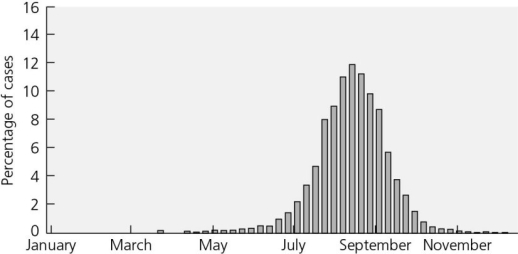 The pattern of new cases reported in North America represented in this graph is consistent with
Transmission.
A) airborne
B) housefly
C) fecal-oral
D) direct contact
E) mosquito vector
سؤال
سؤال
سؤال
سؤال
سؤال
سؤال
سؤال
سؤال
سؤال
سؤال
سؤال
سؤال
سؤال
سؤال
سؤال
سؤال
سؤال
سؤال
سؤال
سؤال
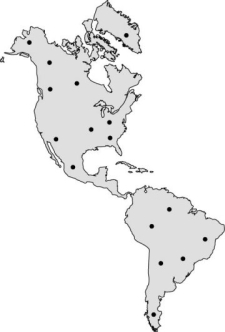 The dots on the map represent reported cases of a disease. This distribution is a(n)
Pattern.
A) endemic
B) pandemic
C) sporadic
D) epidemic
E) emerging
سؤال
سؤال
سؤال
سؤال
سؤال
سؤال
سؤال
سؤال
سؤال
سؤال
سؤال
سؤال
سؤال
سؤال
سؤال
سؤال
سؤال
سؤال
سؤال
سؤال
سؤال
سؤال
سؤال
سؤال
سؤال
سؤال
سؤال
سؤال
سؤال
سؤال
سؤال
سؤال

فتح الحزمة
قم بالتسجيل لفتح البطاقات في هذه المجموعة!
Unlock Deck
Unlock Deck
1/76

العب

ملء الشاشة (f)
Deck 14: Infection, Infectious Diseases, and Epidemiology
1
Which of the following is considered part of the resident microbiota of the female reproductive system?
A) Bacteroides
B) Candida
C) Lactobacillus
D) E. coli
E) both Candida and Lactobacillus
A) Bacteroides
B) Candida
C) Lactobacillus
D) E. coli
E) both Candida and Lactobacillus
E
2
During which stage of disease should an infected person be considered contagious?
A) the decline stage
B) the incubation period
C) the illness stage
D) all stages
E) the convalescence period
A) the decline stage
B) the incubation period
C) the illness stage
D) all stages
E) the convalescence period
D
3
Among the virulence factors produced by Staphylococcus aureus are hemolysin, coagulase, hyaluronidase, and enterotoxin. Which of these factors contribute(s) to the ability of S. aureus to invade the body?
A) hemolysin
B) coagulase
C) hyaluronidase
D) enterotoxin
E) coagulase and hemolysin
A) hemolysin
B) coagulase
C) hyaluronidase
D) enterotoxin
E) coagulase and hemolysin
C
4
A person licks a needle before injecting a drug into a vein. The person later develops a bacterial infection of the blood. This is an example of
A) a member of the microbiota gaining access to an unusual location in the body.
B) a disruption of the normal microbial population of the blood.
C) immune suppression leading to disease.
D) microbial synergism.
E) microbial antagonism.
A) a member of the microbiota gaining access to an unusual location in the body.
B) a disruption of the normal microbial population of the blood.
C) immune suppression leading to disease.
D) microbial synergism.
E) microbial antagonism.
فتح الحزمة
افتح القفل للوصول البطاقات البالغ عددها 76 في هذه المجموعة.
فتح الحزمة
k this deck
5
Diseases that are induced by modern medical procedures are referred to as infections.
A) subacute
B) opportunistic
C) endogenous
D) exogenous
E) iatrogenic
A) subacute
B) opportunistic
C) endogenous
D) exogenous
E) iatrogenic
فتح الحزمة
افتح القفل للوصول البطاقات البالغ عددها 76 في هذه المجموعة.
فتح الحزمة
k this deck
6
Vomiting is a common sign of food poisoning. The corresponding symptom would be
A) pain.
B) cramps.
C) nausea.
D) diarrhea.
E) fever.
A) pain.
B) cramps.
C) nausea.
D) diarrhea.
E) fever.
فتح الحزمة
افتح القفل للوصول البطاقات البالغ عددها 76 في هذه المجموعة.
فتح الحزمة
k this deck
7
Which of the following is considered a mechanical vector transmission?
A) mosquito transmission of Plasmodium
B) louse transmission of Rickettsia
C) tsetse fly transmission of Trypanosoma
D) cockroach transmission of Shigella
E) flea transmission of Yersinia
A) mosquito transmission of Plasmodium
B) louse transmission of Rickettsia
C) tsetse fly transmission of Trypanosoma
D) cockroach transmission of Shigella
E) flea transmission of Yersinia
فتح الحزمة
افتح القفل للوصول البطاقات البالغ عددها 76 في هذه المجموعة.
فتح الحزمة
k this deck
8
A bacterium inhabits the human nasal cavity where it obtains nutrients from secretions. It neither harms nor benefits the host. The relationship is therefore a(n) one.
A) neutral
B) antagonistic
C) mutualisitic
D) commensal
E) parasitic
A) neutral
B) antagonistic
C) mutualisitic
D) commensal
E) parasitic
فتح الحزمة
افتح القفل للوصول البطاقات البالغ عددها 76 في هذه المجموعة.
فتح الحزمة
k this deck
9
Bacterial contaminants grow in food in a closed container. The food is heated after the container is opened, but a person develops food poisoning after eating it. The bacteria were producing
A) an exotoxin.
B) capsules.
C) endotoxin.
D) an exoenzyme.
E) antiphagocytic factors.
A) an exotoxin.
B) capsules.
C) endotoxin.
D) an exoenzyme.
E) antiphagocytic factors.
فتح الحزمة
افتح القفل للوصول البطاقات البالغ عددها 76 في هذه المجموعة.
فتح الحزمة
k this deck
10
Chagasʹ disease is transmitted by a bug with mouthparts that penetrate blood vessels. Which type of exposure does this represent?
A) contact
B) fomite
C) parenteral route
D) mucous membrane portal
E) skin portal
A) contact
B) fomite
C) parenteral route
D) mucous membrane portal
E) skin portal
فتح الحزمة
افتح القفل للوصول البطاقات البالغ عددها 76 في هذه المجموعة.
فتح الحزمة
k this deck
11
The fungus Pneumocystis jiroveci is found in the lungs of most people in low numbers, but in immunocompromised people it overgrows, resulting in severe respiratory problems. The fungus is best described as
A) resident microbiota.
B) transient microbiota.
C) a parasite.
D) a mutualist symbiotic partner.
E) both resident microbiota and opportunistic pathogen.
A) resident microbiota.
B) transient microbiota.
C) a parasite.
D) a mutualist symbiotic partner.
E) both resident microbiota and opportunistic pathogen.
فتح الحزمة
افتح القفل للوصول البطاقات البالغ عددها 76 في هذه المجموعة.
فتح الحزمة
k this deck
12
Symptoms are
A) subjective characteristics of a disease that only the patient can feel.
B) laboratory tests used to diagnose a disease.
C) characteristics of a disease, such as sweating.
D) objective manifestations of a disease that can be measured.
E) objective manifestations of a disease that can be observed by others.
A) subjective characteristics of a disease that only the patient can feel.
B) laboratory tests used to diagnose a disease.
C) characteristics of a disease, such as sweating.
D) objective manifestations of a disease that can be measured.
E) objective manifestations of a disease that can be observed by others.
فتح الحزمة
افتح القفل للوصول البطاقات البالغ عددها 76 في هذه المجموعة.
فتح الحزمة
k this deck
13
A protozoan and its resident bacteria invade the body of a worm. The bacteria release toxins and exoenzymes that immobilize and digest the worm, and the protozoan and bacteria absorb the nutrients produced. The relationship between the protozoan and the bacteria would best be described as
A) parasitism.
B) both commensalism and parasitism.
C) mutualism.
D) a nonsymbiotic relationship.
E) commensalism.
A) parasitism.
B) both commensalism and parasitism.
C) mutualism.
D) a nonsymbiotic relationship.
E) commensalism.
فتح الحزمة
افتح القفل للوصول البطاقات البالغ عددها 76 في هذه المجموعة.
فتح الحزمة
k this deck
14
Which of the following is NOT an example of symbiosis?
A) tuberculosis in the human lung
B) microbes passing across the placenta to the fetus
C) bacteria in the human colon
D) tapeworm in the human intestine
E) protozoa in termites
A) tuberculosis in the human lung
B) microbes passing across the placenta to the fetus
C) bacteria in the human colon
D) tapeworm in the human intestine
E) protozoa in termites
فتح الحزمة
افتح القفل للوصول البطاقات البالغ عددها 76 في هذه المجموعة.
فتح الحزمة
k this deck
15
Which of the following might result in a nosocomial infection (HAI)?
A) a hospital aide forgetting to wash his or her hands before tending a patient
B) using a contaminated needle
C) eating contaminated food
D) being bitten by an infected insect
E) having unprotected sexual intercourse
A) a hospital aide forgetting to wash his or her hands before tending a patient
B) using a contaminated needle
C) eating contaminated food
D) being bitten by an infected insect
E) having unprotected sexual intercourse
فتح الحزمة
افتح القفل للوصول البطاقات البالغ عددها 76 في هذه المجموعة.
فتح الحزمة
k this deck
16
Which of the following is transmitted by the parenteral route?
A) gonorrhea
B) warts
C) pertussis
D) yellow fever
E) ringworm
A) gonorrhea
B) warts
C) pertussis
D) yellow fever
E) ringworm
فتح الحزمة
افتح القفل للوصول البطاقات البالغ عددها 76 في هذه المجموعة.
فتح الحزمة
k this deck
17
The close contact between newborns and family members allows them to become with microbes that become established as their microbiota. (Choose the most accurate term.)
A) infiltrated
B) parasitized
C) infected
D) colonized
E) contaminated
A) infiltrated
B) parasitized
C) infected
D) colonized
E) contaminated
فتح الحزمة
افتح القفل للوصول البطاقات البالغ عددها 76 في هذه المجموعة.
فتح الحزمة
k this deck
18
Which of the following statements regarding the demonstration of the etiology of disease is FALSE?
A) The suspect agent must be isolated and cultured in the laboratory.
B) It must be possible to reisolate the suspect agent from the infected experimental host.
C) The suspect agent must be present in all cases of disease.
D) The suspect agent must cause the disease under investigation when introduced into a susceptible host organism.
E) The suspect agent must be the only potential pathogen present in disease cases.
A) The suspect agent must be isolated and cultured in the laboratory.
B) It must be possible to reisolate the suspect agent from the infected experimental host.
C) The suspect agent must be present in all cases of disease.
D) The suspect agent must cause the disease under investigation when introduced into a susceptible host organism.
E) The suspect agent must be the only potential pathogen present in disease cases.
فتح الحزمة
افتح القفل للوصول البطاقات البالغ عددها 76 في هذه المجموعة.
فتح الحزمة
k this deck
19
Which of the following situations might cause normal microbiota to become opportunistic pathogens?
A) treatment of a cancer patient with radiation
B) presence of Entamoeba in the lumen of the colon
C) growth of microbes on the surface of intact skin
D) growth of microorganisms on the excreted cellular wastes and dead cells in the large intestine
E) growth of Lactobacillus on the surface of teeth
A) treatment of a cancer patient with radiation
B) presence of Entamoeba in the lumen of the colon
C) growth of microbes on the surface of intact skin
D) growth of microorganisms on the excreted cellular wastes and dead cells in the large intestine
E) growth of Lactobacillus on the surface of teeth
فتح الحزمة
افتح القفل للوصول البطاقات البالغ عددها 76 في هذه المجموعة.
فتح الحزمة
k this deck
20
Which of the following situations is NOT a way in which a baby acquires normal microbiota?
A) Microbes cross the placenta during pregnancy.
B) The baby acquires the residential microbiota in the colon after the first meal.
C) Microorganisms grow in the respiratory tract after the babyʹs first breath.
D) Staphylococcus epidermidis is transferred from the hospital staff to the newborn after delivery.
E) Microbes enter the nose and mouth when the baby is in the birth canal.
A) Microbes cross the placenta during pregnancy.
B) The baby acquires the residential microbiota in the colon after the first meal.
C) Microorganisms grow in the respiratory tract after the babyʹs first breath.
D) Staphylococcus epidermidis is transferred from the hospital staff to the newborn after delivery.
E) Microbes enter the nose and mouth when the baby is in the birth canal.
فتح الحزمة
افتح القفل للوصول البطاقات البالغ عددها 76 في هذه المجموعة.
فتح الحزمة
k this deck
21
Treatment with high doses of antibiotics may lead to which type of health care associated infection?
A) zoonosis
B) endogenous infection
C) latent infection
D) iatrogenic disease
E) exogenous infection
A) zoonosis
B) endogenous infection
C) latent infection
D) iatrogenic disease
E) exogenous infection
فتح الحزمة
افتح القفل للوصول البطاقات البالغ عددها 76 في هذه المجموعة.
فتح الحزمة
k this deck
22
A true pathogen may also be described as
A) highly virulent.
B) opportunistic.
C) a component of the microbiota.
D) very common.
E) easily transmitted.
A) highly virulent.
B) opportunistic.
C) a component of the microbiota.
D) very common.
E) easily transmitted.
فتح الحزمة
افتح القفل للوصول البطاقات البالغ عددها 76 في هذه المجموعة.
فتح الحزمة
k this deck
23
An example of direct contact transmission is
A) inhalation of respiratory aerosols.
B) saliva exchanged during a kiss.
C) a door knob contaminated with respiratory secretions.
D) fecal contaminates on the hands of a restaurant worker.
E) the bite of a kissing bug.
A) inhalation of respiratory aerosols.
B) saliva exchanged during a kiss.
C) a door knob contaminated with respiratory secretions.
D) fecal contaminates on the hands of a restaurant worker.
E) the bite of a kissing bug.
فتح الحزمة
افتح القفل للوصول البطاقات البالغ عددها 76 في هذه المجموعة.
فتح الحزمة
k this deck
24
The pattern of new cases reported in North America represented in this graph is consistent withTransmission.
A) airborne
B) housefly
C) fecal-oral
D) direct contact
E) mosquito vector
فتح الحزمة
افتح القفل للوصول البطاقات البالغ عددها 76 في هذه المجموعة.
فتح الحزمة
k this deck
25
A strain of Neisseria gonorrhea has a mutation which has caused it to lose the ability to produce fimbriae and become less virulent as a consequence. What function has this pathogen lost?
A) the ability to establish a latent infection
B) the ability to prevent phagocytes killing it
C) the ability to produce an endotoxin
D) the ability to adhere to cells of the body
E) the ability to move from one location in the body to another
A) the ability to establish a latent infection
B) the ability to prevent phagocytes killing it
C) the ability to produce an endotoxin
D) the ability to adhere to cells of the body
E) the ability to move from one location in the body to another
فتح الحزمة
افتح القفل للوصول البطاقات البالغ عددها 76 في هذه المجموعة.
فتح الحزمة
k this deck
26
The incidence of tuberculosis in the year 2000 in the United States was 12.43/100,000 cases. This means
A) 12.43 in every 100,000 people in the United States had tuberculosis in the year 2000.
B) 12.43 of every 100,000 people died of tuberculosis in the U.S. in the year 2000.
C) 12.43 of every 100,000 cases of tuberculosis were treated in the United States in the year 2000.
D) there were 12.43 tubercle bacilli per 100,000 microbes in the United States in the year 2000.
E) there were 12.43 new cases of tuberculosis for every 100,000 people in the United States in the year 2000.
A) 12.43 in every 100,000 people in the United States had tuberculosis in the year 2000.
B) 12.43 of every 100,000 people died of tuberculosis in the U.S. in the year 2000.
C) 12.43 of every 100,000 cases of tuberculosis were treated in the United States in the year 2000.
D) there were 12.43 tubercle bacilli per 100,000 microbes in the United States in the year 2000.
E) there were 12.43 new cases of tuberculosis for every 100,000 people in the United States in the year 2000.
فتح الحزمة
افتح القفل للوصول البطاقات البالغ عددها 76 في هذه المجموعة.
فتح الحزمة
k this deck
27
The bacterium that causes tuberculosis can be expelled from the lungs by a cough and remain viable in the air for an hour or more. If a person inhales the bacteria from the air, what type of transmission has occurred?
A) airborne
B) foodborne
C) indirect contact
D) bodily fluid
E) waterborne
A) airborne
B) foodborne
C) indirect contact
D) bodily fluid
E) waterborne
فتح الحزمة
افتح القفل للوصول البطاقات البالغ عددها 76 في هذه المجموعة.
فتح الحزمة
k this deck
28
What is the relationship between prevalence and incidence for an acute disease like influenza?
A) The prevalence is always greater than the incidence.
B) The incidence and prevalence are essentially equal.
C) The incidence is always greater than the prevalence.
D) The incidence rises while prevalence declines.
E) There is no predictable relationship.
A) The prevalence is always greater than the incidence.
B) The incidence and prevalence are essentially equal.
C) The incidence is always greater than the prevalence.
D) The incidence rises while prevalence declines.
E) There is no predictable relationship.
فتح الحزمة
افتح القفل للوصول البطاقات البالغ عددها 76 في هذه المجموعة.
فتح الحزمة
k this deck
29
A person is exposed to desert air containing fungus spores and develops valley fever as a result. Valley fever is an example of a disease.
A) noncommunicable
B) chronic
C) contagious
D) subacute
E) latent
A) noncommunicable
B) chronic
C) contagious
D) subacute
E) latent
فتح الحزمة
افتح القفل للوصول البطاقات البالغ عددها 76 في هذه المجموعة.
فتح الحزمة
k this deck
30
Organisms that are resident microbiota are best described as
A) microorganisms that may cause a disease under certain circumstances.
B) organisms that remain in the body for a short time.
C) any microorganisms that cause disease.
D) microorganisms that remain with the person throughout life.
E) microorganisms that never cause disease.
A) microorganisms that may cause a disease under certain circumstances.
B) organisms that remain in the body for a short time.
C) any microorganisms that cause disease.
D) microorganisms that remain with the person throughout life.
E) microorganisms that never cause disease.
فتح الحزمة
افتح القفل للوصول البطاقات البالغ عددها 76 في هذه المجموعة.
فتح الحزمة
k this deck
31
In early spring 2009, the CDC reported several dozen cases of novel H1N1 influenza (ʺswine fluʺ) in the United States. By the summer, the number of confirmed cases was reported as over 40,000. The pattern of novel H1N1 cases in the United States represents a(n) disease.
A) sporadic
B) opportunistic
C) pandemic
D) endemic
E) epidemic
A) sporadic
B) opportunistic
C) pandemic
D) endemic
E) epidemic
فتح الحزمة
افتح القفل للوصول البطاقات البالغ عددها 76 في هذه المجموعة.
فتح الحزمة
k this deck
32
The taxonomic approach to classifying disease is based on the
A) means of transmission.
B) severity and duration of the disease.
C) type of microbe that causes the disease.
D) organs or organ systems affected by the disease.
E) type of host for the microbe.
A) means of transmission.
B) severity and duration of the disease.
C) type of microbe that causes the disease.
D) organs or organ systems affected by the disease.
E) type of host for the microbe.
فتح الحزمة
افتح القفل للوصول البطاقات البالغ عددها 76 في هذه المجموعة.
فتح الحزمة
k this deck
33
Ten months after the 2010 earthquake in Haiti, there was a sharp increase in the number of cases of cholera. What was the most likely source of disease?
A) direct contact with infected individuals
B) waterborne
C) indirect contact with contaminated equipment
D) airborne
E) foodborne
A) direct contact with infected individuals
B) waterborne
C) indirect contact with contaminated equipment
D) airborne
E) foodborne
فتح الحزمة
افتح القفل للوصول البطاقات البالغ عددها 76 في هذه المجموعة.
فتح الحزمة
k this deck
34
Which of the following types of epidemiology applies Kochʹs postulates to study a disease?
A) descriptive
B) experimental
C) retrospective
D) analytical
E) systemic
A) descriptive
B) experimental
C) retrospective
D) analytical
E) systemic
فتح الحزمة
افتح القفل للوصول البطاقات البالغ عددها 76 في هذه المجموعة.
فتح الحزمة
k this deck
35
Which of the following pairings of microbe and disease was disproven using Kochʹs postulates?
A) Mycobacterium leprae and leprosy
B) Haemophilus influenzae and the flu
C) varicella-zoster virus and chickenpox
D) HIV and AIDS
E) hepatitis B and D and liver cancer
A) Mycobacterium leprae and leprosy
B) Haemophilus influenzae and the flu
C) varicella-zoster virus and chickenpox
D) HIV and AIDS
E) hepatitis B and D and liver cancer
فتح الحزمة
افتح القفل للوصول البطاقات البالغ عددها 76 في هذه المجموعة.
فتح الحزمة
k this deck
36
Microbes known as transient microbiota are
A) microorganisms that remain with the person throughout life.
B) sources of microbial contamination.
C) organisms that remain in the body for a short time.
D) microorganisms that may cause a disease under certain circumstances.
E) unsuccessful microbial invaders because of the presence of preexisting microbes.
A) microorganisms that remain with the person throughout life.
B) sources of microbial contamination.
C) organisms that remain in the body for a short time.
D) microorganisms that may cause a disease under certain circumstances.
E) unsuccessful microbial invaders because of the presence of preexisting microbes.
فتح الحزمة
افتح القفل للوصول البطاقات البالغ عددها 76 في هذه المجموعة.
فتح الحزمة
k this deck
37
Which of the following combinations of pathogen and virulence factor is CORRECT?
A) Escherichia coli and cytotoxin
B) Neisseria gonorrhoeae and endotoxin
C) Staphylococcus aureus and neurotoxin
D) Gram-positive bacteria and lipid A
E) Streptococcus pyogenes and protein M
A) Escherichia coli and cytotoxin
B) Neisseria gonorrhoeae and endotoxin
C) Staphylococcus aureus and neurotoxin
D) Gram-positive bacteria and lipid A
E) Streptococcus pyogenes and protein M
فتح الحزمة
افتح القفل للوصول البطاقات البالغ عددها 76 في هذه المجموعة.
فتح الحزمة
k this deck
38
A new influenza strain appears and is spreading rapidly. What measures might be taken by public health agencies to stop the spread?
A) Identify and treat people who are infected.
B) Shut down public transportation.
C) Educate members of the public about ways to protect themselves.
D) Educate the public, promote vaccination, and treat those who are infected.
E) Facilitate access to vaccines.
A) Identify and treat people who are infected.
B) Shut down public transportation.
C) Educate members of the public about ways to protect themselves.
D) Educate the public, promote vaccination, and treat those who are infected.
E) Facilitate access to vaccines.
فتح الحزمة
افتح القفل للوصول البطاقات البالغ عددها 76 في هذه المجموعة.
فتح الحزمة
k this deck
39
Which of the following is the correct sequence of a disease process?
A) prodromal period, convalescence, incubation, illness, decline
B) illness, convalescence, incubation, prodromal period, decline
C) incubation, convalescence, prodromal period, illness, decline
D) convalescence, incubation, prodromal period, illness, decline
E) incubation, prodromal period, illness, decline, convalescence
A) prodromal period, convalescence, incubation, illness, decline
B) illness, convalescence, incubation, prodromal period, decline
C) incubation, convalescence, prodromal period, illness, decline
D) convalescence, incubation, prodromal period, illness, decline
E) incubation, prodromal period, illness, decline, convalescence
فتح الحزمة
افتح القفل للوصول البطاقات البالغ عددها 76 في هذه المجموعة.
فتح الحزمة
k this deck
40
Two children attend the same daycare, but one child is at the facility in the morning and the other child attends the facility in the afternoon. Both children become ill with fifth disease within one day of each other. How might the pathogen have infected both children?
A) droplet transmission
B) direct contact transmission
C) vector transmission
D) vertical transmission
E) fomite transmission
A) droplet transmission
B) direct contact transmission
C) vector transmission
D) vertical transmission
E) fomite transmission
فتح الحزمة
افتح القفل للوصول البطاقات البالغ عددها 76 في هذه المجموعة.
فتح الحزمة
k this deck
41
Bacterial cells with capsules are resistant to killing by phagocytes.
فتح الحزمة
افتح القفل للوصول البطاقات البالغ عددها 76 في هذه المجموعة.
فتح الحزمة
k this deck
42
Botulism is transmissible by direct contact.
فتح الحزمة
افتح القفل للوصول البطاقات البالغ عددها 76 في هذه المجموعة.
فتح الحزمة
k this deck
43
The (incubation/morbidity/prodromal) period is the time between infection and the occurrence of the first symptoms or signs of the disease.
فتح الحزمة
افتح القفل للوصول البطاقات البالغ عددها 76 في هذه المجموعة.
فتح الحزمة
k this deck
44
The dots on the map represent reported cases of a disease. This distribution is a(n)Pattern.
A) endemic
B) pandemic
C) sporadic
D) epidemic
E) emerging
فتح الحزمة
افتح القفل للوصول البطاقات البالغ عددها 76 في هذه المجموعة.
فتح الحزمة
k this deck
45
Nervous system function may be impaired by the action of (endotoxins/neurotoxins/cytotoxins).
فتح الحزمة
افتح القفل للوصول البطاقات البالغ عددها 76 في هذه المجموعة.
فتح الحزمة
k this deck
46
Normal microbiota may cause disease if they are introduced into an unusual site in the body.
فتح الحزمة
افتح القفل للوصول البطاقات البالغ عددها 76 في هذه المجموعة.
فتح الحزمة
k this deck
47
All infections go through the stages known as incubation period, prodromal period, and illness.
فتح الحزمة
افتح القفل للوصول البطاقات البالغ عددها 76 في هذه المجموعة.
فتح الحزمة
k this deck
48
Several days after a walk in the woods, Cheryl develops a localized rash. It is not painful and soon fades so she thinks nothing of it. Several months later she experiences increasing fatigue, low-grade fever, and pain in the joints. These symptoms persist for months before she seeks medical attention. This description is most consistent with a(n) infection.
A) asymptomatic
B) chronic
C) subclinical
D) latent
E) acute
A) asymptomatic
B) chronic
C) subclinical
D) latent
E) acute
فتح الحزمة
افتح القفل للوصول البطاقات البالغ عددها 76 في هذه المجموعة.
فتح الحزمة
k this deck
49
The condition known as microbial antagonism may be defined as
A) a relationship between two organisms where only one member benefits.
B) a relationship between two organisms where both members benefit.
C) microorganisms that remain with a person throughout life.
D) an unsuccessful microbial invasion due to the presence of preexisting microbes.
E) a relationship between two organisms where one member harms the other.
A) a relationship between two organisms where only one member benefits.
B) a relationship between two organisms where both members benefit.
C) microorganisms that remain with a person throughout life.
D) an unsuccessful microbial invasion due to the presence of preexisting microbes.
E) a relationship between two organisms where one member harms the other.
فتح الحزمة
افتح القفل للوصول البطاقات البالغ عددها 76 في هذه المجموعة.
فتح الحزمة
k this deck
50
A common cold is an example of a chronic disease.
فتح الحزمة
افتح القفل للوصول البطاقات البالغ عددها 76 في هذه المجموعة.
فتح الحزمة
k this deck
51
The condition called parasitism is characterized as a(n)
A) nonsymbiotic relationship.
B) unsuccessful microbial invasion due to the presence of preexisting microbes.
C) relationship between two organisms where both members benefit.
D) relationship between two organisms where only one member benefits and the other is unharmed.
E) relationship between two organisms where one member harms the other.
A) nonsymbiotic relationship.
B) unsuccessful microbial invasion due to the presence of preexisting microbes.
C) relationship between two organisms where both members benefit.
D) relationship between two organisms where only one member benefits and the other is unharmed.
E) relationship between two organisms where one member harms the other.
فتح الحزمة
افتح القفل للوصول البطاقات البالغ عددها 76 في هذه المجموعة.
فتح الحزمة
k this deck
52
An infection always leads to disease.
فتح الحزمة
افتح القفل للوصول البطاقات البالغ عددها 76 في هذه المجموعة.
فتح الحزمة
k this deck
53
A syndrome is a group of symptoms and signs that collectively characterize a particular disease.
فتح الحزمة
افتح القفل للوصول البطاقات البالغ عددها 76 في هذه المجموعة.
فتح الحزمة
k this deck
54
Biofilms provide an alternative means for bacteria to attach to surfaces within the body.
فتح الحزمة
افتح القفل للوصول البطاقات البالغ عددها 76 في هذه المجموعة.
فتح الحزمة
k this deck
55
Rubella, or three-day measles, passes through the (parenteral/placenta/mucous/skin) route to establish congenital infection of a fetus.
فتح الحزمة
افتح القفل للوصول البطاقات البالغ عددها 76 في هذه المجموعة.
فتح الحزمة
k this deck
56
An axenic environment is one
A) in which microorganisms remain present only for a short time.
B) that is free of microbes.
C) contaminated by microbial toxins.
D) that is a source of contamination.
E) in which microorganisms remain with the person throughout life.
A) in which microorganisms remain present only for a short time.
B) that is free of microbes.
C) contaminated by microbial toxins.
D) that is a source of contamination.
E) in which microorganisms remain with the person throughout life.
فتح الحزمة
افتح القفل للوصول البطاقات البالغ عددها 76 في هذه المجموعة.
فتح الحزمة
k this deck
57
Toxins that affect the lining of the gastrointestinal tract are (endotoxins/enterotoxins/exotoxins).
فتح الحزمة
افتح القفل للوصول البطاقات البالغ عددها 76 في هذه المجموعة.
فتح الحزمة
k this deck
58
The degree to which a microbe is able to cause disease is known as its (morbidity/virulence/toxicity).
فتح الحزمة
افتح القفل للوصول البطاقات البالغ عددها 76 في هذه المجموعة.
فتح الحزمة
k this deck
59
Kochʹs postulates can be applied to every infectious disease to identify its causative pathogen.
فتح الحزمة
افتح القفل للوصول البطاقات البالغ عددها 76 في هذه المجموعة.
فتح الحزمة
k this deck
60
Both members of a symbiotic relationship benefit from each other.
فتح الحزمة
افتح القفل للوصول البطاقات البالغ عددها 76 في هذه المجموعة.
فتح الحزمة
k this deck
61
Biological (sources/vectors/carriers) not only transmit pathogens, but also serve as hosts for the manipulation of the pathogen during some phase of the pathogenʹs life cycle.
فتح الحزمة
افتح القفل للوصول البطاقات البالغ عددها 76 في هذه المجموعة.
فتح الحزمة
k this deck
62
In 2012 a new kind of fungal meningitis (infection of the nervous system) was discovered. Disease occurred among patients who had received steroid injections into spinal joints. Discuss whether these were HA (nosocomial) infections. Defend your answer. Discuss the route of transmission and what measures public health agencies could take to reduce disease.
فتح الحزمة
افتح القفل للوصول البطاقات البالغ عددها 76 في هذه المجموعة.
فتح الحزمة
k this deck
63
Lyme disease is (communicable/contagious/noncommunicable) among humans.
فتح الحزمة
افتح القفل للوصول البطاقات البالغ عددها 76 في هذه المجموعة.
فتح الحزمة
k this deck
64
Describe three types of reservoirs of infection in humans. Give an example disease for each type of reservoir.
فتح الحزمة
افتح القفل للوصول البطاقات البالغ عددها 76 في هذه المجموعة.
فتح الحزمة
k this deck
65
What are the different types of symbiosis? List and give a short definition and an example for each.
فتح الحزمة
افتح القفل للوصول البطاقات البالغ عددها 76 في هذه المجموعة.
فتح الحزمة
k this deck
66
Virions attach to target host cell by means of (capsules/receptors/ligands).
فتح الحزمة
افتح القفل للوصول البطاقات البالغ عددها 76 في هذه المجموعة.
فتح الحزمة
k this deck
67
Lipid A is a(n) (cytotoxin/endotoxin/exotoxin) that stimulates the body to release chemicals that cause fever, inflammation, diarrhea, hemorrhaging, shock, and blood coagulation.
فتح الحزمة
افتح القفل للوصول البطاقات البالغ عددها 76 في هذه المجموعة.
فتح الحزمة
k this deck
68
Some of the bacteria in the human gut do not survive well outside of that environment, and produce vitamin K among other nutrients. This situation is an example of (commensalism/mutualism/parasitism).
فتح الحزمة
افتح القفل للوصول البطاقات البالغ عددها 76 في هذه المجموعة.
فتح الحزمة
k this deck
69
Compare and contrast endotoxins and exotoxins.
فتح الحزمة
افتح القفل للوصول البطاقات البالغ عددها 76 في هذه المجموعة.
فتح الحزمة
k this deck
70
The bacterium that causes cholera is capable of living independently in freshwater. As a consequence, cholera epidemics primarily involve (nonliving/animal/zoonotic) reservoirs.
فتح الحزمة
افتح القفل للوصول البطاقات البالغ عددها 76 في هذه المجموعة.
فتح الحزمة
k this deck
71
The hepatitis C virus normally establishes a (latent/chronic/subclinical) infection and may be asymptomatic for a decade.
فتح الحزمة
افتح القفل للوصول البطاقات البالغ عددها 76 في هذه المجموعة.
فتح الحزمة
k this deck
72
Researchers have proposed that the herpesvirus responsible for the childhood illness roseola may cause a type of T cell leukemia. Ninety percent of the population has been infected by the virus by two years of age, but the T cell leukemia is relatively rare. The virus can be cultured in the laboratory in tissue culture, but not in mature organisms. Discuss the obstacles to applying Kochʹs postulates to the etiology of this disease.
فتح الحزمة
افتح القفل للوصول البطاقات البالغ عددها 76 في هذه المجموعة.
فتح الحزمة
k this deck
73
The study of the cause of disease is known as (epidemiology/etiology).
فتح الحزمة
افتح القفل للوصول البطاقات البالغ عددها 76 في هذه المجموعة.
فتح الحزمة
k this deck
74
Persons with asymptomatic infections may be (contaminants/reservoirs/zoonoses) of disease.
فتح الحزمة
افتح القفل للوصول البطاقات البالغ عددها 76 في هذه المجموعة.
فتح الحزمة
k this deck
75
Spread of pathogens from one host to another by fomites is an example of (vehicle/direct/indirect) contact transmission.
فتح الحزمة
افتح القفل للوصول البطاقات البالغ عددها 76 في هذه المجموعة.
فتح الحزمة
k this deck
76
The study of when and where diseases occur is known as (analytical/descriptive/experimental) epidemiology.
فتح الحزمة
افتح القفل للوصول البطاقات البالغ عددها 76 في هذه المجموعة.
فتح الحزمة
k this deck
فتح الحزمة
افتح القفل للوصول البطاقات البالغ عددها 76 في هذه المجموعة.






