







 تكلم مع الذكاء الاصطناعي


Deck 8: Continuity and Change in Europe and Western Asia, 250-850
ملء الشاشة (f)

سؤال
According to Map 8.2, "The Barbarian Migrations, ca. 340-500," the migration of which barbarian group best reflects the belief of many historians that many barbarians migrated in search of a warmer climate? 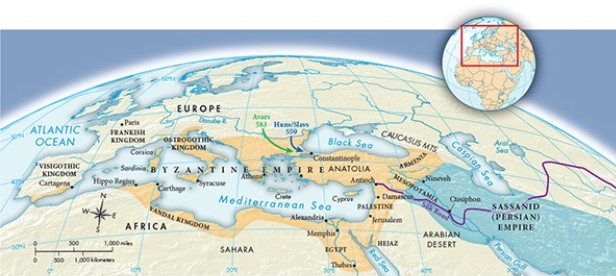
A) Huns
B) Franks
C) Ostrogoths
D) Vandals
A) Huns
B) Franks
C) Ostrogoths
D) Vandals

سؤال
سؤال
سؤال
سؤال
سؤال
سؤال
سؤال
According to Map 8.3, "The Spread of Christianity, ca. 300-800," how does the early migration of monasticism, prior to its spread across the Mediterranean Sea, reflect the isolationist desires of monks? 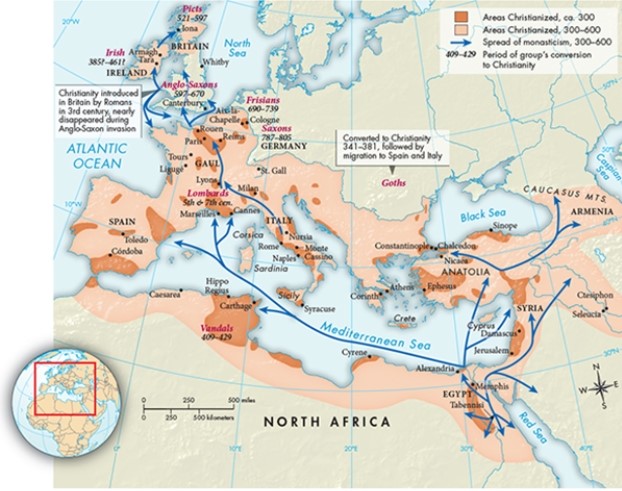
A) They migrated primarily into desert regions.
B) They avoided contact with the Greek mainland.
C) They circumvented many of the areas known to have been settled by barbarians.
D) They built many of their settlements along the northern shores of the Black Sea.
A) They migrated primarily into desert regions.
B) They avoided contact with the Greek mainland.
C) They circumvented many of the areas known to have been settled by barbarians.
D) They built many of their settlements along the northern shores of the Black Sea.
سؤال
سؤال
سؤال
سؤال
سؤال
سؤال
According to Map 8.1, "The Byzantine and Sassanid Empires, ca. 600," which region of the Byzantine Empire experienced the most extensive contact with territory occupied by barbarians? 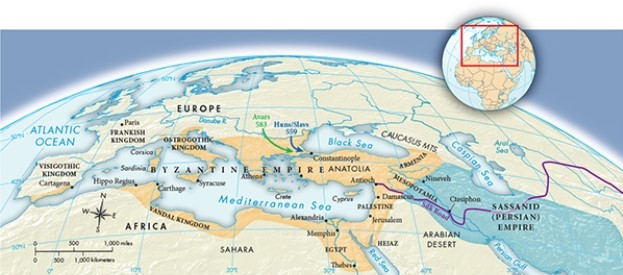
A) The eastern half
B) The western half
C) The northern half
D) The southern half
A) The eastern half
B) The western half
C) The northern half
D) The southern half
سؤال
سؤال
سؤال
سؤال
سؤال
سؤال
سؤال
سؤال
سؤال
سؤال
سؤال
سؤال
سؤال
سؤال
What evidence is contained in this illustration of Empress Theodora and her court to contradict historian Procopius's assertion that she was demonic, greedy, and vicious? 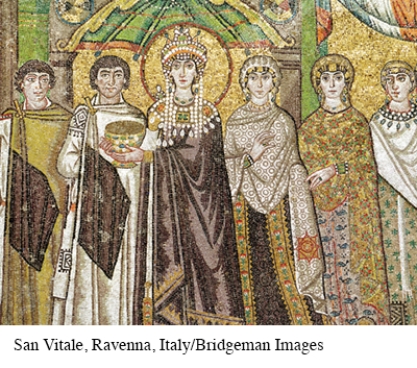
A) Her headpiece is opulent.
B) She appears to be stealing a chalice from one of the priests.
C) Her head is surrounded by a halo.
D) Her attendants appear to be distressed.
A) Her headpiece is opulent.
B) She appears to be stealing a chalice from one of the priests.
C) Her head is surrounded by a halo.
D) Her attendants appear to be distressed.
سؤال
سؤال
سؤال
سؤال
سؤال
سؤال
سؤال
سؤال
سؤال
سؤال
سؤال
سؤال
سؤال
سؤال
سؤال
سؤال
سؤال
سؤال
سؤال
سؤال
سؤال
سؤال
سؤال
سؤال
سؤال
سؤال
سؤال
سؤال
سؤال
According to Map 8.2, "The Barbarian Migrations, ca. 340-500," which group overran the heart of the ancient Greek empire? 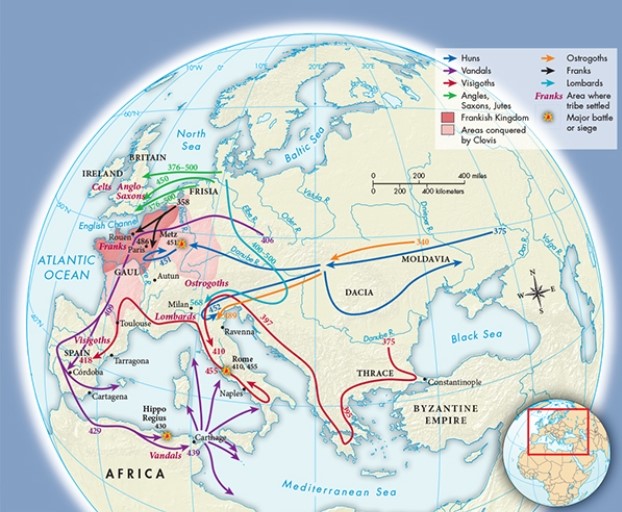
A) The Visigoths
B) The Huns
C) The Vandals
D) The Ostrogoths
A) The Visigoths
B) The Huns
C) The Vandals
D) The Ostrogoths
سؤال
سؤال
سؤال
سؤال
سؤال
سؤال
سؤال
سؤال
سؤال
سؤال
سؤال
سؤال
سؤال
سؤال
سؤال
سؤال
سؤال
سؤال
سؤال
سؤال
سؤال

فتح الحزمة
قم بالتسجيل لفتح البطاقات في هذه المجموعة!
Unlock Deck
Unlock Deck
1/78

العب

ملء الشاشة (f)
Deck 8: Continuity and Change in Europe and Western Asia, 250-850
1
According to Map 8.2, "The Barbarian Migrations, ca. 340-500," the migration of which barbarian group best reflects the belief of many historians that many barbarians migrated in search of a warmer climate?
A) Huns
B) Franks
C) Ostrogoths
D) Vandals
A) Huns
B) Franks
C) Ostrogoths
D) Vandals
Vandals
2
What was a gynaeceum?
A) A large reception hall
B) A public bath
C) A woman's apartment
D) An art gallery
A) A large reception hall
B) A public bath
C) A woman's apartment
D) An art gallery
A woman's apartment
3
What happened to Arius after the Council of Nicaea?
A) He and his followers were executed.
B) He created an alternative church
C) He became bishop of Alexandria.
D) He and his followers were banished.
A) He and his followers were executed.
B) He created an alternative church
C) He became bishop of Alexandria.
D) He and his followers were banished.
He and his followers were banished.
4
Which of the following is true of Justinian's law code?
A) It was only used in the Byzantine Empire.
B) It became the foundation of law for most modern European nations.
C) It was the first time laws had been written in Europe.
D) It focused on practical civil law but not the philosophy of law.
A) It was only used in the Byzantine Empire.
B) It became the foundation of law for most modern European nations.
C) It was the first time laws had been written in Europe.
D) It focused on practical civil law but not the philosophy of law.
فتح الحزمة
افتح القفل للوصول البطاقات البالغ عددها 78 في هذه المجموعة.
فتح الحزمة
k this deck
5
What emperor made Christianity the official religion of the Roman Empire?
A) Constantine
B) Theodosius
C) Justinian
D) Tiberius
A) Constantine
B) Theodosius
C) Justinian
D) Tiberius
فتح الحزمة
افتح القفل للوصول البطاقات البالغ عددها 78 في هذه المجموعة.
فتح الحزمة
k this deck
6
Why did Emperor Theodosius destroy the pagan temples in the late fourth century?
A) He believed they were centers of sedition.
B) He wanted to use the buildings for official purposes.
C) He expected the Christian Church's support in return.
D) He saw that they were no longer being used.
A) He believed they were centers of sedition.
B) He wanted to use the buildings for official purposes.
C) He expected the Christian Church's support in return.
D) He saw that they were no longer being used.
فتح الحزمة
افتح القفل للوصول البطاقات البالغ عددها 78 في هذه المجموعة.
فتح الحزمة
k this deck
7
What important theological issue did the Nicene Creed address?
A) It stated that secular leaders could intervene in spiritual concerns.
B) It supported the ideas of Arianism.
C) It explained the nature of Christ's divinity.
D) It denied that Christ was as divine as God the Father.
A) It stated that secular leaders could intervene in spiritual concerns.
B) It supported the ideas of Arianism.
C) It explained the nature of Christ's divinity.
D) It denied that Christ was as divine as God the Father.
فتح الحزمة
افتح القفل للوصول البطاقات البالغ عددها 78 في هذه المجموعة.
فتح الحزمة
k this deck
8
According to Map 8.3, "The Spread of Christianity, ca. 300-800," how does the early migration of monasticism, prior to its spread across the Mediterranean Sea, reflect the isolationist desires of monks?
A) They migrated primarily into desert regions.
B) They avoided contact with the Greek mainland.
C) They circumvented many of the areas known to have been settled by barbarians.
D) They built many of their settlements along the northern shores of the Black Sea.
A) They migrated primarily into desert regions.
B) They avoided contact with the Greek mainland.
C) They circumvented many of the areas known to have been settled by barbarians.
D) They built many of their settlements along the northern shores of the Black Sea.
فتح الحزمة
افتح القفل للوصول البطاقات البالغ عددها 78 في هذه المجموعة.
فتح الحزمة
k this deck
9
What was the official religion of Sassanid Persia?
A) Islam
B) Coptic Christianity
C) Zoroastrianism
D) Judaism
A) Islam
B) Coptic Christianity
C) Zoroastrianism
D) Judaism
فتح الحزمة
افتح القفل للوصول البطاقات البالغ عددها 78 في هذه المجموعة.
فتح الحزمة
k this deck
10
Arianism was condemned by Constantine at what council in 325?
A) Nicaea
B) Tours
C) Rome
D) Athens
A) Nicaea
B) Tours
C) Rome
D) Athens
فتح الحزمة
افتح القفل للوصول البطاقات البالغ عددها 78 في هذه المجموعة.
فتح الحزمة
k this deck
11
How did the "Justinian plague" affect the Byzantines?
A) Its outbreak severely weakened the military resources of Byzantium.
B) It decimated the Muslim armies attacking Byzantium.
C) It killed much fewer Byzantines than western Europeans.
D) It caused the death of the Emperor Justinian.
A) Its outbreak severely weakened the military resources of Byzantium.
B) It decimated the Muslim armies attacking Byzantium.
C) It killed much fewer Byzantines than western Europeans.
D) It caused the death of the Emperor Justinian.
فتح الحزمة
افتح القفل للوصول البطاقات البالغ عددها 78 في هذه المجموعة.
فتح الحزمة
k this deck
12
For many centuries, who were the most regular foes of the Byzantines?
A) Mongolians
B) Sassanids
C) Franks
D) The Norse
A) Mongolians
B) Sassanids
C) Franks
D) The Norse
فتح الحزمة
افتح القفل للوصول البطاقات البالغ عددها 78 في هذه المجموعة.
فتح الحزمة
k this deck
13
What was the Byzantines' best-known innovation?
A) The explosive compound known as "Greek fire"
B) The Cyrillic alphabet
C) Bronze weapons
D) The cure for the "Justinian plague"
A) The explosive compound known as "Greek fire"
B) The Cyrillic alphabet
C) Bronze weapons
D) The cure for the "Justinian plague"
فتح الحزمة
افتح القفل للوصول البطاقات البالغ عددها 78 في هذه المجموعة.
فتح الحزمة
k this deck
14
According to Map 8.1, "The Byzantine and Sassanid Empires, ca. 600," which region of the Byzantine Empire experienced the most extensive contact with territory occupied by barbarians?
A) The eastern half
B) The western half
C) The northern half
D) The southern half
A) The eastern half
B) The western half
C) The northern half
D) The southern half
فتح الحزمة
افتح القفل للوصول البطاقات البالغ عددها 78 في هذه المجموعة.
فتح الحزمة
k this deck
15
What important belief did the Arians hold?
A) They believed in the supremacy of the bishop of Rome.
B) They argued that the powers of church and state should be separate.
C) They asserted that God and Christ were equals.
D) They thought that Christ was not co-eternal with God or equal to him in power.
A) They believed in the supremacy of the bishop of Rome.
B) They argued that the powers of church and state should be separate.
C) They asserted that God and Christ were equals.
D) They thought that Christ was not co-eternal with God or equal to him in power.
فتح الحزمة
افتح القفل للوصول البطاقات البالغ عددها 78 في هذه المجموعة.
فتح الحزمة
k this deck
16
How did people of the Byzantine Empire view themselves?
A) They saw themselves as something new, calling themselves the Byzantines.
B) They saw themselves as Greeks because of their close cultural relationship with Greece.
C) They considered themselves Persians because most of the rulers of the Byzantine Empire were Persian.
D) They considered themselves Romans as Byzantium was the eastern part of the Roman Empire.
A) They saw themselves as something new, calling themselves the Byzantines.
B) They saw themselves as Greeks because of their close cultural relationship with Greece.
C) They considered themselves Persians because most of the rulers of the Byzantine Empire were Persian.
D) They considered themselves Romans as Byzantium was the eastern part of the Roman Empire.
فتح الحزمة
افتح القفل للوصول البطاقات البالغ عددها 78 في هذه المجموعة.
فتح الحزمة
k this deck
17
Prior to becoming a bishop, Ambrose of Milan had received what kind of training?
A) Medical
B) Legal
C) Rhetoric
D) Military
A) Medical
B) Legal
C) Rhetoric
D) Military
فتح الحزمة
افتح القفل للوصول البطاقات البالغ عددها 78 في هذه المجموعة.
فتح الحزمة
k this deck
18
Which of the following was true of Byzantine medicine?
A) It was less advanced than their work in other sciences.
B) It resulted in an understanding of the connection between sanitation and disease.
C) It led to practical treatment for the "Justinian plague."
D) It was more advanced than medicine in Western Europe.
A) It was less advanced than their work in other sciences.
B) It resulted in an understanding of the connection between sanitation and disease.
C) It led to practical treatment for the "Justinian plague."
D) It was more advanced than medicine in Western Europe.
فتح الحزمة
افتح القفل للوصول البطاقات البالغ عددها 78 في هذه المجموعة.
فتح الحزمة
k this deck
19
In the sixth century, the Byzantine emperor Justinian fought the Ostrogoths for control of what territory?
A) France
B) Italy
C) Germania
D) Asia Minor
A) France
B) Italy
C) Germania
D) Asia Minor
فتح الحزمة
افتح القفل للوصول البطاقات البالغ عددها 78 في هذه المجموعة.
فتح الحزمة
k this deck
20
Which of the following allowed the bishops of Rome, or popes, to gain increased power and political authority in central Italy?
A) The popes' ability to expand religious and secular authority as a result of their greater independence from Constantinople
B) The close personal relationship that the bishops maintained with the emperors at Constantinople
C) The failure of the emperors at Constantinople to provide financial support for the urban development projects taking place in Rome
D) The tradition of viewing religion as a branch of the state and the church's reliance on councils of bishops and theologians to settle doctrinal disputes peacefully
A) The popes' ability to expand religious and secular authority as a result of their greater independence from Constantinople
B) The close personal relationship that the bishops maintained with the emperors at Constantinople
C) The failure of the emperors at Constantinople to provide financial support for the urban development projects taking place in Rome
D) The tradition of viewing religion as a branch of the state and the church's reliance on councils of bishops and theologians to settle doctrinal disputes peacefully
فتح الحزمة
افتح القفل للوصول البطاقات البالغ عددها 78 في هذه المجموعة.
فتح الحزمة
k this deck
21
What was Saint Jerome's major contribution to the early church?
A) He translated the Bible into Latin.
B) He wrote the Nicene Creed.
C) He reconciled Christ's sermons with pagan philosophy.
D) He established the first communal monastery.
A) He translated the Bible into Latin.
B) He wrote the Nicene Creed.
C) He reconciled Christ's sermons with pagan philosophy.
D) He established the first communal monastery.
فتح الحزمة
افتح القفل للوصول البطاقات البالغ عددها 78 في هذه المجموعة.
فتح الحزمة
k this deck
22
Barbarians migrated into Roman territory looking for which of the following?
A) A promised holy site
B) Better supplies and more farmland
C) The knowledge and skills needed to make iron
D) Women for brides or slaves
A) A promised holy site
B) Better supplies and more farmland
C) The knowledge and skills needed to make iron
D) Women for brides or slaves
فتح الحزمة
افتح القفل للوصول البطاقات البالغ عددها 78 في هذه المجموعة.
فتح الحزمة
k this deck
23
On what basis did the bishops of Rome claim authority over other bishops?
A) The bishopric of Rome was the first diocese created by Constantine.
B) The Nicene Creed was promulgated and approved in Rome.
C) The bishops of Rome were the best-educated churchmen.
D) The apostle Peter lived in Rome, and the bishops of Rome were his successors.
A) The bishopric of Rome was the first diocese created by Constantine.
B) The Nicene Creed was promulgated and approved in Rome.
C) The bishops of Rome were the best-educated churchmen.
D) The apostle Peter lived in Rome, and the bishops of Rome were his successors.
فتح الحزمة
افتح القفل للوصول البطاقات البالغ عددها 78 في هذه المجموعة.
فتح الحزمة
k this deck
24
What did Jesus teach regarding women?
A) He taught that women were almost always inferior to men.
B) He believed and taught that women were a constant source of temptation.
C) He taught that women were equal to men.
D) He taught that no matter what happened, women could not achieve salvation.
A) He taught that women were almost always inferior to men.
B) He believed and taught that women were a constant source of temptation.
C) He taught that women were equal to men.
D) He taught that no matter what happened, women could not achieve salvation.
فتح الحزمة
افتح القفل للوصول البطاقات البالغ عددها 78 في هذه المجموعة.
فتح الحزمة
k this deck
25
What order did the Byzantine emperor Leo III give in 730?
A) He banned women from monasteries.
B) He ordered the destruction of icons.
C) He ordered that Latin no longer be used for mass.
D) He outlawed the use of singing in prayer.
A) He banned women from monasteries.
B) He ordered the destruction of icons.
C) He ordered that Latin no longer be used for mass.
D) He outlawed the use of singing in prayer.
فتح الحزمة
افتح القفل للوصول البطاقات البالغ عددها 78 في هذه المجموعة.
فتح الحزمة
k this deck
26
Why did the Huns retreat from Italy in the mid fifth century?
A) Their leader, Attila, had died, and their new leader wanted to return home.
B) They were weakened by disease and poor food supply.
C) They were forced out by Visigoths.
D) They did not find what they needed.
A) Their leader, Attila, had died, and their new leader wanted to return home.
B) They were weakened by disease and poor food supply.
C) They were forced out by Visigoths.
D) They did not find what they needed.
فتح الحزمة
افتح القفل للوصول البطاقات البالغ عددها 78 في هذه المجموعة.
فتح الحزمة
k this deck
27
Where did Christian monasticism begin?
A) Egypt
B) Rome
C) Constantinople
D) Jerusalem
A) Egypt
B) Rome
C) Constantinople
D) Jerusalem
فتح الحزمة
افتح القفل للوصول البطاقات البالغ عددها 78 في هذه المجموعة.
فتح الحزمة
k this deck
28
What evidence is contained in this illustration of Empress Theodora and her court to contradict historian Procopius's assertion that she was demonic, greedy, and vicious?
A) Her headpiece is opulent.
B) She appears to be stealing a chalice from one of the priests.
C) Her head is surrounded by a halo.
D) Her attendants appear to be distressed.
A) Her headpiece is opulent.
B) She appears to be stealing a chalice from one of the priests.
C) Her head is surrounded by a halo.
D) Her attendants appear to be distressed.
فتح الحزمة
افتح القفل للوصول البطاقات البالغ عددها 78 في هذه المجموعة.
فتح الحزمة
k this deck
29
What was a consequence of the controversy over icons in the Eastern Christian Church?
A) The controversy had few consequences beyond theology.
B) It settled the issue of church-state relations in Byzantium.
C) It led to further separation between western Europe and Byzantium.
D) It resulted in the destruction of all pagan icons.
A) The controversy had few consequences beyond theology.
B) It settled the issue of church-state relations in Byzantium.
C) It led to further separation between western Europe and Byzantium.
D) It resulted in the destruction of all pagan icons.
فتح الحزمة
افتح القفل للوصول البطاقات البالغ عددها 78 في هذه المجموعة.
فتح الحزمة
k this deck
30
What was one distinction between wealthy, powerful barbarians and ordinary barbarians of lesser status?
A) Only powerful men were expected to fight.
B) Only ordinary barbarians were allowed to drink beer.
C) Powerful men owned cattle, while ordinary men herded sheep.
D) Powerful men sometimes had more than one wife.
A) Only powerful men were expected to fight.
B) Only ordinary barbarians were allowed to drink beer.
C) Powerful men owned cattle, while ordinary men herded sheep.
D) Powerful men sometimes had more than one wife.
فتح الحزمة
افتح القفل للوصول البطاقات البالغ عددها 78 في هذه المجموعة.
فتح الحزمة
k this deck
31
What was the original meaning of barbaros, or barbarian?
A) Someone who was primitive or unruly
B) Someone who did not speak Greek
C) Someone who was not Christian
D) Someone who wore animal skins
A) Someone who was primitive or unruly
B) Someone who did not speak Greek
C) Someone who was not Christian
D) Someone who wore animal skins
فتح الحزمة
افتح القفل للوصول البطاقات البالغ عددها 78 في هذه المجموعة.
فتح الحزمة
k this deck
32
What roles did the druids fill in Celtic society?
A) They were chieftains and scribes.
B) They served religious and legal functions.
C) They were largely military leaders and scribes
D) They served as clan elders and bards.
A) They were chieftains and scribes.
B) They served religious and legal functions.
C) They were largely military leaders and scribes
D) They served as clan elders and bards.
فتح الحزمة
افتح القفل للوصول البطاقات البالغ عددها 78 في هذه المجموعة.
فتح الحزمة
k this deck
33
In The Confessions, what does Saint Augustine argue about human behavior?
A) That knowledge and virtue are one and the same
B) That people always act on the basis of rational knowledge
C) That a person who knows what is right will do what is right
D) That all humans are weak-willed and have an innate tendency to sin
A) That knowledge and virtue are one and the same
B) That people always act on the basis of rational knowledge
C) That a person who knows what is right will do what is right
D) That all humans are weak-willed and have an innate tendency to sin
فتح الحزمة
افتح القفل للوصول البطاقات البالغ عددها 78 في هذه المجموعة.
فتح الحزمة
k this deck
34
Iconoclasts believed that people were doing what with icons?
A) Praying through them
B) Decorating with them
C) Using them for instruction
D) Worshiping them
A) Praying through them
B) Decorating with them
C) Using them for instruction
D) Worshiping them
فتح الحزمة
افتح القفل للوصول البطاقات البالغ عددها 78 في هذه المجموعة.
فتح الحزمة
k this deck
35
With whom did the pope form an alliance as a result of the iconoclastic controversy?
A) The Byzantine emperor
B) The Frankish monarchy
C) Arian Christians
D) Persian Muslims
A) The Byzantine emperor
B) The Frankish monarchy
C) Arian Christians
D) Persian Muslims
فتح الحزمة
افتح القفل للوصول البطاقات البالغ عددها 78 في هذه المجموعة.
فتح الحزمة
k this deck
36
How did church authorities respond to the growing trend of eremitical monasticism?
A) They encouraged all monks to become hermits in the desert.
B) They encouraged hermits to retreat to the edge of towns.
C) They encouraged those who wanted to live ascetic lives to join communities instead.
D) They encouraged all hermits to renounce asceticism altogether.
A) They encouraged all monks to become hermits in the desert.
B) They encouraged hermits to retreat to the edge of towns.
C) They encouraged those who wanted to live ascetic lives to join communities instead.
D) They encouraged all hermits to renounce asceticism altogether.
فتح الحزمة
افتح القفل للوصول البطاقات البالغ عددها 78 في هذه المجموعة.
فتح الحزمة
k this deck
37
In early Germanic villages, which of the following indicated a man's wealth and determined his social status?
A) His relationship with the king
B) The amount of land he owned
C) The number of cattle he possessed
D) The number of wives he had
A) His relationship with the king
B) The amount of land he owned
C) The number of cattle he possessed
D) The number of wives he had
فتح الحزمة
افتح القفل للوصول البطاقات البالغ عددها 78 في هذه المجموعة.
فتح الحزمة
k this deck
38
What was the basic Germanic social unit?
A) The state
B) The family
C) The individual
D) The tribe
A) The state
B) The family
C) The individual
D) The tribe
فتح الحزمة
افتح القفل للوصول البطاقات البالغ عددها 78 في هذه المجموعة.
فتح الحزمة
k this deck
39
Which of the following was one of Saint Augustine's key ideas?
A) His belief in monastic celibacy
B) His doctrine of Christ's divinity
C) His doctrine of original sin
D) His belief that the pope was Peter's successor
A) His belief in monastic celibacy
B) His doctrine of Christ's divinity
C) His doctrine of original sin
D) His belief that the pope was Peter's successor
فتح الحزمة
افتح القفل للوصول البطاقات البالغ عددها 78 في هذه المجموعة.
فتح الحزمة
k this deck
40
According to Saint Augustine, what did God transmit through the sacraments?
A) Free will
B) Grace
C) Peace
D) Desire
A) Free will
B) Grace
C) Peace
D) Desire
فتح الحزمة
افتح القفل للوصول البطاقات البالغ عددها 78 في هذه المجموعة.
فتح الحزمة
k this deck
41
What factors contributed to the long duration of the Byzantine Empire?
فتح الحزمة
افتح القفل للوصول البطاقات البالغ عددها 78 في هذه المجموعة.
فتح الحزمة
k this deck
42
Why were some early Christians drawn to the monastic lifestyle?
فتح الحزمة
افتح القفل للوصول البطاقات البالغ عددها 78 في هذه المجموعة.
فتح الحزمة
k this deck
43
Charlemagne used missi dominici to connect his central government to which of the following?
A) Church leaders
B) Rome
C) Constantinople
D) Local authorities
A) Church leaders
B) Rome
C) Constantinople
D) Local authorities
فتح الحزمة
افتح القفل للوصول البطاقات البالغ عددها 78 في هذه المجموعة.
فتح الحزمة
k this deck
44
According to legend, what saint Christianized Ireland?
A) Christopher
B) Patrick
C) Jerome
D) Benedict
A) Christopher
B) Patrick
C) Jerome
D) Benedict
فتح الحزمة
افتح القفل للوصول البطاقات البالغ عددها 78 في هذه المجموعة.
فتح الحزمة
k this deck
45
What role did trade play in the Sassanid and Byzantine Empires and in the tensions between them?
فتح الحزمة
افتح القفل للوصول البطاقات البالغ عددها 78 في هذه المجموعة.
فتح الحزمة
k this deck
46
What country served as an important base for the conversion of Germany and other parts of northern Europe?
A) Spain
B) France
C) England
D) Portugal
A) Spain
B) France
C) England
D) Portugal
فتح الحزمة
افتح القفل للوصول البطاقات البالغ عددها 78 في هذه المجموعة.
فتح الحزمة
k this deck
47
Which fifth-century Merovingian leader helped unify the Franks?
A) Clovis
B) Gregory
C) Merovech
D) Charles Martel
A) Clovis
B) Gregory
C) Merovech
D) Charles Martel
فتح الحزمة
افتح القفل للوصول البطاقات البالغ عددها 78 في هذه المجموعة.
فتح الحزمة
k this deck
48
What were some key techniques, ideas, and practices that encouraged the spread of Christianity?
فتح الحزمة
افتح القفل للوصول البطاقات البالغ عددها 78 في هذه المجموعة.
فتح الحزمة
k this deck
49
How did the bishops of Rome acquire spiritual and secular leadership in the early fifth century? What was the intellectual justification for this development?
فتح الحزمة
افتح القفل للوصول البطاقات البالغ عددها 78 في هذه المجموعة.
فتح الحزمة
k this deck
50
How was barbarian society organized?
فتح الحزمة
افتح القفل للوصول البطاقات البالغ عددها 78 في هذه المجموعة.
فتح الحزمة
k this deck
51
What were early Christian attitudes toward sex? What influenced those attitudes?
فتح الحزمة
افتح القفل للوصول البطاقات البالغ عددها 78 في هذه المجموعة.
فتح الحزمة
k this deck
52
The coronation of Charlemagne as emperor caused a decisive break between western Europe and what empire?
A) The Abbasid
B) The Byzantine
C) The Sassanid
D) The Umayyad
A) The Abbasid
B) The Byzantine
C) The Sassanid
D) The Umayyad
فتح الحزمة
افتح القفل للوصول البطاقات البالغ عددها 78 في هذه المجموعة.
فتح الحزمة
k this deck
53
Carolingian power over the Franks was solidified by Charles Martel's defeat of which group in 732, at Poitiers?
A) Muslim invaders
B) The Visigoths
C) The Burgundians
D) Celtic warriors
A) Muslim invaders
B) The Visigoths
C) The Burgundians
D) Celtic warriors
فتح الحزمة
افتح القفل للوصول البطاقات البالغ عددها 78 في هذه المجموعة.
فتح الحزمة
k this deck
54
On whom did early Christian missionaries concentrate their conversion efforts?
A) Urban residents
B) Pagan priests
C) Rural peasants
D) Members of royal families
A) Urban residents
B) Pagan priests
C) Rural peasants
D) Members of royal families
فتح الحزمة
افتح القفل للوصول البطاقات البالغ عددها 78 في هذه المجموعة.
فتح الحزمة
k this deck
55
In what ways did the Byzantine Empire continue the traditions of the Roman Empire?
فتح الحزمة
افتح القفل للوصول البطاقات البالغ عددها 78 في هذه المجموعة.
فتح الحزمة
k this deck
56
What role did Germanic queens play in converting their tribes to Christianity?
فتح الحزمة
افتح القفل للوصول البطاقات البالغ عددها 78 في هذه المجموعة.
فتح الحزمة
k this deck
57
According to Map 8.2, "The Barbarian Migrations, ca. 340-500," which group overran the heart of the ancient Greek empire?
A) The Visigoths
B) The Huns
C) The Vandals
D) The Ostrogoths
A) The Visigoths
B) The Huns
C) The Vandals
D) The Ostrogoths
فتح الحزمة
افتح القفل للوصول البطاقات البالغ عددها 78 في هذه المجموعة.
فتح الحزمة
k this deck
58
What was accomplished by the Treaty of Verdun?
A) It removed substantial territory from the Byzantine Empire, creating the beginnings of the Holy Roman Empire.
B) It moved the territory today known as Italy, Austria, and France out of the Carolingian Empire and into that of the Merovingian.
C) It created peace between the Muslim armies of the Iberian Peninsula and Charlemagne's armies.
D) It divided the Carolingian Empire, forming the precursors to the modern states of Germany, France, and Italy.
A) It removed substantial territory from the Byzantine Empire, creating the beginnings of the Holy Roman Empire.
B) It moved the territory today known as Italy, Austria, and France out of the Carolingian Empire and into that of the Merovingian.
C) It created peace between the Muslim armies of the Iberian Peninsula and Charlemagne's armies.
D) It divided the Carolingian Empire, forming the precursors to the modern states of Germany, France, and Italy.
فتح الحزمة
افتح القفل للوصول البطاقات البالغ عددها 78 في هذه المجموعة.
فتح الحزمة
k this deck
59
To what does the Carolingian Renaissance refer?
A) A growing veneration of the fathers of Roman Christianity
B) An enthusiastic interest in Roman military history
C) A growing interest in the ideas of classical Greece and Rome
D) Charlemagne's clever invention of a bureaucracy necessary to operate a vast empire
A) A growing veneration of the fathers of Roman Christianity
B) An enthusiastic interest in Roman military history
C) A growing interest in the ideas of classical Greece and Rome
D) Charlemagne's clever invention of a bureaucracy necessary to operate a vast empire
فتح الحزمة
افتح القفل للوصول البطاقات البالغ عددها 78 في هذه المجموعة.
فتح الحزمة
k this deck
60
How did the early Christian Church deal with Arianism? What are possible long-term implications for how Christianity dealt with this early heresy?
فتح الحزمة
افتح القفل للوصول البطاقات البالغ عددها 78 في هذه المجموعة.
فتح الحزمة
k this deck
61
Use the following to answer questions:
dioceses
A)Multipart collection of laws and legal commentary issued in the sixth century by the emperor Justinian.
B)Geographic administrative districts of the church, each under the authority of a bishop and centered on a cathedral.
C)A religious practice or belief judged unacceptable by church officials.
D)Heads of the Roman Catholic Church, who became political as well as religious authorities. The period of this leader's term in office is called a pontificate.
E)Another name for the Eastern Christian Church, over which emperors continued to have power.
F)Certain rituals of the church believed to act as a conduit of God's grace, such as baptism.
G)The conflict over the veneration of religious images in the Byzantine Empire.
H)Compensatory payment for death or injury set in many barbarian law codes.
I)Ritual in which Christians asked a priest for forgiveness for sins and the priest set certain actions to atone for the sins.
J)People who were venerated for having lived or died in a way that was spiritually heroic or noteworthy.
K)A dynasty of rulers that decisively unified the Franks under the reign of Clovis (ca. 481-511) and ruled the Frankish kingdom until the seventh century.
L)A dynasty of rulers that took over the Frankish kingdom from the Merovingians in the seventh century; the term derives from the Latin word for "Charles," the name of several members of this dynasty.
M)An arrangement ratified in 843 that divided Charlemagne's territories among his three surviving grandsons; their kingdoms set the pattern for the modern states of Germany, France, and Italy.
dioceses
A)Multipart collection of laws and legal commentary issued in the sixth century by the emperor Justinian.
B)Geographic administrative districts of the church, each under the authority of a bishop and centered on a cathedral.
C)A religious practice or belief judged unacceptable by church officials.
D)Heads of the Roman Catholic Church, who became political as well as religious authorities. The period of this leader's term in office is called a pontificate.
E)Another name for the Eastern Christian Church, over which emperors continued to have power.
F)Certain rituals of the church believed to act as a conduit of God's grace, such as baptism.
G)The conflict over the veneration of religious images in the Byzantine Empire.
H)Compensatory payment for death or injury set in many barbarian law codes.
I)Ritual in which Christians asked a priest for forgiveness for sins and the priest set certain actions to atone for the sins.
J)People who were venerated for having lived or died in a way that was spiritually heroic or noteworthy.
K)A dynasty of rulers that decisively unified the Franks under the reign of Clovis (ca. 481-511) and ruled the Frankish kingdom until the seventh century.
L)A dynasty of rulers that took over the Frankish kingdom from the Merovingians in the seventh century; the term derives from the Latin word for "Charles," the name of several members of this dynasty.
M)An arrangement ratified in 843 that divided Charlemagne's territories among his three surviving grandsons; their kingdoms set the pattern for the modern states of Germany, France, and Italy.
فتح الحزمة
افتح القفل للوصول البطاقات البالغ عددها 78 في هذه المجموعة.
فتح الحزمة
k this deck
62
Use the following to answer questions:
Carolingian
A)Multipart collection of laws and legal commentary issued in the sixth century by the emperor Justinian.
B)Geographic administrative districts of the church, each under the authority of a bishop and centered on a cathedral.
C)A religious practice or belief judged unacceptable by church officials.
D)Heads of the Roman Catholic Church, who became political as well as religious authorities. The period of this leader's term in office is called a pontificate.
E)Another name for the Eastern Christian Church, over which emperors continued to have power.
F)Certain rituals of the church believed to act as a conduit of God's grace, such as baptism.
G)The conflict over the veneration of religious images in the Byzantine Empire.
H)Compensatory payment for death or injury set in many barbarian law codes.
I)Ritual in which Christians asked a priest for forgiveness for sins and the priest set certain actions to atone for the sins.
J)People who were venerated for having lived or died in a way that was spiritually heroic or noteworthy.
K)A dynasty of rulers that decisively unified the Franks under the reign of Clovis (ca. 481-511) and ruled the Frankish kingdom until the seventh century.
L)A dynasty of rulers that took over the Frankish kingdom from the Merovingians in the seventh century; the term derives from the Latin word for "Charles," the name of several members of this dynasty.
M)An arrangement ratified in 843 that divided Charlemagne's territories among his three surviving grandsons; their kingdoms set the pattern for the modern states of Germany, France, and Italy.
Carolingian
A)Multipart collection of laws and legal commentary issued in the sixth century by the emperor Justinian.
B)Geographic administrative districts of the church, each under the authority of a bishop and centered on a cathedral.
C)A religious practice or belief judged unacceptable by church officials.
D)Heads of the Roman Catholic Church, who became political as well as religious authorities. The period of this leader's term in office is called a pontificate.
E)Another name for the Eastern Christian Church, over which emperors continued to have power.
F)Certain rituals of the church believed to act as a conduit of God's grace, such as baptism.
G)The conflict over the veneration of religious images in the Byzantine Empire.
H)Compensatory payment for death or injury set in many barbarian law codes.
I)Ritual in which Christians asked a priest for forgiveness for sins and the priest set certain actions to atone for the sins.
J)People who were venerated for having lived or died in a way that was spiritually heroic or noteworthy.
K)A dynasty of rulers that decisively unified the Franks under the reign of Clovis (ca. 481-511) and ruled the Frankish kingdom until the seventh century.
L)A dynasty of rulers that took over the Frankish kingdom from the Merovingians in the seventh century; the term derives from the Latin word for "Charles," the name of several members of this dynasty.
M)An arrangement ratified in 843 that divided Charlemagne's territories among his three surviving grandsons; their kingdoms set the pattern for the modern states of Germany, France, and Italy.
فتح الحزمة
افتح القفل للوصول البطاقات البالغ عددها 78 في هذه المجموعة.
فتح الحزمة
k this deck
63
Use the following to answer questions:
Treaty of Verdun
A)Multipart collection of laws and legal commentary issued in the sixth century by the emperor Justinian.
B)Geographic administrative districts of the church, each under the authority of a bishop and centered on a cathedral.
C)A religious practice or belief judged unacceptable by church officials.
D)Heads of the Roman Catholic Church, who became political as well as religious authorities. The period of this leader's term in office is called a pontificate.
E)Another name for the Eastern Christian Church, over which emperors continued to have power.
F)Certain rituals of the church believed to act as a conduit of God's grace, such as baptism.
G)The conflict over the veneration of religious images in the Byzantine Empire.
H)Compensatory payment for death or injury set in many barbarian law codes.
I)Ritual in which Christians asked a priest for forgiveness for sins and the priest set certain actions to atone for the sins.
J)People who were venerated for having lived or died in a way that was spiritually heroic or noteworthy.
K)A dynasty of rulers that decisively unified the Franks under the reign of Clovis (ca. 481-511) and ruled the Frankish kingdom until the seventh century.
L)A dynasty of rulers that took over the Frankish kingdom from the Merovingians in the seventh century; the term derives from the Latin word for "Charles," the name of several members of this dynasty.
M)An arrangement ratified in 843 that divided Charlemagne's territories among his three surviving grandsons; their kingdoms set the pattern for the modern states of Germany, France, and Italy.
Treaty of Verdun
A)Multipart collection of laws and legal commentary issued in the sixth century by the emperor Justinian.
B)Geographic administrative districts of the church, each under the authority of a bishop and centered on a cathedral.
C)A religious practice or belief judged unacceptable by church officials.
D)Heads of the Roman Catholic Church, who became political as well as religious authorities. The period of this leader's term in office is called a pontificate.
E)Another name for the Eastern Christian Church, over which emperors continued to have power.
F)Certain rituals of the church believed to act as a conduit of God's grace, such as baptism.
G)The conflict over the veneration of religious images in the Byzantine Empire.
H)Compensatory payment for death or injury set in many barbarian law codes.
I)Ritual in which Christians asked a priest for forgiveness for sins and the priest set certain actions to atone for the sins.
J)People who were venerated for having lived or died in a way that was spiritually heroic or noteworthy.
K)A dynasty of rulers that decisively unified the Franks under the reign of Clovis (ca. 481-511) and ruled the Frankish kingdom until the seventh century.
L)A dynasty of rulers that took over the Frankish kingdom from the Merovingians in the seventh century; the term derives from the Latin word for "Charles," the name of several members of this dynasty.
M)An arrangement ratified in 843 that divided Charlemagne's territories among his three surviving grandsons; their kingdoms set the pattern for the modern states of Germany, France, and Italy.
فتح الحزمة
افتح القفل للوصول البطاقات البالغ عددها 78 في هذه المجموعة.
فتح الحزمة
k this deck
64
Use the following to answer questions:
saints
A)Multipart collection of laws and legal commentary issued in the sixth century by the emperor Justinian.
B)Geographic administrative districts of the church, each under the authority of a bishop and centered on a cathedral.
C)A religious practice or belief judged unacceptable by church officials.
D)Heads of the Roman Catholic Church, who became political as well as religious authorities. The period of this leader's term in office is called a pontificate.
E)Another name for the Eastern Christian Church, over which emperors continued to have power.
F)Certain rituals of the church believed to act as a conduit of God's grace, such as baptism.
G)The conflict over the veneration of religious images in the Byzantine Empire.
H)Compensatory payment for death or injury set in many barbarian law codes.
I)Ritual in which Christians asked a priest for forgiveness for sins and the priest set certain actions to atone for the sins.
J)People who were venerated for having lived or died in a way that was spiritually heroic or noteworthy.
K)A dynasty of rulers that decisively unified the Franks under the reign of Clovis (ca. 481-511) and ruled the Frankish kingdom until the seventh century.
L)A dynasty of rulers that took over the Frankish kingdom from the Merovingians in the seventh century; the term derives from the Latin word for "Charles," the name of several members of this dynasty.
M)An arrangement ratified in 843 that divided Charlemagne's territories among his three surviving grandsons; their kingdoms set the pattern for the modern states of Germany, France, and Italy.
saints
A)Multipart collection of laws and legal commentary issued in the sixth century by the emperor Justinian.
B)Geographic administrative districts of the church, each under the authority of a bishop and centered on a cathedral.
C)A religious practice or belief judged unacceptable by church officials.
D)Heads of the Roman Catholic Church, who became political as well as religious authorities. The period of this leader's term in office is called a pontificate.
E)Another name for the Eastern Christian Church, over which emperors continued to have power.
F)Certain rituals of the church believed to act as a conduit of God's grace, such as baptism.
G)The conflict over the veneration of religious images in the Byzantine Empire.
H)Compensatory payment for death or injury set in many barbarian law codes.
I)Ritual in which Christians asked a priest for forgiveness for sins and the priest set certain actions to atone for the sins.
J)People who were venerated for having lived or died in a way that was spiritually heroic or noteworthy.
K)A dynasty of rulers that decisively unified the Franks under the reign of Clovis (ca. 481-511) and ruled the Frankish kingdom until the seventh century.
L)A dynasty of rulers that took over the Frankish kingdom from the Merovingians in the seventh century; the term derives from the Latin word for "Charles," the name of several members of this dynasty.
M)An arrangement ratified in 843 that divided Charlemagne's territories among his three surviving grandsons; their kingdoms set the pattern for the modern states of Germany, France, and Italy.
فتح الحزمة
افتح القفل للوصول البطاقات البالغ عددها 78 في هذه المجموعة.
فتح الحزمة
k this deck
65
Use the following to answer questions:
Justinian's Code
A)Multipart collection of laws and legal commentary issued in the sixth century by the emperor Justinian.
B)Geographic administrative districts of the church, each under the authority of a bishop and centered on a cathedral.
C)A religious practice or belief judged unacceptable by church officials.
D)Heads of the Roman Catholic Church, who became political as well as religious authorities. The period of this leader's term in office is called a pontificate.
E)Another name for the Eastern Christian Church, over which emperors continued to have power.
F)Certain rituals of the church believed to act as a conduit of God's grace, such as baptism.
G)The conflict over the veneration of religious images in the Byzantine Empire.
H)Compensatory payment for death or injury set in many barbarian law codes.
I)Ritual in which Christians asked a priest for forgiveness for sins and the priest set certain actions to atone for the sins.
J)People who were venerated for having lived or died in a way that was spiritually heroic or noteworthy.
K)A dynasty of rulers that decisively unified the Franks under the reign of Clovis (ca. 481-511) and ruled the Frankish kingdom until the seventh century.
L)A dynasty of rulers that took over the Frankish kingdom from the Merovingians in the seventh century; the term derives from the Latin word for "Charles," the name of several members of this dynasty.
M)An arrangement ratified in 843 that divided Charlemagne's territories among his three surviving grandsons; their kingdoms set the pattern for the modern states of Germany, France, and Italy.
Justinian's Code
A)Multipart collection of laws and legal commentary issued in the sixth century by the emperor Justinian.
B)Geographic administrative districts of the church, each under the authority of a bishop and centered on a cathedral.
C)A religious practice or belief judged unacceptable by church officials.
D)Heads of the Roman Catholic Church, who became political as well as religious authorities. The period of this leader's term in office is called a pontificate.
E)Another name for the Eastern Christian Church, over which emperors continued to have power.
F)Certain rituals of the church believed to act as a conduit of God's grace, such as baptism.
G)The conflict over the veneration of religious images in the Byzantine Empire.
H)Compensatory payment for death or injury set in many barbarian law codes.
I)Ritual in which Christians asked a priest for forgiveness for sins and the priest set certain actions to atone for the sins.
J)People who were venerated for having lived or died in a way that was spiritually heroic or noteworthy.
K)A dynasty of rulers that decisively unified the Franks under the reign of Clovis (ca. 481-511) and ruled the Frankish kingdom until the seventh century.
L)A dynasty of rulers that took over the Frankish kingdom from the Merovingians in the seventh century; the term derives from the Latin word for "Charles," the name of several members of this dynasty.
M)An arrangement ratified in 843 that divided Charlemagne's territories among his three surviving grandsons; their kingdoms set the pattern for the modern states of Germany, France, and Italy.
فتح الحزمة
افتح القفل للوصول البطاقات البالغ عددها 78 في هذه المجموعة.
فتح الحزمة
k this deck
66
Describe Germanic society in the early Middle Ages. What impact did the traditions, beliefs, and laws of the Germanic peoples have on the subsequent development of European civilization? How were the Germans affected by Christianity?
فتح الحزمة
افتح القفل للوصول البطاقات البالغ عددها 78 في هذه المجموعة.
فتح الحزمة
k this deck
67
Use the following to answer questions:
popes
A)Multipart collection of laws and legal commentary issued in the sixth century by the emperor Justinian.
B)Geographic administrative districts of the church, each under the authority of a bishop and centered on a cathedral.
C)A religious practice or belief judged unacceptable by church officials.
D)Heads of the Roman Catholic Church, who became political as well as religious authorities. The period of this leader's term in office is called a pontificate.
E)Another name for the Eastern Christian Church, over which emperors continued to have power.
F)Certain rituals of the church believed to act as a conduit of God's grace, such as baptism.
G)The conflict over the veneration of religious images in the Byzantine Empire.
H)Compensatory payment for death or injury set in many barbarian law codes.
I)Ritual in which Christians asked a priest for forgiveness for sins and the priest set certain actions to atone for the sins.
J)People who were venerated for having lived or died in a way that was spiritually heroic or noteworthy.
K)A dynasty of rulers that decisively unified the Franks under the reign of Clovis (ca. 481-511) and ruled the Frankish kingdom until the seventh century.
L)A dynasty of rulers that took over the Frankish kingdom from the Merovingians in the seventh century; the term derives from the Latin word for "Charles," the name of several members of this dynasty.
M)An arrangement ratified in 843 that divided Charlemagne's territories among his three surviving grandsons; their kingdoms set the pattern for the modern states of Germany, France, and Italy.
popes
A)Multipart collection of laws and legal commentary issued in the sixth century by the emperor Justinian.
B)Geographic administrative districts of the church, each under the authority of a bishop and centered on a cathedral.
C)A religious practice or belief judged unacceptable by church officials.
D)Heads of the Roman Catholic Church, who became political as well as religious authorities. The period of this leader's term in office is called a pontificate.
E)Another name for the Eastern Christian Church, over which emperors continued to have power.
F)Certain rituals of the church believed to act as a conduit of God's grace, such as baptism.
G)The conflict over the veneration of religious images in the Byzantine Empire.
H)Compensatory payment for death or injury set in many barbarian law codes.
I)Ritual in which Christians asked a priest for forgiveness for sins and the priest set certain actions to atone for the sins.
J)People who were venerated for having lived or died in a way that was spiritually heroic or noteworthy.
K)A dynasty of rulers that decisively unified the Franks under the reign of Clovis (ca. 481-511) and ruled the Frankish kingdom until the seventh century.
L)A dynasty of rulers that took over the Frankish kingdom from the Merovingians in the seventh century; the term derives from the Latin word for "Charles," the name of several members of this dynasty.
M)An arrangement ratified in 843 that divided Charlemagne's territories among his three surviving grandsons; their kingdoms set the pattern for the modern states of Germany, France, and Italy.
فتح الحزمة
افتح القفل للوصول البطاقات البالغ عددها 78 في هذه المجموعة.
فتح الحزمة
k this deck
68
Use the following to answer questions:
iconoclastic controversy
A)Multipart collection of laws and legal commentary issued in the sixth century by the emperor Justinian.
B)Geographic administrative districts of the church, each under the authority of a bishop and centered on a cathedral.
C)A religious practice or belief judged unacceptable by church officials.
D)Heads of the Roman Catholic Church, who became political as well as religious authorities. The period of this leader's term in office is called a pontificate.
E)Another name for the Eastern Christian Church, over which emperors continued to have power.
F)Certain rituals of the church believed to act as a conduit of God's grace, such as baptism.
G)The conflict over the veneration of religious images in the Byzantine Empire.
H)Compensatory payment for death or injury set in many barbarian law codes.
I)Ritual in which Christians asked a priest for forgiveness for sins and the priest set certain actions to atone for the sins.
J)People who were venerated for having lived or died in a way that was spiritually heroic or noteworthy.
K)A dynasty of rulers that decisively unified the Franks under the reign of Clovis (ca. 481-511) and ruled the Frankish kingdom until the seventh century.
L)A dynasty of rulers that took over the Frankish kingdom from the Merovingians in the seventh century; the term derives from the Latin word for "Charles," the name of several members of this dynasty.
M)An arrangement ratified in 843 that divided Charlemagne's territories among his three surviving grandsons; their kingdoms set the pattern for the modern states of Germany, France, and Italy.
iconoclastic controversy
A)Multipart collection of laws and legal commentary issued in the sixth century by the emperor Justinian.
B)Geographic administrative districts of the church, each under the authority of a bishop and centered on a cathedral.
C)A religious practice or belief judged unacceptable by church officials.
D)Heads of the Roman Catholic Church, who became political as well as religious authorities. The period of this leader's term in office is called a pontificate.
E)Another name for the Eastern Christian Church, over which emperors continued to have power.
F)Certain rituals of the church believed to act as a conduit of God's grace, such as baptism.
G)The conflict over the veneration of religious images in the Byzantine Empire.
H)Compensatory payment for death or injury set in many barbarian law codes.
I)Ritual in which Christians asked a priest for forgiveness for sins and the priest set certain actions to atone for the sins.
J)People who were venerated for having lived or died in a way that was spiritually heroic or noteworthy.
K)A dynasty of rulers that decisively unified the Franks under the reign of Clovis (ca. 481-511) and ruled the Frankish kingdom until the seventh century.
L)A dynasty of rulers that took over the Frankish kingdom from the Merovingians in the seventh century; the term derives from the Latin word for "Charles," the name of several members of this dynasty.
M)An arrangement ratified in 843 that divided Charlemagne's territories among his three surviving grandsons; their kingdoms set the pattern for the modern states of Germany, France, and Italy.
فتح الحزمة
افتح القفل للوصول البطاقات البالغ عددها 78 في هذه المجموعة.
فتح الحزمة
k this deck
69
Use the following to answer questions:
Orthodox Church
A)Multipart collection of laws and legal commentary issued in the sixth century by the emperor Justinian.
B)Geographic administrative districts of the church, each under the authority of a bishop and centered on a cathedral.
C)A religious practice or belief judged unacceptable by church officials.
D)Heads of the Roman Catholic Church, who became political as well as religious authorities. The period of this leader's term in office is called a pontificate.
E)Another name for the Eastern Christian Church, over which emperors continued to have power.
F)Certain rituals of the church believed to act as a conduit of God's grace, such as baptism.
G)The conflict over the veneration of religious images in the Byzantine Empire.
H)Compensatory payment for death or injury set in many barbarian law codes.
I)Ritual in which Christians asked a priest for forgiveness for sins and the priest set certain actions to atone for the sins.
J)People who were venerated for having lived or died in a way that was spiritually heroic or noteworthy.
K)A dynasty of rulers that decisively unified the Franks under the reign of Clovis (ca. 481-511) and ruled the Frankish kingdom until the seventh century.
L)A dynasty of rulers that took over the Frankish kingdom from the Merovingians in the seventh century; the term derives from the Latin word for "Charles," the name of several members of this dynasty.
M)An arrangement ratified in 843 that divided Charlemagne's territories among his three surviving grandsons; their kingdoms set the pattern for the modern states of Germany, France, and Italy.
Orthodox Church
A)Multipart collection of laws and legal commentary issued in the sixth century by the emperor Justinian.
B)Geographic administrative districts of the church, each under the authority of a bishop and centered on a cathedral.
C)A religious practice or belief judged unacceptable by church officials.
D)Heads of the Roman Catholic Church, who became political as well as religious authorities. The period of this leader's term in office is called a pontificate.
E)Another name for the Eastern Christian Church, over which emperors continued to have power.
F)Certain rituals of the church believed to act as a conduit of God's grace, such as baptism.
G)The conflict over the veneration of religious images in the Byzantine Empire.
H)Compensatory payment for death or injury set in many barbarian law codes.
I)Ritual in which Christians asked a priest for forgiveness for sins and the priest set certain actions to atone for the sins.
J)People who were venerated for having lived or died in a way that was spiritually heroic or noteworthy.
K)A dynasty of rulers that decisively unified the Franks under the reign of Clovis (ca. 481-511) and ruled the Frankish kingdom until the seventh century.
L)A dynasty of rulers that took over the Frankish kingdom from the Merovingians in the seventh century; the term derives from the Latin word for "Charles," the name of several members of this dynasty.
M)An arrangement ratified in 843 that divided Charlemagne's territories among his three surviving grandsons; their kingdoms set the pattern for the modern states of Germany, France, and Italy.
فتح الحزمة
افتح القفل للوصول البطاقات البالغ عددها 78 في هذه المجموعة.
فتح الحزمة
k this deck
70
Trace the history of the monastic movement from its Eastern roots through The Rule of Saint Benedict. Why was The Rule of Saint Benedict so successful? What impact did the Benedictine monasteries have on the church and on society in general?
فتح الحزمة
افتح القفل للوصول البطاقات البالغ عددها 78 في هذه المجموعة.
فتح الحزمة
k this deck
71
Outline the institutionalization of the Christian Church. How did it move from being a small, persecuted sect to one of the most important political players in Europe and the Mediterranean basin?
فتح الحزمة
افتح القفل للوصول البطاقات البالغ عددها 78 في هذه المجموعة.
فتح الحزمة
k this deck
72
Use the following to answer questions:
Merovingian
A)Multipart collection of laws and legal commentary issued in the sixth century by the emperor Justinian.
B)Geographic administrative districts of the church, each under the authority of a bishop and centered on a cathedral.
C)A religious practice or belief judged unacceptable by church officials.
D)Heads of the Roman Catholic Church, who became political as well as religious authorities. The period of this leader's term in office is called a pontificate.
E)Another name for the Eastern Christian Church, over which emperors continued to have power.
F)Certain rituals of the church believed to act as a conduit of God's grace, such as baptism.
G)The conflict over the veneration of religious images in the Byzantine Empire.
H)Compensatory payment for death or injury set in many barbarian law codes.
I)Ritual in which Christians asked a priest for forgiveness for sins and the priest set certain actions to atone for the sins.
J)People who were venerated for having lived or died in a way that was spiritually heroic or noteworthy.
K)A dynasty of rulers that decisively unified the Franks under the reign of Clovis (ca. 481-511) and ruled the Frankish kingdom until the seventh century.
L)A dynasty of rulers that took over the Frankish kingdom from the Merovingians in the seventh century; the term derives from the Latin word for "Charles," the name of several members of this dynasty.
M)An arrangement ratified in 843 that divided Charlemagne's territories among his three surviving grandsons; their kingdoms set the pattern for the modern states of Germany, France, and Italy.
Merovingian
A)Multipart collection of laws and legal commentary issued in the sixth century by the emperor Justinian.
B)Geographic administrative districts of the church, each under the authority of a bishop and centered on a cathedral.
C)A religious practice or belief judged unacceptable by church officials.
D)Heads of the Roman Catholic Church, who became political as well as religious authorities. The period of this leader's term in office is called a pontificate.
E)Another name for the Eastern Christian Church, over which emperors continued to have power.
F)Certain rituals of the church believed to act as a conduit of God's grace, such as baptism.
G)The conflict over the veneration of religious images in the Byzantine Empire.
H)Compensatory payment for death or injury set in many barbarian law codes.
I)Ritual in which Christians asked a priest for forgiveness for sins and the priest set certain actions to atone for the sins.
J)People who were venerated for having lived or died in a way that was spiritually heroic or noteworthy.
K)A dynasty of rulers that decisively unified the Franks under the reign of Clovis (ca. 481-511) and ruled the Frankish kingdom until the seventh century.
L)A dynasty of rulers that took over the Frankish kingdom from the Merovingians in the seventh century; the term derives from the Latin word for "Charles," the name of several members of this dynasty.
M)An arrangement ratified in 843 that divided Charlemagne's territories among his three surviving grandsons; their kingdoms set the pattern for the modern states of Germany, France, and Italy.
فتح الحزمة
افتح القفل للوصول البطاقات البالغ عددها 78 في هذه المجموعة.
فتح الحزمة
k this deck
73
What is the significance of Charlemagne's empire?
فتح الحزمة
افتح القفل للوصول البطاقات البالغ عددها 78 في هذه المجموعة.
فتح الحزمة
k this deck
74
Use the following to answer questions:
penance
A)Multipart collection of laws and legal commentary issued in the sixth century by the emperor Justinian.
B)Geographic administrative districts of the church, each under the authority of a bishop and centered on a cathedral.
C)A religious practice or belief judged unacceptable by church officials.
D)Heads of the Roman Catholic Church, who became political as well as religious authorities. The period of this leader's term in office is called a pontificate.
E)Another name for the Eastern Christian Church, over which emperors continued to have power.
F)Certain rituals of the church believed to act as a conduit of God's grace, such as baptism.
G)The conflict over the veneration of religious images in the Byzantine Empire.
H)Compensatory payment for death or injury set in many barbarian law codes.
I)Ritual in which Christians asked a priest for forgiveness for sins and the priest set certain actions to atone for the sins.
J)People who were venerated for having lived or died in a way that was spiritually heroic or noteworthy.
K)A dynasty of rulers that decisively unified the Franks under the reign of Clovis (ca. 481-511) and ruled the Frankish kingdom until the seventh century.
L)A dynasty of rulers that took over the Frankish kingdom from the Merovingians in the seventh century; the term derives from the Latin word for "Charles," the name of several members of this dynasty.
M)An arrangement ratified in 843 that divided Charlemagne's territories among his three surviving grandsons; their kingdoms set the pattern for the modern states of Germany, France, and Italy.
penance
A)Multipart collection of laws and legal commentary issued in the sixth century by the emperor Justinian.
B)Geographic administrative districts of the church, each under the authority of a bishop and centered on a cathedral.
C)A religious practice or belief judged unacceptable by church officials.
D)Heads of the Roman Catholic Church, who became political as well as religious authorities. The period of this leader's term in office is called a pontificate.
E)Another name for the Eastern Christian Church, over which emperors continued to have power.
F)Certain rituals of the church believed to act as a conduit of God's grace, such as baptism.
G)The conflict over the veneration of religious images in the Byzantine Empire.
H)Compensatory payment for death or injury set in many barbarian law codes.
I)Ritual in which Christians asked a priest for forgiveness for sins and the priest set certain actions to atone for the sins.
J)People who were venerated for having lived or died in a way that was spiritually heroic or noteworthy.
K)A dynasty of rulers that decisively unified the Franks under the reign of Clovis (ca. 481-511) and ruled the Frankish kingdom until the seventh century.
L)A dynasty of rulers that took over the Frankish kingdom from the Merovingians in the seventh century; the term derives from the Latin word for "Charles," the name of several members of this dynasty.
M)An arrangement ratified in 843 that divided Charlemagne's territories among his three surviving grandsons; their kingdoms set the pattern for the modern states of Germany, France, and Italy.
فتح الحزمة
افتح القفل للوصول البطاقات البالغ عددها 78 في هذه المجموعة.
فتح الحزمة
k this deck
75
Compare and contrast the law codes of the early Middle Ages, from the Justinian reform of Roman law to the Germanic laws.
فتح الحزمة
افتح القفل للوصول البطاقات البالغ عددها 78 في هذه المجموعة.
فتح الحزمة
k this deck
76
Use the following to answer questions:
sacraments
A)Multipart collection of laws and legal commentary issued in the sixth century by the emperor Justinian.
B)Geographic administrative districts of the church, each under the authority of a bishop and centered on a cathedral.
C)A religious practice or belief judged unacceptable by church officials.
D)Heads of the Roman Catholic Church, who became political as well as religious authorities. The period of this leader's term in office is called a pontificate.
E)Another name for the Eastern Christian Church, over which emperors continued to have power.
F)Certain rituals of the church believed to act as a conduit of God's grace, such as baptism.
G)The conflict over the veneration of religious images in the Byzantine Empire.
H)Compensatory payment for death or injury set in many barbarian law codes.
I)Ritual in which Christians asked a priest for forgiveness for sins and the priest set certain actions to atone for the sins.
J)People who were venerated for having lived or died in a way that was spiritually heroic or noteworthy.
K)A dynasty of rulers that decisively unified the Franks under the reign of Clovis (ca. 481-511) and ruled the Frankish kingdom until the seventh century.
L)A dynasty of rulers that took over the Frankish kingdom from the Merovingians in the seventh century; the term derives from the Latin word for "Charles," the name of several members of this dynasty.
M)An arrangement ratified in 843 that divided Charlemagne's territories among his three surviving grandsons; their kingdoms set the pattern for the modern states of Germany, France, and Italy.
sacraments
A)Multipart collection of laws and legal commentary issued in the sixth century by the emperor Justinian.
B)Geographic administrative districts of the church, each under the authority of a bishop and centered on a cathedral.
C)A religious practice or belief judged unacceptable by church officials.
D)Heads of the Roman Catholic Church, who became political as well as religious authorities. The period of this leader's term in office is called a pontificate.
E)Another name for the Eastern Christian Church, over which emperors continued to have power.
F)Certain rituals of the church believed to act as a conduit of God's grace, such as baptism.
G)The conflict over the veneration of religious images in the Byzantine Empire.
H)Compensatory payment for death or injury set in many barbarian law codes.
I)Ritual in which Christians asked a priest for forgiveness for sins and the priest set certain actions to atone for the sins.
J)People who were venerated for having lived or died in a way that was spiritually heroic or noteworthy.
K)A dynasty of rulers that decisively unified the Franks under the reign of Clovis (ca. 481-511) and ruled the Frankish kingdom until the seventh century.
L)A dynasty of rulers that took over the Frankish kingdom from the Merovingians in the seventh century; the term derives from the Latin word for "Charles," the name of several members of this dynasty.
M)An arrangement ratified in 843 that divided Charlemagne's territories among his three surviving grandsons; their kingdoms set the pattern for the modern states of Germany, France, and Italy.
فتح الحزمة
افتح القفل للوصول البطاقات البالغ عددها 78 في هذه المجموعة.
فتح الحزمة
k this deck
77
Use the following to answer questions:
wergeld
A)Multipart collection of laws and legal commentary issued in the sixth century by the emperor Justinian.
B)Geographic administrative districts of the church, each under the authority of a bishop and centered on a cathedral.
C)A religious practice or belief judged unacceptable by church officials.
D)Heads of the Roman Catholic Church, who became political as well as religious authorities. The period of this leader's term in office is called a pontificate.
E)Another name for the Eastern Christian Church, over which emperors continued to have power.
F)Certain rituals of the church believed to act as a conduit of God's grace, such as baptism.
G)The conflict over the veneration of religious images in the Byzantine Empire.
H)Compensatory payment for death or injury set in many barbarian law codes.
I)Ritual in which Christians asked a priest for forgiveness for sins and the priest set certain actions to atone for the sins.
J)People who were venerated for having lived or died in a way that was spiritually heroic or noteworthy.
K)A dynasty of rulers that decisively unified the Franks under the reign of Clovis (ca. 481-511) and ruled the Frankish kingdom until the seventh century.
L)A dynasty of rulers that took over the Frankish kingdom from the Merovingians in the seventh century; the term derives from the Latin word for "Charles," the name of several members of this dynasty.
M)An arrangement ratified in 843 that divided Charlemagne's territories among his three surviving grandsons; their kingdoms set the pattern for the modern states of Germany, France, and Italy.
wergeld
A)Multipart collection of laws and legal commentary issued in the sixth century by the emperor Justinian.
B)Geographic administrative districts of the church, each under the authority of a bishop and centered on a cathedral.
C)A religious practice or belief judged unacceptable by church officials.
D)Heads of the Roman Catholic Church, who became political as well as religious authorities. The period of this leader's term in office is called a pontificate.
E)Another name for the Eastern Christian Church, over which emperors continued to have power.
F)Certain rituals of the church believed to act as a conduit of God's grace, such as baptism.
G)The conflict over the veneration of religious images in the Byzantine Empire.
H)Compensatory payment for death or injury set in many barbarian law codes.
I)Ritual in which Christians asked a priest for forgiveness for sins and the priest set certain actions to atone for the sins.
J)People who were venerated for having lived or died in a way that was spiritually heroic or noteworthy.
K)A dynasty of rulers that decisively unified the Franks under the reign of Clovis (ca. 481-511) and ruled the Frankish kingdom until the seventh century.
L)A dynasty of rulers that took over the Frankish kingdom from the Merovingians in the seventh century; the term derives from the Latin word for "Charles," the name of several members of this dynasty.
M)An arrangement ratified in 843 that divided Charlemagne's territories among his three surviving grandsons; their kingdoms set the pattern for the modern states of Germany, France, and Italy.
فتح الحزمة
افتح القفل للوصول البطاقات البالغ عددها 78 في هذه المجموعة.
فتح الحزمة
k this deck
78
Use the following to answer questions:
heresy
A)Multipart collection of laws and legal commentary issued in the sixth century by the emperor Justinian.
B)Geographic administrative districts of the church, each under the authority of a bishop and centered on a cathedral.
C)A religious practice or belief judged unacceptable by church officials.
D)Heads of the Roman Catholic Church, who became political as well as religious authorities. The period of this leader's term in office is called a pontificate.
E)Another name for the Eastern Christian Church, over which emperors continued to have power.
F)Certain rituals of the church believed to act as a conduit of God's grace, such as baptism.
G)The conflict over the veneration of religious images in the Byzantine Empire.
H)Compensatory payment for death or injury set in many barbarian law codes.
I)Ritual in which Christians asked a priest for forgiveness for sins and the priest set certain actions to atone for the sins.
J)People who were venerated for having lived or died in a way that was spiritually heroic or noteworthy.
K)A dynasty of rulers that decisively unified the Franks under the reign of Clovis (ca. 481-511) and ruled the Frankish kingdom until the seventh century.
L)A dynasty of rulers that took over the Frankish kingdom from the Merovingians in the seventh century; the term derives from the Latin word for "Charles," the name of several members of this dynasty.
M)An arrangement ratified in 843 that divided Charlemagne's territories among his three surviving grandsons; their kingdoms set the pattern for the modern states of Germany, France, and Italy.
heresy
A)Multipart collection of laws and legal commentary issued in the sixth century by the emperor Justinian.
B)Geographic administrative districts of the church, each under the authority of a bishop and centered on a cathedral.
C)A religious practice or belief judged unacceptable by church officials.
D)Heads of the Roman Catholic Church, who became political as well as religious authorities. The period of this leader's term in office is called a pontificate.
E)Another name for the Eastern Christian Church, over which emperors continued to have power.
F)Certain rituals of the church believed to act as a conduit of God's grace, such as baptism.
G)The conflict over the veneration of religious images in the Byzantine Empire.
H)Compensatory payment for death or injury set in many barbarian law codes.
I)Ritual in which Christians asked a priest for forgiveness for sins and the priest set certain actions to atone for the sins.
J)People who were venerated for having lived or died in a way that was spiritually heroic or noteworthy.
K)A dynasty of rulers that decisively unified the Franks under the reign of Clovis (ca. 481-511) and ruled the Frankish kingdom until the seventh century.
L)A dynasty of rulers that took over the Frankish kingdom from the Merovingians in the seventh century; the term derives from the Latin word for "Charles," the name of several members of this dynasty.
M)An arrangement ratified in 843 that divided Charlemagne's territories among his three surviving grandsons; their kingdoms set the pattern for the modern states of Germany, France, and Italy.
فتح الحزمة
افتح القفل للوصول البطاقات البالغ عددها 78 في هذه المجموعة.
فتح الحزمة
k this deck
فتح الحزمة
افتح القفل للوصول البطاقات البالغ عددها 78 في هذه المجموعة.






