







 تكلم مع الذكاء الاصطناعي


Deck 27: The Americas in the Age of Liberalism, 1810-1917
ملء الشاشة (f)

سؤال

سؤال
سؤال
سؤال
سؤال
سؤال
سؤال
سؤال
سؤال
سؤال
سؤال
Aside from the large number of Europeans who migrated there, what else, according to this map, facilitated the nineteenth-century agricultural boom in midwestern Canada? 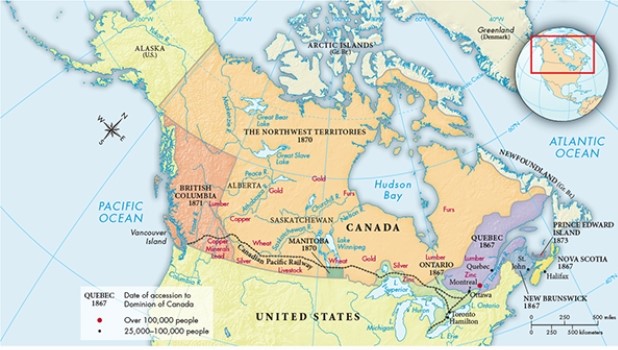
A) The railroad
B) Access to the Erie Canal
C) Significant population density
D) Proximity to the large grain-producing regions of the United States
A) The railroad
B) Access to the Erie Canal
C) Significant population density
D) Proximity to the large grain-producing regions of the United States
سؤال
سؤال
سؤال
سؤال
سؤال
سؤال
The loading of slaves into a rail car in this illustration are indicative of which of the following? 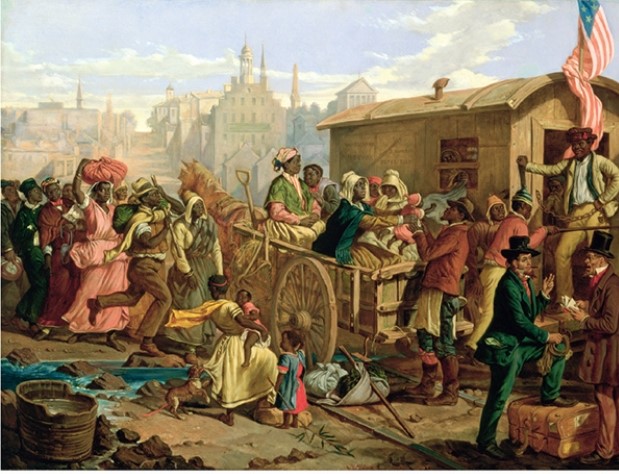
A) They have been sold and are being moved south.
B) They have been manumitted.
C) They are being moved for their safety due to the Civil War.
D) They have recently arrived from Africa.
A) They have been sold and are being moved south.
B) They have been manumitted.
C) They are being moved for their safety due to the Civil War.
D) They have recently arrived from Africa.
سؤال
سؤال
سؤال
سؤال
سؤال
سؤال
سؤال
سؤال
سؤال
سؤال
سؤال
سؤال
According to Map 27.1, "Displacement of Indigenous Peoples, 1780s-1910s," the majority of Native American lands within the boundaries of the original United States had been ceded by what year? 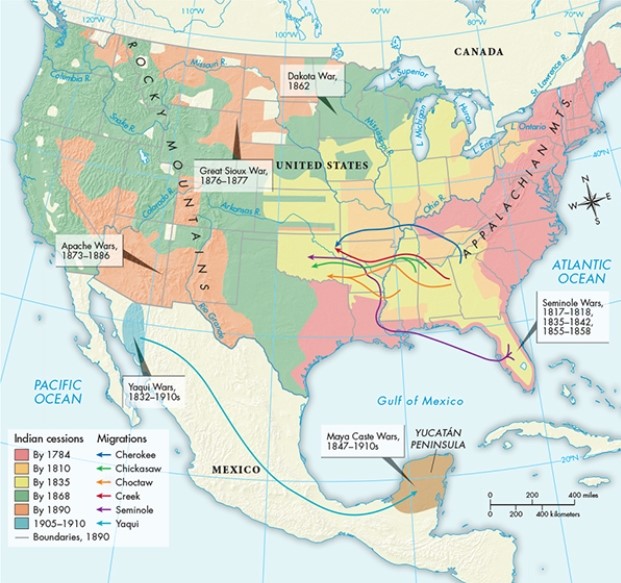
A) 1784
B) 1810
C) 1835
D) 1868
A) 1784
B) 1810
C) 1835
D) 1868
سؤال
سؤال
سؤال
سؤال
سؤال
سؤال
سؤال
سؤال
Based on Map 27.1, "Displacement of Indigenous Peoples, 1780s-1910s," the removal of the Cherokee, Chickasaw, Choctaw, Creek, and Seminole people helped facilitate the spread of which of the following? 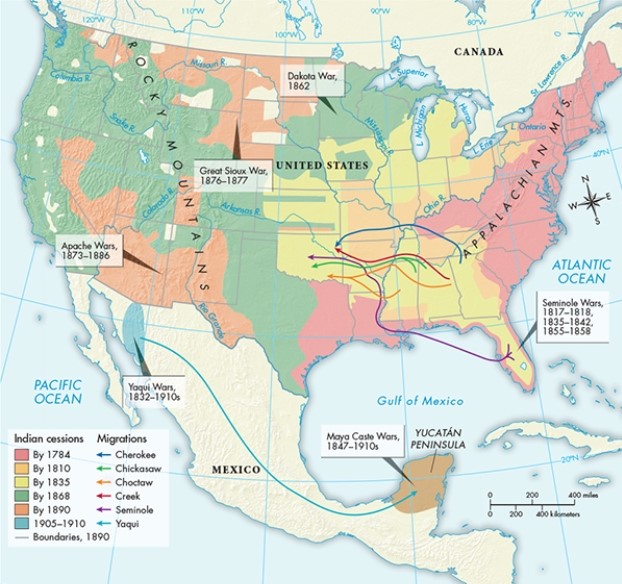
A) Disease among white Americans
B) The transcontinental railroad
C) Native American culture
D) Slavery
A) Disease among white Americans
B) The transcontinental railroad
C) Native American culture
D) Slavery
سؤال
سؤال
According to Map 27.2, "Abolition in the Americas," during which period did the largest number of countries free their slaves? 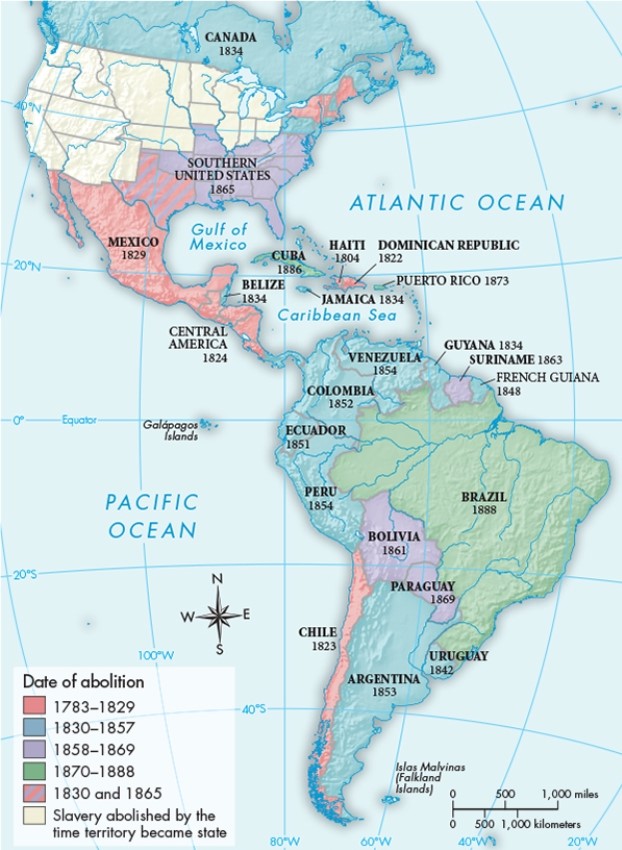
A) 1783-1829
B) 1830-1857
C) 1858-1869
D) 1870-1888
A) 1783-1829
B) 1830-1857
C) 1858-1869
D) 1870-1888
سؤال
سؤال
سؤال
سؤال
سؤال
سؤال
سؤال
سؤال
سؤال
سؤال
سؤال
سؤال
سؤال
سؤال
سؤال
سؤال
سؤال
سؤال
سؤال
سؤال
سؤال
سؤال
سؤال
سؤال
سؤال
سؤال
سؤال
سؤال
سؤال
سؤال
سؤال
سؤال
سؤال
سؤال
سؤال
سؤال
سؤال

فتح الحزمة
قم بالتسجيل لفتح البطاقات في هذه المجموعة!
Unlock Deck
Unlock Deck
1/76

العب

ملء الشاشة (f)
Deck 27: The Americas in the Age of Liberalism, 1810-1917
1
In what sense did race relations in the northern and western United States after the Civil War parallel race relations across much of Latin America?
A) In both places, race relations were largely positive.
B) In both places, marriage across racial lines was rare.
C) In both places, racial discrimination was primarily informal.
D) In both places, "Jim Crow" systems of segregation were in place.
A) In both places, race relations were largely positive.
B) In both places, marriage across racial lines was rare.
C) In both places, racial discrimination was primarily informal.
D) In both places, "Jim Crow" systems of segregation were in place.
In both places, racial discrimination was primarily informal.
2
The La Reforma changes to Mexican society in the mid-1850s tended to advance the interests of
A) the army.
B) liberal leaders.
C) conservative landowners.
D) the Catholic Church.
A) the army.
B) liberal leaders.
C) conservative landowners.
D) the Catholic Church.
liberal leaders.
3
In 1822 Emperor Pedro I began his rule of
A) Cuba.
B) Panama.
C) Brazil.
D) Colombia.
A) Cuba.
B) Panama.
C) Brazil.
D) Colombia.
Brazil.
4
Which of these was true in both colonial Spanish America and the independent states of Central and South America in 1900?
A) Land was concentrated in the hands of colonial elites.
B) Indigenous communities had enormous economic influence.
C) Retreat from the global economy produced domestic prosperity.
D) Few immigrants settled in the region.
A) Land was concentrated in the hands of colonial elites.
B) Indigenous communities had enormous economic influence.
C) Retreat from the global economy produced domestic prosperity.
D) Few immigrants settled in the region.
فتح الحزمة
افتح القفل للوصول البطاقات البالغ عددها 76 في هذه المجموعة.
فتح الحزمة
k this deck
5
After the Mexican-American War ended in 1848, Mexico ceded about what percentage of its territory to the United States?
A) 25 percent
B) 10 percent
C) 80 percent
D) 50 percent
A) 25 percent
B) 10 percent
C) 80 percent
D) 50 percent
فتح الحزمة
افتح القفل للوصول البطاقات البالغ عددها 76 في هذه المجموعة.
فتح الحزمة
k this deck
6
Cuba ended slavery in 1886, followed in 1888 by what country?
A) Colombia
B) Jamaica
C) Brazil
D) The United States
A) Colombia
B) Jamaica
C) Brazil
D) The United States
فتح الحزمة
افتح القفل للوصول البطاقات البالغ عددها 76 في هذه المجموعة.
فتح الحزمة
k this deck
7
What united the experience of slaves in Cuba, the United States, and Brazil?
A) Slavery persisted in all three nations much longer than elsewhere in the Americas.
B) Slavery was especially brutal in all three nations.
C) All three nations attempted to end slavery, but were prevented from doing so by British influence.
D) Slave rebellions were very rare in all three nations.
A) Slavery persisted in all three nations much longer than elsewhere in the Americas.
B) Slavery was especially brutal in all three nations.
C) All three nations attempted to end slavery, but were prevented from doing so by British influence.
D) Slave rebellions were very rare in all three nations.
فتح الحزمة
افتح القفل للوصول البطاقات البالغ عددها 76 في هذه المجموعة.
فتح الحزمة
k this deck
8
How did the different experience of slaves in the independence movements of Haiti and the United States shape other independence movements across the Americas?
A) Colonial elites realized that slaves needed to be freed for independence to succeed.
B) Colonial elites in societies with large unfree populations supported more gradual independence.
C) Colonial elites realized independence could not be obtained in states with large slave populations.
D) Colonial elites became determined to end slavery before independence movements began.
A) Colonial elites realized that slaves needed to be freed for independence to succeed.
B) Colonial elites in societies with large unfree populations supported more gradual independence.
C) Colonial elites realized independence could not be obtained in states with large slave populations.
D) Colonial elites became determined to end slavery before independence movements began.
فتح الحزمة
افتح القفل للوصول البطاقات البالغ عددها 76 في هذه المجموعة.
فتح الحزمة
k this deck
9
What does the fate of the La Valenciana mine in postindependence Mexico exemplify about the nation's economic development?
A) The economy became more dependent on the export of precious metals.
B) The economy withered and trade collapsed.
C) The economy became stronger and more diversified.
D) Investment by the United States was needed to strengthen the economy.
A) The economy became more dependent on the export of precious metals.
B) The economy withered and trade collapsed.
C) The economy became stronger and more diversified.
D) Investment by the United States was needed to strengthen the economy.
فتح الحزمة
افتح القفل للوصول البطاقات البالغ عددها 76 في هذه المجموعة.
فتح الحزمة
k this deck
10
What characterized the rule of caudillos in postindependence Spanish America?
A) Continued close ties to European power centers
B) Growing influence by native peoples over political systems
C) The exercise of personal charismatic leadership
D) Federal systems of balanced power
A) Continued close ties to European power centers
B) Growing influence by native peoples over political systems
C) The exercise of personal charismatic leadership
D) Federal systems of balanced power
فتح الحزمة
افتح القفل للوصول البطاقات البالغ عددها 76 في هذه المجموعة.
فتح الحزمة
k this deck
11
Aside from the large number of Europeans who migrated there, what else, according to this map, facilitated the nineteenth-century agricultural boom in midwestern Canada?
A) The railroad
B) Access to the Erie Canal
C) Significant population density
D) Proximity to the large grain-producing regions of the United States
A) The railroad
B) Access to the Erie Canal
C) Significant population density
D) Proximity to the large grain-producing regions of the United States
فتح الحزمة
افتح القفل للوصول البطاقات البالغ عددها 76 في هذه المجموعة.
فتح الحزمة
k this deck
12
How was the role of slaves in Spanish-American independence movements different from that in the United States?
A) In Spanish America, slaves mostly fought on the side of Spain.
B) In Spanish America, slaves mostly sought return to Africa.
C) In Spanish America, slaves took advantage of independence movements to move to frontiers.
D) In Spanish America, independence movements offered freedom to slaves.
A) In Spanish America, slaves mostly fought on the side of Spain.
B) In Spanish America, slaves mostly sought return to Africa.
C) In Spanish America, slaves took advantage of independence movements to move to frontiers.
D) In Spanish America, independence movements offered freedom to slaves.
فتح الحزمة
افتح القفل للوصول البطاقات البالغ عددها 76 في هذه المجموعة.
فتح الحزمة
k this deck
13
What two features characterized Mexico's political situation in the decades before the 1850s?
A) Stability and domination of the state by one family
B) Constant conflict between church and state, and native and settler populations
C) Repeated attempts to return to Spanish rule and republicanism
D) Regional rebellions and frequent changes of the presidency
A) Stability and domination of the state by one family
B) Constant conflict between church and state, and native and settler populations
C) Repeated attempts to return to Spanish rule and republicanism
D) Regional rebellions and frequent changes of the presidency
فتح الحزمة
افتح القفل للوصول البطاقات البالغ عددها 76 في هذه المجموعة.
فتح الحزمة
k this deck
14
What did the Emancipation Proclamation accomplish?
A) It outlawed slavery throughout the United States.
B) It limited slavery, allowing it only in the states that were rebelling.
C) It initiated the era of Reconstruction.
D) It freed all slaves in the rebellious states.
A) It outlawed slavery throughout the United States.
B) It limited slavery, allowing it only in the states that were rebelling.
C) It initiated the era of Reconstruction.
D) It freed all slaves in the rebellious states.
فتح الحزمة
افتح القفل للوصول البطاقات البالغ عددها 76 في هذه المجموعة.
فتح الحزمة
k this deck
15
What was the dominant ideology in the new nations of the former Spanish Empire in the century after independence?
A) Marxism
B) Liberalism
C) Clericalism
D) Republicanism
A) Marxism
B) Liberalism
C) Clericalism
D) Republicanism
فتح الحزمة
افتح القفل للوصول البطاقات البالغ عددها 76 في هذه المجموعة.
فتح الحزمة
k this deck
16
Which of these contributed to growing regional tensions over slavery in the United States in the 1840s and 1850s?
A) European imperialism
B) Immigration
C) Federal deficits
D) Westward expansion
A) European imperialism
B) Immigration
C) Federal deficits
D) Westward expansion
فتح الحزمة
افتح القفل للوصول البطاقات البالغ عددها 76 في هذه المجموعة.
فتح الحزمة
k this deck
17
The loading of slaves into a rail car in this illustration are indicative of which of the following?
A) They have been sold and are being moved south.
B) They have been manumitted.
C) They are being moved for their safety due to the Civil War.
D) They have recently arrived from Africa.
A) They have been sold and are being moved south.
B) They have been manumitted.
C) They are being moved for their safety due to the Civil War.
D) They have recently arrived from Africa.
فتح الحزمة
افتح القفل للوصول البطاقات البالغ عددها 76 في هذه المجموعة.
فتح الحزمة
k this deck
18
What strengthened the economy of the United States in the decades following independence?
A) Continued integration into the expanding British economy
B) Racial homogeneity in the United States
C) The lack of regional economic diversity
D) Uniformly strong internal markets
A) Continued integration into the expanding British economy
B) Racial homogeneity in the United States
C) The lack of regional economic diversity
D) Uniformly strong internal markets
فتح الحزمة
افتح القفل للوصول البطاقات البالغ عددها 76 في هذه المجموعة.
فتح الحزمة
k this deck
19
Why did the South secede from the Union?
A) Its leaders believed that the election of 1860 had been rigged.
B) Its leaders feared that Abraham Lincoln would abolish slavery.
C) Its leaders worried that Abraham Lincoln would seek to repeal the Fugitive Slave Act.
D) Its leaders believed Abraham Lincoln would cut tariffs on imported goods.
A) Its leaders believed that the election of 1860 had been rigged.
B) Its leaders feared that Abraham Lincoln would abolish slavery.
C) Its leaders worried that Abraham Lincoln would seek to repeal the Fugitive Slave Act.
D) Its leaders believed Abraham Lincoln would cut tariffs on imported goods.
فتح الحزمة
افتح القفل للوصول البطاقات البالغ عددها 76 في هذه المجموعة.
فتح الحزمة
k this deck
20
What two new states did the United States admit in 1845?
A) Texas and Florida
B) Arizona and New Mexico
C) Iowa and Florida
D) New Mexico and Texas
A) Texas and Florida
B) Arizona and New Mexico
C) Iowa and Florida
D) New Mexico and Texas
فتح الحزمة
افتح القفل للوصول البطاقات البالغ عددها 76 في هذه المجموعة.
فتح الحزمة
k this deck
21
By the turn of the twentieth century, the economies of Argentina, Brazil, and Mexico were characterized by
A) declining industrial production.
B) the growth of domestic industrial production.
C) the inability to provide labor for industrial production.
D) a lack of domestic capital.
A) declining industrial production.
B) the growth of domestic industrial production.
C) the inability to provide labor for industrial production.
D) a lack of domestic capital.
فتح الحزمة
افتح القفل للوصول البطاقات البالغ عددها 76 في هذه المجموعة.
فتح الحزمة
k this deck
22
The War of the Triple Alliance was fought beginning in 1865 when Paraguay
A) was attacked by Brazil.
B) declared war on Brazil, Argentina, and Uruguay.
C) attempted to end slavery.
D) defeated the combined army of its neighbors.
A) was attacked by Brazil.
B) declared war on Brazil, Argentina, and Uruguay.
C) attempted to end slavery.
D) defeated the combined army of its neighbors.
فتح الحزمة
افتح القفل للوصول البطاقات البالغ عددها 76 في هذه المجموعة.
فتح الحزمة
k this deck
23
Between 1850 and 1880, Trinidad and Jamaica experienced large-scale immigration from
A) Brazil.
B) Great Britain.
C) China.
D) South Asia.
A) Brazil.
B) Great Britain.
C) China.
D) South Asia.
فتح الحزمة
افتح القفل للوصول البطاقات البالغ عددها 76 في هذه المجموعة.
فتح الحزمة
k this deck
24
How were liberal governments in the Americas related to modernization in the region?
A) They rejected modernization.
B) They embraced economic modernization but sought to retain older cultural practices.
C) They worked hard to modernize all aspects of society.
D) They were rooted in traditional rural economic and social systems.
A) They rejected modernization.
B) They embraced economic modernization but sought to retain older cultural practices.
C) They worked hard to modernize all aspects of society.
D) They were rooted in traditional rural economic and social systems.
فتح الحزمة
افتح القفل للوصول البطاقات البالغ عددها 76 في هذه المجموعة.
فتح الحزمة
k this deck
25
What increased economic pressure on indigenous peoples and workers across the Americas in the decades following the American Civil War?
A) The strengthening of liberalism in economic systems
B) The expansion of slavery
C) The reconquest of parts of the Americas by European colonial powers
D) Population decline in most areas
A) The strengthening of liberalism in economic systems
B) The expansion of slavery
C) The reconquest of parts of the Americas by European colonial powers
D) Population decline in most areas
فتح الحزمة
افتح القفل للوصول البطاقات البالغ عددها 76 في هذه المجموعة.
فتح الحزمة
k this deck
26
By the start of the twentieth century, Brazil became the world's largest exporter of
A) oil.
B) tin and copper.
C) cattle.
D) coffee.
A) oil.
B) tin and copper.
C) cattle.
D) coffee.
فتح الحزمة
افتح القفل للوصول البطاقات البالغ عددها 76 في هذه المجموعة.
فتح الحزمة
k this deck
27
What did Porfirio Díaz consider to be his first challenge upon assuming the presidency of Mexico in 1876?
A) The establishment of a liberal constitution
B) Arranging for a peaceful succession
C) Expelling the French-installed emperor, Maximilian
D) Attracting foreign investment
A) The establishment of a liberal constitution
B) Arranging for a peaceful succession
C) Expelling the French-installed emperor, Maximilian
D) Attracting foreign investment
فتح الحزمة
افتح القفل للوصول البطاقات البالغ عددها 76 في هذه المجموعة.
فتح الحزمة
k this deck
28
What did Argentinian political philosopher Juan Bautista Alberdi argue about immigration?
A) He argued that freed slaves would make the best citizens.
B) He argued that immigrants drained precious national resources.
C) He argued that immigrants should only come from Protestant nations.
D) He argued that massive immigration would strengthen the country.
A) He argued that freed slaves would make the best citizens.
B) He argued that immigrants drained precious national resources.
C) He argued that immigrants should only come from Protestant nations.
D) He argued that massive immigration would strengthen the country.
فتح الحزمة
افتح القفل للوصول البطاقات البالغ عددها 76 في هذه المجموعة.
فتح الحزمة
k this deck
29
According to Map 27.1, "Displacement of Indigenous Peoples, 1780s-1910s," the majority of Native American lands within the boundaries of the original United States had been ceded by what year?
A) 1784
B) 1810
C) 1835
D) 1868
A) 1784
B) 1810
C) 1835
D) 1868
فتح الحزمة
افتح القفل للوصول البطاقات البالغ عددها 76 في هذه المجموعة.
فتح الحزمة
k this deck
30
In 1920, where was the largest Japanese community in the world outside of Japan?
A) The United States
B) Mexico
C) Brazil
D) Argentina
A) The United States
B) Mexico
C) Brazil
D) Argentina
فتح الحزمة
افتح القفل للوصول البطاقات البالغ عددها 76 في هذه المجموعة.
فتح الحزمة
k this deck
31
What attracted most immigrants to Canada in the 1890s?
A) Rich agricultural land in the prairies
B) Reports of gold deposits around Hudson Bay
C) The fur trade
D) Industry around Montreal
A) Rich agricultural land in the prairies
B) Reports of gold deposits around Hudson Bay
C) The fur trade
D) Industry around Montreal
فتح الحزمة
افتح القفل للوصول البطاقات البالغ عددها 76 في هذه المجموعة.
فتح الحزمة
k this deck
32
What were the long-term consequences of the Lerdo Law and the Law of Barren Lands?
A) Peasant land ownership rates increased.
B) Land ownership was concentrated into even fewer hands.
C) U.S. investors fled Mexico.
D) The Mexican economy grew at a steady rate.
A) Peasant land ownership rates increased.
B) Land ownership was concentrated into even fewer hands.
C) U.S. investors fled Mexico.
D) The Mexican economy grew at a steady rate.
فتح الحزمة
افتح القفل للوصول البطاقات البالغ عددها 76 في هذه المجموعة.
فتح الحزمة
k this deck
33
By 1910, what percentage of Mexican peasants owned no land?
A) 20
B) 40
C) 60
D) 80
A) 20
B) 40
C) 60
D) 80
فتح الحزمة
افتح القفل للوصول البطاقات البالغ عددها 76 في هذه المجموعة.
فتح الحزمة
k this deck
34
What characterized slave life in the later years of the slave system in Brazil?
A) Slaves were increasingly integrated into their master's families.
B) Slave resistance in all of its forms intensified.
C) The cost of slavery declined rapidly.
D) Many free blacks began to argue against emancipation.
A) Slaves were increasingly integrated into their master's families.
B) Slave resistance in all of its forms intensified.
C) The cost of slavery declined rapidly.
D) Many free blacks began to argue against emancipation.
فتح الحزمة
افتح القفل للوصول البطاقات البالغ عددها 76 في هذه المجموعة.
فتح الحزمة
k this deck
35
How did immigration and economic changes affect Buenos Aires by the early twentieth century?
A) The city became a backwater as other coastal towns grew.
B) Because immigration was restricted, growth was only incremental.
C) The city became a cosmopolitan metropolis of over 3.6 million.
D) Rapid growth led Argentina to relocate the capital inland.
A) The city became a backwater as other coastal towns grew.
B) Because immigration was restricted, growth was only incremental.
C) The city became a cosmopolitan metropolis of over 3.6 million.
D) Rapid growth led Argentina to relocate the capital inland.
فتح الحزمة
افتح القفل للوصول البطاقات البالغ عددها 76 في هذه المجموعة.
فتح الحزمة
k this deck
36
In the second half of the nineteenth century, Chile and Peru participated in the global economy through the export of
A) bat guano.
B) cattle.
C) slaves.
D) rubber.
A) bat guano.
B) cattle.
C) slaves.
D) rubber.
فتح الحزمة
افتح القفل للوصول البطاقات البالغ عددها 76 في هذه المجموعة.
فتح الحزمة
k this deck
37
Based on Map 27.1, "Displacement of Indigenous Peoples, 1780s-1910s," the removal of the Cherokee, Chickasaw, Choctaw, Creek, and Seminole people helped facilitate the spread of which of the following?
A) Disease among white Americans
B) The transcontinental railroad
C) Native American culture
D) Slavery
A) Disease among white Americans
B) The transcontinental railroad
C) Native American culture
D) Slavery
فتح الحزمة
افتح القفل للوصول البطاقات البالغ عددها 76 في هذه المجموعة.
فتح الحزمة
k this deck
38
Why did many industrial employers in the early twentieth century prefer to hire women?
A) Women refused to join unions.
B) Women were less likely to be injured on the job.
C) Women were more likely than men to emigrate.
D) Women's wages were much lower.
A) Women refused to join unions.
B) Women were less likely to be injured on the job.
C) Women were more likely than men to emigrate.
D) Women's wages were much lower.
فتح الحزمة
افتح القفل للوصول البطاقات البالغ عددها 76 في هذه المجموعة.
فتح الحزمة
k this deck
39
According to Map 27.2, "Abolition in the Americas," during which period did the largest number of countries free their slaves?
A) 1783-1829
B) 1830-1857
C) 1858-1869
D) 1870-1888
A) 1783-1829
B) 1830-1857
C) 1858-1869
D) 1870-1888
فتح الحزمة
افتح القفل للوصول البطاقات البالغ عددها 76 في هذه المجموعة.
فتح الحزمة
k this deck
40
When slavery was abolished in Cuba in 1886, who replaced Africans in the cane fields?
A) Chinese indentured servants
B) South Asian free laborers
C) Turkish immigrants
D) Japanese debtors
A) Chinese indentured servants
B) South Asian free laborers
C) Turkish immigrants
D) Japanese debtors
فتح الحزمة
افتح القفل للوصول البطاقات البالغ عددها 76 في هذه المجموعة.
فتح الحزمة
k this deck
41
To what did the term manifest destiny refer?
A) The growth of democracy in the United States
B) The spread of the United States over the continent of North America
C) The abolition of slavery in the United States
D) The industrialization of the United States
A) The growth of democracy in the United States
B) The spread of the United States over the continent of North America
C) The abolition of slavery in the United States
D) The industrialization of the United States
فتح الحزمة
افتح القفل للوصول البطاقات البالغ عددها 76 في هذه المجموعة.
فتح الحزمة
k this deck
42
How did ethnicity shape immigrant life in the United States at the turn of the century?
فتح الحزمة
افتح القفل للوصول البطاقات البالغ عددها 76 في هذه المجموعة.
فتح الحزمة
k this deck
43
What role did wars play in shaping the Americas politically and economically?
A) Wars slowed the development of liberal principles.
B) Wars led to political tyranny but did produce economic growth.
C) Wars were avoided to a large extent in the interest of continuing economic progress.
D) Wars shaped the social and economic order across the Americas and concentrated wealth.
A) Wars slowed the development of liberal principles.
B) Wars led to political tyranny but did produce economic growth.
C) Wars were avoided to a large extent in the interest of continuing economic progress.
D) Wars shaped the social and economic order across the Americas and concentrated wealth.
فتح الحزمة
افتح القفل للوصول البطاقات البالغ عددها 76 في هذه المجموعة.
فتح الحزمة
k this deck
44
How did emancipation for slaves develop differently across Latin and South America? Why were patterns of emancipation different?
فتح الحزمة
افتح القفل للوصول البطاقات البالغ عددها 76 في هذه المجموعة.
فتح الحزمة
k this deck
45
What were the economic and political ideas associated with liberalism? How did liberalism work in the Americas in practice?
فتح الحزمة
افتح القفل للوصول البطاقات البالغ عددها 76 في هذه المجموعة.
فتح الحزمة
k this deck
46
How did American industrial workers respond to mass immigration from the 1860s?
A) Immigrants were welcomed because they tended to increase wage rates.
B) Immigrants were welcomed because they brought European traditions of unionization.
C) Immigration led to a decline in cultural and religious traditions among workers.
D) Immigration increased racial and religious antagonisms among workers.
A) Immigrants were welcomed because they tended to increase wage rates.
B) Immigrants were welcomed because they brought European traditions of unionization.
C) Immigration led to a decline in cultural and religious traditions among workers.
D) Immigration increased racial and religious antagonisms among workers.
فتح الحزمة
افتح القفل للوصول البطاقات البالغ عددها 76 في هذه المجموعة.
فتح الحزمة
k this deck
47
How was slavery abolished in the United States, and how did its abolition affect regional development?
فتح الحزمة
افتح القفل للوصول البطاقات البالغ عددها 76 في هذه المجموعة.
فتح الحزمة
k this deck
48
What defined neocolonialism in Latin America, and why did it develop instead of democracies?
فتح الحزمة
افتح القفل للوصول البطاقات البالغ عددها 76 في هذه المجموعة.
فتح الحزمة
k this deck
49
Describe the problems of the urban poor and the problems of cities in general.
فتح الحزمة
افتح القفل للوصول البطاقات البالغ عددها 76 في هذه المجموعة.
فتح الحزمة
k this deck
50
What percentage of the American population lived in cities by 1900?
A) Almost 10 percent
B) Almost 30 percent
C) Almost 40 percent
D) Almost 70 percent
A) Almost 10 percent
B) Almost 30 percent
C) Almost 40 percent
D) Almost 70 percent
فتح الحزمة
افتح القفل للوصول البطاقات البالغ عددها 76 في هذه المجموعة.
فتح الحزمة
k this deck
51
Why did American involvement in Latin America intensify at the end of the nineteenth century?
فتح الحزمة
افتح القفل للوصول البطاقات البالغ عددها 76 في هذه المجموعة.
فتح الحزمة
k this deck
52
Which of these was a consequence of the Ten Years' War?
A) Spanish colonial control expanded dramatically.
B) Cuba gained its independence from Spain.
C) The Cuban countryside was devastated.
D) Cuba signed a long-term alliance with Mexico.
A) Spanish colonial control expanded dramatically.
B) Cuba gained its independence from Spain.
C) The Cuban countryside was devastated.
D) Cuba signed a long-term alliance with Mexico.
فتح الحزمة
افتح القفل للوصول البطاقات البالغ عددها 76 في هذه المجموعة.
فتح الحزمة
k this deck
53
Which of these was triggered by the sinking of the U.S.S. Maine?
A) The Spanish-American War
B) The Ten Years' War
C) The U.S. Civil War
D) The U.S. invasion of Mexico
A) The Spanish-American War
B) The Ten Years' War
C) The U.S. Civil War
D) The U.S. invasion of Mexico
فتح الحزمة
افتح القفل للوصول البطاقات البالغ عددها 76 في هذه المجموعة.
فتح الحزمة
k this deck
54
What was significant about the 1823 Monroe Doctrine?
A) It clarified America's interest in controlling Canada.
B) It identified France as America's most important ally.
C) It proclaimed the principle of U.S. noninterference in the affairs of Latin America.
D) It proclaimed America's determination to keep European influence out of Latin America.
A) It clarified America's interest in controlling Canada.
B) It identified France as America's most important ally.
C) It proclaimed the principle of U.S. noninterference in the affairs of Latin America.
D) It proclaimed America's determination to keep European influence out of Latin America.
فتح الحزمة
افتح القفل للوصول البطاقات البالغ عددها 76 في هذه المجموعة.
فتح الحزمة
k this deck
55
Who financed and controlled the Panama Canal?
A) Panama
B) The United States
C) Coalition of Latin America
D) Mexico
A) Panama
B) The United States
C) Coalition of Latin America
D) Mexico
فتح الحزمة
افتح القفل للوصول البطاقات البالغ عددها 76 في هذه المجموعة.
فتح الحزمة
k this deck
56
By 1890, what was characteristic of American expansionist efforts?
A) They were directed outward, as the frontier was closed.
B) They had halted as industry expanded.
C) They were restricted to the Caribbean.
D) They were primarily aimed at gaining control of China.
A) They were directed outward, as the frontier was closed.
B) They had halted as industry expanded.
C) They were restricted to the Caribbean.
D) They were primarily aimed at gaining control of China.
فتح الحزمة
افتح القفل للوصول البطاقات البالغ عددها 76 في هذه المجموعة.
فتح الحزمة
k this deck
57
Why did Latin American countries encourage immigration? Where did immigrants come from?
فتح الحزمة
افتح القفل للوصول البطاقات البالغ عددها 76 في هذه المجموعة.
فتح الحزمة
k this deck
58
The U.S. government gave 130 million acres of land to what industry in the nineteenth century?
A) The railroad industry
B) The oil industry
C) The textile industry
D) The silver-mining industry
A) The railroad industry
B) The oil industry
C) The textile industry
D) The silver-mining industry
فتح الحزمة
افتح القفل للوصول البطاقات البالغ عددها 76 في هذه المجموعة.
فتح الحزمة
k this deck
59
What steps did General Porfirio Díaz take to concentrate land ownership in nineteenth-century Mexico? What repercussions did this change in ownership have for the natives?
فتح الحزمة
افتح القفل للوصول البطاقات البالغ عددها 76 في هذه المجموعة.
فتح الحزمة
k this deck
60
What advantages did immigrants offer to their host societies in the Americas? What problems came with immigration?
فتح الحزمة
افتح القفل للوصول البطاقات البالغ عددها 76 في هذه المجموعة.
فتح الحزمة
k this deck
61
Use the following to answer questions :
Circum-Caribbean
A)The establishment of political and economic influence over regions after they have ceased to be formal colonies.
B)The doctrine that the United States should absorb the territory spanning from the original Atlantic states to the Pacific Ocean..
C)Laws passed across the nineteenth-century Americas that instituted a gradual form of abolition through which children born to slaves gained their freedom.
D)In Latin America, the small number of individuals and families that monopolized political power and economic resources since the colonial era.
E)An ideology that advocated placing power in the hands of workers' unions.
F)An addition to the Monroe Doctrine stating that the United States would correct what it saw as "chronic wrongdoing" in neighboring countries.
G)The region encompassing the Antilles as well as the lands that bound the Caribbean Sea in Central America and northern South America.
H)The 1848 treaty between the United States and Mexico in which Mexico ceded large tracts of land to the United States.
I)Document written by Zapatistas during the Mexican Revolution that demanded the government return all land, forests, and waters taken from rural communities.
J)The regime of Porfirio Díaz, who presided in Mexico from 1876 to 1880 and again from 1884 to 1911.
K)Government by figures who rule through personal charisma and the support of armed followers in Latin America.
L)An 1856 Mexican law that barred corporate landholdings.
M)An 1823 proclamation that established a U.S. sphere of influence over the Americas by opposing European imperialism on the continent.
N)Vast landed estates in Latin America.
Circum-Caribbean
A)The establishment of political and economic influence over regions after they have ceased to be formal colonies.
B)The doctrine that the United States should absorb the territory spanning from the original Atlantic states to the Pacific Ocean..
C)Laws passed across the nineteenth-century Americas that instituted a gradual form of abolition through which children born to slaves gained their freedom.
D)In Latin America, the small number of individuals and families that monopolized political power and economic resources since the colonial era.
E)An ideology that advocated placing power in the hands of workers' unions.
F)An addition to the Monroe Doctrine stating that the United States would correct what it saw as "chronic wrongdoing" in neighboring countries.
G)The region encompassing the Antilles as well as the lands that bound the Caribbean Sea in Central America and northern South America.
H)The 1848 treaty between the United States and Mexico in which Mexico ceded large tracts of land to the United States.
I)Document written by Zapatistas during the Mexican Revolution that demanded the government return all land, forests, and waters taken from rural communities.
J)The regime of Porfirio Díaz, who presided in Mexico from 1876 to 1880 and again from 1884 to 1911.
K)Government by figures who rule through personal charisma and the support of armed followers in Latin America.
L)An 1856 Mexican law that barred corporate landholdings.
M)An 1823 proclamation that established a U.S. sphere of influence over the Americas by opposing European imperialism on the continent.
N)Vast landed estates in Latin America.
فتح الحزمة
افتح القفل للوصول البطاقات البالغ عددها 76 في هذه المجموعة.
فتح الحزمة
k this deck
62
How did immigration shape Canada's development?
فتح الحزمة
افتح القفل للوصول البطاقات البالغ عددها 76 في هذه المجموعة.
فتح الحزمة
k this deck
63
Use the following to answer questions :
Lerdo Law
A)The establishment of political and economic influence over regions after they have ceased to be formal colonies.
B)The doctrine that the United States should absorb the territory spanning from the original Atlantic states to the Pacific Ocean..
C)Laws passed across the nineteenth-century Americas that instituted a gradual form of abolition through which children born to slaves gained their freedom.
D)In Latin America, the small number of individuals and families that monopolized political power and economic resources since the colonial era.
E)An ideology that advocated placing power in the hands of workers' unions.
F)An addition to the Monroe Doctrine stating that the United States would correct what it saw as "chronic wrongdoing" in neighboring countries.
G)The region encompassing the Antilles as well as the lands that bound the Caribbean Sea in Central America and northern South America.
H)The 1848 treaty between the United States and Mexico in which Mexico ceded large tracts of land to the United States.
I)Document written by Zapatistas during the Mexican Revolution that demanded the government return all land, forests, and waters taken from rural communities.
J)The regime of Porfirio Díaz, who presided in Mexico from 1876 to 1880 and again from 1884 to 1911.
K)Government by figures who rule through personal charisma and the support of armed followers in Latin America.
L)An 1856 Mexican law that barred corporate landholdings.
M)An 1823 proclamation that established a U.S. sphere of influence over the Americas by opposing European imperialism on the continent.
N)Vast landed estates in Latin America.
Lerdo Law
A)The establishment of political and economic influence over regions after they have ceased to be formal colonies.
B)The doctrine that the United States should absorb the territory spanning from the original Atlantic states to the Pacific Ocean..
C)Laws passed across the nineteenth-century Americas that instituted a gradual form of abolition through which children born to slaves gained their freedom.
D)In Latin America, the small number of individuals and families that monopolized political power and economic resources since the colonial era.
E)An ideology that advocated placing power in the hands of workers' unions.
F)An addition to the Monroe Doctrine stating that the United States would correct what it saw as "chronic wrongdoing" in neighboring countries.
G)The region encompassing the Antilles as well as the lands that bound the Caribbean Sea in Central America and northern South America.
H)The 1848 treaty between the United States and Mexico in which Mexico ceded large tracts of land to the United States.
I)Document written by Zapatistas during the Mexican Revolution that demanded the government return all land, forests, and waters taken from rural communities.
J)The regime of Porfirio Díaz, who presided in Mexico from 1876 to 1880 and again from 1884 to 1911.
K)Government by figures who rule through personal charisma and the support of armed followers in Latin America.
L)An 1856 Mexican law that barred corporate landholdings.
M)An 1823 proclamation that established a U.S. sphere of influence over the Americas by opposing European imperialism on the continent.
N)Vast landed estates in Latin America.
فتح الحزمة
افتح القفل للوصول البطاقات البالغ عددها 76 في هذه المجموعة.
فتح الحزمة
k this deck
64
In many respects, the economies and societies of Latin America and North America were shaped by immigration. Discuss this contention critically, being sure to note both the distinctive and the similar features in the history of immigration to the United States, Canada, and Latin America.
فتح الحزمة
افتح القفل للوصول البطاقات البالغ عددها 76 في هذه المجموعة.
فتح الحزمة
k this deck
65
Use the following to answer questions :
Plan de Ayala
A)The establishment of political and economic influence over regions after they have ceased to be formal colonies.
B)The doctrine that the United States should absorb the territory spanning from the original Atlantic states to the Pacific Ocean..
C)Laws passed across the nineteenth-century Americas that instituted a gradual form of abolition through which children born to slaves gained their freedom.
D)In Latin America, the small number of individuals and families that monopolized political power and economic resources since the colonial era.
E)An ideology that advocated placing power in the hands of workers' unions.
F)An addition to the Monroe Doctrine stating that the United States would correct what it saw as "chronic wrongdoing" in neighboring countries.
G)The region encompassing the Antilles as well as the lands that bound the Caribbean Sea in Central America and northern South America.
H)The 1848 treaty between the United States and Mexico in which Mexico ceded large tracts of land to the United States.
I)Document written by Zapatistas during the Mexican Revolution that demanded the government return all land, forests, and waters taken from rural communities.
J)The regime of Porfirio Díaz, who presided in Mexico from 1876 to 1880 and again from 1884 to 1911.
K)Government by figures who rule through personal charisma and the support of armed followers in Latin America.
L)An 1856 Mexican law that barred corporate landholdings.
M)An 1823 proclamation that established a U.S. sphere of influence over the Americas by opposing European imperialism on the continent.
N)Vast landed estates in Latin America.
Plan de Ayala
A)The establishment of political and economic influence over regions after they have ceased to be formal colonies.
B)The doctrine that the United States should absorb the territory spanning from the original Atlantic states to the Pacific Ocean..
C)Laws passed across the nineteenth-century Americas that instituted a gradual form of abolition through which children born to slaves gained their freedom.
D)In Latin America, the small number of individuals and families that monopolized political power and economic resources since the colonial era.
E)An ideology that advocated placing power in the hands of workers' unions.
F)An addition to the Monroe Doctrine stating that the United States would correct what it saw as "chronic wrongdoing" in neighboring countries.
G)The region encompassing the Antilles as well as the lands that bound the Caribbean Sea in Central America and northern South America.
H)The 1848 treaty between the United States and Mexico in which Mexico ceded large tracts of land to the United States.
I)Document written by Zapatistas during the Mexican Revolution that demanded the government return all land, forests, and waters taken from rural communities.
J)The regime of Porfirio Díaz, who presided in Mexico from 1876 to 1880 and again from 1884 to 1911.
K)Government by figures who rule through personal charisma and the support of armed followers in Latin America.
L)An 1856 Mexican law that barred corporate landholdings.
M)An 1823 proclamation that established a U.S. sphere of influence over the Americas by opposing European imperialism on the continent.
N)Vast landed estates in Latin America.
فتح الحزمة
افتح القفل للوصول البطاقات البالغ عددها 76 في هذه المجموعة.
فتح الحزمة
k this deck
66
Use the following to answer questions :
neocolonialism
A)The establishment of political and economic influence over regions after they have ceased to be formal colonies.
B)The doctrine that the United States should absorb the territory spanning from the original Atlantic states to the Pacific Ocean..
C)Laws passed across the nineteenth-century Americas that instituted a gradual form of abolition through which children born to slaves gained their freedom.
D)In Latin America, the small number of individuals and families that monopolized political power and economic resources since the colonial era.
E)An ideology that advocated placing power in the hands of workers' unions.
F)An addition to the Monroe Doctrine stating that the United States would correct what it saw as "chronic wrongdoing" in neighboring countries.
G)The region encompassing the Antilles as well as the lands that bound the Caribbean Sea in Central America and northern South America.
H)The 1848 treaty between the United States and Mexico in which Mexico ceded large tracts of land to the United States.
I)Document written by Zapatistas during the Mexican Revolution that demanded the government return all land, forests, and waters taken from rural communities.
J)The regime of Porfirio Díaz, who presided in Mexico from 1876 to 1880 and again from 1884 to 1911.
K)Government by figures who rule through personal charisma and the support of armed followers in Latin America.
L)An 1856 Mexican law that barred corporate landholdings.
M)An 1823 proclamation that established a U.S. sphere of influence over the Americas by opposing European imperialism on the continent.
N)Vast landed estates in Latin America.
neocolonialism
A)The establishment of political and economic influence over regions after they have ceased to be formal colonies.
B)The doctrine that the United States should absorb the territory spanning from the original Atlantic states to the Pacific Ocean..
C)Laws passed across the nineteenth-century Americas that instituted a gradual form of abolition through which children born to slaves gained their freedom.
D)In Latin America, the small number of individuals and families that monopolized political power and economic resources since the colonial era.
E)An ideology that advocated placing power in the hands of workers' unions.
F)An addition to the Monroe Doctrine stating that the United States would correct what it saw as "chronic wrongdoing" in neighboring countries.
G)The region encompassing the Antilles as well as the lands that bound the Caribbean Sea in Central America and northern South America.
H)The 1848 treaty between the United States and Mexico in which Mexico ceded large tracts of land to the United States.
I)Document written by Zapatistas during the Mexican Revolution that demanded the government return all land, forests, and waters taken from rural communities.
J)The regime of Porfirio Díaz, who presided in Mexico from 1876 to 1880 and again from 1884 to 1911.
K)Government by figures who rule through personal charisma and the support of armed followers in Latin America.
L)An 1856 Mexican law that barred corporate landholdings.
M)An 1823 proclamation that established a U.S. sphere of influence over the Americas by opposing European imperialism on the continent.
N)Vast landed estates in Latin America.
فتح الحزمة
افتح القفل للوصول البطاقات البالغ عددها 76 في هذه المجموعة.
فتح الحزمة
k this deck
67
Use the following to answer questions :
Roosevelt Corollary
A)The establishment of political and economic influence over regions after they have ceased to be formal colonies.
B)The doctrine that the United States should absorb the territory spanning from the original Atlantic states to the Pacific Ocean..
C)Laws passed across the nineteenth-century Americas that instituted a gradual form of abolition through which children born to slaves gained their freedom.
D)In Latin America, the small number of individuals and families that monopolized political power and economic resources since the colonial era.
E)An ideology that advocated placing power in the hands of workers' unions.
F)An addition to the Monroe Doctrine stating that the United States would correct what it saw as "chronic wrongdoing" in neighboring countries.
G)The region encompassing the Antilles as well as the lands that bound the Caribbean Sea in Central America and northern South America.
H)The 1848 treaty between the United States and Mexico in which Mexico ceded large tracts of land to the United States.
I)Document written by Zapatistas during the Mexican Revolution that demanded the government return all land, forests, and waters taken from rural communities.
J)The regime of Porfirio Díaz, who presided in Mexico from 1876 to 1880 and again from 1884 to 1911.
K)Government by figures who rule through personal charisma and the support of armed followers in Latin America.
L)An 1856 Mexican law that barred corporate landholdings.
M)An 1823 proclamation that established a U.S. sphere of influence over the Americas by opposing European imperialism on the continent.
N)Vast landed estates in Latin America.
Roosevelt Corollary
A)The establishment of political and economic influence over regions after they have ceased to be formal colonies.
B)The doctrine that the United States should absorb the territory spanning from the original Atlantic states to the Pacific Ocean..
C)Laws passed across the nineteenth-century Americas that instituted a gradual form of abolition through which children born to slaves gained their freedom.
D)In Latin America, the small number of individuals and families that monopolized political power and economic resources since the colonial era.
E)An ideology that advocated placing power in the hands of workers' unions.
F)An addition to the Monroe Doctrine stating that the United States would correct what it saw as "chronic wrongdoing" in neighboring countries.
G)The region encompassing the Antilles as well as the lands that bound the Caribbean Sea in Central America and northern South America.
H)The 1848 treaty between the United States and Mexico in which Mexico ceded large tracts of land to the United States.
I)Document written by Zapatistas during the Mexican Revolution that demanded the government return all land, forests, and waters taken from rural communities.
J)The regime of Porfirio Díaz, who presided in Mexico from 1876 to 1880 and again from 1884 to 1911.
K)Government by figures who rule through personal charisma and the support of armed followers in Latin America.
L)An 1856 Mexican law that barred corporate landholdings.
M)An 1823 proclamation that established a U.S. sphere of influence over the Americas by opposing European imperialism on the continent.
N)Vast landed estates in Latin America.
فتح الحزمة
افتح القفل للوصول البطاقات البالغ عددها 76 في هذه المجموعة.
فتح الحزمة
k this deck
68
Use the following to answer questions :
Treaty of Guadalupe Hidalgo
A)The establishment of political and economic influence over regions after they have ceased to be formal colonies.
B)The doctrine that the United States should absorb the territory spanning from the original Atlantic states to the Pacific Ocean..
C)Laws passed across the nineteenth-century Americas that instituted a gradual form of abolition through which children born to slaves gained their freedom.
D)In Latin America, the small number of individuals and families that monopolized political power and economic resources since the colonial era.
E)An ideology that advocated placing power in the hands of workers' unions.
F)An addition to the Monroe Doctrine stating that the United States would correct what it saw as "chronic wrongdoing" in neighboring countries.
G)The region encompassing the Antilles as well as the lands that bound the Caribbean Sea in Central America and northern South America.
H)The 1848 treaty between the United States and Mexico in which Mexico ceded large tracts of land to the United States.
I)Document written by Zapatistas during the Mexican Revolution that demanded the government return all land, forests, and waters taken from rural communities.
J)The regime of Porfirio Díaz, who presided in Mexico from 1876 to 1880 and again from 1884 to 1911.
K)Government by figures who rule through personal charisma and the support of armed followers in Latin America.
L)An 1856 Mexican law that barred corporate landholdings.
M)An 1823 proclamation that established a U.S. sphere of influence over the Americas by opposing European imperialism on the continent.
N)Vast landed estates in Latin America.
Treaty of Guadalupe Hidalgo
A)The establishment of political and economic influence over regions after they have ceased to be formal colonies.
B)The doctrine that the United States should absorb the territory spanning from the original Atlantic states to the Pacific Ocean..
C)Laws passed across the nineteenth-century Americas that instituted a gradual form of abolition through which children born to slaves gained their freedom.
D)In Latin America, the small number of individuals and families that monopolized political power and economic resources since the colonial era.
E)An ideology that advocated placing power in the hands of workers' unions.
F)An addition to the Monroe Doctrine stating that the United States would correct what it saw as "chronic wrongdoing" in neighboring countries.
G)The region encompassing the Antilles as well as the lands that bound the Caribbean Sea in Central America and northern South America.
H)The 1848 treaty between the United States and Mexico in which Mexico ceded large tracts of land to the United States.
I)Document written by Zapatistas during the Mexican Revolution that demanded the government return all land, forests, and waters taken from rural communities.
J)The regime of Porfirio Díaz, who presided in Mexico from 1876 to 1880 and again from 1884 to 1911.
K)Government by figures who rule through personal charisma and the support of armed followers in Latin America.
L)An 1856 Mexican law that barred corporate landholdings.
M)An 1823 proclamation that established a U.S. sphere of influence over the Americas by opposing European imperialism on the continent.
N)Vast landed estates in Latin America.
فتح الحزمة
افتح القفل للوصول البطاقات البالغ عددها 76 في هذه المجموعة.
فتح الحزمة
k this deck
69
Use the following to answer questions :
free womb laws
A)The establishment of political and economic influence over regions after they have ceased to be formal colonies.
B)The doctrine that the United States should absorb the territory spanning from the original Atlantic states to the Pacific Ocean..
C)Laws passed across the nineteenth-century Americas that instituted a gradual form of abolition through which children born to slaves gained their freedom.
D)In Latin America, the small number of individuals and families that monopolized political power and economic resources since the colonial era.
E)An ideology that advocated placing power in the hands of workers' unions.
F)An addition to the Monroe Doctrine stating that the United States would correct what it saw as "chronic wrongdoing" in neighboring countries.
G)The region encompassing the Antilles as well as the lands that bound the Caribbean Sea in Central America and northern South America.
H)The 1848 treaty between the United States and Mexico in which Mexico ceded large tracts of land to the United States.
I)Document written by Zapatistas during the Mexican Revolution that demanded the government return all land, forests, and waters taken from rural communities.
J)The regime of Porfirio Díaz, who presided in Mexico from 1876 to 1880 and again from 1884 to 1911.
K)Government by figures who rule through personal charisma and the support of armed followers in Latin America.
L)An 1856 Mexican law that barred corporate landholdings.
M)An 1823 proclamation that established a U.S. sphere of influence over the Americas by opposing European imperialism on the continent.
N)Vast landed estates in Latin America.
free womb laws
A)The establishment of political and economic influence over regions after they have ceased to be formal colonies.
B)The doctrine that the United States should absorb the territory spanning from the original Atlantic states to the Pacific Ocean..
C)Laws passed across the nineteenth-century Americas that instituted a gradual form of abolition through which children born to slaves gained their freedom.
D)In Latin America, the small number of individuals and families that monopolized political power and economic resources since the colonial era.
E)An ideology that advocated placing power in the hands of workers' unions.
F)An addition to the Monroe Doctrine stating that the United States would correct what it saw as "chronic wrongdoing" in neighboring countries.
G)The region encompassing the Antilles as well as the lands that bound the Caribbean Sea in Central America and northern South America.
H)The 1848 treaty between the United States and Mexico in which Mexico ceded large tracts of land to the United States.
I)Document written by Zapatistas during the Mexican Revolution that demanded the government return all land, forests, and waters taken from rural communities.
J)The regime of Porfirio Díaz, who presided in Mexico from 1876 to 1880 and again from 1884 to 1911.
K)Government by figures who rule through personal charisma and the support of armed followers in Latin America.
L)An 1856 Mexican law that barred corporate landholdings.
M)An 1823 proclamation that established a U.S. sphere of influence over the Americas by opposing European imperialism on the continent.
N)Vast landed estates in Latin America.
فتح الحزمة
افتح القفل للوصول البطاقات البالغ عددها 76 في هذه المجموعة.
فتح الحزمة
k this deck
70
Use the following to answer questions :
caudillismo
A)The establishment of political and economic influence over regions after they have ceased to be formal colonies.
B)The doctrine that the United States should absorb the territory spanning from the original Atlantic states to the Pacific Ocean..
C)Laws passed across the nineteenth-century Americas that instituted a gradual form of abolition through which children born to slaves gained their freedom.
D)In Latin America, the small number of individuals and families that monopolized political power and economic resources since the colonial era.
E)An ideology that advocated placing power in the hands of workers' unions.
F)An addition to the Monroe Doctrine stating that the United States would correct what it saw as "chronic wrongdoing" in neighboring countries.
G)The region encompassing the Antilles as well as the lands that bound the Caribbean Sea in Central America and northern South America.
H)The 1848 treaty between the United States and Mexico in which Mexico ceded large tracts of land to the United States.
I)Document written by Zapatistas during the Mexican Revolution that demanded the government return all land, forests, and waters taken from rural communities.
J)The regime of Porfirio Díaz, who presided in Mexico from 1876 to 1880 and again from 1884 to 1911.
K)Government by figures who rule through personal charisma and the support of armed followers in Latin America.
L)An 1856 Mexican law that barred corporate landholdings.
M)An 1823 proclamation that established a U.S. sphere of influence over the Americas by opposing European imperialism on the continent.
N)Vast landed estates in Latin America.
caudillismo
A)The establishment of political and economic influence over regions after they have ceased to be formal colonies.
B)The doctrine that the United States should absorb the territory spanning from the original Atlantic states to the Pacific Ocean..
C)Laws passed across the nineteenth-century Americas that instituted a gradual form of abolition through which children born to slaves gained their freedom.
D)In Latin America, the small number of individuals and families that monopolized political power and economic resources since the colonial era.
E)An ideology that advocated placing power in the hands of workers' unions.
F)An addition to the Monroe Doctrine stating that the United States would correct what it saw as "chronic wrongdoing" in neighboring countries.
G)The region encompassing the Antilles as well as the lands that bound the Caribbean Sea in Central America and northern South America.
H)The 1848 treaty between the United States and Mexico in which Mexico ceded large tracts of land to the United States.
I)Document written by Zapatistas during the Mexican Revolution that demanded the government return all land, forests, and waters taken from rural communities.
J)The regime of Porfirio Díaz, who presided in Mexico from 1876 to 1880 and again from 1884 to 1911.
K)Government by figures who rule through personal charisma and the support of armed followers in Latin America.
L)An 1856 Mexican law that barred corporate landholdings.
M)An 1823 proclamation that established a U.S. sphere of influence over the Americas by opposing European imperialism on the continent.
N)Vast landed estates in Latin America.
فتح الحزمة
افتح القفل للوصول البطاقات البالغ عددها 76 في هذه المجموعة.
فتح الحزمة
k this deck
71
Use the following to answer questions :
latifundios
A)The establishment of political and economic influence over regions after they have ceased to be formal colonies.
B)The doctrine that the United States should absorb the territory spanning from the original Atlantic states to the Pacific Ocean..
C)Laws passed across the nineteenth-century Americas that instituted a gradual form of abolition through which children born to slaves gained their freedom.
D)In Latin America, the small number of individuals and families that monopolized political power and economic resources since the colonial era.
E)An ideology that advocated placing power in the hands of workers' unions.
F)An addition to the Monroe Doctrine stating that the United States would correct what it saw as "chronic wrongdoing" in neighboring countries.
G)The region encompassing the Antilles as well as the lands that bound the Caribbean Sea in Central America and northern South America.
H)The 1848 treaty between the United States and Mexico in which Mexico ceded large tracts of land to the United States.
I)Document written by Zapatistas during the Mexican Revolution that demanded the government return all land, forests, and waters taken from rural communities.
J)The regime of Porfirio Díaz, who presided in Mexico from 1876 to 1880 and again from 1884 to 1911.
K)Government by figures who rule through personal charisma and the support of armed followers in Latin America.
L)An 1856 Mexican law that barred corporate landholdings.
M)An 1823 proclamation that established a U.S. sphere of influence over the Americas by opposing European imperialism on the continent.
N)Vast landed estates in Latin America.
latifundios
A)The establishment of political and economic influence over regions after they have ceased to be formal colonies.
B)The doctrine that the United States should absorb the territory spanning from the original Atlantic states to the Pacific Ocean..
C)Laws passed across the nineteenth-century Americas that instituted a gradual form of abolition through which children born to slaves gained their freedom.
D)In Latin America, the small number of individuals and families that monopolized political power and economic resources since the colonial era.
E)An ideology that advocated placing power in the hands of workers' unions.
F)An addition to the Monroe Doctrine stating that the United States would correct what it saw as "chronic wrongdoing" in neighboring countries.
G)The region encompassing the Antilles as well as the lands that bound the Caribbean Sea in Central America and northern South America.
H)The 1848 treaty between the United States and Mexico in which Mexico ceded large tracts of land to the United States.
I)Document written by Zapatistas during the Mexican Revolution that demanded the government return all land, forests, and waters taken from rural communities.
J)The regime of Porfirio Díaz, who presided in Mexico from 1876 to 1880 and again from 1884 to 1911.
K)Government by figures who rule through personal charisma and the support of armed followers in Latin America.
L)An 1856 Mexican law that barred corporate landholdings.
M)An 1823 proclamation that established a U.S. sphere of influence over the Americas by opposing European imperialism on the continent.
N)Vast landed estates in Latin America.
فتح الحزمة
افتح القفل للوصول البطاقات البالغ عددها 76 في هذه المجموعة.
فتح الحزمة
k this deck
72
Use the following to answer questions :
Porfiriato
A)The establishment of political and economic influence over regions after they have ceased to be formal colonies.
B)The doctrine that the United States should absorb the territory spanning from the original Atlantic states to the Pacific Ocean..
C)Laws passed across the nineteenth-century Americas that instituted a gradual form of abolition through which children born to slaves gained their freedom.
D)In Latin America, the small number of individuals and families that monopolized political power and economic resources since the colonial era.
E)An ideology that advocated placing power in the hands of workers' unions.
F)An addition to the Monroe Doctrine stating that the United States would correct what it saw as "chronic wrongdoing" in neighboring countries.
G)The region encompassing the Antilles as well as the lands that bound the Caribbean Sea in Central America and northern South America.
H)The 1848 treaty between the United States and Mexico in which Mexico ceded large tracts of land to the United States.
I)Document written by Zapatistas during the Mexican Revolution that demanded the government return all land, forests, and waters taken from rural communities.
J)The regime of Porfirio Díaz, who presided in Mexico from 1876 to 1880 and again from 1884 to 1911.
K)Government by figures who rule through personal charisma and the support of armed followers in Latin America.
L)An 1856 Mexican law that barred corporate landholdings.
M)An 1823 proclamation that established a U.S. sphere of influence over the Americas by opposing European imperialism on the continent.
N)Vast landed estates in Latin America.
Porfiriato
A)The establishment of political and economic influence over regions after they have ceased to be formal colonies.
B)The doctrine that the United States should absorb the territory spanning from the original Atlantic states to the Pacific Ocean..
C)Laws passed across the nineteenth-century Americas that instituted a gradual form of abolition through which children born to slaves gained their freedom.
D)In Latin America, the small number of individuals and families that monopolized political power and economic resources since the colonial era.
E)An ideology that advocated placing power in the hands of workers' unions.
F)An addition to the Monroe Doctrine stating that the United States would correct what it saw as "chronic wrongdoing" in neighboring countries.
G)The region encompassing the Antilles as well as the lands that bound the Caribbean Sea in Central America and northern South America.
H)The 1848 treaty between the United States and Mexico in which Mexico ceded large tracts of land to the United States.
I)Document written by Zapatistas during the Mexican Revolution that demanded the government return all land, forests, and waters taken from rural communities.
J)The regime of Porfirio Díaz, who presided in Mexico from 1876 to 1880 and again from 1884 to 1911.
K)Government by figures who rule through personal charisma and the support of armed followers in Latin America.
L)An 1856 Mexican law that barred corporate landholdings.
M)An 1823 proclamation that established a U.S. sphere of influence over the Americas by opposing European imperialism on the continent.
N)Vast landed estates in Latin America.
فتح الحزمة
افتح القفل للوصول البطاقات البالغ عددها 76 في هذه المجموعة.
فتح الحزمة
k this deck
73
Use the following to answer questions :
anarcho-syndicalism
A)The establishment of political and economic influence over regions after they have ceased to be formal colonies.
B)The doctrine that the United States should absorb the territory spanning from the original Atlantic states to the Pacific Ocean..
C)Laws passed across the nineteenth-century Americas that instituted a gradual form of abolition through which children born to slaves gained their freedom.
D)In Latin America, the small number of individuals and families that monopolized political power and economic resources since the colonial era.
E)An ideology that advocated placing power in the hands of workers' unions.
F)An addition to the Monroe Doctrine stating that the United States would correct what it saw as "chronic wrongdoing" in neighboring countries.
G)The region encompassing the Antilles as well as the lands that bound the Caribbean Sea in Central America and northern South America.
H)The 1848 treaty between the United States and Mexico in which Mexico ceded large tracts of land to the United States.
I)Document written by Zapatistas during the Mexican Revolution that demanded the government return all land, forests, and waters taken from rural communities.
J)The regime of Porfirio Díaz, who presided in Mexico from 1876 to 1880 and again from 1884 to 1911.
K)Government by figures who rule through personal charisma and the support of armed followers in Latin America.
L)An 1856 Mexican law that barred corporate landholdings.
M)An 1823 proclamation that established a U.S. sphere of influence over the Americas by opposing European imperialism on the continent.
N)Vast landed estates in Latin America.
anarcho-syndicalism
A)The establishment of political and economic influence over regions after they have ceased to be formal colonies.
B)The doctrine that the United States should absorb the territory spanning from the original Atlantic states to the Pacific Ocean..
C)Laws passed across the nineteenth-century Americas that instituted a gradual form of abolition through which children born to slaves gained their freedom.
D)In Latin America, the small number of individuals and families that monopolized political power and economic resources since the colonial era.
E)An ideology that advocated placing power in the hands of workers' unions.
F)An addition to the Monroe Doctrine stating that the United States would correct what it saw as "chronic wrongdoing" in neighboring countries.
G)The region encompassing the Antilles as well as the lands that bound the Caribbean Sea in Central America and northern South America.
H)The 1848 treaty between the United States and Mexico in which Mexico ceded large tracts of land to the United States.
I)Document written by Zapatistas during the Mexican Revolution that demanded the government return all land, forests, and waters taken from rural communities.
J)The regime of Porfirio Díaz, who presided in Mexico from 1876 to 1880 and again from 1884 to 1911.
K)Government by figures who rule through personal charisma and the support of armed followers in Latin America.
L)An 1856 Mexican law that barred corporate landholdings.
M)An 1823 proclamation that established a U.S. sphere of influence over the Americas by opposing European imperialism on the continent.
N)Vast landed estates in Latin America.
فتح الحزمة
افتح القفل للوصول البطاقات البالغ عددها 76 في هذه المجموعة.
فتح الحزمة
k this deck
74
Use the following to answer questions :
oligarchs
A)The establishment of political and economic influence over regions after they have ceased to be formal colonies.
B)The doctrine that the United States should absorb the territory spanning from the original Atlantic states to the Pacific Ocean..
C)Laws passed across the nineteenth-century Americas that instituted a gradual form of abolition through which children born to slaves gained their freedom.
D)In Latin America, the small number of individuals and families that monopolized political power and economic resources since the colonial era.
E)An ideology that advocated placing power in the hands of workers' unions.
F)An addition to the Monroe Doctrine stating that the United States would correct what it saw as "chronic wrongdoing" in neighboring countries.
G)The region encompassing the Antilles as well as the lands that bound the Caribbean Sea in Central America and northern South America.
H)The 1848 treaty between the United States and Mexico in which Mexico ceded large tracts of land to the United States.
I)Document written by Zapatistas during the Mexican Revolution that demanded the government return all land, forests, and waters taken from rural communities.
J)The regime of Porfirio Díaz, who presided in Mexico from 1876 to 1880 and again from 1884 to 1911.
K)Government by figures who rule through personal charisma and the support of armed followers in Latin America.
L)An 1856 Mexican law that barred corporate landholdings.
M)An 1823 proclamation that established a U.S. sphere of influence over the Americas by opposing European imperialism on the continent.
N)Vast landed estates in Latin America.
oligarchs
A)The establishment of political and economic influence over regions after they have ceased to be formal colonies.
B)The doctrine that the United States should absorb the territory spanning from the original Atlantic states to the Pacific Ocean..
C)Laws passed across the nineteenth-century Americas that instituted a gradual form of abolition through which children born to slaves gained their freedom.
D)In Latin America, the small number of individuals and families that monopolized political power and economic resources since the colonial era.
E)An ideology that advocated placing power in the hands of workers' unions.
F)An addition to the Monroe Doctrine stating that the United States would correct what it saw as "chronic wrongdoing" in neighboring countries.
G)The region encompassing the Antilles as well as the lands that bound the Caribbean Sea in Central America and northern South America.
H)The 1848 treaty between the United States and Mexico in which Mexico ceded large tracts of land to the United States.
I)Document written by Zapatistas during the Mexican Revolution that demanded the government return all land, forests, and waters taken from rural communities.
J)The regime of Porfirio Díaz, who presided in Mexico from 1876 to 1880 and again from 1884 to 1911.
K)Government by figures who rule through personal charisma and the support of armed followers in Latin America.
L)An 1856 Mexican law that barred corporate landholdings.
M)An 1823 proclamation that established a U.S. sphere of influence over the Americas by opposing European imperialism on the continent.
N)Vast landed estates in Latin America.
فتح الحزمة
افتح القفل للوصول البطاقات البالغ عددها 76 في هذه المجموعة.
فتح الحزمة
k this deck
75
Use the following to answer questions :
manifest destiny
A)The establishment of political and economic influence over regions after they have ceased to be formal colonies.
B)The doctrine that the United States should absorb the territory spanning from the original Atlantic states to the Pacific Ocean..
C)Laws passed across the nineteenth-century Americas that instituted a gradual form of abolition through which children born to slaves gained their freedom.
D)In Latin America, the small number of individuals and families that monopolized political power and economic resources since the colonial era.
E)An ideology that advocated placing power in the hands of workers' unions.
F)An addition to the Monroe Doctrine stating that the United States would correct what it saw as "chronic wrongdoing" in neighboring countries.
G)The region encompassing the Antilles as well as the lands that bound the Caribbean Sea in Central America and northern South America.
H)The 1848 treaty between the United States and Mexico in which Mexico ceded large tracts of land to the United States.
I)Document written by Zapatistas during the Mexican Revolution that demanded the government return all land, forests, and waters taken from rural communities.
J)The regime of Porfirio Díaz, who presided in Mexico from 1876 to 1880 and again from 1884 to 1911.
K)Government by figures who rule through personal charisma and the support of armed followers in Latin America.
L)An 1856 Mexican law that barred corporate landholdings.
M)An 1823 proclamation that established a U.S. sphere of influence over the Americas by opposing European imperialism on the continent.
N)Vast landed estates in Latin America.
manifest destiny
A)The establishment of political and economic influence over regions after they have ceased to be formal colonies.
B)The doctrine that the United States should absorb the territory spanning from the original Atlantic states to the Pacific Ocean..
C)Laws passed across the nineteenth-century Americas that instituted a gradual form of abolition through which children born to slaves gained their freedom.
D)In Latin America, the small number of individuals and families that monopolized political power and economic resources since the colonial era.
E)An ideology that advocated placing power in the hands of workers' unions.
F)An addition to the Monroe Doctrine stating that the United States would correct what it saw as "chronic wrongdoing" in neighboring countries.
G)The region encompassing the Antilles as well as the lands that bound the Caribbean Sea in Central America and northern South America.
H)The 1848 treaty between the United States and Mexico in which Mexico ceded large tracts of land to the United States.
I)Document written by Zapatistas during the Mexican Revolution that demanded the government return all land, forests, and waters taken from rural communities.
J)The regime of Porfirio Díaz, who presided in Mexico from 1876 to 1880 and again from 1884 to 1911.
K)Government by figures who rule through personal charisma and the support of armed followers in Latin America.
L)An 1856 Mexican law that barred corporate landholdings.
M)An 1823 proclamation that established a U.S. sphere of influence over the Americas by opposing European imperialism on the continent.
N)Vast landed estates in Latin America.
فتح الحزمة
افتح القفل للوصول البطاقات البالغ عددها 76 في هذه المجموعة.
فتح الحزمة
k this deck
76
Use the following to answer questions :
Monroe Doctrine
A)The establishment of political and economic influence over regions after they have ceased to be formal colonies.
B)The doctrine that the United States should absorb the territory spanning from the original Atlantic states to the Pacific Ocean..
C)Laws passed across the nineteenth-century Americas that instituted a gradual form of abolition through which children born to slaves gained their freedom.
D)In Latin America, the small number of individuals and families that monopolized political power and economic resources since the colonial era.
E)An ideology that advocated placing power in the hands of workers' unions.
F)An addition to the Monroe Doctrine stating that the United States would correct what it saw as "chronic wrongdoing" in neighboring countries.
G)The region encompassing the Antilles as well as the lands that bound the Caribbean Sea in Central America and northern South America.
H)The 1848 treaty between the United States and Mexico in which Mexico ceded large tracts of land to the United States.
I)Document written by Zapatistas during the Mexican Revolution that demanded the government return all land, forests, and waters taken from rural communities.
J)The regime of Porfirio Díaz, who presided in Mexico from 1876 to 1880 and again from 1884 to 1911.
K)Government by figures who rule through personal charisma and the support of armed followers in Latin America.
L)An 1856 Mexican law that barred corporate landholdings.
M)An 1823 proclamation that established a U.S. sphere of influence over the Americas by opposing European imperialism on the continent.
N)Vast landed estates in Latin America.
Monroe Doctrine
A)The establishment of political and economic influence over regions after they have ceased to be formal colonies.
B)The doctrine that the United States should absorb the territory spanning from the original Atlantic states to the Pacific Ocean..
C)Laws passed across the nineteenth-century Americas that instituted a gradual form of abolition through which children born to slaves gained their freedom.
D)In Latin America, the small number of individuals and families that monopolized political power and economic resources since the colonial era.
E)An ideology that advocated placing power in the hands of workers' unions.
F)An addition to the Monroe Doctrine stating that the United States would correct what it saw as "chronic wrongdoing" in neighboring countries.
G)The region encompassing the Antilles as well as the lands that bound the Caribbean Sea in Central America and northern South America.
H)The 1848 treaty between the United States and Mexico in which Mexico ceded large tracts of land to the United States.
I)Document written by Zapatistas during the Mexican Revolution that demanded the government return all land, forests, and waters taken from rural communities.
J)The regime of Porfirio Díaz, who presided in Mexico from 1876 to 1880 and again from 1884 to 1911.
K)Government by figures who rule through personal charisma and the support of armed followers in Latin America.
L)An 1856 Mexican law that barred corporate landholdings.
M)An 1823 proclamation that established a U.S. sphere of influence over the Americas by opposing European imperialism on the continent.
N)Vast landed estates in Latin America.
فتح الحزمة
افتح القفل للوصول البطاقات البالغ عددها 76 في هذه المجموعة.
فتح الحزمة
k this deck
فتح الحزمة
افتح القفل للوصول البطاقات البالغ عددها 76 في هذه المجموعة.






