







 تكلم مع الذكاء الاصطناعي


Deck 11: The Americas, 3200 Bce-1500 Ce
ملء الشاشة (f)

سؤال

سؤال
سؤال
سؤال
سؤال
سؤال
سؤال
سؤال
What evidence in this photograph suggests that Monks Mound served as the political and religious center of the Mississippian community at Cahokia? 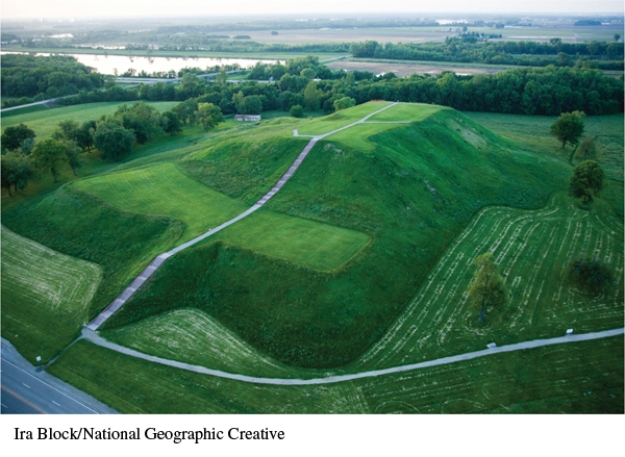
A) It appears that no other mounds were built nearby.
B) It was located near the confluence of the Missouri and Mississippi Rivers.
C) It has a multitiered design.
D) It is enormous in size with a large, flat top tier.
A) It appears that no other mounds were built nearby.
B) It was located near the confluence of the Missouri and Mississippi Rivers.
C) It has a multitiered design.
D) It is enormous in size with a large, flat top tier.
سؤال
سؤال
What evidence in this illustration reflects the belief of many historians that the Aztecs practiced ritual sacrifice as a means of honoring or nourishing the gods? 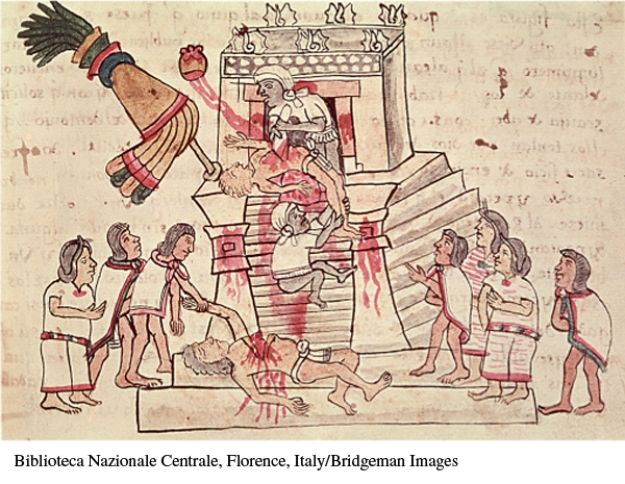
A) The victim's heart is drifting up toward the heavens.
B) The victim near the bottom of the steps is being dragged away, possibly to be dismembered.
C) The number of onlookers at the base of the steps suggests its importance as a religious ritual.
D) Based upon their physical appearance, the victims may have been prisoners of war.
A) The victim's heart is drifting up toward the heavens.
B) The victim near the bottom of the steps is being dragged away, possibly to be dismembered.
C) The number of onlookers at the base of the steps suggests its importance as a religious ritual.
D) Based upon their physical appearance, the victims may have been prisoners of war.
سؤال
سؤال
سؤال
سؤال
سؤال
سؤال
سؤال
سؤال
سؤال
سؤال
سؤال
سؤال
سؤال
How do the chinampa farming techniques, pictured here, differ from those of Europeans? 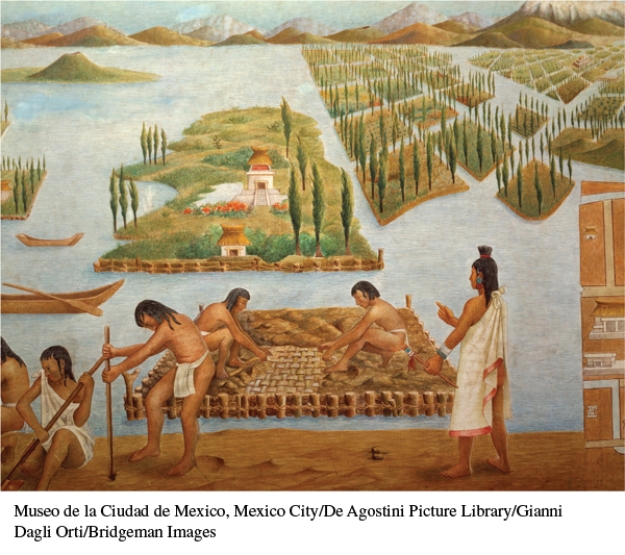
A) They used hand-held farming implements.
B) They farmed in small, rectangular plots divided by canals.
C) Crops were planted in a systematic fashion.
D) Irrigation was an important part of the planting process.
A) They used hand-held farming implements.
B) They farmed in small, rectangular plots divided by canals.
C) Crops were planted in a systematic fashion.
D) Irrigation was an important part of the planting process.
سؤال
سؤال
سؤال
سؤال
سؤال
سؤال
According to Map 11.2, "Major North American Agricultural Societies, ca. 600-1500 C.E.," which river traversed north to south through the heart of Mississippian territory? 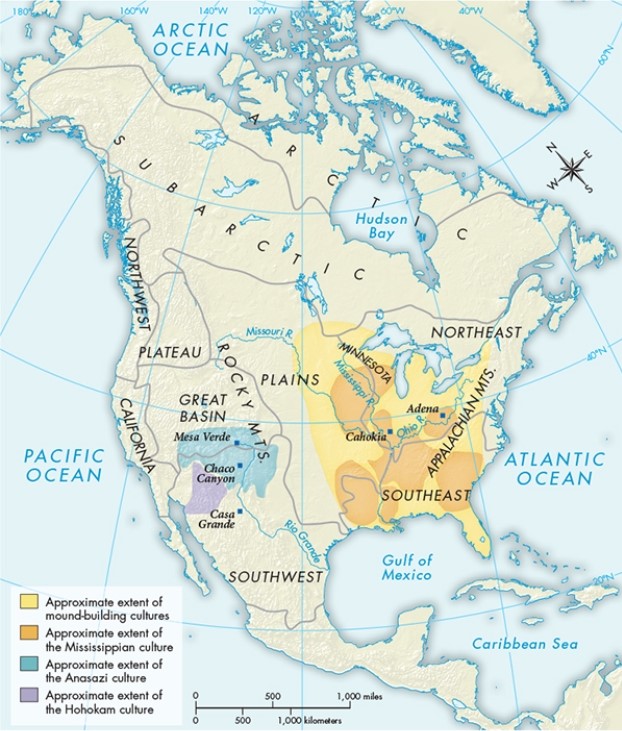
A) The Ohio River
B) The Mississippi River
C) The Missouri River
D) The Rio Grande
A) The Ohio River
B) The Mississippi River
C) The Missouri River
D) The Rio Grande
سؤال
سؤال
سؤال
سؤال
سؤال
سؤال
سؤال
سؤال
In what way are the ruins of Machu Picchu, pictured here, reminiscent of the ruins discovered at Mohejo-daro? 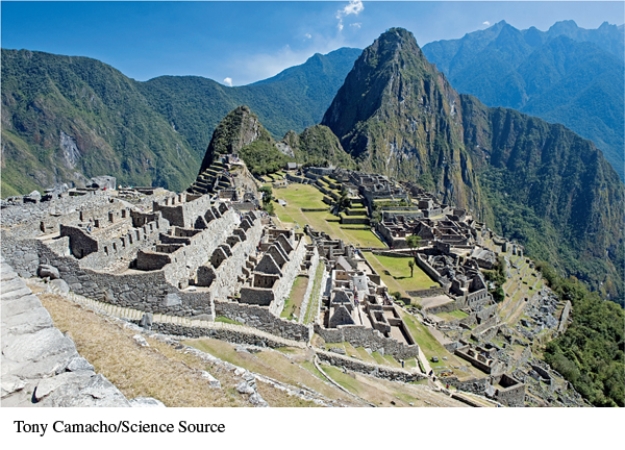
A) They were both built in a mountainous region.
B) The buildings in both appear to be unvaried in design and purpose.
C) Both are multitiered designs.
D) Their symmetrical designs suggest that both were well-planned urban developments.
A) They were both built in a mountainous region.
B) The buildings in both appear to be unvaried in design and purpose.
C) Both are multitiered designs.
D) Their symmetrical designs suggest that both were well-planned urban developments.
سؤال
سؤال
سؤال
سؤال
سؤال
سؤال
سؤال
سؤال
سؤال
سؤال
سؤال
سؤال
سؤال
سؤال
سؤال
سؤال
سؤال
سؤال
سؤال
سؤال
سؤال
سؤال
سؤال
سؤال
سؤال
سؤال
سؤال
سؤال
سؤال
سؤال
سؤال
سؤال
سؤال
سؤال
سؤال
سؤال
سؤال
سؤال
سؤال
سؤال

فتح الحزمة
قم بالتسجيل لفتح البطاقات في هذه المجموعة!
Unlock Deck
Unlock Deck
1/77

العب

ملء الشاشة (f)
Deck 11: The Americas, 3200 Bce-1500 Ce
1
Changes in the ocean current patterns brought by El Niños
A) were necessary for farming in the Andes.
B) devastated whole civilizations.
C) brought cyclical floods that regenerated the land.
D) brought winds that enabled trade with the Pacific islands.
A) were necessary for farming in the Andes.
B) devastated whole civilizations.
C) brought cyclical floods that regenerated the land.
D) brought winds that enabled trade with the Pacific islands.
devastated whole civilizations.
2
The isolation of the Americas until 1492 means that
A) we can never know much about the premodern societies of the Americas.
B) the peoples in the Western Hemisphere were backward and stagnant compared to those in Europe and Asia.
C) their civilization was not corrupted by wealth or greed.
D) by studying the early peoples of the Americas we can determine universal aspects of the human experience.
A) we can never know much about the premodern societies of the Americas.
B) the peoples in the Western Hemisphere were backward and stagnant compared to those in Europe and Asia.
C) their civilization was not corrupted by wealth or greed.
D) by studying the early peoples of the Americas we can determine universal aspects of the human experience.
by studying the early peoples of the Americas we can determine universal aspects of the human experience.
3
Where was maize, the most important American food crop, first grown?
A) The Andes
B) The Caribbean
C) Mexico
D) Alaska
A) The Andes
B) The Caribbean
C) Mexico
D) Alaska
Mexico
4
Khipu, a method for recording information, was made out of what?
A) Stone
B) Strings
C) Animal bones
D) Obsidian
A) Stone
B) Strings
C) Animal bones
D) Obsidian
فتح الحزمة
افتح القفل للوصول البطاقات البالغ عددها 77 في هذه المجموعة.
فتح الحزمة
k this deck
5
How did the Olmec spread their culture and technology?
A) Through population growth
B) Through diplomatic missions
C) Through wars of conquest
D) Through long-distance trade
A) Through population growth
B) Through diplomatic missions
C) Through wars of conquest
D) Through long-distance trade
فتح الحزمة
افتح القفل للوصول البطاقات البالغ عددها 77 في هذه المجموعة.
فتح الحزمة
k this deck
6
Why did people in the early Americas not use the wheel?
A) They failed to invent the wheel.
B) Boats were preferred for transportation.
C) There were no large animals to pull wagons.
D) Anything circular was viewed as an omen of bad luck.
A) They failed to invent the wheel.
B) Boats were preferred for transportation.
C) There were no large animals to pull wagons.
D) Anything circular was viewed as an omen of bad luck.
فتح الحزمة
افتح القفل للوصول البطاقات البالغ عددها 77 في هذه المجموعة.
فتح الحزمة
k this deck
7
The process of nixtamalization, boiling the maize with lime, did what?
A) Rendered maize kernels digestible
B) Hardened maize for use in tools and cookware
C) Increased the nutritional value of maize
D) Provided a medicine for common ailments
A) Rendered maize kernels digestible
B) Hardened maize for use in tools and cookware
C) Increased the nutritional value of maize
D) Provided a medicine for common ailments
فتح الحزمة
افتح القفل للوصول البطاقات البالغ عددها 77 في هذه المجموعة.
فتح الحزمة
k this deck
8
What evidence in this photograph suggests that Monks Mound served as the political and religious center of the Mississippian community at Cahokia?
A) It appears that no other mounds were built nearby.
B) It was located near the confluence of the Missouri and Mississippi Rivers.
C) It has a multitiered design.
D) It is enormous in size with a large, flat top tier.
A) It appears that no other mounds were built nearby.
B) It was located near the confluence of the Missouri and Mississippi Rivers.
C) It has a multitiered design.
D) It is enormous in size with a large, flat top tier.
فتح الحزمة
افتح القفل للوصول البطاقات البالغ عددها 77 في هذه المجموعة.
فتح الحزمة
k this deck
9
The Mesoamerican calendar used
A) 52-day months.
B) 13-day months.
C) agricultural seasons.
D) solar years.
A) 52-day months.
B) 13-day months.
C) agricultural seasons.
D) solar years.
فتح الحزمة
افتح القفل للوصول البطاقات البالغ عددها 77 في هذه المجموعة.
فتح الحزمة
k this deck
10
What evidence in this illustration reflects the belief of many historians that the Aztecs practiced ritual sacrifice as a means of honoring or nourishing the gods?
A) The victim's heart is drifting up toward the heavens.
B) The victim near the bottom of the steps is being dragged away, possibly to be dismembered.
C) The number of onlookers at the base of the steps suggests its importance as a religious ritual.
D) Based upon their physical appearance, the victims may have been prisoners of war.
A) The victim's heart is drifting up toward the heavens.
B) The victim near the bottom of the steps is being dragged away, possibly to be dismembered.
C) The number of onlookers at the base of the steps suggests its importance as a religious ritual.
D) Based upon their physical appearance, the victims may have been prisoners of war.
فتح الحزمة
افتح القفل للوصول البطاقات البالغ عددها 77 في هذه المجموعة.
فتح الحزمة
k this deck
11
What did Incan emperors force conquered peoples to do in order to unify their empire?
A) To accept Inca, the royal name
B) To send their children to be raised in the capital
C) To wear an Incan clothing style
D) To use Quechua, the Incan language
A) To accept Inca, the royal name
B) To send their children to be raised in the capital
C) To wear an Incan clothing style
D) To use Quechua, the Incan language
فتح الحزمة
افتح القفل للوصول البطاقات البالغ عددها 77 في هذه المجموعة.
فتح الحزمة
k this deck
12
Which pack animal was used to bring in crops in the Andes?
A) Horses
B) Humans
C) Alpacas
D) Oxen
A) Horses
B) Humans
C) Alpacas
D) Oxen
فتح الحزمة
افتح القفل للوصول البطاقات البالغ عددها 77 في هذه المجموعة.
فتح الحزمة
k this deck
13
The Mesoamerican ballgame-played by the Olmecs, Mayans, and others-used what type of equipment?
A) A wooden racket
B) An obsidian ball
C) A rubber ball
D) Leather hoops
A) A wooden racket
B) An obsidian ball
C) A rubber ball
D) Leather hoops
فتح الحزمة
افتح القفل للوصول البطاقات البالغ عددها 77 في هذه المجموعة.
فتح الحزمة
k this deck
14
What was the name of an important mound-building people who existed in present-day Ohio?
A) Hopewell
B) Hohokam
C) Anasazi
D) Mississippian
A) Hopewell
B) Hohokam
C) Anasazi
D) Mississippian
فتح الحزمة
افتح القفل للوصول البطاقات البالغ عددها 77 في هذه المجموعة.
فتح الحزمة
k this deck
15
How did Inca rulers prevent rebellion?
A) They prevented revolt through fear, by sacrificing thousands of their subjects.
B) They dramatically reduced the tax burden on newly conquered peoples.
C) They transported all conquered peoples to different parts of the empire.
D) They allowed conquered peoples a measure of local self-government.
A) They prevented revolt through fear, by sacrificing thousands of their subjects.
B) They dramatically reduced the tax burden on newly conquered peoples.
C) They transported all conquered peoples to different parts of the empire.
D) They allowed conquered peoples a measure of local self-government.
فتح الحزمة
افتح القفل للوصول البطاقات البالغ عددها 77 في هذه المجموعة.
فتح الحزمة
k this deck
16
Where did the Olmec civilization flourish?
A) In the high mountains of South America
B) In the coastal lowlands of Mexico
C) In the flat plains of northern Mexico
D) In interior valleys of Central America
A) In the high mountains of South America
B) In the coastal lowlands of Mexico
C) In the flat plains of northern Mexico
D) In interior valleys of Central America
فتح الحزمة
افتح القفل للوصول البطاقات البالغ عددها 77 في هذه المجموعة.
فتح الحزمة
k this deck
17
The term Mesoamerica refers to what region?
A) The region stretching from present-day central Mexico to Nicaragua
B) Central and South America
C) The region stretching from the Great Lakes of North America to South America
D) Present-day Central America
A) The region stretching from present-day central Mexico to Nicaragua
B) Central and South America
C) The region stretching from the Great Lakes of North America to South America
D) Present-day Central America
فتح الحزمة
افتح القفل للوصول البطاقات البالغ عددها 77 في هذه المجموعة.
فتح الحزمة
k this deck
18
The Moche flourished along Peru's northern coast by
A) serving as guides through the Andes.
B) creating a warrior culture.
C) mining gold.
D) developing a complex irrigation system.
A) serving as guides through the Andes.
B) creating a warrior culture.
C) mining gold.
D) developing a complex irrigation system.
فتح الحزمة
افتح القفل للوصول البطاقات البالغ عددها 77 في هذه المجموعة.
فتح الحزمة
k this deck
19
What have increasing numbers of archaeologists concluded about the earliest migrants to the Americas?
A) That the first peoples traveled by both foot and boat
B) That humans did not cross the Bering Strait at all
C) That peoples could not have arrived any earlier than 9000 B.C.E.
D) That humans were primarily hunters of big game
A) That the first peoples traveled by both foot and boat
B) That humans did not cross the Bering Strait at all
C) That peoples could not have arrived any earlier than 9000 B.C.E.
D) That humans were primarily hunters of big game
فتح الحزمة
افتح القفل للوصول البطاقات البالغ عددها 77 في هذه المجموعة.
فتح الحزمة
k this deck
20
What was the central food crop in the high altitude of the Andes?
A) Maize
B) Squash
C) Potatoes
D) Beans
A) Maize
B) Squash
C) Potatoes
D) Beans
فتح الحزمة
افتح القفل للوصول البطاقات البالغ عددها 77 في هذه المجموعة.
فتح الحزمة
k this deck
21
What happened after the Maya abandoned their cultural and ceremonial centers?
A) Mayan civilization declined and disappeared.
B) Mayans preserved their culture by living in small farming communities.
C) The Moche moved in and established their own civilization.
D) The Maya were enslaved by the Aztecs.
A) Mayan civilization declined and disappeared.
B) Mayans preserved their culture by living in small farming communities.
C) The Moche moved in and established their own civilization.
D) The Maya were enslaved by the Aztecs.
فتح الحزمة
افتح القفل للوصول البطاقات البالغ عددها 77 في هذه المجموعة.
فتح الحزمة
k this deck
22
Mayan texts tended to focus on the lives and exploits of whom?
A) Kings and nobles
B) Gods
C) Folk heroes
D) Priests and priestesses
A) Kings and nobles
B) Gods
C) Folk heroes
D) Priests and priestesses
فتح الحزمة
افتح القفل للوصول البطاقات البالغ عددها 77 في هذه المجموعة.
فتح الحزمة
k this deck
23
How do the chinampa farming techniques, pictured here, differ from those of Europeans?
A) They used hand-held farming implements.
B) They farmed in small, rectangular plots divided by canals.
C) Crops were planted in a systematic fashion.
D) Irrigation was an important part of the planting process.
A) They used hand-held farming implements.
B) They farmed in small, rectangular plots divided by canals.
C) Crops were planted in a systematic fashion.
D) Irrigation was an important part of the planting process.
فتح الحزمة
افتح القفل للوصول البطاقات البالغ عددها 77 في هذه المجموعة.
فتح الحزمة
k this deck
24
What is a stele?
A) A floating garden where maize is grown
B) A ceremony in which war captives are sacrificed
C) A stone pillar monument on which Maya recorded important information
D) The ball used in an Aztec ballgame
A) A floating garden where maize is grown
B) A ceremony in which war captives are sacrificed
C) A stone pillar monument on which Maya recorded important information
D) The ball used in an Aztec ballgame
فتح الحزمة
افتح القفل للوصول البطاقات البالغ عددها 77 في هذه المجموعة.
فتح الحزمة
k this deck
25
Which of the following is true of the Toltecs?
A) They were the last great civilization that is part of the classical era.
B) They spoke Nahuatl, the same language as the Aztecs.
C) They ruled most of central Mexico for four hundred years.
D) They were led by former members of the Zapotecs.
A) They were the last great civilization that is part of the classical era.
B) They spoke Nahuatl, the same language as the Aztecs.
C) They ruled most of central Mexico for four hundred years.
D) They were led by former members of the Zapotecs.
فتح الحزمة
افتح القفل للوصول البطاقات البالغ عددها 77 في هذه المجموعة.
فتح الحزمة
k this deck
26
How did the Inca link their empire together?
A) There was a common ethnicity among the population.
B) All villages sent representatives to the capital to engage in sporting activities.
C) They had an advanced system of roads that held the empire together.
D) Scholars translated local texts into Quechua, making all people feel like part of the empire.
A) There was a common ethnicity among the population.
B) All villages sent representatives to the capital to engage in sporting activities.
C) They had an advanced system of roads that held the empire together.
D) Scholars translated local texts into Quechua, making all people feel like part of the empire.
فتح الحزمة
افتح القفل للوصول البطاقات البالغ عددها 77 في هذه المجموعة.
فتح الحزمة
k this deck
27
Unity in the Maya world was developed by a common language and what activity?
A) Intermarriage between Maya and Olmec communities
B) Extensive trade and commerce
C) A common way of dressing
D) The development of a strong centralized government
A) Intermarriage between Maya and Olmec communities
B) Extensive trade and commerce
C) A common way of dressing
D) The development of a strong centralized government
فتح الحزمة
افتح القفل للوصول البطاقات البالغ عددها 77 في هذه المجموعة.
فتح الحزمة
k this deck
28
What were chinampas?
A) Weapons
B) Early religious leaders
C) Human sacrifices
D) Floating gardens
A) Weapons
B) Early religious leaders
C) Human sacrifices
D) Floating gardens
فتح الحزمة
افتح القفل للوصول البطاقات البالغ عددها 77 في هذه المجموعة.
فتح الحزمة
k this deck
29
According to Map 11.2, "Major North American Agricultural Societies, ca. 600-1500 C.E.," which river traversed north to south through the heart of Mississippian territory?
A) The Ohio River
B) The Mississippi River
C) The Missouri River
D) The Rio Grande
A) The Ohio River
B) The Mississippi River
C) The Missouri River
D) The Rio Grande
فتح الحزمة
افتح القفل للوصول البطاقات البالغ عددها 77 في هذه المجموعة.
فتح الحزمة
k this deck
30
How did the Maya survive their arid environment?
A) They used irrigation canals.
B) They dug deep wells.
C) They hauled water from the coast.
D) They found water in deep natural wells.
A) They used irrigation canals.
B) They dug deep wells.
C) They hauled water from the coast.
D) They found water in deep natural wells.
فتح الحزمة
افتح القفل للوصول البطاقات البالغ عددها 77 في هذه المجموعة.
فتح الحزمة
k this deck
31
On what material were Mayan texts recorded?
A) Glass
B) Human skin
C) Vellum
D) Bark paper
A) Glass
B) Human skin
C) Vellum
D) Bark paper
فتح الحزمة
افتح القفل للوصول البطاقات البالغ عددها 77 في هذه المجموعة.
فتح الحزمة
k this deck
32
What did the Aztecs believe they had to do to keep the sun moving and preserve life?
A) Build magnificent pyramids for their gods
B) Sacrifice human beings
C) Sacrifice livestock, particularly cattle
D) Destroy all competing societies
A) Build magnificent pyramids for their gods
B) Sacrifice human beings
C) Sacrifice livestock, particularly cattle
D) Destroy all competing societies
فتح الحزمة
افتح القفل للوصول البطاقات البالغ عددها 77 في هذه المجموعة.
فتح الحزمة
k this deck
33
One of the most notable intellectual achievements of the Maya was their use of what mathematical concept?
A) Decimal system
B) Multiplication
C) The zero
D) A calendar
A) Decimal system
B) Multiplication
C) The zero
D) A calendar
فتح الحزمة
افتح القفل للوصول البطاقات البالغ عددها 77 في هذه المجموعة.
فتح الحزمة
k this deck
34
What was an ayllu?
A) A set of rules that regimented the lives of the Incan people
B) A substantial degree of state-supplied social welfare
C) A clan that served as the basic unit of Incan society
D) An Incan system of public works projects
A) A set of rules that regimented the lives of the Incan people
B) A substantial degree of state-supplied social welfare
C) A clan that served as the basic unit of Incan society
D) An Incan system of public works projects
فتح الحزمة
افتح القفل للوصول البطاقات البالغ عددها 77 في هذه المجموعة.
فتح الحزمة
k this deck
35
What were Tenochtitlan and Tlatelolco in Aztec society?
A) Twin gods
B) Twin cities
C) Co-rulers
D) Sacred temples
A) Twin gods
B) Twin cities
C) Co-rulers
D) Sacred temples
فتح الحزمة
افتح القفل للوصول البطاقات البالغ عددها 77 في هذه المجموعة.
فتح الحزمة
k this deck
36
What was at the heart of Teotihuacan?
A) A market place
B) A ceremonial center
C) A court house
D) A royal palace
A) A market place
B) A ceremonial center
C) A court house
D) A royal palace
فتح الحزمة
افتح القفل للوصول البطاقات البالغ عددها 77 في هذه المجموعة.
فتح الحزمة
k this deck
37
In what way are the ruins of Machu Picchu, pictured here, reminiscent of the ruins discovered at Mohejo-daro?
A) They were both built in a mountainous region.
B) The buildings in both appear to be unvaried in design and purpose.
C) Both are multitiered designs.
D) Their symmetrical designs suggest that both were well-planned urban developments.
A) They were both built in a mountainous region.
B) The buildings in both appear to be unvaried in design and purpose.
C) Both are multitiered designs.
D) Their symmetrical designs suggest that both were well-planned urban developments.
فتح الحزمة
افتح القفل للوصول البطاقات البالغ عددها 77 في هذه المجموعة.
فتح الحزمة
k this deck
38
What is the meaning of split inheritance?
A) After an emperor died, his lands were split among his sons.
B) A dead emperor retained all his lands and continued to receive tribute.
C) The wives of an emperor split the land among their sons.
D) Upon his death, an emperor had to give half his land to his closest rival.
A) After an emperor died, his lands were split among his sons.
B) A dead emperor retained all his lands and continued to receive tribute.
C) The wives of an emperor split the land among their sons.
D) Upon his death, an emperor had to give half his land to his closest rival.
فتح الحزمة
افتح القفل للوصول البطاقات البالغ عددها 77 في هذه المجموعة.
فتح الحزمة
k this deck
39
In the Inca Empire, what was the mit'a?
A) The system of conscripting labor from villages
B) The system for drafting soldiers
C) The system of maintenance for the royal mummies
D) The system of collecting monetary taxes
A) The system of conscripting labor from villages
B) The system for drafting soldiers
C) The system of maintenance for the royal mummies
D) The system of collecting monetary taxes
فتح الحزمة
افتح القفل للوصول البطاقات البالغ عددها 77 في هذه المجموعة.
فتح الحزمة
k this deck
40
The Aztecs created a strong position in the lands of Mexico through which of the following?
A) Their worship of the god of war, Huitzilopochtli
B) Their promotion of a strong agricultural and commercial economy
C) Superior military technology
D) An alliance system based on trade and tribute, backed by the use of force
A) Their worship of the god of war, Huitzilopochtli
B) Their promotion of a strong agricultural and commercial economy
C) Superior military technology
D) An alliance system based on trade and tribute, backed by the use of force
فتح الحزمة
افتح القفل للوصول البطاقات البالغ عددها 77 في هذه المجموعة.
فتح الحزمة
k this deck
41
Why did the Aztec Empire fall so quickly to the Spanish? What is the historical debate associated with the fall of the Aztecs?
فتح الحزمة
افتح القفل للوصول البطاقات البالغ عددها 77 في هذه المجموعة.
فتح الحزمة
k this deck
42
In what way was the Moche civilization similar to the Aztec?
A) Both civilizations originated in northern Mexico.
B) Both the Moche and the Aztec sacrificed prisoners of war.
C) Huitzilopochtli was worshiped by peoples of both societies.
D) Nahuatl was spoken by both the Moche and the Aztec.
A) Both civilizations originated in northern Mexico.
B) Both the Moche and the Aztec sacrificed prisoners of war.
C) Huitzilopochtli was worshiped by peoples of both societies.
D) Nahuatl was spoken by both the Moche and the Aztec.
فتح الحزمة
افتح القفل للوصول البطاقات البالغ عددها 77 في هذه المجموعة.
فتح الحزمة
k this deck
43
Describe the extent of the Inca Empire. How did the Inca rulers maintain control of this vast territory?
فتح الحزمة
افتح القفل للوصول البطاقات البالغ عددها 77 في هذه المجموعة.
فتح الحزمة
k this deck
44
Discuss the major differences between North America, Mesoamerica, and South America in terms of the arable lands available for agriculture.
فتح الحزمة
افتح القفل للوصول البطاقات البالغ عددها 77 في هذه المجموعة.
فتح الحزمة
k this deck
45
Why did Atahualpa meet with Pizarro in 1532?
A) To fight a battle
B) To seize Pizarro as a prisoner
C) To worship Pizarro as a savior-god
D) To negotiate
A) To fight a battle
B) To seize Pizarro as a prisoner
C) To worship Pizarro as a savior-god
D) To negotiate
فتح الحزمة
افتح القفل للوصول البطاقات البالغ عددها 77 في هذه المجموعة.
فتح الحزمة
k this deck
46
How did Cortés defeat the Aztec Empire?
A) With only six hundred Spaniards, he marched into Tenochtitlan.
B) He allied with the Tlaxcala.
C) He promised Aztec slaves freedom.
D) He had help from Pizarro.
A) With only six hundred Spaniards, he marched into Tenochtitlan.
B) He allied with the Tlaxcala.
C) He promised Aztec slaves freedom.
D) He had help from Pizarro.
فتح الحزمة
افتح القفل للوصول البطاقات البالغ عددها 77 في هذه المجموعة.
فتح الحزمة
k this deck
47
In Aztec society, what were macehualtin?
A) Servants similar to serfs in western Europe
B) Commoners, sometimes men who had failed in military campaigns
C) Members of the most privileged class
D) Students in training to become priests
A) Servants similar to serfs in western Europe
B) Commoners, sometimes men who had failed in military campaigns
C) Members of the most privileged class
D) Students in training to become priests
فتح الحزمة
افتح القفل للوصول البطاقات البالغ عددها 77 في هذه المجموعة.
فتح الحزمة
k this deck
48
What did an Aztec warrior have to do to earn the title of iyac, or warrior?
A) Capture a town singlehandedly
B) Defeat a fellow Aztec in battle
C) Capture a prisoner for ritual sacrifice
D) Win a series of athletic contests
A) Capture a town singlehandedly
B) Defeat a fellow Aztec in battle
C) Capture a prisoner for ritual sacrifice
D) Win a series of athletic contests
فتح الحزمة
افتح القفل للوصول البطاقات البالغ عددها 77 في هذه المجموعة.
فتح الحزمة
k this deck
49
What did the Mexicas do with the people they conquered?
فتح الحزمة
افتح القفل للوصول البطاقات البالغ عددها 77 في هذه المجموعة.
فتح الحزمة
k this deck
50
What does the Hohokam culture reveal about the relationship between North America and Mesoamerica? What is the evidence of that relationship?
فتح الحزمة
افتح القفل للوصول البطاقات البالغ عددها 77 في هذه المجموعة.
فتح الحزمة
k this deck
51
What was the importance of calendars for the Olmecs and the Maya?
فتح الحزمة
افتح القفل للوصول البطاقات البالغ عددها 77 في هذه المجموعة.
فتح الحزمة
k this deck
52
How did Moctezuma II try to reform the empire before the Spaniards arrived?
A) Restricted social mobility
B) Reduced controls and taxes
C) Reduced military service
D) Expanded noble ranks
A) Restricted social mobility
B) Reduced controls and taxes
C) Reduced military service
D) Expanded noble ranks
فتح الحزمة
افتح القفل للوصول البطاقات البالغ عددها 77 في هذه المجموعة.
فتح الحزمة
k this deck
53
How did marriage in Mexica society duplicate what was found in premodern Asian and European societies?
A) Some women were able to escape marriage through religious service.
B) Women were expected to manage the family business so their husbands could serve as warriors.
C) Once married, women were allowed to work only in agriculture.
D) Young people were married off to a person of their parents' choosing.
A) Some women were able to escape marriage through religious service.
B) Women were expected to manage the family business so their husbands could serve as warriors.
C) Once married, women were allowed to work only in agriculture.
D) Young people were married off to a person of their parents' choosing.
فتح الحزمة
افتح القفل للوصول البطاقات البالغ عددها 77 في هذه المجموعة.
فتح الحزمة
k this deck
54
What caused the collapse of the Maya?
فتح الحزمة
افتح القفل للوصول البطاقات البالغ عددها 77 في هذه المجموعة.
فتح الحزمة
k this deck
55
Describe Olmec society.
فتح الحزمة
افتح القفل للوصول البطاقات البالغ عددها 77 في هذه المجموعة.
فتح الحزمة
k this deck
56
At the age of six, Aztec boys entered a school that taught them
A) religion.
B) mathematics.
C) war.
D) politics.
A) religion.
B) mathematics.
C) war.
D) politics.
فتح الحزمة
افتح القفل للوصول البطاقات البالغ عددها 77 في هذه المجموعة.
فتح الحزمة
k this deck
57
Who could enter the Aztec warrior class?
فتح الحزمة
افتح القفل للوصول البطاقات البالغ عددها 77 في هذه المجموعة.
فتح الحزمة
k this deck
58
In Aztec society, social status and mobility depended on which of the following?
A) Wealth
B) Intelligence
C) Military performance
D) Religious devotion
A) Wealth
B) Intelligence
C) Military performance
D) Religious devotion
فتح الحزمة
افتح القفل للوصول البطاقات البالغ عددها 77 في هذه المجموعة.
فتح الحزمة
k this deck
59
What are some of the purposes for which the Hopewell and Cahokia peoples built large earthen mounds?
فتح الحزمة
افتح القفل للوصول البطاقات البالغ عددها 77 في هذه المجموعة.
فتح الحزمة
k this deck
60
Which statement is true about Tupac Amaru's resistance to the Spanish?
A) His resistance was undermined by his allies.
B) His small-scale attacks only sped up Spanish colonization.
C) Any time he got too close to the Spanish, he and his men were exposed to disease.
D) He used Christian arguments to appeal directly to the king.
A) His resistance was undermined by his allies.
B) His small-scale attacks only sped up Spanish colonization.
C) Any time he got too close to the Spanish, he and his men were exposed to disease.
D) He used Christian arguments to appeal directly to the king.
فتح الحزمة
افتح القفل للوصول البطاقات البالغ عددها 77 في هذه المجموعة.
فتح الحزمة
k this deck
61
Use the following to answer questions :
nixtamalization
A)The term used to designate the area spanning present-day central Mexico to Nicaragua.
B)An intricate system of knotted and colored strings used by early Andean cultures to store information such as census and tax records.
C)Boiling maize in a solution of water and mineral lime to break down compounds in the kernels, increasing their nutritional value.
D)The earliest advanced Mesoamerican civilization.
E)A Native American culture that thrived along Peru's northern coast between 100 and 800 C.E.
F)The name of the dynasty of rulers who built the largest and last indigenous empire across the Andes.
G)The official language of the Incas, it is still spoken by most Peruvians today.
H)A highly developed Mesoamerican culture centered in the Yucatán peninsula of Mexico. This culture created the most intricate writing system in the Western Hemisphere.
I)The monumental city-state that dominated trade in classical era Mesoamerica.
J)The language of the Aztecs, which they inherited from the Toltecs.
K)The dominant ethnic group of what is now Mexico, who created an empire based on war and religion that reached its height in the fifteenth century.
L)A large and prosperous Aztec city that was built starting in 1325. The Spanish admired it when they entered in 1519.
nixtamalization
A)The term used to designate the area spanning present-day central Mexico to Nicaragua.
B)An intricate system of knotted and colored strings used by early Andean cultures to store information such as census and tax records.
C)Boiling maize in a solution of water and mineral lime to break down compounds in the kernels, increasing their nutritional value.
D)The earliest advanced Mesoamerican civilization.
E)A Native American culture that thrived along Peru's northern coast between 100 and 800 C.E.
F)The name of the dynasty of rulers who built the largest and last indigenous empire across the Andes.
G)The official language of the Incas, it is still spoken by most Peruvians today.
H)A highly developed Mesoamerican culture centered in the Yucatán peninsula of Mexico. This culture created the most intricate writing system in the Western Hemisphere.
I)The monumental city-state that dominated trade in classical era Mesoamerica.
J)The language of the Aztecs, which they inherited from the Toltecs.
K)The dominant ethnic group of what is now Mexico, who created an empire based on war and religion that reached its height in the fifteenth century.
L)A large and prosperous Aztec city that was built starting in 1325. The Spanish admired it when they entered in 1519.
فتح الحزمة
افتح القفل للوصول البطاقات البالغ عددها 77 في هذه المجموعة.
فتح الحزمة
k this deck
62
Use the following to answer questions :
Olmecs
A)The term used to designate the area spanning present-day central Mexico to Nicaragua.
B)An intricate system of knotted and colored strings used by early Andean cultures to store information such as census and tax records.
C)Boiling maize in a solution of water and mineral lime to break down compounds in the kernels, increasing their nutritional value.
D)The earliest advanced Mesoamerican civilization.
E)A Native American culture that thrived along Peru's northern coast between 100 and 800 C.E.
F)The name of the dynasty of rulers who built the largest and last indigenous empire across the Andes.
G)The official language of the Incas, it is still spoken by most Peruvians today.
H)A highly developed Mesoamerican culture centered in the Yucatán peninsula of Mexico. This culture created the most intricate writing system in the Western Hemisphere.
I)The monumental city-state that dominated trade in classical era Mesoamerica.
J)The language of the Aztecs, which they inherited from the Toltecs.
K)The dominant ethnic group of what is now Mexico, who created an empire based on war and religion that reached its height in the fifteenth century.
L)A large and prosperous Aztec city that was built starting in 1325. The Spanish admired it when they entered in 1519.
Olmecs
A)The term used to designate the area spanning present-day central Mexico to Nicaragua.
B)An intricate system of knotted and colored strings used by early Andean cultures to store information such as census and tax records.
C)Boiling maize in a solution of water and mineral lime to break down compounds in the kernels, increasing their nutritional value.
D)The earliest advanced Mesoamerican civilization.
E)A Native American culture that thrived along Peru's northern coast between 100 and 800 C.E.
F)The name of the dynasty of rulers who built the largest and last indigenous empire across the Andes.
G)The official language of the Incas, it is still spoken by most Peruvians today.
H)A highly developed Mesoamerican culture centered in the Yucatán peninsula of Mexico. This culture created the most intricate writing system in the Western Hemisphere.
I)The monumental city-state that dominated trade in classical era Mesoamerica.
J)The language of the Aztecs, which they inherited from the Toltecs.
K)The dominant ethnic group of what is now Mexico, who created an empire based on war and religion that reached its height in the fifteenth century.
L)A large and prosperous Aztec city that was built starting in 1325. The Spanish admired it when they entered in 1519.
فتح الحزمة
افتح القفل للوصول البطاقات البالغ عددها 77 في هذه المجموعة.
فتح الحزمة
k this deck
63
Both Mexica and Inca imperialism seem to have been prompted by religious belief structures. How did religion promote the imperialistic actions of each? In what ways did the religious beliefs and/or practices of the Aztecs and Incas contain the seeds of collapse?
فتح الحزمة
افتح القفل للوصول البطاقات البالغ عددها 77 في هذه المجموعة.
فتح الحزمة
k this deck
64
Use the following to answer questions :
Moche
A)The term used to designate the area spanning present-day central Mexico to Nicaragua.
B)An intricate system of knotted and colored strings used by early Andean cultures to store information such as census and tax records.
C)Boiling maize in a solution of water and mineral lime to break down compounds in the kernels, increasing their nutritional value.
D)The earliest advanced Mesoamerican civilization.
E)A Native American culture that thrived along Peru's northern coast between 100 and 800 C.E.
F)The name of the dynasty of rulers who built the largest and last indigenous empire across the Andes.
G)The official language of the Incas, it is still spoken by most Peruvians today.
H)A highly developed Mesoamerican culture centered in the Yucatán peninsula of Mexico. This culture created the most intricate writing system in the Western Hemisphere.
I)The monumental city-state that dominated trade in classical era Mesoamerica.
J)The language of the Aztecs, which they inherited from the Toltecs.
K)The dominant ethnic group of what is now Mexico, who created an empire based on war and religion that reached its height in the fifteenth century.
L)A large and prosperous Aztec city that was built starting in 1325. The Spanish admired it when they entered in 1519.
Moche
A)The term used to designate the area spanning present-day central Mexico to Nicaragua.
B)An intricate system of knotted and colored strings used by early Andean cultures to store information such as census and tax records.
C)Boiling maize in a solution of water and mineral lime to break down compounds in the kernels, increasing their nutritional value.
D)The earliest advanced Mesoamerican civilization.
E)A Native American culture that thrived along Peru's northern coast between 100 and 800 C.E.
F)The name of the dynasty of rulers who built the largest and last indigenous empire across the Andes.
G)The official language of the Incas, it is still spoken by most Peruvians today.
H)A highly developed Mesoamerican culture centered in the Yucatán peninsula of Mexico. This culture created the most intricate writing system in the Western Hemisphere.
I)The monumental city-state that dominated trade in classical era Mesoamerica.
J)The language of the Aztecs, which they inherited from the Toltecs.
K)The dominant ethnic group of what is now Mexico, who created an empire based on war and religion that reached its height in the fifteenth century.
L)A large and prosperous Aztec city that was built starting in 1325. The Spanish admired it when they entered in 1519.
فتح الحزمة
افتح القفل للوصول البطاقات البالغ عددها 77 في هذه المجموعة.
فتح الحزمة
k this deck
65
The peoples of Mesoamerica and South America had to develop advanced agricultural techniques to produce surplus crops. Describe these techniques, being sure to indicate in which region and among which culture they developed.
فتح الحزمة
افتح القفل للوصول البطاقات البالغ عددها 77 في هذه المجموعة.
فتح الحزمة
k this deck
66
Use the following to answer questions :
khipu
A)The term used to designate the area spanning present-day central Mexico to Nicaragua.
B)An intricate system of knotted and colored strings used by early Andean cultures to store information such as census and tax records.
C)Boiling maize in a solution of water and mineral lime to break down compounds in the kernels, increasing their nutritional value.
D)The earliest advanced Mesoamerican civilization.
E)A Native American culture that thrived along Peru's northern coast between 100 and 800 C.E.
F)The name of the dynasty of rulers who built the largest and last indigenous empire across the Andes.
G)The official language of the Incas, it is still spoken by most Peruvians today.
H)A highly developed Mesoamerican culture centered in the Yucatán peninsula of Mexico. This culture created the most intricate writing system in the Western Hemisphere.
I)The monumental city-state that dominated trade in classical era Mesoamerica.
J)The language of the Aztecs, which they inherited from the Toltecs.
K)The dominant ethnic group of what is now Mexico, who created an empire based on war and religion that reached its height in the fifteenth century.
L)A large and prosperous Aztec city that was built starting in 1325. The Spanish admired it when they entered in 1519.
khipu
A)The term used to designate the area spanning present-day central Mexico to Nicaragua.
B)An intricate system of knotted and colored strings used by early Andean cultures to store information such as census and tax records.
C)Boiling maize in a solution of water and mineral lime to break down compounds in the kernels, increasing their nutritional value.
D)The earliest advanced Mesoamerican civilization.
E)A Native American culture that thrived along Peru's northern coast between 100 and 800 C.E.
F)The name of the dynasty of rulers who built the largest and last indigenous empire across the Andes.
G)The official language of the Incas, it is still spoken by most Peruvians today.
H)A highly developed Mesoamerican culture centered in the Yucatán peninsula of Mexico. This culture created the most intricate writing system in the Western Hemisphere.
I)The monumental city-state that dominated trade in classical era Mesoamerica.
J)The language of the Aztecs, which they inherited from the Toltecs.
K)The dominant ethnic group of what is now Mexico, who created an empire based on war and religion that reached its height in the fifteenth century.
L)A large and prosperous Aztec city that was built starting in 1325. The Spanish admired it when they entered in 1519.
فتح الحزمة
افتح القفل للوصول البطاقات البالغ عددها 77 في هذه المجموعة.
فتح الحزمة
k this deck
67
Use the following to answer questions :
Quechua
A)The term used to designate the area spanning present-day central Mexico to Nicaragua.
B)An intricate system of knotted and colored strings used by early Andean cultures to store information such as census and tax records.
C)Boiling maize in a solution of water and mineral lime to break down compounds in the kernels, increasing their nutritional value.
D)The earliest advanced Mesoamerican civilization.
E)A Native American culture that thrived along Peru's northern coast between 100 and 800 C.E.
F)The name of the dynasty of rulers who built the largest and last indigenous empire across the Andes.
G)The official language of the Incas, it is still spoken by most Peruvians today.
H)A highly developed Mesoamerican culture centered in the Yucatán peninsula of Mexico. This culture created the most intricate writing system in the Western Hemisphere.
I)The monumental city-state that dominated trade in classical era Mesoamerica.
J)The language of the Aztecs, which they inherited from the Toltecs.
K)The dominant ethnic group of what is now Mexico, who created an empire based on war and religion that reached its height in the fifteenth century.
L)A large and prosperous Aztec city that was built starting in 1325. The Spanish admired it when they entered in 1519.
Quechua
A)The term used to designate the area spanning present-day central Mexico to Nicaragua.
B)An intricate system of knotted and colored strings used by early Andean cultures to store information such as census and tax records.
C)Boiling maize in a solution of water and mineral lime to break down compounds in the kernels, increasing their nutritional value.
D)The earliest advanced Mesoamerican civilization.
E)A Native American culture that thrived along Peru's northern coast between 100 and 800 C.E.
F)The name of the dynasty of rulers who built the largest and last indigenous empire across the Andes.
G)The official language of the Incas, it is still spoken by most Peruvians today.
H)A highly developed Mesoamerican culture centered in the Yucatán peninsula of Mexico. This culture created the most intricate writing system in the Western Hemisphere.
I)The monumental city-state that dominated trade in classical era Mesoamerica.
J)The language of the Aztecs, which they inherited from the Toltecs.
K)The dominant ethnic group of what is now Mexico, who created an empire based on war and religion that reached its height in the fifteenth century.
L)A large and prosperous Aztec city that was built starting in 1325. The Spanish admired it when they entered in 1519.
فتح الحزمة
افتح القفل للوصول البطاقات البالغ عددها 77 في هذه المجموعة.
فتح الحزمة
k this deck
68
Use the following to answer questions :
Inca
A)The term used to designate the area spanning present-day central Mexico to Nicaragua.
B)An intricate system of knotted and colored strings used by early Andean cultures to store information such as census and tax records.
C)Boiling maize in a solution of water and mineral lime to break down compounds in the kernels, increasing their nutritional value.
D)The earliest advanced Mesoamerican civilization.
E)A Native American culture that thrived along Peru's northern coast between 100 and 800 C.E.
F)The name of the dynasty of rulers who built the largest and last indigenous empire across the Andes.
G)The official language of the Incas, it is still spoken by most Peruvians today.
H)A highly developed Mesoamerican culture centered in the Yucatán peninsula of Mexico. This culture created the most intricate writing system in the Western Hemisphere.
I)The monumental city-state that dominated trade in classical era Mesoamerica.
J)The language of the Aztecs, which they inherited from the Toltecs.
K)The dominant ethnic group of what is now Mexico, who created an empire based on war and religion that reached its height in the fifteenth century.
L)A large and prosperous Aztec city that was built starting in 1325. The Spanish admired it when they entered in 1519.
Inca
A)The term used to designate the area spanning present-day central Mexico to Nicaragua.
B)An intricate system of knotted and colored strings used by early Andean cultures to store information such as census and tax records.
C)Boiling maize in a solution of water and mineral lime to break down compounds in the kernels, increasing their nutritional value.
D)The earliest advanced Mesoamerican civilization.
E)A Native American culture that thrived along Peru's northern coast between 100 and 800 C.E.
F)The name of the dynasty of rulers who built the largest and last indigenous empire across the Andes.
G)The official language of the Incas, it is still spoken by most Peruvians today.
H)A highly developed Mesoamerican culture centered in the Yucatán peninsula of Mexico. This culture created the most intricate writing system in the Western Hemisphere.
I)The monumental city-state that dominated trade in classical era Mesoamerica.
J)The language of the Aztecs, which they inherited from the Toltecs.
K)The dominant ethnic group of what is now Mexico, who created an empire based on war and religion that reached its height in the fifteenth century.
L)A large and prosperous Aztec city that was built starting in 1325. The Spanish admired it when they entered in 1519.
فتح الحزمة
افتح القفل للوصول البطاقات البالغ عددها 77 في هذه المجموعة.
فتح الحزمة
k this deck
69
Discuss the debates surrounding the date humans first migrated to the Americas. What kind of evidence is used in the debates?
فتح الحزمة
افتح القفل للوصول البطاقات البالغ عددها 77 في هذه المجموعة.
فتح الحزمة
k this deck
70
Use the following to answer questions :
Mexica
A)The term used to designate the area spanning present-day central Mexico to Nicaragua.
B)An intricate system of knotted and colored strings used by early Andean cultures to store information such as census and tax records.
C)Boiling maize in a solution of water and mineral lime to break down compounds in the kernels, increasing their nutritional value.
D)The earliest advanced Mesoamerican civilization.
E)A Native American culture that thrived along Peru's northern coast between 100 and 800 C.E.
F)The name of the dynasty of rulers who built the largest and last indigenous empire across the Andes.
G)The official language of the Incas, it is still spoken by most Peruvians today.
H)A highly developed Mesoamerican culture centered in the Yucatán peninsula of Mexico. This culture created the most intricate writing system in the Western Hemisphere.
I)The monumental city-state that dominated trade in classical era Mesoamerica.
J)The language of the Aztecs, which they inherited from the Toltecs.
K)The dominant ethnic group of what is now Mexico, who created an empire based on war and religion that reached its height in the fifteenth century.
L)A large and prosperous Aztec city that was built starting in 1325. The Spanish admired it when they entered in 1519.
Mexica
A)The term used to designate the area spanning present-day central Mexico to Nicaragua.
B)An intricate system of knotted and colored strings used by early Andean cultures to store information such as census and tax records.
C)Boiling maize in a solution of water and mineral lime to break down compounds in the kernels, increasing their nutritional value.
D)The earliest advanced Mesoamerican civilization.
E)A Native American culture that thrived along Peru's northern coast between 100 and 800 C.E.
F)The name of the dynasty of rulers who built the largest and last indigenous empire across the Andes.
G)The official language of the Incas, it is still spoken by most Peruvians today.
H)A highly developed Mesoamerican culture centered in the Yucatán peninsula of Mexico. This culture created the most intricate writing system in the Western Hemisphere.
I)The monumental city-state that dominated trade in classical era Mesoamerica.
J)The language of the Aztecs, which they inherited from the Toltecs.
K)The dominant ethnic group of what is now Mexico, who created an empire based on war and religion that reached its height in the fifteenth century.
L)A large and prosperous Aztec city that was built starting in 1325. The Spanish admired it when they entered in 1519.
فتح الحزمة
افتح القفل للوصول البطاقات البالغ عددها 77 في هذه المجموعة.
فتح الحزمة
k this deck
71
Human sacrifice was a critical feature of the Aztec civilization. What role did human sacrifice play in Aztec civilization, including military, political, and religious practices? What impact did this have on the social structure of the Mexica? What explanations have scholars offered for this practice?
فتح الحزمة
افتح القفل للوصول البطاقات البالغ عددها 77 في هذه المجموعة.
فتح الحزمة
k this deck
72
Use the following to answer questions :
Tenochtitlan
A)The term used to designate the area spanning present-day central Mexico to Nicaragua.
B)An intricate system of knotted and colored strings used by early Andean cultures to store information such as census and tax records.
C)Boiling maize in a solution of water and mineral lime to break down compounds in the kernels, increasing their nutritional value.
D)The earliest advanced Mesoamerican civilization.
E)A Native American culture that thrived along Peru's northern coast between 100 and 800 C.E.
F)The name of the dynasty of rulers who built the largest and last indigenous empire across the Andes.
G)The official language of the Incas, it is still spoken by most Peruvians today.
H)A highly developed Mesoamerican culture centered in the Yucatán peninsula of Mexico. This culture created the most intricate writing system in the Western Hemisphere.
I)The monumental city-state that dominated trade in classical era Mesoamerica.
J)The language of the Aztecs, which they inherited from the Toltecs.
K)The dominant ethnic group of what is now Mexico, who created an empire based on war and religion that reached its height in the fifteenth century.
L)A large and prosperous Aztec city that was built starting in 1325. The Spanish admired it when they entered in 1519.
Tenochtitlan
A)The term used to designate the area spanning present-day central Mexico to Nicaragua.
B)An intricate system of knotted and colored strings used by early Andean cultures to store information such as census and tax records.
C)Boiling maize in a solution of water and mineral lime to break down compounds in the kernels, increasing their nutritional value.
D)The earliest advanced Mesoamerican civilization.
E)A Native American culture that thrived along Peru's northern coast between 100 and 800 C.E.
F)The name of the dynasty of rulers who built the largest and last indigenous empire across the Andes.
G)The official language of the Incas, it is still spoken by most Peruvians today.
H)A highly developed Mesoamerican culture centered in the Yucatán peninsula of Mexico. This culture created the most intricate writing system in the Western Hemisphere.
I)The monumental city-state that dominated trade in classical era Mesoamerica.
J)The language of the Aztecs, which they inherited from the Toltecs.
K)The dominant ethnic group of what is now Mexico, who created an empire based on war and religion that reached its height in the fifteenth century.
L)A large and prosperous Aztec city that was built starting in 1325. The Spanish admired it when they entered in 1519.
فتح الحزمة
افتح القفل للوصول البطاقات البالغ عددها 77 في هذه المجموعة.
فتح الحزمة
k this deck
73
Use the following to answer questions :
Mesoamerica
A)The term used to designate the area spanning present-day central Mexico to Nicaragua.
B)An intricate system of knotted and colored strings used by early Andean cultures to store information such as census and tax records.
C)Boiling maize in a solution of water and mineral lime to break down compounds in the kernels, increasing their nutritional value.
D)The earliest advanced Mesoamerican civilization.
E)A Native American culture that thrived along Peru's northern coast between 100 and 800 C.E.
F)The name of the dynasty of rulers who built the largest and last indigenous empire across the Andes.
G)The official language of the Incas, it is still spoken by most Peruvians today.
H)A highly developed Mesoamerican culture centered in the Yucatán peninsula of Mexico. This culture created the most intricate writing system in the Western Hemisphere.
I)The monumental city-state that dominated trade in classical era Mesoamerica.
J)The language of the Aztecs, which they inherited from the Toltecs.
K)The dominant ethnic group of what is now Mexico, who created an empire based on war and religion that reached its height in the fifteenth century.
L)A large and prosperous Aztec city that was built starting in 1325. The Spanish admired it when they entered in 1519.
Mesoamerica
A)The term used to designate the area spanning present-day central Mexico to Nicaragua.
B)An intricate system of knotted and colored strings used by early Andean cultures to store information such as census and tax records.
C)Boiling maize in a solution of water and mineral lime to break down compounds in the kernels, increasing their nutritional value.
D)The earliest advanced Mesoamerican civilization.
E)A Native American culture that thrived along Peru's northern coast between 100 and 800 C.E.
F)The name of the dynasty of rulers who built the largest and last indigenous empire across the Andes.
G)The official language of the Incas, it is still spoken by most Peruvians today.
H)A highly developed Mesoamerican culture centered in the Yucatán peninsula of Mexico. This culture created the most intricate writing system in the Western Hemisphere.
I)The monumental city-state that dominated trade in classical era Mesoamerica.
J)The language of the Aztecs, which they inherited from the Toltecs.
K)The dominant ethnic group of what is now Mexico, who created an empire based on war and religion that reached its height in the fifteenth century.
L)A large and prosperous Aztec city that was built starting in 1325. The Spanish admired it when they entered in 1519.
فتح الحزمة
افتح القفل للوصول البطاقات البالغ عددها 77 في هذه المجموعة.
فتح الحزمة
k this deck
74
Use the following to answer questions :
Teotihuacan
A)The term used to designate the area spanning present-day central Mexico to Nicaragua.
B)An intricate system of knotted and colored strings used by early Andean cultures to store information such as census and tax records.
C)Boiling maize in a solution of water and mineral lime to break down compounds in the kernels, increasing their nutritional value.
D)The earliest advanced Mesoamerican civilization.
E)A Native American culture that thrived along Peru's northern coast between 100 and 800 C.E.
F)The name of the dynasty of rulers who built the largest and last indigenous empire across the Andes.
G)The official language of the Incas, it is still spoken by most Peruvians today.
H)A highly developed Mesoamerican culture centered in the Yucatán peninsula of Mexico. This culture created the most intricate writing system in the Western Hemisphere.
I)The monumental city-state that dominated trade in classical era Mesoamerica.
J)The language of the Aztecs, which they inherited from the Toltecs.
K)The dominant ethnic group of what is now Mexico, who created an empire based on war and religion that reached its height in the fifteenth century.
L)A large and prosperous Aztec city that was built starting in 1325. The Spanish admired it when they entered in 1519.
Teotihuacan
A)The term used to designate the area spanning present-day central Mexico to Nicaragua.
B)An intricate system of knotted and colored strings used by early Andean cultures to store information such as census and tax records.
C)Boiling maize in a solution of water and mineral lime to break down compounds in the kernels, increasing their nutritional value.
D)The earliest advanced Mesoamerican civilization.
E)A Native American culture that thrived along Peru's northern coast between 100 and 800 C.E.
F)The name of the dynasty of rulers who built the largest and last indigenous empire across the Andes.
G)The official language of the Incas, it is still spoken by most Peruvians today.
H)A highly developed Mesoamerican culture centered in the Yucatán peninsula of Mexico. This culture created the most intricate writing system in the Western Hemisphere.
I)The monumental city-state that dominated trade in classical era Mesoamerica.
J)The language of the Aztecs, which they inherited from the Toltecs.
K)The dominant ethnic group of what is now Mexico, who created an empire based on war and religion that reached its height in the fifteenth century.
L)A large and prosperous Aztec city that was built starting in 1325. The Spanish admired it when they entered in 1519.
فتح الحزمة
افتح القفل للوصول البطاقات البالغ عددها 77 في هذه المجموعة.
فتح الحزمة
k this deck
75
American societies tended to become hierarchical. Choose the Maya, Aztec, or Inca society and demonstrate this assertion. How can we explain the tendency toward hierarchy?
فتح الحزمة
افتح القفل للوصول البطاقات البالغ عددها 77 في هذه المجموعة.
فتح الحزمة
k this deck
76
Use the following to answer questions :
Maya
A)The term used to designate the area spanning present-day central Mexico to Nicaragua.
B)An intricate system of knotted and colored strings used by early Andean cultures to store information such as census and tax records.
C)Boiling maize in a solution of water and mineral lime to break down compounds in the kernels, increasing their nutritional value.
D)The earliest advanced Mesoamerican civilization.
E)A Native American culture that thrived along Peru's northern coast between 100 and 800 C.E.
F)The name of the dynasty of rulers who built the largest and last indigenous empire across the Andes.
G)The official language of the Incas, it is still spoken by most Peruvians today.
H)A highly developed Mesoamerican culture centered in the Yucatán peninsula of Mexico. This culture created the most intricate writing system in the Western Hemisphere.
I)The monumental city-state that dominated trade in classical era Mesoamerica.
J)The language of the Aztecs, which they inherited from the Toltecs.
K)The dominant ethnic group of what is now Mexico, who created an empire based on war and religion that reached its height in the fifteenth century.
L)A large and prosperous Aztec city that was built starting in 1325. The Spanish admired it when they entered in 1519.
Maya
A)The term used to designate the area spanning present-day central Mexico to Nicaragua.
B)An intricate system of knotted and colored strings used by early Andean cultures to store information such as census and tax records.
C)Boiling maize in a solution of water and mineral lime to break down compounds in the kernels, increasing their nutritional value.
D)The earliest advanced Mesoamerican civilization.
E)A Native American culture that thrived along Peru's northern coast between 100 and 800 C.E.
F)The name of the dynasty of rulers who built the largest and last indigenous empire across the Andes.
G)The official language of the Incas, it is still spoken by most Peruvians today.
H)A highly developed Mesoamerican culture centered in the Yucatán peninsula of Mexico. This culture created the most intricate writing system in the Western Hemisphere.
I)The monumental city-state that dominated trade in classical era Mesoamerica.
J)The language of the Aztecs, which they inherited from the Toltecs.
K)The dominant ethnic group of what is now Mexico, who created an empire based on war and religion that reached its height in the fifteenth century.
L)A large and prosperous Aztec city that was built starting in 1325. The Spanish admired it when they entered in 1519.
فتح الحزمة
افتح القفل للوصول البطاقات البالغ عددها 77 في هذه المجموعة.
فتح الحزمة
k this deck
77
Use the following to answer questions :
Nahuatl
A)The term used to designate the area spanning present-day central Mexico to Nicaragua.
B)An intricate system of knotted and colored strings used by early Andean cultures to store information such as census and tax records.
C)Boiling maize in a solution of water and mineral lime to break down compounds in the kernels, increasing their nutritional value.
D)The earliest advanced Mesoamerican civilization.
E)A Native American culture that thrived along Peru's northern coast between 100 and 800 C.E.
F)The name of the dynasty of rulers who built the largest and last indigenous empire across the Andes.
G)The official language of the Incas, it is still spoken by most Peruvians today.
H)A highly developed Mesoamerican culture centered in the Yucatán peninsula of Mexico. This culture created the most intricate writing system in the Western Hemisphere.
I)The monumental city-state that dominated trade in classical era Mesoamerica.
J)The language of the Aztecs, which they inherited from the Toltecs.
K)The dominant ethnic group of what is now Mexico, who created an empire based on war and religion that reached its height in the fifteenth century.
L)A large and prosperous Aztec city that was built starting in 1325. The Spanish admired it when they entered in 1519.
Nahuatl
A)The term used to designate the area spanning present-day central Mexico to Nicaragua.
B)An intricate system of knotted and colored strings used by early Andean cultures to store information such as census and tax records.
C)Boiling maize in a solution of water and mineral lime to break down compounds in the kernels, increasing their nutritional value.
D)The earliest advanced Mesoamerican civilization.
E)A Native American culture that thrived along Peru's northern coast between 100 and 800 C.E.
F)The name of the dynasty of rulers who built the largest and last indigenous empire across the Andes.
G)The official language of the Incas, it is still spoken by most Peruvians today.
H)A highly developed Mesoamerican culture centered in the Yucatán peninsula of Mexico. This culture created the most intricate writing system in the Western Hemisphere.
I)The monumental city-state that dominated trade in classical era Mesoamerica.
J)The language of the Aztecs, which they inherited from the Toltecs.
K)The dominant ethnic group of what is now Mexico, who created an empire based on war and religion that reached its height in the fifteenth century.
L)A large and prosperous Aztec city that was built starting in 1325. The Spanish admired it when they entered in 1519.
فتح الحزمة
افتح القفل للوصول البطاقات البالغ عددها 77 في هذه المجموعة.
فتح الحزمة
k this deck
فتح الحزمة
افتح القفل للوصول البطاقات البالغ عددها 77 في هذه المجموعة.






