







 تكلم مع الذكاء الاصطناعي


Deck 19: Digestive System Infections
ملء الشاشة (f)

سؤال

سؤال
سؤال
سؤال
سؤال
سؤال
سؤال
سؤال
سؤال
سؤال
سؤال
سؤال
سؤال
سؤال
سؤال
سؤال
سؤال
What is the correct order of the following eight parts of the GI tract? 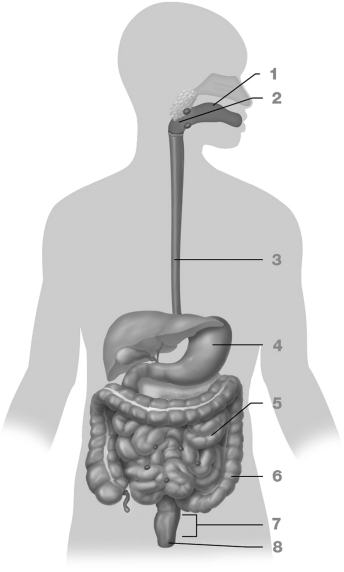
A) mouth, esophagus, stomach, pharynx, small intestine, large intestine, rectum, anus
B) mouth, esophagus, pharynx, stomach, large intestine, small intestine, rectum, anus
C) mouth, pharynx, esophagus, stomach, large intestine, small intestine, rectum, anus
D) mouth, pharynx, esophagus, stomach, small intestine, large intestine, rectum, anus
E) mouth, esophagus, pharynx, stomach, small intestine, large intestine, rectum, anus
A) mouth, esophagus, stomach, pharynx, small intestine, large intestine, rectum, anus
B) mouth, esophagus, pharynx, stomach, large intestine, small intestine, rectum, anus
C) mouth, pharynx, esophagus, stomach, large intestine, small intestine, rectum, anus
D) mouth, pharynx, esophagus, stomach, small intestine, large intestine, rectum, anus
E) mouth, esophagus, pharynx, stomach, small intestine, large intestine, rectum, anus
سؤال
سؤال
سؤال
سؤال
سؤال
سؤال
سؤال
سؤال
سؤال
سؤال
سؤال
سؤال
سؤال
سؤال
سؤال
سؤال
سؤال
سؤال
سؤال
سؤال
سؤال
سؤال
سؤال
سؤال
سؤال
سؤال
سؤال
سؤال
سؤال
سؤال
سؤال
سؤال
سؤال
سؤال
سؤال
سؤال

فتح الحزمة
قم بالتسجيل لفتح البطاقات في هذه المجموعة!
Unlock Deck
Unlock Deck
1/53

العب

ملء الشاشة (f)
Deck 19: Digestive System Infections
1
Stool is rich in which of the following organisms?
A) Neisseria
B) Streptococcus
C) Bacteriodes
D) Actinomyces
E) Fusobacterium
A) Neisseria
B) Streptococcus
C) Bacteriodes
D) Actinomyces
E) Fusobacterium
Bacteriodes
2
Which of the following does the mumps virus infect?
A) lacrimal glands
B) stomach
C) parotid glands
D) reproductive organs
E) pancreas
A) lacrimal glands
B) stomach
C) parotid glands
D) reproductive organs
E) pancreas
parotid glands
3
Which hepatitis virus only results in acute infections?
A) hepatitis A
B) hepatitis B
C) hepatitis C
D) hepatitis D
E) hepatitis E
A) hepatitis A
B) hepatitis B
C) hepatitis C
D) hepatitis D
E) hepatitis E
hepatitis A
4
How does Helicobacter pylori cause stomach ulcers?
A) Fimbriae enable to bacteria to penetrate the mucosa and bind to the epithelial lining of the stomach where toxins are released that bind and destroy epithelial cells.
B) Peritrichous flagella help the bacteria squeeze through the mucosal lining to avoid stomach acid, where cytokine imposters are released which attract B cells and cause the immune response to destroy the epithelial lining of the stomach.
C) The glycocalyx protects the bacteria from stomach acid as the bacteria enters a susceptible host and binds to an area of epithelial cells in the stomach with thin mucosa where toxins cause further damage and allow entry.
D) Polar flagella help bacteria burrow into mucosal lining to escape stomach acid, where enzymes decrease the acidity around them, and they release a toxin to kill host cells.
E) Bacterial capsules allow the bacteria to survive in the acidic lumen of the stomach as it releases toxins that bind to and destroy the epithelial lining of the stomach.
A) Fimbriae enable to bacteria to penetrate the mucosa and bind to the epithelial lining of the stomach where toxins are released that bind and destroy epithelial cells.
B) Peritrichous flagella help the bacteria squeeze through the mucosal lining to avoid stomach acid, where cytokine imposters are released which attract B cells and cause the immune response to destroy the epithelial lining of the stomach.
C) The glycocalyx protects the bacteria from stomach acid as the bacteria enters a susceptible host and binds to an area of epithelial cells in the stomach with thin mucosa where toxins cause further damage and allow entry.
D) Polar flagella help bacteria burrow into mucosal lining to escape stomach acid, where enzymes decrease the acidity around them, and they release a toxin to kill host cells.
E) Bacterial capsules allow the bacteria to survive in the acidic lumen of the stomach as it releases toxins that bind to and destroy the epithelial lining of the stomach.
فتح الحزمة
افتح القفل للوصول البطاقات البالغ عددها 53 في هذه المجموعة.
فتح الحزمة
k this deck
5
Which of the following is false of Campylobacter jejuni infections?
A) It is a Gram- negative, flagellated, spiral- shaped bacterium that grows best in microaerophilic conditions.
B) Although symptoms usually resolve within a week, in immune- compromised patients the bacteria may cause bacteremia, which could lead to sepsis and possibly septic shock.
C) After ingestion, the bacteria burrow through the mucosal layer of the intestine and migrate through intestinal epithelial cells to multiply just beneath the epithelial layer.
D) Infections are primarily associated with eating undercooked beef or cross- contaminating foods with raw beef juices.
E) Antibodies that recognize C. jejuni's lipopolysaccharides can cross- react with sugars on neurons that trigger an autoimmune response against the nervous system called Guillain- Barré syndrome.
A) It is a Gram- negative, flagellated, spiral- shaped bacterium that grows best in microaerophilic conditions.
B) Although symptoms usually resolve within a week, in immune- compromised patients the bacteria may cause bacteremia, which could lead to sepsis and possibly septic shock.
C) After ingestion, the bacteria burrow through the mucosal layer of the intestine and migrate through intestinal epithelial cells to multiply just beneath the epithelial layer.
D) Infections are primarily associated with eating undercooked beef or cross- contaminating foods with raw beef juices.
E) Antibodies that recognize C. jejuni's lipopolysaccharides can cross- react with sugars on neurons that trigger an autoimmune response against the nervous system called Guillain- Barré syndrome.
فتح الحزمة
افتح القفل للوصول البطاقات البالغ عددها 53 في هذه المجموعة.
فتح الحزمة
k this deck
6
Which two hepatitis viruses primarily use the fecal- oral route for infection?
A) hepatitis C and hepatitis D
B) hepatitis B and hepatitis D
C) hepatitis A and hepatitis E
D) hepatitis D and hepatitis E
E) hepatitis B and hepatitis C
A) hepatitis C and hepatitis D
B) hepatitis B and hepatitis D
C) hepatitis A and hepatitis E
D) hepatitis D and hepatitis E
E) hepatitis B and hepatitis C
فتح الحزمة
افتح القفل للوصول البطاقات البالغ عددها 53 في هذه المجموعة.
فتح الحزمة
k this deck
7
Which hepatitis virus has a genome made up of double- stranded DNA?
A) hepatitis A
B) hepatitis B
C) hepatitis C
D) hepatitis D
E) hepatitis E
A) hepatitis A
B) hepatitis B
C) hepatitis C
D) hepatitis D
E) hepatitis E
فتح الحزمة
افتح القفل للوصول البطاقات البالغ عددها 53 في هذه المجموعة.
فتح الحزمة
k this deck
8
An important source of vitamin K in the intestine comes from which species?
A) Vibrio cholerae
B) Helicobacter pylori
C) Giardia lamblia
D) Streptococcus mutans
E) Escherichia coli
A) Vibrio cholerae
B) Helicobacter pylori
C) Giardia lamblia
D) Streptococcus mutans
E) Escherichia coli
فتح الحزمة
افتح القفل للوصول البطاقات البالغ عددها 53 في هذه المجموعة.
فتح الحزمة
k this deck
9
The in _ inhibit the growth of many bacteria.
A) acidity; stomach mucus
B) salts; bile
C) toxins; chyme
D) lysozymes; gastric juice
E) fats; saliva
A) acidity; stomach mucus
B) salts; bile
C) toxins; chyme
D) lysozymes; gastric juice
E) fats; saliva
فتح الحزمة
افتح القفل للوصول البطاقات البالغ عددها 53 في هذه المجموعة.
فتح الحزمة
k this deck
10
Which of the following is not true about the interaction of biofilms on teeth?
A) When plaque calcifies into tartar it must be scraped off the teeth.
B) Dentists recommend a twice- yearly dental cleaning and checkup to limit caries and periodontal disease,
C) Bacterial growth within deeper biofilm layers and new bacteria entering the mouth quickly reestablish what was removed from brushing.
D) Limiting dietary fats reduces lactic acid production by the bacteria in dental plaque and decreases the risk for dental caries,
E) Brushing teeth twice daily and flossing will physically remove superficial plaque layers.
A) When plaque calcifies into tartar it must be scraped off the teeth.
B) Dentists recommend a twice- yearly dental cleaning and checkup to limit caries and periodontal disease,
C) Bacterial growth within deeper biofilm layers and new bacteria entering the mouth quickly reestablish what was removed from brushing.
D) Limiting dietary fats reduces lactic acid production by the bacteria in dental plaque and decreases the risk for dental caries,
E) Brushing teeth twice daily and flossing will physically remove superficial plaque layers.
فتح الحزمة
افتح القفل للوصول البطاقات البالغ عددها 53 في هذه المجموعة.
فتح الحزمة
k this deck
11
Dysentery can lead to and/or organ failure if medical attention is not sought in time.
A) gastritis
B) gastroenteritis
C) enteritis
D) diarrhea
E) hypovolemic shock
A) gastritis
B) gastroenteritis
C) enteritis
D) diarrhea
E) hypovolemic shock
فتح الحزمة
افتح القفل للوصول البطاقات البالغ عددها 53 في هذه المجموعة.
فتح الحزمة
k this deck
12
Which hepatitis virus requires an additional hepatitis infection in order to be virulent?
A) hepatitis A
B) hepatitis B
C) hepatitis C
D) hepatitis D
E) hepatitis E
A) hepatitis A
B) hepatitis B
C) hepatitis C
D) hepatitis D
E) hepatitis E
فتح الحزمة
افتح القفل للوصول البطاقات البالغ عددها 53 في هذه المجموعة.
فتح الحزمة
k this deck
13
Although four of the following options describe both rotavirus and norovirus, which one specifically describes norovirus?
A) symptoms include vomiting, diarrhea, and nausea
B) common in long- term care facilities
C) definitive diagnosis requires detecting the RNA virus in the patient stool sample
D) spreads via the fecal- oral route
E) RNA virus
A) symptoms include vomiting, diarrhea, and nausea
B) common in long- term care facilities
C) definitive diagnosis requires detecting the RNA virus in the patient stool sample
D) spreads via the fecal- oral route
E) RNA virus
فتح الحزمة
افتح القفل للوصول البطاقات البالغ عددها 53 في هذه المجموعة.
فتح الحزمة
k this deck
14
Why is lymphatic tissue found all along the GI tract?
A) Different pathogens are activated at different points along the digestive tract, and the location of the lymphatic tissue allows the host to respond according to which pathogen is activating in that area.
B) When an infection occurs, these lymphatic tissues are able to quickly trigger an inflammatory response along the entire GI tract.
C) When an infection occurs, these lymphatic tissues are able to quickly stop digestion and the movement of the GI contents so that the infection doesn't spread throughout the body.
D) Upon infection in a specific area of the GI tract, a response can quickly be delivered and flood the lumen of the GI tract in that region.
E) Cells in these lymphatic tissues "sample" the environment by phagocytosis and present their findings to lymphocytes that may or may not need to initiate an immune response.
A) Different pathogens are activated at different points along the digestive tract, and the location of the lymphatic tissue allows the host to respond according to which pathogen is activating in that area.
B) When an infection occurs, these lymphatic tissues are able to quickly trigger an inflammatory response along the entire GI tract.
C) When an infection occurs, these lymphatic tissues are able to quickly stop digestion and the movement of the GI contents so that the infection doesn't spread throughout the body.
D) Upon infection in a specific area of the GI tract, a response can quickly be delivered and flood the lumen of the GI tract in that region.
E) Cells in these lymphatic tissues "sample" the environment by phagocytosis and present their findings to lymphocytes that may or may not need to initiate an immune response.
فتح الحزمة
افتح القفل للوصول البطاقات البالغ عددها 53 في هذه المجموعة.
فتح الحزمة
k this deck
15
What do chronic hepatitis infections result in?
A) kidney failure or kidney cancer
B) heart failure
C) constipation
D) cirrhosis, liver failure, or hepatocellular carcinoma
E) constipation, ulcers, or colon cancer
A) kidney failure or kidney cancer
B) heart failure
C) constipation
D) cirrhosis, liver failure, or hepatocellular carcinoma
E) constipation, ulcers, or colon cancer
فتح الحزمة
افتح القفل للوصول البطاقات البالغ عددها 53 في هذه المجموعة.
فتح الحزمة
k this deck
16
is characterized by tender, swollen gums with a bright red or purplish coloration; the gums may also pull away from teeth, and bad breath and tooth loss are also frequent manifestations.
A) Periodontal disease
B) Dental caries
C) Gingivitis
D) Thrush
E) Oral yeast infection
A) Periodontal disease
B) Dental caries
C) Gingivitis
D) Thrush
E) Oral yeast infection
فتح الحزمة
افتح القفل للوصول البطاقات البالغ عددها 53 في هذه المجموعة.
فتح الحزمة
k this deck
17
What is the correct order of the following eight parts of the GI tract?
A) mouth, esophagus, stomach, pharynx, small intestine, large intestine, rectum, anus
B) mouth, esophagus, pharynx, stomach, large intestine, small intestine, rectum, anus
C) mouth, pharynx, esophagus, stomach, large intestine, small intestine, rectum, anus
D) mouth, pharynx, esophagus, stomach, small intestine, large intestine, rectum, anus
E) mouth, esophagus, pharynx, stomach, small intestine, large intestine, rectum, anus
A) mouth, esophagus, stomach, pharynx, small intestine, large intestine, rectum, anus
B) mouth, esophagus, pharynx, stomach, large intestine, small intestine, rectum, anus
C) mouth, pharynx, esophagus, stomach, large intestine, small intestine, rectum, anus
D) mouth, pharynx, esophagus, stomach, small intestine, large intestine, rectum, anus
E) mouth, esophagus, pharynx, stomach, small intestine, large intestine, rectum, anus
فتح الحزمة
افتح القفل للوصول البطاقات البالغ عددها 53 في هذه المجموعة.
فتح الحزمة
k this deck
18
Which of the following describes a case of food poisoning?
A) After ingestion, a pathogen establishes infection in the host.
B) Symptoms begin 1- 5 days after exposure.
C) Recovery time can take anywhere from days to weeks.
D) Signs and symptoms include fever, headache, muscle aches, nausea, diarrhea, and abdominal pain.
E) Toxins from Staphylococcus aureus, Bacillus cereus, and Clostridium perfringens are responsible.
A) After ingestion, a pathogen establishes infection in the host.
B) Symptoms begin 1- 5 days after exposure.
C) Recovery time can take anywhere from days to weeks.
D) Signs and symptoms include fever, headache, muscle aches, nausea, diarrhea, and abdominal pain.
E) Toxins from Staphylococcus aureus, Bacillus cereus, and Clostridium perfringens are responsible.
فتح الحزمة
افتح القفل للوصول البطاقات البالغ عددها 53 في هذه المجموعة.
فتح الحزمة
k this deck
19
Which of the following is able to identify the pathogen responsible for intestinal symptoms?
A) selective and differential culture media
B) upper GI endoscopy and colonoscopy
C) microscopic examination of stool samples
D) molecular techniques
E) selective and differential culture media, molecular techniques, and microscopic examination of stool samples
A) selective and differential culture media
B) upper GI endoscopy and colonoscopy
C) microscopic examination of stool samples
D) molecular techniques
E) selective and differential culture media, molecular techniques, and microscopic examination of stool samples
فتح الحزمة
افتح القفل للوصول البطاقات البالغ عددها 53 في هذه المجموعة.
فتح الحزمة
k this deck
20
Bacteria metabolize sugars and they create that can eat away at the to cause dental caries.
A) chemicals; pulp
B) spores; gums
C) proteins; pulp
D) acids; enamel
E) toxins; dentin
A) chemicals; pulp
B) spores; gums
C) proteins; pulp
D) acids; enamel
E) toxins; dentin
فتح الحزمة
افتح القفل للوصول البطاقات البالغ عددها 53 في هذه المجموعة.
فتح الحزمة
k this deck
21
Which of the following is not a reason why Clostridium difficile is an increasing concern in healthcare settings?
A) antibiotic resistance
B) the bacterium can naturally escape drugs and disinfectants by retreating into a resistant spore state
C) additional modes of transmission have occurred in several isolated cases
D) antibiotic misuse and overuse in the population
E) emerging superstrains that make a third type of toxin
A) antibiotic resistance
B) the bacterium can naturally escape drugs and disinfectants by retreating into a resistant spore state
C) additional modes of transmission have occurred in several isolated cases
D) antibiotic misuse and overuse in the population
E) emerging superstrains that make a third type of toxin
فتح الحزمة
افتح القفل للوصول البطاقات البالغ عددها 53 في هذه المجموعة.
فتح الحزمة
k this deck
22
Which of the following features have not helped Giardia become the most common intestinal parasite?
A) It can be transmitted via fecal- oral route, via contaminated fomites, or from direct contact with an infected patient.
B) It lives in animals other than humans.
C) No drugs are currently available for treatment.
D) Ingesting as few as 10 cysts is sufficient to establish infection.
E) A tough cyst form that resists chlorine disinfection used for municipal water treatment, UV light, and freezing.
A) It can be transmitted via fecal- oral route, via contaminated fomites, or from direct contact with an infected patient.
B) It lives in animals other than humans.
C) No drugs are currently available for treatment.
D) Ingesting as few as 10 cysts is sufficient to establish infection.
E) A tough cyst form that resists chlorine disinfection used for municipal water treatment, UV light, and freezing.
فتح الحزمة
افتح القفل للوصول البطاقات البالغ عددها 53 في هذه المجموعة.
فتح الحزمة
k this deck
23
Which hosts does the tapeworm Diphyllobothrium latum require to complete its lifecycle?
A) crustaceans, fish, and mammals
B) ants, sheep, and mammals
C) snails, chickens, and mammals
D) cows and humans
E) pigs and mammals
A) crustaceans, fish, and mammals
B) ants, sheep, and mammals
C) snails, chickens, and mammals
D) cows and humans
E) pigs and mammals
فتح الحزمة
افتح القفل للوصول البطاقات البالغ عددها 53 في هذه المجموعة.
فتح الحزمة
k this deck
24
How are Cryptosporidium sporozoites able to evade the immune system?
A) They escape from phagocytes.
B) They reside inside the host cells.
C) They evade phagocytosis by using a capsule.
D) They attach to host cells and build a protective membrane from modified host cell membrane materials.
E) Special proteins bind and inhibit antibodies from adhering to them.
A) They escape from phagocytes.
B) They reside inside the host cells.
C) They evade phagocytosis by using a capsule.
D) They attach to host cells and build a protective membrane from modified host cell membrane materials.
E) Special proteins bind and inhibit antibodies from adhering to them.
فتح الحزمة
افتح القفل للوصول البطاقات البالغ عددها 53 في هذه المجموعة.
فتح الحزمة
k this deck
25
Besides diagnosing giardiasis via microscopic evaluation of feces for cysts or trophozoites, it can also be diagnosed
A) by a urine sample.
B) by a spinal fluid sample.
C) by a blood sample.
D) using PCR.
E) by detecting Giardia antigens.
A) by a urine sample.
B) by a spinal fluid sample.
C) by a blood sample.
D) using PCR.
E) by detecting Giardia antigens.
فتح الحزمة
افتح القفل للوصول البطاقات البالغ عددها 53 في هذه المجموعة.
فتح الحزمة
k this deck
26
Which of the following would not result from a cholera infection?
A) mild to profuse diarrhea
B) organ failure and death
C) hypovolemic shock
D) leg cramps
E) pseudomembranous colitis
A) mild to profuse diarrhea
B) organ failure and death
C) hypovolemic shock
D) leg cramps
E) pseudomembranous colitis
فتح الحزمة
افتح القفل للوصول البطاقات البالغ عددها 53 في هذه المجموعة.
فتح الحزمة
k this deck
27
Which of the following is false of Shigella infections?
A) The Shiga toxin targets ribosomes to block protein synthesis and kill host cells.
B) It can induce hemolytic uremic syndrome with symptoms that include hematuria, purpura, and edema.
C) It spreads from person to person and also through human fecal contamination of food, water, or environmental surfaces that are touched.
D) In the United States, S. sonnei accounts for about 75 percent of Shigella cases, while S. flexneri predominates in developing countries.
E) The elderly are most likely to become infected.
A) The Shiga toxin targets ribosomes to block protein synthesis and kill host cells.
B) It can induce hemolytic uremic syndrome with symptoms that include hematuria, purpura, and edema.
C) It spreads from person to person and also through human fecal contamination of food, water, or environmental surfaces that are touched.
D) In the United States, S. sonnei accounts for about 75 percent of Shigella cases, while S. flexneri predominates in developing countries.
E) The elderly are most likely to become infected.
فتح الحزمة
افتح القفل للوصول البطاقات البالغ عددها 53 في هذه المجموعة.
فتح الحزمة
k this deck
28
Why should antibiotics not be given to a patient with Escherichia coli O157:H7?
A) This pathotype is part of the normal digestive tract of humans.
B) Antibiotics tend to act as a hapten with this infection and are likely to cause an allergic response.
C) This is not a bacterium, and therefore antibiotics would be ineffective.
D) This pathotype is only found in cattle and does not infect humans.
E) Antibiotics do not reduce disease and may precipitate HUS.
A) This pathotype is part of the normal digestive tract of humans.
B) Antibiotics tend to act as a hapten with this infection and are likely to cause an allergic response.
C) This is not a bacterium, and therefore antibiotics would be ineffective.
D) This pathotype is only found in cattle and does not infect humans.
E) Antibiotics do not reduce disease and may precipitate HUS.
فتح الحزمة
افتح القفل للوصول البطاقات البالغ عددها 53 في هذه المجموعة.
فتح الحزمة
k this deck
29
Which of the following is not a virulence factor of Shigella species?
A) the manufacture of several toxins that damage intestinal cells and induce fluid efflux
B) the capability to cause stomach ulcers
C) the capacity to pass between infected cells using an actin propulsion system
D) a system that induces host cells to endocytose the bacteria
E) the ability to escape from phagocytes
A) the manufacture of several toxins that damage intestinal cells and induce fluid efflux
B) the capability to cause stomach ulcers
C) the capacity to pass between infected cells using an actin propulsion system
D) a system that induces host cells to endocytose the bacteria
E) the ability to escape from phagocytes
فتح الحزمة
افتح القفل للوصول البطاقات البالغ عددها 53 في هذه المجموعة.
فتح الحزمة
k this deck
30
A major difference between protozoans and helminths is that protozoans are
A) unicellular.
B) able to survive outside of a host.
C) parasitic.
D) multicellular.
E) archaea.
A) unicellular.
B) able to survive outside of a host.
C) parasitic.
D) multicellular.
E) archaea.
فتح الحزمة
افتح القفل للوصول البطاقات البالغ عددها 53 في هذه المجموعة.
فتح الحزمة
k this deck
31
Which of the following describe the typical lifecycle of amebiasis?
A) host makes contact with contaminated object; swallows cysts; trophozoites released from cysts; trophozoites reproduce in digestive tract; trophozoites and new cysts are released from host in feces
B) host makes contact with contaminated object; swallows cysts; trophozoites released from cysts; trophozoites reproduce in digestive tract; trophozoites travel to the lungs, trophozoites form cysts, cysts are coughed up and released from host in relatively large respiratory droplets that people sneeze, cough, drip, or exhale
C) host makes contact with contaminated object; swallows cysts; trophozoites released from cysts in digestive tract; trophozoites travel to and reproduce in the liver; trophozoites travel to the lungs, trophozoites form cysts, cysts are coughed up, swallowed, and released from host in feces
D) host is bitten; cysts enter the bloodstream; trophozoites released from cysts in blood; trophozoites travel to and reproduce in the liver; new trophozoites circulate in blood, trophozoites are eaten by a new insect where they then form cysts
E) host makes contact with contaminated object; swallows cysts; trophozoites released from cysts; trophozoites reproduce in digestive tract; trophozoites travel to the lungs, trophozoites form cysts, cysts are coughed up, swallowed, and released from host in feces
A) host makes contact with contaminated object; swallows cysts; trophozoites released from cysts; trophozoites reproduce in digestive tract; trophozoites and new cysts are released from host in feces
B) host makes contact with contaminated object; swallows cysts; trophozoites released from cysts; trophozoites reproduce in digestive tract; trophozoites travel to the lungs, trophozoites form cysts, cysts are coughed up and released from host in relatively large respiratory droplets that people sneeze, cough, drip, or exhale
C) host makes contact with contaminated object; swallows cysts; trophozoites released from cysts in digestive tract; trophozoites travel to and reproduce in the liver; trophozoites travel to the lungs, trophozoites form cysts, cysts are coughed up, swallowed, and released from host in feces
D) host is bitten; cysts enter the bloodstream; trophozoites released from cysts in blood; trophozoites travel to and reproduce in the liver; new trophozoites circulate in blood, trophozoites are eaten by a new insect where they then form cysts
E) host makes contact with contaminated object; swallows cysts; trophozoites released from cysts; trophozoites reproduce in digestive tract; trophozoites travel to the lungs, trophozoites form cysts, cysts are coughed up, swallowed, and released from host in feces
فتح الحزمة
افتح القفل للوصول البطاقات البالغ عددها 53 في هذه المجموعة.
فتح الحزمة
k this deck
32
Which of the following would not result from a C. difficile infection?
A) severe abdominal pain, fever, nausea, and abundant watery diarrhea that may progress to dysentery
B) pseudomembranous colitis
C) toxic megacolon
D) mild diarrhea
E) hemolytic uremic syndrome
A) severe abdominal pain, fever, nausea, and abundant watery diarrhea that may progress to dysentery
B) pseudomembranous colitis
C) toxic megacolon
D) mild diarrhea
E) hemolytic uremic syndrome
فتح الحزمة
افتح القفل للوصول البطاقات البالغ عددها 53 في هذه المجموعة.
فتح الحزمة
k this deck
33
Which of the following helminths is known for moving out of the body through the anus, nose, or mouth?
A) Trichinella spiralis
B) Necator americanu
C) Schistosoma haematobium
D) Ascaris lumbricoides
E) Enterobius vermicularis
A) Trichinella spiralis
B) Necator americanu
C) Schistosoma haematobium
D) Ascaris lumbricoides
E) Enterobius vermicularis
فتح الحزمة
افتح القفل للوصول البطاقات البالغ عددها 53 في هذه المجموعة.
فتح الحزمة
k this deck
34
Eating peanut butter, cantaloupe, chicken products, seafood, spinach, or handling a pet turtle are all sources of infection for which of the following bacteria?
A) Salmonella enterica serotype Typhi
B) Salmonella enterica serotype Enteritidis
C) Shigella dysenteriae
D) Campylobacter jejuni
E) Esherichia coli O157:H7
A) Salmonella enterica serotype Typhi
B) Salmonella enterica serotype Enteritidis
C) Shigella dysenteriae
D) Campylobacter jejuni
E) Esherichia coli O157:H7
فتح الحزمة
افتح القفل للوصول البطاقات البالغ عددها 53 في هذه المجموعة.
فتح الحزمة
k this deck
35
How do you test for a pinworm infection?
A) tape adhesion test
B) screening for molecular antigens
C) microscopic identification of eggs in stool
D) microscopic evaluation of stool for oocyst
E) PCR
A) tape adhesion test
B) screening for molecular antigens
C) microscopic identification of eggs in stool
D) microscopic evaluation of stool for oocyst
E) PCR
فتح الحزمة
افتح القفل للوصول البطاقات البالغ عددها 53 في هذه المجموعة.
فتح الحزمة
k this deck
36
Which of the following uses cows as the intermediate host?
A) Taenia solium
B) Taenia asiatica
C) Enterobius vermicularis
D) Necator americanu
E) Taenia saginata
A) Taenia solium
B) Taenia asiatica
C) Enterobius vermicularis
D) Necator americanu
E) Taenia saginata
فتح الحزمة
افتح القفل للوصول البطاقات البالغ عددها 53 في هذه المجموعة.
فتح الحزمة
k this deck
37
Which of the following bacteria can thrive even if frozen?
A) Shigella dysenteriae
B) Salmonella enterica
C) Listeria monocytogenes
D) Esherichia coli
E) Campylobacter jejuni
A) Shigella dysenteriae
B) Salmonella enterica
C) Listeria monocytogenes
D) Esherichia coli
E) Campylobacter jejuni
فتح الحزمة
افتح القفل للوصول البطاقات البالغ عددها 53 في هذه المجموعة.
فتح الحزمة
k this deck
38
Even though 90 percent of infections are asymptomatic, why should you always treat amebiasis?
A) Pseudomembranous plaques form along the colon lining as toxins cause tissue damage in 10 percent of hosts.
B) The immune system of the host can quickly become compromised.
C) The protozoan can cause invasive disease that affects the liver, lungs, and brain.
D) Exotoxin production can promote a vigorous inflammatory response in certain patients and also damage the cytoskeleton of the colon's epithelial cells.
E) Asymptomatic patients can continue to spread the disease for years before dying themselves.
A) Pseudomembranous plaques form along the colon lining as toxins cause tissue damage in 10 percent of hosts.
B) The immune system of the host can quickly become compromised.
C) The protozoan can cause invasive disease that affects the liver, lungs, and brain.
D) Exotoxin production can promote a vigorous inflammatory response in certain patients and also damage the cytoskeleton of the colon's epithelial cells.
E) Asymptomatic patients can continue to spread the disease for years before dying themselves.
فتح الحزمة
افتح القفل للوصول البطاقات البالغ عددها 53 في هذه المجموعة.
فتح الحزمة
k this deck
39
Cysticercosis is a result of infection with which species?
A) Taenia asiatica
B) Necator americanu
C) Enterobius vermicularis
D) Taenia solium
E) Ascaris lumbricoides
A) Taenia asiatica
B) Necator americanu
C) Enterobius vermicularis
D) Taenia solium
E) Ascaris lumbricoides
فتح الحزمة
افتح القفل للوصول البطاقات البالغ عددها 53 في هذه المجموعة.
فتح الحزمة
k this deck
40
How does a patient typically become infected with hookworms?
A) Eggs are ingested when the patient eats infected seafood.
B) Cysts are ingested when the patient eats undercooked meat.
C) Cysts are spread onto fomites when an infected host does not properly wash their hands and then the patient touches that object and doesn't wash their hands before eating.
D) Cysts are spread via respiratory droplets when an infected host coughs or sneezes.
E) The worm penetrates the skin when the patient walks outside barefoot.
A) Eggs are ingested when the patient eats infected seafood.
B) Cysts are ingested when the patient eats undercooked meat.
C) Cysts are spread onto fomites when an infected host does not properly wash their hands and then the patient touches that object and doesn't wash their hands before eating.
D) Cysts are spread via respiratory droplets when an infected host coughs or sneezes.
E) The worm penetrates the skin when the patient walks outside barefoot.
فتح الحزمة
افتح القفل للوصول البطاقات البالغ عددها 53 في هذه المجموعة.
فتح الحزمة
k this deck
41
Besides mumps causing swelling of the parotid salivary glands, it can also cause meningitis and orchitis.
فتح الحزمة
افتح القفل للوصول البطاقات البالغ عددها 53 في هذه المجموعة.
فتح الحزمة
k this deck
42
After infection with a norovirus, the patient will be immune from all future norovirus infections.
فتح الحزمة
افتح القفل للوصول البطاقات البالغ عددها 53 في هذه المجموعة.
فتح الحزمة
k this deck
43
Oral rehydration is usually sufficient for most patients to fully recover from Vibrio cholerae.
فتح الحزمة
افتح القفل للوصول البطاقات البالغ عددها 53 في هذه المجموعة.
فتح الحزمة
k this deck
44
Tonsils at the back of the throat, the appendix, and Peyer's patches of the small intestine are all examples of mucosa- associated lymphoid tissue (MALT) found along the GI tract.
فتح الحزمة
افتح القفل للوصول البطاقات البالغ عددها 53 في هذه المجموعة.
فتح الحزمة
k this deck
45
An important source of vitamin B in the intestine comes from Escherichia coli.
فتح الحزمة
افتح القفل للوصول البطاقات البالغ عددها 53 في هذه المجموعة.
فتح الحزمة
k this deck
46
What are the differences between a foodborne infection and food poisoning?
فتح الحزمة
افتح القفل للوصول البطاقات البالغ عددها 53 في هذه المجموعة.
فتح الحزمة
k this deck
47
Upper GI and lower endoscopy are tools that can be used to identify the precise microbe responsible for GI symptoms.
فتح الحزمة
افتح القفل للوصول البطاقات البالغ عددها 53 في هذه المجموعة.
فتح الحزمة
k this deck
48
What causes schistosomiasis?
A) roundworm
B) hookworm
C) pinworm
D) blood fluke
E) tapeworm
A) roundworm
B) hookworm
C) pinworm
D) blood fluke
E) tapeworm
فتح الحزمة
افتح القفل للوصول البطاقات البالغ عددها 53 في هذه المجموعة.
فتح الحزمة
k this deck
49
Giardiasis and cryptosporidiosis are both caused by helminth infections.
فتح الحزمة
افتح القفل للوصول البطاقات البالغ عددها 53 في هذه المجموعة.
فتح الحزمة
k this deck
50
Limiting dietary sugars reduces lactic acid production by the bacteria in dental plaque and decreases the risk for dental caries.
فتح الحزمة
افتح القفل للوصول البطاقات البالغ عددها 53 في هذه المجموعة.
فتح الحزمة
k this deck
51
In what ways are we finding that the gut microbiota affects our health?
فتح الحزمة
افتح القفل للوصول البطاقات البالغ عددها 53 في هذه المجموعة.
فتح الحزمة
k this deck
52
Trichinellosis, also known as trichinosis, occurs when
A) inhaled cysts perforate the lungs as they make their way to the intestines.
B) ingested cysts mature into worms in the intestines and the larvae migrate into blood and embed in muscles.
C) ingested cysts mature into adult roundworms and release thousands of eggs as the adult releases toxins to promote severe diarrhea.
D) ingested cysts mature into adult worms and cause the host to suffer from malnutrition.
E) ingested cysts mature into adult tapeworms and release proglottids that force their way out of the anus.
A) inhaled cysts perforate the lungs as they make their way to the intestines.
B) ingested cysts mature into worms in the intestines and the larvae migrate into blood and embed in muscles.
C) ingested cysts mature into adult roundworms and release thousands of eggs as the adult releases toxins to promote severe diarrhea.
D) ingested cysts mature into adult worms and cause the host to suffer from malnutrition.
E) ingested cysts mature into adult tapeworms and release proglottids that force their way out of the anus.
فتح الحزمة
افتح القفل للوصول البطاقات البالغ عددها 53 في هذه المجموعة.
فتح الحزمة
k this deck
53
In what ways do helminths overcome the challenges of maintaining such complicated lifecycles?
فتح الحزمة
افتح القفل للوصول البطاقات البالغ عددها 53 في هذه المجموعة.
فتح الحزمة
k this deck
فتح الحزمة
افتح القفل للوصول البطاقات البالغ عددها 53 في هذه المجموعة.






