







 تكلم مع الذكاء الاصطناعي


Deck 15: The Special Senses
ملء الشاشة (f)

سؤال

سؤال
سؤال
سؤال
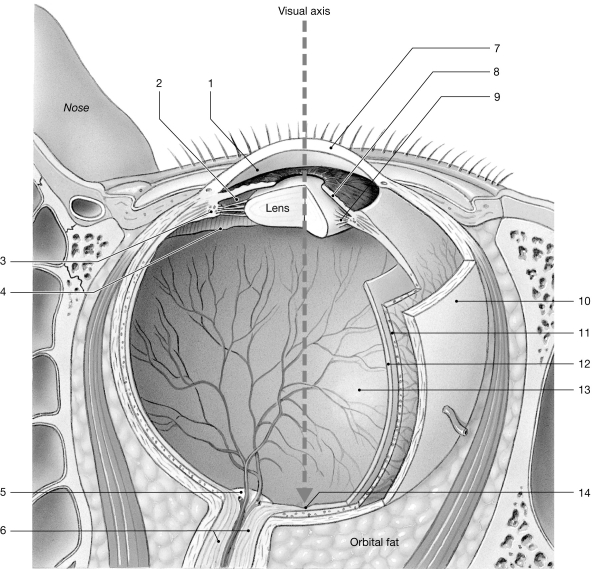 Figure 15- 1 The Sectional Anatomy of the Eye
Use Figure 15- 1 to answer the following questions:
The frequency of a perceived sound depends on
A) which part of the cochlear duct is stimulated.
B) the frequency of vibration of the tectorial membrane.
C) the frequency of stereocilia vibration.
D) the number of hair cells that are stimulated.
E) the movement of perilymph in the cochlear duct.
سؤال
سؤال
سؤال
سؤال
سؤال
سؤال
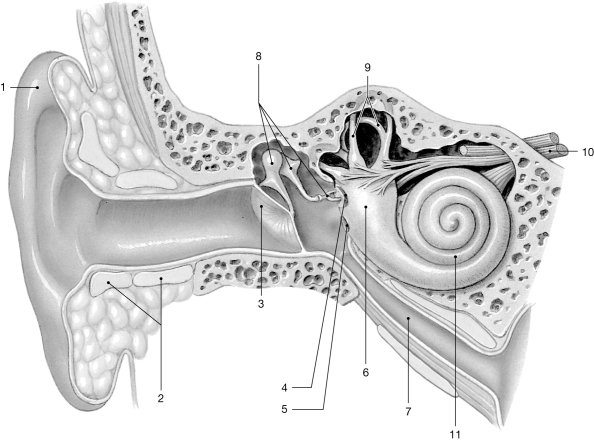 Figure 15- 2 The Ear
Use Figure 15- 2 to answer the following questions:
Which structure contains the receptors for hearing?
A) 10
B) 9
C) 8
D) 11
E) 6
سؤال
سؤال
Figure 15- 1 The Sectional Anatomy of the EyeUse Figure 15- 1 to answer the following questions:
The part of the eye that determines eye color is the
A) conjunctiva.
B) canal of Schlemm.
C) iris.
D) cornea.
E) pupil.
سؤال
سؤال
سؤال
Figure 15- 1 The Sectional Anatomy of the EyeUse Figure 15- 1 to answer the following questions:
Identify the space labeled "1."
A) posterior chamber
B) anterior cavity
C) pupil
D) posterior cavity
E) both A and D
سؤال
سؤال
سؤال
سؤال
سؤال
Figure 15- 2 The EarUse Figure 15- 2 to answer the following questions:
The palpebrae
A) are controlled by cranial nerves.
B) cover and protect the eye.
C) contain tarsal glands.
D) support the lateral rectus muscles of the eye.
E) A, B, and C
سؤال
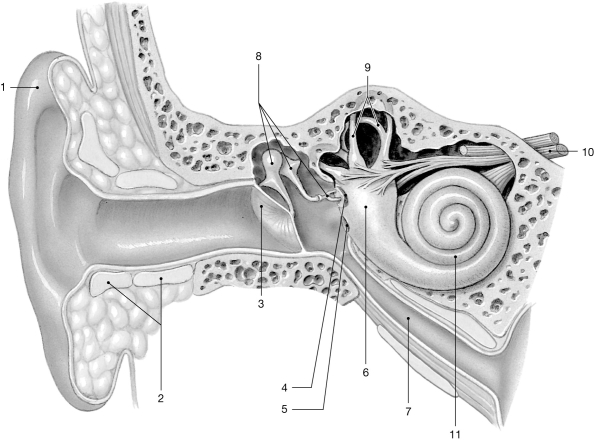 Figure 15- 2 The Ear
Use Figure 15- 2 to answer the following questions:
Identify the structures labeled "8."
A) auricle
B) tympanic membrane
C) auditory ossicles
D) vestibule
E) cochlea
سؤال
سؤال
سؤال
سؤال
سؤال
سؤال
سؤال
سؤال
سؤال
سؤال
سؤال
سؤال
سؤال
سؤال
سؤال
سؤال
سؤال
سؤال
سؤال
Figure 15- 2 The EarUse Figure 15- 2 to answer the following questions:
In the human eye, most refraction occurs when light passes through the
A) iris.
B) vitreous humor.
C) lens.
D) cornea.
E) aqueous humor.
سؤال
سؤال
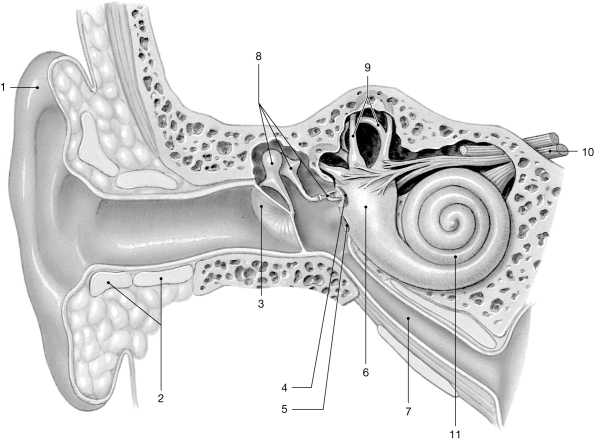 Figure 15- 2 The Ear
Use Figure 15- 2 to answer the following questions:
Under which condition would the release of neurotransmitter by photoreceptors be greatest?
A) immediately after going outside in bright sunlight
B) focusing intently on a distant object
C) focusing intently on a close object
D) under normal room light
E) in a pitch- black room after 30 minutes
سؤال
سؤال
سؤال
سؤال
سؤال
سؤال
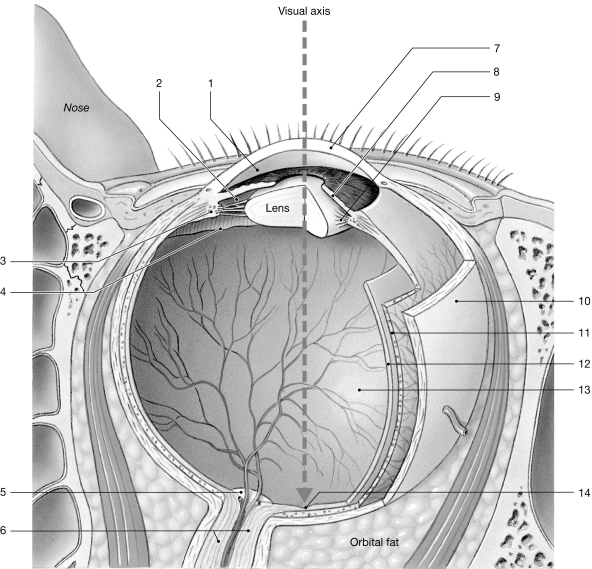 Figure 15- 1 The Sectional Anatomy of the Eye
Use Figure 15- 1 to answer the following questions:
Identify the structure labeled "7."
A) choroid
B) optic disc
C) cornea
D) retina
E) sclera
سؤال
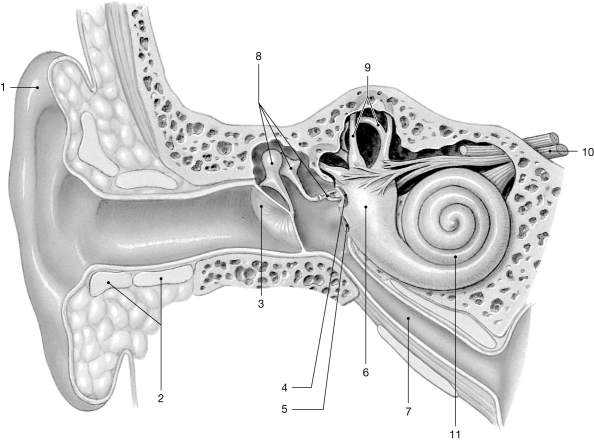 Figure 15- 2 The Ear
Use Figure 15- 2 to answer the following questions:
Which structure is known as the vestibule?
A) 9
B) 10
C) 11
D) 8
E) 6
سؤال
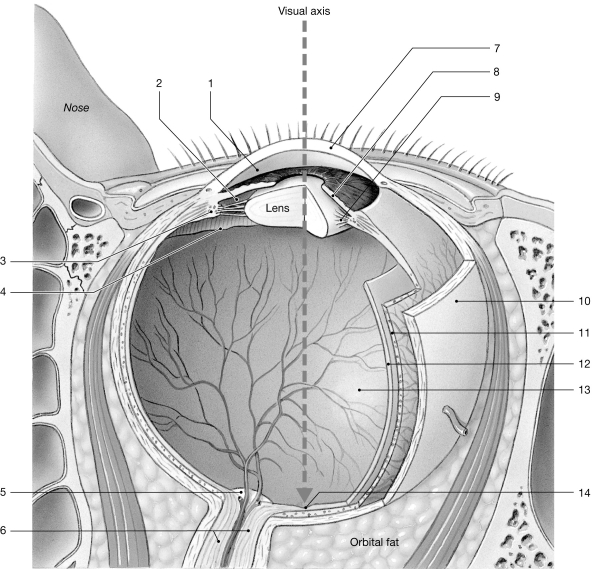 Figure 15- 1 The Sectional Anatomy of the Eye
Use Figure 15- 1 to answer the following questions:
Identify the structure labeled "14."
A) suspensory ligaments
B) sclera
C) pupil
D) fovea
E) optic disc
سؤال
Figure 15- 2 The EarUse Figure 15- 2 to answer the following questions:
Identify the structure that is covered up by the stapes.
A) 8
B) 4
C) 9
D) 5
E) 6
سؤال
سؤال
Figure 15- 1 The Sectional Anatomy of the EyeUse Figure 15- 1 to answer the following questions:
The sensory receptors of the semicircular canals are located in the
A) saccules.
B) cupulas.
C) ampullae.
D) utricles.
E) perilymph.
سؤال
سؤال
Figure 15- 2 The EarUse Figure 15- 2 to answer the following questions:
All of the following compose the epithelial projections found on the tongue, except
A) filiform papillae.
B) fungiform papillae.
C) circumvallate papillae.
D) gustatory papillae.
E) none of the above
سؤال
سؤال
سؤال
Figure 15- 1 The Sectional Anatomy of the EyeUse Figure 15- 1 to answer the following questions:
The cornea is part of the
A) fibrous tunic.
B) iris.
C) neural tunic.
D) uvea.
E) both A and C
سؤال
Figure 15- 2 The EarUse Figure 15- 2 to answer the following questions:
A pigment synthesized from vitamin A is
A) rhodopsin.
B) cGMP.
C) transducin.
D) opsin.
E) retinal.
سؤال
Figure 15- 1 The Sectional Anatomy of the EyeUse Figure 15- 1 to answer the following questions:
The auditory ossicles connect the
A) tympanic membrane to the round window.
B) stapedius to the tympanic membrane.
C) tympanic membrane to the oval window.
D) oval window to the round window.
E) otitis to the media.
سؤال
سؤال
سؤال
سؤال
سؤال
سؤال
سؤال
سؤال
سؤال
سؤال
سؤال
سؤال
سؤال
سؤال
C:\User 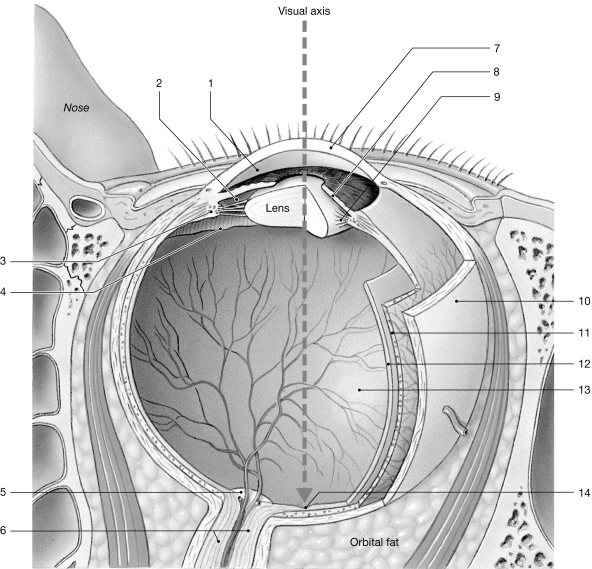 Figure 15- 1 The Sectional Anatomy of the Eye
Use Figure 15- 1 to answer the following questions:
Which of the following descriptions applies/apply to the term myopia?
A) corrected with diverging lens
B) nearsightedness
C) image focused in front of retina
D) A and C only
E) A, B, and C
Figure 15- 1 The Sectional Anatomy of the EyeUse Figure 15- 1 to answer the following questions:
Which of the following descriptions applies/apply to the term myopia?
A) corrected with diverging lens
B) nearsightedness
C) image focused in front of retina
D) A and C only
E) A, B, and C
سؤال
سؤال
C:\User Figure 15- 1 The Sectional Anatomy of the Eye
Use Figure 15- 1 to answer the following questions:
Which of these anatomical sequences is correct?
A) tympanum-malleus-incus-stapes-oval window-round window
B) tympanum-incus-stapes-malleus-oval window-round window
C) tympanum-malleus-incus-stapes-round window-oval window
D) tympanum-incus-malleus-stapes-round window-oval window
E) tympanum-incus-malleus-stapes-oval window-round window
Figure 15- 1 The Sectional Anatomy of the EyeUse Figure 15- 1 to answer the following questions:
Which of these anatomical sequences is correct?
A) tympanum-malleus-incus-stapes-oval window-round window
B) tympanum-incus-stapes-malleus-oval window-round window
C) tympanum-malleus-incus-stapes-round window-oval window
D) tympanum-incus-malleus-stapes-round window-oval window
E) tympanum-incus-malleus-stapes-oval window-round window
سؤال
سؤال
سؤال
سؤال
C:\User Figure 15- 1 The Sectional Anatomy of the Eye
Use Figure 15- 1 to answer the following questions:
Identify the structure labeled "12."
A) fovea
B) pupil
C) sclera
D) optic disc
E) retina
Figure 15- 1 The Sectional Anatomy of the EyeUse Figure 15- 1 to answer the following questions:
Identify the structure labeled "12."
A) fovea
B) pupil
C) sclera
D) optic disc
E) retina

فتح الحزمة
قم بالتسجيل لفتح البطاقات في هذه المجموعة!
Unlock Deck
Unlock Deck
1/167

العب

ملء الشاشة (f)
Deck 15: The Special Senses
1
The vitreous body
A) is replaced at the rate of 20 percent per year until middle age.
B) helps to stabilize the eye and give physical support to the retina.
C) fills the posterior cavity.
D) A, B, and C
E) A and B only
A) is replaced at the rate of 20 percent per year until middle age.
B) helps to stabilize the eye and give physical support to the retina.
C) fills the posterior cavity.
D) A, B, and C
E) A and B only
B
2
The cell bodies of sensory neurons that innervate the hair cells of the cochlea form the ganglion.
A) auditory
B) vestibular
C) acoustic
D) spiral
E) cochlear
A) auditory
B) vestibular
C) acoustic
D) spiral
E) cochlear
D
3
The shape of the lens is controlled by the
A) pupillary sphincter muscles.
B) pupillary radial muscles.
C) ciliary muscles.
D) iris.
E) A, B, and C
A) pupillary sphincter muscles.
B) pupillary radial muscles.
C) ciliary muscles.
D) iris.
E) A, B, and C
C
4
Figure 15- 1 The Sectional Anatomy of the EyeUse Figure 15- 1 to answer the following questions:
The frequency of a perceived sound depends on
A) which part of the cochlear duct is stimulated.
B) the frequency of vibration of the tectorial membrane.
C) the frequency of stereocilia vibration.
D) the number of hair cells that are stimulated.
E) the movement of perilymph in the cochlear duct.
فتح الحزمة
افتح القفل للوصول البطاقات البالغ عددها 167 في هذه المجموعة.
فتح الحزمة
k this deck
5
When a rod is stimulated by light,
A) the retinal changes from the 11- cis to the 11- trans form.
B) cGMP decreases and sodium channels close.
C) less neurotransmitter is released.
D) the plasma membrane becomes hyperpolarized.
E) all of the above
A) the retinal changes from the 11- cis to the 11- trans form.
B) cGMP decreases and sodium channels close.
C) less neurotransmitter is released.
D) the plasma membrane becomes hyperpolarized.
E) all of the above
فتح الحزمة
افتح القفل للوصول البطاقات البالغ عددها 167 في هذه المجموعة.
فتح الحزمة
k this deck
6
The external ear ends at the
A) ossicles.
B) pinna.
C) tympanic membrane.
D) vestibule.
E) cochlea.
A) ossicles.
B) pinna.
C) tympanic membrane.
D) vestibule.
E) cochlea.
فتح الحزمة
افتح القفل للوصول البطاقات البالغ عددها 167 في هذه المجموعة.
فتح الحزمة
k this deck
7
All of the following are true of the lacrimal glands, except that they
A) are located in recesses in the frontal bones.
B) produce most of the volume of tears.
C) produce watery, slightly alkaline secretions.
D) produce lysozyme.
E) produce a strongly hypertonic fluid.
A) are located in recesses in the frontal bones.
B) produce most of the volume of tears.
C) produce watery, slightly alkaline secretions.
D) produce lysozyme.
E) produce a strongly hypertonic fluid.
فتح الحزمة
افتح القفل للوصول البطاقات البالغ عددها 167 في هذه المجموعة.
فتح الحزمة
k this deck
8
The ciliary muscle contracts to
A) control the production of aqueous humor.
B) adjust the shape of the lens for distant vision.
C) control the amount of light reaching the retina.
D) adjust the shape of the cornea and vitreous.
E) adjust the shape of the lens for near vision.
A) control the production of aqueous humor.
B) adjust the shape of the lens for distant vision.
C) control the amount of light reaching the retina.
D) adjust the shape of the cornea and vitreous.
E) adjust the shape of the lens for near vision.
فتح الحزمة
افتح القفل للوصول البطاقات البالغ عددها 167 في هذه المجموعة.
فتح الحزمة
k this deck
9
The largest numbers of taste buds in adults are associated with the
A) fungiform papillae.
B) larynx.
C) circumvallate papillae.
D) filiform papillae.
E) pharynx.
A) fungiform papillae.
B) larynx.
C) circumvallate papillae.
D) filiform papillae.
E) pharynx.
فتح الحزمة
افتح القفل للوصول البطاقات البالغ عددها 167 في هذه المجموعة.
فتح الحزمة
k this deck
10
Figure 15- 2 The EarUse Figure 15- 2 to answer the following questions:
Which structure contains the receptors for hearing?
A) 10
B) 9
C) 8
D) 11
E) 6
فتح الحزمة
افتح القفل للوصول البطاقات البالغ عددها 167 في هذه المجموعة.
فتح الحزمة
k this deck
11
The space between the cornea and the iris is the
A) aqueous humor.
B) anterior cavity.
C) pupil.
D) posterior cavity.
E) canal of Schlemm.
A) aqueous humor.
B) anterior cavity.
C) pupil.
D) posterior cavity.
E) canal of Schlemm.
فتح الحزمة
افتح القفل للوصول البطاقات البالغ عددها 167 في هذه المجموعة.
فتح الحزمة
k this deck
12
Figure 15- 1 The Sectional Anatomy of the EyeUse Figure 15- 1 to answer the following questions:
The part of the eye that determines eye color is the
A) conjunctiva.
B) canal of Schlemm.
C) iris.
D) cornea.
E) pupil.
فتح الحزمة
افتح القفل للوصول البطاقات البالغ عددها 167 في هذه المجموعة.
فتح الحزمة
k this deck
13
Some neural tissues retain stem cells and thus the capacity to divide and replace lost neurons. Which of these special senses can replace its damaged neural receptors?
A) equilibrium
B) audition
C) olfaction
D) A, B, and C
E) B and C only
A) equilibrium
B) audition
C) olfaction
D) A, B, and C
E) B and C only
فتح الحزمة
افتح القفل للوصول البطاقات البالغ عددها 167 في هذه المجموعة.
فتح الحزمة
k this deck
14
A structure that is located at the medial canthus and contains glands that contribute to a gritty deposit is the
A) conjunctiva.
B) Meibomian gland.
C) palpebra.
D) lacrimal caruncle.
E) chalazion.
A) conjunctiva.
B) Meibomian gland.
C) palpebra.
D) lacrimal caruncle.
E) chalazion.
فتح الحزمة
افتح القفل للوصول البطاقات البالغ عددها 167 في هذه المجموعة.
فتح الحزمة
k this deck
15
Figure 15- 1 The Sectional Anatomy of the EyeUse Figure 15- 1 to answer the following questions:
Identify the space labeled "1."
A) posterior chamber
B) anterior cavity
C) pupil
D) posterior cavity
E) both A and D
فتح الحزمة
افتح القفل للوصول البطاقات البالغ عددها 167 في هذه المجموعة.
فتح الحزمة
k this deck
16
The transparent portion of the fibrous tunic is the
A) cornea.
B) pupil.
C) canthus.
D) conjunctiva.
E) iris.
A) cornea.
B) pupil.
C) canthus.
D) conjunctiva.
E) iris.
فتح الحزمة
افتح القفل للوصول البطاقات البالغ عددها 167 في هذه المجموعة.
فتح الحزمة
k this deck
17
The following steps occur in rods when they are excited by photons of light. 1. Membrane sodium channels close.
2) Increased phosphodiesterase breaks down cGMP.
3) Retinal changes from the 11- cis form to the 11- trans form.
4) The membrane hyperpolarizes and the rate of neurotransmitter release declines.
5) Opsin activates transducin.
6) Opsin activation occurs.
The proper sequence for these steps is
A) 1, 3, 4, 5, 6, 2.
B) 1, 6, 5, 2, 4, 3.
C) 3, 6, 5, 2, 1, 4.
D) 3, 6, 5, 1, 2, 4.
E) 6, 3, 5, 2, 1, 4.
2) Increased phosphodiesterase breaks down cGMP.
3) Retinal changes from the 11- cis form to the 11- trans form.
4) The membrane hyperpolarizes and the rate of neurotransmitter release declines.
5) Opsin activates transducin.
6) Opsin activation occurs.
The proper sequence for these steps is
A) 1, 3, 4, 5, 6, 2.
B) 1, 6, 5, 2, 4, 3.
C) 3, 6, 5, 2, 1, 4.
D) 3, 6, 5, 1, 2, 4.
E) 6, 3, 5, 2, 1, 4.
فتح الحزمة
افتح القفل للوصول البطاقات البالغ عددها 167 في هذه المجموعة.
فتح الحزمة
k this deck
18
Gravity and linear acceleration are sensed in the
A) cochlea.
B) saccule and utricle.
C) organ of Corti.
D) statoconia.
E) semicircular canals.
A) cochlea.
B) saccule and utricle.
C) organ of Corti.
D) statoconia.
E) semicircular canals.
فتح الحزمة
افتح القفل للوصول البطاقات البالغ عددها 167 في هذه المجموعة.
فتح الحزمة
k this deck
19
The middle ear communicates with the nasopharynx through the
A) membranous labyrinth.
B) auditory tube.
C) bony labyrinth.
D) auditory meatus.
E) auricle.
A) membranous labyrinth.
B) auditory tube.
C) bony labyrinth.
D) auditory meatus.
E) auricle.
فتح الحزمة
افتح القفل للوصول البطاقات البالغ عددها 167 في هذه المجموعة.
فتح الحزمة
k this deck
20
Figure 15- 2 The EarUse Figure 15- 2 to answer the following questions:
The palpebrae
A) are controlled by cranial nerves.
B) cover and protect the eye.
C) contain tarsal glands.
D) support the lateral rectus muscles of the eye.
E) A, B, and C
فتح الحزمة
افتح القفل للوصول البطاقات البالغ عددها 167 في هذه المجموعة.
فتح الحزمة
k this deck
21
Figure 15- 2 The EarUse Figure 15- 2 to answer the following questions:
Identify the structures labeled "8."
A) auricle
B) tympanic membrane
C) auditory ossicles
D) vestibule
E) cochlea
فتح الحزمة
افتح القفل للوصول البطاقات البالغ عددها 167 في هذه المجموعة.
فتح الحزمة
k this deck
22
The covers most of the exposed surface of the eye.
A) cornea
B) anterior chamber
C) iris
D) conjunctiva
E) canthus
A) cornea
B) anterior chamber
C) iris
D) conjunctiva
E) canthus
فتح الحزمة
افتح القفل للوصول البطاقات البالغ عددها 167 في هذه المجموعة.
فتح الحزمة
k this deck
23
Which of the following is true of the vascular tunic of the eye?
A) provides a route for blood vessels and lymphatics that supply tissues of the eye
B) secretes and reabsorbs the aqueous humor
C) controls the shape of the lens
D) regulates the amount of light entering the eye
E) all of the above
A) provides a route for blood vessels and lymphatics that supply tissues of the eye
B) secretes and reabsorbs the aqueous humor
C) controls the shape of the lens
D) regulates the amount of light entering the eye
E) all of the above
فتح الحزمة
افتح القفل للوصول البطاقات البالغ عددها 167 في هذه المجموعة.
فتح الحزمة
k this deck
24
The gelatinous material that gives the eyeball its basic shape is the
A) posterior cavity.
B) vitreous humor.
C) ora serrata.
D) perilymph.
E) aqueous humor.
A) posterior cavity.
B) vitreous humor.
C) ora serrata.
D) perilymph.
E) aqueous humor.
فتح الحزمة
افتح القفل للوصول البطاقات البالغ عددها 167 في هذه المجموعة.
فتح الحزمة
k this deck
25
In the retina, the correct sequence of neural wiring is
A) cone-bipolar cell-horizontal cell-P cell.
B) rod-bipolar cell-amacrine cell-M cell.
C) cone-bipolar cell-P cells-inferior colliculus.
D) rod-bipolar cell-M cell-thalamus.
E) rod-bipolar cell-P cell-thalamus.
A) cone-bipolar cell-horizontal cell-P cell.
B) rod-bipolar cell-amacrine cell-M cell.
C) cone-bipolar cell-P cells-inferior colliculus.
D) rod-bipolar cell-M cell-thalamus.
E) rod-bipolar cell-P cell-thalamus.
فتح الحزمة
افتح القفل للوصول البطاقات البالغ عددها 167 في هذه المجموعة.
فتح الحزمة
k this deck
26
A sty _
A) is a painful swelling in an eyelash.
B) may involve a sebaceous gland.
C) may involve a tarsal gland.
D) is often caused by bacteria.
E) all of the above
A) is a painful swelling in an eyelash.
B) may involve a sebaceous gland.
C) may involve a tarsal gland.
D) is often caused by bacteria.
E) all of the above
فتح الحزمة
افتح القفل للوصول البطاقات البالغ عددها 167 في هذه المجموعة.
فتح الحزمة
k this deck
27
Movement of the endolymph in the semicircular canals
A) produces a rushing sound.
B) signals linear acceleration.
C) signals body position with respect to gravity.
D) signals rotational movements.
E) allows us to hear low tones.
A) produces a rushing sound.
B) signals linear acceleration.
C) signals body position with respect to gravity.
D) signals rotational movements.
E) allows us to hear low tones.
فتح الحزمة
افتح القفل للوصول البطاقات البالغ عددها 167 في هذه المجموعة.
فتح الحزمة
k this deck
28
The function of gustatory receptors parallels that of
A) Meissner corpuscles.
B) light receptors in the eye.
C) mechanoreceptors in the ear.
D) lamellated corpuscles.
E) olfactory receptors.
A) Meissner corpuscles.
B) light receptors in the eye.
C) mechanoreceptors in the ear.
D) lamellated corpuscles.
E) olfactory receptors.
فتح الحزمة
افتح القفل للوصول البطاقات البالغ عددها 167 في هذه المجموعة.
فتح الحزمة
k this deck
29
Visual pigments are derivatives of the compound
A) opsin.
B) retinal.
C) cGMP.
D) transducin.
E) rhodopsin.
A) opsin.
B) retinal.
C) cGMP.
D) transducin.
E) rhodopsin.
فتح الحزمة
افتح القفل للوصول البطاقات البالغ عددها 167 في هذه المجموعة.
فتح الحزمة
k this deck
30
Which of the following produces a lipid- rich secretion that prevents the upper and lower eyelids from sticking together at their edges?
A) tarsal gland
B) conjunctiva
C) palpebra
D) lacrimal caruncle
E) chalazion
A) tarsal gland
B) conjunctiva
C) palpebra
D) lacrimal caruncle
E) chalazion
فتح الحزمة
افتح القفل للوصول البطاقات البالغ عددها 167 في هذه المجموعة.
فتح الحزمة
k this deck
31
In which of the following cases would the focal distance be greater?
A) an object 20 feet away
B) an object 10 inches away from your nose
A) an object 20 feet away
B) an object 10 inches away from your nose
فتح الحزمة
افتح القفل للوصول البطاقات البالغ عددها 167 في هذه المجموعة.
فتح الحزمة
k this deck
32
What structure changes the shape of the lens for far and near vision?
A) iris
B) extrinsic eye muscles
C) aqueous humor
D) ciliary body
E) none, because the lens is rigid
A) iris
B) extrinsic eye muscles
C) aqueous humor
D) ciliary body
E) none, because the lens is rigid
فتح الحزمة
افتح القفل للوصول البطاقات البالغ عددها 167 في هذه المجموعة.
فتح الحزمة
k this deck
33
Which of the following descriptions best matches the term stereocilia?
A) transmit movement of the tympanic membrane to the inner ear
B) bending these produces receptor potential in hair cells
C) seal the oval window
D) tiny weights necessary for the static sense of equilibrium
E) move up and down when the stapes moves back and forth
A) transmit movement of the tympanic membrane to the inner ear
B) bending these produces receptor potential in hair cells
C) seal the oval window
D) tiny weights necessary for the static sense of equilibrium
E) move up and down when the stapes moves back and forth
فتح الحزمة
افتح القفل للوصول البطاقات البالغ عددها 167 في هذه المجموعة.
فتح الحزمة
k this deck
34
The structure that supports the organ of Corti is the
A) basilar membrane.
B) tectorial membrane.
C) membranous labyrinth.
D) tympanic membrane.
E) vestibular duct.
A) basilar membrane.
B) tectorial membrane.
C) membranous labyrinth.
D) tympanic membrane.
E) vestibular duct.
فتح الحزمة
افتح القفل للوصول البطاقات البالغ عددها 167 في هذه المجموعة.
فتح الحزمة
k this deck
35
A loud noise causes
A) a big pressure pulse entering the cochlear duct at that oval window.
B) an alerting reaction leading to sympathetic activation.
C) a large movement of the tympanic membrane.
D) reflex contractions of middle ear muscles.
E) all of the above
A) a big pressure pulse entering the cochlear duct at that oval window.
B) an alerting reaction leading to sympathetic activation.
C) a large movement of the tympanic membrane.
D) reflex contractions of middle ear muscles.
E) all of the above
فتح الحزمة
افتح القفل للوصول البطاقات البالغ عددها 167 في هذه المجموعة.
فتح الحزمة
k this deck
36
Which of the following descriptions best matches the term stapes?
A) necessary for the static sense of equilibrium
B) moves up and down when the stapedius muscle contracts
C) auditory ossicle attached to tympanic membrane
D) bending it produces receptor potential in hair cells
E) seals the oval window
A) necessary for the static sense of equilibrium
B) moves up and down when the stapedius muscle contracts
C) auditory ossicle attached to tympanic membrane
D) bending it produces receptor potential in hair cells
E) seals the oval window
فتح الحزمة
افتح القفل للوصول البطاقات البالغ عددها 167 في هذه المجموعة.
فتح الحزمة
k this deck
37
Olfactory information is first received by which part of the brain?
A) frontal lobe
B) cerebellum
C) parietal lobe
D) medulla oblongata
E) cerebrum
A) frontal lobe
B) cerebellum
C) parietal lobe
D) medulla oblongata
E) cerebrum
فتح الحزمة
افتح القفل للوصول البطاقات البالغ عددها 167 في هذه المجموعة.
فتح الحزمة
k this deck
38
Taste receptors are distributed in which of the following places?
A) portions of the pharynx
B) surface of the tongue
C) portions of the larynx
D) all of the above
E) only B and C
A) portions of the pharynx
B) surface of the tongue
C) portions of the larynx
D) all of the above
E) only B and C
فتح الحزمة
افتح القفل للوصول البطاقات البالغ عددها 167 في هذه المجموعة.
فتح الحزمة
k this deck
39
The vibrations received by the tympanic membrane are transferred to the oval window by the
A) oval window.
B) cochlea.
C) tensor tympani.
D) stapedius muscle.
E) auditory ossicles.
A) oval window.
B) cochlea.
C) tensor tympani.
D) stapedius muscle.
E) auditory ossicles.
فتح الحزمة
افتح القفل للوصول البطاقات البالغ عددها 167 في هذه المجموعة.
فتح الحزمة
k this deck
40
Figure 15- 2 The EarUse Figure 15- 2 to answer the following questions:
In the human eye, most refraction occurs when light passes through the
A) iris.
B) vitreous humor.
C) lens.
D) cornea.
E) aqueous humor.
فتح الحزمة
افتح القفل للوصول البطاقات البالغ عددها 167 في هذه المجموعة.
فتح الحزمة
k this deck
41
The taste sensation that is triggered by the amino acid glutamate is known as
A) umami.
B) peppery.
C) salty.
D) sour.
E) sweet.
A) umami.
B) peppery.
C) salty.
D) sour.
E) sweet.
فتح الحزمة
افتح القفل للوصول البطاقات البالغ عددها 167 في هذه المجموعة.
فتح الحزمة
k this deck
42
Figure 15- 2 The EarUse Figure 15- 2 to answer the following questions:
Under which condition would the release of neurotransmitter by photoreceptors be greatest?
A) immediately after going outside in bright sunlight
B) focusing intently on a distant object
C) focusing intently on a close object
D) under normal room light
E) in a pitch- black room after 30 minutes
فتح الحزمة
افتح القفل للوصول البطاقات البالغ عددها 167 في هذه المجموعة.
فتح الحزمة
k this deck
43
The human lens focuses light on the photoreceptor cells by
A) moving up and down.
B) opening and closing.
C) changing shape.
D) moving in and out.
E) dilating and constricting.
A) moving up and down.
B) opening and closing.
C) changing shape.
D) moving in and out.
E) dilating and constricting.
فتح الحزمة
افتح القفل للوصول البطاقات البالغ عددها 167 في هذه المجموعة.
فتح الحزمة
k this deck
44
Stimulation of nociceptive receptors within the trigeminal nerve might produce a perception of
A) intensely sour.
B) quite salty.
C) decidedly bitter.
D) peppery hot.
E) intensely sweet.
A) intensely sour.
B) quite salty.
C) decidedly bitter.
D) peppery hot.
E) intensely sweet.
فتح الحزمة
افتح القفل للوصول البطاقات البالغ عددها 167 في هذه المجموعة.
فتح الحزمة
k this deck
45
The external acoustic meatus ends at
A) the tympanum.
B) the tympanic membrane.
C) the eardrum.
D) A, B, or C
E) none of the above
A) the tympanum.
B) the tympanic membrane.
C) the eardrum.
D) A, B, or C
E) none of the above
فتح الحزمة
افتح القفل للوصول البطاقات البالغ عددها 167 في هذه المجموعة.
فتح الحزمة
k this deck
46
The vestibular nuclei at the boundary of the pons and the medulla function in all of the following, except that they
A) send commands to motor nuclei in the brain stem and spinal cord.
B) relay vestibular information to the cerebellum.
C) send information to the vestibular complex of the inner ear.
D) relay vestibular information to the cerebral cortex.
E) integrate the vestibular information arriving from each side of the head.
A) send commands to motor nuclei in the brain stem and spinal cord.
B) relay vestibular information to the cerebellum.
C) send information to the vestibular complex of the inner ear.
D) relay vestibular information to the cerebral cortex.
E) integrate the vestibular information arriving from each side of the head.
فتح الحزمة
افتح القفل للوصول البطاقات البالغ عددها 167 في هذه المجموعة.
فتح الحزمة
k this deck
47
The following is a list of the steps that occur in the production of an auditory sensation. 1. The pressure wave distorts the basilar membrane on its way to the round window.
2) Movement of the tympanic membrane causes displacement of the malleus.
3) Displacement of the stereocilia stimulates sensory neurons of the cochlear nerve.
4) Movement of the malleus causes movement of the incus and stapes.
5) Distortion of the basilar membrane forces the hair cells of the organ of Corti toward or away from the tectorial membrane.
6) Movement of the oval window establishes pressure waves in the perilymph of the vestibular duct.
The proper sequence for these steps is
A) 2, 4, 6, 1, 5, 3.
B) 2, 5, 4, 6, 1, 3.
C) 2, 4, 1, 6, 5, 3.
D) 2, 1, 4, 6, 5, 3.
E) 2, 4, 6, 3, 5, 1.
2) Movement of the tympanic membrane causes displacement of the malleus.
3) Displacement of the stereocilia stimulates sensory neurons of the cochlear nerve.
4) Movement of the malleus causes movement of the incus and stapes.
5) Distortion of the basilar membrane forces the hair cells of the organ of Corti toward or away from the tectorial membrane.
6) Movement of the oval window establishes pressure waves in the perilymph of the vestibular duct.
The proper sequence for these steps is
A) 2, 4, 6, 1, 5, 3.
B) 2, 5, 4, 6, 1, 3.
C) 2, 4, 1, 6, 5, 3.
D) 2, 1, 4, 6, 5, 3.
E) 2, 4, 6, 3, 5, 1.
فتح الحزمة
افتح القفل للوصول البطاقات البالغ عددها 167 في هذه المجموعة.
فتح الحزمة
k this deck
48
Figure 15- 1 The Sectional Anatomy of the EyeUse Figure 15- 1 to answer the following questions:
Identify the structure labeled "7."
A) choroid
B) optic disc
C) cornea
D) retina
E) sclera
فتح الحزمة
افتح القفل للوصول البطاقات البالغ عددها 167 في هذه المجموعة.
فتح الحزمة
k this deck
49
Figure 15- 2 The EarUse Figure 15- 2 to answer the following questions:
Which structure is known as the vestibule?
A) 9
B) 10
C) 11
D) 8
E) 6
فتح الحزمة
افتح القفل للوصول البطاقات البالغ عددها 167 في هذه المجموعة.
فتح الحزمة
k this deck
50
Figure 15- 1 The Sectional Anatomy of the EyeUse Figure 15- 1 to answer the following questions:
Identify the structure labeled "14."
A) suspensory ligaments
B) sclera
C) pupil
D) fovea
E) optic disc
فتح الحزمة
افتح القفل للوصول البطاقات البالغ عددها 167 في هذه المجموعة.
فتح الحزمة
k this deck
51
Figure 15- 2 The EarUse Figure 15- 2 to answer the following questions:
Identify the structure that is covered up by the stapes.
A) 8
B) 4
C) 9
D) 5
E) 6
فتح الحزمة
افتح القفل للوصول البطاقات البالغ عددها 167 في هذه المجموعة.
فتح الحزمة
k this deck
52
Which of the following statements concerning vision is false?
A) The visual cortex of the brain receives the entire field of vision.
B) Approximately half of the fibers in each optic nerve cross to opposite sides of the brain at the optic chiasm.
C) The entire retina receives equal representation in the visual cortex.
D) Fibers of the optic nerve synapse at the lateral geniculates of the thalamus.
E) The image that is formed on the retina is inverted.
A) The visual cortex of the brain receives the entire field of vision.
B) Approximately half of the fibers in each optic nerve cross to opposite sides of the brain at the optic chiasm.
C) The entire retina receives equal representation in the visual cortex.
D) Fibers of the optic nerve synapse at the lateral geniculates of the thalamus.
E) The image that is formed on the retina is inverted.
فتح الحزمة
افتح القفل للوصول البطاقات البالغ عددها 167 في هذه المجموعة.
فتح الحزمة
k this deck
53
Figure 15- 1 The Sectional Anatomy of the EyeUse Figure 15- 1 to answer the following questions:
The sensory receptors of the semicircular canals are located in the
A) saccules.
B) cupulas.
C) ampullae.
D) utricles.
E) perilymph.
فتح الحزمة
افتح القفل للوصول البطاقات البالغ عددها 167 في هذه المجموعة.
فتح الحزمة
k this deck
54
Taste buds are monitored by which cranial nerves)?
A) glossopharyngeal nerve IX)
B) vagus nerve X)
C) facial nerve VII)
D) all of the above
E) only A and C
A) glossopharyngeal nerve IX)
B) vagus nerve X)
C) facial nerve VII)
D) all of the above
E) only A and C
فتح الحزمة
افتح القفل للوصول البطاقات البالغ عددها 167 في هذه المجموعة.
فتح الحزمة
k this deck
55
Figure 15- 2 The EarUse Figure 15- 2 to answer the following questions:
All of the following compose the epithelial projections found on the tongue, except
A) filiform papillae.
B) fungiform papillae.
C) circumvallate papillae.
D) gustatory papillae.
E) none of the above
فتح الحزمة
افتح القفل للوصول البطاقات البالغ عددها 167 في هذه المجموعة.
فتح الحزمة
k this deck
56
Gustatory receptors are located
A) in the eye.
B) on the skin.
C) on the surface of the tongue.
D) in the ear.
E) in the nose.
A) in the eye.
B) on the skin.
C) on the surface of the tongue.
D) in the ear.
E) in the nose.
فتح الحزمة
افتح القفل للوصول البطاقات البالغ عددها 167 في هذه المجموعة.
فتح الحزمة
k this deck
57
All of the following are true of the fibrous tunic of the eye, except that it
A) produces aqueous humor.
B) is where extrinsic eye muscles insert.
C) provides mechanical support and some protection for the eye.
D) contributes substantial focusing power.
E) consists of the sclera, limbus, and cornea.
A) produces aqueous humor.
B) is where extrinsic eye muscles insert.
C) provides mechanical support and some protection for the eye.
D) contributes substantial focusing power.
E) consists of the sclera, limbus, and cornea.
فتح الحزمة
افتح القفل للوصول البطاقات البالغ عددها 167 في هذه المجموعة.
فتح الحزمة
k this deck
58
Figure 15- 1 The Sectional Anatomy of the EyeUse Figure 15- 1 to answer the following questions:
The cornea is part of the
A) fibrous tunic.
B) iris.
C) neural tunic.
D) uvea.
E) both A and C
فتح الحزمة
افتح القفل للوصول البطاقات البالغ عددها 167 في هذه المجموعة.
فتح الحزمة
k this deck
59
Figure 15- 2 The EarUse Figure 15- 2 to answer the following questions:
A pigment synthesized from vitamin A is
A) rhodopsin.
B) cGMP.
C) transducin.
D) opsin.
E) retinal.
فتح الحزمة
افتح القفل للوصول البطاقات البالغ عددها 167 في هذه المجموعة.
فتح الحزمة
k this deck
60
Figure 15- 1 The Sectional Anatomy of the EyeUse Figure 15- 1 to answer the following questions:
The auditory ossicles connect the
A) tympanic membrane to the round window.
B) stapedius to the tympanic membrane.
C) tympanic membrane to the oval window.
D) oval window to the round window.
E) otitis to the media.
فتح الحزمة
افتح القفل للوصول البطاقات البالغ عددها 167 في هذه المجموعة.
فتح الحزمة
k this deck
61
Olfactory glands
A) group as olfactory bulbs.
B) react to aromatic molecules.
C) house the sense of smell.
D) coat the olfactory epithelium with a pigmented mucus.
E) support the olfactory epithelium.
A) group as olfactory bulbs.
B) react to aromatic molecules.
C) house the sense of smell.
D) coat the olfactory epithelium with a pigmented mucus.
E) support the olfactory epithelium.
فتح الحزمة
افتح القفل للوصول البطاقات البالغ عددها 167 في هذه المجموعة.
فتح الحزمة
k this deck
62
Which of the following descriptions best matches the term basilar membrane?
A) covers over the oval window
B) tiny duct necessary for the static sense of equilibrium
C) transmits movement of the tympanic membrane to the inner ear
D) supports the olfactory organ
E) moves up and down when the stapes moves back and forth
A) covers over the oval window
B) tiny duct necessary for the static sense of equilibrium
C) transmits movement of the tympanic membrane to the inner ear
D) supports the olfactory organ
E) moves up and down when the stapes moves back and forth
فتح الحزمة
افتح القفل للوصول البطاقات البالغ عددها 167 في هذه المجموعة.
فتح الحزمة
k this deck
63
An adult has approximately taste buds.
A) 3000
B) 30,000
C) 300
D) 300,000
E) 30
A) 3000
B) 30,000
C) 300
D) 300,000
E) 30
فتح الحزمة
افتح القفل للوصول البطاقات البالغ عددها 167 في هذه المجموعة.
فتح الحزمة
k this deck
64
Olfactory receptors send axons through the cribriform plate. They synapse on neurons in the
A) cerebral cortex.
B) medial geniculate.
C) medulla oblongata.
D) olfactory tract.
E) olfactory bulb.
A) cerebral cortex.
B) medial geniculate.
C) medulla oblongata.
D) olfactory tract.
E) olfactory bulb.
فتح الحزمة
افتح القفل للوصول البطاقات البالغ عددها 167 في هذه المجموعة.
فتح الحزمة
k this deck
65
The neural tunic
A) contains ganglion cells.
B) contains the photoreceptor cells.
C) produces the vitreous humor.
D) A, B, and C
E) A and B only
A) contains ganglion cells.
B) contains the photoreceptor cells.
C) produces the vitreous humor.
D) A, B, and C
E) A and B only
فتح الحزمة
افتح القفل للوصول البطاقات البالغ عددها 167 في هذه المجموعة.
فتح الحزمة
k this deck
66
The hair cells of the utricle and saccule are clustered in
A) otoconia.
B) cristae.
C) maculae.
D) cupulae.
E) ampullae.
A) otoconia.
B) cristae.
C) maculae.
D) cupulae.
E) ampullae.
فتح الحزمة
افتح القفل للوصول البطاقات البالغ عددها 167 في هذه المجموعة.
فتح الحزمة
k this deck
67
Which of the following is true about rhodopsin?
A) is the visual pigment in rods
B) consists of opsin + retinal
C) is bleached during photoreception
D) called visual purple
E) all of the above
A) is the visual pigment in rods
B) consists of opsin + retinal
C) is bleached during photoreception
D) called visual purple
E) all of the above
فتح الحزمة
افتح القفل للوصول البطاقات البالغ عددها 167 في هذه المجموعة.
فتح الحزمة
k this deck
68
Pupillary muscle groups are controlled by the ANS. Parasympathetic activation causes pupillary , and sympathetic activation causes _.
A) dilation; constriction
B) constriction; dilation
C) dilation; dilation
D) vasoconstriction; vasoconstriction
E) constriction; constriction
A) dilation; constriction
B) constriction; dilation
C) dilation; dilation
D) vasoconstriction; vasoconstriction
E) constriction; constriction
فتح الحزمة
افتح القفل للوصول البطاقات البالغ عددها 167 في هذه المجموعة.
فتح الحزمة
k this deck
69
In which of the following cases would the focal distance be greater?
A) a flat lens
B) a round lens
A) a flat lens
B) a round lens
فتح الحزمة
افتح القفل للوصول البطاقات البالغ عددها 167 في هذه المجموعة.
فتح الحزمة
k this deck
70
A ray of light entering the eye will encounter these structures in which order?
A) conjunctiva -cornea -aqueous humor -lens -vitreous body -retina -choroid
B) vitreous body -retina -choroids -aqueous humor -lens -conjunctiva -cornea
C) cornea -aqueous humor -conjunctiva -lens -vitreous body -retina -choroid
D) conjunctiva -cornea -lens -aqueous humor -vitreous body -retina -choroid
E) cornea -aqueous humor -vitreous body -lens -conjunctiva -choroids -retina
A) conjunctiva -cornea -aqueous humor -lens -vitreous body -retina -choroid
B) vitreous body -retina -choroids -aqueous humor -lens -conjunctiva -cornea
C) cornea -aqueous humor -conjunctiva -lens -vitreous body -retina -choroid
D) conjunctiva -cornea -lens -aqueous humor -vitreous body -retina -choroid
E) cornea -aqueous humor -vitreous body -lens -conjunctiva -choroids -retina
فتح الحزمة
افتح القفل للوصول البطاقات البالغ عددها 167 في هذه المجموعة.
فتح الحزمة
k this deck
71
Which of the following is not a component of the lamina propria of the olfactory organ?
A) olfactory glands
B) areolar tissue
C) blood vessels
D) nerves
E) none of the above
A) olfactory glands
B) areolar tissue
C) blood vessels
D) nerves
E) none of the above
فتح الحزمة
افتح القفل للوصول البطاقات البالغ عددها 167 في هذه المجموعة.
فتح الحزمة
k this deck
72
Sound waves are converted into mechanical movements by the
A) auditory ossicles.
B) oval window.
C) round window.
D) cochlea.
E) tympanic membrane.
A) auditory ossicles.
B) oval window.
C) round window.
D) cochlea.
E) tympanic membrane.
فتح الحزمة
افتح القفل للوصول البطاقات البالغ عددها 167 في هذه المجموعة.
فتح الحزمة
k this deck
73
The ear collects sounds waves and transmits them to the ear, which contains auditory ossicles
A) outer; middle
B) outer; inner
C) middle; inner
D) inner; middle
E) either B or D
A) outer; middle
B) outer; inner
C) middle; inner
D) inner; middle
E) either B or D
فتح الحزمة
افتح القفل للوصول البطاقات البالغ عددها 167 في هذه المجموعة.
فتح الحزمة
k this deck
74
C:\User Figure 15- 1 The Sectional Anatomy of the Eye
Use Figure 15- 1 to answer the following questions:
Which of the following descriptions applies/apply to the term myopia?
A) corrected with diverging lens
B) nearsightedness
C) image focused in front of retina
D) A and C only
E) A, B, and C
Figure 15- 1 The Sectional Anatomy of the EyeUse Figure 15- 1 to answer the following questions:
Which of the following descriptions applies/apply to the term myopia?
A) corrected with diverging lens
B) nearsightedness
C) image focused in front of retina
D) A and C only
E) A, B, and C
فتح الحزمة
افتح القفل للوصول البطاقات البالغ عددها 167 في هذه المجموعة.
فتح الحزمة
k this deck
75
The structure that overlies the organ of Corti is the
A) basilar membrane.
B) tectorial membrane.
C) endolymph.
D) stapedius.
E) perilymph.
A) basilar membrane.
B) tectorial membrane.
C) endolymph.
D) stapedius.
E) perilymph.
فتح الحزمة
افتح القفل للوصول البطاقات البالغ عددها 167 في هذه المجموعة.
فتح الحزمة
k this deck
76
C:\User Figure 15- 1 The Sectional Anatomy of the Eye
Use Figure 15- 1 to answer the following questions:
Which of these anatomical sequences is correct?
A) tympanum-malleus-incus-stapes-oval window-round window
B) tympanum-incus-stapes-malleus-oval window-round window
C) tympanum-malleus-incus-stapes-round window-oval window
D) tympanum-incus-malleus-stapes-round window-oval window
E) tympanum-incus-malleus-stapes-oval window-round window
Figure 15- 1 The Sectional Anatomy of the EyeUse Figure 15- 1 to answer the following questions:
Which of these anatomical sequences is correct?
A) tympanum-malleus-incus-stapes-oval window-round window
B) tympanum-incus-stapes-malleus-oval window-round window
C) tympanum-malleus-incus-stapes-round window-oval window
D) tympanum-incus-malleus-stapes-round window-oval window
E) tympanum-incus-malleus-stapes-oval window-round window
فتح الحزمة
افتح القفل للوصول البطاقات البالغ عددها 167 في هذه المجموعة.
فتح الحزمة
k this deck
77
The opening in the iris through which light passes is the
A) posterior chamber.
B) conjunctiva.
C) anterior chamber.
D) cornea.
E) pupil.
A) posterior chamber.
B) conjunctiva.
C) anterior chamber.
D) cornea.
E) pupil.
فتح الحزمة
افتح القفل للوصول البطاقات البالغ عددها 167 في هذه المجموعة.
فتح الحزمة
k this deck
78
The quantity of neurotransmitter that is released by a hair cell
A) is sensitive to which way stereocilia are bent with respect to the kinocilium.
B) responds to almost any mechanical stimulation of the hair cell.
C) determines if a sensory neuron will be excited.
D) A, B, and C
E) A and C only
A) is sensitive to which way stereocilia are bent with respect to the kinocilium.
B) responds to almost any mechanical stimulation of the hair cell.
C) determines if a sensory neuron will be excited.
D) A, B, and C
E) A and C only
فتح الحزمة
افتح القفل للوصول البطاقات البالغ عددها 167 في هذه المجموعة.
فتح الحزمة
k this deck
79
All of the following are true of olfactory pathways, except
A) primary afferents synapse in the olfactory bulb.
B) they are the only sensory pathways to reach the forebrain without first synapsing in the thalamus.
C) they project first to the mamillary bodies and then to the thalamus.
D) they exhibit a considerable amount of convergence.
E) information flows to the olfactory cortex, hypothalamus, and limbic system.
A) primary afferents synapse in the olfactory bulb.
B) they are the only sensory pathways to reach the forebrain without first synapsing in the thalamus.
C) they project first to the mamillary bodies and then to the thalamus.
D) they exhibit a considerable amount of convergence.
E) information flows to the olfactory cortex, hypothalamus, and limbic system.
فتح الحزمة
افتح القفل للوصول البطاقات البالغ عددها 167 في هذه المجموعة.
فتح الحزمة
k this deck
80
C:\User Figure 15- 1 The Sectional Anatomy of the Eye
Use Figure 15- 1 to answer the following questions:
Identify the structure labeled "12."
A) fovea
B) pupil
C) sclera
D) optic disc
E) retina
Figure 15- 1 The Sectional Anatomy of the EyeUse Figure 15- 1 to answer the following questions:
Identify the structure labeled "12."
A) fovea
B) pupil
C) sclera
D) optic disc
E) retina
فتح الحزمة
افتح القفل للوصول البطاقات البالغ عددها 167 في هذه المجموعة.
فتح الحزمة
k this deck
فتح الحزمة
افتح القفل للوصول البطاقات البالغ عددها 167 في هذه المجموعة.






