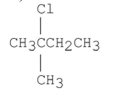
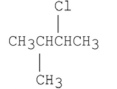
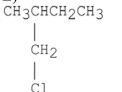
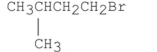
Deck 8: Substitution Reactions of Alkyl Halides

ملء الشاشة (f)
exit full mode
سؤال
Which of the following SN2 reactions is the slowest?

A) CH3CH2CHBrCH3+OHCH3CH2CHOHCH3+Br\mathrm { CH } _ { 3 } \mathrm { CH } _ { 2 } \mathrm { CHBrCH } _ { 3 } + \mathrm { OH } ^ { - } \rightarrow \mathrm { CH } _ { 3 } \mathrm { CH } _ { 2 } \mathrm { CHOHCH } _ { 3 } + \mathrm { Br } ^ { - }
B) CH3CH2CHBrCH3+H2OCH3CH2CHOHCH3+HBr\mathrm { CH } _ { 3 } \mathrm { CH } _ { 2 } \mathrm { CHBrCH } _ { 3 } + \mathrm { H } _ { 2 } \mathrm { O } \rightarrow \mathrm { CH } _ { 3 } \mathrm { CH } _ { 2 } \mathrm { CHOHCH } _ { 3 } + \mathrm { HBr }
C) CH3CH2CH2CH2Br+OHCH3CH2CH2CH2OH+Br\mathrm { CH } _ { 3 } \mathrm { CH } _ { 2 } \mathrm { CH } _ { 2 } \mathrm { CH } _ { 2 } \mathrm { Br } + \mathrm { OH } ^ { - } \rightarrow \mathrm { CH } _ { 3 } \mathrm { CH } _ { 2 } \mathrm { CH } _ { 2 } \mathrm { CH } _ { 2 } \mathrm { OH } + \mathrm { Br } ^ { - }
D) CH3CH2CH2CH2Br+H2OCH3CH2CH2CH2OH+HBr\mathrm { CH } _ { 3 } \mathrm { CH } _ { 2 } \mathrm { CH } _ { 2 } \mathrm { CH } _ { 2 } \mathrm { Br } + \mathrm { H } _ { 2 } \mathrm { O } \rightarrow \mathrm { CH } _ { 3 } \mathrm { CH } _ { 2 } \mathrm { CH } _ { 2 } \mathrm { CH } _ { 2 } \mathrm { OH } + \mathrm { HBr }
استخدم زر المسافة أو
up arrow
down arrow
لقلب البطاقة.
سؤال
Which of the following is a secondary alkyl halide?

A)CH3Br
B) (CH3)3CBr
C) (CH3)2CHBr
D)(CH3)2CHCH2Br
سؤال
When (S)-2-bromobutane undergoes an SN2 , the product is the compound shown below. What is the configuration of the product? <strong>When (S)-2-bromobutane undergoes an SN2 , the product is the compound shown below. What is the configuration of the product?  </strong> A) S only B) R only C) both R and S with more R than S D) both R and S with more S than R E) equal amounts of R and S <div style=padding-top: 35px>
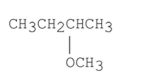
A) S only
B) R only
C) both R and S with more R than S
D) both R and S with more S than R
E) equal amounts of R and S
سؤال
Which of the following alkyl halides reacts the fastest in an SN2 reaction?

A) 1-chloropropane
B) 1-bromopropane
C) 1-fluoropropane
D) 1-iodopropane
سؤال
What is the nucleophile in the following reaction?  <strong>What is the nucleophile in the following reaction?   I.    II.  \mathrm { H } _ { 2 } \mathrm { O }   III.  \mathrm { H } _ { 3 } \mathrm { O } ^ { \oplus }   IV.  \mathrm { I } ^ { \ominus }   V.  \mathrm { HO } ^ { \ominus } </strong> A) I B) II C) III D) IV E) V <div style=padding-top: 35px>
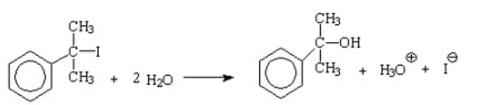
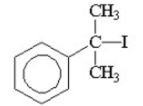
I.
 <strong>What is the nucleophile in the following reaction?   I.    II.  \mathrm { H } _ { 2 } \mathrm { O }   III.  \mathrm { H } _ { 3 } \mathrm { O } ^ { \oplus }   IV.  \mathrm { I } ^ { \ominus }   V.  \mathrm { HO } ^ { \ominus } </strong> A) I B) II C) III D) IV E) V <div style=padding-top: 35px>

II. H2O\mathrm { H } _ { 2 } \mathrm { O }

III. H3O\mathrm { H } _ { 3 } \mathrm { O } ^ { \oplus }

IV. I\mathrm { I } ^ { \ominus }

V. HO\mathrm { HO } ^ { \ominus }

A) I
B) II
C) III
D) IV
E) V
سؤال
CH3Br+HOCH3OH+Br\mathrm { CH } _ { 3 } \mathrm { Br } + \mathrm { HO }^ { \ominus } \longrightarrow \mathrm { CH } _ { 3 } \mathrm { OH } + \mathrm { Br }^ { \ominus }

-How does doubling the concentration of both the alkyl halide and the nucleophile in the above SN2 reaction affect the rate of the reaction?

A) no change
B) doubles the rate
C) triples the rate
D) quadruples the rate
E) rate is halved
سؤال
Which of the following alkyl halides undergoes an SN2 reaction most rapidly?

A) (CH3)3CCH2I\left( \mathrm { CH } _ { 3 } \right) _ { 3 } \mathrm { CCH } _ { 2 } \mathrm { I }
B) (CH3)3CCl\left( \mathrm { CH } _ { 3 } \right) _ { 3 } \mathrm { CCl }
C) (CH3)2CHI\left( \mathrm { CH } _ { 3 } \right) _ { 2 } \mathrm { CHI }
D) (CH3)2CHCH2CH2CH2Cl\left( \mathrm { CH } _ { 3 } \right) _ { 2 } \mathrm { CHCH } _ { 2 } \mathrm { CH } _ { 2 } \mathrm { CH } _ { 2 } \mathrm { Cl }
E) (CH3)2CHCH2CH2CH2I\left( \mathrm { CH } _ { 3 } \right) _ { 2 } \mathrm { CHCH } _ { 2 } \mathrm { CH } _ { 2 } \mathrm { CH } _ { 2 } \mathrm { I }
سؤال
Which of the following SN2 reactions is the slowest?

A) CH3CH2CH3Br+HOCH3CH2CH3OH+Br\mathrm { CH } _ { 3 } \mathrm { CH } _ { 2 } \mathrm { CH } _ { 3 } \mathrm { Br } + \mathrm { HO } ^ { - } \rightarrow \mathrm { CH } _ { 3 } \mathrm { CH } _ { 2 } \mathrm { CH } _ { 3 } \mathrm { OH } + \mathrm { Br } ^ { - }
B) CH3CH2CH2Cl+HOCH3CH2CH2OH+Cl\mathrm { CH } _ { 3 } \mathrm { CH } _ { 2 } \mathrm { CH } _ { 2 } \mathrm { Cl } + \mathrm { HO } ^ { - } \rightarrow \mathrm { CH } _ { 3 } \mathrm { CH } _ { 2 } \mathrm { CH } _ { 2 } \mathrm { OH } + \mathrm { Cl } ^ { - }
C) CH3CH2CH2I+HOCH3CH2CH2OH+I\mathrm { CH } _ { 3 } \mathrm { CH } _ { 2 } \mathrm { CH } _ { 2 } \mathrm { I } + \mathrm { HO } ^ { - } \rightarrow \mathrm { CH } _ { 3 } \mathrm { CH } _ { 2 } \mathrm { CH } _ { 2 } \mathrm { OH } + \mathrm { I } ^ { - }
D) CH3CH2CH3 F+HOCH3CH2CH2OH+F\mathrm { CH } _ { 3 } \mathrm { CH } _ { 2 } \mathrm { CH } _ { 3 } \mathrm {~F} + \mathrm { HO } ^ { - } \rightarrow \mathrm { CH } _ { 3 } \mathrm { CH } _ { 2 } \mathrm { CH } _ { 2 } \mathrm { OH } + \mathrm { F } ^ { - }
E)  <strong>Which of the following S<sub>N</sub>2 reactions is the slowest? </strong> A)  \mathrm { CH } _ { 3 } \mathrm { CH } _ { 2 } \mathrm { CH } _ { 3 } \mathrm { Br } + \mathrm { HO } ^ { - } \rightarrow \mathrm { CH } _ { 3 } \mathrm { CH } _ { 2 } \mathrm { CH } _ { 3 } \mathrm { OH } + \mathrm { Br } ^ { - }  B)  \mathrm { CH } _ { 3 } \mathrm { CH } _ { 2 } \mathrm { CH } _ { 2 } \mathrm { Cl } + \mathrm { HO } ^ { - } \rightarrow \mathrm { CH } _ { 3 } \mathrm { CH } _ { 2 } \mathrm { CH } _ { 2 } \mathrm { OH } + \mathrm { Cl } ^ { - }  C)  \mathrm { CH } _ { 3 } \mathrm { CH } _ { 2 } \mathrm { CH } _ { 2 } \mathrm { I } + \mathrm { HO } ^ { - } \rightarrow \mathrm { CH } _ { 3 } \mathrm { CH } _ { 2 } \mathrm { CH } _ { 2 } \mathrm { OH } + \mathrm { I } ^ { - }  D)  \mathrm { CH } _ { 3 } \mathrm { CH } _ { 2 } \mathrm { CH } _ { 3 } \mathrm {~F} + \mathrm { HO } ^ { - } \rightarrow \mathrm { CH } _ { 3 } \mathrm { CH } _ { 2 } \mathrm { CH } _ { 2 } \mathrm { OH } + \mathrm { F } ^ { - }  E)   <div style=padding-top: 35px>
سؤال
Which of the following SN2 reactions is the fastest?

A) <strong>Which of the following S<sub>N</sub>2 reactions is the fastest? </strong> A)  B) \mathrm { CH } _ { 3 } \mathrm { CH } _ { 2 } \mathrm { CH } _ { 2 } \mathrm { I } + \mathrm { HO } ^ { - } \rightarrow \mathrm { CH } _ { 3 } \mathrm { CH } _ { 2 } \mathrm { CH } _ { 2 } \mathrm { OH } + \mathrm { I } ^ { - }  C)  D) \mathrm { CH } _ { 3 } \mathrm { CH } _ { 2 } \mathrm { CH } _ { 3 } \mathrm { Br } + \mathrm { HO } ^ { - } \rightarrow \mathrm { CH } _ { 3 } \mathrm { CH } _ { 2 } \mathrm { CH } _ { 3 } \mathrm { OH } + \mathrm { Br } ^ { - }  E) \mathrm { CH } _ { 3 } \mathrm { CH } _ { 2 } \mathrm { CH } _ { 2 } \mathrm { I } + \mathrm { H } _ { 2 } \mathrm { O } \rightarrow \mathrm { CH } _ { 3 } \mathrm { CH } _ { 2 } \mathrm { CH } _ { 2 } \mathrm { OH } + \mathrm { HI }  <div style=padding-top: 35px>

B) CH3CH2CH2I+HOCH3CH2CH2OH+I\mathrm { CH } _ { 3 } \mathrm { CH } _ { 2 } \mathrm { CH } _ { 2 } \mathrm { I } + \mathrm { HO } ^ { - } \rightarrow \mathrm { CH } _ { 3 } \mathrm { CH } _ { 2 } \mathrm { CH } _ { 2 } \mathrm { OH } + \mathrm { I } ^ { - }
C) <strong>Which of the following S<sub>N</sub>2 reactions is the fastest? </strong> A)  B) \mathrm { CH } _ { 3 } \mathrm { CH } _ { 2 } \mathrm { CH } _ { 2 } \mathrm { I } + \mathrm { HO } ^ { - } \rightarrow \mathrm { CH } _ { 3 } \mathrm { CH } _ { 2 } \mathrm { CH } _ { 2 } \mathrm { OH } + \mathrm { I } ^ { - }  C)  D) \mathrm { CH } _ { 3 } \mathrm { CH } _ { 2 } \mathrm { CH } _ { 3 } \mathrm { Br } + \mathrm { HO } ^ { - } \rightarrow \mathrm { CH } _ { 3 } \mathrm { CH } _ { 2 } \mathrm { CH } _ { 3 } \mathrm { OH } + \mathrm { Br } ^ { - }  E) \mathrm { CH } _ { 3 } \mathrm { CH } _ { 2 } \mathrm { CH } _ { 2 } \mathrm { I } + \mathrm { H } _ { 2 } \mathrm { O } \rightarrow \mathrm { CH } _ { 3 } \mathrm { CH } _ { 2 } \mathrm { CH } _ { 2 } \mathrm { OH } + \mathrm { HI }  <div style=padding-top: 35px>
D) CH3CH2CH3Br+HOCH3CH2CH3OH+Br\mathrm { CH } _ { 3 } \mathrm { CH } _ { 2 } \mathrm { CH } _ { 3 } \mathrm { Br } + \mathrm { HO } ^ { - } \rightarrow \mathrm { CH } _ { 3 } \mathrm { CH } _ { 2 } \mathrm { CH } _ { 3 } \mathrm { OH } + \mathrm { Br } ^ { - }
E) CH3CH2CH2I+H2OCH3CH2CH2OH+HI\mathrm { CH } _ { 3 } \mathrm { CH } _ { 2 } \mathrm { CH } _ { 2 } \mathrm { I } + \mathrm { H } _ { 2 } \mathrm { O } \rightarrow \mathrm { CH } _ { 3 } \mathrm { CH } _ { 2 } \mathrm { CH } _ { 2 } \mathrm { OH } + \mathrm { HI }
سؤال
Which of the following is not a nucleophile?

A) CH3NH2\mathrm { CH } _ { 3 } \mathrm { NH } _ { 2 }
B) H2O\mathrm { H } _2 \mathrm { O }
C) +CH3{ } ^ { + } \mathrm { CH } _ { 3 }
D) CH3O\mathrm { CH } _ { 3 } \mathrm { O }^ { \ominus }
E) HCC:\mathrm { HC } \equiv \mathrm { C }^ { \ominus }:
سؤال
The specific rotation of (R)C6H5CHOHCH3 is 42.3. A pure sample of (R)C6H5CHClCH3( R ) - \mathrm { C } _ { 6 } \mathrm { H } _ { 5 } \mathrm { CHOHCH } _ { 3 } \text { is } - 42.3 \text {. A pure sample of } ( R ) - \mathrm { C } _ { 6 } \mathrm { H } _ { 5 } \mathrm { CHClCH } _ { 3 } was converted into the corresponding alcohol via a SN2 eaction. What is the specific rotation of the product?

A) -42.3
B) between 0 and -42.3
C) between +42.3 and 0
D) +42.3
سؤال
Which of the following alkyl halides is the least reactive in an SN2 reaction?

A)CH3CH2Cl
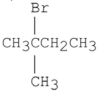
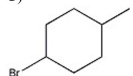
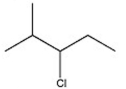
B)<strong>Which of the following alkyl halides is the least reactive in an SN2 reaction? </strong> A)CH<sub>3</sub>CH<sub>2</sub>Cl B)  C)  D)  E)  <div style=padding-top: 35px>
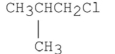
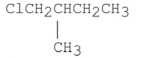
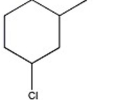
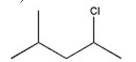
C)<strong>Which of the following alkyl halides is the least reactive in an SN2 reaction? </strong> A)CH<sub>3</sub>CH<sub>2</sub>Cl B)  C)  D)  E)  <div style=padding-top: 35px>
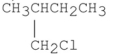
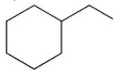
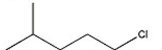
D)<strong>Which of the following alkyl halides is the least reactive in an SN2 reaction? </strong> A)CH<sub>3</sub>CH<sub>2</sub>Cl B)  C)  D)  E)  <div style=padding-top: 35px>
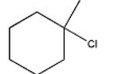
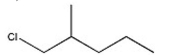
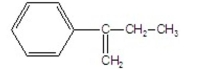
E)<strong>Which of the following alkyl halides is the least reactive in an SN2 reaction? </strong> A)CH<sub>3</sub>CH<sub>2</sub>Cl B)  C)  D)  E)  <div style=padding-top: 35px>
سؤال
The specific rotation of (R)-sec-butyl alcohol is -13.52. A pure sample of (R)-sec-butyl bromide was converted to sec-butyl alcohol via an SN2 reaction. What is the specific rotation of
The product, assuming 100% yield?

A) -13.52
B) between 0 and -13.52
C) between 0 and +13.52
D) +13.52
E) zero
سؤال
Which of the following is not a nucleophile?

A) NH3
B) NH2CH3
C) HCC:\mathrm { HC } \equiv \mathrm { C } : ^-
D) CH3CH2+
سؤال
What are the substitution products of the following reaction?
CH3CH2Br+OH ? \mathrm { CH } _ { 3 } \mathrm { CH } _ { 2 } \mathrm { Br } + - \mathrm { OH } \rightarrow \text { ? }

A) CH3CH2BrH++O\mathrm { CH } _ { 3 } \mathrm { CH } _ { 2 } \mathrm { BrH } ^ { + } + \mathrm { O } ^ { - }
B) HOCH2CH2Br\mathrm { HOCH } _ { 2 } \mathrm { CH } _ { 2 } \mathrm { Br }
C) CH3CH2OH+Br\mathrm { CH } _ { 3 } \mathrm { CH } _ { 2 } \mathrm { OH } + \mathrm { Br } ^ { - }
D) CH2=CH2+Br+H2O\mathrm { CH } _ { 2 } = \mathrm { CH } _ { 2 } + \mathrm { Br } ^ { - } + \mathrm { H } _ { 2 } \mathrm { O }
E) CH2=CHBr+H2O\mathrm { CH } _ { 2 } = \mathrm { CHBr } + \mathrm { H } _ { 2 } \mathrm { O }
سؤال
CH3Br+HOCH3OH+Br\mathrm { CH } _ { 3 } \mathrm { Br } + \mathrm { HO }^ { \ominus } \longrightarrow \mathrm { CH } _ { 3 } \mathrm { OH } + \mathrm { Br }^ { \ominus }

-How does doubling the concentration of the alkyl halide in the above SN2 reaction affect the rate of the reaction?

A) no change
B) doubles the rate
C) triples the rate
D) quadruples the rate
E) rate is halved
سؤال
What product results from the SN2 reaction between (R)-2-chloropentane and methoxide ion?

A) (R)-2-methoxypentane
B) (S)-2-methoxypentane
C) racemic 2-methoxypentane
D) 1-methoxypentane
E) 3-methoxypentane
سؤال
Which of the following alkyl halides reacts the fastest in an SN2 reaction?

A) 2-chloro-2-methylpropane
B) 2-chlorobutane
C) 1-chlorobutane
D) chloromethane
سؤال
Which of the following SN2 reactions is the fastest?

A) CH3CH2CH2CH2Br+OHCH3CH2CH2CH2OH+Br\mathrm { CH } _ { 3 } \mathrm { CH } _ { 2 } \mathrm { CH } _ { 2 } \mathrm { CH } _ { 2 } \mathrm { Br } + \mathrm { OH } ^ { - } \rightarrow \mathrm { CH } _ { 3 } \mathrm { CH } _ { 2 } \mathrm { CH } _ { 2 } \mathrm { CH } _ { 2 } \mathrm { OH } + \mathrm { Br } ^ { - }
B) CH3CH2CH2CH2Br+H2OCH3CH2CH2CH2OH+HBr\mathrm { CH } _ { 3 } \mathrm { CH } _ { 2 } \mathrm { CH } _ { 2 } \mathrm { CH } _ { 2 } \mathrm { Br } + \mathrm { H } _ { 2 } \mathrm { O } \rightarrow \mathrm { CH } _ { 3 } \mathrm { CH } _ { 2 } \mathrm { CH } _ { 2 } \mathrm { CH } _ { 2 } \mathrm { OH } + \mathrm { HBr }
C) CH3CH2CHBrCH3+OHCH3CH2CHOHCH3+Br\mathrm { CH } _ { 3 } \mathrm { CH } _ { 2 } \mathrm { CHBrCH } _ { 3 } + \mathrm { OH } ^ { - } \rightarrow \mathrm { CH } _ { 3 } \mathrm { CH } _ { 2 } \mathrm { CHOHCH } _ { 3 } + \mathrm { Br } ^ { - }
D) CH3CH2CHBrCH3+H2OCH3CH2CHOHCH3+HBr\mathrm { CH } _3 \mathrm { CH } _2 \mathrm { CHBrCH } _3 + \mathrm { H } _2 \mathrm { O } \rightarrow \mathrm { CH } _3 \mathrm { CH } _2 \mathrm { CHOHCH } _3 + \mathrm { HBr }
سؤال
Which of the following is the best nucleophile in an SN2 reaction?

A) isopropoxide ion
B) tert-butoxide ion
C) ethoxide ion
D) tert-pentoxide ion
سؤال
Which alkyl halide undergoes an SN2 reaction most rapidly?

A) 1-iodo-3-methylpentane
B) 2 -iodopentane
C) 2-iodo-2-methylpentane
D) 3 -iodopentane
E) 1 -iodo-2,2-dimethylpentane
سؤال
Which of the following is the best leaving group?

A) HO-
B) F-
C) Cl-
D) Br-
E) I-
سؤال
Which of the following species is the least nucleophilic?

A) (CH3)3CO-
B) H2O
C) (CH3)3N
D) HO-
E) CN-
سؤال
Which of the following alkyl halides reacts the fastest in an SN1 reaction?

A)<strong>Which of the following alkyl halides reacts the fastest in an S<sub>N</sub>1 reaction? </strong> A)  B)  C)  D)  E)  <div style=padding-top: 35px>
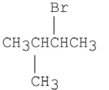
B)<strong>Which of the following alkyl halides reacts the fastest in an S<sub>N</sub>1 reaction? </strong> A)  B)  C)  D)  E)  <div style=padding-top: 35px>
C)<strong>Which of the following alkyl halides reacts the fastest in an S<sub>N</sub>1 reaction? </strong> A)  B)  C)  D)  E)  <div style=padding-top: 35px>
D)<strong>Which of the following alkyl halides reacts the fastest in an S<sub>N</sub>1 reaction? </strong> A)  B)  C)  D)  E)  <div style=padding-top: 35px>
E)<strong>Which of the following alkyl halides reacts the fastest in an S<sub>N</sub>1 reaction? </strong> A)  B)  C)  D)  E)  <div style=padding-top: 35px>
سؤال
(CH3)3CBr+I(CH3)3CI+Br\left(\mathrm{CH}_{3}\right)_{3} \mathrm{CBr}+\mathrm{I}^{\ominus} \longrightarrow\left(\mathrm{CH}_{3}\right)_{3} \mathrm{CI}+\mathrm{Br}^{\ominus}


-How does doubling the concentration of the alkyl halide affect the rate of the above SN1 reaction?

A) no change
B) doubles the rate
C) triples the rate
D) quadruples the rate
E) rate is halved
سؤال
When (S)-1-bromo-1-phenylethane undergoes an SN2 reaction with methanethiol (CH3SH) the product of the reaction is the compound shown below. What is its configuration?
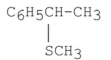
<strong>When (S)-1-bromo-1-phenylethane undergoes an S<sub>N</sub>2 reaction with methanethiol (CH<sub>3</sub>SH) the product of the reaction is the compound shown below. What is its configuration?  </strong> A)  S  only B)  R  only C) both  R  and  S  with slightly more  S  than  R D) both  R  and  S  with slightly more  R  than  S <div style=padding-top: 35px>

A) S only
B) R only
C) both R and S with slightly more S than R
D) both R and S with slightly more R than S
سؤال
SN2 reactions usually proceed with ________.

A) equal amounts of inversion and retention at the asymmetric center undergoing substitution
B) slightly more inversion than retention at the asymmetric center undergoing substitution
C) slightly more retention than inversion at the asymmetric center undergoing substitution
D) complete inversion at the asymmetric center undergoing substitution
E) complete retention at the asymmetric center undergoing substitution
سؤال
Which of the following statements concerning SN2 reactions of alkyl halides is not correct?

A) The rate of reaction depends on the concentration of the nucleophile.
B) The rate of reaction depends on the concentration of the alkyl halide.
C) The rate of reaction of a particular alkyl bromide depends on the steric accessibility of the carbon of the C-Br bond.
D) All alkyl iodides react more rapidly than all alkyl chlorides.
E) The rate of reaction depends on the relative nucleophilicity of the nucleophile.
سؤال
The SN1 reaction of (CH3)3)CBr with water has ________ steps, ________ transition states, and ________ intermediates.

A) 2; 2; 2
B) 2; 2; 3
C) 2; 3; 2
D) 3; 2; 3
E) 3; 3; 2
سؤال
Which alkyl halide undergoes an SN2 reaction most rapidly?

A)<strong>Which alkyl halide undergoes an S<sub>N</sub>2 reaction most rapidly? </strong> A)  B)  C)  D)  E)  <div style=padding-top: 35px>
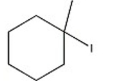
B)<strong>Which alkyl halide undergoes an S<sub>N</sub>2 reaction most rapidly? </strong> A)  B)  C)  D)  E)  <div style=padding-top: 35px>
C)<strong>Which alkyl halide undergoes an S<sub>N</sub>2 reaction most rapidly? </strong> A)  B)  C)  D)  E)  <div style=padding-top: 35px>
D)<strong>Which alkyl halide undergoes an S<sub>N</sub>2 reaction most rapidly? </strong> A)  B)  C)  D)  E)  <div style=padding-top: 35px>
E)<strong>Which alkyl halide undergoes an S<sub>N</sub>2 reaction most rapidly? </strong> A)  B)  C)  D)  E)  <div style=padding-top: 35px>
سؤال
Which of the following describes the relative nucleophilicities of methoxide and tert- butoxide?

A) These alkoxides have the same nucleophilicity because the negative charge in both is on an oxygen atom.
B) Methoxide is more nucleophilic because the nucleophilicity of tert-butoxide is decreased by steric effects.
C) tert-Butoxide is more nucleophilic because it contains three methyl groups which increase the charge on its oxygen by donating electron density.
D) tert-Butoxide is more nucleophilic because it is more basic.
E) none of the above
سؤال
Which of the following factors has no effect on the rate of SN1 eactions?

A) the nature of the alkyl halide
B) the nature of the leaving group
C) the concentration of the alkyl halide
D) the concentration of the nucleophile
E) the value of the rate constant
سؤال
Which of the following compounds is the most reactive in a SN2 reaction?

A) CH3CH2Cl\mathrm { CH } _ { 3 } \mathrm { CH } _ { 2 } - \mathrm { Cl }
B) CH3CH2Br\mathrm { CH } _ { 3 } \mathrm { CH } _ { 2 } - \mathrm { Br }
C) CH3CH2I\mathrm { CH } _ { 3 } \mathrm { CH } _ { 2 } - \mathrm { I }
D) CH3CH2F\mathrm { CH } _ { 3 } \mathrm { CH } _ { 2 } - \mathrm { F }
E) CH3CH2OH\mathrm { CH } _ { 3 } \mathrm { CH } _ { 2 } - \mathrm { OH }
سؤال
Which of the following is the rate law for an SN1 reaction?

A)  rate =k[ alkyl halide] [nucleophile] \text { rate } = k [ \text { alkyl halide] [nucleophile] }
B)  rate =k[ nucleophile ]\text { rate } = k [ \text { nucleophile } ]
C)  rate =k[ alkyl halide ]\text { rate } = k [ \text { alkyl halide } ]
D)  rate =k1[ alkyl halide] [nucleophile] +k2[ alkyl halide] \text { rate } = k _ { 1 } \left[ \text { alkyl halide] [nucleophile] } + k _ { 2 } [ \text { alkyl halide] } \right.
E)  rate =k1[ alkyl halide ]+k2[ nucleophile] \text { rate } = k 1 [ \text { alkyl halide } ] + k 2 [ \text { nucleophile] }
سؤال
(CH3)3CBr+I(CH3)3CI+Br\left(\mathrm{CH}_{3}\right)_{3} \mathrm{CBr}+\mathrm{I}^{\ominus} \longrightarrow\left(\mathrm{CH}_{3}\right)_{3} \mathrm{CI}+\mathrm{Br}^{\ominus}


-How does doubling the concentration of both the alkyl halide and the nucleophile affect the rate of the abov SN1 reaction?

A) no change
B) doubles the rate
C) triples the rate
D) quadruples the rate
E) rate is halved
سؤال
(CH3)3CBr+I(CH3)3CI+Br\left(\mathrm{CH}_{3}\right)_{3} \mathrm{CBr}+\mathrm{I}^{\ominus} \longrightarrow\left(\mathrm{CH}_{3}\right)_{3} \mathrm{CI}+\mathrm{Br}^{\ominus}


-How does doubling the concentration of the nucleophile affect the rate of the above SN1 reaction?

A) no change
B) doubles the rate
C) triples the rate
D) quadruples the rate
E) rate is halved
سؤال
Which of the following alkyl halides reacts the fastest in an SN2 reaction?

A) CH3CH2CH2Br\mathrm { CH } _ { 3 } \mathrm { CH } _ { 2 } \mathrm { CH } _ { 2 } \mathrm { Br }
B) <strong>Which of the following alkyl halides reacts the fastest in an S<sub>N</sub>2 reaction? </strong> A) \mathrm { CH } _ { 3 } \mathrm { CH } _ { 2 } \mathrm { CH } _ { 2 } \mathrm { Br }  B)  C)  D) \mathrm { CH } _ { 3 } \mathrm { CH } _ { 2 } \mathrm { CH } _ { 2 } \mathrm { I }  E) \mathrm { CH } _ { 3 } \mathrm { CH } _ { 2 } \mathrm { CH } _ { 2 } \mathrm { Cl }  <div style=padding-top: 35px>
C) <strong>Which of the following alkyl halides reacts the fastest in an S<sub>N</sub>2 reaction? </strong> A) \mathrm { CH } _ { 3 } \mathrm { CH } _ { 2 } \mathrm { CH } _ { 2 } \mathrm { Br }  B)  C)  D) \mathrm { CH } _ { 3 } \mathrm { CH } _ { 2 } \mathrm { CH } _ { 2 } \mathrm { I }  E) \mathrm { CH } _ { 3 } \mathrm { CH } _ { 2 } \mathrm { CH } _ { 2 } \mathrm { Cl }  <div style=padding-top: 35px>
D) CH3CH2CH2I\mathrm { CH } _ { 3 } \mathrm { CH } _ { 2 } \mathrm { CH } _ { 2 } \mathrm { I }
E) CH3CH2CH2Cl\mathrm { CH } _ { 3 } \mathrm { CH } _ { 2 } \mathrm { CH } _ { 2 } \mathrm { Cl }
سؤال
Which of the following alkyl halides reacts the fastest in a SN1 reaction?

A) 2-chloro-2-methylpropane
B) 2-chlorobutane
C) 1-chlorobutane
D) chloromethane
سؤال
Which alkyl halide undergoes a SN2 reaction most rapidly?

A)<strong>Which alkyl halide undergoes a SN2 reaction most rapidly? </strong> A)  B)  C)  D)  E)  <div style=padding-top: 35px>
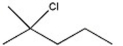
B)<strong>Which alkyl halide undergoes a SN2 reaction most rapidly? </strong> A)  B)  C)  D)  E)  <div style=padding-top: 35px>
C)<strong>Which alkyl halide undergoes a SN2 reaction most rapidly? </strong> A)  B)  C)  D)  E)  <div style=padding-top: 35px>
D)<strong>Which alkyl halide undergoes a SN2 reaction most rapidly? </strong> A)  B)  C)  D)  E)  <div style=padding-top: 35px>
E)<strong>Which alkyl halide undergoes a SN2 reaction most rapidly? </strong> A)  B)  C)  D)  E)  <div style=padding-top: 35px>
سؤال
Which alkyl halide is the most reactive in an SN2 reaction?

A) (CH3)CCH2CH2 F\left( \mathrm { CH } _ { 3 } \right) \mathrm { CCH } _ { 2 } \mathrm { CH } _ { 2 } \mathrm {~F}
B) (CH3)CCH2CH2Cl\left( \mathrm { CH } _ { 3 } \right) \mathrm { CCH } _ { 2 } \mathrm { CH } _ { 2 } \mathrm { Cl }
C) (CH3)CCH2CH2Br\left( \mathrm { CH } _ { 3 } \right) \mathrm { CCH } _ { 2 } \mathrm { CH } _ { 2 } \mathrm { Br }
D) (CH3)CCH2CH2I\left( \mathrm { CH } _ { 3 } \right) \mathrm { CCH } _ { 2 } \mathrm { CH } _ { 2 } \mathrm { I }
E) All primary halides react at the same rate in SN2 reactions.
سؤال
What is the major product of the following reaction? <strong>What is the major product of the following reaction?  </strong> A) I B) II C) III D) IV E) V <div style=padding-top: 35px>
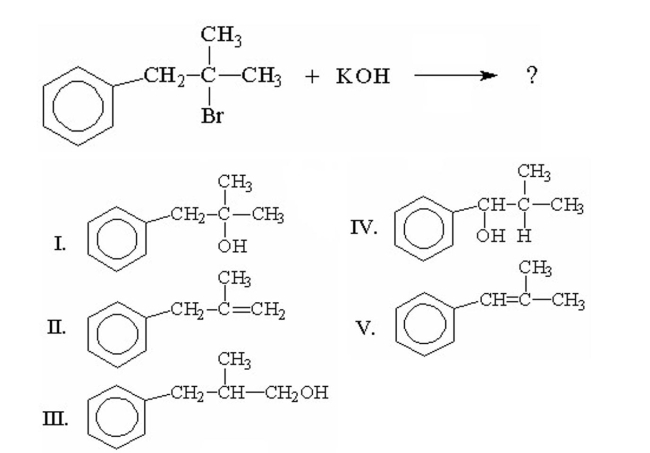
A) I
B) II
C) III
D) IV
E) V
سؤال
Which of the following alkyl halides reacts the fastest in an E2 reaction?

A) 2-chloro-2-methylbutane
B) 1-chlorobutane
C) 1-chloro-2-methylbutane
D) 2-chlorobutane
E) chloromethane
سؤال
What is the major product of the following E2 reaction?
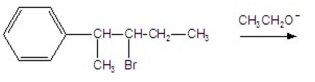
<strong>What is the major product of the following E2 reaction?   </strong> A)  B)  C)  D)  E)  <div style=padding-top: 35px>

A)<strong>What is the major product of the following E2 reaction?   </strong> A)  B)  C)  D)  E)  <div style=padding-top: 35px>
B)<strong>What is the major product of the following E2 reaction?   </strong> A)  B)  C)  D)  E)  <div style=padding-top: 35px>
C)<strong>What is the major product of the following E2 reaction?   </strong> A)  B)  C)  D)  E)  <div style=padding-top: 35px>
D)<strong>What is the major product of the following E2 reaction?   </strong> A)  B)  C)  D)  E)  <div style=padding-top: 35px>
E)<strong>What is the major product of the following E2 reaction?   </strong> A)  B)  C)  D)  E)  <div style=padding-top: 35px>
سؤال
Which of the following alkyl halides reacts the fastest in an E2 reaction?

A)<strong>Which of the following alkyl halides reacts the fastest in an E2 reaction? </strong> A)  B)  C)  D)  E)CH<sub>3</sub>I <div style=padding-top: 35px>
B)<strong>Which of the following alkyl halides reacts the fastest in an E2 reaction? </strong> A)  B)  C)  D)  E)CH<sub>3</sub>I <div style=padding-top: 35px>
C)<strong>Which of the following alkyl halides reacts the fastest in an E2 reaction? </strong> A)  B)  C)  D)  E)CH<sub>3</sub>I <div style=padding-top: 35px>
D)<strong>Which of the following alkyl halides reacts the fastest in an E2 reaction? </strong> A)  B)  C)  D)  E)CH<sub>3</sub>I <div style=padding-top: 35px>
E)CH3I
سؤال
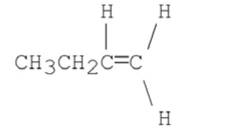
Which of the following alkyl chlorides forms only one alkene when it undergoes an elimination reaction?

A) 1-chloropentane
B) 2-chloropentane
C) 3-chloropentane
D) 1-chloro-2-methylbutane
E) 1-chloro-3-methylbutane
سؤال
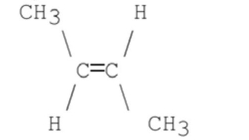
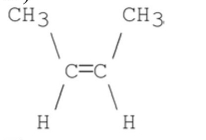
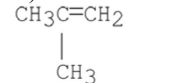
What stereoisomer is the major product obtained from the following E2 reaction?
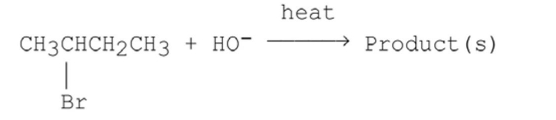
 <strong>What stereoisomer is the major product obtained from the following E2 reaction?   </strong> A)  B) \mathrm { CH } _ { 3 } \mathrm { CH } _ { 2 } \mathrm { CH } = \mathrm { CH } _ { 2 }  C)  D)  E)  <div style=padding-top: 35px>

A) <strong>What stereoisomer is the major product obtained from the following E2 reaction?   </strong> A)  B) \mathrm { CH } _ { 3 } \mathrm { CH } _ { 2 } \mathrm { CH } = \mathrm { CH } _ { 2 }  C)  D)  E)  <div style=padding-top: 35px>
B) CH3CH2CH=CH2\mathrm { CH } _ { 3 } \mathrm { CH } _ { 2 } \mathrm { CH } = \mathrm { CH } _ { 2 }
C) <strong>What stereoisomer is the major product obtained from the following E2 reaction?   </strong> A)  B) \mathrm { CH } _ { 3 } \mathrm { CH } _ { 2 } \mathrm { CH } = \mathrm { CH } _ { 2 }  C)  D)  E)  <div style=padding-top: 35px>
D) <strong>What stereoisomer is the major product obtained from the following E2 reaction?   </strong> A)  B) \mathrm { CH } _ { 3 } \mathrm { CH } _ { 2 } \mathrm { CH } = \mathrm { CH } _ { 2 }  C)  D)  E)  <div style=padding-top: 35px>
E) <strong>What stereoisomer is the major product obtained from the following E2 reaction?   </strong> A)  B) \mathrm { CH } _ { 3 } \mathrm { CH } _ { 2 } \mathrm { CH } = \mathrm { CH } _ { 2 }  C)  D)  E)  <div style=padding-top: 35px>
سؤال
How many alkenes can be obtained as products (even in minor amounts) when the alkyl halide shown below undergoes an E2 reaction? (Count E/Z stereoisomers as different products.) <strong>How many alkenes can be obtained as products (even in minor amounts) when the alkyl halide shown below undergoes an E2 reaction? (Count E/Z stereoisomers as different products.)  </strong> A) 1 B) 2 C) 3 D) 4 E) 5 <div style=padding-top: 35px>
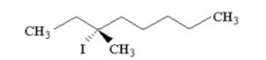
A) 1
B) 2
C) 3
D) 4
E) 5
سؤال
What is the major product of the following reaction?
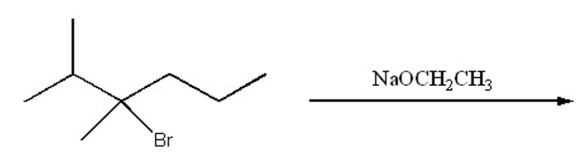
<strong>What is the major product of the following reaction?  </strong> A) 2,3-dimethyl-1-hexene B) 2,3-dimethyl-2-hexene C) 2 -isopropyl-1-pentene D)  (Z)-2,3 -dimethyl-3-hexene E)  (E)-2,3 -dimethyl-3-hexene <div style=padding-top: 35px>

A) 2,3-dimethyl-1-hexene
B) 2,3-dimethyl-2-hexene
C) 2 -isopropyl-1-pentene
D) (Z)-2,3 -dimethyl-3-hexene
E) (E)-2,3 -dimethyl-3-hexene
سؤال
Which of the following alkyl bromides undergo SN1 olvolysis reactions?

A) (R)-2 -bromo-3-ethylpentane
B) (S)-2 -bromo-3-ethylpentane
C) (R)-3 -bromo-2-methylpentane
D) (S)-3 -bromo-2-methylpentane
E) 3-bromo-3-ethylpentane
سؤال
Which of the following are the elimination products obtained from the following reaction?
CH3CH2Br+OH?\mathrm { CH } _ { 3 } \mathrm { CH } _ { 2 } \mathrm { Br } + - \mathrm { OH } \rightarrow ?

A) CH3CH2Br+H+O\mathrm { CH } _ { 3 } \mathrm { CH } _ { 2 } \mathrm { Br } ^ { + } \mathrm { H } + \mathrm { O } ^ { - }
B) HOCH2CH2Br\mathrm { HOCH } _ { 2 } \mathrm { CH } _ { 2 } \mathrm { Br }
C) CH3CH2OH+Br\mathrm { CH } _ { 3 } \mathrm { CH } _ { 2 } \mathrm { OH } + \mathrm { Br } ^ { - }
D) CH2=CH2+Br+H2O\mathrm { CH } _ { 2 } = \mathrm { CH } _ { 2 } + \mathrm { Br } ^ { - } + \mathrm { H } _ { 2 } \mathrm { O }
E) CH2=CHBr+H2O\mathrm { CH } _ { 2 } = \mathrm { CHBr } + \mathrm { H } _ { 2 } \mathrm { O }
سؤال
Which of the following alkyl halides reacts the fastest in an E2 reaction?

A)  <strong>Which of the following alkyl halides reacts the fastest in an E2 reaction? </strong> A)   B)  \mathrm { CH } _ { 3 } \mathrm { CH } _ { 2 } \mathrm { CH } _ { 2 } \mathrm { Cl }  C)  \mathrm { CH } _ { 3 } \mathrm { CH } _ { 2 } \mathrm { CH } _ { 2 } \mathrm { I }  D)   E)  \mathrm { CH } _ { 3 } \mathrm { CH } _ { 2 } \mathrm { CH } _ { 2 } \mathrm { Br }  <div style=padding-top: 35px>
B) CH3CH2CH2Cl\mathrm { CH } _ { 3 } \mathrm { CH } _ { 2 } \mathrm { CH } _ { 2 } \mathrm { Cl }
C) CH3CH2CH2I\mathrm { CH } _ { 3 } \mathrm { CH } _ { 2 } \mathrm { CH } _ { 2 } \mathrm { I }
D)  <strong>Which of the following alkyl halides reacts the fastest in an E2 reaction? </strong> A)   B)  \mathrm { CH } _ { 3 } \mathrm { CH } _ { 2 } \mathrm { CH } _ { 2 } \mathrm { Cl }  C)  \mathrm { CH } _ { 3 } \mathrm { CH } _ { 2 } \mathrm { CH } _ { 2 } \mathrm { I }  D)   E)  \mathrm { CH } _ { 3 } \mathrm { CH } _ { 2 } \mathrm { CH } _ { 2 } \mathrm { Br }  <div style=padding-top: 35px>
E) CH3CH2CH2Br\mathrm { CH } _ { 3 } \mathrm { CH } _ { 2 } \mathrm { CH } _ { 2 } \mathrm { Br }
سؤال
Which of the following alkyl halides reacts the fastest in an E2 reaction?

A) (CH3)3CCH2I\left( \mathrm { CH } _ { 3 } \right) _ { 3 } \mathrm { CCH } _ { 2 } \mathrm { I }
B) (CH3)2CHCHICH3\left( \mathrm { CH } _ { 3 } \right) _ { 2 } \mathrm { CHCHICH } _ { 3 }
C) (CH3)2CHCH2Br\left( \mathrm { CH } _ { 3 } \right) _ { 2 } \mathrm { CHCH } _ { 2 } \mathrm { Br }
D) (CH3)2CHCH2Cl\left( \mathrm { CH } _ { 3 } \right) _ { 2 } \mathrm { CHCH } _ { 2 } \mathrm { Cl }
E) (CH3)2CHCH2CH2Cl\left( \mathrm { CH } _ { 3 } \right) _ { 2 } \mathrm { CHCH } _ { 2 } \mathrm { CH } _ { 2 } \mathrm { Cl }
سؤال
What kind of reaction is occurring below?
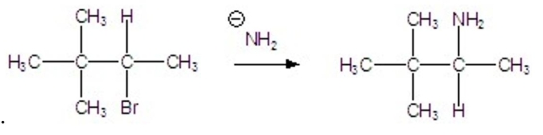
<strong>What kind of reaction is occurring below?  </strong> A) S<sub>N</sub>1 B) S<sub>N</sub>2 C) E1 D) E2 E) none of the above <div style=padding-top: 35px>

A) SN1
B) SN2
C) E1
D) E2
E) none of the above
سؤال
Using the following experimental data for the rate of the reaction given below:
 <strong>Using the following experimental data for the rate of the reaction given below:     \begin{array} { | c | c | c | c | } \hline \text { Experiment \#1 } & \text { [Alkyl Halide] } & \text { [Base] } & \text { Rate } \\ \hline 1 & 0.01 & 0.01 & 1 \\ \hline 2 & 0.02 & 0.01 & 2 \\ \hline 3 & 0.01 & 0.02 & 1 \\ \hline \end{array}  What kind of reaction is taking place?</strong> A)  S<sub>N</sub>1 B) S<sub>N</sub>2 C) E1 D) E2 E) none of the above <div style=padding-top: 35px>

 Experiment #1  [Alkyl Halide]  [Base]  Rate 10.010.01120.020.01230.010.021\begin{array} { | c | c | c | c | } \hline \text { Experiment \#1 } & \text { [Alkyl Halide] } & \text { [Base] } & \text { Rate } \\\hline 1 & 0.01 & 0.01 & 1 \\\hline 2 & 0.02 & 0.01 & 2 \\\hline 3 & 0.01 & 0.02 & 1 \\\hline\end{array}
What kind of reaction is taking place?

A) SN1
B) SN2
C) E1
D) E2
E) none of the above
سؤال
What is the major product of the following reaction?
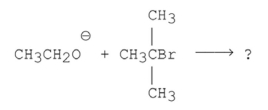
 <strong>What is the major product of the following reaction?  </strong> A)   B)  \mathrm { CH } _ { 2 } = \mathrm { CH } _ { 2 }  C)   D) A and B E) A and C <div style=padding-top: 35px>

A)  <strong>What is the major product of the following reaction?  </strong> A)   B)  \mathrm { CH } _ { 2 } = \mathrm { CH } _ { 2 }  C)   D) A and B E) A and C <div style=padding-top: 35px>
B) CH2=CH2\mathrm { CH } _ { 2 } = \mathrm { CH } _ { 2 }
C)  <strong>What is the major product of the following reaction?  </strong> A)   B)  \mathrm { CH } _ { 2 } = \mathrm { CH } _ { 2 }  C)   D) A and B E) A and C <div style=padding-top: 35px>
D) A and B
E) A and C
سؤال
Which of the following alkyl halides is the least reactive in an E2 reaction?

A) (CH3)3CCH2I\left( \mathrm { CH } _ { 3 } \right) _ { 3 } \mathrm { CCH } _ { 2 } \mathrm { I }
B) (CH3)2CHCHICH3\left( \mathrm { CH } _ { 3 } \right) _ { 2 } \mathrm { CHCHICH } _ { 3 }
C) (CH3)2CHCH2Br\left( \mathrm { CH } _ { 3 } \right) _ { 2 } \mathrm { CHCH } _ { 2 } \mathrm { Br }
D) (CH3)2CHCH2Cl\left( \mathrm { CH } _ { 3 } \right) _ { 2 } \mathrm { CHCH } _ { 2 } \mathrm { Cl }
E) (CH3)2CHCH2CH2Cl\left( \mathrm { CH } _ { 3 } \right) _ { 2 } \mathrm { CHCH } _ { 2 } \mathrm { CH } _ { 2 } \mathrm { Cl }
سؤال
Which of the following is least likely to be formed as a product when 2-iodopentane reacts with sodium ethoxide?

A) 1-ethoxypentane
B) 2-ethoxypentane
C) (Z)-2-pentene
D) (E)-2-pentene
E) 1-pentene
سؤال
Which of the following alkyl halides undergoes SN1 solvolysis most rapidly?

A) cyclohexyl bromide
B) methyl iodide
C) isopropyl chloride
D) 3-chloropentane
E) 3-iodo-3-methylpentane
سؤال
Which of the following best explains why SN1 reactions involving a neutral reactant are faster in polar solvents?

A) The reactant is more soluble in polar solvents.
B) The reactant is less soluble in polar solvents.
C) The nucleophile is solvated by polar solvents.
D) Solvation by polar solvents stabilizes the carbocation more than it stabilizes the transition state.
E) Solvation by polar solvents stabilizes the transition statemore than it stabilizes the neutral reactant.
سؤال
Which of the following alkyl iodides undergoes SN1 solvolysis most rapidly?

A) 1-iodo-3-methylpentane
B) 2-iodopentane
C) 2-iodo-2-methylpentane
D) 3 -iodopentane
E) 1 -iodo-2,2-dimethylpentane
سؤال
What is the substitution product of the following reaction? What is the substitution product of the following reaction?  <div style=padding-top: 35px>
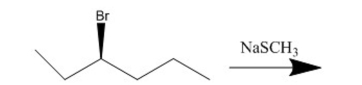
سؤال
Draw the product of the following SN2 eaction: Draw the product of the following S<sub>N</sub>2 eaction:  <div style=padding-top: 35px>

سؤال
Draw all possible alkene products of the following reaction and circle the major product: Draw all possible alkene products of the following reaction and circle the major product:  <div style=padding-top: 35px>
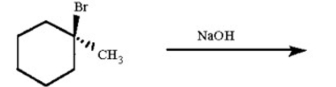
سؤال
What two reactions occur when 2-iodohexane reacts with sodium ethoxide?

A) SN2 and SN1
B)  E1 and E2 \text { E1 and E2 }
C) SN2 and E2
D) E1 and SN1
E) E2 and E1
سؤال
What are the products of the following reaction?
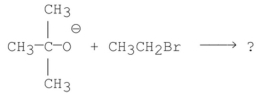
 <strong>What are the products of the following reaction?  </strong> A)  B) \mathrm { CH } _ { 2 } = \mathrm { CH } _ { 2 }  C)  D) A and B E) A and C <div style=padding-top: 35px>

A) <strong>What are the products of the following reaction?  </strong> A)  B) \mathrm { CH } _ { 2 } = \mathrm { CH } _ { 2 }  C)  D) A and B E) A and C <div style=padding-top: 35px>
B) CH2=CH2\mathrm { CH } _ { 2 } = \mathrm { CH } _ { 2 }
C) <strong>What are the products of the following reaction?  </strong> A)  B) \mathrm { CH } _ { 2 } = \mathrm { CH } _ { 2 }  C)  D) A and B E) A and C <div style=padding-top: 35px>
D) A and B
E) A and C
سؤال
What are the products of the following reaction? Select all that apply.
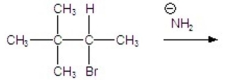
<strong>What are the products of the following reaction? Select all that apply.   </strong> A)  B)  C)  D)  E)  F)   <div style=padding-top: 35px>

A)<strong>What are the products of the following reaction? Select all that apply.   </strong> A)  B)  C)  D)  E)  F)   <div style=padding-top: 35px>
B)<strong>What are the products of the following reaction? Select all that apply.   </strong> A)  B)  C)  D)  E)  F)   <div style=padding-top: 35px>
C)<strong>What are the products of the following reaction? Select all that apply.   </strong> A)  B)  C)  D)  E)  F)   <div style=padding-top: 35px>
D)<strong>What are the products of the following reaction? Select all that apply.   </strong> A)  B)  C)  D)  E)  F)   <div style=padding-top: 35px>
E)<strong>What are the products of the following reaction? Select all that apply.   </strong> A)  B)  C)  D)  E)  F)   <div style=padding-top: 35px>
F) <strong>What are the products of the following reaction? Select all that apply.   </strong> A)  B)  C)  D)  E)  F)   <div style=padding-top: 35px>
سؤال
Which of the following statements is true about SN1 reactions of alkyl halides?

A) Complete inversion of configuration occurs.
B) The reactions are favored by nonpolar solvents.
C) The reactions are favored by polar solvents.
D) Reaction rates depend only on the concentration of the nucleophile.
E) The reaction occurs via a one-step back-side attack.
سؤال
Draw all possible alkene products of the following reaction and circle the major product: Draw all possible alkene products of the following reaction and circle the major product:  <div style=padding-top: 35px>
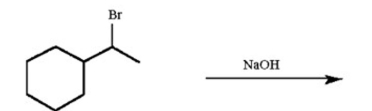
سؤال
Do all primary alkyl iodides underg SN2 eactions with sodium hydroxide in a given solvent at the same rate? Explain.
سؤال
Draw the substitution product of the following reaction: Draw the substitution product of the following reaction:  <div style=padding-top: 35px>
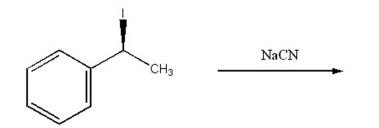
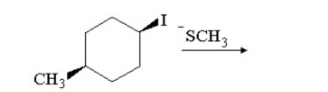
سؤال
Draw the substitution product of the following reaction: Draw the substitution product of the following reaction:  <div style=padding-top: 35px>
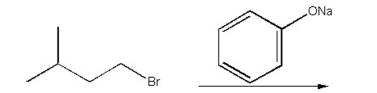

سؤال
Draw the substitution product of the following reaction: Draw the substitution product of the following reaction:  <div style=padding-top: 35px>
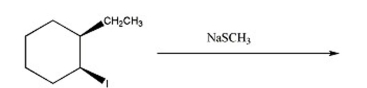
سؤال
Draw the substitution product of the following reaction: Draw the substitution product of the following reaction:  <div style=padding-top: 35px>
سؤال
Draw the substitution product of the following reaction: Draw the substitution product of the following reaction:  <div style=padding-top: 35px>
سؤال
For each of the following reactions, indicate the alkyl halide that will form the greatest amount of the given product: For each of the following reactions, indicate the alkyl halide that will form the greatest amount of the given product:  <div style=padding-top: 35px>
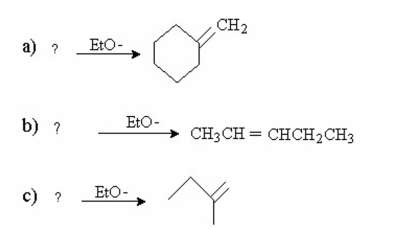
سؤال
What is the substitution product of the following reaction? What is the substitution product of the following reaction?  <div style=padding-top: 35px>
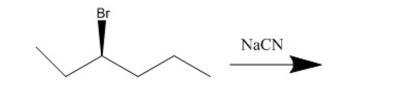
سؤال
Draw the substitution product of the following reaction: Draw the substitution product of the following reaction:  <div style=padding-top: 35px>

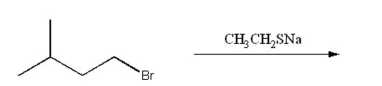
سؤال
Draw the substitution product of the following reaction: Draw the substitution product of the following reaction:  <div style=padding-top: 35px>
سؤال
When the nucleophile and the leaving group are contained in the same molecule, is an intermolecular or an intramolecular reaction more likely to occur? Explain.
سؤال
A student attempted to prepare 1-chlorobutane by reacting 1-butanol with a solution of NaCl. Did the student obtain the desired product? Explain.
فتح الحزمة
قم بالتسجيل لفتح البطاقات في هذه المجموعة!
Unlock Deck
Unlock Deck
1/92
auto play flashcards
العب
simple tutorial
ملء الشاشة (f)
exit full mode
Deck 8: Substitution Reactions of Alkyl Halides
1
Which of the following SN2 reactions is the slowest?

A) CH3CH2CHBrCH3+OHCH3CH2CHOHCH3+Br\mathrm { CH } _ { 3 } \mathrm { CH } _ { 2 } \mathrm { CHBrCH } _ { 3 } + \mathrm { OH } ^ { - } \rightarrow \mathrm { CH } _ { 3 } \mathrm { CH } _ { 2 } \mathrm { CHOHCH } _ { 3 } + \mathrm { Br } ^ { - }
B) CH3CH2CHBrCH3+H2OCH3CH2CHOHCH3+HBr\mathrm { CH } _ { 3 } \mathrm { CH } _ { 2 } \mathrm { CHBrCH } _ { 3 } + \mathrm { H } _ { 2 } \mathrm { O } \rightarrow \mathrm { CH } _ { 3 } \mathrm { CH } _ { 2 } \mathrm { CHOHCH } _ { 3 } + \mathrm { HBr }
C) CH3CH2CH2CH2Br+OHCH3CH2CH2CH2OH+Br\mathrm { CH } _ { 3 } \mathrm { CH } _ { 2 } \mathrm { CH } _ { 2 } \mathrm { CH } _ { 2 } \mathrm { Br } + \mathrm { OH } ^ { - } \rightarrow \mathrm { CH } _ { 3 } \mathrm { CH } _ { 2 } \mathrm { CH } _ { 2 } \mathrm { CH } _ { 2 } \mathrm { OH } + \mathrm { Br } ^ { - }
D) CH3CH2CH2CH2Br+H2OCH3CH2CH2CH2OH+HBr\mathrm { CH } _ { 3 } \mathrm { CH } _ { 2 } \mathrm { CH } _ { 2 } \mathrm { CH } _ { 2 } \mathrm { Br } + \mathrm { H } _ { 2 } \mathrm { O } \rightarrow \mathrm { CH } _ { 3 } \mathrm { CH } _ { 2 } \mathrm { CH } _ { 2 } \mathrm { CH } _ { 2 } \mathrm { OH } + \mathrm { HBr }
CH3CH2CHBrCH3+H2OCH3CH2CHOHCH3+HBr\mathrm { CH } _ { 3 } \mathrm { CH } _ { 2 } \mathrm { CHBrCH } _ { 3 } + \mathrm { H } _ { 2 } \mathrm { O } \rightarrow \mathrm { CH } _ { 3 } \mathrm { CH } _ { 2 } \mathrm { CHOHCH } _ { 3 } + \mathrm { HBr }
2
Which of the following is a secondary alkyl halide?

A)CH3Br
B) (CH3)3CBr
C) (CH3)2CHBr
D)(CH3)2CHCH2Br
(CH3)2CHBr
3
When (S)-2-bromobutane undergoes an SN2 , the product is the compound shown below. What is the configuration of the product? <strong>When (S)-2-bromobutane undergoes an SN2 , the product is the compound shown below. What is the configuration of the product?  </strong> A) S only B) R only C) both R and S with more R than S D) both R and S with more S than R E) equal amounts of R and S

A) S only
B) R only
C) both R and S with more R than S
D) both R and S with more S than R
E) equal amounts of R and S
R only
4
Which of the following alkyl halides reacts the fastest in an SN2 reaction?

A) 1-chloropropane
B) 1-bromopropane
C) 1-fluoropropane
D) 1-iodopropane
فتح الحزمة
افتح القفل للوصول البطاقات البالغ عددها 92 في هذه المجموعة.
فتح الحزمة
k this deck
5
What is the nucleophile in the following reaction?  <strong>What is the nucleophile in the following reaction?   I.    II.  \mathrm { H } _ { 2 } \mathrm { O }   III.  \mathrm { H } _ { 3 } \mathrm { O } ^ { \oplus }   IV.  \mathrm { I } ^ { \ominus }   V.  \mathrm { HO } ^ { \ominus } </strong> A) I B) II C) III D) IV E) V
I.
 <strong>What is the nucleophile in the following reaction?   I.    II.  \mathrm { H } _ { 2 } \mathrm { O }   III.  \mathrm { H } _ { 3 } \mathrm { O } ^ { \oplus }   IV.  \mathrm { I } ^ { \ominus }   V.  \mathrm { HO } ^ { \ominus } </strong> A) I B) II C) III D) IV E) V

II. H2O\mathrm { H } _ { 2 } \mathrm { O }

III. H3O\mathrm { H } _ { 3 } \mathrm { O } ^ { \oplus }

IV. I\mathrm { I } ^ { \ominus }

V. HO\mathrm { HO } ^ { \ominus }

A) I
B) II
C) III
D) IV
E) V
فتح الحزمة
افتح القفل للوصول البطاقات البالغ عددها 92 في هذه المجموعة.
فتح الحزمة
k this deck
6
CH3Br+HOCH3OH+Br\mathrm { CH } _ { 3 } \mathrm { Br } + \mathrm { HO }^ { \ominus } \longrightarrow \mathrm { CH } _ { 3 } \mathrm { OH } + \mathrm { Br }^ { \ominus }

-How does doubling the concentration of both the alkyl halide and the nucleophile in the above SN2 reaction affect the rate of the reaction?

A) no change
B) doubles the rate
C) triples the rate
D) quadruples the rate
E) rate is halved
فتح الحزمة
افتح القفل للوصول البطاقات البالغ عددها 92 في هذه المجموعة.
فتح الحزمة
k this deck
7
Which of the following alkyl halides undergoes an SN2 reaction most rapidly?

A) (CH3)3CCH2I\left( \mathrm { CH } _ { 3 } \right) _ { 3 } \mathrm { CCH } _ { 2 } \mathrm { I }
B) (CH3)3CCl\left( \mathrm { CH } _ { 3 } \right) _ { 3 } \mathrm { CCl }
C) (CH3)2CHI\left( \mathrm { CH } _ { 3 } \right) _ { 2 } \mathrm { CHI }
D) (CH3)2CHCH2CH2CH2Cl\left( \mathrm { CH } _ { 3 } \right) _ { 2 } \mathrm { CHCH } _ { 2 } \mathrm { CH } _ { 2 } \mathrm { CH } _ { 2 } \mathrm { Cl }
E) (CH3)2CHCH2CH2CH2I\left( \mathrm { CH } _ { 3 } \right) _ { 2 } \mathrm { CHCH } _ { 2 } \mathrm { CH } _ { 2 } \mathrm { CH } _ { 2 } \mathrm { I }
فتح الحزمة
افتح القفل للوصول البطاقات البالغ عددها 92 في هذه المجموعة.

فتح الحزمة
k this deck
8
Which of the following SN2 reactions is the slowest?

A) CH3CH2CH3Br+HOCH3CH2CH3OH+Br\mathrm { CH } _ { 3 } \mathrm { CH } _ { 2 } \mathrm { CH } _ { 3 } \mathrm { Br } + \mathrm { HO } ^ { - } \rightarrow \mathrm { CH } _ { 3 } \mathrm { CH } _ { 2 } \mathrm { CH } _ { 3 } \mathrm { OH } + \mathrm { Br } ^ { - }
B) CH3CH2CH2Cl+HOCH3CH2CH2OH+Cl\mathrm { CH } _ { 3 } \mathrm { CH } _ { 2 } \mathrm { CH } _ { 2 } \mathrm { Cl } + \mathrm { HO } ^ { - } \rightarrow \mathrm { CH } _ { 3 } \mathrm { CH } _ { 2 } \mathrm { CH } _ { 2 } \mathrm { OH } + \mathrm { Cl } ^ { - }
C) CH3CH2CH2I+HOCH3CH2CH2OH+I\mathrm { CH } _ { 3 } \mathrm { CH } _ { 2 } \mathrm { CH } _ { 2 } \mathrm { I } + \mathrm { HO } ^ { - } \rightarrow \mathrm { CH } _ { 3 } \mathrm { CH } _ { 2 } \mathrm { CH } _ { 2 } \mathrm { OH } + \mathrm { I } ^ { - }
D) CH3CH2CH3 F+HOCH3CH2CH2OH+F\mathrm { CH } _ { 3 } \mathrm { CH } _ { 2 } \mathrm { CH } _ { 3 } \mathrm {~F} + \mathrm { HO } ^ { - } \rightarrow \mathrm { CH } _ { 3 } \mathrm { CH } _ { 2 } \mathrm { CH } _ { 2 } \mathrm { OH } + \mathrm { F } ^ { - }
E)  <strong>Which of the following S<sub>N</sub>2 reactions is the slowest? </strong> A)  \mathrm { CH } _ { 3 } \mathrm { CH } _ { 2 } \mathrm { CH } _ { 3 } \mathrm { Br } + \mathrm { HO } ^ { - } \rightarrow \mathrm { CH } _ { 3 } \mathrm { CH } _ { 2 } \mathrm { CH } _ { 3 } \mathrm { OH } + \mathrm { Br } ^ { - }  B)  \mathrm { CH } _ { 3 } \mathrm { CH } _ { 2 } \mathrm { CH } _ { 2 } \mathrm { Cl } + \mathrm { HO } ^ { - } \rightarrow \mathrm { CH } _ { 3 } \mathrm { CH } _ { 2 } \mathrm { CH } _ { 2 } \mathrm { OH } + \mathrm { Cl } ^ { - }  C)  \mathrm { CH } _ { 3 } \mathrm { CH } _ { 2 } \mathrm { CH } _ { 2 } \mathrm { I } + \mathrm { HO } ^ { - } \rightarrow \mathrm { CH } _ { 3 } \mathrm { CH } _ { 2 } \mathrm { CH } _ { 2 } \mathrm { OH } + \mathrm { I } ^ { - }  D)  \mathrm { CH } _ { 3 } \mathrm { CH } _ { 2 } \mathrm { CH } _ { 3 } \mathrm {~F} + \mathrm { HO } ^ { - } \rightarrow \mathrm { CH } _ { 3 } \mathrm { CH } _ { 2 } \mathrm { CH } _ { 2 } \mathrm { OH } + \mathrm { F } ^ { - }  E)
فتح الحزمة
افتح القفل للوصول البطاقات البالغ عددها 92 في هذه المجموعة.

فتح الحزمة
k this deck
9
Which of the following SN2 reactions is the fastest?

A) <strong>Which of the following S<sub>N</sub>2 reactions is the fastest? </strong> A)  B) \mathrm { CH } _ { 3 } \mathrm { CH } _ { 2 } \mathrm { CH } _ { 2 } \mathrm { I } + \mathrm { HO } ^ { - } \rightarrow \mathrm { CH } _ { 3 } \mathrm { CH } _ { 2 } \mathrm { CH } _ { 2 } \mathrm { OH } + \mathrm { I } ^ { - }  C)  D) \mathrm { CH } _ { 3 } \mathrm { CH } _ { 2 } \mathrm { CH } _ { 3 } \mathrm { Br } + \mathrm { HO } ^ { - } \rightarrow \mathrm { CH } _ { 3 } \mathrm { CH } _ { 2 } \mathrm { CH } _ { 3 } \mathrm { OH } + \mathrm { Br } ^ { - }  E) \mathrm { CH } _ { 3 } \mathrm { CH } _ { 2 } \mathrm { CH } _ { 2 } \mathrm { I } + \mathrm { H } _ { 2 } \mathrm { O } \rightarrow \mathrm { CH } _ { 3 } \mathrm { CH } _ { 2 } \mathrm { CH } _ { 2 } \mathrm { OH } + \mathrm { HI }
B) CH3CH2CH2I+HOCH3CH2CH2OH+I\mathrm { CH } _ { 3 } \mathrm { CH } _ { 2 } \mathrm { CH } _ { 2 } \mathrm { I } + \mathrm { HO } ^ { - } \rightarrow \mathrm { CH } _ { 3 } \mathrm { CH } _ { 2 } \mathrm { CH } _ { 2 } \mathrm { OH } + \mathrm { I } ^ { - }
C) <strong>Which of the following S<sub>N</sub>2 reactions is the fastest? </strong> A)  B) \mathrm { CH } _ { 3 } \mathrm { CH } _ { 2 } \mathrm { CH } _ { 2 } \mathrm { I } + \mathrm { HO } ^ { - } \rightarrow \mathrm { CH } _ { 3 } \mathrm { CH } _ { 2 } \mathrm { CH } _ { 2 } \mathrm { OH } + \mathrm { I } ^ { - }  C)  D) \mathrm { CH } _ { 3 } \mathrm { CH } _ { 2 } \mathrm { CH } _ { 3 } \mathrm { Br } + \mathrm { HO } ^ { - } \rightarrow \mathrm { CH } _ { 3 } \mathrm { CH } _ { 2 } \mathrm { CH } _ { 3 } \mathrm { OH } + \mathrm { Br } ^ { - }  E) \mathrm { CH } _ { 3 } \mathrm { CH } _ { 2 } \mathrm { CH } _ { 2 } \mathrm { I } + \mathrm { H } _ { 2 } \mathrm { O } \rightarrow \mathrm { CH } _ { 3 } \mathrm { CH } _ { 2 } \mathrm { CH } _ { 2 } \mathrm { OH } + \mathrm { HI }
D) CH3CH2CH3Br+HOCH3CH2CH3OH+Br\mathrm { CH } _ { 3 } \mathrm { CH } _ { 2 } \mathrm { CH } _ { 3 } \mathrm { Br } + \mathrm { HO } ^ { - } \rightarrow \mathrm { CH } _ { 3 } \mathrm { CH } _ { 2 } \mathrm { CH } _ { 3 } \mathrm { OH } + \mathrm { Br } ^ { - }
E) CH3CH2CH2I+H2OCH3CH2CH2OH+HI\mathrm { CH } _ { 3 } \mathrm { CH } _ { 2 } \mathrm { CH } _ { 2 } \mathrm { I } + \mathrm { H } _ { 2 } \mathrm { O } \rightarrow \mathrm { CH } _ { 3 } \mathrm { CH } _ { 2 } \mathrm { CH } _ { 2 } \mathrm { OH } + \mathrm { HI }
فتح الحزمة
افتح القفل للوصول البطاقات البالغ عددها 92 في هذه المجموعة.
فتح الحزمة
k this deck
10
Which of the following is not a nucleophile?

A) CH3NH2\mathrm { CH } _ { 3 } \mathrm { NH } _ { 2 }
B) H2O\mathrm { H } _2 \mathrm { O }
C) +CH3{ } ^ { + } \mathrm { CH } _ { 3 }
D) CH3O\mathrm { CH } _ { 3 } \mathrm { O }^ { \ominus }
E) HCC:\mathrm { HC } \equiv \mathrm { C }^ { \ominus }:
فتح الحزمة
افتح القفل للوصول البطاقات البالغ عددها 92 في هذه المجموعة.
فتح الحزمة
k this deck
11
The specific rotation of (R)C6H5CHOHCH3 is 42.3. A pure sample of (R)C6H5CHClCH3( R ) - \mathrm { C } _ { 6 } \mathrm { H } _ { 5 } \mathrm { CHOHCH } _ { 3 } \text { is } - 42.3 \text {. A pure sample of } ( R ) - \mathrm { C } _ { 6 } \mathrm { H } _ { 5 } \mathrm { CHClCH } _ { 3 } was converted into the corresponding alcohol via a SN2 eaction. What is the specific rotation of the product?

A) -42.3
B) between 0 and -42.3
C) between +42.3 and 0
D) +42.3
فتح الحزمة
افتح القفل للوصول البطاقات البالغ عددها 92 في هذه المجموعة.
فتح الحزمة
k this deck
12
Which of the following alkyl halides is the least reactive in an SN2 reaction?

A)CH3CH2Cl
B)<strong>Which of the following alkyl halides is the least reactive in an SN2 reaction? </strong> A)CH<sub>3</sub>CH<sub>2</sub>Cl B)  C)  D)  E)
C)<strong>Which of the following alkyl halides is the least reactive in an SN2 reaction? </strong> A)CH<sub>3</sub>CH<sub>2</sub>Cl B)  C)  D)  E)
D)<strong>Which of the following alkyl halides is the least reactive in an SN2 reaction? </strong> A)CH<sub>3</sub>CH<sub>2</sub>Cl B)  C)  D)  E)
E)<strong>Which of the following alkyl halides is the least reactive in an SN2 reaction? </strong> A)CH<sub>3</sub>CH<sub>2</sub>Cl B)  C)  D)  E)
فتح الحزمة
افتح القفل للوصول البطاقات البالغ عددها 92 في هذه المجموعة.
فتح الحزمة
k this deck
13
The specific rotation of (R)-sec-butyl alcohol is -13.52. A pure sample of (R)-sec-butyl bromide was converted to sec-butyl alcohol via an SN2 reaction. What is the specific rotation of
The product, assuming 100% yield?

A) -13.52
B) between 0 and -13.52
C) between 0 and +13.52
D) +13.52
E) zero
فتح الحزمة
افتح القفل للوصول البطاقات البالغ عددها 92 في هذه المجموعة.
فتح الحزمة
k this deck
14
Which of the following is not a nucleophile?

A) NH3
B) NH2CH3
C) HCC:\mathrm { HC } \equiv \mathrm { C } : ^-
D) CH3CH2+
فتح الحزمة
افتح القفل للوصول البطاقات البالغ عددها 92 في هذه المجموعة.
فتح الحزمة
k this deck
15
What are the substitution products of the following reaction?
CH3CH2Br+OH ? \mathrm { CH } _ { 3 } \mathrm { CH } _ { 2 } \mathrm { Br } + - \mathrm { OH } \rightarrow \text { ? }

A) CH3CH2BrH++O\mathrm { CH } _ { 3 } \mathrm { CH } _ { 2 } \mathrm { BrH } ^ { + } + \mathrm { O } ^ { - }
B) HOCH2CH2Br\mathrm { HOCH } _ { 2 } \mathrm { CH } _ { 2 } \mathrm { Br }
C) CH3CH2OH+Br\mathrm { CH } _ { 3 } \mathrm { CH } _ { 2 } \mathrm { OH } + \mathrm { Br } ^ { - }
D) CH2=CH2+Br+H2O\mathrm { CH } _ { 2 } = \mathrm { CH } _ { 2 } + \mathrm { Br } ^ { - } + \mathrm { H } _ { 2 } \mathrm { O }
E) CH2=CHBr+H2O\mathrm { CH } _ { 2 } = \mathrm { CHBr } + \mathrm { H } _ { 2 } \mathrm { O }
فتح الحزمة
افتح القفل للوصول البطاقات البالغ عددها 92 في هذه المجموعة.
فتح الحزمة
k this deck
16
CH3Br+HOCH3OH+Br\mathrm { CH } _ { 3 } \mathrm { Br } + \mathrm { HO }^ { \ominus } \longrightarrow \mathrm { CH } _ { 3 } \mathrm { OH } + \mathrm { Br }^ { \ominus }

-How does doubling the concentration of the alkyl halide in the above SN2 reaction affect the rate of the reaction?

A) no change
B) doubles the rate
C) triples the rate
D) quadruples the rate
E) rate is halved
فتح الحزمة
افتح القفل للوصول البطاقات البالغ عددها 92 في هذه المجموعة.
فتح الحزمة
k this deck
17
What product results from the SN2 reaction between (R)-2-chloropentane and methoxide ion?

A) (R)-2-methoxypentane
B) (S)-2-methoxypentane
C) racemic 2-methoxypentane
D) 1-methoxypentane
E) 3-methoxypentane
فتح الحزمة
افتح القفل للوصول البطاقات البالغ عددها 92 في هذه المجموعة.
فتح الحزمة
k this deck
18
Which of the following alkyl halides reacts the fastest in an SN2 reaction?

A) 2-chloro-2-methylpropane
B) 2-chlorobutane
C) 1-chlorobutane
D) chloromethane
فتح الحزمة
افتح القفل للوصول البطاقات البالغ عددها 92 في هذه المجموعة.
فتح الحزمة
k this deck
19
Which of the following SN2 reactions is the fastest?

A) CH3CH2CH2CH2Br+OHCH3CH2CH2CH2OH+Br\mathrm { CH } _ { 3 } \mathrm { CH } _ { 2 } \mathrm { CH } _ { 2 } \mathrm { CH } _ { 2 } \mathrm { Br } + \mathrm { OH } ^ { - } \rightarrow \mathrm { CH } _ { 3 } \mathrm { CH } _ { 2 } \mathrm { CH } _ { 2 } \mathrm { CH } _ { 2 } \mathrm { OH } + \mathrm { Br } ^ { - }
B) CH3CH2CH2CH2Br+H2OCH3CH2CH2CH2OH+HBr\mathrm { CH } _ { 3 } \mathrm { CH } _ { 2 } \mathrm { CH } _ { 2 } \mathrm { CH } _ { 2 } \mathrm { Br } + \mathrm { H } _ { 2 } \mathrm { O } \rightarrow \mathrm { CH } _ { 3 } \mathrm { CH } _ { 2 } \mathrm { CH } _ { 2 } \mathrm { CH } _ { 2 } \mathrm { OH } + \mathrm { HBr }
C) CH3CH2CHBrCH3+OHCH3CH2CHOHCH3+Br\mathrm { CH } _ { 3 } \mathrm { CH } _ { 2 } \mathrm { CHBrCH } _ { 3 } + \mathrm { OH } ^ { - } \rightarrow \mathrm { CH } _ { 3 } \mathrm { CH } _ { 2 } \mathrm { CHOHCH } _ { 3 } + \mathrm { Br } ^ { - }
D) CH3CH2CHBrCH3+H2OCH3CH2CHOHCH3+HBr\mathrm { CH } _3 \mathrm { CH } _2 \mathrm { CHBrCH } _3 + \mathrm { H } _2 \mathrm { O } \rightarrow \mathrm { CH } _3 \mathrm { CH } _2 \mathrm { CHOHCH } _3 + \mathrm { HBr }
فتح الحزمة
افتح القفل للوصول البطاقات البالغ عددها 92 في هذه المجموعة.
فتح الحزمة
k this deck
20
Which of the following is the best nucleophile in an SN2 reaction?

A) isopropoxide ion
B) tert-butoxide ion
C) ethoxide ion
D) tert-pentoxide ion
فتح الحزمة
افتح القفل للوصول البطاقات البالغ عددها 92 في هذه المجموعة.
فتح الحزمة
k this deck
21
Which alkyl halide undergoes an SN2 reaction most rapidly?

A) 1-iodo-3-methylpentane
B) 2 -iodopentane
C) 2-iodo-2-methylpentane
D) 3 -iodopentane
E) 1 -iodo-2,2-dimethylpentane
فتح الحزمة
افتح القفل للوصول البطاقات البالغ عددها 92 في هذه المجموعة.
فتح الحزمة
k this deck
22
Which of the following is the best leaving group?

A) HO-
B) F-
C) Cl-
D) Br-
E) I-
فتح الحزمة
افتح القفل للوصول البطاقات البالغ عددها 92 في هذه المجموعة.
فتح الحزمة
k this deck
23
Which of the following species is the least nucleophilic?

A) (CH3)3CO-
B) H2O
C) (CH3)3N
D) HO-
E) CN-
فتح الحزمة
افتح القفل للوصول البطاقات البالغ عددها 92 في هذه المجموعة.
فتح الحزمة
k this deck
24
Which of the following alkyl halides reacts the fastest in an SN1 reaction?

A)<strong>Which of the following alkyl halides reacts the fastest in an S<sub>N</sub>1 reaction? </strong> A)  B)  C)  D)  E)
B)<strong>Which of the following alkyl halides reacts the fastest in an S<sub>N</sub>1 reaction? </strong> A)  B)  C)  D)  E)
C)<strong>Which of the following alkyl halides reacts the fastest in an S<sub>N</sub>1 reaction? </strong> A)  B)  C)  D)  E)
D)<strong>Which of the following alkyl halides reacts the fastest in an S<sub>N</sub>1 reaction? </strong> A)  B)  C)  D)  E)
E)<strong>Which of the following alkyl halides reacts the fastest in an S<sub>N</sub>1 reaction? </strong> A)  B)  C)  D)  E)
فتح الحزمة
افتح القفل للوصول البطاقات البالغ عددها 92 في هذه المجموعة.
فتح الحزمة
k this deck
25
(CH3)3CBr+I(CH3)3CI+Br\left(\mathrm{CH}_{3}\right)_{3} \mathrm{CBr}+\mathrm{I}^{\ominus} \longrightarrow\left(\mathrm{CH}_{3}\right)_{3} \mathrm{CI}+\mathrm{Br}^{\ominus}


-How does doubling the concentration of the alkyl halide affect the rate of the above SN1 reaction?

A) no change
B) doubles the rate
C) triples the rate
D) quadruples the rate
E) rate is halved
فتح الحزمة
افتح القفل للوصول البطاقات البالغ عددها 92 في هذه المجموعة.
فتح الحزمة
k this deck
26
When (S)-1-bromo-1-phenylethane undergoes an SN2 reaction with methanethiol (CH3SH) the product of the reaction is the compound shown below. What is its configuration?
<strong>When (S)-1-bromo-1-phenylethane undergoes an S<sub>N</sub>2 reaction with methanethiol (CH<sub>3</sub>SH) the product of the reaction is the compound shown below. What is its configuration?  </strong> A)  S  only B)  R  only C) both  R  and  S  with slightly more  S  than  R D) both  R  and  S  with slightly more  R  than  S

A) S only
B) R only
C) both R and S with slightly more S than R
D) both R and S with slightly more R than S
فتح الحزمة
افتح القفل للوصول البطاقات البالغ عددها 92 في هذه المجموعة.
فتح الحزمة
k this deck
27
SN2 reactions usually proceed with ________.

A) equal amounts of inversion and retention at the asymmetric center undergoing substitution
B) slightly more inversion than retention at the asymmetric center undergoing substitution
C) slightly more retention than inversion at the asymmetric center undergoing substitution
D) complete inversion at the asymmetric center undergoing substitution
E) complete retention at the asymmetric center undergoing substitution
فتح الحزمة
افتح القفل للوصول البطاقات البالغ عددها 92 في هذه المجموعة.
فتح الحزمة
k this deck
28
Which of the following statements concerning SN2 reactions of alkyl halides is not correct?

A) The rate of reaction depends on the concentration of the nucleophile.
B) The rate of reaction depends on the concentration of the alkyl halide.
C) The rate of reaction of a particular alkyl bromide depends on the steric accessibility of the carbon of the C-Br bond.
D) All alkyl iodides react more rapidly than all alkyl chlorides.
E) The rate of reaction depends on the relative nucleophilicity of the nucleophile.
فتح الحزمة
افتح القفل للوصول البطاقات البالغ عددها 92 في هذه المجموعة.
فتح الحزمة
k this deck
29
The SN1 reaction of (CH3)3)CBr with water has ________ steps, ________ transition states, and ________ intermediates.

A) 2; 2; 2
B) 2; 2; 3
C) 2; 3; 2
D) 3; 2; 3
E) 3; 3; 2
فتح الحزمة
افتح القفل للوصول البطاقات البالغ عددها 92 في هذه المجموعة.
فتح الحزمة
k this deck
30
Which alkyl halide undergoes an SN2 reaction most rapidly?

A)<strong>Which alkyl halide undergoes an S<sub>N</sub>2 reaction most rapidly? </strong> A)  B)  C)  D)  E)
B)<strong>Which alkyl halide undergoes an S<sub>N</sub>2 reaction most rapidly? </strong> A)  B)  C)  D)  E)
C)<strong>Which alkyl halide undergoes an S<sub>N</sub>2 reaction most rapidly? </strong> A)  B)  C)  D)  E)
D)<strong>Which alkyl halide undergoes an S<sub>N</sub>2 reaction most rapidly? </strong> A)  B)  C)  D)  E)
E)<strong>Which alkyl halide undergoes an S<sub>N</sub>2 reaction most rapidly? </strong> A)  B)  C)  D)  E)
فتح الحزمة
افتح القفل للوصول البطاقات البالغ عددها 92 في هذه المجموعة.
فتح الحزمة
k this deck
31
Which of the following describes the relative nucleophilicities of methoxide and tert- butoxide?

A) These alkoxides have the same nucleophilicity because the negative charge in both is on an oxygen atom.
B) Methoxide is more nucleophilic because the nucleophilicity of tert-butoxide is decreased by steric effects.
C) tert-Butoxide is more nucleophilic because it contains three methyl groups which increase the charge on its oxygen by donating electron density.
D) tert-Butoxide is more nucleophilic because it is more basic.
E) none of the above
فتح الحزمة
افتح القفل للوصول البطاقات البالغ عددها 92 في هذه المجموعة.
فتح الحزمة
k this deck
32
Which of the following factors has no effect on the rate of SN1 eactions?

A) the nature of the alkyl halide
B) the nature of the leaving group
C) the concentration of the alkyl halide
D) the concentration of the nucleophile
E) the value of the rate constant
فتح الحزمة
افتح القفل للوصول البطاقات البالغ عددها 92 في هذه المجموعة.
فتح الحزمة
k this deck
33
Which of the following compounds is the most reactive in a SN2 reaction?

A) CH3CH2Cl\mathrm { CH } _ { 3 } \mathrm { CH } _ { 2 } - \mathrm { Cl }
B) CH3CH2Br\mathrm { CH } _ { 3 } \mathrm { CH } _ { 2 } - \mathrm { Br }
C) CH3CH2I\mathrm { CH } _ { 3 } \mathrm { CH } _ { 2 } - \mathrm { I }
D) CH3CH2F\mathrm { CH } _ { 3 } \mathrm { CH } _ { 2 } - \mathrm { F }
E) CH3CH2OH\mathrm { CH } _ { 3 } \mathrm { CH } _ { 2 } - \mathrm { OH }
فتح الحزمة
افتح القفل للوصول البطاقات البالغ عددها 92 في هذه المجموعة.
فتح الحزمة
k this deck
34
Which of the following is the rate law for an SN1 reaction?

A)  rate =k[ alkyl halide] [nucleophile] \text { rate } = k [ \text { alkyl halide] [nucleophile] }
B)  rate =k[ nucleophile ]\text { rate } = k [ \text { nucleophile } ]
C)  rate =k[ alkyl halide ]\text { rate } = k [ \text { alkyl halide } ]
D)  rate =k1[ alkyl halide] [nucleophile] +k2[ alkyl halide] \text { rate } = k _ { 1 } \left[ \text { alkyl halide] [nucleophile] } + k _ { 2 } [ \text { alkyl halide] } \right.
E)  rate =k1[ alkyl halide ]+k2[ nucleophile] \text { rate } = k 1 [ \text { alkyl halide } ] + k 2 [ \text { nucleophile] }
فتح الحزمة
افتح القفل للوصول البطاقات البالغ عددها 92 في هذه المجموعة.
فتح الحزمة
k this deck
35
(CH3)3CBr+I(CH3)3CI+Br\left(\mathrm{CH}_{3}\right)_{3} \mathrm{CBr}+\mathrm{I}^{\ominus} \longrightarrow\left(\mathrm{CH}_{3}\right)_{3} \mathrm{CI}+\mathrm{Br}^{\ominus}


-How does doubling the concentration of both the alkyl halide and the nucleophile affect the rate of the abov SN1 reaction?

A) no change
B) doubles the rate
C) triples the rate
D) quadruples the rate
E) rate is halved
فتح الحزمة
افتح القفل للوصول البطاقات البالغ عددها 92 في هذه المجموعة.
فتح الحزمة
k this deck
36
(CH3)3CBr+I(CH3)3CI+Br\left(\mathrm{CH}_{3}\right)_{3} \mathrm{CBr}+\mathrm{I}^{\ominus} \longrightarrow\left(\mathrm{CH}_{3}\right)_{3} \mathrm{CI}+\mathrm{Br}^{\ominus}


-How does doubling the concentration of the nucleophile affect the rate of the above SN1 reaction?

A) no change
B) doubles the rate
C) triples the rate
D) quadruples the rate
E) rate is halved
فتح الحزمة
افتح القفل للوصول البطاقات البالغ عددها 92 في هذه المجموعة.
فتح الحزمة
k this deck
37
Which of the following alkyl halides reacts the fastest in an SN2 reaction?

A) CH3CH2CH2Br\mathrm { CH } _ { 3 } \mathrm { CH } _ { 2 } \mathrm { CH } _ { 2 } \mathrm { Br }
B) <strong>Which of the following alkyl halides reacts the fastest in an S<sub>N</sub>2 reaction? </strong> A) \mathrm { CH } _ { 3 } \mathrm { CH } _ { 2 } \mathrm { CH } _ { 2 } \mathrm { Br }  B)  C)  D) \mathrm { CH } _ { 3 } \mathrm { CH } _ { 2 } \mathrm { CH } _ { 2 } \mathrm { I }  E) \mathrm { CH } _ { 3 } \mathrm { CH } _ { 2 } \mathrm { CH } _ { 2 } \mathrm { Cl }
C) <strong>Which of the following alkyl halides reacts the fastest in an S<sub>N</sub>2 reaction? </strong> A) \mathrm { CH } _ { 3 } \mathrm { CH } _ { 2 } \mathrm { CH } _ { 2 } \mathrm { Br }  B)  C)  D) \mathrm { CH } _ { 3 } \mathrm { CH } _ { 2 } \mathrm { CH } _ { 2 } \mathrm { I }  E) \mathrm { CH } _ { 3 } \mathrm { CH } _ { 2 } \mathrm { CH } _ { 2 } \mathrm { Cl }
D) CH3CH2CH2I\mathrm { CH } _ { 3 } \mathrm { CH } _ { 2 } \mathrm { CH } _ { 2 } \mathrm { I }
E) CH3CH2CH2Cl\mathrm { CH } _ { 3 } \mathrm { CH } _ { 2 } \mathrm { CH } _ { 2 } \mathrm { Cl }
فتح الحزمة
افتح القفل للوصول البطاقات البالغ عددها 92 في هذه المجموعة.
فتح الحزمة
k this deck
38
Which of the following alkyl halides reacts the fastest in a SN1 reaction?

A) 2-chloro-2-methylpropane
B) 2-chlorobutane
C) 1-chlorobutane
D) chloromethane
فتح الحزمة
افتح القفل للوصول البطاقات البالغ عددها 92 في هذه المجموعة.
فتح الحزمة
k this deck
39
Which alkyl halide undergoes a SN2 reaction most rapidly?

A)<strong>Which alkyl halide undergoes a SN2 reaction most rapidly? </strong> A)  B)  C)  D)  E)
B)<strong>Which alkyl halide undergoes a SN2 reaction most rapidly? </strong> A)  B)  C)  D)  E)
C)<strong>Which alkyl halide undergoes a SN2 reaction most rapidly? </strong> A)  B)  C)  D)  E)
D)<strong>Which alkyl halide undergoes a SN2 reaction most rapidly? </strong> A)  B)  C)  D)  E)
E)<strong>Which alkyl halide undergoes a SN2 reaction most rapidly? </strong> A)  B)  C)  D)  E)
فتح الحزمة
افتح القفل للوصول البطاقات البالغ عددها 92 في هذه المجموعة.
فتح الحزمة
k this deck
40
Which alkyl halide is the most reactive in an SN2 reaction?

A) (CH3)CCH2CH2 F\left( \mathrm { CH } _ { 3 } \right) \mathrm { CCH } _ { 2 } \mathrm { CH } _ { 2 } \mathrm {~F}
B) (CH3)CCH2CH2Cl\left( \mathrm { CH } _ { 3 } \right) \mathrm { CCH } _ { 2 } \mathrm { CH } _ { 2 } \mathrm { Cl }
C) (CH3)CCH2CH2Br\left( \mathrm { CH } _ { 3 } \right) \mathrm { CCH } _ { 2 } \mathrm { CH } _ { 2 } \mathrm { Br }
D) (CH3)CCH2CH2I\left( \mathrm { CH } _ { 3 } \right) \mathrm { CCH } _ { 2 } \mathrm { CH } _ { 2 } \mathrm { I }
E) All primary halides react at the same rate in SN2 reactions.
فتح الحزمة
افتح القفل للوصول البطاقات البالغ عددها 92 في هذه المجموعة.
فتح الحزمة
k this deck
41
What is the major product of the following reaction? <strong>What is the major product of the following reaction?  </strong> A) I B) II C) III D) IV E) V

A) I
B) II
C) III
D) IV
E) V
فتح الحزمة
افتح القفل للوصول البطاقات البالغ عددها 92 في هذه المجموعة.
فتح الحزمة
k this deck
42
Which of the following alkyl halides reacts the fastest in an E2 reaction?

A) 2-chloro-2-methylbutane
B) 1-chlorobutane
C) 1-chloro-2-methylbutane
D) 2-chlorobutane
E) chloromethane
فتح الحزمة
افتح القفل للوصول البطاقات البالغ عددها 92 في هذه المجموعة.
فتح الحزمة
k this deck
43
What is the major product of the following E2 reaction?
<strong>What is the major product of the following E2 reaction?   </strong> A)  B)  C)  D)  E)

A)<strong>What is the major product of the following E2 reaction?   </strong> A)  B)  C)  D)  E)
B)<strong>What is the major product of the following E2 reaction?   </strong> A)  B)  C)  D)  E)
C)<strong>What is the major product of the following E2 reaction?   </strong> A)  B)  C)  D)  E)
D)<strong>What is the major product of the following E2 reaction?   </strong> A)  B)  C)  D)  E)
E)<strong>What is the major product of the following E2 reaction?   </strong> A)  B)  C)  D)  E)
فتح الحزمة
افتح القفل للوصول البطاقات البالغ عددها 92 في هذه المجموعة.
فتح الحزمة
k this deck
44
Which of the following alkyl halides reacts the fastest in an E2 reaction?

A)<strong>Which of the following alkyl halides reacts the fastest in an E2 reaction? </strong> A)  B)  C)  D)  E)CH<sub>3</sub>I
B)<strong>Which of the following alkyl halides reacts the fastest in an E2 reaction? </strong> A)  B)  C)  D)  E)CH<sub>3</sub>I
C)<strong>Which of the following alkyl halides reacts the fastest in an E2 reaction? </strong> A)  B)  C)  D)  E)CH<sub>3</sub>I
D)<strong>Which of the following alkyl halides reacts the fastest in an E2 reaction? </strong> A)  B)  C)  D)  E)CH<sub>3</sub>I
E)CH3I
فتح الحزمة
افتح القفل للوصول البطاقات البالغ عددها 92 في هذه المجموعة.
فتح الحزمة
k this deck
45
Which of the following alkyl chlorides forms only one alkene when it undergoes an elimination reaction?

A) 1-chloropentane
B) 2-chloropentane
C) 3-chloropentane
D) 1-chloro-2-methylbutane
E) 1-chloro-3-methylbutane
فتح الحزمة
افتح القفل للوصول البطاقات البالغ عددها 92 في هذه المجموعة.
فتح الحزمة
k this deck
46
What stereoisomer is the major product obtained from the following E2 reaction?
 <strong>What stereoisomer is the major product obtained from the following E2 reaction?   </strong> A)  B) \mathrm { CH } _ { 3 } \mathrm { CH } _ { 2 } \mathrm { CH } = \mathrm { CH } _ { 2 }  C)  D)  E)

A) <strong>What stereoisomer is the major product obtained from the following E2 reaction?   </strong> A)  B) \mathrm { CH } _ { 3 } \mathrm { CH } _ { 2 } \mathrm { CH } = \mathrm { CH } _ { 2 }  C)  D)  E)
B) CH3CH2CH=CH2\mathrm { CH } _ { 3 } \mathrm { CH } _ { 2 } \mathrm { CH } = \mathrm { CH } _ { 2 }
C) <strong>What stereoisomer is the major product obtained from the following E2 reaction?   </strong> A)  B) \mathrm { CH } _ { 3 } \mathrm { CH } _ { 2 } \mathrm { CH } = \mathrm { CH } _ { 2 }  C)  D)  E)
D) <strong>What stereoisomer is the major product obtained from the following E2 reaction?   </strong> A)  B) \mathrm { CH } _ { 3 } \mathrm { CH } _ { 2 } \mathrm { CH } = \mathrm { CH } _ { 2 }  C)  D)  E)
E) <strong>What stereoisomer is the major product obtained from the following E2 reaction?   </strong> A)  B) \mathrm { CH } _ { 3 } \mathrm { CH } _ { 2 } \mathrm { CH } = \mathrm { CH } _ { 2 }  C)  D)  E)
فتح الحزمة
افتح القفل للوصول البطاقات البالغ عددها 92 في هذه المجموعة.
فتح الحزمة
k this deck
47
How many alkenes can be obtained as products (even in minor amounts) when the alkyl halide shown below undergoes an E2 reaction? (Count E/Z stereoisomers as different products.) <strong>How many alkenes can be obtained as products (even in minor amounts) when the alkyl halide shown below undergoes an E2 reaction? (Count E/Z stereoisomers as different products.)  </strong> A) 1 B) 2 C) 3 D) 4 E) 5

A) 1
B) 2
C) 3
D) 4
E) 5
فتح الحزمة
افتح القفل للوصول البطاقات البالغ عددها 92 في هذه المجموعة.
فتح الحزمة
k this deck
48
What is the major product of the following reaction?
<strong>What is the major product of the following reaction?  </strong> A) 2,3-dimethyl-1-hexene B) 2,3-dimethyl-2-hexene C) 2 -isopropyl-1-pentene D)  (Z)-2,3 -dimethyl-3-hexene E)  (E)-2,3 -dimethyl-3-hexene

A) 2,3-dimethyl-1-hexene
B) 2,3-dimethyl-2-hexene
C) 2 -isopropyl-1-pentene
D) (Z)-2,3 -dimethyl-3-hexene
E) (E)-2,3 -dimethyl-3-hexene
فتح الحزمة
افتح القفل للوصول البطاقات البالغ عددها 92 في هذه المجموعة.
فتح الحزمة
k this deck
49
Which of the following alkyl bromides undergo SN1 olvolysis reactions?

A) (R)-2 -bromo-3-ethylpentane
B) (S)-2 -bromo-3-ethylpentane
C) (R)-3 -bromo-2-methylpentane
D) (S)-3 -bromo-2-methylpentane
E) 3-bromo-3-ethylpentane
فتح الحزمة
افتح القفل للوصول البطاقات البالغ عددها 92 في هذه المجموعة.
فتح الحزمة
k this deck
50
Which of the following are the elimination products obtained from the following reaction?
CH3CH2Br+OH?\mathrm { CH } _ { 3 } \mathrm { CH } _ { 2 } \mathrm { Br } + - \mathrm { OH } \rightarrow ?

A) CH3CH2Br+H+O\mathrm { CH } _ { 3 } \mathrm { CH } _ { 2 } \mathrm { Br } ^ { + } \mathrm { H } + \mathrm { O } ^ { - }
B) HOCH2CH2Br\mathrm { HOCH } _ { 2 } \mathrm { CH } _ { 2 } \mathrm { Br }
C) CH3CH2OH+Br\mathrm { CH } _ { 3 } \mathrm { CH } _ { 2 } \mathrm { OH } + \mathrm { Br } ^ { - }
D) CH2=CH2+Br+H2O\mathrm { CH } _ { 2 } = \mathrm { CH } _ { 2 } + \mathrm { Br } ^ { - } + \mathrm { H } _ { 2 } \mathrm { O }
E) CH2=CHBr+H2O\mathrm { CH } _ { 2 } = \mathrm { CHBr } + \mathrm { H } _ { 2 } \mathrm { O }
فتح الحزمة
افتح القفل للوصول البطاقات البالغ عددها 92 في هذه المجموعة.
فتح الحزمة
k this deck
51
Which of the following alkyl halides reacts the fastest in an E2 reaction?

A)  <strong>Which of the following alkyl halides reacts the fastest in an E2 reaction? </strong> A)   B)  \mathrm { CH } _ { 3 } \mathrm { CH } _ { 2 } \mathrm { CH } _ { 2 } \mathrm { Cl }  C)  \mathrm { CH } _ { 3 } \mathrm { CH } _ { 2 } \mathrm { CH } _ { 2 } \mathrm { I }  D)   E)  \mathrm { CH } _ { 3 } \mathrm { CH } _ { 2 } \mathrm { CH } _ { 2 } \mathrm { Br }
B) CH3CH2CH2Cl\mathrm { CH } _ { 3 } \mathrm { CH } _ { 2 } \mathrm { CH } _ { 2 } \mathrm { Cl }
C) CH3CH2CH2I\mathrm { CH } _ { 3 } \mathrm { CH } _ { 2 } \mathrm { CH } _ { 2 } \mathrm { I }
D)  <strong>Which of the following alkyl halides reacts the fastest in an E2 reaction? </strong> A)   B)  \mathrm { CH } _ { 3 } \mathrm { CH } _ { 2 } \mathrm { CH } _ { 2 } \mathrm { Cl }  C)  \mathrm { CH } _ { 3 } \mathrm { CH } _ { 2 } \mathrm { CH } _ { 2 } \mathrm { I }  D)   E)  \mathrm { CH } _ { 3 } \mathrm { CH } _ { 2 } \mathrm { CH } _ { 2 } \mathrm { Br }
E) CH3CH2CH2Br\mathrm { CH } _ { 3 } \mathrm { CH } _ { 2 } \mathrm { CH } _ { 2 } \mathrm { Br }
فتح الحزمة
افتح القفل للوصول البطاقات البالغ عددها 92 في هذه المجموعة.
فتح الحزمة
k this deck
52
Which of the following alkyl halides reacts the fastest in an E2 reaction?

A) (CH3)3CCH2I\left( \mathrm { CH } _ { 3 } \right) _ { 3 } \mathrm { CCH } _ { 2 } \mathrm { I }
B) (CH3)2CHCHICH3\left( \mathrm { CH } _ { 3 } \right) _ { 2 } \mathrm { CHCHICH } _ { 3 }
C) (CH3)2CHCH2Br\left( \mathrm { CH } _ { 3 } \right) _ { 2 } \mathrm { CHCH } _ { 2 } \mathrm { Br }
D) (CH3)2CHCH2Cl\left( \mathrm { CH } _ { 3 } \right) _ { 2 } \mathrm { CHCH } _ { 2 } \mathrm { Cl }
E) (CH3)2CHCH2CH2Cl\left( \mathrm { CH } _ { 3 } \right) _ { 2 } \mathrm { CHCH } _ { 2 } \mathrm { CH } _ { 2 } \mathrm { Cl }
فتح الحزمة
افتح القفل للوصول البطاقات البالغ عددها 92 في هذه المجموعة.
فتح الحزمة
k this deck
53
What kind of reaction is occurring below?
<strong>What kind of reaction is occurring below?  </strong> A) S<sub>N</sub>1 B) S<sub>N</sub>2 C) E1 D) E2 E) none of the above

A) SN1
B) SN2
C) E1
D) E2
E) none of the above
فتح الحزمة
افتح القفل للوصول البطاقات البالغ عددها 92 في هذه المجموعة.
فتح الحزمة
k this deck
54
Using the following experimental data for the rate of the reaction given below:
 <strong>Using the following experimental data for the rate of the reaction given below:     \begin{array} { | c | c | c | c | } \hline \text { Experiment \#1 } & \text { [Alkyl Halide] } & \text { [Base] } & \text { Rate } \\ \hline 1 & 0.01 & 0.01 & 1 \\ \hline 2 & 0.02 & 0.01 & 2 \\ \hline 3 & 0.01 & 0.02 & 1 \\ \hline \end{array}  What kind of reaction is taking place?</strong> A)  S<sub>N</sub>1 B) S<sub>N</sub>2 C) E1 D) E2 E) none of the above

 Experiment #1  [Alkyl Halide]  [Base]  Rate 10.010.01120.020.01230.010.021\begin{array} { | c | c | c | c | } \hline \text { Experiment \#1 } & \text { [Alkyl Halide] } & \text { [Base] } & \text { Rate } \\\hline 1 & 0.01 & 0.01 & 1 \\\hline 2 & 0.02 & 0.01 & 2 \\\hline 3 & 0.01 & 0.02 & 1 \\\hline\end{array}
What kind of reaction is taking place?

A) SN1
B) SN2
C) E1
D) E2
E) none of the above
فتح الحزمة
افتح القفل للوصول البطاقات البالغ عددها 92 في هذه المجموعة.
فتح الحزمة
k this deck
55
What is the major product of the following reaction?
 <strong>What is the major product of the following reaction?  </strong> A)   B)  \mathrm { CH } _ { 2 } = \mathrm { CH } _ { 2 }  C)   D) A and B E) A and C

A)  <strong>What is the major product of the following reaction?  </strong> A)   B)  \mathrm { CH } _ { 2 } = \mathrm { CH } _ { 2 }  C)   D) A and B E) A and C
B) CH2=CH2\mathrm { CH } _ { 2 } = \mathrm { CH } _ { 2 }
C)  <strong>What is the major product of the following reaction?  </strong> A)   B)  \mathrm { CH } _ { 2 } = \mathrm { CH } _ { 2 }  C)   D) A and B E) A and C
D) A and B
E) A and C
فتح الحزمة
افتح القفل للوصول البطاقات البالغ عددها 92 في هذه المجموعة.
فتح الحزمة
k this deck
56
Which of the following alkyl halides is the least reactive in an E2 reaction?

A) (CH3)3CCH2I\left( \mathrm { CH } _ { 3 } \right) _ { 3 } \mathrm { CCH } _ { 2 } \mathrm { I }
B) (CH3)2CHCHICH3\left( \mathrm { CH } _ { 3 } \right) _ { 2 } \mathrm { CHCHICH } _ { 3 }
C) (CH3)2CHCH2Br\left( \mathrm { CH } _ { 3 } \right) _ { 2 } \mathrm { CHCH } _ { 2 } \mathrm { Br }
D) (CH3)2CHCH2Cl\left( \mathrm { CH } _ { 3 } \right) _ { 2 } \mathrm { CHCH } _ { 2 } \mathrm { Cl }
E) (CH3)2CHCH2CH2Cl\left( \mathrm { CH } _ { 3 } \right) _ { 2 } \mathrm { CHCH } _ { 2 } \mathrm { CH } _ { 2 } \mathrm { Cl }
فتح الحزمة
افتح القفل للوصول البطاقات البالغ عددها 92 في هذه المجموعة.
فتح الحزمة
k this deck
57
Which of the following is least likely to be formed as a product when 2-iodopentane reacts with sodium ethoxide?

A) 1-ethoxypentane
B) 2-ethoxypentane
C) (Z)-2-pentene
D) (E)-2-pentene
E) 1-pentene
فتح الحزمة
افتح القفل للوصول البطاقات البالغ عددها 92 في هذه المجموعة.
فتح الحزمة
k this deck
58
Which of the following alkyl halides undergoes SN1 solvolysis most rapidly?

A) cyclohexyl bromide
B) methyl iodide
C) isopropyl chloride
D) 3-chloropentane
E) 3-iodo-3-methylpentane
فتح الحزمة
افتح القفل للوصول البطاقات البالغ عددها 92 في هذه المجموعة.
فتح الحزمة
k this deck
59
Which of the following best explains why SN1 reactions involving a neutral reactant are faster in polar solvents?

A) The reactant is more soluble in polar solvents.
B) The reactant is less soluble in polar solvents.
C) The nucleophile is solvated by polar solvents.
D) Solvation by polar solvents stabilizes the carbocation more than it stabilizes the transition state.
E) Solvation by polar solvents stabilizes the transition statemore than it stabilizes the neutral reactant.
فتح الحزمة
افتح القفل للوصول البطاقات البالغ عددها 92 في هذه المجموعة.
فتح الحزمة
k this deck
60
Which of the following alkyl iodides undergoes SN1 solvolysis most rapidly?

A) 1-iodo-3-methylpentane
B) 2-iodopentane
C) 2-iodo-2-methylpentane
D) 3 -iodopentane
E) 1 -iodo-2,2-dimethylpentane
فتح الحزمة
افتح القفل للوصول البطاقات البالغ عددها 92 في هذه المجموعة.
فتح الحزمة
k this deck
61
What is the substitution product of the following reaction? What is the substitution product of the following reaction?
فتح الحزمة
افتح القفل للوصول البطاقات البالغ عددها 92 في هذه المجموعة.
فتح الحزمة
k this deck
62
Draw the product of the following SN2 eaction: Draw the product of the following S<sub>N</sub>2 eaction:
فتح الحزمة
افتح القفل للوصول البطاقات البالغ عددها 92 في هذه المجموعة.
فتح الحزمة
k this deck
63
Draw all possible alkene products of the following reaction and circle the major product: Draw all possible alkene products of the following reaction and circle the major product:
فتح الحزمة
افتح القفل للوصول البطاقات البالغ عددها 92 في هذه المجموعة.
فتح الحزمة
k this deck
64
What two reactions occur when 2-iodohexane reacts with sodium ethoxide?

A) SN2 and SN1
B)  E1 and E2 \text { E1 and E2 }
C) SN2 and E2
D) E1 and SN1
E) E2 and E1
فتح الحزمة
افتح القفل للوصول البطاقات البالغ عددها 92 في هذه المجموعة.
فتح الحزمة
k this deck
65
What are the products of the following reaction?
 <strong>What are the products of the following reaction?  </strong> A)  B) \mathrm { CH } _ { 2 } = \mathrm { CH } _ { 2 }  C)  D) A and B E) A and C

A) <strong>What are the products of the following reaction?  </strong> A)  B) \mathrm { CH } _ { 2 } = \mathrm { CH } _ { 2 }  C)  D) A and B E) A and C
B) CH2=CH2\mathrm { CH } _ { 2 } = \mathrm { CH } _ { 2 }
C) <strong>What are the products of the following reaction?  </strong> A)  B) \mathrm { CH } _ { 2 } = \mathrm { CH } _ { 2 }  C)  D) A and B E) A and C
D) A and B
E) A and C
فتح الحزمة
افتح القفل للوصول البطاقات البالغ عددها 92 في هذه المجموعة.
فتح الحزمة
k this deck
66
What are the products of the following reaction? Select all that apply.
<strong>What are the products of the following reaction? Select all that apply.   </strong> A)  B)  C)  D)  E)  F)

A)<strong>What are the products of the following reaction? Select all that apply.   </strong> A)  B)  C)  D)  E)  F)
B)<strong>What are the products of the following reaction? Select all that apply.   </strong> A)  B)  C)  D)  E)  F)
C)<strong>What are the products of the following reaction? Select all that apply.   </strong> A)  B)  C)  D)  E)  F)
D)<strong>What are the products of the following reaction? Select all that apply.   </strong> A)  B)  C)  D)  E)  F)
E)<strong>What are the products of the following reaction? Select all that apply.   </strong> A)  B)  C)  D)  E)  F)
F) <strong>What are the products of the following reaction? Select all that apply.   </strong> A)  B)  C)  D)  E)  F)
فتح الحزمة
افتح القفل للوصول البطاقات البالغ عددها 92 في هذه المجموعة.
فتح الحزمة
k this deck
67
Which of the following statements is true about SN1 reactions of alkyl halides?

A) Complete inversion of configuration occurs.
B) The reactions are favored by nonpolar solvents.
C) The reactions are favored by polar solvents.
D) Reaction rates depend only on the concentration of the nucleophile.
E) The reaction occurs via a one-step back-side attack.
فتح الحزمة
افتح القفل للوصول البطاقات البالغ عددها 92 في هذه المجموعة.
فتح الحزمة
k this deck
68
Draw all possible alkene products of the following reaction and circle the major product: Draw all possible alkene products of the following reaction and circle the major product:
فتح الحزمة
افتح القفل للوصول البطاقات البالغ عددها 92 في هذه المجموعة.
فتح الحزمة
k this deck
69
Do all primary alkyl iodides underg SN2 eactions with sodium hydroxide in a given solvent at the same rate? Explain.
فتح الحزمة
افتح القفل للوصول البطاقات البالغ عددها 92 في هذه المجموعة.
فتح الحزمة
k this deck
70
Draw the substitution product of the following reaction: Draw the substitution product of the following reaction:
فتح الحزمة
افتح القفل للوصول البطاقات البالغ عددها 92 في هذه المجموعة.
فتح الحزمة
k this deck
71
Draw the substitution product of the following reaction: Draw the substitution product of the following reaction:
فتح الحزمة
افتح القفل للوصول البطاقات البالغ عددها 92 في هذه المجموعة.
فتح الحزمة
k this deck
72
Draw the substitution product of the following reaction: Draw the substitution product of the following reaction:
فتح الحزمة
افتح القفل للوصول البطاقات البالغ عددها 92 في هذه المجموعة.
فتح الحزمة
k this deck
73
Draw the substitution product of the following reaction: Draw the substitution product of the following reaction:
فتح الحزمة
افتح القفل للوصول البطاقات البالغ عددها 92 في هذه المجموعة.
فتح الحزمة
k this deck
74
Draw the substitution product of the following reaction: Draw the substitution product of the following reaction:
فتح الحزمة
افتح القفل للوصول البطاقات البالغ عددها 92 في هذه المجموعة.
فتح الحزمة
k this deck
75
For each of the following reactions, indicate the alkyl halide that will form the greatest amount of the given product: For each of the following reactions, indicate the alkyl halide that will form the greatest amount of the given product:
فتح الحزمة
افتح القفل للوصول البطاقات البالغ عددها 92 في هذه المجموعة.
فتح الحزمة
k this deck
76
What is the substitution product of the following reaction? What is the substitution product of the following reaction?
فتح الحزمة
افتح القفل للوصول البطاقات البالغ عددها 92 في هذه المجموعة.
فتح الحزمة
k this deck
77
Draw the substitution product of the following reaction: Draw the substitution product of the following reaction:
فتح الحزمة
افتح القفل للوصول البطاقات البالغ عددها 92 في هذه المجموعة.
فتح الحزمة
k this deck
78
Draw the substitution product of the following reaction: Draw the substitution product of the following reaction:
فتح الحزمة
افتح القفل للوصول البطاقات البالغ عددها 92 في هذه المجموعة.
فتح الحزمة
k this deck
79
When the nucleophile and the leaving group are contained in the same molecule, is an intermolecular or an intramolecular reaction more likely to occur? Explain.
فتح الحزمة
افتح القفل للوصول البطاقات البالغ عددها 92 في هذه المجموعة.
فتح الحزمة
k this deck
80
A student attempted to prepare 1-chlorobutane by reacting 1-butanol with a solution of NaCl. Did the student obtain the desired product? Explain.
فتح الحزمة
افتح القفل للوصول البطاقات البالغ عددها 92 في هذه المجموعة.
فتح الحزمة
k this deck
locked card icon
فتح الحزمة
افتح القفل للوصول البطاقات البالغ عددها 92 في هذه المجموعة.