







 تكلم مع الذكاء الاصطناعي


Deck 4: Earth Materials
ملء الشاشة (f)

سؤال
What mineral property is illustrated by this photograph? 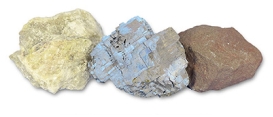
A) crystal form
B) cleavage
C) color
D) luster
A) crystal form
B) cleavage
C) color
D) luster

سؤال
سؤال
What mineral test is shown in this photograph? 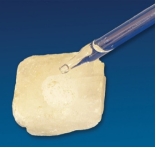
A) scratch test
B) effervescence
C) streak
D) magnetism
E) specific gravity
A) scratch test
B) effervescence
C) streak
D) magnetism
E) specific gravity
سؤال
سؤال
سؤال
سؤال
سؤال
سؤال
What mineral is shown in this photograph? 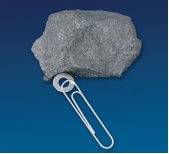
A) quartz
B) feldspar
C) calcite
D) hematite
E) magnetite
A) quartz
B) feldspar
C) calcite
D) hematite
E) magnetite
سؤال
What mineral test is shown in this photograph? 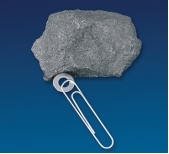
A) scratch test
B) effervescence
C) streak
D) magnetism
E) specific gravity
A) scratch test
B) effervescence
C) streak
D) magnetism
E) specific gravity
سؤال
سؤال
سؤال
What type of rock is shown in this photograph? 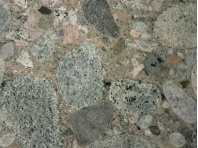
A) crystalline rock
B) clastic rock
C) rock with minerals that are too small to see
D) none of these
A) crystalline rock
B) clastic rock
C) rock with minerals that are too small to see
D) none of these
سؤال
What type of rock is shown in this photograph? 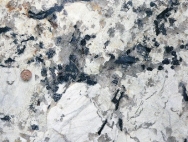
A) crystalline rock
B) clastic rock
C) rock with minerals that are too small to see
D) none of these
A) crystalline rock
B) clastic rock
C) rock with minerals that are too small to see
D) none of these
سؤال
سؤال
سؤال
سؤال
سؤال
What mineral is shown in this photograph? 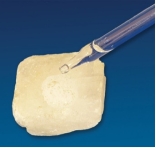
A) quartz
B) feldspar
C) calcite
D) hematite
E) magnetite
A) quartz
B) feldspar
C) calcite
D) hematite
E) magnetite
سؤال
سؤال
What mineral is characterized by a reddish streak, as shown in this photograph? 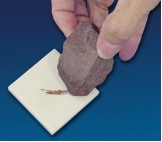
A) quartz
B) feldspar
C) calcite
D) hematite
E) magnetite
A) quartz
B) feldspar
C) calcite
D) hematite
E) magnetite
سؤال
What type of cleavage is illustrated in this figure? 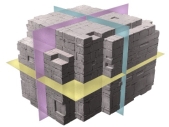
A) one direction
B) two perpendicular directions
C) two nonperpendicular directions
D) three perpendicular directions
E) three nonperpendicular directions
A) one direction
B) two perpendicular directions
C) two nonperpendicular directions
D) three perpendicular directions
E) three nonperpendicular directions
سؤال
سؤال
سؤال
سؤال
The mineral halite is seen in the image. One part of the atomic arrangement repeats indefinitely to make the entire crystal. This property of a mineral is called: 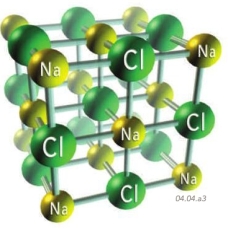
A) ordered atomic arrangement
B) consistency of composition
C) solid state crystallization
D) effervescence
A) ordered atomic arrangement
B) consistency of composition
C) solid state crystallization
D) effervescence
سؤال
سؤال
What arrangement of atoms does this diagram illustrate? 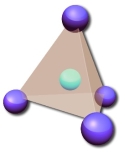
A) cubic
B) tetrahedron
C) octahedron
D) dodecahedron
A) cubic
B) tetrahedron
C) octahedron
D) dodecahedron
سؤال
What type of cleavage is illustrated in this figure? 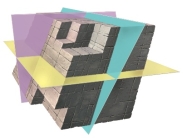
A) one direction
B) two perpendicular directions
C) two nonperpendicular directions
D) three perpendicular directions
E) three nonperpendicular directions
A) one direction
B) two perpendicular directions
C) two nonperpendicular directions
D) three perpendicular directions
E) three nonperpendicular directions
سؤال
What does the shape of these crystals indicate about the environment in which they formed? 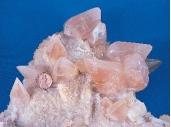
A) They formed at great depth and under very high pressures.
B) They formed from cold water that was moving rapidly through the rocks.
C) They formed into a space filled with water rather than solid rock.
D) They grew during an explosive volcanic eruption.
A) They formed at great depth and under very high pressures.
B) They formed from cold water that was moving rapidly through the rocks.
C) They formed into a space filled with water rather than solid rock.
D) They grew during an explosive volcanic eruption.
سؤال
سؤال
سؤال
What arrangement of atoms does this diagram illustrate? 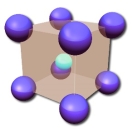
A) cubic
B) tetrahedron
C) octahedron
D) dodecahedron
A) cubic
B) tetrahedron
C) octahedron
D) dodecahedron
سؤال
What mineral test is shown in this photograph? 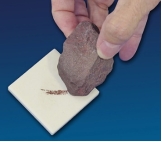
A) scratch test
B) effervescence
C) streak
D) magnetism
E) specific gravity
A) scratch test
B) effervescence
C) streak
D) magnetism
E) specific gravity
سؤال
سؤال
سؤال
What type of cleavage is illustrated in this figure? 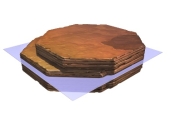
A) one direction
B) two perpendicular directions
C) two nonperpendicular directions
D) three perpendicular directions
E) three nonperpendicular directions
A) one direction
B) two perpendicular directions
C) two nonperpendicular directions
D) three perpendicular directions
E) three nonperpendicular directions
سؤال
What type of cleavage is illustrated in this figure? 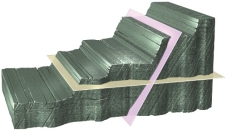
A) one direction
B) two perpendicular directions
C) two nonperpendicular directions
D) three perpendicular directions
E) three nonperpendicular directions
A) one direction
B) two perpendicular directions
C) two nonperpendicular directions
D) three perpendicular directions
E) three nonperpendicular directions
سؤال
سؤال
What type of cleavage is illustrated in this figure? 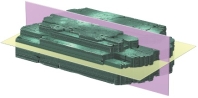
A) one direction
B) two perpendicular directions
C) two nonperpendicular directions
D) three perpendicular directions
E) three nonperpendicular directions
A) one direction
B) two perpendicular directions
C) two nonperpendicular directions
D) three perpendicular directions
E) three nonperpendicular directions
سؤال
In this part of the Periodic Table, what type of elements are in the group that includes elements Cu, Ag, and Au? 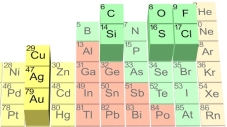
A) metals
B) nonmetals
C) noble gases
D) silicates
A) metals
B) nonmetals
C) noble gases
D) silicates
سؤال
سؤال
سؤال
سؤال
سؤال
What type of silicate minerals is shown from this arrangement of silicon tetrahedron? 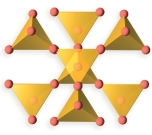
A) independent tetrahedra
B) single chains
C) double chains
D) sheets
E) frameworks
A) independent tetrahedra
B) single chains
C) double chains
D) sheets
E) frameworks
سؤال
What class of mineral forms when the element S is bonded with a metal, as iron in the mineral pyrite? 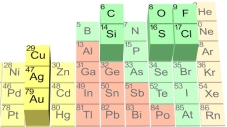
A) silicates
B) carbonates
C) oxides
D) halides
E) sulfides
A) silicates
B) carbonates
C) oxides
D) halides
E) sulfides
سؤال
سؤال
What class of minerals form when the element Si is bonded with element O, as in the mineral quartz? 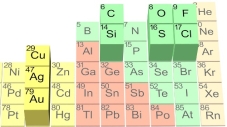
A) silicates
B) carbonates
C) oxides
D) halides
E) sulfides
A) silicates
B) carbonates
C) oxides
D) halides
E) sulfides
سؤال
What class of mineral forms when the element O is bonded with a metal, as in the mineral hematite? 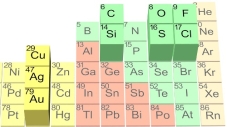
A) silicates
B) carbonates
C) oxides
D) halides
E) sulfides
A) silicates
B) carbonates
C) oxides
D) halides
E) sulfides
سؤال
The mineral in the image is quartz. Take a look at the irregularly broken left end of the crystal and determine which of the following is true. 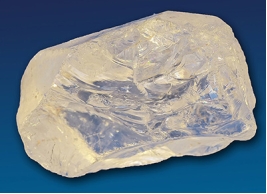
A) The mineral has fractured, as it lacks planes along which it may cleave.
B) The mineral must have specific planes along which atomic bonds are weaker than in other areas of the structure.
C) Since the mineral has irregular breakage, it must have good cleavage.
D) Bonds within the mineral must have varying strengths.
A) The mineral has fractured, as it lacks planes along which it may cleave.
B) The mineral must have specific planes along which atomic bonds are weaker than in other areas of the structure.
C) Since the mineral has irregular breakage, it must have good cleavage.
D) Bonds within the mineral must have varying strengths.
سؤال
In this part of the Periodic Table, what type of elements are in the group that includes elements He, Ne, and Ar? 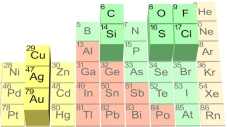
A) metals
B) nonmetals
C) noble gases
D) silicates
A) metals
B) nonmetals
C) noble gases
D) silicates
سؤال
سؤال
What class of mineral forms when the element C is bonded with element O, as in the mineral calcite? 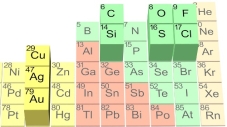
A) silicates
B) carbonates
C) oxides
D) halides
E) sulfides
A) silicates
B) carbonates
C) oxides
D) halides
E) sulfides
سؤال
سؤال
What type of silicate minerals is shown from this arrangement of silicon tetrahedron? 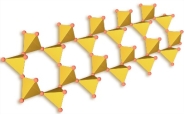
A) independent tetrahedra
B) single chains
C) double chains
D) sheets
E) frameworks
A) independent tetrahedra
B) single chains
C) double chains
D) sheets
E) frameworks
سؤال
What class of mineral forms when the elements Cl or F is bonded with a metal, as in the mineral halite? 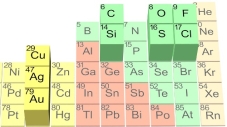
A) silicates
B) carbonates
C) oxides
D) halides
E) sulfides
A) silicates
B) carbonates
C) oxides
D) halides
E) sulfides
سؤال
What type of silicate minerals is shown from this arrangement of silicon tetrahedron? 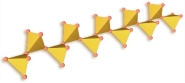
A) independent tetrahedra
B) single chains
C) double chains
D) sheets
E) frameworks
A) independent tetrahedra
B) single chains
C) double chains
D) sheets
E) frameworks
سؤال
سؤال
In this part of the Periodic Table, what type of elements are in the group that includes elements C, O, and S? 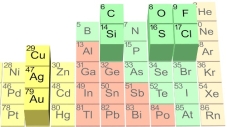
A) metals
B) nonmetals
C) noble gases
D) silicates
A) metals
B) nonmetals
C) noble gases
D) silicates
سؤال
This iron oxide mineral commonly has a reddish color and consistently has red streak. What mineral is it? 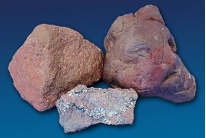
A) calcite
B) dolomite
C) hematite
D) magnetite
E) pyrite
A) calcite
B) dolomite
C) hematite
D) magnetite
E) pyrite
سؤال
سؤال
سؤال
What type of atom is represented by the small brown sphere in the center of this silica tetrahedron? 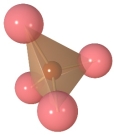
A) aluminum
B) silicon
C) iron
D) chlorine
E) sulfur
A) aluminum
B) silicon
C) iron
D) chlorine
E) sulfur
سؤال
سؤال
What type of silicate minerals is shown from this arrangement of silicon tetrahedron? 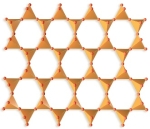
A) independent tetrahedra
B) single chains
C) double chains
D) sheets
E) frameworks
A) independent tetrahedra
B) single chains
C) double chains
D) sheets
E) frameworks
سؤال
What type of cleavage would be exhibited by a mineral that has this arrangement of silicon tetrahedron? 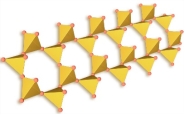
A) one direction of cleavage
B) two perpendicular directions of cleavage
C) two nonperpendicular directions of cleavage
D) the mineral factures instead of cleaves
A) one direction of cleavage
B) two perpendicular directions of cleavage
C) two nonperpendicular directions of cleavage
D) the mineral factures instead of cleaves
سؤال
What type of cleavage would be exhibited by a mineral that has this arrangement of silicon tetrahedron? 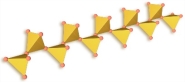
A) one direction of cleavage
B) two perpendicular directions of cleavage
C) two nonperpendicular directions of cleavage
D) the mineral factures instead of cleaves
A) one direction of cleavage
B) two perpendicular directions of cleavage
C) two nonperpendicular directions of cleavage
D) the mineral factures instead of cleaves
سؤال
سؤال
سؤال
What type of cleavage would be exhibited by a mineral that has this arrangement of silicon tetrahedron? 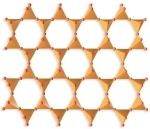
A) one direction of cleavage
B) two perpendicular directions of cleavage
C) two nonperpendicular directions of cleavage
D) the mineral factures instead of cleaves
A) one direction of cleavage
B) two perpendicular directions of cleavage
C) two nonperpendicular directions of cleavage
D) the mineral factures instead of cleaves
سؤال
سؤال
سؤال
The mineral shown in this photograph is a sulfide mineral and commonly forms cube-shaped crystals. What mineral is it? 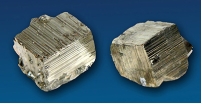
A) pyrite
B) hematite
C) dolomite
D) gypsum
E) halite
A) pyrite
B) hematite
C) dolomite
D) gypsum
E) halite
سؤال
The very common mineral shown in this photograph is commonly a pink- to cream-colored mineral with wavy, light-colored lines. It does not effervesce. What mineral is it? 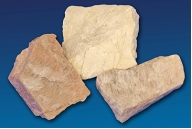
A) garnet
B) quartz
C) biotite
D) muscovite
E) feldspar
A) garnet
B) quartz
C) biotite
D) muscovite
E) feldspar
سؤال
The very common mineral shown in this photograph is light colored, transparent, has a hardness of seven, and fractures rather than cleaves. It does not effervesce. What mineral is it? 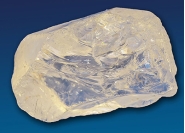
A) garnet
B) quartz
C) biotite
D) muscovite
E) feldspar
A) garnet
B) quartz
C) biotite
D) muscovite
E) feldspar
سؤال
This very common carbonate mineral effervesces when it contacts dilute HCl. What mineral is it? 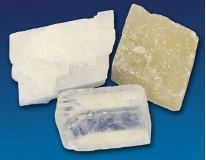
A) calcite
B) dolomite
C) hematite
D) magnetite
E) pyrite
A) calcite
B) dolomite
C) hematite
D) magnetite
E) pyrite
سؤال
سؤال
سؤال

فتح الحزمة
قم بالتسجيل لفتح البطاقات في هذه المجموعة!
Unlock Deck
Unlock Deck
1/131

العب

ملء الشاشة (f)
Deck 4: Earth Materials
1
What mineral property is illustrated by this photograph?
A) crystal form
B) cleavage
C) color
D) luster
A) crystal form
B) cleavage
C) color
D) luster
D
2
Important characteristics to observe in rocks include:
A) types of minerals present
B) sizes and shapes of crystals
C) presence or absence of layers
D) all of the above
A) types of minerals present
B) sizes and shapes of crystals
C) presence or absence of layers
D) all of the above
D
3
What mineral test is shown in this photograph?
A) scratch test
B) effervescence
C) streak
D) magnetism
E) specific gravity
A) scratch test
B) effervescence
C) streak
D) magnetism
E) specific gravity
B
4
Which of the following is true about tests we can perform on a mineral?
A) a softer mineral will scratch a harder mineral
B) many common minerals react effervesce) with dilute hydrochloric acid
C) a streak plate is used to determine how hard a mineral is
D) many minerals are strongly magnetic
E) none of these
A) a softer mineral will scratch a harder mineral
B) many common minerals react effervesce) with dilute hydrochloric acid
C) a streak plate is used to determine how hard a mineral is
D) many minerals are strongly magnetic
E) none of these
فتح الحزمة
افتح القفل للوصول البطاقات البالغ عددها 131 في هذه المجموعة.
فتح الحزمة
k this deck
5
What are the two main ways that minerals are put together in rocks?
A) igneous versus metamorphic
B) igneous versus sedimentary
C) metamorphic versus sedimentary
D) crystalline versus clastic
A) igneous versus metamorphic
B) igneous versus sedimentary
C) metamorphic versus sedimentary
D) crystalline versus clastic
فتح الحزمة
افتح القفل للوصول البطاقات البالغ عددها 131 في هذه المجموعة.
فتح الحزمة
k this deck
6
Which of the following is NOT a characteristic of crystals and clasts evaluated to classify a rock?
A) crystal/clast density
B) crystal/clast size
C) crystal/clast shape
D) crystal/clast composition
A) crystal/clast density
B) crystal/clast size
C) crystal/clast shape
D) crystal/clast composition
فتح الحزمة
افتح القفل للوصول البطاقات البالغ عددها 131 في هذه المجموعة.
فتح الحزمة
k this deck
7
What is the main type of rocks in the Peninsular Ranges of Southern California and Mexico?
A) volcanic rocks erupted from a large volcano
B) granite and metamorphic rocks that formed at depth
C) flat-lying sedimentary rocks
D) unconsolidated sand and gravel
A) volcanic rocks erupted from a large volcano
B) granite and metamorphic rocks that formed at depth
C) flat-lying sedimentary rocks
D) unconsolidated sand and gravel
فتح الحزمة
افتح القفل للوصول البطاقات البالغ عددها 131 في هذه المجموعة.
فتح الحزمة
k this deck
8
A mineral property that can be observed without using a test is:
A) effervescence
B) magmatism
C) hardness
D) cleavage
E) all of these
A) effervescence
B) magmatism
C) hardness
D) cleavage
E) all of these
فتح الحزمة
افتح القفل للوصول البطاقات البالغ عددها 131 في هذه المجموعة.
فتح الحزمة
k this deck
9
What mineral is shown in this photograph?
A) quartz
B) feldspar
C) calcite
D) hematite
E) magnetite
A) quartz
B) feldspar
C) calcite
D) hematite
E) magnetite
فتح الحزمة
افتح القفل للوصول البطاقات البالغ عددها 131 في هذه المجموعة.
فتح الحزمة
k this deck
10
What mineral test is shown in this photograph?
A) scratch test
B) effervescence
C) streak
D) magnetism
E) specific gravity
A) scratch test
B) effervescence
C) streak
D) magnetism
E) specific gravity
فتح الحزمة
افتح القفل للوصول البطاقات البالغ عددها 131 في هذه المجموعة.
فتح الحزمة
k this deck
11
Which of the following is NOT a mineral?
A) liquid water
B) crystals grown in a laboratory
C) volcanic glass
D) piece of wood
E) all of these
A) liquid water
B) crystals grown in a laboratory
C) volcanic glass
D) piece of wood
E) all of these
فتح الحزمة
افتح القفل للوصول البطاقات البالغ عددها 131 في هذه المجموعة.
فتح الحزمة
k this deck
12
Rocks are composed of:
A) minerals
B) elements
C) glass
A) minerals
B) elements
C) glass
فتح الحزمة
افتح القفل للوصول البطاقات البالغ عددها 131 في هذه المجموعة.
فتح الحزمة
k this deck
13
What type of rock is shown in this photograph?
A) crystalline rock
B) clastic rock
C) rock with minerals that are too small to see
D) none of these
A) crystalline rock
B) clastic rock
C) rock with minerals that are too small to see
D) none of these
فتح الحزمة
افتح القفل للوصول البطاقات البالغ عددها 131 في هذه المجموعة.
فتح الحزمة
k this deck
14
What type of rock is shown in this photograph?
A) crystalline rock
B) clastic rock
C) rock with minerals that are too small to see
D) none of these
A) crystalline rock
B) clastic rock
C) rock with minerals that are too small to see
D) none of these
فتح الحزمة
افتح القفل للوصول البطاقات البالغ عددها 131 في هذه المجموعة.
فتح الحزمة
k this deck
15
Which of the following is NOT a required criterion for a substance to be classified as a mineral?
A) human-made
B) naturally occurring
C) crystalline solid
D) inorganic
A) human-made
B) naturally occurring
C) crystalline solid
D) inorganic
فتح الحزمة
افتح القفل للوصول البطاقات البالغ عددها 131 في هذه المجموعة.
فتح الحزمة
k this deck
16
Which of the following is a mineral?
A) ice
B) crystals grown in a laboratory
C) volcanic glass
D) material with crystals of different chemical compounds
E) none of these
A) ice
B) crystals grown in a laboratory
C) volcanic glass
D) material with crystals of different chemical compounds
E) none of these
فتح الحزمة
افتح القفل للوصول البطاقات البالغ عددها 131 في هذه المجموعة.
فتح الحزمة
k this deck
17
Which of the following is NOT a characteristic of rocks with clastic textures?
A) composed of interlocking minerals
B) composed of broken fragments of older eroded rocks
C) commonly formed in low temperature environments
A) composed of interlocking minerals
B) composed of broken fragments of older eroded rocks
C) commonly formed in low temperature environments
فتح الحزمة
افتح القفل للوصول البطاقات البالغ عددها 131 في هذه المجموعة.
فتح الحزمة
k this deck
18
Which mineral property is the least reliable for identifying a mineral?
A) cleavage
B) luster
C) crystal form
D) streak
E) color
A) cleavage
B) luster
C) crystal form
D) streak
E) color
فتح الحزمة
افتح القفل للوصول البطاقات البالغ عددها 131 في هذه المجموعة.
فتح الحزمة
k this deck
19
What mineral is shown in this photograph?
A) quartz
B) feldspar
C) calcite
D) hematite
E) magnetite
A) quartz
B) feldspar
C) calcite
D) hematite
E) magnetite
فتح الحزمة
افتح القفل للوصول البطاقات البالغ عددها 131 في هذه المجموعة.
فتح الحزمة
k this deck
20
Which of the following is true about rocks and minerals?
A) a rock can contain more than one mineral
B) a mineral is composed of chemical elements
C) a single rock can include more than one mineral
D) all of these
A) a rock can contain more than one mineral
B) a mineral is composed of chemical elements
C) a single rock can include more than one mineral
D) all of these
فتح الحزمة
افتح القفل للوصول البطاقات البالغ عددها 131 في هذه المجموعة.
فتح الحزمة
k this deck
21
What mineral is characterized by a reddish streak, as shown in this photograph?
A) quartz
B) feldspar
C) calcite
D) hematite
E) magnetite
A) quartz
B) feldspar
C) calcite
D) hematite
E) magnetite
فتح الحزمة
افتح القفل للوصول البطاقات البالغ عددها 131 في هذه المجموعة.
فتح الحزمة
k this deck
22
What type of cleavage is illustrated in this figure?
A) one direction
B) two perpendicular directions
C) two nonperpendicular directions
D) three perpendicular directions
E) three nonperpendicular directions
A) one direction
B) two perpendicular directions
C) two nonperpendicular directions
D) three perpendicular directions
E) three nonperpendicular directions
فتح الحزمة
افتح القفل للوصول البطاقات البالغ عددها 131 في هذه المجموعة.
فتح الحزمة
k this deck
23
Minerals have an ordered internal atomic arrangement. What does this mean?
A) Atoms in a mineral are arranged in an ordered geometric pattern.
B) Atoms in a mineral are arranged in a random fashion.
C) Atoms in a mineral must be in the shape of either a cube, a tetrahedron, or an octahedron.
D) Atoms in a mineral must all be of the same type of element.
A) Atoms in a mineral are arranged in an ordered geometric pattern.
B) Atoms in a mineral are arranged in a random fashion.
C) Atoms in a mineral must be in the shape of either a cube, a tetrahedron, or an octahedron.
D) Atoms in a mineral must all be of the same type of element.
فتح الحزمة
افتح القفل للوصول البطاقات البالغ عددها 131 في هذه المجموعة.
فتح الحزمة
k this deck
24
The mineral halite has cube-shaped crystals because:
A) there are no planes along which the mineral can break
B) cubes are the most common way two tetrahedron can join
C) of the arrangement of atoms in the crystal lattice
D) halite is soluble in water
A) there are no planes along which the mineral can break
B) cubes are the most common way two tetrahedron can join
C) of the arrangement of atoms in the crystal lattice
D) halite is soluble in water
فتح الحزمة
افتح القفل للوصول البطاقات البالغ عددها 131 في هذه المجموعة.
فتح الحزمة
k this deck
25
Identify the list that consists of ten common minerals ranked in order of increasing hardness, from 1 to 10.
A) Mohs Hardness Scale
B) Bowen's reaction series
C) Breakage chart
D) Specific gravity scale
A) Mohs Hardness Scale
B) Bowen's reaction series
C) Breakage chart
D) Specific gravity scale
فتح الحزمة
افتح القفل للوصول البطاقات البالغ عددها 131 في هذه المجموعة.
فتح الحزمة
k this deck
26
The mineral halite is seen in the image. One part of the atomic arrangement repeats indefinitely to make the entire crystal. This property of a mineral is called:
A) ordered atomic arrangement
B) consistency of composition
C) solid state crystallization
D) effervescence
A) ordered atomic arrangement
B) consistency of composition
C) solid state crystallization
D) effervescence
فتح الحزمة
افتح القفل للوصول البطاقات البالغ عددها 131 في هذه المجموعة.
فتح الحزمة
k this deck
27
The ratio of density of a mineral to that of freshwater is called the:
A) specific gravity
B) harness
C) crystal shape
D) cleavage
A) specific gravity
B) harness
C) crystal shape
D) cleavage
فتح الحزمة
افتح القفل للوصول البطاقات البالغ عددها 131 في هذه المجموعة.
فتح الحزمة
k this deck
28
What arrangement of atoms does this diagram illustrate?
A) cubic
B) tetrahedron
C) octahedron
D) dodecahedron
A) cubic
B) tetrahedron
C) octahedron
D) dodecahedron
فتح الحزمة
افتح القفل للوصول البطاقات البالغ عددها 131 في هذه المجموعة.
فتح الحزمة
k this deck
29
What type of cleavage is illustrated in this figure?
A) one direction
B) two perpendicular directions
C) two nonperpendicular directions
D) three perpendicular directions
E) three nonperpendicular directions
A) one direction
B) two perpendicular directions
C) two nonperpendicular directions
D) three perpendicular directions
E) three nonperpendicular directions
فتح الحزمة
افتح القفل للوصول البطاقات البالغ عددها 131 في هذه المجموعة.
فتح الحزمة
k this deck
30
What does the shape of these crystals indicate about the environment in which they formed?
A) They formed at great depth and under very high pressures.
B) They formed from cold water that was moving rapidly through the rocks.
C) They formed into a space filled with water rather than solid rock.
D) They grew during an explosive volcanic eruption.
A) They formed at great depth and under very high pressures.
B) They formed from cold water that was moving rapidly through the rocks.
C) They formed into a space filled with water rather than solid rock.
D) They grew during an explosive volcanic eruption.
فتح الحزمة
افتح القفل للوصول البطاقات البالغ عددها 131 في هذه المجموعة.
فتح الحزمة
k this deck
31
A geologist who is also a mineralogist would generally study:
A) minerals, like quartz and halite
B) vitamins and minerals, like potassium and calcium
C) coal mining techniques
D) mine collapses
A) minerals, like quartz and halite
B) vitamins and minerals, like potassium and calcium
C) coal mining techniques
D) mine collapses
فتح الحزمة
افتح القفل للوصول البطاقات البالغ عددها 131 في هذه المجموعة.
فتح الحزمة
k this deck
32
A crystal with a well-defined shape, such as a cube, probably:
A) does not reflect the arrangement of atoms in the lattice
B) grew early and so was forced to grow around other minerals
C) does not have a well-defined cleavage
D) will react with dilute hydrochloric acid
E) none of these
A) does not reflect the arrangement of atoms in the lattice
B) grew early and so was forced to grow around other minerals
C) does not have a well-defined cleavage
D) will react with dilute hydrochloric acid
E) none of these
فتح الحزمة
افتح القفل للوصول البطاقات البالغ عددها 131 في هذه المجموعة.
فتح الحزمة
k this deck
33
What arrangement of atoms does this diagram illustrate?
A) cubic
B) tetrahedron
C) octahedron
D) dodecahedron
A) cubic
B) tetrahedron
C) octahedron
D) dodecahedron
فتح الحزمة
افتح القفل للوصول البطاقات البالغ عددها 131 في هذه المجموعة.
فتح الحزمة
k this deck
34
What mineral test is shown in this photograph?
A) scratch test
B) effervescence
C) streak
D) magnetism
E) specific gravity
A) scratch test
B) effervescence
C) streak
D) magnetism
E) specific gravity
فتح الحزمة
افتح القفل للوصول البطاقات البالغ عددها 131 في هذه المجموعة.
فتح الحزمة
k this deck
35
A cube of some rock weighs 6 grams, and a same-sized cube of water weighs 2 grams. What is the specific gravity of this rock?
A) 0.5
B) 1
C) 2
D) 3
E) 6
A) 0.5
B) 1
C) 2
D) 3
E) 6
فتح الحزمة
افتح القفل للوصول البطاقات البالغ عددها 131 في هذه المجموعة.
فتح الحزمة
k this deck
36
Which of the following are tests we can quickly and easily perform even in the field) to help us identify a mineral?
A) hardness
B) effervescence
C) streak
D) magnetism
E) all of these
A) hardness
B) effervescence
C) streak
D) magnetism
E) all of these
فتح الحزمة
افتح القفل للوصول البطاقات البالغ عددها 131 في هذه المجموعة.
فتح الحزمة
k this deck
37
What type of cleavage is illustrated in this figure?
A) one direction
B) two perpendicular directions
C) two nonperpendicular directions
D) three perpendicular directions
E) three nonperpendicular directions
A) one direction
B) two perpendicular directions
C) two nonperpendicular directions
D) three perpendicular directions
E) three nonperpendicular directions
فتح الحزمة
افتح القفل للوصول البطاقات البالغ عددها 131 في هذه المجموعة.
فتح الحزمة
k this deck
38
What type of cleavage is illustrated in this figure?
A) one direction
B) two perpendicular directions
C) two nonperpendicular directions
D) three perpendicular directions
E) three nonperpendicular directions
A) one direction
B) two perpendicular directions
C) two nonperpendicular directions
D) three perpendicular directions
E) three nonperpendicular directions
فتح الحزمة
افتح القفل للوصول البطاقات البالغ عددها 131 في هذه المجموعة.
فتح الحزمة
k this deck
39
Which of the following characterizes a liquid state of matter?
A) Atoms are packed together with a relatively fixed shape.
B) Atoms are poorly connected and can expand to fill the available volume.
C) Atoms are held together, but weakly enough that the material is mobile and can change shape.
D) The material retains its shape and volume unless deformed, dissolved, or perturbed in some other way.
A) Atoms are packed together with a relatively fixed shape.
B) Atoms are poorly connected and can expand to fill the available volume.
C) Atoms are held together, but weakly enough that the material is mobile and can change shape.
D) The material retains its shape and volume unless deformed, dissolved, or perturbed in some other way.
فتح الحزمة
افتح القفل للوصول البطاقات البالغ عددها 131 في هذه المجموعة.
فتح الحزمة
k this deck
40
What type of cleavage is illustrated in this figure?
A) one direction
B) two perpendicular directions
C) two nonperpendicular directions
D) three perpendicular directions
E) three nonperpendicular directions
A) one direction
B) two perpendicular directions
C) two nonperpendicular directions
D) three perpendicular directions
E) three nonperpendicular directions
فتح الحزمة
افتح القفل للوصول البطاقات البالغ عددها 131 في هذه المجموعة.
فتح الحزمة
k this deck
41
In this part of the Periodic Table, what type of elements are in the group that includes elements Cu, Ag, and Au?
A) metals
B) nonmetals
C) noble gases
D) silicates
A) metals
B) nonmetals
C) noble gases
D) silicates
فتح الحزمة
افتح القفل للوصول البطاقات البالغ عددها 131 في هذه المجموعة.
فتح الحزمة
k this deck
42
If a mineral fractures, how many directions of cleavage does it have?
A) four directions of cleavage
B) three directions of cleavage
C) two directions of cleavage
D) one direction of cleavage
E) no directions of cleavage
A) four directions of cleavage
B) three directions of cleavage
C) two directions of cleavage
D) one direction of cleavage
E) no directions of cleavage
فتح الحزمة
افتح القفل للوصول البطاقات البالغ عددها 131 في هذه المجموعة.
فتح الحزمة
k this deck
43
If a mineral cleaves into thin sheets, it probably has:
A) no well-defined cleavage planes
B) three directions of cleavage
C) fractures rather than cleavage
D) one dominant direction of cleavage
E) none of these
A) no well-defined cleavage planes
B) three directions of cleavage
C) fractures rather than cleavage
D) one dominant direction of cleavage
E) none of these
فتح الحزمة
افتح القفل للوصول البطاقات البالغ عددها 131 في هذه المجموعة.
فتح الحزمة
k this deck
44
Which of the following is true about asbestos?
A) There are several types of asbestos, but they represent the same mineral.
B) Different types of asbestos have the same health risks.
C) Each type of asbestos has long, straight fibers.
D) Asbestos represents different minerals with different health risks.
A) There are several types of asbestos, but they represent the same mineral.
B) Different types of asbestos have the same health risks.
C) Each type of asbestos has long, straight fibers.
D) Asbestos represents different minerals with different health risks.
فتح الحزمة
افتح القفل للوصول البطاقات البالغ عددها 131 في هذه المجموعة.
فتح الحزمة
k this deck
45
Which of the following is NOT a main type of silicate structure?
A) single chains
B) double chains
C) triple chains
D) sheets
E) frameworks
A) single chains
B) double chains
C) triple chains
D) sheets
E) frameworks
فتح الحزمة
افتح القفل للوصول البطاقات البالغ عددها 131 في هذه المجموعة.
فتح الحزمة
k this deck
46
What type of silicate minerals is shown from this arrangement of silicon tetrahedron?
A) independent tetrahedra
B) single chains
C) double chains
D) sheets
E) frameworks
A) independent tetrahedra
B) single chains
C) double chains
D) sheets
E) frameworks
فتح الحزمة
افتح القفل للوصول البطاقات البالغ عددها 131 في هذه المجموعة.
فتح الحزمة
k this deck
47
What class of mineral forms when the element S is bonded with a metal, as iron in the mineral pyrite?
A) silicates
B) carbonates
C) oxides
D) halides
E) sulfides
A) silicates
B) carbonates
C) oxides
D) halides
E) sulfides
فتح الحزمة
افتح القفل للوصول البطاقات البالغ عددها 131 في هذه المجموعة.
فتح الحزمة
k this deck
48
The most important class of rock-forming minerals on Earth is:
A) halides
B) sulfates
C) native minerals
D) silicates
E) asbestos
A) halides
B) sulfates
C) native minerals
D) silicates
E) asbestos
فتح الحزمة
افتح القفل للوصول البطاقات البالغ عددها 131 في هذه المجموعة.
فتح الحزمة
k this deck
49
What class of minerals form when the element Si is bonded with element O, as in the mineral quartz?
A) silicates
B) carbonates
C) oxides
D) halides
E) sulfides
A) silicates
B) carbonates
C) oxides
D) halides
E) sulfides
فتح الحزمة
افتح القفل للوصول البطاقات البالغ عددها 131 في هذه المجموعة.
فتح الحزمة
k this deck
50
What class of mineral forms when the element O is bonded with a metal, as in the mineral hematite?
A) silicates
B) carbonates
C) oxides
D) halides
E) sulfides
A) silicates
B) carbonates
C) oxides
D) halides
E) sulfides
فتح الحزمة
افتح القفل للوصول البطاقات البالغ عددها 131 في هذه المجموعة.
فتح الحزمة
k this deck
51
The mineral in the image is quartz. Take a look at the irregularly broken left end of the crystal and determine which of the following is true.
A) The mineral has fractured, as it lacks planes along which it may cleave.
B) The mineral must have specific planes along which atomic bonds are weaker than in other areas of the structure.
C) Since the mineral has irregular breakage, it must have good cleavage.
D) Bonds within the mineral must have varying strengths.
A) The mineral has fractured, as it lacks planes along which it may cleave.
B) The mineral must have specific planes along which atomic bonds are weaker than in other areas of the structure.
C) Since the mineral has irregular breakage, it must have good cleavage.
D) Bonds within the mineral must have varying strengths.
فتح الحزمة
افتح القفل للوصول البطاقات البالغ عددها 131 في هذه المجموعة.
فتح الحزمة
k this deck
52
In this part of the Periodic Table, what type of elements are in the group that includes elements He, Ne, and Ar?
A) metals
B) nonmetals
C) noble gases
D) silicates
A) metals
B) nonmetals
C) noble gases
D) silicates
فتح الحزمة
افتح القفل للوصول البطاقات البالغ عددها 131 في هذه المجموعة.
فتح الحزمة
k this deck
53
Which of the following is NOT a major class of rock-forming minerals?
A) silicates
B) carbonates
C) oxides
D) argonites
A) silicates
B) carbonates
C) oxides
D) argonites
فتح الحزمة
افتح القفل للوصول البطاقات البالغ عددها 131 في هذه المجموعة.
فتح الحزمة
k this deck
54
What class of mineral forms when the element C is bonded with element O, as in the mineral calcite?
A) silicates
B) carbonates
C) oxides
D) halides
E) sulfides
A) silicates
B) carbonates
C) oxides
D) halides
E) sulfides
فتح الحزمة
افتح القفل للوصول البطاقات البالغ عددها 131 في هذه المجموعة.
فتح الحزمة
k this deck
55
If a mineral lacks planes along which it may cleave, what will occur?
A) The mineral will fracture in an irregular pattern.
B) The mineral will not break.
C) The mineral will fracture evenly along predictable planes.
D) The mineral will still cleave, but it will only occur along one plane.
A) The mineral will fracture in an irregular pattern.
B) The mineral will not break.
C) The mineral will fracture evenly along predictable planes.
D) The mineral will still cleave, but it will only occur along one plane.
فتح الحزمة
افتح القفل للوصول البطاقات البالغ عددها 131 في هذه المجموعة.
فتح الحزمة
k this deck
56
What type of silicate minerals is shown from this arrangement of silicon tetrahedron?
A) independent tetrahedra
B) single chains
C) double chains
D) sheets
E) frameworks
A) independent tetrahedra
B) single chains
C) double chains
D) sheets
E) frameworks
فتح الحزمة
افتح القفل للوصول البطاقات البالغ عددها 131 في هذه المجموعة.
فتح الحزمة
k this deck
57
What class of mineral forms when the elements Cl or F is bonded with a metal, as in the mineral halite?
A) silicates
B) carbonates
C) oxides
D) halides
E) sulfides
A) silicates
B) carbonates
C) oxides
D) halides
E) sulfides
فتح الحزمة
افتح القفل للوصول البطاقات البالغ عددها 131 في هذه المجموعة.
فتح الحزمة
k this deck
58
What type of silicate minerals is shown from this arrangement of silicon tetrahedron?
A) independent tetrahedra
B) single chains
C) double chains
D) sheets
E) frameworks
A) independent tetrahedra
B) single chains
C) double chains
D) sheets
E) frameworks
فتح الحزمة
افتح القفل للوصول البطاقات البالغ عددها 131 في هذه المجموعة.
فتح الحزمة
k this deck
59
Which of the following is NOT a main group of chemical elements on the Periodic Table?
A) transition metals
B) nonmetals
C) noble gases
D) sulfides
A) transition metals
B) nonmetals
C) noble gases
D) sulfides
فتح الحزمة
افتح القفل للوصول البطاقات البالغ عددها 131 في هذه المجموعة.
فتح الحزمة
k this deck
60
In this part of the Periodic Table, what type of elements are in the group that includes elements C, O, and S?
A) metals
B) nonmetals
C) noble gases
D) silicates
A) metals
B) nonmetals
C) noble gases
D) silicates
فتح الحزمة
افتح القفل للوصول البطاقات البالغ عددها 131 في هذه المجموعة.
فتح الحزمة
k this deck
61
This iron oxide mineral commonly has a reddish color and consistently has red streak. What mineral is it?
A) calcite
B) dolomite
C) hematite
D) magnetite
E) pyrite
A) calcite
B) dolomite
C) hematite
D) magnetite
E) pyrite
فتح الحزمة
افتح القفل للوصول البطاقات البالغ عددها 131 في هذه المجموعة.
فتح الحزمة
k this deck
62
Which of the following terms refers to the compound SiO₂?
A) silica
B) silicon
C) silicone
D) silicane
A) silica
B) silicon
C) silicone
D) silicane
فتح الحزمة
افتح القفل للوصول البطاقات البالغ عددها 131 في هذه المجموعة.
فتح الحزمة
k this deck
63
Which of the following minerals is a sulfide and commonly forms cube-shaped crystals?
A) pyrite
B) hematite
C) dolomite
D) gypsum
E) halite
A) pyrite
B) hematite
C) dolomite
D) gypsum
E) halite
فتح الحزمة
افتح القفل للوصول البطاقات البالغ عددها 131 في هذه المجموعة.
فتح الحزمة
k this deck
64
What type of atom is represented by the small brown sphere in the center of this silica tetrahedron?
A) aluminum
B) silicon
C) iron
D) chlorine
E) sulfur
A) aluminum
B) silicon
C) iron
D) chlorine
E) sulfur
فتح الحزمة
افتح القفل للوصول البطاقات البالغ عددها 131 في هذه المجموعة.
فتح الحزمة
k this deck
65
How do silica tetrahedra bond in silicate minerals?
A) with each other by sharing an oxygen
B) with other elements, such as potassium
C) in single or double chains
D) in sheets
E) all of these
A) with each other by sharing an oxygen
B) with other elements, such as potassium
C) in single or double chains
D) in sheets
E) all of these
فتح الحزمة
افتح القفل للوصول البطاقات البالغ عددها 131 في هذه المجموعة.
فتح الحزمة
k this deck
66
What type of silicate minerals is shown from this arrangement of silicon tetrahedron?
A) independent tetrahedra
B) single chains
C) double chains
D) sheets
E) frameworks
A) independent tetrahedra
B) single chains
C) double chains
D) sheets
E) frameworks
فتح الحزمة
افتح القفل للوصول البطاقات البالغ عددها 131 في هذه المجموعة.
فتح الحزمة
k this deck
67
What type of cleavage would be exhibited by a mineral that has this arrangement of silicon tetrahedron?
A) one direction of cleavage
B) two perpendicular directions of cleavage
C) two nonperpendicular directions of cleavage
D) the mineral factures instead of cleaves
A) one direction of cleavage
B) two perpendicular directions of cleavage
C) two nonperpendicular directions of cleavage
D) the mineral factures instead of cleaves
فتح الحزمة
افتح القفل للوصول البطاقات البالغ عددها 131 في هذه المجموعة.
فتح الحزمة
k this deck
68
What type of cleavage would be exhibited by a mineral that has this arrangement of silicon tetrahedron?
A) one direction of cleavage
B) two perpendicular directions of cleavage
C) two nonperpendicular directions of cleavage
D) the mineral factures instead of cleaves
A) one direction of cleavage
B) two perpendicular directions of cleavage
C) two nonperpendicular directions of cleavage
D) the mineral factures instead of cleaves
فتح الحزمة
افتح القفل للوصول البطاقات البالغ عددها 131 في هذه المجموعة.
فتح الحزمة
k this deck
69
Which of the following is a dark-colored silicate mineral?
A) quartz
B) potassium feldspar
C) muscovite
D) biotite
E) none of these
A) quartz
B) potassium feldspar
C) muscovite
D) biotite
E) none of these
فتح الحزمة
افتح القفل للوصول البطاقات البالغ عددها 131 في هذه المجموعة.
فتح الحزمة
k this deck
70
There are more than 4,000 known minerals, most of which are:
A) uncommon to rare
B) often encountered at the surface
C) very common
D) found together in single hand samples of rocks
A) uncommon to rare
B) often encountered at the surface
C) very common
D) found together in single hand samples of rocks
فتح الحزمة
افتح القفل للوصول البطاقات البالغ عددها 131 في هذه المجموعة.
فتح الحزمة
k this deck
71
What type of cleavage would be exhibited by a mineral that has this arrangement of silicon tetrahedron?
A) one direction of cleavage
B) two perpendicular directions of cleavage
C) two nonperpendicular directions of cleavage
D) the mineral factures instead of cleaves
A) one direction of cleavage
B) two perpendicular directions of cleavage
C) two nonperpendicular directions of cleavage
D) the mineral factures instead of cleaves
فتح الحزمة
افتح القفل للوصول البطاقات البالغ عددها 131 في هذه المجموعة.
فتح الحزمة
k this deck
72
The dominant shape in which silicon and oxygen atoms combine in silicate minerals is:
A) cube
B) prism
C) hexagon
D) octagon
E) none of these
A) cube
B) prism
C) hexagon
D) octagon
E) none of these
فتح الحزمة
افتح القفل للوصول البطاقات البالغ عددها 131 في هذه المجموعة.
فتح الحزمة
k this deck
73
A mineral is light colored, transparent, has a hardness of seven, and fractures rather than cleaves. What minerals is it?
A) garnet
B) quartz
C) biotite
D) muscovite
E) feldspar
A) garnet
B) quartz
C) biotite
D) muscovite
E) feldspar
فتح الحزمة
افتح القفل للوصول البطاقات البالغ عددها 131 في هذه المجموعة.
فتح الحزمة
k this deck
74
The mineral shown in this photograph is a sulfide mineral and commonly forms cube-shaped crystals. What mineral is it?
A) pyrite
B) hematite
C) dolomite
D) gypsum
E) halite
A) pyrite
B) hematite
C) dolomite
D) gypsum
E) halite
فتح الحزمة
افتح القفل للوصول البطاقات البالغ عددها 131 في هذه المجموعة.
فتح الحزمة
k this deck
75
The very common mineral shown in this photograph is commonly a pink- to cream-colored mineral with wavy, light-colored lines. It does not effervesce. What mineral is it?
A) garnet
B) quartz
C) biotite
D) muscovite
E) feldspar
A) garnet
B) quartz
C) biotite
D) muscovite
E) feldspar
فتح الحزمة
افتح القفل للوصول البطاقات البالغ عددها 131 في هذه المجموعة.
فتح الحزمة
k this deck
76
The very common mineral shown in this photograph is light colored, transparent, has a hardness of seven, and fractures rather than cleaves. It does not effervesce. What mineral is it?
A) garnet
B) quartz
C) biotite
D) muscovite
E) feldspar
A) garnet
B) quartz
C) biotite
D) muscovite
E) feldspar
فتح الحزمة
افتح القفل للوصول البطاقات البالغ عددها 131 في هذه المجموعة.
فتح الحزمة
k this deck
77
This very common carbonate mineral effervesces when it contacts dilute HCl. What mineral is it?
A) calcite
B) dolomite
C) hematite
D) magnetite
E) pyrite
A) calcite
B) dolomite
C) hematite
D) magnetite
E) pyrite
فتح الحزمة
افتح القفل للوصول البطاقات البالغ عددها 131 في هذه المجموعة.
فتح الحزمة
k this deck
78
Which of the following is generally a light-colored silicate mineral?
A) quartz
B) pyroxene
C) amphibole
D) biotite
E) all of these
A) quartz
B) pyroxene
C) amphibole
D) biotite
E) all of these
فتح الحزمة
افتح القفل للوصول البطاقات البالغ عددها 131 في هذه المجموعة.
فتح الحزمة
k this deck
79
Which mineral is commonly pinkish and has light-colored wavy lines?
A) quartz
B) potassium feldspar
C) pyroxene
D) amphibole
E) olivine
A) quartz
B) potassium feldspar
C) pyroxene
D) amphibole
E) olivine
فتح الحزمة
افتح القفل للوصول البطاقات البالغ عددها 131 في هذه المجموعة.
فتح الحزمة
k this deck
80
Which of the following minerals is typically green and has no cleavage?
A) muscovite
B) plagioclase feldspar
C) biotite
D) quartz
E) olivine
A) muscovite
B) plagioclase feldspar
C) biotite
D) quartz
E) olivine
فتح الحزمة
افتح القفل للوصول البطاقات البالغ عددها 131 في هذه المجموعة.
فتح الحزمة
k this deck
فتح الحزمة
افتح القفل للوصول البطاقات البالغ عددها 131 في هذه المجموعة.






