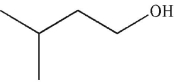
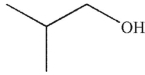
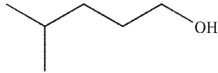
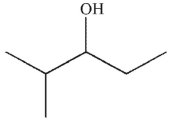
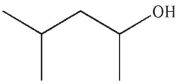
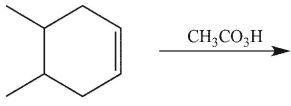
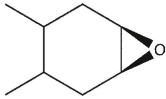
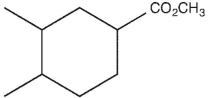
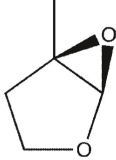
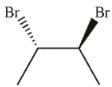
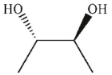
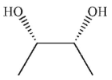
Deck 11: More Additions to Bonds

ملء الشاشة (f)
exit full mode
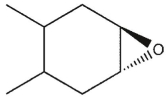
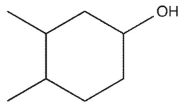
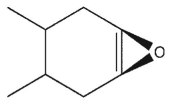
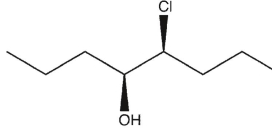
سؤال
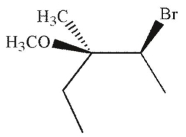
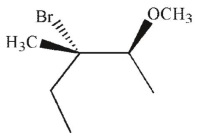
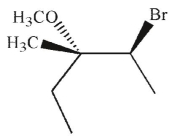
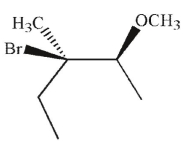
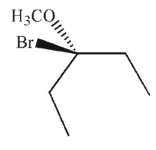
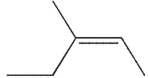
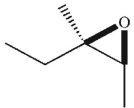
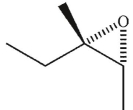
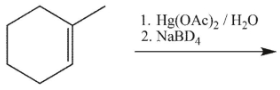
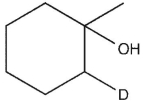
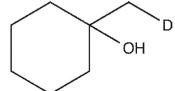
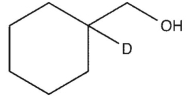
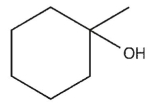
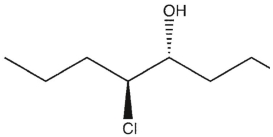
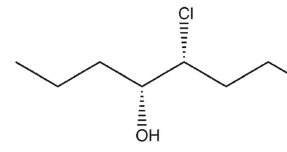
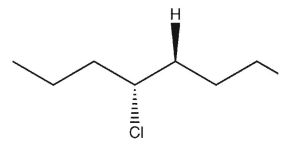
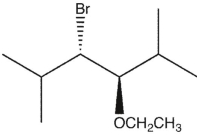
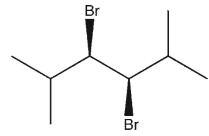
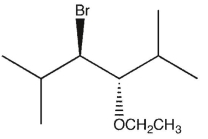
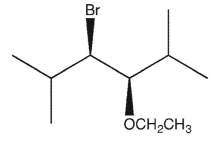
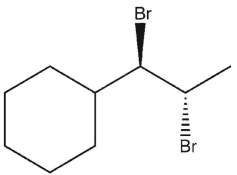
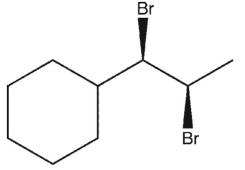
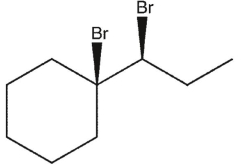
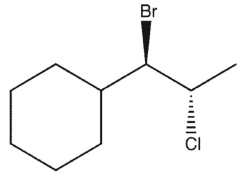
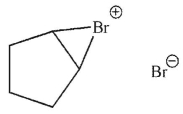
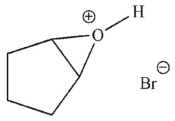
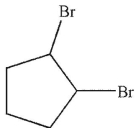
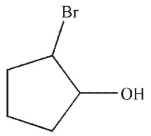
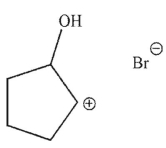
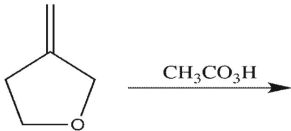
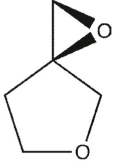
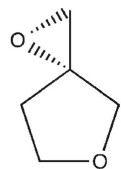
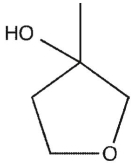
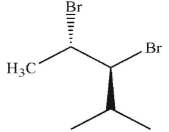
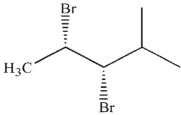
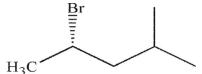
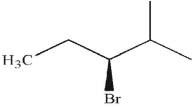
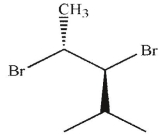
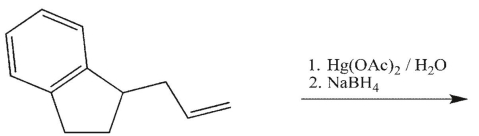
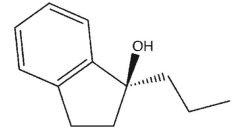
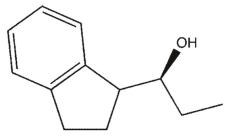
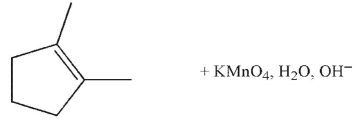
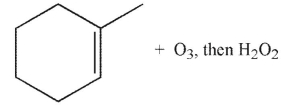
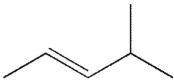
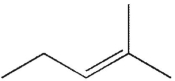
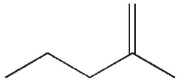
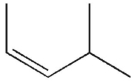
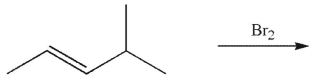
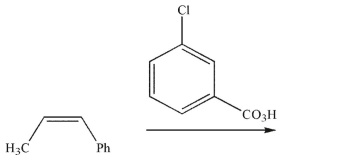
Which of the following is the major product of this reaction?
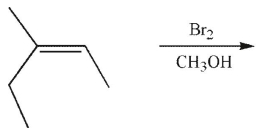
<strong>Which of the following is the major product of this reaction?  </strong> A)   B)   C)   D)   E)   <div style=padding-top: 35px>

A) <strong>Which of the following is the major product of this reaction?  </strong> A)   B)   C)   D)   E)   <div style=padding-top: 35px>
B) <strong>Which of the following is the major product of this reaction?  </strong> A)   B)   C)   D)   E)   <div style=padding-top: 35px>
C) <strong>Which of the following is the major product of this reaction?  </strong> A)   B)   C)   D)   E)   <div style=padding-top: 35px>
D) <strong>Which of the following is the major product of this reaction?  </strong> A)   B)   C)   D)   E)   <div style=padding-top: 35px>
E) <strong>Which of the following is the major product of this reaction?  </strong> A)   B)   C)   D)   E)   <div style=padding-top: 35px>
استخدم زر المسافة أو
up arrow
down arrow
لقلب البطاقة.
سؤال
Which of the following statements about the reaction shown here is false?
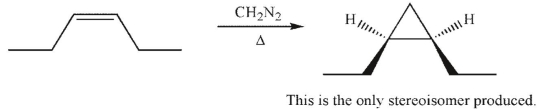
<strong>Which of the following statements about the reaction shown here is false?  </strong> A) The reaction is a stereospecific syn addition. B) The reactive intermediate involved in this process is a triplet carbene. C) The mechanism is concerted. D) Nitrogen gas is produced in the reaction. E) The reactive intermediate in this process is a neutral species. <div style=padding-top: 35px>

A) The reaction is a stereospecific syn addition.
B) The reactive intermediate involved in this process is a triplet carbene.
C) The mechanism is concerted.
D) Nitrogen gas is produced in the reaction.
E) The reactive intermediate in this process is a neutral species.
سؤال
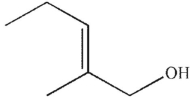
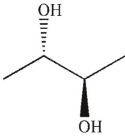
What was the starting material used to produce the diol shown under the conditions given?
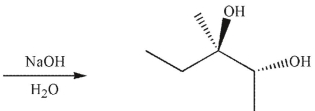
<strong>What was the starting material used to produce the diol shown under the conditions given?  </strong> A)   B)   C)   D)   E)   <div style=padding-top: 35px>

A) <strong>What was the starting material used to produce the diol shown under the conditions given?  </strong> A)   B)   C)   D)   E)   <div style=padding-top: 35px>
B) <strong>What was the starting material used to produce the diol shown under the conditions given?  </strong> A)   B)   C)   D)   E)   <div style=padding-top: 35px>
C) <strong>What was the starting material used to produce the diol shown under the conditions given?  </strong> A)   B)   C)   D)   E)   <div style=padding-top: 35px>
D) <strong>What was the starting material used to produce the diol shown under the conditions given?  </strong> A)   B)   C)   D)   E)   <div style=padding-top: 35px>
E) <strong>What was the starting material used to produce the diol shown under the conditions given?  </strong> A)   B)   C)   D)   E)   <div style=padding-top: 35px>
سؤال
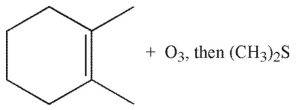
Which product will be observed?
<strong>Which product will be observed?  </strong> A)   B)   C)   D)   E)   <div style=padding-top: 35px>

A) <strong>Which product will be observed?  </strong> A)   B)   C)   D)   E)   <div style=padding-top: 35px>
B) <strong>Which product will be observed?  </strong> A)   B)   C)   D)   E)   <div style=padding-top: 35px>
C) <strong>Which product will be observed?  </strong> A)   B)   C)   D)   E)   <div style=padding-top: 35px>
D) <strong>Which product will be observed?  </strong> A)   B)   C)   D)   E)   <div style=padding-top: 35px>
E) <strong>Which product will be observed?  </strong> A)   B)   C)   D)   E)   <div style=padding-top: 35px>
سؤال
Which of these molecules is the product of the reaction shown here?
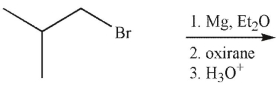
<strong>Which of these molecules is the product of the reaction shown here?  </strong> A)   B)   C)   D)   E)   <div style=padding-top: 35px>

A) <strong>Which of these molecules is the product of the reaction shown here?  </strong> A)   B)   C)   D)   E)   <div style=padding-top: 35px>
B) <strong>Which of these molecules is the product of the reaction shown here?  </strong> A)   B)   C)   D)   E)   <div style=padding-top: 35px>
C) <strong>Which of these molecules is the product of the reaction shown here?  </strong> A)   B)   C)   D)   E)   <div style=padding-top: 35px>
D) <strong>Which of these molecules is the product of the reaction shown here?  </strong> A)   B)   C)   D)   E)   <div style=padding-top: 35px>
E) <strong>Which of these molecules is the product of the reaction shown here?  </strong> A)   B)   C)   D)   E)   <div style=padding-top: 35px>
سؤال
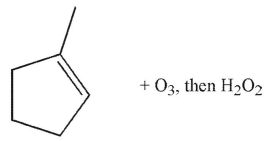
which product will be observed?
<strong>which product will be observed?  </strong> A)   B)   C)   D)   E)   <div style=padding-top: 35px>

A) <strong>which product will be observed?  </strong> A)   B)   C)   D)   E)   <div style=padding-top: 35px>
B) <strong>which product will be observed?  </strong> A)   B)   C)   D)   E)   <div style=padding-top: 35px>
C) <strong>which product will be observed?  </strong> A)   B)   C)   D)   E)   <div style=padding-top: 35px>
D) <strong>which product will be observed?  </strong> A)   B)   C)   D)   E)   <div style=padding-top: 35px>
E) <strong>which product will be observed?  </strong> A)   B)   C)   D)   E)   <div style=padding-top: 35px>
سؤال
Which product(s) will be observed?

<strong>Which product(s) will be observed?  </strong> A)   B)   C) Both  a  and  b D)   E)   <div style=padding-top: 35px>

A) <strong>Which product(s) will be observed?  </strong> A)   B)   C) Both  a  and  b D)   E)   <div style=padding-top: 35px>
B) <strong>Which product(s) will be observed?  </strong> A)   B)   C) Both  a  and  b D)   E)   <div style=padding-top: 35px>
C) Both a and b
D) <strong>Which product(s) will be observed?  </strong> A)   B)   C) Both  a  and  b D)   E)   <div style=padding-top: 35px>
E) <strong>Which product(s) will be observed?  </strong> A)   B)   C) Both  a  and  b D)   E)   <div style=padding-top: 35px>
سؤال
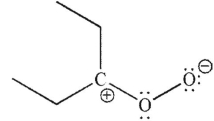
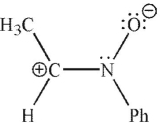
Which of these structures is a carbene?
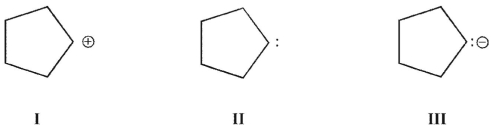
<strong>Which of these structures is a carbene?  </strong> A) I B) II C) III D) II and III E) I, II, and III <div style=padding-top: 35px>

A) I
B) II
C) III
D) II and III
E) I, II, and III
سؤال
Which reagent would you use to accomplish the transformation shown here?
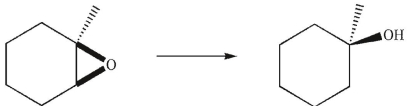
<strong>Which reagent would you use to accomplish the transformation shown here?  </strong> A)   B)   C)   D)   E)   <div style=padding-top: 35px>

A) <strong>Which reagent would you use to accomplish the transformation shown here?  </strong> A)   B)   C)   D)   E)   <div style=padding-top: 35px>
B) <strong>Which reagent would you use to accomplish the transformation shown here?  </strong> A)   B)   C)   D)   E)   <div style=padding-top: 35px>
C) <strong>Which reagent would you use to accomplish the transformation shown here?  </strong> A)   B)   C)   D)   E)   <div style=padding-top: 35px>
D) <strong>Which reagent would you use to accomplish the transformation shown here?  </strong> A)   B)   C)   D)   E)   <div style=padding-top: 35px>
E) <strong>Which reagent would you use to accomplish the transformation shown here?  </strong> A)   B)   C)   D)   E)   <div style=padding-top: 35px>
سؤال
Select the best reagent to accomplish the transformation shown here.

<strong>Select the best reagent to accomplish the transformation shown here.  </strong> A)   B)   C)   D)   E)   <div style=padding-top: 35px>

A) <strong>Select the best reagent to accomplish the transformation shown here.  </strong> A)   B)   C)   D)   E)   <div style=padding-top: 35px>
B) <strong>Select the best reagent to accomplish the transformation shown here.  </strong> A)   B)   C)   D)   E)   <div style=padding-top: 35px>
C) <strong>Select the best reagent to accomplish the transformation shown here.  </strong> A)   B)   C)   D)   E)   <div style=padding-top: 35px>
D) <strong>Select the best reagent to accomplish the transformation shown here.  </strong> A)   B)   C)   D)   E)   <div style=padding-top: 35px>
E) <strong>Select the best reagent to accomplish the transformation shown here.  </strong> A)   B)   C)   D)   E)   <div style=padding-top: 35px>
سؤال
Which product(s) will be observed?
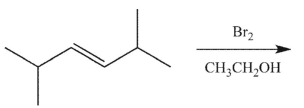
<strong>Which product(s) will be observed?  </strong> A)   B)   C) Both a and d D)   E)   <div style=padding-top: 35px>

A) <strong>Which product(s) will be observed?  </strong> A)   B)   C) Both a and d D)   E)   <div style=padding-top: 35px>
B) <strong>Which product(s) will be observed?  </strong> A)   B)   C) Both a and d D)   E)   <div style=padding-top: 35px>
C) Both a and d
D) <strong>Which product(s) will be observed?  </strong> A)   B)   C) Both a and d D)   E)   <div style=padding-top: 35px>
E) <strong>Which product(s) will be observed?  </strong> A)   B)   C) Both a and d D)   E)   <div style=padding-top: 35px>
سؤال
Which product(s) will be observed?
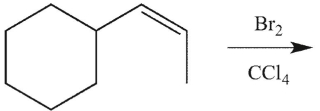
<strong>Which product(s) will be observed?  </strong> A)   B)   C)   D)   E) Both a and b <div style=padding-top: 35px>

A) <strong>Which product(s) will be observed?  </strong> A)   B)   C)   D)   E) Both a and b <div style=padding-top: 35px>
B) <strong>Which product(s) will be observed?  </strong> A)   B)   C)   D)   E) Both a and b <div style=padding-top: 35px>
C) <strong>Which product(s) will be observed?  </strong> A)   B)   C)   D)   E) Both a and b <div style=padding-top: 35px>
D) <strong>Which product(s) will be observed?  </strong> A)   B)   C)   D)   E) Both a and b <div style=padding-top: 35px>
E) Both a and b
سؤال
Which of these structures is an intermediate in this transformation?
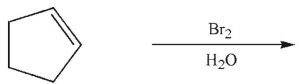
<strong>Which of these structures is an intermediate in this transformation?  </strong> A)   B)   C)   D)   E)   <div style=padding-top: 35px>

A) <strong>Which of these structures is an intermediate in this transformation?  </strong> A)   B)   C)   D)   E)   <div style=padding-top: 35px>
B) <strong>Which of these structures is an intermediate in this transformation?  </strong> A)   B)   C)   D)   E)   <div style=padding-top: 35px>
C) <strong>Which of these structures is an intermediate in this transformation?  </strong> A)   B)   C)   D)   E)   <div style=padding-top: 35px>
D) <strong>Which of these structures is an intermediate in this transformation?  </strong> A)   B)   C)   D)   E)   <div style=padding-top: 35px>
E) <strong>Which of these structures is an intermediate in this transformation?  </strong> A)   B)   C)   D)   E)   <div style=padding-top: 35px>
سؤال
Which reagent would you use to accomplish the transformation shown here?
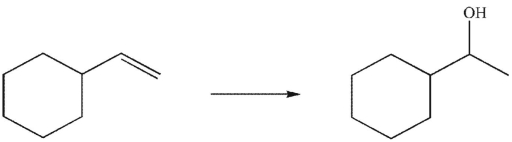
<strong>Which reagent would you use to accomplish the transformation shown here?  </strong> A)   B)   C)   D)   E)   <div style=padding-top: 35px>

A) <strong>Which reagent would you use to accomplish the transformation shown here?  </strong> A)   B)   C)   D)   E)   <div style=padding-top: 35px>
B) <strong>Which reagent would you use to accomplish the transformation shown here?  </strong> A)   B)   C)   D)   E)   <div style=padding-top: 35px>
C) <strong>Which reagent would you use to accomplish the transformation shown here?  </strong> A)   B)   C)   D)   E)   <div style=padding-top: 35px>
D) <strong>Which reagent would you use to accomplish the transformation shown here?  </strong> A)   B)   C)   D)   E)   <div style=padding-top: 35px>
E) <strong>Which reagent would you use to accomplish the transformation shown here?  </strong> A)   B)   C)   D)   E)   <div style=padding-top: 35px>
سؤال
Which product will be obsereced?
<strong>Which product will be obsereced?  </strong> A)   B)   C)   D)   E) Boh a and b <div style=padding-top: 35px>

A) <strong>Which product will be obsereced?  </strong> A)   B)   C)   D)   E) Boh a and b <div style=padding-top: 35px>
B) <strong>Which product will be obsereced?  </strong> A)   B)   C)   D)   E) Boh a and b <div style=padding-top: 35px>
C) <strong>Which product will be obsereced?  </strong> A)   B)   C)   D)   E) Boh a and b <div style=padding-top: 35px>
D) <strong>Which product will be obsereced?  </strong> A)   B)   C)   D)   E) Boh a and b <div style=padding-top: 35px>
E) Boh a and b
سؤال
Consider alkenes A and B .
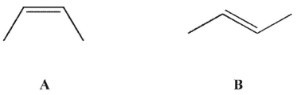
<strong>Consider alkenes  A  and B .   Which of the following is easily accessible from either  A  or B  ?</strong> A)   B)   C)   D)   E) Both c and d <div style=padding-top: 35px>
Which of the following is easily accessible from either A or B ?

A) <strong>Consider alkenes  A  and B .   Which of the following is easily accessible from either  A  or B  ?</strong> A)   B)   C)   D)   E) Both c and d <div style=padding-top: 35px>
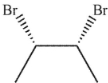
B) <strong>Consider alkenes  A  and B .   Which of the following is easily accessible from either  A  or B  ?</strong> A)   B)   C)   D)   E) Both c and d <div style=padding-top: 35px>
C) <strong>Consider alkenes  A  and B .   Which of the following is easily accessible from either  A  or B  ?</strong> A)   B)   C)   D)   E) Both c and d <div style=padding-top: 35px>
D) <strong>Consider alkenes  A  and B .   Which of the following is easily accessible from either  A  or B  ?</strong> A)   B)   C)   D)   E) Both c and d <div style=padding-top: 35px>
E) Both c and d
سؤال
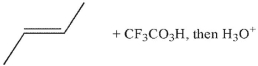
Which reagent would you use to accomplish the transformation shown here?
<strong>Which reagent would you use to accomplish the transformation shown here?  </strong> A) Br<sub>2</sub>/H<sub>2</sub>O B) HO<sup>-</sup>/ H<sub>2</sub>O C) H<sub>3</sub>O<sup>+</sup>/ H<sub>2</sub>O D) Hg(OAc)<sub>2</sub> and H<sub>2</sub>O, then NaBH<sub>4 </sub> E) CF<sub>3</sub>CO<sub>3</sub>H <div style=padding-top: 35px>

A) Br2/H2O
B) HO-/ H2O
C) H3O+/ H2O
D) Hg(OAc)2 and H2O, then NaBH4
E) CF3CO3H
سؤال
Which reagent would you use to accomplish the transformation shown here?
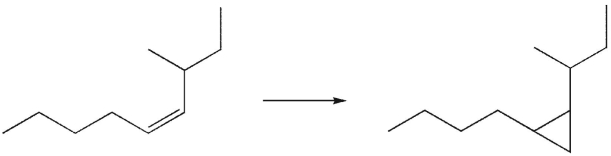
<strong>Which reagent would you use to accomplish the transformation shown here?  </strong> A) diazomethane B) bromoform, then potassium tert-butoxide C) trifluoroperacetic acid D) phenylmagnesium bromide in ether, followed by aqueous acid workup E) osmium tetroxide <div style=padding-top: 35px>

A) diazomethane
B) bromoform, then potassium tert-butoxide
C) trifluoroperacetic acid
D) phenylmagnesium bromide in ether, followed by aqueous acid workup
E) osmium tetroxide
سؤال
Which of these molecules is the product of the reaction shown here?
<strong>Which of these molecules is the product of the reaction shown here?  </strong> A)   B)   C)   D)   E)   <div style=padding-top: 35px>

A) <strong>Which of these molecules is the product of the reaction shown here?  </strong> A)   B)   C)   D)   E)   <div style=padding-top: 35px>
B) <strong>Which of these molecules is the product of the reaction shown here?  </strong> A)   B)   C)   D)   E)   <div style=padding-top: 35px>
C) <strong>Which of these molecules is the product of the reaction shown here?  </strong> A)   B)   C)   D)   E)   <div style=padding-top: 35px>
D) <strong>Which of these molecules is the product of the reaction shown here?  </strong> A)   B)   C)   D)   E)   <div style=padding-top: 35px>
E) <strong>Which of these molecules is the product of the reaction shown here?  </strong> A)   B)   C)   D)   E)   <div style=padding-top: 35px>
سؤال
Which product will be observed?
<strong>Which product will be observed?  </strong> A)   B)   C)   D)   E) c and d <div style=padding-top: 35px>

A) <strong>Which product will be observed?  </strong> A)   B)   C)   D)   E) c and d <div style=padding-top: 35px>
B) <strong>Which product will be observed?  </strong> A)   B)   C)   D)   E) c and d <div style=padding-top: 35px>
C) <strong>Which product will be observed?  </strong> A)   B)   C)   D)   E) c and d <div style=padding-top: 35px>
D) <strong>Which product will be observed?  </strong> A)   B)   C)   D)   E) c and d <div style=padding-top: 35px>
E) c and d
سؤال
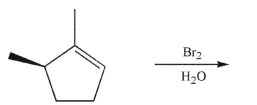
Draw the products of the following reaction.Show stereochemistry and indicate the stereochemical
relationship of the products to each other. Draw the products of the following reaction.Show stereochemistry and indicate the stereochemical relationship of the products to each other.  <div style=padding-top: 35px>
سؤال
Which of the following conditions and reagents were used to make this compound?
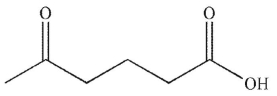
<strong>Which of the following conditions and reagents were used to make this compound?  </strong> A)   B)   C)   D)   E)   <div style=padding-top: 35px>

A) <strong>Which of the following conditions and reagents were used to make this compound?  </strong> A)   B)   C)   D)   E)   <div style=padding-top: 35px>
B) <strong>Which of the following conditions and reagents were used to make this compound?  </strong> A)   B)   C)   D)   E)   <div style=padding-top: 35px>
C) <strong>Which of the following conditions and reagents were used to make this compound?  </strong> A)   B)   C)   D)   E)   <div style=padding-top: 35px>
D) <strong>Which of the following conditions and reagents were used to make this compound?  </strong> A)   B)   C)   D)   E)   <div style=padding-top: 35px>
E) <strong>Which of the following conditions and reagents were used to make this compound?  </strong> A)   B)   C)   D)   E)   <div style=padding-top: 35px>
سؤال
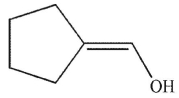
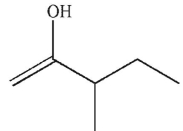
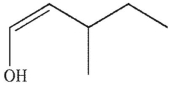
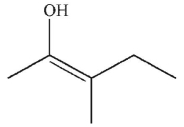
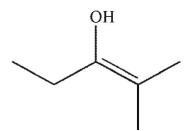
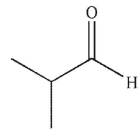
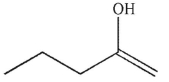
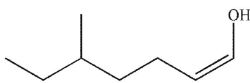
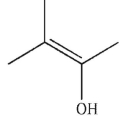
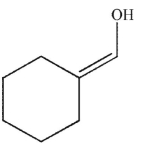
Which of the following structures is an enol?

A) <strong>Which of the following structures is an enol?</strong> A)   B)   C)   D)   E)   <div style=padding-top: 35px>
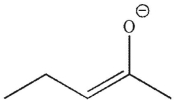
B) <strong>Which of the following structures is an enol?</strong> A)   B)   C)   D)   E)   <div style=padding-top: 35px>
C) <strong>Which of the following structures is an enol?</strong> A)   B)   C)   D)   E)   <div style=padding-top: 35px>
D) <strong>Which of the following structures is an enol?</strong> A)   B)   C)   D)   E)   <div style=padding-top: 35px>
E) <strong>Which of the following structures is an enol?</strong> A)   B)   C)   D)   E)   <div style=padding-top: 35px>
سؤال
Predict the product and draw a mechanism for its formation in the following reaction.Show all lone pairs, curved arrows, and nonzero formal charges. Predict the product and draw a mechanism for its formation in the following reaction.Show all lone pairs, curved arrows, and nonzero formal charges.  <div style=padding-top: 35px>
سؤال
Which enol, when treated with aqueous acid or base, would generate the ketone shown here? <strong>Which enol, when treated with aqueous acid or base, would generate the ketone shown here?  </strong> A)   B)   C)   D)   E) Both a and c <div style=padding-top: 35px>
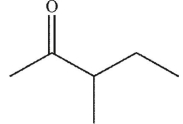
A) <strong>Which enol, when treated with aqueous acid or base, would generate the ketone shown here?  </strong> A)   B)   C)   D)   E) Both a and c <div style=padding-top: 35px>
B) <strong>Which enol, when treated with aqueous acid or base, would generate the ketone shown here?  </strong> A)   B)   C)   D)   E) Both a and c <div style=padding-top: 35px>
C) <strong>Which enol, when treated with aqueous acid or base, would generate the ketone shown here?  </strong> A)   B)   C)   D)   E) Both a and c <div style=padding-top: 35px>
D) <strong>Which enol, when treated with aqueous acid or base, would generate the ketone shown here?  </strong> A)   B)   C)   D)   E) Both a and c <div style=padding-top: 35px>
E) Both a and c
سؤال
Which reagent would you use to accomplish the following transformation?

<strong>Which reagent would you use to accomplish the following transformation?  </strong> A)   B)   C)   D)   E)   <div style=padding-top: 35px>

A) <strong>Which reagent would you use to accomplish the following transformation?  </strong> A)   B)   C)   D)   E)   <div style=padding-top: 35px>
B) <strong>Which reagent would you use to accomplish the following transformation?  </strong> A)   B)   C)   D)   E)   <div style=padding-top: 35px>
C) <strong>Which reagent would you use to accomplish the following transformation?  </strong> A)   B)   C)   D)   E)   <div style=padding-top: 35px>
D) <strong>Which reagent would you use to accomplish the following transformation?  </strong> A)   B)   C)   D)   E)   <div style=padding-top: 35px>
E) <strong>Which reagent would you use to accomplish the following transformation?  </strong> A)   B)   C)   D)   E)   <div style=padding-top: 35px>
سؤال
Which of the following statements about treatment of an alkyne with sodium metal in ammonia is false? <strong>Which of the following statements about treatment of an alkyne with sodium metal in ammonia is false?  </strong> A) The product of the reaction is a trans alkene. B) A radical anion is protonated by solvent. C) This reaction provides the opposite stereochemistry to that of treating an alkyne with  H<sub>2</sub>  in the presence of Lindlar's catalyst. D) Sodium amide forms as the reaction proceeds. E) A single electron is donated by sodium to a     orbital in the alkyne. <div style=padding-top: 35px>

A) The product of the reaction is a trans alkene.
B) A radical anion is protonated by solvent.
C) This reaction provides the opposite stereochemistry to that of treating an alkyne with H2 in the presence of Lindlar's catalyst.
D) Sodium amide forms as the reaction proceeds.
E) A single electron is donated by sodium to a <strong>Which of the following statements about treatment of an alkyne with sodium metal in ammonia is false?  </strong> A) The product of the reaction is a trans alkene. B) A radical anion is protonated by solvent. C) This reaction provides the opposite stereochemistry to that of treating an alkyne with  H<sub>2</sub>  in the presence of Lindlar's catalyst. D) Sodium amide forms as the reaction proceeds. E) A single electron is donated by sodium to a     orbital in the alkyne. <div style=padding-top: 35px> orbital in the alkyne.
سؤال
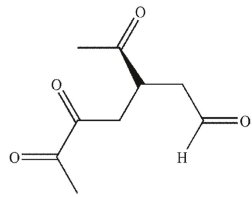
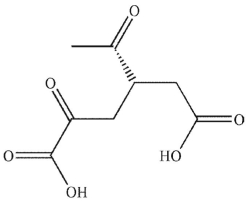
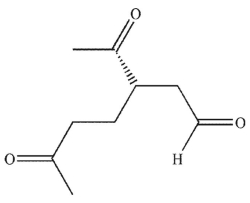
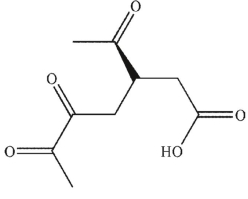
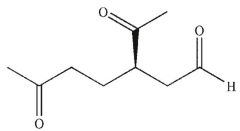
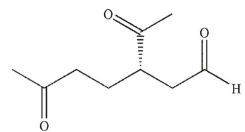
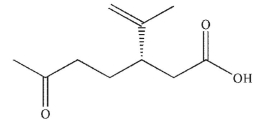
Which of these products would result from complete ozonolysis of (S)-(+) -carvone, followed by oxidative workup? The structure of racemic carvone is shown.
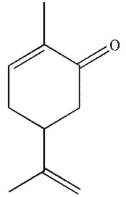
<strong>Which of these products would result from complete ozonolysis of  (S)-(+) -carvone, followed by oxidative workup? The structure of racemic carvone is shown.  </strong> A)   B)   C)   D)   E)   <div style=padding-top: 35px>

A) <strong>Which of these products would result from complete ozonolysis of  (S)-(+) -carvone, followed by oxidative workup? The structure of racemic carvone is shown.  </strong> A)   B)   C)   D)   E)   <div style=padding-top: 35px>
B) <strong>Which of these products would result from complete ozonolysis of  (S)-(+) -carvone, followed by oxidative workup? The structure of racemic carvone is shown.  </strong> A)   B)   C)   D)   E)   <div style=padding-top: 35px>
C) <strong>Which of these products would result from complete ozonolysis of  (S)-(+) -carvone, followed by oxidative workup? The structure of racemic carvone is shown.  </strong> A)   B)   C)   D)   E)   <div style=padding-top: 35px>
D) <strong>Which of these products would result from complete ozonolysis of  (S)-(+) -carvone, followed by oxidative workup? The structure of racemic carvone is shown.  </strong> A)   B)   C)   D)   E)   <div style=padding-top: 35px>
E) <strong>Which of these products would result from complete ozonolysis of  (S)-(+) -carvone, followed by oxidative workup? The structure of racemic carvone is shown.  </strong> A)   B)   C)   D)   E)   <div style=padding-top: 35px>
سؤال
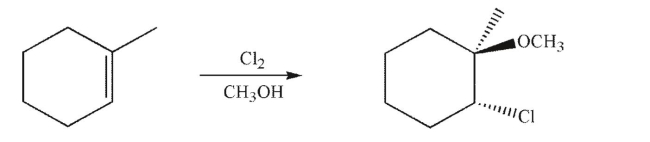
Provide an arrow-pushing mechanism for the formation of the product shown.Your mechanism
should include stereochemistry and should result in the specific stereoisomer shown as the
product.Include all lone pairs, curved arrows, and nonzero formal charges. Provide an arrow-pushing mechanism for the formation of the product shown.Your mechanism should include stereochemistry and should result in the specific stereoisomer shown as the product.Include all lone pairs, curved arrows, and nonzero formal charges.  <div style=padding-top: 35px>
سؤال
Which of the following molecules do you expect to react fastest with H2(g) and palladium on charcoal?

A) <strong>Which of the following molecules do you expect to react fastest with H<sub>2</sub>(g) and palladium on charcoal?</strong> A)   B)   C)   D)   E)   <div style=padding-top: 35px>
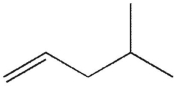
B) <strong>Which of the following molecules do you expect to react fastest with H<sub>2</sub>(g) and palladium on charcoal?</strong> A)   B)   C)   D)   E)   <div style=padding-top: 35px>
C) <strong>Which of the following molecules do you expect to react fastest with H<sub>2</sub>(g) and palladium on charcoal?</strong> A)   B)   C)   D)   E)   <div style=padding-top: 35px>
D) <strong>Which of the following molecules do you expect to react fastest with H<sub>2</sub>(g) and palladium on charcoal?</strong> A)   B)   C)   D)   E)   <div style=padding-top: 35px>
E) <strong>Which of the following molecules do you expect to react fastest with H<sub>2</sub>(g) and palladium on charcoal?</strong> A)   B)   C)   D)   E)   <div style=padding-top: 35px>
سؤال
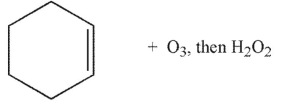
Starting with an alkene, which of these methods would produce at least one carbonyl compound as the major product? Assume appropriate aqueous workup in all cases.

A) OsO4
B) H3O+
C) H2 and Lindlar's catalyst
D) O3, then H2O2
E) Hg(OAc)2 and H2O , then NaBH4
سؤال
Which reagent would you use to accomplish the following transformation? <strong>Which reagent would you use to accomplish the following transformation?  </strong> A) H<sub>2</sub>/ Pd  on  C. B) H<sub>2</sub>/Wilkinson's catalyst C) CF<sub>3</sub>CO<sub>3</sub>H D) Na/ NH<sub>3 </sub> E) H<sub>2</sub>/  Lindlar's catalyst <div style=padding-top: 35px>
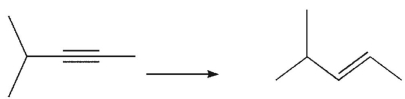
A) H2/ Pd on C.
B) H2/Wilkinson's catalyst
C) CF3CO3H
D) Na/ NH3
E) H2/ Lindlar's catalyst
سؤال
Draw the products of the following reaction.Show stereochemistry and indicate the
stereochemical relationship of the products to each other. Draw the products of the following reaction.Show stereochemistry and indicate the stereochemical relationship of the products to each other.  <div style=padding-top: 35px>
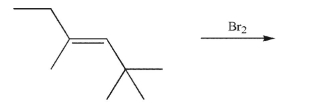
سؤال
In the presence of aqueous acid or base, enols are converted to ketones or aldehydes.Which of the following carbonyl compounds is produced when the enol shown here is treated with aqueous
Acid? <strong>In the presence of aqueous acid or base, enols are converted to ketones or aldehydes.Which of the following carbonyl compounds is produced when the enol shown here is treated with aqueous Acid?  </strong> A)   B)   C)   D)   E)   <div style=padding-top: 35px>
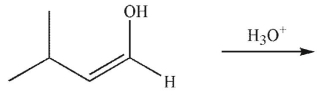
A) <strong>In the presence of aqueous acid or base, enols are converted to ketones or aldehydes.Which of the following carbonyl compounds is produced when the enol shown here is treated with aqueous Acid?  </strong> A)   B)   C)   D)   E)   <div style=padding-top: 35px>
B) <strong>In the presence of aqueous acid or base, enols are converted to ketones or aldehydes.Which of the following carbonyl compounds is produced when the enol shown here is treated with aqueous Acid?  </strong> A)   B)   C)   D)   E)   <div style=padding-top: 35px>
C) <strong>In the presence of aqueous acid or base, enols are converted to ketones or aldehydes.Which of the following carbonyl compounds is produced when the enol shown here is treated with aqueous Acid?  </strong> A)   B)   C)   D)   E)   <div style=padding-top: 35px>
D) <strong>In the presence of aqueous acid or base, enols are converted to ketones or aldehydes.Which of the following carbonyl compounds is produced when the enol shown here is treated with aqueous Acid?  </strong> A)   B)   C)   D)   E)   <div style=padding-top: 35px>
E) <strong>In the presence of aqueous acid or base, enols are converted to ketones or aldehydes.Which of the following carbonyl compounds is produced when the enol shown here is treated with aqueous Acid?  </strong> A)   B)   C)   D)   E)   <div style=padding-top: 35px>
سؤال
Which of these enols could be generated by treating an alkyne with the reagent shown here, followed by treatment with aqueous, basic hydrogen peroxide?
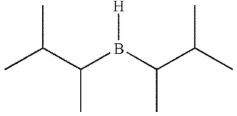
<strong>Which of these enols could be generated by treating an alkyne with the reagent shown here, followed by treatment with aqueous, basic hydrogen peroxide?  </strong> A)   B)   C)   D)   E) Both  a  and  b <div style=padding-top: 35px>

A) <strong>Which of these enols could be generated by treating an alkyne with the reagent shown here, followed by treatment with aqueous, basic hydrogen peroxide?  </strong> A)   B)   C)   D)   E) Both  a  and  b <div style=padding-top: 35px>
B) <strong>Which of these enols could be generated by treating an alkyne with the reagent shown here, followed by treatment with aqueous, basic hydrogen peroxide?  </strong> A)   B)   C)   D)   E) Both  a  and  b <div style=padding-top: 35px>
C) <strong>Which of these enols could be generated by treating an alkyne with the reagent shown here, followed by treatment with aqueous, basic hydrogen peroxide?  </strong> A)   B)   C)   D)   E) Both  a  and  b <div style=padding-top: 35px>
D) <strong>Which of these enols could be generated by treating an alkyne with the reagent shown here, followed by treatment with aqueous, basic hydrogen peroxide?  </strong> A)   B)   C)   D)   E) Both  a  and  b <div style=padding-top: 35px>
E) Both a and b
سؤال
How would you make this compound in one step from alkene of formula C4H8 ?
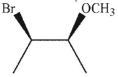
How would you make this compound in one step from alkene of formula  C<sub>4</sub>H<sub>8</sub>  ?  <div style=padding-top: 35px>
سؤال
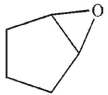
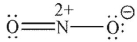
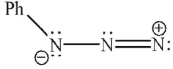
Which of the following is not a 1,3-dipolar reagent?

A) <strong>Which of the following is not a 1,3-dipolar reagent?</strong> A)   B)   C)   D)   E)   <div style=padding-top: 35px>
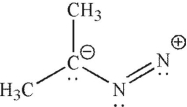
B) <strong>Which of the following is not a 1,3-dipolar reagent?</strong> A)   B)   C)   D)   E)   <div style=padding-top: 35px>
C) <strong>Which of the following is not a 1,3-dipolar reagent?</strong> A)   B)   C)   D)   E)   <div style=padding-top: 35px>
D) <strong>Which of the following is not a 1,3-dipolar reagent?</strong> A)   B)   C)   D)   E)   <div style=padding-top: 35px>
E) <strong>Which of the following is not a 1,3-dipolar reagent?</strong> A)   B)   C)   D)   E)   <div style=padding-top: 35px>
سؤال
Which reagent would you use to accomplish the transformation shown here?
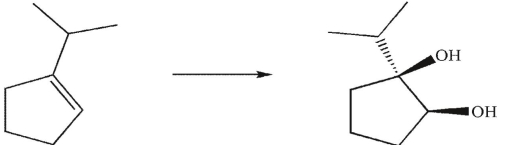
<strong>Which reagent would you use to accomplish the transformation shown here?  </strong> A)   B)   C)   D)   E)   <div style=padding-top: 35px>

A) <strong>Which reagent would you use to accomplish the transformation shown here?  </strong> A)   B)   C)   D)   E)   <div style=padding-top: 35px>
B) <strong>Which reagent would you use to accomplish the transformation shown here?  </strong> A)   B)   C)   D)   E)   <div style=padding-top: 35px>
C) <strong>Which reagent would you use to accomplish the transformation shown here?  </strong> A)   B)   C)   D)   E)   <div style=padding-top: 35px>
D) <strong>Which reagent would you use to accomplish the transformation shown here?  </strong> A)   B)   C)   D)   E)   <div style=padding-top: 35px>
E) <strong>Which reagent would you use to accomplish the transformation shown here?  </strong> A)   B)   C)   D)   E)   <div style=padding-top: 35px>
سؤال
Which of the following conditions will result in the formation of the molecule shown here?
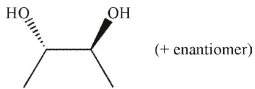
<strong>Which of the following conditions will result in the formation of the molecule shown here?  </strong> A)   B)   C)   D)   E) Both b and c will work. <div style=padding-top: 35px>

A) <strong>Which of the following conditions will result in the formation of the molecule shown here?  </strong> A)   B)   C)   D)   E) Both b and c will work. <div style=padding-top: 35px>
B) <strong>Which of the following conditions will result in the formation of the molecule shown here?  </strong> A)   B)   C)   D)   E) Both b and c will work. <div style=padding-top: 35px>
C) <strong>Which of the following conditions will result in the formation of the molecule shown here?  </strong> A)   B)   C)   D)   E) Both b and c will work. <div style=padding-top: 35px>
D) <strong>Which of the following conditions will result in the formation of the molecule shown here?  </strong> A)   B)   C)   D)   E) Both b and c will work. <div style=padding-top: 35px>
E) Both b and c will work.
سؤال
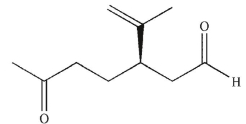
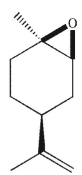
Which of these products would result from complete ozonolysis of (R) - (+) -limonene, followed by reductive workup? The structure of racemic limonene is shown.
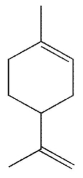
<strong>Which of these products would result from complete ozonolysis of  (R)  -  (+) -limonene, followed by reductive workup? The structure of racemic limonene is shown.  </strong> A)   B)   C)   D)   E)   <div style=padding-top: 35px>

A) <strong>Which of these products would result from complete ozonolysis of  (R)  -  (+) -limonene, followed by reductive workup? The structure of racemic limonene is shown.  </strong> A)   B)   C)   D)   E)   <div style=padding-top: 35px>
B) <strong>Which of these products would result from complete ozonolysis of  (R)  -  (+) -limonene, followed by reductive workup? The structure of racemic limonene is shown.  </strong> A)   B)   C)   D)   E)   <div style=padding-top: 35px>
C) <strong>Which of these products would result from complete ozonolysis of  (R)  -  (+) -limonene, followed by reductive workup? The structure of racemic limonene is shown.  </strong> A)   B)   C)   D)   E)   <div style=padding-top: 35px>
D) <strong>Which of these products would result from complete ozonolysis of  (R)  -  (+) -limonene, followed by reductive workup? The structure of racemic limonene is shown.  </strong> A)   B)   C)   D)   E)   <div style=padding-top: 35px>
E) <strong>Which of these products would result from complete ozonolysis of  (R)  -  (+) -limonene, followed by reductive workup? The structure of racemic limonene is shown.  </strong> A)   B)   C)   D)   E)   <div style=padding-top: 35px>
سؤال
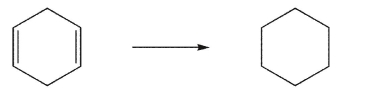
List three ways to accomplish the transformation shown here. List three ways to accomplish the transformation shown here.  <div style=padding-top: 35px>
سؤال
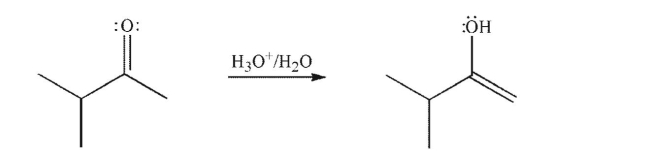
Draw a mechanism for the transformation shown.Include all curved arrows, lone pairs of
electrons, and nonzero formal charges. Draw a mechanism for the transformation shown.Include all curved arrows, lone pairs of electrons, and nonzero formal charges.  <div style=padding-top: 35px>
سؤال
Show how you would make each of the carbonyl compounds shown using the starting material
provided and any reagents of your choice. Show how you would make each of the carbonyl compounds shown using the starting material provided and any reagents of your choice.  <div style=padding-top: 35px>

سؤال
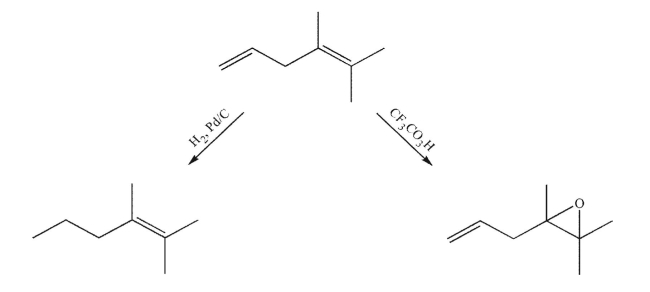
When the diene shown here is treated with hydrogen and palladium on charcoal for a short reaction time, the alkene on the left is produced. When the same diene is treated with CF3CO3H for a short reaction time, the epoxide on the right is produced. Explain the difference in reactivity between the two alkenes.When the diene shown here is treated with hydrogen and palladium on charcoal for a short reaction time, the alkene on the left is produced. When the same diene is treated with CF<sub>3</sub>CO<sub>3</sub>H  for a short reaction time, the epoxide on the right is produced. Explain the difference in reactivity between the two alkenes. <div style=padding-top: 35px>
سؤال
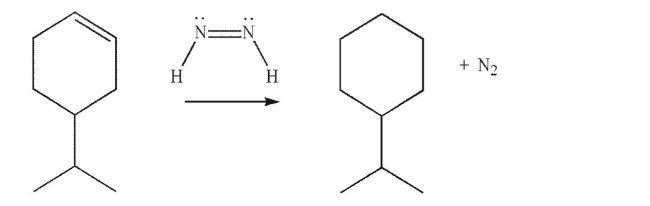
Propose a mechanism for the transformation shown here. Propose a mechanism for the transformation shown here.  <div style=padding-top: 35px>
سؤال
Draw the structure of the most stable ozonide that will result when the compound shown here is
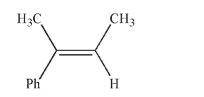
treated with ozone. Draw the structure of the most stable ozonide that will result when the compound shown here is treated with ozone.  <div style=padding-top: 35px>
سؤال
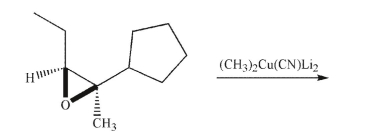
Predict the product of the following transformation, including the correct stereochemistry. Predict the product of the following transformation, including the correct stereochemistry.  <div style=padding-top: 35px>
سؤال
Draw the product of the following transformation: Draw the product of the following transformation:  <div style=padding-top: 35px>
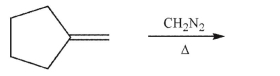
سؤال
Draw a mechanism for the following transformation.Show all lone pairs, curved arrows, and
nonzero formal charges. Draw a mechanism for the following transformation.Show all lone pairs, curved arrows, and nonzero formal charges.  <div style=padding-top: 35px>

سؤال
Devise a multistep synthesis of the target molecule from the given starting material.Show the
reagents needed for each step and the product of each step. Devise a multistep synthesis of the target molecule from the given starting material.Show the reagents needed for each step and the product of each step.  <div style=padding-top: 35px>
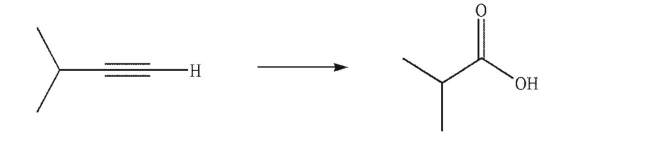
سؤال
The following transformation was carried out using one enantiomer of diethyl tartrate and the other reagents of the Sharpless asymmetric epoxidation reaction.

The following transformation was carried out using one enantiomer of diethyl tartrate and the other reagents of the Sharpless asymmetric epoxidation reaction.   Predict the product that would result using the other enantiomer of diethyl tartrate.<div style=padding-top: 35px>
Predict the product that would result using the other enantiomer of diethyl tartrate.
سؤال
The molecule shown was the exclusive product of an ozonolysis reaction followed by a reductive
workup.Draw the structures of two possible starting materials that could have been used. The molecule shown was the exclusive product of an ozonolysis reaction followed by a reductive workup.Draw the structures of two possible starting materials that could have been used.  <div style=padding-top: 35px>
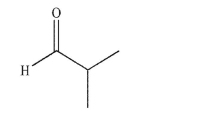
سؤال
Draw the structure of the enol intermediate that would result from the following conditions. Draw the structure of the enol intermediate that would result from the following conditions.  <div style=padding-top: 35px>

سؤال
Provide two different precursors and the reagents needed to transform them to the compound shown
here. Provide two different precursors and the reagents needed to transform them to the compound shown here.  <div style=padding-top: 35px>
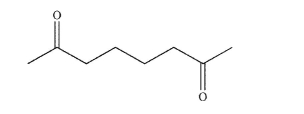
سؤال
Provide the missing reagents and structures.
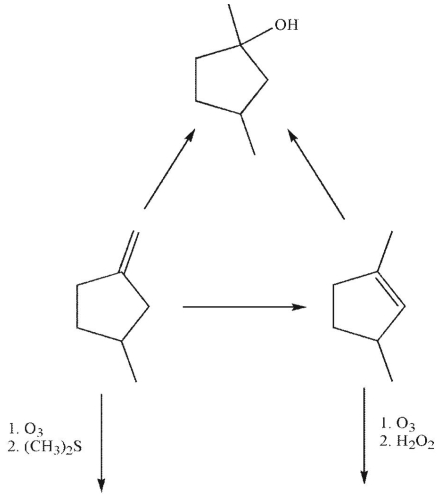
Provide the missing reagents and structures.  <div style=padding-top: 35px>
سؤال
Explain the difference between a heterogeneous catalyst and a homogeneous catalyst.
سؤال
Provide the missing reagents in the following reaction sequence. Provide the missing reagents in the following reaction sequence.  <div style=padding-top: 35px>
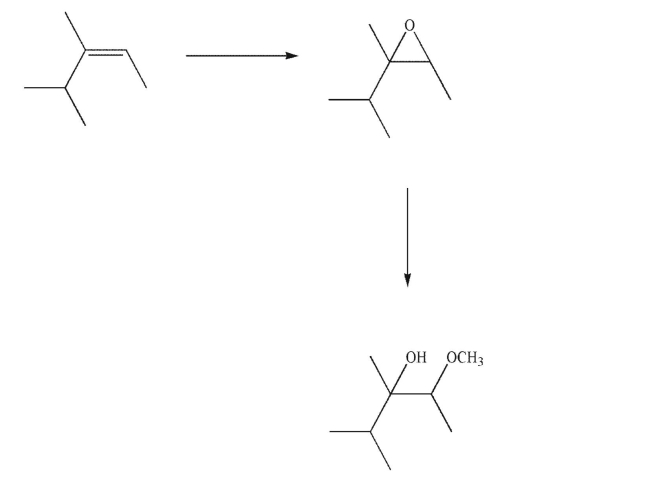
سؤال
Predict the product of the following transformation. Predict the product of the following transformation.  <div style=padding-top: 35px>
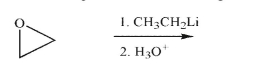
سؤال
Explain the difference between a triplet carbene and a singlet carbene.
سؤال
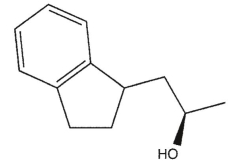
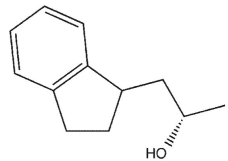
Propose three different syntheses of the specific enantiomer of the diol shown here.Each
synthesis must involve a different starting material. Propose three different syntheses of the specific enantiomer of the diol shown here.Each synthesis must involve a different starting material.  <div style=padding-top: 35px>
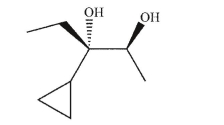
سؤال
Devise a multistep synthesis of the target molecule from the given starting material. Show the reagents needed for each step and the product of each step.
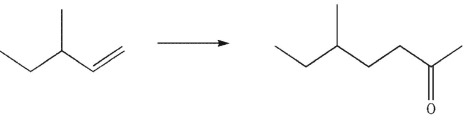
Devise a multistep synthesis of the target molecule from the given starting material. Show the reagents needed for each step and the product of each step.  <div style=padding-top: 35px>
سؤال
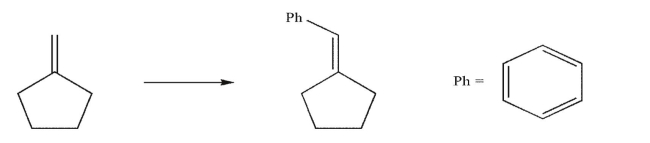
Devise a multistep synthesis of the target molecule from the given starting material.Show the
reagents needed for each step and the product of each step. Devise a multistep synthesis of the target molecule from the given starting material.Show the reagents needed for each step and the product of each step.  <div style=padding-top: 35px>
سؤال
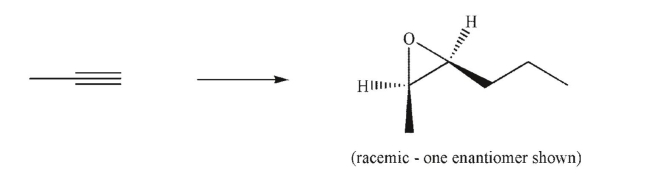
Devise a multistep synthesis of the target molecule from the given starting material.Show the
reagents needed for each step and the product of each step. Devise a multistep synthesis of the target molecule from the given starting material.Show the reagents needed for each step and the product of each step.  <div style=padding-top: 35px>
سؤال
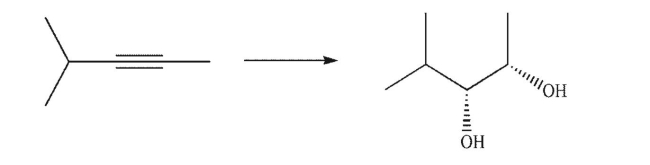
Devise a multistep synthesis of the target molecule from the given starting material.Show the
reagents needed for each step and the product of each step.Assume that the target is racemic; only
one enantiomer is shown. Devise a multistep synthesis of the target molecule from the given starting material.Show the reagents needed for each step and the product of each step.Assume that the target is racemic; only one enantiomer is shown.  <div style=padding-top: 35px>
سؤال
Devise a multistep synthesis of the target molecule from the given starting material.Show the
reagents needed for each step and the product of each step. Devise a multistep synthesis of the target molecule from the given starting material.Show the reagents needed for each step and the product of each step.  <div style=padding-top: 35px>

فتح الحزمة
قم بالتسجيل لفتح البطاقات في هذه المجموعة!
Unlock Deck
Unlock Deck
1/65
auto play flashcards
العب
simple tutorial
ملء الشاشة (f)
exit full mode
Deck 11: More Additions to Bonds
1
Which of the following is the major product of this reaction?
<strong>Which of the following is the major product of this reaction?  </strong> A)   B)   C)   D)   E)

A) <strong>Which of the following is the major product of this reaction?  </strong> A)   B)   C)   D)   E)
B) <strong>Which of the following is the major product of this reaction?  </strong> A)   B)   C)   D)   E)
C) <strong>Which of the following is the major product of this reaction?  </strong> A)   B)   C)   D)   E)
D) <strong>Which of the following is the major product of this reaction?  </strong> A)   B)   C)   D)   E)
E) <strong>Which of the following is the major product of this reaction?  </strong> A)   B)   C)   D)   E)
2
Which of the following statements about the reaction shown here is false?
<strong>Which of the following statements about the reaction shown here is false?  </strong> A) The reaction is a stereospecific syn addition. B) The reactive intermediate involved in this process is a triplet carbene. C) The mechanism is concerted. D) Nitrogen gas is produced in the reaction. E) The reactive intermediate in this process is a neutral species.

A) The reaction is a stereospecific syn addition.
B) The reactive intermediate involved in this process is a triplet carbene.
C) The mechanism is concerted.
D) Nitrogen gas is produced in the reaction.
E) The reactive intermediate in this process is a neutral species.
The reactive intermediate involved in this process is a triplet carbene.
3
What was the starting material used to produce the diol shown under the conditions given?
<strong>What was the starting material used to produce the diol shown under the conditions given?  </strong> A)   B)   C)   D)   E)

A) <strong>What was the starting material used to produce the diol shown under the conditions given?  </strong> A)   B)   C)   D)   E)
B) <strong>What was the starting material used to produce the diol shown under the conditions given?  </strong> A)   B)   C)   D)   E)
C) <strong>What was the starting material used to produce the diol shown under the conditions given?  </strong> A)   B)   C)   D)   E)
D) <strong>What was the starting material used to produce the diol shown under the conditions given?  </strong> A)   B)   C)   D)   E)
E) <strong>What was the starting material used to produce the diol shown under the conditions given?  </strong> A)   B)   C)   D)   E)
4
Which product will be observed?
<strong>Which product will be observed?  </strong> A)   B)   C)   D)   E)

A) <strong>Which product will be observed?  </strong> A)   B)   C)   D)   E)
B) <strong>Which product will be observed?  </strong> A)   B)   C)   D)   E)
C) <strong>Which product will be observed?  </strong> A)   B)   C)   D)   E)
D) <strong>Which product will be observed?  </strong> A)   B)   C)   D)   E)
E) <strong>Which product will be observed?  </strong> A)   B)   C)   D)   E)
فتح الحزمة
افتح القفل للوصول البطاقات البالغ عددها 65 في هذه المجموعة.
فتح الحزمة
k this deck
5
Which of these molecules is the product of the reaction shown here?
<strong>Which of these molecules is the product of the reaction shown here?  </strong> A)   B)   C)   D)   E)

A) <strong>Which of these molecules is the product of the reaction shown here?  </strong> A)   B)   C)   D)   E)
B) <strong>Which of these molecules is the product of the reaction shown here?  </strong> A)   B)   C)   D)   E)
C) <strong>Which of these molecules is the product of the reaction shown here?  </strong> A)   B)   C)   D)   E)
D) <strong>Which of these molecules is the product of the reaction shown here?  </strong> A)   B)   C)   D)   E)
E) <strong>Which of these molecules is the product of the reaction shown here?  </strong> A)   B)   C)   D)   E)
فتح الحزمة
افتح القفل للوصول البطاقات البالغ عددها 65 في هذه المجموعة.
فتح الحزمة
k this deck
6
which product will be observed?
<strong>which product will be observed?  </strong> A)   B)   C)   D)   E)

A) <strong>which product will be observed?  </strong> A)   B)   C)   D)   E)
B) <strong>which product will be observed?  </strong> A)   B)   C)   D)   E)
C) <strong>which product will be observed?  </strong> A)   B)   C)   D)   E)
D) <strong>which product will be observed?  </strong> A)   B)   C)   D)   E)
E) <strong>which product will be observed?  </strong> A)   B)   C)   D)   E)
فتح الحزمة
افتح القفل للوصول البطاقات البالغ عددها 65 في هذه المجموعة.
فتح الحزمة
k this deck
7
Which product(s) will be observed?
<strong>Which product(s) will be observed?  </strong> A)   B)   C) Both  a  and  b D)   E)

A) <strong>Which product(s) will be observed?  </strong> A)   B)   C) Both  a  and  b D)   E)
B) <strong>Which product(s) will be observed?  </strong> A)   B)   C) Both  a  and  b D)   E)
C) Both a and b
D) <strong>Which product(s) will be observed?  </strong> A)   B)   C) Both  a  and  b D)   E)
E) <strong>Which product(s) will be observed?  </strong> A)   B)   C) Both  a  and  b D)   E)
فتح الحزمة
افتح القفل للوصول البطاقات البالغ عددها 65 في هذه المجموعة.

فتح الحزمة
k this deck
8
Which of these structures is a carbene?
<strong>Which of these structures is a carbene?  </strong> A) I B) II C) III D) II and III E) I, II, and III

A) I
B) II
C) III
D) II and III
E) I, II, and III
فتح الحزمة
افتح القفل للوصول البطاقات البالغ عددها 65 في هذه المجموعة.

فتح الحزمة
k this deck
9
Which reagent would you use to accomplish the transformation shown here?
<strong>Which reagent would you use to accomplish the transformation shown here?  </strong> A)   B)   C)   D)   E)

A) <strong>Which reagent would you use to accomplish the transformation shown here?  </strong> A)   B)   C)   D)   E)
B) <strong>Which reagent would you use to accomplish the transformation shown here?  </strong> A)   B)   C)   D)   E)
C) <strong>Which reagent would you use to accomplish the transformation shown here?  </strong> A)   B)   C)   D)   E)
D) <strong>Which reagent would you use to accomplish the transformation shown here?  </strong> A)   B)   C)   D)   E)
E) <strong>Which reagent would you use to accomplish the transformation shown here?  </strong> A)   B)   C)   D)   E)
فتح الحزمة
افتح القفل للوصول البطاقات البالغ عددها 65 في هذه المجموعة.
فتح الحزمة
k this deck
10
Select the best reagent to accomplish the transformation shown here.
<strong>Select the best reagent to accomplish the transformation shown here.  </strong> A)   B)   C)   D)   E)

A) <strong>Select the best reagent to accomplish the transformation shown here.  </strong> A)   B)   C)   D)   E)
B) <strong>Select the best reagent to accomplish the transformation shown here.  </strong> A)   B)   C)   D)   E)
C) <strong>Select the best reagent to accomplish the transformation shown here.  </strong> A)   B)   C)   D)   E)
D) <strong>Select the best reagent to accomplish the transformation shown here.  </strong> A)   B)   C)   D)   E)
E) <strong>Select the best reagent to accomplish the transformation shown here.  </strong> A)   B)   C)   D)   E)
فتح الحزمة
افتح القفل للوصول البطاقات البالغ عددها 65 في هذه المجموعة.
فتح الحزمة
k this deck
11
Which product(s) will be observed?
<strong>Which product(s) will be observed?  </strong> A)   B)   C) Both a and d D)   E)

A) <strong>Which product(s) will be observed?  </strong> A)   B)   C) Both a and d D)   E)
B) <strong>Which product(s) will be observed?  </strong> A)   B)   C) Both a and d D)   E)
C) Both a and d
D) <strong>Which product(s) will be observed?  </strong> A)   B)   C) Both a and d D)   E)
E) <strong>Which product(s) will be observed?  </strong> A)   B)   C) Both a and d D)   E)
فتح الحزمة
افتح القفل للوصول البطاقات البالغ عددها 65 في هذه المجموعة.
فتح الحزمة
k this deck
12
Which product(s) will be observed?
<strong>Which product(s) will be observed?  </strong> A)   B)   C)   D)   E) Both a and b

A) <strong>Which product(s) will be observed?  </strong> A)   B)   C)   D)   E) Both a and b
B) <strong>Which product(s) will be observed?  </strong> A)   B)   C)   D)   E) Both a and b
C) <strong>Which product(s) will be observed?  </strong> A)   B)   C)   D)   E) Both a and b
D) <strong>Which product(s) will be observed?  </strong> A)   B)   C)   D)   E) Both a and b
E) Both a and b
فتح الحزمة
افتح القفل للوصول البطاقات البالغ عددها 65 في هذه المجموعة.
فتح الحزمة
k this deck
13
Which of these structures is an intermediate in this transformation?
<strong>Which of these structures is an intermediate in this transformation?  </strong> A)   B)   C)   D)   E)

A) <strong>Which of these structures is an intermediate in this transformation?  </strong> A)   B)   C)   D)   E)
B) <strong>Which of these structures is an intermediate in this transformation?  </strong> A)   B)   C)   D)   E)
C) <strong>Which of these structures is an intermediate in this transformation?  </strong> A)   B)   C)   D)   E)
D) <strong>Which of these structures is an intermediate in this transformation?  </strong> A)   B)   C)   D)   E)
E) <strong>Which of these structures is an intermediate in this transformation?  </strong> A)   B)   C)   D)   E)
فتح الحزمة
افتح القفل للوصول البطاقات البالغ عددها 65 في هذه المجموعة.
فتح الحزمة
k this deck
14
Which reagent would you use to accomplish the transformation shown here?
<strong>Which reagent would you use to accomplish the transformation shown here?  </strong> A)   B)   C)   D)   E)

A) <strong>Which reagent would you use to accomplish the transformation shown here?  </strong> A)   B)   C)   D)   E)
B) <strong>Which reagent would you use to accomplish the transformation shown here?  </strong> A)   B)   C)   D)   E)
C) <strong>Which reagent would you use to accomplish the transformation shown here?  </strong> A)   B)   C)   D)   E)
D) <strong>Which reagent would you use to accomplish the transformation shown here?  </strong> A)   B)   C)   D)   E)
E) <strong>Which reagent would you use to accomplish the transformation shown here?  </strong> A)   B)   C)   D)   E)
فتح الحزمة
افتح القفل للوصول البطاقات البالغ عددها 65 في هذه المجموعة.
فتح الحزمة
k this deck
15
Which product will be obsereced?
<strong>Which product will be obsereced?  </strong> A)   B)   C)   D)   E) Boh a and b

A) <strong>Which product will be obsereced?  </strong> A)   B)   C)   D)   E) Boh a and b
B) <strong>Which product will be obsereced?  </strong> A)   B)   C)   D)   E) Boh a and b
C) <strong>Which product will be obsereced?  </strong> A)   B)   C)   D)   E) Boh a and b
D) <strong>Which product will be obsereced?  </strong> A)   B)   C)   D)   E) Boh a and b
E) Boh a and b
فتح الحزمة
افتح القفل للوصول البطاقات البالغ عددها 65 في هذه المجموعة.
فتح الحزمة
k this deck
16
Consider alkenes A and B .
<strong>Consider alkenes  A  and B .   Which of the following is easily accessible from either  A  or B  ?</strong> A)   B)   C)   D)   E) Both c and d
Which of the following is easily accessible from either A or B ?

A) <strong>Consider alkenes  A  and B .   Which of the following is easily accessible from either  A  or B  ?</strong> A)   B)   C)   D)   E) Both c and d
B) <strong>Consider alkenes  A  and B .   Which of the following is easily accessible from either  A  or B  ?</strong> A)   B)   C)   D)   E) Both c and d
C) <strong>Consider alkenes  A  and B .   Which of the following is easily accessible from either  A  or B  ?</strong> A)   B)   C)   D)   E) Both c and d
D) <strong>Consider alkenes  A  and B .   Which of the following is easily accessible from either  A  or B  ?</strong> A)   B)   C)   D)   E) Both c and d
E) Both c and d
فتح الحزمة
افتح القفل للوصول البطاقات البالغ عددها 65 في هذه المجموعة.
فتح الحزمة
k this deck
17
Which reagent would you use to accomplish the transformation shown here?
<strong>Which reagent would you use to accomplish the transformation shown here?  </strong> A) Br<sub>2</sub>/H<sub>2</sub>O B) HO<sup>-</sup>/ H<sub>2</sub>O C) H<sub>3</sub>O<sup>+</sup>/ H<sub>2</sub>O D) Hg(OAc)<sub>2</sub> and H<sub>2</sub>O, then NaBH<sub>4 </sub> E) CF<sub>3</sub>CO<sub>3</sub>H

A) Br2/H2O
B) HO-/ H2O
C) H3O+/ H2O
D) Hg(OAc)2 and H2O, then NaBH4
E) CF3CO3H
فتح الحزمة
افتح القفل للوصول البطاقات البالغ عددها 65 في هذه المجموعة.
فتح الحزمة
k this deck
18
Which reagent would you use to accomplish the transformation shown here?
<strong>Which reagent would you use to accomplish the transformation shown here?  </strong> A) diazomethane B) bromoform, then potassium tert-butoxide C) trifluoroperacetic acid D) phenylmagnesium bromide in ether, followed by aqueous acid workup E) osmium tetroxide

A) diazomethane
B) bromoform, then potassium tert-butoxide
C) trifluoroperacetic acid
D) phenylmagnesium bromide in ether, followed by aqueous acid workup
E) osmium tetroxide
فتح الحزمة
افتح القفل للوصول البطاقات البالغ عددها 65 في هذه المجموعة.
فتح الحزمة
k this deck
19
Which of these molecules is the product of the reaction shown here?
<strong>Which of these molecules is the product of the reaction shown here?  </strong> A)   B)   C)   D)   E)

A) <strong>Which of these molecules is the product of the reaction shown here?  </strong> A)   B)   C)   D)   E)
B) <strong>Which of these molecules is the product of the reaction shown here?  </strong> A)   B)   C)   D)   E)
C) <strong>Which of these molecules is the product of the reaction shown here?  </strong> A)   B)   C)   D)   E)
D) <strong>Which of these molecules is the product of the reaction shown here?  </strong> A)   B)   C)   D)   E)
E) <strong>Which of these molecules is the product of the reaction shown here?  </strong> A)   B)   C)   D)   E)
فتح الحزمة
افتح القفل للوصول البطاقات البالغ عددها 65 في هذه المجموعة.
فتح الحزمة
k this deck
20
Which product will be observed?
<strong>Which product will be observed?  </strong> A)   B)   C)   D)   E) c and d

A) <strong>Which product will be observed?  </strong> A)   B)   C)   D)   E) c and d
B) <strong>Which product will be observed?  </strong> A)   B)   C)   D)   E) c and d
C) <strong>Which product will be observed?  </strong> A)   B)   C)   D)   E) c and d
D) <strong>Which product will be observed?  </strong> A)   B)   C)   D)   E) c and d
E) c and d
فتح الحزمة
افتح القفل للوصول البطاقات البالغ عددها 65 في هذه المجموعة.
فتح الحزمة
k this deck
21
Draw the products of the following reaction.Show stereochemistry and indicate the stereochemical
relationship of the products to each other. Draw the products of the following reaction.Show stereochemistry and indicate the stereochemical relationship of the products to each other.
فتح الحزمة
افتح القفل للوصول البطاقات البالغ عددها 65 في هذه المجموعة.
فتح الحزمة
k this deck
22
Which of the following conditions and reagents were used to make this compound?
<strong>Which of the following conditions and reagents were used to make this compound?  </strong> A)   B)   C)   D)   E)

A) <strong>Which of the following conditions and reagents were used to make this compound?  </strong> A)   B)   C)   D)   E)
B) <strong>Which of the following conditions and reagents were used to make this compound?  </strong> A)   B)   C)   D)   E)
C) <strong>Which of the following conditions and reagents were used to make this compound?  </strong> A)   B)   C)   D)   E)
D) <strong>Which of the following conditions and reagents were used to make this compound?  </strong> A)   B)   C)   D)   E)
E) <strong>Which of the following conditions and reagents were used to make this compound?  </strong> A)   B)   C)   D)   E)
فتح الحزمة
افتح القفل للوصول البطاقات البالغ عددها 65 في هذه المجموعة.
فتح الحزمة
k this deck
23
Which of the following structures is an enol?

A) <strong>Which of the following structures is an enol?</strong> A)   B)   C)   D)   E)
B) <strong>Which of the following structures is an enol?</strong> A)   B)   C)   D)   E)
C) <strong>Which of the following structures is an enol?</strong> A)   B)   C)   D)   E)
D) <strong>Which of the following structures is an enol?</strong> A)   B)   C)   D)   E)
E) <strong>Which of the following structures is an enol?</strong> A)   B)   C)   D)   E)
فتح الحزمة
افتح القفل للوصول البطاقات البالغ عددها 65 في هذه المجموعة.
فتح الحزمة
k this deck
24
Predict the product and draw a mechanism for its formation in the following reaction.Show all lone pairs, curved arrows, and nonzero formal charges. Predict the product and draw a mechanism for its formation in the following reaction.Show all lone pairs, curved arrows, and nonzero formal charges.
فتح الحزمة
افتح القفل للوصول البطاقات البالغ عددها 65 في هذه المجموعة.
فتح الحزمة
k this deck
25
Which enol, when treated with aqueous acid or base, would generate the ketone shown here? <strong>Which enol, when treated with aqueous acid or base, would generate the ketone shown here?  </strong> A)   B)   C)   D)   E) Both a and c

A) <strong>Which enol, when treated with aqueous acid or base, would generate the ketone shown here?  </strong> A)   B)   C)   D)   E) Both a and c
B) <strong>Which enol, when treated with aqueous acid or base, would generate the ketone shown here?  </strong> A)   B)   C)   D)   E) Both a and c
C) <strong>Which enol, when treated with aqueous acid or base, would generate the ketone shown here?  </strong> A)   B)   C)   D)   E) Both a and c
D) <strong>Which enol, when treated with aqueous acid or base, would generate the ketone shown here?  </strong> A)   B)   C)   D)   E) Both a and c
E) Both a and c
فتح الحزمة
افتح القفل للوصول البطاقات البالغ عددها 65 في هذه المجموعة.
فتح الحزمة
k this deck
26
Which reagent would you use to accomplish the following transformation?
<strong>Which reagent would you use to accomplish the following transformation?  </strong> A)   B)   C)   D)   E)

A) <strong>Which reagent would you use to accomplish the following transformation?  </strong> A)   B)   C)   D)   E)
B) <strong>Which reagent would you use to accomplish the following transformation?  </strong> A)   B)   C)   D)   E)
C) <strong>Which reagent would you use to accomplish the following transformation?  </strong> A)   B)   C)   D)   E)
D) <strong>Which reagent would you use to accomplish the following transformation?  </strong> A)   B)   C)   D)   E)
E) <strong>Which reagent would you use to accomplish the following transformation?  </strong> A)   B)   C)   D)   E)
فتح الحزمة
افتح القفل للوصول البطاقات البالغ عددها 65 في هذه المجموعة.
فتح الحزمة
k this deck
27
Which of the following statements about treatment of an alkyne with sodium metal in ammonia is false? <strong>Which of the following statements about treatment of an alkyne with sodium metal in ammonia is false?  </strong> A) The product of the reaction is a trans alkene. B) A radical anion is protonated by solvent. C) This reaction provides the opposite stereochemistry to that of treating an alkyne with  H<sub>2</sub>  in the presence of Lindlar's catalyst. D) Sodium amide forms as the reaction proceeds. E) A single electron is donated by sodium to a     orbital in the alkyne.

A) The product of the reaction is a trans alkene.
B) A radical anion is protonated by solvent.
C) This reaction provides the opposite stereochemistry to that of treating an alkyne with H2 in the presence of Lindlar's catalyst.
D) Sodium amide forms as the reaction proceeds.
E) A single electron is donated by sodium to a <strong>Which of the following statements about treatment of an alkyne with sodium metal in ammonia is false?  </strong> A) The product of the reaction is a trans alkene. B) A radical anion is protonated by solvent. C) This reaction provides the opposite stereochemistry to that of treating an alkyne with  H<sub>2</sub>  in the presence of Lindlar's catalyst. D) Sodium amide forms as the reaction proceeds. E) A single electron is donated by sodium to a     orbital in the alkyne. orbital in the alkyne.
فتح الحزمة
افتح القفل للوصول البطاقات البالغ عددها 65 في هذه المجموعة.
فتح الحزمة
k this deck
28
Which of these products would result from complete ozonolysis of (S)-(+) -carvone, followed by oxidative workup? The structure of racemic carvone is shown.
<strong>Which of these products would result from complete ozonolysis of  (S)-(+) -carvone, followed by oxidative workup? The structure of racemic carvone is shown.  </strong> A)   B)   C)   D)   E)

A) <strong>Which of these products would result from complete ozonolysis of  (S)-(+) -carvone, followed by oxidative workup? The structure of racemic carvone is shown.  </strong> A)   B)   C)   D)   E)
B) <strong>Which of these products would result from complete ozonolysis of  (S)-(+) -carvone, followed by oxidative workup? The structure of racemic carvone is shown.  </strong> A)   B)   C)   D)   E)
C) <strong>Which of these products would result from complete ozonolysis of  (S)-(+) -carvone, followed by oxidative workup? The structure of racemic carvone is shown.  </strong> A)   B)   C)   D)   E)
D) <strong>Which of these products would result from complete ozonolysis of  (S)-(+) -carvone, followed by oxidative workup? The structure of racemic carvone is shown.  </strong> A)   B)   C)   D)   E)
E) <strong>Which of these products would result from complete ozonolysis of  (S)-(+) -carvone, followed by oxidative workup? The structure of racemic carvone is shown.  </strong> A)   B)   C)   D)   E)
فتح الحزمة
افتح القفل للوصول البطاقات البالغ عددها 65 في هذه المجموعة.
فتح الحزمة
k this deck
29
Provide an arrow-pushing mechanism for the formation of the product shown.Your mechanism
should include stereochemistry and should result in the specific stereoisomer shown as the
product.Include all lone pairs, curved arrows, and nonzero formal charges. Provide an arrow-pushing mechanism for the formation of the product shown.Your mechanism should include stereochemistry and should result in the specific stereoisomer shown as the product.Include all lone pairs, curved arrows, and nonzero formal charges.
فتح الحزمة
افتح القفل للوصول البطاقات البالغ عددها 65 في هذه المجموعة.
فتح الحزمة
k this deck
30
Which of the following molecules do you expect to react fastest with H2(g) and palladium on charcoal?

A) <strong>Which of the following molecules do you expect to react fastest with H<sub>2</sub>(g) and palladium on charcoal?</strong> A)   B)   C)   D)   E)
B) <strong>Which of the following molecules do you expect to react fastest with H<sub>2</sub>(g) and palladium on charcoal?</strong> A)   B)   C)   D)   E)
C) <strong>Which of the following molecules do you expect to react fastest with H<sub>2</sub>(g) and palladium on charcoal?</strong> A)   B)   C)   D)   E)
D) <strong>Which of the following molecules do you expect to react fastest with H<sub>2</sub>(g) and palladium on charcoal?</strong> A)   B)   C)   D)   E)
E) <strong>Which of the following molecules do you expect to react fastest with H<sub>2</sub>(g) and palladium on charcoal?</strong> A)   B)   C)   D)   E)
فتح الحزمة
افتح القفل للوصول البطاقات البالغ عددها 65 في هذه المجموعة.
فتح الحزمة
k this deck
31
Starting with an alkene, which of these methods would produce at least one carbonyl compound as the major product? Assume appropriate aqueous workup in all cases.

A) OsO4
B) H3O+
C) H2 and Lindlar's catalyst
D) O3, then H2O2
E) Hg(OAc)2 and H2O , then NaBH4
فتح الحزمة
افتح القفل للوصول البطاقات البالغ عددها 65 في هذه المجموعة.
فتح الحزمة
k this deck
32
Which reagent would you use to accomplish the following transformation? <strong>Which reagent would you use to accomplish the following transformation?  </strong> A) H<sub>2</sub>/ Pd  on  C. B) H<sub>2</sub>/Wilkinson's catalyst C) CF<sub>3</sub>CO<sub>3</sub>H D) Na/ NH<sub>3 </sub> E) H<sub>2</sub>/  Lindlar's catalyst

A) H2/ Pd on C.
B) H2/Wilkinson's catalyst
C) CF3CO3H
D) Na/ NH3
E) H2/ Lindlar's catalyst
فتح الحزمة
افتح القفل للوصول البطاقات البالغ عددها 65 في هذه المجموعة.
فتح الحزمة
k this deck
33
Draw the products of the following reaction.Show stereochemistry and indicate the
stereochemical relationship of the products to each other. Draw the products of the following reaction.Show stereochemistry and indicate the stereochemical relationship of the products to each other.
فتح الحزمة
افتح القفل للوصول البطاقات البالغ عددها 65 في هذه المجموعة.
فتح الحزمة
k this deck
34
In the presence of aqueous acid or base, enols are converted to ketones or aldehydes.Which of the following carbonyl compounds is produced when the enol shown here is treated with aqueous
Acid? <strong>In the presence of aqueous acid or base, enols are converted to ketones or aldehydes.Which of the following carbonyl compounds is produced when the enol shown here is treated with aqueous Acid?  </strong> A)   B)   C)   D)   E)

A) <strong>In the presence of aqueous acid or base, enols are converted to ketones or aldehydes.Which of the following carbonyl compounds is produced when the enol shown here is treated with aqueous Acid?  </strong> A)   B)   C)   D)   E)
B) <strong>In the presence of aqueous acid or base, enols are converted to ketones or aldehydes.Which of the following carbonyl compounds is produced when the enol shown here is treated with aqueous Acid?  </strong> A)   B)   C)   D)   E)
C) <strong>In the presence of aqueous acid or base, enols are converted to ketones or aldehydes.Which of the following carbonyl compounds is produced when the enol shown here is treated with aqueous Acid?  </strong> A)   B)   C)   D)   E)
D) <strong>In the presence of aqueous acid or base, enols are converted to ketones or aldehydes.Which of the following carbonyl compounds is produced when the enol shown here is treated with aqueous Acid?  </strong> A)   B)   C)   D)   E)
E) <strong>In the presence of aqueous acid or base, enols are converted to ketones or aldehydes.Which of the following carbonyl compounds is produced when the enol shown here is treated with aqueous Acid?  </strong> A)   B)   C)   D)   E)
فتح الحزمة
افتح القفل للوصول البطاقات البالغ عددها 65 في هذه المجموعة.
فتح الحزمة
k this deck
35
Which of these enols could be generated by treating an alkyne with the reagent shown here, followed by treatment with aqueous, basic hydrogen peroxide?
<strong>Which of these enols could be generated by treating an alkyne with the reagent shown here, followed by treatment with aqueous, basic hydrogen peroxide?  </strong> A)   B)   C)   D)   E) Both  a  and  b

A) <strong>Which of these enols could be generated by treating an alkyne with the reagent shown here, followed by treatment with aqueous, basic hydrogen peroxide?  </strong> A)   B)   C)   D)   E) Both  a  and  b
B) <strong>Which of these enols could be generated by treating an alkyne with the reagent shown here, followed by treatment with aqueous, basic hydrogen peroxide?  </strong> A)   B)   C)   D)   E) Both  a  and  b
C) <strong>Which of these enols could be generated by treating an alkyne with the reagent shown here, followed by treatment with aqueous, basic hydrogen peroxide?  </strong> A)   B)   C)   D)   E) Both  a  and  b
D) <strong>Which of these enols could be generated by treating an alkyne with the reagent shown here, followed by treatment with aqueous, basic hydrogen peroxide?  </strong> A)   B)   C)   D)   E) Both  a  and  b
E) Both a and b
فتح الحزمة
افتح القفل للوصول البطاقات البالغ عددها 65 في هذه المجموعة.
فتح الحزمة
k this deck
36
How would you make this compound in one step from alkene of formula C4H8 ?
How would you make this compound in one step from alkene of formula  C<sub>4</sub>H<sub>8</sub>  ?
فتح الحزمة
افتح القفل للوصول البطاقات البالغ عددها 65 في هذه المجموعة.
فتح الحزمة
k this deck
37
Which of the following is not a 1,3-dipolar reagent?

A) <strong>Which of the following is not a 1,3-dipolar reagent?</strong> A)   B)   C)   D)   E)
B) <strong>Which of the following is not a 1,3-dipolar reagent?</strong> A)   B)   C)   D)   E)
C) <strong>Which of the following is not a 1,3-dipolar reagent?</strong> A)   B)   C)   D)   E)
D) <strong>Which of the following is not a 1,3-dipolar reagent?</strong> A)   B)   C)   D)   E)
E) <strong>Which of the following is not a 1,3-dipolar reagent?</strong> A)   B)   C)   D)   E)
فتح الحزمة
افتح القفل للوصول البطاقات البالغ عددها 65 في هذه المجموعة.
فتح الحزمة
k this deck
38
Which reagent would you use to accomplish the transformation shown here?
<strong>Which reagent would you use to accomplish the transformation shown here?  </strong> A)   B)   C)   D)   E)

A) <strong>Which reagent would you use to accomplish the transformation shown here?  </strong> A)   B)   C)   D)   E)
B) <strong>Which reagent would you use to accomplish the transformation shown here?  </strong> A)   B)   C)   D)   E)
C) <strong>Which reagent would you use to accomplish the transformation shown here?  </strong> A)   B)   C)   D)   E)
D) <strong>Which reagent would you use to accomplish the transformation shown here?  </strong> A)   B)   C)   D)   E)
E) <strong>Which reagent would you use to accomplish the transformation shown here?  </strong> A)   B)   C)   D)   E)
فتح الحزمة
افتح القفل للوصول البطاقات البالغ عددها 65 في هذه المجموعة.
فتح الحزمة
k this deck
39
Which of the following conditions will result in the formation of the molecule shown here?
<strong>Which of the following conditions will result in the formation of the molecule shown here?  </strong> A)   B)   C)   D)   E) Both b and c will work.

A) <strong>Which of the following conditions will result in the formation of the molecule shown here?  </strong> A)   B)   C)   D)   E) Both b and c will work.
B) <strong>Which of the following conditions will result in the formation of the molecule shown here?  </strong> A)   B)   C)   D)   E) Both b and c will work.
C) <strong>Which of the following conditions will result in the formation of the molecule shown here?  </strong> A)   B)   C)   D)   E) Both b and c will work.
D) <strong>Which of the following conditions will result in the formation of the molecule shown here?  </strong> A)   B)   C)   D)   E) Both b and c will work.
E) Both b and c will work.
فتح الحزمة
افتح القفل للوصول البطاقات البالغ عددها 65 في هذه المجموعة.
فتح الحزمة
k this deck
40
Which of these products would result from complete ozonolysis of (R) - (+) -limonene, followed by reductive workup? The structure of racemic limonene is shown.
<strong>Which of these products would result from complete ozonolysis of  (R)  -  (+) -limonene, followed by reductive workup? The structure of racemic limonene is shown.  </strong> A)   B)   C)   D)   E)

A) <strong>Which of these products would result from complete ozonolysis of  (R)  -  (+) -limonene, followed by reductive workup? The structure of racemic limonene is shown.  </strong> A)   B)   C)   D)   E)
B) <strong>Which of these products would result from complete ozonolysis of  (R)  -  (+) -limonene, followed by reductive workup? The structure of racemic limonene is shown.  </strong> A)   B)   C)   D)   E)
C) <strong>Which of these products would result from complete ozonolysis of  (R)  -  (+) -limonene, followed by reductive workup? The structure of racemic limonene is shown.  </strong> A)   B)   C)   D)   E)
D) <strong>Which of these products would result from complete ozonolysis of  (R)  -  (+) -limonene, followed by reductive workup? The structure of racemic limonene is shown.  </strong> A)   B)   C)   D)   E)
E) <strong>Which of these products would result from complete ozonolysis of  (R)  -  (+) -limonene, followed by reductive workup? The structure of racemic limonene is shown.  </strong> A)   B)   C)   D)   E)
فتح الحزمة
افتح القفل للوصول البطاقات البالغ عددها 65 في هذه المجموعة.
فتح الحزمة
k this deck
41
List three ways to accomplish the transformation shown here. List three ways to accomplish the transformation shown here.
فتح الحزمة
افتح القفل للوصول البطاقات البالغ عددها 65 في هذه المجموعة.
فتح الحزمة
k this deck
42
Draw a mechanism for the transformation shown.Include all curved arrows, lone pairs of
electrons, and nonzero formal charges. Draw a mechanism for the transformation shown.Include all curved arrows, lone pairs of electrons, and nonzero formal charges.
فتح الحزمة
افتح القفل للوصول البطاقات البالغ عددها 65 في هذه المجموعة.
فتح الحزمة
k this deck
43
Show how you would make each of the carbonyl compounds shown using the starting material
provided and any reagents of your choice. Show how you would make each of the carbonyl compounds shown using the starting material provided and any reagents of your choice.
فتح الحزمة
افتح القفل للوصول البطاقات البالغ عددها 65 في هذه المجموعة.
فتح الحزمة
k this deck
44
When the diene shown here is treated with hydrogen and palladium on charcoal for a short reaction time, the alkene on the left is produced. When the same diene is treated with CF3CO3H for a short reaction time, the epoxide on the right is produced. Explain the difference in reactivity between the two alkenes.When the diene shown here is treated with hydrogen and palladium on charcoal for a short reaction time, the alkene on the left is produced. When the same diene is treated with CF<sub>3</sub>CO<sub>3</sub>H  for a short reaction time, the epoxide on the right is produced. Explain the difference in reactivity between the two alkenes.
فتح الحزمة
افتح القفل للوصول البطاقات البالغ عددها 65 في هذه المجموعة.
فتح الحزمة
k this deck
45
Propose a mechanism for the transformation shown here. Propose a mechanism for the transformation shown here.
فتح الحزمة
افتح القفل للوصول البطاقات البالغ عددها 65 في هذه المجموعة.
فتح الحزمة
k this deck
46
Draw the structure of the most stable ozonide that will result when the compound shown here is
treated with ozone. Draw the structure of the most stable ozonide that will result when the compound shown here is treated with ozone.
فتح الحزمة
افتح القفل للوصول البطاقات البالغ عددها 65 في هذه المجموعة.
فتح الحزمة
k this deck
47
Predict the product of the following transformation, including the correct stereochemistry. Predict the product of the following transformation, including the correct stereochemistry.
فتح الحزمة
افتح القفل للوصول البطاقات البالغ عددها 65 في هذه المجموعة.
فتح الحزمة
k this deck
48
Draw the product of the following transformation: Draw the product of the following transformation:
فتح الحزمة
افتح القفل للوصول البطاقات البالغ عددها 65 في هذه المجموعة.
فتح الحزمة
k this deck
49
Draw a mechanism for the following transformation.Show all lone pairs, curved arrows, and
nonzero formal charges. Draw a mechanism for the following transformation.Show all lone pairs, curved arrows, and nonzero formal charges.
فتح الحزمة
افتح القفل للوصول البطاقات البالغ عددها 65 في هذه المجموعة.
فتح الحزمة
k this deck
50
Devise a multistep synthesis of the target molecule from the given starting material.Show the
reagents needed for each step and the product of each step. Devise a multistep synthesis of the target molecule from the given starting material.Show the reagents needed for each step and the product of each step.
فتح الحزمة
افتح القفل للوصول البطاقات البالغ عددها 65 في هذه المجموعة.
فتح الحزمة
k this deck
51
The following transformation was carried out using one enantiomer of diethyl tartrate and the other reagents of the Sharpless asymmetric epoxidation reaction.
The following transformation was carried out using one enantiomer of diethyl tartrate and the other reagents of the Sharpless asymmetric epoxidation reaction.   Predict the product that would result using the other enantiomer of diethyl tartrate.
Predict the product that would result using the other enantiomer of diethyl tartrate.
فتح الحزمة
افتح القفل للوصول البطاقات البالغ عددها 65 في هذه المجموعة.
فتح الحزمة
k this deck
52
The molecule shown was the exclusive product of an ozonolysis reaction followed by a reductive
workup.Draw the structures of two possible starting materials that could have been used. The molecule shown was the exclusive product of an ozonolysis reaction followed by a reductive workup.Draw the structures of two possible starting materials that could have been used.
فتح الحزمة
افتح القفل للوصول البطاقات البالغ عددها 65 في هذه المجموعة.
فتح الحزمة
k this deck
53
Draw the structure of the enol intermediate that would result from the following conditions. Draw the structure of the enol intermediate that would result from the following conditions.
فتح الحزمة
افتح القفل للوصول البطاقات البالغ عددها 65 في هذه المجموعة.
فتح الحزمة
k this deck
54
Provide two different precursors and the reagents needed to transform them to the compound shown
here. Provide two different precursors and the reagents needed to transform them to the compound shown here.
فتح الحزمة
افتح القفل للوصول البطاقات البالغ عددها 65 في هذه المجموعة.
فتح الحزمة
k this deck
55
Provide the missing reagents and structures.
فتح الحزمة
افتح القفل للوصول البطاقات البالغ عددها 65 في هذه المجموعة.
فتح الحزمة
k this deck
56
Explain the difference between a heterogeneous catalyst and a homogeneous catalyst.
فتح الحزمة
افتح القفل للوصول البطاقات البالغ عددها 65 في هذه المجموعة.
فتح الحزمة
k this deck
57
Provide the missing reagents in the following reaction sequence. Provide the missing reagents in the following reaction sequence.
فتح الحزمة
افتح القفل للوصول البطاقات البالغ عددها 65 في هذه المجموعة.
فتح الحزمة
k this deck
58
Predict the product of the following transformation. Predict the product of the following transformation.
فتح الحزمة
افتح القفل للوصول البطاقات البالغ عددها 65 في هذه المجموعة.
فتح الحزمة
k this deck
59
Explain the difference between a triplet carbene and a singlet carbene.
فتح الحزمة
افتح القفل للوصول البطاقات البالغ عددها 65 في هذه المجموعة.
فتح الحزمة
k this deck
60
Propose three different syntheses of the specific enantiomer of the diol shown here.Each
synthesis must involve a different starting material. Propose three different syntheses of the specific enantiomer of the diol shown here.Each synthesis must involve a different starting material.
فتح الحزمة
افتح القفل للوصول البطاقات البالغ عددها 65 في هذه المجموعة.
فتح الحزمة
k this deck
61
Devise a multistep synthesis of the target molecule from the given starting material. Show the reagents needed for each step and the product of each step.
فتح الحزمة
افتح القفل للوصول البطاقات البالغ عددها 65 في هذه المجموعة.
فتح الحزمة
k this deck
62
Devise a multistep synthesis of the target molecule from the given starting material.Show the
reagents needed for each step and the product of each step. Devise a multistep synthesis of the target molecule from the given starting material.Show the reagents needed for each step and the product of each step.
فتح الحزمة
افتح القفل للوصول البطاقات البالغ عددها 65 في هذه المجموعة.
فتح الحزمة
k this deck
63
Devise a multistep synthesis of the target molecule from the given starting material.Show the
reagents needed for each step and the product of each step. Devise a multistep synthesis of the target molecule from the given starting material.Show the reagents needed for each step and the product of each step.
فتح الحزمة
افتح القفل للوصول البطاقات البالغ عددها 65 في هذه المجموعة.
فتح الحزمة
k this deck
64
Devise a multistep synthesis of the target molecule from the given starting material.Show the
reagents needed for each step and the product of each step.Assume that the target is racemic; only
one enantiomer is shown. Devise a multistep synthesis of the target molecule from the given starting material.Show the reagents needed for each step and the product of each step.Assume that the target is racemic; only one enantiomer is shown.
فتح الحزمة
افتح القفل للوصول البطاقات البالغ عددها 65 في هذه المجموعة.
فتح الحزمة
k this deck
65
Devise a multistep synthesis of the target molecule from the given starting material.Show the
reagents needed for each step and the product of each step. Devise a multistep synthesis of the target molecule from the given starting material.Show the reagents needed for each step and the product of each step.
فتح الحزمة
افتح القفل للوصول البطاقات البالغ عددها 65 في هذه المجموعة.
فتح الحزمة
k this deck
locked card icon
فتح الحزمة
افتح القفل للوصول البطاقات البالغ عددها 65 في هذه المجموعة.