







 تكلم مع الذكاء الاصطناعي


Deck 29: Reproduction and Embryonic Development
ملء الشاشة (f)

سؤال

سؤال
سؤال
سؤال
سؤال
سؤال
Label the parts of the male reproductive system in the following illustration. 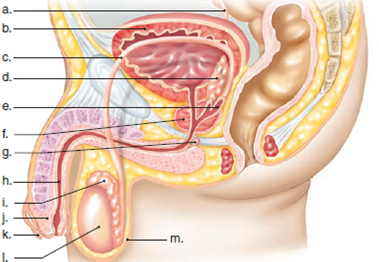
سؤال
Label the parts of the female reproductive system in the following illustration. 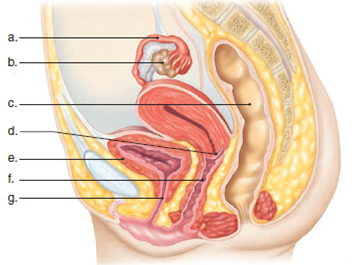
سؤال
سؤال
سؤال
سؤال
سؤال
سؤال

فتح الحزمة
قم بالتسجيل لفتح البطاقات في هذه المجموعة!
Unlock Deck
Unlock Deck
1/13

العب

ملء الشاشة (f)
Deck 29: Reproduction and Embryonic Development
1
For question identify the stage of embryonic development in the key that matches the description. Key:
A) cleavage
B) gastrulation
C) neurulation
D) organ formation
The zygote divides without increasing in size.
A) cleavage
B) gastrulation
C) neurulation
D) organ formation
The zygote divides without increasing in size.
Cleavage is cell division. During cleavage, a zygote divides into many cells. However, the size of the zygote remains the same. The cells do no grow in size.
Hence, (11) matches with (a) 'cleavage.'
Hence, (11) matches with (a) 'cleavage.'
2
For question identify the stage of embryonic development in the key that matches the description. Key:
A) cleavage
B) gastrulation
C) neurulation
D) organ formation
Ectoderm and endoderm are formed.
A) cleavage
B) gastrulation
C) neurulation
D) organ formation
Ectoderm and endoderm are formed.
Gastrulation is the continued specialization of cells. The cells develop into different layers. These layers are ectoderm, mesoderm, and endoderm. These layers are considered germ layers. These germ layers will develop into organs and structures.
Hence, (12) matches with (b) 'gastrulation.'
Hence, (12) matches with (b) 'gastrulation.'
3
For question identify the stage of embryonic development in the key that matches the description. Key:
A) cleavage
B) gastrulation
C) neurulation
D) organ formation
Reflex actions, such as response to touch, develop.
A) cleavage
B) gastrulation
C) neurulation
D) organ formation
Reflex actions, such as response to touch, develop.
The fetus continues its development. From the sixth to the eighth week, organs are developing. By the end of the eighth week, the fetus has all the necessary organs. In addition, the brain and neck regions are fully developed. Furthermore, the nervous system enables the fetus to have reflex actions. As a result, the fetus could be startled by external stimuli. Thus, organ formation allows the fetus to have reflex actions.
Hence, (13) matches with (d) 'organ formation.'
Hence, (13) matches with (d) 'organ formation.'
4
Parthenogenesis is
A) the process by which the germ layers form.
B) involved in the formation of the notochord.
C) the formation of sperm.
D) the development of an unfertilized egg.
A) the process by which the germ layers form.
B) involved in the formation of the notochord.
C) the formation of sperm.
D) the development of an unfertilized egg.
فتح الحزمة
افتح القفل للوصول البطاقات البالغ عددها 13 في هذه المجموعة.
فتح الحزمة
k this deck
5
Which of the following is incorrect regarding sexual reproduction?
A) It involves two parents.
B) The offspring have the same genetic combinations as the parents.
C) Gonads produce egg and sperm cells.
D) Copulation brings the male and female gametes together.
A) It involves two parents.
B) The offspring have the same genetic combinations as the parents.
C) Gonads produce egg and sperm cells.
D) Copulation brings the male and female gametes together.
فتح الحزمة
افتح القفل للوصول البطاقات البالغ عددها 13 في هذه المجموعة.
فتح الحزمة
k this deck
6
Label the parts of the male reproductive system in the following illustration.
فتح الحزمة
افتح القفل للوصول البطاقات البالغ عددها 13 في هذه المجموعة.
فتح الحزمة
k this deck
7
Label the parts of the female reproductive system in the following illustration.
فتح الحزمة
افتح القفل للوصول البطاقات البالغ عددها 13 في هذه المجموعة.
فتح الحزمة
k this deck
8
Spermatogenesis produces cells that are
A) diploid and genetically identical to each other.
B) diploid and genetically different from each other.
C) haploid and genetically identical to each other.
D) haploid and genetically different from each other.
A) diploid and genetically identical to each other.
B) diploid and genetically different from each other.
C) haploid and genetically identical to each other.
D) haploid and genetically different from each other.
فتح الحزمة
افتح القفل للوصول البطاقات البالغ عددها 13 في هذه المجموعة.
فتح الحزمة
k this deck
9
Hepatitis is caused by a
A) bacterium.
B) fungus.
C) protozoan.
D) virus.
A) bacterium.
B) fungus.
C) protozoan.
D) virus.
فتح الحزمة
افتح القفل للوصول البطاقات البالغ عددها 13 في هذه المجموعة.
فتح الحزمة
k this deck
10
The assisted reproductive technology (ART) in which harvested sperm are placed in the vagina by a physician is
A) in vitro fertilization (IVF).
B) artificial insemination by donor (AID).
C) gamete intrafallopian transfer (GIFT).
D) intracytoplasmic sperm injection (ICSI).
A) in vitro fertilization (IVF).
B) artificial insemination by donor (AID).
C) gamete intrafallopian transfer (GIFT).
D) intracytoplasmic sperm injection (ICSI).
فتح الحزمة
افتح القفل للوصول البطاقات البالغ عددها 13 في هذه المجموعة.
فتح الحزمة
k this deck
11
The HPV virus can cause
A) genital warts.
B) AIDS.
C) herpes.
D) hepatitis.
A) genital warts.
B) AIDS.
C) herpes.
D) hepatitis.
فتح الحزمة
افتح القفل للوصول البطاقات البالغ عددها 13 في هذه المجموعة.
فتح الحزمة
k this deck
12
The process by which one tissue or organ influences the development of another is
A) induction.
B) insemination.
C) neurulation.
D) cleavage.
E) gastrulation.
A) induction.
B) insemination.
C) neurulation.
D) cleavage.
E) gastrulation.
فتح الحزمة
افتح القفل للوصول البطاقات البالغ عددها 13 في هذه المجموعة.
فتح الحزمة
k this deck
13
For question identify the stage of embryonic development in the key that matches the description. Key:
A) cleavage
B) gastrulation
C) neurulation
D) organ formation
The notochord is formed.
A) cleavage
B) gastrulation
C) neurulation
D) organ formation
The notochord is formed.
فتح الحزمة
افتح القفل للوصول البطاقات البالغ عددها 13 في هذه المجموعة.
فتح الحزمة
k this deck
فتح الحزمة
افتح القفل للوصول البطاقات البالغ عددها 13 في هذه المجموعة.






