







 تكلم مع الذكاء الاصطناعي


Deck 19: International Trade
ملء الشاشة (f)

سؤال

سؤال
سؤال
COMPARATIVE ADVANTAGE The consumption possibilities frontiers shown in Exhibit 4 assume terms of trade of 1 unit of clothing for 1 unit of food. What would the consumption possibilities frontiers look like if the terms of trade were 1 unit of clothing for 2 units of food? 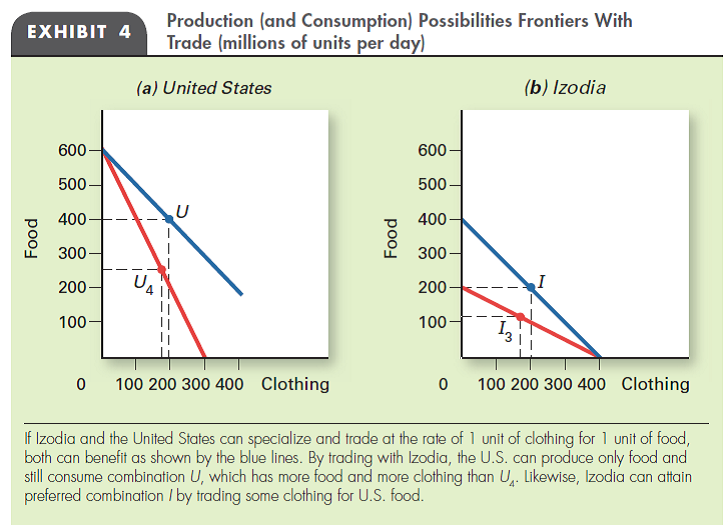
سؤال
سؤال
سؤال
TRADE RESTRICTIONS Suppose that the world price for steel is below the U.S. domestic price, but the government requires that all steel used in the United States be domestically produced.
a. Use a diagram like the one in Exhibit 7 to show the gains and losses from such a policy.
b. How could you estimate the net welfare loss (deadweight loss) from such a diagram?
c. What response to such a policy would you expect from industries (like automobile producers) that use U.S. steel?
d. What government revenues are generated by this policy?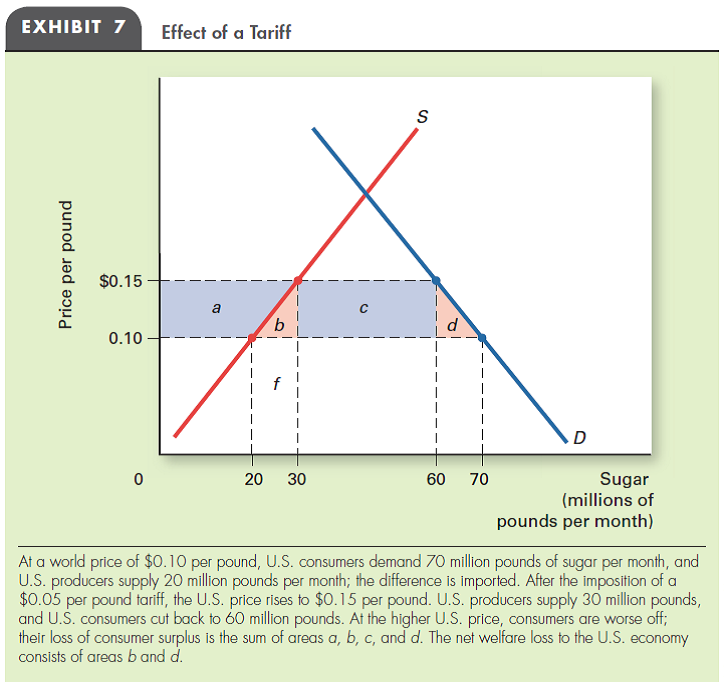
a. Use a diagram like the one in Exhibit 7 to show the gains and losses from such a policy.
b. How could you estimate the net welfare loss (deadweight loss) from such a diagram?
c. What response to such a policy would you expect from industries (like automobile producers) that use U.S. steel?
d. What government revenues are generated by this policy?
سؤال
TRADE RESTRICTIONS Exhibits 7 and 8 show net losses to the economy of a country that imposes tariffs or quotas on imported sugar. What kinds of gains and losses would occur in the economies of countries that export sugar? 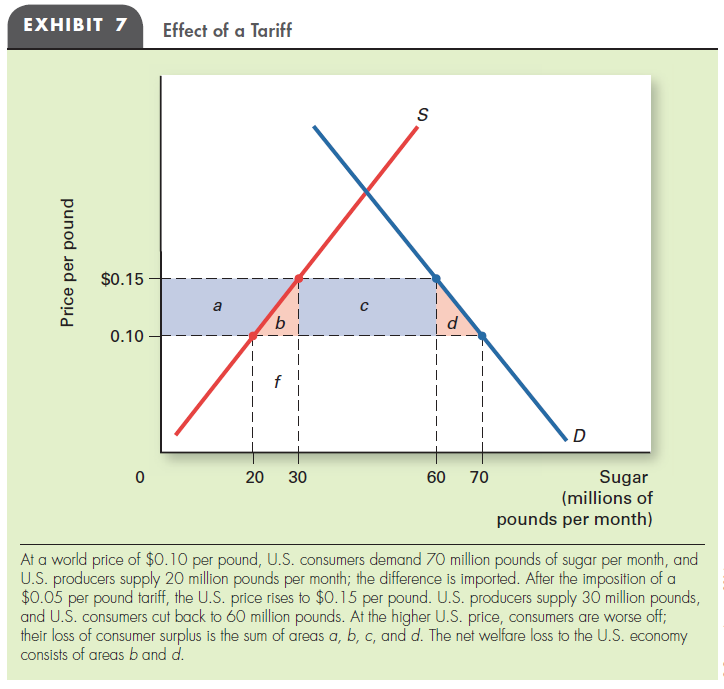
سؤال
سؤال
سؤال

فتح الحزمة
قم بالتسجيل لفتح البطاقات في هذه المجموعة!
Unlock Deck
Unlock Deck
1/10

العب

ملء الشاشة (f)
Deck 19: International Trade
1
(Trade Without Comparative Advantage) Even if neither country had a comparative advantage, why might these countries still experience gains from trade?
Gains from trade refer to an increase in the consumer surplus and producer surplus due to liberalizing the trade.
Law of comparative advantage:
The law of comparative advantage predicts that the individual with the lowest opportunity cost of producing a particular product should specialize in producing only that product. In a similar manner, the states and hence, the nations should specialize in such production. To reap the gains that arise from specialization, countries engage in global trade.
Each country specializes in production of such goods that have the lowest opportunity cost. Before countries can trade, they must agree on how much of one good exchange for the other, that is, the terms of trade.
Countries might still decide to trade even if there is no comparative advantage for the countries, because no country is a self-sufficient. All countries depend on each other. Countries will trade to trade to each other due to lack of resources.
Gains from trade refer to an increase in the consumer surplus and producer surplus due to liberalizing the trade.
Law of comparative advantage:
The law of comparative advantage predicts that the individual with the lowest opportunity cost of producing a particular product should specialize in producing only that product. In a similar manner, the states and hence, the nations should specialize in such production. To reap the gains that arise from specialization, countries engage in global trade.
Each country specializes in production of such goods that have the lowest opportunity cost. Before countries can trade, they must agree on how much of one good exchange for the other, that is, the terms of trade.
Countries might still decide to trade even if there is no comparative advantage for the countries, because no country is a self-sufficient. All countries depend on each other. Countries will trade to trade to each other due to lack of resources.
Law of comparative advantage:
The law of comparative advantage predicts that the individual with the lowest opportunity cost of producing a particular product should specialize in producing only that product. In a similar manner, the states and hence, the nations should specialize in such production. To reap the gains that arise from specialization, countries engage in global trade.
Each country specializes in production of such goods that have the lowest opportunity cost. Before countries can trade, they must agree on how much of one good exchange for the other, that is, the terms of trade.
Countries might still decide to trade even if there is no comparative advantage for the countries, because no country is a self-sufficient. All countries depend on each other. Countries will trade to trade to each other due to lack of resources.
Gains from trade refer to an increase in the consumer surplus and producer surplus due to liberalizing the trade.
Law of comparative advantage:
The law of comparative advantage predicts that the individual with the lowest opportunity cost of producing a particular product should specialize in producing only that product. In a similar manner, the states and hence, the nations should specialize in such production. To reap the gains that arise from specialization, countries engage in global trade.
Each country specializes in production of such goods that have the lowest opportunity cost. Before countries can trade, they must agree on how much of one good exchange for the other, that is, the terms of trade.
Countries might still decide to trade even if there is no comparative advantage for the countries, because no country is a self-sufficient. All countries depend on each other. Countries will trade to trade to each other due to lack of resources.
2
COMPARATIVE ADVANTAGE Suppose that each U.S. worker can produce 8 units of food or 2 units of clothing daily. In Fredonia, which has the same number of workers, each worker can produce 7 units of food or 1 unit of clothing daily. Why does the United States have an absolute advantage in both goods? Which country enjoys a comparative advantage in food? Why?
Absolute advantage:
Country K labors can produce 8 units of food or 2 units of clothing daily. On the other side, Country F labors can produce 7 units of food or 1 unit of clothing daily.
Absolute advantage of producing a good for a country is producing it with minimum cost compared to other country. Country K can produce maximum of both food and clothing with same resources than country F. Hence, country K gets absolute advantage of producing both food and clothing.
Comparative advantage:
Country K labors can produce 4 units of food by sacrificing 1 unit of clothing; at the same time, country F labors can produce 7 units of food by sacrificing 1 unit of clothing. Hence, country F labors can produce more units of food by sacrificing 1 unit of clothing than country K labors; country F labors get co mparative advantage of producing food.
Country K labors can produce 8 units of food or 2 units of clothing daily. On the other side, Country F labors can produce 7 units of food or 1 unit of clothing daily.
Absolute advantage of producing a good for a country is producing it with minimum cost compared to other country. Country K can produce maximum of both food and clothing with same resources than country F. Hence, country K gets absolute advantage of producing both food and clothing.
Comparative advantage:
Country K labors can produce 4 units of food by sacrificing 1 unit of clothing; at the same time, country F labors can produce 7 units of food by sacrificing 1 unit of clothing. Hence, country F labors can produce more units of food by sacrificing 1 unit of clothing than country K labors; country F labors get co mparative advantage of producing food.
3
COMPARATIVE ADVANTAGE The consumption possibilities frontiers shown in Exhibit 4 assume terms of trade of 1 unit of clothing for 1 unit of food. What would the consumption possibilities frontiers look like if the terms of trade were 1 unit of clothing for 2 units of food?
Terms of trade:
Terms of trade refers to the amount of goods imported by a country in exchange of amount of goods exported.
Change in terms of trade:
In Exhibit-4, Terms of trade of 1 units of clothing is exchanged for 1 unit of food. If the terms of trade between two goods are exchanged to 1 units of clothing for 2 units of food, then the consumption possibility frontier will shift toward food as food becomes cheaper.
Terms of trade refers to the amount of goods imported by a country in exchange of amount of goods exported.
Change in terms of trade:
In Exhibit-4, Terms of trade of 1 units of clothing is exchanged for 1 unit of food. If the terms of trade between two goods are exchanged to 1 units of clothing for 2 units of food, then the consumption possibility frontier will shift toward food as food becomes cheaper.
4
REASONS FOR INTERNATIONAL SPECIALIZATION What determines which goods a country should produce and export?
فتح الحزمة
افتح القفل للوصول البطاقات البالغ عددها 10 في هذه المجموعة.
فتح الحزمة
k this deck
5
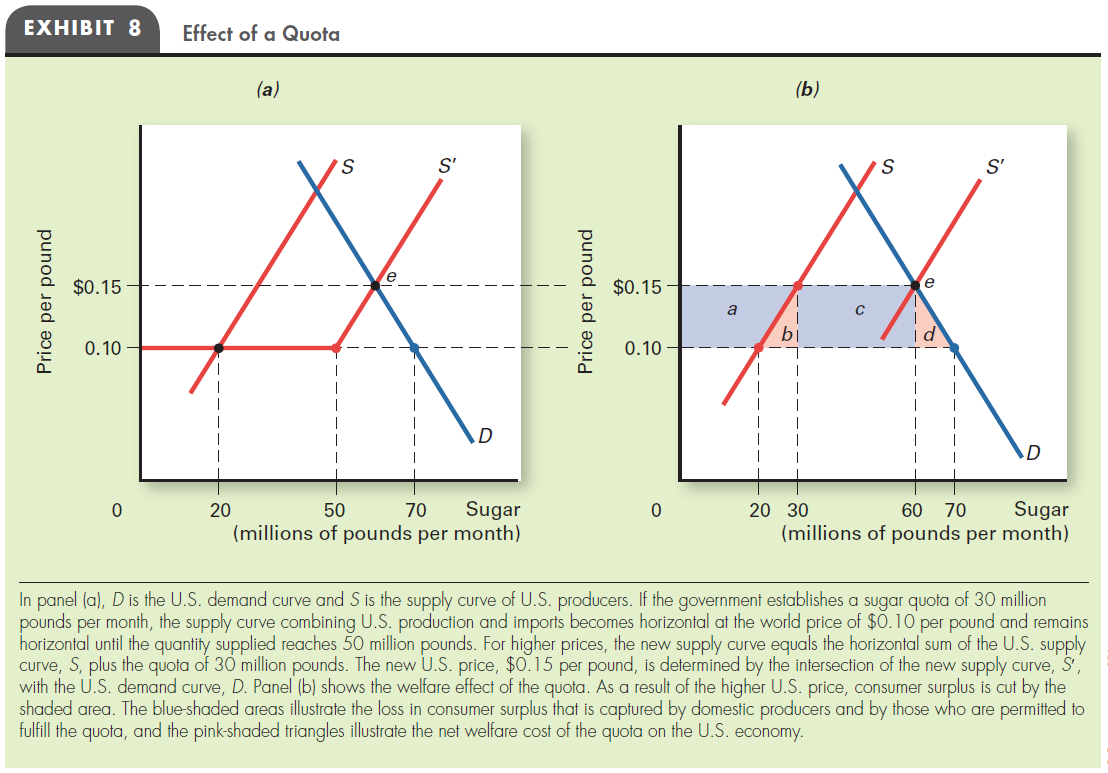
IMPORT QUOTAS How small must a quota be to have an impact? Using a demand-and-supply diagram, illustrate and explain the net welfare loss from imposing such a quota. Under what circumstances would the net welfare loss from an import quota exceed the net welfare loss from an equivalent tariff (one that results in the same price and import level as the quota)?
فتح الحزمة
افتح القفل للوصول البطاقات البالغ عددها 10 في هذه المجموعة.
فتح الحزمة
k this deck
6
TRADE RESTRICTIONS Suppose that the world price for steel is below the U.S. domestic price, but the government requires that all steel used in the United States be domestically produced.
a. Use a diagram like the one in Exhibit 7 to show the gains and losses from such a policy.
b. How could you estimate the net welfare loss (deadweight loss) from such a diagram?
c. What response to such a policy would you expect from industries (like automobile producers) that use U.S. steel?
d. What government revenues are generated by this policy?
a. Use a diagram like the one in Exhibit 7 to show the gains and losses from such a policy.
b. How could you estimate the net welfare loss (deadweight loss) from such a diagram?
c. What response to such a policy would you expect from industries (like automobile producers) that use U.S. steel?
d. What government revenues are generated by this policy?
فتح الحزمة
افتح القفل للوصول البطاقات البالغ عددها 10 في هذه المجموعة.
فتح الحزمة
k this deck
7
TRADE RESTRICTIONS Exhibits 7 and 8 show net losses to the economy of a country that imposes tariffs or quotas on imported sugar. What kinds of gains and losses would occur in the economies of countries that export sugar?
فتح الحزمة
افتح القفل للوصول البطاقات البالغ عددها 10 في هذه المجموعة.
فتح الحزمة
k this deck
8
THE WORLD TRADE ORGANIZATION What is the World Trade Organization (WTO) and how does it help foster multilateral trade? (Check the WTO Web site at http://www.wto.org/.)
فتح الحزمة
افتح القفل للوصول البطاقات البالغ عددها 10 في هذه المجموعة.
فتح الحزمة
k this deck
9
ARGUMENTS FOR TRADE RESTRICTIONS Explain the national defense, declining industries, and infant industry arguments for protecting a domestic industry from international competition.
فتح الحزمة
افتح القفل للوصول البطاقات البالغ عددها 10 في هذه المجموعة.
فتح الحزمة
k this deck
10
ARGUMENTS FOR TRADE RESTRICTIONS Firms hurt by lower-cost imports typically argue that restricting trade will save U.S. jobs. What's wrong with this argument? Are there ever any reasons to support such trade restrictions?
فتح الحزمة
افتح القفل للوصول البطاقات البالغ عددها 10 في هذه المجموعة.
فتح الحزمة
k this deck
فتح الحزمة
افتح القفل للوصول البطاقات البالغ عددها 10 في هذه المجموعة.






