







 تكلم مع الذكاء الاصطناعي


Deck 22: Health Care
ملء الشاشة (f)

سؤال

سؤال
سؤال
سؤال
سؤال
سؤال
سؤال
سؤال
سؤال
سؤال
سؤال
سؤال
سؤال
سؤال
سؤال
سؤال
سؤال
سؤال
سؤال
سؤال
سؤال
سؤال
سؤال
سؤال
سؤال
سؤال
سؤال
سؤال

فتح الحزمة
قم بالتسجيل لفتح البطاقات في هذه المجموعة!
Unlock Deck
Unlock Deck
1/28

العب

ملء الشاشة (f)
Deck 22: Health Care
1
Why would increased spending as a percentage of GDP on, say, household appliances or education in a particular economy be regarded as economically desirable Why, then, is there so much concern about rising expenditures as a percentage of GDP on health care
Pure competition: very large number of firms; standardized products; no control over price: price takers; no obstacles to entry; no nonprice competition.
Pure monopoly: one firm; unique product: with no close substitutes; much control over price: price maker; entry is blocked; mostly public relations advertising.
Monopolistic competition: many firms; differentiated products; some control over price in a narrow range; relatively easy entry; much nonprice competition: advertising, trademarks, brand names.
Oligopoly: few firms; standardized or differentiated products; control over price circumscribed by mutual interdependence: much collusion; many obstacles to entry; much nonprice competition, particularly product differentiation.
(a)Hometown supermarket: oligopoly. Supermarkets are few in number in any one area; their size makes new entry very difficult; there is much nonprice competition. However, there is much price competition as they compete for market share, and there seems to be no collusion. In this regard, the supermarket acts more like a monopolistic competitor. Note that this answer may vary by area. Some areas could be characterized by monopolistic competition while isolated small towns may have a monopoly situation.
(b) Steel industry: oligopoly within the domestic production market. Firms are few in number; their products are standardized to some extent; their size makes new entry very difficult; there is much nonprice competition; there is little, if any, price competition; while there may be no collusion, there does seem to be much price leadership.
(c)Kansas wheat farm: pure competition. There are a great number of similar farms; the product is standardized; there is no control over price; there is no nonprice competition. However, entry is difficult because of the cost of acquiring land from a present proprietor. Of course, government programs to assist agriculture complicate the purity of this example.
(d)Commercial bank: monopolistic competition. There are many similar banks; the services are differentiated as much as the bank can make them appear to be; there is control over price (mostly interest charged or offered)ithin a narrow range; entry is relatively easy (maybe too easy!) there is much advertising. Once again, not every bank may fit this model-smaller towns may have an oligopoly or monopoly situation.
(e)Automobile industry: oligopoly. There are the Big Three automakers, so they are few in number; their products are differentiated; their size makes new entry very difficult; there is much nonprice competition; there is little true price competition; while there does not appear to be any collusion, there has been much price leadership. However, imports have made the industry more competitive in the past two decades, which has substantially reduced the market power of the U.S. automakers.
Pure monopoly: one firm; unique product: with no close substitutes; much control over price: price maker; entry is blocked; mostly public relations advertising.
Monopolistic competition: many firms; differentiated products; some control over price in a narrow range; relatively easy entry; much nonprice competition: advertising, trademarks, brand names.
Oligopoly: few firms; standardized or differentiated products; control over price circumscribed by mutual interdependence: much collusion; many obstacles to entry; much nonprice competition, particularly product differentiation.
(a)Hometown supermarket: oligopoly. Supermarkets are few in number in any one area; their size makes new entry very difficult; there is much nonprice competition. However, there is much price competition as they compete for market share, and there seems to be no collusion. In this regard, the supermarket acts more like a monopolistic competitor. Note that this answer may vary by area. Some areas could be characterized by monopolistic competition while isolated small towns may have a monopoly situation.
(b) Steel industry: oligopoly within the domestic production market. Firms are few in number; their products are standardized to some extent; their size makes new entry very difficult; there is much nonprice competition; there is little, if any, price competition; while there may be no collusion, there does seem to be much price leadership.
(c)Kansas wheat farm: pure competition. There are a great number of similar farms; the product is standardized; there is no control over price; there is no nonprice competition. However, entry is difficult because of the cost of acquiring land from a present proprietor. Of course, government programs to assist agriculture complicate the purity of this example.
(d)Commercial bank: monopolistic competition. There are many similar banks; the services are differentiated as much as the bank can make them appear to be; there is control over price (mostly interest charged or offered)ithin a narrow range; entry is relatively easy (maybe too easy!) there is much advertising. Once again, not every bank may fit this model-smaller towns may have an oligopoly or monopoly situation.
(e)Automobile industry: oligopoly. There are the Big Three automakers, so they are few in number; their products are differentiated; their size makes new entry very difficult; there is much nonprice competition; there is little true price competition; while there does not appear to be any collusion, there has been much price leadership. However, imports have made the industry more competitive in the past two decades, which has substantially reduced the market power of the U.S. automakers.
2
Suppose that the price elasticity for hip replacement surgeries is 0.2. Further suppose that hip replacement surgeries are originally not covered by health insurance and that at a price of $50,000 each, 10,000 such surgeries are demanded each year.
a. Suppose that health insurance begins to cover hip replacement surgeries and that everyone interested in getting a hip replacement has health insurance. If insurance covers 50 percent of the cost of the surgery, by what percentage would you expect the quantity demanded of hip replacements to increase What if insurance covered 90 percent of the price (Hint: Do not bother to calculate the percentage changes using the midpoint formula given in Chapter 4. If insurance covers 50 percent of the bill, just assume that the price paid by consumers falls 50 percent.)
b. Suppose that with insurance companies covering 90 percent of the price, the increase in demand leads to a jump in the price per hip surgery from $50,000 to $100,000. How much will each insured patient now pay for a hip replacement surgery Compared to the original situation, where hip replacements cost $50,000 each but people had no insurance to help subsidize the cost, will the quantity demanded increase or decrease By how much
a. Suppose that health insurance begins to cover hip replacement surgeries and that everyone interested in getting a hip replacement has health insurance. If insurance covers 50 percent of the cost of the surgery, by what percentage would you expect the quantity demanded of hip replacements to increase What if insurance covered 90 percent of the price (Hint: Do not bother to calculate the percentage changes using the midpoint formula given in Chapter 4. If insurance covers 50 percent of the bill, just assume that the price paid by consumers falls 50 percent.)
b. Suppose that with insurance companies covering 90 percent of the price, the increase in demand leads to a jump in the price per hip surgery from $50,000 to $100,000. How much will each insured patient now pay for a hip replacement surgery Compared to the original situation, where hip replacements cost $50,000 each but people had no insurance to help subsidize the cost, will the quantity demanded increase or decrease By how much
(a)emember that the price elasticity of demand is given by:
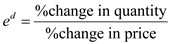 Since we are given that the elasticity of demand for hip replacement surgeries is 0.2, we have:
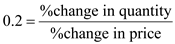 We see then that if health insurance begins to cover hip replacement surgeries, and everyone who wants a hip replacement surgery has insurance, then this will decrease the price of a surgery by 50%. In other words, the % change in price is 50%. We then have:
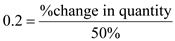 Multiplying both sides by 50%, we get that the percentage change in quantity will be 10%
 .
.
Suppose insurance covered 90% of the price instead. We then substitute 90% for the change in price, and get the following:
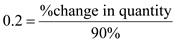 Multiplying both sides by 90%, we get that the percentage change in quantity will be 18%
 .
.
(b)f the price of hip surgery jumps from $50,000 to $100,000, and the insurance company is still covering 90% of the price, then each insured patient pay $10,000 for a hip surgery. We see that a hip surgery costs $100,000 and the insurance will pay for $90,000 (or 90%)f the cost, leaving the remaining $10,000 to be paid by the patient. Compared with having to pay $50,000, there will definitely be more demand after the insurance company insures hip replacement surgeries, as the price to a consumer is much lower when there is insurance ($10,000 with insurance compared with $50,000 without insurance) Thus, quantity demanded will increase.
To find out by how much quantity demanded will increase; we refer back to the price elasticity of demand of.2. We are now trying to find the percentage change in quantity demanded when the price is $50,000 and drops to $10,000, or an 80% decrease in the price paid. Thus, we have:
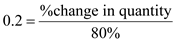 Multiplying both sides by 80%, we get that the % change in quantity will be 16%
 .
.
Since we are given that the elasticity of demand for hip replacement surgeries is 0.2, we have: We see then that if health insurance begins to cover hip replacement surgeries, and everyone who wants a hip replacement surgery has insurance, then this will decrease the price of a surgery by 50%. In other words, the % change in price is 50%. We then have: Multiplying both sides by 50%, we get that the percentage change in quantity will be 10% .Suppose insurance covered 90% of the price instead. We then substitute 90% for the change in price, and get the following:
Multiplying both sides by 90%, we get that the percentage change in quantity will be 18% .(b)f the price of hip surgery jumps from $50,000 to $100,000, and the insurance company is still covering 90% of the price, then each insured patient pay $10,000 for a hip surgery. We see that a hip surgery costs $100,000 and the insurance will pay for $90,000 (or 90%)f the cost, leaving the remaining $10,000 to be paid by the patient. Compared with having to pay $50,000, there will definitely be more demand after the insurance company insures hip replacement surgeries, as the price to a consumer is much lower when there is insurance ($10,000 with insurance compared with $50,000 without insurance) Thus, quantity demanded will increase.
To find out by how much quantity demanded will increase; we refer back to the price elasticity of demand of.2. We are now trying to find the percentage change in quantity demanded when the price is $50,000 and drops to $10,000, or an 80% decrease in the price paid. Thus, we have:
Multiplying both sides by 80%, we get that the % change in quantity will be 16% . 3
Which of the following best describes the United States' level of health care spending as compared to that of other nations
A) The lowest of all nations.
B) A bit lower than average.
C) Average.
D) A bit higher than average.
E) The highest of all nations.
A) The lowest of all nations.
B) A bit lower than average.
C) Average.
D) A bit higher than average.
E) The highest of all nations.
The highest of all nations.
4
What are the "twin problems" of the health care industry as viewed by society How are they related
فتح الحزمة
افتح القفل للوصول البطاقات البالغ عددها 28 في هذه المجموعة.
فتح الحزمة
k this deck
5
The Federal tax code allows businesses but not individuals to deduct the cost of health insurance premiums from their taxable income. Consider a company named HeadBook that. could either spend $5000 on an insurance policy for an employee named Vanessa or could increase her annual salary by $5000 instead.
a. As far as the tax code is concerned, HeadBook will increase its expenses by $5000 in either case. If it pays for the policy, it incurs a $5000 health care expense. If it raises Vanessa's salary by $5000, it incurs $5000 of salary expense. If HeadBook is profitable and pays corporate profit taxes at a marginal 35 percent rate, by how much will HeadBook's tax liability be reduced in either case
b. Suppose that Vanessa pays personal income tax at a marginal 20 percent rate. If HeadBook increases her salary by $5000, how much of that increase will she have after paying taxes on that raise If Vanessa can only devote what remains after paying taxes on the $5000 to purchasing health insurance, how much will she be able to spend on health insurance for herself
c. If HeadBook spends the $5000 on a health insurance policy for Vanessa instead of giving it to her as araise, how many more dollars will HeadBook be able to spend on Vanessa's health insurance than if she had to purchase it herself after being given a $5000 raise and paying taxes on that raise
d. Would Vanessa prefer to have the raise or to have HeadBook purchase insurance for her Would HeadBook have any profit motive for denying Vanessa her preference
e. Suppose the government changes the tax law so that individuals can now deduct the cost of health insurance from their personal incomes. If Vanessa gets $5000 raise and then spends all of it on health insurance, how much will her tax liability change How much will she be able to spend on health insurance Will she now have a preference for HeadBook to buy insurance on her behalf
a. As far as the tax code is concerned, HeadBook will increase its expenses by $5000 in either case. If it pays for the policy, it incurs a $5000 health care expense. If it raises Vanessa's salary by $5000, it incurs $5000 of salary expense. If HeadBook is profitable and pays corporate profit taxes at a marginal 35 percent rate, by how much will HeadBook's tax liability be reduced in either case
b. Suppose that Vanessa pays personal income tax at a marginal 20 percent rate. If HeadBook increases her salary by $5000, how much of that increase will she have after paying taxes on that raise If Vanessa can only devote what remains after paying taxes on the $5000 to purchasing health insurance, how much will she be able to spend on health insurance for herself
c. If HeadBook spends the $5000 on a health insurance policy for Vanessa instead of giving it to her as araise, how many more dollars will HeadBook be able to spend on Vanessa's health insurance than if she had to purchase it herself after being given a $5000 raise and paying taxes on that raise
d. Would Vanessa prefer to have the raise or to have HeadBook purchase insurance for her Would HeadBook have any profit motive for denying Vanessa her preference
e. Suppose the government changes the tax law so that individuals can now deduct the cost of health insurance from their personal incomes. If Vanessa gets $5000 raise and then spends all of it on health insurance, how much will her tax liability change How much will she be able to spend on health insurance Will she now have a preference for HeadBook to buy insurance on her behalf
فتح الحزمة
افتح القفل للوصول البطاقات البالغ عددها 28 في هذه المجموعة.
فتح الحزمة
k this deck
6
Which of the following make a person less likely to have health insurance
Select one or more answers from the choices shown.
a. Working for a larger firm.
b. Being a low-wage worker.
c. Being employed.
d. Having excellent health.
e. Being chronically ill.
Select one or more answers from the choices shown.
a. Working for a larger firm.
b. Being a low-wage worker.
c. Being employed.
d. Having excellent health.
e. Being chronically ill.
فتح الحزمة
افتح القفل للوصول البطاقات البالغ عددها 28 في هذه المجموعة.
فتح الحزمة
k this deck
7
Briefly describe the main features of Medicare and Medicaid, indicating how each is financed
فتح الحزمة
افتح القفل للوصول البطاقات البالغ عددها 28 في هذه المجموعة.
فتح الحزمة
k this deck
8
Preventive care is not always cost effective. Suppose that it costs $100 per person to administer a screening exam for a particular disease. Also suppose that if the screening exam finds the disease, the early detection given by the exam will avert $1000 of costly future treatment.
a. Imagine giving the screening test. to 100 people How much will it cost to give those 100 tests Imagine a case in which 15 percent of those receiving the screening exam test positive. How much in future costly treatments will be averted How much is saved by setting up a screening system
b. Imagine that everything is the same as in part a except that now only 5 percent of those receiving the screening exam test positive. In this case, how much in future costly treatments will be averted How much is lost by setting up ascreening system
a. Imagine giving the screening test. to 100 people How much will it cost to give those 100 tests Imagine a case in which 15 percent of those receiving the screening exam test positive. How much in future costly treatments will be averted How much is saved by setting up a screening system
b. Imagine that everything is the same as in part a except that now only 5 percent of those receiving the screening exam test positive. In this case, how much in future costly treatments will be averted How much is lost by setting up ascreening system
فتح الحزمة
افتح القفل للوصول البطاقات البالغ عددها 28 في هذه المجموعة.
فتح الحزمة
k this deck
9
A patient named Jen visits Dr. Jan. Dr. Jan is nearly certain that Jen only has a cold. But because Dr. Jan is afraid of malpractice lawsuits, she orders an extensive battery of tests just to make sure that Jen can never claim-if she turns out to have something more severe-that Dr. Jan shirked her duties as a medical professional. Dr. Jan's behavior is an example of:
A) Asymmetric information.
B) Fee-for-service.
C) Defensive medicine.
D) Positive externalities.
A) Asymmetric information.
B) Fee-for-service.
C) Defensive medicine.
D) Positive externalities.
فتح الحزمة
افتح القفل للوصول البطاقات البالغ عددها 28 في هذه المجموعة.
فتح الحزمة
k this deck
10
What are the implications of rapidly rising health care prices and spending for ( a )the growth of real wage rates, ( b )government budgets, and ( c )offshoring of U.S. jobs Explain
فتح الحزمة
افتح القفل للوصول البطاقات البالغ عددها 28 في هذه المجموعة.
فتح الحزمة
k this deck
11
All MegaCorp employees who stay on the job for more than three years are rewarded with a 10 percent pay increase and coverage under a private health insurance plan that MegaCorp pays for. Tina just passed three years as a MegaCorp employee and reacts to having health insurance by taking up several dangerous sports because now she knows that the insurance plan will pay for any injuries that she may sustain. This change in Tina's behavior is known as:
A) Defensive medicine.
B) Asymmetric information.
C) The moral hazard problem.
D) The personal mandate.
A) Defensive medicine.
B) Asymmetric information.
C) The moral hazard problem.
D) The personal mandate.
فتح الحزمة
افتح القفل للوصول البطاقات البالغ عددها 28 في هذه المجموعة.
فتح الحزمة
k this deck
12
What are the main groups without health insurance
فتح الحزمة
افتح القفل للوصول البطاقات البالغ عددها 28 في هذه المجموعة.
فتح الحزمة
k this deck
13
By increasing demand, health insurance creates:
A) A deadweight loss related to overconsumption.
B) A deadweight loss related to under consumption.
C) Neither of the above.
A) A deadweight loss related to overconsumption.
B) A deadweight loss related to under consumption.
C) Neither of the above.
فتح الحزمة
افتح القفل للوصول البطاقات البالغ عددها 28 في هذه المجموعة.
فتح الحزمة
k this deck
14
List the special characteristics of the U.S. health care market and specify how each affects health care problems.
فتح الحزمة
افتح القفل للوصول البطاقات البالغ عددها 28 في هذه المجموعة.
فتح الحزمة
k this deck
15
Ralph will consume any health care service just as long as its MB exceeds the money he must pay out of pocket. His insurance policy has a zero deductible and a 10 percent copay, so Ralph only has to pay 10 percent of the price charged for any medical procedure. Which of the following procedures will Ralph choose to consume
a. An $800 eye exam that has an MB of $100 to Ralph.
b. A $90 hearing test that has an MB of $5 to Ralph.
c. A $35,000 knee surgery that has an MB of $3,000 to Ralph.
d. A $10,000 baldness treatment that has an MB of $16,000 to Ralph.
a. An $800 eye exam that has an MB of $100 to Ralph.
b. A $90 hearing test that has an MB of $5 to Ralph.
c. A $35,000 knee surgery that has an MB of $3,000 to Ralph.
d. A $10,000 baldness treatment that has an MB of $16,000 to Ralph.
فتح الحزمة
افتح القفل للوصول البطاقات البالغ عددها 28 في هذه المجموعة.
فتح الحزمة
k this deck
16
What are the estimated income and price elasticities of demand for health care How does each relate to rising health care costs
فتح الحزمة
افتح القفل للوصول البطاقات البالغ عددها 28 في هذه المجموعة.
فتح الحزمة
k this deck
17
True or False. Under the PPACA, Americans are free to decide for themselves whether or not they should have health insurance coverage.
فتح الحزمة
افتح القفل للوصول البطاقات البالغ عددها 28 في هذه المجموعة.
فتح الحزمة
k this deck
18
Briefly discuss the demand and supply factors that contribute to rising health costs. Specify how ( a )asymmetric information, ( b )fee-for-service payments, ( c )defensive medicine, and ( d )medical ethics might cause health care costs to rise.
فتح الحزمة
افتح القفل للوصول البطاقات البالغ عددها 28 في هذه المجموعة.
فتح الحزمة
k this deck
19
How do advances in medical technology and health insurance interact to drive up the cost of medical care
فتح الحزمة
افتح القفل للوصول البطاقات البالغ عددها 28 في هذه المجموعة.
فتح الحزمة
k this deck
20
Using the concepts in Chapter 6's discussion of consumer behavior, explain how health care insurance results in an overallocation of resources to the health care industry. Use a demand and supply diagram to specify the resulting efficiency loss.
فتح الحزمة
افتح القفل للوصول البطاقات البالغ عددها 28 في هذه المجموعة.
فتح الحزمة
k this deck
21
How is the moral hazard problem relevant to the health care market
فتح الحزمة
افتح القفل للوصول البطاقات البالغ عددها 28 في هذه المجموعة.
فتح الحزمة
k this deck
22
What is the rationale for exempting a firm's contribution to its workers' health insurance from taxation as worker income What is the impact of this exemption on allocative efficiency in the health care industry
فتح الحزمة
افتح القفل للوصول البطاقات البالغ عددها 28 في هذه المجموعة.
فتح الحزمة
k this deck
23
What are ( a )preferred provider organizations and ( b )health maintenance organizations In your answer, explain how each is designed to alleviate the overconsumption of healthcare.
فتح الحزمة
افتح القفل للوصول البطاقات البالغ عددها 28 في هذه المجموعة.
فتح الحزمة
k this deck
24
What are health savings accounts (HSAs)How might they reduce the overconsumption of health care resulting from traditional insurance How might they introduce an element of price competition into the health care system
فتح الحزمة
افتح القفل للوصول البطاقات البالغ عددها 28 في هذه المجموعة.
فتح الحزمة
k this deck
25
Why is the PPACAs attempt to extend insurance coverage to all Americans so costly How does the PPACA attempt to obtain the funds needed to extend insurance coverage to all Americans
فتح الحزمة
افتح القفل للوصول البطاقات البالغ عددها 28 في هذه المجموعة.
فتح الحزمة
k this deck
26
How does the PPACA attempt to ensure affordable insurance for the poor
فتح الحزمة
افتح القفل للوصول البطاقات البالغ عددها 28 في هذه المجموعة.
فتح الحزمة
k this deck
27
What were the objections made by opponents of the PPACA
فتح الحزمة
افتح القفل للوصول البطاقات البالغ عددها 28 في هذه المجموعة.
فتح الحزمة
k this deck
28
LAST WORD What are the three major cost-reducing features of the Singapore health care system Which one do you think has the largest effect on holding down the price of medical care in Singapore What element of the Singapore system is shared by the Whole Foods and State of Indian systems What elements are missing How difficult do you think it would be to implement those missing elements in the United States Explain.
فتح الحزمة
افتح القفل للوصول البطاقات البالغ عددها 28 في هذه المجموعة.
فتح الحزمة
k this deck
فتح الحزمة
افتح القفل للوصول البطاقات البالغ عددها 28 في هذه المجموعة.






