







 تكلم مع الذكاء الاصطناعي


Deck 8: Alcohols, Ethers, and Thiols
ملء الشاشة (f)

سؤال
4-(2-hydroxyethyl)-1-methylcyclohexanol reacts with HCl (gas) in diethyl ether at 5oC. What is the main product formed?
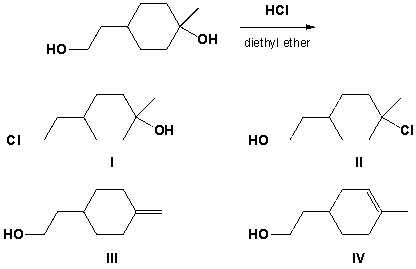
A) I
B) II
C) III
D) IV
A) I
B) II
C) III
D) IV

سؤال
Arrange the compounds in the order of increasing acidity (least first).
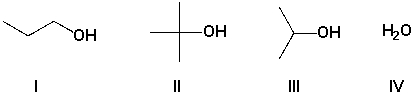
A) III, I, II, IV
B) I, III, IV, II
C) II, III, I, IV
D) II, I, III, IV
A) III, I, II, IV
B) I, III, IV, II
C) II, III, I, IV
D) II, I, III, IV
سؤال
2-(1-hydroxyprop-2-yl) cyclopentanol reacts with a mixture of potassium dichromate in concentrated sulfuric acid at room temperature. What product is formed?(Hint: assume that you have sufficient quantities of oxidizer to perform all possible reactions.)
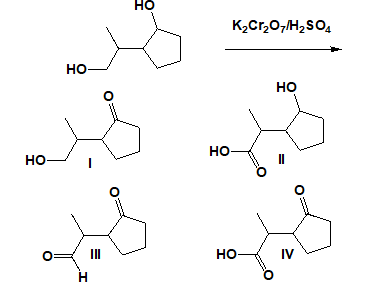
A)I
B)II
C)III
D)IV
A)I
B)II
C)III
D)IV
سؤال
Which are the best conditions for the preparation of 1-chloro-2-methylpropane starting from 2-methyl-1-propanol?
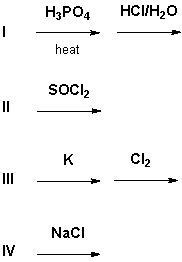
A) I
B) II
C) III
D) IV
A) I
B) II
C) III
D) IV
سؤال
Arrange the compounds in the order of increasing solubility in water (least soluble first). (help: estimate the hydrophobic surface of the non-polar part of the molecules)
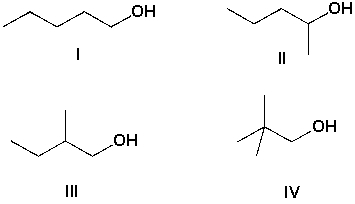
A) II, III, I, IV
B) I, II, III, IV
C) IV, II, III, I
D) II, IV, III, I
A) II, III, I, IV
B) I, II, III, IV
C) IV, II, III, I
D) II, IV, III, I
سؤال
Arrange the compounds in the order of increasing solubility in water (least soluble first). (help: estimate the hydrophobic surface of the non-polar part of the molecules)
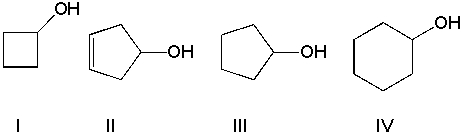
A) III, IV, II, I
B) II, III, IV, I
C) IV, III, II, I
D) III, IV, I, II
A) III, IV, II, I
B) II, III, IV, I
C) IV, III, II, I
D) III, IV, I, II
سؤال
4-(2-hydroxyethyl)-1-methylcyclohexanol reacts with HBr (gas) in dioxane under pressure at 125oC. What is the main product formed?
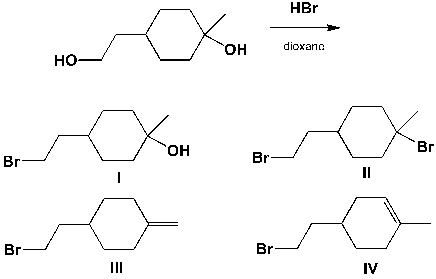
A) I
B) II
C) III
D) IV
A) I
B) II
C) III
D) IV
سؤال
Which of the molecules are primary alcohols?

A) III, II
B) IV, I
C) II, III
D) I, II
A) III, II
B) IV, I
C) II, III
D) I, II
سؤال
Which is the product of the following reaction?
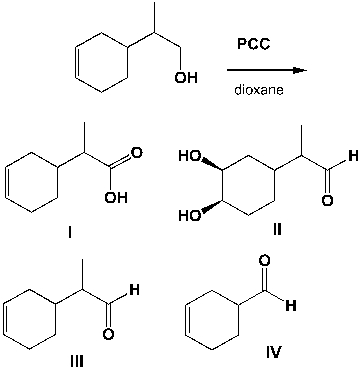
A) I
B) II
C) III
D) IV
A) I
B) II
C) III
D) IV
سؤال
2-(1-hydroxyprop-2-yl) cyclopentanol reacts with pyridinium chlorochromate in dioxane under reflux. What product is formed?(Hint: assume that you have sufficient quantities of oxidizer to perform all possible reactions.)
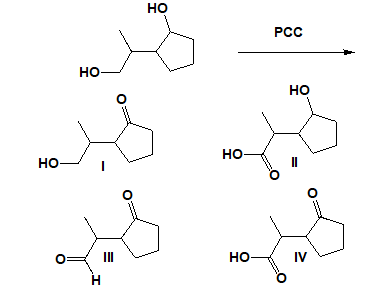
A)I
B)II
C)III
D)IV
A)I
B)II
C)III
D)IV
سؤال
Which reagents do not perform the following conversion?
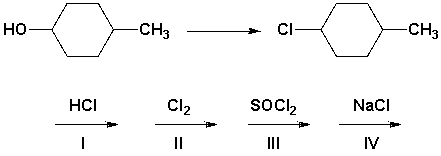
A) I, II
B) II, III
C) II, IV
D) I, III
A) I, II
B) II, III
C) II, IV
D) I, III
سؤال
Which alcohol will form the most stable carbocation when treated with a strong mineral acid?
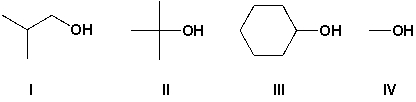
A) I
B) II
C) III
D) IV
A) I
B) II
C) III
D) IV
سؤال
Which is the product of the following reaction?
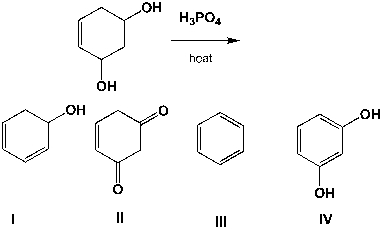
A) I
B) II
C) III
D) IV
A) I
B) II
C) III
D) IV
سؤال
Which is the major product of the following reaction?
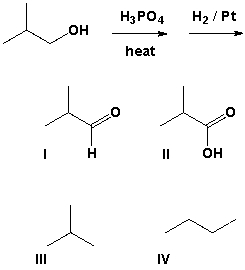
A) I
B) II
C) III
D) IV
A) I
B) II
C) III
D) IV
سؤال
Arrange the compounds in the order of increasing solubility in water (least soluble first).
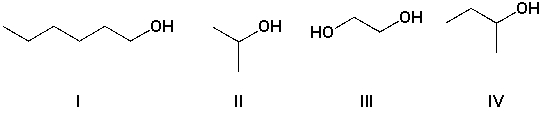
A) I, III, II, IV
B) III, I, IV, II
C) I, IV, II, III
D) IV, I, III, II
A) I, III, II, IV
B) III, I, IV, II
C) I, IV, II, III
D) IV, I, III, II
سؤال
Arrange the following in order of increasing rate of reactivity with HCl (least first).
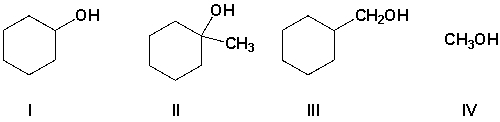
A) I, II, IV, III
B) II, I, III, IV
C) IV, III, I, II
D) III, II, IV, I
A) I, II, IV, III
B) II, I, III, IV
C) IV, III, I, II
D) III, II, IV, I
سؤال
Which molecules are secondary alcohols?
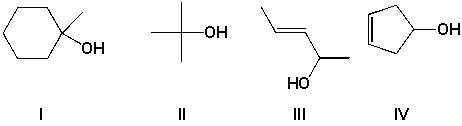
A) I, III
B) II, III
C) III, IV
D) I, IV
A) I, III
B) II, III
C) III, IV
D) I, IV
سؤال
Which is the IUPAC name for the following structure?
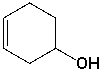
A) cyclohexenol
B) 3-cyclohexen-1-ol
C) 1-cyclohexen-4-ol
D) 4-cyclohexenol
A) cyclohexenol
B) 3-cyclohexen-1-ol
C) 1-cyclohexen-4-ol
D) 4-cyclohexenol
سؤال
The alcohol shown below reacts with thionyl chloride in pyridine. Which organic product is formed?
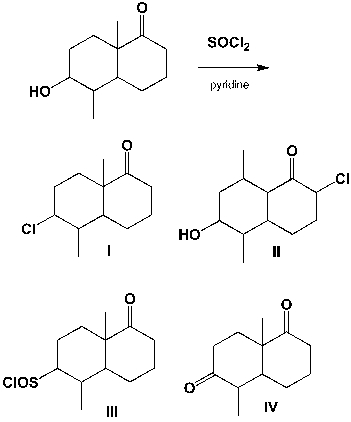
A) I
B) II
C) III
D) IV
A) I
B) II
C) III
D) IV
سؤال
Which is the best method for making the following conversion?
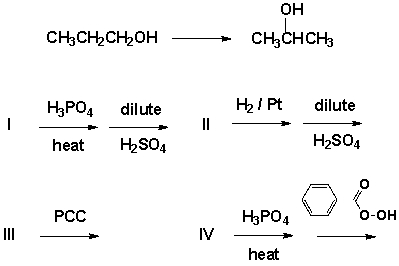
A) I
B) II
C) III
D) IV
A) I
B) II
C) III
D) IV
سؤال
Arrange the compounds in the order of increasing acidity (least acidic first).
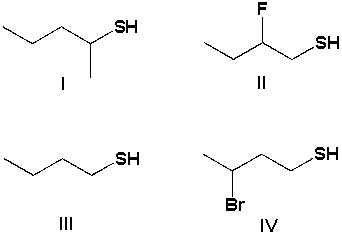
A) II, III, IV, I
B) I, III, IV, II
C) III, IV, II, I
D) IV, II, III, I
A) II, III, IV, I
B) I, III, IV, II
C) III, IV, II, I
D) IV, II, III, I
سؤال
The major product of the following reaction is,

سؤال
Arrange the compounds in the order of increasing boiling point (lowest first).

A) II, I, III, IV
B) I, IV, II, III
C) IV, I, III, II
D) I, IV, III, II
A) II, I, III, IV
B) I, IV, II, III
C) IV, I, III, II
D) I, IV, III, II
سؤال
Arrange the compounds in the order of increasing acidity (least first).
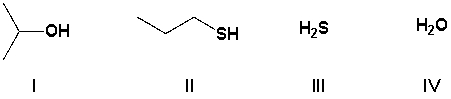
A) II, I, III, IV
B) I, IV, II, III
C) III, II, I, IV
D) II, I, IV, III
A) II, I, III, IV
B) I, IV, II, III
C) III, II, I, IV
D) II, I, IV, III
سؤال
Classify the following reaction:
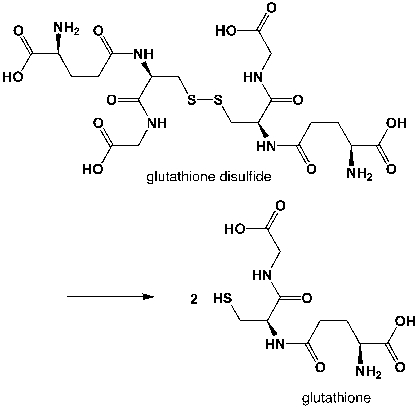
A) oxidation
B) reduction
C) neither
D) both
A) oxidation
B) reduction
C) neither
D) both
سؤال
The alkene shown below reacts with meta-chloroperbenzoic acid (MCPBA) in tetrahydrofuran. Which of the four formulas correctly describe the reaction products?
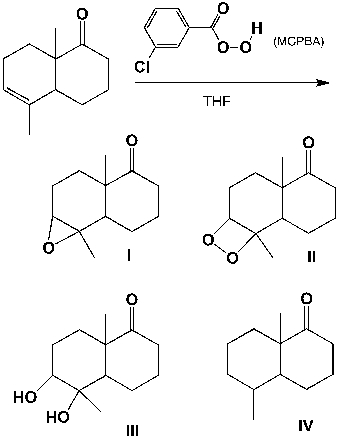
A) I
B) II
C) III
D) IV
A) I
B) II
C) III
D) IV
سؤال
The major product of the following reaction is,

سؤال
Which is the major product of the following reaction?
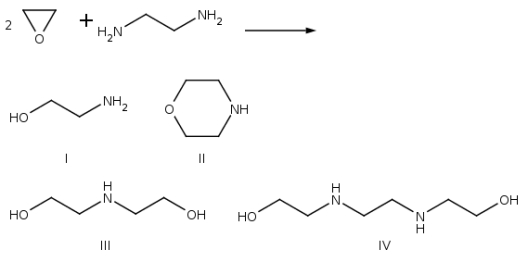
A) I
B) II
C) III
D) IV
A) I
B) II
C) III
D) IV
سؤال
Which is the major product from the acid catalyzed hydrolysis of cyclohexene oxide?
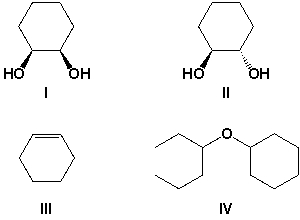
A) I
B) II
C) III
D) IV
A) I
B) II
C) III
D) IV
سؤال
The reagent needed to complete the following reaction is,

سؤال
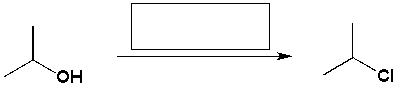
The reagent needed to complete the following reaction is,
سؤال
Which is the major product of the following reaction?
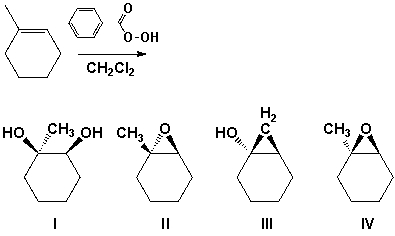
A) I
B) II
C) III
D) IV
A) I
B) II
C) III
D) IV
سؤال
Classify the following transformation of a disulfide to two sulfides. How can that transformation be brought about?

A) oxidation
B) reduction
C) neither
D) both
A) oxidation
B) reduction
C) neither
D) both
سؤال
Which is the major product of the following reaction?
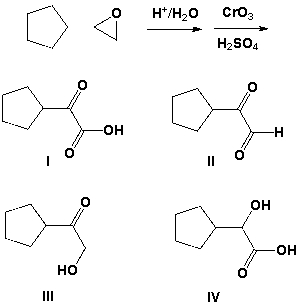
A) I
B) II
C) III
D) IV
A) I
B) II
C) III
D) IV
سؤال
Arrange the following in order of increasing ability to hydrogen bond (lowest first).
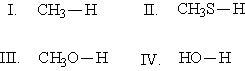
A) I, II, III, IV
B) III, I, IV, II
C) II, IV, I, III
D) I, IV, II, III
A) I, II, III, IV
B) III, I, IV, II
C) II, IV, I, III
D) I, IV, II, III
سؤال
The major product of the following reaction is,

سؤال
Arrange the compounds in the order of increasing acidity (least acidic first).
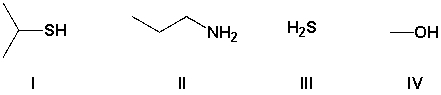
A) II, IV, I, III
B) III, IV, I, II
C) IV, III, II, I
D) I, III, IV, II
A) II, IV, I, III
B) III, IV, I, II
C) IV, III, II, I
D) I, III, IV, II
سؤال
Which is the major product of the following reaction?
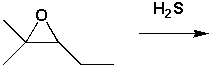
A) 2-mercapto-2-methyl-3-pentanol
B) 3-mercapto-2-methyl-2-pentanol
C) 2-methyl-2,3-pentanediol
D) 4-methyl-3,4-pentanediol
A) 2-mercapto-2-methyl-3-pentanol
B) 3-mercapto-2-methyl-2-pentanol
C) 2-methyl-2,3-pentanediol
D) 4-methyl-3,4-pentanediol
سؤال
Which is the product of the following reaction?

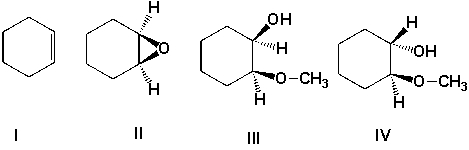
A) I
B) II
C) III
D) IV
A) I
B) II
C) III
D) IV
سؤال
Which structures have the correct IUPAC name?
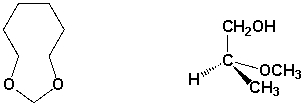
I: cis-1,2-dimethoxycyclohexane II: R-2-methoxy-1-propanol
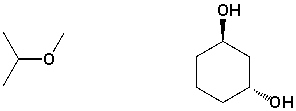
III: 2-methoxypropane IV: trans-1,3-cyclohexanediol
A) I, II
B) III, IV
C) II, III
D) I, IV
I: cis-1,2-dimethoxycyclohexane II: R-2-methoxy-1-propanol
III: 2-methoxypropane IV: trans-1,3-cyclohexanediol
A) I, II
B) III, IV
C) II, III
D) I, IV
سؤال
The strongest acid in the following list is water.

سؤال
The major product of the following reaction is,

سؤال
The following compounds are listed in decreasing boiling point order (highest first).

سؤال
The following compounds are listed in decreasing order of solubility in water (highest first).

سؤال
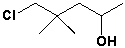
The following compound is named 1-chloro-2,2-dimethyl-4-pentanol.
سؤال
سؤال
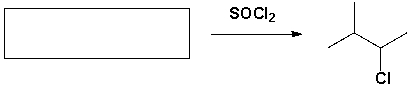
The starting material needed to complete the following reaction is,
سؤال
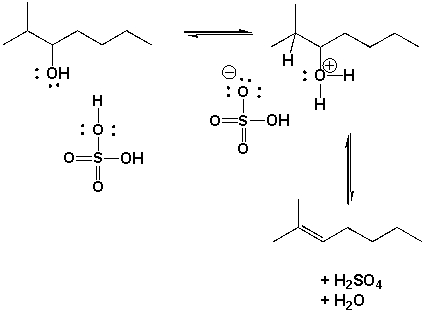
The reaction arrows (curved arrows) required to complete the following reaction mechanisms are,
سؤال
The following compounds are listed in increasing order of solubility in water (lowest first).

سؤال
The starting material needed to complete the following reaction is,

سؤال
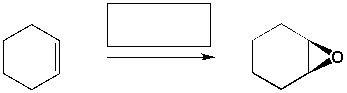
The reagent needed to complete the following reaction is,
سؤال
سؤال
سؤال
The following compounds are listed in decreasing boiling point order (highest first).

سؤال
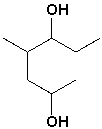
The following compound is named 2,6-dimethyl-1,4-cyclohexanediol.

فتح الحزمة
قم بالتسجيل لفتح البطاقات في هذه المجموعة!
Unlock Deck
Unlock Deck
1/55

العب

ملء الشاشة (f)
Deck 8: Alcohols, Ethers, and Thiols
1
4-(2-hydroxyethyl)-1-methylcyclohexanol reacts with HCl (gas) in diethyl ether at 5oC. What is the main product formed?
A) I
B) II
C) III
D) IV
A) I
B) II
C) III
D) IV
II
2
Arrange the compounds in the order of increasing acidity (least first).
A) III, I, II, IV
B) I, III, IV, II
C) II, III, I, IV
D) II, I, III, IV
A) III, I, II, IV
B) I, III, IV, II
C) II, III, I, IV
D) II, I, III, IV
II, III, I, IV
3
2-(1-hydroxyprop-2-yl) cyclopentanol reacts with a mixture of potassium dichromate in concentrated sulfuric acid at room temperature. What product is formed?(Hint: assume that you have sufficient quantities of oxidizer to perform all possible reactions.)
A)I
B)II
C)III
D)IV
A)I
B)II
C)III
D)IV
IV
4
Which are the best conditions for the preparation of 1-chloro-2-methylpropane starting from 2-methyl-1-propanol?
A) I
B) II
C) III
D) IV
A) I
B) II
C) III
D) IV
فتح الحزمة
افتح القفل للوصول البطاقات البالغ عددها 55 في هذه المجموعة.
فتح الحزمة
k this deck
5
Arrange the compounds in the order of increasing solubility in water (least soluble first). (help: estimate the hydrophobic surface of the non-polar part of the molecules)
A) II, III, I, IV
B) I, II, III, IV
C) IV, II, III, I
D) II, IV, III, I
A) II, III, I, IV
B) I, II, III, IV
C) IV, II, III, I
D) II, IV, III, I
فتح الحزمة
افتح القفل للوصول البطاقات البالغ عددها 55 في هذه المجموعة.
فتح الحزمة
k this deck
6
Arrange the compounds in the order of increasing solubility in water (least soluble first). (help: estimate the hydrophobic surface of the non-polar part of the molecules)
A) III, IV, II, I
B) II, III, IV, I
C) IV, III, II, I
D) III, IV, I, II
A) III, IV, II, I
B) II, III, IV, I
C) IV, III, II, I
D) III, IV, I, II
فتح الحزمة
افتح القفل للوصول البطاقات البالغ عددها 55 في هذه المجموعة.
فتح الحزمة
k this deck
7
4-(2-hydroxyethyl)-1-methylcyclohexanol reacts with HBr (gas) in dioxane under pressure at 125oC. What is the main product formed?
A) I
B) II
C) III
D) IV
A) I
B) II
C) III
D) IV
فتح الحزمة
افتح القفل للوصول البطاقات البالغ عددها 55 في هذه المجموعة.
فتح الحزمة
k this deck
8
Which of the molecules are primary alcohols?
A) III, II
B) IV, I
C) II, III
D) I, II
A) III, II
B) IV, I
C) II, III
D) I, II
فتح الحزمة
افتح القفل للوصول البطاقات البالغ عددها 55 في هذه المجموعة.
فتح الحزمة
k this deck
9
Which is the product of the following reaction?
A) I
B) II
C) III
D) IV
A) I
B) II
C) III
D) IV
فتح الحزمة
افتح القفل للوصول البطاقات البالغ عددها 55 في هذه المجموعة.
فتح الحزمة
k this deck
10
2-(1-hydroxyprop-2-yl) cyclopentanol reacts with pyridinium chlorochromate in dioxane under reflux. What product is formed?(Hint: assume that you have sufficient quantities of oxidizer to perform all possible reactions.)
A)I
B)II
C)III
D)IV
A)I
B)II
C)III
D)IV
فتح الحزمة
افتح القفل للوصول البطاقات البالغ عددها 55 في هذه المجموعة.
فتح الحزمة
k this deck
11
Which reagents do not perform the following conversion?
A) I, II
B) II, III
C) II, IV
D) I, III
A) I, II
B) II, III
C) II, IV
D) I, III
فتح الحزمة
افتح القفل للوصول البطاقات البالغ عددها 55 في هذه المجموعة.
فتح الحزمة
k this deck
12
Which alcohol will form the most stable carbocation when treated with a strong mineral acid?
A) I
B) II
C) III
D) IV
A) I
B) II
C) III
D) IV
فتح الحزمة
افتح القفل للوصول البطاقات البالغ عددها 55 في هذه المجموعة.
فتح الحزمة
k this deck
13
Which is the product of the following reaction?
A) I
B) II
C) III
D) IV
A) I
B) II
C) III
D) IV
فتح الحزمة
افتح القفل للوصول البطاقات البالغ عددها 55 في هذه المجموعة.
فتح الحزمة
k this deck
14
Which is the major product of the following reaction?
A) I
B) II
C) III
D) IV
A) I
B) II
C) III
D) IV
فتح الحزمة
افتح القفل للوصول البطاقات البالغ عددها 55 في هذه المجموعة.
فتح الحزمة
k this deck
15
Arrange the compounds in the order of increasing solubility in water (least soluble first).
A) I, III, II, IV
B) III, I, IV, II
C) I, IV, II, III
D) IV, I, III, II
A) I, III, II, IV
B) III, I, IV, II
C) I, IV, II, III
D) IV, I, III, II
فتح الحزمة
افتح القفل للوصول البطاقات البالغ عددها 55 في هذه المجموعة.
فتح الحزمة
k this deck
16
Arrange the following in order of increasing rate of reactivity with HCl (least first).
A) I, II, IV, III
B) II, I, III, IV
C) IV, III, I, II
D) III, II, IV, I
A) I, II, IV, III
B) II, I, III, IV
C) IV, III, I, II
D) III, II, IV, I
فتح الحزمة
افتح القفل للوصول البطاقات البالغ عددها 55 في هذه المجموعة.
فتح الحزمة
k this deck
17
Which molecules are secondary alcohols?
A) I, III
B) II, III
C) III, IV
D) I, IV
A) I, III
B) II, III
C) III, IV
D) I, IV
فتح الحزمة
افتح القفل للوصول البطاقات البالغ عددها 55 في هذه المجموعة.
فتح الحزمة
k this deck
18
Which is the IUPAC name for the following structure?
A) cyclohexenol
B) 3-cyclohexen-1-ol
C) 1-cyclohexen-4-ol
D) 4-cyclohexenol
A) cyclohexenol
B) 3-cyclohexen-1-ol
C) 1-cyclohexen-4-ol
D) 4-cyclohexenol
فتح الحزمة
افتح القفل للوصول البطاقات البالغ عددها 55 في هذه المجموعة.
فتح الحزمة
k this deck
19
The alcohol shown below reacts with thionyl chloride in pyridine. Which organic product is formed?
A) I
B) II
C) III
D) IV
A) I
B) II
C) III
D) IV
فتح الحزمة
افتح القفل للوصول البطاقات البالغ عددها 55 في هذه المجموعة.
فتح الحزمة
k this deck
20
Which is the best method for making the following conversion?
A) I
B) II
C) III
D) IV
A) I
B) II
C) III
D) IV
فتح الحزمة
افتح القفل للوصول البطاقات البالغ عددها 55 في هذه المجموعة.
فتح الحزمة
k this deck
21
Arrange the compounds in the order of increasing acidity (least acidic first).
A) II, III, IV, I
B) I, III, IV, II
C) III, IV, II, I
D) IV, II, III, I
A) II, III, IV, I
B) I, III, IV, II
C) III, IV, II, I
D) IV, II, III, I
فتح الحزمة
افتح القفل للوصول البطاقات البالغ عددها 55 في هذه المجموعة.
فتح الحزمة
k this deck
22
The major product of the following reaction is,
فتح الحزمة
افتح القفل للوصول البطاقات البالغ عددها 55 في هذه المجموعة.
فتح الحزمة
k this deck
23
Arrange the compounds in the order of increasing boiling point (lowest first).
A) II, I, III, IV
B) I, IV, II, III
C) IV, I, III, II
D) I, IV, III, II
A) II, I, III, IV
B) I, IV, II, III
C) IV, I, III, II
D) I, IV, III, II
فتح الحزمة
افتح القفل للوصول البطاقات البالغ عددها 55 في هذه المجموعة.
فتح الحزمة
k this deck
24
Arrange the compounds in the order of increasing acidity (least first).
A) II, I, III, IV
B) I, IV, II, III
C) III, II, I, IV
D) II, I, IV, III
A) II, I, III, IV
B) I, IV, II, III
C) III, II, I, IV
D) II, I, IV, III
فتح الحزمة
افتح القفل للوصول البطاقات البالغ عددها 55 في هذه المجموعة.
فتح الحزمة
k this deck
25
Classify the following reaction:
A) oxidation
B) reduction
C) neither
D) both
A) oxidation
B) reduction
C) neither
D) both
فتح الحزمة
افتح القفل للوصول البطاقات البالغ عددها 55 في هذه المجموعة.
فتح الحزمة
k this deck
26
The alkene shown below reacts with meta-chloroperbenzoic acid (MCPBA) in tetrahydrofuran. Which of the four formulas correctly describe the reaction products?
A) I
B) II
C) III
D) IV
A) I
B) II
C) III
D) IV
فتح الحزمة
افتح القفل للوصول البطاقات البالغ عددها 55 في هذه المجموعة.
فتح الحزمة
k this deck
27
The major product of the following reaction is,
فتح الحزمة
افتح القفل للوصول البطاقات البالغ عددها 55 في هذه المجموعة.
فتح الحزمة
k this deck
28
Which is the major product of the following reaction?
A) I
B) II
C) III
D) IV
A) I
B) II
C) III
D) IV
فتح الحزمة
افتح القفل للوصول البطاقات البالغ عددها 55 في هذه المجموعة.
فتح الحزمة
k this deck
29
Which is the major product from the acid catalyzed hydrolysis of cyclohexene oxide?
A) I
B) II
C) III
D) IV
A) I
B) II
C) III
D) IV
فتح الحزمة
افتح القفل للوصول البطاقات البالغ عددها 55 في هذه المجموعة.
فتح الحزمة
k this deck
30
The reagent needed to complete the following reaction is,
فتح الحزمة
افتح القفل للوصول البطاقات البالغ عددها 55 في هذه المجموعة.
فتح الحزمة
k this deck
31
The reagent needed to complete the following reaction is,
فتح الحزمة
افتح القفل للوصول البطاقات البالغ عددها 55 في هذه المجموعة.
فتح الحزمة
k this deck
32
Which is the major product of the following reaction?
A) I
B) II
C) III
D) IV
A) I
B) II
C) III
D) IV
فتح الحزمة
افتح القفل للوصول البطاقات البالغ عددها 55 في هذه المجموعة.
فتح الحزمة
k this deck
33
Classify the following transformation of a disulfide to two sulfides. How can that transformation be brought about?
A) oxidation
B) reduction
C) neither
D) both
A) oxidation
B) reduction
C) neither
D) both
فتح الحزمة
افتح القفل للوصول البطاقات البالغ عددها 55 في هذه المجموعة.
فتح الحزمة
k this deck
34
Which is the major product of the following reaction?
A) I
B) II
C) III
D) IV
A) I
B) II
C) III
D) IV
فتح الحزمة
افتح القفل للوصول البطاقات البالغ عددها 55 في هذه المجموعة.
فتح الحزمة
k this deck
35
Arrange the following in order of increasing ability to hydrogen bond (lowest first).
A) I, II, III, IV
B) III, I, IV, II
C) II, IV, I, III
D) I, IV, II, III
A) I, II, III, IV
B) III, I, IV, II
C) II, IV, I, III
D) I, IV, II, III
فتح الحزمة
افتح القفل للوصول البطاقات البالغ عددها 55 في هذه المجموعة.
فتح الحزمة
k this deck
36
The major product of the following reaction is,
فتح الحزمة
افتح القفل للوصول البطاقات البالغ عددها 55 في هذه المجموعة.
فتح الحزمة
k this deck
37
Arrange the compounds in the order of increasing acidity (least acidic first).
A) II, IV, I, III
B) III, IV, I, II
C) IV, III, II, I
D) I, III, IV, II
A) II, IV, I, III
B) III, IV, I, II
C) IV, III, II, I
D) I, III, IV, II
فتح الحزمة
افتح القفل للوصول البطاقات البالغ عددها 55 في هذه المجموعة.
فتح الحزمة
k this deck
38
Which is the major product of the following reaction?
A) 2-mercapto-2-methyl-3-pentanol
B) 3-mercapto-2-methyl-2-pentanol
C) 2-methyl-2,3-pentanediol
D) 4-methyl-3,4-pentanediol
A) 2-mercapto-2-methyl-3-pentanol
B) 3-mercapto-2-methyl-2-pentanol
C) 2-methyl-2,3-pentanediol
D) 4-methyl-3,4-pentanediol
فتح الحزمة
افتح القفل للوصول البطاقات البالغ عددها 55 في هذه المجموعة.
فتح الحزمة
k this deck
39
Which is the product of the following reaction?
A) I
B) II
C) III
D) IV
A) I
B) II
C) III
D) IV
فتح الحزمة
افتح القفل للوصول البطاقات البالغ عددها 55 في هذه المجموعة.
فتح الحزمة
k this deck
40
Which structures have the correct IUPAC name?
I: cis-1,2-dimethoxycyclohexane II: R-2-methoxy-1-propanol
III: 2-methoxypropane IV: trans-1,3-cyclohexanediol
A) I, II
B) III, IV
C) II, III
D) I, IV
I: cis-1,2-dimethoxycyclohexane II: R-2-methoxy-1-propanol
III: 2-methoxypropane IV: trans-1,3-cyclohexanediol
A) I, II
B) III, IV
C) II, III
D) I, IV
فتح الحزمة
افتح القفل للوصول البطاقات البالغ عددها 55 في هذه المجموعة.
فتح الحزمة
k this deck
41
The strongest acid in the following list is water.
فتح الحزمة
افتح القفل للوصول البطاقات البالغ عددها 55 في هذه المجموعة.
فتح الحزمة
k this deck
42
The major product of the following reaction is,
فتح الحزمة
افتح القفل للوصول البطاقات البالغ عددها 55 في هذه المجموعة.
فتح الحزمة
k this deck
43
The following compounds are listed in decreasing boiling point order (highest first).
فتح الحزمة
افتح القفل للوصول البطاقات البالغ عددها 55 في هذه المجموعة.
فتح الحزمة
k this deck
44
The following compounds are listed in decreasing order of solubility in water (highest first).
فتح الحزمة
افتح القفل للوصول البطاقات البالغ عددها 55 في هذه المجموعة.
فتح الحزمة
k this deck
45
The following compound is named 1-chloro-2,2-dimethyl-4-pentanol.
فتح الحزمة
افتح القفل للوصول البطاقات البالغ عددها 55 في هذه المجموعة.
فتح الحزمة
k this deck
46
The major product of the reaction of 3-methyl-2-butanol with hot, concentrated sulfuric acid is 3-methyl-1-butene.
فتح الحزمة
افتح القفل للوصول البطاقات البالغ عددها 55 في هذه المجموعة.
فتح الحزمة
k this deck
47
The starting material needed to complete the following reaction is,
فتح الحزمة
افتح القفل للوصول البطاقات البالغ عددها 55 في هذه المجموعة.
فتح الحزمة
k this deck
48
The reaction arrows (curved arrows) required to complete the following reaction mechanisms are,
فتح الحزمة
افتح القفل للوصول البطاقات البالغ عددها 55 في هذه المجموعة.
فتح الحزمة
k this deck
49
The following compounds are listed in increasing order of solubility in water (lowest first).
فتح الحزمة
افتح القفل للوصول البطاقات البالغ عددها 55 في هذه المجموعة.
فتح الحزمة
k this deck
50
The starting material needed to complete the following reaction is,
فتح الحزمة
افتح القفل للوصول البطاقات البالغ عددها 55 في هذه المجموعة.
فتح الحزمة
k this deck
51
The reagent needed to complete the following reaction is,
فتح الحزمة
افتح القفل للوصول البطاقات البالغ عددها 55 في هذه المجموعة.
فتح الحزمة
k this deck
52
The major product of the reaction of 1-propanol with PCC is propanoic acid.
فتح الحزمة
افتح القفل للوصول البطاقات البالغ عددها 55 في هذه المجموعة.
فتح الحزمة
k this deck
53
The product of the reaction of methanol with sodium metal is sodium methoxide.
فتح الحزمة
افتح القفل للوصول البطاقات البالغ عددها 55 في هذه المجموعة.
فتح الحزمة
k this deck
54
The following compounds are listed in decreasing boiling point order (highest first).
فتح الحزمة
افتح القفل للوصول البطاقات البالغ عددها 55 في هذه المجموعة.
فتح الحزمة
k this deck
55
The following compound is named 2,6-dimethyl-1,4-cyclohexanediol.
فتح الحزمة
افتح القفل للوصول البطاقات البالغ عددها 55 في هذه المجموعة.
فتح الحزمة
k this deck
فتح الحزمة
افتح القفل للوصول البطاقات البالغ عددها 55 في هذه المجموعة.






