







 تكلم مع الذكاء الاصطناعي


Deck 13: Global Marketing Communications Decisions I: Advertising and Public Relations
ملء الشاشة (f)

سؤال

سؤال
سؤال
سؤال
سؤال
سؤال
سؤال
سؤال
سؤال
سؤال
سؤال
سؤال
سؤال
سؤال
Scotch Whisky in China: A Taste of the Good Life
Scotch whisky is a textbook example of a global product. Wealthy consumers with discerning palates do not hesitate to pay premium prices for top global brands such as Chivas Regal and Johnnie Walker. Moreover, Scotch drinkers everywhere associate the amber spirit with aspirational goals such as success and achievement. In the late 1990s, Diageo, the owner of the Johnnie Walker brand, launched a global advertising campaign featuring the tagline "Keep walking." The theme, which was developed by Britain's Bartle Bogle Hegarty (BBH) advertising agency, was keyed to the brand's logo: a red-coated, top-hatted gentleman in mid-stride. However, as BBH staffers working on the Johnnie Walker account understood, the things that constitute "achievement" can vary from culture to culture.
In China, for example, the self-satisfaction that goes along with achieving a goal may not be enough; acknowledgment of the achievement by peers is also important. For this reason, BBH created a localized marketing campaign for China. One ad depicts two golfers hitting increasingly extreme shots, which include teeing off from the roof of a golf cart and a ball that is hit from underneath a crocodile. The campaign coincided with rapid market growth; after China joined the World Trade Organization (WTO) in 2001, tariffs on spirits imports were cut from 65 percent to 10 percent. According to the Scotch Whisky Association, total Scotch exports to China totaled £80 million in 2009, up from just £1.5 million in 2001. Today, Johnnie Walker has a 34 percent share of China's whisky market.
BBH's Orlando Hooper-Greenhill explained the insights that were incorporated into the campaign: "Johnnie Walker's marketing in China needed to reflect the importance of peer group and family perceptions of an individual's achievements, while also accommodating the fact that whisky is a youthful drink." Hooper-Greenhill also noted that in China, whisky is consumed in a wider variety of settings than in the West. In Hooper-Greenhill's words, "Different messages were needed to reflect the different environments in which whisky is consumed, and for more and less urbanized areas."
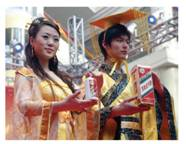
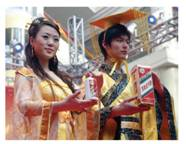
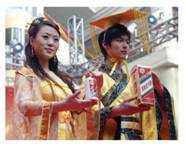
Exhibit 13-7 As noted throughout the text, global products and brands often compete with local ones. In China, Johnny Walker Scotch competes with Maotai, a fragrant clear liquor that is associated with the southwestern province of Gui Zhou. Maotai is packaged in a fancy box with a glass bottle inside. Alcohol is "the" gift that Chinese take when visiting friends. Depending on the quality, a single bottle of Maotai can cost anywhere from $25 to more than $1,000.
Source: STR/AFP Newscom.

Market segmentation is an integral part of Diageo's approach to the Chinese market. As Kenneth MacPherson, managing director for Diageo China, noted, "The size of the market and the complex demographic composition leads to totally different consumption habits and patterns in different parts of China." The first segment, guanxi men, are status-driven businessmen ages 35 to 45 who spend a great deal of time networking and trying to set up business deals. The second segment is "strong independent women," also in the 35- to 45-age bracket. A third segment is composed of upwardly mobile men and women ages 25 to 35 who want to be seen as cutting-edge. Finally, "the choice generation" consists of those in their twenties who seek out new experiences.
Although Johnnie Walker has achieved great success in China, the brand is in second place behind Chivas Regal, which commands a 50 percent market share. For decades, Chivas enjoyed a global reputation as the deluxe Scotch whisky. As was the case with Johnnie Walker, the brand's promotional strategy also frequently called for global advertising campaigns. For example, in the early 1990s a print campaign was keyed to the slogan "There will always be a Chivas Regal." The campaign featured a series of universal images and was translated into 15 languages. Managers in each of 34 countries were authorized to choose individual ads from the campaign that they deemed appropriate for their markets.
In 2000, France's Pernod Ricard SA acquired the Chivas Regal brand from Seagram. Between 2000 and 2002, Chivas experienced a 10 percent overall decline in sales volume, while Johnnie Walker posted a 12 percent gain. Prior to the acquisition, Pernod Ricard was best known for Ricard, an anise-flavored beverage known as pastis. Some industry observers questioned whether a company that had focused on so-called "second tier" local brands had the marketing skills to reinvigorate a truly global brand such as Chivas. As one analyst put it, "Pernod Ricard was a very big French company that has joined the big time. Now they're taking on the big global brands, which requires different skills. The question is, do they have the skills that it takes?"
Patrick Ricard, who was chairman of Ricard from 1978 until his death in 2012, was confident that the management team at Pernod Ricard did have the skills required to succeed in the global marketplace against giants such as Diageo. For one thing, the company's decentralized strategy is well matched to an industry sector characterized by local tastes. Unlike Diageo, Ricard passed over British advertising agencies in favor of TBWA Paris. Impact, an industry trade magazine, observed that "When you know," the enigmatic slogan developed for Seagram's final Chivas advertising campaign, was "utterly ineffective." As Martin Riley, Ricard's chief marketing officer, explained, "When you get to a lot of countries that are not primarily English-speaking, like those in Asia or South America, they would like you to fill in the dots." A new slogan, "This is the Chivas Life," was designed to appeal to the aspirations of Chivas drinkers throughout the world.
In China, the tagline "This is the Chivas Life" was replaced in 2005 by "This is the Chivas Party Experience." TEQUILA/China, the agency that developed the theme, wanted to target more cosmopolitan, affluent young adults. The agency's research indicated an aspiration for I eisure and travel. The agency thus developed a communication program centered on a series of parties that were staged in Shanghai, Beijing, and other key cities. Each party had a distinct theme; one was dubbed "Chivas 2070 Futuristic Life," while another was called "Chivas Life 70s Psychedelic Disco Fever." Partygoers could sample Chivas cocktails, enjoy fashion makeovers, and listen to cutting-edge music.
By 2008, with the global economy starting its downward spiral, Pernod's research yielded insights into a subtle shift in consumer sentiment. As CMO Riley noted, "People are questioning a certain level of values that have taken the world to where it is right now...the individual getting ahead at any price." The research results led to a new campaign in China with the tagline "Live with Chivalry." The creative strategy taps into Chivas' European heritage and the code of conduct practiced by knights. The themes of brotherhood, freedom, gallantry, honor, and loyalty figure prominently in the ads, which are also being run globally. One execution shows a man in a business suit walking on a crowded city street; the voiceover says, "Millions of people, everyone out for themselves. Can this really be the only way?" The spot then switches to images of men skydiving and mounted on horses. "Here's to honor, and to gallantry, long may it live. Here's to doing the right thing, to giving a damn."
Why are Diageo, Pernod Ricard, and other marketers of global spirits brands localizing advertising campaigns in emerging markets?
Scotch whisky is a textbook example of a global product. Wealthy consumers with discerning palates do not hesitate to pay premium prices for top global brands such as Chivas Regal and Johnnie Walker. Moreover, Scotch drinkers everywhere associate the amber spirit with aspirational goals such as success and achievement. In the late 1990s, Diageo, the owner of the Johnnie Walker brand, launched a global advertising campaign featuring the tagline "Keep walking." The theme, which was developed by Britain's Bartle Bogle Hegarty (BBH) advertising agency, was keyed to the brand's logo: a red-coated, top-hatted gentleman in mid-stride. However, as BBH staffers working on the Johnnie Walker account understood, the things that constitute "achievement" can vary from culture to culture.
In China, for example, the self-satisfaction that goes along with achieving a goal may not be enough; acknowledgment of the achievement by peers is also important. For this reason, BBH created a localized marketing campaign for China. One ad depicts two golfers hitting increasingly extreme shots, which include teeing off from the roof of a golf cart and a ball that is hit from underneath a crocodile. The campaign coincided with rapid market growth; after China joined the World Trade Organization (WTO) in 2001, tariffs on spirits imports were cut from 65 percent to 10 percent. According to the Scotch Whisky Association, total Scotch exports to China totaled £80 million in 2009, up from just £1.5 million in 2001. Today, Johnnie Walker has a 34 percent share of China's whisky market.
BBH's Orlando Hooper-Greenhill explained the insights that were incorporated into the campaign: "Johnnie Walker's marketing in China needed to reflect the importance of peer group and family perceptions of an individual's achievements, while also accommodating the fact that whisky is a youthful drink." Hooper-Greenhill also noted that in China, whisky is consumed in a wider variety of settings than in the West. In Hooper-Greenhill's words, "Different messages were needed to reflect the different environments in which whisky is consumed, and for more and less urbanized areas."
Exhibit 13-7 As noted throughout the text, global products and brands often compete with local ones. In China, Johnny Walker Scotch competes with Maotai, a fragrant clear liquor that is associated with the southwestern province of Gui Zhou. Maotai is packaged in a fancy box with a glass bottle inside. Alcohol is "the" gift that Chinese take when visiting friends. Depending on the quality, a single bottle of Maotai can cost anywhere from $25 to more than $1,000.
Source: STR/AFP Newscom.
Market segmentation is an integral part of Diageo's approach to the Chinese market. As Kenneth MacPherson, managing director for Diageo China, noted, "The size of the market and the complex demographic composition leads to totally different consumption habits and patterns in different parts of China." The first segment, guanxi men, are status-driven businessmen ages 35 to 45 who spend a great deal of time networking and trying to set up business deals. The second segment is "strong independent women," also in the 35- to 45-age bracket. A third segment is composed of upwardly mobile men and women ages 25 to 35 who want to be seen as cutting-edge. Finally, "the choice generation" consists of those in their twenties who seek out new experiences.
Although Johnnie Walker has achieved great success in China, the brand is in second place behind Chivas Regal, which commands a 50 percent market share. For decades, Chivas enjoyed a global reputation as the deluxe Scotch whisky. As was the case with Johnnie Walker, the brand's promotional strategy also frequently called for global advertising campaigns. For example, in the early 1990s a print campaign was keyed to the slogan "There will always be a Chivas Regal." The campaign featured a series of universal images and was translated into 15 languages. Managers in each of 34 countries were authorized to choose individual ads from the campaign that they deemed appropriate for their markets.
In 2000, France's Pernod Ricard SA acquired the Chivas Regal brand from Seagram. Between 2000 and 2002, Chivas experienced a 10 percent overall decline in sales volume, while Johnnie Walker posted a 12 percent gain. Prior to the acquisition, Pernod Ricard was best known for Ricard, an anise-flavored beverage known as pastis. Some industry observers questioned whether a company that had focused on so-called "second tier" local brands had the marketing skills to reinvigorate a truly global brand such as Chivas. As one analyst put it, "Pernod Ricard was a very big French company that has joined the big time. Now they're taking on the big global brands, which requires different skills. The question is, do they have the skills that it takes?"
Patrick Ricard, who was chairman of Ricard from 1978 until his death in 2012, was confident that the management team at Pernod Ricard did have the skills required to succeed in the global marketplace against giants such as Diageo. For one thing, the company's decentralized strategy is well matched to an industry sector characterized by local tastes. Unlike Diageo, Ricard passed over British advertising agencies in favor of TBWA Paris. Impact, an industry trade magazine, observed that "When you know," the enigmatic slogan developed for Seagram's final Chivas advertising campaign, was "utterly ineffective." As Martin Riley, Ricard's chief marketing officer, explained, "When you get to a lot of countries that are not primarily English-speaking, like those in Asia or South America, they would like you to fill in the dots." A new slogan, "This is the Chivas Life," was designed to appeal to the aspirations of Chivas drinkers throughout the world.
In China, the tagline "This is the Chivas Life" was replaced in 2005 by "This is the Chivas Party Experience." TEQUILA/China, the agency that developed the theme, wanted to target more cosmopolitan, affluent young adults. The agency's research indicated an aspiration for I eisure and travel. The agency thus developed a communication program centered on a series of parties that were staged in Shanghai, Beijing, and other key cities. Each party had a distinct theme; one was dubbed "Chivas 2070 Futuristic Life," while another was called "Chivas Life 70s Psychedelic Disco Fever." Partygoers could sample Chivas cocktails, enjoy fashion makeovers, and listen to cutting-edge music.
By 2008, with the global economy starting its downward spiral, Pernod's research yielded insights into a subtle shift in consumer sentiment. As CMO Riley noted, "People are questioning a certain level of values that have taken the world to where it is right now...the individual getting ahead at any price." The research results led to a new campaign in China with the tagline "Live with Chivalry." The creative strategy taps into Chivas' European heritage and the code of conduct practiced by knights. The themes of brotherhood, freedom, gallantry, honor, and loyalty figure prominently in the ads, which are also being run globally. One execution shows a man in a business suit walking on a crowded city street; the voiceover says, "Millions of people, everyone out for themselves. Can this really be the only way?" The spot then switches to images of men skydiving and mounted on horses. "Here's to honor, and to gallantry, long may it live. Here's to doing the right thing, to giving a damn."
Why are Diageo, Pernod Ricard, and other marketers of global spirits brands localizing advertising campaigns in emerging markets?
سؤال
Scotch Whisky in China: A Taste of the Good Life
Scotch whisky is a textbook example of a global product. Wealthy consumers with discerning palates do not hesitate to pay premium prices for top global brands such as Chivas Regal and Johnnie Walker. Moreover, Scotch drinkers everywhere associate the amber spirit with aspirational goals such as success and achievement. In the late 1990s, Diageo, the owner of the Johnnie Walker brand, launched a global advertising campaign featuring the tagline "Keep walking." The theme, which was developed by Britain's Bartle Bogle Hegarty (BBH) advertising agency, was keyed to the brand's logo: a red-coated, top-hatted gentleman in mid-stride. However, as BBH staffers working on the Johnnie Walker account understood, the things that constitute "achievement" can vary from culture to culture.
In China, for example, the self-satisfaction that goes along with achieving a goal may not be enough; acknowledgment of the achievement by peers is also important. For this reason, BBH created a localized marketing campaign for China. One ad depicts two golfers hitting increasingly extreme shots, which include teeing off from the roof of a golf cart and a ball that is hit from underneath a crocodile. The campaign coincided with rapid market growth; after China joined the World Trade Organization (WTO) in 2001, tariffs on spirits imports were cut from 65 percent to 10 percent. According to the Scotch Whisky Association, total Scotch exports to China totaled £80 million in 2009, up from just £1.5 million in 2001. Today, Johnnie Walker has a 34 percent share of China's whisky market.
BBH's Orlando Hooper-Greenhill explained the insights that were incorporated into the campaign: "Johnnie Walker's marketing in China needed to reflect the importance of peer group and family perceptions of an individual's achievements, while also accommodating the fact that whisky is a youthful drink." Hooper-Greenhill also noted that in China, whisky is consumed in a wider variety of settings than in the West. In Hooper-Greenhill's words, "Different messages were needed to reflect the different environments in which whisky is consumed, and for more and less urbanized areas."
Exhibit 13-7 As noted throughout the text, global products and brands often compete with local ones. In China, Johnny Walker Scotch competes with Maotai, a fragrant clear liquor that is associated with the southwestern province of Gui Zhou. Maotai is packaged in a fancy box with a glass bottle inside. Alcohol is "the" gift that Chinese take when visiting friends. Depending on the quality, a single bottle of Maotai can cost anywhere from $25 to more than $1,000.
Source: STR/AFP Newscom.
Market segmentation is an integral part of Diageo's approach to the Chinese market. As Kenneth MacPherson, managing director for Diageo China, noted, "The size of the market and the complex demographic composition leads to totally different consumption habits and patterns in different parts of China." The first segment, guanxi men, are status-driven businessmen ages 35 to 45 who spend a great deal of time networking and trying to set up business deals. The second segment is "strong independent women," also in the 35- to 45-age bracket. A third segment is composed of upwardly mobile men and women ages 25 to 35 who want to be seen as cutting-edge. Finally, "the choice generation" consists of those in their twenties who seek out new experiences.
Although Johnnie Walker has achieved great success in China, the brand is in second place behind Chivas Regal, which commands a 50 percent market share. For decades, Chivas enjoyed a global reputation as the deluxe Scotch whisky. As was the case with Johnnie Walker, the brand's promotional strategy also frequently called for global advertising campaigns. For example, in the early 1990s a print campaign was keyed to the slogan "There will always be a Chivas Regal." The campaign featured a series of universal images and was translated into 15 languages. Managers in each of 34 countries were authorized to choose individual ads from the campaign that they deemed appropriate for their markets.
In 2000, France's Pernod Ricard SA acquired the Chivas Regal brand from Seagram. Between 2000 and 2002, Chivas experienced a 10 percent overall decline in sales volume, while Johnnie Walker posted a 12 percent gain. Prior to the acquisition, Pernod Ricard was best known for Ricard, an anise-flavored beverage known as pastis. Some industry observers questioned whether a company that had focused on so-called "second tier" local brands had the marketing skills to reinvigorate a truly global brand such as Chivas. As one analyst put it, "Pernod Ricard was a very big French company that has joined the big time. Now they're taking on the big global brands, which requires different skills. The question is, do they have the skills that it takes?"
Patrick Ricard, who was chairman of Ricard from 1978 until his death in 2012, was confident that the management team at Pernod Ricard did have the skills required to succeed in the global marketplace against giants such as Diageo. For one thing, the company's decentralized strategy is well matched to an industry sector characterized by local tastes. Unlike Diageo, Ricard passed over British advertising agencies in favor of TBWA Paris. Impact, an industry trade magazine, observed that "When you know," the enigmatic slogan developed for Seagram's final Chivas advertising campaign, was "utterly ineffective." As Martin Riley, Ricard's chief marketing officer, explained, "When you get to a lot of countries that are not primarily English-speaking, like those in Asia or South America, they would like you to fill in the dots." A new slogan, "This is the Chivas Life," was designed to appeal to the aspirations of Chivas drinkers throughout the world.
In China, the tagline "This is the Chivas Life" was replaced in 2005 by "This is the Chivas Party Experience." TEQUILA/China, the agency that developed the theme, wanted to target more cosmopolitan, affluent young adults. The agency's research indicated an aspiration for I eisure and travel. The agency thus developed a communication program centered on a series of parties that were staged in Shanghai, Beijing, and other key cities. Each party had a distinct theme; one was dubbed "Chivas 2070 Futuristic Life," while another was called "Chivas Life 70s Psychedelic Disco Fever." Partygoers could sample Chivas cocktails, enjoy fashion makeovers, and listen to cutting-edge music.
By 2008, with the global economy starting its downward spiral, Pernod's research yielded insights into a subtle shift in consumer sentiment. As CMO Riley noted, "People are questioning a certain level of values that have taken the world to where it is right now...the individual getting ahead at any price." The research results led to a new campaign in China with the tagline "Live with Chivalry." The creative strategy taps into Chivas' European heritage and the code of conduct practiced by knights. The themes of brotherhood, freedom, gallantry, honor, and loyalty figure prominently in the ads, which are also being run globally. One execution shows a man in a business suit walking on a crowded city street; the voiceover says, "Millions of people, everyone out for themselves. Can this really be the only way?" The spot then switches to images of men skydiving and mounted on horses. "Here's to honor, and to gallantry, long may it live. Here's to doing the right thing, to giving a damn."
How do consumption habits for products such as Scotch whisky vary from country to country?
Scotch whisky is a textbook example of a global product. Wealthy consumers with discerning palates do not hesitate to pay premium prices for top global brands such as Chivas Regal and Johnnie Walker. Moreover, Scotch drinkers everywhere associate the amber spirit with aspirational goals such as success and achievement. In the late 1990s, Diageo, the owner of the Johnnie Walker brand, launched a global advertising campaign featuring the tagline "Keep walking." The theme, which was developed by Britain's Bartle Bogle Hegarty (BBH) advertising agency, was keyed to the brand's logo: a red-coated, top-hatted gentleman in mid-stride. However, as BBH staffers working on the Johnnie Walker account understood, the things that constitute "achievement" can vary from culture to culture.
In China, for example, the self-satisfaction that goes along with achieving a goal may not be enough; acknowledgment of the achievement by peers is also important. For this reason, BBH created a localized marketing campaign for China. One ad depicts two golfers hitting increasingly extreme shots, which include teeing off from the roof of a golf cart and a ball that is hit from underneath a crocodile. The campaign coincided with rapid market growth; after China joined the World Trade Organization (WTO) in 2001, tariffs on spirits imports were cut from 65 percent to 10 percent. According to the Scotch Whisky Association, total Scotch exports to China totaled £80 million in 2009, up from just £1.5 million in 2001. Today, Johnnie Walker has a 34 percent share of China's whisky market.
BBH's Orlando Hooper-Greenhill explained the insights that were incorporated into the campaign: "Johnnie Walker's marketing in China needed to reflect the importance of peer group and family perceptions of an individual's achievements, while also accommodating the fact that whisky is a youthful drink." Hooper-Greenhill also noted that in China, whisky is consumed in a wider variety of settings than in the West. In Hooper-Greenhill's words, "Different messages were needed to reflect the different environments in which whisky is consumed, and for more and less urbanized areas."
Exhibit 13-7 As noted throughout the text, global products and brands often compete with local ones. In China, Johnny Walker Scotch competes with Maotai, a fragrant clear liquor that is associated with the southwestern province of Gui Zhou. Maotai is packaged in a fancy box with a glass bottle inside. Alcohol is "the" gift that Chinese take when visiting friends. Depending on the quality, a single bottle of Maotai can cost anywhere from $25 to more than $1,000.
Source: STR/AFP Newscom.
Market segmentation is an integral part of Diageo's approach to the Chinese market. As Kenneth MacPherson, managing director for Diageo China, noted, "The size of the market and the complex demographic composition leads to totally different consumption habits and patterns in different parts of China." The first segment, guanxi men, are status-driven businessmen ages 35 to 45 who spend a great deal of time networking and trying to set up business deals. The second segment is "strong independent women," also in the 35- to 45-age bracket. A third segment is composed of upwardly mobile men and women ages 25 to 35 who want to be seen as cutting-edge. Finally, "the choice generation" consists of those in their twenties who seek out new experiences.
Although Johnnie Walker has achieved great success in China, the brand is in second place behind Chivas Regal, which commands a 50 percent market share. For decades, Chivas enjoyed a global reputation as the deluxe Scotch whisky. As was the case with Johnnie Walker, the brand's promotional strategy also frequently called for global advertising campaigns. For example, in the early 1990s a print campaign was keyed to the slogan "There will always be a Chivas Regal." The campaign featured a series of universal images and was translated into 15 languages. Managers in each of 34 countries were authorized to choose individual ads from the campaign that they deemed appropriate for their markets.
In 2000, France's Pernod Ricard SA acquired the Chivas Regal brand from Seagram. Between 2000 and 2002, Chivas experienced a 10 percent overall decline in sales volume, while Johnnie Walker posted a 12 percent gain. Prior to the acquisition, Pernod Ricard was best known for Ricard, an anise-flavored beverage known as pastis. Some industry observers questioned whether a company that had focused on so-called "second tier" local brands had the marketing skills to reinvigorate a truly global brand such as Chivas. As one analyst put it, "Pernod Ricard was a very big French company that has joined the big time. Now they're taking on the big global brands, which requires different skills. The question is, do they have the skills that it takes?"
Patrick Ricard, who was chairman of Ricard from 1978 until his death in 2012, was confident that the management team at Pernod Ricard did have the skills required to succeed in the global marketplace against giants such as Diageo. For one thing, the company's decentralized strategy is well matched to an industry sector characterized by local tastes. Unlike Diageo, Ricard passed over British advertising agencies in favor of TBWA Paris. Impact, an industry trade magazine, observed that "When you know," the enigmatic slogan developed for Seagram's final Chivas advertising campaign, was "utterly ineffective." As Martin Riley, Ricard's chief marketing officer, explained, "When you get to a lot of countries that are not primarily English-speaking, like those in Asia or South America, they would like you to fill in the dots." A new slogan, "This is the Chivas Life," was designed to appeal to the aspirations of Chivas drinkers throughout the world.
In China, the tagline "This is the Chivas Life" was replaced in 2005 by "This is the Chivas Party Experience." TEQUILA/China, the agency that developed the theme, wanted to target more cosmopolitan, affluent young adults. The agency's research indicated an aspiration for I eisure and travel. The agency thus developed a communication program centered on a series of parties that were staged in Shanghai, Beijing, and other key cities. Each party had a distinct theme; one was dubbed "Chivas 2070 Futuristic Life," while another was called "Chivas Life 70s Psychedelic Disco Fever." Partygoers could sample Chivas cocktails, enjoy fashion makeovers, and listen to cutting-edge music.
By 2008, with the global economy starting its downward spiral, Pernod's research yielded insights into a subtle shift in consumer sentiment. As CMO Riley noted, "People are questioning a certain level of values that have taken the world to where it is right now...the individual getting ahead at any price." The research results led to a new campaign in China with the tagline "Live with Chivalry." The creative strategy taps into Chivas' European heritage and the code of conduct practiced by knights. The themes of brotherhood, freedom, gallantry, honor, and loyalty figure prominently in the ads, which are also being run globally. One execution shows a man in a business suit walking on a crowded city street; the voiceover says, "Millions of people, everyone out for themselves. Can this really be the only way?" The spot then switches to images of men skydiving and mounted on horses. "Here's to honor, and to gallantry, long may it live. Here's to doing the right thing, to giving a damn."
How do consumption habits for products such as Scotch whisky vary from country to country?
سؤال
Scotch Whisky in China: A Taste of the Good Life
Scotch whisky is a textbook example of a global product. Wealthy consumers with discerning palates do not hesitate to pay premium prices for top global brands such as Chivas Regal and Johnnie Walker. Moreover, Scotch drinkers everywhere associate the amber spirit with aspirational goals such as success and achievement. In the late 1990s, Diageo, the owner of the Johnnie Walker brand, launched a global advertising campaign featuring the tagline "Keep walking." The theme, which was developed by Britain's Bartle Bogle Hegarty (BBH) advertising agency, was keyed to the brand's logo: a red-coated, top-hatted gentleman in mid-stride. However, as BBH staffers working on the Johnnie Walker account understood, the things that constitute "achievement" can vary from culture to culture.
In China, for example, the self-satisfaction that goes along with achieving a goal may not be enough; acknowledgment of the achievement by peers is also important. For this reason, BBH created a localized marketing campaign for China. One ad depicts two golfers hitting increasingly extreme shots, which include teeing off from the roof of a golf cart and a ball that is hit from underneath a crocodile. The campaign coincided with rapid market growth; after China joined the World Trade Organization (WTO) in 2001, tariffs on spirits imports were cut from 65 percent to 10 percent. According to the Scotch Whisky Association, total Scotch exports to China totaled £80 million in 2009, up from just £1.5 million in 2001. Today, Johnnie Walker has a 34 percent share of China's whisky market.
BBH's Orlando Hooper-Greenhill explained the insights that were incorporated into the campaign: "Johnnie Walker's marketing in China needed to reflect the importance of peer group and family perceptions of an individual's achievements, while also accommodating the fact that whisky is a youthful drink." Hooper-Greenhill also noted that in China, whisky is consumed in a wider variety of settings than in the West. In Hooper-Greenhill's words, "Different messages were needed to reflect the different environments in which whisky is consumed, and for more and less urbanized areas."
Exhibit 13-7 As noted throughout the text, global products and brands often compete with local ones. In China, Johnny Walker Scotch competes with Maotai, a fragrant clear liquor that is associated with the southwestern province of Gui Zhou. Maotai is packaged in a fancy box with a glass bottle inside. Alcohol is "the" gift that Chinese take when visiting friends. Depending on the quality, a single bottle of Maotai can cost anywhere from $25 to more than $1,000.
Source: STR/AFP Newscom.
Market segmentation is an integral part of Diageo's approach to the Chinese market. As Kenneth MacPherson, managing director for Diageo China, noted, "The size of the market and the complex demographic composition leads to totally different consumption habits and patterns in different parts of China." The first segment, guanxi men, are status-driven businessmen ages 35 to 45 who spend a great deal of time networking and trying to set up business deals. The second segment is "strong independent women," also in the 35- to 45-age bracket. A third segment is composed of upwardly mobile men and women ages 25 to 35 who want to be seen as cutting-edge. Finally, "the choice generation" consists of those in their twenties who seek out new experiences.
Although Johnnie Walker has achieved great success in China, the brand is in second place behind Chivas Regal, which commands a 50 percent market share. For decades, Chivas enjoyed a global reputation as the deluxe Scotch whisky. As was the case with Johnnie Walker, the brand's promotional strategy also frequently called for global advertising campaigns. For example, in the early 1990s a print campaign was keyed to the slogan "There will always be a Chivas Regal." The campaign featured a series of universal images and was translated into 15 languages. Managers in each of 34 countries were authorized to choose individual ads from the campaign that they deemed appropriate for their markets.
In 2000, France's Pernod Ricard SA acquired the Chivas Regal brand from Seagram. Between 2000 and 2002, Chivas experienced a 10 percent overall decline in sales volume, while Johnnie Walker posted a 12 percent gain. Prior to the acquisition, Pernod Ricard was best known for Ricard, an anise-flavored beverage known as pastis. Some industry observers questioned whether a company that had focused on so-called "second tier" local brands had the marketing skills to reinvigorate a truly global brand such as Chivas. As one analyst put it, "Pernod Ricard was a very big French company that has joined the big time. Now they're taking on the big global brands, which requires different skills. The question is, do they have the skills that it takes?"
Patrick Ricard, who was chairman of Ricard from 1978 until his death in 2012, was confident that the management team at Pernod Ricard did have the skills required to succeed in the global marketplace against giants such as Diageo. For one thing, the company's decentralized strategy is well matched to an industry sector characterized by local tastes. Unlike Diageo, Ricard passed over British advertising agencies in favor of TBWA Paris. Impact, an industry trade magazine, observed that "When you know," the enigmatic slogan developed for Seagram's final Chivas advertising campaign, was "utterly ineffective." As Martin Riley, Ricard's chief marketing officer, explained, "When you get to a lot of countries that are not primarily English-speaking, like those in Asia or South America, they would like you to fill in the dots." A new slogan, "This is the Chivas Life," was designed to appeal to the aspirations of Chivas drinkers throughout the world.
In China, the tagline "This is the Chivas Life" was replaced in 2005 by "This is the Chivas Party Experience." TEQUILA/China, the agency that developed the theme, wanted to target more cosmopolitan, affluent young adults. The agency's research indicated an aspiration for I eisure and travel. The agency thus developed a communication program centered on a series of parties that were staged in Shanghai, Beijing, and other key cities. Each party had a distinct theme; one was dubbed "Chivas 2070 Futuristic Life," while another was called "Chivas Life 70s Psychedelic Disco Fever." Partygoers could sample Chivas cocktails, enjoy fashion makeovers, and listen to cutting-edge music.
By 2008, with the global economy starting its downward spiral, Pernod's research yielded insights into a subtle shift in consumer sentiment. As CMO Riley noted, "People are questioning a certain level of values that have taken the world to where it is right now...the individual getting ahead at any price." The research results led to a new campaign in China with the tagline "Live with Chivalry." The creative strategy taps into Chivas' European heritage and the code of conduct practiced by knights. The themes of brotherhood, freedom, gallantry, honor, and loyalty figure prominently in the ads, which are also being run globally. One execution shows a man in a business suit walking on a crowded city street; the voiceover says, "Millions of people, everyone out for themselves. Can this really be the only way?" The spot then switches to images of men skydiving and mounted on horses. "Here's to honor, and to gallantry, long may it live. Here's to doing the right thing, to giving a damn."
Why are some spirits products and brands strictly local- pastis in France, for example, or Moutai-whereas others have global potential?
Scotch whisky is a textbook example of a global product. Wealthy consumers with discerning palates do not hesitate to pay premium prices for top global brands such as Chivas Regal and Johnnie Walker. Moreover, Scotch drinkers everywhere associate the amber spirit with aspirational goals such as success and achievement. In the late 1990s, Diageo, the owner of the Johnnie Walker brand, launched a global advertising campaign featuring the tagline "Keep walking." The theme, which was developed by Britain's Bartle Bogle Hegarty (BBH) advertising agency, was keyed to the brand's logo: a red-coated, top-hatted gentleman in mid-stride. However, as BBH staffers working on the Johnnie Walker account understood, the things that constitute "achievement" can vary from culture to culture.
In China, for example, the self-satisfaction that goes along with achieving a goal may not be enough; acknowledgment of the achievement by peers is also important. For this reason, BBH created a localized marketing campaign for China. One ad depicts two golfers hitting increasingly extreme shots, which include teeing off from the roof of a golf cart and a ball that is hit from underneath a crocodile. The campaign coincided with rapid market growth; after China joined the World Trade Organization (WTO) in 2001, tariffs on spirits imports were cut from 65 percent to 10 percent. According to the Scotch Whisky Association, total Scotch exports to China totaled £80 million in 2009, up from just £1.5 million in 2001. Today, Johnnie Walker has a 34 percent share of China's whisky market.
BBH's Orlando Hooper-Greenhill explained the insights that were incorporated into the campaign: "Johnnie Walker's marketing in China needed to reflect the importance of peer group and family perceptions of an individual's achievements, while also accommodating the fact that whisky is a youthful drink." Hooper-Greenhill also noted that in China, whisky is consumed in a wider variety of settings than in the West. In Hooper-Greenhill's words, "Different messages were needed to reflect the different environments in which whisky is consumed, and for more and less urbanized areas."
Exhibit 13-7 As noted throughout the text, global products and brands often compete with local ones. In China, Johnny Walker Scotch competes with Maotai, a fragrant clear liquor that is associated with the southwestern province of Gui Zhou. Maotai is packaged in a fancy box with a glass bottle inside. Alcohol is "the" gift that Chinese take when visiting friends. Depending on the quality, a single bottle of Maotai can cost anywhere from $25 to more than $1,000.
Source: STR/AFP Newscom.
Market segmentation is an integral part of Diageo's approach to the Chinese market. As Kenneth MacPherson, managing director for Diageo China, noted, "The size of the market and the complex demographic composition leads to totally different consumption habits and patterns in different parts of China." The first segment, guanxi men, are status-driven businessmen ages 35 to 45 who spend a great deal of time networking and trying to set up business deals. The second segment is "strong independent women," also in the 35- to 45-age bracket. A third segment is composed of upwardly mobile men and women ages 25 to 35 who want to be seen as cutting-edge. Finally, "the choice generation" consists of those in their twenties who seek out new experiences.
Although Johnnie Walker has achieved great success in China, the brand is in second place behind Chivas Regal, which commands a 50 percent market share. For decades, Chivas enjoyed a global reputation as the deluxe Scotch whisky. As was the case with Johnnie Walker, the brand's promotional strategy also frequently called for global advertising campaigns. For example, in the early 1990s a print campaign was keyed to the slogan "There will always be a Chivas Regal." The campaign featured a series of universal images and was translated into 15 languages. Managers in each of 34 countries were authorized to choose individual ads from the campaign that they deemed appropriate for their markets.
In 2000, France's Pernod Ricard SA acquired the Chivas Regal brand from Seagram. Between 2000 and 2002, Chivas experienced a 10 percent overall decline in sales volume, while Johnnie Walker posted a 12 percent gain. Prior to the acquisition, Pernod Ricard was best known for Ricard, an anise-flavored beverage known as pastis. Some industry observers questioned whether a company that had focused on so-called "second tier" local brands had the marketing skills to reinvigorate a truly global brand such as Chivas. As one analyst put it, "Pernod Ricard was a very big French company that has joined the big time. Now they're taking on the big global brands, which requires different skills. The question is, do they have the skills that it takes?"
Patrick Ricard, who was chairman of Ricard from 1978 until his death in 2012, was confident that the management team at Pernod Ricard did have the skills required to succeed in the global marketplace against giants such as Diageo. For one thing, the company's decentralized strategy is well matched to an industry sector characterized by local tastes. Unlike Diageo, Ricard passed over British advertising agencies in favor of TBWA Paris. Impact, an industry trade magazine, observed that "When you know," the enigmatic slogan developed for Seagram's final Chivas advertising campaign, was "utterly ineffective." As Martin Riley, Ricard's chief marketing officer, explained, "When you get to a lot of countries that are not primarily English-speaking, like those in Asia or South America, they would like you to fill in the dots." A new slogan, "This is the Chivas Life," was designed to appeal to the aspirations of Chivas drinkers throughout the world.
In China, the tagline "This is the Chivas Life" was replaced in 2005 by "This is the Chivas Party Experience." TEQUILA/China, the agency that developed the theme, wanted to target more cosmopolitan, affluent young adults. The agency's research indicated an aspiration for I eisure and travel. The agency thus developed a communication program centered on a series of parties that were staged in Shanghai, Beijing, and other key cities. Each party had a distinct theme; one was dubbed "Chivas 2070 Futuristic Life," while another was called "Chivas Life 70s Psychedelic Disco Fever." Partygoers could sample Chivas cocktails, enjoy fashion makeovers, and listen to cutting-edge music.
By 2008, with the global economy starting its downward spiral, Pernod's research yielded insights into a subtle shift in consumer sentiment. As CMO Riley noted, "People are questioning a certain level of values that have taken the world to where it is right now...the individual getting ahead at any price." The research results led to a new campaign in China with the tagline "Live with Chivalry." The creative strategy taps into Chivas' European heritage and the code of conduct practiced by knights. The themes of brotherhood, freedom, gallantry, honor, and loyalty figure prominently in the ads, which are also being run globally. One execution shows a man in a business suit walking on a crowded city street; the voiceover says, "Millions of people, everyone out for themselves. Can this really be the only way?" The spot then switches to images of men skydiving and mounted on horses. "Here's to honor, and to gallantry, long may it live. Here's to doing the right thing, to giving a damn."
Why are some spirits products and brands strictly local- pastis in France, for example, or Moutai-whereas others have global potential?
سؤال
Scotch Whisky in China: A Taste of the Good Life
Scotch whisky is a textbook example of a global product. Wealthy consumers with discerning palates do not hesitate to pay premium prices for top global brands such as Chivas Regal and Johnnie Walker. Moreover, Scotch drinkers everywhere associate the amber spirit with aspirational goals such as success and achievement. In the late 1990s, Diageo, the owner of the Johnnie Walker brand, launched a global advertising campaign featuring the tagline "Keep walking." The theme, which was developed by Britain's Bartle Bogle Hegarty (BBH) advertising agency, was keyed to the brand's logo: a red-coated, top-hatted gentleman in mid-stride. However, as BBH staffers working on the Johnnie Walker account understood, the things that constitute "achievement" can vary from culture to culture.
In China, for example, the self-satisfaction that goes along with achieving a goal may not be enough; acknowledgment of the achievement by peers is also important. For this reason, BBH created a localized marketing campaign for China. One ad depicts two golfers hitting increasingly extreme shots, which include teeing off from the roof of a golf cart and a ball that is hit from underneath a crocodile. The campaign coincided with rapid market growth; after China joined the World Trade Organization (WTO) in 2001, tariffs on spirits imports were cut from 65 percent to 10 percent. According to the Scotch Whisky Association, total Scotch exports to China totaled £80 million in 2009, up from just £1.5 million in 2001. Today, Johnnie Walker has a 34 percent share of China's whisky market.
BBH's Orlando Hooper-Greenhill explained the insights that were incorporated into the campaign: "Johnnie Walker's marketing in China needed to reflect the importance of peer group and family perceptions of an individual's achievements, while also accommodating the fact that whisky is a youthful drink." Hooper-Greenhill also noted that in China, whisky is consumed in a wider variety of settings than in the West. In Hooper-Greenhill's words, "Different messages were needed to reflect the different environments in which whisky is consumed, and for more and less urbanized areas."
Exhibit 13-7 As noted throughout the text, global products and brands often compete with local ones. In China, Johnny Walker Scotch competes with Maotai, a fragrant clear liquor that is associated with the southwestern province of Gui Zhou. Maotai is packaged in a fancy box with a glass bottle inside. Alcohol is "the" gift that Chinese take when visiting friends. Depending on the quality, a single bottle of Maotai can cost anywhere from $25 to more than $1,000.
Source: STR/AFP Newscom.
Market segmentation is an integral part of Diageo's approach to the Chinese market. As Kenneth MacPherson, managing director for Diageo China, noted, "The size of the market and the complex demographic composition leads to totally different consumption habits and patterns in different parts of China." The first segment, guanxi men, are status-driven businessmen ages 35 to 45 who spend a great deal of time networking and trying to set up business deals. The second segment is "strong independent women," also in the 35- to 45-age bracket. A third segment is composed of upwardly mobile men and women ages 25 to 35 who want to be seen as cutting-edge. Finally, "the choice generation" consists of those in their twenties who seek out new experiences.
Although Johnnie Walker has achieved great success in China, the brand is in second place behind Chivas Regal, which commands a 50 percent market share. For decades, Chivas enjoyed a global reputation as the deluxe Scotch whisky. As was the case with Johnnie Walker, the brand's promotional strategy also frequently called for global advertising campaigns. For example, in the early 1990s a print campaign was keyed to the slogan "There will always be a Chivas Regal." The campaign featured a series of universal images and was translated into 15 languages. Managers in each of 34 countries were authorized to choose individual ads from the campaign that they deemed appropriate for their markets.
In 2000, France's Pernod Ricard SA acquired the Chivas Regal brand from Seagram. Between 2000 and 2002, Chivas experienced a 10 percent overall decline in sales volume, while Johnnie Walker posted a 12 percent gain. Prior to the acquisition, Pernod Ricard was best known for Ricard, an anise-flavored beverage known as pastis. Some industry observers questioned whether a company that had focused on so-called "second tier" local brands had the marketing skills to reinvigorate a truly global brand such as Chivas. As one analyst put it, "Pernod Ricard was a very big French company that has joined the big time. Now they're taking on the big global brands, which requires different skills. The question is, do they have the skills that it takes?"
Patrick Ricard, who was chairman of Ricard from 1978 until his death in 2012, was confident that the management team at Pernod Ricard did have the skills required to succeed in the global marketplace against giants such as Diageo. For one thing, the company's decentralized strategy is well matched to an industry sector characterized by local tastes. Unlike Diageo, Ricard passed over British advertising agencies in favor of TBWA Paris. Impact, an industry trade magazine, observed that "When you know," the enigmatic slogan developed for Seagram's final Chivas advertising campaign, was "utterly ineffective." As Martin Riley, Ricard's chief marketing officer, explained, "When you get to a lot of countries that are not primarily English-speaking, like those in Asia or South America, they would like you to fill in the dots." A new slogan, "This is the Chivas Life," was designed to appeal to the aspirations of Chivas drinkers throughout the world.
In China, the tagline "This is the Chivas Life" was replaced in 2005 by "This is the Chivas Party Experience." TEQUILA/China, the agency that developed the theme, wanted to target more cosmopolitan, affluent young adults. The agency's research indicated an aspiration for I eisure and travel. The agency thus developed a communication program centered on a series of parties that were staged in Shanghai, Beijing, and other key cities. Each party had a distinct theme; one was dubbed "Chivas 2070 Futuristic Life," while another was called "Chivas Life 70s Psychedelic Disco Fever." Partygoers could sample Chivas cocktails, enjoy fashion makeovers, and listen to cutting-edge music.
By 2008, with the global economy starting its downward spiral, Pernod's research yielded insights into a subtle shift in consumer sentiment. As CMO Riley noted, "People are questioning a certain level of values that have taken the world to where it is right now...the individual getting ahead at any price." The research results led to a new campaign in China with the tagline "Live with Chivalry." The creative strategy taps into Chivas' European heritage and the code of conduct practiced by knights. The themes of brotherhood, freedom, gallantry, honor, and loyalty figure prominently in the ads, which are also being run globally. One execution shows a man in a business suit walking on a crowded city street; the voiceover says, "Millions of people, everyone out for themselves. Can this really be the only way?" The spot then switches to images of men skydiving and mounted on horses. "Here's to honor, and to gallantry, long may it live. Here's to doing the right thing, to giving a damn."
What strategies should Diageo, Pernod-Ricard, and other Western spirits brands pursue in China?
Scotch whisky is a textbook example of a global product. Wealthy consumers with discerning palates do not hesitate to pay premium prices for top global brands such as Chivas Regal and Johnnie Walker. Moreover, Scotch drinkers everywhere associate the amber spirit with aspirational goals such as success and achievement. In the late 1990s, Diageo, the owner of the Johnnie Walker brand, launched a global advertising campaign featuring the tagline "Keep walking." The theme, which was developed by Britain's Bartle Bogle Hegarty (BBH) advertising agency, was keyed to the brand's logo: a red-coated, top-hatted gentleman in mid-stride. However, as BBH staffers working on the Johnnie Walker account understood, the things that constitute "achievement" can vary from culture to culture.
In China, for example, the self-satisfaction that goes along with achieving a goal may not be enough; acknowledgment of the achievement by peers is also important. For this reason, BBH created a localized marketing campaign for China. One ad depicts two golfers hitting increasingly extreme shots, which include teeing off from the roof of a golf cart and a ball that is hit from underneath a crocodile. The campaign coincided with rapid market growth; after China joined the World Trade Organization (WTO) in 2001, tariffs on spirits imports were cut from 65 percent to 10 percent. According to the Scotch Whisky Association, total Scotch exports to China totaled £80 million in 2009, up from just £1.5 million in 2001. Today, Johnnie Walker has a 34 percent share of China's whisky market.
BBH's Orlando Hooper-Greenhill explained the insights that were incorporated into the campaign: "Johnnie Walker's marketing in China needed to reflect the importance of peer group and family perceptions of an individual's achievements, while also accommodating the fact that whisky is a youthful drink." Hooper-Greenhill also noted that in China, whisky is consumed in a wider variety of settings than in the West. In Hooper-Greenhill's words, "Different messages were needed to reflect the different environments in which whisky is consumed, and for more and less urbanized areas."
Exhibit 13-7 As noted throughout the text, global products and brands often compete with local ones. In China, Johnny Walker Scotch competes with Maotai, a fragrant clear liquor that is associated with the southwestern province of Gui Zhou. Maotai is packaged in a fancy box with a glass bottle inside. Alcohol is "the" gift that Chinese take when visiting friends. Depending on the quality, a single bottle of Maotai can cost anywhere from $25 to more than $1,000.
Source: STR/AFP Newscom.
Market segmentation is an integral part of Diageo's approach to the Chinese market. As Kenneth MacPherson, managing director for Diageo China, noted, "The size of the market and the complex demographic composition leads to totally different consumption habits and patterns in different parts of China." The first segment, guanxi men, are status-driven businessmen ages 35 to 45 who spend a great deal of time networking and trying to set up business deals. The second segment is "strong independent women," also in the 35- to 45-age bracket. A third segment is composed of upwardly mobile men and women ages 25 to 35 who want to be seen as cutting-edge. Finally, "the choice generation" consists of those in their twenties who seek out new experiences.
Although Johnnie Walker has achieved great success in China, the brand is in second place behind Chivas Regal, which commands a 50 percent market share. For decades, Chivas enjoyed a global reputation as the deluxe Scotch whisky. As was the case with Johnnie Walker, the brand's promotional strategy also frequently called for global advertising campaigns. For example, in the early 1990s a print campaign was keyed to the slogan "There will always be a Chivas Regal." The campaign featured a series of universal images and was translated into 15 languages. Managers in each of 34 countries were authorized to choose individual ads from the campaign that they deemed appropriate for their markets.
In 2000, France's Pernod Ricard SA acquired the Chivas Regal brand from Seagram. Between 2000 and 2002, Chivas experienced a 10 percent overall decline in sales volume, while Johnnie Walker posted a 12 percent gain. Prior to the acquisition, Pernod Ricard was best known for Ricard, an anise-flavored beverage known as pastis. Some industry observers questioned whether a company that had focused on so-called "second tier" local brands had the marketing skills to reinvigorate a truly global brand such as Chivas. As one analyst put it, "Pernod Ricard was a very big French company that has joined the big time. Now they're taking on the big global brands, which requires different skills. The question is, do they have the skills that it takes?"
Patrick Ricard, who was chairman of Ricard from 1978 until his death in 2012, was confident that the management team at Pernod Ricard did have the skills required to succeed in the global marketplace against giants such as Diageo. For one thing, the company's decentralized strategy is well matched to an industry sector characterized by local tastes. Unlike Diageo, Ricard passed over British advertising agencies in favor of TBWA Paris. Impact, an industry trade magazine, observed that "When you know," the enigmatic slogan developed for Seagram's final Chivas advertising campaign, was "utterly ineffective." As Martin Riley, Ricard's chief marketing officer, explained, "When you get to a lot of countries that are not primarily English-speaking, like those in Asia or South America, they would like you to fill in the dots." A new slogan, "This is the Chivas Life," was designed to appeal to the aspirations of Chivas drinkers throughout the world.
In China, the tagline "This is the Chivas Life" was replaced in 2005 by "This is the Chivas Party Experience." TEQUILA/China, the agency that developed the theme, wanted to target more cosmopolitan, affluent young adults. The agency's research indicated an aspiration for I eisure and travel. The agency thus developed a communication program centered on a series of parties that were staged in Shanghai, Beijing, and other key cities. Each party had a distinct theme; one was dubbed "Chivas 2070 Futuristic Life," while another was called "Chivas Life 70s Psychedelic Disco Fever." Partygoers could sample Chivas cocktails, enjoy fashion makeovers, and listen to cutting-edge music.
By 2008, with the global economy starting its downward spiral, Pernod's research yielded insights into a subtle shift in consumer sentiment. As CMO Riley noted, "People are questioning a certain level of values that have taken the world to where it is right now...the individual getting ahead at any price." The research results led to a new campaign in China with the tagline "Live with Chivalry." The creative strategy taps into Chivas' European heritage and the code of conduct practiced by knights. The themes of brotherhood, freedom, gallantry, honor, and loyalty figure prominently in the ads, which are also being run globally. One execution shows a man in a business suit walking on a crowded city street; the voiceover says, "Millions of people, everyone out for themselves. Can this really be the only way?" The spot then switches to images of men skydiving and mounted on horses. "Here's to honor, and to gallantry, long may it live. Here's to doing the right thing, to giving a damn."
What strategies should Diageo, Pernod-Ricard, and other Western spirits brands pursue in China?
سؤال
سؤال

فتح الحزمة
قم بالتسجيل لفتح البطاقات في هذه المجموعة!
Unlock Deck
Unlock Deck
1/19

العب

ملء الشاشة (f)
Deck 13: Global Marketing Communications Decisions I: Advertising and Public Relations
1
In what ways can global brands and global advertising campaigns benefit a company?
Following are the ways to benefit a company:
• These programs enable the business to communicate messages to customers consistently in the entire global market. Consumers can receive messages about marketing from a large number of sources. Delivering a consistent message is the most constructive approach to reach consumers.
• A business can reduce the risk in building a global campaign that had already delivered effective results in the domestic market. It is the most cost-effective and safest way to develop a global brand.
• By localizing, businesses understand and respect the cultural and business differences in individual regions. They adapt their communications to meet local choices.
• Businesses can utilize the brand leadership approach. They can define the important elements of their brand, and changing communications for local markets.
• A consistent global campaign reduces the management cost and difficulty. Costs can increase rapidly if a business creates different campaign for each local market. By creating a single global campaign, one can eliminate duplicate costs.
• With the emergence, businesses can emphasize on placing their messages in a way that consumers prefer. Consumers across all regions receive the same consistent branding message from the company's website when they search the Web.
• These programs enable the business to communicate messages to customers consistently in the entire global market. Consumers can receive messages about marketing from a large number of sources. Delivering a consistent message is the most constructive approach to reach consumers.
• A business can reduce the risk in building a global campaign that had already delivered effective results in the domestic market. It is the most cost-effective and safest way to develop a global brand.
• By localizing, businesses understand and respect the cultural and business differences in individual regions. They adapt their communications to meet local choices.
• Businesses can utilize the brand leadership approach. They can define the important elements of their brand, and changing communications for local markets.
• A consistent global campaign reduces the management cost and difficulty. Costs can increase rapidly if a business creates different campaign for each local market. By creating a single global campaign, one can eliminate duplicate costs.
• With the emergence, businesses can emphasize on placing their messages in a way that consumers prefer. Consumers across all regions receive the same consistent branding message from the company's website when they search the Web.
2
How does the "standardized versus localized" debate apply to advertising?
According to the " standardization " approach- literature, art, media sources, preferences, beliefs, living conditions, culture, and consequently, advertising have become convergent due to better and faster communication.
This view believes that different people assumed to remain the same even when their basic physiological and psychological needs differ.
" Localization " approach, on the other hand, forces marketers to consider regional barriers such as culture, beliefs, taste, media sources and other economic considerations. Thus, to satisfy such conditions, it is necessary to create specific marketing programs that impact local markets.
Standardized international marketing appeals businesses, mainly because it is cost effective. Appointing a local agency to create campaigns for the same brand in each region causes cost. All production and media costs are multiplied by the number of different campaigns that are needed.
Control, however, is another issue. Control involves keeping creative executions under a common command instead of co-ordinating the work of local agencies. Giving control of advertising to agencies in different countries is a risk for brand organizations.
However, the debate "standardized versus localized" advertising is not a clear choice between alternatives but is a question of degree. Mostly international organizations reach the need for localized communications strategies that focus on culture-specific knowledge.
This view believes that different people assumed to remain the same even when their basic physiological and psychological needs differ.
" Localization " approach, on the other hand, forces marketers to consider regional barriers such as culture, beliefs, taste, media sources and other economic considerations. Thus, to satisfy such conditions, it is necessary to create specific marketing programs that impact local markets.
Standardized international marketing appeals businesses, mainly because it is cost effective. Appointing a local agency to create campaigns for the same brand in each region causes cost. All production and media costs are multiplied by the number of different campaigns that are needed.
Control, however, is another issue. Control involves keeping creative executions under a common command instead of co-ordinating the work of local agencies. Giving control of advertising to agencies in different countries is a risk for brand organizations.
However, the debate "standardized versus localized" advertising is not a clear choice between alternatives but is a question of degree. Mostly international organizations reach the need for localized communications strategies that focus on culture-specific knowledge.
3
What is the difference between an advertising appeal and creative execution?
It is important for an advertisement to have a meaningful message to be communicated to the consumer, the way in which it is executed is also important at the same time.
Following is the difference between the in the processes of advertisement of appeal and creative execution:
Advertising appeal approach is used to attract the consumers' attention where as Creative execution is the way advertising appeal is converted into an advertising message.
Advertising appeal is a marketing technique that seeks to influence the way consumers place themselves and how buying a particular product can benefit them while Creative execution is the way in which a message is presented to the consumer.
Following is the difference between the in the processes of advertisement of appeal and creative execution:
Advertising appeal approach is used to attract the consumers' attention where as Creative execution is the way advertising appeal is converted into an advertising message.
Advertising appeal is a marketing technique that seeks to influence the way consumers place themselves and how buying a particular product can benefit them while Creative execution is the way in which a message is presented to the consumer.
4
Starting with Chapter 1, review the ads that appear in this text. Can you identify ads that use emotional appeals? Rational appeals? What is the communication task of each ad? To inform? To persuade? To remind? To entertain?
فتح الحزمة
افتح القفل للوصول البطاقات البالغ عددها 19 في هذه المجموعة.
فتح الحزمة
k this deck
5
How do the media options available to advertisers vary in different parts of the world? What can advertisers do to cope with media limitations in certain countries?
فتح الحزمة
افتح القفل للوصول البطاقات البالغ عددها 19 في هذه المجموعة.
فتح الحزمة
k this deck
6
What are some of the ways PR practices vary in different parts of the world?
فتح الحزمة
افتح القفل للوصول البطاقات البالغ عددها 19 في هذه المجموعة.
فتح الحزمة
k this deck
7
Coca-Cola:Using Advertising and Public Relations to Respond to a Changing World
Do you believe that soft drinks and other sugared beverages contribute to obesity, diabetes, and other health-related issues?
Do you believe that soft drinks and other sugared beverages contribute to obesity, diabetes, and other health-related issues?
فتح الحزمة
افتح القفل للوصول البطاقات البالغ عددها 19 في هذه المجموعة.
فتح الحزمة
k this deck
8
Coca-Cola:Using Advertising and Public Relations to Respond to a Changing World
Assess Coca-Cola's response to the obesity controversy.
Assess Coca-Cola's response to the obesity controversy.
فتح الحزمة
افتح القفل للوصول البطاقات البالغ عددها 19 في هذه المجموعة.
فتح الحزمة
k this deck
9
Coca-Cola:Using Advertising and Public Relations to Respond to a Changing World
Do you think Coca-Cola and its advertising agencies can develop a compelling new global campaign that acknowlwdges issues such as obesity? Does it make sense to continue happiness theme?
Do you think Coca-Cola and its advertising agencies can develop a compelling new global campaign that acknowlwdges issues such as obesity? Does it make sense to continue happiness theme?
فتح الحزمة
افتح القفل للوصول البطاقات البالغ عددها 19 في هذه المجموعة.
فتح الحزمة
k this deck
10
The BP Oil Spill
Use information contained in the case to compare and contrast publicity, public relations, and advertising.
Use information contained in the case to compare and contrast publicity, public relations, and advertising.
فتح الحزمة
افتح القفل للوصول البطاقات البالغ عددها 19 في هذه المجموعة.
فتح الحزمة
k this deck
11
The BP Oil Spill
In October 2010, an American, Bob Dudley, repiaced tony Hayward as chief executive of BP Does this change in leader-ship surprise you?
In October 2010, an American, Bob Dudley, repiaced tony Hayward as chief executive of BP Does this change in leader-ship surprise you?
فتح الحزمة
افتح القفل للوصول البطاقات البالغ عددها 19 في هذه المجموعة.
فتح الحزمة
k this deck
12
The BP Oil Spill
As noted in the case, PR professionals offered differing views of the effectiveness of BP's public relations strategy. Do you agree with Howard Rubenstein's assessment, or Eric Dezenhall's?
As noted in the case, PR professionals offered differing views of the effectiveness of BP's public relations strategy. Do you agree with Howard Rubenstein's assessment, or Eric Dezenhall's?
فتح الحزمة
افتح القفل للوصول البطاقات البالغ عددها 19 في هذه المجموعة.
فتح الحزمة
k this deck
13
The BP Oil Spill
Do you think BP's advertising campaign highlighting the number of alleged fraudulent damage claims was the right response?
Do you think BP's advertising campaign highlighting the number of alleged fraudulent damage claims was the right response?
فتح الحزمة
افتح القفل للوصول البطاقات البالغ عددها 19 في هذه المجموعة.
فتح الحزمة
k this deck
14
Scotch Whisky in China: A Taste of the Good Life
Scotch whisky is a textbook example of a global product. Wealthy consumers with discerning palates do not hesitate to pay premium prices for top global brands such as Chivas Regal and Johnnie Walker. Moreover, Scotch drinkers everywhere associate the amber spirit with aspirational goals such as success and achievement. In the late 1990s, Diageo, the owner of the Johnnie Walker brand, launched a global advertising campaign featuring the tagline "Keep walking." The theme, which was developed by Britain's Bartle Bogle Hegarty (BBH) advertising agency, was keyed to the brand's logo: a red-coated, top-hatted gentleman in mid-stride. However, as BBH staffers working on the Johnnie Walker account understood, the things that constitute "achievement" can vary from culture to culture.
In China, for example, the self-satisfaction that goes along with achieving a goal may not be enough; acknowledgment of the achievement by peers is also important. For this reason, BBH created a localized marketing campaign for China. One ad depicts two golfers hitting increasingly extreme shots, which include teeing off from the roof of a golf cart and a ball that is hit from underneath a crocodile. The campaign coincided with rapid market growth; after China joined the World Trade Organization (WTO) in 2001, tariffs on spirits imports were cut from 65 percent to 10 percent. According to the Scotch Whisky Association, total Scotch exports to China totaled £80 million in 2009, up from just £1.5 million in 2001. Today, Johnnie Walker has a 34 percent share of China's whisky market.
BBH's Orlando Hooper-Greenhill explained the insights that were incorporated into the campaign: "Johnnie Walker's marketing in China needed to reflect the importance of peer group and family perceptions of an individual's achievements, while also accommodating the fact that whisky is a youthful drink." Hooper-Greenhill also noted that in China, whisky is consumed in a wider variety of settings than in the West. In Hooper-Greenhill's words, "Different messages were needed to reflect the different environments in which whisky is consumed, and for more and less urbanized areas."
Exhibit 13-7 As noted throughout the text, global products and brands often compete with local ones. In China, Johnny Walker Scotch competes with Maotai, a fragrant clear liquor that is associated with the southwestern province of Gui Zhou. Maotai is packaged in a fancy box with a glass bottle inside. Alcohol is "the" gift that Chinese take when visiting friends. Depending on the quality, a single bottle of Maotai can cost anywhere from $25 to more than $1,000.
Source: STR/AFP Newscom.
Market segmentation is an integral part of Diageo's approach to the Chinese market. As Kenneth MacPherson, managing director for Diageo China, noted, "The size of the market and the complex demographic composition leads to totally different consumption habits and patterns in different parts of China." The first segment, guanxi men, are status-driven businessmen ages 35 to 45 who spend a great deal of time networking and trying to set up business deals. The second segment is "strong independent women," also in the 35- to 45-age bracket. A third segment is composed of upwardly mobile men and women ages 25 to 35 who want to be seen as cutting-edge. Finally, "the choice generation" consists of those in their twenties who seek out new experiences.
Although Johnnie Walker has achieved great success in China, the brand is in second place behind Chivas Regal, which commands a 50 percent market share. For decades, Chivas enjoyed a global reputation as the deluxe Scotch whisky. As was the case with Johnnie Walker, the brand's promotional strategy also frequently called for global advertising campaigns. For example, in the early 1990s a print campaign was keyed to the slogan "There will always be a Chivas Regal." The campaign featured a series of universal images and was translated into 15 languages. Managers in each of 34 countries were authorized to choose individual ads from the campaign that they deemed appropriate for their markets.
In 2000, France's Pernod Ricard SA acquired the Chivas Regal brand from Seagram. Between 2000 and 2002, Chivas experienced a 10 percent overall decline in sales volume, while Johnnie Walker posted a 12 percent gain. Prior to the acquisition, Pernod Ricard was best known for Ricard, an anise-flavored beverage known as pastis. Some industry observers questioned whether a company that had focused on so-called "second tier" local brands had the marketing skills to reinvigorate a truly global brand such as Chivas. As one analyst put it, "Pernod Ricard was a very big French company that has joined the big time. Now they're taking on the big global brands, which requires different skills. The question is, do they have the skills that it takes?"
Patrick Ricard, who was chairman of Ricard from 1978 until his death in 2012, was confident that the management team at Pernod Ricard did have the skills required to succeed in the global marketplace against giants such as Diageo. For one thing, the company's decentralized strategy is well matched to an industry sector characterized by local tastes. Unlike Diageo, Ricard passed over British advertising agencies in favor of TBWA Paris. Impact, an industry trade magazine, observed that "When you know," the enigmatic slogan developed for Seagram's final Chivas advertising campaign, was "utterly ineffective." As Martin Riley, Ricard's chief marketing officer, explained, "When you get to a lot of countries that are not primarily English-speaking, like those in Asia or South America, they would like you to fill in the dots." A new slogan, "This is the Chivas Life," was designed to appeal to the aspirations of Chivas drinkers throughout the world.
In China, the tagline "This is the Chivas Life" was replaced in 2005 by "This is the Chivas Party Experience." TEQUILA/China, the agency that developed the theme, wanted to target more cosmopolitan, affluent young adults. The agency's research indicated an aspiration for I eisure and travel. The agency thus developed a communication program centered on a series of parties that were staged in Shanghai, Beijing, and other key cities. Each party had a distinct theme; one was dubbed "Chivas 2070 Futuristic Life," while another was called "Chivas Life 70s Psychedelic Disco Fever." Partygoers could sample Chivas cocktails, enjoy fashion makeovers, and listen to cutting-edge music.
By 2008, with the global economy starting its downward spiral, Pernod's research yielded insights into a subtle shift in consumer sentiment. As CMO Riley noted, "People are questioning a certain level of values that have taken the world to where it is right now...the individual getting ahead at any price." The research results led to a new campaign in China with the tagline "Live with Chivalry." The creative strategy taps into Chivas' European heritage and the code of conduct practiced by knights. The themes of brotherhood, freedom, gallantry, honor, and loyalty figure prominently in the ads, which are also being run globally. One execution shows a man in a business suit walking on a crowded city street; the voiceover says, "Millions of people, everyone out for themselves. Can this really be the only way?" The spot then switches to images of men skydiving and mounted on horses. "Here's to honor, and to gallantry, long may it live. Here's to doing the right thing, to giving a damn."
Why are Diageo, Pernod Ricard, and other marketers of global spirits brands localizing advertising campaigns in emerging markets?
Scotch whisky is a textbook example of a global product. Wealthy consumers with discerning palates do not hesitate to pay premium prices for top global brands such as Chivas Regal and Johnnie Walker. Moreover, Scotch drinkers everywhere associate the amber spirit with aspirational goals such as success and achievement. In the late 1990s, Diageo, the owner of the Johnnie Walker brand, launched a global advertising campaign featuring the tagline "Keep walking." The theme, which was developed by Britain's Bartle Bogle Hegarty (BBH) advertising agency, was keyed to the brand's logo: a red-coated, top-hatted gentleman in mid-stride. However, as BBH staffers working on the Johnnie Walker account understood, the things that constitute "achievement" can vary from culture to culture.
In China, for example, the self-satisfaction that goes along with achieving a goal may not be enough; acknowledgment of the achievement by peers is also important. For this reason, BBH created a localized marketing campaign for China. One ad depicts two golfers hitting increasingly extreme shots, which include teeing off from the roof of a golf cart and a ball that is hit from underneath a crocodile. The campaign coincided with rapid market growth; after China joined the World Trade Organization (WTO) in 2001, tariffs on spirits imports were cut from 65 percent to 10 percent. According to the Scotch Whisky Association, total Scotch exports to China totaled £80 million in 2009, up from just £1.5 million in 2001. Today, Johnnie Walker has a 34 percent share of China's whisky market.
BBH's Orlando Hooper-Greenhill explained the insights that were incorporated into the campaign: "Johnnie Walker's marketing in China needed to reflect the importance of peer group and family perceptions of an individual's achievements, while also accommodating the fact that whisky is a youthful drink." Hooper-Greenhill also noted that in China, whisky is consumed in a wider variety of settings than in the West. In Hooper-Greenhill's words, "Different messages were needed to reflect the different environments in which whisky is consumed, and for more and less urbanized areas."
Exhibit 13-7 As noted throughout the text, global products and brands often compete with local ones. In China, Johnny Walker Scotch competes with Maotai, a fragrant clear liquor that is associated with the southwestern province of Gui Zhou. Maotai is packaged in a fancy box with a glass bottle inside. Alcohol is "the" gift that Chinese take when visiting friends. Depending on the quality, a single bottle of Maotai can cost anywhere from $25 to more than $1,000.
Source: STR/AFP Newscom.
Market segmentation is an integral part of Diageo's approach to the Chinese market. As Kenneth MacPherson, managing director for Diageo China, noted, "The size of the market and the complex demographic composition leads to totally different consumption habits and patterns in different parts of China." The first segment, guanxi men, are status-driven businessmen ages 35 to 45 who spend a great deal of time networking and trying to set up business deals. The second segment is "strong independent women," also in the 35- to 45-age bracket. A third segment is composed of upwardly mobile men and women ages 25 to 35 who want to be seen as cutting-edge. Finally, "the choice generation" consists of those in their twenties who seek out new experiences.
Although Johnnie Walker has achieved great success in China, the brand is in second place behind Chivas Regal, which commands a 50 percent market share. For decades, Chivas enjoyed a global reputation as the deluxe Scotch whisky. As was the case with Johnnie Walker, the brand's promotional strategy also frequently called for global advertising campaigns. For example, in the early 1990s a print campaign was keyed to the slogan "There will always be a Chivas Regal." The campaign featured a series of universal images and was translated into 15 languages. Managers in each of 34 countries were authorized to choose individual ads from the campaign that they deemed appropriate for their markets.
In 2000, France's Pernod Ricard SA acquired the Chivas Regal brand from Seagram. Between 2000 and 2002, Chivas experienced a 10 percent overall decline in sales volume, while Johnnie Walker posted a 12 percent gain. Prior to the acquisition, Pernod Ricard was best known for Ricard, an anise-flavored beverage known as pastis. Some industry observers questioned whether a company that had focused on so-called "second tier" local brands had the marketing skills to reinvigorate a truly global brand such as Chivas. As one analyst put it, "Pernod Ricard was a very big French company that has joined the big time. Now they're taking on the big global brands, which requires different skills. The question is, do they have the skills that it takes?"
Patrick Ricard, who was chairman of Ricard from 1978 until his death in 2012, was confident that the management team at Pernod Ricard did have the skills required to succeed in the global marketplace against giants such as Diageo. For one thing, the company's decentralized strategy is well matched to an industry sector characterized by local tastes. Unlike Diageo, Ricard passed over British advertising agencies in favor of TBWA Paris. Impact, an industry trade magazine, observed that "When you know," the enigmatic slogan developed for Seagram's final Chivas advertising campaign, was "utterly ineffective." As Martin Riley, Ricard's chief marketing officer, explained, "When you get to a lot of countries that are not primarily English-speaking, like those in Asia or South America, they would like you to fill in the dots." A new slogan, "This is the Chivas Life," was designed to appeal to the aspirations of Chivas drinkers throughout the world.
In China, the tagline "This is the Chivas Life" was replaced in 2005 by "This is the Chivas Party Experience." TEQUILA/China, the agency that developed the theme, wanted to target more cosmopolitan, affluent young adults. The agency's research indicated an aspiration for I eisure and travel. The agency thus developed a communication program centered on a series of parties that were staged in Shanghai, Beijing, and other key cities. Each party had a distinct theme; one was dubbed "Chivas 2070 Futuristic Life," while another was called "Chivas Life 70s Psychedelic Disco Fever." Partygoers could sample Chivas cocktails, enjoy fashion makeovers, and listen to cutting-edge music.
By 2008, with the global economy starting its downward spiral, Pernod's research yielded insights into a subtle shift in consumer sentiment. As CMO Riley noted, "People are questioning a certain level of values that have taken the world to where it is right now...the individual getting ahead at any price." The research results led to a new campaign in China with the tagline "Live with Chivalry." The creative strategy taps into Chivas' European heritage and the code of conduct practiced by knights. The themes of brotherhood, freedom, gallantry, honor, and loyalty figure prominently in the ads, which are also being run globally. One execution shows a man in a business suit walking on a crowded city street; the voiceover says, "Millions of people, everyone out for themselves. Can this really be the only way?" The spot then switches to images of men skydiving and mounted on horses. "Here's to honor, and to gallantry, long may it live. Here's to doing the right thing, to giving a damn."
Why are Diageo, Pernod Ricard, and other marketers of global spirits brands localizing advertising campaigns in emerging markets?
فتح الحزمة
افتح القفل للوصول البطاقات البالغ عددها 19 في هذه المجموعة.
فتح الحزمة
k this deck
15
Scotch Whisky in China: A Taste of the Good Life
Scotch whisky is a textbook example of a global product. Wealthy consumers with discerning palates do not hesitate to pay premium prices for top global brands such as Chivas Regal and Johnnie Walker. Moreover, Scotch drinkers everywhere associate the amber spirit with aspirational goals such as success and achievement. In the late 1990s, Diageo, the owner of the Johnnie Walker brand, launched a global advertising campaign featuring the tagline "Keep walking." The theme, which was developed by Britain's Bartle Bogle Hegarty (BBH) advertising agency, was keyed to the brand's logo: a red-coated, top-hatted gentleman in mid-stride. However, as BBH staffers working on the Johnnie Walker account understood, the things that constitute "achievement" can vary from culture to culture.
In China, for example, the self-satisfaction that goes along with achieving a goal may not be enough; acknowledgment of the achievement by peers is also important. For this reason, BBH created a localized marketing campaign for China. One ad depicts two golfers hitting increasingly extreme shots, which include teeing off from the roof of a golf cart and a ball that is hit from underneath a crocodile. The campaign coincided with rapid market growth; after China joined the World Trade Organization (WTO) in 2001, tariffs on spirits imports were cut from 65 percent to 10 percent. According to the Scotch Whisky Association, total Scotch exports to China totaled £80 million in 2009, up from just £1.5 million in 2001. Today, Johnnie Walker has a 34 percent share of China's whisky market.
BBH's Orlando Hooper-Greenhill explained the insights that were incorporated into the campaign: "Johnnie Walker's marketing in China needed to reflect the importance of peer group and family perceptions of an individual's achievements, while also accommodating the fact that whisky is a youthful drink." Hooper-Greenhill also noted that in China, whisky is consumed in a wider variety of settings than in the West. In Hooper-Greenhill's words, "Different messages were needed to reflect the different environments in which whisky is consumed, and for more and less urbanized areas."
Exhibit 13-7 As noted throughout the text, global products and brands often compete with local ones. In China, Johnny Walker Scotch competes with Maotai, a fragrant clear liquor that is associated with the southwestern province of Gui Zhou. Maotai is packaged in a fancy box with a glass bottle inside. Alcohol is "the" gift that Chinese take when visiting friends. Depending on the quality, a single bottle of Maotai can cost anywhere from $25 to more than $1,000.
Source: STR/AFP Newscom.
Market segmentation is an integral part of Diageo's approach to the Chinese market. As Kenneth MacPherson, managing director for Diageo China, noted, "The size of the market and the complex demographic composition leads to totally different consumption habits and patterns in different parts of China." The first segment, guanxi men, are status-driven businessmen ages 35 to 45 who spend a great deal of time networking and trying to set up business deals. The second segment is "strong independent women," also in the 35- to 45-age bracket. A third segment is composed of upwardly mobile men and women ages 25 to 35 who want to be seen as cutting-edge. Finally, "the choice generation" consists of those in their twenties who seek out new experiences.
Although Johnnie Walker has achieved great success in China, the brand is in second place behind Chivas Regal, which commands a 50 percent market share. For decades, Chivas enjoyed a global reputation as the deluxe Scotch whisky. As was the case with Johnnie Walker, the brand's promotional strategy also frequently called for global advertising campaigns. For example, in the early 1990s a print campaign was keyed to the slogan "There will always be a Chivas Regal." The campaign featured a series of universal images and was translated into 15 languages. Managers in each of 34 countries were authorized to choose individual ads from the campaign that they deemed appropriate for their markets.
In 2000, France's Pernod Ricard SA acquired the Chivas Regal brand from Seagram. Between 2000 and 2002, Chivas experienced a 10 percent overall decline in sales volume, while Johnnie Walker posted a 12 percent gain. Prior to the acquisition, Pernod Ricard was best known for Ricard, an anise-flavored beverage known as pastis. Some industry observers questioned whether a company that had focused on so-called "second tier" local brands had the marketing skills to reinvigorate a truly global brand such as Chivas. As one analyst put it, "Pernod Ricard was a very big French company that has joined the big time. Now they're taking on the big global brands, which requires different skills. The question is, do they have the skills that it takes?"
Patrick Ricard, who was chairman of Ricard from 1978 until his death in 2012, was confident that the management team at Pernod Ricard did have the skills required to succeed in the global marketplace against giants such as Diageo. For one thing, the company's decentralized strategy is well matched to an industry sector characterized by local tastes. Unlike Diageo, Ricard passed over British advertising agencies in favor of TBWA Paris. Impact, an industry trade magazine, observed that "When you know," the enigmatic slogan developed for Seagram's final Chivas advertising campaign, was "utterly ineffective." As Martin Riley, Ricard's chief marketing officer, explained, "When you get to a lot of countries that are not primarily English-speaking, like those in Asia or South America, they would like you to fill in the dots." A new slogan, "This is the Chivas Life," was designed to appeal to the aspirations of Chivas drinkers throughout the world.
In China, the tagline "This is the Chivas Life" was replaced in 2005 by "This is the Chivas Party Experience." TEQUILA/China, the agency that developed the theme, wanted to target more cosmopolitan, affluent young adults. The agency's research indicated an aspiration for I eisure and travel. The agency thus developed a communication program centered on a series of parties that were staged in Shanghai, Beijing, and other key cities. Each party had a distinct theme; one was dubbed "Chivas 2070 Futuristic Life," while another was called "Chivas Life 70s Psychedelic Disco Fever." Partygoers could sample Chivas cocktails, enjoy fashion makeovers, and listen to cutting-edge music.
By 2008, with the global economy starting its downward spiral, Pernod's research yielded insights into a subtle shift in consumer sentiment. As CMO Riley noted, "People are questioning a certain level of values that have taken the world to where it is right now...the individual getting ahead at any price." The research results led to a new campaign in China with the tagline "Live with Chivalry." The creative strategy taps into Chivas' European heritage and the code of conduct practiced by knights. The themes of brotherhood, freedom, gallantry, honor, and loyalty figure prominently in the ads, which are also being run globally. One execution shows a man in a business suit walking on a crowded city street; the voiceover says, "Millions of people, everyone out for themselves. Can this really be the only way?" The spot then switches to images of men skydiving and mounted on horses. "Here's to honor, and to gallantry, long may it live. Here's to doing the right thing, to giving a damn."
How do consumption habits for products such as Scotch whisky vary from country to country?
Scotch whisky is a textbook example of a global product. Wealthy consumers with discerning palates do not hesitate to pay premium prices for top global brands such as Chivas Regal and Johnnie Walker. Moreover, Scotch drinkers everywhere associate the amber spirit with aspirational goals such as success and achievement. In the late 1990s, Diageo, the owner of the Johnnie Walker brand, launched a global advertising campaign featuring the tagline "Keep walking." The theme, which was developed by Britain's Bartle Bogle Hegarty (BBH) advertising agency, was keyed to the brand's logo: a red-coated, top-hatted gentleman in mid-stride. However, as BBH staffers working on the Johnnie Walker account understood, the things that constitute "achievement" can vary from culture to culture.
In China, for example, the self-satisfaction that goes along with achieving a goal may not be enough; acknowledgment of the achievement by peers is also important. For this reason, BBH created a localized marketing campaign for China. One ad depicts two golfers hitting increasingly extreme shots, which include teeing off from the roof of a golf cart and a ball that is hit from underneath a crocodile. The campaign coincided with rapid market growth; after China joined the World Trade Organization (WTO) in 2001, tariffs on spirits imports were cut from 65 percent to 10 percent. According to the Scotch Whisky Association, total Scotch exports to China totaled £80 million in 2009, up from just £1.5 million in 2001. Today, Johnnie Walker has a 34 percent share of China's whisky market.
BBH's Orlando Hooper-Greenhill explained the insights that were incorporated into the campaign: "Johnnie Walker's marketing in China needed to reflect the importance of peer group and family perceptions of an individual's achievements, while also accommodating the fact that whisky is a youthful drink." Hooper-Greenhill also noted that in China, whisky is consumed in a wider variety of settings than in the West. In Hooper-Greenhill's words, "Different messages were needed to reflect the different environments in which whisky is consumed, and for more and less urbanized areas."
Exhibit 13-7 As noted throughout the text, global products and brands often compete with local ones. In China, Johnny Walker Scotch competes with Maotai, a fragrant clear liquor that is associated with the southwestern province of Gui Zhou. Maotai is packaged in a fancy box with a glass bottle inside. Alcohol is "the" gift that Chinese take when visiting friends. Depending on the quality, a single bottle of Maotai can cost anywhere from $25 to more than $1,000.
Source: STR/AFP Newscom.
Market segmentation is an integral part of Diageo's approach to the Chinese market. As Kenneth MacPherson, managing director for Diageo China, noted, "The size of the market and the complex demographic composition leads to totally different consumption habits and patterns in different parts of China." The first segment, guanxi men, are status-driven businessmen ages 35 to 45 who spend a great deal of time networking and trying to set up business deals. The second segment is "strong independent women," also in the 35- to 45-age bracket. A third segment is composed of upwardly mobile men and women ages 25 to 35 who want to be seen as cutting-edge. Finally, "the choice generation" consists of those in their twenties who seek out new experiences.
Although Johnnie Walker has achieved great success in China, the brand is in second place behind Chivas Regal, which commands a 50 percent market share. For decades, Chivas enjoyed a global reputation as the deluxe Scotch whisky. As was the case with Johnnie Walker, the brand's promotional strategy also frequently called for global advertising campaigns. For example, in the early 1990s a print campaign was keyed to the slogan "There will always be a Chivas Regal." The campaign featured a series of universal images and was translated into 15 languages. Managers in each of 34 countries were authorized to choose individual ads from the campaign that they deemed appropriate for their markets.
In 2000, France's Pernod Ricard SA acquired the Chivas Regal brand from Seagram. Between 2000 and 2002, Chivas experienced a 10 percent overall decline in sales volume, while Johnnie Walker posted a 12 percent gain. Prior to the acquisition, Pernod Ricard was best known for Ricard, an anise-flavored beverage known as pastis. Some industry observers questioned whether a company that had focused on so-called "second tier" local brands had the marketing skills to reinvigorate a truly global brand such as Chivas. As one analyst put it, "Pernod Ricard was a very big French company that has joined the big time. Now they're taking on the big global brands, which requires different skills. The question is, do they have the skills that it takes?"
Patrick Ricard, who was chairman of Ricard from 1978 until his death in 2012, was confident that the management team at Pernod Ricard did have the skills required to succeed in the global marketplace against giants such as Diageo. For one thing, the company's decentralized strategy is well matched to an industry sector characterized by local tastes. Unlike Diageo, Ricard passed over British advertising agencies in favor of TBWA Paris. Impact, an industry trade magazine, observed that "When you know," the enigmatic slogan developed for Seagram's final Chivas advertising campaign, was "utterly ineffective." As Martin Riley, Ricard's chief marketing officer, explained, "When you get to a lot of countries that are not primarily English-speaking, like those in Asia or South America, they would like you to fill in the dots." A new slogan, "This is the Chivas Life," was designed to appeal to the aspirations of Chivas drinkers throughout the world.
In China, the tagline "This is the Chivas Life" was replaced in 2005 by "This is the Chivas Party Experience." TEQUILA/China, the agency that developed the theme, wanted to target more cosmopolitan, affluent young adults. The agency's research indicated an aspiration for I eisure and travel. The agency thus developed a communication program centered on a series of parties that were staged in Shanghai, Beijing, and other key cities. Each party had a distinct theme; one was dubbed "Chivas 2070 Futuristic Life," while another was called "Chivas Life 70s Psychedelic Disco Fever." Partygoers could sample Chivas cocktails, enjoy fashion makeovers, and listen to cutting-edge music.
By 2008, with the global economy starting its downward spiral, Pernod's research yielded insights into a subtle shift in consumer sentiment. As CMO Riley noted, "People are questioning a certain level of values that have taken the world to where it is right now...the individual getting ahead at any price." The research results led to a new campaign in China with the tagline "Live with Chivalry." The creative strategy taps into Chivas' European heritage and the code of conduct practiced by knights. The themes of brotherhood, freedom, gallantry, honor, and loyalty figure prominently in the ads, which are also being run globally. One execution shows a man in a business suit walking on a crowded city street; the voiceover says, "Millions of people, everyone out for themselves. Can this really be the only way?" The spot then switches to images of men skydiving and mounted on horses. "Here's to honor, and to gallantry, long may it live. Here's to doing the right thing, to giving a damn."
How do consumption habits for products such as Scotch whisky vary from country to country?
فتح الحزمة
افتح القفل للوصول البطاقات البالغ عددها 19 في هذه المجموعة.
فتح الحزمة
k this deck
16
Scotch Whisky in China: A Taste of the Good Life
Scotch whisky is a textbook example of a global product. Wealthy consumers with discerning palates do not hesitate to pay premium prices for top global brands such as Chivas Regal and Johnnie Walker. Moreover, Scotch drinkers everywhere associate the amber spirit with aspirational goals such as success and achievement. In the late 1990s, Diageo, the owner of the Johnnie Walker brand, launched a global advertising campaign featuring the tagline "Keep walking." The theme, which was developed by Britain's Bartle Bogle Hegarty (BBH) advertising agency, was keyed to the brand's logo: a red-coated, top-hatted gentleman in mid-stride. However, as BBH staffers working on the Johnnie Walker account understood, the things that constitute "achievement" can vary from culture to culture.
In China, for example, the self-satisfaction that goes along with achieving a goal may not be enough; acknowledgment of the achievement by peers is also important. For this reason, BBH created a localized marketing campaign for China. One ad depicts two golfers hitting increasingly extreme shots, which include teeing off from the roof of a golf cart and a ball that is hit from underneath a crocodile. The campaign coincided with rapid market growth; after China joined the World Trade Organization (WTO) in 2001, tariffs on spirits imports were cut from 65 percent to 10 percent. According to the Scotch Whisky Association, total Scotch exports to China totaled £80 million in 2009, up from just £1.5 million in 2001. Today, Johnnie Walker has a 34 percent share of China's whisky market.
BBH's Orlando Hooper-Greenhill explained the insights that were incorporated into the campaign: "Johnnie Walker's marketing in China needed to reflect the importance of peer group and family perceptions of an individual's achievements, while also accommodating the fact that whisky is a youthful drink." Hooper-Greenhill also noted that in China, whisky is consumed in a wider variety of settings than in the West. In Hooper-Greenhill's words, "Different messages were needed to reflect the different environments in which whisky is consumed, and for more and less urbanized areas."
Exhibit 13-7 As noted throughout the text, global products and brands often compete with local ones. In China, Johnny Walker Scotch competes with Maotai, a fragrant clear liquor that is associated with the southwestern province of Gui Zhou. Maotai is packaged in a fancy box with a glass bottle inside. Alcohol is "the" gift that Chinese take when visiting friends. Depending on the quality, a single bottle of Maotai can cost anywhere from $25 to more than $1,000.
Source: STR/AFP Newscom.
Market segmentation is an integral part of Diageo's approach to the Chinese market. As Kenneth MacPherson, managing director for Diageo China, noted, "The size of the market and the complex demographic composition leads to totally different consumption habits and patterns in different parts of China." The first segment, guanxi men, are status-driven businessmen ages 35 to 45 who spend a great deal of time networking and trying to set up business deals. The second segment is "strong independent women," also in the 35- to 45-age bracket. A third segment is composed of upwardly mobile men and women ages 25 to 35 who want to be seen as cutting-edge. Finally, "the choice generation" consists of those in their twenties who seek out new experiences.
Although Johnnie Walker has achieved great success in China, the brand is in second place behind Chivas Regal, which commands a 50 percent market share. For decades, Chivas enjoyed a global reputation as the deluxe Scotch whisky. As was the case with Johnnie Walker, the brand's promotional strategy also frequently called for global advertising campaigns. For example, in the early 1990s a print campaign was keyed to the slogan "There will always be a Chivas Regal." The campaign featured a series of universal images and was translated into 15 languages. Managers in each of 34 countries were authorized to choose individual ads from the campaign that they deemed appropriate for their markets.
In 2000, France's Pernod Ricard SA acquired the Chivas Regal brand from Seagram. Between 2000 and 2002, Chivas experienced a 10 percent overall decline in sales volume, while Johnnie Walker posted a 12 percent gain. Prior to the acquisition, Pernod Ricard was best known for Ricard, an anise-flavored beverage known as pastis. Some industry observers questioned whether a company that had focused on so-called "second tier" local brands had the marketing skills to reinvigorate a truly global brand such as Chivas. As one analyst put it, "Pernod Ricard was a very big French company that has joined the big time. Now they're taking on the big global brands, which requires different skills. The question is, do they have the skills that it takes?"
Patrick Ricard, who was chairman of Ricard from 1978 until his death in 2012, was confident that the management team at Pernod Ricard did have the skills required to succeed in the global marketplace against giants such as Diageo. For one thing, the company's decentralized strategy is well matched to an industry sector characterized by local tastes. Unlike Diageo, Ricard passed over British advertising agencies in favor of TBWA Paris. Impact, an industry trade magazine, observed that "When you know," the enigmatic slogan developed for Seagram's final Chivas advertising campaign, was "utterly ineffective." As Martin Riley, Ricard's chief marketing officer, explained, "When you get to a lot of countries that are not primarily English-speaking, like those in Asia or South America, they would like you to fill in the dots." A new slogan, "This is the Chivas Life," was designed to appeal to the aspirations of Chivas drinkers throughout the world.
In China, the tagline "This is the Chivas Life" was replaced in 2005 by "This is the Chivas Party Experience." TEQUILA/China, the agency that developed the theme, wanted to target more cosmopolitan, affluent young adults. The agency's research indicated an aspiration for I eisure and travel. The agency thus developed a communication program centered on a series of parties that were staged in Shanghai, Beijing, and other key cities. Each party had a distinct theme; one was dubbed "Chivas 2070 Futuristic Life," while another was called "Chivas Life 70s Psychedelic Disco Fever." Partygoers could sample Chivas cocktails, enjoy fashion makeovers, and listen to cutting-edge music.
By 2008, with the global economy starting its downward spiral, Pernod's research yielded insights into a subtle shift in consumer sentiment. As CMO Riley noted, "People are questioning a certain level of values that have taken the world to where it is right now...the individual getting ahead at any price." The research results led to a new campaign in China with the tagline "Live with Chivalry." The creative strategy taps into Chivas' European heritage and the code of conduct practiced by knights. The themes of brotherhood, freedom, gallantry, honor, and loyalty figure prominently in the ads, which are also being run globally. One execution shows a man in a business suit walking on a crowded city street; the voiceover says, "Millions of people, everyone out for themselves. Can this really be the only way?" The spot then switches to images of men skydiving and mounted on horses. "Here's to honor, and to gallantry, long may it live. Here's to doing the right thing, to giving a damn."
Why are some spirits products and brands strictly local- pastis in France, for example, or Moutai-whereas others have global potential?
Scotch whisky is a textbook example of a global product. Wealthy consumers with discerning palates do not hesitate to pay premium prices for top global brands such as Chivas Regal and Johnnie Walker. Moreover, Scotch drinkers everywhere associate the amber spirit with aspirational goals such as success and achievement. In the late 1990s, Diageo, the owner of the Johnnie Walker brand, launched a global advertising campaign featuring the tagline "Keep walking." The theme, which was developed by Britain's Bartle Bogle Hegarty (BBH) advertising agency, was keyed to the brand's logo: a red-coated, top-hatted gentleman in mid-stride. However, as BBH staffers working on the Johnnie Walker account understood, the things that constitute "achievement" can vary from culture to culture.
In China, for example, the self-satisfaction that goes along with achieving a goal may not be enough; acknowledgment of the achievement by peers is also important. For this reason, BBH created a localized marketing campaign for China. One ad depicts two golfers hitting increasingly extreme shots, which include teeing off from the roof of a golf cart and a ball that is hit from underneath a crocodile. The campaign coincided with rapid market growth; after China joined the World Trade Organization (WTO) in 2001, tariffs on spirits imports were cut from 65 percent to 10 percent. According to the Scotch Whisky Association, total Scotch exports to China totaled £80 million in 2009, up from just £1.5 million in 2001. Today, Johnnie Walker has a 34 percent share of China's whisky market.
BBH's Orlando Hooper-Greenhill explained the insights that were incorporated into the campaign: "Johnnie Walker's marketing in China needed to reflect the importance of peer group and family perceptions of an individual's achievements, while also accommodating the fact that whisky is a youthful drink." Hooper-Greenhill also noted that in China, whisky is consumed in a wider variety of settings than in the West. In Hooper-Greenhill's words, "Different messages were needed to reflect the different environments in which whisky is consumed, and for more and less urbanized areas."
Exhibit 13-7 As noted throughout the text, global products and brands often compete with local ones. In China, Johnny Walker Scotch competes with Maotai, a fragrant clear liquor that is associated with the southwestern province of Gui Zhou. Maotai is packaged in a fancy box with a glass bottle inside. Alcohol is "the" gift that Chinese take when visiting friends. Depending on the quality, a single bottle of Maotai can cost anywhere from $25 to more than $1,000.
Source: STR/AFP Newscom.
Market segmentation is an integral part of Diageo's approach to the Chinese market. As Kenneth MacPherson, managing director for Diageo China, noted, "The size of the market and the complex demographic composition leads to totally different consumption habits and patterns in different parts of China." The first segment, guanxi men, are status-driven businessmen ages 35 to 45 who spend a great deal of time networking and trying to set up business deals. The second segment is "strong independent women," also in the 35- to 45-age bracket. A third segment is composed of upwardly mobile men and women ages 25 to 35 who want to be seen as cutting-edge. Finally, "the choice generation" consists of those in their twenties who seek out new experiences.
Although Johnnie Walker has achieved great success in China, the brand is in second place behind Chivas Regal, which commands a 50 percent market share. For decades, Chivas enjoyed a global reputation as the deluxe Scotch whisky. As was the case with Johnnie Walker, the brand's promotional strategy also frequently called for global advertising campaigns. For example, in the early 1990s a print campaign was keyed to the slogan "There will always be a Chivas Regal." The campaign featured a series of universal images and was translated into 15 languages. Managers in each of 34 countries were authorized to choose individual ads from the campaign that they deemed appropriate for their markets.
In 2000, France's Pernod Ricard SA acquired the Chivas Regal brand from Seagram. Between 2000 and 2002, Chivas experienced a 10 percent overall decline in sales volume, while Johnnie Walker posted a 12 percent gain. Prior to the acquisition, Pernod Ricard was best known for Ricard, an anise-flavored beverage known as pastis. Some industry observers questioned whether a company that had focused on so-called "second tier" local brands had the marketing skills to reinvigorate a truly global brand such as Chivas. As one analyst put it, "Pernod Ricard was a very big French company that has joined the big time. Now they're taking on the big global brands, which requires different skills. The question is, do they have the skills that it takes?"
Patrick Ricard, who was chairman of Ricard from 1978 until his death in 2012, was confident that the management team at Pernod Ricard did have the skills required to succeed in the global marketplace against giants such as Diageo. For one thing, the company's decentralized strategy is well matched to an industry sector characterized by local tastes. Unlike Diageo, Ricard passed over British advertising agencies in favor of TBWA Paris. Impact, an industry trade magazine, observed that "When you know," the enigmatic slogan developed for Seagram's final Chivas advertising campaign, was "utterly ineffective." As Martin Riley, Ricard's chief marketing officer, explained, "When you get to a lot of countries that are not primarily English-speaking, like those in Asia or South America, they would like you to fill in the dots." A new slogan, "This is the Chivas Life," was designed to appeal to the aspirations of Chivas drinkers throughout the world.
In China, the tagline "This is the Chivas Life" was replaced in 2005 by "This is the Chivas Party Experience." TEQUILA/China, the agency that developed the theme, wanted to target more cosmopolitan, affluent young adults. The agency's research indicated an aspiration for I eisure and travel. The agency thus developed a communication program centered on a series of parties that were staged in Shanghai, Beijing, and other key cities. Each party had a distinct theme; one was dubbed "Chivas 2070 Futuristic Life," while another was called "Chivas Life 70s Psychedelic Disco Fever." Partygoers could sample Chivas cocktails, enjoy fashion makeovers, and listen to cutting-edge music.
By 2008, with the global economy starting its downward spiral, Pernod's research yielded insights into a subtle shift in consumer sentiment. As CMO Riley noted, "People are questioning a certain level of values that have taken the world to where it is right now...the individual getting ahead at any price." The research results led to a new campaign in China with the tagline "Live with Chivalry." The creative strategy taps into Chivas' European heritage and the code of conduct practiced by knights. The themes of brotherhood, freedom, gallantry, honor, and loyalty figure prominently in the ads, which are also being run globally. One execution shows a man in a business suit walking on a crowded city street; the voiceover says, "Millions of people, everyone out for themselves. Can this really be the only way?" The spot then switches to images of men skydiving and mounted on horses. "Here's to honor, and to gallantry, long may it live. Here's to doing the right thing, to giving a damn."
Why are some spirits products and brands strictly local- pastis in France, for example, or Moutai-whereas others have global potential?
فتح الحزمة
افتح القفل للوصول البطاقات البالغ عددها 19 في هذه المجموعة.
فتح الحزمة
k this deck
17
Scotch Whisky in China: A Taste of the Good Life
Scotch whisky is a textbook example of a global product. Wealthy consumers with discerning palates do not hesitate to pay premium prices for top global brands such as Chivas Regal and Johnnie Walker. Moreover, Scotch drinkers everywhere associate the amber spirit with aspirational goals such as success and achievement. In the late 1990s, Diageo, the owner of the Johnnie Walker brand, launched a global advertising campaign featuring the tagline "Keep walking." The theme, which was developed by Britain's Bartle Bogle Hegarty (BBH) advertising agency, was keyed to the brand's logo: a red-coated, top-hatted gentleman in mid-stride. However, as BBH staffers working on the Johnnie Walker account understood, the things that constitute "achievement" can vary from culture to culture.
In China, for example, the self-satisfaction that goes along with achieving a goal may not be enough; acknowledgment of the achievement by peers is also important. For this reason, BBH created a localized marketing campaign for China. One ad depicts two golfers hitting increasingly extreme shots, which include teeing off from the roof of a golf cart and a ball that is hit from underneath a crocodile. The campaign coincided with rapid market growth; after China joined the World Trade Organization (WTO) in 2001, tariffs on spirits imports were cut from 65 percent to 10 percent. According to the Scotch Whisky Association, total Scotch exports to China totaled £80 million in 2009, up from just £1.5 million in 2001. Today, Johnnie Walker has a 34 percent share of China's whisky market.
BBH's Orlando Hooper-Greenhill explained the insights that were incorporated into the campaign: "Johnnie Walker's marketing in China needed to reflect the importance of peer group and family perceptions of an individual's achievements, while also accommodating the fact that whisky is a youthful drink." Hooper-Greenhill also noted that in China, whisky is consumed in a wider variety of settings than in the West. In Hooper-Greenhill's words, "Different messages were needed to reflect the different environments in which whisky is consumed, and for more and less urbanized areas."
Exhibit 13-7 As noted throughout the text, global products and brands often compete with local ones. In China, Johnny Walker Scotch competes with Maotai, a fragrant clear liquor that is associated with the southwestern province of Gui Zhou. Maotai is packaged in a fancy box with a glass bottle inside. Alcohol is "the" gift that Chinese take when visiting friends. Depending on the quality, a single bottle of Maotai can cost anywhere from $25 to more than $1,000.
Source: STR/AFP Newscom.
Market segmentation is an integral part of Diageo's approach to the Chinese market. As Kenneth MacPherson, managing director for Diageo China, noted, "The size of the market and the complex demographic composition leads to totally different consumption habits and patterns in different parts of China." The first segment, guanxi men, are status-driven businessmen ages 35 to 45 who spend a great deal of time networking and trying to set up business deals. The second segment is "strong independent women," also in the 35- to 45-age bracket. A third segment is composed of upwardly mobile men and women ages 25 to 35 who want to be seen as cutting-edge. Finally, "the choice generation" consists of those in their twenties who seek out new experiences.
Although Johnnie Walker has achieved great success in China, the brand is in second place behind Chivas Regal, which commands a 50 percent market share. For decades, Chivas enjoyed a global reputation as the deluxe Scotch whisky. As was the case with Johnnie Walker, the brand's promotional strategy also frequently called for global advertising campaigns. For example, in the early 1990s a print campaign was keyed to the slogan "There will always be a Chivas Regal." The campaign featured a series of universal images and was translated into 15 languages. Managers in each of 34 countries were authorized to choose individual ads from the campaign that they deemed appropriate for their markets.
In 2000, France's Pernod Ricard SA acquired the Chivas Regal brand from Seagram. Between 2000 and 2002, Chivas experienced a 10 percent overall decline in sales volume, while Johnnie Walker posted a 12 percent gain. Prior to the acquisition, Pernod Ricard was best known for Ricard, an anise-flavored beverage known as pastis. Some industry observers questioned whether a company that had focused on so-called "second tier" local brands had the marketing skills to reinvigorate a truly global brand such as Chivas. As one analyst put it, "Pernod Ricard was a very big French company that has joined the big time. Now they're taking on the big global brands, which requires different skills. The question is, do they have the skills that it takes?"
Patrick Ricard, who was chairman of Ricard from 1978 until his death in 2012, was confident that the management team at Pernod Ricard did have the skills required to succeed in the global marketplace against giants such as Diageo. For one thing, the company's decentralized strategy is well matched to an industry sector characterized by local tastes. Unlike Diageo, Ricard passed over British advertising agencies in favor of TBWA Paris. Impact, an industry trade magazine, observed that "When you know," the enigmatic slogan developed for Seagram's final Chivas advertising campaign, was "utterly ineffective." As Martin Riley, Ricard's chief marketing officer, explained, "When you get to a lot of countries that are not primarily English-speaking, like those in Asia or South America, they would like you to fill in the dots." A new slogan, "This is the Chivas Life," was designed to appeal to the aspirations of Chivas drinkers throughout the world.
In China, the tagline "This is the Chivas Life" was replaced in 2005 by "This is the Chivas Party Experience." TEQUILA/China, the agency that developed the theme, wanted to target more cosmopolitan, affluent young adults. The agency's research indicated an aspiration for I eisure and travel. The agency thus developed a communication program centered on a series of parties that were staged in Shanghai, Beijing, and other key cities. Each party had a distinct theme; one was dubbed "Chivas 2070 Futuristic Life," while another was called "Chivas Life 70s Psychedelic Disco Fever." Partygoers could sample Chivas cocktails, enjoy fashion makeovers, and listen to cutting-edge music.
By 2008, with the global economy starting its downward spiral, Pernod's research yielded insights into a subtle shift in consumer sentiment. As CMO Riley noted, "People are questioning a certain level of values that have taken the world to where it is right now...the individual getting ahead at any price." The research results led to a new campaign in China with the tagline "Live with Chivalry." The creative strategy taps into Chivas' European heritage and the code of conduct practiced by knights. The themes of brotherhood, freedom, gallantry, honor, and loyalty figure prominently in the ads, which are also being run globally. One execution shows a man in a business suit walking on a crowded city street; the voiceover says, "Millions of people, everyone out for themselves. Can this really be the only way?" The spot then switches to images of men skydiving and mounted on horses. "Here's to honor, and to gallantry, long may it live. Here's to doing the right thing, to giving a damn."
What strategies should Diageo, Pernod-Ricard, and other Western spirits brands pursue in China?
Scotch whisky is a textbook example of a global product. Wealthy consumers with discerning palates do not hesitate to pay premium prices for top global brands such as Chivas Regal and Johnnie Walker. Moreover, Scotch drinkers everywhere associate the amber spirit with aspirational goals such as success and achievement. In the late 1990s, Diageo, the owner of the Johnnie Walker brand, launched a global advertising campaign featuring the tagline "Keep walking." The theme, which was developed by Britain's Bartle Bogle Hegarty (BBH) advertising agency, was keyed to the brand's logo: a red-coated, top-hatted gentleman in mid-stride. However, as BBH staffers working on the Johnnie Walker account understood, the things that constitute "achievement" can vary from culture to culture.
In China, for example, the self-satisfaction that goes along with achieving a goal may not be enough; acknowledgment of the achievement by peers is also important. For this reason, BBH created a localized marketing campaign for China. One ad depicts two golfers hitting increasingly extreme shots, which include teeing off from the roof of a golf cart and a ball that is hit from underneath a crocodile. The campaign coincided with rapid market growth; after China joined the World Trade Organization (WTO) in 2001, tariffs on spirits imports were cut from 65 percent to 10 percent. According to the Scotch Whisky Association, total Scotch exports to China totaled £80 million in 2009, up from just £1.5 million in 2001. Today, Johnnie Walker has a 34 percent share of China's whisky market.
BBH's Orlando Hooper-Greenhill explained the insights that were incorporated into the campaign: "Johnnie Walker's marketing in China needed to reflect the importance of peer group and family perceptions of an individual's achievements, while also accommodating the fact that whisky is a youthful drink." Hooper-Greenhill also noted that in China, whisky is consumed in a wider variety of settings than in the West. In Hooper-Greenhill's words, "Different messages were needed to reflect the different environments in which whisky is consumed, and for more and less urbanized areas."
Exhibit 13-7 As noted throughout the text, global products and brands often compete with local ones. In China, Johnny Walker Scotch competes with Maotai, a fragrant clear liquor that is associated with the southwestern province of Gui Zhou. Maotai is packaged in a fancy box with a glass bottle inside. Alcohol is "the" gift that Chinese take when visiting friends. Depending on the quality, a single bottle of Maotai can cost anywhere from $25 to more than $1,000.
Source: STR/AFP Newscom.
Market segmentation is an integral part of Diageo's approach to the Chinese market. As Kenneth MacPherson, managing director for Diageo China, noted, "The size of the market and the complex demographic composition leads to totally different consumption habits and patterns in different parts of China." The first segment, guanxi men, are status-driven businessmen ages 35 to 45 who spend a great deal of time networking and trying to set up business deals. The second segment is "strong independent women," also in the 35- to 45-age bracket. A third segment is composed of upwardly mobile men and women ages 25 to 35 who want to be seen as cutting-edge. Finally, "the choice generation" consists of those in their twenties who seek out new experiences.
Although Johnnie Walker has achieved great success in China, the brand is in second place behind Chivas Regal, which commands a 50 percent market share. For decades, Chivas enjoyed a global reputation as the deluxe Scotch whisky. As was the case with Johnnie Walker, the brand's promotional strategy also frequently called for global advertising campaigns. For example, in the early 1990s a print campaign was keyed to the slogan "There will always be a Chivas Regal." The campaign featured a series of universal images and was translated into 15 languages. Managers in each of 34 countries were authorized to choose individual ads from the campaign that they deemed appropriate for their markets.
In 2000, France's Pernod Ricard SA acquired the Chivas Regal brand from Seagram. Between 2000 and 2002, Chivas experienced a 10 percent overall decline in sales volume, while Johnnie Walker posted a 12 percent gain. Prior to the acquisition, Pernod Ricard was best known for Ricard, an anise-flavored beverage known as pastis. Some industry observers questioned whether a company that had focused on so-called "second tier" local brands had the marketing skills to reinvigorate a truly global brand such as Chivas. As one analyst put it, "Pernod Ricard was a very big French company that has joined the big time. Now they're taking on the big global brands, which requires different skills. The question is, do they have the skills that it takes?"
Patrick Ricard, who was chairman of Ricard from 1978 until his death in 2012, was confident that the management team at Pernod Ricard did have the skills required to succeed in the global marketplace against giants such as Diageo. For one thing, the company's decentralized strategy is well matched to an industry sector characterized by local tastes. Unlike Diageo, Ricard passed over British advertising agencies in favor of TBWA Paris. Impact, an industry trade magazine, observed that "When you know," the enigmatic slogan developed for Seagram's final Chivas advertising campaign, was "utterly ineffective." As Martin Riley, Ricard's chief marketing officer, explained, "When you get to a lot of countries that are not primarily English-speaking, like those in Asia or South America, they would like you to fill in the dots." A new slogan, "This is the Chivas Life," was designed to appeal to the aspirations of Chivas drinkers throughout the world.
In China, the tagline "This is the Chivas Life" was replaced in 2005 by "This is the Chivas Party Experience." TEQUILA/China, the agency that developed the theme, wanted to target more cosmopolitan, affluent young adults. The agency's research indicated an aspiration for I eisure and travel. The agency thus developed a communication program centered on a series of parties that were staged in Shanghai, Beijing, and other key cities. Each party had a distinct theme; one was dubbed "Chivas 2070 Futuristic Life," while another was called "Chivas Life 70s Psychedelic Disco Fever." Partygoers could sample Chivas cocktails, enjoy fashion makeovers, and listen to cutting-edge music.
By 2008, with the global economy starting its downward spiral, Pernod's research yielded insights into a subtle shift in consumer sentiment. As CMO Riley noted, "People are questioning a certain level of values that have taken the world to where it is right now...the individual getting ahead at any price." The research results led to a new campaign in China with the tagline "Live with Chivalry." The creative strategy taps into Chivas' European heritage and the code of conduct practiced by knights. The themes of brotherhood, freedom, gallantry, honor, and loyalty figure prominently in the ads, which are also being run globally. One execution shows a man in a business suit walking on a crowded city street; the voiceover says, "Millions of people, everyone out for themselves. Can this really be the only way?" The spot then switches to images of men skydiving and mounted on horses. "Here's to honor, and to gallantry, long may it live. Here's to doing the right thing, to giving a damn."
What strategies should Diageo, Pernod-Ricard, and other Western spirits brands pursue in China?
فتح الحزمة
افتح القفل للوصول البطاقات البالغ عددها 19 في هذه المجموعة.
فتح الحزمة
k this deck
18
Go to mymktlab.com for Auto-graded writing questions as well as the following Assisted-graded writing questions:
When creating advertising for world markets, what are some of the issues that art directors and copywriters should take into account?
When creating advertising for world markets, what are some of the issues that art directors and copywriters should take into account?
فتح الحزمة
افتح القفل للوصول البطاقات البالغ عددها 19 في هذه المجموعة.
فتح الحزمة
k this deck
19
Go to mymktlab.com for Auto-graded writing questions as well as the following Assisted-graded writing questions:
How does public relations differ from advertising? Why is public relations especially important for global companies?
How does public relations differ from advertising? Why is public relations especially important for global companies?
فتح الحزمة
افتح القفل للوصول البطاقات البالغ عددها 19 في هذه المجموعة.
فتح الحزمة
k this deck
فتح الحزمة
افتح القفل للوصول البطاقات البالغ عددها 19 في هذه المجموعة.






