







 تكلم مع الذكاء الاصطناعي


Deck 21: The Biology of Chronic Disease
ملء الشاشة (f)

سؤال

سؤال
سؤال
Table shows a trend in the 1990s among college smokers. What is the overall trend comparing 1993 to 1997? In which two groups did the rate of smoking increase the most? Compare the changes in smokers of the male and female populations. What is striking about these data? Summarize the 1997 results comparing (a) males to females, (b) percentage of smokers by race, and (c) percentage of smokers by college class.
Table Smoking Prevalence in College Students from 1993-1997* Change in Smoking Prevalence Among Subgroups of College Student Characteristics, 1993 vs. 1997
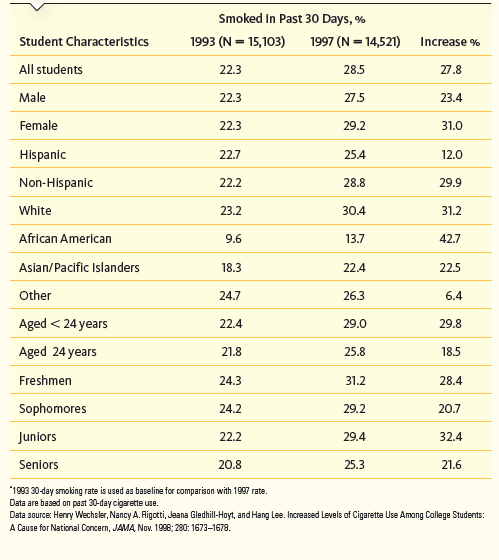
Table Smoking Prevalence in College Students from 1993-1997* Change in Smoking Prevalence Among Subgroups of College Student Characteristics, 1993 vs. 1997
سؤال
Match each 1of the following health terms with the best definition or example.

سؤال
سؤال
سؤال
سؤال
سؤال
Closely examine the ads shown in Figure. What social messages does each of these ads send to the consumer? What gender and age-group audience does each ad target? Do you think that these ads accurately portray the social effects of smoking?
Figure Tobacco advertisements. (a) Joe Camel, a popular ad in the 1980s. (b) An ad targeting women.
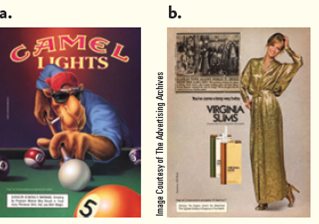
Figure Tobacco advertisements. (a) Joe Camel, a popular ad in the 1980s. (b) An ad targeting women.
سؤال
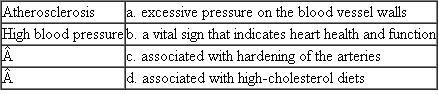
Match each of the following cardiovascular conditions with its characteristic, description, or example. Each term on the left may match more than one description on the right.
سؤال
سؤال
سؤال
سؤال
Match each of the following cancer terms with its characteristic, description, or example.

سؤال
سؤال
سؤال
Using Figure , assess the risk of developing cardiovascular disease and diabetes for each of the following people. How many high-risk factors does each person have? Using a scale of high, moderate, or low, what do you think is the overall risk for the person developing heart disease and diabetes? Justify your answers. (a) a 60-year-old male construction worker who eats fast food every day for lunch; (b) a 50-year-old female CEO who drinks soda and eats sweets to get her through each stressful day; and (c) a 20-year-old college student who eats pizza, hamburgers, and other fast food each night for dinner before playing basketball each evening.
Figure Interactions of risk factors, obesity, and chronic diseases.
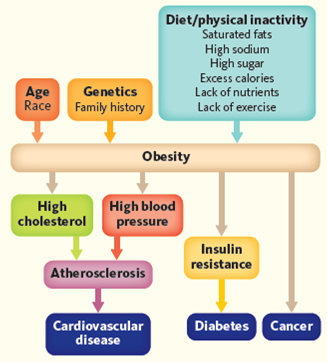
Figure Interactions of risk factors, obesity, and chronic diseases.
سؤال
Mutations of the BRCA1, PTEN, and ERBB-2 genes increase the risk of developing breast cancer. Table lists the function of these genes. Classify each gene as either an oncogene or a tumor suppressor gene (TSG). List key words from the description that support your classification. It may be helpful to think of the green/red light analogy for your classifications.
Table Breast Cancer Genes
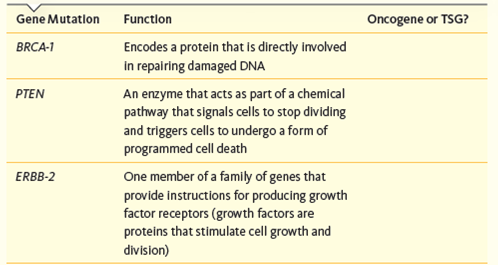
Table Breast Cancer Genes
سؤال
Your aunt tells you that she has just been diagnosed with lung cancer. The oncologist has two images: a chest X-ray film showing a tumor in the left lung (arrow) and a PET scan, which highlights specific areas (in black) where tumors are located ( Fig. ). Considering surgery, radiation therapy, and chemotherapy, what treatment option would you recommend to your aunt given the information you have? Choose any of these treatments that you believe apply and provide support for your choice(s).
Figure Lung cancer test results. (a) X-ray film. (b) PET scan.
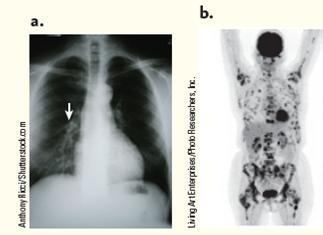
Figure Lung cancer test results. (a) X-ray film. (b) PET scan.
سؤال
Using Figure , what is the cigarette consumption rate for a lung cancer death rate of about 100 per 100,000 people in 1950?
Figure Twenty-year lag time between smoking and lung cancer.
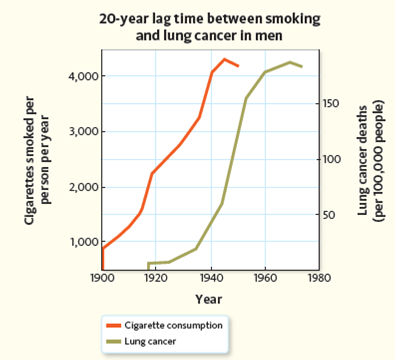
Figure Twenty-year lag time between smoking and lung cancer.

فتح الحزمة
قم بالتسجيل لفتح البطاقات في هذه المجموعة!
Unlock Deck
Unlock Deck
1/20

العب

ملء الشاشة (f)
Deck 21: The Biology of Chronic Disease
1
What happens to the lung cancer death rate as cigarette consumption rates go from 1,000 to 2,000 cigarettes per year? What is the daily consumption of cigarettes for a person who smokes 3,000 cigarettes per year?
The rate of lung cancer death increases with increase in the cigarette consumption rates. The daily consumption of cigarettes for a person who smokes 3000 cigarettes per year is around eight cigarettes per day, and slightly less than half a pack each day.
2
Is the lag time between consumption and onset of lung cancer consistent for all rates of consumption? Explain.
The lag time between consumption and onset of lung cancer is not consistent for all rates of consumption. Those who smoke more cigarettes are likely to get lung cancer sooner than the ones who consume fewer cigarettes.
3
Table shows a trend in the 1990s among college smokers. What is the overall trend comparing 1993 to 1997? In which two groups did the rate of smoking increase the most? Compare the changes in smokers of the male and female populations. What is striking about these data? Summarize the 1997 results comparing (a) males to females, (b) percentage of smokers by race, and (c) percentage of smokers by college class.
Table Smoking Prevalence in College Students from 1993-1997* Change in Smoking Prevalence Among Subgroups of College Student Characteristics, 1993 vs. 1997
Table Smoking Prevalence in College Students from 1993-1997* Change in Smoking Prevalence Among Subgroups of College Student Characteristics, 1993 vs. 1997
Between 1993 and 19977 there was an overall increase of 27.8 % in collage smokers. Both African-American and females exhibited the largest rise in the number of smokers. A comparison between males and female smokers indicate that, female smokes increased by 31%, while the male smokers increased by 23%. Based on the data it is evident the trends are inconsistent among various classes. The sophomores and seniors show comparatively lesser rate of increase that the juniors and freshman.
4
Match each 1of the following health terms with the best definition or example.
فتح الحزمة
افتح القفل للوصول البطاقات البالغ عددها 20 في هذه المجموعة.
فتح الحزمة
k this deck
5
Based on your understanding of the development of cancerous tumors, speculate about the reason for the lag time between the consumption of cigarettes in men and the development of lung cancer.
فتح الحزمة
افتح القفل للوصول البطاقات البالغ عددها 20 في هذه المجموعة.
فتح الحزمة
k this deck
6
Modifiable risk factors that increase the risk of many chronic diseases include:
A) age, gender, and race.
B) age, gender, and diet.
C) diet, physical inactivity, and gender.
D) diet, physical inactivity, and other behaviors.
A) age, gender, and race.
B) age, gender, and diet.
C) diet, physical inactivity, and gender.
D) diet, physical inactivity, and other behaviors.
فتح الحزمة
افتح القفل للوصول البطاقات البالغ عددها 20 في هذه المجموعة.
فتح الحزمة
k this deck
7
Predict whether the same lag time and general consumption trends would be similar for women. Explain your reasoning.
فتح الحزمة
افتح القفل للوصول البطاقات البالغ عددها 20 في هذه المجموعة.
فتح الحزمة
k this deck
8
Obesity is a risk factor for which of the following chronic diseases?
A) cancer
B) cardiovascular disease
C) diabetes
D) all of the above
A) cancer
B) cardiovascular disease
C) diabetes
D) all of the above
فتح الحزمة
افتح القفل للوصول البطاقات البالغ عددها 20 في هذه المجموعة.
فتح الحزمة
k this deck
9
Closely examine the ads shown in Figure. What social messages does each of these ads send to the consumer? What gender and age-group audience does each ad target? Do you think that these ads accurately portray the social effects of smoking?
Figure Tobacco advertisements. (a) Joe Camel, a popular ad in the 1980s. (b) An ad targeting women.
Figure Tobacco advertisements. (a) Joe Camel, a popular ad in the 1980s. (b) An ad targeting women.
فتح الحزمة
افتح القفل للوصول البطاقات البالغ عددها 20 في هذه المجموعة.
فتح الحزمة
k this deck
10
Match each of the following cardiovascular conditions with its characteristic, description, or example. Each term on the left may match more than one description on the right.
فتح الحزمة
افتح القفل للوصول البطاقات البالغ عددها 20 في هذه المجموعة.
فتح الحزمة
k this deck
11
Current estimates indicate that 90 percent of smokers begin smoking before the age of 20 years. Smoking among college students has declined since 1997 but still is a concern. In 2008, about
22 percent of 18- to 24-year-olds smoked. One recent trend is smoking tobacco from pipes. List several reasons why high school and college students might start smoking.
22 percent of 18- to 24-year-olds smoked. One recent trend is smoking tobacco from pipes. List several reasons why high school and college students might start smoking.
فتح الحزمة
افتح القفل للوصول البطاقات البالغ عددها 20 في هذه المجموعة.
فتح الحزمة
k this deck
12
Which one of the following statements is correct?
A) Heart attacks are caused by a blocked artery in the coronary circuit, and a stroke is caused by a blocked artery to the brain.
B) Heart attacks and strokes are caused by a blocked artery in the coronary circuit.
C) Heart attacks and strokes are caused mainly by genetic factors.
D) Heart attacks and stroke are caused mainly by age.
A) Heart attacks are caused by a blocked artery in the coronary circuit, and a stroke is caused by a blocked artery to the brain.
B) Heart attacks and strokes are caused by a blocked artery in the coronary circuit.
C) Heart attacks and strokes are caused mainly by genetic factors.
D) Heart attacks and stroke are caused mainly by age.
فتح الحزمة
افتح القفل للوصول البطاقات البالغ عددها 20 في هذه المجموعة.
فتح الحزمة
k this deck
13
High cholesterol is a risk factor for cardiovascular disease. Cholesterol is considered:
A) a dietary factor.
B) a genetic factor.
C) both a dietary and a genetic factor.
D) neither a dietary nor a genetic factor.
A) a dietary factor.
B) a genetic factor.
C) both a dietary and a genetic factor.
D) neither a dietary nor a genetic factor.
فتح الحزمة
افتح القفل للوصول البطاقات البالغ عددها 20 في هذه المجموعة.
فتح الحزمة
k this deck
14
Match each of the following cancer terms with its characteristic, description, or example.
فتح الحزمة
افتح القفل للوصول البطاقات البالغ عددها 20 في هذه المجموعة.
فتح الحزمة
k this deck
15
The normal function of the family of BRCA genes is to help prevent uncontrolled cell division. Which family of genes do the BRCA genes belong to?
A) oncogenes
B) tumor suppressor genes
C) DNA repair genes
D) none of the above
A) oncogenes
B) tumor suppressor genes
C) DNA repair genes
D) none of the above
فتح الحزمة
افتح القفل للوصول البطاقات البالغ عددها 20 في هذه المجموعة.
فتح الحزمة
k this deck
16
Examples of carcinogens include:
A) UV radiation from tanning beds.
B) cigarette smoke.
C) alcohol.
D) all of the above.
A) UV radiation from tanning beds.
B) cigarette smoke.
C) alcohol.
D) all of the above.
فتح الحزمة
افتح القفل للوصول البطاقات البالغ عددها 20 في هذه المجموعة.
فتح الحزمة
k this deck
17
Using Figure , assess the risk of developing cardiovascular disease and diabetes for each of the following people. How many high-risk factors does each person have? Using a scale of high, moderate, or low, what do you think is the overall risk for the person developing heart disease and diabetes? Justify your answers. (a) a 60-year-old male construction worker who eats fast food every day for lunch; (b) a 50-year-old female CEO who drinks soda and eats sweets to get her through each stressful day; and (c) a 20-year-old college student who eats pizza, hamburgers, and other fast food each night for dinner before playing basketball each evening.
Figure Interactions of risk factors, obesity, and chronic diseases.
Figure Interactions of risk factors, obesity, and chronic diseases.
فتح الحزمة
افتح القفل للوصول البطاقات البالغ عددها 20 في هذه المجموعة.
فتح الحزمة
k this deck
18
Mutations of the BRCA1, PTEN, and ERBB-2 genes increase the risk of developing breast cancer. Table lists the function of these genes. Classify each gene as either an oncogene or a tumor suppressor gene (TSG). List key words from the description that support your classification. It may be helpful to think of the green/red light analogy for your classifications.
Table Breast Cancer Genes
Table Breast Cancer Genes
فتح الحزمة
افتح القفل للوصول البطاقات البالغ عددها 20 في هذه المجموعة.
فتح الحزمة
k this deck
19
Your aunt tells you that she has just been diagnosed with lung cancer. The oncologist has two images: a chest X-ray film showing a tumor in the left lung (arrow) and a PET scan, which highlights specific areas (in black) where tumors are located ( Fig. ). Considering surgery, radiation therapy, and chemotherapy, what treatment option would you recommend to your aunt given the information you have? Choose any of these treatments that you believe apply and provide support for your choice(s).
Figure Lung cancer test results. (a) X-ray film. (b) PET scan.
Figure Lung cancer test results. (a) X-ray film. (b) PET scan.
فتح الحزمة
افتح القفل للوصول البطاقات البالغ عددها 20 في هذه المجموعة.
فتح الحزمة
k this deck
20
Using Figure , what is the cigarette consumption rate for a lung cancer death rate of about 100 per 100,000 people in 1950?
Figure Twenty-year lag time between smoking and lung cancer.
Figure Twenty-year lag time between smoking and lung cancer.
فتح الحزمة
افتح القفل للوصول البطاقات البالغ عددها 20 في هذه المجموعة.
فتح الحزمة
k this deck
فتح الحزمة
افتح القفل للوصول البطاقات البالغ عددها 20 في هذه المجموعة.






