







 تكلم مع الذكاء الاصطناعي


Deck 29: Economies in Transition
ملء الشاشة (f)

سؤال

سؤال
سؤال
سؤال
سؤال
سؤال
سؤال
سؤال
سؤال
سؤال
سؤال
سؤال
سؤال
سؤال
سؤال
سؤال
سؤال
سؤال
سؤال
سؤال
سؤال
سؤال
سؤال
سؤال
سؤال
سؤال
CHINA'S QUEST FOR FREE MARKET REFORM
Applicable Concept: comparative economic systems
For more than 2,000 years, China had a "self-reliance" policy that caused its economy to lag far behind advanced economies. After 1949, the communists under Chairman Mao Zedong abolished private property, executed landlords, and put farmers to work in collectives where members shared equally. These reforms are referred to as The Great Leap Forward , which in reality became The Great Leap Backward. Without the self-interest motive, communal property created low incentives to work that resulted in widespread famine and millions of deaths. After the death of Mao Zedong in 1976, China adopted new economic reforms that are continuing to transform one of the poorest economies in the world into one of the fastest growing. Under this reform system, households operate in a mixed world of state controls and free markets. A two-track pricing system still exists for some key goods and services, such as coal, petroleum, steel, transportation, and agriculture.
The rural economy is central to China's economic reforms. In the past, when farmers worked collectively in people's communes, the government told the farmers what to produce and how much to produce. They could sell their products only to the state at a price fixed by the government, rather than in markets. A so-called household contract responsibility system was created as a reform to assign land owned by the state to farmers. The farmers must pay an annual share of their profits to the government, and the state does not cover losses. Farmers, however, have the authority to decide what to produce and the price at which to sell in open markets. As a result, both farmers and consumers are noticeably better off because everyone can find and afford more food.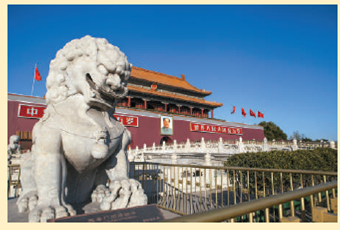
As farming productivity rose sharply, fewer farmers were needed to work on the land, and this surplus labor moved into emerging township and village nonstate enterprises. These enterprises were mostly in light industry and owned collectively by townships or villages. As a result, the composition of rural output has changed. When the reforms began in the late 1970s, farming accounted for 70 percent of the total output and industry for 20 percent. Currently, the structure of the economy has changed dramatically. In 2014, agriculture accounted for only 9 percent of GDP and industry's share had risen to 43 percent.
A 1993 article in the Boston Globe provides an interesting observation on China's economic transformation:
Stuffing the genie back into the bottle might prove difficult. The flood of money has created a bubble, particularly in stocks and property, making some people in China very rich, very fast. The China Daily, China's official English-language newspaper, recently heralded the existence of 1 million millionaires…. These millionaires, many of whom just five years ago were still wearing Mao outfits and following the party's socialist dictates, now sport stylish Western-style suits with the label ostentatiously left on the cuff.
China's controversial womb police have spent decades attempting to control the nation's population according to China's one-child policy. They have succeeded remarkably well, and the country has solved its population problem. China's population will actually decline in 2040, according to U.N. projections. And in 2015, China relaxed its one-child policy.
At the 16th Communist Party Congress in 2003, President Hu Jintao and Communist Party leaders announced another turning point and a new starting point in China's reform process. A key debate concerned reforms that would move China closer to capitalism, including the first-ever guarantee of private property under communist rule. In 2014, Forbes reported that China had over 150 billionaires. And Rupert Hoogewerf, CEO of the Hurun Report , says China's recent surge in mega-wealth is "comparable to the U.S. at the end of the 19th century, when you had the Rockefellers and Carnegies."
Why would China abandon the goal of income equality and shift from a centrally planned system to a more market-oriented economy?
Applicable Concept: comparative economic systems
For more than 2,000 years, China had a "self-reliance" policy that caused its economy to lag far behind advanced economies. After 1949, the communists under Chairman Mao Zedong abolished private property, executed landlords, and put farmers to work in collectives where members shared equally. These reforms are referred to as The Great Leap Forward , which in reality became The Great Leap Backward. Without the self-interest motive, communal property created low incentives to work that resulted in widespread famine and millions of deaths. After the death of Mao Zedong in 1976, China adopted new economic reforms that are continuing to transform one of the poorest economies in the world into one of the fastest growing. Under this reform system, households operate in a mixed world of state controls and free markets. A two-track pricing system still exists for some key goods and services, such as coal, petroleum, steel, transportation, and agriculture.
The rural economy is central to China's economic reforms. In the past, when farmers worked collectively in people's communes, the government told the farmers what to produce and how much to produce. They could sell their products only to the state at a price fixed by the government, rather than in markets. A so-called household contract responsibility system was created as a reform to assign land owned by the state to farmers. The farmers must pay an annual share of their profits to the government, and the state does not cover losses. Farmers, however, have the authority to decide what to produce and the price at which to sell in open markets. As a result, both farmers and consumers are noticeably better off because everyone can find and afford more food.
As farming productivity rose sharply, fewer farmers were needed to work on the land, and this surplus labor moved into emerging township and village nonstate enterprises. These enterprises were mostly in light industry and owned collectively by townships or villages. As a result, the composition of rural output has changed. When the reforms began in the late 1970s, farming accounted for 70 percent of the total output and industry for 20 percent. Currently, the structure of the economy has changed dramatically. In 2014, agriculture accounted for only 9 percent of GDP and industry's share had risen to 43 percent.
A 1993 article in the Boston Globe provides an interesting observation on China's economic transformation:
Stuffing the genie back into the bottle might prove difficult. The flood of money has created a bubble, particularly in stocks and property, making some people in China very rich, very fast. The China Daily, China's official English-language newspaper, recently heralded the existence of 1 million millionaires…. These millionaires, many of whom just five years ago were still wearing Mao outfits and following the party's socialist dictates, now sport stylish Western-style suits with the label ostentatiously left on the cuff.
China's controversial womb police have spent decades attempting to control the nation's population according to China's one-child policy. They have succeeded remarkably well, and the country has solved its population problem. China's population will actually decline in 2040, according to U.N. projections. And in 2015, China relaxed its one-child policy.
At the 16th Communist Party Congress in 2003, President Hu Jintao and Communist Party leaders announced another turning point and a new starting point in China's reform process. A key debate concerned reforms that would move China closer to capitalism, including the first-ever guarantee of private property under communist rule. In 2014, Forbes reported that China had over 150 billionaires. And Rupert Hoogewerf, CEO of the Hurun Report , says China's recent surge in mega-wealth is "comparable to the U.S. at the end of the 19th century, when you had the Rockefellers and Carnegies."
Why would China abandon the goal of income equality and shift from a centrally planned system to a more market-oriented economy?
سؤال
سؤال
CHINA'S QUEST FOR FREE MARKET REFORM
Applicable Concept: comparative economic systems
For more than 2,000 years, China had a "self-reliance" policy that caused its economy to lag far behind advanced economies. After 1949, the communists under Chairman Mao Zedong abolished private property, executed landlords, and put farmers to work in collectives where members shared equally. These reforms are referred to as The Great Leap Forward , which in reality became The Great Leap Backward. Without the self-interest motive, communal property created low incentives to work that resulted in widespread famine and millions of deaths. After the death of Mao Zedong in 1976, China adopted new economic reforms that are continuing to transform one of the poorest economies in the world into one of the fastest growing. Under this reform system, households operate in a mixed world of state controls and free markets. A two-track pricing system still exists for some key goods and services, such as coal, petroleum, steel, transportation, and agriculture.
The rural economy is central to China's economic reforms. In the past, when farmers worked collectively in people's communes, the government told the farmers what to produce and how much to produce. They could sell their products only to the state at a price fixed by the government, rather than in markets. A so-called household contract responsibility system was created as a reform to assign land owned by the state to farmers. The farmers must pay an annual share of their profits to the government, and the state does not cover losses. Farmers, however, have the authority to decide what to produce and the price at which to sell in open markets. As a result, both farmers and consumers are noticeably better off because everyone can find and afford more food.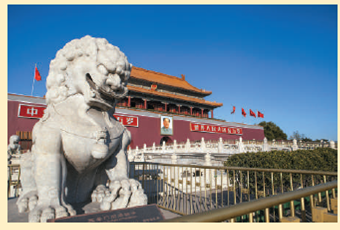
As farming productivity rose sharply, fewer farmers were needed to work on the land, and this surplus labor moved into emerging township and village nonstate enterprises. These enterprises were mostly in light industry and owned collectively by townships or villages. As a result, the composition of rural output has changed. When the reforms began in the late 1970s, farming accounted for 70 percent of the total output and industry for 20 percent. Currently, the structure of the economy has changed dramatically. In 2014, agriculture accounted for only 9 percent of GDP and industry's share had risen to 43 percent.
A 1993 article in the Boston Globe provides an interesting observation on China's economic transformation:
Stuffing the genie back into the bottle might prove difficult. The flood of money has created a bubble, particularly in stocks and property, making some people in China very rich, very fast. The China Daily, China's official English-language newspaper, recently heralded the existence of 1 million millionaires…. These millionaires, many of whom just five years ago were still wearing Mao outfits and following the party's socialist dictates, now sport stylish Western-style suits with the label ostentatiously left on the cuff.
China's controversial womb police have spent decades attempting to control the nation's population according to China's one-child policy. They have succeeded remarkably well, and the country has solved its population problem. China's population will actually decline in 2040, according to U.N. projections. And in 2015, China relaxed its one-child policy.
At the 16th Communist Party Congress in 2003, President Hu Jintao and Communist Party leaders announced another turning point and a new starting point in China's reform process. A key debate concerned reforms that would move China closer to capitalism, including the first-ever guarantee of private property under communist rule. In 2014, Forbes reported that China had over 150 billionaires. And Rupert Hoogewerf, CEO of the Hurun Report , says China's recent surge in mega-wealth is "comparable to the U.S. at the end of the 19th century, when you had the Rockefellers and Carnegies."
Which groups in China are likely to resist the reforms?
Applicable Concept: comparative economic systems
For more than 2,000 years, China had a "self-reliance" policy that caused its economy to lag far behind advanced economies. After 1949, the communists under Chairman Mao Zedong abolished private property, executed landlords, and put farmers to work in collectives where members shared equally. These reforms are referred to as The Great Leap Forward , which in reality became The Great Leap Backward. Without the self-interest motive, communal property created low incentives to work that resulted in widespread famine and millions of deaths. After the death of Mao Zedong in 1976, China adopted new economic reforms that are continuing to transform one of the poorest economies in the world into one of the fastest growing. Under this reform system, households operate in a mixed world of state controls and free markets. A two-track pricing system still exists for some key goods and services, such as coal, petroleum, steel, transportation, and agriculture.
The rural economy is central to China's economic reforms. In the past, when farmers worked collectively in people's communes, the government told the farmers what to produce and how much to produce. They could sell their products only to the state at a price fixed by the government, rather than in markets. A so-called household contract responsibility system was created as a reform to assign land owned by the state to farmers. The farmers must pay an annual share of their profits to the government, and the state does not cover losses. Farmers, however, have the authority to decide what to produce and the price at which to sell in open markets. As a result, both farmers and consumers are noticeably better off because everyone can find and afford more food.
As farming productivity rose sharply, fewer farmers were needed to work on the land, and this surplus labor moved into emerging township and village nonstate enterprises. These enterprises were mostly in light industry and owned collectively by townships or villages. As a result, the composition of rural output has changed. When the reforms began in the late 1970s, farming accounted for 70 percent of the total output and industry for 20 percent. Currently, the structure of the economy has changed dramatically. In 2014, agriculture accounted for only 9 percent of GDP and industry's share had risen to 43 percent.
A 1993 article in the Boston Globe provides an interesting observation on China's economic transformation:
Stuffing the genie back into the bottle might prove difficult. The flood of money has created a bubble, particularly in stocks and property, making some people in China very rich, very fast. The China Daily, China's official English-language newspaper, recently heralded the existence of 1 million millionaires…. These millionaires, many of whom just five years ago were still wearing Mao outfits and following the party's socialist dictates, now sport stylish Western-style suits with the label ostentatiously left on the cuff.
China's controversial womb police have spent decades attempting to control the nation's population according to China's one-child policy. They have succeeded remarkably well, and the country has solved its population problem. China's population will actually decline in 2040, according to U.N. projections. And in 2015, China relaxed its one-child policy.
At the 16th Communist Party Congress in 2003, President Hu Jintao and Communist Party leaders announced another turning point and a new starting point in China's reform process. A key debate concerned reforms that would move China closer to capitalism, including the first-ever guarantee of private property under communist rule. In 2014, Forbes reported that China had over 150 billionaires. And Rupert Hoogewerf, CEO of the Hurun Report , says China's recent surge in mega-wealth is "comparable to the U.S. at the end of the 19th century, when you had the Rockefellers and Carnegies."
Which groups in China are likely to resist the reforms?
سؤال
سؤال

فتح الحزمة
قم بالتسجيل لفتح البطاقات في هذه المجموعة!
Unlock Deck
Unlock Deck
1/30

العب

ملء الشاشة (f)
Deck 29: Economies in Transition
1
In a market economy, the three economic questions are answered by which of the following?
A) Prices determined by the interaction of the forces of supply and demand.
B) A cartel of major transnational corporations, government agencies, and consumer advocates.
C) A trilateral commission of major corporations, the military, and elite university professors.
D) A central authority such as people's committee, a government agency, or a dictator.
A) Prices determined by the interaction of the forces of supply and demand.
B) A cartel of major transnational corporations, government agencies, and consumer advocates.
C) A trilateral commission of major corporations, the military, and elite university professors.
D) A central authority such as people's committee, a government agency, or a dictator.
The market system is a system in which owners of the firm plays a major role in the allocation of resources with the main motive of profit. The decision about the allocation of the resources is based on the capability to pay and desire of the individuals.
The major three questions that market economy answers are what to produce, how to produce and for whom to produce.
The government and cartels of firms with government and consumer advocates cannot make decision on 3 major economic questions in the market economy. Therefore, option (b) is the false option.
The major role is played by the firms in the market economy therefore, options (c) and (d) arealso false.
The market economy works on the concept of market forces. The demand and supply forces determine the equilibrium price and quantity. Therefore, option is the correct option.
The major three questions that market economy answers are what to produce, how to produce and for whom to produce.
The government and cartels of firms with government and consumer advocates cannot make decision on 3 major economic questions in the market economy. Therefore, option (b) is the false option.
The major role is played by the firms in the market economy therefore, options (c) and (d) arealso false.
The market economy works on the concept of market forces. The demand and supply forces determine the equilibrium price and quantity. Therefore, option
is the correct option. 2
When making economic decisions, Adam Smith urged society to
A) follow the principle of self-interest.
B) follow the principle of public interest.
C) transfer wealth according to need.
D) provide equal income for all citizens.
A) follow the principle of self-interest.
B) follow the principle of public interest.
C) transfer wealth according to need.
D) provide equal income for all citizens.
When making economic decisions, Adam Smith urged society to?
Answer: (A) follow the principle of self interest
Explanation:
Adam smith concluded that the answer was to use free markets because this mechanism provides the incentive for everyone to follow his or her self interest.
Answer: (A) follow the principle of self interest
Explanation:
Adam smith concluded that the answer was to use free markets because this mechanism provides the incentive for everyone to follow his or her self interest.
3
Give an example of how a nation's culture affects its economic system.
Nations culture effect the economy in a great way. In under developed nations, people demand economical and small cars. But, in the case of developed nations, people prefer sports and luxurious cars. Thus, the culture affects the economy.
Also, in underdeveloped nations, women are not allowed to work and the differentiation in the pay is an example. Also the differentiation between the whites and the blacks is another example.
Also, in underdeveloped nations, women are not allowed to work and the differentiation in the pay is an example. Also the differentiation between the whites and the blacks is another example.
4
The doctrine of laissez-faire
A) advocates an economic system with extensive government intervention and little individual decision making.
B) was advocated by Adam Smith in his book The Wealth of Nations.
C) was advocated by Karl Marx in his book Das Kapital.
D) is described by none of the above.
A) advocates an economic system with extensive government intervention and little individual decision making.
B) was advocated by Adam Smith in his book The Wealth of Nations.
C) was advocated by Karl Marx in his book Das Kapital.
D) is described by none of the above.
فتح الحزمة
افتح القفل للوصول البطاقات البالغ عددها 30 في هذه المجموعة.
فتح الحزمة
k this deck
5
Which of the following is a key criticism of the market economy as a system of allocation?
A) Goods and services are allocated unequally based on ability to pay.
B) Producers have strong incentives to innovate because successful innovators are rewarded with higher profit.
C) Consumers can transmit their preference for product quality and variety by way of their "dollar votes" cast in the marketplace. Since price is freely set based on supply and demand, there are few shortages or surpluses.
D) None of the answers above are correct.
A) Goods and services are allocated unequally based on ability to pay.
B) Producers have strong incentives to innovate because successful innovators are rewarded with higher profit.
C) Consumers can transmit their preference for product quality and variety by way of their "dollar votes" cast in the marketplace. Since price is freely set based on supply and demand, there are few shortages or surpluses.
D) None of the answers above are correct.
فتح الحزمة
افتح القفل للوصول البطاقات البالغ عددها 30 في هذه المجموعة.
فتح الحزمة
k this deck
6
In Adam Smith's competitive market economy, the question of what goods to produce is determined by the
A) "invisible hand" of the price system.
B) "invisible hand" of government.
C) "visible hand" of public interest.
D) "visible hand" of laws and regulations.
A) "invisible hand" of the price system.
B) "invisible hand" of government.
C) "visible hand" of public interest.
D) "visible hand" of laws and regulations.
فتح الحزمة
افتح القفل للوصول البطاقات البالغ عددها 30 في هذه المجموعة.
فتح الحزمة
k this deck
7
Explain the advantages and disadvantages of any two of the three basic types of economic systems.
فتح الحزمة
افتح القفل للوصول البطاقات البالغ عددها 30 في هذه المجموعة.
فتح الحزمة
k this deck
8
Adam Smith wrote that the
A) economic problems of the 18th-century England were caused by free markets.
B) government should control the economy with an "invisible hand."
C) pursuit of private self-interest promotes the public interest in a market economy.
D) public or collective interest is not promoted by people pursuing their self-interest.
A) economic problems of the 18th-century England were caused by free markets.
B) government should control the economy with an "invisible hand."
C) pursuit of private self-interest promotes the public interest in a market economy.
D) public or collective interest is not promoted by people pursuing their self-interest.
فتح الحزمة
افتح القفل للوصول البطاقات البالغ عددها 30 في هذه المجموعة.
فتح الحزمة
k this deck
9
Which of the following represents key strengths of the market economy as a system of allocation?
A) Goods and services are allocated based on willingness and ability to pay, rather than based on need.
B) Producers have strong incentives to innovate because successful innovators are rewarded with higher profit.
C) Since price is freely set based on supply and demand, shortages and surpluses are minimized.
D) All of the answers above are correct.
A) Goods and services are allocated based on willingness and ability to pay, rather than based on need.
B) Producers have strong incentives to innovate because successful innovators are rewarded with higher profit.
C) Since price is freely set based on supply and demand, shortages and surpluses are minimized.
D) All of the answers above are correct.
فتح الحزمة
افتح القفل للوصول البطاقات البالغ عددها 30 في هذه المجموعة.
فتح الحزمة
k this deck
10
Adam Smith, in his book The Wealth of Nations , advocated
A) socialism.
B) an economy guided by an "invisible hand."
C) government control of the "invisible hand."
D) the adoption of mercantilism.
A) socialism.
B) an economy guided by an "invisible hand."
C) government control of the "invisible hand."
D) the adoption of mercantilism.
فتح الحزمة
افتح القفل للوصول البطاقات البالغ عددها 30 في هذه المجموعة.
فتح الحزمة
k this deck
11
Suppose a national program of free housing for the elderly is paid for by a sizable increase in income taxes. Explain a trade-off that might occur between economic security and efficiency.
فتح الحزمة
افتح القفل للوصول البطاقات البالغ عددها 30 في هذه المجموعة.
فتح الحزمة
k this deck
12
The economic system in which private individuals own the factors of production is
A) a planned economy.
B) capitalism.
C) collectivism.
D) socialism.
A) a planned economy.
B) capitalism.
C) collectivism.
D) socialism.
فتح الحزمة
افتح القفل للوصول البطاقات البالغ عددها 30 في هذه المجموعة.
فتح الحزمة
k this deck
13
Most of the world's economies are mixed economies because
A) a cartel of powerful transnational firms demands it.
B) the market system of allocation is always best.
C) the command system of allocation is always best.
D) government intervention in an overall market system exists because markets fail when there is market power, a great deal of inequality, pollution externalities, or public goods.
A) a cartel of powerful transnational firms demands it.
B) the market system of allocation is always best.
C) the command system of allocation is always best.
D) government intervention in an overall market system exists because markets fail when there is market power, a great deal of inequality, pollution externalities, or public goods.
فتح الحزمة
افتح القفل للوصول البطاقات البالغ عددها 30 في هذه المجموعة.
فتح الحزمة
k this deck
14
Which of the following is not a basic characteristic of capitalism?
A) Economic decisions occur in markets.
B) Factors of production are privately owned.
C) Income is distributed on the basis of need.
D) Businesses make their own product and price decisions.
A) Economic decisions occur in markets.
B) Factors of production are privately owned.
C) Income is distributed on the basis of need.
D) Businesses make their own product and price decisions.
فتح الحزمة
افتح القفل للوصول البطاقات البالغ عددها 30 في هذه المجموعة.
فتح الحزمة
k this deck
15
"The schools are not in the business of pleasing parents and students, and they cannot be allowed to set their own agendas. Their agendas are set by politicians, administrators, and various constituencies that hold the keys to political power. The public system is built to see to it that the schools do what their government wants them to do-that they conform to the higher-order values their governors seek to impose." Relate this statement to Exhibit 1.
فتح الحزمة
افتح القفل للوصول البطاقات البالغ عددها 30 في هذه المجموعة.
فتح الحزمة
k this deck
16
According to Karl Marx, under capitalism,
A) profits would be shared fairly.
B) incomes would be distributed equally.
C) workers would be exploited and revolt against owners of capital.
D) workers would actually own the factors of production.
A) profits would be shared fairly.
B) incomes would be distributed equally.
C) workers would be exploited and revolt against owners of capital.
D) workers would actually own the factors of production.
فتح الحزمة
افتح القفل للوصول البطاقات البالغ عددها 30 في هذه المجموعة.
فتح الحزمة
k this deck
17
The term "capitalism" refers to which of the following?
A) A religion based on amassing capital.
B) An economic system characterized by private ownership of resources, and decentralized market allocation.
C) An economic system characterized by government ownership of resources and centralized allocation.
D) None of the above answers are correct.
A) A religion based on amassing capital.
B) An economic system characterized by private ownership of resources, and decentralized market allocation.
C) An economic system characterized by government ownership of resources and centralized allocation.
D) None of the above answers are correct.
فتح الحزمة
افتح القفل للوصول البطاقات البالغ عددها 30 في هذه المجموعة.
فتح الحزمة
k this deck
18
Karl Marx predicted which of the following?
A) market system would self-destruct.
B) "haves" would revolt against the "have-nots."
C) wealthy were entitled to profits as their reward for risk-taking.
D) None of the answers above are correct.
A) market system would self-destruct.
B) "haves" would revolt against the "have-nots."
C) wealthy were entitled to profits as their reward for risk-taking.
D) None of the answers above are correct.
فتح الحزمة
افتح القفل للوصول البطاقات البالغ عددها 30 في هذه المجموعة.
فتح الحزمة
k this deck
19
Suppose you are a farmer. Explain why you would be motivated to work in traditional, command, and market economies.
فتح الحزمة
افتح القفل للوصول البطاقات البالغ عددها 30 في هذه المجموعة.
فتح الحزمة
k this deck
20
How many nations in the world today operate totally according to Karl Marx's theory of communism?
A) None.
B) Several.
C) Only the United States.
D) Many.
A) None.
B) Several.
C) Only the United States.
D) Many.
فتح الحزمة
افتح القفل للوصول البطاقات البالغ عددها 30 في هذه المجموعة.
فتح الحزمة
k this deck
21
The economic system in which all of the basic decisions are made through a centralized authority, such as a government agency, is termed a
A) market economy.
B) capitalistic economy.
C) command economy.
D) traditional economy.
A) market economy.
B) capitalistic economy.
C) command economy.
D) traditional economy.
فتح الحزمة
افتح القفل للوصول البطاقات البالغ عددها 30 في هذه المجموعة.
فتح الحزمة
k this deck
22
In Marx's ideal communist society, the state
A) actively promotes income equality.
B) follows the doctrine of laissez-faire.
C) owns resources and conducts planning.
D) does not exist.
A) actively promotes income equality.
B) follows the doctrine of laissez-faire.
C) owns resources and conducts planning.
D) does not exist.
فتح الحزمة
افتح القفل للوصول البطاقات البالغ عددها 30 في هذه المجموعة.
فتح الحزمة
k this deck
23
Karl Marx believed the market system was doomed. Why do you think he was right or wrong?
فتح الحزمة
افتح القفل للوصول البطاقات البالغ عددها 30 في هذه المجموعة.
فتح الحزمة
k this deck
24
Karl Marx was a (an)
A) 19th-century German philosopher.
B) 18th-century Russian economist.
C) 14th-century Polish banker.
D) 19th-century Russian journalist.
A) 19th-century German philosopher.
B) 18th-century Russian economist.
C) 14th-century Polish banker.
D) 19th-century Russian journalist.
فتح الحزمة
افتح القفل للوصول البطاقات البالغ عددها 30 في هذه المجموعة.
فتح الحزمة
k this deck
25
Command economies typically suffer from
A) unemployment, but not underemployment.
B) neither unemployment nor underemployment.
C) both unemployment and underemployment.
D) underemployment, but not unemployment.
A) unemployment, but not underemployment.
B) neither unemployment nor underemployment.
C) both unemployment and underemployment.
D) underemployment, but not unemployment.
فتح الحزمة
افتح القفل للوصول البطاقات البالغ عددها 30 في هذه المجموعة.
فتح الحزمة
k this deck
26
CHINA'S QUEST FOR FREE MARKET REFORM
Applicable Concept: comparative economic systems
For more than 2,000 years, China had a "self-reliance" policy that caused its economy to lag far behind advanced economies. After 1949, the communists under Chairman Mao Zedong abolished private property, executed landlords, and put farmers to work in collectives where members shared equally. These reforms are referred to as The Great Leap Forward , which in reality became The Great Leap Backward. Without the self-interest motive, communal property created low incentives to work that resulted in widespread famine and millions of deaths. After the death of Mao Zedong in 1976, China adopted new economic reforms that are continuing to transform one of the poorest economies in the world into one of the fastest growing. Under this reform system, households operate in a mixed world of state controls and free markets. A two-track pricing system still exists for some key goods and services, such as coal, petroleum, steel, transportation, and agriculture.
The rural economy is central to China's economic reforms. In the past, when farmers worked collectively in people's communes, the government told the farmers what to produce and how much to produce. They could sell their products only to the state at a price fixed by the government, rather than in markets. A so-called household contract responsibility system was created as a reform to assign land owned by the state to farmers. The farmers must pay an annual share of their profits to the government, and the state does not cover losses. Farmers, however, have the authority to decide what to produce and the price at which to sell in open markets. As a result, both farmers and consumers are noticeably better off because everyone can find and afford more food.
As farming productivity rose sharply, fewer farmers were needed to work on the land, and this surplus labor moved into emerging township and village nonstate enterprises. These enterprises were mostly in light industry and owned collectively by townships or villages. As a result, the composition of rural output has changed. When the reforms began in the late 1970s, farming accounted for 70 percent of the total output and industry for 20 percent. Currently, the structure of the economy has changed dramatically. In 2014, agriculture accounted for only 9 percent of GDP and industry's share had risen to 43 percent.
A 1993 article in the Boston Globe provides an interesting observation on China's economic transformation:
Stuffing the genie back into the bottle might prove difficult. The flood of money has created a bubble, particularly in stocks and property, making some people in China very rich, very fast. The China Daily, China's official English-language newspaper, recently heralded the existence of 1 million millionaires…. These millionaires, many of whom just five years ago were still wearing Mao outfits and following the party's socialist dictates, now sport stylish Western-style suits with the label ostentatiously left on the cuff.
China's controversial womb police have spent decades attempting to control the nation's population according to China's one-child policy. They have succeeded remarkably well, and the country has solved its population problem. China's population will actually decline in 2040, according to U.N. projections. And in 2015, China relaxed its one-child policy.
At the 16th Communist Party Congress in 2003, President Hu Jintao and Communist Party leaders announced another turning point and a new starting point in China's reform process. A key debate concerned reforms that would move China closer to capitalism, including the first-ever guarantee of private property under communist rule. In 2014, Forbes reported that China had over 150 billionaires. And Rupert Hoogewerf, CEO of the Hurun Report , says China's recent surge in mega-wealth is "comparable to the U.S. at the end of the 19th century, when you had the Rockefellers and Carnegies."
Why would China abandon the goal of income equality and shift from a centrally planned system to a more market-oriented economy?
Applicable Concept: comparative economic systems
For more than 2,000 years, China had a "self-reliance" policy that caused its economy to lag far behind advanced economies. After 1949, the communists under Chairman Mao Zedong abolished private property, executed landlords, and put farmers to work in collectives where members shared equally. These reforms are referred to as The Great Leap Forward , which in reality became The Great Leap Backward. Without the self-interest motive, communal property created low incentives to work that resulted in widespread famine and millions of deaths. After the death of Mao Zedong in 1976, China adopted new economic reforms that are continuing to transform one of the poorest economies in the world into one of the fastest growing. Under this reform system, households operate in a mixed world of state controls and free markets. A two-track pricing system still exists for some key goods and services, such as coal, petroleum, steel, transportation, and agriculture.
The rural economy is central to China's economic reforms. In the past, when farmers worked collectively in people's communes, the government told the farmers what to produce and how much to produce. They could sell their products only to the state at a price fixed by the government, rather than in markets. A so-called household contract responsibility system was created as a reform to assign land owned by the state to farmers. The farmers must pay an annual share of their profits to the government, and the state does not cover losses. Farmers, however, have the authority to decide what to produce and the price at which to sell in open markets. As a result, both farmers and consumers are noticeably better off because everyone can find and afford more food.
As farming productivity rose sharply, fewer farmers were needed to work on the land, and this surplus labor moved into emerging township and village nonstate enterprises. These enterprises were mostly in light industry and owned collectively by townships or villages. As a result, the composition of rural output has changed. When the reforms began in the late 1970s, farming accounted for 70 percent of the total output and industry for 20 percent. Currently, the structure of the economy has changed dramatically. In 2014, agriculture accounted for only 9 percent of GDP and industry's share had risen to 43 percent.
A 1993 article in the Boston Globe provides an interesting observation on China's economic transformation:
Stuffing the genie back into the bottle might prove difficult. The flood of money has created a bubble, particularly in stocks and property, making some people in China very rich, very fast. The China Daily, China's official English-language newspaper, recently heralded the existence of 1 million millionaires…. These millionaires, many of whom just five years ago were still wearing Mao outfits and following the party's socialist dictates, now sport stylish Western-style suits with the label ostentatiously left on the cuff.
China's controversial womb police have spent decades attempting to control the nation's population according to China's one-child policy. They have succeeded remarkably well, and the country has solved its population problem. China's population will actually decline in 2040, according to U.N. projections. And in 2015, China relaxed its one-child policy.
At the 16th Communist Party Congress in 2003, President Hu Jintao and Communist Party leaders announced another turning point and a new starting point in China's reform process. A key debate concerned reforms that would move China closer to capitalism, including the first-ever guarantee of private property under communist rule. In 2014, Forbes reported that China had over 150 billionaires. And Rupert Hoogewerf, CEO of the Hurun Report , says China's recent surge in mega-wealth is "comparable to the U.S. at the end of the 19th century, when you had the Rockefellers and Carnegies."
Why would China abandon the goal of income equality and shift from a centrally planned system to a more market-oriented economy?
فتح الحزمة
افتح القفل للوصول البطاقات البالغ عددها 30 في هذه المجموعة.
فتح الحزمة
k this deck
27
If all real-world economies are mixed economies, why is the U.S. economy described as capitalist, while the Cuban economy is described as communist?
فتح الحزمة
افتح القفل للوصول البطاقات البالغ عددها 30 في هذه المجموعة.
فتح الحزمة
k this deck
28
CHINA'S QUEST FOR FREE MARKET REFORM
Applicable Concept: comparative economic systems
For more than 2,000 years, China had a "self-reliance" policy that caused its economy to lag far behind advanced economies. After 1949, the communists under Chairman Mao Zedong abolished private property, executed landlords, and put farmers to work in collectives where members shared equally. These reforms are referred to as The Great Leap Forward , which in reality became The Great Leap Backward. Without the self-interest motive, communal property created low incentives to work that resulted in widespread famine and millions of deaths. After the death of Mao Zedong in 1976, China adopted new economic reforms that are continuing to transform one of the poorest economies in the world into one of the fastest growing. Under this reform system, households operate in a mixed world of state controls and free markets. A two-track pricing system still exists for some key goods and services, such as coal, petroleum, steel, transportation, and agriculture.
The rural economy is central to China's economic reforms. In the past, when farmers worked collectively in people's communes, the government told the farmers what to produce and how much to produce. They could sell their products only to the state at a price fixed by the government, rather than in markets. A so-called household contract responsibility system was created as a reform to assign land owned by the state to farmers. The farmers must pay an annual share of their profits to the government, and the state does not cover losses. Farmers, however, have the authority to decide what to produce and the price at which to sell in open markets. As a result, both farmers and consumers are noticeably better off because everyone can find and afford more food.
As farming productivity rose sharply, fewer farmers were needed to work on the land, and this surplus labor moved into emerging township and village nonstate enterprises. These enterprises were mostly in light industry and owned collectively by townships or villages. As a result, the composition of rural output has changed. When the reforms began in the late 1970s, farming accounted for 70 percent of the total output and industry for 20 percent. Currently, the structure of the economy has changed dramatically. In 2014, agriculture accounted for only 9 percent of GDP and industry's share had risen to 43 percent.
A 1993 article in the Boston Globe provides an interesting observation on China's economic transformation:
Stuffing the genie back into the bottle might prove difficult. The flood of money has created a bubble, particularly in stocks and property, making some people in China very rich, very fast. The China Daily, China's official English-language newspaper, recently heralded the existence of 1 million millionaires…. These millionaires, many of whom just five years ago were still wearing Mao outfits and following the party's socialist dictates, now sport stylish Western-style suits with the label ostentatiously left on the cuff.
China's controversial womb police have spent decades attempting to control the nation's population according to China's one-child policy. They have succeeded remarkably well, and the country has solved its population problem. China's population will actually decline in 2040, according to U.N. projections. And in 2015, China relaxed its one-child policy.
At the 16th Communist Party Congress in 2003, President Hu Jintao and Communist Party leaders announced another turning point and a new starting point in China's reform process. A key debate concerned reforms that would move China closer to capitalism, including the first-ever guarantee of private property under communist rule. In 2014, Forbes reported that China had over 150 billionaires. And Rupert Hoogewerf, CEO of the Hurun Report , says China's recent surge in mega-wealth is "comparable to the U.S. at the end of the 19th century, when you had the Rockefellers and Carnegies."
Which groups in China are likely to resist the reforms?
Applicable Concept: comparative economic systems
For more than 2,000 years, China had a "self-reliance" policy that caused its economy to lag far behind advanced economies. After 1949, the communists under Chairman Mao Zedong abolished private property, executed landlords, and put farmers to work in collectives where members shared equally. These reforms are referred to as The Great Leap Forward , which in reality became The Great Leap Backward. Without the self-interest motive, communal property created low incentives to work that resulted in widespread famine and millions of deaths. After the death of Mao Zedong in 1976, China adopted new economic reforms that are continuing to transform one of the poorest economies in the world into one of the fastest growing. Under this reform system, households operate in a mixed world of state controls and free markets. A two-track pricing system still exists for some key goods and services, such as coal, petroleum, steel, transportation, and agriculture.
The rural economy is central to China's economic reforms. In the past, when farmers worked collectively in people's communes, the government told the farmers what to produce and how much to produce. They could sell their products only to the state at a price fixed by the government, rather than in markets. A so-called household contract responsibility system was created as a reform to assign land owned by the state to farmers. The farmers must pay an annual share of their profits to the government, and the state does not cover losses. Farmers, however, have the authority to decide what to produce and the price at which to sell in open markets. As a result, both farmers and consumers are noticeably better off because everyone can find and afford more food.
As farming productivity rose sharply, fewer farmers were needed to work on the land, and this surplus labor moved into emerging township and village nonstate enterprises. These enterprises were mostly in light industry and owned collectively by townships or villages. As a result, the composition of rural output has changed. When the reforms began in the late 1970s, farming accounted for 70 percent of the total output and industry for 20 percent. Currently, the structure of the economy has changed dramatically. In 2014, agriculture accounted for only 9 percent of GDP and industry's share had risen to 43 percent.
A 1993 article in the Boston Globe provides an interesting observation on China's economic transformation:
Stuffing the genie back into the bottle might prove difficult. The flood of money has created a bubble, particularly in stocks and property, making some people in China very rich, very fast. The China Daily, China's official English-language newspaper, recently heralded the existence of 1 million millionaires…. These millionaires, many of whom just five years ago were still wearing Mao outfits and following the party's socialist dictates, now sport stylish Western-style suits with the label ostentatiously left on the cuff.
China's controversial womb police have spent decades attempting to control the nation's population according to China's one-child policy. They have succeeded remarkably well, and the country has solved its population problem. China's population will actually decline in 2040, according to U.N. projections. And in 2015, China relaxed its one-child policy.
At the 16th Communist Party Congress in 2003, President Hu Jintao and Communist Party leaders announced another turning point and a new starting point in China's reform process. A key debate concerned reforms that would move China closer to capitalism, including the first-ever guarantee of private property under communist rule. In 2014, Forbes reported that China had over 150 billionaires. And Rupert Hoogewerf, CEO of the Hurun Report , says China's recent surge in mega-wealth is "comparable to the U.S. at the end of the 19th century, when you had the Rockefellers and Carnegies."
Which groups in China are likely to resist the reforms?
فتح الحزمة
افتح القفل للوصول البطاقات البالغ عددها 30 في هذه المجموعة.
فتح الحزمة
k this deck
29
Adam Smith stated that the role of government in society should be to
A) provide defense.
B) enforce contracts.
C) do absolutely nothing.
D) Both answers a. and b. are correct.
A) provide defense.
B) enforce contracts.
C) do absolutely nothing.
D) Both answers a. and b. are correct.
فتح الحزمة
افتح القفل للوصول البطاقات البالغ عددها 30 في هذه المجموعة.
فتح الحزمة
k this deck
30
Suppose you are a factory manager. Describe how you might reach production goals under a system of pure capitalism and under a system of pure socialism.
فتح الحزمة
افتح القفل للوصول البطاقات البالغ عددها 30 في هذه المجموعة.
فتح الحزمة
k this deck
فتح الحزمة
افتح القفل للوصول البطاقات البالغ عددها 30 في هذه المجموعة.






