







 تكلم مع الذكاء الاصطناعي


Deck 28: Plant Nutrition and Transport
ملء الشاشة (f)

سؤال
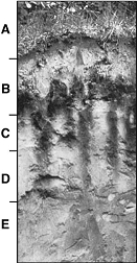 The following questions refer to the figure above illustrating soil horizons.NOTE: The labels are not the actual names of the soil horizons.
All of the following statements are true concerning mycorrhizae EXCEPT that
A) the fungus may penetrate into root cells.
B) mycorrhizae increase the surface area for absorption.
C) roots obtain minerals from the fungus.
D) the fungus provides the plant with nitrogen-rich compounds.
E) it is a mutualistic symbiosis.

سؤال
Which of the following does NOT describe the Casparian strip?
A) waxy
B) component of the endodermis
C) permeable
D) barrier
E) waterproof
سؤال
سؤال
The following questions refer to the figure above illustrating soil horizons.NOTE: The labels are not the actual names of the soil horizons.Which of the following contribute to both leaching and soil erosion?
A) strong winds
B) mineral composition of soil
C) moving water
D) climate
E) none of these
سؤال
Nitrogen-fixing bacteria convert ____ to ____.
A) gaseous nitrogen; ammonia
B) ammonia; gaseous nitrogen
C) gaseous nitrogen; nitrates
D) gaseous nitrogen; nitrites
E) ammonia; nitrates
سؤال
The following questions refer to the figure above illustrating soil horizons.NOTE: The labels are not the actual names of the soil horizons.Which soil horizon is composed of organic litter?
A) A
B) B
C) C
D) D
E) E
سؤال
سؤال
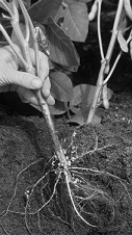
The above figure is a photograph of
A) a plant with root nodules.
B) mycorrhizae.
C) root hairs.
D) a demonstration of the effect of mutualistic Rhizobium.
E) a microscopic view of a nodule forming around area where the bacterium infect.
سؤال
سؤال
Water tension in a transpiring plant
A) is exerted on a continuous column of water throughout the plant.
B) is the result of the hydrogen bonding of water molecules.
C) results in negative pressure in the xylem.
D) exerts a pull on water molecules from leaves to roots.
E) fits all of these descriptions.
سؤال
The following questions refer to the figure above illustrating soil horizons.NOTE: The labels are not the actual names of the soil horizons.Chlorosis, stunted growth with yellowing and death of young leaves, is caused by a deficiency of
A) nitrogen.
B) zinc.
C) magnesium.
D) iron.
E) any of these.
سؤال
The following questions refer to the figure above illustrating soil horizons.NOTE: The labels are not the actual names of the soil horizons.Which soil horizon has no organic matter or weathered rock?
A) A
B) B
C) C
D) D
E) E
سؤال
The following questions refer to the figure above illustrating soil horizons.NOTE: The labels are not the actual names of the soil horizons.Which of the following is true concerning root nodules?
A) They may kill a plant.
B) They are produced by a fungus.
C) They remove nitrogen compounds from the plant.
D) They convert the harmful ammonia that plant cells produce into gaseous nitrogen.
E) None of these are true.
سؤال
The Casparian strip is associated with the
A) epidermis.
B) vascular tissue.
C) cortex.
D) root hairs.
E) endodermis.
سؤال
سؤال
The following questions refer to the figure above illustrating soil horizons.NOTE: The labels are not the actual names of the soil horizons.Leaching is caused by
A) bacterial action.
B) wind.
C) water.
D) microbial activity.
E) none of these.
سؤال
Which of the following statements is false?
A) Xylem vessels are similar to drinking straws.
B) The transport of water in xylem is due to positive pressure generated by the root.
C) Water evaporates mainly through stomata.
D) Water is drawn up to the top of a tree by the pull of transpiration.
E) Plants absorb the majority of needed elements from water and soil.
سؤال
سؤال
Which theory of water transport states that hydrogen bonding allows water molecules to maintain a continuous fluid column as water is pulled from roots to leaves?
A) pressure flow
B) evaporation-condensation
C) cohesion-tension
D) osmotic pressure
E) bulk flow
سؤال
Most of the water moving through a plant is lost through
A) osmotic gradients in the soil.
B) evaporation.
C) pressure flow forces in the xylem.
D) photolysis.
E) photosynthesis.
سؤال
Which of the following processes does NOT serve to maintain low pressure at the receiving end of sieve tube pipelines?
A) sucrose conversion into cell-wall polysaccharides
B) sucrose conversion into starch in the receiving regions
C) sucrose conversion to glucose, which is then used in cellular respiration
D) activity of companion cells
E) conversion of sucrose to fructose in fruits
سؤال
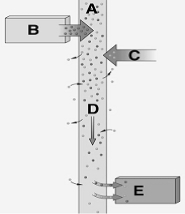 The following questions refer to the figure above illustrating transport in phloem.
Bulk flow of organic compounds is indicated by
A) A.
B) B.
C) C.
D) D.
E) E.
سؤال
An opening in leaves that functions in the exchange of gases is called a
A) cuticle.
B) stoma.
C) guard cell.
D) pit.
E) pore.
سؤال
Sieve tubes are different from vessel members because they
A) do not have nuclei.
B) are not connected to each other.
C) are alive at maturity.
D) conduct minerals.
E) fit all of these descriptions.
سؤال
سؤال
The following questions refer to the figure above illustrating transport in phloem.____ can indicate a fruit or developing root cells.
A) A
B) B
C) C
D) D
E) E
سؤال
سؤال
All of the following statements are true concerning phloem tissue EXCEPT that
A) it transports plant-manufactured products.
B) it stores organic compounds.
C) it is composed of living cells.
D) only some of its cells have nuclei.
E) it does not transport minerals.
سؤال
Carbohydrates converted to ____ are ____ in plants.
A) cellulose; stored
B) starch; stored
C) starch; transported
D) fats; stored
E) glucose; transported
سؤال
Which of the following are never sink regions for the pressure-flow translocation of organic compounds?
A) growing leaves
B) seeds
C) fruits
D) roots
E) mature photosynthesizing leaves
سؤال
Which of the following factors influence the opening and closing of the stomata?
A) rate of photosynthesis
B) water availability
C) concentration of carbon dioxide in the leaf
D) light intensity
E) all of these
سؤال
سؤال
The cuticle
A) conserves water.
B) reduces absorption of carbon dioxide by the plant.
C) relegates transpiration to the stomata.
D) helps prevent wilting.
E) does all of these.
سؤال
Movement of soluble organic material through sieve tube members occurs through
A) translocation.
B) active transport.
C) cohesion-tension.
D) transpiration.
E) facilitated transport.
سؤال
سؤال
The following questions refer to the figure above illustrating transport in phloem.Companion cell assisted loading of organic compounds is indicated at
A) A.
B) B.
C) C.
D) D.
E) E.
سؤال
Guard cells
A) surround the stoma.
B) control the flow of gases between the interior of a leaf and the atmosphere.
C) become turgid when it becomes light if environmental conditions are not too hot or too dry.
D) may absorb water from surrounding epidermal cells.
E) do all of these.
سؤال
The generally accepted explanation for the movement of organic compounds in phloem is
A) the cohesion-tension theory.
B) the pressure flow theory.
C) active transport.
D) the transpiration-pull theory.
E) root pressure.
سؤال
The movement of organic compounds in phloem is described as
A) sink-to-source.
B) pressure flow.
C) cohesion-tension.
D) active transport.
E) transpiration pull.
سؤال
The stomata
A) open at night in most plants.
B) are open when the guard cells are swollen with water.
C) close when water moves into the guard cells.
D) are covered by the cuticle to reduce water loss.
E) fit all of these descriptions.
سؤال
سؤال
سؤال
سؤال
سؤال
سؤال
سؤال
سؤال
سؤال
سؤال
سؤال
سؤال
سؤال
سؤال
سؤال
سؤال
سؤال
سؤال
سؤال
سؤال
سؤال
سؤال
سؤال
سؤال
سؤال
سؤال
سؤال
سؤال

فتح الحزمة
قم بالتسجيل لفتح البطاقات في هذه المجموعة!
Unlock Deck
Unlock Deck
1/68

العب

ملء الشاشة (f)
Deck 28: Plant Nutrition and Transport
1
The following questions refer to the figure above illustrating soil horizons.NOTE: The labels are not the actual names of the soil horizons.All of the following statements are true concerning mycorrhizae EXCEPT that
A) the fungus may penetrate into root cells.
B) mycorrhizae increase the surface area for absorption.
C) roots obtain minerals from the fungus.
D) the fungus provides the plant with nitrogen-rich compounds.
E) it is a mutualistic symbiosis.
D
2
Which of the following does NOT describe the Casparian strip?
A) waxy
B) component of the endodermis
C) permeable
D) barrier
E) waterproof
C
3
Humus includes all of the following EXCEPT
A) feces.
B) dead organisms.
C) leaf litter.
D) weathered rock.
E) decomposing organic matter.
A) feces.
B) dead organisms.
C) leaf litter.
D) weathered rock.
E) decomposing organic matter.
D
4
The following questions refer to the figure above illustrating soil horizons.NOTE: The labels are not the actual names of the soil horizons.Which of the following contribute to both leaching and soil erosion?
A) strong winds
B) mineral composition of soil
C) moving water
D) climate
E) none of these
فتح الحزمة
افتح القفل للوصول البطاقات البالغ عددها 68 في هذه المجموعة.
فتح الحزمة
k this deck
5
Nitrogen-fixing bacteria convert ____ to ____.
A) gaseous nitrogen; ammonia
B) ammonia; gaseous nitrogen
C) gaseous nitrogen; nitrates
D) gaseous nitrogen; nitrites
E) ammonia; nitrates
فتح الحزمة
افتح القفل للوصول البطاقات البالغ عددها 68 في هذه المجموعة.
فتح الحزمة
k this deck
6
The following questions refer to the figure above illustrating soil horizons.NOTE: The labels are not the actual names of the soil horizons.Which soil horizon is composed of organic litter?
A) A
B) B
C) C
D) D
E) E
فتح الحزمة
افتح القفل للوصول البطاقات البالغ عددها 68 في هذه المجموعة.
فتح الحزمة
k this deck
7
Alpine pennycress plants remove zinc and cadmium from the soil and store them away in their
A) chloroplasts.
B) amyloplasts.
C) central vacuoles.
D) Golgi bodies.
E) vesicles.
A) chloroplasts.
B) amyloplasts.
C) central vacuoles.
D) Golgi bodies.
E) vesicles.
فتح الحزمة
افتح القفل للوصول البطاقات البالغ عددها 68 في هذه المجموعة.
فتح الحزمة
k this deck
8
The above figure is a photograph of
A) a plant with root nodules.
B) mycorrhizae.
C) root hairs.
D) a demonstration of the effect of mutualistic Rhizobium.
E) a microscopic view of a nodule forming around area where the bacterium infect.
فتح الحزمة
افتح القفل للوصول البطاقات البالغ عددها 68 في هذه المجموعة.
فتح الحزمة
k this deck
9
The Army and the Environmental Protection Agency are decreasing the contamination at the Army's Aberdeen Proving Grounds by
A) removing contaminated soil.
B) planting hybrid poplar trees.
C) chemically degrading the contaminants.
D) covering the contaminated soil with a sealant.
E) doing none of these.
A) removing contaminated soil.
B) planting hybrid poplar trees.
C) chemically degrading the contaminants.
D) covering the contaminated soil with a sealant.
E) doing none of these.
فتح الحزمة
افتح القفل للوصول البطاقات البالغ عددها 68 في هذه المجموعة.
فتح الحزمة
k this deck
10
Water tension in a transpiring plant
A) is exerted on a continuous column of water throughout the plant.
B) is the result of the hydrogen bonding of water molecules.
C) results in negative pressure in the xylem.
D) exerts a pull on water molecules from leaves to roots.
E) fits all of these descriptions.
فتح الحزمة
افتح القفل للوصول البطاقات البالغ عددها 68 في هذه المجموعة.
فتح الحزمة
k this deck
11
The following questions refer to the figure above illustrating soil horizons.NOTE: The labels are not the actual names of the soil horizons.Chlorosis, stunted growth with yellowing and death of young leaves, is caused by a deficiency of
A) nitrogen.
B) zinc.
C) magnesium.
D) iron.
E) any of these.
فتح الحزمة
افتح القفل للوصول البطاقات البالغ عددها 68 في هذه المجموعة.
فتح الحزمة
k this deck
12
The following questions refer to the figure above illustrating soil horizons.NOTE: The labels are not the actual names of the soil horizons.Which soil horizon has no organic matter or weathered rock?
A) A
B) B
C) C
D) D
E) E
فتح الحزمة
افتح القفل للوصول البطاقات البالغ عددها 68 في هذه المجموعة.
فتح الحزمة
k this deck
13
The following questions refer to the figure above illustrating soil horizons.NOTE: The labels are not the actual names of the soil horizons.Which of the following is true concerning root nodules?
A) They may kill a plant.
B) They are produced by a fungus.
C) They remove nitrogen compounds from the plant.
D) They convert the harmful ammonia that plant cells produce into gaseous nitrogen.
E) None of these are true.
فتح الحزمة
افتح القفل للوصول البطاقات البالغ عددها 68 في هذه المجموعة.
فتح الحزمة
k this deck
14
The Casparian strip is associated with the
A) epidermis.
B) vascular tissue.
C) cortex.
D) root hairs.
E) endodermis.
فتح الحزمة
افتح القفل للوصول البطاقات البالغ عددها 68 في هذه المجموعة.
فتح الحزمة
k this deck
15
Loams are soils with the best water and oxygen penetration because they have
A) a high proportion of sand.
B) a high proportion of silt.
C) a high proportion of clay.
D) high proportions of sand and silt and a low proportion of clay.
E) equal proportions of sand, silt, and clay.
A) a high proportion of sand.
B) a high proportion of silt.
C) a high proportion of clay.
D) high proportions of sand and silt and a low proportion of clay.
E) equal proportions of sand, silt, and clay.
فتح الحزمة
افتح القفل للوصول البطاقات البالغ عددها 68 في هذه المجموعة.
فتح الحزمة
k this deck
16
The following questions refer to the figure above illustrating soil horizons.NOTE: The labels are not the actual names of the soil horizons.Leaching is caused by
A) bacterial action.
B) wind.
C) water.
D) microbial activity.
E) none of these.
فتح الحزمة
افتح القفل للوصول البطاقات البالغ عددها 68 في هذه المجموعة.
فتح الحزمة
k this deck
17
Which of the following statements is false?
A) Xylem vessels are similar to drinking straws.
B) The transport of water in xylem is due to positive pressure generated by the root.
C) Water evaporates mainly through stomata.
D) Water is drawn up to the top of a tree by the pull of transpiration.
E) Plants absorb the majority of needed elements from water and soil.
فتح الحزمة
افتح القفل للوصول البطاقات البالغ عددها 68 في هذه المجموعة.
فتح الحزمة
k this deck
18
Organisms that are used to decontaminate soils may
A) store the contaminants in their tissues.
B) release pollutants into the air.
C) degrade the pollutants.
D) be any plant species.
E) store the contaminants in their tissues, release pollutants into the air, and degrade the pollutants.
A) store the contaminants in their tissues.
B) release pollutants into the air.
C) degrade the pollutants.
D) be any plant species.
E) store the contaminants in their tissues, release pollutants into the air, and degrade the pollutants.
فتح الحزمة
افتح القفل للوصول البطاقات البالغ عددها 68 في هذه المجموعة.
فتح الحزمة
k this deck
19
Which theory of water transport states that hydrogen bonding allows water molecules to maintain a continuous fluid column as water is pulled from roots to leaves?
A) pressure flow
B) evaporation-condensation
C) cohesion-tension
D) osmotic pressure
E) bulk flow
فتح الحزمة
افتح القفل للوصول البطاقات البالغ عددها 68 في هذه المجموعة.
فتح الحزمة
k this deck
20
Most of the water moving through a plant is lost through
A) osmotic gradients in the soil.
B) evaporation.
C) pressure flow forces in the xylem.
D) photolysis.
E) photosynthesis.
فتح الحزمة
افتح القفل للوصول البطاقات البالغ عددها 68 في هذه المجموعة.
فتح الحزمة
k this deck
21
Which of the following processes does NOT serve to maintain low pressure at the receiving end of sieve tube pipelines?
A) sucrose conversion into cell-wall polysaccharides
B) sucrose conversion into starch in the receiving regions
C) sucrose conversion to glucose, which is then used in cellular respiration
D) activity of companion cells
E) conversion of sucrose to fructose in fruits
فتح الحزمة
افتح القفل للوصول البطاقات البالغ عددها 68 في هذه المجموعة.
فتح الحزمة
k this deck
22
The following questions refer to the figure above illustrating transport in phloem.Bulk flow of organic compounds is indicated by
A) A.
B) B.
C) C.
D) D.
E) E.
فتح الحزمة
افتح القفل للوصول البطاقات البالغ عددها 68 في هذه المجموعة.
فتح الحزمة
k this deck
23
An opening in leaves that functions in the exchange of gases is called a
A) cuticle.
B) stoma.
C) guard cell.
D) pit.
E) pore.
فتح الحزمة
افتح القفل للوصول البطاقات البالغ عددها 68 في هذه المجموعة.
فتح الحزمة
k this deck
24
Sieve tubes are different from vessel members because they
A) do not have nuclei.
B) are not connected to each other.
C) are alive at maturity.
D) conduct minerals.
E) fit all of these descriptions.
فتح الحزمة
افتح القفل للوصول البطاقات البالغ عددها 68 في هذه المجموعة.
فتح الحزمة
k this deck
25
MATCHING
Matching.Choose the most appropriate answer response for each question.
a.responsible for opening and closing of stomata
b.mouthpart of an aphid
c.pipelines of the xylem
d.a mutually beneficial association between a fungus and a young root
e.structures on roots that house nitrogen-fixing bacteria
f.pipelines of the phloem
g.evaporation from stems and leaves
h.actively transport sucrose into sieve tubes
i.eudicot plants that tend to establish symbiotic relationships with nitrogen-fixing bacteria
j.
transport of organic molecules from source region to sink
k.a waxy band that forces water to diffuse through cells
mycorrhiza
Matching.Choose the most appropriate answer response for each question.
a.responsible for opening and closing of stomata
b.mouthpart of an aphid
c.pipelines of the xylem
d.a mutually beneficial association between a fungus and a young root
e.structures on roots that house nitrogen-fixing bacteria
f.pipelines of the phloem
g.evaporation from stems and leaves
h.actively transport sucrose into sieve tubes
i.eudicot plants that tend to establish symbiotic relationships with nitrogen-fixing bacteria
j.
transport of organic molecules from source region to sink
k.a waxy band that forces water to diffuse through cells
mycorrhiza
فتح الحزمة
افتح القفل للوصول البطاقات البالغ عددها 68 في هذه المجموعة.
فتح الحزمة
k this deck
26
The following questions refer to the figure above illustrating transport in phloem.____ can indicate a fruit or developing root cells.
A) A
B) B
C) C
D) D
E) E
فتح الحزمة
افتح القفل للوصول البطاقات البالغ عددها 68 في هذه المجموعة.
فتح الحزمة
k this deck
27
MATCHING
Matching.Choose the most appropriate answer response for each question.
a.responsible for opening and closing of stomata
b.mouthpart of an aphid
c.pipelines of the xylem
d.a mutually beneficial association between a fungus and a young root
e.structures on roots that house nitrogen-fixing bacteria
f.pipelines of the phloem
g.evaporation from stems and leaves
h.actively transport sucrose into sieve tubes
i.eudicot plants that tend to establish symbiotic relationships with nitrogen-fixing bacteria
j.
transport of organic molecules from source region to sink
k.a waxy band that forces water to diffuse through cells
companion cells
Matching.Choose the most appropriate answer response for each question.
a.responsible for opening and closing of stomata
b.mouthpart of an aphid
c.pipelines of the xylem
d.a mutually beneficial association between a fungus and a young root
e.structures on roots that house nitrogen-fixing bacteria
f.pipelines of the phloem
g.evaporation from stems and leaves
h.actively transport sucrose into sieve tubes
i.eudicot plants that tend to establish symbiotic relationships with nitrogen-fixing bacteria
j.
transport of organic molecules from source region to sink
k.a waxy band that forces water to diffuse through cells
companion cells
فتح الحزمة
افتح القفل للوصول البطاقات البالغ عددها 68 في هذه المجموعة.
فتح الحزمة
k this deck
28
All of the following statements are true concerning phloem tissue EXCEPT that
A) it transports plant-manufactured products.
B) it stores organic compounds.
C) it is composed of living cells.
D) only some of its cells have nuclei.
E) it does not transport minerals.
فتح الحزمة
افتح القفل للوصول البطاقات البالغ عددها 68 في هذه المجموعة.
فتح الحزمة
k this deck
29
Carbohydrates converted to ____ are ____ in plants.
A) cellulose; stored
B) starch; stored
C) starch; transported
D) fats; stored
E) glucose; transported
فتح الحزمة
افتح القفل للوصول البطاقات البالغ عددها 68 في هذه المجموعة.
فتح الحزمة
k this deck
30
Which of the following are never sink regions for the pressure-flow translocation of organic compounds?
A) growing leaves
B) seeds
C) fruits
D) roots
E) mature photosynthesizing leaves
فتح الحزمة
افتح القفل للوصول البطاقات البالغ عددها 68 في هذه المجموعة.
فتح الحزمة
k this deck
31
Which of the following factors influence the opening and closing of the stomata?
A) rate of photosynthesis
B) water availability
C) concentration of carbon dioxide in the leaf
D) light intensity
E) all of these
فتح الحزمة
افتح القفل للوصول البطاقات البالغ عددها 68 في هذه المجموعة.
فتح الحزمة
k this deck
32
MATCHING
Matching.Choose the most appropriate answer response for each question.
a.responsible for opening and closing of stomata
b.mouthpart of an aphid
c.pipelines of the xylem
d.a mutually beneficial association between a fungus and a young root
e.structures on roots that house nitrogen-fixing bacteria
f.pipelines of the phloem
g.evaporation from stems and leaves
h.actively transport sucrose into sieve tubes
i.eudicot plants that tend to establish symbiotic relationships with nitrogen-fixing bacteria
j.
transport of organic molecules from source region to sink
k.a waxy band that forces water to diffuse through cells
legumes
Matching.Choose the most appropriate answer response for each question.
a.responsible for opening and closing of stomata
b.mouthpart of an aphid
c.pipelines of the xylem
d.a mutually beneficial association between a fungus and a young root
e.structures on roots that house nitrogen-fixing bacteria
f.pipelines of the phloem
g.evaporation from stems and leaves
h.actively transport sucrose into sieve tubes
i.eudicot plants that tend to establish symbiotic relationships with nitrogen-fixing bacteria
j.
transport of organic molecules from source region to sink
k.a waxy band that forces water to diffuse through cells
legumes
فتح الحزمة
افتح القفل للوصول البطاقات البالغ عددها 68 في هذه المجموعة.
فتح الحزمة
k this deck
33
The cuticle
A) conserves water.
B) reduces absorption of carbon dioxide by the plant.
C) relegates transpiration to the stomata.
D) helps prevent wilting.
E) does all of these.
فتح الحزمة
افتح القفل للوصول البطاقات البالغ عددها 68 في هذه المجموعة.
فتح الحزمة
k this deck
34
Movement of soluble organic material through sieve tube members occurs through
A) translocation.
B) active transport.
C) cohesion-tension.
D) transpiration.
E) facilitated transport.
فتح الحزمة
افتح القفل للوصول البطاقات البالغ عددها 68 في هذه المجموعة.
فتح الحزمة
k this deck
35
MATCHING
Matching.Choose the most appropriate answer response for each question.
a.responsible for opening and closing of stomata
b.mouthpart of an aphid
c.pipelines of the xylem
d.a mutually beneficial association between a fungus and a young root
e.structures on roots that house nitrogen-fixing bacteria
f.pipelines of the phloem
g.evaporation from stems and leaves
h.actively transport sucrose into sieve tubes
i.eudicot plants that tend to establish symbiotic relationships with nitrogen-fixing bacteria
j.
transport of organic molecules from source region to sink
k.a waxy band that forces water to diffuse through cells
Casparian strip
Matching.Choose the most appropriate answer response for each question.
a.responsible for opening and closing of stomata
b.mouthpart of an aphid
c.pipelines of the xylem
d.a mutually beneficial association between a fungus and a young root
e.structures on roots that house nitrogen-fixing bacteria
f.pipelines of the phloem
g.evaporation from stems and leaves
h.actively transport sucrose into sieve tubes
i.eudicot plants that tend to establish symbiotic relationships with nitrogen-fixing bacteria
j.
transport of organic molecules from source region to sink
k.a waxy band that forces water to diffuse through cells
Casparian strip
فتح الحزمة
افتح القفل للوصول البطاقات البالغ عددها 68 في هذه المجموعة.
فتح الحزمة
k this deck
36
The following questions refer to the figure above illustrating transport in phloem.Companion cell assisted loading of organic compounds is indicated at
A) A.
B) B.
C) C.
D) D.
E) E.
فتح الحزمة
افتح القفل للوصول البطاقات البالغ عددها 68 في هذه المجموعة.
فتح الحزمة
k this deck
37
Guard cells
A) surround the stoma.
B) control the flow of gases between the interior of a leaf and the atmosphere.
C) become turgid when it becomes light if environmental conditions are not too hot or too dry.
D) may absorb water from surrounding epidermal cells.
E) do all of these.
فتح الحزمة
افتح القفل للوصول البطاقات البالغ عددها 68 في هذه المجموعة.
فتح الحزمة
k this deck
38
The generally accepted explanation for the movement of organic compounds in phloem is
A) the cohesion-tension theory.
B) the pressure flow theory.
C) active transport.
D) the transpiration-pull theory.
E) root pressure.
فتح الحزمة
افتح القفل للوصول البطاقات البالغ عددها 68 في هذه المجموعة.
فتح الحزمة
k this deck
39
The movement of organic compounds in phloem is described as
A) sink-to-source.
B) pressure flow.
C) cohesion-tension.
D) active transport.
E) transpiration pull.
فتح الحزمة
افتح القفل للوصول البطاقات البالغ عددها 68 في هذه المجموعة.
فتح الحزمة
k this deck
40
The stomata
A) open at night in most plants.
B) are open when the guard cells are swollen with water.
C) close when water moves into the guard cells.
D) are covered by the cuticle to reduce water loss.
E) fit all of these descriptions.
فتح الحزمة
افتح القفل للوصول البطاقات البالغ عددها 68 في هذه المجموعة.
فتح الحزمة
k this deck
41
MATCHING
Matching.Choose the most appropriate answer response for each question.
a.responsible for opening and closing of stomata
b.mouthpart of an aphid
c.pipelines of the xylem
d.a mutually beneficial association between a fungus and a young root
e.structures on roots that house nitrogen-fixing bacteria
f.pipelines of the phloem
g.evaporation from stems and leaves
h.actively transport sucrose into sieve tubes
i.eudicot plants that tend to establish symbiotic relationships with nitrogen-fixing bacteria
j.
transport of organic molecules from source region to sink
k.a waxy band that forces water to diffuse through cells
sieve tube members
Matching.Choose the most appropriate answer response for each question.
a.responsible for opening and closing of stomata
b.mouthpart of an aphid
c.pipelines of the xylem
d.a mutually beneficial association between a fungus and a young root
e.structures on roots that house nitrogen-fixing bacteria
f.pipelines of the phloem
g.evaporation from stems and leaves
h.actively transport sucrose into sieve tubes
i.eudicot plants that tend to establish symbiotic relationships with nitrogen-fixing bacteria
j.
transport of organic molecules from source region to sink
k.a waxy band that forces water to diffuse through cells
sieve tube members
فتح الحزمة
افتح القفل للوصول البطاقات البالغ عددها 68 في هذه المجموعة.
فتح الحزمة
k this deck
42
Classification.Respond to the following statements with reference to the five plant micronutrients listed below.
a.iron
b.boron
c.manganese
d.zinc
e.copper
Deficiency of this nutrient results in leaves with dark veins, but leaves whiten and fall off.
a.iron
b.boron
c.manganese
d.zinc
e.copper
Deficiency of this nutrient results in leaves with dark veins, but leaves whiten and fall off.
فتح الحزمة
افتح القفل للوصول البطاقات البالغ عددها 68 في هذه المجموعة.
فتح الحزمة
k this deck
43
MATCHING
Matching.Choose the most appropriate answer response for each question.
a.responsible for opening and closing of stomata
b.mouthpart of an aphid
c.pipelines of the xylem
d.a mutually beneficial association between a fungus and a young root
e.structures on roots that house nitrogen-fixing bacteria
f.pipelines of the phloem
g.evaporation from stems and leaves
h.actively transport sucrose into sieve tubes
i.eudicot plants that tend to establish symbiotic relationships with nitrogen-fixing bacteria
j.
transport of organic molecules from source region to sink
k.a waxy band that forces water to diffuse through cells
transpiration
Matching.Choose the most appropriate answer response for each question.
a.responsible for opening and closing of stomata
b.mouthpart of an aphid
c.pipelines of the xylem
d.a mutually beneficial association between a fungus and a young root
e.structures on roots that house nitrogen-fixing bacteria
f.pipelines of the phloem
g.evaporation from stems and leaves
h.actively transport sucrose into sieve tubes
i.eudicot plants that tend to establish symbiotic relationships with nitrogen-fixing bacteria
j.
transport of organic molecules from source region to sink
k.a waxy band that forces water to diffuse through cells
transpiration
فتح الحزمة
افتح القفل للوصول البطاقات البالغ عددها 68 في هذه المجموعة.
فتح الحزمة
k this deck
44
Classification.Respond to the following statements with reference to the five plant micronutrients listed below.
a.iron
b.boron
c.manganese
d.zinc
e.copper
Deficiency of this nutrient results in chlorosis and yellow, green striping in leaves of grasses.
a.iron
b.boron
c.manganese
d.zinc
e.copper
Deficiency of this nutrient results in chlorosis and yellow, green striping in leaves of grasses.
فتح الحزمة
افتح القفل للوصول البطاقات البالغ عددها 68 في هذه المجموعة.
فتح الحزمة
k this deck
45
MATCHING
Matching.Choose the most appropriate answer response for each question.
a.responsible for opening and closing of stomata
b.mouthpart of an aphid
c.pipelines of the xylem
d.a mutually beneficial association between a fungus and a young root
e.structures on roots that house nitrogen-fixing bacteria
f.pipelines of the phloem
g.evaporation from stems and leaves
h.actively transport sucrose into sieve tubes
i.eudicot plants that tend to establish symbiotic relationships with nitrogen-fixing bacteria
j.
transport of organic molecules from source region to sink
k.a waxy band that forces water to diffuse through cells
translocation
Matching.Choose the most appropriate answer response for each question.
a.responsible for opening and closing of stomata
b.mouthpart of an aphid
c.pipelines of the xylem
d.a mutually beneficial association between a fungus and a young root
e.structures on roots that house nitrogen-fixing bacteria
f.pipelines of the phloem
g.evaporation from stems and leaves
h.actively transport sucrose into sieve tubes
i.eudicot plants that tend to establish symbiotic relationships with nitrogen-fixing bacteria
j.
transport of organic molecules from source region to sink
k.a waxy band that forces water to diffuse through cells
translocation
فتح الحزمة
افتح القفل للوصول البطاقات البالغ عددها 68 في هذه المجموعة.
فتح الحزمة
k this deck
46
MATCHING
Matching.Choose the most appropriate answer response for each question.
a.responsible for opening and closing of stomata
b.mouthpart of an aphid
c.pipelines of the xylem
d.a mutually beneficial association between a fungus and a young root
e.structures on roots that house nitrogen-fixing bacteria
f.pipelines of the phloem
g.evaporation from stems and leaves
h.actively transport sucrose into sieve tubes
i.eudicot plants that tend to establish symbiotic relationships with nitrogen-fixing bacteria
j.
transport of organic molecules from source region to sink
k.a waxy band that forces water to diffuse through cells
stylet
Matching.Choose the most appropriate answer response for each question.
a.responsible for opening and closing of stomata
b.mouthpart of an aphid
c.pipelines of the xylem
d.a mutually beneficial association between a fungus and a young root
e.structures on roots that house nitrogen-fixing bacteria
f.pipelines of the phloem
g.evaporation from stems and leaves
h.actively transport sucrose into sieve tubes
i.eudicot plants that tend to establish symbiotic relationships with nitrogen-fixing bacteria
j.
transport of organic molecules from source region to sink
k.a waxy band that forces water to diffuse through cells
stylet
فتح الحزمة
افتح القفل للوصول البطاقات البالغ عددها 68 في هذه المجموعة.
فتح الحزمة
k this deck
47
Nitrogen __________ by bacteria in root __________ gives a plant extra nitrogen.
فتح الحزمة
افتح القفل للوصول البطاقات البالغ عددها 68 في هذه المجموعة.
فتح الحزمة
k this deck
48
Classification.Respond to the following statements with reference to the five plant micronutrients listed below.
a.iron
b.boron
c.manganese
d.zinc
e.copper
This nutrient plays an important role in cell wall stability.
a.iron
b.boron
c.manganese
d.zinc
e.copper
This nutrient plays an important role in cell wall stability.
فتح الحزمة
افتح القفل للوصول البطاقات البالغ عددها 68 في هذه المجموعة.
فتح الحزمة
k this deck
49
MATCHING
Matching.Choose the most appropriate answer response for each question.
a.responsible for opening and closing of stomata
b.mouthpart of an aphid
c.pipelines of the xylem
d.a mutually beneficial association between a fungus and a young root
e.structures on roots that house nitrogen-fixing bacteria
f.pipelines of the phloem
g.evaporation from stems and leaves
h.actively transport sucrose into sieve tubes
i.eudicot plants that tend to establish symbiotic relationships with nitrogen-fixing bacteria
j.
transport of organic molecules from source region to sink
k.a waxy band that forces water to diffuse through cells
guard cells
Matching.Choose the most appropriate answer response for each question.
a.responsible for opening and closing of stomata
b.mouthpart of an aphid
c.pipelines of the xylem
d.a mutually beneficial association between a fungus and a young root
e.structures on roots that house nitrogen-fixing bacteria
f.pipelines of the phloem
g.evaporation from stems and leaves
h.actively transport sucrose into sieve tubes
i.eudicot plants that tend to establish symbiotic relationships with nitrogen-fixing bacteria
j.
transport of organic molecules from source region to sink
k.a waxy band that forces water to diffuse through cells
guard cells
فتح الحزمة
افتح القفل للوصول البطاقات البالغ عددها 68 في هذه المجموعة.
فتح الحزمة
k this deck
50
Classification.Respond to the following statements with reference to the five plant macronutrients listed below.
a.nitrogen
b.potassium
c.calcium
d.magnesium
e.phosphorus
This nutrient is an important part of the backbone structure of DNA.
a.nitrogen
b.potassium
c.calcium
d.magnesium
e.phosphorus
This nutrient is an important part of the backbone structure of DNA.
فتح الحزمة
افتح القفل للوصول البطاقات البالغ عددها 68 في هذه المجموعة.
فتح الحزمة
k this deck
51
Plant growth requires steady sources of water and nutrients obtainable from __________ and soil.
فتح الحزمة
افتح القفل للوصول البطاقات البالغ عددها 68 في هذه المجموعة.
فتح الحزمة
k this deck
52
MATCHING
Matching.Choose the most appropriate answer response for each question.
a.responsible for opening and closing of stomata
b.mouthpart of an aphid
c.pipelines of the xylem
d.a mutually beneficial association between a fungus and a young root
e.structures on roots that house nitrogen-fixing bacteria
f.pipelines of the phloem
g.evaporation from stems and leaves
h.actively transport sucrose into sieve tubes
i.eudicot plants that tend to establish symbiotic relationships with nitrogen-fixing bacteria
j.
transport of organic molecules from source region to sink
k.a waxy band that forces water to diffuse through cells
tracheids and vessels
Matching.Choose the most appropriate answer response for each question.
a.responsible for opening and closing of stomata
b.mouthpart of an aphid
c.pipelines of the xylem
d.a mutually beneficial association between a fungus and a young root
e.structures on roots that house nitrogen-fixing bacteria
f.pipelines of the phloem
g.evaporation from stems and leaves
h.actively transport sucrose into sieve tubes
i.eudicot plants that tend to establish symbiotic relationships with nitrogen-fixing bacteria
j.
transport of organic molecules from source region to sink
k.a waxy band that forces water to diffuse through cells
tracheids and vessels
فتح الحزمة
افتح القفل للوصول البطاقات البالغ عددها 68 في هذه المجموعة.
فتح الحزمة
k this deck
53
Classification.Respond to the following statements with reference to the five plant macronutrients listed below.
a.nitrogen
b.potassium
c.calcium
d.magnesium
e.phosphorus
This nutrient helps to maintain turgor pressure.
a.nitrogen
b.potassium
c.calcium
d.magnesium
e.phosphorus
This nutrient helps to maintain turgor pressure.
فتح الحزمة
افتح القفل للوصول البطاقات البالغ عددها 68 في هذه المجموعة.
فتح الحزمة
k this deck
54
__________ are soils that have roughly equal proportions of sand, silt, and clay.
فتح الحزمة
افتح القفل للوصول البطاقات البالغ عددها 68 في هذه المجموعة.
فتح الحزمة
k this deck
55
__________ are symbionts with young roots that enhance a plant's ability to absorb mineral ions from soil.
فتح الحزمة
افتح القفل للوصول البطاقات البالغ عددها 68 في هذه المجموعة.
فتح الحزمة
k this deck
56
Classification.Respond to the following statements with reference to the five plant macronutrients listed below.
a.nitrogen
b.potassium
c.calcium
d.magnesium
e.phosphorus
This nutrient is an extremely important part of ATP.
a.nitrogen
b.potassium
c.calcium
d.magnesium
e.phosphorus
This nutrient is an extremely important part of ATP.
فتح الحزمة
افتح القفل للوصول البطاقات البالغ عددها 68 في هذه المجموعة.
فتح الحزمة
k this deck
57
MATCHING
Matching.Choose the most appropriate answer response for each question.
a.responsible for opening and closing of stomata
b.mouthpart of an aphid
c.pipelines of the xylem
d.a mutually beneficial association between a fungus and a young root
e.structures on roots that house nitrogen-fixing bacteria
f.pipelines of the phloem
g.evaporation from stems and leaves
h.actively transport sucrose into sieve tubes
i.eudicot plants that tend to establish symbiotic relationships with nitrogen-fixing bacteria
j.
transport of organic molecules from source region to sink
k.a waxy band that forces water to diffuse through cells
nodules
Matching.Choose the most appropriate answer response for each question.
a.responsible for opening and closing of stomata
b.mouthpart of an aphid
c.pipelines of the xylem
d.a mutually beneficial association between a fungus and a young root
e.structures on roots that house nitrogen-fixing bacteria
f.pipelines of the phloem
g.evaporation from stems and leaves
h.actively transport sucrose into sieve tubes
i.eudicot plants that tend to establish symbiotic relationships with nitrogen-fixing bacteria
j.
transport of organic molecules from source region to sink
k.a waxy band that forces water to diffuse through cells
nodules
فتح الحزمة
افتح القفل للوصول البطاقات البالغ عددها 68 في هذه المجموعة.
فتح الحزمة
k this deck
58
Classification.Respond to the following statements with reference to the five plant micronutrients listed below.
a.iron
b.boron
c.manganese
d.zinc
e.copper
Deficiency of this nutrient results in chlorosis, dead spots in leaves, and stunted growth
a.iron
b.boron
c.manganese
d.zinc
e.copper
Deficiency of this nutrient results in chlorosis, dead spots in leaves, and stunted growth
فتح الحزمة
افتح القفل للوصول البطاقات البالغ عددها 68 في هذه المجموعة.
فتح الحزمة
k this deck
59
Classification.Respond to the following statements with reference to the five plant macronutrients listed below.
a.nitrogen
b.potassium
c.calcium
d.magnesium
e.phosphorus
This nutrient is essential to formation of chlorophyll and acts as a cofactor for many enzymes.
a.nitrogen
b.potassium
c.calcium
d.magnesium
e.phosphorus
This nutrient is essential to formation of chlorophyll and acts as a cofactor for many enzymes.
فتح الحزمة
افتح القفل للوصول البطاقات البالغ عددها 68 في هذه المجموعة.
فتح الحزمة
k this deck
60
Classification.Respond to the following statements with reference to the five plant micronutrients listed below.
a.iron
b.boron
c.manganese
d.zinc
e.copper
This nutrient is a component of many proteins, including auxin receptors.
a.iron
b.boron
c.manganese
d.zinc
e.copper
This nutrient is a component of many proteins, including auxin receptors.
فتح الحزمة
افتح القفل للوصول البطاقات البالغ عددها 68 في هذه المجموعة.
فتح الحزمة
k this deck
61
A layer of endodermal cells around the cylinder deposit a waterproof band called a __________ in their abutting walls.
فتح الحزمة
افتح القفل للوصول البطاقات البالغ عددها 68 في هذه المجموعة.
فتح الحزمة
k this deck
62
__________ is the evaporation of water from plant parts, mainly at stomata, into air.
فتح الحزمة
افتح القفل للوصول البطاقات البالغ عددها 68 في هذه المجموعة.
فتح الحزمة
k this deck
63
By a __________, transpiration pulls water upward by creating a continuous negative pressure (or tension) inside xylem from leaves to roots.
فتح الحزمة
افتح القفل للوصول البطاقات البالغ عددها 68 في هذه المجموعة.
فتح الحزمة
k this deck
64
Would a calcium deficiency be more likely to cause excess water loss or a carbon dioxide shortage for a plant (hint: think of the stoma)?
فتح الحزمة
افتح القفل للوصول البطاقات البالغ عددها 68 في هذه المجموعة.
فتح الحزمة
k this deck
65
Why do plant roots populate the A horizon most heavily?
فتح الحزمة
افتح القفل للوصول البطاقات البالغ عددها 68 في هذه المجموعة.
فتح الحزمة
k this deck
66
What is the role of the endodermis in nutrient absorption?
فتح الحزمة
افتح القفل للوصول البطاقات البالغ عددها 68 في هذه المجموعة.
فتح الحزمة
k this deck
67
What manner of symbiosis is a root nodule? Explain.
فتح الحزمة
افتح القفل للوصول البطاقات البالغ عددها 68 في هذه المجموعة.
فتح الحزمة
k this deck
68
Organic compounds become distributed through a plant by __________.
فتح الحزمة
افتح القفل للوصول البطاقات البالغ عددها 68 في هذه المجموعة.
فتح الحزمة
k this deck
فتح الحزمة
افتح القفل للوصول البطاقات البالغ عددها 68 في هذه المجموعة.






