







 تكلم مع الذكاء الاصطناعي


Deck 23: Metabolism and Energy Production
ملء الشاشة (f)

سؤال

سؤال
 participates in reactions that produce
A) ADP from ATP.
B) a C-C bond.
C) a
 group.
D) phosphorylation.
E) a
 bond.
bond. سؤال
سؤال
11The citric acid cycle operates only under aerobic conditions because
A) oxygen is a reactant in the citric acid cycle.
B) oxygen is a product of the citric acid cycle.
C) is a product of the citric acid cycle.
D) the produced by the citric acid cycle can only be reduced by the electron transport.
E) the NADH and produced by the citric acid cycle can only be reoxidized by the electron transport chain.
A) oxygen is a reactant in the citric acid cycle.
B) oxygen is a product of the citric acid cycle.
C)
is a product of the citric acid cycle.D) the
produced by the citric acid cycle can only be reduced by the electron transport.E) the NADH and
produced by the citric acid cycle can only be reoxidized by the electron transport chain. سؤال
سؤال
Most of the energy released in the citric acid cycle is used to produce
A) carbon dioxide and water.
B) NADH and
C) acetyl CoA.
D) citric acid.
E) glucose.
A) carbon dioxide and water.
B) NADH and
C) acetyl CoA.
D) citric acid.
E) glucose.
سؤال
سؤال
The citric acid cycle reaction that removes the first  molecule is a(n)
A)combination.
B)reduction.
C)hydrolysis.
D)oxidative decarboxylation.
E)carbonylation.
molecule is a(n)A)combination.
B)reduction.
C)hydrolysis.
D)oxidative decarboxylation.
E)carbonylation.
سؤال
Which coenzyme is used in the following reaction?
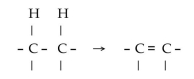
A)
B) FAD
C)
D) NADH
E) FMN
A)
B) FAD
C)
D) NADH
E) FMN
سؤال
In the first reaction of the citric acid cycle,
A) NADH is produced.
B) acetyl CoA reacts with oxaloacetate to give citrate.
C) ATP is produced.
D) glucose becomes pyruvate.
E) pyruvate becomes
A) NADH is produced.
B) acetyl CoA reacts with oxaloacetate to give citrate.
C) ATP is produced.
D) glucose becomes pyruvate.
E) pyruvate becomes
سؤال
Which of the following is the net reaction for one turn of the citric acid cycle?
A)
B)
C)
D)
E)
A)
B)
C)
D)
E)
سؤال
سؤال
Which coenzyme is used in the following reaction?
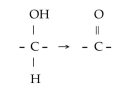
A)
B) FMN
C) FAD
D) NADH
E)
A)
B) FMN
C) FAD
D) NADH
E)
سؤال
FAD is a coenzyme which usually participates in
A) decarboxylation reactions.
B) oxidation of alcohols to aldehydes.
C) formation of carbon-carbon double bonds.
D) phosphorylation reactions.
E)
A) decarboxylation reactions.
B) oxidation of alcohols to aldehydes.
C) formation of carbon-carbon double bonds.
D) phosphorylation reactions.
E)
سؤال
سؤال
سؤال
سؤال
سؤال
What coenzyme(s) is(are) used in the citric acid cycle?
A) FMN
B) FAD only
C)
D)
E)
A) FMN
B) FAD only
C)
D)
E)
سؤال
سؤال
سؤال
سؤال
In the chemiosmotic model of oxidative phosphorylation, ATP is synthesized as
A) flows through ATP synthase.
B) electrons flow through ATP synthase.
C) flows through ATP synthase.
D) flows through ATP synthase.
E) flows through ATP synthase.
A)
flows through ATP synthase.B) electrons flow through ATP synthase.
C)
flows through ATP synthase.D)
flows through ATP synthase.E)
flows through ATP synthase. سؤال
In the oxidation of succinate to fumarate in the citric acid cycle, the coenzyme is
A) CoA.
B) NADH
C)
D) FAD.
E) acetyl CoA.
A) CoA.
B) NADH
C)
D) FAD.
E) acetyl CoA.
سؤال
One turn of the citric acid cycle produces 
A) one
B) two
C) three
D) four
E) five
A) one
B) two
C) three
D) four
E) five
سؤال
سؤال
In reaction 5 of the citric acid cycle, the hydrolysis of succinyl CoA, CoA is released as
A)
B)
C)
D)
E)
A)
B)
C)
D)
E)
سؤال
سؤال
سؤال
سؤال
سؤال
In the third reaction of the citric acid cycle,  is converted to
A)
B)
C) NAD.
D)
E) NAS-
is converted toA)
B)
C) NAD.
D)
E) NAS-
سؤال
سؤال
The components of electron transport do NOT include
A) Cyt c .
B) Complex III.
C) CoQ
D)
E) acetyl CoA.
A) Cyt c .
B) Complex III.
C) CoQ
D)
E) acetyl CoA.
سؤال
سؤال
سؤال
In electron transport, the synthesis of ATP from 
is called
A) glycolysis.
B) hydrolysis.
C) isomerization.
D) oxidative phosphorylation.
E) fermentation.
is called
A) glycolysis.
B) hydrolysis.
C) isomerization.
D) oxidative phosphorylation.
E) fermentation.
سؤال
In electron transport, the three protein complexes (I, III, and IV)
A) act as proton pumps, which generate a proton gradient.
B) act as pumps, which generate a
  gradient.
C) transfer electrons from FAD to
D) act as electron pumps, which generate an electron gradient.
E) transfer electrons from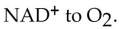
A) act as proton pumps, which generate a proton gradient.
B) act as
pumps, which generate a gradient.C) transfer electrons from FAD to
D) act as electron pumps, which generate an electron gradient.
E) transfer electrons from
سؤال
سؤال
In electron transport, the oxidized product from the reaction of  is
is
A) FAD.
B)
C)
D) FADH.
E) CoQ
isA) FAD.
B)
C)
D) FADH.
E) CoQ
سؤال
Uncouplers of ATP synthase
A) transport through the inner mitochondrial membrane.
B) allow to bypass ATP synthase.
C) break down ATP synthase.
D) stop pumping into the intermembrane space.
E) bypass CoQ
A) transport
through the inner mitochondrial membrane.B) allow
to bypass ATP synthase.C) break down ATP synthase.
D) stop pumping
into the intermembrane space.E) bypass CoQ
سؤال
سؤال
Which is the best choice for the box labeled "Answer" in the illustration below?
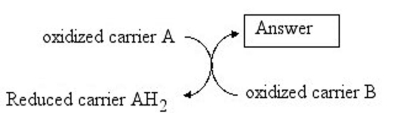
A) oxidized carrier B
B)
C) energy
D) reduced carrier
E) carbon dioxide
A) oxidized carrier B
B)
C) energy
D) reduced carrier
E) carbon dioxide
سؤال
سؤال
سؤال
سؤال
سؤال
Which of the following is NOT a possible product of pyruvate under anaerobic conditions?
A)
B) ethanol
C) lactate
D) fumarate
A)
B) ethanol
C) lactate
D) fumarate
سؤال
سؤال
سؤال
What is the correct coefficient for ATP in the complete reaction of glucose? 
A)6
B)32
C)24
D)18
E)12
A)6
B)32
C)24
D)18
E)12

فتح الحزمة
قم بالتسجيل لفتح البطاقات في هذه المجموعة!
Unlock Deck
Unlock Deck
1/51

العب

ملء الشاشة (f)
Deck 23: Metabolism and Energy Production
1
In order to enter the citric acid cycle, pyruvate is first converted to
A)citrate.
B)ethanol.
C)acetaldehyde.
D)acetyl CoA.
E)oxaloacetate.
A)citrate.
B)ethanol.
C)acetaldehyde.
D)acetyl CoA.
E)oxaloacetate.
acetyl CoA.
2
participates in reactions that produceA) ADP from ATP.
B) a C-C bond.
C) a
group.D) phosphorylation.
E) a
bond.a bond.
bond. 3
Which of the three major stages of metabolism includes the citric acid cycle?
A)Stage one
B)Stage two
C)Stage three
A)Stage one
B)Stage two
C)Stage three
Stage three
4
11The citric acid cycle operates only under aerobic conditions because
A) oxygen is a reactant in the citric acid cycle.
B) oxygen is a product of the citric acid cycle.
C) is a product of the citric acid cycle.
D) the produced by the citric acid cycle can only be reduced by the electron transport.
E) the NADH and produced by the citric acid cycle can only be reoxidized by the electron transport chain.
A) oxygen is a reactant in the citric acid cycle.
B) oxygen is a product of the citric acid cycle.
C)
is a product of the citric acid cycle.D) the
produced by the citric acid cycle can only be reduced by the electron transport.E) the NADH and
produced by the citric acid cycle can only be reoxidized by the electron transport chain. فتح الحزمة
افتح القفل للوصول البطاقات البالغ عددها 51 في هذه المجموعة.
فتح الحزمة
k this deck
5
The transformation of citrate to isocitrate in the citric acid cycle requires a(n)________ reaction.
A)hydrolysis
B)decarboxylation
C)reduction
D)oxidation
E)dehydration-hydration
A)hydrolysis
B)decarboxylation
C)reduction
D)oxidation
E)dehydration-hydration
فتح الحزمة
افتح القفل للوصول البطاقات البالغ عددها 51 في هذه المجموعة.
فتح الحزمة
k this deck
6
Most of the energy released in the citric acid cycle is used to produce
A) carbon dioxide and water.
B) NADH and
C) acetyl CoA.
D) citric acid.
E) glucose.
A) carbon dioxide and water.
B) NADH and
C) acetyl CoA.
D) citric acid.
E) glucose.
فتح الحزمة
افتح القفل للوصول البطاقات البالغ عددها 51 في هذه المجموعة.
فتح الحزمة
k this deck
7
When oxygen is in plentiful supply in the cell, pyruvate is converted to
A)lactate.
B)glucose.
C)fructose.
D)CoA.
E)acetyl CoA.
A)lactate.
B)glucose.
C)fructose.
D)CoA.
E)acetyl CoA.
فتح الحزمة
افتح القفل للوصول البطاقات البالغ عددها 51 في هذه المجموعة.
فتح الحزمة
k this deck
8
The citric acid cycle reaction that removes the first molecule is a(n)
A)combination.
B)reduction.
C)hydrolysis.
D)oxidative decarboxylation.
E)carbonylation.
molecule is a(n)A)combination.
B)reduction.
C)hydrolysis.
D)oxidative decarboxylation.
E)carbonylation.
فتح الحزمة
افتح القفل للوصول البطاقات البالغ عددها 51 في هذه المجموعة.
فتح الحزمة
k this deck
9
Which coenzyme is used in the following reaction?
A)
B) FAD
C)
D) NADH
E) FMN
A)
B) FAD
C)
D) NADH
E) FMN
فتح الحزمة
افتح القفل للوصول البطاقات البالغ عددها 51 في هذه المجموعة.
فتح الحزمة
k this deck
10
In the first reaction of the citric acid cycle,
A) NADH is produced.
B) acetyl CoA reacts with oxaloacetate to give citrate.
C) ATP is produced.
D) glucose becomes pyruvate.
E) pyruvate becomes
A) NADH is produced.
B) acetyl CoA reacts with oxaloacetate to give citrate.
C) ATP is produced.
D) glucose becomes pyruvate.
E) pyruvate becomes
فتح الحزمة
افتح القفل للوصول البطاقات البالغ عددها 51 في هذه المجموعة.
فتح الحزمة
k this deck
11
Which of the following is the net reaction for one turn of the citric acid cycle?
A)
B)
C)
D)
E)
A)
B)
C)
D)
E)
فتح الحزمة
افتح القفل للوصول البطاقات البالغ عددها 51 في هذه المجموعة.
فتح الحزمة
k this deck
12
The citric acid cycle is used in the oxidation of
A)carbohydrates only.
B)fatty acids only.
C)proteins only.
D)carbohydrates and fatty acids only.
E)carbohydrates, fatty acids, and proteins.
A)carbohydrates only.
B)fatty acids only.
C)proteins only.
D)carbohydrates and fatty acids only.
E)carbohydrates, fatty acids, and proteins.
فتح الحزمة
افتح القفل للوصول البطاقات البالغ عددها 51 في هذه المجموعة.
فتح الحزمة
k this deck
13
Which coenzyme is used in the following reaction?
A)
B) FMN
C) FAD
D) NADH
E)
A)
B) FMN
C) FAD
D) NADH
E)
فتح الحزمة
افتح القفل للوصول البطاقات البالغ عددها 51 في هذه المجموعة.
فتح الحزمة
k this deck
14
FAD is a coenzyme which usually participates in
A) decarboxylation reactions.
B) oxidation of alcohols to aldehydes.
C) formation of carbon-carbon double bonds.
D) phosphorylation reactions.
E)
A) decarboxylation reactions.
B) oxidation of alcohols to aldehydes.
C) formation of carbon-carbon double bonds.
D) phosphorylation reactions.
E)
فتح الحزمة
افتح القفل للوصول البطاقات البالغ عددها 51 في هذه المجموعة.
فتح الحزمة
k this deck
15
The citric acid cycle takes place in the
A)cytoplasm.
B)cytosol.
C)mitochondria.
D)endoplasmic reticulum.
E)Golgi apparatus.
A)cytoplasm.
B)cytosol.
C)mitochondria.
D)endoplasmic reticulum.
E)Golgi apparatus.
فتح الحزمة
افتح القفل للوصول البطاقات البالغ عددها 51 في هذه المجموعة.
فتح الحزمة
k this deck
16
Another name for the citric acid cycle is
A)glucolysis.
B)glycolysis.
C)electron transport.
D)the transamination pathway.
E)the tricarboxylic acid (TCA)cycle.
A)glucolysis.
B)glycolysis.
C)electron transport.
D)the transamination pathway.
E)the tricarboxylic acid (TCA)cycle.
فتح الحزمة
افتح القفل للوصول البطاقات البالغ عددها 51 في هذه المجموعة.
فتح الحزمة
k this deck
17
Another name for the citric acid cycle is
A)glucose hydrolysis.
B)gluconeogenesis.
C)the Krebs cycle.
D)oxidative phosphorylation.
E)the chemiosmotic pump.
A)glucose hydrolysis.
B)gluconeogenesis.
C)the Krebs cycle.
D)oxidative phosphorylation.
E)the chemiosmotic pump.
فتح الحزمة
افتح القفل للوصول البطاقات البالغ عددها 51 في هذه المجموعة.
فتح الحزمة
k this deck
18
During the first reaction in the citric acid cycle,
A)ATP is synthesized.
B)HS- CoA is released.
C)a decomposition occurs.
D)a decarboxylation occurs.
E)acetyl CoA is made.
A)ATP is synthesized.
B)HS- CoA is released.
C)a decomposition occurs.
D)a decarboxylation occurs.
E)acetyl CoA is made.
فتح الحزمة
افتح القفل للوصول البطاقات البالغ عددها 51 في هذه المجموعة.
فتح الحزمة
k this deck
19
What coenzyme(s) is(are) used in the citric acid cycle?
A) FMN
B) FAD only
C)
D)
E)
A) FMN
B) FAD only
C)
D)
E)
فتح الحزمة
افتح القفل للوصول البطاقات البالغ عددها 51 في هذه المجموعة.
فتح الحزمة
k this deck
20
Which of the following compounds in the citric acid cycle undergoes oxidative decarboxylation?
A)succinate
B)succinyl CoA
C)fumarate
D)citrate
E)isocitrate
A)succinate
B)succinyl CoA
C)fumarate
D)citrate
E)isocitrate
فتح الحزمة
افتح القفل للوصول البطاقات البالغ عددها 51 في هذه المجموعة.
فتح الحزمة
k this deck
21
The process which combines hydrogen ions and electrons from the coenzymes with oxygen to form water is called
A)reduction.
B)fermentation.
C)electron transport.
D)oxidation.
E)decomposition.
A)reduction.
B)fermentation.
C)electron transport.
D)oxidation.
E)decomposition.
فتح الحزمة
افتح القفل للوصول البطاقات البالغ عددها 51 في هذه المجموعة.
فتح الحزمة
k this deck
22
In reaction 7 of the citric acid cycle, fumarate is converted to malate by a ________ reaction.
A)dehydrogenation
B)dehydration
C)hydration
D)hydrolysis
E)hydrogenation
A)dehydrogenation
B)dehydration
C)hydration
D)hydrolysis
E)hydrogenation
فتح الحزمة
افتح القفل للوصول البطاقات البالغ عددها 51 في هذه المجموعة.
فتح الحزمة
k this deck
23
In the chemiosmotic model of oxidative phosphorylation, ATP is synthesized as
A) flows through ATP synthase.
B) electrons flow through ATP synthase.
C) flows through ATP synthase.
D) flows through ATP synthase.
E) flows through ATP synthase.
A)
flows through ATP synthase.B) electrons flow through ATP synthase.
C)
flows through ATP synthase.D)
flows through ATP synthase.E)
flows through ATP synthase. فتح الحزمة
افتح القفل للوصول البطاقات البالغ عددها 51 في هذه المجموعة.
فتح الحزمة
k this deck
24
In the oxidation of succinate to fumarate in the citric acid cycle, the coenzyme is
A) CoA.
B) NADH
C)
D) FAD.
E) acetyl CoA.
A) CoA.
B) NADH
C)
D) FAD.
E) acetyl CoA.
فتح الحزمة
افتح القفل للوصول البطاقات البالغ عددها 51 في هذه المجموعة.
فتح الحزمة
k this deck
25
One turn of the citric acid cycle produces
A) one
B) two
C) three
D) four
E) five
A) one
B) two
C) three
D) four
E) five
فتح الحزمة
افتح القفل للوصول البطاقات البالغ عددها 51 في هذه المجموعة.
فتح الحزمة
k this deck
26
The reduced coenzyme ________ provides 1.5 ATP via electron transport.
A)HS-CoA
B)acetyl CoA
C)FADH2
D)NADH
E)NADPH
A)HS-CoA
B)acetyl CoA
C)FADH2
D)NADH
E)NADPH
فتح الحزمة
افتح القفل للوصول البطاقات البالغ عددها 51 في هذه المجموعة.
فتح الحزمة
k this deck
27
In reaction 5 of the citric acid cycle, the hydrolysis of succinyl CoA, CoA is released as
A)
B)
C)
D)
E)
A)
B)
C)
D)
E)
فتح الحزمة
افتح القفل للوصول البطاقات البالغ عددها 51 في هذه المجموعة.
فتح الحزمة
k this deck
28
The energy released during electron transport is used to produce
A)glucose.
B)citric acid.
C)NADH.
D)carbon dioxide.
E)ATP.
A)glucose.
B)citric acid.
C)NADH.
D)carbon dioxide.
E)ATP.
فتح الحزمة
افتح القفل للوصول البطاقات البالغ عددها 51 في هذه المجموعة.
فتح الحزمة
k this deck
29
One method of regulation of the citric acid cycle is
A)carbon dioxide production.
B)temperature control.
C)water concentration.
D)allosteric control.
E)osmosis.
A)carbon dioxide production.
B)temperature control.
C)water concentration.
D)allosteric control.
E)osmosis.
فتح الحزمة
افتح القفل للوصول البطاقات البالغ عددها 51 في هذه المجموعة.
فتح الحزمة
k this deck
30
The GTP formed in reaction 5 of the citric acid cycle is used to make
A)oxygen.
B)carbon dioxide.
C)ATP.
D)water.
E)CoA.
A)oxygen.
B)carbon dioxide.
C)ATP.
D)water.
E)CoA.
فتح الحزمة
افتح القفل للوصول البطاقات البالغ عددها 51 في هذه المجموعة.
فتح الحزمة
k this deck
31
Cyanide ion and carbon monoxide inhibit
A)antibiotic activity.
B)CoA formation.
C)CoQ formation.
D)electron flow between cytochrome c and complex IV.
E)ATP production.
A)antibiotic activity.
B)CoA formation.
C)CoQ formation.
D)electron flow between cytochrome c and complex IV.
E)ATP production.
فتح الحزمة
افتح القفل للوصول البطاقات البالغ عددها 51 في هذه المجموعة.
فتح الحزمة
k this deck
32
In the third reaction of the citric acid cycle, is converted to
A)
B)
C) NAD.
D)
E) NAS-
is converted toA)
B)
C) NAD.
D)
E) NAS-
فتح الحزمة
افتح القفل للوصول البطاقات البالغ عددها 51 في هذه المجموعة.
فتح الحزمة
k this deck
33
The last reaction in the citric acid cycle converts malate to
A)fumarate.
B)succinate.
C)citrate.
D)oxaloacetate.
E)isocitrate.
A)fumarate.
B)succinate.
C)citrate.
D)oxaloacetate.
E)isocitrate.
فتح الحزمة
افتح القفل للوصول البطاقات البالغ عددها 51 في هذه المجموعة.
فتح الحزمة
k this deck
34
The components of electron transport do NOT include
A) Cyt c .
B) Complex III.
C) CoQ
D)
E) acetyl CoA.
A) Cyt c .
B) Complex III.
C) CoQ
D)
E) acetyl CoA.
فتح الحزمة
افتح القفل للوصول البطاقات البالغ عددها 51 في هذه المجموعة.
فتح الحزمة
k this deck
35
Under anaerobic conditions, there is a net production of ________ ATP during glycolysis.
A)zero
B)two
C)four
D)six
E)eight
A)zero
B)two
C)four
D)six
E)eight
فتح الحزمة
افتح القفل للوصول البطاقات البالغ عددها 51 في هذه المجموعة.
فتح الحزمة
k this deck
36
In electron transport, NADH and FADH2 are used to provide
A)thiol groups.
B)oxygen.
C)electrons and hydrogen ions.
D)carbon atoms.
E)water and carbon dioxide.
A)thiol groups.
B)oxygen.
C)electrons and hydrogen ions.
D)carbon atoms.
E)water and carbon dioxide.
فتح الحزمة
افتح القفل للوصول البطاقات البالغ عددها 51 في هذه المجموعة.
فتح الحزمة
k this deck
37
In electron transport, the synthesis of ATP from
is called
A) glycolysis.
B) hydrolysis.
C) isomerization.
D) oxidative phosphorylation.
E) fermentation.
is called
A) glycolysis.
B) hydrolysis.
C) isomerization.
D) oxidative phosphorylation.
E) fermentation.
فتح الحزمة
افتح القفل للوصول البطاقات البالغ عددها 51 في هذه المجموعة.
فتح الحزمة
k this deck
38
In electron transport, the three protein complexes (I, III, and IV)
A) act as proton pumps, which generate a proton gradient.
B) act as pumps, which generate a gradient.
C) transfer electrons from FAD to
D) act as electron pumps, which generate an electron gradient.
E) transfer electrons from
A) act as proton pumps, which generate a proton gradient.
B) act as
pumps, which generate a gradient.C) transfer electrons from FAD to
D) act as electron pumps, which generate an electron gradient.
E) transfer electrons from
فتح الحزمة
افتح القفل للوصول البطاقات البالغ عددها 51 في هذه المجموعة.
فتح الحزمة
k this deck
39
In the chemiosmotic model, protons circulate through a protein complex called
A) Complex III.
B) ATP synthase.
C) FMN.
D) CoQ
E) Cyt c .
A) Complex III.
B) ATP synthase.
C) FMN.
D) CoQ
E) Cyt c .
فتح الحزمة
افتح القفل للوصول البطاقات البالغ عددها 51 في هذه المجموعة.
فتح الحزمة
k this deck
40
In electron transport, the oxidized product from the reaction of is
A) FAD.
B)
C)
D) FADH.
E) CoQ
isA) FAD.
B)
C)
D) FADH.
E) CoQ
فتح الحزمة
افتح القفل للوصول البطاقات البالغ عددها 51 في هذه المجموعة.
فتح الحزمة
k this deck
41
Uncouplers of ATP synthase
A) transport through the inner mitochondrial membrane.
B) allow to bypass ATP synthase.
C) break down ATP synthase.
D) stop pumping into the intermembrane space.
E) bypass CoQ
A) transport
through the inner mitochondrial membrane.B) allow
to bypass ATP synthase.C) break down ATP synthase.
D) stop pumping
into the intermembrane space.E) bypass CoQ
فتح الحزمة
افتح القفل للوصول البطاقات البالغ عددها 51 في هذه المجموعة.
فتح الحزمة
k this deck
42
The complete oxidation of glucose produces ________ ATP molecules.
A)2
B)8
C)12
D)24
E)32
A)2
B)8
C)12
D)24
E)32
فتح الحزمة
افتح القفل للوصول البطاقات البالغ عددها 51 في هذه المجموعة.
فتح الحزمة
k this deck
43
Which is the best choice for the box labeled "Answer" in the illustration below?
A) oxidized carrier B
B)
C) energy
D) reduced carrier
E) carbon dioxide
A) oxidized carrier B
B)
C) energy
D) reduced carrier
E) carbon dioxide
فتح الحزمة
افتح القفل للوصول البطاقات البالغ عددها 51 في هذه المجموعة.
فتح الحزمة
k this deck
44
When combined with electron transport, one turn of the citric acid cycle produces ________ ATP.
A)2
B)14
C)12
D)10
E)24
A)2
B)14
C)12
D)10
E)24
فتح الحزمة
افتح القفل للوصول البطاقات البالغ عددها 51 في هذه المجموعة.
فتح الحزمة
k this deck
45
One example of an electron carrier in electron transport is
A) ATP.
B) coenzyme Q .
C) GTP.
D) citrate.
E) water.
A) ATP.
B) coenzyme Q .
C) GTP.
D) citrate.
E) water.
فتح الحزمة
افتح القفل للوصول البطاقات البالغ عددها 51 في هذه المجموعة.
فتح الحزمة
k this deck
46
Overall, one turn of the citric acid cycle produces
A)two FADH2 molecules.
B)three NADH molecules.
C)three CO2 molecules.
D)6 ATP.
E)2 GTP.
A)two FADH2 molecules.
B)three NADH molecules.
C)three CO2 molecules.
D)6 ATP.
E)2 GTP.
فتح الحزمة
افتح القفل للوصول البطاقات البالغ عددها 51 في هذه المجموعة.
فتح الحزمة
k this deck
47
The compounds in electron transport that remove hydrogen ions and electrons from NADH are classified as
A)electron carriers.
B)osmotic carriers.
C)oxidative transporters.
D)citrates.
E)phosphorylators.
A)electron carriers.
B)osmotic carriers.
C)oxidative transporters.
D)citrates.
E)phosphorylators.
فتح الحزمة
افتح القفل للوصول البطاقات البالغ عددها 51 في هذه المجموعة.
فتح الحزمة
k this deck
48
Which of the following is NOT a possible product of pyruvate under anaerobic conditions?
A)
B) ethanol
C) lactate
D) fumarate
A)
B) ethanol
C) lactate
D) fumarate
فتح الحزمة
افتح القفل للوصول البطاقات البالغ عددها 51 في هذه المجموعة.
فتح الحزمة
k this deck
49
In glycolysis, glucose produces 2 pyruvate ions and a total of ________ ATP molecules.
A)2
B)4
C)7
D)8
E)12
A)2
B)4
C)7
D)8
E)12
فتح الحزمة
افتح القفل للوصول البطاقات البالغ عددها 51 في هذه المجموعة.
فتح الحزمة
k this deck
50
In stage three of metabolism, the overall result is to release
A)glycogen and water.
B)lactate and acetyl CoA.
C)carbon dioxide and energy.
D)glucose and water.
E)lactate and glucose.
A)glycogen and water.
B)lactate and acetyl CoA.
C)carbon dioxide and energy.
D)glucose and water.
E)lactate and glucose.
فتح الحزمة
افتح القفل للوصول البطاقات البالغ عددها 51 في هذه المجموعة.
فتح الحزمة
k this deck
51
What is the correct coefficient for ATP in the complete reaction of glucose?
A)6
B)32
C)24
D)18
E)12
A)6
B)32
C)24
D)18
E)12
فتح الحزمة
افتح القفل للوصول البطاقات البالغ عددها 51 في هذه المجموعة.
فتح الحزمة
k this deck
فتح الحزمة
افتح القفل للوصول البطاقات البالغ عددها 51 في هذه المجموعة.






