







 تكلم مع الذكاء الاصطناعي


Deck 26: Electric Potential
ملء الشاشة (f)

سؤال

سؤال
سؤال
سؤال
سؤال
سؤال
سؤال
Point charges q and Q are positioned as shown. If q = +2.0 nC, Q = −2.0 nC, a = 3.0 m, and b = 4.0 m, what is the electric potential difference, VA − VB? 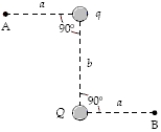
A)8.4 V
B)6.0 V
C)7.2 V
D)4.8 V
E)0 V
A)8.4 V
B)6.0 V
C)7.2 V
D)4.8 V
E)0 V
سؤال
سؤال
If a = 30 cm, b = 20 cm, q = +2.0 nC, and Q = −3.0 nC in the figure, what is the potential difference VA − VB? 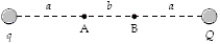
A)+60 V
B)+72 V
C)+84 V
D)+96 V
E)+48 V
A)+60 V
B)+72 V
C)+84 V
D)+96 V
E)+48 V
سؤال
Several charges in the neighborhood of point P produce an electric potential of 6.0 kV (relative to zero at infinity) and an electric field of 36  N/C at point P. Determine the work required of an external agent to move a 3.0-μC charge along the x axis from infinity to point P without any net change in the kinetic energy of the particle.
A)21 mJ
B)18 mJ
C)24 mJ
D)27 mJ
E)12 mJ
N/C at point P. Determine the work required of an external agent to move a 3.0-μC charge along the x axis from infinity to point P without any net change in the kinetic energy of the particle.A)21 mJ
B)18 mJ
C)24 mJ
D)27 mJ
E)12 mJ
سؤال
Points A [at (2, 3) m] and B [at (5, 7) m] are in a region where the electric field is uniform and given by ![<strong>Points A [at (2, 3) m] and B [at (5, 7) m] are in a region where the electric field is uniform and given by N/C. What is the potential difference VA − VB?</strong> A)33 V B)27 V C)30 V D)24 V E)11 V <div style=padding-top: 35px>](https://d2lvgg3v3hfg70.cloudfront.net/TB8847/11eb8c7e_f591_4bfa_8371_034ea3bb634c_TB8847_11.jpg) N/C. What is the potential difference VA − VB?
N/C. What is the potential difference VA − VB?
A)33 V
B)27 V
C)30 V
D)24 V
E)11 V
N/C. What is the potential difference VA − VB?A)33 V
B)27 V
C)30 V
D)24 V
E)11 V
سؤال
سؤال
سؤال
سؤال
سؤال
Points A [at (3, 6) m] and B [at (8, −3) m] are in a region where the electric field is uniform and given by ![<strong>Points A [at (3, 6) m] and B [at (8, −3) m] are in a region where the electric field is uniform and given by N/C. What is the electric potential difference VA − VB?</strong> A)+60 V B)−60 V C)+80 V D)−80 V E)+50 V <div style=padding-top: 35px>](https://d2lvgg3v3hfg70.cloudfront.net/TB8847/11eb8c7e_f591_730b_8371_31c907adf140_TB8847_11.jpg) N/C. What is the electric potential difference VA − VB?
N/C. What is the electric potential difference VA − VB?
A)+60 V
B)−60 V
C)+80 V
D)−80 V
E)+50 V
N/C. What is the electric potential difference VA − VB?A)+60 V
B)−60 V
C)+80 V
D)−80 V
E)+50 V
سؤال
سؤال
سؤال
سؤال
سؤال
سؤال
سؤال
سؤال
سؤال
سؤال
سؤال
سؤال
سؤال
سؤال
سؤال
سؤال
سؤال
سؤال
سؤال
سؤال
سؤال
سؤال
سؤال
سؤال
سؤال
سؤال
A charge of 20 nC is distributed uniformly along the y axis from y = 0 to y = 4 m. Which of the following integrals is correct for the electric potential (relative to zero at infinity) at the point x = +3 m on the x axis?
A)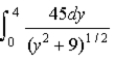
B)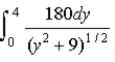
C)
D)
E)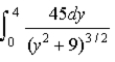
A)
B)
C)
D)
E)
سؤال
سؤال
سؤال
A charge of 18 nC is uniformly distributed along the y axis from y = 3 m to y = 5 m. Which of the following integrals is correct for the electric potential (relative to zero at infinity) at the point x = +2 m on the x axis?
A)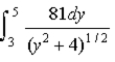
B)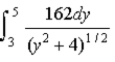
C)
D)
E)
A)
B)
C)
D)
E)
سؤال
سؤال
سؤال
سؤال
سؤال
سؤال
سؤال
Charge of uniform linear density 3.0 nC/m is distributed along the x axis from x = 0 to x = 3 m. Which of the following integrals is correct for the electric potential (relative to zero at infinity) at the point x = +4 m on the x axis?
A)
B)
C)
D)
E)
A)
B)
C)
D)
E)
سؤال
سؤال
Charge of uniform linear density 6.0 nC/m is distributed along the x axis from x = 0 to x = +3 m. Which of the following integrals is correct for the electric potential (relative to zero at infinity) at the point y = +4 m on the y axis?
A)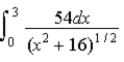
B)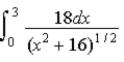
C)
D)
E)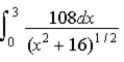
A)
B)
C)
D)
E)
سؤال
سؤال
Charge of uniform density (3.5 nC/m) is distributed along the circular arc shown. Determine the electric potential (relative to zero at infinity) at point P. 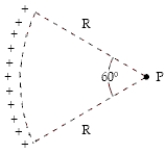
A)61 V
B)42 V
C)52 V
D)33 V
E)22 V
A)61 V
B)42 V
C)52 V
D)33 V
E)22 V
سؤال
A charge of 4.0 nC is distributed uniformly along the x axis from x = +4 m to x = +6 m. Which of the following integrals is correct for the electric potential (relative to zero at infinity) at the origin?
A)
B)
C)
D)
E)
A)
B)
C)
D)
E)
سؤال
سؤال
سؤال
A charge of 10 nC is distributed uniformly along the x axis from x = −2 m to x = +3 m. Which of the following integrals is correct for the electric potential (relative to zero at infinity) at the point x = +5 m on the x axis?
A)
B)
C)
D)
E)
A)
B)
C)
D)
E)
سؤال
سؤال
سؤال
سؤال
A charge is placed on a spherical conductor of radius r1. This sphere is then connected to a distant sphere of radius r2 (not equal to r1) by a conducting wire. After the charges on the spheres are in equilibrium,
A)the electric fields at the surfaces of the two spheres are equal.
B)the amount of charge on each sphere is q/2.
C)both spheres are at the same potential.
D)the potentials are in the ratio .
.
E)the potentials are in the ratio .
.
A)the electric fields at the surfaces of the two spheres are equal.
B)the amount of charge on each sphere is q/2.
C)both spheres are at the same potential.
D)the potentials are in the ratio
.E)the potentials are in the ratio
. سؤال
When introduced into a region where an electric field is present, an electron with initial velocity  will eventually move
A)along an electric field line, in the positive direction of the line.
B)along an electric field line, in the negative direction of the line.
C)to a point of decreased potential.
D)to a point of increased potential.
E)as described in both (b) and (d).
will eventually moveA)along an electric field line, in the positive direction of the line.
B)along an electric field line, in the negative direction of the line.
C)to a point of decreased potential.
D)to a point of increased potential.
E)as described in both (b) and (d).
سؤال
سؤال
سؤال
سؤال
Which of the following represents the equipotential lines of a dipole?
A)
B)
C)
D)
E)
A)
B)
C)
D)
E)
سؤال
سؤال
سؤال
A series of 3 uncharged concentric spherical conducting shells surround a small central charge q. The potential at a point outside the third shell, at distance r from the center, and relative to V = 0 at ∞, is
A) .
.
B) .
.
C) .
.
D) .
.
E) .
.
A)
.B)
.C)
.D)
.E)
. سؤال
سؤال
A series of n uncharged concentric spherical conducting shells surround a small central charge q. The potential at a point outside the nth shell, at distance r from the center, and relative to V = 0 at ∞, is
A) .
.
B) .
.
C) .
.
D) .
.
E) .
.
A)
.B)
.C)
.D)
.E)
. سؤال
سؤال
سؤال
سؤال
سؤال
Can the lines in the figure below be equipotential lines? 
A)No, because there are sharp corners.
B)No, because they are isolated lines.
C)Yes, because any lines within a charge distribution are equipotential lines.
D)Yes, they might be boundary lines of the two surfaces of a conductor.
E)It is not possible to say without further information.
A)No, because there are sharp corners.
B)No, because they are isolated lines.
C)Yes, because any lines within a charge distribution are equipotential lines.
D)Yes, they might be boundary lines of the two surfaces of a conductor.
E)It is not possible to say without further information.
سؤال

فتح الحزمة
قم بالتسجيل لفتح البطاقات في هذه المجموعة!
Unlock Deck
Unlock Deck
1/96

العب

ملء الشاشة (f)
Deck 26: Electric Potential
1
A proton (m = 1.7 × 10⁻²⁷ kg, q = +1.6 × 10⁻¹⁹ C) starts from rest at point A and has a speed of 40 km/s at point B. Only electric forces act on it during this motion. Determine the electric potential difference VB − VA.
A)+8.5 V
B)−8.5 V
C)−4.8 V
D)+4.8 V
E)−17 V
A)+8.5 V
B)−8.5 V
C)−4.8 V
D)+4.8 V
E)−17 V
−8.5 V
2
Point charges of equal magnitudes (25 nC) and opposite signs are placed on (diagonally) opposite corners of a 60-cm × 80-cm rectangle. If point A is the corner of this rectangle nearest the positive charge and point B is located at the intersection of the diagonals of the rectangle, determine the potential difference, VB − VA.
A)−47 V
B)+94 V
C)zero
D)−94 V
E)+47 V
A)−47 V
B)+94 V
C)zero
D)−94 V
E)+47 V
−94 V
3
A particle (mass = 6.7 × 10⁻²⁷ kg, charge = 3.2 × 10⁻¹⁹ C) moves along the positive x axis with a speed of 4.8 × 10⁵ m/s. It enters a region of uniform electric field parallel to its motion and comes to rest after moving 2.0 m into the field. What is the magnitude of the electric field?
A)2.0 kN/C
B)1.5 kN/C
C)1.2 kN/C
D)3.5 kN/C
E)2.4 kN/C
A)2.0 kN/C
B)1.5 kN/C
C)1.2 kN/C
D)3.5 kN/C
E)2.4 kN/C
1.2 kN/C
4
Identical 2.0-μC charges are located on the vertices of a square with sides that are 2.0 m in length. Determine the electric potential (relative to zero at infinity) at the center of the square.
A)38 kV
B)51 kV
C)76 kV
D)64 kV
E)13 kV
A)38 kV
B)51 kV
C)76 kV
D)64 kV
E)13 kV
فتح الحزمة
افتح القفل للوصول البطاقات البالغ عددها 96 في هذه المجموعة.
فتح الحزمة
k this deck
5
An electron (m = 9.1 × 10⁻³¹ kg, q = −1.6 × 10⁻¹⁹ C) starts from rest at point A and has a speed of 5.0 × 10⁶ m/s at point B. Only electric forces act on it during this motion. Determine the electric potential difference VA − VB.
A)−71 V
B)+71 V
C)−26 V
D)+26 V
E)−140 V
A)−71 V
B)+71 V
C)−26 V
D)+26 V
E)−140 V
فتح الحزمة
افتح القفل للوصول البطاقات البالغ عددها 96 في هذه المجموعة.
فتح الحزمة
k this deck
6
An alpha particle (m = 6.7 × 10⁻²⁷ kg, q = +3.2 × 10⁻¹⁹ C) has a speed of 20 km/s at point A and moves to point B where it momentarily stops. Only electric forces act on the particle during this motion. Determine the electric potential difference VA − VB.
A)+4.2 V
B)−4.2 V
C)−9.4 V
D)+9.4 V
E)−8.4 V
A)+4.2 V
B)−4.2 V
C)−9.4 V
D)+9.4 V
E)−8.4 V
فتح الحزمة
افتح القفل للوصول البطاقات البالغ عددها 96 في هذه المجموعة.
فتح الحزمة
k this deck
7
Point charges q and Q are positioned as shown. If q = +2.0 nC, Q = −2.0 nC, a = 3.0 m, and b = 4.0 m, what is the electric potential difference, VA − VB?
A)8.4 V
B)6.0 V
C)7.2 V
D)4.8 V
E)0 V
A)8.4 V
B)6.0 V
C)7.2 V
D)4.8 V
E)0 V
فتح الحزمة
افتح القفل للوصول البطاقات البالغ عددها 96 في هذه المجموعة.
فتح الحزمة
k this deck
8
Three charged particles are positioned in the xy plane: a 50-nC charge at y = 6 m on the y axis, a −80-nC charge at x = −4 m on the x axis, and a 70-nc charge at y = −6 m on the y axis. What is the electric potential (relative to a zero at infinity) at the point x = 8 m on the x axis?
A)+81 V
B)+48 V
C)+5.8 V
D)−72 V
E)−18 V
A)+81 V
B)+48 V
C)+5.8 V
D)−72 V
E)−18 V
فتح الحزمة
افتح القفل للوصول البطاقات البالغ عددها 96 في هذه المجموعة.
فتح الحزمة
k this deck
9
If a = 30 cm, b = 20 cm, q = +2.0 nC, and Q = −3.0 nC in the figure, what is the potential difference VA − VB?
A)+60 V
B)+72 V
C)+84 V
D)+96 V
E)+48 V
A)+60 V
B)+72 V
C)+84 V
D)+96 V
E)+48 V
فتح الحزمة
افتح القفل للوصول البطاقات البالغ عددها 96 في هذه المجموعة.
فتح الحزمة
k this deck
10
Several charges in the neighborhood of point P produce an electric potential of 6.0 kV (relative to zero at infinity) and an electric field of 36 N/C at point P. Determine the work required of an external agent to move a 3.0-μC charge along the x axis from infinity to point P without any net change in the kinetic energy of the particle.
A)21 mJ
B)18 mJ
C)24 mJ
D)27 mJ
E)12 mJ
N/C at point P. Determine the work required of an external agent to move a 3.0-μC charge along the x axis from infinity to point P without any net change in the kinetic energy of the particle.A)21 mJ
B)18 mJ
C)24 mJ
D)27 mJ
E)12 mJ
فتح الحزمة
افتح القفل للوصول البطاقات البالغ عددها 96 في هذه المجموعة.
فتح الحزمة
k this deck
11
Points A [at (2, 3) m] and B [at (5, 7) m] are in a region where the electric field is uniform and given by N/C. What is the potential difference VA − VB?
A)33 V
B)27 V
C)30 V
D)24 V
E)11 V
N/C. What is the potential difference VA − VB?A)33 V
B)27 V
C)30 V
D)24 V
E)11 V
فتح الحزمة
افتح القفل للوصول البطاقات البالغ عددها 96 في هذه المجموعة.
فتح الحزمة
k this deck
12
What is the speed of a proton that has been accelerated from rest through a potential difference of 4.0 kV?
A)1.1 × 10⁶ m/s
B)9.8 × 10⁵ m/s
C)8.8 × 10⁵ m/s
D)1.2 × 10⁶ m/s
E)6.2 × 10⁵ m/s
A)1.1 × 10⁶ m/s
B)9.8 × 10⁵ m/s
C)8.8 × 10⁵ m/s
D)1.2 × 10⁶ m/s
E)6.2 × 10⁵ m/s
فتح الحزمة
افتح القفل للوصول البطاقات البالغ عددها 96 في هذه المجموعة.
فتح الحزمة
k this deck
13
A charged particle (q = −8.0 mC), which moves in a region where the only force acting on the particle is an electric force, is released from rest at point A. At point B the kinetic energy of the particle is equal to 4.8 J. What is the electric potential difference VB − VA?
A)−0.60 kV
B)+0.60 kV
C)+0.80 kV
D)−0.80 kV
E)+0.48 kV
A)−0.60 kV
B)+0.60 kV
C)+0.80 kV
D)−0.80 kV
E)+0.48 kV
فتح الحزمة
افتح القفل للوصول البطاقات البالغ عددها 96 في هذه المجموعة.
فتح الحزمة
k this deck
14
A +4.0-μC charge is placed on the x axis at x = +3.0 m, and a −2.0-μC charge is located on the y axis at y = −1.0 m. Point A is on the y axis at y = +4.0 m. Determine the electric potential at point A (relative to zero at the origin).
A)6.0 kV
B)8.4 kV
C)9.6 kV
D)4.8 kV
E)3.6 kV
A)6.0 kV
B)8.4 kV
C)9.6 kV
D)4.8 kV
E)3.6 kV
فتح الحزمة
افتح القفل للوصول البطاقات البالغ عددها 96 في هذه المجموعة.
فتح الحزمة
k this deck
15
A particle (charge = +2.0 mC) moving in a region where only electric forces act on it has a kinetic energy of 5.0 J at point A. The particle subsequently passes through point B which has an electric potential of +1.5 kV relative to point A. Determine the kinetic energy of the particle as it moves through point B.
A)3.0 J
B)2.0 J
C)5.0 J
D)8.0 J
E)10.0 J
A)3.0 J
B)2.0 J
C)5.0 J
D)8.0 J
E)10.0 J
فتح الحزمة
افتح القفل للوصول البطاقات البالغ عددها 96 في هذه المجموعة.
فتح الحزمة
k this deck
16
Points A [at (3, 6) m] and B [at (8, −3) m] are in a region where the electric field is uniform and given by N/C. What is the electric potential difference VA − VB?
A)+60 V
B)−60 V
C)+80 V
D)−80 V
E)+50 V
N/C. What is the electric potential difference VA − VB?A)+60 V
B)−60 V
C)+80 V
D)−80 V
E)+50 V
فتح الحزمة
افتح القفل للوصول البطاقات البالغ عددها 96 في هذه المجموعة.
فتح الحزمة
k this deck
17
A particle (charge = 50 μC) moves in a region where the only force on it is an electric force. As the particle moves 25 cm from point A to point B, its kinetic energy increases by 1.5 mJ. Determine the electric potential difference, VB − VA.
A)−50 V
B)−40 V
C)−30 V
D)−60 V
E)+15 V
A)−50 V
B)−40 V
C)−30 V
D)−60 V
E)+15 V
فتح الحزمة
افتح القفل للوصول البطاقات البالغ عددها 96 في هذه المجموعة.
فتح الحزمة
k this deck
18
A particle (m = 2.0 μg, q = −5.0 μC) has a speed of 30 m/s at point A and moves (with only electric forces acting on it) to point B where its speed is 80 m/s. Determine the electric potential difference VA − VB.
A)−2.2 kV
B)+1.1 kV
C)−1.1 kV
D)+2.2 kV
E)+1.3 kV
A)−2.2 kV
B)+1.1 kV
C)−1.1 kV
D)+2.2 kV
E)+1.3 kV
فتح الحزمة
افتح القفل للوصول البطاقات البالغ عددها 96 في هذه المجموعة.
فتح الحزمة
k this deck
19
A proton (mass = 1.67 × 10⁻²⁷ kg, charge = 1.60 × 10⁻¹⁹ C) moves from point A to point B under the influence of an electrostatic force only. At point A the proton moves with a speed of 60 km/s. At point B the speed of the proton is 80 km/s. Determine the potential difference VB − VA.
A)+15 V
B)−15 V
C)−33 V
D)+33 V
E)−20 V
A)+15 V
B)−15 V
C)−33 V
D)+33 V
E)−20 V
فتح الحزمة
افتح القفل للوصول البطاقات البالغ عددها 96 في هذه المجموعة.
فتح الحزمة
k this deck
20
A proton (mass = 1.67 × 10⁻²⁷ kg, charge = 1.60 × 10⁻¹⁹ C) moves from point A to point B under the influence of an electrostatic force only. At point A the proton moves with a speed of 50 km/s. At point B the speed of the proton is 80 km/s. Determine the potential difference VB − VA.
A)+20 V
B)−20 V
C)−27 V
D)+27 V
E)−40 V
A)+20 V
B)−20 V
C)−27 V
D)+27 V
E)−40 V
فتح الحزمة
افتح القفل للوصول البطاقات البالغ عددها 96 في هذه المجموعة.
فتح الحزمة
k this deck
21
Four identical point charges (+4.0 μC) are placed at the corners of a square which has 20-cm sides. How much work is required to assemble this charge arrangement starting with each of the charges a very large distance from any of the other charges?
A)+2.9 J
B)+3.9 J
C)+2.2 J
D)+4.3 J
E)+1.9 J
A)+2.9 J
B)+3.9 J
C)+2.2 J
D)+4.3 J
E)+1.9 J
فتح الحزمة
افتح القفل للوصول البطاقات البالغ عددها 96 في هذه المجموعة.
فتح الحزمة
k this deck
22
Two identical particles, each with a mass of 4.5 μg and a charge of 30 nC, are moving directly toward each other with equal speeds of 4.0 m/s at an instant when the distance separating the two is equal to 25 cm. How far apart will they be when closest to one another?
A)9.8 cm
B)12 cm
C)7.8 cm
D)15 cm
E)20 cm
A)9.8 cm
B)12 cm
C)7.8 cm
D)15 cm
E)20 cm
فتح الحزمة
افتح القفل للوصول البطاقات البالغ عددها 96 في هذه المجموعة.
فتح الحزمة
k this deck
23
A particle (q = +5.0 μC) is released from rest when it is 2.0 m from a charged particle which is held at rest. After the positively charged particle has moved 1.0 m toward the fixed particle, it has a kinetic energy of 50 mJ. What is the charge on the fixed particle?
A)−2.2 μC
B)+6.7 μC
C)−2.7 μC
D)+8.0 μC
E)−1.1 μC
A)−2.2 μC
B)+6.7 μC
C)−2.7 μC
D)+8.0 μC
E)−1.1 μC
فتح الحزمة
افتح القفل للوصول البطاقات البالغ عددها 96 في هذه المجموعة.
فتح الحزمة
k this deck
24
A particle (charge 7.5 μC) is released from rest at a point on the x axis, x = 10 cm. It begins to move due to the presence of a 2.0-μC charge which remains fixed at the origin. What is the kinetic energy of the particle at the instant it passes the point x = 1.0 m?
A)3.0 J
B)1.8 J
C)2.4 J
D)1.2 J
E)1.4 J
A)3.0 J
B)1.8 J
C)2.4 J
D)1.2 J
E)1.4 J
فتح الحزمة
افتح القفل للوصول البطاقات البالغ عددها 96 في هذه المجموعة.
فتح الحزمة
k this deck
25
Two particles, each having a mass of 3.0 μg and having equal but opposite charges of magnitude 5.0 nC, are released simultaneously from rest when the two are 5.0 cm apart. What is the speed of either particle at the instant when the two are separated by 2.0 cm?
A)2.1 m/s
B)1.5 m/s
C)1.8 m/s
D)2.4 m/s
E)3.2 m/s
A)2.1 m/s
B)1.5 m/s
C)1.8 m/s
D)2.4 m/s
E)3.2 m/s
فتح الحزمة
افتح القفل للوصول البطاقات البالغ عددها 96 في هذه المجموعة.
فتح الحزمة
k this deck
26
Identical point charges (+20 μC) are placed at the corners of an equilateral triangle with sides of 2.0-m length. How much external energy is required to bring a charge of 45 μC from infinity to the midpoint of one side of the triangle?
A)26 J
B)16 J
C)23 J
D)21 J
E)12 J
A)26 J
B)16 J
C)23 J
D)21 J
E)12 J
فتح الحزمة
افتح القفل للوصول البطاقات البالغ عددها 96 في هذه المجموعة.
فتح الحزمة
k this deck
27
Identical point charges (+30 μC) are placed at the corners of a rectangle (4.0 m × 6.0 m). How much external energy is required to bring a charge of 55 μC from infinity to the midpoint of one of the 6.0-m long sides of the rectangle?
A)22 J
B)16 J
C)13 J
D)19 J
E)8.0 J
A)22 J
B)16 J
C)13 J
D)19 J
E)8.0 J
فتح الحزمة
افتح القفل للوصول البطاقات البالغ عددها 96 في هذه المجموعة.
فتح الحزمة
k this deck
28
Through what potential difference must an electron (starting from rest) be accelerated if it is to reach a speed of 3.0 × 10⁷ m/s?
A)5.8 kV
B)2.6 kV
C)7.1 kV
D)8.6 kV
E)5.1 kV
A)5.8 kV
B)2.6 kV
C)7.1 kV
D)8.6 kV
E)5.1 kV
فتح الحزمة
افتح القفل للوصول البطاقات البالغ عددها 96 في هذه المجموعة.
فتح الحزمة
k this deck
29
Four identical point charges (+6.0 nC) are placed at the corners of a rectangle which measures 6.0 m × 8.0 m. If the electric potential is taken to be zero at infinity, what is the potential at the geometric center of this rectangle?
A)58 V
B)63 V
C)43 V
D)84 V
E)11 V
A)58 V
B)63 V
C)43 V
D)84 V
E)11 V
فتح الحزمة
افتح القفل للوصول البطاقات البالغ عددها 96 في هذه المجموعة.
فتح الحزمة
k this deck
30
A 60-μC charge is held fixed at the origin and a −20-μC charge is held fixed on the x axis at a point x = 1.0 m. If a 10-μC charge is released from rest at a point x = 40 cm, what is its kinetic energy the instant it passes the point x = 70 cm?
A)9.8 J
B)7.8 J
C)8.8 J
D)6.9 J
E)2.8 J
A)9.8 J
B)7.8 J
C)8.8 J
D)6.9 J
E)2.8 J
فتح الحزمة
افتح القفل للوصول البطاقات البالغ عددها 96 في هذه المجموعة.
فتح الحزمة
k this deck
31
Two particles, each having a mass of 3.0 μg and having equal but opposite charges of magnitude of 6.0 nC, are released simultaneously from rest when they are a very large distance apart. What distance separates the two at the instant when each has a speed of 5.0 m/s?
A)4.3 mm
B)8.6 mm
C)7.3 mm
D)5.6 mm
E)2.2 mm
A)4.3 mm
B)8.6 mm
C)7.3 mm
D)5.6 mm
E)2.2 mm
فتح الحزمة
افتح القفل للوصول البطاقات البالغ عددها 96 في هذه المجموعة.
فتح الحزمة
k this deck
32
Identical point charges (+50 μC) are placed at the corners of a square with sides of 2.0-m length. How much external energy is required to bring a fifth identical charge from infinity to the geometric center of the square?
A)41 J
B)16 J
C)64 J
D)10 J
E)80 J
A)41 J
B)16 J
C)64 J
D)10 J
E)80 J
فتح الحزمة
افتح القفل للوصول البطاقات البالغ عددها 96 في هذه المجموعة.
فتح الحزمة
k this deck
33
A particle (charge = Q) is kept in a fixed position at point P, and a second particle (charge = q) is released from rest when it is a distance R from P. If Q = +2.0 mC, q = −1.5 mC, and R = 30 cm, what is the kinetic energy of the moving particle after it has moved a distance of 10 cm?
A)60 kJ
B)45 kJ
C)75 kJ
D)90 kJ
E)230 kJ
A)60 kJ
B)45 kJ
C)75 kJ
D)90 kJ
E)230 kJ
فتح الحزمة
افتح القفل للوصول البطاقات البالغ عددها 96 في هذه المجموعة.
فتح الحزمة
k this deck
34
A particle (charge = 40 μC) moves directly toward a second particle (charge = 80 μC) which is held in a fixed position. At an instant when the distance between the two particles is 2.0 m, the kinetic energy of the moving particle is 16 J. Determine the distance separating the two particles when the moving particle is momentarily stopped.
A)0.75 m
B)0.84 m
C)0.95 m
D)0.68 m
E)0.56 m
A)0.75 m
B)0.84 m
C)0.95 m
D)0.68 m
E)0.56 m
فتح الحزمة
افتح القفل للوصول البطاقات البالغ عددها 96 في هذه المجموعة.
فتح الحزمة
k this deck
35
A charge of +3.0 μC is distributed uniformly along the circumference of a circle with a radius of 20 cm. How much external energy is required to bring a charge of 25μC from infinity to the center of the circle?
A)5.4 J
B)3.4 J
C)4.3 J
D)2.7 J
E)6.8 J
A)5.4 J
B)3.4 J
C)4.3 J
D)2.7 J
E)6.8 J
فتح الحزمة
افتح القفل للوصول البطاقات البالغ عددها 96 في هذه المجموعة.
فتح الحزمة
k this deck
36
Three identical point charges (+2.0 nC) are placed at the corners of an equilateral triangle with sides of 2.0-m length. If the electric potential is taken to be zero at infinity, what is the potential at the midpoint of any one of the sides of the triangle?
A)16 V
B)10 V
C)70 V
D)46 V
E)44 V
A)16 V
B)10 V
C)70 V
D)46 V
E)44 V
فتح الحزمة
افتح القفل للوصول البطاقات البالغ عددها 96 في هذه المجموعة.
فتح الحزمة
k this deck
37
Two identical particles, each with a mass of 2.0 μg and a charge of 25 nC, are released simultaneously from rest when the two are 4.0 cm apart. What is the speed of either particle at the instant when the two are separated by 10 cm?
A)7.3 m/s
B)9.8 m/s
C)9.2 m/s
D)6.5 m/s
E)4.6 m/s
A)7.3 m/s
B)9.8 m/s
C)9.2 m/s
D)6.5 m/s
E)4.6 m/s
فتح الحزمة
افتح القفل للوصول البطاقات البالغ عددها 96 في هذه المجموعة.
فتح الحزمة
k this deck
38
Identical 8.0-μC point charges are positioned on the x axis at x = ±1.0 m and released from rest simultaneously. What is the kinetic energy of either of the charges after it has moved 2.0 m?
A)84 mJ
B)54 mJ
C)96 mJ
D)63 mJ
E)48 mJ
A)84 mJ
B)54 mJ
C)96 mJ
D)63 mJ
E)48 mJ
فتح الحزمة
افتح القفل للوصول البطاقات البالغ عددها 96 في هذه المجموعة.
فتح الحزمة
k this deck
39
Particle A (mass = m, charge = Q) and B (mass = m, charge = 5 Q) are released from rest with the distance between them equal to 1.0 m. If Q = 12 μC, what is the kinetic energy of particle B at the instant when the particles are 3.0 m apart?
A)8.6 J
B)3.8 J
C)6.0 J
D)2.2 J
E)4.3 J
A)8.6 J
B)3.8 J
C)6.0 J
D)2.2 J
E)4.3 J
فتح الحزمة
افتح القفل للوصول البطاقات البالغ عددها 96 في هذه المجموعة.
فتح الحزمة
k this deck
40
A particle (charge = 5.0 μC) is released from rest at a point x = 10 cm. If a 5.0-μC charge is held fixed at the origin, what is the kinetic energy of the particle after it has moved 90 cm?
A)1.6 J
B)2.0 J
C)2.4 J
D)1.2 J
E)1.8 J
A)1.6 J
B)2.0 J
C)2.4 J
D)1.2 J
E)1.8 J
فتح الحزمة
افتح القفل للوصول البطاقات البالغ عددها 96 في هذه المجموعة.
فتح الحزمة
k this deck
41
A solid conducting sphere (radius = 5.0 cm) has a charge of 0.25 nC distributed uniformly on its surface. If point A is located at the center of the sphere and point B is 15 cm from the center, what is the magnitude of the electric potential difference between these two points?
A)23 V
B)30 V
C)15 V
D)45 V
E)60 V
A)23 V
B)30 V
C)15 V
D)45 V
E)60 V
فتح الحزمة
افتح القفل للوصول البطاقات البالغ عددها 96 في هذه المجموعة.
فتح الحزمة
k this deck
42
A charge of 20 nC is distributed uniformly along the y axis from y = 0 to y = 4 m. Which of the following integrals is correct for the electric potential (relative to zero at infinity) at the point x = +3 m on the x axis?
A)
B)
C)
D)
E)
A)
B)
C)
D)
E)
فتح الحزمة
افتح القفل للوصول البطاقات البالغ عددها 96 في هذه المجموعة.
فتح الحزمة
k this deck
43
A nonuniform linear charge distribution given by λ(x) = bx, where b is a constant, is distributed along the x axis from x = 0 to x = +L. If b = 40 nC/m2 and L = 0.20 m, what is the electric potential (relative to a potential of zero at infinity) at the point y = 2L on the y axis?
A)19 V
B)17 V
C)21 V
D)23 V
E)14 V
A)19 V
B)17 V
C)21 V
D)23 V
E)14 V
فتح الحزمة
افتح القفل للوصول البطاقات البالغ عددها 96 في هذه المجموعة.
فتح الحزمة
k this deck
44
A rod (length = 2.0 m) is uniformly charged and has a total charge of 5.0 nC. What is the electric potential (relative to zero at infinity) at a point which lies along the axis of the rod and is 3.0 m from the center of the rod?
A)22 V
B)19 V
C)16 V
D)25 V
E)12 V
A)22 V
B)19 V
C)16 V
D)25 V
E)12 V
فتح الحزمة
افتح القفل للوصول البطاقات البالغ عددها 96 في هذه المجموعة.
فتح الحزمة
k this deck
45
A charge of 18 nC is uniformly distributed along the y axis from y = 3 m to y = 5 m. Which of the following integrals is correct for the electric potential (relative to zero at infinity) at the point x = +2 m on the x axis?
A)
B)
C)
D)
E)
A)
B)
C)
D)
E)
فتح الحزمة
افتح القفل للوصول البطاقات البالغ عددها 96 في هذه المجموعة.
فتح الحزمة
k this deck
46
A charge per unit length given by λ(x) = bx, where b = 12 nC/m2, is distributed along the x axis from x = +9.0 cm to x = +16 cm. If the electric potential at infinity is taken to be zero, what is the electric potential at the point P on the y axis at y = 12 cm?
A)5.4 V
B)7.2 V
C)9.0 V
D)9.9 V
E)16 V
A)5.4 V
B)7.2 V
C)9.0 V
D)9.9 V
E)16 V
فتح الحزمة
افتح القفل للوصول البطاقات البالغ عددها 96 في هذه المجموعة.
فتح الحزمة
k this deck
47
Charge of uniform density 12 nC/m is distributed along the x axis from x = 2.0 m to x = 5.0 m. What is the electric potential (relative to zero at infinity) at the origin (x = 0)?
A)91 V
B)99 V
C)82 V
D)74 V
E)140 V
A)91 V
B)99 V
C)82 V
D)74 V
E)140 V
فتح الحزمة
افتح القفل للوصول البطاقات البالغ عددها 96 في هذه المجموعة.
فتح الحزمة
k this deck
48
A charge of 20 nC is distributed uniformly along the x axis from x = −2.0 m to x = +2.0 m. What is the electric potential (relative to zero at infinity) at the point x = 5.0 m on the x axis?
A)57 V
B)48 V
C)38 V
D)67 V
E)100 V
A)57 V
B)48 V
C)38 V
D)67 V
E)100 V
فتح الحزمة
افتح القفل للوصول البطاقات البالغ عددها 96 في هذه المجموعة.
فتح الحزمة
k this deck
49
Charge of uniform density 50 nC/m3 is distributed throughout the inside of a long nonconducting cylindrical rod (radius = 5.0 cm). Determine the magnitude of the potential difference of point A (2.0 cm from the axis of the rod) and point B (4.0 cm from the axis).
A)2.7 V
B)2.0 V
C)2.4 V
D)1.7 V
E)3.4 V
A)2.7 V
B)2.0 V
C)2.4 V
D)1.7 V
E)3.4 V
فتح الحزمة
افتح القفل للوصول البطاقات البالغ عددها 96 في هذه المجموعة.
فتح الحزمة
k this deck
50
A linear charge of nonuniform density λ = bx, where b = 2.1 nC/m2, is distributed along the x axis from x = 2.0 m to x = 3.0 m. Determine the electric potential (relative to zero at infinity) of the point y = 4.0 m on the y axis.
A)36 V
B)95 V
C)10 V
D)17 V
E)15 V
A)36 V
B)95 V
C)10 V
D)17 V
E)15 V
فتح الحزمة
افتح القفل للوصول البطاقات البالغ عددها 96 في هذه المجموعة.
فتح الحزمة
k this deck
51
Two large parallel conducting plates are 8.0 cm apart and carry equal but opposite charges on their facing surfaces. The magnitude of the surface charge density on either of the facing surfaces is 2.0 nC/m2. Determine the magnitude of the electric potential difference between the plates.
A)36 V
B)27 V
C)18 V
D)45 V
E)16 V
A)36 V
B)27 V
C)18 V
D)45 V
E)16 V
فتح الحزمة
افتح القفل للوصول البطاقات البالغ عددها 96 في هذه المجموعة.
فتح الحزمة
k this deck
52
Charge of uniform linear density 3.0 nC/m is distributed along the x axis from x = 0 to x = 3 m. Which of the following integrals is correct for the electric potential (relative to zero at infinity) at the point x = +4 m on the x axis?
A)
B)
C)
D)
E)
A)
B)
C)
D)
E)
فتح الحزمة
افتح القفل للوصول البطاقات البالغ عددها 96 في هذه المجموعة.
فتح الحزمة
k this deck
53
A charge of 40 pC is distributed on an isolated spherical conductor that has a 4.0-cm radius. Point A is 1.0 cm from the center of the conductor and point B is 5.0 cm from the center of the conductor. Determine the electric potential difference VA − VB.
A)+1.8 V
B)+29 V
C)+27 V
D)+7.2 V
E)+9.0 V
A)+1.8 V
B)+29 V
C)+27 V
D)+7.2 V
E)+9.0 V
فتح الحزمة
افتح القفل للوصول البطاقات البالغ عددها 96 في هذه المجموعة.
فتح الحزمة
k this deck
54
Charge of uniform linear density 6.0 nC/m is distributed along the x axis from x = 0 to x = +3 m. Which of the following integrals is correct for the electric potential (relative to zero at infinity) at the point y = +4 m on the y axis?
A)
B)
C)
D)
E)
A)
B)
C)
D)
E)
فتح الحزمة
افتح القفل للوصول البطاقات البالغ عددها 96 في هذه المجموعة.
فتح الحزمة
k this deck
55
Charge of uniform density 90 nC/m3 is distributed throughout the inside of a long nonconducting cylindrical rod (radius = 2.0 cm). Determine the magnitude of the potential difference of point A (2.0 cm from the axis of the rod) and point B (4.0 cm from the axis).
A)1.9 V
B)1.4 V
C)2.2 V
D)2.8 V
E)4.0 V
A)1.9 V
B)1.4 V
C)2.2 V
D)2.8 V
E)4.0 V
فتح الحزمة
افتح القفل للوصول البطاقات البالغ عددها 96 في هذه المجموعة.
فتح الحزمة
k this deck
56
Charge of uniform density (3.5 nC/m) is distributed along the circular arc shown. Determine the electric potential (relative to zero at infinity) at point P.
A)61 V
B)42 V
C)52 V
D)33 V
E)22 V
A)61 V
B)42 V
C)52 V
D)33 V
E)22 V
فتح الحزمة
افتح القفل للوصول البطاقات البالغ عددها 96 في هذه المجموعة.
فتح الحزمة
k this deck
57
A charge of 4.0 nC is distributed uniformly along the x axis from x = +4 m to x = +6 m. Which of the following integrals is correct for the electric potential (relative to zero at infinity) at the origin?
A)
B)
C)
D)
E)
A)
B)
C)
D)
E)
فتح الحزمة
افتح القفل للوصول البطاقات البالغ عددها 96 في هذه المجموعة.
فتح الحزمة
k this deck
58
A charge of uniform density (0.80 nC/m) is distributed along the x axis from the origin to the point x = 10 cm. What is the electric potential (relative to zero at infinity) at a point, x = 18 cm, on the x axis?
A)7.1 V
B)5.8 V
C)9.0 V
D)13 V
E)16 V
A)7.1 V
B)5.8 V
C)9.0 V
D)13 V
E)16 V
فتح الحزمة
افتح القفل للوصول البطاقات البالغ عددها 96 في هذه المجموعة.
فتح الحزمة
k this deck
59
A nonconducting sphere of radius 10 cm is charged uniformly with a density of 100 nC/m3. What is the magnitude of the potential difference between the center and a point 4.0 cm away?
A)12 V
B)6.8 V
C)3.0 V
D)4.7 V
E)2.2 V
A)12 V
B)6.8 V
C)3.0 V
D)4.7 V
E)2.2 V
فتح الحزمة
افتح القفل للوصول البطاقات البالغ عددها 96 في هذه المجموعة.
فتح الحزمة
k this deck
60
A charge of 10 nC is distributed uniformly along the x axis from x = −2 m to x = +3 m. Which of the following integrals is correct for the electric potential (relative to zero at infinity) at the point x = +5 m on the x axis?
A)
B)
C)
D)
E)
A)
B)
C)
D)
E)
فتح الحزمة
افتح القفل للوصول البطاقات البالغ عددها 96 في هذه المجموعة.
فتح الحزمة
k this deck
61
Two charges lie on the x axis, +3q at the origin, and −2q at x = 5.0 m. The point on the x axis where the electric potential has a zero value (when the value at infinity is also zero) is
A)1.0 m.
B)2.0 m.
C)2.5 m.
D)3.0 m.
E)4.0 m.
A)1.0 m.
B)2.0 m.
C)2.5 m.
D)3.0 m.
E)4.0 m.
فتح الحزمة
افتح القفل للوصول البطاقات البالغ عددها 96 في هذه المجموعة.
فتح الحزمة
k this deck
62
When a negative charge is released and moves along an electric field line, it moves to a position of
A)lower potential and lower potential energy.
B)lower potential and higher potential energy.
C)higher potential and lower potential energy.
D)higher potential and higher potential energy.
E)decreasing magnitude of the electric field.
A)lower potential and lower potential energy.
B)lower potential and higher potential energy.
C)higher potential and lower potential energy.
D)higher potential and higher potential energy.
E)decreasing magnitude of the electric field.
فتح الحزمة
افتح القفل للوصول البطاقات البالغ عددها 96 في هذه المجموعة.
فتح الحزمة
k this deck
63
Two charges lie on the x axis, +2q at the origin, and −3q at x = 5.0 m. The point on the x axis where the electric potential has a zero value (when the value at infinity is also zero) is
A)1.0 m.
B)2.0 m.
C)2.5 m.
D)3.0 m.
E)4.0 m.
A)1.0 m.
B)2.0 m.
C)2.5 m.
D)3.0 m.
E)4.0 m.
فتح الحزمة
افتح القفل للوصول البطاقات البالغ عددها 96 في هذه المجموعة.
فتح الحزمة
k this deck
64
A charge is placed on a spherical conductor of radius r1. This sphere is then connected to a distant sphere of radius r2 (not equal to r1) by a conducting wire. After the charges on the spheres are in equilibrium,
A)the electric fields at the surfaces of the two spheres are equal.
B)the amount of charge on each sphere is q/2.
C)both spheres are at the same potential.
D)the potentials are in the ratio .
E)the potentials are in the ratio .
A)the electric fields at the surfaces of the two spheres are equal.
B)the amount of charge on each sphere is q/2.
C)both spheres are at the same potential.
D)the potentials are in the ratio
.E)the potentials are in the ratio
. فتح الحزمة
افتح القفل للوصول البطاقات البالغ عددها 96 في هذه المجموعة.
فتح الحزمة
k this deck
65
When introduced into a region where an electric field is present, an electron with initial velocity will eventually move
A)along an electric field line, in the positive direction of the line.
B)along an electric field line, in the negative direction of the line.
C)to a point of decreased potential.
D)to a point of increased potential.
E)as described in both (b) and (d).
will eventually moveA)along an electric field line, in the positive direction of the line.
B)along an electric field line, in the negative direction of the line.
C)to a point of decreased potential.
D)to a point of increased potential.
E)as described in both (b) and (d).
فتح الحزمة
افتح القفل للوصول البطاقات البالغ عددها 96 في هذه المجموعة.
فتح الحزمة
k this deck
66
The electric field in the region defined by the y-z plane and the negative x axis is given by E = −ax, where a is a constant. (There is no field for positive values of x.) As −x increases in magnitude, relative to V = 0 at the origin, the electric potential in the region defined above is
A)a decreasing function proportional to −|x2|.
B)a decreasing function proportional to −|x|.
C)constant.
D)an increasing function proportional to +|x|.
E)an increasing function proportional to +|x2|.
A)a decreasing function proportional to −|x2|.
B)a decreasing function proportional to −|x|.
C)constant.
D)an increasing function proportional to +|x|.
E)an increasing function proportional to +|x2|.
فتح الحزمة
افتح القفل للوصول البطاقات البالغ عددها 96 في هذه المجموعة.
فتح الحزمة
k this deck
67
Equipotentials are lines along which
A)the electric field is constant in magnitude and direction.
B)the electric charge is constant in magnitude and direction.
C)maximum work against electrical forces is required to move a charge at constant speed.
D)a charge may be moved at constant speed without work against electrical forces.
E)charges move by themselves.
A)the electric field is constant in magnitude and direction.
B)the electric charge is constant in magnitude and direction.
C)maximum work against electrical forces is required to move a charge at constant speed.
D)a charge may be moved at constant speed without work against electrical forces.
E)charges move by themselves.
فتح الحزمة
افتح القفل للوصول البطاقات البالغ عددها 96 في هذه المجموعة.
فتح الحزمة
k this deck
68
When a positive charge is released and moves along an electric field line, it moves to a position of
A)lower potential and lower potential energy.
B)lower potential and higher potential energy.
C)higher potential and lower potential energy.
D)higher potential and higher potential energy.
E)greater magnitude of the electric field.
A)lower potential and lower potential energy.
B)lower potential and higher potential energy.
C)higher potential and lower potential energy.
D)higher potential and higher potential energy.
E)greater magnitude of the electric field.
فتح الحزمة
افتح القفل للوصول البطاقات البالغ عددها 96 في هذه المجموعة.
فتح الحزمة
k this deck
69
Which of the following represents the equipotential lines of a dipole?
A)
B)
C)
D)
E)
A)
B)
C)
D)
E)
فتح الحزمة
افتح القفل للوصول البطاقات البالغ عددها 96 في هذه المجموعة.
فتح الحزمة
k this deck
70
Which statement is always correct when applied to a charge distribution located in a finite region of space?
A)Electric potential is always zero at infinity.
B)Electric potential is always zero at the origin.
C)Electric potential is always zero at a boundary surface to a charge distribution.
D)Electric potential is always infinite at a boundary surface to a charge distribution.
E)The location where electric potential is zero may be chosen arbitrarily.
A)Electric potential is always zero at infinity.
B)Electric potential is always zero at the origin.
C)Electric potential is always zero at a boundary surface to a charge distribution.
D)Electric potential is always infinite at a boundary surface to a charge distribution.
E)The location where electric potential is zero may be chosen arbitrarily.
فتح الحزمة
افتح القفل للوصول البطاقات البالغ عددها 96 في هذه المجموعة.
فتح الحزمة
k this deck
71
A series of 3 uncharged concentric shells surround a small central charge q. The charge distributed on the outside of the third shell is
A)−3q.
B)−(ln 3)q.
C)+q.
D)+(ln 3)q.
E)+3q.
A)−3q.
B)−(ln 3)q.
C)+q.
D)+(ln 3)q.
E)+3q.
فتح الحزمة
افتح القفل للوصول البطاقات البالغ عددها 96 في هذه المجموعة.
فتح الحزمة
k this deck
72
A series of 3 uncharged concentric spherical conducting shells surround a small central charge q. The potential at a point outside the third shell, at distance r from the center, and relative to V = 0 at ∞, is
A) .
B) .
C) .
D) .
E) .
A)
.B)
.C)
.D)
.E)
. فتح الحزمة
افتح القفل للوصول البطاقات البالغ عددها 96 في هذه المجموعة.
فتح الحزمة
k this deck
73
A series of n uncharged concentric shells surround a small central charge q. The charge distributed on the outside of the nth shell is
A)−nq.
B)−(ln n)q.
C)+q.
D)+(ln n)q.
E)+nq.
A)−nq.
B)−(ln n)q.
C)+q.
D)+(ln n)q.
E)+nq.
فتح الحزمة
افتح القفل للوصول البطاقات البالغ عددها 96 في هذه المجموعة.
فتح الحزمة
k this deck
74
A series of n uncharged concentric spherical conducting shells surround a small central charge q. The potential at a point outside the nth shell, at distance r from the center, and relative to V = 0 at ∞, is
A) .
B) .
C) .
D) .
E) .
A)
.B)
.C)
.D)
.E)
. فتح الحزمة
افتح القفل للوصول البطاقات البالغ عددها 96 في هذه المجموعة.
فتح الحزمة
k this deck
75
Two flat conductors are placed with their inner faces separated by 6.0 mm. If the surface charge density on one of the inner faces is 40 pC/m2, what is the magnitude of the electric potential differences between the two conductors?
A)36 mV
B)18 mV
C)32 mV
D)27 mV
E)14 mV
A)36 mV
B)18 mV
C)32 mV
D)27 mV
E)14 mV
فتح الحزمة
افتح القفل للوصول البطاقات البالغ عددها 96 في هذه المجموعة.
فتح الحزمة
k this deck
76
The electric field in the region defined by the y-z plane and the positive x axis is given by E = ax, where a is a constant. (There is no field for negative values of x.) As x increases in magnitude, relative to V = 0 at the origin, the electric potential in the region defined above is
A)a decreasing function proportional to −|x2|.
B)a decreasing function proportional to −|x|.
C)constant.
D)an increasing function proportional to +|x|.
E)an increasing function proportional to +|x2|.
A)a decreasing function proportional to −|x2|.
B)a decreasing function proportional to −|x|.
C)constant.
D)an increasing function proportional to +|x|.
E)an increasing function proportional to +|x2|.
فتح الحزمة
افتح القفل للوصول البطاقات البالغ عددها 96 في هذه المجموعة.
فتح الحزمة
k this deck
77
The electric potential inside a charged solid spherical conductor in equilibrium
A)is always zero.
B)is constant and equal to its value at the surface.
C)decreases from its value at the surface to a value of zero at the center.
D)increases from its value at the surface to a value at the center that is a multiple of the potential at the surface.
E)is equal to the charge passing through the surface per unit time divided by the resistance.
A)is always zero.
B)is constant and equal to its value at the surface.
C)decreases from its value at the surface to a value of zero at the center.
D)increases from its value at the surface to a value at the center that is a multiple of the potential at the surface.
E)is equal to the charge passing through the surface per unit time divided by the resistance.
فتح الحزمة
افتح القفل للوصول البطاقات البالغ عددها 96 في هذه المجموعة.
فتح الحزمة
k this deck
78
When a charged particle is moved along an electric field line,
A)the electric field does no work on the charge.
B)the electrical potential energy of the charge does not change.
C)the electrical potential energy of the charge undergoes the maximum change in magnitude.
D)the voltage changes, but there is no change in electrical potential energy.
E)the electrical potential energy undergoes the maximum change, but there is no change in voltage.
A)the electric field does no work on the charge.
B)the electrical potential energy of the charge does not change.
C)the electrical potential energy of the charge undergoes the maximum change in magnitude.
D)the voltage changes, but there is no change in electrical potential energy.
E)the electrical potential energy undergoes the maximum change, but there is no change in voltage.
فتح الحزمة
افتح القفل للوصول البطاقات البالغ عددها 96 في هذه المجموعة.
فتح الحزمة
k this deck
79
Can the lines in the figure below be equipotential lines?
A)No, because there are sharp corners.
B)No, because they are isolated lines.
C)Yes, because any lines within a charge distribution are equipotential lines.
D)Yes, they might be boundary lines of the two surfaces of a conductor.
E)It is not possible to say without further information.
A)No, because there are sharp corners.
B)No, because they are isolated lines.
C)Yes, because any lines within a charge distribution are equipotential lines.
D)Yes, they might be boundary lines of the two surfaces of a conductor.
E)It is not possible to say without further information.
فتح الحزمة
افتح القفل للوصول البطاقات البالغ عددها 96 في هذه المجموعة.
فتح الحزمة
k this deck
80
The electric field in a region of space is given by Ex = (3.0x) N/C, Ey = Ez = 0, where x is in m. Points A and B are on the x axis at xA = 3.0 m and xB = 5.0 m. Determine the potential difference VB − VA.
A)−24 V
B)+24 V
C)−18 V
D)+30 V
E)−6.0 V
A)−24 V
B)+24 V
C)−18 V
D)+30 V
E)−6.0 V
فتح الحزمة
افتح القفل للوصول البطاقات البالغ عددها 96 في هذه المجموعة.
فتح الحزمة
k this deck
فتح الحزمة
افتح القفل للوصول البطاقات البالغ عددها 96 في هذه المجموعة.






