







 تكلم مع الذكاء الاصطناعي


Deck 19: Role of the Kidneys in Long-Term Control of Arterial Pressure and in Hypertension: the Integrated System for Arterial Pressure Regulation
ملء الشاشة (f)

سؤال

سؤال
سؤال
سؤال
سؤال
Which of the following set of changes would be expected to increase sodium excretion by the kidney? 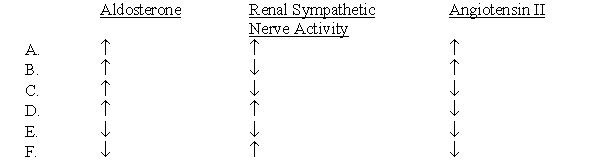
سؤال
سؤال
A 40-year-old woman with a 16-year history of diabetes mellitus was seen in the emergency department with a blood pressure of 270/110 mm Hg. She had her blood pressure measured many times in the past and had never been noted to be hypertensive. She also complains of gradually progressive pedal edema. She denies polyuria, polydipsia, or symptoms of hypoglycemia. Her insulin regimen is Humulin, 20 units in the morning and 10 units in the afternoon. Laboratory tests revealed the following values (range of normal values in parentheses):
-A 55-year-old man with a history of normal health visits his physician for a checkup. His blood pressure was 170/98 mm Hg. Further tests indicated that he had renovascular hypertension as a result of a stenosis in the left kidney. Which of the following set of findings would be most likely expected in this man with renovascular hypertension?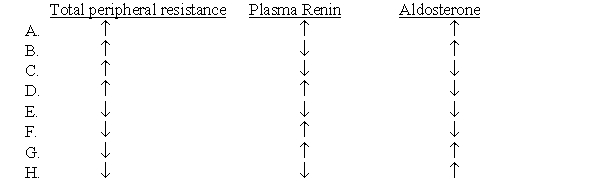
-A 55-year-old man with a history of normal health visits his physician for a checkup. His blood pressure was 170/98 mm Hg. Further tests indicated that he had renovascular hypertension as a result of a stenosis in the left kidney. Which of the following set of findings would be most likely expected in this man with renovascular hypertension?
سؤال
A 45-year-old man with a history of normal health visits his physician for a checkup. His blood pressure measured 170/98 mm Hg. Further tests indicated that he had renovascular hypertension as a result of a stenosis in the left kidney. Which of the following set of findings would be most likely expected? 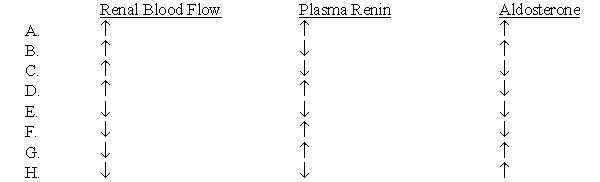
سؤال
سؤال
A 55-year-old woman is diagnosed with a juxtaglomerular cell rennin-secreting tumor. Lab tests reveal a plasma concentration of angiotensin II five times normal. Which of the following set of findings would be expected? 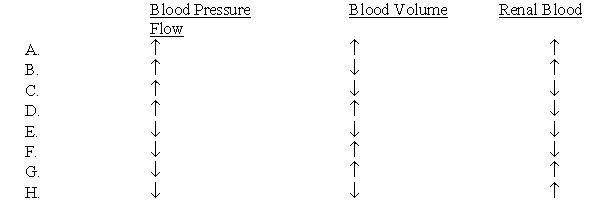
سؤال
A 50-year-old man has a 3-year history of hypertension. He has taken several medications but has not achieved good blood pressure control. He has been off medications entirely for the last 6 months. He complains of fatigue and occasional muscle cramps. There is no family history of hypertension. The patient has not had any other significant medical problems. Examination reveals a blood pressure of 168/104 mm Hg. Additional laboratory tests indicate that he has primary hyperaldosteronism. Which of the following set of findings would be most likely expected? 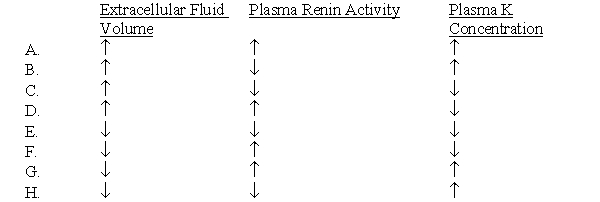
سؤال
سؤال

فتح الحزمة
قم بالتسجيل لفتح البطاقات في هذه المجموعة!
Unlock Deck
Unlock Deck
1/13

العب

ملء الشاشة (f)
Deck 19: Role of the Kidneys in Long-Term Control of Arterial Pressure and in Hypertension: the Integrated System for Arterial Pressure Regulation
1
A decrease in which one of the following would most likely result in chronic hypertension?
A)Angiotensin II
B)Renal sympathetic nerve activity
C)Aldosterone
D)Nitric oxide
A)Angiotensin II
B)Renal sympathetic nerve activity
C)Aldosterone
D)Nitric oxide
D
2
A 40-year-old woman with a 16-year history of diabetes mellitus was seen in the emergency department with a blood pressure of 270/110 mm Hg. She had her blood pressure measured many times in the past and had never been noted to be hypertensive. She also complains of gradually progressive pedal edema. She denies polyuria, polydipsia, or symptoms of hypoglycemia. Her insulin regimen is Humulin, 20 units in the morning and 10 units in the afternoon. Laboratory tests revealed the following values (range of normal values in parentheses):
-An angiotensin-converting enzyme inhibitor is administered to a 65-year-old man with a 20-year history of hypertension. The drug lowered arterial pressure and increased plasma levels of renin and bradykinin. An increase in which of the following would best explain the decline in blood pressure?
A)Preprobradykinin
B)Conversion of angiotensin I to angiotensin II
C)Angiotensin II
D)Kallikrein
E)Renal sodium excretory function
-An angiotensin-converting enzyme inhibitor is administered to a 65-year-old man with a 20-year history of hypertension. The drug lowered arterial pressure and increased plasma levels of renin and bradykinin. An increase in which of the following would best explain the decline in blood pressure?
A)Preprobradykinin
B)Conversion of angiotensin I to angiotensin II
C)Angiotensin II
D)Kallikrein
E)Renal sodium excretory function
Renal sodium excretory function
3
A 65-year-old woman with a 10-year history of essential hypertension visits her physician for an examination. Laboratory test results indicate that the patient has a plasma rennin activity 2-3 times higher than normal. The patient is given a prescription for an angiotensin I receptor blocker (ARB). Which one of the following would you expect to occur in this patient following administration of the ARB?
A)Increase in total peripheral resistance
B)Increase in arterial pressure
C)Increase in plasma renin activity
D)Increase in aldosterone
E)Decrease in kidney's ability to excrete sodium
A)Increase in total peripheral resistance
B)Increase in arterial pressure
C)Increase in plasma renin activity
D)Increase in aldosterone
E)Decrease in kidney's ability to excrete sodium
C
4
A decrease in which one of the following would best explain the increase in blood pressure in this patient?
A)Angiotensin II
B)Aldosterone
C)Sympathetic nerve activity
D)Glomerular filtration rate
E)Endothelin
A)Angiotensin II
B)Aldosterone
C)Sympathetic nerve activity
D)Glomerular filtration rate
E)Endothelin
فتح الحزمة
افتح القفل للوصول البطاقات البالغ عددها 13 في هذه المجموعة.
فتح الحزمة
k this deck
5
Which of the following set of changes would be expected to increase sodium excretion by the kidney?
فتح الحزمة
افتح القفل للوصول البطاقات البالغ عددها 13 في هذه المجموعة.
فتح الحزمة
k this deck
6
A 45-year-old woman was seen by her physician for an upper respiratory infection. Blood pressure on that visit was noted to be 158/94 mm Hg. She was asked to return for two other visits, separated by 1 week each, for measurement of blood pressure. Repeat measures were similar. She has no previous history of hypertension. She denies any previous significant medical problems. There is a positive family history for hypertension. The rest of her history is unremarkable. Other than moderate obesity and the elevated blood pressure, her physical examination was completely normal. All routine laboratory studies were normal. Which diagnosis would you predict for this woman?
A)Renovascular hypertension
B)Primary hyperaldosteronism
C)Essential hypertension
D)Pheochromocytoma
E)Moderate aortic valve regurgitation
A)Renovascular hypertension
B)Primary hyperaldosteronism
C)Essential hypertension
D)Pheochromocytoma
E)Moderate aortic valve regurgitation
فتح الحزمة
افتح القفل للوصول البطاقات البالغ عددها 13 في هذه المجموعة.
فتح الحزمة
k this deck
7
A 40-year-old woman with a 16-year history of diabetes mellitus was seen in the emergency department with a blood pressure of 270/110 mm Hg. She had her blood pressure measured many times in the past and had never been noted to be hypertensive. She also complains of gradually progressive pedal edema. She denies polyuria, polydipsia, or symptoms of hypoglycemia. Her insulin regimen is Humulin, 20 units in the morning and 10 units in the afternoon. Laboratory tests revealed the following values (range of normal values in parentheses):
-A 55-year-old man with a history of normal health visits his physician for a checkup. His blood pressure was 170/98 mm Hg. Further tests indicated that he had renovascular hypertension as a result of a stenosis in the left kidney. Which of the following set of findings would be most likely expected in this man with renovascular hypertension?
-A 55-year-old man with a history of normal health visits his physician for a checkup. His blood pressure was 170/98 mm Hg. Further tests indicated that he had renovascular hypertension as a result of a stenosis in the left kidney. Which of the following set of findings would be most likely expected in this man with renovascular hypertension?
فتح الحزمة
افتح القفل للوصول البطاقات البالغ عددها 13 في هذه المجموعة.
فتح الحزمة
k this deck
8
A 45-year-old man with a history of normal health visits his physician for a checkup. His blood pressure measured 170/98 mm Hg. Further tests indicated that he had renovascular hypertension as a result of a stenosis in the left kidney. Which of the following set of findings would be most likely expected?
فتح الحزمة
افتح القفل للوصول البطاقات البالغ عددها 13 في هذه المجموعة.
فتح الحزمة
k this deck
9
A healthy 22-year-old female medical student with normal kidneys increases her sodium intake by 200% for a period of 2 months. A decrease in which of the following is expected to occur in response to the increase in sodium intake?
A)Arterial pressure
B)Plasma renin activity
C)Sodium excretion
D)Nitric oxide
E)Atrial natriuretic peptide
A)Arterial pressure
B)Plasma renin activity
C)Sodium excretion
D)Nitric oxide
E)Atrial natriuretic peptide
فتح الحزمة
افتح القفل للوصول البطاقات البالغ عددها 13 في هذه المجموعة.
فتح الحزمة
k this deck
10
A 55-year-old woman is diagnosed with a juxtaglomerular cell rennin-secreting tumor. Lab tests reveal a plasma concentration of angiotensin II five times normal. Which of the following set of findings would be expected?
فتح الحزمة
افتح القفل للوصول البطاقات البالغ عددها 13 في هذه المجموعة.
فتح الحزمة
k this deck
11
A 50-year-old man has a 3-year history of hypertension. He has taken several medications but has not achieved good blood pressure control. He has been off medications entirely for the last 6 months. He complains of fatigue and occasional muscle cramps. There is no family history of hypertension. The patient has not had any other significant medical problems. Examination reveals a blood pressure of 168/104 mm Hg. Additional laboratory tests indicate that he has primary hyperaldosteronism. Which of the following set of findings would be most likely expected?
فتح الحزمة
افتح القفل للوصول البطاقات البالغ عددها 13 في هذه المجموعة.
فتح الحزمة
k this deck
12
A patient with which sodium intake (in mmol/day) will have the greatest reduction in blood pressure in response to an angiotensin converting enzyme inhibitor?
A)300
B)200
C)100
D)50
A)300
B)200
C)100
D)50
فتح الحزمة
افتح القفل للوصول البطاقات البالغ عددها 13 في هذه المجموعة.
فتح الحزمة
k this deck
13
A 55-year-old woman with a 5-year history of hypertension visits her physician for an examination. Laboratory test results indicate that the patient has a plasma rennin activity 3 to 4 times higher than normal. The patient is given a prescription for Capoten, an angiotensin II converting enzyme (ACE) inhibitor. An increase in which one of the following would you expect to occur in this patient following administration of the ACE inhibitor?
A)Total peripheral resistance
B)Arterial pressure
C)Angiotensin I
D)Aldosterone
E)Atrial natriuretic peptide
A)Total peripheral resistance
B)Arterial pressure
C)Angiotensin I
D)Aldosterone
E)Atrial natriuretic peptide
فتح الحزمة
افتح القفل للوصول البطاقات البالغ عددها 13 في هذه المجموعة.
فتح الحزمة
k this deck
فتح الحزمة
افتح القفل للوصول البطاقات البالغ عددها 13 في هذه المجموعة.






