Deck 8: The Sun

ملء الشاشة (f)
exit full mode
سؤال
The upper chromosphere is hot enough to emit X-rays.
استخدم زر المسافة أو
up arrow
down arrow
لقلب البطاقة.
سؤال
The visible surface of the Sun is composed of solid matter.
سؤال
The layer above the chromosphere is the photosphere.
سؤال
The Sun is a ball of hot gas held together by its own gravity.
سؤال
Helioseismology maps of rotation in the Sun's interior show that its internal gases rotate with equal periods.
سؤال
Spicules can trigger communications blackouts and auroras on Earth.
سؤال
Sunspots are parts of active solar regions dominated by magnetic fields that encompass all layers of the Sun's atmosphere.
سؤال
Nuclear fusion in the Sun is tremendously powerful.
سؤال
What is the approximate average temperature of the Sun's surface?

A) 5000 o C
B) 5800oC
C) 5800 K
D) 6400 K
E) 10,000oC
سؤال
Nuclear fusion within the Sun proceeds step by step in a series of reactions called the neutron-neutron chain.
سؤال
Sunspots tend to occur in groups, or pairs, with the magnetic field around the pair resembling that around a bar magnet.
سؤال
Granulation is caused by convection currents just below the photosphere.
سؤال
What are the dark regions that give the Sun's photosphere a mottled appearance?

A) sunspots
B) spicules
C) granules
D) flares
E) CMEs
سؤال
Almost all the light we receive from the Sun escapes from underneath its photosphere.
سؤال
Sunspot numbers follow a seven-year cycle.
سؤال
The corona is so dim that it is not visible in Earth's daytime sky.
سؤال
Which two elements are most abundant within the Sun?

A) hydrogen and oxygen
B) hydrogen and helium
C) helium and carbon
D) helium and nitrogen
E) hydrogen and carbon
سؤال
Which is the correct order of the Sun's atmospheric layers, from the innermost to outermost?

A) chromosphere → corona → photosphere
B) corona → chromosphere → photosphere
C) chromosphere → photosphere → corona
D) photosphere → chromosphere → corona
E) photosphere → corona → chromosphere
سؤال
What is the average distance between the Sun and Earth?

A) 1 AU
B) 2 AU
C) 5 AU
D) 10 AU
E) 20 AU
سؤال
When the Sun generates its own energy, it uses weak forces to bind together atomic nuclei.
سؤال
Astronomers often record solar images in the ____ part of the electromagnetic spectrum because the gaseous layers high in the Sun's atmosphere are very hot and emit most of their light at short wavelengths.

A) visible light
B) microwave
C) ultraviolet
D) gamma
E) infrared
سؤال
The corona can reach temperatures of up to ____.

A) 5800 K
B) 10,000 K
C) 500,000 K
D) 1,000,000 K
E) 2,000,000 K
سؤال
Why does the temperature of the corona rise with latitude?

A) Atoms within the corona become more ionized at higher altitudes.
B) Atoms are forced upward from the chromosphere to the corona.
C) Atoms become neutralized as they dissipate in higher altitudes.
D) Atoms undergo fission when repelled by the corona.
E) Atoms are less excited as they move from the photosphere to the corona.
سؤال
How many nuclear reactions occur in a proton-proton chain?

A) one
B) two
C) three
D) four
E) five
سؤال
The pink color of the chromosphere is produced by the combined light of three emission lines of hydrogen: ____.

A) blue, green, and yellow
B) red, blue, and violet
C) green, blue, and violet
D) red, magenta, and violet
E) indigo, blue, and red
سؤال
Consider the complete magnetic cycle of sunspot activity on the Sun. Approximately how many years is this cycle?

A) 7 years
B) 11 years
C) 22 years
D) 40 years
E) 100 years
سؤال
When mapping the interior of the Sun, astronomers must measure _____ as the photosphere moves up and down.

A) sunspots
B) magnetic fields
C) supergranules
D) limb darkening
E) Doppler shifts
سؤال
What causes granulation on the photosphere?

A) convection
B) solar cycle
C) magnetic fields
D) bursts of energy
E) differential rotation
سؤال
Galileo proposed that the Sun is a rotating sphere after he ____.

A) timed a full rotation of the Sun's equator
B) observed sunspots move across the surface of the Sun
C) measured different spectral lines of emission on different days
D) noted how the Sun rose in the east and set in the west
E) discovered the parallax of the Sun
سؤال
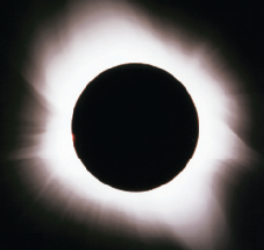
<strong>  Figure 8-1b Which layer of the Sun's atmosphere is represented in the accompanying visual-wavelength image?</strong> A) magnetic carpet B) chromosphere C) heliosphere D) solar wind E) corona <div style=padding-top: 35px> Figure 8-1b
Which layer of the Sun's atmosphere is represented in the accompanying visual-wavelength image?

A) magnetic carpet
B) chromosphere
C) heliosphere
D) solar wind
E) corona
سؤال
The Babcock model of the solar magnetic cycle explains the sunspot cycle as primarily a consequence of the Sun's ____.

A) meridional flow
B) convection currents
C) differential rotation
D) coronal mass ejections
E) helioseimologic activity
سؤال
The _____ occurs when some of the energy in the convective motion of gas is converted into magnetic field energy.

A) Zeeman effect
B) Maunder minimum
C) meridional flow
D) dynamo effect
E) reconnection event
سؤال
What methodology do astronomers use to map the inside of the Sun?

A) heliogeology
B) chromography
C) coronagraphy
D) helioseismology
E) magnetic field mapping
سؤال
What occurs on the surface of the Sun during a solar cycle minimum?

A) reversal in rotation of the Sun
B) little to no sunspot activity
C) decreased temperature of the photosphere
D) partial dissipation of the corona
E) little to no solar wind
سؤال
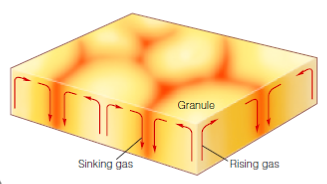
<strong>  Figure 8-2b What process on the Sun's photosphere does this figure represent?</strong> A) solar cycle B) sunspot cycle C) convection currents D) magnetic field shifts E) differential rotation <div style=padding-top: 35px> Figure 8-2b
What process on the Sun's photosphere does this figure represent?

A) solar cycle
B) sunspot cycle
C) convection currents
D) magnetic field shifts
E) differential rotation
سؤال
Granulation is evidence that energy in the photosphere ____.

A) is flowing downward towards the core
B) stays horizontal on the surface
C) is spiraling westward
D) is spiraling eastward
E) is flowing upward
سؤال
When two arches in a magnetic field encounter each other, ____ can cause powerful eruptions called ____.

A) reconnection events; flares
B) supergranules; Coulumb barriers
C) filaments; coronal holes
D) solar winds; convective zones
E) prominences; limb darkening
سؤال
Of the following parts of the Sun, which is the hottest?

A) sunspots
B) corona
C) photosphere
D) supergranules
E) chromosphere
سؤال
Astronomers can measure the magnetic fields of sunspots using the ____, which splits spectral lines into multiple components.

A) Zeeman effect
B) Maunder effect
C) Babcock effect
D) Galileo effect
E) Payne effect
سؤال
Astronomers refer to the dark center of a sunspot as a(n) ____

A) eye
B) flare
C) umbra
D) spicule
E) penumbra
سؤال
Match between columns
Subatomic particles released from the proton-proton chain of nuclear fusion
coronal mass ejection
Subatomic particles released from the proton-proton chain of nuclear fusion
photosphere
Subatomic particles released from the proton-proton chain of nuclear fusion
sunspots
Subatomic particles released from the proton-proton chain of nuclear fusion
spicules
Subatomic particles released from the proton-proton chain of nuclear fusion
solar wind
Subatomic particles released from the proton-proton chain of nuclear fusion
corona
Subatomic particles released from the proton-proton chain of nuclear fusion
prominences
Subatomic particles released from the proton-proton chain of nuclear fusion
neutrinos
سؤال
Which equation represents the overall nuclear fusion process of the Sun?

A) "4 4 H => 4 He - energy"
B) "2 1 H => 1 He + energy"
C) "4 1 H => 2 1 He - energy"
D) "4 1 H => 4 He + energy"
E) " 4 H => 8 He + energy"
سؤال
Match between columns
Violent bursts of ionized gas ejected from magnetic fields that flow outward in the solar wind
photosphere
Violent bursts of ionized gas ejected from magnetic fields that flow outward in the solar wind
spicules
Violent bursts of ionized gas ejected from magnetic fields that flow outward in the solar wind
solar wind
Violent bursts of ionized gas ejected from magnetic fields that flow outward in the solar wind
corona
Violent bursts of ionized gas ejected from magnetic fields that flow outward in the solar wind
prominences
Violent bursts of ionized gas ejected from magnetic fields that flow outward in the solar wind
neutrinos
Violent bursts of ionized gas ejected from magnetic fields that flow outward in the solar wind
coronal mass ejection
Violent bursts of ionized gas ejected from magnetic fields that flow outward in the solar wind
sunspots
Cool, relatively dark spots on the Sun's photosphere, usually appearing in group
photosphere
Cool, relatively dark spots on the Sun's photosphere, usually appearing in group
spicules
Cool, relatively dark spots on the Sun's photosphere, usually appearing in group
solar wind
Cool, relatively dark spots on the Sun's photosphere, usually appearing in group
corona
Cool, relatively dark spots on the Sun's photosphere, usually appearing in group
prominences
Cool, relatively dark spots on the Sun's photosphere, usually appearing in group
neutrinos
Cool, relatively dark spots on the Sun's photosphere, usually appearing in group
coronal mass ejection
Cool, relatively dark spots on the Sun's photosphere, usually appearing in group
sunspots
Arches of magnetic field visible in the chromosphere and corona
photosphere
Arches of magnetic field visible in the chromosphere and corona
spicules
Arches of magnetic field visible in the chromosphere and corona
solar wind
Arches of magnetic field visible in the chromosphere and corona
corona
Arches of magnetic field visible in the chromosphere and corona
prominences
Arches of magnetic field visible in the chromosphere and corona
neutrinos
Arches of magnetic field visible in the chromosphere and corona
coronal mass ejection
Arches of magnetic field visible in the chromosphere and corona
sunspots
سؤال
Why was the Davis experiment only able to detect one-third of the neutrinos originally predicted?

A) Most of the neutrinos were absorbed by Earth's atmosphere.
B) The neutrinos combined with other particles as they entered Earth's atmosphere.
C) The neutrinos distributed evenly among three different flavors while traveling to Earth.
D) The number of neutrinos was too great to be held in the tank that Davis designed.
E) The other two-thirds of neutrinos dissipated while traveling to Earth.
سؤال
During the first reaction of the proton-proton chain of nuclear fusion, a weak force causes one of the protons to transform into a neutron and emit ____.

A) a positron and a neutrino
B) a positron and a deuterium
C) a neutrino and a deuterium
D) a neutrino and an electron
E) a deuterium and an electron
سؤال
Match between columns
Subatomic particles released from the proton-proton chain of nuclear fusion
spicules
Subatomic particles released from the proton-proton chain of nuclear fusion
prominences
Subatomic particles released from the proton-proton chain of nuclear fusion
solar wind
Subatomic particles released from the proton-proton chain of nuclear fusion
coronal mass ejection
Subatomic particles released from the proton-proton chain of nuclear fusion
photosphere
Subatomic particles released from the proton-proton chain of nuclear fusion
sunspots
Subatomic particles released from the proton-proton chain of nuclear fusion
corona
Subatomic particles released from the proton-proton chain of nuclear fusion
neutrinos
The outermost part of the Sun's atmosphere
spicules
The outermost part of the Sun's atmosphere
prominences
The outermost part of the Sun's atmosphere
solar wind
The outermost part of the Sun's atmosphere
coronal mass ejection
The outermost part of the Sun's atmosphere
photosphere
The outermost part of the Sun's atmosphere
sunspots
The outermost part of the Sun's atmosphere
corona
The outermost part of the Sun's atmosphere
neutrinos
Flame-like structures that extend upward into the lower corona
spicules
Flame-like structures that extend upward into the lower corona
prominences
Flame-like structures that extend upward into the lower corona
solar wind
Flame-like structures that extend upward into the lower corona
coronal mass ejection
Flame-like structures that extend upward into the lower corona
photosphere
Flame-like structures that extend upward into the lower corona
sunspots
Flame-like structures that extend upward into the lower corona
corona
Flame-like structures that extend upward into the lower corona
neutrinos
Arches of magnetic field visible in the chromosphere and corona
spicules
Arches of magnetic field visible in the chromosphere and corona
prominences
Arches of magnetic field visible in the chromosphere and corona
solar wind
Arches of magnetic field visible in the chromosphere and corona
coronal mass ejection
Arches of magnetic field visible in the chromosphere and corona
photosphere
Arches of magnetic field visible in the chromosphere and corona
sunspots
Arches of magnetic field visible in the chromosphere and corona
corona
Arches of magnetic field visible in the chromosphere and corona
neutrinos
A breeze of low-density ionized gas streaming away from the Sun
spicules
A breeze of low-density ionized gas streaming away from the Sun
prominences
A breeze of low-density ionized gas streaming away from the Sun
solar wind
A breeze of low-density ionized gas streaming away from the Sun
coronal mass ejection
A breeze of low-density ionized gas streaming away from the Sun
photosphere
A breeze of low-density ionized gas streaming away from the Sun
sunspots
A breeze of low-density ionized gas streaming away from the Sun
corona
A breeze of low-density ionized gas streaming away from the Sun
neutrinos
Violent bursts of ionized gas ejected from magnetic fields that flow outward in the solar wind
spicules
Violent bursts of ionized gas ejected from magnetic fields that flow outward in the solar wind
prominences
Violent bursts of ionized gas ejected from magnetic fields that flow outward in the solar wind
solar wind
Violent bursts of ionized gas ejected from magnetic fields that flow outward in the solar wind
coronal mass ejection
Violent bursts of ionized gas ejected from magnetic fields that flow outward in the solar wind
photosphere
Violent bursts of ionized gas ejected from magnetic fields that flow outward in the solar wind
sunspots
Violent bursts of ionized gas ejected from magnetic fields that flow outward in the solar wind
corona
Violent bursts of ionized gas ejected from magnetic fields that flow outward in the solar wind
neutrinos
The layer in the Sun from which visible photons most easily escape
spicules
The layer in the Sun from which visible photons most easily escape
prominences
The layer in the Sun from which visible photons most easily escape
solar wind
The layer in the Sun from which visible photons most easily escape
coronal mass ejection
The layer in the Sun from which visible photons most easily escape
photosphere
The layer in the Sun from which visible photons most easily escape
sunspots
The layer in the Sun from which visible photons most easily escape
corona
The layer in the Sun from which visible photons most easily escape
neutrinos
Cool, relatively dark spots on the Sun's photosphere, usually appearing in group
spicules
Cool, relatively dark spots on the Sun's photosphere, usually appearing in group
prominences
Cool, relatively dark spots on the Sun's photosphere, usually appearing in group
solar wind
Cool, relatively dark spots on the Sun's photosphere, usually appearing in group
coronal mass ejection
Cool, relatively dark spots on the Sun's photosphere, usually appearing in group
photosphere
Cool, relatively dark spots on the Sun's photosphere, usually appearing in group
sunspots
Cool, relatively dark spots on the Sun's photosphere, usually appearing in group
corona
Cool, relatively dark spots on the Sun's photosphere, usually appearing in group
neutrinos
سؤال
Which of the natural forces bind atomic nuclei?

A) strong force
B) weak force
C) gravitational force
D) Newtonian force
E) electromagnetic force
سؤال
The Maunder minimum occurred in the 17th century, which many scientists debate the labeling of that time as the "Little Ice Age". However, it occurred before the Industrial Revolution and thus, had no significant impact on the human standard of living as we know in today's society. Suppose the Sun experienced a similar period today. How would life on Earth be impacted?
سؤال
The images produced by _______________ reveal streamers in the corona that follow magnetic lines of force in the Sun's magnetic field.
سؤال
What occurs during nuclear fusion within the Sun and how much energy is produced?
سؤال
The number of _______________ visible on the Sun varies in a cycle with a period of 11 years.
سؤال
Why do sunspots occur darker than the rest of the Sun's surface?
سؤال
During nuclear fusion, four hydrogen nuclei fuse into how many helium?

A) one
B) two
C) three
D) four
E) eight
سؤال
The _______________ is a thin layer of gas from which Earth receives most of the Sun's light.
سؤال
The solar wind extends to the _______________ , marking an outer boundary of the Solar System.
سؤال
What is released from the proton-proton chain and is immediately absorbed by the surrounding gas, thereby heating it?

A) positrons
B) deuterium
C) gamma rays
D) neutrinos
E) electron motion
سؤال
The most abundant gas making up the Sun's composition is _______________.
سؤال
In order for nuclear fusion to occur, atomic nuclei must overcome the ____ by colliding violently.

A) coronal hole
B) dynamo effect
C) convective zone
D) radiative zone
E) Coulomb barrier
سؤال
What is the safest way to view the Sun and its sunspots?
سؤال
Stars, like our Sun, generate their energy by way of nuclear _______________.
سؤال
Explain the role of convection on the Sun's surface.
سؤال
What causes auroras and where are they most prominent on Earth?
سؤال
What forms of electromagnetic radiation from the Sun's emissions do we experience here on Earth? Illustrate how we know this to be the case with one practical example for each form.
سؤال
The _______________ of the solar disk is dimmer than the center, which is caused by the absorption of light in the photosphere.
سؤال
Gas flows away from the Sun in the _______________, which can be considered an extension of the corona.
سؤال
The magnetic polarities of sunspots _______________ at the end of an 11-year cycle.
سؤال
Explain the Babcock model and why the solar cycle should really be considered as a 22-year cycle instead of 11-year cycle.
سؤال
The _______________ predicts that pairs of sunspots should occur where magnetic tubes burst through the Sun's surface.
سؤال
Historical records show that there were very few sunspots from about 1645 to 1715, a phenomenon known as the _______________.
سؤال
The chromosphere is roughly _______________ times fainter than the photosphere.
سؤال
What are the only four forces that can affect matter?
سؤال
How is the Sun's rotation different than that of Earth's?
فتح الحزمة
قم بالتسجيل لفتح البطاقات في هذه المجموعة!
Unlock Deck
Unlock Deck
1/72
auto play flashcards
العب
simple tutorial
ملء الشاشة (f)
exit full mode
Deck 8: The Sun
1
The upper chromosphere is hot enough to emit X-rays.
True
2
The visible surface of the Sun is composed of solid matter.
False
3
The layer above the chromosphere is the photosphere.
False
4
The Sun is a ball of hot gas held together by its own gravity.
فتح الحزمة
افتح القفل للوصول البطاقات البالغ عددها 72 في هذه المجموعة.
فتح الحزمة
k this deck
5
Helioseismology maps of rotation in the Sun's interior show that its internal gases rotate with equal periods.
فتح الحزمة
افتح القفل للوصول البطاقات البالغ عددها 72 في هذه المجموعة.
فتح الحزمة
k this deck
6
Spicules can trigger communications blackouts and auroras on Earth.
فتح الحزمة
افتح القفل للوصول البطاقات البالغ عددها 72 في هذه المجموعة.
فتح الحزمة
k this deck
7
Sunspots are parts of active solar regions dominated by magnetic fields that encompass all layers of the Sun's atmosphere.
فتح الحزمة
افتح القفل للوصول البطاقات البالغ عددها 72 في هذه المجموعة.

فتح الحزمة
k this deck
8
Nuclear fusion in the Sun is tremendously powerful.
فتح الحزمة
افتح القفل للوصول البطاقات البالغ عددها 72 في هذه المجموعة.

فتح الحزمة
k this deck
9
What is the approximate average temperature of the Sun's surface?

A) 5000 o C
B) 5800oC
C) 5800 K
D) 6400 K
E) 10,000oC
فتح الحزمة
افتح القفل للوصول البطاقات البالغ عددها 72 في هذه المجموعة.
فتح الحزمة
k this deck
10
Nuclear fusion within the Sun proceeds step by step in a series of reactions called the neutron-neutron chain.
فتح الحزمة
افتح القفل للوصول البطاقات البالغ عددها 72 في هذه المجموعة.
فتح الحزمة
k this deck
11
Sunspots tend to occur in groups, or pairs, with the magnetic field around the pair resembling that around a bar magnet.
فتح الحزمة
افتح القفل للوصول البطاقات البالغ عددها 72 في هذه المجموعة.
فتح الحزمة
k this deck
12
Granulation is caused by convection currents just below the photosphere.
فتح الحزمة
افتح القفل للوصول البطاقات البالغ عددها 72 في هذه المجموعة.
فتح الحزمة
k this deck
13
What are the dark regions that give the Sun's photosphere a mottled appearance?

A) sunspots
B) spicules
C) granules
D) flares
E) CMEs
فتح الحزمة
افتح القفل للوصول البطاقات البالغ عددها 72 في هذه المجموعة.
فتح الحزمة
k this deck
14
Almost all the light we receive from the Sun escapes from underneath its photosphere.
فتح الحزمة
افتح القفل للوصول البطاقات البالغ عددها 72 في هذه المجموعة.
فتح الحزمة
k this deck
15
Sunspot numbers follow a seven-year cycle.
فتح الحزمة
افتح القفل للوصول البطاقات البالغ عددها 72 في هذه المجموعة.
فتح الحزمة
k this deck
16
The corona is so dim that it is not visible in Earth's daytime sky.
فتح الحزمة
افتح القفل للوصول البطاقات البالغ عددها 72 في هذه المجموعة.
فتح الحزمة
k this deck
17
Which two elements are most abundant within the Sun?

A) hydrogen and oxygen
B) hydrogen and helium
C) helium and carbon
D) helium and nitrogen
E) hydrogen and carbon
فتح الحزمة
افتح القفل للوصول البطاقات البالغ عددها 72 في هذه المجموعة.
فتح الحزمة
k this deck
18
Which is the correct order of the Sun's atmospheric layers, from the innermost to outermost?

A) chromosphere → corona → photosphere
B) corona → chromosphere → photosphere
C) chromosphere → photosphere → corona
D) photosphere → chromosphere → corona
E) photosphere → corona → chromosphere
فتح الحزمة
افتح القفل للوصول البطاقات البالغ عددها 72 في هذه المجموعة.
فتح الحزمة
k this deck
19
What is the average distance between the Sun and Earth?

A) 1 AU
B) 2 AU
C) 5 AU
D) 10 AU
E) 20 AU
فتح الحزمة
افتح القفل للوصول البطاقات البالغ عددها 72 في هذه المجموعة.
فتح الحزمة
k this deck
20
When the Sun generates its own energy, it uses weak forces to bind together atomic nuclei.
فتح الحزمة
افتح القفل للوصول البطاقات البالغ عددها 72 في هذه المجموعة.
فتح الحزمة
k this deck
21
Astronomers often record solar images in the ____ part of the electromagnetic spectrum because the gaseous layers high in the Sun's atmosphere are very hot and emit most of their light at short wavelengths.

A) visible light
B) microwave
C) ultraviolet
D) gamma
E) infrared
فتح الحزمة
افتح القفل للوصول البطاقات البالغ عددها 72 في هذه المجموعة.
فتح الحزمة
k this deck
22
The corona can reach temperatures of up to ____.

A) 5800 K
B) 10,000 K
C) 500,000 K
D) 1,000,000 K
E) 2,000,000 K
فتح الحزمة
افتح القفل للوصول البطاقات البالغ عددها 72 في هذه المجموعة.
فتح الحزمة
k this deck
23
Why does the temperature of the corona rise with latitude?

A) Atoms within the corona become more ionized at higher altitudes.
B) Atoms are forced upward from the chromosphere to the corona.
C) Atoms become neutralized as they dissipate in higher altitudes.
D) Atoms undergo fission when repelled by the corona.
E) Atoms are less excited as they move from the photosphere to the corona.
فتح الحزمة
افتح القفل للوصول البطاقات البالغ عددها 72 في هذه المجموعة.
فتح الحزمة
k this deck
24
How many nuclear reactions occur in a proton-proton chain?

A) one
B) two
C) three
D) four
E) five
فتح الحزمة
افتح القفل للوصول البطاقات البالغ عددها 72 في هذه المجموعة.
فتح الحزمة
k this deck
25
The pink color of the chromosphere is produced by the combined light of three emission lines of hydrogen: ____.

A) blue, green, and yellow
B) red, blue, and violet
C) green, blue, and violet
D) red, magenta, and violet
E) indigo, blue, and red
فتح الحزمة
افتح القفل للوصول البطاقات البالغ عددها 72 في هذه المجموعة.
فتح الحزمة
k this deck
26
Consider the complete magnetic cycle of sunspot activity on the Sun. Approximately how many years is this cycle?

A) 7 years
B) 11 years
C) 22 years
D) 40 years
E) 100 years
فتح الحزمة
افتح القفل للوصول البطاقات البالغ عددها 72 في هذه المجموعة.
فتح الحزمة
k this deck
27
When mapping the interior of the Sun, astronomers must measure _____ as the photosphere moves up and down.

A) sunspots
B) magnetic fields
C) supergranules
D) limb darkening
E) Doppler shifts
فتح الحزمة
افتح القفل للوصول البطاقات البالغ عددها 72 في هذه المجموعة.
فتح الحزمة
k this deck
28
What causes granulation on the photosphere?

A) convection
B) solar cycle
C) magnetic fields
D) bursts of energy
E) differential rotation
فتح الحزمة
افتح القفل للوصول البطاقات البالغ عددها 72 في هذه المجموعة.
فتح الحزمة
k this deck
29
Galileo proposed that the Sun is a rotating sphere after he ____.

A) timed a full rotation of the Sun's equator
B) observed sunspots move across the surface of the Sun
C) measured different spectral lines of emission on different days
D) noted how the Sun rose in the east and set in the west
E) discovered the parallax of the Sun
فتح الحزمة
افتح القفل للوصول البطاقات البالغ عددها 72 في هذه المجموعة.
فتح الحزمة
k this deck
30
<strong>  Figure 8-1b Which layer of the Sun's atmosphere is represented in the accompanying visual-wavelength image?</strong> A) magnetic carpet B) chromosphere C) heliosphere D) solar wind E) corona Figure 8-1b
Which layer of the Sun's atmosphere is represented in the accompanying visual-wavelength image?

A) magnetic carpet
B) chromosphere
C) heliosphere
D) solar wind
E) corona
فتح الحزمة
افتح القفل للوصول البطاقات البالغ عددها 72 في هذه المجموعة.
فتح الحزمة
k this deck
31
The Babcock model of the solar magnetic cycle explains the sunspot cycle as primarily a consequence of the Sun's ____.

A) meridional flow
B) convection currents
C) differential rotation
D) coronal mass ejections
E) helioseimologic activity
فتح الحزمة
افتح القفل للوصول البطاقات البالغ عددها 72 في هذه المجموعة.
فتح الحزمة
k this deck
32
The _____ occurs when some of the energy in the convective motion of gas is converted into magnetic field energy.

A) Zeeman effect
B) Maunder minimum
C) meridional flow
D) dynamo effect
E) reconnection event
فتح الحزمة
افتح القفل للوصول البطاقات البالغ عددها 72 في هذه المجموعة.
فتح الحزمة
k this deck
33
What methodology do astronomers use to map the inside of the Sun?

A) heliogeology
B) chromography
C) coronagraphy
D) helioseismology
E) magnetic field mapping
فتح الحزمة
افتح القفل للوصول البطاقات البالغ عددها 72 في هذه المجموعة.
فتح الحزمة
k this deck
34
What occurs on the surface of the Sun during a solar cycle minimum?

A) reversal in rotation of the Sun
B) little to no sunspot activity
C) decreased temperature of the photosphere
D) partial dissipation of the corona
E) little to no solar wind
فتح الحزمة
افتح القفل للوصول البطاقات البالغ عددها 72 في هذه المجموعة.
فتح الحزمة
k this deck
35
<strong>  Figure 8-2b What process on the Sun's photosphere does this figure represent?</strong> A) solar cycle B) sunspot cycle C) convection currents D) magnetic field shifts E) differential rotation Figure 8-2b
What process on the Sun's photosphere does this figure represent?

A) solar cycle
B) sunspot cycle
C) convection currents
D) magnetic field shifts
E) differential rotation
فتح الحزمة
افتح القفل للوصول البطاقات البالغ عددها 72 في هذه المجموعة.
فتح الحزمة
k this deck
36
Granulation is evidence that energy in the photosphere ____.

A) is flowing downward towards the core
B) stays horizontal on the surface
C) is spiraling westward
D) is spiraling eastward
E) is flowing upward
فتح الحزمة
افتح القفل للوصول البطاقات البالغ عددها 72 في هذه المجموعة.
فتح الحزمة
k this deck
37
When two arches in a magnetic field encounter each other, ____ can cause powerful eruptions called ____.

A) reconnection events; flares
B) supergranules; Coulumb barriers
C) filaments; coronal holes
D) solar winds; convective zones
E) prominences; limb darkening
فتح الحزمة
افتح القفل للوصول البطاقات البالغ عددها 72 في هذه المجموعة.
فتح الحزمة
k this deck
38
Of the following parts of the Sun, which is the hottest?

A) sunspots
B) corona
C) photosphere
D) supergranules
E) chromosphere
فتح الحزمة
افتح القفل للوصول البطاقات البالغ عددها 72 في هذه المجموعة.
فتح الحزمة
k this deck
39
Astronomers can measure the magnetic fields of sunspots using the ____, which splits spectral lines into multiple components.

A) Zeeman effect
B) Maunder effect
C) Babcock effect
D) Galileo effect
E) Payne effect
فتح الحزمة
افتح القفل للوصول البطاقات البالغ عددها 72 في هذه المجموعة.
فتح الحزمة
k this deck
40
Astronomers refer to the dark center of a sunspot as a(n) ____

A) eye
B) flare
C) umbra
D) spicule
E) penumbra
فتح الحزمة
افتح القفل للوصول البطاقات البالغ عددها 72 في هذه المجموعة.
فتح الحزمة
k this deck
41
Match between columns
Subatomic particles released from the proton-proton chain of nuclear fusion
coronal mass ejection
Subatomic particles released from the proton-proton chain of nuclear fusion
photosphere
Subatomic particles released from the proton-proton chain of nuclear fusion
sunspots
Subatomic particles released from the proton-proton chain of nuclear fusion
spicules
Subatomic particles released from the proton-proton chain of nuclear fusion
solar wind
Subatomic particles released from the proton-proton chain of nuclear fusion
corona
Subatomic particles released from the proton-proton chain of nuclear fusion
prominences
Subatomic particles released from the proton-proton chain of nuclear fusion
neutrinos
فتح الحزمة
افتح القفل للوصول البطاقات البالغ عددها 72 في هذه المجموعة.
فتح الحزمة
k this deck
42
Which equation represents the overall nuclear fusion process of the Sun?

A) "4 4 H => 4 He - energy"
B) "2 1 H => 1 He + energy"
C) "4 1 H => 2 1 He - energy"
D) "4 1 H => 4 He + energy"
E) " 4 H => 8 He + energy"
فتح الحزمة
افتح القفل للوصول البطاقات البالغ عددها 72 في هذه المجموعة.
فتح الحزمة
k this deck
43
Match between columns
Violent bursts of ionized gas ejected from magnetic fields that flow outward in the solar wind
photosphere
Violent bursts of ionized gas ejected from magnetic fields that flow outward in the solar wind
spicules
Violent bursts of ionized gas ejected from magnetic fields that flow outward in the solar wind
solar wind
Violent bursts of ionized gas ejected from magnetic fields that flow outward in the solar wind
corona
Violent bursts of ionized gas ejected from magnetic fields that flow outward in the solar wind
prominences
Violent bursts of ionized gas ejected from magnetic fields that flow outward in the solar wind
neutrinos
Violent bursts of ionized gas ejected from magnetic fields that flow outward in the solar wind
coronal mass ejection
Violent bursts of ionized gas ejected from magnetic fields that flow outward in the solar wind
sunspots
Cool, relatively dark spots on the Sun's photosphere, usually appearing in group
photosphere
Cool, relatively dark spots on the Sun's photosphere, usually appearing in group
spicules
Cool, relatively dark spots on the Sun's photosphere, usually appearing in group
solar wind
Cool, relatively dark spots on the Sun's photosphere, usually appearing in group
corona
Cool, relatively dark spots on the Sun's photosphere, usually appearing in group
prominences
Cool, relatively dark spots on the Sun's photosphere, usually appearing in group
neutrinos
Cool, relatively dark spots on the Sun's photosphere, usually appearing in group
coronal mass ejection
Cool, relatively dark spots on the Sun's photosphere, usually appearing in group
sunspots
Arches of magnetic field visible in the chromosphere and corona
photosphere
Arches of magnetic field visible in the chromosphere and corona
spicules
Arches of magnetic field visible in the chromosphere and corona
solar wind
Arches of magnetic field visible in the chromosphere and corona
corona
Arches of magnetic field visible in the chromosphere and corona
prominences
Arches of magnetic field visible in the chromosphere and corona
neutrinos
Arches of magnetic field visible in the chromosphere and corona
coronal mass ejection
Arches of magnetic field visible in the chromosphere and corona
sunspots
فتح الحزمة
افتح القفل للوصول البطاقات البالغ عددها 72 في هذه المجموعة.
فتح الحزمة
k this deck
44
Why was the Davis experiment only able to detect one-third of the neutrinos originally predicted?

A) Most of the neutrinos were absorbed by Earth's atmosphere.
B) The neutrinos combined with other particles as they entered Earth's atmosphere.
C) The neutrinos distributed evenly among three different flavors while traveling to Earth.
D) The number of neutrinos was too great to be held in the tank that Davis designed.
E) The other two-thirds of neutrinos dissipated while traveling to Earth.
فتح الحزمة
افتح القفل للوصول البطاقات البالغ عددها 72 في هذه المجموعة.
فتح الحزمة
k this deck
45
During the first reaction of the proton-proton chain of nuclear fusion, a weak force causes one of the protons to transform into a neutron and emit ____.

A) a positron and a neutrino
B) a positron and a deuterium
C) a neutrino and a deuterium
D) a neutrino and an electron
E) a deuterium and an electron
فتح الحزمة
افتح القفل للوصول البطاقات البالغ عددها 72 في هذه المجموعة.
فتح الحزمة
k this deck
46
Match between columns
Subatomic particles released from the proton-proton chain of nuclear fusion
spicules
Subatomic particles released from the proton-proton chain of nuclear fusion
prominences
Subatomic particles released from the proton-proton chain of nuclear fusion
solar wind
Subatomic particles released from the proton-proton chain of nuclear fusion
coronal mass ejection
Subatomic particles released from the proton-proton chain of nuclear fusion
photosphere
Subatomic particles released from the proton-proton chain of nuclear fusion
sunspots
Subatomic particles released from the proton-proton chain of nuclear fusion
corona
Subatomic particles released from the proton-proton chain of nuclear fusion
neutrinos
The outermost part of the Sun's atmosphere
spicules
The outermost part of the Sun's atmosphere
prominences
The outermost part of the Sun's atmosphere
solar wind
The outermost part of the Sun's atmosphere
coronal mass ejection
The outermost part of the Sun's atmosphere
photosphere
The outermost part of the Sun's atmosphere
sunspots
The outermost part of the Sun's atmosphere
corona
The outermost part of the Sun's atmosphere
neutrinos
Flame-like structures that extend upward into the lower corona
spicules
Flame-like structures that extend upward into the lower corona
prominences
Flame-like structures that extend upward into the lower corona
solar wind
Flame-like structures that extend upward into the lower corona
coronal mass ejection
Flame-like structures that extend upward into the lower corona
photosphere
Flame-like structures that extend upward into the lower corona
sunspots
Flame-like structures that extend upward into the lower corona
corona
Flame-like structures that extend upward into the lower corona
neutrinos
Arches of magnetic field visible in the chromosphere and corona
spicules
Arches of magnetic field visible in the chromosphere and corona
prominences
Arches of magnetic field visible in the chromosphere and corona
solar wind
Arches of magnetic field visible in the chromosphere and corona
coronal mass ejection
Arches of magnetic field visible in the chromosphere and corona
photosphere
Arches of magnetic field visible in the chromosphere and corona
sunspots
Arches of magnetic field visible in the chromosphere and corona
corona
Arches of magnetic field visible in the chromosphere and corona
neutrinos
A breeze of low-density ionized gas streaming away from the Sun
spicules
A breeze of low-density ionized gas streaming away from the Sun
prominences
A breeze of low-density ionized gas streaming away from the Sun
solar wind
A breeze of low-density ionized gas streaming away from the Sun
coronal mass ejection
A breeze of low-density ionized gas streaming away from the Sun
photosphere
A breeze of low-density ionized gas streaming away from the Sun
sunspots
A breeze of low-density ionized gas streaming away from the Sun
corona
A breeze of low-density ionized gas streaming away from the Sun
neutrinos
Violent bursts of ionized gas ejected from magnetic fields that flow outward in the solar wind
spicules
Violent bursts of ionized gas ejected from magnetic fields that flow outward in the solar wind
prominences
Violent bursts of ionized gas ejected from magnetic fields that flow outward in the solar wind
solar wind
Violent bursts of ionized gas ejected from magnetic fields that flow outward in the solar wind
coronal mass ejection
Violent bursts of ionized gas ejected from magnetic fields that flow outward in the solar wind
photosphere
Violent bursts of ionized gas ejected from magnetic fields that flow outward in the solar wind
sunspots
Violent bursts of ionized gas ejected from magnetic fields that flow outward in the solar wind
corona
Violent bursts of ionized gas ejected from magnetic fields that flow outward in the solar wind
neutrinos
The layer in the Sun from which visible photons most easily escape
spicules
The layer in the Sun from which visible photons most easily escape
prominences
The layer in the Sun from which visible photons most easily escape
solar wind
The layer in the Sun from which visible photons most easily escape
coronal mass ejection
The layer in the Sun from which visible photons most easily escape
photosphere
The layer in the Sun from which visible photons most easily escape
sunspots
The layer in the Sun from which visible photons most easily escape
corona
The layer in the Sun from which visible photons most easily escape
neutrinos
Cool, relatively dark spots on the Sun's photosphere, usually appearing in group
spicules
Cool, relatively dark spots on the Sun's photosphere, usually appearing in group
prominences
Cool, relatively dark spots on the Sun's photosphere, usually appearing in group
solar wind
Cool, relatively dark spots on the Sun's photosphere, usually appearing in group
coronal mass ejection
Cool, relatively dark spots on the Sun's photosphere, usually appearing in group
photosphere
Cool, relatively dark spots on the Sun's photosphere, usually appearing in group
sunspots
Cool, relatively dark spots on the Sun's photosphere, usually appearing in group
corona
Cool, relatively dark spots on the Sun's photosphere, usually appearing in group
neutrinos
فتح الحزمة
افتح القفل للوصول البطاقات البالغ عددها 72 في هذه المجموعة.
فتح الحزمة
k this deck
47
Which of the natural forces bind atomic nuclei?

A) strong force
B) weak force
C) gravitational force
D) Newtonian force
E) electromagnetic force
فتح الحزمة
افتح القفل للوصول البطاقات البالغ عددها 72 في هذه المجموعة.
فتح الحزمة
k this deck
48
The Maunder minimum occurred in the 17th century, which many scientists debate the labeling of that time as the "Little Ice Age". However, it occurred before the Industrial Revolution and thus, had no significant impact on the human standard of living as we know in today's society. Suppose the Sun experienced a similar period today. How would life on Earth be impacted?
فتح الحزمة
افتح القفل للوصول البطاقات البالغ عددها 72 في هذه المجموعة.
فتح الحزمة
k this deck
49
The images produced by _______________ reveal streamers in the corona that follow magnetic lines of force in the Sun's magnetic field.
فتح الحزمة
افتح القفل للوصول البطاقات البالغ عددها 72 في هذه المجموعة.
فتح الحزمة
k this deck
50
What occurs during nuclear fusion within the Sun and how much energy is produced?
فتح الحزمة
افتح القفل للوصول البطاقات البالغ عددها 72 في هذه المجموعة.
فتح الحزمة
k this deck
51
The number of _______________ visible on the Sun varies in a cycle with a period of 11 years.
فتح الحزمة
افتح القفل للوصول البطاقات البالغ عددها 72 في هذه المجموعة.
فتح الحزمة
k this deck
52
Why do sunspots occur darker than the rest of the Sun's surface?
فتح الحزمة
افتح القفل للوصول البطاقات البالغ عددها 72 في هذه المجموعة.
فتح الحزمة
k this deck
53
During nuclear fusion, four hydrogen nuclei fuse into how many helium?

A) one
B) two
C) three
D) four
E) eight
فتح الحزمة
افتح القفل للوصول البطاقات البالغ عددها 72 في هذه المجموعة.
فتح الحزمة
k this deck
54
The _______________ is a thin layer of gas from which Earth receives most of the Sun's light.
فتح الحزمة
افتح القفل للوصول البطاقات البالغ عددها 72 في هذه المجموعة.
فتح الحزمة
k this deck
55
The solar wind extends to the _______________ , marking an outer boundary of the Solar System.
فتح الحزمة
افتح القفل للوصول البطاقات البالغ عددها 72 في هذه المجموعة.
فتح الحزمة
k this deck
56
What is released from the proton-proton chain and is immediately absorbed by the surrounding gas, thereby heating it?

A) positrons
B) deuterium
C) gamma rays
D) neutrinos
E) electron motion
فتح الحزمة
افتح القفل للوصول البطاقات البالغ عددها 72 في هذه المجموعة.
فتح الحزمة
k this deck
57
The most abundant gas making up the Sun's composition is _______________.
فتح الحزمة
افتح القفل للوصول البطاقات البالغ عددها 72 في هذه المجموعة.
فتح الحزمة
k this deck
58
In order for nuclear fusion to occur, atomic nuclei must overcome the ____ by colliding violently.

A) coronal hole
B) dynamo effect
C) convective zone
D) radiative zone
E) Coulomb barrier
فتح الحزمة
افتح القفل للوصول البطاقات البالغ عددها 72 في هذه المجموعة.
فتح الحزمة
k this deck
59
What is the safest way to view the Sun and its sunspots?
فتح الحزمة
افتح القفل للوصول البطاقات البالغ عددها 72 في هذه المجموعة.
فتح الحزمة
k this deck
60
Stars, like our Sun, generate their energy by way of nuclear _______________.
فتح الحزمة
افتح القفل للوصول البطاقات البالغ عددها 72 في هذه المجموعة.
فتح الحزمة
k this deck
61
Explain the role of convection on the Sun's surface.
فتح الحزمة
افتح القفل للوصول البطاقات البالغ عددها 72 في هذه المجموعة.
فتح الحزمة
k this deck
62
What causes auroras and where are they most prominent on Earth?
فتح الحزمة
افتح القفل للوصول البطاقات البالغ عددها 72 في هذه المجموعة.
فتح الحزمة
k this deck
63
What forms of electromagnetic radiation from the Sun's emissions do we experience here on Earth? Illustrate how we know this to be the case with one practical example for each form.
فتح الحزمة
افتح القفل للوصول البطاقات البالغ عددها 72 في هذه المجموعة.
فتح الحزمة
k this deck
64
The _______________ of the solar disk is dimmer than the center, which is caused by the absorption of light in the photosphere.
فتح الحزمة
افتح القفل للوصول البطاقات البالغ عددها 72 في هذه المجموعة.
فتح الحزمة
k this deck
65
Gas flows away from the Sun in the _______________, which can be considered an extension of the corona.
فتح الحزمة
افتح القفل للوصول البطاقات البالغ عددها 72 في هذه المجموعة.
فتح الحزمة
k this deck
66
The magnetic polarities of sunspots _______________ at the end of an 11-year cycle.
فتح الحزمة
افتح القفل للوصول البطاقات البالغ عددها 72 في هذه المجموعة.
فتح الحزمة
k this deck
67
Explain the Babcock model and why the solar cycle should really be considered as a 22-year cycle instead of 11-year cycle.
فتح الحزمة
افتح القفل للوصول البطاقات البالغ عددها 72 في هذه المجموعة.
فتح الحزمة
k this deck
68
The _______________ predicts that pairs of sunspots should occur where magnetic tubes burst through the Sun's surface.
فتح الحزمة
افتح القفل للوصول البطاقات البالغ عددها 72 في هذه المجموعة.
فتح الحزمة
k this deck
69
Historical records show that there were very few sunspots from about 1645 to 1715, a phenomenon known as the _______________.
فتح الحزمة
افتح القفل للوصول البطاقات البالغ عددها 72 في هذه المجموعة.
فتح الحزمة
k this deck
70
The chromosphere is roughly _______________ times fainter than the photosphere.
فتح الحزمة
افتح القفل للوصول البطاقات البالغ عددها 72 في هذه المجموعة.
فتح الحزمة
k this deck
71
What are the only four forces that can affect matter?
فتح الحزمة
افتح القفل للوصول البطاقات البالغ عددها 72 في هذه المجموعة.
فتح الحزمة
k this deck
72
How is the Sun's rotation different than that of Earth's?
فتح الحزمة
افتح القفل للوصول البطاقات البالغ عددها 72 في هذه المجموعة.
فتح الحزمة
k this deck
locked card icon
فتح الحزمة
افتح القفل للوصول البطاقات البالغ عددها 72 في هذه المجموعة.