Deck 4: Origins of Modern Astronomy

ملء الشاشة (f)
exit full mode
سؤال
Ptolemy based his model on theories first developed by Plato, who believed each celestial body traveled around a small circle that followed a larger circle around Earth.
استخدم زر المسافة أو
up arrow
down arrow
لقلب البطاقة.
سؤال
In 1632, which book did the Inquisition order sales to be stopped?

A) De Revolutionibus
B) Stederreus Nunctus
C) Dialogo
D) De Stella Nova
E) Astronomia Nova
سؤال
The most important idea in De Revolutionibus was placing the Sun at the center of the Universe.
سؤال
What was the most controversial issue surrounding the nature of the Universe during the Renaissance?

A) The movement of visible galaxies
B) The origins of the Universe
C) The number of planets in the Solar System
D) The position of Earth in the Universe
E) The existence of life on planets other than Earth
سؤال
Kepler's first law of planetary motion states "The orbits of the planets are _____ with the Sun at one focus."

A) spheres
B) ellipses
C) circular
D) rigid
E) random
سؤال
Galileo's discovery of Saturn's moons proved that Earth, too, could move and still keep its satellite.
سؤال
Kepler discovered that planets do not move at uniform speeds along their elliptical orbits.
سؤال
Though their contributions to astronomy were different, Galileo and Copernicus were astronomers during the same time period.
سؤال
Kepler's third law of planetary motion states, "A planet's _____ squared is proportional to its average distance from the Sun cubed."

A) radius
B) diameter
C) rotational speed
D) orbital period
E) rotational period
سؤال
Greek philosophers used religion and astrology to understand the mysteries of the Universe.
سؤال
Spheres are an essential part of Kepler's three fundamental rules of planetary motion.
سؤال
Most Greek philosophers believed in a geocentric Universe.
سؤال
The Inquisition condemned Galileo for heresy in 1616.
سؤال
Claudius Ptolemy was a contemporary of Aristotle.
سؤال
Why did Copernicus hesitate to consider alternatives to the Ptolemaic Universe?

A) A heliocentric Universe contradicted Christian theology at the time.
B) There was no way to prove uniform circular motion.
C) New star formation showed no parallax.
D) Most people already believed in a heliocentric Universe.
E) His mathematics could not disprove Ptolemy's epicycles, deferents and equants.
سؤال
In the Copernican system, Earth moves slower along its orbit than the planets that lie farther from the Sun.
سؤال
Kepler's second law of planetary motion states "A line from a planet to the Sun sweeps over equal areas in equal intervals of ____."

A) time
B) space
C) arcs
D) ellipses
E) spheres
سؤال
Which book was authored by Copernicus that explained the Sun as the center of a planetary system?

A) Alfonsine Tables
B) De Revolutionibus
C) Stderreus Nunctus
D) The Prutenie Tables
E) The Forerunner of the Universe, Containing the Mystery of the Universe
سؤال
Eudoxus of Cnidus (408-355 BCE) , a student of Plato's, applied the principle of heliocentric motion to produce a mathematical description of the motions of the Universe.
سؤال
Pythagoras believed that the underlying rules to understanding the Universe were mathematical.
سؤال
Which publication was Kepler's masterpiece, providing strong evidence to planetary motion and a heliocentric Universe?

A) Alfonsine Tables
B) De Revolutionibus
C) Rudolphine Tables
D) The Prutenic Tables
E) Sidereus Nuncius
سؤال
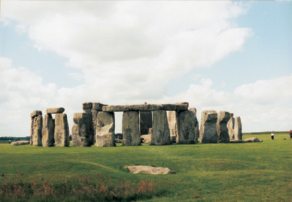
<strong>  Figure 4-2 What field of science focuses most on the connections between ancient celestial observations and such structures as the one seen in the accompanying figure (Figure 4-2) ?</strong> A) theology B) astrology C) archeology D) archeoastronomy E) archeophilosophy <div style=padding-top: 35px> Figure 4-2
What field of science focuses most on the connections between ancient celestial observations and such structures as the one seen in the accompanying figure (Figure 4-2) ?

A) theology
B) astrology
C) archeology
D) archeoastronomy
E) archeophilosophy
سؤال
What did the Greek philosopher Philolaus believe about the Universe?

A) No parallax seen of new stars means Earth is the center of the Universe.
B) Perfect heavens must be made of up spheres rotating at constant rates.
C) The most perfect geometrical form was the sphere.
D) The heavens are perfect and Earth is imperfect.
E) Earth moved around a central fire.
سؤال
Kepler's first law of planetary motion defied what long-held belief with ancient astronomers?

A) a heliocentric Universe
B) a geocentric Universe
C) uniform circular motion
D) parallax of newborn stars
E) perfection of the heavens
سؤال
Which statement best describes a theory?

A) A group of ideas about how something should be done, made, or thought about
B) A specific statement about nature that needs further testing
C) An idea considered so obviously true that the idea does not need to be questioned
D) A fundamental principle in which scientists have great confidence
E) A general description of some aspect of nature that has been thoroughly tested and widely accepted
سؤال
Ptolemy tried to describe the motion of the planets by devising a small circle, called a(n) ____, which rotated around the edge of a larger circle.

A) epicycle
B) foci
C) deferent
D) equant
E) sphere
سؤال
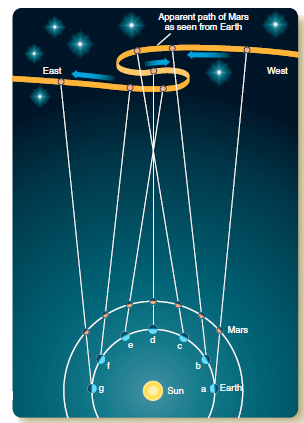
<strong>  Figure 4-1 The accompanying illustration (Figure 4-1) demonstrates Copernicus's theory of _______________.</strong> A) uniform circular motion B) retrograde motion C) parallax D) eccentricity E) heliocentric Universe <div style=padding-top: 35px> Figure 4-1
The accompanying illustration (Figure 4-1) demonstrates Copernicus's theory of _______________.

A) uniform circular motion
B) retrograde motion
C) parallax
D) eccentricity
E) heliocentric Universe
سؤال
Which planet did Galileo observe go through a complete set of phases, thus proving the Ptolemaic model wrong?

A) Saturn
B) Jupiter
C) Mars
D) Venus
E) Mercury
سؤال
According to Kepler's third law, calculate the orbital period of a planet approximately 6.0 AU away from the Sun.

A) ∼ 6 years
B) ∼ 15 years
C) ∼ 30 years
D) ∼ 36 years
E) ∼ 214 years
سؤال
Galileo's book Dialogo strongly defended the work of which astronomer?

A) Ptolemy
B) Tycho
C) Copernicus
D) Kepler
E) Aristotle
سؤال
Kepler originally proposed that the planets were spaced apart by ____.

A) five spheres
B) five regular solids
C) six tetrahedrons
D) five epicycles
E) six regular solids
سؤال
Kepler's laws of planetary motion were _____ because he could not provide an explanation for his conclusions.

A) unnatural
B) empirical
C) hypothetical
D) principles
E) assumptions
سؤال
Which model did Galileo disprove by discovering the transit of Venus?

A) Ptolemaic
B) Copernican
C) Aristotelian
D) Plutonic
E) Kepler
سؤال
What was Tycho Brahe's contribution to astronomy?

A) He proved that Earth rotates on its own axis and revolves around the Sun.
B) He designed the three laws of planetary motion.
C) He discovered satellites around Jupiter, which proved Earth could move and keep its satellite.
D) He described why each of the planets moved in uniform circular motion.
E) He compiled detailed observations of the positions of the Sun, Moon, and planets over a period of 20 years.
سؤال
Whose geocentric model of the Universe dominated astronomy for 2,000 years?

A) Kepler
B) Copernicus
C) Aristotle
D) Galileo
E) Ptolemy
سؤال
What principle was Copernicus unable to provide evidence against?

A) uniform circular motion
B) heliocentric universe
C) geocentric universe
D) retrograde motion
E) Ptolemy's epicycles
سؤال
What was Eratosthenes's mathematical contribution to the history of astronomy, even though it was incorrect?

A) He calculated the diameter of Earth by what he learned from travelers' itineraries.
B) He estimated Earth's revolution rate by measuring the length of shadows casted on the surface.
C) He determined that all the planets orbited Earth every 24 hrs.
D) He attempted to calculate Earth's radius by utilizing the position of sunlight.
E) He believed all of nature was underlain by musical principles.
سؤال
What tool did Galileo use to prove that the Moon was not perfect?

A) microscope
B) telescope
C) quadranoscope
D) thermometer
E) anemometer
سؤال
The 99 years that revolutionized Astronomy ended with whose death?

A) Aristotle
B) Kepler
C) Tycho
D) Copernicus
E) Galileo
سؤال
Early astronomers believed that Earth did not move because they saw no ____, the apparent motion of an object because of the motion of the observer.

A) uniform circular motion
B) archeoastronomy
C) heliocentrism
D) eccentricity
E) parallax
سؤال
Match between columns
Calculated Earth's radius by utilizing the position of the Sun in Alexandria and Syrene and the distance between the two cities
Aristotle
Calculated Earth's radius by utilizing the position of the Sun in Alexandria and Syrene and the distance between the two cities
Philolaus
Calculated Earth's radius by utilizing the position of the Sun in Alexandria and Syrene and the distance between the two cities
Galileo
Calculated Earth's radius by utilizing the position of the Sun in Alexandria and Syrene and the distance between the two cities
Kepler
Calculated Earth's radius by utilizing the position of the Sun in Alexandria and Syrene and the distance between the two cities
Eratosthenes
Calculated Earth's radius by utilizing the position of the Sun in Alexandria and Syrene and the distance between the two cities
Plato
Calculated Earth's radius by utilizing the position of the Sun in Alexandria and Syrene and the distance between the two cities
Tycho
Calculated Earth's radius by utilizing the position of the Sun in Alexandria and Syrene and the distance between the two cities
Copernicus
Calculated Earth's radius by utilizing the position of the Sun in Alexandria and Syrene and the distance between the two cities
Ptolemy
Believed Earth moved around a central fire
Aristotle
Believed Earth moved around a central fire
Philolaus
Believed Earth moved around a central fire
Galileo
Believed Earth moved around a central fire
Kepler
Believed Earth moved around a central fire
Eratosthenes
Believed Earth moved around a central fire
Plato
Believed Earth moved around a central fire
Tycho
Believed Earth moved around a central fire
Copernicus
Believed Earth moved around a central fire
Ptolemy
Discovered four moons circling Jupiter
Aristotle
Discovered four moons circling Jupiter
Philolaus
Discovered four moons circling Jupiter
Galileo
Discovered four moons circling Jupiter
Kepler
Discovered four moons circling Jupiter
Eratosthenes
Discovered four moons circling Jupiter
Plato
Discovered four moons circling Jupiter
Tycho
Discovered four moons circling Jupiter
Copernicus
Discovered four moons circling Jupiter
Ptolemy
Determined that the orbits of the planets around the Sun are ellipses with the Sun at one focus
Aristotle
Determined that the orbits of the planets around the Sun are ellipses with the Sun at one focus
Philolaus
Determined that the orbits of the planets around the Sun are ellipses with the Sun at one focus
Galileo
Determined that the orbits of the planets around the Sun are ellipses with the Sun at one focus
Kepler
Determined that the orbits of the planets around the Sun are ellipses with the Sun at one focus
Eratosthenes
Determined that the orbits of the planets around the Sun are ellipses with the Sun at one focus
Plato
Determined that the orbits of the planets around the Sun are ellipses with the Sun at one focus
Tycho
Determined that the orbits of the planets around the Sun are ellipses with the Sun at one focus
Copernicus
Determined that the orbits of the planets around the Sun are ellipses with the Sun at one focus
Ptolemy
Explained planetary motion by describing epicycles, deferents and equants
Aristotle
Explained planetary motion by describing epicycles, deferents and equants
Philolaus
Explained planetary motion by describing epicycles, deferents and equants
Galileo
Explained planetary motion by describing epicycles, deferents and equants
Kepler
Explained planetary motion by describing epicycles, deferents and equants
Eratosthenes
Explained planetary motion by describing epicycles, deferents and equants
Plato
Explained planetary motion by describing epicycles, deferents and equants
Tycho
Explained planetary motion by describing epicycles, deferents and equants
Copernicus
Explained planetary motion by describing epicycles, deferents and equants
Ptolemy
Believed that the heavens are perfect and must be made up of perfect spheres rotating at constant rates and carrying objects in a circle
Aristotle
Believed that the heavens are perfect and must be made up of perfect spheres rotating at constant rates and carrying objects in a circle
Philolaus
Believed that the heavens are perfect and must be made up of perfect spheres rotating at constant rates and carrying objects in a circle
Galileo
Believed that the heavens are perfect and must be made up of perfect spheres rotating at constant rates and carrying objects in a circle
Kepler
Believed that the heavens are perfect and must be made up of perfect spheres rotating at constant rates and carrying objects in a circle
Eratosthenes
Believed that the heavens are perfect and must be made up of perfect spheres rotating at constant rates and carrying objects in a circle
Plato
Believed that the heavens are perfect and must be made up of perfect spheres rotating at constant rates and carrying objects in a circle
Tycho
Believed that the heavens are perfect and must be made up of perfect spheres rotating at constant rates and carrying objects in a circle
Copernicus
Believed that the heavens are perfect and must be made up of perfect spheres rotating at constant rates and carrying objects in a circle
Ptolemy
Developed a heliocentric Universe model with retrograde planetary motion
Aristotle
Developed a heliocentric Universe model with retrograde planetary motion
Philolaus
Developed a heliocentric Universe model with retrograde planetary motion
Galileo
Developed a heliocentric Universe model with retrograde planetary motion
Kepler
Developed a heliocentric Universe model with retrograde planetary motion
Eratosthenes
Developed a heliocentric Universe model with retrograde planetary motion
Plato
Developed a heliocentric Universe model with retrograde planetary motion
Tycho
Developed a heliocentric Universe model with retrograde planetary motion
Copernicus
Developed a heliocentric Universe model with retrograde planetary motion
Ptolemy
Developed an astronomical model that contained 55 spheres turning at different rates and at different angles to carry the seven known planets across the sky
Aristotle
Developed an astronomical model that contained 55 spheres turning at different rates and at different angles to carry the seven known planets across the sky
Philolaus
Developed an astronomical model that contained 55 spheres turning at different rates and at different angles to carry the seven known planets across the sky
Galileo
Developed an astronomical model that contained 55 spheres turning at different rates and at different angles to carry the seven known planets across the sky
Kepler
Developed an astronomical model that contained 55 spheres turning at different rates and at different angles to carry the seven known planets across the sky
Eratosthenes
Developed an astronomical model that contained 55 spheres turning at different rates and at different angles to carry the seven known planets across the sky
Plato
Developed an astronomical model that contained 55 spheres turning at different rates and at different angles to carry the seven known planets across the sky
Tycho
Developed an astronomical model that contained 55 spheres turning at different rates and at different angles to carry the seven known planets across the sky
Copernicus
Developed an astronomical model that contained 55 spheres turning at different rates and at different angles to carry the seven known planets across the sky
Ptolemy
Proved Ptolemaic theory was invalid because he found no parallax with the discovery of a new star
Aristotle
Proved Ptolemaic theory was invalid because he found no parallax with the discovery of a new star
Philolaus
Proved Ptolemaic theory was invalid because he found no parallax with the discovery of a new star
Galileo
Proved Ptolemaic theory was invalid because he found no parallax with the discovery of a new star
Kepler
Proved Ptolemaic theory was invalid because he found no parallax with the discovery of a new star
Eratosthenes
Proved Ptolemaic theory was invalid because he found no parallax with the discovery of a new star
Plato
Proved Ptolemaic theory was invalid because he found no parallax with the discovery of a new star
Tycho
Proved Ptolemaic theory was invalid because he found no parallax with the discovery of a new star
Copernicus
Proved Ptolemaic theory was invalid because he found no parallax with the discovery of a new star
Ptolemy
Aristotle
Philolaus
Galileo
Kepler
Eratosthenes
Plato
Tycho
Copernicus
Ptolemy
Aristotle
Philolaus
Galileo
Kepler
Eratosthenes
Plato
Tycho
Copernicus
Ptolemy
Aristotle
Philolaus
Galileo
Kepler
Eratosthenes
Plato
Tycho
Copernicus
Ptolemy
سؤال
What part of the Copernican model was incorrect?
سؤال
In Kepler's model of the Universe, what was the purpose of the five regular solids?

A) To differentiate the six planets
B) To define the shape of each of the orbits
C) To describe the internal shape of each planet
D) To be spacers for the orbits of the six planets
E) To support the calculations of each orbital period
سؤال
Ancient astronomers often saw certain planets viewed, while viewed from Earth, slowly stop and then move westward, of which they called this movement _______________.
سؤال
Kepler's analysis of planetary motion showed that the planets move _______________ when close to the Sun and _______________ when farther away.
سؤال
Which is not a feature of Ptolemy's mathematical model of the Aristotelian universe?

A) deferent
B) epicycle
C) equant
D) ellipse
E) rotation
سؤال
Pythagoras proposed that all nature was underlain by musical principles, by which he meant _______________.
سؤال
The most important idea in Copernicus' De Revolutionibus was placing the _______________ at the center of the Universe.
سؤال
When Tycho saw no parallax in the position of a new star, he published his evidence against which model of the Universe?

A) Aristotelian
B) Galilean
C) Ptolemaic
D) Copernican
E) Reinhold
سؤال
Ancient astronomers often had difficulty explaining _____, the occasional westward motion of the planets.

A) parallax
B) eccentrics
C) retrograde motion
D) deferents
E) epicycles
سؤال
What were the three discoveries Galileo made with his telescope observations and quickly published into Sidereus Nuncius ?
سؤال
A(n) _______________is something that is held to be obviously true and needs no further examination.
سؤال
What are Kepler's three laws of planetary motion?
سؤال
What are the two primary components of the Ptolemaic Universe model?
سؤال
The Greek philosopher who proposed that Earth rotates on its axis and revolves around the Sun was _________.

A) Alexandria
B) Plato
C) Aristotle
D) Eratosthenes
E) Aristarchus
سؤال
What did most Greek philosophers accept as a first principle?

A) Earth was the unmoving center of the Universe.
B) The heavens are imperfect.
C) The tetrahedron is the perfect geometric form.
D) There are only six planets in the Universe.
E) Earth travels on an elliptical orbit.
سؤال
Who is often considered the founder of trigonometry?

A) Aristotle
B) Hipparchus
C) Aristarchus
D) Eratosthenes
E) Plato
سؤال
Eratosthenes used simple geometry to determine the distance between Alexandria to Syene so that he could calculate Earth's_______________.
سؤال
A circle is an ellipse with an eccentricity of ____.

A) zero
B) one
C) two
D) four
E) eight
سؤال
According to Kepler's _______ law, when a planet is farthest from the Sun, it moves slower than when it is nearest the Sun.
سؤال
Explain the differences between a hypothesis, theory, and a natural law.
سؤال
In the Copernican system, Earth moves _______________ along its orbit than the planets that lie farther from the Sun.
سؤال
Explain the geometry of an ellipse, which Kepler used to describe a planet's orbits.
سؤال
A well-known structure located in Britain and investigated by archeoastronomist is called _______________.
سؤال
Explain why Copernicus' hypothesis, where the Sun was the center of the planetary system, became known as the Copernican Revolution.
سؤال
Explain why it is a common misconception that Galileo faced the Inquisition for his belief in a heliocentric Universe.
سؤال
Most Greek philosophers believed in a(n) _______________ Universe.
سؤال
_______________'s laws have been used for almost four centuries as a true description of orbital motion.
سؤال
What was the evidence that ancient astronomers used to conclude that Earth did not move?
فتح الحزمة
قم بالتسجيل لفتح البطاقات في هذه المجموعة!
Unlock Deck
Unlock Deck
1/69
auto play flashcards
العب
simple tutorial
ملء الشاشة (f)
exit full mode
Deck 4: Origins of Modern Astronomy
1
Ptolemy based his model on theories first developed by Plato, who believed each celestial body traveled around a small circle that followed a larger circle around Earth.
False
2
In 1632, which book did the Inquisition order sales to be stopped?

A) De Revolutionibus
B) Stederreus Nunctus
C) Dialogo
D) De Stella Nova
E) Astronomia Nova
C
3
The most important idea in De Revolutionibus was placing the Sun at the center of the Universe.
True
4
What was the most controversial issue surrounding the nature of the Universe during the Renaissance?

A) The movement of visible galaxies
B) The origins of the Universe
C) The number of planets in the Solar System
D) The position of Earth in the Universe
E) The existence of life on planets other than Earth
فتح الحزمة
افتح القفل للوصول البطاقات البالغ عددها 69 في هذه المجموعة.
فتح الحزمة
k this deck
5
Kepler's first law of planetary motion states "The orbits of the planets are _____ with the Sun at one focus."

A) spheres
B) ellipses
C) circular
D) rigid
E) random
فتح الحزمة
افتح القفل للوصول البطاقات البالغ عددها 69 في هذه المجموعة.
فتح الحزمة
k this deck
6
Galileo's discovery of Saturn's moons proved that Earth, too, could move and still keep its satellite.
فتح الحزمة
افتح القفل للوصول البطاقات البالغ عددها 69 في هذه المجموعة.
فتح الحزمة
k this deck
7
Kepler discovered that planets do not move at uniform speeds along their elliptical orbits.
فتح الحزمة
افتح القفل للوصول البطاقات البالغ عددها 69 في هذه المجموعة.

فتح الحزمة
k this deck
8
Though their contributions to astronomy were different, Galileo and Copernicus were astronomers during the same time period.
فتح الحزمة
افتح القفل للوصول البطاقات البالغ عددها 69 في هذه المجموعة.

فتح الحزمة
k this deck
9
Kepler's third law of planetary motion states, "A planet's _____ squared is proportional to its average distance from the Sun cubed."

A) radius
B) diameter
C) rotational speed
D) orbital period
E) rotational period
فتح الحزمة
افتح القفل للوصول البطاقات البالغ عددها 69 في هذه المجموعة.
فتح الحزمة
k this deck
10
Greek philosophers used religion and astrology to understand the mysteries of the Universe.
فتح الحزمة
افتح القفل للوصول البطاقات البالغ عددها 69 في هذه المجموعة.
فتح الحزمة
k this deck
11
Spheres are an essential part of Kepler's three fundamental rules of planetary motion.
فتح الحزمة
افتح القفل للوصول البطاقات البالغ عددها 69 في هذه المجموعة.
فتح الحزمة
k this deck
12
Most Greek philosophers believed in a geocentric Universe.
فتح الحزمة
افتح القفل للوصول البطاقات البالغ عددها 69 في هذه المجموعة.
فتح الحزمة
k this deck
13
The Inquisition condemned Galileo for heresy in 1616.
فتح الحزمة
افتح القفل للوصول البطاقات البالغ عددها 69 في هذه المجموعة.
فتح الحزمة
k this deck
14
Claudius Ptolemy was a contemporary of Aristotle.
فتح الحزمة
افتح القفل للوصول البطاقات البالغ عددها 69 في هذه المجموعة.
فتح الحزمة
k this deck
15
Why did Copernicus hesitate to consider alternatives to the Ptolemaic Universe?

A) A heliocentric Universe contradicted Christian theology at the time.
B) There was no way to prove uniform circular motion.
C) New star formation showed no parallax.
D) Most people already believed in a heliocentric Universe.
E) His mathematics could not disprove Ptolemy's epicycles, deferents and equants.
فتح الحزمة
افتح القفل للوصول البطاقات البالغ عددها 69 في هذه المجموعة.
فتح الحزمة
k this deck
16
In the Copernican system, Earth moves slower along its orbit than the planets that lie farther from the Sun.
فتح الحزمة
افتح القفل للوصول البطاقات البالغ عددها 69 في هذه المجموعة.
فتح الحزمة
k this deck
17
Kepler's second law of planetary motion states "A line from a planet to the Sun sweeps over equal areas in equal intervals of ____."

A) time
B) space
C) arcs
D) ellipses
E) spheres
فتح الحزمة
افتح القفل للوصول البطاقات البالغ عددها 69 في هذه المجموعة.
فتح الحزمة
k this deck
18
Which book was authored by Copernicus that explained the Sun as the center of a planetary system?

A) Alfonsine Tables
B) De Revolutionibus
C) Stderreus Nunctus
D) The Prutenie Tables
E) The Forerunner of the Universe, Containing the Mystery of the Universe
فتح الحزمة
افتح القفل للوصول البطاقات البالغ عددها 69 في هذه المجموعة.
فتح الحزمة
k this deck
19
Eudoxus of Cnidus (408-355 BCE) , a student of Plato's, applied the principle of heliocentric motion to produce a mathematical description of the motions of the Universe.
فتح الحزمة
افتح القفل للوصول البطاقات البالغ عددها 69 في هذه المجموعة.
فتح الحزمة
k this deck
20
Pythagoras believed that the underlying rules to understanding the Universe were mathematical.
فتح الحزمة
افتح القفل للوصول البطاقات البالغ عددها 69 في هذه المجموعة.
فتح الحزمة
k this deck
21
Which publication was Kepler's masterpiece, providing strong evidence to planetary motion and a heliocentric Universe?

A) Alfonsine Tables
B) De Revolutionibus
C) Rudolphine Tables
D) The Prutenic Tables
E) Sidereus Nuncius
فتح الحزمة
افتح القفل للوصول البطاقات البالغ عددها 69 في هذه المجموعة.
فتح الحزمة
k this deck
22
<strong>  Figure 4-2 What field of science focuses most on the connections between ancient celestial observations and such structures as the one seen in the accompanying figure (Figure 4-2) ?</strong> A) theology B) astrology C) archeology D) archeoastronomy E) archeophilosophy Figure 4-2
What field of science focuses most on the connections between ancient celestial observations and such structures as the one seen in the accompanying figure (Figure 4-2) ?

A) theology
B) astrology
C) archeology
D) archeoastronomy
E) archeophilosophy
فتح الحزمة
افتح القفل للوصول البطاقات البالغ عددها 69 في هذه المجموعة.
فتح الحزمة
k this deck
23
What did the Greek philosopher Philolaus believe about the Universe?

A) No parallax seen of new stars means Earth is the center of the Universe.
B) Perfect heavens must be made of up spheres rotating at constant rates.
C) The most perfect geometrical form was the sphere.
D) The heavens are perfect and Earth is imperfect.
E) Earth moved around a central fire.
فتح الحزمة
افتح القفل للوصول البطاقات البالغ عددها 69 في هذه المجموعة.
فتح الحزمة
k this deck
24
Kepler's first law of planetary motion defied what long-held belief with ancient astronomers?

A) a heliocentric Universe
B) a geocentric Universe
C) uniform circular motion
D) parallax of newborn stars
E) perfection of the heavens
فتح الحزمة
افتح القفل للوصول البطاقات البالغ عددها 69 في هذه المجموعة.
فتح الحزمة
k this deck
25
Which statement best describes a theory?

A) A group of ideas about how something should be done, made, or thought about
B) A specific statement about nature that needs further testing
C) An idea considered so obviously true that the idea does not need to be questioned
D) A fundamental principle in which scientists have great confidence
E) A general description of some aspect of nature that has been thoroughly tested and widely accepted
فتح الحزمة
افتح القفل للوصول البطاقات البالغ عددها 69 في هذه المجموعة.
فتح الحزمة
k this deck
26
Ptolemy tried to describe the motion of the planets by devising a small circle, called a(n) ____, which rotated around the edge of a larger circle.

A) epicycle
B) foci
C) deferent
D) equant
E) sphere
فتح الحزمة
افتح القفل للوصول البطاقات البالغ عددها 69 في هذه المجموعة.
فتح الحزمة
k this deck
27
<strong>  Figure 4-1 The accompanying illustration (Figure 4-1) demonstrates Copernicus's theory of _______________.</strong> A) uniform circular motion B) retrograde motion C) parallax D) eccentricity E) heliocentric Universe Figure 4-1
The accompanying illustration (Figure 4-1) demonstrates Copernicus's theory of _______________.

A) uniform circular motion
B) retrograde motion
C) parallax
D) eccentricity
E) heliocentric Universe
فتح الحزمة
افتح القفل للوصول البطاقات البالغ عددها 69 في هذه المجموعة.
فتح الحزمة
k this deck
28
Which planet did Galileo observe go through a complete set of phases, thus proving the Ptolemaic model wrong?

A) Saturn
B) Jupiter
C) Mars
D) Venus
E) Mercury
فتح الحزمة
افتح القفل للوصول البطاقات البالغ عددها 69 في هذه المجموعة.
فتح الحزمة
k this deck
29
According to Kepler's third law, calculate the orbital period of a planet approximately 6.0 AU away from the Sun.

A) ∼ 6 years
B) ∼ 15 years
C) ∼ 30 years
D) ∼ 36 years
E) ∼ 214 years
فتح الحزمة
افتح القفل للوصول البطاقات البالغ عددها 69 في هذه المجموعة.
فتح الحزمة
k this deck
30
Galileo's book Dialogo strongly defended the work of which astronomer?

A) Ptolemy
B) Tycho
C) Copernicus
D) Kepler
E) Aristotle
فتح الحزمة
افتح القفل للوصول البطاقات البالغ عددها 69 في هذه المجموعة.
فتح الحزمة
k this deck
31
Kepler originally proposed that the planets were spaced apart by ____.

A) five spheres
B) five regular solids
C) six tetrahedrons
D) five epicycles
E) six regular solids
فتح الحزمة
افتح القفل للوصول البطاقات البالغ عددها 69 في هذه المجموعة.
فتح الحزمة
k this deck
32
Kepler's laws of planetary motion were _____ because he could not provide an explanation for his conclusions.

A) unnatural
B) empirical
C) hypothetical
D) principles
E) assumptions
فتح الحزمة
افتح القفل للوصول البطاقات البالغ عددها 69 في هذه المجموعة.
فتح الحزمة
k this deck
33
Which model did Galileo disprove by discovering the transit of Venus?

A) Ptolemaic
B) Copernican
C) Aristotelian
D) Plutonic
E) Kepler
فتح الحزمة
افتح القفل للوصول البطاقات البالغ عددها 69 في هذه المجموعة.
فتح الحزمة
k this deck
34
What was Tycho Brahe's contribution to astronomy?

A) He proved that Earth rotates on its own axis and revolves around the Sun.
B) He designed the three laws of planetary motion.
C) He discovered satellites around Jupiter, which proved Earth could move and keep its satellite.
D) He described why each of the planets moved in uniform circular motion.
E) He compiled detailed observations of the positions of the Sun, Moon, and planets over a period of 20 years.
فتح الحزمة
افتح القفل للوصول البطاقات البالغ عددها 69 في هذه المجموعة.
فتح الحزمة
k this deck
35
Whose geocentric model of the Universe dominated astronomy for 2,000 years?

A) Kepler
B) Copernicus
C) Aristotle
D) Galileo
E) Ptolemy
فتح الحزمة
افتح القفل للوصول البطاقات البالغ عددها 69 في هذه المجموعة.
فتح الحزمة
k this deck
36
What principle was Copernicus unable to provide evidence against?

A) uniform circular motion
B) heliocentric universe
C) geocentric universe
D) retrograde motion
E) Ptolemy's epicycles
فتح الحزمة
افتح القفل للوصول البطاقات البالغ عددها 69 في هذه المجموعة.
فتح الحزمة
k this deck
37
What was Eratosthenes's mathematical contribution to the history of astronomy, even though it was incorrect?

A) He calculated the diameter of Earth by what he learned from travelers' itineraries.
B) He estimated Earth's revolution rate by measuring the length of shadows casted on the surface.
C) He determined that all the planets orbited Earth every 24 hrs.
D) He attempted to calculate Earth's radius by utilizing the position of sunlight.
E) He believed all of nature was underlain by musical principles.
فتح الحزمة
افتح القفل للوصول البطاقات البالغ عددها 69 في هذه المجموعة.
فتح الحزمة
k this deck
38
What tool did Galileo use to prove that the Moon was not perfect?

A) microscope
B) telescope
C) quadranoscope
D) thermometer
E) anemometer
فتح الحزمة
افتح القفل للوصول البطاقات البالغ عددها 69 في هذه المجموعة.
فتح الحزمة
k this deck
39
The 99 years that revolutionized Astronomy ended with whose death?

A) Aristotle
B) Kepler
C) Tycho
D) Copernicus
E) Galileo
فتح الحزمة
افتح القفل للوصول البطاقات البالغ عددها 69 في هذه المجموعة.
فتح الحزمة
k this deck
40
Early astronomers believed that Earth did not move because they saw no ____, the apparent motion of an object because of the motion of the observer.

A) uniform circular motion
B) archeoastronomy
C) heliocentrism
D) eccentricity
E) parallax
فتح الحزمة
افتح القفل للوصول البطاقات البالغ عددها 69 في هذه المجموعة.
فتح الحزمة
k this deck
41
Match between columns
Calculated Earth's radius by utilizing the position of the Sun in Alexandria and Syrene and the distance between the two cities
Aristotle
Calculated Earth's radius by utilizing the position of the Sun in Alexandria and Syrene and the distance between the two cities
Philolaus
Calculated Earth's radius by utilizing the position of the Sun in Alexandria and Syrene and the distance between the two cities
Galileo
Calculated Earth's radius by utilizing the position of the Sun in Alexandria and Syrene and the distance between the two cities
Kepler
Calculated Earth's radius by utilizing the position of the Sun in Alexandria and Syrene and the distance between the two cities
Eratosthenes
Calculated Earth's radius by utilizing the position of the Sun in Alexandria and Syrene and the distance between the two cities
Plato
Calculated Earth's radius by utilizing the position of the Sun in Alexandria and Syrene and the distance between the two cities
Tycho
Calculated Earth's radius by utilizing the position of the Sun in Alexandria and Syrene and the distance between the two cities
Copernicus
Calculated Earth's radius by utilizing the position of the Sun in Alexandria and Syrene and the distance between the two cities
Ptolemy
Believed Earth moved around a central fire
Aristotle
Believed Earth moved around a central fire
Philolaus
Believed Earth moved around a central fire
Galileo
Believed Earth moved around a central fire
Kepler
Believed Earth moved around a central fire
Eratosthenes
Believed Earth moved around a central fire
Plato
Believed Earth moved around a central fire
Tycho
Believed Earth moved around a central fire
Copernicus
Believed Earth moved around a central fire
Ptolemy
Discovered four moons circling Jupiter
Aristotle
Discovered four moons circling Jupiter
Philolaus
Discovered four moons circling Jupiter
Galileo
Discovered four moons circling Jupiter
Kepler
Discovered four moons circling Jupiter
Eratosthenes
Discovered four moons circling Jupiter
Plato
Discovered four moons circling Jupiter
Tycho
Discovered four moons circling Jupiter
Copernicus
Discovered four moons circling Jupiter
Ptolemy
Determined that the orbits of the planets around the Sun are ellipses with the Sun at one focus
Aristotle
Determined that the orbits of the planets around the Sun are ellipses with the Sun at one focus
Philolaus
Determined that the orbits of the planets around the Sun are ellipses with the Sun at one focus
Galileo
Determined that the orbits of the planets around the Sun are ellipses with the Sun at one focus
Kepler
Determined that the orbits of the planets around the Sun are ellipses with the Sun at one focus
Eratosthenes
Determined that the orbits of the planets around the Sun are ellipses with the Sun at one focus
Plato
Determined that the orbits of the planets around the Sun are ellipses with the Sun at one focus
Tycho
Determined that the orbits of the planets around the Sun are ellipses with the Sun at one focus
Copernicus
Determined that the orbits of the planets around the Sun are ellipses with the Sun at one focus
Ptolemy
Explained planetary motion by describing epicycles, deferents and equants
Aristotle
Explained planetary motion by describing epicycles, deferents and equants
Philolaus
Explained planetary motion by describing epicycles, deferents and equants
Galileo
Explained planetary motion by describing epicycles, deferents and equants
Kepler
Explained planetary motion by describing epicycles, deferents and equants
Eratosthenes
Explained planetary motion by describing epicycles, deferents and equants
Plato
Explained planetary motion by describing epicycles, deferents and equants
Tycho
Explained planetary motion by describing epicycles, deferents and equants
Copernicus
Explained planetary motion by describing epicycles, deferents and equants
Ptolemy
Believed that the heavens are perfect and must be made up of perfect spheres rotating at constant rates and carrying objects in a circle
Aristotle
Believed that the heavens are perfect and must be made up of perfect spheres rotating at constant rates and carrying objects in a circle
Philolaus
Believed that the heavens are perfect and must be made up of perfect spheres rotating at constant rates and carrying objects in a circle
Galileo
Believed that the heavens are perfect and must be made up of perfect spheres rotating at constant rates and carrying objects in a circle
Kepler
Believed that the heavens are perfect and must be made up of perfect spheres rotating at constant rates and carrying objects in a circle
Eratosthenes
Believed that the heavens are perfect and must be made up of perfect spheres rotating at constant rates and carrying objects in a circle
Plato
Believed that the heavens are perfect and must be made up of perfect spheres rotating at constant rates and carrying objects in a circle
Tycho
Believed that the heavens are perfect and must be made up of perfect spheres rotating at constant rates and carrying objects in a circle
Copernicus
Believed that the heavens are perfect and must be made up of perfect spheres rotating at constant rates and carrying objects in a circle
Ptolemy
Developed a heliocentric Universe model with retrograde planetary motion
Aristotle
Developed a heliocentric Universe model with retrograde planetary motion
Philolaus
Developed a heliocentric Universe model with retrograde planetary motion
Galileo
Developed a heliocentric Universe model with retrograde planetary motion
Kepler
Developed a heliocentric Universe model with retrograde planetary motion
Eratosthenes
Developed a heliocentric Universe model with retrograde planetary motion
Plato
Developed a heliocentric Universe model with retrograde planetary motion
Tycho
Developed a heliocentric Universe model with retrograde planetary motion
Copernicus
Developed a heliocentric Universe model with retrograde planetary motion
Ptolemy
Developed an astronomical model that contained 55 spheres turning at different rates and at different angles to carry the seven known planets across the sky
Aristotle
Developed an astronomical model that contained 55 spheres turning at different rates and at different angles to carry the seven known planets across the sky
Philolaus
Developed an astronomical model that contained 55 spheres turning at different rates and at different angles to carry the seven known planets across the sky
Galileo
Developed an astronomical model that contained 55 spheres turning at different rates and at different angles to carry the seven known planets across the sky
Kepler
Developed an astronomical model that contained 55 spheres turning at different rates and at different angles to carry the seven known planets across the sky
Eratosthenes
Developed an astronomical model that contained 55 spheres turning at different rates and at different angles to carry the seven known planets across the sky
Plato
Developed an astronomical model that contained 55 spheres turning at different rates and at different angles to carry the seven known planets across the sky
Tycho
Developed an astronomical model that contained 55 spheres turning at different rates and at different angles to carry the seven known planets across the sky
Copernicus
Developed an astronomical model that contained 55 spheres turning at different rates and at different angles to carry the seven known planets across the sky
Ptolemy
Proved Ptolemaic theory was invalid because he found no parallax with the discovery of a new star
Aristotle
Proved Ptolemaic theory was invalid because he found no parallax with the discovery of a new star
Philolaus
Proved Ptolemaic theory was invalid because he found no parallax with the discovery of a new star
Galileo
Proved Ptolemaic theory was invalid because he found no parallax with the discovery of a new star
Kepler
Proved Ptolemaic theory was invalid because he found no parallax with the discovery of a new star
Eratosthenes
Proved Ptolemaic theory was invalid because he found no parallax with the discovery of a new star
Plato
Proved Ptolemaic theory was invalid because he found no parallax with the discovery of a new star
Tycho
Proved Ptolemaic theory was invalid because he found no parallax with the discovery of a new star
Copernicus
Proved Ptolemaic theory was invalid because he found no parallax with the discovery of a new star
Ptolemy
Aristotle
Philolaus
Galileo
Kepler
Eratosthenes
Plato
Tycho
Copernicus
Ptolemy
Aristotle
Philolaus
Galileo
Kepler
Eratosthenes
Plato
Tycho
Copernicus
Ptolemy
Aristotle
Philolaus
Galileo
Kepler
Eratosthenes
Plato
Tycho
Copernicus
Ptolemy
فتح الحزمة
افتح القفل للوصول البطاقات البالغ عددها 69 في هذه المجموعة.
فتح الحزمة
k this deck
42
What part of the Copernican model was incorrect?
فتح الحزمة
افتح القفل للوصول البطاقات البالغ عددها 69 في هذه المجموعة.
فتح الحزمة
k this deck
43
In Kepler's model of the Universe, what was the purpose of the five regular solids?

A) To differentiate the six planets
B) To define the shape of each of the orbits
C) To describe the internal shape of each planet
D) To be spacers for the orbits of the six planets
E) To support the calculations of each orbital period
فتح الحزمة
افتح القفل للوصول البطاقات البالغ عددها 69 في هذه المجموعة.
فتح الحزمة
k this deck
44
Ancient astronomers often saw certain planets viewed, while viewed from Earth, slowly stop and then move westward, of which they called this movement _______________.
فتح الحزمة
افتح القفل للوصول البطاقات البالغ عددها 69 في هذه المجموعة.
فتح الحزمة
k this deck
45
Kepler's analysis of planetary motion showed that the planets move _______________ when close to the Sun and _______________ when farther away.
فتح الحزمة
افتح القفل للوصول البطاقات البالغ عددها 69 في هذه المجموعة.
فتح الحزمة
k this deck
46
Which is not a feature of Ptolemy's mathematical model of the Aristotelian universe?

A) deferent
B) epicycle
C) equant
D) ellipse
E) rotation
فتح الحزمة
افتح القفل للوصول البطاقات البالغ عددها 69 في هذه المجموعة.
فتح الحزمة
k this deck
47
Pythagoras proposed that all nature was underlain by musical principles, by which he meant _______________.
فتح الحزمة
افتح القفل للوصول البطاقات البالغ عددها 69 في هذه المجموعة.
فتح الحزمة
k this deck
48
The most important idea in Copernicus' De Revolutionibus was placing the _______________ at the center of the Universe.
فتح الحزمة
افتح القفل للوصول البطاقات البالغ عددها 69 في هذه المجموعة.
فتح الحزمة
k this deck
49
When Tycho saw no parallax in the position of a new star, he published his evidence against which model of the Universe?

A) Aristotelian
B) Galilean
C) Ptolemaic
D) Copernican
E) Reinhold
فتح الحزمة
افتح القفل للوصول البطاقات البالغ عددها 69 في هذه المجموعة.
فتح الحزمة
k this deck
50
Ancient astronomers often had difficulty explaining _____, the occasional westward motion of the planets.

A) parallax
B) eccentrics
C) retrograde motion
D) deferents
E) epicycles
فتح الحزمة
افتح القفل للوصول البطاقات البالغ عددها 69 في هذه المجموعة.
فتح الحزمة
k this deck
51
What were the three discoveries Galileo made with his telescope observations and quickly published into Sidereus Nuncius ?
فتح الحزمة
افتح القفل للوصول البطاقات البالغ عددها 69 في هذه المجموعة.
فتح الحزمة
k this deck
52
A(n) _______________is something that is held to be obviously true and needs no further examination.
فتح الحزمة
افتح القفل للوصول البطاقات البالغ عددها 69 في هذه المجموعة.
فتح الحزمة
k this deck
53
What are Kepler's three laws of planetary motion?
فتح الحزمة
افتح القفل للوصول البطاقات البالغ عددها 69 في هذه المجموعة.
فتح الحزمة
k this deck
54
What are the two primary components of the Ptolemaic Universe model?
فتح الحزمة
افتح القفل للوصول البطاقات البالغ عددها 69 في هذه المجموعة.
فتح الحزمة
k this deck
55
The Greek philosopher who proposed that Earth rotates on its axis and revolves around the Sun was _________.

A) Alexandria
B) Plato
C) Aristotle
D) Eratosthenes
E) Aristarchus
فتح الحزمة
افتح القفل للوصول البطاقات البالغ عددها 69 في هذه المجموعة.
فتح الحزمة
k this deck
56
What did most Greek philosophers accept as a first principle?

A) Earth was the unmoving center of the Universe.
B) The heavens are imperfect.
C) The tetrahedron is the perfect geometric form.
D) There are only six planets in the Universe.
E) Earth travels on an elliptical orbit.
فتح الحزمة
افتح القفل للوصول البطاقات البالغ عددها 69 في هذه المجموعة.
فتح الحزمة
k this deck
57
Who is often considered the founder of trigonometry?

A) Aristotle
B) Hipparchus
C) Aristarchus
D) Eratosthenes
E) Plato
فتح الحزمة
افتح القفل للوصول البطاقات البالغ عددها 69 في هذه المجموعة.
فتح الحزمة
k this deck
58
Eratosthenes used simple geometry to determine the distance between Alexandria to Syene so that he could calculate Earth's_______________.
فتح الحزمة
افتح القفل للوصول البطاقات البالغ عددها 69 في هذه المجموعة.
فتح الحزمة
k this deck
59
A circle is an ellipse with an eccentricity of ____.

A) zero
B) one
C) two
D) four
E) eight
فتح الحزمة
افتح القفل للوصول البطاقات البالغ عددها 69 في هذه المجموعة.
فتح الحزمة
k this deck
60
According to Kepler's _______ law, when a planet is farthest from the Sun, it moves slower than when it is nearest the Sun.
فتح الحزمة
افتح القفل للوصول البطاقات البالغ عددها 69 في هذه المجموعة.
فتح الحزمة
k this deck
61
Explain the differences between a hypothesis, theory, and a natural law.
فتح الحزمة
افتح القفل للوصول البطاقات البالغ عددها 69 في هذه المجموعة.
فتح الحزمة
k this deck
62
In the Copernican system, Earth moves _______________ along its orbit than the planets that lie farther from the Sun.
فتح الحزمة
افتح القفل للوصول البطاقات البالغ عددها 69 في هذه المجموعة.
فتح الحزمة
k this deck
63
Explain the geometry of an ellipse, which Kepler used to describe a planet's orbits.
فتح الحزمة
افتح القفل للوصول البطاقات البالغ عددها 69 في هذه المجموعة.
فتح الحزمة
k this deck
64
A well-known structure located in Britain and investigated by archeoastronomist is called _______________.
فتح الحزمة
افتح القفل للوصول البطاقات البالغ عددها 69 في هذه المجموعة.
فتح الحزمة
k this deck
65
Explain why Copernicus' hypothesis, where the Sun was the center of the planetary system, became known as the Copernican Revolution.
فتح الحزمة
افتح القفل للوصول البطاقات البالغ عددها 69 في هذه المجموعة.
فتح الحزمة
k this deck
66
Explain why it is a common misconception that Galileo faced the Inquisition for his belief in a heliocentric Universe.
فتح الحزمة
افتح القفل للوصول البطاقات البالغ عددها 69 في هذه المجموعة.
فتح الحزمة
k this deck
67
Most Greek philosophers believed in a(n) _______________ Universe.
فتح الحزمة
افتح القفل للوصول البطاقات البالغ عددها 69 في هذه المجموعة.
فتح الحزمة
k this deck
68
_______________'s laws have been used for almost four centuries as a true description of orbital motion.
فتح الحزمة
افتح القفل للوصول البطاقات البالغ عددها 69 في هذه المجموعة.
فتح الحزمة
k this deck
69
What was the evidence that ancient astronomers used to conclude that Earth did not move?
فتح الحزمة
افتح القفل للوصول البطاقات البالغ عددها 69 في هذه المجموعة.
فتح الحزمة
k this deck
locked card icon
فتح الحزمة
افتح القفل للوصول البطاقات البالغ عددها 69 في هذه المجموعة.