







 تكلم مع الذكاء الاصطناعي


Deck 7: The Sun
ملء الشاشة (f)

سؤال

سؤال
سؤال
سؤال
سؤال
سؤال
سؤال
سؤال
سؤال
سؤال
سؤال
سؤال
سؤال
سؤال
سؤال
سؤال
سؤال
سؤال
سؤال
سؤال
سؤال
سؤال
سؤال
سؤال
سؤال
سؤال
سؤال
سؤال
سؤال
سؤال
Diagram 7-1 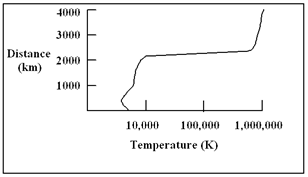
Diagram 7-1 shows a plot of the temperature of the Sun as a function of distance above the bottom of the photosphere. At what distance above the bottom of the photosphere is the temperature of the Sun the smallest?
A) 1000 km
B) 2300 km
C) 2500 km to 4000 km
D) 500 km
E) 1000 km and 2500 km to 4000 km
Diagram 7-1 shows a plot of the temperature of the Sun as a function of distance above the bottom of the photosphere. At what distance above the bottom of the photosphere is the temperature of the Sun the smallest?
A) 1000 km
B) 2300 km
C) 2500 km to 4000 km
D) 500 km
E) 1000 km and 2500 km to 4000 km
سؤال
سؤال
سؤال
سؤال
سؤال
Diagram 7-1 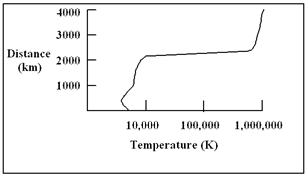
Diagram 7-1 shows a plot of the temperature of the Sun as a function of distance above the bottom of the photosphere. What is the temperature of the Sun at a distance of 2,000 km?
A) 500 K
B) 900 K
C) 5,000 K
D) 9,000 K
E) 100,000 K
Diagram 7-1 shows a plot of the temperature of the Sun as a function of distance above the bottom of the photosphere. What is the temperature of the Sun at a distance of 2,000 km?
A) 500 K
B) 900 K
C) 5,000 K
D) 9,000 K
E) 100,000 K
سؤال
سؤال
سؤال
سؤال
سؤال
سؤال
سؤال
سؤال
سؤال
سؤال
سؤال
سؤال
The figure shows the Sun and pairs of sunspots. One could say that there is really a 22-year sunspot cycle because 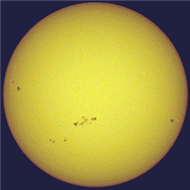
A) the time between sunspot number maxima is 22 years.
B) the time between maxima of the same magnetic polarity of sunspot pairs is 22 years.
C) it takes sunspots 22 years to move from the poles to the equator.
D) at maximum there are 22 sunspots per year.
A) the time between sunspot number maxima is 22 years.
B) the time between maxima of the same magnetic polarity of sunspot pairs is 22 years.
C) it takes sunspots 22 years to move from the poles to the equator.
D) at maximum there are 22 sunspots per year.
سؤال
سؤال
سؤال
سؤال
سؤال
سؤال
سؤال
سؤال
سؤال
سؤال
سؤال
سؤال
سؤال
سؤال
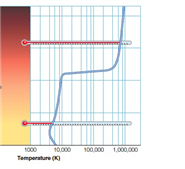
The above picture shows the Sun's change in temperature with elevation into the Sun's atmospheric layers. The region from 10,000-70,000 K is known as the ____________.
A) photosphere
B) chromosphere
C) corona
D) transition zone
سؤال
سؤال
سؤال
سؤال
سؤال
سؤال
سؤال
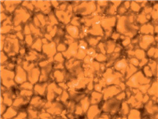
The above image is a __________ wavelength image of granulation in the ___________.
A) infrared, chromosphere
B) visual, photosphere
C) X-ray, corona
D) far-UV, chromosphere
سؤال
سؤال
سؤال
سؤال
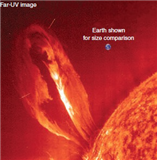
The above image shows a prominence mostly in the ____________ atmospheric layer of the Sun. Because of the far-ultraviolet (FUV) image, we know the _____________ layer of the Sun's atmosphere is shown.
A) chromospheric, chromospheric
B) photospheric, photospheric
C) corona, corona
D) corona, chromospheric
سؤال
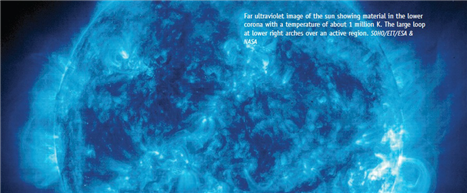
The above image is of the active Sun's corona taken in far ultraviolet wavelengths. If you wanted to show higher elevations of the Sun's corona, which wavelength band would you choose to take your image?
A) near ultraviolet
B) X-ray
C) visual
D) infrared
سؤال
سؤال
سؤال
سؤال
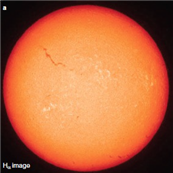
The squiggly dark line in the upper left quadrant of the Sun in the image above is called a ___________.
A) solar flare
B) prominence
C) sunspot
D) filament
سؤال
سؤال
سؤال
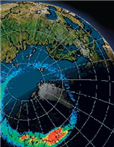
The multicolored ring in the image above of Earth is a/an ___________.
A) impact site under the water, falsely colored.
B) tornado
C) hurricane
D) aurora

فتح الحزمة
قم بالتسجيل لفتح البطاقات في هذه المجموعة!
Unlock Deck
Unlock Deck
1/146

العب

ملء الشاشة (f)
Deck 7: The Sun
1
Helioseismology shows that deeper layers of gas in the Sun rotate at different speeds. When different parts of an object rotate at different rates it is called
A) the dynamo effect.
B) lagging.
C) reconnection.
D) differential rotation.
E) the Zeeman effect.
A) the dynamo effect.
B) lagging.
C) reconnection.
D) differential rotation.
E) the Zeeman effect.
D
2
The corona and chromosphere of the Sun are believed to be heated by
A) shock waves rising from below the photosphere.
B) the solar wind.
C) sunspots.
D) magnetic carpets.
E) differential rotation.
A) shock waves rising from below the photosphere.
B) the solar wind.
C) sunspots.
D) magnetic carpets.
E) differential rotation.
D
3
The strong force is the force that
A) binds electrons to the nucleus in an atom.
B) holds the Moon in orbit around Earth.
C) creates the magnetic field associated with sunspots.
D) produces the extremely high temperatures in the solar corona.
E) binds protons and neutrons together to form a nucleus.
A) binds electrons to the nucleus in an atom.
B) holds the Moon in orbit around Earth.
C) creates the magnetic field associated with sunspots.
D) produces the extremely high temperatures in the solar corona.
E) binds protons and neutrons together to form a nucleus.
E
4
The ________ occurs when a rapidly rotating conductor is stirred by convection to produce a magnetic field.
A) dynamo effect
B) Zeeman effect
C) Babcock effect
D) proton-proton chain
E) aurora
A) dynamo effect
B) Zeeman effect
C) Babcock effect
D) proton-proton chain
E) aurora
فتح الحزمة
افتح القفل للوصول البطاقات البالغ عددها 146 في هذه المجموعة.
فتح الحزمة
k this deck
5
The chromosphere of the Sun
A) is hotter than the photosphere.
B) appears yellow-white in color during total solar eclipse.
C) is the visible surface of the Sun.
D) produces an absorption spectrum.
E) all of the others.
A) is hotter than the photosphere.
B) appears yellow-white in color during total solar eclipse.
C) is the visible surface of the Sun.
D) produces an absorption spectrum.
E) all of the others.
فتح الحزمة
افتح القفل للوصول البطاقات البالغ عددها 146 في هذه المجموعة.
فتح الحزمة
k this deck
6
________ occur about 130 km above Earth's surface near the polar regions when energy in the solar wind guided by Earth's magnetic field excites gases in the upper atmosphere.
A) Coronas
B) Flares
C) Auroras
D) Coronal holes
E) Nuclear fission
A) Coronas
B) Flares
C) Auroras
D) Coronal holes
E) Nuclear fission
فتح الحزمة
افتح القفل للوصول البطاقات البالغ عددها 146 في هذه المجموعة.
فتح الحزمة
k this deck
7
Most of the visible light we see coming from the Sun originates from the
A) chromosphere.
B) photosphere.
C) corona.
D) sunspots.
E) magnetic field.
A) chromosphere.
B) photosphere.
C) corona.
D) sunspots.
E) magnetic field.
فتح الحزمة
افتح القفل للوصول البطاقات البالغ عددها 146 في هذه المجموعة.
فتح الحزمة
k this deck
8
The _________ coincides with the period known as the "little ice age" of Europe and North America. This provides one piece of evidence that suggests a link between solar activity and the amount of solar energy Earth receives.
A) Maunder sunspot minimum
B) Babcock sunspot model
C) coronal hole
D) Coulomb barrier
E) weak solar force
A) Maunder sunspot minimum
B) Babcock sunspot model
C) coronal hole
D) Coulomb barrier
E) weak solar force
فتح الحزمة
افتح القفل للوصول البطاقات البالغ عددها 146 في هذه المجموعة.
فتح الحزمة
k this deck
9
The Sun's magnetic field is evident in the looped shapes of
A) solar flares.
B) sunspots.
C) the corona.
D) granules.
E) prominences.
A) solar flares.
B) sunspots.
C) the corona.
D) granules.
E) prominences.
فتح الحزمة
افتح القفل للوصول البطاقات البالغ عددها 146 في هذه المجموعة.
فتح الحزمة
k this deck
10
The Sun creates its energy by the process of
A) nuclear fission.
B) nuclear fusion.
C) convection.
D) conduction.
E) radiation.
A) nuclear fission.
B) nuclear fusion.
C) convection.
D) conduction.
E) radiation.
فتح الحزمة
افتح القفل للوصول البطاقات البالغ عددها 146 في هذه المجموعة.
فتح الحزمة
k this deck
11
Much of the solar wind comes from ________ where the magnetic field does not loop back into the Sun.
A) prominences
B) coronal holes
C) spicules
D) granulation
E) auroras
A) prominences
B) coronal holes
C) spicules
D) granulation
E) auroras
فتح الحزمة
افتح القفل للوصول البطاقات البالغ عددها 146 في هذه المجموعة.
فتح الحزمة
k this deck
12
Sunspots are known to be magnetic phenomena because
A) Doppler shifts in spectral lines are observed.
B) the Zeeman effect is observed in sunspots.
C) collisional broadening is observed in spectral lines.
D) infrared observations indicate that the sunspots are cooler than their surroundings.
E) observations during eclipses reveal a very extensive photosphere.
A) Doppler shifts in spectral lines are observed.
B) the Zeeman effect is observed in sunspots.
C) collisional broadening is observed in spectral lines.
D) infrared observations indicate that the sunspots are cooler than their surroundings.
E) observations during eclipses reveal a very extensive photosphere.
فتح الحزمة
افتح القفل للوصول البطاقات البالغ عددها 146 في هذه المجموعة.
فتح الحزمة
k this deck
13
Granulation is caused by
A) sunspots.
B) rising and sinking gases below the photosphere.
C) shock waves in the corona.
D) the solar wind flowing away from the corona.
E) heating in the chromosphere.
A) sunspots.
B) rising and sinking gases below the photosphere.
C) shock waves in the corona.
D) the solar wind flowing away from the corona.
E) heating in the chromosphere.
فتح الحزمة
افتح القفل للوصول البطاقات البالغ عددها 146 في هذه المجموعة.
فتح الحزمة
k this deck
14
The centers of granules
A) are hot material rising to the photosphere from below.
B) are cool material falling from the photosphere to the regions below.
C) are fainter and hotter than their surroundings.
D) are brighter and cooler than their surroundings.
E) show strong Zeeman effects.
A) are hot material rising to the photosphere from below.
B) are cool material falling from the photosphere to the regions below.
C) are fainter and hotter than their surroundings.
D) are brighter and cooler than their surroundings.
E) show strong Zeeman effects.
فتح الحزمة
افتح القفل للوصول البطاقات البالغ عددها 146 في هذه المجموعة.
فتح الحزمة
k this deck
15
One sees differences in ________ depending on the time in the sunspot cycle.
I) the latitude at which most sunspots occur
II) the number of sunspots that are visible
III) the rotation rate of the Sun's equator
IV) the magnetic polarity of the sunspot pair members in a hemisphere
A) I & II
B) I & IV
C) II & III
D) I, II & III
E) I, II, & IV
I) the latitude at which most sunspots occur
II) the number of sunspots that are visible
III) the rotation rate of the Sun's equator
IV) the magnetic polarity of the sunspot pair members in a hemisphere
A) I & II
B) I & IV
C) II & III
D) I, II & III
E) I, II, & IV
فتح الحزمة
افتح القفل للوصول البطاقات البالغ عددها 146 في هذه المجموعة.
فتح الحزمة
k this deck
16
Differential rotation of the Sun is
A) heating in the chromosphere and corona that makes them hotter than the photosphere.
B) the magnetic dynamo inside the Sun.
C) the equatorial regions of the Sun rotating more rapidly than the polar regions.
D) the origin (and subsequent disappearance of) Sunspots first near the poles then closer to the Sun's equator as the Sunspot cycle progresses.
E) the rotation of the Sun's southern and northern hemispheres in opposite directions.
A) heating in the chromosphere and corona that makes them hotter than the photosphere.
B) the magnetic dynamo inside the Sun.
C) the equatorial regions of the Sun rotating more rapidly than the polar regions.
D) the origin (and subsequent disappearance of) Sunspots first near the poles then closer to the Sun's equator as the Sunspot cycle progresses.
E) the rotation of the Sun's southern and northern hemispheres in opposite directions.
فتح الحزمة
افتح القفل للوصول البطاقات البالغ عددها 146 في هذه المجموعة.
فتح الحزمة
k this deck
17
A filtergram is a photograph of the Sun's surface made
A) in a band of wavelengths in the infrared.
B) in a band of wavelengths in the ultraviolet.
C) using the Zeeman effect.
D) with only those photons emitted in a specific spectral line.
E) none of the others.
A) in a band of wavelengths in the infrared.
B) in a band of wavelengths in the ultraviolet.
C) using the Zeeman effect.
D) with only those photons emitted in a specific spectral line.
E) none of the others.
فتح الحزمة
افتح القفل للوصول البطاقات البالغ عددها 146 في هذه المجموعة.
فتح الحزمة
k this deck
18
Sunspots are dark because
A) regions of the photosphere are obscured by material in the chromosphere.
B) shock waves move through the photosphere.
C) the Sun rotates differentially.
D) they are cooler regions than the photosphere.
E) they radiate their energy into space faster than the rest of the photosphere.
A) regions of the photosphere are obscured by material in the chromosphere.
B) shock waves move through the photosphere.
C) the Sun rotates differentially.
D) they are cooler regions than the photosphere.
E) they radiate their energy into space faster than the rest of the photosphere.
فتح الحزمة
افتح القفل للوصول البطاقات البالغ عددها 146 في هذه المجموعة.
فتح الحزمة
k this deck
19
Astronomers can use ________ to measure magnetic fields on the Sun.
A) helioseismology
B) perchloroethylene (C2Cl4)
C) neutrino detectors
D) a magnetic carpet
E) the Zeeman effect
A) helioseismology
B) perchloroethylene (C2Cl4)
C) neutrino detectors
D) a magnetic carpet
E) the Zeeman effect
فتح الحزمة
افتح القفل للوصول البطاقات البالغ عددها 146 في هذه المجموعة.
فتح الحزمة
k this deck
20
The proton-proton chain
A) combines two hydrogen nuclei to produce a single helium nucleus and energy.
B) splits a helium nucleus to produce 4 hydrogen nuclei and energy.
C) is the mechanism that increases the temperature between the photosphere and corona of the Sun.
D) is the interactions between protons in Earth's atmosphere that produces auroras.
E) produces energy in the core of the Sun in the form of gamma rays, positrons, and neutrinos.
A) combines two hydrogen nuclei to produce a single helium nucleus and energy.
B) splits a helium nucleus to produce 4 hydrogen nuclei and energy.
C) is the mechanism that increases the temperature between the photosphere and corona of the Sun.
D) is the interactions between protons in Earth's atmosphere that produces auroras.
E) produces energy in the core of the Sun in the form of gamma rays, positrons, and neutrinos.
فتح الحزمة
افتح القفل للوصول البطاقات البالغ عددها 146 في هذه المجموعة.
فتح الحزمة
k this deck
21
Sunspots
A) are cooler than their surroundings.
B) are regions where material is rising from below the photosphere.
C) are the result of convection.
D) produce spicules.
E) are generally found near the poles of the Sun during sunspot maximum.
A) are cooler than their surroundings.
B) are regions where material is rising from below the photosphere.
C) are the result of convection.
D) produce spicules.
E) are generally found near the poles of the Sun during sunspot maximum.
فتح الحزمة
افتح القفل للوصول البطاقات البالغ عددها 146 في هذه المجموعة.
فتح الحزمة
k this deck
22
The proton-proton chain needs high temperature because
A) of the ground state energy of the hydrogen atom.
B) of the presence of helium atoms.
C) the protons must overcome the Coulomb barrier.
D) of the need for low density.
E) the neutrinos carry more energy away than the reaction produces.
A) of the ground state energy of the hydrogen atom.
B) of the presence of helium atoms.
C) the protons must overcome the Coulomb barrier.
D) of the need for low density.
E) the neutrinos carry more energy away than the reaction produces.
فتح الحزمة
افتح القفل للوصول البطاقات البالغ عددها 146 في هذه المجموعة.
فتح الحزمة
k this deck
23
Which of the following is suggested as the best explanation of the missing solar neutrinos?
A) The Sun is fusing helium but not hydrogen.
B) Nuclear reactions do not produce neutrinos as fast as theory predicts.
C) The Sun may contain matter we haven't yet identified.
D) Neutrinos may oscillate between three different flavors.
E) None of the others.
A) The Sun is fusing helium but not hydrogen.
B) Nuclear reactions do not produce neutrinos as fast as theory predicts.
C) The Sun may contain matter we haven't yet identified.
D) Neutrinos may oscillate between three different flavors.
E) None of the others.
فتح الحزمة
افتح القفل للوصول البطاقات البالغ عددها 146 في هذه المجموعة.
فتح الحزمة
k this deck
24
What is the explanation for the pattern of granulation seen on the visible surface of the Sun?
A) The granules form the base of a circulation pattern that extends from the photosphere to the outer corona.
B) The granules are regions of nuclear energy generation in the Sun's photosphere.
C) Each granule contains a strong magnetic field, which compresses and heats the gas underneath it.
D) The granules are the tops of hot gas that have risen from the Sun's convective zone.
A) The granules form the base of a circulation pattern that extends from the photosphere to the outer corona.
B) The granules are regions of nuclear energy generation in the Sun's photosphere.
C) Each granule contains a strong magnetic field, which compresses and heats the gas underneath it.
D) The granules are the tops of hot gas that have risen from the Sun's convective zone.
فتح الحزمة
افتح القفل للوصول البطاقات البالغ عددها 146 في هذه المجموعة.
فتح الحزمة
k this deck
25
A ________ is believed to occur when energy, stored in a twist in the solar magnetic field above a sunspot, is suddenly released.
A) solar flare
B) supergranule
C) spicule
D) coronal hole
E) none of the others
A) solar flare
B) supergranule
C) spicule
D) coronal hole
E) none of the others
فتح الحزمة
افتح القفل للوصول البطاقات البالغ عددها 146 في هذه المجموعة.
فتح الحزمة
k this deck
26
The capture of too few solar neutrinos by Davis in the solar neutrino experiment
A) can be explained if the Sun is not undergoing thermonuclear fusion of hydrogen in its core.
B) indicates that the Sun's core is much hotter than expected.
C) indicates that the Sun's core is convective.
D) none of the others.
A) can be explained if the Sun is not undergoing thermonuclear fusion of hydrogen in its core.
B) indicates that the Sun's core is much hotter than expected.
C) indicates that the Sun's core is convective.
D) none of the others.
فتح الحزمة
افتح القفل للوصول البطاقات البالغ عددها 146 في هذه المجموعة.
فتح الحزمة
k this deck
27
A recent sunspot maximum occurred in 2013. What is the year of the sunspot maximum that immediately follows the 2013 maximum if the solar cycle continues?
A) 2017
B) 2019
C) 2022
D) 2024
E) The last cycle started a Maunder minimum and the next maximum cannot be predicted.
A) 2017
B) 2019
C) 2022
D) 2024
E) The last cycle started a Maunder minimum and the next maximum cannot be predicted.
فتح الحزمة
افتح القفل للوصول البطاقات البالغ عددها 146 في هذه المجموعة.
فتح الحزمة
k this deck
28
In the proton-proton chain
A) no neutrinos are produced.
B) energy is released because a helium nucleus has a greater mass than a hydrogen nucleus.
C) no photons are produced.
D) carbon serves as a catalyst for the nuclear reaction.
E) energy is produced in the form of gamma rays and the velocity of the created nuclei.
A) no neutrinos are produced.
B) energy is released because a helium nucleus has a greater mass than a hydrogen nucleus.
C) no photons are produced.
D) carbon serves as a catalyst for the nuclear reaction.
E) energy is produced in the form of gamma rays and the velocity of the created nuclei.
فتح الحزمة
افتح القفل للوصول البطاقات البالغ عددها 146 في هذه المجموعة.
فتح الحزمة
k this deck
29
Which of the following is evidence that convection occurs in the layers just below the Sun's photosphere?
A) Sunspots appear to be cooler than their surroundings.
B) Solar prominences lift large loops of gas into the chromosphere and corona.
C) The solar wind emits large numbers of charged particles.
D) The Sun rotates differentially.
E) The centers of granules are hot and moving upward away from the center of the Sun.
A) Sunspots appear to be cooler than their surroundings.
B) Solar prominences lift large loops of gas into the chromosphere and corona.
C) The solar wind emits large numbers of charged particles.
D) The Sun rotates differentially.
E) The centers of granules are hot and moving upward away from the center of the Sun.
فتح الحزمة
افتح القفل للوصول البطاقات البالغ عددها 146 في هذه المجموعة.
فتح الحزمة
k this deck
30
Diagram 7-1
Diagram 7-1 shows a plot of the temperature of the Sun as a function of distance above the bottom of the photosphere. At what distance above the bottom of the photosphere is the temperature of the Sun the smallest?
A) 1000 km
B) 2300 km
C) 2500 km to 4000 km
D) 500 km
E) 1000 km and 2500 km to 4000 km
Diagram 7-1 shows a plot of the temperature of the Sun as a function of distance above the bottom of the photosphere. At what distance above the bottom of the photosphere is the temperature of the Sun the smallest?
A) 1000 km
B) 2300 km
C) 2500 km to 4000 km
D) 500 km
E) 1000 km and 2500 km to 4000 km
فتح الحزمة
افتح القفل للوصول البطاقات البالغ عددها 146 في هذه المجموعة.
فتح الحزمة
k this deck
31
If a sunspot has a temperature of 4,500 K and the surrounding solar surface has a temperature of 5,800 K, how many times brighter is the surface compared to the sunspot?
A) 0.28
B) 0.36
C) 2.8
D) 3.6
E) 36
A) 0.28
B) 0.36
C) 2.8
D) 3.6
E) 36
فتح الحزمة
افتح القفل للوصول البطاقات البالغ عددها 146 في هذه المجموعة.
فتح الحزمة
k this deck
32
If the spectrum of a sunspot shows that it has a maximum intensity at 650 nm, what is the temperature of the sunspot?
A) 650 K
B) 5000 K
C) 1950 K
D) 4500 K
E) 10,000 K
A) 650 K
B) 5000 K
C) 1950 K
D) 4500 K
E) 10,000 K
فتح الحزمة
افتح القفل للوصول البطاقات البالغ عددها 146 في هذه المجموعة.
فتح الحزمة
k this deck
33
The ________ is (are) the hot gases that are the moving extension of the Sun's corona.
A) spicules
B) prominences
C) flares
D) supergranules
E) solar wind
A) spicules
B) prominences
C) flares
D) supergranules
E) solar wind
فتح الحزمة
افتح القفل للوصول البطاقات البالغ عددها 146 في هذه المجموعة.
فتح الحزمة
k this deck
34
Spicules
A) are found in the photosphere.
B) are magnetic disturbances that push large loops of material off the solar surface.
C) are responsible for twisting the solar magnetic field and causing the sunspot cycle.
D) appear in the corona near the north and south poles of the Sun during a total solar eclipse.
E) are visible in filtergrams of the solar chromosphere.
A) are found in the photosphere.
B) are magnetic disturbances that push large loops of material off the solar surface.
C) are responsible for twisting the solar magnetic field and causing the sunspot cycle.
D) appear in the corona near the north and south poles of the Sun during a total solar eclipse.
E) are visible in filtergrams of the solar chromosphere.
فتح الحزمة
افتح القفل للوصول البطاقات البالغ عددها 146 في هذه المجموعة.
فتح الحزمة
k this deck
35
Diagram 7-1
Diagram 7-1 shows a plot of the temperature of the Sun as a function of distance above the bottom of the photosphere. What is the temperature of the Sun at a distance of 2,000 km?
A) 500 K
B) 900 K
C) 5,000 K
D) 9,000 K
E) 100,000 K
Diagram 7-1 shows a plot of the temperature of the Sun as a function of distance above the bottom of the photosphere. What is the temperature of the Sun at a distance of 2,000 km?
A) 500 K
B) 900 K
C) 5,000 K
D) 9,000 K
E) 100,000 K
فتح الحزمة
افتح القفل للوصول البطاقات البالغ عددها 146 في هذه المجموعة.
فتح الحزمة
k this deck
36
The corona of the Sun can be observed
A) during a lunar eclipse.
B) with a coronagraph.
C) using filtergrams.
D) during a lunar eclipse and with a coronagraph.
E) none of the others.
A) during a lunar eclipse.
B) with a coronagraph.
C) using filtergrams.
D) during a lunar eclipse and with a coronagraph.
E) none of the others.
فتح الحزمة
افتح القفل للوصول البطاقات البالغ عددها 146 في هذه المجموعة.
فتح الحزمة
k this deck
37
The intensity of a sunspot is found to be 3 times smaller than the intensity emitted by the solar surface. What is the approximate temperature of this sunspot if the temperature of the solar surface is 5800 K?
A) 4400 K
B) 470,000 K
C) 1900 K
D) 7600 K
E) 1400 K
A) 4400 K
B) 470,000 K
C) 1900 K
D) 7600 K
E) 1400 K
فتح الحزمة
افتح القفل للوصول البطاقات البالغ عددها 146 في هذه المجموعة.
فتح الحزمة
k this deck
38
________ is (are) produced by atomic transitions in the presence of a strong magnetic field.
A) Differential rotation
B) Granules
C) The Zeeman effect
D) Spicules
E) The coronal hole
A) Differential rotation
B) Granules
C) The Zeeman effect
D) Spicules
E) The coronal hole
فتح الحزمة
افتح القفل للوصول البطاقات البالغ عددها 146 في هذه المجموعة.
فتح الحزمة
k this deck
39
The United States consumes 2.5 × 10¹⁹ J of energy each year. A typical solar flare releases 5.0 × 1024 J of energy. How many years could we run the United States on the energy released by this solar flare if all of the released energy could be used?
A) 5 × 10⁻⁶ years
B) 200,000 years
C) 1.25 × 1044 years
D) about 12 years
E) 500 years
A) 5 × 10⁻⁶ years
B) 200,000 years
C) 1.25 × 1044 years
D) about 12 years
E) 500 years
فتح الحزمة
افتح القفل للوصول البطاقات البالغ عددها 146 في هذه المجموعة.
فتح الحزمة
k this deck
40
As the Moon covers the solar disk during a solar eclipse, a flash spectrum of the Sun's chromosphere can be recorded. This flash spectrum reveals an emission spectrum and provides information on the properties of the chromosphere. As the Moon moves from the inner chromosphere to the outer chromosphere, the spectral lines present in the flash spectrum change. What is going on in the chromosphere that produces the changes in the flash spectrum?
I) The temperature of the chromosphere decreases as the distance from the photosphere increases.
II) The temperature of the chromosphere increases as the distance from the photosphere increases.
III) The density of the chromosphere decreases as the distance from the photosphere increases.
IV) The density of the chromosphere increases as the distance from the photosphere increases.
A) I & III
B) I & IV
C) II & III
D) II & IV
E) I
I) The temperature of the chromosphere decreases as the distance from the photosphere increases.
II) The temperature of the chromosphere increases as the distance from the photosphere increases.
III) The density of the chromosphere decreases as the distance from the photosphere increases.
IV) The density of the chromosphere increases as the distance from the photosphere increases.
A) I & III
B) I & IV
C) II & III
D) II & IV
E) I
فتح الحزمة
افتح القفل للوصول البطاقات البالغ عددها 146 في هذه المجموعة.
فتح الحزمة
k this deck
41
________ occur(s) because photons we receive from the edge of the solar disk are emitted further from the base of the photosphere than the photons we receive from the center of the solar disk.
A) The Zeeman Effect
B) Sunspots
C) Solar flares
D) Solar prominences
E) Limb darkening
A) The Zeeman Effect
B) Sunspots
C) Solar flares
D) Solar prominences
E) Limb darkening
فتح الحزمة
افتح القفل للوصول البطاقات البالغ عددها 146 في هذه المجموعة.
فتح الحزمة
k this deck
42
The sunspot cycle affects
I) the latitude at which sunspots are visible at a given time.
II) the number of sunspots that are visible at a given time.
III) the rotation rate of the Sun's equator at a given time.
IV) the magnetic polarity of the sunspots at a given time.
A) I & II
B) I & IV
C) II & III
D) I, II & III
E) I, II, & IV
I) the latitude at which sunspots are visible at a given time.
II) the number of sunspots that are visible at a given time.
III) the rotation rate of the Sun's equator at a given time.
IV) the magnetic polarity of the sunspots at a given time.
A) I & II
B) I & IV
C) II & III
D) I, II & III
E) I, II, & IV
فتح الحزمة
افتح القفل للوصول البطاقات البالغ عددها 146 في هذه المجموعة.
فتح الحزمة
k this deck
43
Neutrinos are created in reactions in the _______ of the Sun.
A) corona
B) chromosphere
C) photosphere
D) core
A) corona
B) chromosphere
C) photosphere
D) core
فتح الحزمة
افتح القفل للوصول البطاقات البالغ عددها 146 في هذه المجموعة.
فتح الحزمة
k this deck
44
The energy generated by the Sun is released by the _______ to make _______ nuclei.
A) fusion of H nuclei; He
B) fusion of He nuclei; H
C) fission of H nuclei; He
D) fission of He nuclei; H
A) fusion of H nuclei; He
B) fusion of He nuclei; H
C) fission of H nuclei; He
D) fission of He nuclei; H
فتح الحزمة
افتح القفل للوصول البطاقات البالغ عددها 146 في هذه المجموعة.
فتح الحزمة
k this deck
45
Fusion is promoted in the core of the Sun by the _______ there.
A) low temperature and low density
B) high temperature and high density
C) low temperature and high density
D) high temperature and low density
A) low temperature and low density
B) high temperature and high density
C) low temperature and high density
D) high temperature and low density
فتح الحزمة
افتح القفل للوصول البطاقات البالغ عددها 146 في هذه المجموعة.
فتح الحزمة
k this deck
46
The rotation of the Sun's photosphere is
A) fastest at the equator, slower at mid-latitudes, and slowest near the poles.
B) slowest at the equator, faster at mid-latitudes, and fastest near the poles.
C) fastest at the equator, slowest at mid-latitudes and the poles which travel at the same speed.
D) the same regardless of latitude.
A) fastest at the equator, slower at mid-latitudes, and slowest near the poles.
B) slowest at the equator, faster at mid-latitudes, and fastest near the poles.
C) fastest at the equator, slowest at mid-latitudes and the poles which travel at the same speed.
D) the same regardless of latitude.
فتح الحزمة
افتح القفل للوصول البطاقات البالغ عددها 146 في هذه المجموعة.
فتح الحزمة
k this deck
47
The figure shows the Sun and pairs of sunspots. One could say that there is really a 22-year sunspot cycle because
A) the time between sunspot number maxima is 22 years.
B) the time between maxima of the same magnetic polarity of sunspot pairs is 22 years.
C) it takes sunspots 22 years to move from the poles to the equator.
D) at maximum there are 22 sunspots per year.
A) the time between sunspot number maxima is 22 years.
B) the time between maxima of the same magnetic polarity of sunspot pairs is 22 years.
C) it takes sunspots 22 years to move from the poles to the equator.
D) at maximum there are 22 sunspots per year.
فتح الحزمة
افتح القفل للوصول البطاقات البالغ عددها 146 في هذه المجموعة.
فتح الحزمة
k this deck
48
High temperatures are required to get H nuclei to fuse because they ________ one another because of their ________ electric charges.
A) attract; negative
B) attract; positive
C) repel; negative
D) repel; positive
A) attract; negative
B) attract; positive
C) repel; negative
D) repel; positive
فتح الحزمة
افتح القفل للوصول البطاقات البالغ عددها 146 في هذه المجموعة.
فتح الحزمة
k this deck
49
Why is the temperature at the region of a sunspot cooler than the photosphere?
A) They are holes in the photosphere that reveal the lower temperature gases in the deeper layers.
B) They represent points where streams of cool gas from the corona lower the temperature in those regions of the photosphere.
C) Powerful magnetic fields in the sunspots act upon the atoms of the photosphere to prevent them from emitting light.
D) Powerful magnetic fields inhibit the convective flow of the gases of the photosphere downward, allowing them to cool for longer than would normally be permitted.
A) They are holes in the photosphere that reveal the lower temperature gases in the deeper layers.
B) They represent points where streams of cool gas from the corona lower the temperature in those regions of the photosphere.
C) Powerful magnetic fields in the sunspots act upon the atoms of the photosphere to prevent them from emitting light.
D) Powerful magnetic fields inhibit the convective flow of the gases of the photosphere downward, allowing them to cool for longer than would normally be permitted.
فتح الحزمة
افتح القفل للوصول البطاقات البالغ عددها 146 في هذه المجموعة.
فتح الحزمة
k this deck
50
Most of the energy emitted by the Sun is generated in the
A) corona.
B) photosphere.
C) chromosphere.
D) core.
A) corona.
B) photosphere.
C) chromosphere.
D) core.
فتح الحزمة
افتح القفل للوصول البطاقات البالغ عددها 146 في هذه المجموعة.
فتح الحزمة
k this deck
51
The solar constant is a measure of
A) the amount of solar energy reaching Earth.
B) the length of the sunspot cycle.
C) the period of rotation of the Sun's equator.
D) the average number of sunspots seen during the Maunder minimum.
E) the Sun's mass.
A) the amount of solar energy reaching Earth.
B) the length of the sunspot cycle.
C) the period of rotation of the Sun's equator.
D) the average number of sunspots seen during the Maunder minimum.
E) the Sun's mass.
فتح الحزمة
افتح القفل للوصول البطاقات البالغ عددها 146 في هذه المجموعة.
فتح الحزمة
k this deck
52
Modern astronomers suspect the corona is heated by
A) shock waves rising from below the photosphere.
B) the solar wind.
C) magnetic carpets.
D) shock waves rising from below the photosphere, the solar wind, and the solar magnetic field.
E) none of the others.
A) shock waves rising from below the photosphere.
B) the solar wind.
C) magnetic carpets.
D) shock waves rising from below the photosphere, the solar wind, and the solar magnetic field.
E) none of the others.
فتح الحزمة
افتح القفل للوصول البطاقات البالغ عددها 146 في هذه المجموعة.
فتح الحزمة
k this deck
53
In some regions of the corona, the magnetic field does not loop back to the Sun, and the gas escapes unimpeded. These regions are called _______ and are believed to be the source of the solar wind.
A) prominences
B) flares
C) granules
D) auroras
E) coronal holes
A) prominences
B) flares
C) granules
D) auroras
E) coronal holes
فتح الحزمة
افتح القفل للوصول البطاقات البالغ عددها 146 في هذه المجموعة.
فتح الحزمة
k this deck
54
Spicules
A) are found in the photosphere.
B) are magnetic disturbances that push large loops of material off the solar surface.
C) are responsible for twisting the solar magnetic field and causing the sunspot cycle.
D) appear in the corona near the north and south poles of the Sun during a total solar eclipse.
E) are visible in filtergrams of the solar chromosphere.
A) are found in the photosphere.
B) are magnetic disturbances that push large loops of material off the solar surface.
C) are responsible for twisting the solar magnetic field and causing the sunspot cycle.
D) appear in the corona near the north and south poles of the Sun during a total solar eclipse.
E) are visible in filtergrams of the solar chromosphere.
فتح الحزمة
افتح القفل للوصول البطاقات البالغ عددها 146 في هذه المجموعة.
فتح الحزمة
k this deck
55
Sunspots
A) are hotter than their surroundings.
B) are regions where material is rising from below the photosphere.
C) show the Zeeman effect indicating the presence of strong magnetic fields.
D) produce spicules.
E) are generally found near the poles of the Sun during sunspot maximum.
A) are hotter than their surroundings.
B) are regions where material is rising from below the photosphere.
C) show the Zeeman effect indicating the presence of strong magnetic fields.
D) produce spicules.
E) are generally found near the poles of the Sun during sunspot maximum.
فتح الحزمة
افتح القفل للوصول البطاقات البالغ عددها 146 في هذه المجموعة.
فتح الحزمة
k this deck
56
What are the three layers of the Sun's atmosphere, in order of increasing distance from the surface?
A) corona, chromosphere, photosphere
B) photosphere, corona, chromosphere
C) photosphere, chromosphere, corona
D) chromosphere, photosphere, corona
A) corona, chromosphere, photosphere
B) photosphere, corona, chromosphere
C) photosphere, chromosphere, corona
D) chromosphere, photosphere, corona
فتح الحزمة
افتح القفل للوصول البطاقات البالغ عددها 146 في هذه المجموعة.
فتح الحزمة
k this deck
57
The Zeeman effect can be used to determine the _______ our Sun and other stars.
A) rotation speed of
B) mass of
C) color of
D) magnetic field on
E) radial velocity toward or away from
A) rotation speed of
B) mass of
C) color of
D) magnetic field on
E) radial velocity toward or away from
فتح الحزمة
افتح القفل للوصول البطاقات البالغ عددها 146 في هذه المجموعة.
فتح الحزمة
k this deck
58
Sunspots occur in ______________ with the leading spot and the trailing spot having ________________ magnetic polarity.
A) singles, same
B) pairs, opposite
C) singles, opposite
D) pairs, same
E) none of the others
A) singles, same
B) pairs, opposite
C) singles, opposite
D) pairs, same
E) none of the others
فتح الحزمة
افتح القفل للوصول البطاقات البالغ عددها 146 في هذه المجموعة.
فتح الحزمة
k this deck
59
The gas motions within granules on the solar surface are
A) upward in the centers of some cells and downward in others; the gas cools as it passes between individual granules.
B) actually motionless. The dark regions are absorption features from gases in the photosphere.
C) upward in the bright cell centers and downward around the darker edges.
D) downward in the bright cell centers and upward around the darker edges.
A) upward in the centers of some cells and downward in others; the gas cools as it passes between individual granules.
B) actually motionless. The dark regions are absorption features from gases in the photosphere.
C) upward in the bright cell centers and downward around the darker edges.
D) downward in the bright cell centers and upward around the darker edges.
فتح الحزمة
افتح القفل للوصول البطاقات البالغ عددها 146 في هذه المجموعة.
فتح الحزمة
k this deck
60
If one kilogram of hydrogen is converted to helium, how much energy will be generated?
A) 9 × 10¹⁶ J
B) 3 × 10⁸ J
C) 6.3 × 10¹⁴ J
D) 2.2 × 10⁶ J
E) 3.2 × 10⁷ J
A) 9 × 10¹⁶ J
B) 3 × 10⁸ J
C) 6.3 × 10¹⁴ J
D) 2.2 × 10⁶ J
E) 3.2 × 10⁷ J
فتح الحزمة
افتح القفل للوصول البطاقات البالغ عددها 146 في هذه المجموعة.
فتح الحزمة
k this deck
61
The above picture shows the Sun's change in temperature with elevation into the Sun's atmospheric layers. The region from 10,000-70,000 K is known as the ____________.
A) photosphere
B) chromosphere
C) corona
D) transition zone
فتح الحزمة
افتح القفل للوصول البطاقات البالغ عددها 146 في هذه المجموعة.
فتح الحزمة
k this deck
62
Spicules occur in the _______________ atmospheric layer of the Sun.
A) photosphere
B) chromosphere
C) corona
D) transition zone
A) photosphere
B) chromosphere
C) corona
D) transition zone
فتح الحزمة
افتح القفل للوصول البطاقات البالغ عددها 146 في هذه المجموعة.
فتح الحزمة
k this deck
63
A neutrino is ______________.
A) a photon of light
B) a positively charged particle
C) a subatomic particle
D) a negatively charged particle
A) a photon of light
B) a positively charged particle
C) a subatomic particle
D) a negatively charged particle
فتح الحزمة
افتح القفل للوصول البطاقات البالغ عددها 146 في هذه المجموعة.
فتح الحزمة
k this deck
64
Uranium serves as the source of the Sun's energy because
A) uranium atoms can be fissioned into lighter atoms and energy.
B) uranium atoms can be fused into helium and energy.
C) uranium atoms can be fused into hydrogen and energy.
D) none of the above because fusion of hydrogen atoms serves as the Sun's source of energy.
E) none of the above because fusion of helium atoms serves as the Sun's source of energy.
A) uranium atoms can be fissioned into lighter atoms and energy.
B) uranium atoms can be fused into helium and energy.
C) uranium atoms can be fused into hydrogen and energy.
D) none of the above because fusion of hydrogen atoms serves as the Sun's source of energy.
E) none of the above because fusion of helium atoms serves as the Sun's source of energy.
فتح الحزمة
افتح القفل للوصول البطاقات البالغ عددها 146 في هذه المجموعة.
فتح الحزمة
k this deck
65
Lithium has less binding energy than _____________, thus the neutrons and protons are easier to unbind from the nucleus.
A) helium
B) nitrogen
C) carbon
D) all of the other choices
A) helium
B) nitrogen
C) carbon
D) all of the other choices
فتح الحزمة
افتح القفل للوصول البطاقات البالغ عددها 146 في هذه المجموعة.
فتح الحزمة
k this deck
66
Fusion occurs in __________ numbers of atomic mass nuclei whereas fission occurs in ___________ numbers of atomic mass nuclei up to _________.
A) high, low, uranium
B) low, high, uranium
C) high, low, iron
D) low, high, iron
A) high, low, uranium
B) low, high, uranium
C) high, low, iron
D) low, high, iron
فتح الحزمة
افتح القفل للوصول البطاقات البالغ عددها 146 في هذه المجموعة.
فتح الحزمة
k this deck
67
Granulation is caused by which energy transport?
A) convection
B) radiation
C) conduction
D) none of the others
A) convection
B) radiation
C) conduction
D) none of the others
فتح الحزمة
افتح القفل للوصول البطاقات البالغ عددها 146 في هذه المجموعة.
فتح الحزمة
k this deck
68
The above image is a __________ wavelength image of granulation in the ___________.
A) infrared, chromosphere
B) visual, photosphere
C) X-ray, corona
D) far-UV, chromosphere
فتح الحزمة
افتح القفل للوصول البطاقات البالغ عددها 146 في هذه المجموعة.
فتح الحزمة
k this deck
69
____________ of hydrogen atom nuclei in the core replace the heat the Sun ____________ to keep it in equilibrium.
A) Nuclear fusion reactions; loses into space
B) Nuclear fusion reactions; gains from empty space
C) Chemical reactions; loses into space
D) Chemical reactions; gains from empty space
E) Nuclear fission; loses into space
A) Nuclear fusion reactions; loses into space
B) Nuclear fusion reactions; gains from empty space
C) Chemical reactions; loses into space
D) Chemical reactions; gains from empty space
E) Nuclear fission; loses into space
فتح الحزمة
افتح القفل للوصول البطاقات البالغ عددها 146 في هذه المجموعة.
فتح الحزمة
k this deck
70
How long do sunspots typically last? Choose the best answer.
A) an hour
B) a day
C) a week
D) two weeks or a fortnight
A) an hour
B) a day
C) a week
D) two weeks or a fortnight
فتح الحزمة
افتح القفل للوصول البطاقات البالغ عددها 146 في هذه المجموعة.
فتح الحزمة
k this deck
71
_______ has the most tightly bound nucleus.
A) Uranium
B) Iron
C) Helium
D) Hydrogen
A) Uranium
B) Iron
C) Helium
D) Hydrogen
فتح الحزمة
افتح القفل للوصول البطاقات البالغ عددها 146 في هذه المجموعة.
فتح الحزمة
k this deck
72
The above image shows a prominence mostly in the ____________ atmospheric layer of the Sun. Because of the far-ultraviolet (FUV) image, we know the _____________ layer of the Sun's atmosphere is shown.
A) chromospheric, chromospheric
B) photospheric, photospheric
C) corona, corona
D) corona, chromospheric
فتح الحزمة
افتح القفل للوصول البطاقات البالغ عددها 146 في هذه المجموعة.
فتح الحزمة
k this deck
73
The above image is of the active Sun's corona taken in far ultraviolet wavelengths. If you wanted to show higher elevations of the Sun's corona, which wavelength band would you choose to take your image?
A) near ultraviolet
B) X-ray
C) visual
D) infrared
فتح الحزمة
افتح القفل للوصول البطاقات البالغ عددها 146 في هذه المجموعة.
فتح الحزمة
k this deck
74
Why is the solar limb darker than the center?
A) The limb is cooler.
B) The limb is in a shadow.
C) Light has more atmosphere to travel through and thus more light is absorbed or scattered from your line of sight.
D) None of the other choices are correct.
A) The limb is cooler.
B) The limb is in a shadow.
C) Light has more atmosphere to travel through and thus more light is absorbed or scattered from your line of sight.
D) None of the other choices are correct.
فتح الحزمة
افتح القفل للوصول البطاقات البالغ عددها 146 في هذه المجموعة.
فتح الحزمة
k this deck
75
The Sun has a continuous visual spectrum with dark absorption lines. The continuous spectrum is produced by the ____________ layer while the dark absorption lines are produced by ____________layers.
A) inner chromosphere; outer photosphere
B) inner photosphere; outer chromosphere
C) inner chromosphere; outer corona
D) inner corona, outer chromosphere
A) inner chromosphere; outer photosphere
B) inner photosphere; outer chromosphere
C) inner chromosphere; outer corona
D) inner corona, outer chromosphere
فتح الحزمة
افتح القفل للوصول البطاقات البالغ عددها 146 في هذه المجموعة.
فتح الحزمة
k this deck
76
_______________ is to the Sun as ____________ is to Earth.
A) Asteroseismology, geology
B) Helioseismology, seismology
C) Seismology, volcanology
D) Astrology, astrobiology
A) Asteroseismology, geology
B) Helioseismology, seismology
C) Seismology, volcanology
D) Astrology, astrobiology
فتح الحزمة
افتح القفل للوصول البطاقات البالغ عددها 146 في هذه المجموعة.
فتح الحزمة
k this deck
77
The squiggly dark line in the upper left quadrant of the Sun in the image above is called a ___________.
A) solar flare
B) prominence
C) sunspot
D) filament
فتح الحزمة
افتح القفل للوصول البطاقات البالغ عددها 146 في هذه المجموعة.
فتح الحزمة
k this deck
78
Differential rotation occurs in the __________ Sun; we know this because the ____________ travels faster than the ___________ .
A) gaseous, equator, poles
B) liquid, poles, equator
C) solid, equator, poles
D) gaseous, poles, equator
A) gaseous, equator, poles
B) liquid, poles, equator
C) solid, equator, poles
D) gaseous, poles, equator
فتح الحزمة
افتح القفل للوصول البطاقات البالغ عددها 146 في هذه المجموعة.
فتح الحزمة
k this deck
79
Streamers above sunspots suggest ___________.
A) a prominence is about to rise into the corona
B) a solar flare is about to erupt
C) a magnetic field
D) a supergranule is about to form
A) a prominence is about to rise into the corona
B) a solar flare is about to erupt
C) a magnetic field
D) a supergranule is about to form
فتح الحزمة
افتح القفل للوصول البطاقات البالغ عددها 146 في هذه المجموعة.
فتح الحزمة
k this deck
80
The multicolored ring in the image above of Earth is a/an ___________.
A) impact site under the water, falsely colored.
B) tornado
C) hurricane
D) aurora
فتح الحزمة
افتح القفل للوصول البطاقات البالغ عددها 146 في هذه المجموعة.
فتح الحزمة
k this deck
فتح الحزمة
افتح القفل للوصول البطاقات البالغ عددها 146 في هذه المجموعة.






