







 تكلم مع الذكاء الاصطناعي


Deck 14: Competition
ملء الشاشة (f)

سؤال

سؤال
سؤال
سؤال
سؤال
سؤال
سؤال
سؤال
سؤال
سؤال
سؤال
سؤال
سؤال
سؤال
سؤال
Refer to the figure.
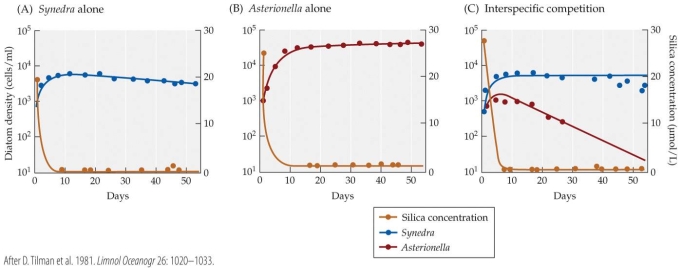 An unknown diatom is collected from a sample of sea water. The researcher is asked to grow the diatom in the laboratory and identify it based on the culture's density and silica level. At day 10, 20, and 30, the diatom density is almost 104 and silica levels are almost zero. Which species has the researcher cultured?
A) Synedra
B) Asterionella
C) Synedra with an unknown
D) Neither Synedra nor Asterionella.
An unknown diatom is collected from a sample of sea water. The researcher is asked to grow the diatom in the laboratory and identify it based on the culture's density and silica level. At day 10, 20, and 30, the diatom density is almost 104 and silica levels are almost zero. Which species has the researcher cultured?A) Synedra
B) Asterionella
C) Synedra with an unknown
D) Neither Synedra nor Asterionella.
سؤال
Refer to the figure.
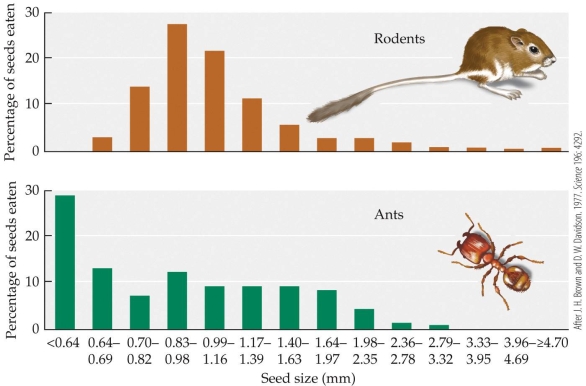 What percent of 0.99-1.16 mm seeds were eaten by rodents?
A) 4%
B) 9%
C) 22%
D) 28%
What percent of 0.99-1.16 mm seeds were eaten by rodents?A) 4%
B) 9%
C) 22%
D) 28%
سؤال
سؤال
سؤال
سؤال
Refer to the figure.
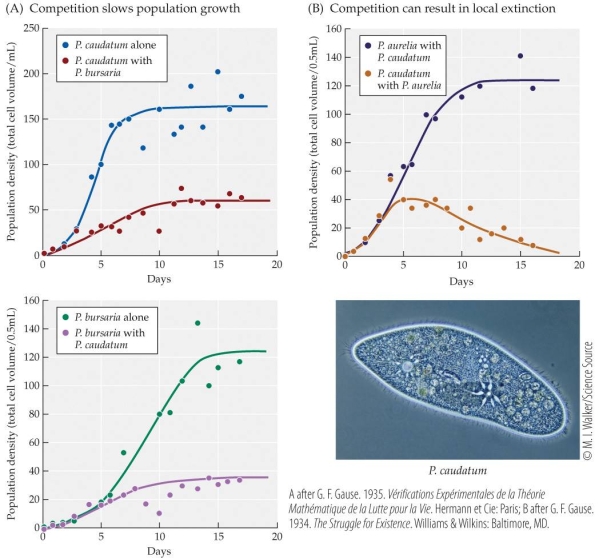 Which species (either with or without a competitor) had a population density at carrying capacity of approximately 38?
A) P. bursaria alone
B) P bursaria with P caudatum
C) P. aurelia with P. caudatum
D) P. caudatum alone
Which species (either with or without a competitor) had a population density at carrying capacity of approximately 38?A) P. bursaria alone
B) P bursaria with P caudatum
C) P. aurelia with P. caudatum
D) P. caudatum alone
سؤال
سؤال
سؤال
سؤال
سؤال
Refer to the figure.
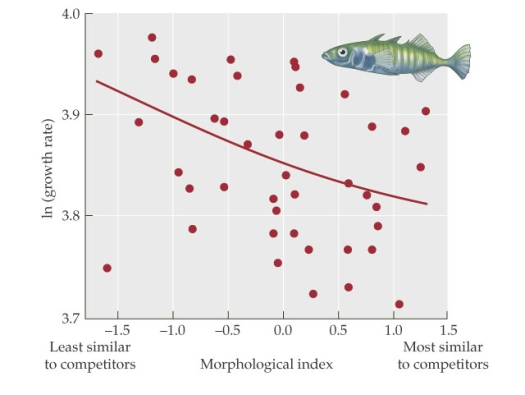 The figure shows the relationship between the growth rates (on a log scale) of individual fish and the similarity of the fish to their competitors. Assuming that populations with faster growth rates are more likely to have greater population growth, which principle or concept does the figure support?
A) Competition is most intense when resources are scarce.
B) Competition can result in character displacement.
C) Competition is often asymmetrical.
D) Competition can determine the local distributions of species.
The figure shows the relationship between the growth rates (on a log scale) of individual fish and the similarity of the fish to their competitors. Assuming that populations with faster growth rates are more likely to have greater population growth, which principle or concept does the figure support?A) Competition is most intense when resources are scarce.
B) Competition can result in character displacement.
C) Competition is often asymmetrical.
D) Competition can determine the local distributions of species.
سؤال
سؤال
سؤال
سؤال
سؤال
سؤال
سؤال
سؤال
سؤال
سؤال
سؤال
Refer to the figure.
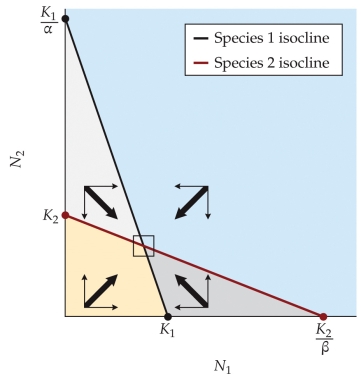 Based on the figure, what is the expected outcome of the competition between species 1 and species 2?
A) Coexistence
B) Competitive exclusion of species 2 by species 1
C) Competitive exclusion of species 1 by species 2
D) Persistence of one species only; whichever one persists will depend on the initial conditions
Based on the figure, what is the expected outcome of the competition between species 1 and species 2?A) Coexistence
B) Competitive exclusion of species 2 by species 1
C) Competitive exclusion of species 1 by species 2
D) Persistence of one species only; whichever one persists will depend on the initial conditions
سؤال
سؤال
سؤال
سؤال
سؤال
Refer to the figure.
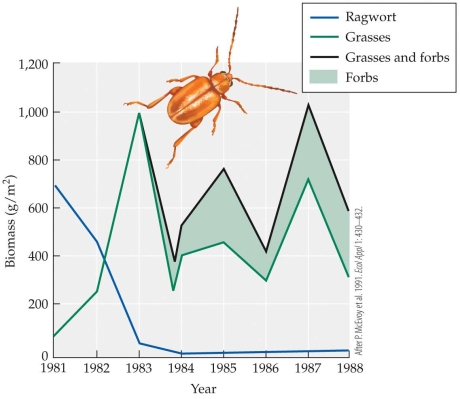 What year(s) did the biomass of grasses reach 1000 g/m2?
A) 1983
B) 1983 and 1987
C) 1987
D) 1985 and 1987
What year(s) did the biomass of grasses reach 1000 g/m2?A) 1983
B) 1983 and 1987
C) 1987
D) 1985 and 1987
سؤال
سؤال
سؤال
سؤال
سؤال
سؤال
Refer to the figure.
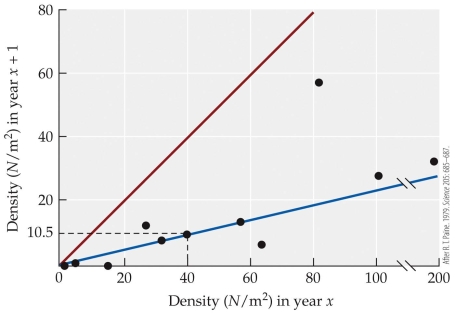 A population of sea palms in year 1 has a density of 80 N/m2. The predicted density expected in year 2 is _______ N/m2 which is _______ the exact replacement curve.
A) 60; below
B) 19; above
C) 19; below
D) 80; below
A population of sea palms in year 1 has a density of 80 N/m2. The predicted density expected in year 2 is _______ N/m2 which is _______ the exact replacement curve.A) 60; below
B) 19; above
C) 19; below
D) 80; below
سؤال
سؤال
سؤال
سؤال
سؤال
سؤال
سؤال
سؤال
سؤال
سؤال
سؤال
سؤال
سؤال
سؤال
سؤال
سؤال
سؤال
سؤال
سؤال
سؤال
سؤال
سؤال
سؤال
Refer to the figure.
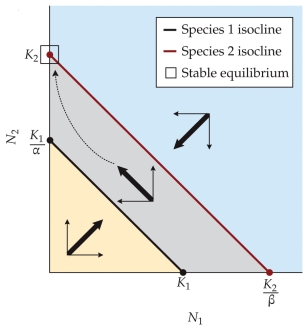 Based on the figure, what is the expected outcome of the competition between species 1 and species 2?
A) Coexistence
B) Competitive exclusion of species 2 by species 1
C) Competitive exclusion of species 1 by species 2
D) Persistence of one species only; whichever one persists will depend on the initial conditions
Based on the figure, what is the expected outcome of the competition between species 1 and species 2?A) Coexistence
B) Competitive exclusion of species 2 by species 1
C) Competitive exclusion of species 1 by species 2
D) Persistence of one species only; whichever one persists will depend on the initial conditions
سؤال
سؤال
سؤال
سؤال

فتح الحزمة
قم بالتسجيل لفتح البطاقات في هذه المجموعة!
Unlock Deck
Unlock Deck
1/74

العب

ملء الشاشة (f)
Deck 14: Competition
1
Which statement about carnivorous plants is false?
A) Many carnivorous plants are found only in environments where soils are poor in nutrients.
B) Carnivorous plants like Venus flytraps occasionally consume relatively large animals, including frogs and slugs.
C) Carnivorous plants typically have very extensive root systems.
D) Many pitcher plants have an internal layer of flaky wax that assists in prey capture.
A) Many carnivorous plants are found only in environments where soils are poor in nutrients.
B) Carnivorous plants like Venus flytraps occasionally consume relatively large animals, including frogs and slugs.
C) Carnivorous plants typically have very extensive root systems.
D) Many pitcher plants have an internal layer of flaky wax that assists in prey capture.
C
2
How did Brewer manipulate the level of competition in his experiment on pitcher plants?
A) By adding noncarnivorous competitor species
B) By weeding and clipping noncarnivorous competitor species
C) By adding ants
D) By removing ants
A) By adding noncarnivorous competitor species
B) By weeding and clipping noncarnivorous competitor species
C) By adding ants
D) By removing ants
B
3
Which of the following was a finding of Tansley's experiments with bedstraw plants?
A) The species that was restricted to acidic soils excluded the species that was adapted to calcareous soils when grown on acidic soils.
B) The species that grew on calcareous soils was physiologically incapable of growing on acidic soils.
C) The species that grew on acidic soils was physiologically incapable of growing on calcareous soils.
D) The two species did not compete with each other when grown together.
A) The species that was restricted to acidic soils excluded the species that was adapted to calcareous soils when grown on acidic soils.
B) The species that grew on calcareous soils was physiologically incapable of growing on acidic soils.
C) The species that grew on acidic soils was physiologically incapable of growing on calcareous soils.
D) The two species did not compete with each other when grown together.
A
4
Which of the following cannot be a resource?
A) Oxygen
B) Physical space
C) Light
D) pH
A) Oxygen
B) Physical space
C) Light
D) pH
فتح الحزمة
افتح القفل للوصول البطاقات البالغ عددها 74 في هذه المجموعة.
فتح الحزمة
k this deck
5
Which of the following is not an example of a resource?
A) A stenocara beetle captures water from fog that condenses on its back
B) An increase in temperature increases aggressiveness in a species of coral reef fish.
C) Dung beetles collect and store dung to be used as a food source for their larva
D) A bumblebee collects nectar from a flowering plant
A) A stenocara beetle captures water from fog that condenses on its back
B) An increase in temperature increases aggressiveness in a species of coral reef fish.
C) Dung beetles collect and store dung to be used as a food source for their larva
D) A bumblebee collects nectar from a flowering plant
فتح الحزمة
افتح القفل للوصول البطاقات البالغ عددها 74 في هذه المجموعة.
فتح الحزمة
k this deck
6
A fundamental niche
A) is always the same as a realized niche.
B) can only be altered if excess food is available to an organism.
C) is often not realized because no one species has exclusive access to all the resources within its fundamental niche.
D) is unrestricted by species-species interactions.
A) is always the same as a realized niche.
B) can only be altered if excess food is available to an organism.
C) is often not realized because no one species has exclusive access to all the resources within its fundamental niche.
D) is unrestricted by species-species interactions.
فتح الحزمة
افتح القفل للوصول البطاقات البالغ عددها 74 في هذه المجموعة.
فتح الحزمة
k this deck
7
The critical feature determining whether a substance is a resource is whether it
A) is abiotic or biotic.
B) is required by an organism.
C) is required for growth.
D) can be used to produce ATP.
A) is abiotic or biotic.
B) is required by an organism.
C) is required for growth.
D) can be used to produce ATP.
فتح الحزمة
افتح القفل للوصول البطاقات البالغ عددها 74 في هذه المجموعة.
فتح الحزمة
k this deck
8
Two species of birds feed on berries. The birds are active at different times of the day and do not come into contact with one another. Nonetheless, the presence of one species limits the survival and reproduction of the other. What type of competition is this?
A) Interference
B) Exploitation
C) Allelopathy
D) Logistic
A) Interference
B) Exploitation
C) Allelopathy
D) Logistic
فتح الحزمة
افتح القفل للوصول البطاقات البالغ عددها 74 في هذه المجموعة.
فتح الحزمة
k this deck
9
Two species of grasshoppers live in the same area. They both feed on plants, but the presence of one species does not affect the survival or the reproduction of the other. What type of competition is this?
A) Interference
B) Exploitative
C) Allelopathy
D) This is not an example of competition.
A) Interference
B) Exploitative
C) Allelopathy
D) This is not an example of competition.
فتح الحزمة
افتح القفل للوصول البطاقات البالغ عددها 74 في هذه المجموعة.
فتح الحزمة
k this deck
10
Black walnut trees release chemicals that can be toxic to other plants. This phenomenon may be an example of _______, although experimental confirmation is still needed.
A) isoclines
B) exploitative competition
C) allelopathy
D) character displacement
A) isoclines
B) exploitative competition
C) allelopathy
D) character displacement
فتح الحزمة
افتح القفل للوصول البطاقات البالغ عددها 74 في هذه المجموعة.
فتح الحزمة
k this deck
11
Which statement about competition is false?
A) Exploitation competition is the most common form of competition in nature.
B) Competition is often symmetrical.
C) Tilman's study of diatoms competing for silica provides an example of exploitative competition.
D) Two gulls fighting over a piece of fish is a form of exploitation competition.
A) Exploitation competition is the most common form of competition in nature.
B) Competition is often symmetrical.
C) Tilman's study of diatoms competing for silica provides an example of exploitative competition.
D) Two gulls fighting over a piece of fish is a form of exploitation competition.
فتح الحزمة
افتح القفل للوصول البطاقات البالغ عددها 74 في هذه المجموعة.
فتح الحزمة
k this deck
12
Which statement about Tilman and colleagues' studies of the diatoms Synedra and Asterionella is true?
A) The species that reached the highest stable population when grown alone drove the other species to extinction.
B) The species that reduced silica levels the furthest when grown alone drove the other species to extinction.
C) Both species were able to coexist when grown together.
D) The species that went extinct varied at random in different trials; sometimes it was Synedra, sometimes it was Asterionella.
A) The species that reached the highest stable population when grown alone drove the other species to extinction.
B) The species that reduced silica levels the furthest when grown alone drove the other species to extinction.
C) Both species were able to coexist when grown together.
D) The species that went extinct varied at random in different trials; sometimes it was Synedra, sometimes it was Asterionella.
فتح الحزمة
افتح القفل للوصول البطاقات البالغ عددها 74 في هذه المجموعة.
فتح الحزمة
k this deck
13
Which statement describes a finding of Wilson and Tilman's studies of the grass Schizachyrium scoparium?
A) The plants compete only for aboveground resources.
B) The plants compete only for belowground resources.
C) The plants compete for both aboveground and belowground resources, and competition is most intense for whichever resources are scarcer.
D) The plants compete for both aboveground and belowground resources, and competition is most intense for whichever resources are more abundant.
A) The plants compete only for aboveground resources.
B) The plants compete only for belowground resources.
C) The plants compete for both aboveground and belowground resources, and competition is most intense for whichever resources are scarcer.
D) The plants compete for both aboveground and belowground resources, and competition is most intense for whichever resources are more abundant.
فتح الحزمة
افتح القفل للوصول البطاقات البالغ عددها 74 في هذه المجموعة.
فتح الحزمة
k this deck
14
In Brown and Davidson's study of seed-eating rodents and ants in Arizona, the number of rodents _______ when ants were removed, and the number of ant colonies _______ when rodents were removed.
A) increased; increased
B) increased; decreased
C) decreased; increased
D) decreased; decreased
A) increased; increased
B) increased; decreased
C) decreased; increased
D) decreased; decreased
فتح الحزمة
افتح القفل للوصول البطاقات البالغ عددها 74 في هذه المجموعة.
فتح الحزمة
k this deck
15
Refer to the figure.
An unknown diatom is collected from a sample of sea water. The researcher is asked to grow the diatom in the laboratory and identify it based on the culture's density and silica level. At day 10, 20, and 30, the diatom density is almost 104 and silica levels are almost zero. Which species has the researcher cultured?
A) Synedra
B) Asterionella
C) Synedra with an unknown
D) Neither Synedra nor Asterionella.
An unknown diatom is collected from a sample of sea water. The researcher is asked to grow the diatom in the laboratory and identify it based on the culture's density and silica level. At day 10, 20, and 30, the diatom density is almost 104 and silica levels are almost zero. Which species has the researcher cultured?A) Synedra
B) Asterionella
C) Synedra with an unknown
D) Neither Synedra nor Asterionella.
فتح الحزمة
افتح القفل للوصول البطاقات البالغ عددها 74 في هذه المجموعة.
فتح الحزمة
k this deck
16
Refer to the figure.
What percent of 0.99-1.16 mm seeds were eaten by rodents?
A) 4%
B) 9%
C) 22%
D) 28%
What percent of 0.99-1.16 mm seeds were eaten by rodents?A) 4%
B) 9%
C) 22%
D) 28%
فتح الحزمة
افتح القفل للوصول البطاقات البالغ عددها 74 في هذه المجموعة.
فتح الحزمة
k this deck
17
Which statement about studies on the importance of competition in nature is false?
A) Nearly all studies find the occurrence of competition; competition is ubiquitous in nature.
B) Many studies find the occurrence of competition; competition is common in nature.
C) Analyses of the studies identified several possible sources of bias, including the failure of researchers to publish studies that show no significant results.
D) Many studies were biased because they overly represented species that were suspected to show competition.
A) Nearly all studies find the occurrence of competition; competition is ubiquitous in nature.
B) Many studies find the occurrence of competition; competition is common in nature.
C) Analyses of the studies identified several possible sources of bias, including the failure of researchers to publish studies that show no significant results.
D) Many studies were biased because they overly represented species that were suspected to show competition.
فتح الحزمة
افتح القفل للوصول البطاقات البالغ عددها 74 في هذه المجموعة.
فتح الحزمة
k this deck
18
The competitive exclusion principle states that the _______ species prevents another species from using essential resources, causing the _______ species to become locally extinct.
A) smaller; larger
B) larger; smaller
C) inferior; dominant
D) dominant; inferior
A) smaller; larger
B) larger; smaller
C) inferior; dominant
D) dominant; inferior
فتح الحزمة
افتح القفل للوصول البطاقات البالغ عددها 74 في هذه المجموعة.
فتح الحزمة
k this deck
19
In his experiments with different competing pairs of Paramecium species, Gause found that sometimes both species persisted and sometimes only one species did. Which hypothesis did Gause propose in order to explain the cases in which both species persisted?
A) One species was a much better competitor than the other.
B) Periodic disturbance allowed for coexistence.
C) The two species tended to use different resources.
D) The two species exhibited only interference competition, not exploitative competition.
A) One species was a much better competitor than the other.
B) Periodic disturbance allowed for coexistence.
C) The two species tended to use different resources.
D) The two species exhibited only interference competition, not exploitative competition.
فتح الحزمة
افتح القفل للوصول البطاقات البالغ عددها 74 في هذه المجموعة.
فتح الحزمة
k this deck
20
Refer to the figure.
Which species (either with or without a competitor) had a population density at carrying capacity of approximately 38?
A) P. bursaria alone
B) P bursaria with P caudatum
C) P. aurelia with P. caudatum
D) P. caudatum alone
Which species (either with or without a competitor) had a population density at carrying capacity of approximately 38?A) P. bursaria alone
B) P bursaria with P caudatum
C) P. aurelia with P. caudatum
D) P. caudatum alone
فتح الحزمة
افتح القفل للوصول البطاقات البالغ عددها 74 في هذه المجموعة.
فتح الحزمة
k this deck
21
Which statement was supported by Stomp and colleagues' study of the partitioning of resources between two species of Baltic Sea cyanobacteria?
A) One feeds on large species of other bacteria, while the other feeds on smaller ones.
B) One tends to stay close to the surface of the water, and the other tends to stay near the bottom.
C) One uses short wavelengths of light efficiently, while the other uses longer wavelengths.
D) One uses nitric oxide efficiently, while the other uses ammonium efficiently.
A) One feeds on large species of other bacteria, while the other feeds on smaller ones.
B) One tends to stay close to the surface of the water, and the other tends to stay near the bottom.
C) One uses short wavelengths of light efficiently, while the other uses longer wavelengths.
D) One uses nitric oxide efficiently, while the other uses ammonium efficiently.
فتح الحزمة
افتح القفل للوصول البطاقات البالغ عددها 74 في هذه المجموعة.
فتح الحزمة
k this deck
22
Suppose that, instead of the results actually obtained in Brown and Davidson's experiments, the number of rodents in the ant-excluded treatment was roughly the same as the number of rodents in the control group, and the number of ants in the rodent-excluded treatment was roughly the same as the number of ants in the control group. Which of the following would you then conclude?
A) Competition is asymmetrical, with rodents affecting ants more than ants affect rodents.
B) The two species have reduced competition through resource partitioning.
C) Competition is asymmetrical, with rodents affecting ants less than ants affect rodents.
D) There has been a competitive reversal.
A) Competition is asymmetrical, with rodents affecting ants more than ants affect rodents.
B) The two species have reduced competition through resource partitioning.
C) Competition is asymmetrical, with rodents affecting ants less than ants affect rodents.
D) There has been a competitive reversal.
فتح الحزمة
افتح القفل للوصول البطاقات البالغ عددها 74 في هذه المجموعة.
فتح الحزمة
k this deck
23
Suppose that two species of Darwin's finches live on the same island and eat seeds, but one species tends to eat larger seeds than the other one does. Based on this observation, we can conclude that these species are engaged in
A) competitive exclusion.
B) allelopathy.
C) interference competition.
D) resource partitioning.
A) competitive exclusion.
B) allelopathy.
C) interference competition.
D) resource partitioning.
فتح الحزمة
افتح القفل للوصول البطاقات البالغ عددها 74 في هذه المجموعة.
فتح الحزمة
k this deck
24
Two similar rodent species are consistently more different from each other when they occupy the same habitat than when they live separately. What is the most likely explanation for the increased divergence when they live together?
A) Decreased resource partitioning
B) Character displacement
C) Competitive exclusion
D) Intraspecific competition
A) Decreased resource partitioning
B) Character displacement
C) Competitive exclusion
D) Intraspecific competition
فتح الحزمة
افتح القفل للوصول البطاقات البالغ عددها 74 في هذه المجموعة.
فتح الحزمة
k this deck
25
Refer to the figure.
The figure shows the relationship between the growth rates (on a log scale) of individual fish and the similarity of the fish to their competitors. Assuming that populations with faster growth rates are more likely to have greater population growth, which principle or concept does the figure support?
A) Competition is most intense when resources are scarce.
B) Competition can result in character displacement.
C) Competition is often asymmetrical.
D) Competition can determine the local distributions of species.
The figure shows the relationship between the growth rates (on a log scale) of individual fish and the similarity of the fish to their competitors. Assuming that populations with faster growth rates are more likely to have greater population growth, which principle or concept does the figure support?A) Competition is most intense when resources are scarce.
B) Competition can result in character displacement.
C) Competition is often asymmetrical.
D) Competition can determine the local distributions of species.
فتح الحزمة
افتح القفل للوصول البطاقات البالغ عددها 74 في هذه المجموعة.
فتح الحزمة
k this deck
26
Character displacement is likely to _______ the competition coefficients in two competing species and to _______ resource partitioning.
A) increase; increase
B) lower; increase
C) lower; eliminate
D) increase; lower
A) increase; increase
B) lower; increase
C) lower; eliminate
D) increase; lower
فتح الحزمة
افتح القفل للوصول البطاقات البالغ عددها 74 في هذه المجموعة.
فتح الحزمة
k this deck
27
Two species of Drosophila have been competing in the lab for a long time. A researcher notes that over the course of time, the competition coefficients of these species have become smaller. What is the most likely explanation of this change?
A) Periodic disturbances
B) Allelopathy
C) Character displacement
D) Competitive exclusion
A) Periodic disturbances
B) Allelopathy
C) Character displacement
D) Competitive exclusion
فتح الحزمة
افتح القفل للوصول البطاقات البالغ عددها 74 في هذه المجموعة.
فتح الحزمة
k this deck
28
A population of Drosophila melanogaster with 10,000 individuals and a carrying capacity of 20,000 follows the logistic growth equation. Suppose that 5,000 individuals of a competitor species, Drosophila simulans, are added to the population, and that this species has an α of 0.5. One would predict that this number of competitive individuals will decrease the D. melanogaster population growth rate by the same amount as the addition of _______ D. melanogaster individuals would.
A) 250
B) 750
C) 1,000
D) 2,500
A) 250
B) 750
C) 1,000
D) 2,500
فتح الحزمة
افتح القفل للوصول البطاقات البالغ عددها 74 في هذه المجموعة.
فتح الحزمة
k this deck
29
Two species of sparrows are competing, and these species behave according to the Lotka‒Volterra equations. If each individual sparrow reduces the population growth rate of its own species by 0.02 per year, and it reduces the population growth rate of the other species by 0.005 per year, then the competition coefficient is
A) 0.005.
B) 0.02.
C) 0.25.
D) 0.4.
A) 0.005.
B) 0.02.
C) 0.25.
D) 0.4.
فتح الحزمة
افتح القفل للوصول البطاقات البالغ عددها 74 في هذه المجموعة.
فتح الحزمة
k this deck
30
Two species of flour beetles, Tribolium castaneum and Tribolium freemani, are competing according to the Lotka‒Volterra equations. If the α of T. freemani on T. castaneum is 1.5, the addition of 150 T. freemani individuals would depress the T. castaneum population growth rate by the same amount as the addition of _______ T. castaneum individuals would.
A) 0
B) 75
C) 150
D) 225
A) 0
B) 75
C) 150
D) 225
فتح الحزمة
افتح القفل للوصول البطاقات البالغ عددها 74 في هذه المجموعة.
فتح الحزمة
k this deck
31
A population at the zero population growth isocline is
A) increasing in size via exponential growth.
B) stable in size.
C) decreasing in size.
D) increasing in size via logistic growth.
A) increasing in size via exponential growth.
B) stable in size.
C) decreasing in size.
D) increasing in size via logistic growth.
فتح الحزمة
افتح القفل للوصول البطاقات البالغ عددها 74 في هذه المجموعة.
فتح الحزمة
k this deck
32
The competition coefficient of one species towards itself is, by definition,
A) zero.
B) 1/2.
C) +1.
D) ‒1.
A) zero.
B) 1/2.
C) +1.
D) ‒1.
فتح الحزمة
افتح القفل للوصول البطاقات البالغ عددها 74 في هذه المجموعة.
فتح الحزمة
k this deck
33
A population of white oak trees with 500 individuals and a carrying capacity of 1,500 follows logistic growth. Under ideal low-density conditions, its growth rate is 0.15 per year, but it faces competition from a population of 1,000 Chapman oaks with an α of 0.5. What is the expected growth of the population of white oaks in the next year?
A) 0
B) 25
C) 50
D) 75
A) 0
B) 25
C) 50
D) 75
فتح الحزمة
افتح القفل للوصول البطاقات البالغ عددها 74 في هذه المجموعة.
فتح الحزمة
k this deck
34
By pitting two species of worms against each other at varying densities, researchers have determined that the zero growth isocline of species A is always above that of species B. This means that
A) species A will always exclude species B.
B) species B will always exclude species A.
C) one species will exclude the other, depending on the initial conditions.
D) both species will coexist at a lower density than either would alone.
A) species A will always exclude species B.
B) species B will always exclude species A.
C) one species will exclude the other, depending on the initial conditions.
D) both species will coexist at a lower density than either would alone.
فتح الحزمة
افتح القفل للوصول البطاقات البالغ عددها 74 في هذه المجموعة.
فتح الحزمة
k this deck
35
Which statement about zero population growth isoclines of two competing species is true?
A) Species coexistence requires that the two isoclines cross.
B) The crossing of the two isoclines is a sufficient condition for species coexistence.
C) If the species coexist, they will each do so at a higher density than either would if placed alone.
D) Strongly competing species can only coexist if the two species have very different carrying capacities.
A) Species coexistence requires that the two isoclines cross.
B) The crossing of the two isoclines is a sufficient condition for species coexistence.
C) If the species coexist, they will each do so at a higher density than either would if placed alone.
D) Strongly competing species can only coexist if the two species have very different carrying capacities.
فتح الحزمة
افتح القفل للوصول البطاقات البالغ عددها 74 في هذه المجموعة.
فتح الحزمة
k this deck
36
Refer to the figure.
Based on the figure, what is the expected outcome of the competition between species 1 and species 2?
A) Coexistence
B) Competitive exclusion of species 2 by species 1
C) Competitive exclusion of species 1 by species 2
D) Persistence of one species only; whichever one persists will depend on the initial conditions
Based on the figure, what is the expected outcome of the competition between species 1 and species 2?A) Coexistence
B) Competitive exclusion of species 2 by species 1
C) Competitive exclusion of species 1 by species 2
D) Persistence of one species only; whichever one persists will depend on the initial conditions
فتح الحزمة
افتح القفل للوصول البطاقات البالغ عددها 74 في هذه المجموعة.
فتح الحزمة
k this deck
37
Dragonfly species A (with a carrying capacity of 1,000) and species B (with a carrying capacity of 400) are competing. The competition coefficient of species A on species B is 0.25, and the competition coefficient of species B on species A is 0.5. Dragonfly species C (with a carrying capacity of 5,000) and species D (with a carrying capacity of 10,000) are also competing. The competition coefficient of species C on species D is 0.1, and the competition coefficient of species D on species C is 0.2. Based on the Lotka‒Volterra equation, which of these pairs of species can coexist?
A) Only species A and species B
B) Only species C and species D
C) Both pairs of species can coexist.
D) Neither pair of species can coexist.
A) Only species A and species B
B) Only species C and species D
C) Both pairs of species can coexist.
D) Neither pair of species can coexist.
فتح الحزمة
افتح القفل للوصول البطاقات البالغ عددها 74 في هذه المجموعة.
فتح الحزمة
k this deck
38
Based on the Lotka‒Volterra equations, which statement about carrying capacity and species coexistence is most likely true?
A) Species with similar resource use but very different carrying capacities are more likely to coexist than species with similar resource use and similar carrying capacities.
B) Species with similar carrying capacities are more likely to coexist than species with different carrying capacities.
C) Doubling the carrying capacities of two competing species should increase the likelihood that the species will coexist.
D) Species with different carrying capacities are more likely to coexist than species with similar carrying capacities.
A) Species with similar resource use but very different carrying capacities are more likely to coexist than species with similar resource use and similar carrying capacities.
B) Species with similar carrying capacities are more likely to coexist than species with different carrying capacities.
C) Doubling the carrying capacities of two competing species should increase the likelihood that the species will coexist.
D) Species with different carrying capacities are more likely to coexist than species with similar carrying capacities.
فتح الحزمة
افتح القفل للوصول البطاقات البالغ عددها 74 في هذه المجموعة.
فتح الحزمة
k this deck
39
There are two pairs of competing species of ferns. Species A and species B have carrying capacities of 10,000 and 6,000, respectively. The competition coefficient of species A on species B is 0.25 and the competition coefficient of species B on species A is 2.5. Species C and species D have carrying capacities of 8,000 and 14,000, respectively. The competition coefficient of species C on species D is 0.1 and the competition coefficient of species D on species C is 0.2. Based on the Lotka‒Volterra equation, which of these pairs of species can coexist?
A) Only species A and species B
B) Only species C and species D
C) Both pairs of species can coexist.
D) Neither pair of species can coexist.
A) Only species A and species B
B) Only species C and species D
C) Both pairs of species can coexist.
D) Neither pair of species can coexist.
فتح الحزمة
افتح القفل للوصول البطاقات البالغ عددها 74 في هذه المجموعة.
فتح الحزمة
k this deck
40
Two species of ground crickets compete in the eastern United States. In colder areas, Allonemobius fasciatus outcompetes Allonemobius socius, but in warm areas, A. socius outcompetes A. fasciatus. This is an example of
A) a competitive reversal.
B) allelopathy.
C) a conspecific precedence.
D) a character displacement.
A) a competitive reversal.
B) allelopathy.
C) a conspecific precedence.
D) a character displacement.
فتح الحزمة
افتح القفل للوصول البطاقات البالغ عددها 74 في هذه المجموعة.
فتح الحزمة
k this deck
41
Refer to the figure.
What year(s) did the biomass of grasses reach 1000 g/m2?
A) 1983
B) 1983 and 1987
C) 1987
D) 1985 and 1987
What year(s) did the biomass of grasses reach 1000 g/m2?A) 1983
B) 1983 and 1987
C) 1987
D) 1985 and 1987
فتح الحزمة
افتح القفل للوصول البطاقات البالغ عددها 74 في هذه المجموعة.
فتح الحزمة
k this deck
42
Which of the following findings from Connell's experiments with intertidal barnacles is false?
A) In both species, the extent of the distribution of larvae is greater than that of adults.
B) One species is excluded from the top of the intertidal zone due to sensitivity to desiccation.
C) One species is excluded from the bottom of the intertidal zone due to competition with the other species.
D) Both species of barnacles survived better when tidal disturbances removed patches of competitive mussels.
A) In both species, the extent of the distribution of larvae is greater than that of adults.
B) One species is excluded from the top of the intertidal zone due to sensitivity to desiccation.
C) One species is excluded from the bottom of the intertidal zone due to competition with the other species.
D) Both species of barnacles survived better when tidal disturbances removed patches of competitive mussels.
فتح الحزمة
افتح القفل للوصول البطاقات البالغ عددها 74 في هذه المجموعة.
فتح الحزمة
k this deck
43
Why is the barnacle Chthamalus found only in the upper regions of the intertidal zone?
A) It cannot live at the bottom of the zone where oxygen levels are low.
B) Interference competition from another barnacle, Semibalamus, prevents adults from persisting at the bottom of the zone.
C) Exploitative competition from another barnacle, Semibalamus, prevents adults from persisting at the bottom of the zone.
D) Its larvae are able to survive only in the upper intertidal zone.
A) It cannot live at the bottom of the zone where oxygen levels are low.
B) Interference competition from another barnacle, Semibalamus, prevents adults from persisting at the bottom of the zone.
C) Exploitative competition from another barnacle, Semibalamus, prevents adults from persisting at the bottom of the zone.
D) Its larvae are able to survive only in the upper intertidal zone.
فتح الحزمة
افتح القفل للوصول البطاقات البالغ عددها 74 في هذه المجموعة.
فتح الحزمة
k this deck
44
Which statement about Patterson's study of the distributions of Tamias chipmunks in the southwestern United States is false?
A) It found that in mountain ranges where two species were present, the overlap of their distributions was small.
B) It found that in mountain ranges where only one species was present, that species was found over a broader distribution of habitats than would have been possible in the presence of a competitor.
C) They were manipulative experiments.
D) They suggested that competition is limiting the ranges of the species.
A) It found that in mountain ranges where two species were present, the overlap of their distributions was small.
B) It found that in mountain ranges where only one species was present, that species was found over a broader distribution of habitats than would have been possible in the presence of a competitor.
C) They were manipulative experiments.
D) They suggested that competition is limiting the ranges of the species.
فتح الحزمة
افتح القفل للوصول البطاقات البالغ عددها 74 في هذه المجموعة.
فتح الحزمة
k this deck
45
Based on Paine's studies, what has allowed the sea palm to persist in shoreline areas despite the presence of a superior competitor (Mytilus)?
A) Allelopathy by the sea palm
B) Character displacement
C) Competitive exclusion
D) Periodic disturbances
A) Allelopathy by the sea palm
B) Character displacement
C) Competitive exclusion
D) Periodic disturbances
فتح الحزمة
افتح القفل للوصول البطاقات البالغ عددها 74 في هذه المجموعة.
فتح الحزمة
k this deck
46
Suppose that a species of moss cannot coexist with a superior competitor unless there is periodic disturbance. This species is also a frequent disperser. Which conclusion is most likely?
A) The moss is engaged in character displacement.
B) In a constant environment, the moss and its competitor have zero population growth isoclines that cross.
C) The moss is a fugitive species.
D) The moss demonstrates competitive reversal.
A) The moss is engaged in character displacement.
B) In a constant environment, the moss and its competitor have zero population growth isoclines that cross.
C) The moss is a fugitive species.
D) The moss demonstrates competitive reversal.
فتح الحزمة
افتح القفل للوصول البطاقات البالغ عددها 74 في هذه المجموعة.
فتح الحزمة
k this deck
47
Refer to the figure.
A population of sea palms in year 1 has a density of 80 N/m2. The predicted density expected in year 2 is _______ N/m2 which is _______ the exact replacement curve.
A) 60; below
B) 19; above
C) 19; below
D) 80; below
A population of sea palms in year 1 has a density of 80 N/m2. The predicted density expected in year 2 is _______ N/m2 which is _______ the exact replacement curve.A) 60; below
B) 19; above
C) 19; below
D) 80; below
فتح الحزمة
افتح القفل للوصول البطاقات البالغ عددها 74 في هذه المجموعة.
فتح الحزمة
k this deck
48
Brewer's study on pitcher plants showed that _______ when the plants were grown in the presence of many neighbors.
A) available light levels declined substantially
B) nitrogen levels declined substantially
C) prey deprivation had no effect
D) an increase in soil nutrient competition occurred
A) available light levels declined substantially
B) nitrogen levels declined substantially
C) prey deprivation had no effect
D) an increase in soil nutrient competition occurred
فتح الحزمة
افتح القفل للوصول البطاقات البالغ عددها 74 في هذه المجموعة.
فتح الحزمة
k this deck
49
What is not an explanation for coexistence of species that use the same set of limiting resources?
A) Environmental variation
B) Periodic disturbance
C) Periodic fire
D) Intraspecies competition
A) Environmental variation
B) Periodic disturbance
C) Periodic fire
D) Intraspecies competition
فتح الحزمة
افتح القفل للوصول البطاقات البالغ عددها 74 في هذه المجموعة.
فتح الحزمة
k this deck
50
Two species are close competitors. If one species is removed from the community, the remaining species would be expected to expand its realized niche. Answer the following questions:
a) Briefly explain the difference between a fundamental niche and a realized niche.
b) Why would removal of one species affect others' realized niche?
a) Briefly explain the difference between a fundamental niche and a realized niche.
b) Why would removal of one species affect others' realized niche?
فتح الحزمة
افتح القفل للوصول البطاقات البالغ عددها 74 في هذه المجموعة.
فتح الحزمة
k this deck
51
Two hypothetical species of plants have lived in the same area for a long time. Studies show they occupy the same niche. During a severe drought, species 1 drives species 2 locally extinct. Briefly explain how the two species can coexist and why the drought caused competition between the two species, leading to species 2's local extinction.
فتح الحزمة
افتح القفل للوصول البطاقات البالغ عددها 74 في هذه المجموعة.
فتح الحزمة
k this deck
52
Use inequalities generated by the Lotka-Volterra competition model to determine whether two species of Paramecium (P. caudatum is "species 1" and P. aurelia is "species 2") will coexist or drive each other to extinction in the three scenarios below. In these examples, N1 = N2, and K1 = K2 = 50.
Scenario 1: Determine the outcome of the competitive interaction between P. caudatum and P. aurelia if = 0.3, and = 0.6.
Scenario 2: Determine the outcome of the competitive interaction between P. caudatum and P. aurelia if = 1.5, and = 0.6.
Based on conditions in scenario 1, answer the following questions:
a) What does K1/K2 equal?
b) Is greater than (>) or less than (<) K1/K2?
c) Is > or < K1/K2?
Scenario 1: Determine the outcome of the competitive interaction between P. caudatum and P. aurelia if = 0.3, and = 0.6.
Scenario 2: Determine the outcome of the competitive interaction between P. caudatum and P. aurelia if = 1.5, and = 0.6.
Based on conditions in scenario 1, answer the following questions:
a) What does K1/K2 equal?
b) Is greater than (>) or less than (<) K1/K2?
c) Is > or < K1/K2?
فتح الحزمة
افتح القفل للوصول البطاقات البالغ عددها 74 في هذه المجموعة.
فتح الحزمة
k this deck
53
Use inequalities generated by the Lotka-Volterra competition model to determine whether two species of Paramecium (P. caudatum is "species 1" and P. aurelia is "species 2") will coexist or drive each other to extinction in the three scenarios below. In these examples, N1 = N2, and K1 = K2 = 50.
Scenario 1: Determine the outcome of the competitive interaction between P. caudatum and P. aurelia if = 0.3, and = 0.6.
Scenario 2: Determine the outcome of the competitive interaction between P. caudatum and P. aurelia if = 1.5, and = 0.6.
Determine the outcomes of competition between the two species under scenario 1.Answer the following questions:
a) Do species 1 and species 2 coexist?
b) Does one species drive the other to extinction? If so, which goes extinct?
Scenario 1: Determine the outcome of the competitive interaction between P. caudatum and P. aurelia if = 0.3, and = 0.6.
Scenario 2: Determine the outcome of the competitive interaction between P. caudatum and P. aurelia if = 1.5, and = 0.6.
Determine the outcomes of competition between the two species under scenario 1.Answer the following questions:
a) Do species 1 and species 2 coexist?
b) Does one species drive the other to extinction? If so, which goes extinct?
فتح الحزمة
افتح القفل للوصول البطاقات البالغ عددها 74 في هذه المجموعة.
فتح الحزمة
k this deck
54
Use inequalities generated by the Lotka-Volterra competition model to determine whether two species of Paramecium (P. caudatum is "species 1" and P. aurelia is "species 2") will coexist or drive each other to extinction in the three scenarios below. In these examples, N1 = N2, and K1 = K2 = 50.
Scenario 1: Determine the outcome of the competitive interaction between P. caudatum and P. aurelia if = 0.3, and = 0.6.
Scenario 2: Determine the outcome of the competitive interaction between P. caudatum and P. aurelia if = 1.5, and = 0.6.
Determine how each species affects the other under scenario 1.Answer the following questions:
a) Each individual of species 2 has the same effect on species 1 as how many individuals of species 1?
b) Each individual of species 1 has the same effect on species 2 as how many individuals of species 2?
Scenario 1: Determine the outcome of the competitive interaction between P. caudatum and P. aurelia if = 0.3, and = 0.6.
Scenario 2: Determine the outcome of the competitive interaction between P. caudatum and P. aurelia if = 1.5, and = 0.6.
Determine how each species affects the other under scenario 1.Answer the following questions:
a) Each individual of species 2 has the same effect on species 1 as how many individuals of species 1?
b) Each individual of species 1 has the same effect on species 2 as how many individuals of species 2?
فتح الحزمة
افتح القفل للوصول البطاقات البالغ عددها 74 في هذه المجموعة.
فتح الحزمة
k this deck
55
Use inequalities generated by the Lotka-Volterra competition model to determine whether two species of Paramecium (P. caudatum is "species 1" and P. aurelia is "species 2") will coexist or drive each other to extinction in the three scenarios below. In these examples, N1 = N2, and K1 = K2 = 50.
Scenario 1: Determine the outcome of the competitive interaction between P. caudatum and P. aurelia if = 0.3, and = 0.6.
Scenario 2: Determine the outcome of the competitive interaction between P. caudatum and P. aurelia if = 1.5, and = 0.6.
Based on conditions in scenario 2, answer the following questions:
a) What does K1/K2 equal?
b) Is > or < K1/K2?
c) Is > or < K1/K2?
Scenario 1: Determine the outcome of the competitive interaction between P. caudatum and P. aurelia if = 0.3, and = 0.6.
Scenario 2: Determine the outcome of the competitive interaction between P. caudatum and P. aurelia if = 1.5, and = 0.6.
Based on conditions in scenario 2, answer the following questions:
a) What does K1/K2 equal?
b) Is > or < K1/K2?
c) Is > or < K1/K2?
فتح الحزمة
افتح القفل للوصول البطاقات البالغ عددها 74 في هذه المجموعة.
فتح الحزمة
k this deck
56
Use inequalities generated by the Lotka-Volterra competition model to determine whether two species of Paramecium (P. caudatum is "species 1" and P. aurelia is "species 2") will coexist or drive each other to extinction in the three scenarios below. In these examples, N1 = N2, and K1 = K2 = 50.
Scenario 1: Determine the outcome of the competitive interaction between P. caudatum and P. aurelia if = 0.3, and = 0.6.
Scenario 2: Determine the outcome of the competitive interaction between P. caudatum and P. aurelia if F = 1.5, and = 0.6.
Determine the outcome of competition between the species under scenario 2.Answer the following questions:
a) Do the two species coexist?
b) Does one species drive the other to extinction? If so, which goes extinct?
Scenario 1: Determine the outcome of the competitive interaction between P. caudatum and P. aurelia if = 0.3, and = 0.6.
Scenario 2: Determine the outcome of the competitive interaction between P. caudatum and P. aurelia if F = 1.5, and = 0.6.
Determine the outcome of competition between the species under scenario 2.Answer the following questions:
a) Do the two species coexist?
b) Does one species drive the other to extinction? If so, which goes extinct?
فتح الحزمة
افتح القفل للوصول البطاقات البالغ عددها 74 في هذه المجموعة.
فتح الحزمة
k this deck
57
Use inequalities generated by the Lotka-Volterra competition model to determine whether two species of Paramecium (P. caudatum is "species 1" and P. aurelia is "species 2") will coexist or drive each other to extinction in the three scenarios below. In these examples, N1 = N2, and K1 = K2 = 50.
Scenario 1: Determine the outcome of the competitive interaction between P. caudatum and P. aurelia if = 0.3, and = 0.6.
Scenario 2: Determine the outcome of the competitive interaction between P. caudatum and P. aurelia if = 1.5, and = 0.6.
Determine how each species affects the other under Scenario 2. Answer the following questions:
a) Each individual of species 2 has the same effect on species 1 as how many individuals of species 1?
b) Each individual of species 1 has the same effect on species 2 as how many individuals of species 2?
Scenario 1: Determine the outcome of the competitive interaction between P. caudatum and P. aurelia if = 0.3, and = 0.6.
Scenario 2: Determine the outcome of the competitive interaction between P. caudatum and P. aurelia if = 1.5, and = 0.6.
Determine how each species affects the other under Scenario 2. Answer the following questions:
a) Each individual of species 2 has the same effect on species 1 as how many individuals of species 1?
b) Each individual of species 1 has the same effect on species 2 as how many individuals of species 2?
فتح الحزمة
افتح القفل للوصول البطاقات البالغ عددها 74 في هذه المجموعة.
فتح الحزمة
k this deck
58
Use inequalities generated by the Lotka-Volterra competition model to determine whether two species of Paramecium (P. caudatum is "species 1" and P. aurelia is "species 2") will coexist or drive each other to extinction in the three scenarios below. In these examples, N1 = N2, and K1 = K2 = 50.
Scenario 1: Determine the outcome of the competitive interaction between P. caudatum and P. aurelia if = 0.3, and = 0.6.
Scenario 2: Determine the outcome of the competitive interaction between P. caudatum and P. aurelia if = 1.5, and = 0.6.
For scenarios 1 and 2, sketch the outcome of the competitive interaction using N1 and N2 isoclines. Put species 1 on the x-axis and species 2 on the y-axis. Label the points at which your isoclines intersect the axes as K1, K2, K1/? and K2/?. Using your calculations from the questions above, indicate the stable equilibrium point with a star. The units on your graphs should range from 0 to 200, in increments of 40.
Scenario 1: Determine the outcome of the competitive interaction between P. caudatum and P. aurelia if = 0.3, and = 0.6.
Scenario 2: Determine the outcome of the competitive interaction between P. caudatum and P. aurelia if = 1.5, and = 0.6.
For scenarios 1 and 2, sketch the outcome of the competitive interaction using N1 and N2 isoclines. Put species 1 on the x-axis and species 2 on the y-axis. Label the points at which your isoclines intersect the axes as K1, K2, K1/? and K2/?. Using your calculations from the questions above, indicate the stable equilibrium point with a star. The units on your graphs should range from 0 to 200, in increments of 40.
فتح الحزمة
افتح القفل للوصول البطاقات البالغ عددها 74 في هذه المجموعة.
فتح الحزمة
k this deck
59
Sequoias, considered by many to be the planet's largest tree, are a fugitive species that needs fire. Explain what benefit fire would have for fugitive species such as sequoias and how fire affects competition.
فتح الحزمة
افتح القفل للوصول البطاقات البالغ عددها 74 في هذه المجموعة.
فتح الحزمة
k this deck
60
Which of the following cannot be a resource for an organism?
A) Physical space
B) Light
C) Another organism
D) Water pressure
A) Physical space
B) Light
C) Another organism
D) Water pressure
فتح الحزمة
افتح القفل للوصول البطاقات البالغ عددها 74 في هذه المجموعة.
فتح الحزمة
k this deck
61
Which statement about allelopathy is true?
A) It is a form of intraspecific competition.
B) It occurs when individuals of one species release chemicals that harm individuals of another species.
C) It is a form of character displacement.
D) It is a form of resource partitioning.
A) It is a form of intraspecific competition.
B) It occurs when individuals of one species release chemicals that harm individuals of another species.
C) It is a form of character displacement.
D) It is a form of resource partitioning.
فتح الحزمة
افتح القفل للوصول البطاقات البالغ عددها 74 في هذه المجموعة.
فتح الحزمة
k this deck
62
Two species of birds actively fight over berries. Injuries have been observed, and the presence of one species limits the survival and reproduction of the other. What type of competition is this?
A) Interference
B) Exploitation
C) Allelopathy
D) Logistic
A) Interference
B) Exploitation
C) Allelopathy
D) Logistic
فتح الحزمة
افتح القفل للوصول البطاقات البالغ عددها 74 في هذه المجموعة.
فتح الحزمة
k this deck
63
Brown and Davidson's study of a desert community showed that
A) there is substantial overlap in the seeds eaten by ants and rodents.
B) exclusion of rodents leads to a decrease of ant colonies.
C) exclusion of both ants and rodents has little effect on the availability of seeds.
D) rodents and ants prefer different size seeds.
A) there is substantial overlap in the seeds eaten by ants and rodents.
B) exclusion of rodents leads to a decrease of ant colonies.
C) exclusion of both ants and rodents has little effect on the availability of seeds.
D) rodents and ants prefer different size seeds.
فتح الحزمة
افتح القفل للوصول البطاقات البالغ عددها 74 في هذه المجموعة.
فتح الحزمة
k this deck
64
Numerous studies have supported that
A) competition for resources in natural communities is common.
B) competition for resources in natural communities is ubiquitous.
C) laboratory experiments cannot reproduce competition that occurs in nature.
D) competition for resources has minimal effects on many species.
A) competition for resources in natural communities is common.
B) competition for resources in natural communities is ubiquitous.
C) laboratory experiments cannot reproduce competition that occurs in nature.
D) competition for resources has minimal effects on many species.
فتح الحزمة
افتح القفل للوصول البطاقات البالغ عددها 74 في هذه المجموعة.
فتح الحزمة
k this deck
65
Competitive exclusion states that two organisms cannot indefinitely occupy the same niche when resources are limited. When this does occur, organisms tend to show some sort of competitive coexistence. Which of the following is an example of competitive exclusion?
A) Songbirds pick different nesting sites.
B) Manatees consume all the native grasses in a lagoon.
C) Oak trees and pine trees live in the same forest.
D) Wildebeests and zebras graze on the same savannah.
A) Songbirds pick different nesting sites.
B) Manatees consume all the native grasses in a lagoon.
C) Oak trees and pine trees live in the same forest.
D) Wildebeests and zebras graze on the same savannah.
فتح الحزمة
افتح القفل للوصول البطاقات البالغ عددها 74 في هذه المجموعة.
فتح الحزمة
k this deck
66
In bumblebees (Bombus) species that live together, they usually have different length proboscises that allow them to collect nectar from different flowers. This is an example of
A) resource partitioning.
B) competitive exclusion.
C) allelopathy.
D) competition coefficient.
A) resource partitioning.
B) competitive exclusion.
C) allelopathy.
D) competition coefficient.
فتح الحزمة
افتح القفل للوصول البطاقات البالغ عددها 74 في هذه المجموعة.
فتح الحزمة
k this deck
67
Which observation would be the strongest evidence that character displacement is occurring?
A) Competing species are more morphologically similar when apart than when they are together.
B) The outcome of competition reverses after a period of time.
C) Within species, individuals that resemble their competitors the most have a selective advantage.
D) Within species, individuals that resemble their competitors the most have a selective disadvantage.
A) Competing species are more morphologically similar when apart than when they are together.
B) The outcome of competition reverses after a period of time.
C) Within species, individuals that resemble their competitors the most have a selective advantage.
D) Within species, individuals that resemble their competitors the most have a selective disadvantage.
فتح الحزمة
افتح القفل للوصول البطاقات البالغ عددها 74 في هذه المجموعة.
فتح الحزمة
k this deck
68
A population of Teleopsis (a stalk-eyed fly) with 20,000 individuals and a carrying capacity of 40,000 follows the logistic growth equation. Its growth rate under ideal low-density conditions is 0.2 per day. The addition of 30,000 houseflies is enough to bring the population growth of Teleopsis to zero. What is the competition coefficient of the effect of the housefly on Teleopsis?
A) 1/3
B) 2/3
C) 1
D) 3/2
A) 1/3
B) 2/3
C) 1
D) 3/2
فتح الحزمة
افتح القفل للوصول البطاقات البالغ عددها 74 في هذه المجموعة.
فتح الحزمة
k this deck
69
Two species of flour beetles, Tribolium castaneum and Tribolium confuum, are competing according to the Lotka‒Volterra equations. If the α of T. confuum on T. castaneum is 0.4, one can assume that the addition of 200 T. confuumi individuals would depress the population growth of T. castaneum by the same amount as the addition of _______ T. castaneum individuals would.
A) 0
B) 40
C) 80
D) 200
A) 0
B) 40
C) 80
D) 200
فتح الحزمة
افتح القفل للوصول البطاقات البالغ عددها 74 في هذه المجموعة.
فتح الحزمة
k this deck
70
Refer to the figure.
Based on the figure, what is the expected outcome of the competition between species 1 and species 2?
A) Coexistence
B) Competitive exclusion of species 2 by species 1
C) Competitive exclusion of species 1 by species 2
D) Persistence of one species only; whichever one persists will depend on the initial conditions
Based on the figure, what is the expected outcome of the competition between species 1 and species 2?A) Coexistence
B) Competitive exclusion of species 2 by species 1
C) Competitive exclusion of species 1 by species 2
D) Persistence of one species only; whichever one persists will depend on the initial conditions
فتح الحزمة
افتح القفل للوصول البطاقات البالغ عددها 74 في هذه المجموعة.
فتح الحزمة
k this deck
71
The dominant saltmeadow cordgrass (Spartina patens) was planted across an elevation gradient around a stress-tolerant low marsh species, smooth cordgrass (S. alterniflora). Within six months, S. alterniflora had suppressed the stature and growth of S. patens. This is an example of
A) competitive reversal.
B) competitive exclusion.
C) niche partitioning.
D) fugitive species interactions.
A) competitive reversal.
B) competitive exclusion.
C) niche partitioning.
D) fugitive species interactions.
فتح الحزمة
افتح القفل للوصول البطاقات البالغ عددها 74 في هذه المجموعة.
فتح الحزمة
k this deck
72
The results of Connell's experiments with intertidal barnacles support which principle of competition?
A) Evolution by natural selection can alter the outcome of competition.
B) Periodic disturbances that remove a superior competitor can allow inferior competitors to persist.
C) Exploitative competition is the most common form of competition in nature.
D) Both competition and physical factors can limit the local distribution of species.
A) Evolution by natural selection can alter the outcome of competition.
B) Periodic disturbances that remove a superior competitor can allow inferior competitors to persist.
C) Exploitative competition is the most common form of competition in nature.
D) Both competition and physical factors can limit the local distribution of species.
فتح الحزمة
افتح القفل للوصول البطاقات البالغ عددها 74 في هذه المجموعة.
فتح الحزمة
k this deck
73
Which of the following would most likely contribute to the long-term persistence of a fugitive species?
A) Periodic disturbances
B) Apparent competition
C) Competitive exclusion
D) Character displacement
A) Periodic disturbances
B) Apparent competition
C) Competitive exclusion
D) Character displacement
فتح الحزمة
افتح القفل للوصول البطاقات البالغ عددها 74 في هذه المجموعة.
فتح الحزمة
k this deck
74
Which conclusion can be drawn from Brewer's experiments on pitcher plants?
A) Competition for light is an important factor in their competition with noncarnivorous neighbors.
B) Competition for nitrogen is an important factor in their competition with noncarnivorous neighbors.
C) The plants were at a particular disadvantage when noncarnivorous neighbors were left intact and the pitchers were starved.
D) Pitcher plants gained biomass when neighbors were present and prey was absent.
A) Competition for light is an important factor in their competition with noncarnivorous neighbors.
B) Competition for nitrogen is an important factor in their competition with noncarnivorous neighbors.
C) The plants were at a particular disadvantage when noncarnivorous neighbors were left intact and the pitchers were starved.
D) Pitcher plants gained biomass when neighbors were present and prey was absent.
فتح الحزمة
افتح القفل للوصول البطاقات البالغ عددها 74 في هذه المجموعة.
فتح الحزمة
k this deck
فتح الحزمة
افتح القفل للوصول البطاقات البالغ عددها 74 في هذه المجموعة.






