







 تكلم مع الذكاء الاصطناعي


Deck 29: A New Globalism, 1989 to the Present
ملء الشاشة (f)

سؤال

سؤال
سؤال
سؤال
سؤال
سؤال
سؤال
سؤال
سؤال
سؤال
سؤال
سؤال
سؤال
سؤال
سؤال
سؤال
سؤال
This map, of the post-cold war fracturing of Yugoslavia, demonstrates
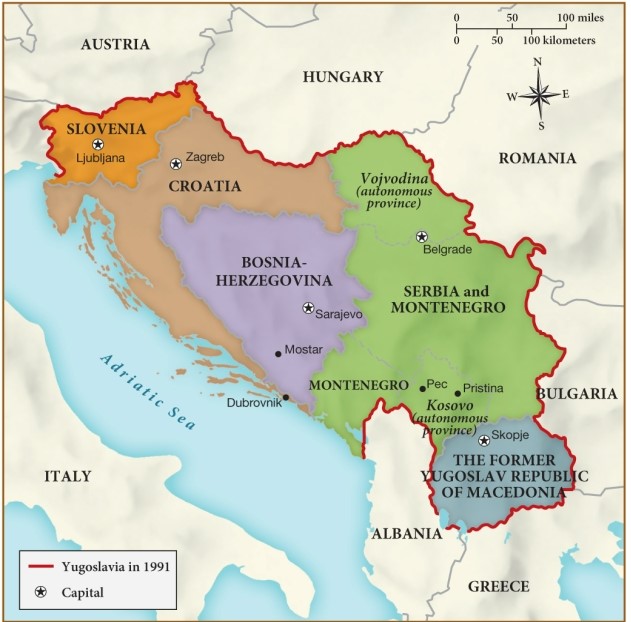
A) nationalism declined as a potent force with the formation of the European Union.
B) the difficult ethnic tensions that emerged as peoples adapted to a communist society.
C) Italy's and Greece's rising role as the peacekeepers of Europe.
D) post-World War I diplomats did not entirely understand ethnic divisions in parts of eastern Europe.
A) nationalism declined as a potent force with the formation of the European Union.
B) the difficult ethnic tensions that emerged as peoples adapted to a communist society.
C) Italy's and Greece's rising role as the peacekeepers of Europe.
D) post-World War I diplomats did not entirely understand ethnic divisions in parts of eastern Europe.
سؤال
سؤال
سؤال
سؤال
سؤال
According to this map, which of the following nations successfully achieved independence from Russia?
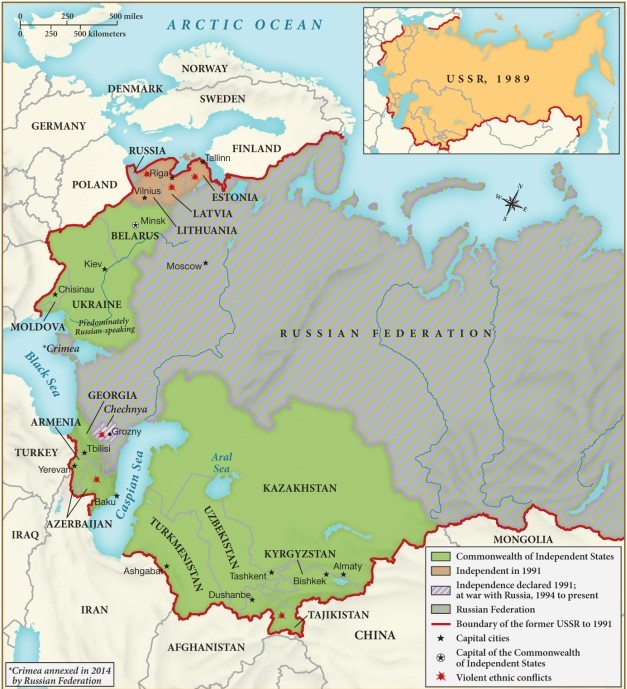
A) Chechnya
B) Latvia
C) Turkey
D) Mongolia
A) Chechnya
B) Latvia
C) Turkey
D) Mongolia
سؤال
سؤال
سؤال
سؤال
سؤال
سؤال
سؤال
سؤال
سؤال
Which statement about the European Union (EU) does this map substantiate?
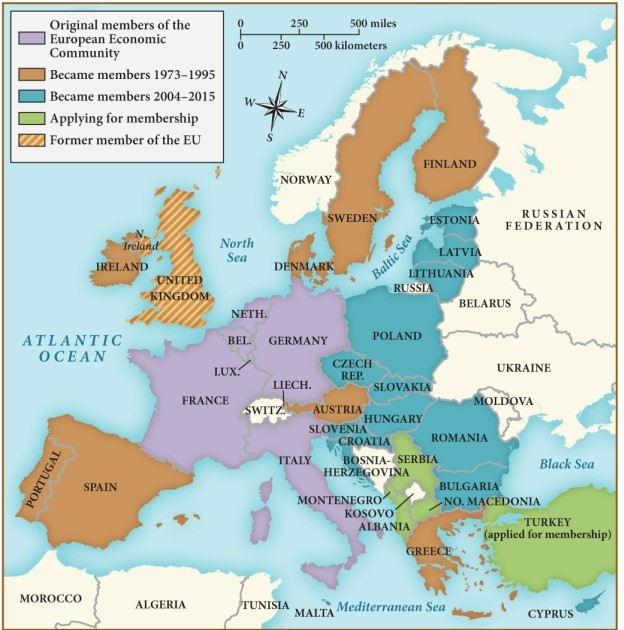
A) By 2021, all independent states of Europe were part of the EU.
B) Some states from the Soviet bloc joined the EU before the fall of the Berlin Wall.
C) Central Europe was the foundational core of the EU.
D) Unification was unsuccessful, and many nations had left the EU by 2021.
A) By 2021, all independent states of Europe were part of the EU.
B) Some states from the Soviet bloc joined the EU before the fall of the Berlin Wall.
C) Central Europe was the foundational core of the EU.
D) Unification was unsuccessful, and many nations had left the EU by 2021.
سؤال
سؤال
سؤال
سؤال
سؤال
سؤال
سؤال
سؤال
سؤال
سؤال
سؤال
سؤال
سؤال
سؤال
سؤال
سؤال
سؤال
سؤال
سؤال
سؤال
سؤال
سؤال
Based on this map, which of the following statements best explains the migration of refugees from Somalia?
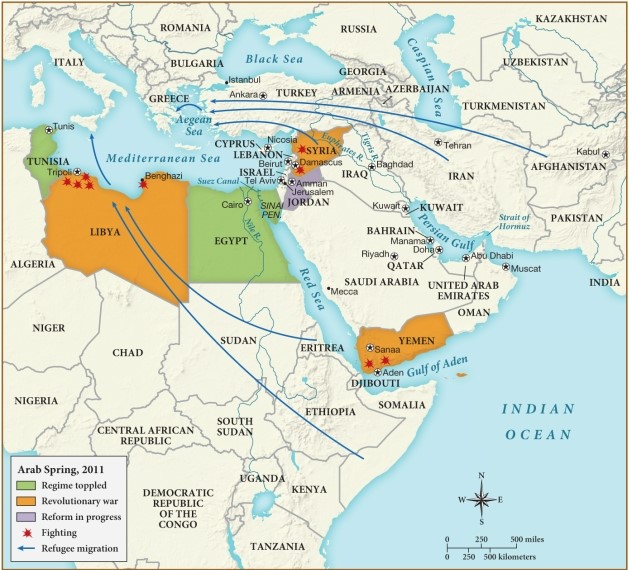
A) Somali refugees migrated north to Egypt, where they boarded planes for western nations like the United Kingdom or the United States.
B) Somali refugees migrated east across the Indian Ocean to seek asylum in India.
C) Somali refugees migrated northwest through war-torn Libya and across the Mediterranean Sea to Europe.
D) Somali refugees migrated northwest to north African states where oppressive regimes have already been toppled.
A) Somali refugees migrated north to Egypt, where they boarded planes for western nations like the United Kingdom or the United States.
B) Somali refugees migrated east across the Indian Ocean to seek asylum in India.
C) Somali refugees migrated northwest through war-torn Libya and across the Mediterranean Sea to Europe.
D) Somali refugees migrated northwest to north African states where oppressive regimes have already been toppled.
سؤال
سؤال
سؤال
سؤال
سؤال
سؤال
سؤال
سؤال
سؤال
سؤال
سؤال
سؤال
According to this map, which nation's economy lags the furthest behind the economy of the United States?
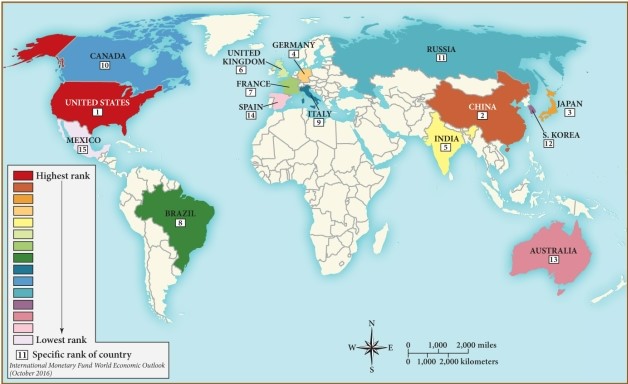
A) India
B) Brazil
C) Russia
D) Mexico
A) India
B) Brazil
C) Russia
D) Mexico

فتح الحزمة
قم بالتسجيل لفتح البطاقات في هذه المجموعة!
Unlock Deck
Unlock Deck
1/65

العب

ملء الشاشة (f)
Deck 29: A New Globalism, 1989 to the Present
1
How did Vladimir Putin come to power in Russia?
Answer would ideally include the following. After the failed Communist coup of 1991, Boris Yeltsin became president and initiated sweeping changes, but he became implicated in corruption scandals. Public disorder and criminal activity worsened, however, and Yeltsin was forced to resign in 1999. He appointed his protégé Vladimir Putin as interim president, and Putin won an election in 2000 after campaigning as a reformer.
2
What were the main difficulties of bringing a market economy to Russia after the collapse of the Soviet Union?
Answer would ideally include the following. The previous Communist leadership had removed the Russian economy from global development, so Russia's industry and its workers' skills were out of date. Inflation soared, and industrial production dropped. Corruption was also rife among politicians, military officers, and bureaucrats. Outside the legitimate economy, organized crime grew powerful, along with tax evasion, bribery, and theft.
3
Describe the arguments made for and against Turkey's admission to the European Union.
Answer would ideally include the following. Greece, a member of the EU and a traditional enemy of Turkey, pushed for the admission of Turkey in 2002 and 2003. Greece argued that Turkey had been a great European power for centuries. It was hoped that the rivalry between Greece and Turkey, which had often been violent, would dissolve once both countries were part of the EU. Greece and Turkey would both gain by this because they would be able to spend less on national defense. A former president of France argued, however, that a predominantly Muslim country could never fit in with the Christian tradition of the EU members. More recently, concerns have been expressed about Turkish president Recep Erdogan's antidemocratic crackdowns on free speech and political opponents.
4
In what ways did economic life in eastern Europe improve, especially after 2000?
فتح الحزمة
افتح القفل للوصول البطاقات البالغ عددها 65 في هذه المجموعة.
فتح الحزمة
k this deck
5
What is global warming, and why is this problem closely linked to large-scale industrial society?
فتح الحزمة
افتح القفل للوصول البطاقات البالغ عددها 65 في هذه المجموعة.
فتح الحزمة
k this deck
6
How did the Palestinian-Israeli dispute change from the 1990s, and how was the conflict related to global terrorism?
فتح الحزمة
افتح القفل للوصول البطاقات البالغ عددها 65 في هذه المجموعة.
فتح الحزمة
k this deck
7
What signs were there that prosperity was becoming more widespread in the twenty-first century?
فتح الحزمة
افتح القفل للوصول البطاقات البالغ عددها 65 في هذه المجموعة.
فتح الحزمة
k this deck
8
How did globalization of the economy affect the West?
فتح الحزمة
افتح القفل للوصول البطاقات البالغ عددها 65 في هذه المجموعة.
فتح الحزمة
k this deck
9
Who was Toni Morrison? What is her significance to global culture in the twentieth and twenty-first centuries?
فتح الحزمة
افتح القفل للوصول البطاقات البالغ عددها 65 في هذه المجموعة.
فتح الحزمة
k this deck
10
What is postmodernism? How is postmodernism presented in the twenty-first century? Define postmodernism in political terms, and provide one example of political postmodernism.
فتح الحزمة
افتح القفل للوصول البطاقات البالغ عددها 65 في هذه المجموعة.
فتح الحزمة
k this deck
11
The former Yugoslavia became a flash point for tension, war, and genocide. Why did this happen, and how successful were attempts to stop it?
فتح الحزمة
افتح القفل للوصول البطاقات البالغ عددها 65 في هذه المجموعة.
فتح الحزمة
k this deck
12
The 1980s and 1990s were a period in which globalization took a number of different forms. Discuss the ways in which technology and economic developments began to blur the borders of nation-states. Although many people saw these developments as decided advantages for society, in what ways did they also make businesses, governments, and individuals more vulnerable?
فتح الحزمة
افتح القفل للوصول البطاقات البالغ عددها 65 في هذه المجموعة.
فتح الحزمة
k this deck
13
What events and the responses to them led terrorism to become the preoccupying concern in international politics between 1990 and 2006? Be sure to balance your essay chronologically.
فتح الحزمة
افتح القفل للوصول البطاقات البالغ عددها 65 في هذه المجموعة.
فتح الحزمة
k this deck
14
Explain the impacts of industrial development and globalization on the population of the world and its health. What disparities are there between more developed nations and those that are less developed? How does globalization contribute to the spread of diseases and viruses? Provide specific examples and discuss how the most recent pandemic particularly impacted the global population.
فتح الحزمة
افتح القفل للوصول البطاقات البالغ عددها 65 في هذه المجموعة.
فتح الحزمة
k this deck
15
Discuss the cultural cross-fertilization that took place between the West and non-Western parts of the world in the late twentieth and early twenty-first centuries. Take special account of literature, language, film, music, and consumer goods.
فتح الحزمة
افتح القفل للوصول البطاقات البالغ عددها 65 في هذه المجموعة.
فتح الحزمة
k this deck
16
Yugoslavia and the Soviet Union fell apart largely due to which groups claiming independence?
A) Political groups
B) Religious groups
C) Ethnic groups
D) Language groups
A) Political groups
B) Religious groups
C) Ethnic groups
D) Language groups
فتح الحزمة
افتح القفل للوصول البطاقات البالغ عددها 65 في هذه المجموعة.
فتح الحزمة
k this deck
17
This map, of the post-cold war fracturing of Yugoslavia, demonstrates
A) nationalism declined as a potent force with the formation of the European Union.
B) the difficult ethnic tensions that emerged as peoples adapted to a communist society.
C) Italy's and Greece's rising role as the peacekeepers of Europe.
D) post-World War I diplomats did not entirely understand ethnic divisions in parts of eastern Europe.
A) nationalism declined as a potent force with the formation of the European Union.
B) the difficult ethnic tensions that emerged as peoples adapted to a communist society.
C) Italy's and Greece's rising role as the peacekeepers of Europe.
D) post-World War I diplomats did not entirely understand ethnic divisions in parts of eastern Europe.
فتح الحزمة
افتح القفل للوصول البطاقات البالغ عددها 65 في هذه المجموعة.
فتح الحزمة
k this deck
18
Which of the following occurred in 1990, after Slobodan Milosevic won the presidency of Serbia and began to claim Serb ascendancy over the Yugoslav federation as a whole?
A) All sides engaged in ethnic cleansing, not only committing acts of genocide but also destroying the cultural heritage of their opponents.
B) Peaceful elections occurred in most of the new states of the federation, although ethnic tensions between Muslims and Christians in Bosnia led to violence.
C) Russian leader Boris Yeltsin pledged his support to the Serbian cause as a means of supporting Slavic nationalism across Europe.
D) Although various ethnic groups wanted to declare their independence, Milosevic was able to unite them under the federation.
A) All sides engaged in ethnic cleansing, not only committing acts of genocide but also destroying the cultural heritage of their opponents.
B) Peaceful elections occurred in most of the new states of the federation, although ethnic tensions between Muslims and Christians in Bosnia led to violence.
C) Russian leader Boris Yeltsin pledged his support to the Serbian cause as a means of supporting Slavic nationalism across Europe.
D) Although various ethnic groups wanted to declare their independence, Milosevic was able to unite them under the federation.
فتح الحزمة
افتح القفل للوصول البطاقات البالغ عددها 65 في هذه المجموعة.
فتح الحزمة
k this deck
19
What did the term ethnic cleansing come to mean in the Balkan wars of the 1990s?
A) Harassment of ethnic minorities in ethnically mixed states like Serbia and Bosnia-Herzegovina as well as job discrimination against Muslims in Christian states
B) A policy of genocide against ethnic minorities in the pursuit of an "ethnically pure" state in a region where an ethnic mix was the norm
C) An attempt to "Christianize" the former Yugoslav federation by forcing Muslim minorities to move to Arab states in the Middle East and North Africa
D) A major renovation of health care services for certain ethnic groups in various states, even as other groups were allowed to languish in terrible conditions
A) Harassment of ethnic minorities in ethnically mixed states like Serbia and Bosnia-Herzegovina as well as job discrimination against Muslims in Christian states
B) A policy of genocide against ethnic minorities in the pursuit of an "ethnically pure" state in a region where an ethnic mix was the norm
C) An attempt to "Christianize" the former Yugoslav federation by forcing Muslim minorities to move to Arab states in the Middle East and North Africa
D) A major renovation of health care services for certain ethnic groups in various states, even as other groups were allowed to languish in terrible conditions
فتح الحزمة
افتح القفل للوصول البطاقات البالغ عددها 65 في هذه المجموعة.
فتح الحزمة
k this deck
20
The global response to the atrocities of the Balkan wars, particularly massacres such as the one at Srebrenica, was generally thought to be
A) far too harsh, as the soldiers who were tried at the International Court of Justice were only following orders.
B) appropriate, as there were peacekeepers on the ground who did the best they could under the circumstances.
C) far too little and too late, as intervention came too late to stop most of the violence, and even the peacekeepers on the ground turned their backs on the atrocities.
D) nonexistent, as most people and governments thought that it was none of their affair and that the Balkan states should just fight to the death.
A) far too harsh, as the soldiers who were tried at the International Court of Justice were only following orders.
B) appropriate, as there were peacekeepers on the ground who did the best they could under the circumstances.
C) far too little and too late, as intervention came too late to stop most of the violence, and even the peacekeepers on the ground turned their backs on the atrocities.
D) nonexistent, as most people and governments thought that it was none of their affair and that the Balkan states should just fight to the death.
فتح الحزمة
افتح القفل للوصول البطاقات البالغ عددها 65 في هذه المجموعة.
فتح الحزمة
k this deck
21
In 1991, a group of antireform hard-liners that included the head of the Soviet secret police attempted a coup in the USSR in response to what event?
A) The Russian parliament's election of Boris Yeltsin as president of the Russian republic
B) Mikhail Gorbachev's decision to further liberalize the Soviet economy and his pronouncement that there was "no alternative to the transition to the market"
C) President Boris Yeltsin's call for the dissolution of the Communist Party
D) Gorbachev and Kohl's agreement that the USSR would completely withdraw its forces from East German soil within the next four years
A) The Russian parliament's election of Boris Yeltsin as president of the Russian republic
B) Mikhail Gorbachev's decision to further liberalize the Soviet economy and his pronouncement that there was "no alternative to the transition to the market"
C) President Boris Yeltsin's call for the dissolution of the Communist Party
D) Gorbachev and Kohl's agreement that the USSR would completely withdraw its forces from East German soil within the next four years
فتح الحزمة
افتح القفل للوصول البطاقات البالغ عددها 65 في هذه المجموعة.
فتح الحزمة
k this deck
22
According to this map, which of the following nations successfully achieved independence from Russia?
A) Chechnya
B) Latvia
C) Turkey
D) Mongolia
A) Chechnya
B) Latvia
C) Turkey
D) Mongolia
فتح الحزمة
افتح القفل للوصول البطاقات البالغ عددها 65 في هذه المجموعة.
فتح الحزمة
k this deck
23
What name was given to the new class of superwealthy Russians who, as allies of President Boris Yeltsin, benefited from the collapse of the Soviet Union?
A) The "new tsars"
B) Russian tigers
C) Oligarchs
D) Yeltsin's cronies
A) The "new tsars"
B) Russian tigers
C) Oligarchs
D) Yeltsin's cronies
فتح الحزمة
افتح القفل للوصول البطاقات البالغ عددها 65 في هذه المجموعة.
فتح الحزمة
k this deck
24
Which of the following Russian leaders declared himself committed to legality by announcing that "democracy is the dictatorship of law"?
A) Mikhail Gorbachev
B) Vladimir Putin
C) Boris Yeltsin
D) Slobodan Milosevic
A) Mikhail Gorbachev
B) Vladimir Putin
C) Boris Yeltsin
D) Slobodan Milosevic
فتح الحزمة
افتح القفل للوصول البطاقات البالغ عددها 65 في هذه المجموعة.
فتح الحزمة
k this deck
25
The demise of the Soviet Union in the 1990s led to both the establishment of new democratic republics in formerly Soviet-controlled territories and
A) the end of NATO, since the threat of nuclear war from the Warsaw Pact nations had ended.
B) increased democracy in other Communist states, most notably China.
C) a dramatic improvement in living conditions for former Soviet citizens, especially with regard to access to jobs and consumer goods.
D) an increase in ethnic conflicts in many of the newly independent states as different ethnic groups struggled for land and power.
A) the end of NATO, since the threat of nuclear war from the Warsaw Pact nations had ended.
B) increased democracy in other Communist states, most notably China.
C) a dramatic improvement in living conditions for former Soviet citizens, especially with regard to access to jobs and consumer goods.
D) an increase in ethnic conflicts in many of the newly independent states as different ethnic groups struggled for land and power.
فتح الحزمة
افتح القفل للوصول البطاقات البالغ عددها 65 في هذه المجموعة.
فتح الحزمة
k this deck
26
How did Russian citizens experience the initial transition to a market economy in the 1990s?
A) The reforms initiated by Gorbachev in the 1980s had already put in place basic free-market structures, which made the transition to a market economy generally smooth.
B) Although there were initial difficulties, by the early 1990s the economy had stabilized and Russians had access to consumer goods and sufficient food supply to live well.
C) Wealthy and middle-class Russians had few problems as their jobs were secure, but the working class experienced difficulties as their jobs became obsolete in the free market.
D) Nearly all Russians experienced deprivation and misery as inflation soared, the food supply disintegrated, and nearly all salaries went unpaid.
A) The reforms initiated by Gorbachev in the 1980s had already put in place basic free-market structures, which made the transition to a market economy generally smooth.
B) Although there were initial difficulties, by the early 1990s the economy had stabilized and Russians had access to consumer goods and sufficient food supply to live well.
C) Wealthy and middle-class Russians had few problems as their jobs were secure, but the working class experienced difficulties as their jobs became obsolete in the free market.
D) Nearly all Russians experienced deprivation and misery as inflation soared, the food supply disintegrated, and nearly all salaries went unpaid.
فتح الحزمة
افتح القفل للوصول البطاقات البالغ عددها 65 في هذه المجموعة.
فتح الحزمة
k this deck
27
Why did Poland and Hungary emerge from the transition to a market economy with less strain than other nations in the former Soviet bloc?
A) Because both countries had revolted against Communist rule, the western bloc was more willing to help them transition to free-market capitalism.
B) Their populations were better educated and had more training in modern technologies such as computers; thus they were better able to adapt to the modern economy.
C) Both countries had adopted some free-market practices early on and had hired advisers to speed the transformation of their economies.
D) Both countries adopted a form of dictatorship to organize their transition to a free-market economy.
A) Because both countries had revolted against Communist rule, the western bloc was more willing to help them transition to free-market capitalism.
B) Their populations were better educated and had more training in modern technologies such as computers; thus they were better able to adapt to the modern economy.
C) Both countries had adopted some free-market practices early on and had hired advisers to speed the transformation of their economies.
D) Both countries adopted a form of dictatorship to organize their transition to a free-market economy.
فتح الحزمة
افتح القفل للوصول البطاقات البالغ عددها 65 في هذه المجموعة.
فتح الحزمة
k this deck
28
Which of the following was a major reason for the brain drain that occurred after the fall of the Soviet empire?
A) The post-Soviet government declared that those who had worked in high posts under communism were not allowed to continue in those positions.
B) Western European states offered more professional opportunities for those with marketable skills.
C) The Russian government wanted to modernize and started insisting on the use of the English language, which many older Russians could not manage.
D) The migrants were mainly composed of those who had supported communism and fled out of fear of reprisals.
A) The post-Soviet government declared that those who had worked in high posts under communism were not allowed to continue in those positions.
B) Western European states offered more professional opportunities for those with marketable skills.
C) The Russian government wanted to modernize and started insisting on the use of the English language, which many older Russians could not manage.
D) The migrants were mainly composed of those who had supported communism and fled out of fear of reprisals.
فتح الحزمة
افتح القفل للوصول البطاقات البالغ عددها 65 في هذه المجموعة.
فتح الحزمة
k this deck
29
In 1994, by the terms of the Maastricht Treaty, the European Community
A) became the European Union.
B) created a common currency, the European Currency Unit (ECU or euro).
C) established formal trade ties with the Commonwealth of Independent States (CIS).
D) accepted Poland, Hungary, and the Czech Republic as member states.
A) became the European Union.
B) created a common currency, the European Currency Unit (ECU or euro).
C) established formal trade ties with the Commonwealth of Independent States (CIS).
D) accepted Poland, Hungary, and the Czech Republic as member states.
فتح الحزمة
افتح القفل للوصول البطاقات البالغ عددها 65 في هذه المجموعة.
فتح الحزمة
k this deck
30
What provoked the North American Free Trade Agreement (NAFTA), which established a free-trade zone of the United States, Canada, and Mexico?
A) The enormous success of the "tiger" economies of the Far East
B) Growing fragmentation following the collapse of the USSR
C) The economic success of-and potential competition from-the European Community
D) Wars and civil strife around the world
A) The enormous success of the "tiger" economies of the Far East
B) Growing fragmentation following the collapse of the USSR
C) The economic success of-and potential competition from-the European Community
D) Wars and civil strife around the world
فتح الحزمة
افتح القفل للوصول البطاقات البالغ عددها 65 في هذه المجموعة.
فتح الحزمة
k this deck
31
Which statement about the European Union (EU) does this map substantiate?
A) By 2021, all independent states of Europe were part of the EU.
B) Some states from the Soviet bloc joined the EU before the fall of the Berlin Wall.
C) Central Europe was the foundational core of the EU.
D) Unification was unsuccessful, and many nations had left the EU by 2021.
A) By 2021, all independent states of Europe were part of the EU.
B) Some states from the Soviet bloc joined the EU before the fall of the Berlin Wall.
C) Central Europe was the foundational core of the EU.
D) Unification was unsuccessful, and many nations had left the EU by 2021.
فتح الحزمة
افتح القفل للوصول البطاقات البالغ عددها 65 في هذه المجموعة.
فتح الحزمة
k this deck
32
Between 2004 and 2007, many of the countries of eastern Europe
A) fell into a deep recession, sending workers abroad to search for employment and economic security.
B) joined the European Union and experienced economic growth and increased purchasing power, allowing their citizens to finally begin enjoying modern consumer goods.
C) attempted to form their own economic and political unit to rival the European Union but with more "socialist values."
D) deeply resented the West for forcing the downfall of the Soviet system and were nostalgic for life under communism.
A) fell into a deep recession, sending workers abroad to search for employment and economic security.
B) joined the European Union and experienced economic growth and increased purchasing power, allowing their citizens to finally begin enjoying modern consumer goods.
C) attempted to form their own economic and political unit to rival the European Union but with more "socialist values."
D) deeply resented the West for forcing the downfall of the Soviet system and were nostalgic for life under communism.
فتح الحزمة
افتح القفل للوصول البطاقات البالغ عددها 65 في هذه المجموعة.
فتح الحزمة
k this deck
33
Which of the following was a consequence of the tremendous worldwide migrations due to decolonization, war, and famine in the 1980s and 1990s?
A) The decline of national identities in favor of transnational ones that incorporated elements of different cultures
B) A rise in the standard of living in Western countries that accepted migrants because they contributed substantially to the tax base
C) The rejection of Western culture by many immigrants who believed that it had brought about the problems that caused them to flee their homes
D) A rise in the use of computer-based distance education, because the host countries had insufficient numbers of teachers to provide for the needs of the new immigrants
A) The decline of national identities in favor of transnational ones that incorporated elements of different cultures
B) A rise in the standard of living in Western countries that accepted migrants because they contributed substantially to the tax base
C) The rejection of Western culture by many immigrants who believed that it had brought about the problems that caused them to flee their homes
D) A rise in the use of computer-based distance education, because the host countries had insufficient numbers of teachers to provide for the needs of the new immigrants
فتح الحزمة
افتح القفل للوصول البطاقات البالغ عددها 65 في هذه المجموعة.
فتح الحزمة
k this deck
34
During the 1990s and early 2000s, growing but unsuccessful demands for autonomy from larger nation-states were made by various ethnic groups, including which of the following?
A) Czechs and Slovaks
B) Nationalists in Spain
C) Croats and Serbs wishing to secede from the Yugoslav state
D) Estonians, Latvians, and Lithuanians
A) Czechs and Slovaks
B) Nationalists in Spain
C) Croats and Serbs wishing to secede from the Yugoslav state
D) Estonians, Latvians, and Lithuanians
فتح الحزمة
افتح القفل للوصول البطاقات البالغ عددها 65 في هذه المجموعة.
فتح الحزمة
k this deck
35
Which of the following terms is used for supranational organizations like charitable foundations, think tanks, or service-based organizations that act independently of governments and greatly influence social, economic, and political policies in the contemporary world?
A) Community foundations
B) Intergovernmental organizations (IGOs)
C) Multinationals
D) Nongovernmental organizations (NGOs)
A) Community foundations
B) Intergovernmental organizations (IGOs)
C) Multinationals
D) Nongovernmental organizations (NGOs)
فتح الحزمة
افتح القفل للوصول البطاقات البالغ عددها 65 في هذه المجموعة.
فتح الحزمة
k this deck
36
French farmer José Bové became known globally for his activism on what issue?
A) The supremacy of free-market capitalism, as he burned Adam Smith's books outside of the former Soviet embassy in Paris
B) The refusal of large pharmaceutical companies to distribute cheap antiretroviral drugs to the poor in Africa to combat the AIDS epidemic
C) The dangers of global development, as he destroyed genetically modified seeds and protested the opening of McDonald's restaurants in France
D) The refusal of the United States to sign the Kyoto Protocols and join the rest of the world in reducing levels of emissions and pollutants
A) The supremacy of free-market capitalism, as he burned Adam Smith's books outside of the former Soviet embassy in Paris
B) The refusal of large pharmaceutical companies to distribute cheap antiretroviral drugs to the poor in Africa to combat the AIDS epidemic
C) The dangers of global development, as he destroyed genetically modified seeds and protested the opening of McDonald's restaurants in France
D) The refusal of the United States to sign the Kyoto Protocols and join the rest of the world in reducing levels of emissions and pollutants
فتح الحزمة
افتح القفل للوصول البطاقات البالغ عددها 65 في هذه المجموعة.
فتح الحزمة
k this deck
37
In the late twentieth century, fossil-fuel pollutants such as those from natural gas, coal, and oil mixed with atmospheric moisture to create what environmental problem?
A) Toxic runoff in rivers and lakes, which contaminated drinking water
B) Acid rain, which was responsible for killing vast areas of forest
C) Rising sea levels, which threatened coastal settlements
D) Chlorofluorocarbons (CFCs), which weakened the ozone layer
A) Toxic runoff in rivers and lakes, which contaminated drinking water
B) Acid rain, which was responsible for killing vast areas of forest
C) Rising sea levels, which threatened coastal settlements
D) Chlorofluorocarbons (CFCs), which weakened the ozone layer
فتح الحزمة
افتح القفل للوصول البطاقات البالغ عددها 65 في هذه المجموعة.
فتح الحزمة
k this deck
38
Rachel Carson's 1962 Silent Spring was which of the following?
A) A key text of the environmental movement that spelled out how technology and industrialization threatened life on earth
B) A detailed critique of the dangers of growing globalization
C) A text that advocated the creation of a new form of musical theatre
D) A text that advocated for the expansion of the civil rights of homosexuals
A) A key text of the environmental movement that spelled out how technology and industrialization threatened life on earth
B) A detailed critique of the dangers of growing globalization
C) A text that advocated the creation of a new form of musical theatre
D) A text that advocated for the expansion of the civil rights of homosexuals
فتح الحزمة
افتح القفل للوصول البطاقات البالغ عددها 65 في هذه المجموعة.
فتح الحزمة
k this deck
39
Which political party was founded in Europe in the late 1970s in response to concerns about the environment and unchecked urban growth?
A) The Ecology Party
B) The Green Party
C) The Environmental Alliance
D) The Defense of Natural Resources Party
A) The Ecology Party
B) The Green Party
C) The Environmental Alliance
D) The Defense of Natural Resources Party
فتح الحزمة
افتح القفل للوصول البطاقات البالغ عددها 65 في هذه المجموعة.
فتح الحزمة
k this deck
40
Which of the following is an example of the measures that European governments undertook in the late twentieth century to address environmental problems?
A) They began developing corn-based ethanol as an alternative fuel source.
B) They stopped using nuclear power in order to prevent toxic nuclear waste from entering the environment.
C) They encouraged more people to start using airplanes as transport in order to avoid automobile emissions.
D) They developed car-free zones in urban centers and added bicycle lanes and pedestrian spaces.
A) They began developing corn-based ethanol as an alternative fuel source.
B) They stopped using nuclear power in order to prevent toxic nuclear waste from entering the environment.
C) They encouraged more people to start using airplanes as transport in order to avoid automobile emissions.
D) They developed car-free zones in urban centers and added bicycle lanes and pedestrian spaces.
فتح الحزمة
افتح القفل للوصول البطاقات البالغ عددها 65 في هذه المجموعة.
فتح الحزمة
k this deck
41
Although many nations signed and ratified the Paris Climate Agreement, an international accord designed to reduce the level of emissions and other pollutants around the world, the promise of cooperation on this issue was stalled when
A) Russia demanded compensation for its industry.
B) Japan refused to sign the accord.
C) the United States, the world's second leading polluter, withdrew from the agreement.
D) African countries demanded concessions in recognition of their weaker economies.
A) Russia demanded compensation for its industry.
B) Japan refused to sign the accord.
C) the United States, the world's second leading polluter, withdrew from the agreement.
D) African countries demanded concessions in recognition of their weaker economies.
فتح الحزمة
افتح القفل للوصول البطاقات البالغ عددها 65 في هذه المجموعة.
فتح الحزمة
k this deck
42
After 1995, the population in Europe
A) grew more slowly than in previous decades.
B) declined sharply because of fewer births.
C) increased rapidly due to immigration.
D) leveled out and stabilized.
A) grew more slowly than in previous decades.
B) declined sharply because of fewer births.
C) increased rapidly due to immigration.
D) leveled out and stabilized.
فتح الحزمة
افتح القفل للوصول البطاقات البالغ عددها 65 في هذه المجموعة.
فتح الحزمة
k this deck
43
By 2020, the earth's human population had reached
A) twelve billion but was expected to decline slightly over the next century.
B) over seven billion and was forecast to remain stable over the next fifty years.
C) nearly eight billion, despite slowing fertility rates.
D) twelve billion, with a substantial decline expected as a result of the emergence of new virulent diseases.
A) twelve billion but was expected to decline slightly over the next century.
B) over seven billion and was forecast to remain stable over the next fifty years.
C) nearly eight billion, despite slowing fertility rates.
D) twelve billion, with a substantial decline expected as a result of the emergence of new virulent diseases.
فتح الحزمة
افتح القفل للوصول البطاقات البالغ عددها 65 في هذه المجموعة.
فتح الحزمة
k this deck
44
In the early twenty-first century, many people in the less-developed world still died from malnutrition and infectious diseases, despite improvements in health care through the increased use of vaccines and Western medicine; in the West,
A) noncontagious illnesses such as heart disease, stroke, cancer, and depression were more lethal.
B) there was no malnutrition, and infectious diseases had been entirely eradicated.
C) despite propaganda attempts to claim otherwise, the health situation was similar to that of the developing world.
D) women were far more likely than men to die of malnutrition and infectious diseases.
A) noncontagious illnesses such as heart disease, stroke, cancer, and depression were more lethal.
B) there was no malnutrition, and infectious diseases had been entirely eradicated.
C) despite propaganda attempts to claim otherwise, the health situation was similar to that of the developing world.
D) women were far more likely than men to die of malnutrition and infectious diseases.
فتح الحزمة
افتح القفل للوصول البطاقات البالغ عددها 65 في هذه المجموعة.
فتح الحزمة
k this deck
45
Acquired immunodeficiency syndrome (AIDS) spread most quickly among the populations of which of the following continents?
A) Europe
B) North America
C) Africa
D) South America
A) Europe
B) North America
C) Africa
D) South America
فتح الحزمة
افتح القفل للوصول البطاقات البالغ عددها 65 في هذه المجموعة.
فتح الحزمة
k this deck
46
What was one of the major reasons that countries in the Southern Hemisphere, with few exceptions, experienced lower standards of living in the 1980s and 1990s?
A) The climate in those countries was unhealthy, and there was no way to improve living standards, even with modern technology.
B) Even though colonial rule and exploitation by northerners had ended, their legacy continued to have a negative impact on living standards.
C) Northern industrial nations did not see any viable markets in the Southern Hemisphere, so they limited the amount of manufactured goods shipped there.
D) The International Monetary Fund refused to lend money to nations in the Southern Hemisphere because the few natural resources there made it unlikely that the countries could ever repay the loans.
A) The climate in those countries was unhealthy, and there was no way to improve living standards, even with modern technology.
B) Even though colonial rule and exploitation by northerners had ended, their legacy continued to have a negative impact on living standards.
C) Northern industrial nations did not see any viable markets in the Southern Hemisphere, so they limited the amount of manufactured goods shipped there.
D) The International Monetary Fund refused to lend money to nations in the Southern Hemisphere because the few natural resources there made it unlikely that the countries could ever repay the loans.
فتح الحزمة
افتح القفل للوصول البطاقات البالغ عددها 65 في هذه المجموعة.
فتح الحزمة
k this deck
47
What barriers did nations in Africa encounter as they attempted economic development?
A) The World Bank and International Monetary Fund refused to lend them money for development projects because their workforce was too ill from contagious diseases.
B) Much of the male labor force had migrated to Europe where there was demand for cheap labor, leaving women and children to struggle to survive.
C) Few Western companies would invest in Africa or send workers there for fear of catching contagious diseases such as malaria, tuberculosis, or AIDS.
D) In addition to struggling with their emergence from colonial rule and economic exploitation by northerners, they experienced drought, famine, and civil war.
A) The World Bank and International Monetary Fund refused to lend them money for development projects because their workforce was too ill from contagious diseases.
B) Much of the male labor force had migrated to Europe where there was demand for cheap labor, leaving women and children to struggle to survive.
C) Few Western companies would invest in Africa or send workers there for fear of catching contagious diseases such as malaria, tuberculosis, or AIDS.
D) In addition to struggling with their emergence from colonial rule and economic exploitation by northerners, they experienced drought, famine, and civil war.
فتح الحزمة
افتح القفل للوصول البطاقات البالغ عددها 65 في هذه المجموعة.
فتح الحزمة
k this deck
48
In the late twentieth and early twenty-first centuries, a new threat to the world economy emerged in the form of
A) a new superpower race between China and the United States.
B) falling fertility rates, resulting in an increasingly elderly population.
C) deadly new contagious diseases, particularly the Ebola virus and severe acute respiratory syndrome (SARS).
D) widespread famine in Africa and South America.
A) a new superpower race between China and the United States.
B) falling fertility rates, resulting in an increasingly elderly population.
C) deadly new contagious diseases, particularly the Ebola virus and severe acute respiratory syndrome (SARS).
D) widespread famine in Africa and South America.
فتح الحزمة
افتح القفل للوصول البطاقات البالغ عددها 65 في هذه المجموعة.
فتح الحزمة
k this deck
49
Large-scale conflict and genocide brought on by ideological factionalism and ethnic antagonisms were particularly devastating to which of the following countries?
A) Somalia, Rwanda, and Sudan
B) Algeria, Egypt, and Libya
C) Zaire, Ivory Coast, and Nigeria
D) Brazil, Chile, and Venezuela
A) Somalia, Rwanda, and Sudan
B) Algeria, Egypt, and Libya
C) Zaire, Ivory Coast, and Nigeria
D) Brazil, Chile, and Venezuela
فتح الحزمة
افتح القفل للوصول البطاقات البالغ عددها 65 في هذه المجموعة.
فتح الحزمة
k this deck
50
Why did the revolutionary Islamic program of leaders like the ayatollah Ruhollah Khomeini have a wide appeal?
A) It promised social benefits to all men and women who followed their political and religious program.
B) It claimed that a strict theocracy would restore the pride and Islamic identity that imperialism had stripped from Middle Eastern men.
C) It promised improved status for women and offered them better access to education and the workforce as well as better opportunities for their children.
D) It argued that everyone should have equal access to oil wealth, which Western imperialists were exploiting, and that only Islam could lead the way to the future.
A) It promised social benefits to all men and women who followed their political and religious program.
B) It claimed that a strict theocracy would restore the pride and Islamic identity that imperialism had stripped from Middle Eastern men.
C) It promised improved status for women and offered them better access to education and the workforce as well as better opportunities for their children.
D) It argued that everyone should have equal access to oil wealth, which Western imperialists were exploiting, and that only Islam could lead the way to the future.
فتح الحزمة
افتح القفل للوصول البطاقات البالغ عددها 65 في هذه المجموعة.
فتح الحزمة
k this deck
51
Although Iraq's president Saddam Hussein attacked Iran in September 1980 primarily for its oil-rich territory, he also
A) wished to avenge the humiliation he felt Iraq had suffered as a result of the policies of Iran's pro-Western government.
B) feared his own country's Shi'ite minority and hoped to heighten their sense of solidarity with Iraq's Sunni majority through a "patriotic" war against non-Arabs.
C) hoped to wrest leadership of the Arab world from Saudi Arabia by conquering an oil-producing non-Arab state.
D) believed he was fulfilling a divine call to resurrect the ancient warrior kingdom of Assyria, which had spanned the territories of modern-day Iraq and Iran.
A) wished to avenge the humiliation he felt Iraq had suffered as a result of the policies of Iran's pro-Western government.
B) feared his own country's Shi'ite minority and hoped to heighten their sense of solidarity with Iraq's Sunni majority through a "patriotic" war against non-Arabs.
C) hoped to wrest leadership of the Arab world from Saudi Arabia by conquering an oil-producing non-Arab state.
D) believed he was fulfilling a divine call to resurrect the ancient warrior kingdom of Assyria, which had spanned the territories of modern-day Iraq and Iran.
فتح الحزمة
افتح القفل للوصول البطاقات البالغ عددها 65 في هذه المجموعة.
فتح الحزمة
k this deck
52
Which of the following militant Islamic groups was initially funded by the United States, China, Saudi Arabia, and Pakistan?
A) The Taliban
B) Hezbollah
C) Al-Qaeda
D) Boko Haram
A) The Taliban
B) Hezbollah
C) Al-Qaeda
D) Boko Haram
فتح الحزمة
افتح القفل للوصول البطاقات البالغ عددها 65 في هذه المجموعة.
فتح الحزمة
k this deck
53
Based on this map, which of the following statements best explains the migration of refugees from Somalia?
A) Somali refugees migrated north to Egypt, where they boarded planes for western nations like the United Kingdom or the United States.
B) Somali refugees migrated east across the Indian Ocean to seek asylum in India.
C) Somali refugees migrated northwest through war-torn Libya and across the Mediterranean Sea to Europe.
D) Somali refugees migrated northwest to north African states where oppressive regimes have already been toppled.
A) Somali refugees migrated north to Egypt, where they boarded planes for western nations like the United Kingdom or the United States.
B) Somali refugees migrated east across the Indian Ocean to seek asylum in India.
C) Somali refugees migrated northwest through war-torn Libya and across the Mediterranean Sea to Europe.
D) Somali refugees migrated northwest to north African states where oppressive regimes have already been toppled.
فتح الحزمة
افتح القفل للوصول البطاقات البالغ عددها 65 في هذه المجموعة.
فتح الحزمة
k this deck
54
The United States declared a "war against terrorism" in response to what event?
A) The discovery of Saddam Hussein's collection of weapons of mass destruction in Iraq, ostensibly to be used to attack the United States and Europe
B) The bombing of subways in Madrid and London by al-Qaeda operatives, under orders of Osama bin Laden, in 2004 and 2005
C) The hijacking of planes on September 11, 2001, by Islamic militants, who flew them into the World Trade Center and the Pentagon, with a fourth plane crashing in Pennsylvania
D) A taped message from Osama bin Laden, broadcast over television networks worldwide, in which he proclaimed "death to all infidels" and swore to carry out horrific violence against the United States
A) The discovery of Saddam Hussein's collection of weapons of mass destruction in Iraq, ostensibly to be used to attack the United States and Europe
B) The bombing of subways in Madrid and London by al-Qaeda operatives, under orders of Osama bin Laden, in 2004 and 2005
C) The hijacking of planes on September 11, 2001, by Islamic militants, who flew them into the World Trade Center and the Pentagon, with a fourth plane crashing in Pennsylvania
D) A taped message from Osama bin Laden, broadcast over television networks worldwide, in which he proclaimed "death to all infidels" and swore to carry out horrific violence against the United States
فتح الحزمة
افتح القفل للوصول البطاقات البالغ عددها 65 في هذه المجموعة.
فتح الحزمة
k this deck
55
The last twenty years of the twentieth century witnessed a momentous shift in economic power and commercial activity from
A) the Atlantic to the Pacific region, making China the second-largest national economy in the world.
B) midsize, nationally based firms in western Europe and the United States to worldwide multinational corporations.
C) national governments to private business interests, especially in the high-tech industries.
D) western Europe to eastern Europe, particularly the newly independent (and in some cases oil-rich) republics of the former Soviet Union.
A) the Atlantic to the Pacific region, making China the second-largest national economy in the world.
B) midsize, nationally based firms in western Europe and the United States to worldwide multinational corporations.
C) national governments to private business interests, especially in the high-tech industries.
D) western Europe to eastern Europe, particularly the newly independent (and in some cases oil-rich) republics of the former Soviet Union.
فتح الحزمة
افتح القفل للوصول البطاقات البالغ عددها 65 في هذه المجموعة.
فتح الحزمة
k this deck
56
South Korea, Taiwan, Singapore, and Hong Kong were popularly called what name for the ferocity of their growth in the 1980s and 1990s?
A) Asian dragons
B) Pacific tsunamis
C) Pan-Asian cyclones
D) Pacific tigers
A) Asian dragons
B) Pacific tsunamis
C) Pan-Asian cyclones
D) Pacific tigers
فتح الحزمة
افتح القفل للوصول البطاقات البالغ عددها 65 في هذه المجموعة.
فتح الحزمة
k this deck
57
Which South African leader began the process of dismantling apartheid and released Nelson Mandela from prison after almost three decades of incarceration?
A) Chimamanda Adichie
B) Dalai Lama
C) F. W. de Klerk
D) Zadie Smith
A) Chimamanda Adichie
B) Dalai Lama
C) F. W. de Klerk
D) Zadie Smith
فتح الحزمة
افتح القفل للوصول البطاقات البالغ عددها 65 في هذه المجموعة.
فتح الحزمة
k this deck
58
The war in Chechnya began when Chechens
A) bought large amounts of military equipment from the United States.
B) declared their independence from Russia.
C) joined the European Community.
D) invaded their neighbor, Ukraine.
A) bought large amounts of military equipment from the United States.
B) declared their independence from Russia.
C) joined the European Community.
D) invaded their neighbor, Ukraine.
فتح الحزمة
افتح القفل للوصول البطاقات البالغ عددها 65 في هذه المجموعة.
فتح الحزمة
k this deck
59
By the end of the twentieth century, some 60 percent of the national income of Egypt, Spain, Mexico, and Pakistan
A) came in the form of United Nations aid.
B) was derived from oil revenues.
C) was sent into the country by migrant laborers working abroad.
D) came from new high-tech industries.
A) came in the form of United Nations aid.
B) was derived from oil revenues.
C) was sent into the country by migrant laborers working abroad.
D) came from new high-tech industries.
فتح الحزمة
افتح القفل للوصول البطاقات البالغ عددها 65 في هذه المجموعة.
فتح الحزمة
k this deck
60
In general, the lives of foreign workers who migrated to Europe in search of jobs
A) represented a drastic improvement over their previous lives in their home countries, as they now had access to education, health care, and good housing.
B) represented a positive improvement from their lives back home, especially in countries with high unemployment, where they were welcomed to do jobs others did not want.
C) were difficult at first, but once they adjusted to the new culture, they easily made new ties with native peoples in Europe.
D) were extremely difficult, as they often lived on the margins of society and were scapegoats for native peoples suffering from economic woes such as unemployment.
A) represented a drastic improvement over their previous lives in their home countries, as they now had access to education, health care, and good housing.
B) represented a positive improvement from their lives back home, especially in countries with high unemployment, where they were welcomed to do jobs others did not want.
C) were difficult at first, but once they adjusted to the new culture, they easily made new ties with native peoples in Europe.
D) were extremely difficult, as they often lived on the margins of society and were scapegoats for native peoples suffering from economic woes such as unemployment.
فتح الحزمة
افتح القفل للوصول البطاقات البالغ عددها 65 في هذه المجموعة.
فتح الحزمة
k this deck
61
In the 1990s, the spread of the Internet and other communications technology
A) compromised U.S. national security, as hackers often gained access to classified information.
B) promoted the growth of a Westernized youth culture in formerly fundamentalist Muslim countries.
C) precipitated a high-tech boom in Southeast Asian countries.
D) promoted the globalization of service industries.
A) compromised U.S. national security, as hackers often gained access to classified information.
B) promoted the growth of a Westernized youth culture in formerly fundamentalist Muslim countries.
C) precipitated a high-tech boom in Southeast Asian countries.
D) promoted the globalization of service industries.
فتح الحزمة
افتح القفل للوصول البطاقات البالغ عددها 65 في هذه المجموعة.
فتح الحزمة
k this deck
62
Zadie Smith wrote compassionately on the lives of mixed-race girls and women in postimperial Britain, rejecting which style that had been traditionally used to convey such stories?
A) Surrealism
B) Hysterical realism
C) Romanticism
D) Classicism
A) Surrealism
B) Hysterical realism
C) Romanticism
D) Classicism
فتح الحزمة
افتح القفل للوصول البطاقات البالغ عددها 65 في هذه المجموعة.
فتح الحزمة
k this deck
63
Why did the culture of the United States become dominant during the late twentieth and early twenty-first centuries?
A) The populations of many nations admired the United States as the pinnacle of economic success and freedom.
B) The United States was better developed and was therefore seen as superior to all others.
C) English was the dominant international language, and the United States was successful in "marketing" its cultural output.
D) Modern cultural media such as films and popular music-and the means of spreading them, including the Internet-started in the United States and thus had the longest history there.
A) The populations of many nations admired the United States as the pinnacle of economic success and freedom.
B) The United States was better developed and was therefore seen as superior to all others.
C) English was the dominant international language, and the United States was successful in "marketing" its cultural output.
D) Modern cultural media such as films and popular music-and the means of spreading them, including the Internet-started in the United States and thus had the longest history there.
فتح الحزمة
افتح القفل للوصول البطاقات البالغ عددها 65 في هذه المجموعة.
فتح الحزمة
k this deck
64
Which of the following concepts, which can be defined as an intense stylistic mixing in the arts without following an elite set of standards, is often applied to the global culture of the late twentieth and early twenty-first centuries?
A) Eclecticism
B) Multiculturalism
C) Globalization
D) Postmodernism
A) Eclecticism
B) Multiculturalism
C) Globalization
D) Postmodernism
فتح الحزمة
افتح القفل للوصول البطاقات البالغ عددها 65 في هذه المجموعة.
فتح الحزمة
k this deck
65
According to this map, which nation's economy lags the furthest behind the economy of the United States?
A) India
B) Brazil
C) Russia
D) Mexico
A) India
B) Brazil
C) Russia
D) Mexico
فتح الحزمة
افتح القفل للوصول البطاقات البالغ عددها 65 في هذه المجموعة.
فتح الحزمة
k this deck
فتح الحزمة
افتح القفل للوصول البطاقات البالغ عددها 65 في هذه المجموعة.






