







 تكلم مع الذكاء الاصطناعي


Deck 6: Are the Laws of Conditioning General
ملء الشاشة (f)

سؤال

سؤال
سؤال
سؤال
سؤال
سؤال
سؤال
سؤال
سؤال
سؤال
سؤال
سؤال
سؤال
سؤال
سؤال
سؤال
سؤال
سؤال
سؤال
سؤال
سؤال
سؤال
سؤال
سؤال
سؤال
سؤال
سؤال
سؤال
سؤال
سؤال
سؤال
سؤال
سؤال
سؤال
سؤال
سؤال
سؤال
سؤال
سؤال
سؤال
سؤال
سؤال
سؤال
سؤال
سؤال
سؤال
سؤال
سؤال
Refer to the figure below. What do the networks best describe?
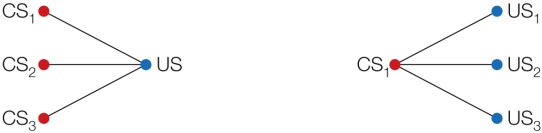
A) The left can describe why effects do not compete for associative strength and the right describes why causes do compete.
B) The right can describe why effects do not compete for associative strength and the left describes why causes do compete.
C) The left describes a focal set while the right describes category learning.
D) When combined, they represent the probabilistic contrast model.
A) The left can describe why effects do not compete for associative strength and the right describes why causes do compete.
B) The right can describe why effects do not compete for associative strength and the left describes why causes do compete.
C) The left describes a focal set while the right describes category learning.
D) When combined, they represent the probabilistic contrast model.
سؤال
سؤال
سؤال
سؤال
سؤال
سؤال
سؤال
سؤال
سؤال
سؤال
سؤال
سؤال
سؤال
سؤال
سؤال
سؤال
سؤال
سؤال
سؤال
سؤال
سؤال
سؤال
سؤال
سؤال
سؤال
سؤال
سؤال
سؤال
سؤال
سؤال
سؤال
سؤال

فتح الحزمة
قم بالتسجيل لفتح البطاقات في هذه المجموعة!
Unlock Deck
Unlock Deck
1/94

العب

ملء الشاشة (f)
Deck 6: Are the Laws of Conditioning General
1
Which aspects of taste aversion learning called into question the generality of the laws of learning?
A) The long interval between the CS and US, and the selective condition ability of CSs
B) The salience of the CS and US, and the rate of learning
C) The nature of the CS-US contingency, and the resistance to extinction
D) The lack of latent inhibition effects, and the exaggerated level of retroactive interference
A) The long interval between the CS and US, and the selective condition ability of CSs
B) The salience of the CS and US, and the rate of learning
C) The nature of the CS-US contingency, and the resistance to extinction
D) The lack of latent inhibition effects, and the exaggerated level of retroactive interference
A
2
A researcher is short on time and funding for her research, so wants to use a learning method in which learning happens quickly. Which would be the best option?
A) Sensory preconditioning
B) Blocking
C) Taste aversion learning
D) Appetitive conditioning
A) Sensory preconditioning
B) Blocking
C) Taste aversion learning
D) Appetitive conditioning
C
3
Which phenomenon shows high selectivity in the nature of the CSs that can become signals for a given US?
A) Higher-order conditioning
B) Priming
C) Latent inhibition learning
D) Taste aversion learning
A) Higher-order conditioning
B) Priming
C) Latent inhibition learning
D) Taste aversion learning
D
4
According to Seligman, learning that has been specially designed by evolution typically takes place
A) with little or no interference effects.
B) even when the stimuli are not very salient.
C) even when attention is minimal.
D) even when few conditioning trials are given.
A) with little or no interference effects.
B) even when the stimuli are not very salient.
C) even when attention is minimal.
D) even when few conditioning trials are given.
فتح الحزمة
افتح القفل للوصول البطاقات البالغ عددها 94 في هذه المجموعة.
فتح الحزمة
k this deck
5
If Seligman is correct in his assumption that learning mechanisms evolved to deal with specific problems faced by organisms, then
A) all learning should take place quickly and forgetting should seldom occur.
B) not all stimuli or responses would be capable of entering into associations with other stimuli and outcomes.
C) the laws of learning should be general because all organisms face the same kinds of problems (e.g., finding food, finding mates, protecting themselves from predation, etc.).
D) the laws of learning should generalize across evolutionarily prepared, unprepared, and contraprepared behaviors.
A) all learning should take place quickly and forgetting should seldom occur.
B) not all stimuli or responses would be capable of entering into associations with other stimuli and outcomes.
C) the laws of learning should be general because all organisms face the same kinds of problems (e.g., finding food, finding mates, protecting themselves from predation, etc.).
D) the laws of learning should generalize across evolutionarily prepared, unprepared, and contraprepared behaviors.
فتح الحزمة
افتح القفل للوصول البطاقات البالغ عددها 94 في هذه المجموعة.
فتح الحزمة
k this deck
6
Analyzing taste aversion's special properties leads to which troubling conclusion regarding the generality of laws of learning?
A) Taste aversion appears just like any other learning phenomenon, thus there is no problem.
B) Learning evolves to deal with specific problems.
C) All learning is species specific, like freezing in rats.
D) A mechanism that solves one problem can be used to solver other problems
A) Taste aversion appears just like any other learning phenomenon, thus there is no problem.
B) Learning evolves to deal with specific problems.
C) All learning is species specific, like freezing in rats.
D) A mechanism that solves one problem can be used to solver other problems
فتح الحزمة
افتح القفل للوصول البطاقات البالغ عددها 94 في هذه المجموعة.
فتح الحزمة
k this deck
7
One of the key issues in the argument about the generality of the laws of learning is whether
A) learning principles generalize completely from species to species.
B) contiguity is the basis for classical and instrumental learning.
C) the laws apply from one learning phenomenon to another.
D) motivation and response production during training are crucial for learning to occur.
A) learning principles generalize completely from species to species.
B) contiguity is the basis for classical and instrumental learning.
C) the laws apply from one learning phenomenon to another.
D) motivation and response production during training are crucial for learning to occur.
فتح الحزمة
افتح القفل للوصول البطاقات البالغ عددها 94 في هذه المجموعة.
فتح الحزمة
k this deck
8
Seligman refers to learning that has been specially designed by evolution to take place easily and quickly as
A) contraprepared.
B) unprepared.
C) prepared.
D) conditionally prepared.
A) contraprepared.
B) unprepared.
C) prepared.
D) conditionally prepared.
فتح الحزمة
افتح القفل للوصول البطاقات البالغ عددها 94 في هذه المجموعة.
فتح الحزمة
k this deck
9
In general, examination of the question "How general are the laws of learning?" has found that
A) the laws of learning are general among organisms with comparable brains (e.g., insects versus reptiles versus amphibians, etc.).
B) the laws of learning are general among particular response categories (e.g., foraging, mate selection, defense).
C) apparent exceptions to the generality of learning laws have actually led to improvement in our theories and expanded support for their generality.
D) there is generality within systems, but not between them.
A) the laws of learning are general among organisms with comparable brains (e.g., insects versus reptiles versus amphibians, etc.).
B) the laws of learning are general among particular response categories (e.g., foraging, mate selection, defense).
C) apparent exceptions to the generality of learning laws have actually led to improvement in our theories and expanded support for their generality.
D) there is generality within systems, but not between them.
فتح الحزمة
افتح القفل للوصول البطاقات البالغ عددها 94 في هذه المجموعة.
فتح الحزمة
k this deck
10
In general, research examining the special characteristics of taste aversion learning have demonstrated that
A) it is most likely to occur when a familiar flavor is paired with illness.
B) it is more likely to occur as the interval between the exposure to a flavor and the onset of illness increases.
C) though acquired especially rapidly, the learning involved in taste aversions is similar to other forms of learning with highly salient and intense stimuli (e.g., fear).
D) unlike other forms of learning, taste aversions show no spontaneous recovery following extinction.
A) it is most likely to occur when a familiar flavor is paired with illness.
B) it is more likely to occur as the interval between the exposure to a flavor and the onset of illness increases.
C) though acquired especially rapidly, the learning involved in taste aversions is similar to other forms of learning with highly salient and intense stimuli (e.g., fear).
D) unlike other forms of learning, taste aversions show no spontaneous recovery following extinction.
فتح الحزمة
افتح القفل للوصول البطاقات البالغ عددها 94 في هذه المجموعة.
فتح الحزمة
k this deck
11
In attempting to explain some characteristics of taste aversion learning, researchers have used the construct of stimulus relevance, which means that
A) the stimuli used in creating taste aversions are unusual and intense.
B) the stimuli are consistent with previous generations' experiences with eating cues and outcomes, associated with the gut defense system.
C) the stimuli persist in sensory memory much longer than the stimuli typically used in classical conditioning studies.
D) the stimuli are highly memorable and not prone to interference effects by other stimuli.
A) the stimuli used in creating taste aversions are unusual and intense.
B) the stimuli are consistent with previous generations' experiences with eating cues and outcomes, associated with the gut defense system.
C) the stimuli persist in sensory memory much longer than the stimuli typically used in classical conditioning studies.
D) the stimuli are highly memorable and not prone to interference effects by other stimuli.
فتح الحزمة
افتح القفل للوصول البطاقات البالغ عددها 94 في هذه المجموعة.
فتح الحزمة
k this deck
12
In taste aversion learning studies, researchers have argued that
A) interference from other relevant stimuli is typically minimal or absent.
B) interference from other stimuli prevents forgetting of the taste aversion.
C) interference is not an important factor regulating the strength of taste aversion learning.
D) interference effects are typically the reason that taste aversions are relatively rare.
A) interference from other relevant stimuli is typically minimal or absent.
B) interference from other stimuli prevents forgetting of the taste aversion.
C) interference is not an important factor regulating the strength of taste aversion learning.
D) interference effects are typically the reason that taste aversions are relatively rare.
فتح الحزمة
افتح القفل للوصول البطاقات البالغ عددها 94 في هذه المجموعة.
فتح الحزمة
k this deck
13
If a second relevant CS is presented after the first CS and before illness occurs, then
A) the subject forms a taste aversion to both CSs.
B) blocking causes the subject to form a taste aversion only to the first CS.
C) interference causes the subject to form a taste aversion more strongly to the second CS.
D) the second CS displaces the first CS from short-term memory and neither CS is associated with illness.
A) the subject forms a taste aversion to both CSs.
B) blocking causes the subject to form a taste aversion only to the first CS.
C) interference causes the subject to form a taste aversion more strongly to the second CS.
D) the second CS displaces the first CS from short-term memory and neither CS is associated with illness.
فتح الحزمة
افتح القفل للوصول البطاقات البالغ عددها 94 في هذه المجموعة.
فتح الحزمة
k this deck
14
Taste aversion learning can occur with a substantial delay between the taste and illness because
A) taste aversion is a special form of learning that follows different rules.
B) taste aversion is normal learning when we consider that no other relevant stimuli are likely to come between the CS and US.
C) the stimuli are especially salient.
D) a trace of a taste can linger for several hours.
A) taste aversion is a special form of learning that follows different rules.
B) taste aversion is normal learning when we consider that no other relevant stimuli are likely to come between the CS and US.
C) the stimuli are especially salient.
D) a trace of a taste can linger for several hours.
فتح الحزمة
افتح القفل للوصول البطاقات البالغ عددها 94 في هذه المجموعة.
فتح الحزمة
k this deck
15
Associations are negligible or absent when a long delay between CS-US pairings is used in most classical conditioning preparations. This finding has been attributed to
A) the use of only a few CS-US pairings.
B) the failure to use highly relevant CSs and USs.
C) latent inhibition effects that occur because of the CSs typically used by researchers.
D) strong interference effects from other stimuli that occur between the CS and US.
A) the use of only a few CS-US pairings.
B) the failure to use highly relevant CSs and USs.
C) latent inhibition effects that occur because of the CSs typically used by researchers.
D) strong interference effects from other stimuli that occur between the CS and US.
فتح الحزمة
افتح القفل للوصول البطاقات البالغ عددها 94 في هذه المجموعة.
فتح الحزمة
k this deck
16
Taste aversion associations are weaker at CS-US pairing intervals beyond 8 hours. Researchers have argued that this finding is due to the subject's
A) forgetting about its experience with the CS.
B) learning that the new taste cue is safe.
C) confusing which stimulus is signaling illness.
D) learning that the stimulus is irrelevant.
A) forgetting about its experience with the CS.
B) learning that the new taste cue is safe.
C) confusing which stimulus is signaling illness.
D) learning that the stimulus is irrelevant.
فتح الحزمة
افتح القفل للوصول البطاقات البالغ عددها 94 في هذه المجموعة.
فتح الحزمة
k this deck
17
One group of subjects in a study is given orange-flavored water and made ill on even days, and given orange-flavored water with a mildly bitter tasted without being made ill on odd days (Group Ob). Another group of subjects is given orange-flavored water on even days and given orange-flavored bitter water on odd days without being made ill (Group ob). A third group of subjects is given bitter water on odd days without being made ill (Group b-only). If learned safety requires an excitatory context or background, then consumption of bitter water alone would be
A) the same in all three groups.
B) greater in Group ob than in b-only.
C) greater in Group ob than in Ob.
D) greater in Group Ob than in Groups ob and b-only.
A) the same in all three groups.
B) greater in Group ob than in b-only.
C) greater in Group ob than in Ob.
D) greater in Group Ob than in Groups ob and b-only.
فتح الحزمة
افتح القفل للوصول البطاقات البالغ عددها 94 في هذه المجموعة.
فتح الحزمة
k this deck
18
If a bitter taste becomes a conditioned inhibitor then
A) it could enhance drinking of a flavor to which an aversion is conditioned.
B) bitter tastes will be much less preferred compared to water.
C) it will still taste hedonically bad.
D) it will be neither preferred nor aversive compared to water.
A) it could enhance drinking of a flavor to which an aversion is conditioned.
B) bitter tastes will be much less preferred compared to water.
C) it will still taste hedonically bad.
D) it will be neither preferred nor aversive compared to water.
فتح الحزمة
افتح القفل للوصول البطاقات البالغ عددها 94 في هذه المجموعة.
فتح الحزمة
k this deck
19
The term "hedonic shift" refers to the
A) changed expectation that results from the shift from acquisition to extinction.
B) shift in expectation when an excitatory contingency is changed to an inhibitory contingency.
C) change in the stimuli used to cue the outcome in multiphase studies.
D) altered palatability of a flavor following its pairing with either pleasant or aversive outcomes.
A) changed expectation that results from the shift from acquisition to extinction.
B) shift in expectation when an excitatory contingency is changed to an inhibitory contingency.
C) change in the stimuli used to cue the outcome in multiphase studies.
D) altered palatability of a flavor following its pairing with either pleasant or aversive outcomes.
فتح الحزمة
افتح القفل للوصول البطاقات البالغ عددها 94 في هذه المجموعة.
فتح الحزمة
k this deck
20
A taste-reactivity test is used to determine the
A) minimum amount of flavor that must be present in order for a subject to detect it.
B) subject's initial preference for or dislike of a particular taste, determined by measuring how much is consumed relative to familiar taste.
C) palatability of a flavor, determined by examining the distinctly different set of behaviors that occur with a taste that is preferred versus a taste that is disliked.
D) strength of a taste preference or aversion, determined by measuring the amount of training that must be given to reverse the preference or aversion.
A) minimum amount of flavor that must be present in order for a subject to detect it.
B) subject's initial preference for or dislike of a particular taste, determined by measuring how much is consumed relative to familiar taste.
C) palatability of a flavor, determined by examining the distinctly different set of behaviors that occur with a taste that is preferred versus a taste that is disliked.
D) strength of a taste preference or aversion, determined by measuring the amount of training that must be given to reverse the preference or aversion.
فتح الحزمة
افتح القفل للوصول البطاقات البالغ عددها 94 في هذه المجموعة.
فتح الحزمة
k this deck
21
Hedonic shift implies that when Eric drinks too much tequila, which he finds delicious, and gets sick, the next time he encounters the flavor
A) he will expect to get sick.
B) he will expect to get somewhat intoxicated.
C) he will not like the taste.
D) he continues drinking until his aversion is extinguished.
A) he will expect to get sick.
B) he will expect to get somewhat intoxicated.
C) he will not like the taste.
D) he continues drinking until his aversion is extinguished.
فتح الحزمة
افتح القفل للوصول البطاقات البالغ عددها 94 في هذه المجموعة.
فتح الحزمة
k this deck
22
Why is the observation that all CRs are unique of value?
A) It argues against the generality of laws of learning, leading to advances in understanding specialization.
B) It suggests that uniqueness is a function of the CS and US and how they occur together, rather than a result of special forms of learning.
C) It makes hedonic shift a prime example of where generality fails.
D) It suggests that not all CRs are a function of expecting the US.
A) It argues against the generality of laws of learning, leading to advances in understanding specialization.
B) It suggests that uniqueness is a function of the CS and US and how they occur together, rather than a result of special forms of learning.
C) It makes hedonic shift a prime example of where generality fails.
D) It suggests that not all CRs are a function of expecting the US.
فتح الحزمة
افتح القفل للوصول البطاقات البالغ عددها 94 في هذه المجموعة.
فتح الحزمة
k this deck
23
Research on taste aversions and preferences has found that this learning may occur robustly because a flavor is either
A) a signal for an aversive outcome or has changed in terms of its appeal or palatability.
B) one that the subject is prepared to learn about or is neutral.
C) memorable and long-lasting or salient but labile.
D) intense, novel, and unique, or weak, familiar, and commonplace.
A) a signal for an aversive outcome or has changed in terms of its appeal or palatability.
B) one that the subject is prepared to learn about or is neutral.
C) memorable and long-lasting or salient but labile.
D) intense, novel, and unique, or weak, familiar, and commonplace.
فتح الحزمة
افتح القفل للوصول البطاقات البالغ عددها 94 في هذه المجموعة.
فتح الحزمة
k this deck
24
Which outcome could suggest that a flavor's hedonic value has shifted, not that the flavor has become a signal for the US?
A) The subject consumes less of a flavor associated with illness and more of a flavor paired with calories.
B) The subject's consumption of a flavor after conditioning is unchanged, despite inflation or devaluation of the training US.
C) The subject's preference for, or dislike of, a flavor is successfully reversed through counter-conditioning.
D) The subject's preference for, or dislike of, a flavor after conditioning is changed when the value of the training US is modified.
A) The subject consumes less of a flavor associated with illness and more of a flavor paired with calories.
B) The subject's consumption of a flavor after conditioning is unchanged, despite inflation or devaluation of the training US.
C) The subject's preference for, or dislike of, a flavor is successfully reversed through counter-conditioning.
D) The subject's preference for, or dislike of, a flavor after conditioning is changed when the value of the training US is modified.
فتح الحزمة
افتح القفل للوصول البطاقات البالغ عددها 94 في هذه المجموعة.
فتح الحزمة
k this deck
25
Is the lack of a US revaluation effect in taste aversion good evidence that the animals may not be learning to expect the US in this paradigm?
A) Yes, changes in the US should affect changes in the response elicited by the CS.
B) No, we do not fully understand the situations in which US revaluation will produce clear changes in responses.
C) Yes, US revaluation effects are easy to see in virtually all other paradigms.
D) No, taste aversion is a form of S-S learning in which such effects are not always expected.
A) Yes, changes in the US should affect changes in the response elicited by the CS.
B) No, we do not fully understand the situations in which US revaluation will produce clear changes in responses.
C) Yes, US revaluation effects are easy to see in virtually all other paradigms.
D) No, taste aversion is a form of S-S learning in which such effects are not always expected.
فتح الحزمة
افتح القفل للوصول البطاقات البالغ عددها 94 في هذه المجموعة.
فتح الحزمة
k this deck
26
In compound potentiation studies, the weaker CS gains _______ associative strength when paired with a second, _______ salient CS.
A) more; more
B) less; more
C) more; less
D) less; less
A) more; more
B) less; more
C) more; less
D) less; less
فتح الحزمة
افتح القفل للوصول البطاقات البالغ عددها 94 في هذه المجموعة.
فتح الحزمة
k this deck
27
Is compound potentiation a counterintuitive result?
A) Yes, a less salient odor CS should block a more salient taste CS when both are presented in compound.
B) No, a less salient odor CS enhances learning about a highly salient light CS when both are presented in compound.
C) Yes, a more salient taste CS should overshadow a less salient odor CS when both are presented in compound.
D) Sometimes, more salient taste CS acts as an occasion-setter, allowing the subject to determine whether or not the odor CS will predict illness.
A) Yes, a less salient odor CS should block a more salient taste CS when both are presented in compound.
B) No, a less salient odor CS enhances learning about a highly salient light CS when both are presented in compound.
C) Yes, a more salient taste CS should overshadow a less salient odor CS when both are presented in compound.
D) Sometimes, more salient taste CS acts as an occasion-setter, allowing the subject to determine whether or not the odor CS will predict illness.
فتح الحزمة
افتح القفل للوصول البطاقات البالغ عددها 94 في هذه المجموعة.
فتح الحزمة
k this deck
28
Travis is listening to new loud music on his phone and accidentally steps into traffic and gets hit by a car. For several days later he experiences fear in seemingly random places-that is, he doesn't know what makes him afraid. What could have happened?
A) Fear acquired in his accident generalized to other stimuli similar to the scene.
B) Some relatively unnoticeable stimuli were potentiated by the loud music at the time of the car accident, and he is randomly encountering these stimuli which now elicit fear.
C) He will only be afraid when listening to the song he was hearing at the time of the accident, so he must be hearing that song.
D) He could have protected against conditioning with external stimuli by chewing strongly flavored gum, a gustatory stimulus, while he crossed the street.
A) Fear acquired in his accident generalized to other stimuli similar to the scene.
B) Some relatively unnoticeable stimuli were potentiated by the loud music at the time of the car accident, and he is randomly encountering these stimuli which now elicit fear.
C) He will only be afraid when listening to the song he was hearing at the time of the accident, so he must be hearing that song.
D) He could have protected against conditioning with external stimuli by chewing strongly flavored gum, a gustatory stimulus, while he crossed the street.
فتح الحزمة
افتح القفل للوصول البطاقات البالغ عددها 94 في هذه المجموعة.
فتح الحزمة
k this deck
29
Compound potentiation observed with tastes and odors is not truly unique. Which statement best supports that assertion?
A) Odor cues are distal stimuli and part of the skin defense system, whereas tastes are proximal cues and part of the gut defense system; thus the two cues do not interfere or compete with each other.
B) A standard within-compound association forms between odor and taste, just like with other stimuli outside the taste aversion paradigm.
C) As a result of evolution and the way organisms' sensory systems integrate input, organisms are "prepared" to learn odor-taste aversions.
D) Any relevant cue is more likely to show potentiation effects when it is very nonsalient and presented in compound with a strongly salient cue.
A) Odor cues are distal stimuli and part of the skin defense system, whereas tastes are proximal cues and part of the gut defense system; thus the two cues do not interfere or compete with each other.
B) A standard within-compound association forms between odor and taste, just like with other stimuli outside the taste aversion paradigm.
C) As a result of evolution and the way organisms' sensory systems integrate input, organisms are "prepared" to learn odor-taste aversions.
D) Any relevant cue is more likely to show potentiation effects when it is very nonsalient and presented in compound with a strongly salient cue.
فتح الحزمة
افتح القفل للوصول البطاقات البالغ عددها 94 في هذه المجموعة.
فتح الحزمة
k this deck
30
Which statement about compound potentiation studies is true?
A) The observation that distal odor versus proximal taste cues activate noncompeting defense systems cannot explain potentiation.
B) Standard within-compound associations explain why potentiation occurs while overshadowing occurs at other times.
C) Potentiation is unique to taste-odor combinations.
D) Salience differences of cues and their differential susceptibility to potentiation indicates that taste aversion learning is unique, as first suspected.
A) The observation that distal odor versus proximal taste cues activate noncompeting defense systems cannot explain potentiation.
B) Standard within-compound associations explain why potentiation occurs while overshadowing occurs at other times.
C) Potentiation is unique to taste-odor combinations.
D) Salience differences of cues and their differential susceptibility to potentiation indicates that taste aversion learning is unique, as first suspected.
فتح الحزمة
افتح القفل للوصول البطاقات البالغ عددها 94 في هذه المجموعة.
فتح الحزمة
k this deck
31
Taste aversion research has led to significant changes in learning theory. Which area has not been influenced substantially by insights resulting from studying the supposedly unique qualities of taste aversion?
A) The influence of evolution on learned behaviors
B) The role of stimulus relevance on learning
C) The role of contextual interference on learning
D) The functional role of conditioning as an adaptation process
A) The influence of evolution on learned behaviors
B) The role of stimulus relevance on learning
C) The role of contextual interference on learning
D) The functional role of conditioning as an adaptation process
فتح الحزمة
افتح القفل للوصول البطاقات البالغ عددها 94 في هذه المجموعة.
فتح الحزمة
k this deck
32
An exaptation is a(n)
A) genetic trait that was not selected for the function it currently performs.
B) exception to, or contradiction of, the natural selection mechanism of evolution.
C) genetic trait that was once beneficial but is no longer necessary or useful.
D) particularly fast form of evolutionary change that occurs when the genetic pool is restricted.
A) genetic trait that was not selected for the function it currently performs.
B) exception to, or contradiction of, the natural selection mechanism of evolution.
C) genetic trait that was once beneficial but is no longer necessary or useful.
D) particularly fast form of evolutionary change that occurs when the genetic pool is restricted.
فتح الحزمة
افتح القفل للوصول البطاقات البالغ عددها 94 في هذه المجموعة.
فتح الحزمة
k this deck
33
An example of exaptation is the genetic transmission of
A) darker pigmentation in the next generation of moths that live in polluted environments.
B) traits that have more than one function (e.g., fur keeps an animal warm but also provides camouflage).
C) a mutation (e.g., coloration, size) that might be adaptive for the next generation.
D) traits that decrease the survival chances in offspring (e.g., missing pigmentation, or albinism).
A) darker pigmentation in the next generation of moths that live in polluted environments.
B) traits that have more than one function (e.g., fur keeps an animal warm but also provides camouflage).
C) a mutation (e.g., coloration, size) that might be adaptive for the next generation.
D) traits that decrease the survival chances in offspring (e.g., missing pigmentation, or albinism).
فتح الحزمة
افتح القفل للوصول البطاقات البالغ عددها 94 في هذه المجموعة.
فتح الحزمة
k this deck
34
General laws of learning could have resulted from evolution if
A) two different behaviors evolved separately but obeyed similar rules because they both solved similar problems.
B) evolution produced specializations or separate mechanisms whenever the structure of problems was different.
C) a genetic feature such as a learning or memory process that was adaptive in solving one problem could not be co-opted to solve other problems.
D) exaptation is prevented by genetic drift.
A) two different behaviors evolved separately but obeyed similar rules because they both solved similar problems.
B) evolution produced specializations or separate mechanisms whenever the structure of problems was different.
C) a genetic feature such as a learning or memory process that was adaptive in solving one problem could not be co-opted to solve other problems.
D) exaptation is prevented by genetic drift.
فتح الحزمة
افتح القفل للوصول البطاقات البالغ عددها 94 في هذه المجموعة.
فتح الحزمة
k this deck
35
Sherry and Schacter (1987) argued that both specializations and generality can be expected from evolution. For this perspective to work,
A) learning mechanisms must respond to the need to remember episodic events.
B) some learning functions must act as an exaptations and be useful in solving other functions.
C) all problems must have a similar underlying function.
D) generality must arise from specific solutions to general problems.
A) learning mechanisms must respond to the need to remember episodic events.
B) some learning functions must act as an exaptations and be useful in solving other functions.
C) all problems must have a similar underlying function.
D) generality must arise from specific solutions to general problems.
فتح الحزمة
افتح القفل للوصول البطاقات البالغ عددها 94 في هذه المجموعة.
فتح الحزمة
k this deck
36
Though not discussed in the textbook, it is an established phenomenon that we are particularly adept at recognizing faces. That is, we learn about them especially well. Which statement best characterizes this ability?
A) Learning about faces is simple because they are analogous and homologous.
B) Learning about faces is consistent with them being encapsulated and processed in a special module.
C) Learning about faces should be unprepared, and thus free from interference.
D) Learning about faces is likely an incremental, habit-based system.
A) Learning about faces is simple because they are analogous and homologous.
B) Learning about faces is consistent with them being encapsulated and processed in a special module.
C) Learning about faces should be unprepared, and thus free from interference.
D) Learning about faces is likely an incremental, habit-based system.
فتح الحزمة
افتح القفل للوصول البطاقات البالغ عددها 94 في هذه المجموعة.
فتح الحزمة
k this deck
37
An example of an analogous trait is the
A) wing of a bird wing and the wing of a bat.
B) flipper of a seal and the wing of a bat.
C) leg and paw of a dog and the leg and foot of a human.
D) talons of a hawk and the claws of a bear.
A) wing of a bird wing and the wing of a bat.
B) flipper of a seal and the wing of a bat.
C) leg and paw of a dog and the leg and foot of a human.
D) talons of a hawk and the claws of a bear.
فتح الحزمة
افتح القفل للوصول البطاقات البالغ عددها 94 في هذه المجموعة.
فتح الحزمة
k this deck
38
An example of a homologous traits is
A) beak of bird and the tail of the duckbill platypus
B) flipper of a seal and the wing of a bat
C) webbed feet of a duck and the fins of a fish
D) tail of a bird and the tail of a beaver
A) beak of bird and the tail of the duckbill platypus
B) flipper of a seal and the wing of a bat
C) webbed feet of a duck and the fins of a fish
D) tail of a bird and the tail of a beaver
فتح الحزمة
افتح القفل للوصول البطاقات البالغ عددها 94 في هذه المجموعة.
فتح الحزمة
k this deck
39
Which of the following does not characterize a module?
A) A module is developed as a result of an organism's experience with the environment.
B) A module is relatively encapsulated, as it tends to be unaffected by other modules.
C) A module is an inherited specialization to deal with a functional incompatibility.
D) A module is an example of a prepared behavior.
A) A module is developed as a result of an organism's experience with the environment.
B) A module is relatively encapsulated, as it tends to be unaffected by other modules.
C) A module is an inherited specialization to deal with a functional incompatibility.
D) A module is an example of a prepared behavior.
فتح الحزمة
افتح القفل للوصول البطاقات البالغ عددها 94 في هذه المجموعة.
فتح الحزمة
k this deck
40
The "relative validity effect" refers to a learning phenomenon in which
A) a stimulus that is valid in one context may not be valid in another context.
B) the first behavior that solves a problem stops the learning process.
C) the stimulus that controls a behavior is the best predictor of that behavior, compared to all other present stimuli.
D) the validity of a stimulus changes from one conditioning trial to the next.
A) a stimulus that is valid in one context may not be valid in another context.
B) the first behavior that solves a problem stops the learning process.
C) the stimulus that controls a behavior is the best predictor of that behavior, compared to all other present stimuli.
D) the validity of a stimulus changes from one conditioning trial to the next.
فتح الحزمة
افتح القفل للوصول البطاقات البالغ عددها 94 في هذه المجموعة.
فتح الحزمة
k this deck
41
The relative validity effect
A) has been demonstrated in a wide array of species, ranging from invertebrates to vertebrates.
B) occurs with appetitive stimuli but not aversive stimuli.
C) occurs only when compound stimuli are used.
D) occurs only when stimuli are equally salient.
A) has been demonstrated in a wide array of species, ranging from invertebrates to vertebrates.
B) occurs with appetitive stimuli but not aversive stimuli.
C) occurs only when compound stimuli are used.
D) occurs only when stimuli are equally salient.
فتح الحزمة
افتح القفل للوصول البطاقات البالغ عددها 94 في هذه المجموعة.
فتح الحزمة
k this deck
42
Which set of stimulus-pairing procedures below should be most likely to result in O's development of associative strength?
A) J+, V+, VO+, O-
B) JO+, VO-
C) JO+, JO-, VO+, VO-
D) JO+, J-, O+, O-
A) J+, V+, VO+, O-
B) JO+, VO-
C) JO+, JO-, VO+, VO-
D) JO+, J-, O+, O-
فتح الحزمة
افتح القفل للوصول البطاقات البالغ عددها 94 في هذه المجموعة.
فتح الحزمة
k this deck
43
Which assumption is most characteristic of ethologists?
A) Learning regulates evolutionary change by enabling the problem solvers of the species to leave offspring.
B) Evolution and learning are mutually exclusive processes for adaptation.
C) Evolution and learning both result in adaptation, but evolution is more functional because behavior can be inherited.
D) Learning refines an animal's inherited behaviors and predispositions.
A) Learning regulates evolutionary change by enabling the problem solvers of the species to leave offspring.
B) Evolution and learning are mutually exclusive processes for adaptation.
C) Evolution and learning both result in adaptation, but evolution is more functional because behavior can be inherited.
D) Learning refines an animal's inherited behaviors and predispositions.
فتح الحزمة
افتح القفل للوصول البطاقات البالغ عددها 94 في هذه المجموعة.
فتح الحزمة
k this deck
44
While researchers have demonstrated a number of classic learning phenomena in honeybees, the failure to readily find evidence of _______ in honeybees raises the question of whether all the laws of learning in vertebrates apply to invertebrates.
A) negative contrast effects
B) blocking
C) conditioned inhibition
D) compound potentiation
A) negative contrast effects
B) blocking
C) conditioned inhibition
D) compound potentiation
فتح الحزمة
افتح القفل للوصول البطاقات البالغ عددها 94 في هذه المجموعة.
فتح الحزمة
k this deck
45
Which example illustrates a successive negative contrast effect?
A) You are painting a room and run out of paint. You go to the paint store but forget the paint chip and accidentally purchase a lighter shade of the paint than wanted.
B) Meghan has always been paid $15 an hour for working in Dave's Diner and is happy. Travis, on the other hand, used to make $20 an hour at Mark's Place, but now makes $15 an hour at Dave's Diner. Travis feels cheated making the same amount as Meghan.
C) You are new to living on your own and to cooking. You prepare a meal with meat that is one day past the "sell by" date but experience no negative side effects. The next time you prepare a meal that is older than the "sell by" date, you become ill.
D) For ten years, employees at a company have pressed 9 to access an outside telephone line, but occasionally they have dialed 911 by mistake. After ten years the company changes its procedure, so that employees have to dial 7 for an outside line.
A) You are painting a room and run out of paint. You go to the paint store but forget the paint chip and accidentally purchase a lighter shade of the paint than wanted.
B) Meghan has always been paid $15 an hour for working in Dave's Diner and is happy. Travis, on the other hand, used to make $20 an hour at Mark's Place, but now makes $15 an hour at Dave's Diner. Travis feels cheated making the same amount as Meghan.
C) You are new to living on your own and to cooking. You prepare a meal with meat that is one day past the "sell by" date but experience no negative side effects. The next time you prepare a meal that is older than the "sell by" date, you become ill.
D) For ten years, employees at a company have pressed 9 to access an outside telephone line, but occasionally they have dialed 911 by mistake. After ten years the company changes its procedure, so that employees have to dial 7 for an outside line.
فتح الحزمة
افتح القفل للوصول البطاقات البالغ عددها 94 في هذه المجموعة.
فتح الحزمة
k this deck
46
In category learning, subjects learn
A) to identify which features are crucial to sorting items into groups.
B) about which variables produce changes in other variables.
C) about the value of different outcomes as a function of their past experiences with outcomes.
D) to confront their preconceptions by being presented with information that conflicts with their expectations.
A) to identify which features are crucial to sorting items into groups.
B) about which variables produce changes in other variables.
C) about the value of different outcomes as a function of their past experiences with outcomes.
D) to confront their preconceptions by being presented with information that conflicts with their expectations.
فتح الحزمة
افتح القفل للوصول البطاقات البالغ عددها 94 في هذه المجموعة.
فتح الحزمة
k this deck
47
In causal learning, subjects learn
A) to identify which features are crucial to sorting items into groups.
B) to identify the conditions which must occur before they can conclude that one variable produces changes in another variable.
C) about the value of different outcomes as a function of their past experiences with outcomes.
D) when a behavior should be performed and when it should be inhibited.
A) to identify which features are crucial to sorting items into groups.
B) to identify the conditions which must occur before they can conclude that one variable produces changes in another variable.
C) about the value of different outcomes as a function of their past experiences with outcomes.
D) when a behavior should be performed and when it should be inhibited.
فتح الحزمة
افتح القفل للوصول البطاقات البالغ عددها 94 في هذه المجموعة.
فتح الحزمة
k this deck
48
Refer to the figure below. What do the networks best describe?
A) The left can describe why effects do not compete for associative strength and the right describes why causes do compete.
B) The right can describe why effects do not compete for associative strength and the left describes why causes do compete.
C) The left describes a focal set while the right describes category learning.
D) When combined, they represent the probabilistic contrast model.
A) The left can describe why effects do not compete for associative strength and the right describes why causes do compete.
B) The right can describe why effects do not compete for associative strength and the left describes why causes do compete.
C) The left describes a focal set while the right describes category learning.
D) When combined, they represent the probabilistic contrast model.
فتح الحزمة
افتح القفل للوصول البطاقات البالغ عددها 94 في هذه المجموعة.
فتح الحزمة
k this deck
49
Learning theorists have researched the application of models of classical conditioning to both categorical and causal learning. Why?
A) Learning theorists treat effects that challenge the generality of laws of learning as opportunities to improve them.
B) Research demonstrating the ability to generalize the laws of learning from invertebrates to vertebrates has led psychologists to believe that it is possible to develop a single theory that will explain all learning phenomena.
C) The apparent differences between classical and instrumental conditioning have recently been demonstrated to be minimal.
D) Psychologists of human learning and memory have agreed that classical conditioning models provide parsimonious explanations of complex as well as simple forms of learning.
A) Learning theorists treat effects that challenge the generality of laws of learning as opportunities to improve them.
B) Research demonstrating the ability to generalize the laws of learning from invertebrates to vertebrates has led psychologists to believe that it is possible to develop a single theory that will explain all learning phenomena.
C) The apparent differences between classical and instrumental conditioning have recently been demonstrated to be minimal.
D) Psychologists of human learning and memory have agreed that classical conditioning models provide parsimonious explanations of complex as well as simple forms of learning.
فتح الحزمة
افتح القفل للوصول البطاقات البالغ عددها 94 في هذه المجموعة.
فتح الحزمة
k this deck
50
In a connectionist model, the CS and US can be analogous to
A) instructions and feedback.
B) priming and potentiation.
C) practice effects and actual training effects.
D) features and categories, or causes and effects.
A) instructions and feedback.
B) priming and potentiation.
C) practice effects and actual training effects.
D) features and categories, or causes and effects.
فتح الحزمة
افتح القفل للوصول البطاقات البالغ عددها 94 في هذه المجموعة.
فتح الحزمة
k this deck
51
A connectionist model assumes that on each learning trial,
A) causal power is replaced with associative strength.
B) the strength of a connection between nodes representing features and categories can be updated by same laws that govern classical conditioning.
C) once learning has occurred, causal power takes over to determine the final output.
D) when multiple features are activated they will produce blocking, potentiation, inhibition, and other standard learning phenomena.
A) causal power is replaced with associative strength.
B) the strength of a connection between nodes representing features and categories can be updated by same laws that govern classical conditioning.
C) once learning has occurred, causal power takes over to determine the final output.
D) when multiple features are activated they will produce blocking, potentiation, inhibition, and other standard learning phenomena.
فتح الحزمة
افتح القفل للوصول البطاقات البالغ عددها 94 في هذه المجموعة.
فتح الحزمة
k this deck
52
Which is a correct definition of catastrophic interference in a connectionist model?
A) The limitation on the number of nodes that can be activated simultaneously according to the number of features being processed
B) The elimination or destruction of feature node-category node connections when new information is learned involving those nodes
C) The blocking of a substantial number of nearby feature node-category node connections when other feature node-category node connections are activated
D) The tendency for faulty connections to develop as the number of simultaneously activated feature nodes and category nodes increases
A) The limitation on the number of nodes that can be activated simultaneously according to the number of features being processed
B) The elimination or destruction of feature node-category node connections when new information is learned involving those nodes
C) The blocking of a substantial number of nearby feature node-category node connections when other feature node-category node connections are activated
D) The tendency for faulty connections to develop as the number of simultaneously activated feature nodes and category nodes increases
فتح الحزمة
افتح القفل للوصول البطاقات البالغ عددها 94 في هذه المجموعة.
فتح الحزمة
k this deck
53
Which statement about a connectionist model is false?
A) The connectionist model assumes that a given node representing a feature can be connected to multiple nodes representing categories and that a given category node can be connected to multiple different feature nodes.
B) Networks may contain a layer of "hidden units" that enable particular compounds of feature nodes to predict something different from either single inputs or inputs from other feature compounds.
C) The most efficient connectionist models assume that a novel "configural input" is formed to represent each unique set of feature compounds
D) Connectionist models that are similar to the Rescorla-Wagner model cannot predict the extraction of a rule that describes a general outcome when the subject has merely been exposed to a series of learning trials.
A) The connectionist model assumes that a given node representing a feature can be connected to multiple nodes representing categories and that a given category node can be connected to multiple different feature nodes.
B) Networks may contain a layer of "hidden units" that enable particular compounds of feature nodes to predict something different from either single inputs or inputs from other feature compounds.
C) The most efficient connectionist models assume that a novel "configural input" is formed to represent each unique set of feature compounds
D) Connectionist models that are similar to the Rescorla-Wagner model cannot predict the extraction of a rule that describes a general outcome when the subject has merely been exposed to a series of learning trials.
فتح الحزمة
افتح القفل للوصول البطاقات البالغ عددها 94 في هذه المجموعة.
فتح الحزمة
k this deck
54
What have we learned about backward blocking through the extension of theories derived from animal learning?
A) Backward blocking is only demonstrated when subjects extract a rule instead of learning a simple association.
B) Humans demonstrate backward blocking effects, but some non-human animals show backward blocking only when the stimuli are biologically significant.
C) Existing animal conditioning models cannot explain backward blocking effects.
D) Backward blocking can occur when people learn about remembered events.
A) Backward blocking is only demonstrated when subjects extract a rule instead of learning a simple association.
B) Humans demonstrate backward blocking effects, but some non-human animals show backward blocking only when the stimuli are biologically significant.
C) Existing animal conditioning models cannot explain backward blocking effects.
D) Backward blocking can occur when people learn about remembered events.
فتح الحزمة
افتح القفل للوصول البطاقات البالغ عددها 94 في هذه المجموعة.
فتح الحزمة
k this deck
55
The probabilistic contrast model, which can explain backward blocking, ignores something that is critical in other models of learning. What is missing?
A) The ability to explain simple forward blocking.
B) The ability to explain conditioned inhibition.
C) The ability to account for trial order effects.
D) The ability to explain latent inhibition.
A) The ability to explain simple forward blocking.
B) The ability to explain conditioned inhibition.
C) The ability to account for trial order effects.
D) The ability to explain latent inhibition.
فتح الحزمة
افتح القفل للوصول البطاقات البالغ عددها 94 في هذه المجموعة.
فتح الحزمة
k this deck
56
Challenges to learning theory produced by backward blocking
A) pushed the majority of learning theory towards connectionist modeling.
B) expanded learning theory to deal with learning about stimuli that aren't physically present.
C) led to a decline in learning theory and an increase in the application of models from cognitive science.
D) had practically little impact once the challenges were solved
A) pushed the majority of learning theory towards connectionist modeling.
B) expanded learning theory to deal with learning about stimuli that aren't physically present.
C) led to a decline in learning theory and an increase in the application of models from cognitive science.
D) had practically little impact once the challenges were solved
فتح الحزمة
افتح القفل للوصول البطاقات البالغ عددها 94 في هذه المجموعة.
فتح الحزمة
k this deck
57
The Perruchet effect is seen as a challenge for accounts of learning based on
A) probabilistic contrast.
B) models such as Rescorla-Wagner.
C) propositional reasoning.
D) connectionist modeling.
A) probabilistic contrast.
B) models such as Rescorla-Wagner.
C) propositional reasoning.
D) connectionist modeling.
فتح الحزمة
افتح القفل للوصول البطاقات البالغ عددها 94 في هذه المجموعة.
فتح الحزمة
k this deck
58
Analyzing the classical stereotype of young ladies stating that they like clean-cut, well- mannered men, yet actually date the "bad boy," shows it to be most similar to
A) backward blocking.
B) taste-odor potentiation.
C) Perruchet effect.
D) category learning.
A) backward blocking.
B) taste-odor potentiation.
C) Perruchet effect.
D) category learning.
فتح الحزمة
افتح القفل للوصول البطاقات البالغ عددها 94 في هذه المجموعة.
فتح الحزمة
k this deck
59
Which phenomenon or class of phenomena presents the most current challenges to conditioning theories?
A) Backward blocking
B) Propositional reasoning and causal power
C) The ability to learn about stimuli in their A2 state
D) That effects compete, but not causes
A) Backward blocking
B) Propositional reasoning and causal power
C) The ability to learn about stimuli in their A2 state
D) That effects compete, but not causes
فتح الحزمة
افتح القفل للوصول البطاقات البالغ عددها 94 في هذه المجموعة.
فتح الحزمة
k this deck
60
Explain Seligman's ideas on preparedness, and evaluate the challenges they pose to the
assumption that there is generality of learning laws.
assumption that there is generality of learning laws.
فتح الحزمة
افتح القفل للوصول البطاقات البالغ عددها 94 في هذه المجموعة.
فتح الحزمة
k this deck
61
Describe three characteristics of taste aversion learning that caused researchers to question the generality of the laws of learning and how they differ from other conditioning phenomena.
فتح الحزمة
افتح القفل للوصول البطاقات البالغ عددها 94 في هذه المجموعة.
فتح الحزمة
k this deck
62
In taste aversion learning studies, which training procedures are likely to produce learned safety and which are likely to produce latent inhibition? Indicate how you could demonstrate whether learned safety or latent inhibition occurred in a taste aversion study.
فتح الحزمة
افتح القفل للوصول البطاقات البالغ عددها 94 في هذه المجموعة.
فتح الحزمة
k this deck
63
What is a "safe" taste, and how might you make a taste "safe" for a chemotherapy patient whose therapy-induced illness causes flavor aversions?
فتح الحزمة
افتح القفل للوصول البطاقات البالغ عددها 94 في هذه المجموعة.
فتح الحزمة
k this deck
64
What are the effects of US reevaluation in taste aversion, and what ideas justify the conclusion that they are of limited use in arguing that taste aversion is special.
فتح الحزمة
افتح القفل للوصول البطاقات البالغ عددها 94 في هذه المجموعة.
فتح الحزمة
k this deck
65
Discuss why taste-odor potentiation was considered a challenge to generality, and evaluate the strength of that challenge.
فتح الحزمة
افتح القفل للوصول البطاقات البالغ عددها 94 في هذه المجموعة.
فتح الحزمة
k this deck
66
Identify a trait, not discussed in the textbook or in class that might be an exaptation and defend your answer.
فتح الحزمة
افتح القفل للوصول البطاقات البالغ عددها 94 في هذه المجموعة.
فتح الحزمة
k this deck
67
Discuss how evolution can lead to both adaptive specialization and general learning laws. Support your answer with examples not used in the textbook or in class.
فتح الحزمة
افتح القفل للوصول البطاقات البالغ عددها 94 في هذه المجموعة.
فتح الحزمة
k this deck
68
Describe what a module is and how specialization and generalization can result from them.
فتح الحزمة
افتح القفل للوصول البطاقات البالغ عددها 94 في هذه المجموعة.
فتح الحزمة
k this deck
69
What common learning phenomenon has yet to be demonstrated in honeybees? Discuss whether this failure is a challenge to learning theory.
فتح الحزمة
افتح القفل للوصول البطاقات البالغ عددها 94 في هذه المجموعة.
فتح الحزمة
k this deck
70
List five conditioning phenomena that have been demonstrated in honeybees.
فتح الحزمة
افتح القفل للوصول البطاقات البالغ عددها 94 في هذه المجموعة.
فتح الحزمة
k this deck
71
Why have learning psychologists attempted to use models of conditioning to explain category and causal learning?
فتح الحزمة
افتح القفل للوصول البطاقات البالغ عددها 94 في هذه المجموعة.
فتح الحزمة
k this deck
72
Consider the hypothetical study below, in which subjects experience the following types of training trials:
P1 ( LT+, L-, T-) Light + Tone = food, Light = no food, Tone = no food
P2 (B+, A+, BA-) Buzzer = food, Air puff = food, Buzzer + Air puff = no food
P3 (S+, F+, RC-) Lemon scent = food, Flashing light = food, Rose scent + Click = no food
Predict how subjects would respond in the test phase if they have learned a simple association, versus how they would respond if they had learned a rule, when the following comparisons are made:
1. Lemon scent + Flashing light versus Lemon scent only, Flashing light only
2. Rose scent + Click versus Rose scent only, Pulsed tone only
P1 ( LT+, L-, T-) Light + Tone = food, Light = no food, Tone = no food
P2 (B+, A+, BA-) Buzzer = food, Air puff = food, Buzzer + Air puff = no food
P3 (S+, F+, RC-) Lemon scent = food, Flashing light = food, Rose scent + Click = no food
Predict how subjects would respond in the test phase if they have learned a simple association, versus how they would respond if they had learned a rule, when the following comparisons are made:
1. Lemon scent + Flashing light versus Lemon scent only, Flashing light only
2. Rose scent + Click versus Rose scent only, Pulsed tone only
فتح الحزمة
افتح القفل للوصول البطاقات البالغ عددها 94 في هذه المجموعة.
فتح الحزمة
k this deck
73
Describe the assumptions of the probabilistic contrast model and how it can explain backward blocking effects. Then contrast this explanation with Dickinson & Burke's 1996 modification of Wagner's SOP theory.
فتح الحزمة
افتح القفل للوصول البطاقات البالغ عددها 94 في هذه المجموعة.
فتح الحزمة
k this deck
74
You have a blocking scenario set up where some arbitrary cue (A) predicts an outcome (+). In a second phase, cue A and arbitrary cue B together predict the outcome. How would you describe or present the events in your task to participants to obtain blocking, and how would you describe it to prevent blocking?
فتح الحزمة
افتح القفل للوصول البطاقات البالغ عددها 94 في هذه المجموعة.
فتح الحزمة
k this deck
75
Which phenomenon contains effects that appear inconsistent with the assumption that the laws of learning are general?
A) Taste aversion learning
B) Blocking
C) Relative validity effects
D) Latent inhibition learning
A) Taste aversion learning
B) Blocking
C) Relative validity effects
D) Latent inhibition learning
فتح الحزمة
افتح القفل للوصول البطاقات البالغ عددها 94 في هذه المجموعة.
فتح الحزمة
k this deck
76
According to Seligman, when evolution does not favor the learning of an association, that association is
A) contraprepared.
B) undisposed.
C) prepared.
D) conditionally prepared.
A) contraprepared.
B) undisposed.
C) prepared.
D) conditionally prepared.
فتح الحزمة
افتح القفل للوصول البطاقات البالغ عددها 94 في هذه المجموعة.
فتح الحزمة
k this deck
77
Which of the following was not a special characteristic that appeared to make taste aversion learning a unique form of learning?
A) Learning that was strong after just one CS-US pairing
B) Learning that was strong even when delay or trace conditioning procedures were used
C) Learning that prevented or minimized extinction effects and spontaneous recovery
D) Learning that was determined by the qualitative features of the CS
A) Learning that was strong after just one CS-US pairing
B) Learning that was strong even when delay or trace conditioning procedures were used
C) Learning that prevented or minimized extinction effects and spontaneous recovery
D) Learning that was determined by the qualitative features of the CS
فتح الحزمة
افتح القفل للوصول البطاقات البالغ عددها 94 في هذه المجموعة.
فتح الحزمة
k this deck
78
Learning can sometimes occur with an unusually long delay between stimuli, particularly in taste aversion, which was a problem for the generality of the laws of learning. This problem was mediated by which observation?
A) Under some conditions taste and illness are no more associable than a taste and shock.
B) Taste aversion learning is less susceptible to latent inhibition than other forms of learning.
C) There are fewer relevant interfering stimuli that can occur between a taste and an illness than between most other CS's and US's.
D) Rats that remain in a maze during a long delay before receiving the reward learn surprisingly well.
A) Under some conditions taste and illness are no more associable than a taste and shock.
B) Taste aversion learning is less susceptible to latent inhibition than other forms of learning.
C) There are fewer relevant interfering stimuli that can occur between a taste and an illness than between most other CS's and US's.
D) Rats that remain in a maze during a long delay before receiving the reward learn surprisingly well.
فتح الحزمة
افتح القفل للوصول البطاقات البالغ عددها 94 في هذه المجموعة.
فتح الحزمة
k this deck
79
Research has shown that learned safety to taste cues is analogous to
A) conditioned inhibition, because a safe cue can partially nullify a dangerous one.
B) conditioned excitation, because safety is an active process that induces drinking.
C) latent inhibition, because it is difficult to make a latently inhibited flavor dangerous.
D) habituation, because a safe cue has to be one that was once dangerous.
A) conditioned inhibition, because a safe cue can partially nullify a dangerous one.
B) conditioned excitation, because safety is an active process that induces drinking.
C) latent inhibition, because it is difficult to make a latently inhibited flavor dangerous.
D) habituation, because a safe cue has to be one that was once dangerous.
فتح الحزمة
افتح القفل للوصول البطاقات البالغ عددها 94 في هذه المجموعة.
فتح الحزمة
k this deck
80
Hedonic shift refers to
A) a change in the type of outcome associated with a CS (e.g., aversive to appetitive) during discrimination training.
B) a change in the value or appeal of a taste as a result of its being paired with a pleasant or unpleasant outcome.
C) the reduction in preference for a given taste that occurs from extensive exposure to that taste and no opportunity to experience other tastes.
D) response interaction or competition that occurs when appetitive and aversive motivation is used in the same group of subjects.
A) a change in the type of outcome associated with a CS (e.g., aversive to appetitive) during discrimination training.
B) a change in the value or appeal of a taste as a result of its being paired with a pleasant or unpleasant outcome.
C) the reduction in preference for a given taste that occurs from extensive exposure to that taste and no opportunity to experience other tastes.
D) response interaction or competition that occurs when appetitive and aversive motivation is used in the same group of subjects.
فتح الحزمة
افتح القفل للوصول البطاقات البالغ عددها 94 في هذه المجموعة.
فتح الحزمة
k this deck
فتح الحزمة
افتح القفل للوصول البطاقات البالغ عددها 94 في هذه المجموعة.






