







 تكلم مع الذكاء الاصطناعي


Deck 15: Asteroids, Comets, and Impacts
ملء الشاشة (f)

سؤال

سؤال
سؤال
سؤال
سؤال
سؤال
سؤال
سؤال
سؤال
سؤال
سؤال
سؤال
سؤال
سؤال
سؤال
سؤال
سؤال
سؤال
سؤال
سؤال
سؤال
سؤال
سؤال
سؤال
سؤال
سؤال
What is unusual about the asteroid Mathilde, which was studied and photographed by the NEAR spacecraft (See Figure 15-7 of Universe, 11th ed.)?
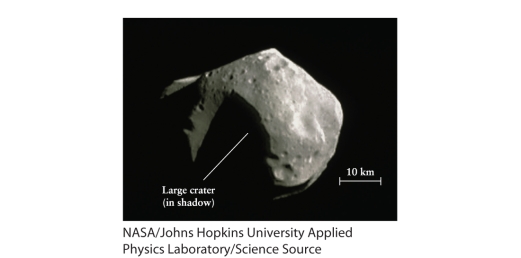
A)It has almost no craters visible anywhere on its surface.
B)It has a much higher mass for its volume than any other known asteroid.
C)It is not much denser than water.
D)It has a very bright surface, possibly caused by fresh material thrown out by impacts.
A)It has almost no craters visible anywhere on its surface.
B)It has a much higher mass for its volume than any other known asteroid.
C)It is not much denser than water.
D)It has a very bright surface, possibly caused by fresh material thrown out by impacts.
سؤال
سؤال
سؤال
سؤال
سؤال
سؤال
سؤال
سؤال
سؤال
Asteroids should be able to remain stably trapped at the stable Lagrange points of the Earth-Sun system (See Figure 15-14 of Universe, 11th ed.), provided they are NOT subjected to other, stronger, gravitational influences. As a test of this stability, calculate how strong Jupiter's gravity is on a mass at Earth's stable Lagrange points (when Jupiter is closest to them) compared to the strength of Earth's gravity on the same mass at the same points. (You will need to use Newton's law of gravitation; it will also help to draw a diagram.) Compared to Earth's gravitational force at these points, Jupiter's gravity is:
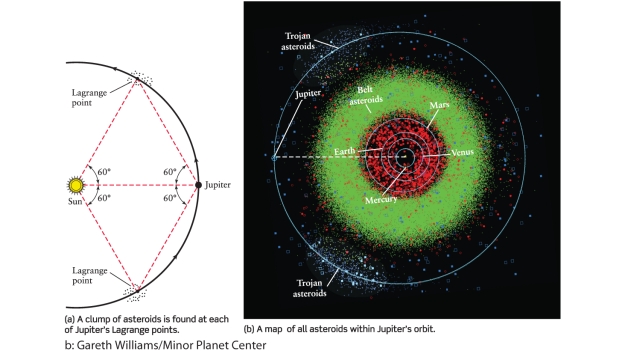
A)1/18 as strong.
B)18 times stronger.
C)12 times stronger.
D)76 times stronger.
A)1/18 as strong.
B)18 times stronger.
C)12 times stronger.
D)76 times stronger.
سؤال
سؤال
سؤال
سؤال
سؤال
سؤال
سؤال
سؤال
سؤال
سؤال
سؤال
سؤال
سؤال
سؤال
سؤال
سؤال
سؤال
سؤال
سؤال
سؤال
سؤال
سؤال
سؤال
سؤال
سؤال
سؤال
سؤال
سؤال
سؤال
سؤال
سؤال
سؤال
سؤال
سؤال
سؤال
سؤال
سؤال
سؤال
سؤال
سؤال
سؤال
سؤال
سؤال
سؤال
سؤال

فتح الحزمة
قم بالتسجيل لفتح البطاقات في هذه المجموعة!
Unlock Deck
Unlock Deck
1/80

العب

ملء الشاشة (f)
Deck 15: Asteroids, Comets, and Impacts
1
What major contribution did the German mathematician Karl Friedrich Gauss make to astronomy?
A)He discovered a regular progression of planetary distances from the Sun, so that each planet's orbit could be calculated knowing the distance of any one planet from the Sun.
B)He developed a method for computing an object's temperature from measurements of the intensity of emitted light at only two wavelengths.
C)He derived the Stefan-Boltzmann law, emitted flux = T4, mathematically, from basic physical principles.
D)He developed a method for computing an object's orbit from only three observations.
A)He discovered a regular progression of planetary distances from the Sun, so that each planet's orbit could be calculated knowing the distance of any one planet from the Sun.
B)He developed a method for computing an object's temperature from measurements of the intensity of emitted light at only two wavelengths.
C)He derived the Stefan-Boltzmann law, emitted flux = T4, mathematically, from basic physical principles.
D)He developed a method for computing an object's orbit from only three observations.
He developed a method for computing an object's orbit from only three observations.
2
The object found about 2.8 au from the Sun when astronomers were looking for a "missing" planet between the orbital distances of Mars and Jupiter was:
A)the asteroid Ceres.
B)Pluto.
C)Halley's Comet.
D)Mercury.
A)the asteroid Ceres.
B)Pluto.
C)Halley's Comet.
D)Mercury.
A
3
Most asteroids:
A)are dark and spherical in shape, with many craters on their surfaces.
B)are spherical and ice coated, and hence light colored and shiny.
C)are irregularly shaped and covered with very light-colored dust that reflects sunlight well.
D)are dark, irregular in shape, and heavily cratered.
A)are dark and spherical in shape, with many craters on their surfaces.
B)are spherical and ice coated, and hence light colored and shiny.
C)are irregularly shaped and covered with very light-colored dust that reflects sunlight well.
D)are dark, irregular in shape, and heavily cratered.
D
4
How big is the largest asteroid, Ceres, in comparison with the largest mare or impact basin on the Moon, Mare Imbrium?
A)Ceres is much larger than Mare Imbrium.
B)Ceres is much smaller, because asteroids are very small objects (1 km diameter), whereas maria are large (100-1000 km diameter).
C)The Mare Imbrium is much larger than Ceres.
D)Their size is very similar-about 1000 km across.
A)Ceres is much larger than Mare Imbrium.
B)Ceres is much smaller, because asteroids are very small objects (1 km diameter), whereas maria are large (100-1000 km diameter).
C)The Mare Imbrium is much larger than Ceres.
D)Their size is very similar-about 1000 km across.
فتح الحزمة
افتح القفل للوصول البطاقات البالغ عددها 80 في هذه المجموعة.
فتح الحزمة
k this deck
5
How do the biggest asteroids compare in size with the Moon?
A)They are very much smaller (less than 1/10).
B)They are between 1/10 and 1/2 as large.
C)They are about the same size.
D)They are very much larger (greater than 5×).
A)They are very much smaller (less than 1/10).
B)They are between 1/10 and 1/2 as large.
C)They are about the same size.
D)They are very much larger (greater than 5×).
فتح الحزمة
افتح القفل للوصول البطاقات البالغ عددها 80 في هذه المجموعة.
فتح الحزمة
k this deck
6
The combined matter in the asteroid belt would produce an object of what approximate size?
A)about 1500 km in diameter-significantly smaller than the Moon
B)about the size of Earth
C)only a few kilometers in diameter-similar to an average mountain on Earth
D)about the size of Mercury
A)about 1500 km in diameter-significantly smaller than the Moon
B)about the size of Earth
C)only a few kilometers in diameter-similar to an average mountain on Earth
D)about the size of Mercury
فتح الحزمة
افتح القفل للوصول البطاقات البالغ عددها 80 في هذه المجموعة.
فتح الحزمة
k this deck
7
The asteroid belt extends from 2 to 3.5 au from the Sun. If we take the average radius to be 2.75 au, what is the average sidereal period?
A)1.99 years
B)2.8 years
C)4.56 years
D)46.8 years
A)1.99 years
B)2.8 years
C)4.56 years
D)46.8 years
فتح الحزمة
افتح القفل للوصول البطاقات البالغ عددها 80 في هذه المجموعة.
فتح الحزمة
k this deck
8
The name 1987 FD refers to the:
A)fourth asteroid to be discovered in the month of February 1987.
B)sixth asteroid to be discovered in the month of April 1987.
C)1987th asteroid ever to be discovered, named after Frances Draibre.
D)fourth asteroid to be discovered during the second half of March 1987.
A)fourth asteroid to be discovered in the month of February 1987.
B)sixth asteroid to be discovered in the month of April 1987.
C)1987th asteroid ever to be discovered, named after Frances Draibre.
D)fourth asteroid to be discovered during the second half of March 1987.
فتح الحزمة
افتح القفل للوصول البطاقات البالغ عددها 80 في هذه المجموعة.
فتح الحزمة
k this deck
9
The Titus-Bode Law is derived from:
A)Newton's laws of motion.
B)the conservation of energy and angular momentum.
C)Kepler's third law.
D)None of the above is correct. The Titus-Bode "law" is more of a coincidence than a fundamental law of nature.
A)Newton's laws of motion.
B)the conservation of energy and angular momentum.
C)Kepler's third law.
D)None of the above is correct. The Titus-Bode "law" is more of a coincidence than a fundamental law of nature.
فتح الحزمة
افتح القفل للوصول البطاقات البالغ عددها 80 في هذه المجموعة.
فتح الحزمة
k this deck
10
Astronomers have been searching for additional planets, especially since the discovery of Uranus in 1781. But why were efforts concentrated around 2 to 3 au from the Sun in the early nineteenth century?
A)Kepler's third law predicts a planet within this distance.
B)The Titus-Bode law predicts a planet within this distance.
C)The discrepancies in Uranus's orbit suggested a planet around this radius.
D)The telescope, newly invented in 1781, was not powerful enough to detect anything beyond this range.
A)Kepler's third law predicts a planet within this distance.
B)The Titus-Bode law predicts a planet within this distance.
C)The discrepancies in Uranus's orbit suggested a planet around this radius.
D)The telescope, newly invented in 1781, was not powerful enough to detect anything beyond this range.
فتح الحزمة
افتح القفل للوصول البطاقات البالغ عددها 80 في هذه المجموعة.
فتح الحزمة
k this deck
11
How well does Ceres fit the Titus-Bode rule?
A)Neither the Ceres/Mars ratio nor the Jupiter/Ceres ratio falls into the range suggested by the Titus-Bode rule.
B)The Ceres/Mars ratio fits the Titus-Bode rule but the Jupiter/Ceres ratio does not.
C)The Ceres/Mars ratio does not fit the Titus-Bode rule but the Jupiter/Ceres ratio does.
D)Both the Ceres/Mars ratio and the Jupiter/Ceres ratio fall into the range suggested by the Titus-Bode rule.
A)Neither the Ceres/Mars ratio nor the Jupiter/Ceres ratio falls into the range suggested by the Titus-Bode rule.
B)The Ceres/Mars ratio fits the Titus-Bode rule but the Jupiter/Ceres ratio does not.
C)The Ceres/Mars ratio does not fit the Titus-Bode rule but the Jupiter/Ceres ratio does.
D)Both the Ceres/Mars ratio and the Jupiter/Ceres ratio fall into the range suggested by the Titus-Bode rule.
فتح الحزمة
افتح القفل للوصول البطاقات البالغ عددها 80 في هذه المجموعة.
فتح الحزمة
k this deck
12
The orbits of asteroids have a surprisingly large variety of semimajor axes, eccentricities, and inclinations to the ecliptic compared to most of the major planets. Which of these seems to be a reasonable explanation for this?
A)Asteroids are "small" objects, and they formed with the kinds of orbits they now have.
B)The orbits were stirred up when the Sun passed within the Oort cloud of another star.
C)Jupiter's gravitational pull has stirred up the asteroid orbits.
D)One or more Mars-sized planets formed in the asteroid belt, and their gravitational influence stirred up the orbits of the rest of the asteroids.
A)Asteroids are "small" objects, and they formed with the kinds of orbits they now have.
B)The orbits were stirred up when the Sun passed within the Oort cloud of another star.
C)Jupiter's gravitational pull has stirred up the asteroid orbits.
D)One or more Mars-sized planets formed in the asteroid belt, and their gravitational influence stirred up the orbits of the rest of the asteroids.
فتح الحزمة
افتح القفل للوصول البطاقات البالغ عددها 80 في هذه المجموعة.
فتح الحزمة
k this deck
13
The Kirkwood gaps are found in the:
A)equatorial region of the Sun.
B)rings of Saturn.
C)spectrum of hydrogen gas.
D)asteroid belt.
A)equatorial region of the Sun.
B)rings of Saturn.
C)spectrum of hydrogen gas.
D)asteroid belt.
فتح الحزمة
افتح القفل للوصول البطاقات البالغ عددها 80 في هذه المجموعة.
فتح الحزمة
k this deck
14
The Kirkwood gaps are primarily caused by:
A)the gravitational tug of Jupiter nudging asteroids into new orbits.
B)shepherd satellites controlling the orbits of ring particles.
C)orbits of material being disturbed because Jupiter's gravitational field balances the Sun at this distance, and objects can escape from the solar system.
D)large asteroids sweeping parts of the asteroid belt clear of smaller asteroids.
A)the gravitational tug of Jupiter nudging asteroids into new orbits.
B)shepherd satellites controlling the orbits of ring particles.
C)orbits of material being disturbed because Jupiter's gravitational field balances the Sun at this distance, and objects can escape from the solar system.
D)large asteroids sweeping parts of the asteroid belt clear of smaller asteroids.
فتح الحزمة
افتح القفل للوصول البطاقات البالغ عددها 80 في هذه المجموعة.
فتح الحزمة
k this deck
15
What is the relationship between the Kirkwood gaps in the asteroid belt and the Cassini and Enke divisions in the rings of Saturn?
A)Both are caused by large objects passing through swarms of smaller objects, sweeping out gaps in the swarms.
B)Both were discovered by observers from the same group; Kirkwood and Enke worked at the Cassini Observatory.
C)Both are caused by selective melting of material at these specific locations from the central radiating body, the Sun and Saturn respectively.
D)Both are caused by disruptions of orbits of small objects by a larger object whose orbital period is a simple ratio of that of the small objects.
A)Both are caused by large objects passing through swarms of smaller objects, sweeping out gaps in the swarms.
B)Both were discovered by observers from the same group; Kirkwood and Enke worked at the Cassini Observatory.
C)Both are caused by selective melting of material at these specific locations from the central radiating body, the Sun and Saturn respectively.
D)Both are caused by disruptions of orbits of small objects by a larger object whose orbital period is a simple ratio of that of the small objects.
فتح الحزمة
افتح القفل للوصول البطاقات البالغ عددها 80 في هذه المجموعة.
فتح الحزمة
k this deck
16
What influence did Jupiter have on the formation of the asteroid belt, and how do we know?
A)We have watched other solar systems in their early stages of formation. They show Jupiter-size planets clearing out much of their asteroid belts.
B)Computer simulations have shown that in the absence of a Jupiter-size planet, an Earth-size planet would have formed in the asteroid belt.
C)Computer simulations have shown that a Jupiter-size planet has no influence on the formation of the asteroid belt.
D)We have watched other solar systems in their early stages of formation. They show that Jupiter-size planets have no influence on the formation of an asteroid belt.
A)We have watched other solar systems in their early stages of formation. They show Jupiter-size planets clearing out much of their asteroid belts.
B)Computer simulations have shown that in the absence of a Jupiter-size planet, an Earth-size planet would have formed in the asteroid belt.
C)Computer simulations have shown that a Jupiter-size planet has no influence on the formation of the asteroid belt.
D)We have watched other solar systems in their early stages of formation. They show that Jupiter-size planets have no influence on the formation of an asteroid belt.
فتح الحزمة
افتح القفل للوصول البطاقات البالغ عددها 80 في هذه المجموعة.
فتح الحزمة
k this deck
17
If objects in the asteroid belt are prevented from occupying an orbit for which their period would be one-third of that of Jupiter because of repeated gravitational disturbances, at what distance would you expect a gap in the asteroid belt?
A)1.0 au
B)7.86 au
C)3.28 au
D)2.5 au
A)1.0 au
B)7.86 au
C)3.28 au
D)2.5 au
فتح الحزمة
افتح القفل للوصول البطاقات البالغ عددها 80 في هذه المجموعة.
فتح الحزمة
k this deck
18
It is believed there were originally far more objects in the asteroid belt than there are now. What happened to the rest of them?
A)The gravitational influence of Jupiter deflected most of them out of the solar system.
B)Mars-sized objects moving through the asteroid belt disrupted the orbits and deflected most of them out of the solar system.
C)The majority of the original asteroids coalesced to form a series of Mars-sized objects, one of which struck Earth and caused the formation of the Moon.
D)A passing star pulled most of the original asteroids out of the solar system.
A)The gravitational influence of Jupiter deflected most of them out of the solar system.
B)Mars-sized objects moving through the asteroid belt disrupted the orbits and deflected most of them out of the solar system.
C)The majority of the original asteroids coalesced to form a series of Mars-sized objects, one of which struck Earth and caused the formation of the Moon.
D)A passing star pulled most of the original asteroids out of the solar system.
فتح الحزمة
افتح القفل للوصول البطاقات البالغ عددها 80 في هذه المجموعة.
فتح الحزمة
k this deck
19
A technique that is proving very useful for determining the shapes of a large number of asteroids is:
A)radar signals reflected from the asteroid's surface.
B)direct photography from spacecraft.
C)optical and infrared Doppler shift measurements as the asteroid rotates.
D)CCD photography using large, Earth-based telescopes.
A)radar signals reflected from the asteroid's surface.
B)direct photography from spacecraft.
C)optical and infrared Doppler shift measurements as the asteroid rotates.
D)CCD photography using large, Earth-based telescopes.
فتح الحزمة
افتح القفل للوصول البطاقات البالغ عددها 80 في هذه المجموعة.
فتح الحزمة
k this deck
20
The general shape of most asteroids is thought to be:
A)double lobed, as though two asteroids had stuck together.
B)perfectly spherical.
C)oblong but smooth.
D)irregular.
A)double lobed, as though two asteroids had stuck together.
B)perfectly spherical.
C)oblong but smooth.
D)irregular.
فتح الحزمة
افتح القفل للوصول البطاقات البالغ عددها 80 في هذه المجموعة.
فتح الحزمة
k this deck
21
The first asteroid to be photographed in detail by a spacecraft was:
A)Ceres.
B)Icarus.
C)Gaspra.
D)Vesta.
A)Ceres.
B)Icarus.
C)Gaspra.
D)Vesta.
فتح الحزمة
افتح القفل للوصول البطاقات البالغ عددها 80 في هذه المجموعة.
فتح الحزمة
k this deck
22
We have studied asteroids by all of the following methods EXCEPT ONE. Which is the EXCEPTION?
A)sending radar pulses to reflect off the surface and analyzing the result
B)watching the variations in the sunlight reflecting off the asteroids
C)sending a spacecraft to orbit an asteroid
D)landing a robotic rover to survey an asteroid
A)sending radar pulses to reflect off the surface and analyzing the result
B)watching the variations in the sunlight reflecting off the asteroids
C)sending a spacecraft to orbit an asteroid
D)landing a robotic rover to survey an asteroid
فتح الحزمة
افتح القفل للوصول البطاقات البالغ عددها 80 في هذه المجموعة.
فتح الحزمة
k this deck
23
The most ambitious mission so far to study the asteroids is:
A)a flyby mission to take close-up images of an asteroid.
B)a spacecraft that went into orbit around an asteroid.
C)a soft robotic landing to gather materials and return them to Earth.
D)a crewed landing to explore the asteroid and then return to Earth.
A)a flyby mission to take close-up images of an asteroid.
B)a spacecraft that went into orbit around an asteroid.
C)a soft robotic landing to gather materials and return them to Earth.
D)a crewed landing to explore the asteroid and then return to Earth.
فتح الحزمة
افتح القفل للوصول البطاقات البالغ عددها 80 في هذه المجموعة.
فتح الحزمة
k this deck
24
The asteroid Vesta is rounded and shows signs of differentiation, even though it is only 525 km in diameter. What is believed to be the reason for this?
A)Vesta is unusually dense, so that, despite its small size, it has pulled itself gravitationally into a sphere.
B)Vesta was heated by a massive collision.
C)Vesta was heated by radioactivity soon after its formation.
D)Vesta was initially formed hot in the solar nebula and has managed to avoid large collisions ever since.
A)Vesta is unusually dense, so that, despite its small size, it has pulled itself gravitationally into a sphere.
B)Vesta was heated by a massive collision.
C)Vesta was heated by radioactivity soon after its formation.
D)Vesta was initially formed hot in the solar nebula and has managed to avoid large collisions ever since.
فتح الحزمة
افتح القفل للوصول البطاقات البالغ عددها 80 في هذه المجموعة.
فتح الحزمة
k this deck
25
The asteroid Vesta is believed to have suffered a major collision a few billion years ago. Where is the debris created from this collision?
A)The gravity of the asteroid pulled virtually all of it back to Vesta, where it created a "rubble pile" resting in the crater.
B)It now exists as a small satellite orbiting Vesta.
C)The Dawn spacecraft imaged the crater on Vesta in infrared. The chemical composition was found to match that of many of the meteorites that have landed on Earth.
D)It was pulverized into a fine white dust that blankets much of Vesta.
A)The gravity of the asteroid pulled virtually all of it back to Vesta, where it created a "rubble pile" resting in the crater.
B)It now exists as a small satellite orbiting Vesta.
C)The Dawn spacecraft imaged the crater on Vesta in infrared. The chemical composition was found to match that of many of the meteorites that have landed on Earth.
D)It was pulverized into a fine white dust that blankets much of Vesta.
فتح الحزمة
افتح القفل للوصول البطاقات البالغ عددها 80 في هذه المجموعة.
فتح الحزمة
k this deck
26
What is unusual about the asteroid Mathilde, which was studied and photographed by the NEAR spacecraft (See Figure 15-7 of Universe, 11th ed.)?
A)It has almost no craters visible anywhere on its surface.
B)It has a much higher mass for its volume than any other known asteroid.
C)It is not much denser than water.
D)It has a very bright surface, possibly caused by fresh material thrown out by impacts.
A)It has almost no craters visible anywhere on its surface.
B)It has a much higher mass for its volume than any other known asteroid.
C)It is not much denser than water.
D)It has a very bright surface, possibly caused by fresh material thrown out by impacts.
فتح الحزمة
افتح القفل للوصول البطاقات البالغ عددها 80 في هذه المجموعة.
فتح الحزمة
k this deck
27
The asteroid Mathilde has a mean density of only 1300 kg/m3, which is about half the density of rock. What is believed to be the reason for Mathilde's low density?
A)Mathilde is a "rubble pile," having been shattered by collisions with other asteroids.
B)Mathilde is a binary asteroid that is too far away for us to see the individual components; the low density is an illusion created by the space between the two rocky components.
C)Mathilde is composed of about 1/4 rock and 3/4 ice.
D)Mathilde is a primitive asteroid, composed of loosely aggregated dust grains from the early solar nebula.
A)Mathilde is a "rubble pile," having been shattered by collisions with other asteroids.
B)Mathilde is a binary asteroid that is too far away for us to see the individual components; the low density is an illusion created by the space between the two rocky components.
C)Mathilde is composed of about 1/4 rock and 3/4 ice.
D)Mathilde is a primitive asteroid, composed of loosely aggregated dust grains from the early solar nebula.
فتح الحزمة
افتح القفل للوصول البطاقات البالغ عددها 80 في هذه المجموعة.
فتح الحزمة
k this deck
28
The surfaces of the asteroids Ida and Mathilde, photographed by the Galileo and NEAR Shoemaker spacecraft show:
A)icy surfaces crisscrossed with cracks and systems of parallel grooves.
B)young, sharp, jagged surfaces, due to fragmentation by collision with other asteroids, and few craters.
C)irregular, somewhat rounded and moderately cratered surfaces.
D)ancient surfaces densely covered with large and small overlapping craters, like the surface of the highland areas of the Moon.
A)icy surfaces crisscrossed with cracks and systems of parallel grooves.
B)young, sharp, jagged surfaces, due to fragmentation by collision with other asteroids, and few craters.
C)irregular, somewhat rounded and moderately cratered surfaces.
D)ancient surfaces densely covered with large and small overlapping craters, like the surface of the highland areas of the Moon.
فتح الحزمة
افتح القفل للوصول البطاقات البالغ عددها 80 في هذه المجموعة.
فتح الحزمة
k this deck
29
About 6% of the meteorites landing on Earth are thought to come from which asteroid?
A)Ceres
B)Vesta
C)Gaspra
D)Mathilde
A)Ceres
B)Vesta
C)Gaspra
D)Mathilde
فتح الحزمة
افتح القفل للوصول البطاقات البالغ عددها 80 في هذه المجموعة.
فتح الحزمة
k this deck
30
Why do we think that about 6% of the meteorites landing on Earth originate from Vespa?
A)Their trajectories match the orbit of Vespa.
B)The ages of the meteorites match the age of the asteroid.
C)The chemical composition of the asteroids matches the chemical composition of a large crater on Vespa where the Dawn spacecraft obtained infrared spectra.
D)The meteors are all about the same size, indicating that they came from the same impact crater on Vespa.
A)Their trajectories match the orbit of Vespa.
B)The ages of the meteorites match the age of the asteroid.
C)The chemical composition of the asteroids matches the chemical composition of a large crater on Vespa where the Dawn spacecraft obtained infrared spectra.
D)The meteors are all about the same size, indicating that they came from the same impact crater on Vespa.
فتح الحزمة
افتح القفل للوصول البطاقات البالغ عددها 80 في هذه المجموعة.
فتح الحزمة
k this deck
31
Asteroids that orbit the Sun at the same distance as Jupiter are known as the:
A)Adenoids.
B)Apollo asteroids.
C)Trojan asteroids.
D)Jupitoids.
A)Adenoids.
B)Apollo asteroids.
C)Trojan asteroids.
D)Jupitoids.
فتح الحزمة
افتح القفل للوصول البطاقات البالغ عددها 80 في هذه المجموعة.
فتح الحزمة
k this deck
32
The Trojan asteroids orbit the Sun in circular orbits at the same distance as:
A)the main asteroid belt.
B)Jupiter.
C)Mars.
D)Earth.
A)the main asteroid belt.
B)Jupiter.
C)Mars.
D)Earth.
فتح الحزمة
افتح القفل للوصول البطاقات البالغ عددها 80 في هذه المجموعة.
فتح الحزمة
k this deck
33
What kind of orbits do the Trojan asteroids follow?
A)circular orbits at the same distance from the Sun as Jupiter
B)circular orbits at about 2.8 au from the Sun
C)long, elliptical orbits that cross that of Earth
D)long, elliptical orbits ranging from Neptune's orbital distance to Jupiter's orbital distance
A)circular orbits at the same distance from the Sun as Jupiter
B)circular orbits at about 2.8 au from the Sun
C)long, elliptical orbits that cross that of Earth
D)long, elliptical orbits ranging from Neptune's orbital distance to Jupiter's orbital distance
فتح الحزمة
افتح القفل للوصول البطاقات البالغ عددها 80 في هذه المجموعة.
فتح الحزمة
k this deck
34
What is the orbital sidereal period of a Trojan asteroid?
A)The period is 1.88 years.
B)It is difficult to be specific because they all have different orbital periods, depending on their masses.
C)The period is 5.9 years, the same as most asteroids in the asteroid belt.
D)The period is 11.86 years.
A)The period is 1.88 years.
B)It is difficult to be specific because they all have different orbital periods, depending on their masses.
C)The period is 5.9 years, the same as most asteroids in the asteroid belt.
D)The period is 11.86 years.
فتح الحزمة
افتح القفل للوصول البطاقات البالغ عددها 80 في هذه المجموعة.
فتح الحزمة
k this deck
35
Asteroids should be able to remain stably trapped at the stable Lagrange points of the Earth-Sun system (See Figure 15-14 of Universe, 11th ed.), provided they are NOT subjected to other, stronger, gravitational influences. As a test of this stability, calculate how strong Jupiter's gravity is on a mass at Earth's stable Lagrange points (when Jupiter is closest to them) compared to the strength of Earth's gravity on the same mass at the same points. (You will need to use Newton's law of gravitation; it will also help to draw a diagram.) Compared to Earth's gravitational force at these points, Jupiter's gravity is:
A)1/18 as strong.
B)18 times stronger.
C)12 times stronger.
D)76 times stronger.
A)1/18 as strong.
B)18 times stronger.
C)12 times stronger.
D)76 times stronger.
فتح الحزمة
افتح القفل للوصول البطاقات البالغ عددها 80 في هذه المجموعة.
فتح الحزمة
k this deck
36
Which one of the following does NOT have Lagrange points?
A)the Sun
B)Earth
C)Jupiter
D)Neptune
A)the Sun
B)Earth
C)Jupiter
D)Neptune
فتح الحزمة
افتح القفل للوصول البطاقات البالغ عددها 80 في هذه المجموعة.
فتح الحزمة
k this deck
37
Asteroids whose elliptical orbits have perihelion distances shorter than the orbital distance of Mars are known as:
A)Kirkwood objects, or KOs.
B)near-Earth objects, or NEOs.
C)Hirayama family asteroids, or HFAs.
D)Mars-crossing asteroids, or MCAs.
A)Kirkwood objects, or KOs.
B)near-Earth objects, or NEOs.
C)Hirayama family asteroids, or HFAs.
D)Mars-crossing asteroids, or MCAs.
فتح الحزمة
افتح القفل للوصول البطاقات البالغ عددها 80 في هذه المجموعة.
فتح الحزمة
k this deck
38
One example of a near-Earth object, or NEO, is the:
A)DA 14 asteroid.
B)Moon.
C)asteroid Ceres.
D)Trojan asteroid Hector.
A)DA 14 asteroid.
B)Moon.
C)asteroid Ceres.
D)Trojan asteroid Hector.
فتح الحزمة
افتح القفل للوصول البطاقات البالغ عددها 80 في هذه المجموعة.
فتح الحزمة
k this deck
39
Recent calculations show that the Tunguska explosion in Siberia in 1908, which had an explosive power of several hundred kilotons of TNT, was probably caused by:
A)a small comet nucleus about 150 m across suddenly vaporizing in the atmosphere.
B)the impact and annihilation of a very small amount of antimatter from somewhere else in the universe.
C)a small natural nuclear explosion in uranium deposits.
D)a small stony asteroid about 80 m across disintegrating explosively in the atmosphere before hitting the ground.
A)a small comet nucleus about 150 m across suddenly vaporizing in the atmosphere.
B)the impact and annihilation of a very small amount of antimatter from somewhere else in the universe.
C)a small natural nuclear explosion in uranium deposits.
D)a small stony asteroid about 80 m across disintegrating explosively in the atmosphere before hitting the ground.
فتح الحزمة
افتح القفل للوصول البطاقات البالغ عددها 80 في هذه المجموعة.
فتح الحزمة
k this deck
40
The impact of a 10-km-diameter asteroid on the surface of Earth would very likely:
A)shatter Earth into fragments.
B)create havoc near the impact site but have relatively little lasting effect elsewhere.
C)shatter the global ecology and cause the extinction of a large percentage of all species living on Earth.
D)completely destroy all life on Earth.
A)shatter Earth into fragments.
B)create havoc near the impact site but have relatively little lasting effect elsewhere.
C)shatter the global ecology and cause the extinction of a large percentage of all species living on Earth.
D)completely destroy all life on Earth.
فتح الحزمة
افتح القفل للوصول البطاقات البالغ عددها 80 في هذه المجموعة.
فتح الحزمة
k this deck
41
If an impact crater on Earth is 2000 m wide, approximately how big would the asteroid fragment have been that survived its passage through the atmosphere?
A)20 m
B)100 m
C)2000 m
D)4 km
A)20 m
B)100 m
C)2000 m
D)4 km
فتح الحزمة
افتح القفل للوصول البطاقات البالغ عددها 80 في هذه المجموعة.
فتح الحزمة
k this deck
42
Statistically, an asteroid 1 km in diameter might be expected to strike Earth:
A)during an interval of 80 years-roughly a human lifetime.
B)once every 10,000 years.
C)once every 500,000 years.
D)never.
A)during an interval of 80 years-roughly a human lifetime.
B)once every 10,000 years.
C)once every 500,000 years.
D)never.
فتح الحزمة
افتح القفل للوصول البطاقات البالغ عددها 80 في هذه المجموعة.
فتح الحزمة
k this deck
43
Stony meteorites:
A)are composed of rocks similar to terrestrial rocks.
B)contain large quantities of carbon and H2O, and even hydrocarbons and amino acids.
C)have solid iron cores and rocky silicate shells.
D)are made of solid iron and nickel.
A)are composed of rocks similar to terrestrial rocks.
B)contain large quantities of carbon and H2O, and even hydrocarbons and amino acids.
C)have solid iron cores and rocky silicate shells.
D)are made of solid iron and nickel.
فتح الحزمة
افتح القفل للوصول البطاقات البالغ عددها 80 في هذه المجموعة.
فتح الحزمة
k this deck
44
Iron meteorites:
A)are normally composed almost entirely of iron and nickel.
B)are normally composed almost entirely of iron.
C)normally contain between 3 and 5 times as much iron as terrestrial rocks, in the form of pure grains embedded a rocky matrix.
D)are normally composed almost entirely of iron, nickel, and carbon.
A)are normally composed almost entirely of iron and nickel.
B)are normally composed almost entirely of iron.
C)normally contain between 3 and 5 times as much iron as terrestrial rocks, in the form of pure grains embedded a rocky matrix.
D)are normally composed almost entirely of iron, nickel, and carbon.
فتح الحزمة
افتح القفل للوصول البطاقات البالغ عددها 80 في هذه المجموعة.
فتح الحزمة
k this deck
45
Although there is no official dividing line, a chunk of rock orbiting the Sun is generally considered an asteroid rather than a meteoroid if it:
A)is larger than 1 cm across.
B)is larger than 1 m across.
C)is larger than 2 km across.
D)has a mass larger than 1% the mass of Earth.
A)is larger than 1 cm across.
B)is larger than 1 m across.
C)is larger than 2 km across.
D)has a mass larger than 1% the mass of Earth.
فتح الحزمة
افتح القفل للوصول البطاقات البالغ عددها 80 في هذه المجموعة.
فتح الحزمة
k this deck
46
Some meteorites have been identified as coming from other bodies in our solar system. Which of the following is NOT one of those sources?
A)Ceres
B)Moon
C)Vesta
D)Mars
A)Ceres
B)Moon
C)Vesta
D)Mars
فتح الحزمة
افتح القفل للوصول البطاقات البالغ عددها 80 في هذه المجموعة.
فتح الحزمة
k this deck
47
Which of the following descriptions would allow you tentatively to identify a rock as a fallen meteorite?
A)layered rock, consisting of limestone
B)solid iron, with a distinctive crystal structure throughout its interior
C)rough-surfaced rock with small inclusions of coal
D)large transparent crystals of common salt embedded in sandstone
A)layered rock, consisting of limestone
B)solid iron, with a distinctive crystal structure throughout its interior
C)rough-surfaced rock with small inclusions of coal
D)large transparent crystals of common salt embedded in sandstone
فتح الحزمة
افتح القفل للوصول البطاقات البالغ عددها 80 في هذه المجموعة.
فتح الحزمة
k this deck
48
The Widmanstätten pattern uncovered by acid etching of the surfaces of many iron meteorites consists of:
A)fracture lines, created by the impact that knocked the meteoroid off the parent asteroid.
B)large crystals, formed as the iron cooled slowly over many millions of years.
C)small holes and bubbles, created by partial melting of the meteorite as it entered Earth's atmosphere.
D)minute crystals, formed when the iron cooled quickly in the vacuum of space.
A)fracture lines, created by the impact that knocked the meteoroid off the parent asteroid.
B)large crystals, formed as the iron cooled slowly over many millions of years.
C)small holes and bubbles, created by partial melting of the meteorite as it entered Earth's atmosphere.
D)minute crystals, formed when the iron cooled quickly in the vacuum of space.
فتح الحزمة
افتح القفل للوصول البطاقات البالغ عددها 80 في هذه المجموعة.
فتح الحزمة
k this deck
49
An iron meteorite, when cut open and etched with acid, often shows a peculiar pattern of nickel-iron crystals called a Widmanstätten pattern. What does the presence of this pattern tell us about the meteorite?
A)It was blasted from the surface of the planet Mars by an impact.
B)It is a fragment of a shattered asteroid that was at least 200 km in diameter.
C)It is a primitive (unaltered) piece of the early solar nebula.
D)It is a fragment of a shattered asteroid that was no more than about 25 km in diameter.
A)It was blasted from the surface of the planet Mars by an impact.
B)It is a fragment of a shattered asteroid that was at least 200 km in diameter.
C)It is a primitive (unaltered) piece of the early solar nebula.
D)It is a fragment of a shattered asteroid that was no more than about 25 km in diameter.
فتح الحزمة
افتح القفل للوصول البطاقات البالغ عددها 80 في هذه المجموعة.
فتح الحزمة
k this deck
50
An iron meteorite, when cut open and etched with acid, often shows a peculiar pattern of nickel-iron crystals called a Widmanstätten pattern. Through what process was this pattern created?
A)partial melting during the impact that ejected the meteorite from its parent asteroid, with subsequent rapid cooling in space
B)rapid crystal growth as molten iron cooled and solidified in the interior of a small asteroid
C)slow crystal growth as iron condensed from gas directly to solid form in the early solar nebula
D)slow crystal growth as molten iron cooled and solidified in the interior of a large asteroid
A)partial melting during the impact that ejected the meteorite from its parent asteroid, with subsequent rapid cooling in space
B)rapid crystal growth as molten iron cooled and solidified in the interior of a small asteroid
C)slow crystal growth as iron condensed from gas directly to solid form in the early solar nebula
D)slow crystal growth as molten iron cooled and solidified in the interior of a large asteroid
فتح الحزمة
افتح القفل للوصول البطاقات البالغ عددها 80 في هذه المجموعة.
فتح الحزمة
k this deck
51
A typical iron meteorite shows a Widmanstätten pattern. This suggests that it is a(n):
A)iron-nickel object that has existed unheated from the beginning of the solar system.
B)fragment of an undifferentiated (primitive) asteroid.
C)fragment from the core of a differentiated asteroid.
D)fragment from the crust of a differentiated asteroid.
A)iron-nickel object that has existed unheated from the beginning of the solar system.
B)fragment of an undifferentiated (primitive) asteroid.
C)fragment from the core of a differentiated asteroid.
D)fragment from the crust of a differentiated asteroid.
فتح الحزمة
افتح القفل للوصول البطاقات البالغ عددها 80 في هذه المجموعة.
فتح الحزمة
k this deck
52
The fact that there are several distinct and different types of meteorites (stony, stony iron, and iron) is probably indicative of:
A)preferential accretion of iron particles to other iron particles because of their magnetic properties, leaving stony particles to accrete separately.
B)fragmentation of asteroids that had become differentiated in a similar fashion to Earth (with the heavier iron sinking to the center).
C)different amounts of heating and "erosion" of the outer layers of meteorites as they pass through Earth's atmosphere.
D)formation in different parts of the early solar nebula, with stones condensing closer to the Sun and irons farther out.
A)preferential accretion of iron particles to other iron particles because of their magnetic properties, leaving stony particles to accrete separately.
B)fragmentation of asteroids that had become differentiated in a similar fashion to Earth (with the heavier iron sinking to the center).
C)different amounts of heating and "erosion" of the outer layers of meteorites as they pass through Earth's atmosphere.
D)formation in different parts of the early solar nebula, with stones condensing closer to the Sun and irons farther out.
فتح الحزمة
افتح القفل للوصول البطاقات البالغ عددها 80 في هذه المجموعة.
فتح الحزمة
k this deck
53
Widmanstätten patterns uniquely identify samples as iron meteorites. Why is this?
A)These patterns require iridium, which is common in iron meteorites but is rare on Earth.
B)Widmanstätten patterns are radioactive.
C)These patterns involve crystals, which only form after millions of years of slow cooling.
D)These patterns are actually cracks in the structure of the meteorite that form only when an iron meteorite becomes heated during its passage through Earth's atmosphere.
A)These patterns require iridium, which is common in iron meteorites but is rare on Earth.
B)Widmanstätten patterns are radioactive.
C)These patterns involve crystals, which only form after millions of years of slow cooling.
D)These patterns are actually cracks in the structure of the meteorite that form only when an iron meteorite becomes heated during its passage through Earth's atmosphere.
فتح الحزمة
افتح القفل للوصول البطاقات البالغ عددها 80 في هذه المجموعة.
فتح الحزمة
k this deck
54
A meteorite is a solid object reaching Earth's surface after plunging through our atmosphere. A meteorite might have originally been a part of any of the following EXCEPT:
A)a meteoroid or asteroid.
B)a comet.
C)the Van Allen radiation belt.
D)Mars or the Moon.
A)a meteoroid or asteroid.
B)a comet.
C)the Van Allen radiation belt.
D)Mars or the Moon.
فتح الحزمة
افتح القفل للوصول البطاقات البالغ عددها 80 في هذه المجموعة.
فتح الحزمة
k this deck
55
The Tunguska event of 1908 was probably caused by a stony body. Why was so little obvious evidence of meteoric impact found at the scene?
A)Evidence of a large impact like this one is highly radioactive. But during the two decades between the event and the investigation, the radioactivity had subsided.
B)The stony contents were all incinerated high in the atmosphere.
C)The stony contents all vaporized on impact, like those in the Barringer Crater in Arizona.
D)The stony contents were distributed widely over the ground. But after a few years of weathering, they became indistinguishable from ordinary rocks.
A)Evidence of a large impact like this one is highly radioactive. But during the two decades between the event and the investigation, the radioactivity had subsided.
B)The stony contents were all incinerated high in the atmosphere.
C)The stony contents all vaporized on impact, like those in the Barringer Crater in Arizona.
D)The stony contents were distributed widely over the ground. But after a few years of weathering, they became indistinguishable from ordinary rocks.
فتح الحزمة
افتح القفل للوصول البطاقات البالغ عددها 80 في هذه المجموعة.
فتح الحزمة
k this deck
56
A stony meteorite might show evidence of each of the following EXCEPT ONE. Which is the EXCEPTION?
A)carbonaceous chondrites
B)fusion crust
C)high abundance of 26Mg
D)Widmanstätten pattern
A)carbonaceous chondrites
B)fusion crust
C)high abundance of 26Mg
D)Widmanstätten pattern
فتح الحزمة
افتح القفل للوصول البطاقات البالغ عددها 80 في هذه المجموعة.
فتح الحزمة
k this deck
57
Which of the following biochemical materials has been found and identified in rocks recovered from outer space (e.g., meteorites)?
A)viruses
B)living cells
C)lichens and mosses
D)amino acids
A)viruses
B)living cells
C)lichens and mosses
D)amino acids
فتح الحزمة
افتح القفل للوصول البطاقات البالغ عددها 80 في هذه المجموعة.
فتح الحزمة
k this deck
58
The half-life for the decay of 26Al into 26Mg is 720,000 years. Suppose a meteorite was formed 4.6 billion years ago that contained 26Al. How much 26Al does it contain now?
A)almost all of its original amount
B)half of its original amount
C)1/6389 of its original amount
D)almost none
A)almost all of its original amount
B)half of its original amount
C)1/6389 of its original amount
D)almost none
فتح الحزمة
افتح القفل للوصول البطاقات البالغ عددها 80 في هذه المجموعة.
فتح الحزمة
k this deck
59
A meteorite is seen to impact upon Earth and is found to contain significant amounts of 26Mg, the stable decay product of radioactive 26Al. What conclusion can be drawn from this observation?
A)Radioactivity occurs naturally in normal matter and so this finding is not surprising.
B)An energetic nuclear event, possibly a supernova, occurred near the Sun and produced 26Al at about the time that this meteorite was formed.
C)The meteorite became so hot on its descent through Earth's atmosphere, that it became radioactive.
D)The meteorite had probably passed through radioactive clouds in space before hitting Earth.
A)Radioactivity occurs naturally in normal matter and so this finding is not surprising.
B)An energetic nuclear event, possibly a supernova, occurred near the Sun and produced 26Al at about the time that this meteorite was formed.
C)The meteorite became so hot on its descent through Earth's atmosphere, that it became radioactive.
D)The meteorite had probably passed through radioactive clouds in space before hitting Earth.
فتح الحزمة
افتح القفل للوصول البطاقات البالغ عددها 80 في هذه المجموعة.
فتح الحزمة
k this deck
60
What evidence do we have from meteorite studies that suggest that the formation of our Sun and solar system might have been triggered by a supernova explosion?
A)the detection of pure iron in many meteorites
B)the measurement of a fusion crust around most meteorites, indicating intense heating at some time
C)the discovery of amino acids in some meteorites
D)the discovery of the decay products of short-lived radioactive elements within some meteorites
A)the detection of pure iron in many meteorites
B)the measurement of a fusion crust around most meteorites, indicating intense heating at some time
C)the discovery of amino acids in some meteorites
D)the discovery of the decay products of short-lived radioactive elements within some meteorites
فتح الحزمة
افتح القفل للوصول البطاقات البالغ عددها 80 في هذه المجموعة.
فتح الحزمة
k this deck
61
The description of a comet as a "dirty snowball" applies to the:
A)nucleus.
B)coma.
C)envelope.
D)tail.
A)nucleus.
B)coma.
C)envelope.
D)tail.
فتح الحزمة
افتح القفل للوصول البطاقات البالغ عددها 80 في هذه المجموعة.
فتح الحزمة
k this deck
62
The expected (and now measured, at least for Halley's Comet) size of the nucleus of a typical comet is about:
A)106 km.
B)107 km.
C)10 km.
D)100 m.
A)106 km.
B)107 km.
C)10 km.
D)100 m.
فتح الحزمة
افتح القفل للوصول البطاقات البالغ عددها 80 في هذه المجموعة.
فتح الحزمة
k this deck
63
The Deep Impact mission to Comet Tempel 1 measured the density of the comet's nucleus. This was found to be:
A)about the density of iron.
B)about the density of ordinary rock.
C)less than the density of water.
D)so small as to suggest that the nucleus is hollow.
A)about the density of iron.
B)about the density of ordinary rock.
C)less than the density of water.
D)so small as to suggest that the nucleus is hollow.
فتح الحزمة
افتح القفل للوصول البطاقات البالغ عددها 80 في هذه المجموعة.
فتح الحزمة
k this deck
64
As of 2013, we had done all of the following comet investigations EXCEPT ONE. Which is the EXCEPTION?
A)flying past a comet with a spacecraft
B)collecting dust near the nucleus of a comet
C)smashing a projectile onto a comet's surface
D)landing on the surface of a comet
A)flying past a comet with a spacecraft
B)collecting dust near the nucleus of a comet
C)smashing a projectile onto a comet's surface
D)landing on the surface of a comet
فتح الحزمة
افتح القفل للوصول البطاقات البالغ عددها 80 في هذه المجموعة.
فتح الحزمة
k this deck
65
What experimental technique was used to discover the huge hydrogen cloud that surrounds the nucleus and the coma of a comet?
A)Hubble Space Telescope IR photography
B)ground-based photography, at the hydrogen Balmer wavelength
C)radio measurements at 21 cm wavelength
D)rocketborne ultraviolet photography
A)Hubble Space Telescope IR photography
B)ground-based photography, at the hydrogen Balmer wavelength
C)radio measurements at 21 cm wavelength
D)rocketborne ultraviolet photography
فتح الحزمة
افتح القفل للوصول البطاقات البالغ عددها 80 في هذه المجموعة.
فتح الحزمة
k this deck
66
The huge hydrogen cloud that surrounds the nucleus of a comet has a typical diameter of about:
A)1/2 au.
B)2 au.
C)1 million km.
D)10 million km.
A)1/2 au.
B)2 au.
C)1 million km.
D)10 million km.
فتح الحزمة
افتح القفل للوصول البطاقات البالغ عددها 80 في هذه المجموعة.
فتح الحزمة
k this deck
67
The hydrogen envelope of a bright comet is:
A)visible to the naked eye from Earth's surface.
B)not visible from Earth's surface because of atmospheric absorption, but it is visible to the naked eye from a spacecraft above the atmosphere.
C)created from water molecules that are broken apart by infrared radiation from the Sun.
D)visible in an ultraviolet telescope above Earth's atmosphere.
A)visible to the naked eye from Earth's surface.
B)not visible from Earth's surface because of atmospheric absorption, but it is visible to the naked eye from a spacecraft above the atmosphere.
C)created from water molecules that are broken apart by infrared radiation from the Sun.
D)visible in an ultraviolet telescope above Earth's atmosphere.
فتح الحزمة
افتح القفل للوصول البطاقات البالغ عددها 80 في هذه المجموعة.
فتح الحزمة
k this deck
68
Comet tails are the result of:
A)sunlight glinting on and reflecting from the icy nucleus of a comet.
B)dust collected by the comet as it moves in its orbit.
C)solar wind particles being guided and excited to emit light by the comet's magnetic field.
D)melting and evaporation of ices from the comet's nucleus.
A)sunlight glinting on and reflecting from the icy nucleus of a comet.
B)dust collected by the comet as it moves in its orbit.
C)solar wind particles being guided and excited to emit light by the comet's magnetic field.
D)melting and evaporation of ices from the comet's nucleus.
فتح الحزمة
افتح القفل للوصول البطاقات البالغ عددها 80 في هذه المجموعة.
فتح الحزمة
k this deck
69
A comet's gas and ion tail:
A)always lies in the ecliptic plane, because a comet is a part of the solar system.
B)lies between the comet and the Sun, because of gravitational attraction.
C)always trails along the orbital path, because of the comet's motion.
D)is always blown away from the comet in the anti-Sun direction by the solar wind.
A)always lies in the ecliptic plane, because a comet is a part of the solar system.
B)lies between the comet and the Sun, because of gravitational attraction.
C)always trails along the orbital path, because of the comet's motion.
D)is always blown away from the comet in the anti-Sun direction by the solar wind.
فتح الحزمة
افتح القفل للوصول البطاقات البالغ عددها 80 في هذه المجموعة.
فتح الحزمة
k this deck
70
Which of the following governs the direction in which a comet's ion tail is aligned in space?
A)its direction of motion, because the tail simply trails behind it in its orbit
B)the gravitational attraction of the Sun for the tail material
C)the gravitational attraction of Earth for the tail material
D)the flow of solar wind past the comet's nucleus
A)its direction of motion, because the tail simply trails behind it in its orbit
B)the gravitational attraction of the Sun for the tail material
C)the gravitational attraction of Earth for the tail material
D)the flow of solar wind past the comet's nucleus
فتح الحزمة
افتح القفل للوصول البطاقات البالغ عددها 80 في هذه المجموعة.
فتح الحزمة
k this deck
71
Which one of the following parts of a comet is not visible to the naked eye?
A)dust tail
B)ion tail
C)coma
D)hydrogen envelope
A)dust tail
B)ion tail
C)coma
D)hydrogen envelope
فتح الحزمة
افتح القفل للوصول البطاقات البالغ عددها 80 في هذه المجموعة.
فتح الحزمة
k this deck
72
Comets that we find in the Kuiper belt are believed to have formed:
A)in the inner solar system. Sunlight, and the solar wind acting over billions of years, have pushed them out past the orbit of Pluto.
B)in elliptical orbits extending out to tens of thousands of astronomical units, and gravitational interactions with the giant planets have circularized their orbits into a band beyond Pluto.
C)exactly where we see them now, in a band beyond the orbit of Pluto.
D)between the orbits of Jupiter and Neptune. They were flung out beyond Pluto by gravitational interactions with the giant planets.
A)in the inner solar system. Sunlight, and the solar wind acting over billions of years, have pushed them out past the orbit of Pluto.
B)in elliptical orbits extending out to tens of thousands of astronomical units, and gravitational interactions with the giant planets have circularized their orbits into a band beyond Pluto.
C)exactly where we see them now, in a band beyond the orbit of Pluto.
D)between the orbits of Jupiter and Neptune. They were flung out beyond Pluto by gravitational interactions with the giant planets.
فتح الحزمة
افتح القفل للوصول البطاقات البالغ عددها 80 في هذه المجموعة.
فتح الحزمة
k this deck
73
Why do most comets have very elliptical orbits, often extending far out beyond the orbit of Pluto?
A)They originally formed in circular orbits far from the Sun (> 500 au), and passing stars have perturbed them into long, elliptical orbits.
B)They are interstellar objects that have been captured in orbit by the Sun.
C)They formed so far from the Sun (e.g., 10,000 au) that their orbits naturally drop deeply into the inner solar system.
D)They originally formed outside the orbit of Pluto and were flung into highly elongated orbits by the giant planets.
A)They originally formed in circular orbits far from the Sun (> 500 au), and passing stars have perturbed them into long, elliptical orbits.
B)They are interstellar objects that have been captured in orbit by the Sun.
C)They formed so far from the Sun (e.g., 10,000 au) that their orbits naturally drop deeply into the inner solar system.
D)They originally formed outside the orbit of Pluto and were flung into highly elongated orbits by the giant planets.
فتح الحزمة
افتح القفل للوصول البطاقات البالغ عددها 80 في هذه المجموعة.
فتح الحزمة
k this deck
74
What is the approximate orbital period of an object that is moving in a circular orbit around the Sun at the inner edge of the doughnut-shaped part of the Oort cloud?
A)1000 years
B)100,000 years
C)10,000 years
D)10,000,000 years
A)1000 years
B)100,000 years
C)10,000 years
D)10,000,000 years
فتح الحزمة
افتح القفل للوصول البطاقات البالغ عددها 80 في هذه المجموعة.
فتح الحزمة
k this deck
75
The nearest star beyond the Sun is Proxima Centauri, which is approximately 4.22 ly away. Suppose Proxima Centauri is surrounded by an Oort cloud the same size as our own. What would be the distance between these Oort clouds as a fraction of the distance between these two stars?
A)0.27
B)0.63
C)0.87
D)0.99
A)0.27
B)0.63
C)0.87
D)0.99
فتح الحزمة
افتح القفل للوصول البطاقات البالغ عددها 80 في هذه المجموعة.
فتح الحزمة
k this deck
76
A typical comet loses what fraction of its mass each time it passes close to the Sun (i.e., at each perihelion passage)?
A)less than 0.001%
B)10%
C)0.1%
D)0.5% to 1%
A)less than 0.001%
B)10%
C)0.1%
D)0.5% to 1%
فتح الحزمة
افتح القفل للوصول البطاقات البالغ عددها 80 في هذه المجموعة.
فتح الحزمة
k this deck
77
The number of times that a typical comet can pass close to the Sun (i.e., the number of orbits that the comet can complete) before it completely vaporizes is between:
A)10,000 and 50,000.
B)1 and 5.
C)10 and 25.
D)100 and 200.
A)10,000 and 50,000.
B)1 and 5.
C)10 and 25.
D)100 and 200.
فتح الحزمة
افتح القفل للوصول البطاقات البالغ عددها 80 في هذه المجموعة.
فتح الحزمة
k this deck
78
Showers of shooting stars or meteors are seen at regular times each year on Earth because:
A)Earth passes through the fringes of the asteroid belt at these times.
B)Earth is bombarded by material, including dust grains, ejected from the Sun during regular sunspot activity.
C)Earth runs into material within the spiral arm structure of the Milky Way at these times.
D)Earth passes through a cloud of remnant dust and rock fragments from an old comet that is circling the Sun in the comet's old orbit.
A)Earth passes through the fringes of the asteroid belt at these times.
B)Earth is bombarded by material, including dust grains, ejected from the Sun during regular sunspot activity.
C)Earth runs into material within the spiral arm structure of the Milky Way at these times.
D)Earth passes through a cloud of remnant dust and rock fragments from an old comet that is circling the Sun in the comet's old orbit.
فتح الحزمة
افتح القفل للوصول البطاقات البالغ عددها 80 في هذه المجموعة.
فتح الحزمة
k this deck
79
Suppose an intense meteor shower occurs on a certain date this year, but there was no shower last year on that date, and it turns out that there is no shower next year on that date. A likely explanation is that:
A)this year Earth passed through the orbit of a recently disintegrated comet, one for which the debris is not yet distributed along the entire orbit.
B)a small comet has passed through Earth's atmosphere.
C)the meteor shower is the remnant of a comet that had a semimajor axis larger than 1 au and a period longer than 1 year.
D)the debris along the orbit was mostly fine dust, which has been blown away by the solar wind.
A)this year Earth passed through the orbit of a recently disintegrated comet, one for which the debris is not yet distributed along the entire orbit.
B)a small comet has passed through Earth's atmosphere.
C)the meteor shower is the remnant of a comet that had a semimajor axis larger than 1 au and a period longer than 1 year.
D)the debris along the orbit was mostly fine dust, which has been blown away by the solar wind.
فتح الحزمة
افتح القفل للوصول البطاقات البالغ عددها 80 في هذه المجموعة.
فتح الحزمة
k this deck
80
When the solar system first formed, there were numerous icy planetesimals in the vicinity of the newly formed jovian planets. What happened to most of these planetesimals?
A)They formed the Kuiper belt.
B)They formed the inner, doughnut-shaped part of the Oort cloud.
C)They formed the outer, spherical part of the Oort cloud.
D)They were expelled from the solar system by interaction with Jupiter's gravity.
A)They formed the Kuiper belt.
B)They formed the inner, doughnut-shaped part of the Oort cloud.
C)They formed the outer, spherical part of the Oort cloud.
D)They were expelled from the solar system by interaction with Jupiter's gravity.
فتح الحزمة
افتح القفل للوصول البطاقات البالغ عددها 80 في هذه المجموعة.
فتح الحزمة
k this deck
فتح الحزمة
افتح القفل للوصول البطاقات البالغ عددها 80 في هذه المجموعة.






