







 تكلم مع الذكاء الاصطناعي


Deck 24: Carboxylic Acids and Derivatives: Nucleophilic Acyl Substitution and Α-Substitution Reactions
ملء الشاشة (f)

سؤال
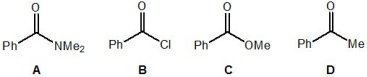
Rank the following molecules, A-D, in order of their relative electrophilicity (where 1 is the most electrophilic and 4 is the least electrophilic):
A) Molecule A
B) Molecule B
C) Molecule C
D) Molecule D
A) Molecule A
B) Molecule B
C) Molecule C
D) Molecule D

سؤال
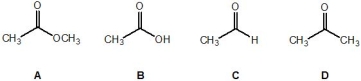
Rank the following molecules, A-D, in order of their relative acidity (where 1 is the most acidic and 4 is the least acidic):
A) Molecule A
B) Molecule B
C) Molecule C
D) Molecule D
A) Molecule A
B) Molecule B
C) Molecule C
D) Molecule D
سؤال
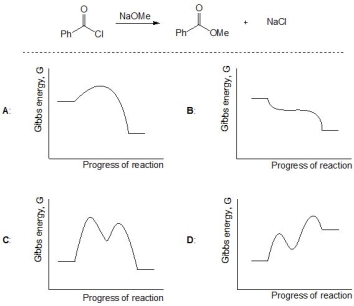
For the following reaction, pick out a suitable rate profile from A-D for this transformation:
A) A
B) B
C) C
D) D
A) A
B) B
C) C
D) D
سؤال
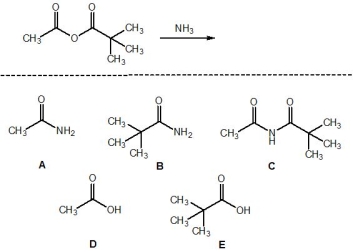
For the following reaction, pick out the products. Please select all that apply.
A) A
B) B
C) C
D) D
E) E
A) A
B) B
C) C
D) D
E) E
سؤال
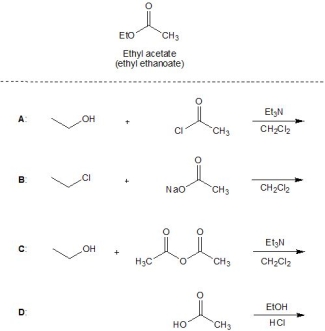
From the following reactions, A-D, pick out those which lead to the formation of ethyl acetate (ethyl ethanoate). Please select all that apply.
A) A
B) B
C) C
D) D
A) A
B) B
C) C
D) D
سؤال
For the following transformation, deduce whether it is an oxidation, reduction or neither:

A) Oxidation
B) Reduction
C) Neither
A) Oxidation
B) Reduction
C) Neither
سؤال
Rank the following molecules, A-D, in order of their ability to form enols (with 1 being most able and 4 the least able):

A) Molecule A
B) Molecule B
C) Molecule C
D) Molecule D
A) Molecule A
B) Molecule B
C) Molecule C
D) Molecule D
سؤال
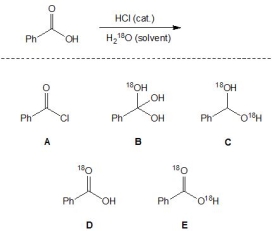
For the following reaction, pick out the major product:
A) A
B) B
C) C
D) D
E) E
A) A
B) B
C) C
D) D
E) E
سؤال
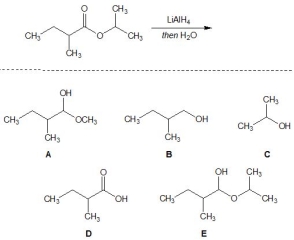
For the following reaction, pick out the product:
A) A
B) B
C) C
D) D
E) E
A) A
B) B
C) C
D) D
E) E
سؤال
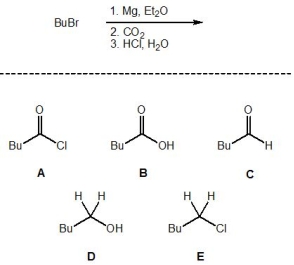
For the following reaction, pick out the major product::
A) A
B) B
C) C
D) D
E) E
A) A
B) B
C) C
D) D
E) E
سؤال
For the following reactions, A-D, pick out those which lead to the formation of 2-methyl-2-phenylethanol. Please select all that apply.
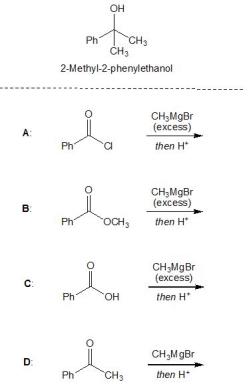
A) A
B) B
C) C
D) D
A) A
B) B
C) C
D) D
سؤال
For the following reaction, pick out the major product:
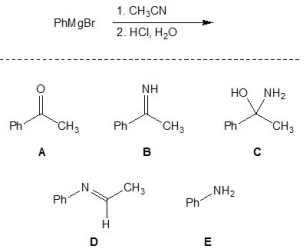
A) A
B) B
C) C
D) D
E) E
A) A
B) B
C) C
D) D
E) E
سؤال
Which of the following reagents, A-E, are suitable reagents for the following transformation? Please select all that apply.
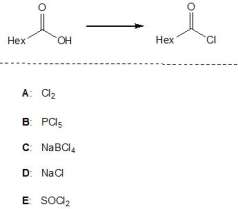
A) A
B) B
C) C
D) D
E) E
A) A
B) B
C) C
D) D
E) E
سؤال
Which of the following reagents, A-D, is a suitable reagent for the following transformation?
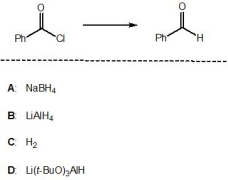
A) A
B) B
C) C
D) D
A) A
B) B
C) C
D) D
سؤال
Which of the following reagents, A-E, is a suitable reagent for the following transformation?
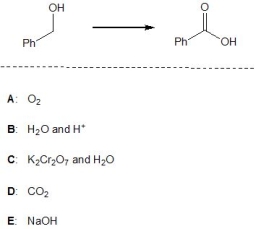
A) A
B) B
C) C
D) D
E) E
A) A
B) B
C) C
D) D
E) E
سؤال
Which of the following reagents, A-E, is a suitable reagent for the following transformation?
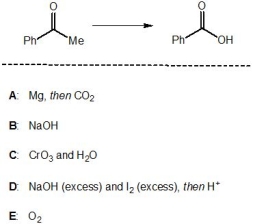
A) A
B) B
C) C
D) D
E) E
A) A
B) B
C) C
D) D
E) E
سؤال
From the following equilibrium, pick out the approximate equilibrium constant for this process:

A) 10-0.64
B) 10-1.56
C) 10-9
D) 10-12
E) 10-16
A) 10-0.64
B) 10-1.56
C) 10-9
D) 10-12
E) 10-16
سؤال
Rank the following molecules, A-D, in order of their relative acidity (where 1 is the most acidic and 4 is the least acidic):

A) Molecule A
B) Molecule B
C) Molecule C
D) Molecule D
A) Molecule A
B) Molecule B
C) Molecule C
D) Molecule D
سؤال
For the following Claisen reaction, pick out the product:
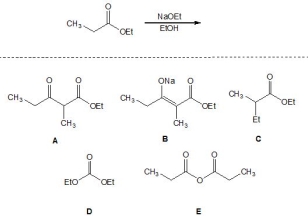
A) A
B) B
C) C
D) D
E) E
A) A
B) B
C) C
D) D
E) E
سؤال
For the following reaction, pick out the major product:
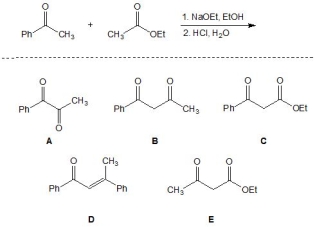
A) A
B) B
C) C
D) D
E) E
A) A
B) B
C) C
D) D
E) E
سؤال
Identify the reaction class for the following reaction:

A) Nucleophilic acyl substitution
B) α-substitution
C) carbonyl-carbonyl condensation
D) nucleophilic alkyl substitution
A) Nucleophilic acyl substitution
B) α-substitution
C) carbonyl-carbonyl condensation
D) nucleophilic alkyl substitution
سؤال
سؤال
How can the formation of ethyl butanoate from butanoic acid and ethanol be favoured? Please select all that apply.

A) Add a drying agent (e.g. molecular sieves)
B) Distillation (e.g. using a Dean-Stark trap)
C) Lower reaction temperature (e.g. ice bath)
D) Use water as a solvent
E) Use ethanol as a solvent
A) Add a drying agent (e.g. molecular sieves)
B) Distillation (e.g. using a Dean-Stark trap)
C) Lower reaction temperature (e.g. ice bath)
D) Use water as a solvent
E) Use ethanol as a solvent
سؤال
Predict the major product of the following reaction, at room temperature.
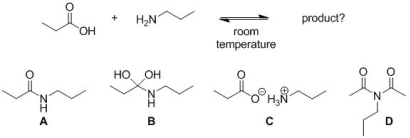
A) A
B) B
C) C
D) D
A) A
B) B
C) C
D) D
سؤال
Identify the major enol of methyl 3-oxopentanoate.

A) A
B) B
C) C
D) D
A) A
B) B
C) C
D) D

فتح الحزمة
قم بالتسجيل لفتح البطاقات في هذه المجموعة!
Unlock Deck
Unlock Deck
1/25

العب

ملء الشاشة (f)
Deck 24: Carboxylic Acids and Derivatives: Nucleophilic Acyl Substitution and Α-Substitution Reactions
1
Rank the following molecules, A-D, in order of their relative electrophilicity (where 1 is the most electrophilic and 4 is the least electrophilic):
A) Molecule A
B) Molecule B
C) Molecule C
D) Molecule D
A) Molecule A
B) Molecule B
C) Molecule C
D) Molecule D
B, D, C, A
2
Rank the following molecules, A-D, in order of their relative acidity (where 1 is the most acidic and 4 is the least acidic):
A) Molecule A
B) Molecule B
C) Molecule C
D) Molecule D
A) Molecule A
B) Molecule B
C) Molecule C
D) Molecule D
B, C, D, A
3
For the following reaction, pick out a suitable rate profile from A-D for this transformation:
A) A
B) B
C) C
D) D
A) A
B) B
C) C
D) D
C
4
For the following reaction, pick out the products. Please select all that apply.
A) A
B) B
C) C
D) D
E) E
A) A
B) B
C) C
D) D
E) E
فتح الحزمة
افتح القفل للوصول البطاقات البالغ عددها 25 في هذه المجموعة.
فتح الحزمة
k this deck
5
From the following reactions, A-D, pick out those which lead to the formation of ethyl acetate (ethyl ethanoate). Please select all that apply.
A) A
B) B
C) C
D) D
A) A
B) B
C) C
D) D
فتح الحزمة
افتح القفل للوصول البطاقات البالغ عددها 25 في هذه المجموعة.
فتح الحزمة
k this deck
6
For the following transformation, deduce whether it is an oxidation, reduction or neither:
A) Oxidation
B) Reduction
C) Neither
A) Oxidation
B) Reduction
C) Neither
فتح الحزمة
افتح القفل للوصول البطاقات البالغ عددها 25 في هذه المجموعة.
فتح الحزمة
k this deck
7
Rank the following molecules, A-D, in order of their ability to form enols (with 1 being most able and 4 the least able):
A) Molecule A
B) Molecule B
C) Molecule C
D) Molecule D
A) Molecule A
B) Molecule B
C) Molecule C
D) Molecule D
فتح الحزمة
افتح القفل للوصول البطاقات البالغ عددها 25 في هذه المجموعة.
فتح الحزمة
k this deck
8
For the following reaction, pick out the major product:
A) A
B) B
C) C
D) D
E) E
A) A
B) B
C) C
D) D
E) E
فتح الحزمة
افتح القفل للوصول البطاقات البالغ عددها 25 في هذه المجموعة.
فتح الحزمة
k this deck
9
For the following reaction, pick out the product:
A) A
B) B
C) C
D) D
E) E
A) A
B) B
C) C
D) D
E) E
فتح الحزمة
افتح القفل للوصول البطاقات البالغ عددها 25 في هذه المجموعة.
فتح الحزمة
k this deck
10
For the following reaction, pick out the major product::
A) A
B) B
C) C
D) D
E) E
A) A
B) B
C) C
D) D
E) E
فتح الحزمة
افتح القفل للوصول البطاقات البالغ عددها 25 في هذه المجموعة.
فتح الحزمة
k this deck
11
For the following reactions, A-D, pick out those which lead to the formation of 2-methyl-2-phenylethanol. Please select all that apply.
A) A
B) B
C) C
D) D
A) A
B) B
C) C
D) D
فتح الحزمة
افتح القفل للوصول البطاقات البالغ عددها 25 في هذه المجموعة.
فتح الحزمة
k this deck
12
For the following reaction, pick out the major product:
A) A
B) B
C) C
D) D
E) E
A) A
B) B
C) C
D) D
E) E
فتح الحزمة
افتح القفل للوصول البطاقات البالغ عددها 25 في هذه المجموعة.
فتح الحزمة
k this deck
13
Which of the following reagents, A-E, are suitable reagents for the following transformation? Please select all that apply.
A) A
B) B
C) C
D) D
E) E
A) A
B) B
C) C
D) D
E) E
فتح الحزمة
افتح القفل للوصول البطاقات البالغ عددها 25 في هذه المجموعة.
فتح الحزمة
k this deck
14
Which of the following reagents, A-D, is a suitable reagent for the following transformation?
A) A
B) B
C) C
D) D
A) A
B) B
C) C
D) D
فتح الحزمة
افتح القفل للوصول البطاقات البالغ عددها 25 في هذه المجموعة.
فتح الحزمة
k this deck
15
Which of the following reagents, A-E, is a suitable reagent for the following transformation?
A) A
B) B
C) C
D) D
E) E
A) A
B) B
C) C
D) D
E) E
فتح الحزمة
افتح القفل للوصول البطاقات البالغ عددها 25 في هذه المجموعة.
فتح الحزمة
k this deck
16
Which of the following reagents, A-E, is a suitable reagent for the following transformation?
A) A
B) B
C) C
D) D
E) E
A) A
B) B
C) C
D) D
E) E
فتح الحزمة
افتح القفل للوصول البطاقات البالغ عددها 25 في هذه المجموعة.
فتح الحزمة
k this deck
17
From the following equilibrium, pick out the approximate equilibrium constant for this process:
A) 10-0.64
B) 10-1.56
C) 10-9
D) 10-12
E) 10-16
A) 10-0.64
B) 10-1.56
C) 10-9
D) 10-12
E) 10-16
فتح الحزمة
افتح القفل للوصول البطاقات البالغ عددها 25 في هذه المجموعة.
فتح الحزمة
k this deck
18
Rank the following molecules, A-D, in order of their relative acidity (where 1 is the most acidic and 4 is the least acidic):
A) Molecule A
B) Molecule B
C) Molecule C
D) Molecule D
A) Molecule A
B) Molecule B
C) Molecule C
D) Molecule D
فتح الحزمة
افتح القفل للوصول البطاقات البالغ عددها 25 في هذه المجموعة.
فتح الحزمة
k this deck
19
For the following Claisen reaction, pick out the product:
A) A
B) B
C) C
D) D
E) E
A) A
B) B
C) C
D) D
E) E
فتح الحزمة
افتح القفل للوصول البطاقات البالغ عددها 25 في هذه المجموعة.
فتح الحزمة
k this deck
20
For the following reaction, pick out the major product:
A) A
B) B
C) C
D) D
E) E
A) A
B) B
C) C
D) D
E) E
فتح الحزمة
افتح القفل للوصول البطاقات البالغ عددها 25 في هذه المجموعة.
فتح الحزمة
k this deck
21
Identify the reaction class for the following reaction:
A) Nucleophilic acyl substitution
B) α-substitution
C) carbonyl-carbonyl condensation
D) nucleophilic alkyl substitution
A) Nucleophilic acyl substitution
B) α-substitution
C) carbonyl-carbonyl condensation
D) nucleophilic alkyl substitution
فتح الحزمة
افتح القفل للوصول البطاقات البالغ عددها 25 في هذه المجموعة.
فتح الحزمة
k this deck
22
A Dieckmann reaction is an example of what type of process? Please select all that apply.
A) Saponification reaction
B) Claisen condensation reaction
C) An intramolecular reaction
D) SN2 reaction
A) Saponification reaction
B) Claisen condensation reaction
C) An intramolecular reaction
D) SN2 reaction
فتح الحزمة
افتح القفل للوصول البطاقات البالغ عددها 25 في هذه المجموعة.
فتح الحزمة
k this deck
23
How can the formation of ethyl butanoate from butanoic acid and ethanol be favoured? Please select all that apply.
A) Add a drying agent (e.g. molecular sieves)
B) Distillation (e.g. using a Dean-Stark trap)
C) Lower reaction temperature (e.g. ice bath)
D) Use water as a solvent
E) Use ethanol as a solvent
A) Add a drying agent (e.g. molecular sieves)
B) Distillation (e.g. using a Dean-Stark trap)
C) Lower reaction temperature (e.g. ice bath)
D) Use water as a solvent
E) Use ethanol as a solvent
فتح الحزمة
افتح القفل للوصول البطاقات البالغ عددها 25 في هذه المجموعة.
فتح الحزمة
k this deck
24
Predict the major product of the following reaction, at room temperature.
A) A
B) B
C) C
D) D
A) A
B) B
C) C
D) D
فتح الحزمة
افتح القفل للوصول البطاقات البالغ عددها 25 في هذه المجموعة.
فتح الحزمة
k this deck
25
Identify the major enol of methyl 3-oxopentanoate.
A) A
B) B
C) C
D) D
A) A
B) B
C) C
D) D
فتح الحزمة
افتح القفل للوصول البطاقات البالغ عددها 25 في هذه المجموعة.
فتح الحزمة
k this deck
فتح الحزمة
افتح القفل للوصول البطاقات البالغ عددها 25 في هذه المجموعة.






