







 تكلم مع الذكاء الاصطناعي


Deck 22: The Chemistry of Enolate Ions, Enols, and Α,β-Unsaturated Carbonyl Compounds
ملء الشاشة (f)

سؤال
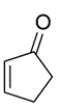
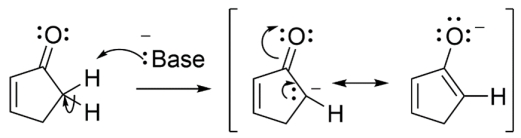
Give both enolates formed from deprotonation of the given ketone with base and draw a curved-arrow mechanism to show how they are formed.

سؤال
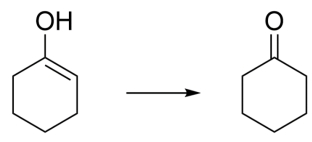
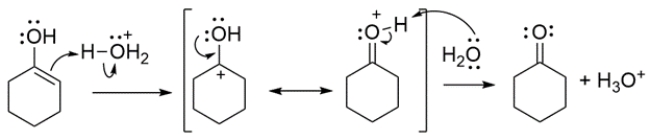
Write an arrow-pushing mechanism for the isomerization of enol to cyclohexanone under (a) aqueous acidic conditions and (b) aqueous basic conditions. Show all proton transfer steps in each mechanism and two resonance structures for each intermediate.
سؤال
Choose the reaction conditions that would convert acetophenone to methyl benzoate in the best yield.

A) step 1: NaBH4 in methanol; step 2: heat the product of step 1 in aqueous H2SO4
B) step 1: Br2 in acetic acid; step 2: heat the product of step 1 in methanol
C) step 1: excess Br2 in aqueous NaOH; step 2: heat the product of step 1 with methanol in aqueous NaOH
D) step 1: excess Br2 in aqueous NaOH; step 2: treat the product of step 1 with methanol in catalytic H2SO4
A) step 1: NaBH4 in methanol; step 2: heat the product of step 1 in aqueous H2SO4
B) step 1: Br2 in acetic acid; step 2: heat the product of step 1 in methanol
C) step 1: excess Br2 in aqueous NaOH; step 2: heat the product of step 1 with methanol in aqueous NaOH
D) step 1: excess Br2 in aqueous NaOH; step 2: treat the product of step 1 with methanol in catalytic H2SO4
سؤال
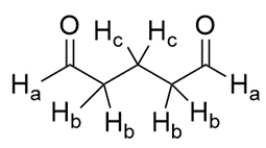
When allowed to react with D2O in the presence of a trace amount of NaOD, which hydrogens in the molecule will be exchanged by deuterium (D)?
A) Ha
B) Hb
C) Hc
D) Ha and Hb
E) Ha and Hc
A) Ha
B) Hb
C) Hc
D) Ha and Hb
E) Ha and Hc
سؤال
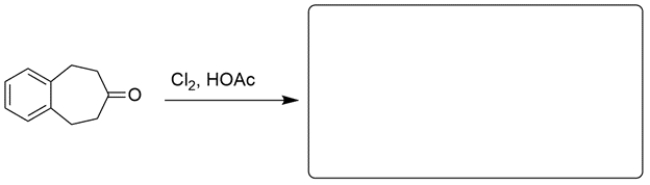
Predict the major organic product for the reaction. If you believe no reaction would occur, write NR.
سؤال
Indicate the missing starting material and product, given the conditions provided. When filling in the product, indicate only the major organic product(s). If you believe no reaction would occur, write NR.
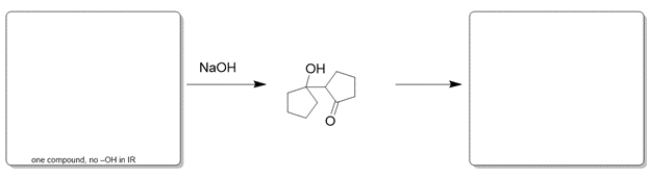
سؤال
Deduce the structure of the starting material given the product and conditions.
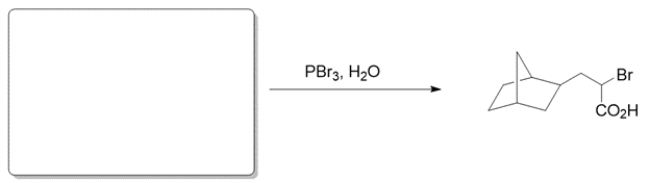
سؤال
Deduce the structure of the starting material given the product and conditions.
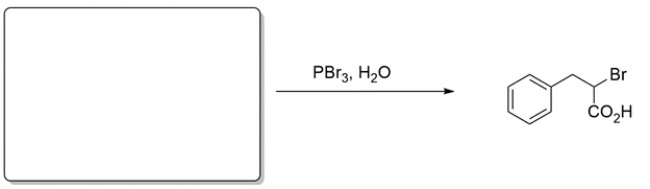
سؤال
Choose the best reagent(s) for carrying out the conversion.

A) PhMgBr, ether; then aqueous acid
B) PhCH2MgBr, ether; then aqueous acid
C) Ph3P=CHPh
D) LiCuPh2, ether
A) PhMgBr, ether; then aqueous acid
B) PhCH2MgBr, ether; then aqueous acid
C) Ph3P=CHPh
D) LiCuPh2, ether
سؤال
One equivalent of ethanethiol reacts with a naphthalene-1,4-dione derivative to yield primarily A or B, but not both.
a. Show a reaction mechanism for the formation of the favored product, and state in 10 words or less why your choice is favored over the other.
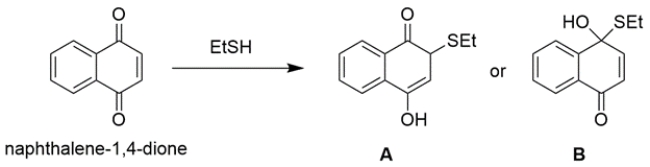
b. The actual observed product of this reaction is different than either A or B. The observed product shows no C=O stretch in IR. Show this product below, and in 10 words or less, state why this actual product forms.
a. Show a reaction mechanism for the formation of the favored product, and state in 10 words or less why your choice is favored over the other.
b. The actual observed product of this reaction is different than either A or B. The observed product shows no C=O stretch in IR. Show this product below, and in 10 words or less, state why this actual product forms.
سؤال
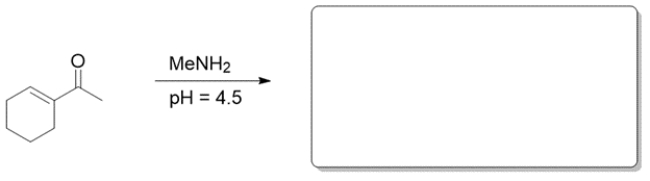
Predict the major organic product for the reaction. If you believe no reaction would occur, write NR.
سؤال
Which of these compounds could not have been prepared by an aldol addition/condensation reaction?
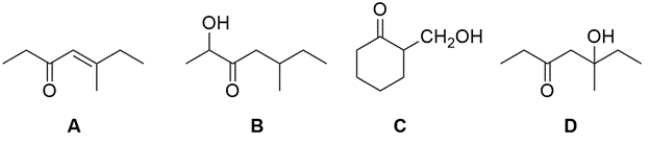
A) compound A
B) compound B
C) compound C
D) compound D
E) compounds B and C
A) compound A
B) compound B
C) compound C
D) compound D
E) compounds B and C
سؤال
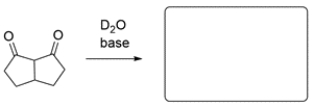
Predict the major organic product for the reaction. If you believe no reaction would occur, write NR.
سؤال
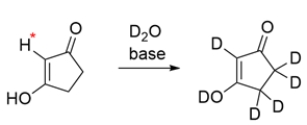
The deuterium exchange of the compound replaces all the protons. The hydrogen labeled with an asterisk is not normally acidic, as it cannot be resonance stabilized. Explain how this hydrogen is able to undergo a deuterium exchange.
سؤال
Name the condensation reaction that forms this molecule and identify the starting material that would be needed.
سؤال
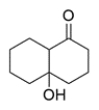
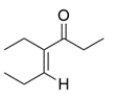
Can this compound be prepared in good yield by an aldol reaction? If so, give the starting materials. If not, explain why.

سؤال
Can this compound be prepared in good yield by an aldol reaction? If so, give the starting materials. If not, explain why.
سؤال
سؤال
Which ester cannot be used in a Claisen condensation?

A) compound A
B) compound B
C) compound C
D) compound D
A) compound A
B) compound B
C) compound C
D) compound D
سؤال
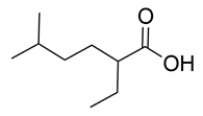
Outline a malonic ester synthesis of the carboxylic acid.
سؤال
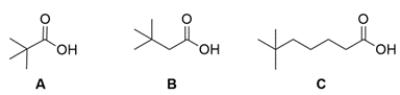
Only one of these three carboxylic acids can be synthesized from the malonic ester synthesis. Circle the compound that can be synthesized and explain why the other two carboxylic acids cannot be synthesized using the malonic ester synthesis.
سؤال
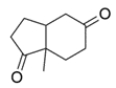
This compound can be formed from a condensation reaction. Name the reaction and draw the precursor to the condensation reaction.
سؤال
سؤال
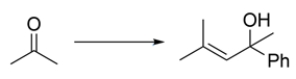
Outline a synthesis for the transformation of acetone to a tertiary alcohol. The phenyl group should come from PhLi.
سؤال
Outline a one-step synthesis for the transformation. Hint: Use an organometallic reagent.


فتح الحزمة
قم بالتسجيل لفتح البطاقات في هذه المجموعة!
Unlock Deck
Unlock Deck
1/25

العب

ملء الشاشة (f)
Deck 22: The Chemistry of Enolate Ions, Enols, and Α,β-Unsaturated Carbonyl Compounds
1
Give both enolates formed from deprotonation of the given ketone with base and draw a curved-arrow mechanism to show how they are formed.
The enolate is formed by deprotonation of an alpha carbon. There is only one alpha proton that can be deprotonated since the other alpha proton is vinyl. Deprotonation forms a carbanion whose electrons can be delocalized to the oxygen to form the other enolate.
2
Write an arrow-pushing mechanism for the isomerization of enol to cyclohexanone under (a) aqueous acidic conditions and (b) aqueous basic conditions. Show all proton transfer steps in each mechanism and two resonance structures for each intermediate.
(a) The acidic mechanism starts with protonation of the alkene to form a carbocation, which can be stabilized by the nearby hydroxy group.
 (b) The basic mechanism starts by deprotonating the alcohol.
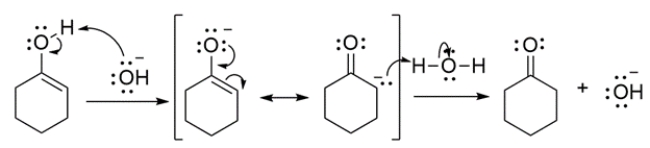
(b) The basic mechanism starts by deprotonating the alcohol. 3
Choose the reaction conditions that would convert acetophenone to methyl benzoate in the best yield.
A) step 1: NaBH4 in methanol; step 2: heat the product of step 1 in aqueous H2SO4
B) step 1: Br2 in acetic acid; step 2: heat the product of step 1 in methanol
C) step 1: excess Br2 in aqueous NaOH; step 2: heat the product of step 1 with methanol in aqueous NaOH
D) step 1: excess Br2 in aqueous NaOH; step 2: treat the product of step 1 with methanol in catalytic H2SO4
A) step 1: NaBH4 in methanol; step 2: heat the product of step 1 in aqueous H2SO4
B) step 1: Br2 in acetic acid; step 2: heat the product of step 1 in methanol
C) step 1: excess Br2 in aqueous NaOH; step 2: heat the product of step 1 with methanol in aqueous NaOH
D) step 1: excess Br2 in aqueous NaOH; step 2: treat the product of step 1 with methanol in catalytic H2SO4
D
4
When allowed to react with D2O in the presence of a trace amount of NaOD, which hydrogens in the molecule will be exchanged by deuterium (D)?
A) Ha
B) Hb
C) Hc
D) Ha and Hb
E) Ha and Hc
A) Ha
B) Hb
C) Hc
D) Ha and Hb
E) Ha and Hc
فتح الحزمة
افتح القفل للوصول البطاقات البالغ عددها 25 في هذه المجموعة.
فتح الحزمة
k this deck
5
Predict the major organic product for the reaction. If you believe no reaction would occur, write NR.
فتح الحزمة
افتح القفل للوصول البطاقات البالغ عددها 25 في هذه المجموعة.
فتح الحزمة
k this deck
6
Indicate the missing starting material and product, given the conditions provided. When filling in the product, indicate only the major organic product(s). If you believe no reaction would occur, write NR.
فتح الحزمة
افتح القفل للوصول البطاقات البالغ عددها 25 في هذه المجموعة.
فتح الحزمة
k this deck
7
Deduce the structure of the starting material given the product and conditions.
فتح الحزمة
افتح القفل للوصول البطاقات البالغ عددها 25 في هذه المجموعة.
فتح الحزمة
k this deck
8
Deduce the structure of the starting material given the product and conditions.
فتح الحزمة
افتح القفل للوصول البطاقات البالغ عددها 25 في هذه المجموعة.
فتح الحزمة
k this deck
9
Choose the best reagent(s) for carrying out the conversion.
A) PhMgBr, ether; then aqueous acid
B) PhCH2MgBr, ether; then aqueous acid
C) Ph3P=CHPh
D) LiCuPh2, ether
A) PhMgBr, ether; then aqueous acid
B) PhCH2MgBr, ether; then aqueous acid
C) Ph3P=CHPh
D) LiCuPh2, ether
فتح الحزمة
افتح القفل للوصول البطاقات البالغ عددها 25 في هذه المجموعة.
فتح الحزمة
k this deck
10
One equivalent of ethanethiol reacts with a naphthalene-1,4-dione derivative to yield primarily A or B, but not both.
a. Show a reaction mechanism for the formation of the favored product, and state in 10 words or less why your choice is favored over the other.
b. The actual observed product of this reaction is different than either A or B. The observed product shows no C=O stretch in IR. Show this product below, and in 10 words or less, state why this actual product forms.
a. Show a reaction mechanism for the formation of the favored product, and state in 10 words or less why your choice is favored over the other.
b. The actual observed product of this reaction is different than either A or B. The observed product shows no C=O stretch in IR. Show this product below, and in 10 words or less, state why this actual product forms.
فتح الحزمة
افتح القفل للوصول البطاقات البالغ عددها 25 في هذه المجموعة.
فتح الحزمة
k this deck
11
Predict the major organic product for the reaction. If you believe no reaction would occur, write NR.
فتح الحزمة
افتح القفل للوصول البطاقات البالغ عددها 25 في هذه المجموعة.
فتح الحزمة
k this deck
12
Which of these compounds could not have been prepared by an aldol addition/condensation reaction?
A) compound A
B) compound B
C) compound C
D) compound D
E) compounds B and C
A) compound A
B) compound B
C) compound C
D) compound D
E) compounds B and C
فتح الحزمة
افتح القفل للوصول البطاقات البالغ عددها 25 في هذه المجموعة.
فتح الحزمة
k this deck
13
Predict the major organic product for the reaction. If you believe no reaction would occur, write NR.
فتح الحزمة
افتح القفل للوصول البطاقات البالغ عددها 25 في هذه المجموعة.
فتح الحزمة
k this deck
14
The deuterium exchange of the compound replaces all the protons. The hydrogen labeled with an asterisk is not normally acidic, as it cannot be resonance stabilized. Explain how this hydrogen is able to undergo a deuterium exchange.
فتح الحزمة
افتح القفل للوصول البطاقات البالغ عددها 25 في هذه المجموعة.
فتح الحزمة
k this deck
15
Name the condensation reaction that forms this molecule and identify the starting material that would be needed.
فتح الحزمة
افتح القفل للوصول البطاقات البالغ عددها 25 في هذه المجموعة.
فتح الحزمة
k this deck
16
Can this compound be prepared in good yield by an aldol reaction? If so, give the starting materials. If not, explain why.
فتح الحزمة
افتح القفل للوصول البطاقات البالغ عددها 25 في هذه المجموعة.
فتح الحزمة
k this deck
17
Can this compound be prepared in good yield by an aldol reaction? If so, give the starting materials. If not, explain why.
فتح الحزمة
افتح القفل للوصول البطاقات البالغ عددها 25 في هذه المجموعة.
فتح الحزمة
k this deck
18
Which is true of the Claisen condensation?
A) The product is an -ketoester.
B) The enolate formed undergoes a nucleophilic acyl substitution reaction with a second molecule of ester.
C) The condensation can occur under both acidic and basic conditions.
D) The starting materials are an ester enolate and an aldehyde or ketone.
A) The product is an -ketoester.
B) The enolate formed undergoes a nucleophilic acyl substitution reaction with a second molecule of ester.
C) The condensation can occur under both acidic and basic conditions.
D) The starting materials are an ester enolate and an aldehyde or ketone.
فتح الحزمة
افتح القفل للوصول البطاقات البالغ عددها 25 في هذه المجموعة.
فتح الحزمة
k this deck
19
Which ester cannot be used in a Claisen condensation?
A) compound A
B) compound B
C) compound C
D) compound D
A) compound A
B) compound B
C) compound C
D) compound D
فتح الحزمة
افتح القفل للوصول البطاقات البالغ عددها 25 في هذه المجموعة.
فتح الحزمة
k this deck
20
Outline a malonic ester synthesis of the carboxylic acid.
فتح الحزمة
افتح القفل للوصول البطاقات البالغ عددها 25 في هذه المجموعة.
فتح الحزمة
k this deck
21
Only one of these three carboxylic acids can be synthesized from the malonic ester synthesis. Circle the compound that can be synthesized and explain why the other two carboxylic acids cannot be synthesized using the malonic ester synthesis.
فتح الحزمة
افتح القفل للوصول البطاقات البالغ عددها 25 في هذه المجموعة.
فتح الحزمة
k this deck
22
This compound can be formed from a condensation reaction. Name the reaction and draw the precursor to the condensation reaction.
فتح الحزمة
افتح القفل للوصول البطاقات البالغ عددها 25 في هذه المجموعة.
فتح الحزمة
k this deck
23
The reaction of lithium aluminum hydride with the , -unsaturated ketone forms either compound A or
فتح الحزمة
افتح القفل للوصول البطاقات البالغ عددها 25 في هذه المجموعة.
فتح الحزمة
k this deck
24
Outline a synthesis for the transformation of acetone to a tertiary alcohol. The phenyl group should come from PhLi.
فتح الحزمة
افتح القفل للوصول البطاقات البالغ عددها 25 في هذه المجموعة.
فتح الحزمة
k this deck
25
Outline a one-step synthesis for the transformation. Hint: Use an organometallic reagent.
فتح الحزمة
افتح القفل للوصول البطاقات البالغ عددها 25 في هذه المجموعة.
فتح الحزمة
k this deck
فتح الحزمة
افتح القفل للوصول البطاقات البالغ عددها 25 في هذه المجموعة.






