







 تكلم مع الذكاء الاصطناعي


Deck 18: The Chemistry of Aryl Halides, Vinylic Halides, and Phenols
ملء الشاشة (f)

سؤال
Predict the major organic products of the reactions. If no reaction, write NR and explain why no reaction occurs. Compare the two reactions and identify which will occur faster.
a.
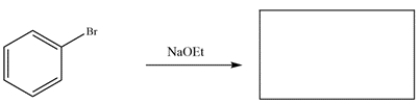 b.
b.
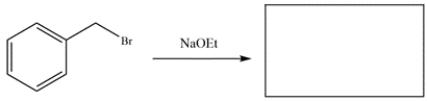
a.
b. 
سؤال
Analyze the three compounds and identify which would react fastest with NaI and which would react slowest. Explain your reasoning.
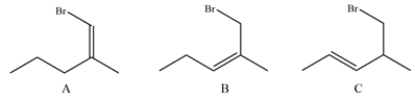
سؤال
Identify the most acidic compound.
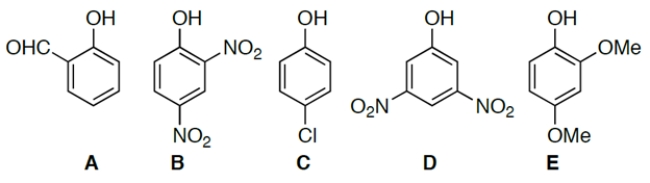
A) compound A
B) compound B
C) compound C
D) compound D
E) compound E
A) compound A
B) compound B
C) compound C
D) compound D
E) compound E
سؤال
Arrange the compounds in order of increasing acidity (least to most acidic.)
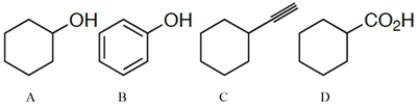
A) A < C < D < B
B) A < D < C < B
C) A < B < C < D
D) C < A < B < D
E) C < A < D < B
A) A < C < D < B
B) A < D < C < B
C) A < B < C < D
D) C < A < B < D
E) C < A < D < B
سؤال
In each set of reactions, circle the one with the larger equilibrium constant (lies further to the right).
a.
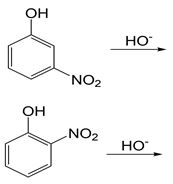
b.
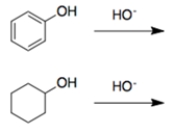
a.
b.
سؤال
In each set of reactions, circle the one that occurs faster.
a.
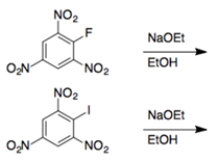
b.
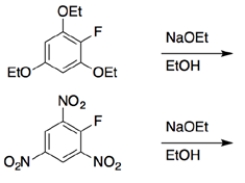
a.
b.
سؤال
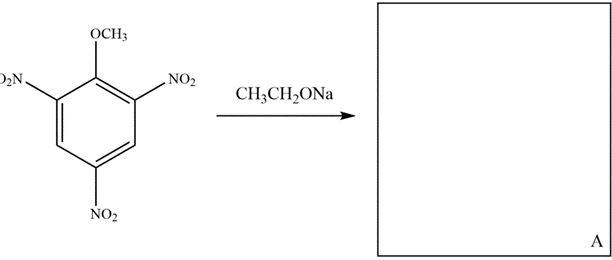
Reaction of 2,4,6-trinitroanisole with sodium ethoxide forms a stable anion, A. Draw the structure of A in the box, depicting the most stable resonance contributor (not hybrid) and provide an arrow pushing mechanism for its formation.
سؤال
1. Fluoxetine, also known as Prozac, is prepared from intermediate compound A. Intermediate A can be prepared by a reaction between reagents B and C. Using the spectral data provided in the boxes, provide structures for B and C.
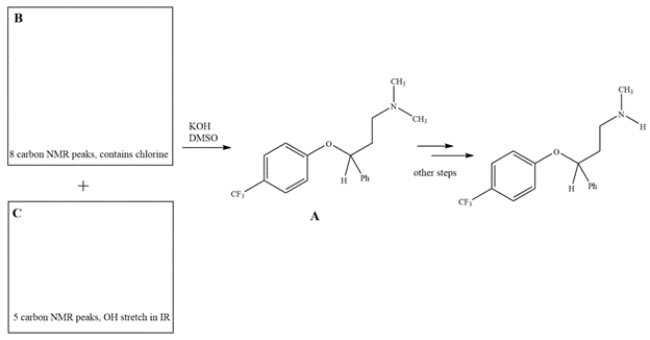 2. The physiologically active form of fluoxetine has (S) stereochemistry. Clearly draw wedge-and-dash bonds to your compound B, showing the stereochemistry needed to give S-fluoxetine.
3. The 1H NMR spectrum of B or C is shown below. Match the spectra with either B or C and label in the box.
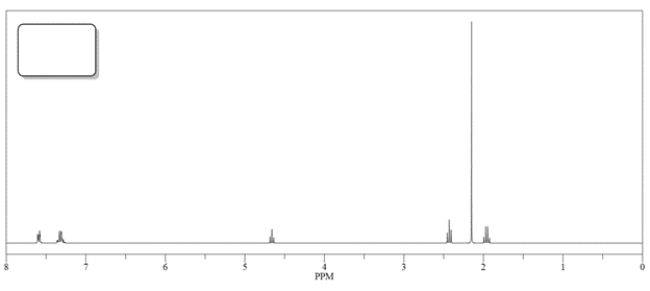
2. The physiologically active form of fluoxetine has (S) stereochemistry. Clearly draw wedge-and-dash bonds to your compound B, showing the stereochemistry needed to give S-fluoxetine.3. The 1H NMR spectrum of B or C is shown below. Match the spectra with either B or C and label in the box.
سؤال
Provide detailed, arrow-pushing mechanisms for the transformation. Show all reactive intermediates and proton transfer steps. (It is not necessary to show every resonance structure for intermediates.)

سؤال
Outline a synthesis of this alkyne, using the given starting material and any other reagents you need.

سؤال
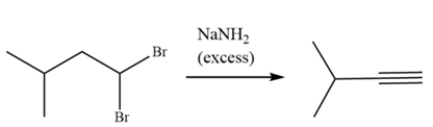
The alkyne can be formed from 1,1-dibromo-3-methylbutane. Draw a curved arrow mechanism explaining this transformation.
سؤال
Outline a four-step synthesis to transform 1-butene to (E)-3-hexene.

سؤال
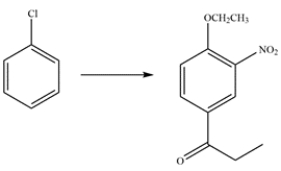
Outline a multistep synthesis for the compound from chlorobenzene.
سؤال
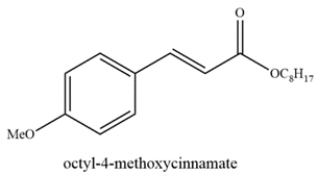
Octyl-4-methoxycinnamate is an ingredient found in sunscreens to block UV-B rays. Deduce the starting materials that could form octyl-4-methoxycinnamate from the Heck reaction.
سؤال
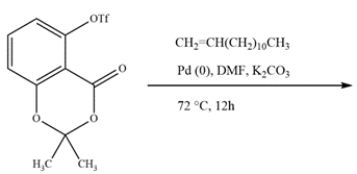
Ginkgo Biloba is a supplement sold over the counter proposed to help memory and act as an antioxidant. Ginkgo Biloba leaves contain alkylphenols, such as ginkgolic acid. A key intermediate in the synthesis of ginkgolic acid is formed from a Heck reaction with an aryl triflate (OTf) instead of aryl halide. Given the structure of the aryl triflate and alkene, predict the structure of the intermediate.
سؤال
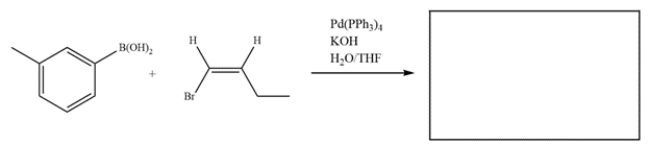
Predict the major organic product for the reaction:
سؤال
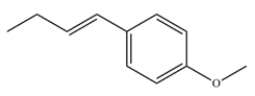
Deduce the starting materials that would give this product after a Suzuki coupling.
سؤال
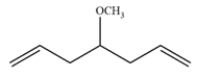
Predict the major organic product formed after alkene metathesis in the presence of an appropriate ruthenium catalyst. The 13C NMR data of the product show 4 peaks, at 40, 57, 77, and 128 ppm.
سؤال
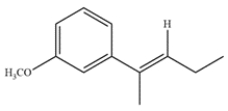
Outline an alkene metathesis reaction that would give this compound as the major product.
سؤال
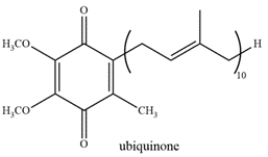
Ubiquinone, also known as coenzyme Q, is a biological quinone found to be involved in electron transport. A student performs a reduction of ubiquinone and monitors the reaction by IR spectroscopy. The student observes a decrease in the peak at 1650 cm‒1 and the appearance of a large broad stretch at 3300 cm‒1. Deduce the structure of the reduced product.
سؤال
Which reagent is used in the Stille coupling?
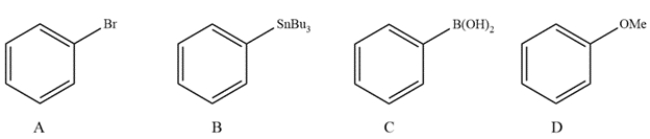
A) compound A
B) compound B
C) compound C
D) compound D
A) compound A
B) compound B
C) compound C
D) compound D
سؤال
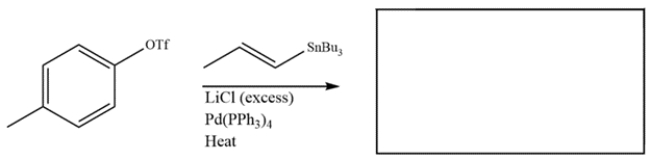
Predict the major organic product for the reaction.
سؤال
Palladium tetrakis is shown.
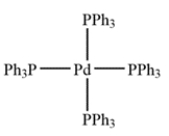 a. Identify the oxidation state of the palladium. ________________
b. Identify the dn count (that is, the value of n): ________________ electrons.
c. The total electron count around the metal is ________________ electrons.
a. Identify the oxidation state of the palladium. ________________b. Identify the dn count (that is, the value of n): ________________ electrons.
c. The total electron count around the metal is ________________ electrons.
سؤال
سؤال
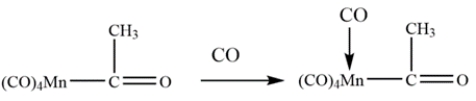
Identify the transition-metal catalyzed reaction:
A) ligand association
B) ligand dissociation
C) ligand insertion
D) oxidative addition
A) ligand association
B) ligand dissociation
C) ligand insertion
D) oxidative addition

فتح الحزمة
قم بالتسجيل لفتح البطاقات في هذه المجموعة!
Unlock Deck
Unlock Deck
1/25

العب

ملء الشاشة (f)
Deck 18: The Chemistry of Aryl Halides, Vinylic Halides, and Phenols
1
Predict the major organic products of the reactions. If no reaction, write NR and explain why no reaction occurs. Compare the two reactions and identify which will occur faster.
a.
b.
a.
b. a. Bromobenzene will not react with NaOEt. Recall that vinyl halides are unreactive in either SN1 or SN2 reactions. Aryl halides can undergo nucleophilic aromatic substitution, but the benzene ring often requires an electron withdrawing group in the ortho or para position to drive the reaction.
b. The starting material is benzyl bromide, so it will readily undergo SN2 substitution with ethoxide to form an ether.
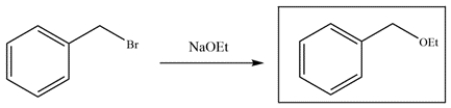
Since the benzyl halide is more reactive than the aryl halide, reaction b is faster.
b. The starting material is benzyl bromide, so it will readily undergo SN2 substitution with ethoxide to form an ether.
Since the benzyl halide is more reactive than the aryl halide, reaction b is faster.
2
Analyze the three compounds and identify which would react fastest with NaI and which would react slowest. Explain your reasoning.
Compound A is a vinyl halide and will be unreactive with nucleophiles in the SN2 reaction. Compound B is an allylic primary bromide and compound C is a primary alkyl bromide. An allylic halide will be more reactive than its analogous non-alyllic counterpart, so compound B will be the fastest. Compound A will be the slowest.
3
Identify the most acidic compound.
A) compound A
B) compound B
C) compound C
D) compound D
E) compound E
A) compound A
B) compound B
C) compound C
D) compound D
E) compound E
B
4
Arrange the compounds in order of increasing acidity (least to most acidic.)
A) A < C < D < B
B) A < D < C < B
C) A < B < C < D
D) C < A < B < D
E) C < A < D < B
A) A < C < D < B
B) A < D < C < B
C) A < B < C < D
D) C < A < B < D
E) C < A < D < B
فتح الحزمة
افتح القفل للوصول البطاقات البالغ عددها 25 في هذه المجموعة.
فتح الحزمة
k this deck
5
In each set of reactions, circle the one with the larger equilibrium constant (lies further to the right).
a.
b.
a.
b.
فتح الحزمة
افتح القفل للوصول البطاقات البالغ عددها 25 في هذه المجموعة.
فتح الحزمة
k this deck
6
In each set of reactions, circle the one that occurs faster.
a.
b.
a.
b.
فتح الحزمة
افتح القفل للوصول البطاقات البالغ عددها 25 في هذه المجموعة.
فتح الحزمة
k this deck
7
Reaction of 2,4,6-trinitroanisole with sodium ethoxide forms a stable anion, A. Draw the structure of A in the box, depicting the most stable resonance contributor (not hybrid) and provide an arrow pushing mechanism for its formation.
فتح الحزمة
افتح القفل للوصول البطاقات البالغ عددها 25 في هذه المجموعة.
فتح الحزمة
k this deck
8
1. Fluoxetine, also known as Prozac, is prepared from intermediate compound A. Intermediate A can be prepared by a reaction between reagents B and C. Using the spectral data provided in the boxes, provide structures for B and C.
2. The physiologically active form of fluoxetine has (S) stereochemistry. Clearly draw wedge-and-dash bonds to your compound B, showing the stereochemistry needed to give S-fluoxetine.
3. The 1H NMR spectrum of B or C is shown below. Match the spectra with either B or C and label in the box.
2. The physiologically active form of fluoxetine has (S) stereochemistry. Clearly draw wedge-and-dash bonds to your compound B, showing the stereochemistry needed to give S-fluoxetine.3. The 1H NMR spectrum of B or C is shown below. Match the spectra with either B or C and label in the box.
فتح الحزمة
افتح القفل للوصول البطاقات البالغ عددها 25 في هذه المجموعة.
فتح الحزمة
k this deck
9
Provide detailed, arrow-pushing mechanisms for the transformation. Show all reactive intermediates and proton transfer steps. (It is not necessary to show every resonance structure for intermediates.)
فتح الحزمة
افتح القفل للوصول البطاقات البالغ عددها 25 في هذه المجموعة.
فتح الحزمة
k this deck
10
Outline a synthesis of this alkyne, using the given starting material and any other reagents you need.
فتح الحزمة
افتح القفل للوصول البطاقات البالغ عددها 25 في هذه المجموعة.
فتح الحزمة
k this deck
11
The alkyne can be formed from 1,1-dibromo-3-methylbutane. Draw a curved arrow mechanism explaining this transformation.
فتح الحزمة
افتح القفل للوصول البطاقات البالغ عددها 25 في هذه المجموعة.
فتح الحزمة
k this deck
12
Outline a four-step synthesis to transform 1-butene to (E)-3-hexene.
فتح الحزمة
افتح القفل للوصول البطاقات البالغ عددها 25 في هذه المجموعة.
فتح الحزمة
k this deck
13
Outline a multistep synthesis for the compound from chlorobenzene.
فتح الحزمة
افتح القفل للوصول البطاقات البالغ عددها 25 في هذه المجموعة.
فتح الحزمة
k this deck
14
Octyl-4-methoxycinnamate is an ingredient found in sunscreens to block UV-B rays. Deduce the starting materials that could form octyl-4-methoxycinnamate from the Heck reaction.
فتح الحزمة
افتح القفل للوصول البطاقات البالغ عددها 25 في هذه المجموعة.
فتح الحزمة
k this deck
15
Ginkgo Biloba is a supplement sold over the counter proposed to help memory and act as an antioxidant. Ginkgo Biloba leaves contain alkylphenols, such as ginkgolic acid. A key intermediate in the synthesis of ginkgolic acid is formed from a Heck reaction with an aryl triflate (OTf) instead of aryl halide. Given the structure of the aryl triflate and alkene, predict the structure of the intermediate.
فتح الحزمة
افتح القفل للوصول البطاقات البالغ عددها 25 في هذه المجموعة.
فتح الحزمة
k this deck
16
Predict the major organic product for the reaction:
فتح الحزمة
افتح القفل للوصول البطاقات البالغ عددها 25 في هذه المجموعة.
فتح الحزمة
k this deck
17
Deduce the starting materials that would give this product after a Suzuki coupling.
فتح الحزمة
افتح القفل للوصول البطاقات البالغ عددها 25 في هذه المجموعة.
فتح الحزمة
k this deck
18
Predict the major organic product formed after alkene metathesis in the presence of an appropriate ruthenium catalyst. The 13C NMR data of the product show 4 peaks, at 40, 57, 77, and 128 ppm.
فتح الحزمة
افتح القفل للوصول البطاقات البالغ عددها 25 في هذه المجموعة.
فتح الحزمة
k this deck
19
Outline an alkene metathesis reaction that would give this compound as the major product.
فتح الحزمة
افتح القفل للوصول البطاقات البالغ عددها 25 في هذه المجموعة.
فتح الحزمة
k this deck
20
Ubiquinone, also known as coenzyme Q, is a biological quinone found to be involved in electron transport. A student performs a reduction of ubiquinone and monitors the reaction by IR spectroscopy. The student observes a decrease in the peak at 1650 cm‒1 and the appearance of a large broad stretch at 3300 cm‒1. Deduce the structure of the reduced product.
فتح الحزمة
افتح القفل للوصول البطاقات البالغ عددها 25 في هذه المجموعة.
فتح الحزمة
k this deck
21
Which reagent is used in the Stille coupling?
A) compound A
B) compound B
C) compound C
D) compound D
A) compound A
B) compound B
C) compound C
D) compound D
فتح الحزمة
افتح القفل للوصول البطاقات البالغ عددها 25 في هذه المجموعة.
فتح الحزمة
k this deck
22
Predict the major organic product for the reaction.
فتح الحزمة
افتح القفل للوصول البطاقات البالغ عددها 25 في هذه المجموعة.
فتح الحزمة
k this deck
23
Palladium tetrakis is shown.
a. Identify the oxidation state of the palladium. ________________
b. Identify the dn count (that is, the value of n): ________________ electrons.
c. The total electron count around the metal is ________________ electrons.
a. Identify the oxidation state of the palladium. ________________b. Identify the dn count (that is, the value of n): ________________ electrons.
c. The total electron count around the metal is ________________ electrons.
فتح الحزمة
افتح القفل للوصول البطاقات البالغ عددها 25 في هذه المجموعة.
فتح الحزمة
k this deck
24
Consider the transition metal complex [Mn(CN)6]3-.
a. Identify the oxidation state of the Mn. ________________
b. Identify the dn count (that is, the value of n): ________________ electrons.
c. The total electron count around the metal is ________________ electrons.
a. Identify the oxidation state of the Mn. ________________
b. Identify the dn count (that is, the value of n): ________________ electrons.
c. The total electron count around the metal is ________________ electrons.
فتح الحزمة
افتح القفل للوصول البطاقات البالغ عددها 25 في هذه المجموعة.
فتح الحزمة
k this deck
25
Identify the transition-metal catalyzed reaction:
A) ligand association
B) ligand dissociation
C) ligand insertion
D) oxidative addition
A) ligand association
B) ligand dissociation
C) ligand insertion
D) oxidative addition
فتح الحزمة
افتح القفل للوصول البطاقات البالغ عددها 25 في هذه المجموعة.
فتح الحزمة
k this deck
فتح الحزمة
افتح القفل للوصول البطاقات البالغ عددها 25 في هذه المجموعة.






