







 تكلم مع الذكاء الاصطناعي


Deck 11: The Chemistry of Alcohols and Thiols
ملء الشاشة (f)

سؤال
Which is the strongest acid?

A) compound A
B) compound B
C) compound C
D) compound D
A) compound A
B) compound B
C) compound C
D) compound D

سؤال
Which is the strongest acid?

A) compound A
B) compound B
C) compound C
D) compound D
A) compound A
B) compound B
C) compound C
D) compound D
سؤال
Which is the strongest base?

A) compound A
B) compound B
C) compound C
D) compound D
A) compound A
B) compound B
C) compound C
D) compound D
سؤال
Select all the carbocations that could undergo one step of carbocation rearrangement to form a more stable carbocation.

A) compound A
B) compound B
C) compound C
D) compound D
E) compound E
A) compound A
B) compound B
C) compound C
D) compound D
E) compound E
سؤال
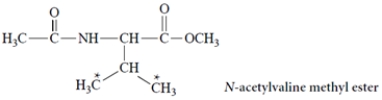
What is the relationship between the two starred methyl groups in N-acetylvaline methyl ester?
A) constitutionally nonequivalent
B) homotopic
C) enantiotopic
D) diastereotopic
E) identical in every way
A) constitutionally nonequivalent
B) homotopic
C) enantiotopic
D) diastereotopic
E) identical in every way
سؤال
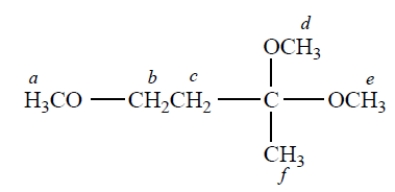
Consider the compound:
A) homotopic.
B) enantiotopic.
C) diastereotopic.
D) constitutionally nonequivalent.
A) homotopic.
B) enantiotopic.
C) diastereotopic.
D) constitutionally nonequivalent.
سؤال
What is the relationship of protons a and b in the structure?

A) The protons are constitutionally nonequivalent.
B) The protons are homotopic.
C) The protons are enantiotopic.
D) The protons are diastereotopic.
A) The protons are constitutionally nonequivalent.
B) The protons are homotopic.
C) The protons are enantiotopic.
D) The protons are diastereotopic.
سؤال
Provide the change in oxidation number for the entire organic molecule for the transformation given and circle the proper term describing the transformation.

سؤال
Provide the change in oxidation number for the entire organic molecule for the transformation given and circle the proper term describing the transformation.

سؤال
Calculate the change in oxidation number for the molecule in the transformation (be sure to indicate whether it is a positive or negative change) and circle whether the reaction is an oxidation, a reduction, or neither.

سؤال
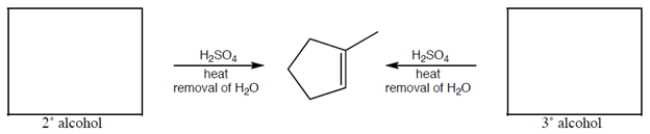
The product is formed in the dehydration of both a secondary alcohol and a tertiary alcohol. Draw each alcohol and then circle the alcohol which will have the greater reaction rate.
سؤال
Determine the missing product:

سؤال
Determine the missing reagents needed for the transformation:

سؤال
Fill in the missing starting material:

سؤال
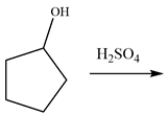
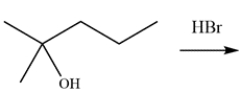
Draw the major product in the reaction:
سؤال
Draw the major product in the reaction:
سؤال
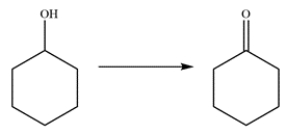
Fill in the reagents to complete the reaction:
سؤال
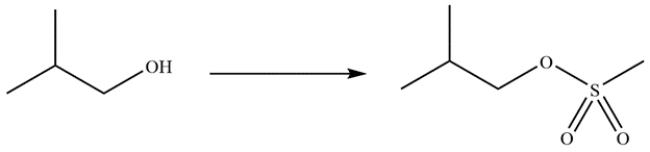
Fill in the reagents to complete the reaction:
سؤال
The enzyme triose phosphate isomerase catalyzes this important reaction in glycolysis (the breakdown of glucose):
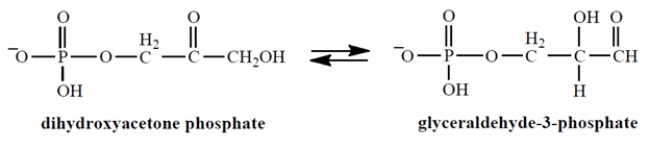
A) an oxidation.
B) a reduction.
C) neither an oxidation nor a reduction.
D) an SN2 reaction.
A) an oxidation.
B) a reduction.
C) neither an oxidation nor a reduction.
D) an SN2 reaction.
سؤال
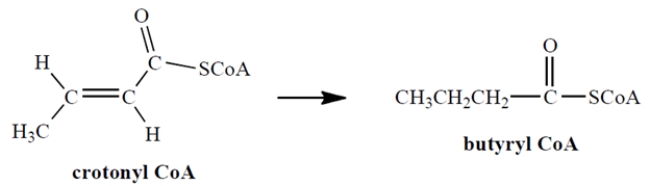
How many electrons are involved in this reduction if it were expressed as a half-reaction?
سؤال
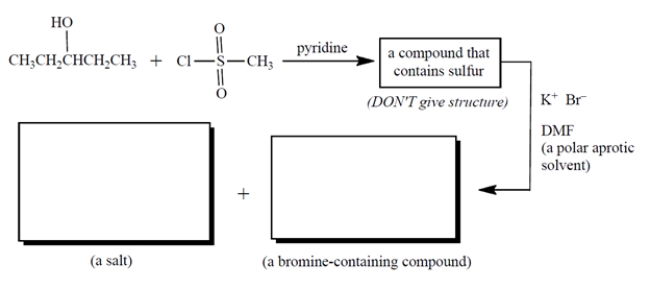
Complete the reactions by giving the missing organic products:
سؤال
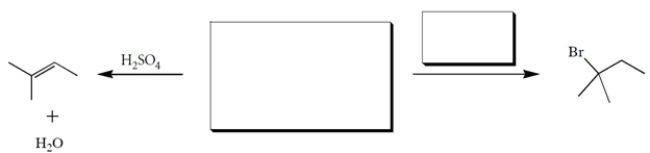
Fill in the boxes with the missing compounds or reagents:
سؤال
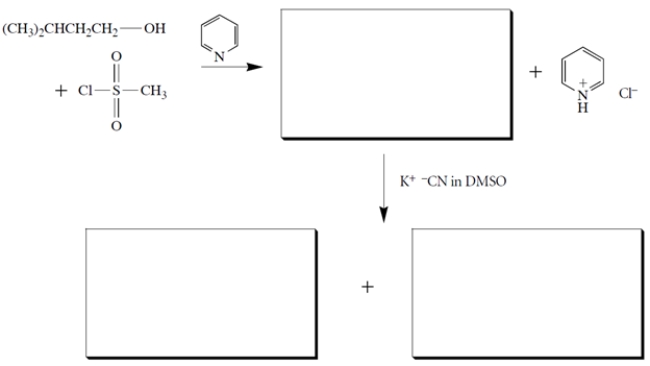
Fill in the products with the missing compounds:
سؤال
Fill in the missing products:

سؤال
Outline a synthesis to give this transformation:


فتح الحزمة
قم بالتسجيل لفتح البطاقات في هذه المجموعة!
Unlock Deck
Unlock Deck
1/25

العب

ملء الشاشة (f)
Deck 11: The Chemistry of Alcohols and Thiols
1
Which is the strongest acid?
A) compound A
B) compound B
C) compound C
D) compound D
A) compound A
B) compound B
C) compound C
D) compound D
C
2
Which is the strongest acid?
A) compound A
B) compound B
C) compound C
D) compound D
A) compound A
B) compound B
C) compound C
D) compound D
D
3
Which is the strongest base?
A) compound A
B) compound B
C) compound C
D) compound D
A) compound A
B) compound B
C) compound C
D) compound D
A
4
Select all the carbocations that could undergo one step of carbocation rearrangement to form a more stable carbocation.
A) compound A
B) compound B
C) compound C
D) compound D
E) compound E
A) compound A
B) compound B
C) compound C
D) compound D
E) compound E
فتح الحزمة
افتح القفل للوصول البطاقات البالغ عددها 25 في هذه المجموعة.
فتح الحزمة
k this deck
5
What is the relationship between the two starred methyl groups in N-acetylvaline methyl ester?
A) constitutionally nonequivalent
B) homotopic
C) enantiotopic
D) diastereotopic
E) identical in every way
A) constitutionally nonequivalent
B) homotopic
C) enantiotopic
D) diastereotopic
E) identical in every way
فتح الحزمة
افتح القفل للوصول البطاقات البالغ عددها 25 في هذه المجموعة.
فتح الحزمة
k this deck
6
Consider the compound:
A) homotopic.
B) enantiotopic.
C) diastereotopic.
D) constitutionally nonequivalent.
A) homotopic.
B) enantiotopic.
C) diastereotopic.
D) constitutionally nonequivalent.
فتح الحزمة
افتح القفل للوصول البطاقات البالغ عددها 25 في هذه المجموعة.
فتح الحزمة
k this deck
7
What is the relationship of protons a and b in the structure?
A) The protons are constitutionally nonequivalent.
B) The protons are homotopic.
C) The protons are enantiotopic.
D) The protons are diastereotopic.
A) The protons are constitutionally nonequivalent.
B) The protons are homotopic.
C) The protons are enantiotopic.
D) The protons are diastereotopic.
فتح الحزمة
افتح القفل للوصول البطاقات البالغ عددها 25 في هذه المجموعة.
فتح الحزمة
k this deck
8
Provide the change in oxidation number for the entire organic molecule for the transformation given and circle the proper term describing the transformation.
فتح الحزمة
افتح القفل للوصول البطاقات البالغ عددها 25 في هذه المجموعة.
فتح الحزمة
k this deck
9
Provide the change in oxidation number for the entire organic molecule for the transformation given and circle the proper term describing the transformation.
فتح الحزمة
افتح القفل للوصول البطاقات البالغ عددها 25 في هذه المجموعة.
فتح الحزمة
k this deck
10
Calculate the change in oxidation number for the molecule in the transformation (be sure to indicate whether it is a positive or negative change) and circle whether the reaction is an oxidation, a reduction, or neither.
فتح الحزمة
افتح القفل للوصول البطاقات البالغ عددها 25 في هذه المجموعة.
فتح الحزمة
k this deck
11
The product is formed in the dehydration of both a secondary alcohol and a tertiary alcohol. Draw each alcohol and then circle the alcohol which will have the greater reaction rate.
فتح الحزمة
افتح القفل للوصول البطاقات البالغ عددها 25 في هذه المجموعة.
فتح الحزمة
k this deck
12
Determine the missing product:
فتح الحزمة
افتح القفل للوصول البطاقات البالغ عددها 25 في هذه المجموعة.
فتح الحزمة
k this deck
13
Determine the missing reagents needed for the transformation:
فتح الحزمة
افتح القفل للوصول البطاقات البالغ عددها 25 في هذه المجموعة.
فتح الحزمة
k this deck
14
Fill in the missing starting material:
فتح الحزمة
افتح القفل للوصول البطاقات البالغ عددها 25 في هذه المجموعة.
فتح الحزمة
k this deck
15
Draw the major product in the reaction:
فتح الحزمة
افتح القفل للوصول البطاقات البالغ عددها 25 في هذه المجموعة.
فتح الحزمة
k this deck
16
Draw the major product in the reaction:
فتح الحزمة
افتح القفل للوصول البطاقات البالغ عددها 25 في هذه المجموعة.
فتح الحزمة
k this deck
17
Fill in the reagents to complete the reaction:
فتح الحزمة
افتح القفل للوصول البطاقات البالغ عددها 25 في هذه المجموعة.
فتح الحزمة
k this deck
18
Fill in the reagents to complete the reaction:
فتح الحزمة
افتح القفل للوصول البطاقات البالغ عددها 25 في هذه المجموعة.
فتح الحزمة
k this deck
19
The enzyme triose phosphate isomerase catalyzes this important reaction in glycolysis (the breakdown of glucose):
A) an oxidation.
B) a reduction.
C) neither an oxidation nor a reduction.
D) an SN2 reaction.
A) an oxidation.
B) a reduction.
C) neither an oxidation nor a reduction.
D) an SN2 reaction.
فتح الحزمة
افتح القفل للوصول البطاقات البالغ عددها 25 في هذه المجموعة.
فتح الحزمة
k this deck
20
How many electrons are involved in this reduction if it were expressed as a half-reaction?
فتح الحزمة
افتح القفل للوصول البطاقات البالغ عددها 25 في هذه المجموعة.
فتح الحزمة
k this deck
21
Complete the reactions by giving the missing organic products:
فتح الحزمة
افتح القفل للوصول البطاقات البالغ عددها 25 في هذه المجموعة.
فتح الحزمة
k this deck
22
Fill in the boxes with the missing compounds or reagents:
فتح الحزمة
افتح القفل للوصول البطاقات البالغ عددها 25 في هذه المجموعة.
فتح الحزمة
k this deck
23
Fill in the products with the missing compounds:
فتح الحزمة
افتح القفل للوصول البطاقات البالغ عددها 25 في هذه المجموعة.
فتح الحزمة
k this deck
24
Fill in the missing products:
فتح الحزمة
افتح القفل للوصول البطاقات البالغ عددها 25 في هذه المجموعة.
فتح الحزمة
k this deck
25
Outline a synthesis to give this transformation:
فتح الحزمة
افتح القفل للوصول البطاقات البالغ عددها 25 في هذه المجموعة.
فتح الحزمة
k this deck
فتح الحزمة
افتح القفل للوصول البطاقات البالغ عددها 25 في هذه المجموعة.






