







 تكلم مع الذكاء الاصطناعي


Deck 7: Alkyl Halides and Elimination Reactions
ملء الشاشة (f)

سؤال
Classify each alkene in vitamin D3 labeled I, II, III by the number of carbon substituents bonded to the double bond. 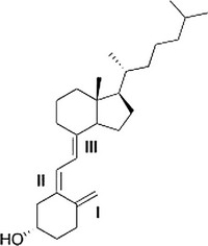
A) I = Monosubstituted; II = disubstituted; III = trisubstituted
B) I = Disubstituted; II = disubstituted; III = trisubstituted
C) I = Disubstituted; II = trisubstituted; III = disubstituted
D) I = Disubstituted; II = trisubstituted; III = trisubstituted
A) I = Monosubstituted; II = disubstituted; III = trisubstituted
B) I = Disubstituted; II = disubstituted; III = trisubstituted
C) I = Disubstituted; II = trisubstituted; III = disubstituted
D) I = Disubstituted; II = trisubstituted; III = trisubstituted

سؤال
سؤال
What is the product of the following reaction? 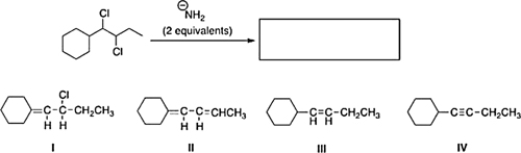
A) III
B) II
C) IV
D) I
A) III
B) II
C) IV
D) I
سؤال
What is the major product of the following reaction? 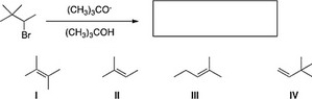
A) III
B) II
C) I
D) IV
A) III
B) II
C) I
D) IV
سؤال
Consider the following E2 reaction. What rate equation would be observed for this reaction? ![<strong>Consider the following E2 reaction. What rate equation would be observed for this reaction? </strong> A) Rate =k[CH<sub>3</sub>CH<sub>2</sub>CH<sub>2</sub>Br][KOC(CH<sub>3</sub>)<sub>3</sub>] B) Rate =k[CH<sub>3</sub>CH<sub>2</sub>CH<sub>2</sub>Br]<sup>2</sup>[KOC(CH<sub>3</sub>)<sub>3</sub>] C) Rate =k[CH<sub>3</sub>CH<sub>2</sub>CH<sub>2</sub>Br] D) Rate = k[CH<sub>3</sub>CH<sub>2</sub>CH<sub>2</sub>Br][KOC(CH<sub>3</sub>)<sub>3</sub>]<sup>2</sup> <div style=padding-top: 35px>](https://d2lvgg3v3hfg70.cloudfront.net/TBMG1035/11ee4665_5cf4_eadc_862d_49cab86c3690_TBMG1035_00.jpg)
A) Rate =k[CH3CH2CH2Br][KOC(CH3)3]
B) Rate =k[CH3CH2CH2Br]2[KOC(CH3)3]
C) Rate =k[CH3CH2CH2Br]
D) Rate = k[CH3CH2CH2Br][KOC(CH3)3]2
A) Rate =k[CH3CH2CH2Br][KOC(CH3)3]
B) Rate =k[CH3CH2CH2Br]2[KOC(CH3)3]
C) Rate =k[CH3CH2CH2Br]
D) Rate = k[CH3CH2CH2Br][KOC(CH3)3]2
سؤال
What is the product of the following reaction? 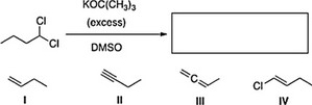
A) I
B) IV
C) III
D) II
A) I
B) IV
C) III
D) II
سؤال
سؤال
سؤال
What is the product of the following reaction? 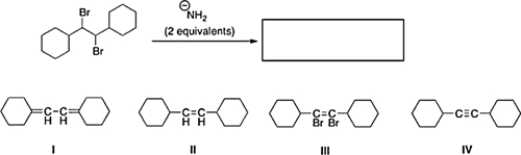
A) II
B) III
C) IV
D) I
A) II
B) III
C) IV
D) I

فتح الحزمة
قم بالتسجيل لفتح البطاقات في هذه المجموعة!
Unlock Deck
Unlock Deck
1/9

العب

ملء الشاشة (f)
Deck 7: Alkyl Halides and Elimination Reactions
1
Classify each alkene in vitamin D3 labeled I, II, III by the number of carbon substituents bonded to the double bond.
A) I = Monosubstituted; II = disubstituted; III = trisubstituted
B) I = Disubstituted; II = disubstituted; III = trisubstituted
C) I = Disubstituted; II = trisubstituted; III = disubstituted
D) I = Disubstituted; II = trisubstituted; III = trisubstituted
A) I = Monosubstituted; II = disubstituted; III = trisubstituted
B) I = Disubstituted; II = disubstituted; III = trisubstituted
C) I = Disubstituted; II = trisubstituted; III = disubstituted
D) I = Disubstituted; II = trisubstituted; III = trisubstituted
I = Disubstituted; II = trisubstituted; III = trisubstituted
2
Which of the following statements about an E1 mechanism is true?
A) The reaction is slowest with tertiary substrates.
B) The reaction follows second-order kinetics.
C) The identity of the leaving group affects the rate of reaction.
D) Polar aprotic solvents favor the E1 mechanism.
A) The reaction is slowest with tertiary substrates.
B) The reaction follows second-order kinetics.
C) The identity of the leaving group affects the rate of reaction.
D) Polar aprotic solvents favor the E1 mechanism.
The identity of the leaving group affects the rate of reaction.
3
What is the product of the following reaction?
A) III
B) II
C) IV
D) I
A) III
B) II
C) IV
D) I
IV
4
What is the major product of the following reaction?
A) III
B) II
C) I
D) IV
A) III
B) II
C) I
D) IV
فتح الحزمة
افتح القفل للوصول البطاقات البالغ عددها 9 في هذه المجموعة.
فتح الحزمة
k this deck
5
Consider the following E2 reaction. What rate equation would be observed for this reaction?
A) Rate =k[CH3CH2CH2Br][KOC(CH3)3]
B) Rate =k[CH3CH2CH2Br]2[KOC(CH3)3]
C) Rate =k[CH3CH2CH2Br]
D) Rate = k[CH3CH2CH2Br][KOC(CH3)3]2
A) Rate =k[CH3CH2CH2Br][KOC(CH3)3]
B) Rate =k[CH3CH2CH2Br]2[KOC(CH3)3]
C) Rate =k[CH3CH2CH2Br]
D) Rate = k[CH3CH2CH2Br][KOC(CH3)3]2
فتح الحزمة
افتح القفل للوصول البطاقات البالغ عددها 9 في هذه المجموعة.
فتح الحزمة
k this deck
6
What is the product of the following reaction?
A) I
B) IV
C) III
D) II
A) I
B) IV
C) III
D) II
فتح الحزمة
افتح القفل للوصول البطاقات البالغ عددها 9 في هذه المجموعة.
فتح الحزمة
k this deck
7
Which of the following statements about an E1 mechanism isnot true?
A) The reaction follows first-order kinetics.
B) Stronger bases favor the E1 reaction.
C) The reaction is fastest with tertiary alkyl halides.
D) A better leaving group makes the reaction rate increase.
A) The reaction follows first-order kinetics.
B) Stronger bases favor the E1 reaction.
C) The reaction is fastest with tertiary alkyl halides.
D) A better leaving group makes the reaction rate increase.
فتح الحزمة
افتح القفل للوصول البطاقات البالغ عددها 9 في هذه المجموعة.
فتح الحزمة
k this deck
8
Which of the following statements about the mechanism of an E2 reaction isnot true?
A) It is fastest with tertiary halides.
B) All bonds are broken and formed in a single step.
C) It exhibits first-order kinetics.
D) A better leaving group should make a faster reaction.
A) It is fastest with tertiary halides.
B) All bonds are broken and formed in a single step.
C) It exhibits first-order kinetics.
D) A better leaving group should make a faster reaction.
فتح الحزمة
افتح القفل للوصول البطاقات البالغ عددها 9 في هذه المجموعة.
فتح الحزمة
k this deck
9
What is the product of the following reaction?
A) II
B) III
C) IV
D) I
A) II
B) III
C) IV
D) I
فتح الحزمة
افتح القفل للوصول البطاقات البالغ عددها 9 في هذه المجموعة.
فتح الحزمة
k this deck
فتح الحزمة
افتح القفل للوصول البطاقات البالغ عددها 9 في هذه المجموعة.






