







 تكلم مع الذكاء الاصطناعي


Deck 40: Opportunistic Infections
ملء الشاشة (f)

سؤال

سؤال
سؤال
سؤال
سؤال
سؤال
سؤال
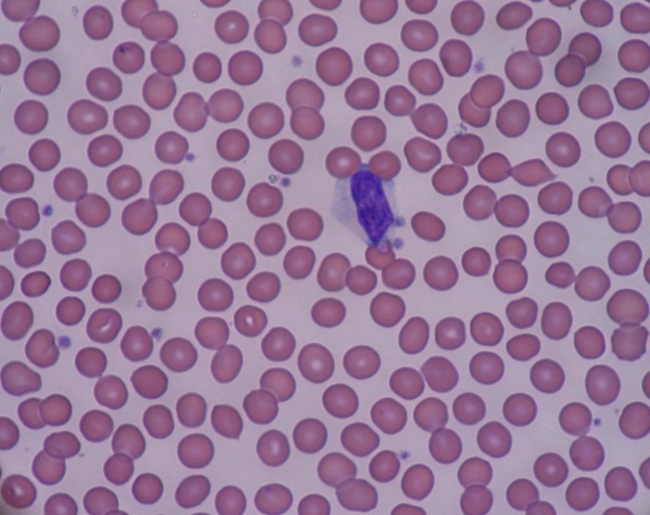
The peripheral blood smear cell observed, in the image provided, is known as a
 Source: Bobjgalindo
A) neutrophil.
B) reactive lymphocyte.
C) plasma cell.
D) monocyte.
Source: BobjgalindoA) neutrophil.
B) reactive lymphocyte.
C) plasma cell.
D) monocyte.
سؤال
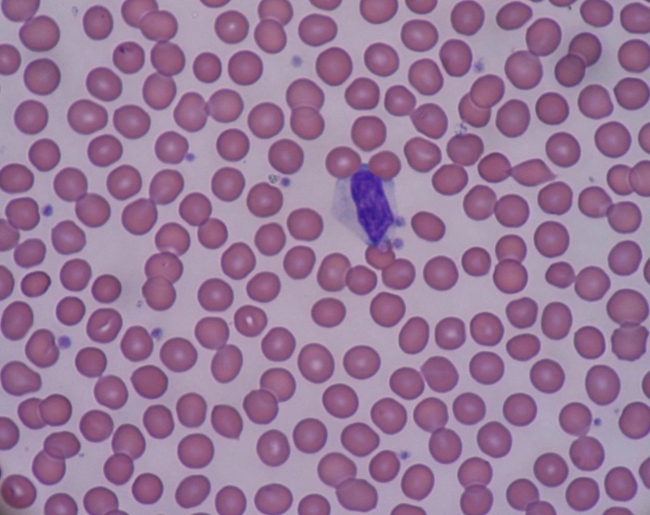
You observe this cell, in the image provided, on a peripheral blood smear. The patient from whom this blood sample was obtained could be suffering from a/an
 Source: Bobjgalindo
A) bacterial infection.
B) parasite infection.
C) allergic reactions.
D) viral infection.
Source: BobjgalindoA) bacterial infection.
B) parasite infection.
C) allergic reactions.
D) viral infection.
سؤال
سؤال
سؤال
سؤال
سؤال
سؤال
سؤال
سؤال
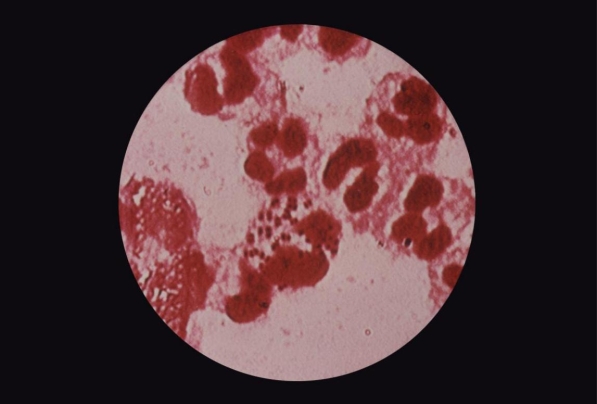
A 17-year-old male presents to the emergency room lethargic with a fever and rash. Blood cultures and cerebrospinal fluid samples are taken. The direct Gram stain of the CSF is provided.
 Source: CDC and Susan Lindsley
At 24 hours, the blood cultures and CSF culture grow the same organism. Testing
Results include:
Gram stain: same as the direct smear
Oxidase: purple
Glucose and maltose fermentation tubes: yellow
Lactose and sucrose fermentation tubes: red
Butyrate esterase: no color change
After a thorough history was taken with the assistance of the parents, it was
Discovered the patient has had two similar disease episodes in the past two years with
The same organism. The physician should test the patient for
A) a deficiency of the classical pathway of the complement system.
B) a deficiency of the common terminal pathway of the complement system.
C) common variable immune deficiency.
D) severe combined immunodeficiency.
Source: CDC and Susan LindsleyAt 24 hours, the blood cultures and CSF culture grow the same organism. Testing
Results include:
Gram stain: same as the direct smear
Oxidase: purple
Glucose and maltose fermentation tubes: yellow
Lactose and sucrose fermentation tubes: red
Butyrate esterase: no color change
After a thorough history was taken with the assistance of the parents, it was
Discovered the patient has had two similar disease episodes in the past two years with
The same organism. The physician should test the patient for
A) a deficiency of the classical pathway of the complement system.
B) a deficiency of the common terminal pathway of the complement system.
C) common variable immune deficiency.
D) severe combined immunodeficiency.
سؤال
سؤال
سؤال
سؤال

فتح الحزمة
قم بالتسجيل لفتح البطاقات في هذه المجموعة!
Unlock Deck
Unlock Deck
1/20

العب

ملء الشاشة (f)
Deck 40: Opportunistic Infections
1
An individual with cystic fibrosis is prone to infections due to abnormally functioning
A) cilia.
B) lysozymes.
C) mucous membranes.
D) innate and adaptive immune systems.
A) cilia.
B) lysozymes.
C) mucous membranes.
D) innate and adaptive immune systems.
mucous membranes.
2
The first line of defense against infectious agents in the human immune system response is
A) antibodies.
B) complement.
C) white blood cells.
D) physical barriers.
A) antibodies.
B) complement.
C) white blood cells.
D) physical barriers.
physical barriers.
3
T lymphocytes are an important component of the
A) innate immune system.
B) complement system.
C) adaptive immune system.
D) natural immune system.
A) innate immune system.
B) complement system.
C) adaptive immune system.
D) natural immune system.
adaptive immune system.
4
Which of the following characteristics is shared by both the innate and adaptive
A) Ability to recognize specific infecting organisms
B) White blood cells as key players
C) The formation of pus as a by-product
D) The production of antibodies
A) Ability to recognize specific infecting organisms
B) White blood cells as key players
C) The formation of pus as a by-product
D) The production of antibodies
فتح الحزمة
افتح القفل للوصول البطاقات البالغ عددها 20 في هذه المجموعة.
فتح الحزمة
k this deck
5
An infant presents to his pediatrician with fever but no visible signs of infection. On closer inspection, the physician notes multiple mucosal and gum lesions in the child's mouth. A complete blood count reveals 41,000 white blood cells/µL. Which of the following defects could account for this presentation?
A) Chronic granulomatous disease
B) Myeloperoxidase deficiency
C) Chédiak-Higashi disease
D) Leukocyte adhesion deficiency
A) Chronic granulomatous disease
B) Myeloperoxidase deficiency
C) Chédiak-Higashi disease
D) Leukocyte adhesion deficiency
فتح الحزمة
افتح القفل للوصول البطاقات البالغ عددها 20 في هذه المجموعة.
فتح الحزمة
k this deck
6
The presence of vacuoles in the cytoplasm of neutrophils is most associated with
A) bacterial infection.
B) activation of complement.
C) Chédiak-Higashi disease.
D) DiGeorge syndrome.
A) bacterial infection.
B) activation of complement.
C) Chédiak-Higashi disease.
D) DiGeorge syndrome.
فتح الحزمة
افتح القفل للوصول البطاقات البالغ عددها 20 في هذه المجموعة.
فتح الحزمة
k this deck
7
The peripheral blood smear cell observed, in the image provided, is known as a
Source: Bobjgalindo
A) neutrophil.
B) reactive lymphocyte.
C) plasma cell.
D) monocyte.
Source: BobjgalindoA) neutrophil.
B) reactive lymphocyte.
C) plasma cell.
D) monocyte.
فتح الحزمة
افتح القفل للوصول البطاقات البالغ عددها 20 في هذه المجموعة.
فتح الحزمة
k this deck
8
You observe this cell, in the image provided, on a peripheral blood smear. The patient from whom this blood sample was obtained could be suffering from a/an
Source: Bobjgalindo
A) bacterial infection.
B) parasite infection.
C) allergic reactions.
D) viral infection.
Source: BobjgalindoA) bacterial infection.
B) parasite infection.
C) allergic reactions.
D) viral infection.
فتح الحزمة
افتح القفل للوصول البطاقات البالغ عددها 20 في هذه المجموعة.
فتح الحزمة
k this deck
9
Assessing the immune status of an HIV positive individual requires monitoring the
A) number and types of infections acquired.
B) CD4+ count.
C) CD8+ count.
D) individual for Pneumocystis jiroveci pneumonia.
A) number and types of infections acquired.
B) CD4+ count.
C) CD8+ count.
D) individual for Pneumocystis jiroveci pneumonia.
فتح الحزمة
افتح القفل للوصول البطاقات البالغ عددها 20 في هذه المجموعة.
فتح الحزمة
k this deck
10
Cyclosporine, used after organ transplantation, prevents rejection by
A) dampening T cell function.
B) preventing immunoglobulin production.
C) damaging the white blood cells.
D) suppressing the thymus.
A) dampening T cell function.
B) preventing immunoglobulin production.
C) damaging the white blood cells.
D) suppressing the thymus.
فتح الحزمة
افتح القفل للوصول البطاقات البالغ عددها 20 في هذه المجموعة.
فتح الحزمة
k this deck
11
A rapid means of detecting sepsis in an asplenic individual is
A) a complete white blood cell count and differential.
B) Gram stain of the buffy coat.
C) measure of the CD4+:CD8+ ratio.
D) blood cultures.
A) a complete white blood cell count and differential.
B) Gram stain of the buffy coat.
C) measure of the CD4+:CD8+ ratio.
D) blood cultures.
فتح الحزمة
افتح القفل للوصول البطاقات البالغ عددها 20 في هذه المجموعة.
فتح الحزمة
k this deck
12
Which of the following defects in the innate immune system may go undiagnosed due to the body's ability to correct for the fault?
A) Leukocyte adhesion deficiency
B) Myeloperoxidase deficiency
C) Chédiak-Higashi disease
D) DiGeorge syndrome
A) Leukocyte adhesion deficiency
B) Myeloperoxidase deficiency
C) Chédiak-Higashi disease
D) DiGeorge syndrome
فتح الحزمة
افتح القفل للوصول البطاقات البالغ عددها 20 في هذه المجموعة.
فتح الحزمة
k this deck
13
The white blood cells of an individual with chronic granulomatous disease
A) contain numerous vacuoles.
B) contain large granules.
C) look normal.
D) appear reactive.
A) contain numerous vacuoles.
B) contain large granules.
C) look normal.
D) appear reactive.
فتح الحزمة
افتح القفل للوصول البطاقات البالغ عددها 20 في هذه المجموعة.
فتح الحزمة
k this deck
14
A 3-year-old female presents to her pediatrician due to severe, recurrent Staphylococcus aureus abscesses. She demonstrates an absence of pigment in her hair, skin, and eyes. Her infections are possibly due to
A) abnormal granules in the white blood cells.
B) the inability of the white blood cells to adhere to the blood vessels.
C) a deficiency of killing enzymes in the white blood cells.
D) a defect in the complement cascade.
A) abnormal granules in the white blood cells.
B) the inability of the white blood cells to adhere to the blood vessels.
C) a deficiency of killing enzymes in the white blood cells.
D) a defect in the complement cascade.
فتح الحزمة
افتح القفل للوصول البطاقات البالغ عددها 20 في هذه المجموعة.
فتح الحزمة
k this deck
15
An 18-week-old male develops pneumonia and otitis media due to Streptococcus pneumoniae. Eventually, the child becomes septic with the same organism. While the peripheral blood demonstrates the presence of lymphocytes, there are no detectable antibody levels of IgG, IgM, IgA, IgD, and IgE. This child may be an example of
A) Bruton's agammaglobulinemia.
B) severe combined immunodeficiency.
C) DiGeorge syndrome.
D) complement deficiency of the classical pathway.
A) Bruton's agammaglobulinemia.
B) severe combined immunodeficiency.
C) DiGeorge syndrome.
D) complement deficiency of the classical pathway.
فتح الحزمة
افتح القفل للوصول البطاقات البالغ عددها 20 في هذه المجموعة.
فتح الحزمة
k this deck
16
A 17-year-old male presents to the emergency room lethargic with a fever and rash. Blood cultures and cerebrospinal fluid samples are taken. The direct Gram stain of the CSF is provided.
Source: CDC and Susan Lindsley
At 24 hours, the blood cultures and CSF culture grow the same organism. Testing
Results include:
Gram stain: same as the direct smear
Oxidase: purple
Glucose and maltose fermentation tubes: yellow
Lactose and sucrose fermentation tubes: red
Butyrate esterase: no color change
After a thorough history was taken with the assistance of the parents, it was
Discovered the patient has had two similar disease episodes in the past two years with
The same organism. The physician should test the patient for
A) a deficiency of the classical pathway of the complement system.
B) a deficiency of the common terminal pathway of the complement system.
C) common variable immune deficiency.
D) severe combined immunodeficiency.
Source: CDC and Susan LindsleyAt 24 hours, the blood cultures and CSF culture grow the same organism. Testing
Results include:
Gram stain: same as the direct smear
Oxidase: purple
Glucose and maltose fermentation tubes: yellow
Lactose and sucrose fermentation tubes: red
Butyrate esterase: no color change
After a thorough history was taken with the assistance of the parents, it was
Discovered the patient has had two similar disease episodes in the past two years with
The same organism. The physician should test the patient for
A) a deficiency of the classical pathway of the complement system.
B) a deficiency of the common terminal pathway of the complement system.
C) common variable immune deficiency.
D) severe combined immunodeficiency.
فتح الحزمة
افتح القفل للوصول البطاقات البالغ عددها 20 في هذه المجموعة.
فتح الحزمة
k this deck
17
An individual with a myeloperoxidase deficiency as well as diabetes mellitus may experience recurrent infections with
A) encapsulated organisms.
B) catalase-positive organisms.
C) Pneumocystis jiroveci.
D) Candida spp.
A) encapsulated organisms.
B) catalase-positive organisms.
C) Pneumocystis jiroveci.
D) Candida spp.
فتح الحزمة
افتح القفل للوصول البطاقات البالغ عددها 20 في هذه المجموعة.
فتح الحزمة
k this deck
18
A bone marrow transplant may restore the immune state of each of the following disease states except
A) leukocyte adhesion deficiency.
B) chronic granulomatous disease.
C) complement deficiency.
D) severe combined deficiency.
A) leukocyte adhesion deficiency.
B) chronic granulomatous disease.
C) complement deficiency.
D) severe combined deficiency.
فتح الحزمة
افتح القفل للوصول البطاقات البالغ عددها 20 في هذه المجموعة.
فتح الحزمة
k this deck
19
Vaccination with live viruses is potentially lethal for all of the following disease states except
A) chronic granulomatous disease.
B) Bruton's agammaglobulinemia.
C) DiGeorge syndrome.
D) Severe combined immunodeficiency.
A) chronic granulomatous disease.
B) Bruton's agammaglobulinemia.
C) DiGeorge syndrome.
D) Severe combined immunodeficiency.
فتح الحزمة
افتح القفل للوصول البطاقات البالغ عددها 20 في هذه المجموعة.
فتح الحزمة
k this deck
20
A previously healthy individual who presents with pneumonia due to Pneumocystis jiroveci should be tested for
A) common variable immune deficiency.
B) acquired immunodeficiency syndrome.
C) severe combined immunodeficiency.
D) myeloperoxidase deficiency.
A) common variable immune deficiency.
B) acquired immunodeficiency syndrome.
C) severe combined immunodeficiency.
D) myeloperoxidase deficiency.
فتح الحزمة
افتح القفل للوصول البطاقات البالغ عددها 20 في هذه المجموعة.
فتح الحزمة
k this deck
فتح الحزمة
افتح القفل للوصول البطاقات البالغ عددها 20 في هذه المجموعة.






