







 تكلم مع الذكاء الاصطناعي


Deck 6: An Introduction to Energy
ملء الشاشة (f)

سؤال

سؤال
سؤال
سؤال
سؤال
سؤال
سؤال
سؤال
سؤال
سؤال
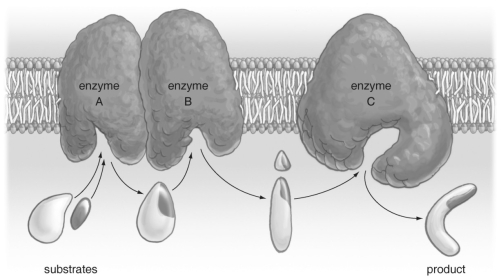 Refer to the figure above and then answer the quesiton that follows.
-Which of the following, if given enough time, could happen spontaneously?
A) glycogen breaking down into many glucose molecules
B) nucleotides forming DNA
C) amino acids forming proteins
D) glucose molecules forming starch
سؤال
Refer to the figure above and then answer the quesiton that follows.-You have a friend who tells you she is lactose intolerant. She asks you to explain what this means. You would say to her:
A) "You cannot digest milk because you cannot absorb it in your intestines."
B) "You are allergic to milk."
C) "You cannot digest milk because you do not have the enzyme to break down the sugar in the milk."
D) "You cannot digest the milk because you do not have the enzyme to break down the protein in the milk."
E) "You cannot digest the milk because you do not have the enzyme to break down the lipid in the milk."
سؤال
Refer to the figure above and then answer the quesiton that follows.-Suppose someone had a hypothetical "sucrose intolerance. Based on what you know about lactose intolerance, what would this mean?
A) The person is allergic to sucrose.
B) The person lacks the enzyme to break down sucrose in the small intestine.
C) The person's cells are unable to utilize sucrose.
D) The person's enzymes accelerate the breakdown of sucrose, overloading the blood with sugar.
سؤال
Refer to the figure above and then answer the quesiton that follows.-How many amino acids in an enzyme would typically be involved in binding a substrate in the active site?
A) 1-2
B) 10-20
C) 56
D) 9-10
E) All of the amino acids in an enzyme are usually involved.
سؤال
سؤال
سؤال
سؤال
سؤال
سؤال
سؤال
سؤال
سؤال
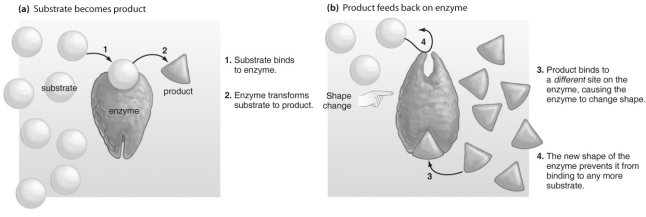
-Extreme changes in temperature, particularly heat, can denature proteins and enzymes. Why might this cause a problem?
A) The denatured enzymes would speed up chemical reactions to a pace too fast for the cells.
B) The denatured enzymes would not function; thus, critical reactions would be unable to occur in the cell.
C) The denatured enzymes would not function; thus, negative feedback would be inhibited.
D) The denatured enzymes would not function; thus, the activation energy for reactions would be reduced.
سؤال
سؤال
سؤال
سؤال
سؤال
سؤال
سؤال
سؤال
سؤال

فتح الحزمة
قم بالتسجيل لفتح البطاقات في هذه المجموعة!
Unlock Deck
Unlock Deck
1/31

العب

ملء الشاشة (f)
Deck 6: An Introduction to Energy
1
Plants provide animals with which of the following?
A) glucose
B) oxygen
C) carbon dioxide
D) glucose and oxygen
E) glucose and carbon dioxide
A) glucose
B) oxygen
C) carbon dioxide
D) glucose and oxygen
E) glucose and carbon dioxide
glucose and oxygen
2
Which law of thermodynamics explains the fact that if you drop an egg, the shell will not spontaneously repair itself?
A) the fourth law
B) the fifth law
C) the second law
D) the first law
E) the third law
A) the fourth law
B) the fifth law
C) the second law
D) the first law
E) the third law
the second law
3
When we metabolize our food, we produce heat that helps to keep us warm. Which of the following best describes why?
A) Chewing is exothermic; therefore, energy is released in the form of heat when we eat food.
B) When we break down the sugars in our food, energy is directly released in the form of heat.
C) Producing ATP from ADP is exothermic; therefore, energy is released in the form of heat.
D) When we break down our food, the reactions are not 100 percent efficient; therefore, energy is lost as heat.
A) Chewing is exothermic; therefore, energy is released in the form of heat when we eat food.
B) When we break down the sugars in our food, energy is directly released in the form of heat.
C) Producing ATP from ADP is exothermic; therefore, energy is released in the form of heat.
D) When we break down our food, the reactions are not 100 percent efficient; therefore, energy is lost as heat.
When we break down our food, the reactions are not 100 percent efficient; therefore, energy is lost as heat.
4
Something with a great amount of entropy is:
A) very cold.
B) very hot.
C) very disorganized.
D) highly organized.
E) full of energy.
A) very cold.
B) very hot.
C) very disorganized.
D) highly organized.
E) full of energy.
فتح الحزمة
افتح القفل للوصول البطاقات البالغ عددها 31 في هذه المجموعة.
فتح الحزمة
k this deck
5
Which of the following is an example of potential energy?
A) a car driving down the road
B) a man running down the street
C) a bird flying in the air
D) a loaded gun
A) a car driving down the road
B) a man running down the street
C) a bird flying in the air
D) a loaded gun
فتح الحزمة
افتح القفل للوصول البطاقات البالغ عددها 31 في هذه المجموعة.
فتح الحزمة
k this deck
6
________ is an example of kinetic energy, and ________ is an example of potential energy.
A) A rock on top of a hill; a rock rolling down the hill
B) A loaded gun; a flying bullet
C) Fire; a piece of wood
A) A rock on top of a hill; a rock rolling down the hill
B) A loaded gun; a flying bullet
C) Fire; a piece of wood
فتح الحزمة
افتح القفل للوصول البطاقات البالغ عددها 31 في هذه المجموعة.
فتح الحزمة
k this deck
7
Which of the following is exergonic?
A) bonding fatty acids and glycerol together to form lipids
B) bonding sugars together to form glycogen
C) adding a phosphate group to ADP to form ATP
D) bonding amino acids together to form proteins
E) breaking bonds in starch to release glucose
A) bonding fatty acids and glycerol together to form lipids
B) bonding sugars together to form glycogen
C) adding a phosphate group to ADP to form ATP
D) bonding amino acids together to form proteins
E) breaking bonds in starch to release glucose
فتح الحزمة
افتح القفل للوصول البطاقات البالغ عددها 31 في هذه المجموعة.
فتح الحزمة
k this deck
8
Which of the following reactions would produce product(s) with more energy than the substrate(s)?
A) breaking glucose molecules off glycogen
B) adding a phosphate group to ADP to form ATP
C) lactase breaking lactose down into glucose and galactose
A) breaking glucose molecules off glycogen
B) adding a phosphate group to ADP to form ATP
C) lactase breaking lactose down into glucose and galactose
فتح الحزمة
افتح القفل للوصول البطاقات البالغ عددها 31 في هذه المجموعة.
فتح الحزمة
k this deck
9
During muscle contraction:
A) ATP is produced by the joining of a free phosphate group to ADP.
B) the myofibrils relax.
C) the myofibrils shorten because of the power stroke.
D) the muscle elongates.
A) ATP is produced by the joining of a free phosphate group to ADP.
B) the myofibrils relax.
C) the myofibrils shorten because of the power stroke.
D) the muscle elongates.
فتح الحزمة
افتح القفل للوصول البطاقات البالغ عددها 31 في هذه المجموعة.
فتح الحزمة
k this deck
10
Refer to the figure above and then answer the quesiton that follows.-Which of the following, if given enough time, could happen spontaneously?
A) glycogen breaking down into many glucose molecules
B) nucleotides forming DNA
C) amino acids forming proteins
D) glucose molecules forming starch
فتح الحزمة
افتح القفل للوصول البطاقات البالغ عددها 31 في هذه المجموعة.
فتح الحزمة
k this deck
11
Refer to the figure above and then answer the quesiton that follows.-You have a friend who tells you she is lactose intolerant. She asks you to explain what this means. You would say to her:
A) "You cannot digest milk because you cannot absorb it in your intestines."
B) "You are allergic to milk."
C) "You cannot digest milk because you do not have the enzyme to break down the sugar in the milk."
D) "You cannot digest the milk because you do not have the enzyme to break down the protein in the milk."
E) "You cannot digest the milk because you do not have the enzyme to break down the lipid in the milk."
فتح الحزمة
افتح القفل للوصول البطاقات البالغ عددها 31 في هذه المجموعة.
فتح الحزمة
k this deck
12
Refer to the figure above and then answer the quesiton that follows.-Suppose someone had a hypothetical "sucrose intolerance. Based on what you know about lactose intolerance, what would this mean?
A) The person is allergic to sucrose.
B) The person lacks the enzyme to break down sucrose in the small intestine.
C) The person's cells are unable to utilize sucrose.
D) The person's enzymes accelerate the breakdown of sucrose, overloading the blood with sugar.
فتح الحزمة
افتح القفل للوصول البطاقات البالغ عددها 31 في هذه المجموعة.
فتح الحزمة
k this deck
13
Refer to the figure above and then answer the quesiton that follows.-How many amino acids in an enzyme would typically be involved in binding a substrate in the active site?
A) 1-2
B) 10-20
C) 56
D) 9-10
E) All of the amino acids in an enzyme are usually involved.
فتح الحزمة
افتح القفل للوصول البطاقات البالغ عددها 31 في هذه المجموعة.
فتح الحزمة
k this deck
14
Enzymes are made up of:
A) vitamins.
B) sugars.
C) lipids.
D) nucleotides.
E) amino acids.
A) vitamins.
B) sugars.
C) lipids.
D) nucleotides.
E) amino acids.
فتح الحزمة
افتح القفل للوصول البطاقات البالغ عددها 31 في هذه المجموعة.
فتح الحزمة
k this deck
15
You have been given the job of searching for naturally occurring catalysts. All of the following were isolated from the environment. Which would be an example of a catalyst?
A) a protein being converted into a glycoprotein by the addition of sugars
B) a protein converting glucose and fructose into sucrose without being changed itself
C) glucose and galactose binding to form lactose
D) the addition of a phosphate group to a protein increasing its rate of reaction.
A) a protein being converted into a glycoprotein by the addition of sugars
B) a protein converting glucose and fructose into sucrose without being changed itself
C) glucose and galactose binding to form lactose
D) the addition of a phosphate group to a protein increasing its rate of reaction.
فتح الحزمة
افتح القفل للوصول البطاقات البالغ عددها 31 في هذه المجموعة.
فتح الحزمة
k this deck
16
An individual who does not properly produce chymotrypsin in the pancreas may have a problem digesting:
A) carbohydrates.
B) simple sugars.
C) lipids.
D) proteins.
A) carbohydrates.
B) simple sugars.
C) lipids.
D) proteins.
فتح الحزمة
افتح القفل للوصول البطاقات البالغ عددها 31 في هذه المجموعة.
فتح الحزمة
k this deck
17
People with high cholesterol levels often take drugs in an attempt to lower their cholesterol levels. One such drug is Lipitor. How does this drug work?
A) It enhances the activity of enzymes that help break down cholesterol in the body.
B) It prevents cholesterol from the diet from being absorbed in the small intestine.
C) It acts as a competitive inhibitor by binding to the active site of enzymes that normally produce cholesterol.
D) It increases the activation energy of enzymes needed to produce cholesterol.
A) It enhances the activity of enzymes that help break down cholesterol in the body.
B) It prevents cholesterol from the diet from being absorbed in the small intestine.
C) It acts as a competitive inhibitor by binding to the active site of enzymes that normally produce cholesterol.
D) It increases the activation energy of enzymes needed to produce cholesterol.
فتح الحزمة
افتح القفل للوصول البطاقات البالغ عددها 31 في هذه المجموعة.
فتح الحزمة
k this deck
18
Which of the following describes negative feedback?
A) the acceleration of enzymatic reactions by a large concentration of substrate
B) the slowing of enzymatic reactions by a large concentration of substrate
C) the acceleration of enzymatic reactions by a large concentration of product
D) the slowing of enzymatic reactions by a large concentration of product
A) the acceleration of enzymatic reactions by a large concentration of substrate
B) the slowing of enzymatic reactions by a large concentration of substrate
C) the acceleration of enzymatic reactions by a large concentration of product
D) the slowing of enzymatic reactions by a large concentration of product
فتح الحزمة
افتح القفل للوصول البطاقات البالغ عددها 31 في هذه المجموعة.
فتح الحزمة
k this deck
19
All of the following are examples of negative feedback except:
A) a high concentration of lactose inhibiting the function of lactase.
B) a low concentration of lipid inhibiting lipase.
C) a high concentration of protein inhibiting the function of chymotrypsin.
D) a high concentration of glucose inhibiting sucrase.
A) a high concentration of lactose inhibiting the function of lactase.
B) a low concentration of lipid inhibiting lipase.
C) a high concentration of protein inhibiting the function of chymotrypsin.
D) a high concentration of glucose inhibiting sucrase.
فتح الحزمة
افتح القفل للوصول البطاقات البالغ عددها 31 في هذه المجموعة.
فتح الحزمة
k this deck
20
Allosteric enzymes are enzymes that can:
A) be regulated by the level of product in the environment.
B) produce product from substrate.
C) produce ATP.
D) use coenzymes.
E) carry out metabolism.
A) be regulated by the level of product in the environment.
B) produce product from substrate.
C) produce ATP.
D) use coenzymes.
E) carry out metabolism.
فتح الحزمة
افتح القفل للوصول البطاقات البالغ عددها 31 في هذه المجموعة.
فتح الحزمة
k this deck
21
When a product binds to an allosteric enzyme to slow its reaction, it does which of the following?
A) binds to the active site, blocking the binding of substrate
B) binds to a site other than the active site, changing the shape of the active site and decreasing the binding of substrate
C) binds to the substrate, blocking its binding of the active site
D) binds to the product production site, stopping the production of product
A) binds to the active site, blocking the binding of substrate
B) binds to a site other than the active site, changing the shape of the active site and decreasing the binding of substrate
C) binds to the substrate, blocking its binding of the active site
D) binds to the product production site, stopping the production of product
فتح الحزمة
افتح القفل للوصول البطاقات البالغ عددها 31 في هذه المجموعة.
فتح الحزمة
k this deck
22
-Extreme changes in temperature, particularly heat, can denature proteins and enzymes. Why might this cause a problem?
A) The denatured enzymes would speed up chemical reactions to a pace too fast for the cells.
B) The denatured enzymes would not function; thus, critical reactions would be unable to occur in the cell.
C) The denatured enzymes would not function; thus, negative feedback would be inhibited.
D) The denatured enzymes would not function; thus, the activation energy for reactions would be reduced.
فتح الحزمة
افتح القفل للوصول البطاقات البالغ عددها 31 في هذه المجموعة.
فتح الحزمة
k this deck
23
Given enough time, a ripped piece of paper will spontaneously repair itself.
فتح الحزمة
افتح القفل للوصول البطاقات البالغ عددها 31 في هذه المجموعة.
فتح الحزمة
k this deck
24
Cells, to drive endergonic reactions, can harvest the energy released during exergonic reactions.
فتح الحزمة
افتح القفل للوصول البطاقات البالغ عددها 31 في هذه المجموعة.
فتح الحزمة
k this deck
25
Cells can store ATP for long periods of time.
فتح الحزمة
افتح القفل للوصول البطاقات البالغ عددها 31 في هذه المجموعة.
فتح الحزمة
k this deck
26
The process of metabolizing our food helps to keep our bodies warm. Where does the heat come from when we metabolize our food, and why?
فتح الحزمة
افتح القفل للوصول البطاقات البالغ عددها 31 في هذه المجموعة.
فتح الحزمة
k this deck
27
Give an example from your own life of mechanical work, transport work, and synthetic work, and give an example of how your body gets the energy to perform each type of work.
فتح الحزمة
افتح القفل للوصول البطاقات البالغ عددها 31 في هذه المجموعة.
فتح الحزمة
k this deck
28
Individuals with the genetic disease phenylketonuria (PKU) lack a single enzyme called phenylalanine hydroxylase, which converts the amino acid phenylalanine to the amino acid tyrosine. If this conversion does not happen, phenylalanine builds up and becomes toxic to the central nervous system, causing serious problems for the individual. The management of this disease is to avoid phenylalanine by severely limiting the amount of protein in the diet. How would this help?
فتح الحزمة
افتح القفل للوصول البطاقات البالغ عددها 31 في هذه المجموعة.
فتح الحزمة
k this deck
29
Give an example of a reaction from your life that requires the input of activation energy.
فتح الحزمة
افتح القفل للوصول البطاقات البالغ عددها 31 في هذه المجموعة.
فتح الحزمة
k this deck
30
Explain the process of negative feedback and why it occurs.
فتح الحزمة
افتح القفل للوصول البطاقات البالغ عددها 31 في هذه المجموعة.
فتح الحزمة
k this deck
31
Many meat tenderizer products contain an enzyme called papain that breaks down protein. How would adding the papain enzyme help tenderize meat?
فتح الحزمة
افتح القفل للوصول البطاقات البالغ عددها 31 في هذه المجموعة.
فتح الحزمة
k this deck
فتح الحزمة
افتح القفل للوصول البطاقات البالغ عددها 31 في هذه المجموعة.






