







 تكلم مع الذكاء الاصطناعي


Deck 18: Income Distribution and Poverty
ملء الشاشة (f)

سؤال

سؤال
سؤال
سؤال
سؤال
سؤال
سؤال
سؤال
سؤال
سؤال
سؤال
سؤال
سؤال
سؤال
سؤال
سؤال
سؤال
سؤال
سؤال
سؤال
سؤال
سؤال
سؤال
سؤال
سؤال
سؤال
سؤال
سؤال
سؤال
سؤال
سؤال
سؤال
سؤال
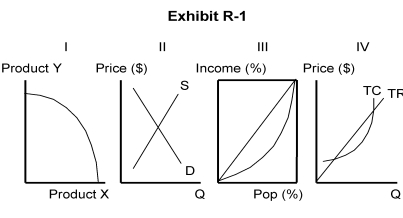
-In Exhibit R-1, a Lorenz curve is depicted in diagram
A) I
B) II
C) III
D) IV
E) both I and II
سؤال
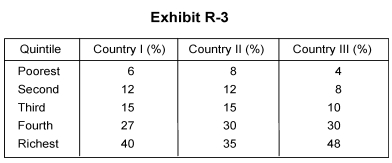
-Exhibit R-3 shows the percentage of income received by each population quintile. From this chart we can conclude
A) Country I has the most unequal income distribution
B) Country III has the most equal income distribution
C) Country II has the most unequal income distribution
D) Country II has the most equal income distribution
E) Country III has a more equal income distribution than Country II
سؤال
-Exhibit R-3 shows the percentage of income received by each population quintile. In Country I we can conclude that the
A) richest 20 percent of the population received 25 percent of the economy's income
B) richest 20 percent of the population received 40 percent of the economy's income
C) richest 20 percent of the population received 80 percent of the economy's income
D) least-richest 20 percent of the population received 40 percent of the economy's income
E) richest 40 percent of the population received 25 percent of the economy's income
سؤال
سؤال
سؤال
سؤال
سؤال
سؤال
سؤال
سؤال
سؤال
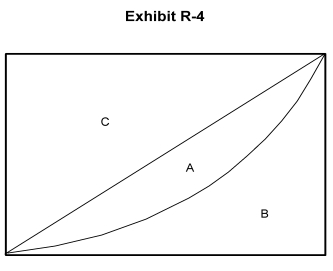
-In Exhibit R-4, the Gini coefficient is measured by area
A) C + A/B
B) (C + A)/B
C) A/(A + B)
D) B + A
E) (A + B)/A
سؤال
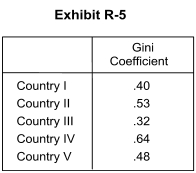
-In Exhibit R-5, the country with the most equal distribution of income is
A) Country I
B) Country II
C) Country III
D) Country IV
E) Country V
سؤال
-In Exhibit R-5, the country with the most unequal distribution of income is
A) Country I
B) Country II
C) Country III
D) Country IV
E) Country V
سؤال
-In Exhibit R-5, the richest of the five countries shown is
A) Country I
B) Country II
C) Country III
D) Country IV
E) cannot be determined from this information
سؤال
سؤال
سؤال
سؤال
سؤال
سؤال
سؤال
سؤال
سؤال
سؤال
سؤال
سؤال
سؤال
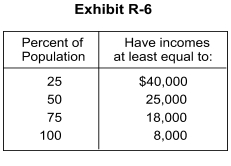
-In Exhibit R-6, the median income in this economy is
A) $12,500
B) $32,500
C) unclear
D) $18,000
E) $25,000
سؤال
سؤال
سؤال
سؤال
سؤال
سؤال
سؤال
سؤال
سؤال
سؤال
سؤال
سؤال
سؤال
سؤال
سؤال
سؤال
سؤال
سؤال
سؤال
سؤال

فتح الحزمة
قم بالتسجيل لفتح البطاقات في هذه المجموعة!
Unlock Deck
Unlock Deck
1/161

العب

ملء الشاشة (f)
Deck 18: Income Distribution and Poverty
1
Plato and Aristotle were both concerned about how an unequal distribution of income could cause political instability.
True
2
Among the very rich, the main source of income is most likely their wages.
False
3
If a country's Lorenz curve moves further away from the diagonal, its income is more unevenly distributed.
True
4
Economists depict distribution of income by drawing a Lorenz curve above the diagonal.
فتح الحزمة
افتح القفل للوصول البطاقات البالغ عددها 161 في هذه المجموعة.
فتح الحزمة
k this deck
5
A problem in identifying poverty is that the concept of what constitutes a basic need is always changing.
فتح الحزمة
افتح القفل للوصول البطاقات البالغ عددها 161 في هذه المجموعة.
فتح الحزمة
k this deck
6
People under the age of 25 are less likely to be poor than those older than 25.
فتح الحزمة
افتح القفل للوصول البطاقات البالغ عددها 161 في هذه المجموعة.
فتح الحزمة
k this deck
7
In a negative income tax system, some people pay taxes and others receive money fromthe IRS.
فتح الحزمة
افتح القفل للوصول البطاقات البالغ عددها 161 في هذه المجموعة.
فتح الحزمة
k this deck
8
In a winner-take-all system, the highest incomes go to people with questionable skills, but who are the most competitive in the labor market.
فتح الحزمة
افتح القفل للوصول البطاقات البالغ عددها 161 في هذه المجموعة.
فتح الحزمة
k this deck
9
The United States has the most egalitarian distribution of income in the world.
فتح الحزمة
افتح القفل للوصول البطاقات البالغ عددها 161 في هذه المجموعة.
فتح الحزمة
k this deck
10
A Gini coefficient of one indicates perfect income equality.
فتح الحزمة
افتح القفل للوصول البطاقات البالغ عددها 161 في هذه المجموعة.
فتح الحزمة
k this deck
11
In-kind assistance programs are direct transfers of goods and services to the poor.
فتح الحزمة
افتح القفل للوصول البطاقات البالغ عددها 161 في هذه المجموعة.
فتح الحزمة
k this deck
12
Single-parent households are disproportionately represented among those in poverty.
فتح الحزمة
افتح القفل للوصول البطاقات البالغ عددها 161 في هذه المجموعة.
فتح الحزمة
k this deck
13
Philosopher John Rawls's argument in favor of income equality presumes that with no prior knowledge of where a person would fit into an income distribution, the person's fear of ending up in poverty overshadows his or her joy of ending up rich.
فتح الحزمة
افتح القفل للوصول البطاقات البالغ عددها 161 في هذه المجموعة.
فتح الحزمة
k this deck
14
Our persistent war on poverty has successfully destroyed the poverty trap.
فتح الحزمة
افتح القفل للوصول البطاقات البالغ عددها 161 في هذه المجموعة.
فتح الحزمة
k this deck
15
A negative income tax program is designed to assist the unemployed.
فتح الحزمة
افتح القفل للوصول البطاقات البالغ عددها 161 في هذه المجموعة.
فتح الحزمة
k this deck
16
The Gini coefficient in most countries is greater than one.
فتح الحزمة
افتح القفل للوصول البطاقات البالغ عددها 161 في هذه المجموعة.
فتح الحزمة
k this deck
17
A very high Gini coefficient implies a very wealthy country.
فتح الحزمة
افتح القفل للوصول البطاقات البالغ عددها 161 في هذه المجموعة.
فتح الحزمة
k this deck
18
A Gini coefficient based on population deciles tends to be lower than a Gini coefficient based on income.
فتح الحزمة
افتح القفل للوصول البطاقات البالغ عددها 161 في هذه المجموعة.
فتح الحزمة
k this deck
19
Wealth and income are the same.
فتح الحزمة
افتح القفل للوصول البطاقات البالغ عددها 161 في هذه المجموعة.
فتح الحزمة
k this deck
20
U.S. corporate stock is distributed fairly equally among U.S. stockholders.
فتح الحزمة
افتح القفل للوصول البطاقات البالغ عددها 161 في هذه المجموعة.
فتح الحزمة
k this deck
21
Differences between people's wealth is generally greater than differences between their incomes.
فتح الحزمة
افتح القفل للوصول البطاقات البالغ عددها 161 في هذه المجموعة.
فتح الحزمة
k this deck
22
Economists agree that income in the U.S. should be more equally distributed.
فتح الحزمة
افتح القفل للوصول البطاقات البالغ عددها 161 في هذه المجموعة.
فتح الحزمة
k this deck
23
Income distribution in the United States is quite similar to that in other industrializednations.
فتح الحزمة
افتح القفل للوصول البطاقات البالغ عددها 161 في هذه المجموعة.
فتح الحزمة
k this deck
24
Some economists claim that investment and economic growth are dependent upon income inequality.
فتح الحزمة
افتح القفل للوصول البطاقات البالغ عددها 161 في هذه المجموعة.
فتح الحزمة
k this deck
25
Questions regarding income distribution are central to deciding whether a market-based economic system is efficient
فتح الحزمة
افتح القفل للوصول البطاقات البالغ عددها 161 في هذه المجموعة.
فتح الحزمة
k this deck
26
Sunu Quaid's new home does not contribute to her life-cycle wealth.
فتح الحزمة
افتح القفل للوصول البطاقات البالغ عددها 161 في هذه المجموعة.
فتح الحزمة
k this deck
27
Private property was argued to be inappropriate by Marxists due to its distribution from those "who have" to those "who will have" in a fashion creating a class to itself.
فتح الحزمة
افتح القفل للوصول البطاقات البالغ عددها 161 في هذه المجموعة.
فتح الحزمة
k this deck
28
According to A.P. Lerner, splitting income equally among individuals was most appropriate for maximizing combined satisfaction.
فتح الحزمة
افتح القفل للوصول البطاقات البالغ عددها 161 في هذه المجموعة.
فتح الحزمة
k this deck
29
Negative income taxes have been a feature of our tax system since President Lyndon Johnson's "war on poverty" in the 1960s.
فتح الحزمة
افتح القفل للوصول البطاقات البالغ عددها 161 في هذه المجموعة.
فتح الحزمة
k this deck
30
A reverse tax, or negative income tax, is a way of creating a minimum income for all households while retaining an incentive for people to work.
فتح الحزمة
افتح القفل للوصول البطاقات البالغ عددها 161 في هذه المجموعة.
فتح الحزمة
k this deck
31
Wealth and income are two different terms used to represent the same concept, household well-being and, thus, may be used interchangeably.
فتح الحزمة
افتح القفل للوصول البطاقات البالغ عددها 161 في هذه المجموعة.
فتح الحزمة
k this deck
32
According to John Rawls, a "veil of ignorance" was needed for equitable decisions about appropriate social rules and individual endowments, so no one would know their place in society.
فتح الحزمة
افتح القفل للوصول البطاقات البالغ عددها 161 في هذه المجموعة.
فتح الحزمة
k this deck
33
-In Exhibit R-1, a Lorenz curve is depicted in diagram
A) I
B) II
C) III
D) IV
E) both I and II
فتح الحزمة
افتح القفل للوصول البطاقات البالغ عددها 161 في هذه المجموعة.
فتح الحزمة
k this deck
34
-Exhibit R-3 shows the percentage of income received by each population quintile. From this chart we can conclude
A) Country I has the most unequal income distribution
B) Country III has the most equal income distribution
C) Country II has the most unequal income distribution
D) Country II has the most equal income distribution
E) Country III has a more equal income distribution than Country II
فتح الحزمة
افتح القفل للوصول البطاقات البالغ عددها 161 في هذه المجموعة.
فتح الحزمة
k this deck
35
-Exhibit R-3 shows the percentage of income received by each population quintile. In Country I we can conclude that the
A) richest 20 percent of the population received 25 percent of the economy's income
B) richest 20 percent of the population received 40 percent of the economy's income
C) richest 20 percent of the population received 80 percent of the economy's income
D) least-richest 20 percent of the population received 40 percent of the economy's income
E) richest 40 percent of the population received 25 percent of the economy's income
فتح الحزمة
افتح القفل للوصول البطاقات البالغ عددها 161 في هذه المجموعة.
فتح الحزمة
k this deck
36
Exhibit R-3 shows the percentage of income received by each population quintile. In Country II we can conclude that the
A) least-richest 20 percent of the population received 75 percent of the economy's income
B) least-richest 20 percent of the population received 25 percent of the economy's income
C) richest 20 percent of the population received 25 percent of the economy's income
D) richest 40 percent of the population received 25 percent of the economy's income
E) least-richest 40 percent of the population received 25 percent of the economy's income
A) least-richest 20 percent of the population received 75 percent of the economy's income
B) least-richest 20 percent of the population received 25 percent of the economy's income
C) richest 20 percent of the population received 25 percent of the economy's income
D) richest 40 percent of the population received 25 percent of the economy's income
E) least-richest 40 percent of the population received 25 percent of the economy's income
فتح الحزمة
افتح القفل للوصول البطاقات البالغ عددها 161 في هذه المجموعة.
فتح الحزمة
k this deck
37
The Lorenz curve and the Gini coefficient are similar in that both
A) are numerical measurements
B) illustrate dispersions of income throughout an economy
C) represent after tax incomes
D) are abstract models of the real world but there are no data allowing us to apply it to the real world
E) compare the levels of incomes earned in different countries
A) are numerical measurements
B) illustrate dispersions of income throughout an economy
C) represent after tax incomes
D) are abstract models of the real world but there are no data allowing us to apply it to the real world
E) compare the levels of incomes earned in different countries
فتح الحزمة
افتح القفل للوصول البطاقات البالغ عددها 161 في هذه المجموعة.
فتح الحزمة
k this deck
38
The Lorenz curve and the Gini coefficient are different in that the Lorenz curve
A) includes income earned in foreign countries while the Gini coefficient only includes domestic income
B) is much more accurate a reflection of income distribution than the Gini coefficient
C) is a graphic representation and the Gini coefficient is a numerical measurement of income distribution
D) includes income from government programs while the Gini does not
E) compares different countries while the Gini only reflects data within a country
A) includes income earned in foreign countries while the Gini coefficient only includes domestic income
B) is much more accurate a reflection of income distribution than the Gini coefficient
C) is a graphic representation and the Gini coefficient is a numerical measurement of income distribution
D) includes income from government programs while the Gini does not
E) compares different countries while the Gini only reflects data within a country
فتح الحزمة
افتح القفل للوصول البطاقات البالغ عددها 161 في هذه المجموعة.
فتح الحزمة
k this deck
39
A Gini coefficient is a measure of
A) age dispersion
B) the ratio of income to wealth
C) social security
D) the ratio of government spending to GDP
E) income distribution
A) age dispersion
B) the ratio of income to wealth
C) social security
D) the ratio of government spending to GDP
E) income distribution
فتح الحزمة
افتح القفل للوصول البطاقات البالغ عددها 161 في هذه المجموعة.
فتح الحزمة
k this deck
40
If an economy has perfect income equality, its Gini coefficient would be
A) 1
B) 100 percent
C) 100
D) 0
E) 50-50
A) 1
B) 100 percent
C) 100
D) 0
E) 50-50
فتح الحزمة
افتح القفل للوصول البطاقات البالغ عددها 161 في هذه المجموعة.
فتح الحزمة
k this deck
41
A Gini coefficient of one indicates
A) the richest 10 percent of the people control 90 percent of the economy's income
B) the poorest 10 percent of the people control 1 percent of the economy's income
C) 50 percent of the people control 50 percent of the income
D) perfect income equality
E) perfect income inequality
A) the richest 10 percent of the people control 90 percent of the economy's income
B) the poorest 10 percent of the people control 1 percent of the economy's income
C) 50 percent of the people control 50 percent of the income
D) perfect income equality
E) perfect income inequality
فتح الحزمة
افتح القفل للوصول البطاقات البالغ عددها 161 في هذه المجموعة.
فتح الحزمة
k this deck
42
Which scenario best illustrates a Gini coefficient equal to one?
A) People earn the same income.
B) John receives a wage of $1 per hour.
C) The king ends up with all the nation's income.
D) There is a one-to-one ratio of income to population.
E) 100 percent of the income is held by 100 percent of the population.
A) People earn the same income.
B) John receives a wage of $1 per hour.
C) The king ends up with all the nation's income.
D) There is a one-to-one ratio of income to population.
E) 100 percent of the income is held by 100 percent of the population.
فتح الحزمة
افتح القفل للوصول البطاقات البالغ عددها 161 في هذه المجموعة.
فتح الحزمة
k this deck
43
In which of the following scenarios would the Gini coefficient measure zero?
A) People earn the same income.
B) John receives a wage of $1 per hour.
C) The king ends up with all the nation's income.
D) There is a one-to-one ratio of income to population.
E) 100 percent of the income is held by 100 percent of the population.
A) People earn the same income.
B) John receives a wage of $1 per hour.
C) The king ends up with all the nation's income.
D) There is a one-to-one ratio of income to population.
E) 100 percent of the income is held by 100 percent of the population.
فتح الحزمة
افتح القفل للوصول البطاقات البالغ عددها 161 في هذه المجموعة.
فتح الحزمة
k this deck
44
-In Exhibit R-4, the Gini coefficient is measured by area
A) C + A/B
B) (C + A)/B
C) A/(A + B)
D) B + A
E) (A + B)/A
فتح الحزمة
افتح القفل للوصول البطاقات البالغ عددها 161 في هذه المجموعة.
فتح الحزمة
k this deck
45
-In Exhibit R-5, the country with the most equal distribution of income is
A) Country I
B) Country II
C) Country III
D) Country IV
E) Country V
فتح الحزمة
افتح القفل للوصول البطاقات البالغ عددها 161 في هذه المجموعة.
فتح الحزمة
k this deck
46
-In Exhibit R-5, the country with the most unequal distribution of income is
A) Country I
B) Country II
C) Country III
D) Country IV
E) Country V
فتح الحزمة
افتح القفل للوصول البطاقات البالغ عددها 161 في هذه المجموعة.
فتح الحزمة
k this deck
47
-In Exhibit R-5, the richest of the five countries shown is
A) Country I
B) Country II
C) Country III
D) Country IV
E) cannot be determined from this information
فتح الحزمة
افتح القفل للوصول البطاقات البالغ عددها 161 في هذه المجموعة.
فتح الحزمة
k this deck
48
If the Gini coefficient in the economy decreases from .40 to .32, this indicates
A) greater income equality
B) greater income inequality
C) the economy is poorer
D) the economy is richer
E) none of the above can be determined from this information
A) greater income equality
B) greater income inequality
C) the economy is poorer
D) the economy is richer
E) none of the above can be determined from this information
فتح الحزمة
افتح القفل للوصول البطاقات البالغ عددها 161 في هذه المجموعة.
فتح الحزمة
k this deck
49
Less-developed countries exhibit
A) less income inequality than more developed countries
B) lower Gini coefficients than more developed countries
C) a greater desire to achieve income equality
D) greater income inequality than more developed countries
E) erratic Gini coefficients year after year
A) less income inequality than more developed countries
B) lower Gini coefficients than more developed countries
C) a greater desire to achieve income equality
D) greater income inequality than more developed countries
E) erratic Gini coefficients year after year
فتح الحزمة
افتح القفل للوصول البطاقات البالغ عددها 161 في هذه المجموعة.
فتح الحزمة
k this deck
50
A less developed economy has greater income inequality the
A) less the economy is dependent upon agriculture
B) smaller the middle class
C) more the economy is dependent upon manufacturing
D) less diverse the level of manufacturing activity
E) greater the level of education in the country
A) less the economy is dependent upon agriculture
B) smaller the middle class
C) more the economy is dependent upon manufacturing
D) less diverse the level of manufacturing activity
E) greater the level of education in the country
فتح الحزمة
افتح القفل للوصول البطاقات البالغ عددها 161 في هذه المجموعة.
فتح الحزمة
k this deck
51
Wealth refers to the
A) income earned by an individual
B) value of all assets accumulated by an individual
C) total of all income earned by an individual over an entire lifetime
D) value of all physical assets minus financial assets an individual holds
E) total of all money wealth held by an individual
A) income earned by an individual
B) value of all assets accumulated by an individual
C) total of all income earned by an individual over an entire lifetime
D) value of all physical assets minus financial assets an individual holds
E) total of all money wealth held by an individual
فتح الحزمة
افتح القفل للوصول البطاقات البالغ عددها 161 في هذه المجموعة.
فتح الحزمة
k this deck
52
Life-cycle wealth refers to the
A) income earned by an individual
B) value of stock holdings by an individual
C) monetary assets held by an individual
D) non-money assets held by individuals
E) amount of assets received through inheritance
A) income earned by an individual
B) value of stock holdings by an individual
C) monetary assets held by an individual
D) non-money assets held by individuals
E) amount of assets received through inheritance
فتح الحزمة
افتح القفل للوصول البطاقات البالغ عددها 161 في هذه المجموعة.
فتح الحزمة
k this deck
53
Which of the following would be included in a person's life-cycle wealth?
A) savings account
B) refrigerator
C) stock in a corporation
D) government savings bonds
E) income
A) savings account
B) refrigerator
C) stock in a corporation
D) government savings bonds
E) income
فتح الحزمة
افتح القفل للوصول البطاقات البالغ عددها 161 في هذه المجموعة.
فتح الحزمة
k this deck
54
Which of the following would not be part of a person's wealth?
A) a $100,000 inheritance
B) $100,000 in a savings account
C) $100,000 of corporate stock
D) a $100,000 mortgage on a home
E) a $10,000 family car
A) a $100,000 inheritance
B) $100,000 in a savings account
C) $100,000 of corporate stock
D) a $100,000 mortgage on a home
E) a $10,000 family car
فتح الحزمة
افتح القفل للوصول البطاقات البالغ عددها 161 في هذه المجموعة.
فتح الحزمة
k this deck
55
The philosopher John Rawls argued that
A) people would choose income equality if they didn't know beforehand the "agreed upon rules" that determine people's economic position
B) people would choose income inequality to allow the maximum use of their individual talents
C) it would be impossible to determine beforehand how rich and poor people would choose between income equality and income inequality
D) people, uninhibited by social convention, would choose income inequality because they are, by nature, not inclined toward egalitarian values
E) government has a role to ensure income equality to prevent social unrest
A) people would choose income equality if they didn't know beforehand the "agreed upon rules" that determine people's economic position
B) people would choose income inequality to allow the maximum use of their individual talents
C) it would be impossible to determine beforehand how rich and poor people would choose between income equality and income inequality
D) people, uninhibited by social convention, would choose income inequality because they are, by nature, not inclined toward egalitarian values
E) government has a role to ensure income equality to prevent social unrest
فتح الحزمة
افتح القفل للوصول البطاقات البالغ عددها 161 في هذه المجموعة.
فتح الحزمة
k this deck
56
To a Marxist, income inequality derives from
A) purely random events
B) incompetent government policy
C) unequal education
D) unequal distribution of property
E) unequal abilities of individuals
A) purely random events
B) incompetent government policy
C) unequal education
D) unequal distribution of property
E) unequal abilities of individuals
فتح الحزمة
افتح القفل للوصول البطاقات البالغ عددها 161 في هذه المجموعة.
فتح الحزمة
k this deck
57
According to economist A. P. Lerner, taking income from a wealthy individual andgiving it to a poorer individual would
A) decrease the economy's total utility
B) decrease the economy's investment rate
C) eventually increase poverty in the economy
D) lessen the incentive to work
E) increase the economy's total utility
A) decrease the economy's total utility
B) decrease the economy's investment rate
C) eventually increase poverty in the economy
D) lessen the incentive to work
E) increase the economy's total utility
فتح الحزمة
افتح القفل للوصول البطاقات البالغ عددها 161 في هذه المجموعة.
فتح الحزمة
k this deck
58
A critical assumption in economist A. P. Lerner's theory explaining why society's total utility is maximized with income equality is
A) there is no "level playing field" in people's choice of employment
B) people have identical utility functions
C) the rich earn their income by exploiting the poor
D) people have equal skills if given equal opportunity
E) the law of diminishing marginal utility does not apply to money
A) there is no "level playing field" in people's choice of employment
B) people have identical utility functions
C) the rich earn their income by exploiting the poor
D) people have equal skills if given equal opportunity
E) the law of diminishing marginal utility does not apply to money
فتح الحزمة
افتح القفل للوصول البطاقات البالغ عددها 161 في هذه المجموعة.
فتح الحزمة
k this deck
59
What linkage do advocates of income inequality make between income distribution andeconomic growth?
A) Income equality creates greater investment, which leads to lower rates of economic growth.
B) Income inequality creates less saving and more consumption, which stimulate higher rates of economic growth.
C) Income inequality creates greater investment, which leads to higher rates of economic growth.
D) Income equality creates more saving and less consumption, which leads to lower rates of economic growth.
E) Income equality creates more investment and less consumption, which leads to higher rates of economic growth.
A) Income equality creates greater investment, which leads to lower rates of economic growth.
B) Income inequality creates less saving and more consumption, which stimulate higher rates of economic growth.
C) Income inequality creates greater investment, which leads to higher rates of economic growth.
D) Income equality creates more saving and less consumption, which leads to lower rates of economic growth.
E) Income equality creates more investment and less consumption, which leads to higher rates of economic growth.
فتح الحزمة
افتح القفل للوصول البطاقات البالغ عددها 161 في هذه المجموعة.
فتح الحزمة
k this deck
60
-In Exhibit R-6, the median income in this economy is
A) $12,500
B) $32,500
C) unclear
D) $18,000
E) $25,000
فتح الحزمة
افتح القفل للوصول البطاقات البالغ عددها 161 في هذه المجموعة.
فتح الحزمة
k this deck
61
The income level below which families are considered to be in poverty is the
A) minimum income
B) negative income
C) poverty ratio
D) poverty threshold
E) standard of living
A) minimum income
B) negative income
C) poverty ratio
D) poverty threshold
E) standard of living
فتح الحزمة
افتح القفل للوصول البطاقات البالغ عددها 161 في هذه المجموعة.
فتح الحزمة
k this deck
62
In a negative income tax program,
A) the government guarantees a minimum level of family income
B) a family must pay income taxes on its welfare check
C) a family receives a fixed amount of money from the government and its members can keep all income earned through work
D) the government reduces the welfare payment by any income earned through work
E) a family's income is lower if its members work
A) the government guarantees a minimum level of family income
B) a family must pay income taxes on its welfare check
C) a family receives a fixed amount of money from the government and its members can keep all income earned through work
D) the government reduces the welfare payment by any income earned through work
E) a family's income is lower if its members work
فتح الحزمة
افتح القفل للوصول البطاقات البالغ عددها 161 في هذه المجموعة.
فتح الحزمة
k this deck
63
Suppose a negative income tax program is established at 25 percent, and a poverty threshold minimum of $15,000 is guaranteed for a family of four. If no income is earned by this family, its total income would equal
A) $6,000
B) $15,000
C) $18,750
D) $60,000
E) $3,750
A) $6,000
B) $15,000
C) $18,750
D) $60,000
E) $3,750
فتح الحزمة
افتح القفل للوصول البطاقات البالغ عددها 161 في هذه المجموعة.
فتح الحزمة
k this deck
64
Suppose a negative income tax program is established at 25 percent, and a poverty threshold minimum of $15,000 is guaranteed for a family of four. If the family earns $10,000 through working, its total income would equal
A) $10,000
B) $15,000
C) $17,500
D) $22,500
E) $25,000
A) $10,000
B) $15,000
C) $17,500
D) $22,500
E) $25,000
فتح الحزمة
افتح القفل للوصول البطاقات البالغ عددها 161 في هذه المجموعة.
فتح الحزمة
k this deck
65
Suppose a negative income tax program is established at 25 percent, and a poverty threshold minimum of $15,000 is guaranteed for a family of four. What is the highest income a family could earn in the workplace before being cut out of the governmentprogram?
A) $20,000
B) $15,000
C) $18,750
D) $60,000
E) $10,000
A) $20,000
B) $15,000
C) $18,750
D) $60,000
E) $10,000
فتح الحزمة
افتح القفل للوصول البطاقات البالغ عددها 161 في هذه المجموعة.
فتح الحزمة
k this deck
66
Suppose a negative income tax program is established at 25 percent, and a povertythreshold minimum of $15,000 is guaranteed for a family of four. If this family earned $50,000 in the workplace, the government payment to the family under this programwould equal
A) $2,500
B) $1,000
C) $10,000
D) $1,500
E) zero
A) $2,500
B) $1,000
C) $10,000
D) $1,500
E) zero
فتح الحزمة
افتح القفل للوصول البطاقات البالغ عددها 161 في هذه المجموعة.
فتح الحزمة
k this deck
67
Which of the following is an economic argument that supports income inequality?
A) If given extra money, the poor would spend it on frivolous items.
B) The poor have the same chance of being rich as anybody else.
C) If people have the same incomes, this will lead to social stability.
D) It is only fair that people's incomes reflect their contribution to society.
E) If there are poor people, the rich will have some place to bestow their largess.
A) If given extra money, the poor would spend it on frivolous items.
B) The poor have the same chance of being rich as anybody else.
C) If people have the same incomes, this will lead to social stability.
D) It is only fair that people's incomes reflect their contribution to society.
E) If there are poor people, the rich will have some place to bestow their largess.
فتح الحزمة
افتح القفل للوصول البطاقات البالغ عددها 161 في هذه المجموعة.
فتح الحزمة
k this deck
68
Suppose Fred's marginal utility of an extra dollar of income is 56, and Sally's is 34. If a dollar is taken from
A) Sally and given to Fred, the economy's total utility will rise by 22 units
B) Fred and given to Sally, the economy's total utility will rise by 22 units
C) Sally and given to Fred, the economy's total utility will rise by 34 units
D) Sally and given to Fred, the economy's total utility will rise by 56 units
E) Fred and given to Sally, the economy's total utility will rise by 34 units
A) Sally and given to Fred, the economy's total utility will rise by 22 units
B) Fred and given to Sally, the economy's total utility will rise by 22 units
C) Sally and given to Fred, the economy's total utility will rise by 34 units
D) Sally and given to Fred, the economy's total utility will rise by 56 units
E) Fred and given to Sally, the economy's total utility will rise by 34 units
فتح الحزمة
افتح القفل للوصول البطاقات البالغ عددها 161 في هذه المجموعة.
فتح الحزمة
k this deck
69
The poor in the United States are disproportionately people who
A) have less than a high school education
B) have incomes that are essentially nonwage incomes
C) are poor white women
D) are families with over 5 children
E) live in cities
A) have less than a high school education
B) have incomes that are essentially nonwage incomes
C) are poor white women
D) are families with over 5 children
E) live in cities
فتح الحزمة
افتح القفل للوصول البطاقات البالغ عددها 161 في هذه المجموعة.
فتح الحزمة
k this deck
70
A Lorenz curve based on the percentage of wealth held by different quintiles of the population, when compared to one based on income shares, shows a
A) lower degree of inequality
B) higher degree of inequality
C) similar degree of inequality
D) higher absolute level of poverty
E) lower absolute level of poverty
A) lower degree of inequality
B) higher degree of inequality
C) similar degree of inequality
D) higher absolute level of poverty
E) lower absolute level of poverty
فتح الحزمة
افتح القفل للوصول البطاقات البالغ عددها 161 في هذه المجموعة.
فتح الحزمة
k this deck
71
Consider two countries, A and B. Country A has a more egalitarian distribution ofincomes if
A) it has a lower Gini coefficient than B
B) the Lorenz curve for B lies above the one for A
C) the percentage of the population below the poverty line is higher in B
D) its Lorenz curve intersects from above B's Lorenz curve
E) its Lorenz curve intersects from below B's Lorenz curve
A) it has a lower Gini coefficient than B
B) the Lorenz curve for B lies above the one for A
C) the percentage of the population below the poverty line is higher in B
D) its Lorenz curve intersects from above B's Lorenz curve
E) its Lorenz curve intersects from below B's Lorenz curve
فتح الحزمة
افتح القفل للوصول البطاقات البالغ عددها 161 في هذه المجموعة.
فتح الحزمة
k this deck
72
The U.S. Gini coefficient shows that income inequality
A) increased steadily over the last four decades
B) remained fairly constant in the 1970s, and then increased steadily through the 1980s and 1990s
C) increased gradually over the period 1947-1968, and then declined steadily through the 1990s
D) has changed little over the last four decades
E) has declined in relation to other developed economies
A) increased steadily over the last four decades
B) remained fairly constant in the 1970s, and then increased steadily through the 1980s and 1990s
C) increased gradually over the period 1947-1968, and then declined steadily through the 1990s
D) has changed little over the last four decades
E) has declined in relation to other developed economies
فتح الحزمة
افتح القفل للوصول البطاقات البالغ عددها 161 في هذه المجموعة.
فتح الحزمة
k this deck
73
A case for equality of income distribution can be based on
A) the randomness of personal misfortune
B) the linkage between effort and reward
C) the ethic "from each according to his or her ability to each according to his or her ability"
D) allowing the market to dictate outcomes
E) maximization of opportunity
A) the randomness of personal misfortune
B) the linkage between effort and reward
C) the ethic "from each according to his or her ability to each according to his or her ability"
D) allowing the market to dictate outcomes
E) maximization of opportunity
فتح الحزمة
افتح القفل للوصول البطاقات البالغ عددها 161 في هذه المجموعة.
فتح الحزمة
k this deck
74
Philosopher John Rawls's theory of justice presents an argument in favor of income equality that relies on the
A) belief that, objectively, people would rather trade the uncertainties of fortune for the certainty of moderate income
B) belief that human beings are perfectible, and it is the unequal distribution of property that creates unequal distribution of incomes
C) argument that in a world of identical individuals, equality of incomes achieves the greatest welfare number of people
D) argument that income equality breeds the most efficient use of economy's resources
E) idea that private property originates from theft
A) belief that, objectively, people would rather trade the uncertainties of fortune for the certainty of moderate income
B) belief that human beings are perfectible, and it is the unequal distribution of property that creates unequal distribution of incomes
C) argument that in a world of identical individuals, equality of incomes achieves the greatest welfare number of people
D) argument that income equality breeds the most efficient use of economy's resources
E) idea that private property originates from theft
فتح الحزمة
افتح القفل للوصول البطاقات البالغ عددها 161 في هذه المجموعة.
فتح الحزمة
k this deck
75
Which of the following statements is true about the Marxist's argument in favor of an egalitarian income distribution?
A) Aside from the very rich, people are disposed toward income equality.
B) Private property originates from theft and it is this property that creates unequal distribution of income.
C) Government (welfare) and private charity doesn't work.
D) Human beings are imperfect, and it is the unequal distribution of income that reflects this imperfection.
E) Although income equality does not support the most efficient use of economy's resources, it's worth it anyway.
A) Aside from the very rich, people are disposed toward income equality.
B) Private property originates from theft and it is this property that creates unequal distribution of income.
C) Government (welfare) and private charity doesn't work.
D) Human beings are imperfect, and it is the unequal distribution of income that reflects this imperfection.
E) Although income equality does not support the most efficient use of economy's resources, it's worth it anyway.
فتح الحزمة
افتح القفل للوصول البطاقات البالغ عددها 161 في هذه المجموعة.
فتح الحزمة
k this deck
76
Economist A. P. Lerner's idea that equality of income maximizes society's welfare is based on the assumption that
A) individuals have dissimilar utilities, but private property ownership distorts individual utilities so that no income distribution exists that reflects true utilities
B) individuals are egalitarian
C) individuals have identical utility functions
D) individuals have identical skills
E) individuals would voluntarily choose income equality
A) individuals have dissimilar utilities, but private property ownership distorts individual utilities so that no income distribution exists that reflects true utilities
B) individuals are egalitarian
C) individuals have identical utility functions
D) individuals have identical skills
E) individuals would voluntarily choose income equality
فتح الحزمة
افتح القفل للوصول البطاقات البالغ عددها 161 في هذه المجموعة.
فتح الحزمة
k this deck
77
According to many economists who emphasize the connection between productive contribution and economic reward, income inequality
A) can actually make the poor better off in the long run
B) has nothing to do with property rights
C) promotes efficiency in the use of resources
D) is consistent with long-run economic growth
E) has a negative effect on savings and investment incentives
A) can actually make the poor better off in the long run
B) has nothing to do with property rights
C) promotes efficiency in the use of resources
D) is consistent with long-run economic growth
E) has a negative effect on savings and investment incentives
فتح الحزمة
افتح القفل للوصول البطاقات البالغ عددها 161 في هذه المجموعة.
فتح الحزمة
k this deck
78
According to economists who emphasize the connection between productive contribution and economic reward, a more equal income distribution
A) is instrumental to economic growth
B) always helps the poor in the long run
C) is at the heart of the ethics underlying competitive markets
D) creates inefficiency
E) may create a bigger GDP, but the individual shares of the GDP are smaller
A) is instrumental to economic growth
B) always helps the poor in the long run
C) is at the heart of the ethics underlying competitive markets
D) creates inefficiency
E) may create a bigger GDP, but the individual shares of the GDP are smaller
فتح الحزمة
افتح القفل للوصول البطاقات البالغ عددها 161 في هذه المجموعة.
فتح الحزمة
k this deck
79
The definition of poverty that is based on percentage of median income recognizes that
A) poverty is a relative concept
B) poverty has an important cultural component that goes beyond relationships between individual incomes
C) there is a vicious circle of poverty that keeps the poor locked in poverty
D) poverty is about real people
E) income is a sufficient measure of economic well-being
A) poverty is a relative concept
B) poverty has an important cultural component that goes beyond relationships between individual incomes
C) there is a vicious circle of poverty that keeps the poor locked in poverty
D) poverty is about real people
E) income is a sufficient measure of economic well-being
فتح الحزمة
افتح القفل للوصول البطاقات البالغ عددها 161 في هذه المجموعة.
فتح الحزمة
k this deck
80
Which one of the following is not true about poverty in the United States?
A) The percentage of the population below the poverty line has decreased significantly since 1960 in the U.S., but not for every racial group.
B) Blacks and Hispanics are disproportionately poorer.
C) Over half of single-mother headed households are considered to be poor.
D) Young families and large ones are at a high risk of living in poverty.
E) It has declined steadily since 1960.
A) The percentage of the population below the poverty line has decreased significantly since 1960 in the U.S., but not for every racial group.
B) Blacks and Hispanics are disproportionately poorer.
C) Over half of single-mother headed households are considered to be poor.
D) Young families and large ones are at a high risk of living in poverty.
E) It has declined steadily since 1960.
فتح الحزمة
افتح القفل للوصول البطاقات البالغ عددها 161 في هذه المجموعة.
فتح الحزمة
k this deck
فتح الحزمة
افتح القفل للوصول البطاقات البالغ عددها 161 في هذه المجموعة.






