







 تكلم مع الذكاء الاصطناعي


Deck 6: Volcanoes and Mountains
ملء الشاشة (f)

سؤال

سؤال
Use the graph below to answer this question. One point represents basalt, one andesite and one rhyolite.
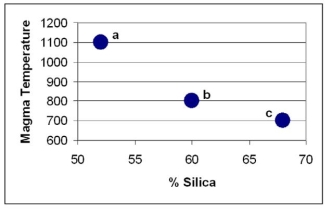
-Which point on the graph is most likely to form basalt?
A) Point a
B) Point b
C) Point c
-Which point on the graph is most likely to form basalt?
A) Point a
B) Point b
C) Point c
سؤال
Use the graph below to answer this question. One point represents basalt, one andesite and one rhyolite.
-Which point on the graph is most likely to form andesite?
A) Point a
B) Point b
C) Point c
-Which point on the graph is most likely to form andesite?
A) Point a
B) Point b
C) Point c
سؤال
Use the graph below to answer this question. One point represents basalt, one andesite and one rhyolite.
-Which point on the graph is most likely to form rhyolite?
A) Point a
B) Point b
C) Point c
-Which point on the graph is most likely to form rhyolite?
A) Point a
B) Point b
C) Point c
سؤال
Use the following map to answer this question.
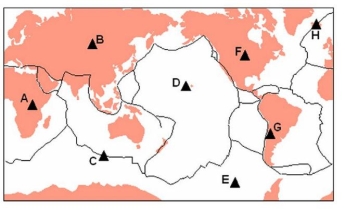
-Identify a volcano that is most likely to have both basalt and rhyolite as products of its eruption.
A) G
B) F
C) C
D) H
-Identify a volcano that is most likely to have both basalt and rhyolite as products of its eruption.
A) G
B) F
C) C
D) H
سؤال
Use the following map to answer this question.
-Identify a stratovolcano.
A) E
B) G
C) C
D) D
-Identify a stratovolcano.
A) E
B) G
C) C
D) D
سؤال
سؤال
سؤال
سؤال
سؤال
Use the Venn diagram below for this question.
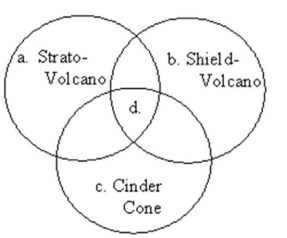
-Which feature(s) are present at plate boundaries?
A) Strato-Volcano
B) Shield-Volcano
C) Cinder Cone
D) All of the choices are correct.
-Which feature(s) are present at plate boundaries?
A) Strato-Volcano
B) Shield-Volcano
C) Cinder Cone
D) All of the choices are correct.
سؤال
Use the Venn diagram below for this question.
-This forms mostly from ash deposits.
A) Strato-Volcano
B) Shield-Volcano
C) Cinder Cone
D) All of the choices are correct.
-This forms mostly from ash deposits.
A) Strato-Volcano
B) Shield-Volcano
C) Cinder Cone
D) All of the choices are correct.
سؤال
Use the Venn diagram below for this question.
-This is composed of multiple layers of ash and rock.
A) Strato-Volcano
B) Shield-Volcano
C) Cinder Cone
D) All of the choices are correct.
-This is composed of multiple layers of ash and rock.
A) Strato-Volcano
B) Shield-Volcano
C) Cinder Cone
D) All of the choices are correct.
سؤال
Use the Venn diagram below for this question.
-Hawaii is an example of this type feature.
A) Strato-Volcano
B) Shield-Volcano
C) Cinder Cone
D) All of the choices are correct.
-Hawaii is an example of this type feature.
A) Strato-Volcano
B) Shield-Volcano
C) Cinder Cone
D) All of the choices are correct.
سؤال
Use the Venn diagram below for this question.
-Which region in the continental U.S. has the highest hazard associated with volcanoes and why?
A) Southern California because of the transform plate boundary there.
B) Southern California because of the convergent plate boundary there.
C) The Pacific northwest because of the transform plate boundary there.
D) The Pacific northwest because of the convergent plate boundary there.
-Which region in the continental U.S. has the highest hazard associated with volcanoes and why?
A) Southern California because of the transform plate boundary there.
B) Southern California because of the convergent plate boundary there.
C) The Pacific northwest because of the transform plate boundary there.
D) The Pacific northwest because of the convergent plate boundary there.
سؤال
سؤال
سؤال
سؤال
سؤال
سؤال
سؤال
سؤال
سؤال
سؤال
سؤال
سؤال
سؤال
سؤال
سؤال
سؤال
سؤال
سؤال
سؤال
سؤال
سؤال

فتح الحزمة
قم بالتسجيل لفتح البطاقات في هذه المجموعة!
Unlock Deck
Unlock Deck
1/36

العب

ملء الشاشة (f)
Deck 6: Volcanoes and Mountains
1
What happens to a mountain root as erosion removes material from the summit?
A) It gets deeper
B) It gets shallower
C) It stays the same
A) It gets deeper
B) It gets shallower
C) It stays the same
It gets shallower
2
Use the graph below to answer this question. One point represents basalt, one andesite and one rhyolite.
-Which point on the graph is most likely to form basalt?
A) Point a
B) Point b
C) Point c
-Which point on the graph is most likely to form basalt?
A) Point a
B) Point b
C) Point c
Point a
3
Use the graph below to answer this question. One point represents basalt, one andesite and one rhyolite.
-Which point on the graph is most likely to form andesite?
A) Point a
B) Point b
C) Point c
-Which point on the graph is most likely to form andesite?
A) Point a
B) Point b
C) Point c
Point b
4
Use the graph below to answer this question. One point represents basalt, one andesite and one rhyolite.
-Which point on the graph is most likely to form rhyolite?
A) Point a
B) Point b
C) Point c
-Which point on the graph is most likely to form rhyolite?
A) Point a
B) Point b
C) Point c
فتح الحزمة
افتح القفل للوصول البطاقات البالغ عددها 36 في هذه المجموعة.
فتح الحزمة
k this deck
5
Use the following map to answer this question.
-Identify a volcano that is most likely to have both basalt and rhyolite as products of its eruption.
A) G
B) F
C) C
D) H
-Identify a volcano that is most likely to have both basalt and rhyolite as products of its eruption.
A) G
B) F
C) C
D) H
فتح الحزمة
افتح القفل للوصول البطاقات البالغ عددها 36 في هذه المجموعة.
فتح الحزمة
k this deck
6
Use the following map to answer this question.
-Identify a stratovolcano.
A) E
B) G
C) C
D) D
-Identify a stratovolcano.
A) E
B) G
C) C
D) D
فتح الحزمة
افتح القفل للوصول البطاقات البالغ عددها 36 في هذه المجموعة.
فتح الحزمة
k this deck
7
The following excerpt is from: Ewert and Miller, June 1995, The USGS/OFDA Volcano Disaster
Assistance Program: USGS Open-File Report 95-553. Use the excerpt to answer this question.
The strategy employed by the Volcano Disaster Assistance Program (VDAP) is to reduce loss of life and minimize economic disruption. It includes instrumental monitoring to detect the movement of magma (molten rock) toward the surface and thereby forecast eruptions and assessments of volcano hazards and risk based on past eruptive events at a volcano.
A great majority of the world's potentially active volcanoes are unmonitored. Less than twenty-five percent of volcanoes that are known to have had eruptions in historical time are monitored at all, and, of these, only about two dozen are thoroughly monitored. Moreover, seventy-five percent of the largest explosive eruptions since 1800 occurred at volcanoes that had no previous historical eruptions (Simkin and Siebert, 1994). Thus, until regular volcano surveillance is much more widespread, a mobile crisis-response capability is needed to quickly assess hazards and install monitoring equipment when a volcano becomes restless.
VDAP sends groups of scientists to active volcanoes about to erupt that also pose a threat to humans.
-Which one of the plate tectonic settings listed below is most likely to have a volcano of interest to VDAP?
A) Convergent
B) Divergent
C) Transform
Assistance Program: USGS Open-File Report 95-553. Use the excerpt to answer this question.
The strategy employed by the Volcano Disaster Assistance Program (VDAP) is to reduce loss of life and minimize economic disruption. It includes instrumental monitoring to detect the movement of magma (molten rock) toward the surface and thereby forecast eruptions and assessments of volcano hazards and risk based on past eruptive events at a volcano.
A great majority of the world's potentially active volcanoes are unmonitored. Less than twenty-five percent of volcanoes that are known to have had eruptions in historical time are monitored at all, and, of these, only about two dozen are thoroughly monitored. Moreover, seventy-five percent of the largest explosive eruptions since 1800 occurred at volcanoes that had no previous historical eruptions (Simkin and Siebert, 1994). Thus, until regular volcano surveillance is much more widespread, a mobile crisis-response capability is needed to quickly assess hazards and install monitoring equipment when a volcano becomes restless.
VDAP sends groups of scientists to active volcanoes about to erupt that also pose a threat to humans.
-Which one of the plate tectonic settings listed below is most likely to have a volcano of interest to VDAP?
A) Convergent
B) Divergent
C) Transform
فتح الحزمة
افتح القفل للوصول البطاقات البالغ عددها 36 في هذه المجموعة.
فتح الحزمة
k this deck
8
The following excerpt is from: Ewert and Miller, June 1995, The USGS/OFDA Volcano Disaster
Assistance Program: USGS Open-File Report 95-553. Use the excerpt to answer this question.
The strategy employed by the Volcano Disaster Assistance Program (VDAP) is to reduce loss of life and minimize economic disruption. It includes instrumental monitoring to detect the movement of magma (molten rock) toward the surface and thereby forecast eruptions and assessments of volcano hazards and risk based on past eruptive events at a volcano.
A great majority of the world's potentially active volcanoes are unmonitored. Less than twenty-five percent of volcanoes that are known to have had eruptions in historical time are monitored at all, and, of these, only about two dozen are thoroughly monitored. Moreover, seventy-five percent of the largest explosive eruptions since 1800 occurred at volcanoes that had no previous historical eruptions (Simkin and Siebert, 1994). Thus, until regular volcano surveillance is much more widespread, a mobile crisis-response capability is needed to quickly assess hazards and install monitoring equipment when a volcano becomes restless.
VDAP sends groups of scientists to active volcanoes about to erupt that also pose a threat to humans.
-Which one of the magma types listed below is of least interest to VDAP?
A) Rhyolite
B) Andesite
C) Basalt
Assistance Program: USGS Open-File Report 95-553. Use the excerpt to answer this question.
The strategy employed by the Volcano Disaster Assistance Program (VDAP) is to reduce loss of life and minimize economic disruption. It includes instrumental monitoring to detect the movement of magma (molten rock) toward the surface and thereby forecast eruptions and assessments of volcano hazards and risk based on past eruptive events at a volcano.
A great majority of the world's potentially active volcanoes are unmonitored. Less than twenty-five percent of volcanoes that are known to have had eruptions in historical time are monitored at all, and, of these, only about two dozen are thoroughly monitored. Moreover, seventy-five percent of the largest explosive eruptions since 1800 occurred at volcanoes that had no previous historical eruptions (Simkin and Siebert, 1994). Thus, until regular volcano surveillance is much more widespread, a mobile crisis-response capability is needed to quickly assess hazards and install monitoring equipment when a volcano becomes restless.
VDAP sends groups of scientists to active volcanoes about to erupt that also pose a threat to humans.
-Which one of the magma types listed below is of least interest to VDAP?
A) Rhyolite
B) Andesite
C) Basalt
فتح الحزمة
افتح القفل للوصول البطاقات البالغ عددها 36 في هذه المجموعة.
فتح الحزمة
k this deck
9
The following excerpt is from: Ewert and Miller, June 1995, The USGS/OFDA Volcano Disaster
Assistance Program: USGS Open-File Report 95-553. Use the excerpt to answer this question.
The strategy employed by the Volcano Disaster Assistance Program (VDAP) is to reduce loss of life and minimize economic disruption. It includes instrumental monitoring to detect the movement of magma (molten rock) toward the surface and thereby forecast eruptions and assessments of volcano hazards and risk based on past eruptive events at a volcano.
A great majority of the world's potentially active volcanoes are unmonitored. Less than twenty-five percent of volcanoes that are known to have had eruptions in historical time are monitored at all, and, of these, only about two dozen are thoroughly monitored. Moreover, seventy-five percent of the largest explosive eruptions since 1800 occurred at volcanoes that had no previous historical eruptions (Simkin and Siebert, 1994). Thus, until regular volcano surveillance is much more widespread, a mobile crisis-response capability is needed to quickly assess hazards and install monitoring equipment when a volcano becomes restless.
VDAP sends groups of scientists to active volcanoes about to erupt that also pose a threat to humans.
-Suppose a stratovolcano undergoes several weeks of intense activity. What happens to the level of seismicity immediately after the eruption?
A) Seismicity increases
B) Seismicity decreases
C) Seismicity stays the same
Assistance Program: USGS Open-File Report 95-553. Use the excerpt to answer this question.
The strategy employed by the Volcano Disaster Assistance Program (VDAP) is to reduce loss of life and minimize economic disruption. It includes instrumental monitoring to detect the movement of magma (molten rock) toward the surface and thereby forecast eruptions and assessments of volcano hazards and risk based on past eruptive events at a volcano.
A great majority of the world's potentially active volcanoes are unmonitored. Less than twenty-five percent of volcanoes that are known to have had eruptions in historical time are monitored at all, and, of these, only about two dozen are thoroughly monitored. Moreover, seventy-five percent of the largest explosive eruptions since 1800 occurred at volcanoes that had no previous historical eruptions (Simkin and Siebert, 1994). Thus, until regular volcano surveillance is much more widespread, a mobile crisis-response capability is needed to quickly assess hazards and install monitoring equipment when a volcano becomes restless.
VDAP sends groups of scientists to active volcanoes about to erupt that also pose a threat to humans.
-Suppose a stratovolcano undergoes several weeks of intense activity. What happens to the level of seismicity immediately after the eruption?
A) Seismicity increases
B) Seismicity decreases
C) Seismicity stays the same
فتح الحزمة
افتح القفل للوصول البطاقات البالغ عددها 36 في هذه المجموعة.
فتح الحزمة
k this deck
10
The following excerpt is from: Ewert and Miller, June 1995, The USGS/OFDA Volcano Disaster
Assistance Program: USGS Open-File Report 95-553. Use the excerpt to answer this question.
The strategy employed by the Volcano Disaster Assistance Program (VDAP) is to reduce loss of life and minimize economic disruption. It includes instrumental monitoring to detect the movement of magma (molten rock) toward the surface and thereby forecast eruptions and assessments of volcano hazards and risk based on past eruptive events at a volcano.
A great majority of the world's potentially active volcanoes are unmonitored. Less than twenty-five percent of volcanoes that are known to have had eruptions in historical time are monitored at all, and, of these, only about two dozen are thoroughly monitored. Moreover, seventy-five percent of the largest explosive eruptions since 1800 occurred at volcanoes that had no previous historical eruptions (Simkin and Siebert, 1994). Thus, until regular volcano surveillance is much more widespread, a mobile crisis-response capability is needed to quickly assess hazards and install monitoring equipment when a volcano becomes restless.
VDAP sends groups of scientists to active volcanoes about to erupt that also pose a threat to humans.
-Which volcanoes are most likely to explode and why?
A) Strato- because the magma is more viscous than in shield volcanoes
B) Strato- because the magma is less viscous than in shield volcanoes
C) Shield- because the magma is less viscous than in strato-volcanoes
D) Shield- because the magma is more viscous than in strato-volcanoes
Assistance Program: USGS Open-File Report 95-553. Use the excerpt to answer this question.
The strategy employed by the Volcano Disaster Assistance Program (VDAP) is to reduce loss of life and minimize economic disruption. It includes instrumental monitoring to detect the movement of magma (molten rock) toward the surface and thereby forecast eruptions and assessments of volcano hazards and risk based on past eruptive events at a volcano.
A great majority of the world's potentially active volcanoes are unmonitored. Less than twenty-five percent of volcanoes that are known to have had eruptions in historical time are monitored at all, and, of these, only about two dozen are thoroughly monitored. Moreover, seventy-five percent of the largest explosive eruptions since 1800 occurred at volcanoes that had no previous historical eruptions (Simkin and Siebert, 1994). Thus, until regular volcano surveillance is much more widespread, a mobile crisis-response capability is needed to quickly assess hazards and install monitoring equipment when a volcano becomes restless.
VDAP sends groups of scientists to active volcanoes about to erupt that also pose a threat to humans.
-Which volcanoes are most likely to explode and why?
A) Strato- because the magma is more viscous than in shield volcanoes
B) Strato- because the magma is less viscous than in shield volcanoes
C) Shield- because the magma is less viscous than in strato-volcanoes
D) Shield- because the magma is more viscous than in strato-volcanoes
فتح الحزمة
افتح القفل للوصول البطاقات البالغ عددها 36 في هذه المجموعة.
فتح الحزمة
k this deck
11
Use the Venn diagram below for this question.
-Which feature(s) are present at plate boundaries?
A) Strato-Volcano
B) Shield-Volcano
C) Cinder Cone
D) All of the choices are correct.
-Which feature(s) are present at plate boundaries?
A) Strato-Volcano
B) Shield-Volcano
C) Cinder Cone
D) All of the choices are correct.
فتح الحزمة
افتح القفل للوصول البطاقات البالغ عددها 36 في هذه المجموعة.
فتح الحزمة
k this deck
12
Use the Venn diagram below for this question.
-This forms mostly from ash deposits.
A) Strato-Volcano
B) Shield-Volcano
C) Cinder Cone
D) All of the choices are correct.
-This forms mostly from ash deposits.
A) Strato-Volcano
B) Shield-Volcano
C) Cinder Cone
D) All of the choices are correct.
فتح الحزمة
افتح القفل للوصول البطاقات البالغ عددها 36 في هذه المجموعة.
فتح الحزمة
k this deck
13
Use the Venn diagram below for this question.
-This is composed of multiple layers of ash and rock.
A) Strato-Volcano
B) Shield-Volcano
C) Cinder Cone
D) All of the choices are correct.
-This is composed of multiple layers of ash and rock.
A) Strato-Volcano
B) Shield-Volcano
C) Cinder Cone
D) All of the choices are correct.
فتح الحزمة
افتح القفل للوصول البطاقات البالغ عددها 36 في هذه المجموعة.
فتح الحزمة
k this deck
14
Use the Venn diagram below for this question.
-Hawaii is an example of this type feature.
A) Strato-Volcano
B) Shield-Volcano
C) Cinder Cone
D) All of the choices are correct.
-Hawaii is an example of this type feature.
A) Strato-Volcano
B) Shield-Volcano
C) Cinder Cone
D) All of the choices are correct.
فتح الحزمة
افتح القفل للوصول البطاقات البالغ عددها 36 في هذه المجموعة.
فتح الحزمة
k this deck
15
Use the Venn diagram below for this question.
-Which region in the continental U.S. has the highest hazard associated with volcanoes and why?
A) Southern California because of the transform plate boundary there.
B) Southern California because of the convergent plate boundary there.
C) The Pacific northwest because of the transform plate boundary there.
D) The Pacific northwest because of the convergent plate boundary there.
-Which region in the continental U.S. has the highest hazard associated with volcanoes and why?
A) Southern California because of the transform plate boundary there.
B) Southern California because of the convergent plate boundary there.
C) The Pacific northwest because of the transform plate boundary there.
D) The Pacific northwest because of the convergent plate boundary there.
فتح الحزمة
افتح القفل للوصول البطاقات البالغ عددها 36 في هذه المجموعة.
فتح الحزمة
k this deck
16
Where are most volcanoes located?
A) At mountain ranges
B) At convergent plate boundaries
C) At divergent plate boundaries
A) At mountain ranges
B) At convergent plate boundaries
C) At divergent plate boundaries
فتح الحزمة
افتح القفل للوصول البطاقات البالغ عددها 36 في هذه المجموعة.
فتح الحزمة
k this deck
17
Which type of magma formed the Hawaiian Islands?
A) High silica magma such as basalt
B) Low silica magma such as basalt
C) High silica magma such as rhyolite
D) Low silica magma such as rhyolite
A) High silica magma such as basalt
B) Low silica magma such as basalt
C) High silica magma such as rhyolite
D) Low silica magma such as rhyolite
فتح الحزمة
افتح القفل للوصول البطاقات البالغ عددها 36 في هذه المجموعة.
فتح الحزمة
k this deck
18
What type of volcano is Mount St. Helens and what caused the explosion?
A) It is a strato-volcano that exploded when trapped gasses were quickly released.
B) It is a strato-volcano that exploded when trapped gasses were slowly released.
C) It is a shield-volcano that exploded when trapped gasses were quickly released.
D) It is a shield-volcano that exploded when trapped gasses were slowly released.
A) It is a strato-volcano that exploded when trapped gasses were quickly released.
B) It is a strato-volcano that exploded when trapped gasses were slowly released.
C) It is a shield-volcano that exploded when trapped gasses were quickly released.
D) It is a shield-volcano that exploded when trapped gasses were slowly released.
فتح الحزمة
افتح القفل للوصول البطاقات البالغ عددها 36 في هذه المجموعة.
فتح الحزمة
k this deck
19
What evidence indicated that Mount St. Helens was going to erupt?
A) Gas emissions
B) Changing shape
C) Earthquakes
D) All of the choices are correct.
A) Gas emissions
B) Changing shape
C) Earthquakes
D) All of the choices are correct.
فتح الحزمة
افتح القفل للوصول البطاقات البالغ عددها 36 في هذه المجموعة.
فتح الحزمة
k this deck
20
Why were there casualties associated with the Mount St. Helens eruption of 1980?
A) They died because there was inadequate monitoring of the volcano.
B) They died because they were all there studying the volcano.
C) They died because most failed to heed the warnings.
A) They died because there was inadequate monitoring of the volcano.
B) They died because they were all there studying the volcano.
C) They died because most failed to heed the warnings.
فتح الحزمة
افتح القفل للوصول البطاقات البالغ عددها 36 في هذه المجموعة.
فتح الحزمة
k this deck
21
Why did people experience ash fall several thousands of kilometers from Mount St. Helens?
A) The lateral blast ejected it there.
B) Prevailing winds carried it there.
C) Lahars carried it there.
A) The lateral blast ejected it there.
B) Prevailing winds carried it there.
C) Lahars carried it there.
فتح الحزمة
افتح القفل للوصول البطاقات البالغ عددها 36 في هذه المجموعة.
فتح الحزمة
k this deck
22
Why were trees knocked down for tens of kilometers north of Mount St. Helens?
A) The lava swept over them.
B) A landslide swept over them.
C) The blast effect swept over them.
A) The lava swept over them.
B) A landslide swept over them.
C) The blast effect swept over them.
فتح الحزمة
افتح القفل للوصول البطاقات البالغ عددها 36 في هذه المجموعة.
فتح الحزمة
k this deck
23
These volcanoes are the most likely to explode violently.
A) Stratovolcanoes
B) Shield volcanoes
C) Cinder cones
A) Stratovolcanoes
B) Shield volcanoes
C) Cinder cones
فتح الحزمة
افتح القفل للوصول البطاقات البالغ عددها 36 في هذه المجموعة.
فتح الحزمة
k this deck
24
Crater Lake in California formed in one of these.
A) Lava plateau
B) Caldera
C) Fumerole
A) Lava plateau
B) Caldera
C) Fumerole
فتح الحزمة
افتح القفل للوصول البطاقات البالغ عددها 36 في هذه المجموعة.
فتح الحزمة
k this deck
25
How much do mountains rise with each addition of 1000 meters of crustal material?
A) 2 meters
B) 20 meters
C) 200 meters
A) 2 meters
B) 20 meters
C) 200 meters
فتح الحزمة
افتح القفل للوصول البطاقات البالغ عددها 36 في هذه المجموعة.
فتح الحزمة
k this deck
26
The severity of a volcanic eruption depends most directly on the temperature of the molten rock that feeds the volcano.
فتح الحزمة
افتح القفل للوصول البطاقات البالغ عددها 36 في هذه المجموعة.
فتح الحزمة
k this deck
27
The difference between magma and lava is that lava has vented some of the gasses that were in the magma.
فتح الحزمة
افتح القفل للوصول البطاقات البالغ عددها 36 في هذه المجموعة.
فتح الحزمة
k this deck
28
High viscosity lava flows faster than low viscosity lava.
فتح الحزمة
افتح القفل للوصول البطاقات البالغ عددها 36 في هذه المجموعة.
فتح الحزمة
k this deck
29
Magma and lava are the same expect one remains below the surface and the other erupts on the surface.
فتح الحزمة
افتح القفل للوصول البطاقات البالغ عددها 36 في هذه المجموعة.
فتح الحزمة
k this deck
30
The most violent volcanic eruptions occur when gasses cannot easily escape from the magma.
فتح الحزمة
افتح القفل للوصول البطاقات البالغ عددها 36 في هذه المجموعة.
فتح الحزمة
k this deck
31
Temperature is more important in controlling viscosity than composition.
فتح الحزمة
افتح القفل للوصول البطاقات البالغ عددها 36 في هذه المجموعة.
فتح الحزمة
k this deck
32
High silica magmas have lower melting temperatures than low silica magmas.
فتح الحزمة
افتح القفل للوصول البطاقات البالغ عددها 36 في هذه المجموعة.
فتح الحزمة
k this deck
33
Scientists were able to predict the May 18th, 1980, eruption at Mount St. Helens.
فتح الحزمة
افتح القفل للوصول البطاقات البالغ عددها 36 في هذه المجموعة.
فتح الحزمة
k this deck
34
Mountains are generally extinct volcanoes.
فتح الحزمة
افتح القفل للوصول البطاقات البالغ عددها 36 في هذه المجموعة.
فتح الحزمة
k this deck
35
Mountains have crustal roots that help support them.
فتح الحزمة
افتح القفل للوصول البطاقات البالغ عددها 36 في هذه المجموعة.
فتح الحزمة
k this deck
36
The rise of mountains has been linked to global climate change.
فتح الحزمة
افتح القفل للوصول البطاقات البالغ عددها 36 في هذه المجموعة.
فتح الحزمة
k this deck
فتح الحزمة
افتح القفل للوصول البطاقات البالغ عددها 36 في هذه المجموعة.






