Deck 14: Organometallic Compounds

ملء الشاشة (f)
exit full mode
سؤال
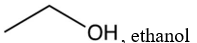
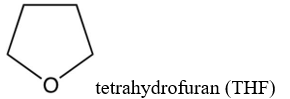
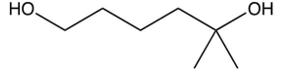
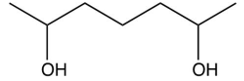
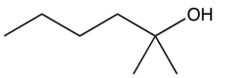
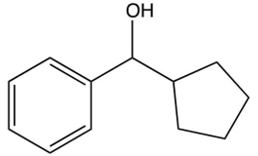
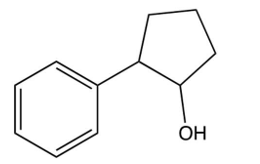
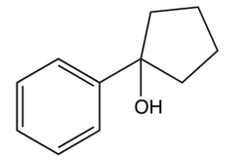
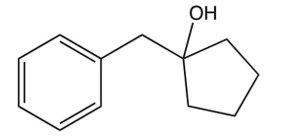
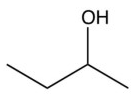
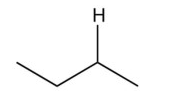
Which one of the following would not be a suitable solvent for Grignard reagents?

A)<strong>Which one of the following would not be a suitable solvent for Grignard reagents?</strong> A)  B)  C)  D) they would all be suitable solvents. <div style=padding-top: 35px>

B)<strong>Which one of the following would not be a suitable solvent for Grignard reagents?</strong> A)  B)  C)  D) they would all be suitable solvents. <div style=padding-top: 35px>
C)<strong>Which one of the following would not be a suitable solvent for Grignard reagents?</strong> A)  B)  C)  D) they would all be suitable solvents. <div style=padding-top: 35px>
D) they would all be suitable solvents.
استخدم زر المسافة أو
up arrow
down arrow
لقلب البطاقة.
سؤال
What is the major product of the following reaction?
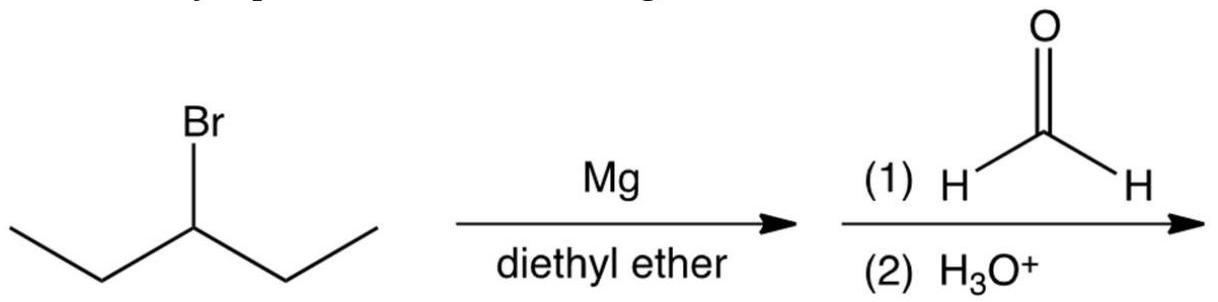
<strong>What is the major product of the following reaction?  </strong> A) 2-ethyl-1-pentanol B) 2-ethyl-1-butanol C) 3-pentanol D) 3-methyl-1-pentanol <div style=padding-top: 35px>

A) 2-ethyl-1-pentanol
B) 2-ethyl-1-butanol
C) 3-pentanol
D) 3-methyl-1-pentanol
سؤال
The reaction of excess Grignard reagent with an ester of formic acid, HCO2R\mathrm{HCO}_{2} \mathrm{R} , gives

A) a primary alcohol.
B) a secondary alcohol.
C) a tertiary alcohol.
D) methanol.
سؤال
Which of the following pairs of reagents would you use to prepare 4-methyl-2-pentanol?
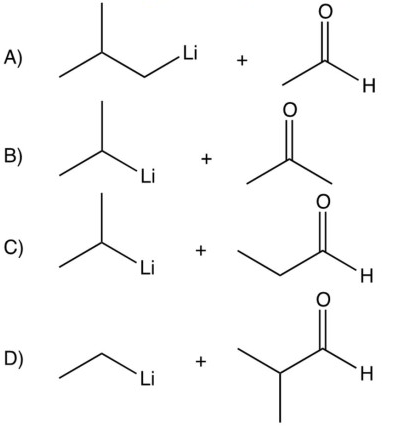
<strong>Which of the following pairs of reagents would you use to prepare 4-methyl-2-pentanol?   </strong> A) A B) B C) C D) D <div style=padding-top: 35px>

A) A
B) B
C) C
D) D
سؤال
What is the product of the following reactions?
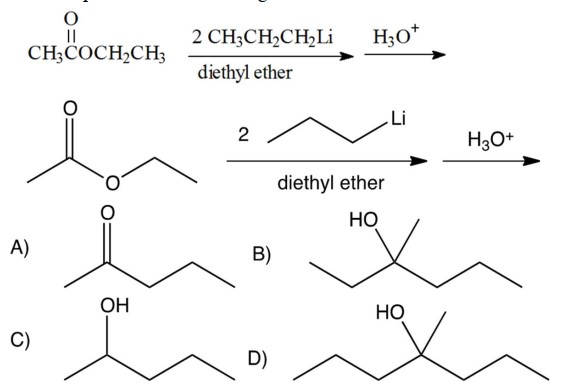
<strong>What is the product of the following reactions?  </strong> A) A B) B C) C D) D <div style=padding-top: 35px>

A) A
B) B
C) C
D) D
سؤال
The reaction of 4-methylcyclohexanone with CH3MgBr\mathrm{CH}_{3} \mathrm{MgBr} followed by neutralization gives two alcohols. These two alcohols are

A) constitutional isomers.
B) enantiomers formed in equal amounts.
C) enantiomers formed in unequal amounts.
D) diastereomers.
سؤال
What is the product of the following reaction?
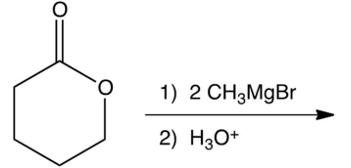
<strong>What is the product of the following reaction?     </strong> A)   B)   C)   D)   <div style=padding-top: 35px>
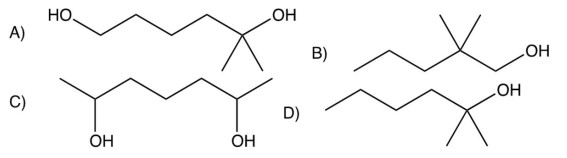

A)
<strong>What is the product of the following reaction?     </strong> A)   B)   C)   D)   <div style=padding-top: 35px>
B)
<strong>What is the product of the following reaction?     </strong> A)   B)   C)   D)   <div style=padding-top: 35px>
C)
<strong>What is the product of the following reaction?     </strong> A)   B)   C)   D)   <div style=padding-top: 35px>
D)
<strong>What is the product of the following reaction?     </strong> A)   B)   C)   D)   <div style=padding-top: 35px>
سؤال
Consider the two syntheses of the compound shown below. Which method would work best with minimal by-products?
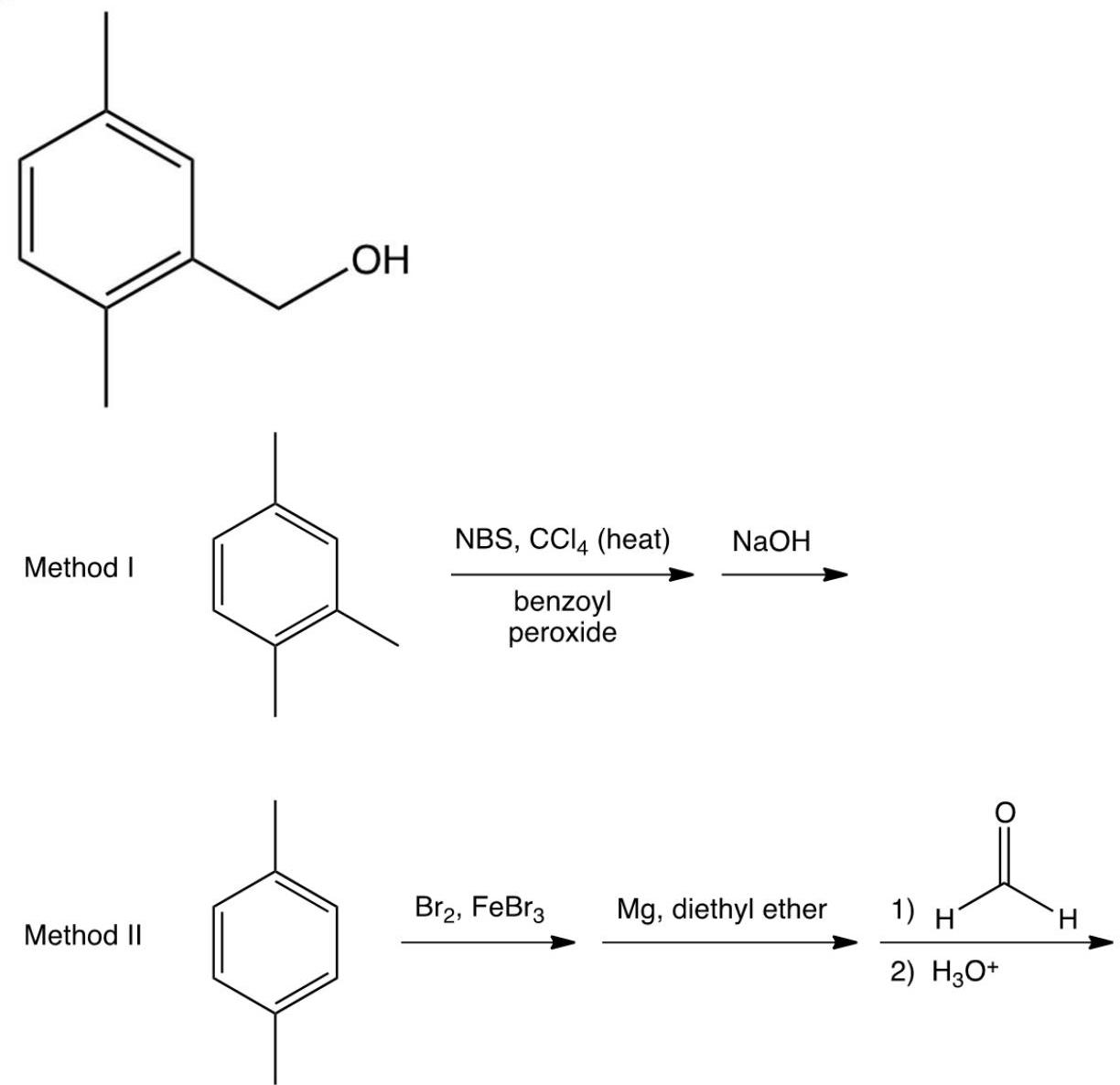
<strong>Consider the two syntheses of the compound shown below. Which method would work best with minimal by-products?  </strong> A) Method I B) Method II C) Both methods would work. D) Neither method would work. <div style=padding-top: 35px>

A) Method I
B) Method II
C) Both methods would work.
D) Neither method would work.
سؤال
What is the product of the following reaction?
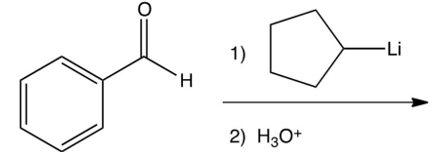
<strong>What is the product of the following reaction?  </strong> A)   B)   C)   D)   <div style=padding-top: 35px>

A)
<strong>What is the product of the following reaction?  </strong> A)   B)   C)   D)   <div style=padding-top: 35px>
B)
<strong>What is the product of the following reaction?  </strong> A)   B)   C)   D)   <div style=padding-top: 35px>
C)
<strong>What is the product of the following reaction?  </strong> A)   B)   C)   D)   <div style=padding-top: 35px>
D)
<strong>What is the product of the following reaction?  </strong> A)   B)   C)   D)   <div style=padding-top: 35px>
سؤال
The reaction of a Grignard reagent with a ketone followed by dilute acid gives a(n)

A) primary alcohol.
B) secondary alcohol.
C) tertiary alcohol.
D) ester.
سؤال
What is the product of the following reaction sequence?

<strong>What is the product of the following reaction sequence?  </strong> A) 3-chloro-4-heptanol B) 3-heptene C) 3-chloroheptane D) 4-chloroheptane <div style=padding-top: 35px>

A) 3-chloro-4-heptanol
B) 3-heptene
C) 3-chloroheptane
D) 4-chloroheptane
سؤال
How many stereoisomers are formed in this reaction?
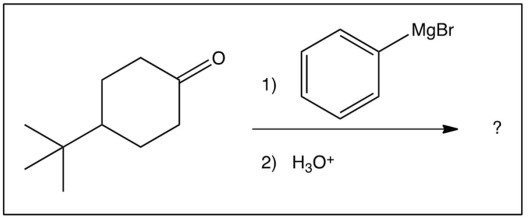
<strong>How many stereoisomers are formed in this reaction?  </strong> A) just one B) two C) three D) four <div style=padding-top: 35px>

A) just one
B) two
C) three
D) four
سؤال
What organic product would result from this reaction?
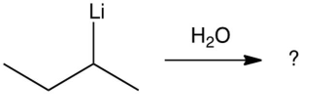
<strong>What organic product would result from this reaction?   </strong> A)   B)   C)   D)   <div style=padding-top: 35px>

A)
<strong>What organic product would result from this reaction?   </strong> A)   B)   C)   D)   <div style=padding-top: 35px>
B)
<strong>What organic product would result from this reaction?   </strong> A)   B)   C)   D)   <div style=padding-top: 35px>
C)
<strong>What organic product would result from this reaction?   </strong> A)   B)   C)   D)   <div style=padding-top: 35px>
D)
<strong>What organic product would result from this reaction?   </strong> A)   B)   C)   D)   <div style=padding-top: 35px>
فتح الحزمة
قم بالتسجيل لفتح البطاقات في هذه المجموعة!
Unlock Deck
Unlock Deck
1/13
auto play flashcards
العب
simple tutorial
ملء الشاشة (f)
exit full mode
Deck 14: Organometallic Compounds
1
Which one of the following would not be a suitable solvent for Grignard reagents?

A)<strong>Which one of the following would not be a suitable solvent for Grignard reagents?</strong> A)  B)  C)  D) they would all be suitable solvents.
B)<strong>Which one of the following would not be a suitable solvent for Grignard reagents?</strong> A)  B)  C)  D) they would all be suitable solvents.
C)<strong>Which one of the following would not be a suitable solvent for Grignard reagents?</strong> A)  B)  C)  D) they would all be suitable solvents.
D) they would all be suitable solvents.

2
What is the major product of the following reaction?
<strong>What is the major product of the following reaction?  </strong> A) 2-ethyl-1-pentanol B) 2-ethyl-1-butanol C) 3-pentanol D) 3-methyl-1-pentanol

A) 2-ethyl-1-pentanol
B) 2-ethyl-1-butanol
C) 3-pentanol
D) 3-methyl-1-pentanol
2-ethyl-1-butanol
3
The reaction of excess Grignard reagent with an ester of formic acid, HCO2R\mathrm{HCO}_{2} \mathrm{R} , gives

A) a primary alcohol.
B) a secondary alcohol.
C) a tertiary alcohol.
D) methanol.
a secondary alcohol.
4
Which of the following pairs of reagents would you use to prepare 4-methyl-2-pentanol?
<strong>Which of the following pairs of reagents would you use to prepare 4-methyl-2-pentanol?   </strong> A) A B) B C) C D) D

A) A
B) B
C) C
D) D
فتح الحزمة
افتح القفل للوصول البطاقات البالغ عددها 13 في هذه المجموعة.
فتح الحزمة
k this deck
5
What is the product of the following reactions?
<strong>What is the product of the following reactions?  </strong> A) A B) B C) C D) D

A) A
B) B
C) C
D) D
فتح الحزمة
افتح القفل للوصول البطاقات البالغ عددها 13 في هذه المجموعة.
فتح الحزمة
k this deck
6
The reaction of 4-methylcyclohexanone with CH3MgBr\mathrm{CH}_{3} \mathrm{MgBr} followed by neutralization gives two alcohols. These two alcohols are

A) constitutional isomers.
B) enantiomers formed in equal amounts.
C) enantiomers formed in unequal amounts.
D) diastereomers.
فتح الحزمة
افتح القفل للوصول البطاقات البالغ عددها 13 في هذه المجموعة.
فتح الحزمة
k this deck
7
What is the product of the following reaction?
<strong>What is the product of the following reaction?     </strong> A)   B)   C)   D)

A)
<strong>What is the product of the following reaction?     </strong> A)   B)   C)   D)
B)
<strong>What is the product of the following reaction?     </strong> A)   B)   C)   D)
C)
<strong>What is the product of the following reaction?     </strong> A)   B)   C)   D)
D)
<strong>What is the product of the following reaction?     </strong> A)   B)   C)   D)
فتح الحزمة
افتح القفل للوصول البطاقات البالغ عددها 13 في هذه المجموعة.

فتح الحزمة
k this deck
8
Consider the two syntheses of the compound shown below. Which method would work best with minimal by-products?
<strong>Consider the two syntheses of the compound shown below. Which method would work best with minimal by-products?  </strong> A) Method I B) Method II C) Both methods would work. D) Neither method would work.

A) Method I
B) Method II
C) Both methods would work.
D) Neither method would work.
فتح الحزمة
افتح القفل للوصول البطاقات البالغ عددها 13 في هذه المجموعة.

فتح الحزمة
k this deck
9
What is the product of the following reaction?
<strong>What is the product of the following reaction?  </strong> A)   B)   C)   D)

A)
<strong>What is the product of the following reaction?  </strong> A)   B)   C)   D)
B)
<strong>What is the product of the following reaction?  </strong> A)   B)   C)   D)
C)
<strong>What is the product of the following reaction?  </strong> A)   B)   C)   D)
D)
<strong>What is the product of the following reaction?  </strong> A)   B)   C)   D)
فتح الحزمة
افتح القفل للوصول البطاقات البالغ عددها 13 في هذه المجموعة.
فتح الحزمة
k this deck
10
The reaction of a Grignard reagent with a ketone followed by dilute acid gives a(n)

A) primary alcohol.
B) secondary alcohol.
C) tertiary alcohol.
D) ester.
فتح الحزمة
افتح القفل للوصول البطاقات البالغ عددها 13 في هذه المجموعة.
فتح الحزمة
k this deck
11
What is the product of the following reaction sequence?
<strong>What is the product of the following reaction sequence?  </strong> A) 3-chloro-4-heptanol B) 3-heptene C) 3-chloroheptane D) 4-chloroheptane

A) 3-chloro-4-heptanol
B) 3-heptene
C) 3-chloroheptane
D) 4-chloroheptane
فتح الحزمة
افتح القفل للوصول البطاقات البالغ عددها 13 في هذه المجموعة.
فتح الحزمة
k this deck
12
How many stereoisomers are formed in this reaction?
<strong>How many stereoisomers are formed in this reaction?  </strong> A) just one B) two C) three D) four

A) just one
B) two
C) three
D) four
فتح الحزمة
افتح القفل للوصول البطاقات البالغ عددها 13 في هذه المجموعة.
فتح الحزمة
k this deck
13
What organic product would result from this reaction?
<strong>What organic product would result from this reaction?   </strong> A)   B)   C)   D)

A)
<strong>What organic product would result from this reaction?   </strong> A)   B)   C)   D)
B)
<strong>What organic product would result from this reaction?   </strong> A)   B)   C)   D)
C)
<strong>What organic product would result from this reaction?   </strong> A)   B)   C)   D)
D)
<strong>What organic product would result from this reaction?   </strong> A)   B)   C)   D)
فتح الحزمة
افتح القفل للوصول البطاقات البالغ عددها 13 في هذه المجموعة.
فتح الحزمة
k this deck
locked card icon
فتح الحزمة
افتح القفل للوصول البطاقات البالغ عددها 13 في هذه المجموعة.