Deck 19: Acid Derivatives

ملء الشاشة (f)
exit full mode
سؤال
What is the name of the following compound?
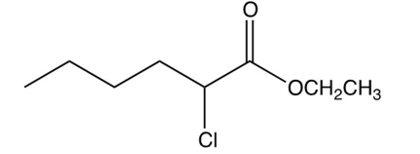
<strong>What is the name of the following compound?  </strong> A) 2-chlorohexyl ethanoate B) 1-chlorohexyl ethanoate C) ethyl 2-chlorohexanoate D) ethyl 1-chlorohexanoate <div style=padding-top: 35px>

A) 2-chlorohexyl ethanoate
B) 1-chlorohexyl ethanoate
C) ethyl 2-chlorohexanoate
D) ethyl 1-chlorohexanoate
استخدم زر المسافة أو
up arrow
down arrow
لقلب البطاقة.
سؤال
Rank the following in order of decreasing rate of hydrolysis.
I. acetyl chloride
II. acetic anhydride
III. ethyl acetate
IV. acetamide

A) I >> II >> III >> IV
B) IV >> III >> II >> I
C) I >> III >> II >> IV
D) II >> III >> IV >> I
سؤال
What is the product of the following reactions?
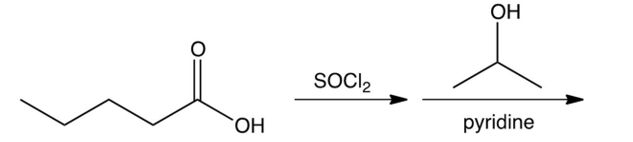
<strong>What is the product of the following reactions?  </strong> A)   B)   C)   D)   <div style=padding-top: 35px>

A)
<strong>What is the product of the following reactions?  </strong> A)   B)   C)   D)   <div style=padding-top: 35px>
B)
<strong>What is the product of the following reactions?  </strong> A)   B)   C)   D)   <div style=padding-top: 35px>
C)
<strong>What is the product of the following reactions?  </strong> A)   B)   C)   D)   <div style=padding-top: 35px>
D)
<strong>What is the product of the following reactions?  </strong> A)   B)   C)   D)   <div style=padding-top: 35px>
سؤال
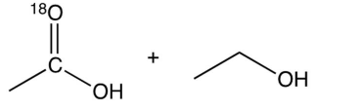
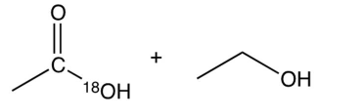
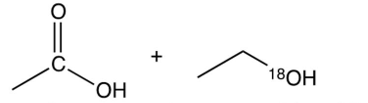
Saponification and neutralization of 18O{ }^{18} \mathrm{O} labeled ethyl acetate, as shown below, yields which of the following isotopically labeled products?
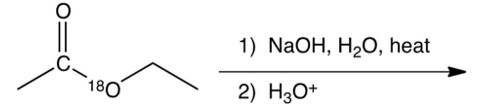
 <strong>Saponification and neutralization of  { }^{18} \mathrm{O}  labeled ethyl acetate, as shown below, yields which of the following isotopically labeled products?  </strong> A)   B)   C)   D) approximately equal amounts of A and B. <div style=padding-top: 35px>

A)
 <strong>Saponification and neutralization of  { }^{18} \mathrm{O}  labeled ethyl acetate, as shown below, yields which of the following isotopically labeled products?  </strong> A)   B)   C)   D) approximately equal amounts of A and B. <div style=padding-top: 35px>
B)
 <strong>Saponification and neutralization of  { }^{18} \mathrm{O}  labeled ethyl acetate, as shown below, yields which of the following isotopically labeled products?  </strong> A)   B)   C)   D) approximately equal amounts of A and B. <div style=padding-top: 35px>
C)
 <strong>Saponification and neutralization of  { }^{18} \mathrm{O}  labeled ethyl acetate, as shown below, yields which of the following isotopically labeled products?  </strong> A)   B)   C)   D) approximately equal amounts of A and B. <div style=padding-top: 35px>
D) approximately equal amounts of A and B.
سؤال
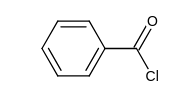
Which one of the following does not react with benzoyl chloride, C6H5COCl\mathrm{C}_{6} \mathrm{H}_{5} \mathrm{COCl} ?  <strong>Which one of the following does not react with benzoyl chloride,  \mathrm{C}_{6} \mathrm{H}_{5} \mathrm{COCl}  ?  </strong> A)  \mathrm{NH}_{3}  B)  \mathrm{CH}_{3} \mathrm{NH}_{2}  C)  \left(\mathrm{CH}_{3}\right)_{2} \mathrm{NH}  D)  \left(\mathrm{CH}_{3}\right)_{3} \mathrm{~N}  <div style=padding-top: 35px>

A) NH3\mathrm{NH}_{3}
B) CH3NH2\mathrm{CH}_{3} \mathrm{NH}_{2}
C) (CH3)2NH\left(\mathrm{CH}_{3}\right)_{2} \mathrm{NH}
D) (CH3)3 N\left(\mathrm{CH}_{3}\right)_{3} \mathrm{~N}
سؤال
The following tetrahedral intermediate breaks down to
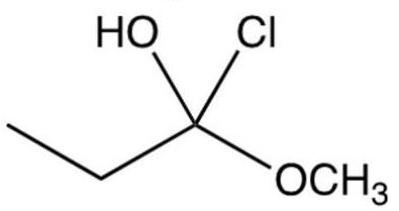
 <strong>The following tetrahedral intermediate breaks down to  </strong> A) propanoyl chloride and  \mathrm{CH}_{3} \mathrm{OH} . B) propanal and  \mathrm{HCl} . C) propanoic acid and  \mathrm{CH}_{3} \mathrm{Cl} . D) methyl propanoate and  \mathrm{HCl} . <div style=padding-top: 35px>

A) propanoyl chloride and CH3OH\mathrm{CH}_{3} \mathrm{OH} .
B) propanal and HCl\mathrm{HCl} .
C) propanoic acid and CH3Cl\mathrm{CH}_{3} \mathrm{Cl} .
D) methyl propanoate and HCl\mathrm{HCl} .
سؤال
What is the product of the following reaction sequence?
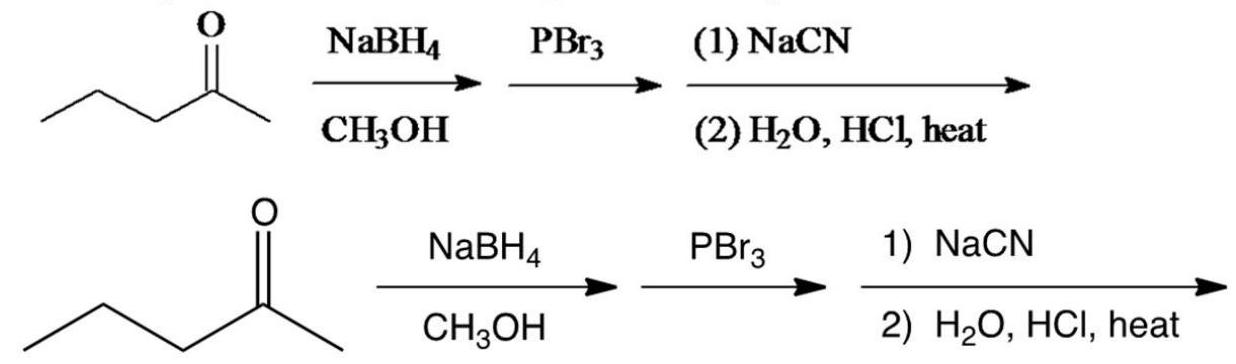
<strong>What is the product of the following reaction sequence?  </strong> A) 2-methyl-1-pentanol B) 2-methylpentanoic acid C) 2-bromo-3-methylpentanoic acid D) 4-hydroxyhexanoic acid <div style=padding-top: 35px>

A) 2-methyl-1-pentanol
B) 2-methylpentanoic acid
C) 2-bromo-3-methylpentanoic acid
D) 4-hydroxyhexanoic acid
سؤال
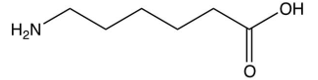
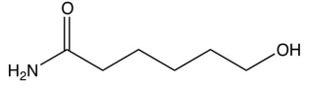
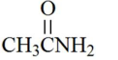
Identify the monomer(s) used to make the following polymer.
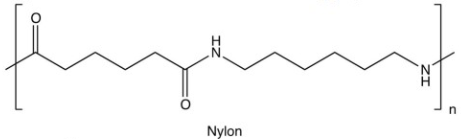
<strong>Identify the monomer(s) used to make the following polymer.   </strong> A)   B)   C)   D)   <div style=padding-top: 35px>

A)
<strong>Identify the monomer(s) used to make the following polymer.   </strong> A)   B)   C)   D)   <div style=padding-top: 35px>
B)
<strong>Identify the monomer(s) used to make the following polymer.   </strong> A)   B)   C)   D)   <div style=padding-top: 35px>
C)
<strong>Identify the monomer(s) used to make the following polymer.   </strong> A)   B)   C)   D)   <div style=padding-top: 35px>
D)
<strong>Identify the monomer(s) used to make the following polymer.   </strong> A)   B)   C)   D)   <div style=padding-top: 35px>
سؤال
Which of the following is the tetrahedral intermediate formed in the reaction of a thioester with ammonia?
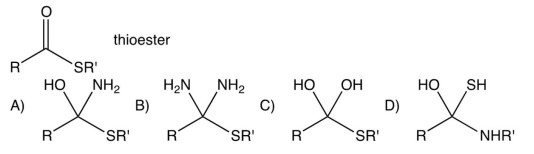
<strong>Which of the following is the tetrahedral intermediate formed in the reaction of a thioester with ammonia?  </strong> A) A B) B C) C D) D <div style=padding-top: 35px>

A) A
B) B
C) C
D) D
سؤال
Which of the following best represents a mechanistic step in the acid-catalyzed hydrolysis of acetonitrile?
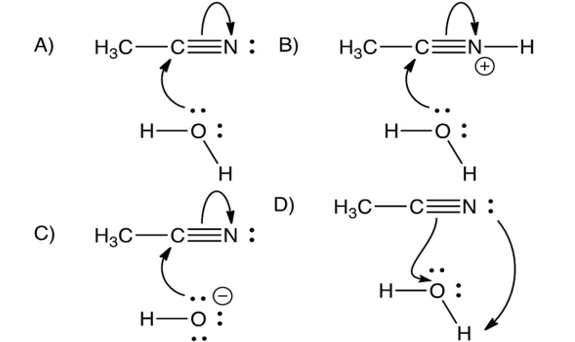
<strong>Which of the following best represents a mechanistic step in the acid-catalyzed hydrolysis of acetonitrile?   </strong> A) A B) B C) C D) D <div style=padding-top: 35px>

A) A
B) B
C) C
D) D
سؤال
Which of the following is the product of the reaction shown below?
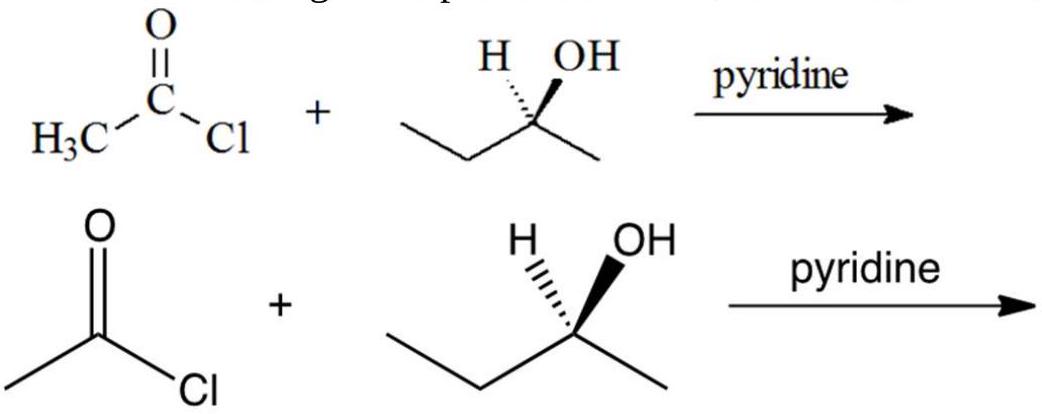
<strong>Which of the following is the product of the reaction shown below?    </strong> A) A B) B C) C D) D <div style=padding-top: 35px>
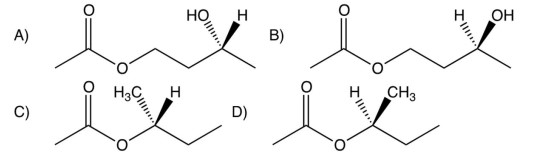

A) A
B) B
C) C
D) D
سؤال
With the stereochemistry of the starting material shown, identify the stereochemistry of 2-butanol in the following reaction sequence.
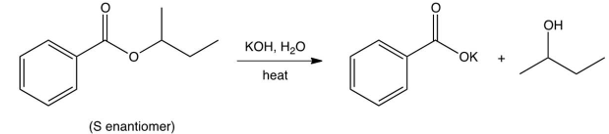
<strong>With the stereochemistry of the starting material shown, identify the stereochemistry of 2-butanol in the following reaction sequence.   (S enantiomer)</strong> A) (S)-2-butanol B) (R)-2-butanol C) racemic 2-butanol D) meso-2-butanol <div style=padding-top: 35px>
(S enantiomer)

A) (S)-2-butanol
B) (R)-2-butanol
C) racemic 2-butanol
D) meso-2-butanol
سؤال
Identify the product obtained in the hydrolysis of the following cyclic acid anhydride.
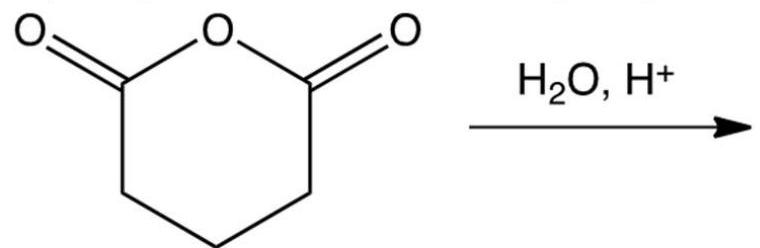
 <strong>Identify the product obtained in the hydrolysis of the following cyclic acid anhydride.    </strong> A)  \mathrm{HOCH}_{2} \mathrm{CH}_{2} \mathrm{CH}_{2} \mathrm{CH}_{2} \mathrm{CH}_{2} \mathrm{OH}  B)  \mathrm{HOCH}_{2} \mathrm{CH}_{2} \mathrm{CH}_{2} \mathrm{CH}_{2} \mathrm{CO}_{2} \mathrm{H}  C)  \mathrm{HO}_{2} \mathrm{CCH}_{2} \mathrm{CH}_{2} \mathrm{CH}_{2} \mathrm{CO}_{2} \mathrm{H}  D)  \mathrm{HOCH}_{2} \mathrm{CH}_{2} \mathrm{CH}_{2} \mathrm{CH}_{2} \mathrm{CH}=\mathrm{O}  <div style=padding-top: 35px>
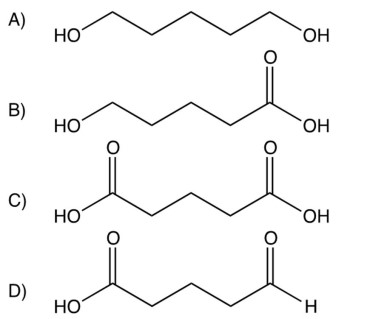
 <strong>Identify the product obtained in the hydrolysis of the following cyclic acid anhydride.    </strong> A)  \mathrm{HOCH}_{2} \mathrm{CH}_{2} \mathrm{CH}_{2} \mathrm{CH}_{2} \mathrm{CH}_{2} \mathrm{OH}  B)  \mathrm{HOCH}_{2} \mathrm{CH}_{2} \mathrm{CH}_{2} \mathrm{CH}_{2} \mathrm{CO}_{2} \mathrm{H}  C)  \mathrm{HO}_{2} \mathrm{CCH}_{2} \mathrm{CH}_{2} \mathrm{CH}_{2} \mathrm{CO}_{2} \mathrm{H}  D)  \mathrm{HOCH}_{2} \mathrm{CH}_{2} \mathrm{CH}_{2} \mathrm{CH}_{2} \mathrm{CH}=\mathrm{O}  <div style=padding-top: 35px>

A) HOCH2CH2CH2CH2CH2OH\mathrm{HOCH}_{2} \mathrm{CH}_{2} \mathrm{CH}_{2} \mathrm{CH}_{2} \mathrm{CH}_{2} \mathrm{OH}
B) HOCH2CH2CH2CH2CO2H\mathrm{HOCH}_{2} \mathrm{CH}_{2} \mathrm{CH}_{2} \mathrm{CH}_{2} \mathrm{CO}_{2} \mathrm{H}
C) HO2CCH2CH2CH2CO2H\mathrm{HO}_{2} \mathrm{CCH}_{2} \mathrm{CH}_{2} \mathrm{CH}_{2} \mathrm{CO}_{2} \mathrm{H}
D) HOCH2CH2CH2CH2CH=O\mathrm{HOCH}_{2} \mathrm{CH}_{2} \mathrm{CH}_{2} \mathrm{CH}_{2} \mathrm{CH}=\mathrm{O}
سؤال
What are the hydrolysis products of the following reaction?
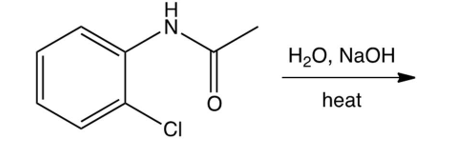
 <strong>What are the hydrolysis products of the following reaction?  </strong> A) ortho-chloroaniline and  \mathrm{CH}_{3} \mathrm{CH}-\mathrm{O}  B) chlorobenzene and   C) ortho-chloroaniline and  \mathrm{CH}_{3} \mathrm{CO}_{2} \mathrm{Na}  D) chlorobenzene and  \mathrm{CH}_{3} \mathrm{CO}_{2} \mathrm{Na}  <div style=padding-top: 35px>

A) ortho-chloroaniline and CH3CHO\mathrm{CH}_{3} \mathrm{CH}-\mathrm{O}
B) chlorobenzene and  <strong>What are the hydrolysis products of the following reaction?  </strong> A) ortho-chloroaniline and  \mathrm{CH}_{3} \mathrm{CH}-\mathrm{O}  B) chlorobenzene and   C) ortho-chloroaniline and  \mathrm{CH}_{3} \mathrm{CO}_{2} \mathrm{Na}  D) chlorobenzene and  \mathrm{CH}_{3} \mathrm{CO}_{2} \mathrm{Na}  <div style=padding-top: 35px>
C) ortho-chloroaniline and CH3CO2Na\mathrm{CH}_{3} \mathrm{CO}_{2} \mathrm{Na}
D) chlorobenzene and CH3CO2Na\mathrm{CH}_{3} \mathrm{CO}_{2} \mathrm{Na}
سؤال
The major product from this reaction would be
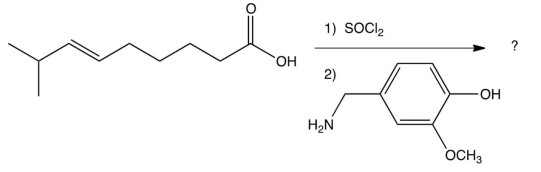
<strong>The major product from this reaction would be  </strong> A) an acid chloride B) an anhydride C) an amide D) an ester <div style=padding-top: 35px>

A) an acid chloride
B) an anhydride
C) an amide
D) an ester
سؤال
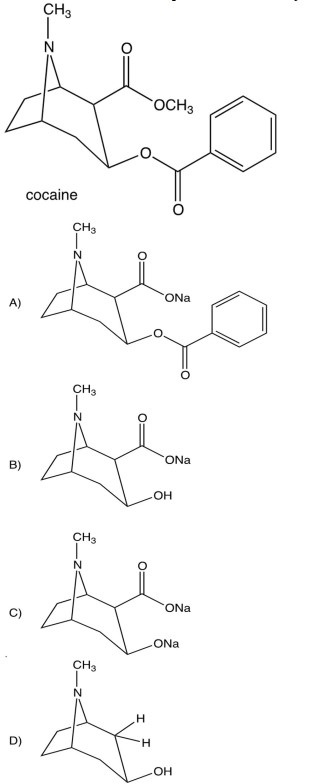
Treatment of cocaine with hot aqueous NaOH\mathrm{NaOH} would yield
 <strong>Treatment of cocaine with hot aqueous  \mathrm{NaOH}  would yield  </strong> A) A B) B C) C D) D <div style=padding-top: 35px>

A) A
B) B
C) C
D) D
سؤال
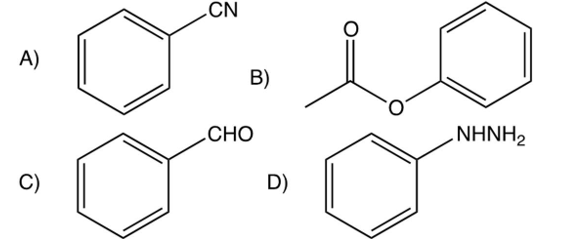
Which one of the following reacts with aqueous HCl\mathrm{HCl} to give phenol?
 <strong>Which one of the following reacts with aqueous  \mathrm{HCl}  to give phenol?  </strong> A)  \mathrm{C}_{6} \mathrm{H}_{5} \mathrm{CN}  B)  \mathrm{CH}_{3} \mathrm{CO}_{2} \mathrm{C}_{6} \mathrm{H}_{5}  C)  \mathrm{C}_{6} \mathrm{H}_{5} \mathrm{CH}=\mathrm{O}  D)  \mathrm{C}_{6} \mathrm{H}_{5} \mathrm{NHNH}_{2}  <div style=padding-top: 35px>

A) C6H5CN\mathrm{C}_{6} \mathrm{H}_{5} \mathrm{CN}
B) CH3CO2C6H5\mathrm{CH}_{3} \mathrm{CO}_{2} \mathrm{C}_{6} \mathrm{H}_{5}
C) C6H5CH=O\mathrm{C}_{6} \mathrm{H}_{5} \mathrm{CH}=\mathrm{O}
D) C6H5NHNH2\mathrm{C}_{6} \mathrm{H}_{5} \mathrm{NHNH}_{2}
فتح الحزمة
قم بالتسجيل لفتح البطاقات في هذه المجموعة!
Unlock Deck
Unlock Deck
1/17
auto play flashcards
العب
simple tutorial
ملء الشاشة (f)
exit full mode
Deck 19: Acid Derivatives
1
What is the name of the following compound?
<strong>What is the name of the following compound?  </strong> A) 2-chlorohexyl ethanoate B) 1-chlorohexyl ethanoate C) ethyl 2-chlorohexanoate D) ethyl 1-chlorohexanoate

A) 2-chlorohexyl ethanoate
B) 1-chlorohexyl ethanoate
C) ethyl 2-chlorohexanoate
D) ethyl 1-chlorohexanoate
ethyl 2-chlorohexanoate
2
Rank the following in order of decreasing rate of hydrolysis.
I. acetyl chloride
II. acetic anhydride
III. ethyl acetate
IV. acetamide

A) I >> II >> III >> IV
B) IV >> III >> II >> I
C) I >> III >> II >> IV
D) II >> III >> IV >> I
I >> II >> III >> IV
3
What is the product of the following reactions?
<strong>What is the product of the following reactions?  </strong> A)   B)   C)   D)

A)
<strong>What is the product of the following reactions?  </strong> A)   B)   C)   D)
B)
<strong>What is the product of the following reactions?  </strong> A)   B)   C)   D)
C)
<strong>What is the product of the following reactions?  </strong> A)   B)   C)   D)
D)
<strong>What is the product of the following reactions?  </strong> A)   B)   C)   D)

4
Saponification and neutralization of 18O{ }^{18} \mathrm{O} labeled ethyl acetate, as shown below, yields which of the following isotopically labeled products?
 <strong>Saponification and neutralization of  { }^{18} \mathrm{O}  labeled ethyl acetate, as shown below, yields which of the following isotopically labeled products?  </strong> A)   B)   C)   D) approximately equal amounts of A and B.

A)
 <strong>Saponification and neutralization of  { }^{18} \mathrm{O}  labeled ethyl acetate, as shown below, yields which of the following isotopically labeled products?  </strong> A)   B)   C)   D) approximately equal amounts of A and B.
B)
 <strong>Saponification and neutralization of  { }^{18} \mathrm{O}  labeled ethyl acetate, as shown below, yields which of the following isotopically labeled products?  </strong> A)   B)   C)   D) approximately equal amounts of A and B.
C)
 <strong>Saponification and neutralization of  { }^{18} \mathrm{O}  labeled ethyl acetate, as shown below, yields which of the following isotopically labeled products?  </strong> A)   B)   C)   D) approximately equal amounts of A and B.
D) approximately equal amounts of A and B.
فتح الحزمة
افتح القفل للوصول البطاقات البالغ عددها 17 في هذه المجموعة.
فتح الحزمة
k this deck
5
Which one of the following does not react with benzoyl chloride, C6H5COCl\mathrm{C}_{6} \mathrm{H}_{5} \mathrm{COCl} ?  <strong>Which one of the following does not react with benzoyl chloride,  \mathrm{C}_{6} \mathrm{H}_{5} \mathrm{COCl}  ?  </strong> A)  \mathrm{NH}_{3}  B)  \mathrm{CH}_{3} \mathrm{NH}_{2}  C)  \left(\mathrm{CH}_{3}\right)_{2} \mathrm{NH}  D)  \left(\mathrm{CH}_{3}\right)_{3} \mathrm{~N}

A) NH3\mathrm{NH}_{3}
B) CH3NH2\mathrm{CH}_{3} \mathrm{NH}_{2}
C) (CH3)2NH\left(\mathrm{CH}_{3}\right)_{2} \mathrm{NH}
D) (CH3)3 N\left(\mathrm{CH}_{3}\right)_{3} \mathrm{~N}
فتح الحزمة
افتح القفل للوصول البطاقات البالغ عددها 17 في هذه المجموعة.
فتح الحزمة
k this deck
6
The following tetrahedral intermediate breaks down to
 <strong>The following tetrahedral intermediate breaks down to  </strong> A) propanoyl chloride and  \mathrm{CH}_{3} \mathrm{OH} . B) propanal and  \mathrm{HCl} . C) propanoic acid and  \mathrm{CH}_{3} \mathrm{Cl} . D) methyl propanoate and  \mathrm{HCl} .

A) propanoyl chloride and CH3OH\mathrm{CH}_{3} \mathrm{OH} .
B) propanal and HCl\mathrm{HCl} .
C) propanoic acid and CH3Cl\mathrm{CH}_{3} \mathrm{Cl} .
D) methyl propanoate and HCl\mathrm{HCl} .
فتح الحزمة
افتح القفل للوصول البطاقات البالغ عددها 17 في هذه المجموعة.
فتح الحزمة
k this deck
7
What is the product of the following reaction sequence?
<strong>What is the product of the following reaction sequence?  </strong> A) 2-methyl-1-pentanol B) 2-methylpentanoic acid C) 2-bromo-3-methylpentanoic acid D) 4-hydroxyhexanoic acid

A) 2-methyl-1-pentanol
B) 2-methylpentanoic acid
C) 2-bromo-3-methylpentanoic acid
D) 4-hydroxyhexanoic acid
فتح الحزمة
افتح القفل للوصول البطاقات البالغ عددها 17 في هذه المجموعة.

فتح الحزمة
k this deck
8
Identify the monomer(s) used to make the following polymer.
<strong>Identify the monomer(s) used to make the following polymer.   </strong> A)   B)   C)   D)

A)
<strong>Identify the monomer(s) used to make the following polymer.   </strong> A)   B)   C)   D)
B)
<strong>Identify the monomer(s) used to make the following polymer.   </strong> A)   B)   C)   D)
C)
<strong>Identify the monomer(s) used to make the following polymer.   </strong> A)   B)   C)   D)
D)
<strong>Identify the monomer(s) used to make the following polymer.   </strong> A)   B)   C)   D)
فتح الحزمة
افتح القفل للوصول البطاقات البالغ عددها 17 في هذه المجموعة.

فتح الحزمة
k this deck
9
Which of the following is the tetrahedral intermediate formed in the reaction of a thioester with ammonia?
<strong>Which of the following is the tetrahedral intermediate formed in the reaction of a thioester with ammonia?  </strong> A) A B) B C) C D) D

A) A
B) B
C) C
D) D
فتح الحزمة
افتح القفل للوصول البطاقات البالغ عددها 17 في هذه المجموعة.
فتح الحزمة
k this deck
10
Which of the following best represents a mechanistic step in the acid-catalyzed hydrolysis of acetonitrile?
<strong>Which of the following best represents a mechanistic step in the acid-catalyzed hydrolysis of acetonitrile?   </strong> A) A B) B C) C D) D

A) A
B) B
C) C
D) D
فتح الحزمة
افتح القفل للوصول البطاقات البالغ عددها 17 في هذه المجموعة.
فتح الحزمة
k this deck
11
Which of the following is the product of the reaction shown below?
<strong>Which of the following is the product of the reaction shown below?    </strong> A) A B) B C) C D) D

A) A
B) B
C) C
D) D
فتح الحزمة
افتح القفل للوصول البطاقات البالغ عددها 17 في هذه المجموعة.
فتح الحزمة
k this deck
12
With the stereochemistry of the starting material shown, identify the stereochemistry of 2-butanol in the following reaction sequence.
<strong>With the stereochemistry of the starting material shown, identify the stereochemistry of 2-butanol in the following reaction sequence.   (S enantiomer)</strong> A) (S)-2-butanol B) (R)-2-butanol C) racemic 2-butanol D) meso-2-butanol
(S enantiomer)

A) (S)-2-butanol
B) (R)-2-butanol
C) racemic 2-butanol
D) meso-2-butanol
فتح الحزمة
افتح القفل للوصول البطاقات البالغ عددها 17 في هذه المجموعة.
فتح الحزمة
k this deck
13
Identify the product obtained in the hydrolysis of the following cyclic acid anhydride.
 <strong>Identify the product obtained in the hydrolysis of the following cyclic acid anhydride.    </strong> A)  \mathrm{HOCH}_{2} \mathrm{CH}_{2} \mathrm{CH}_{2} \mathrm{CH}_{2} \mathrm{CH}_{2} \mathrm{OH}  B)  \mathrm{HOCH}_{2} \mathrm{CH}_{2} \mathrm{CH}_{2} \mathrm{CH}_{2} \mathrm{CO}_{2} \mathrm{H}  C)  \mathrm{HO}_{2} \mathrm{CCH}_{2} \mathrm{CH}_{2} \mathrm{CH}_{2} \mathrm{CO}_{2} \mathrm{H}  D)  \mathrm{HOCH}_{2} \mathrm{CH}_{2} \mathrm{CH}_{2} \mathrm{CH}_{2} \mathrm{CH}=\mathrm{O}
 <strong>Identify the product obtained in the hydrolysis of the following cyclic acid anhydride.    </strong> A)  \mathrm{HOCH}_{2} \mathrm{CH}_{2} \mathrm{CH}_{2} \mathrm{CH}_{2} \mathrm{CH}_{2} \mathrm{OH}  B)  \mathrm{HOCH}_{2} \mathrm{CH}_{2} \mathrm{CH}_{2} \mathrm{CH}_{2} \mathrm{CO}_{2} \mathrm{H}  C)  \mathrm{HO}_{2} \mathrm{CCH}_{2} \mathrm{CH}_{2} \mathrm{CH}_{2} \mathrm{CO}_{2} \mathrm{H}  D)  \mathrm{HOCH}_{2} \mathrm{CH}_{2} \mathrm{CH}_{2} \mathrm{CH}_{2} \mathrm{CH}=\mathrm{O}

A) HOCH2CH2CH2CH2CH2OH\mathrm{HOCH}_{2} \mathrm{CH}_{2} \mathrm{CH}_{2} \mathrm{CH}_{2} \mathrm{CH}_{2} \mathrm{OH}
B) HOCH2CH2CH2CH2CO2H\mathrm{HOCH}_{2} \mathrm{CH}_{2} \mathrm{CH}_{2} \mathrm{CH}_{2} \mathrm{CO}_{2} \mathrm{H}
C) HO2CCH2CH2CH2CO2H\mathrm{HO}_{2} \mathrm{CCH}_{2} \mathrm{CH}_{2} \mathrm{CH}_{2} \mathrm{CO}_{2} \mathrm{H}
D) HOCH2CH2CH2CH2CH=O\mathrm{HOCH}_{2} \mathrm{CH}_{2} \mathrm{CH}_{2} \mathrm{CH}_{2} \mathrm{CH}=\mathrm{O}
فتح الحزمة
افتح القفل للوصول البطاقات البالغ عددها 17 في هذه المجموعة.
فتح الحزمة
k this deck
14
What are the hydrolysis products of the following reaction?
 <strong>What are the hydrolysis products of the following reaction?  </strong> A) ortho-chloroaniline and  \mathrm{CH}_{3} \mathrm{CH}-\mathrm{O}  B) chlorobenzene and   C) ortho-chloroaniline and  \mathrm{CH}_{3} \mathrm{CO}_{2} \mathrm{Na}  D) chlorobenzene and  \mathrm{CH}_{3} \mathrm{CO}_{2} \mathrm{Na}

A) ortho-chloroaniline and CH3CHO\mathrm{CH}_{3} \mathrm{CH}-\mathrm{O}
B) chlorobenzene and  <strong>What are the hydrolysis products of the following reaction?  </strong> A) ortho-chloroaniline and  \mathrm{CH}_{3} \mathrm{CH}-\mathrm{O}  B) chlorobenzene and   C) ortho-chloroaniline and  \mathrm{CH}_{3} \mathrm{CO}_{2} \mathrm{Na}  D) chlorobenzene and  \mathrm{CH}_{3} \mathrm{CO}_{2} \mathrm{Na}
C) ortho-chloroaniline and CH3CO2Na\mathrm{CH}_{3} \mathrm{CO}_{2} \mathrm{Na}
D) chlorobenzene and CH3CO2Na\mathrm{CH}_{3} \mathrm{CO}_{2} \mathrm{Na}
فتح الحزمة
افتح القفل للوصول البطاقات البالغ عددها 17 في هذه المجموعة.
فتح الحزمة
k this deck
15
The major product from this reaction would be
<strong>The major product from this reaction would be  </strong> A) an acid chloride B) an anhydride C) an amide D) an ester

A) an acid chloride
B) an anhydride
C) an amide
D) an ester
فتح الحزمة
افتح القفل للوصول البطاقات البالغ عددها 17 في هذه المجموعة.
فتح الحزمة
k this deck
16
Treatment of cocaine with hot aqueous NaOH\mathrm{NaOH} would yield
 <strong>Treatment of cocaine with hot aqueous  \mathrm{NaOH}  would yield  </strong> A) A B) B C) C D) D

A) A
B) B
C) C
D) D
فتح الحزمة
افتح القفل للوصول البطاقات البالغ عددها 17 في هذه المجموعة.
فتح الحزمة
k this deck
17
Which one of the following reacts with aqueous HCl\mathrm{HCl} to give phenol?
 <strong>Which one of the following reacts with aqueous  \mathrm{HCl}  to give phenol?  </strong> A)  \mathrm{C}_{6} \mathrm{H}_{5} \mathrm{CN}  B)  \mathrm{CH}_{3} \mathrm{CO}_{2} \mathrm{C}_{6} \mathrm{H}_{5}  C)  \mathrm{C}_{6} \mathrm{H}_{5} \mathrm{CH}=\mathrm{O}  D)  \mathrm{C}_{6} \mathrm{H}_{5} \mathrm{NHNH}_{2}

A) C6H5CN\mathrm{C}_{6} \mathrm{H}_{5} \mathrm{CN}
B) CH3CO2C6H5\mathrm{CH}_{3} \mathrm{CO}_{2} \mathrm{C}_{6} \mathrm{H}_{5}
C) C6H5CH=O\mathrm{C}_{6} \mathrm{H}_{5} \mathrm{CH}=\mathrm{O}
D) C6H5NHNH2\mathrm{C}_{6} \mathrm{H}_{5} \mathrm{NHNH}_{2}
فتح الحزمة
افتح القفل للوصول البطاقات البالغ عددها 17 في هذه المجموعة.
فتح الحزمة
k this deck
locked card icon
فتح الحزمة
افتح القفل للوصول البطاقات البالغ عددها 17 في هذه المجموعة.