







 تكلم مع الذكاء الاصطناعي


Deck 11: Alcohols and Ethers
ملء الشاشة (f)

سؤال

سؤال
What is the product of the following reaction? 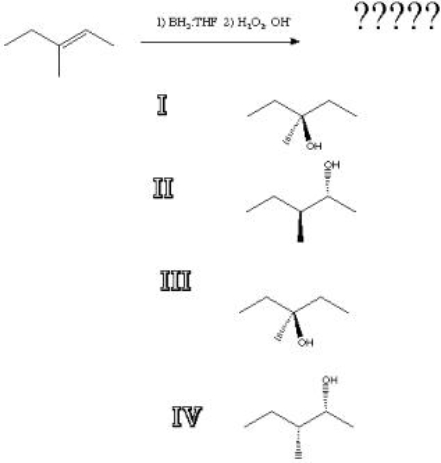
A) I
B) II
C) III
D) IV
A) I
B) II
C) III
D) IV
سؤال
What is the product of the following reaction? 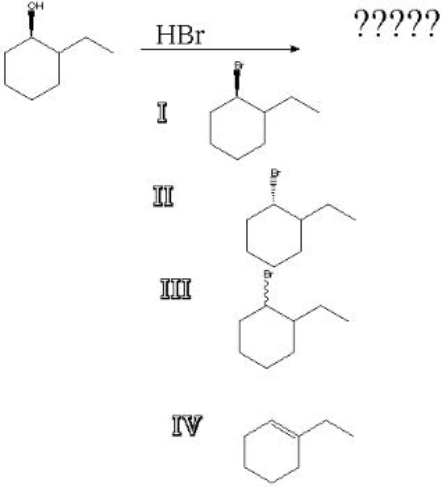
A) I
B) II
C) III
D) IV
A) I
B) II
C) III
D) IV
سؤال
What is the product of the following reaction? 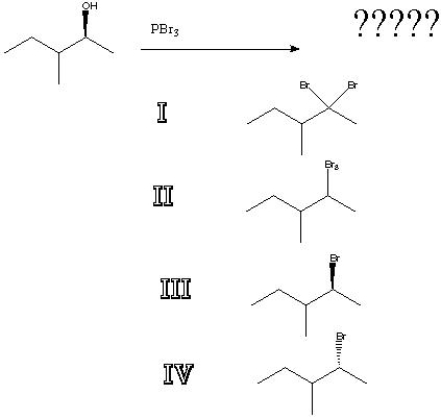
A) I
B) II
C) III
D) IV
A) I
B) II
C) III
D) IV
سؤال
What is the product of the following reaction? 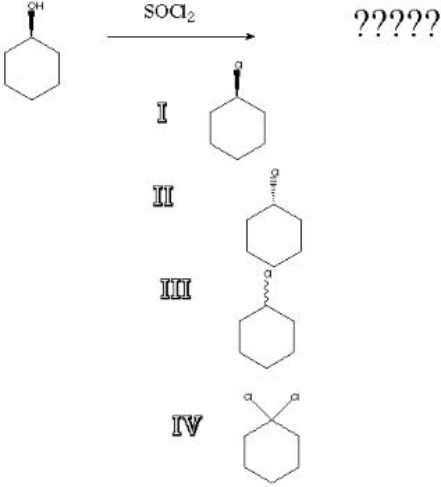
A) I
B) II
C) III
D) IV
A) I
B) II
C) III
D) IV
سؤال
سؤال
What is the correct order of reagents needed for the following reaction? 
A) 1) Hg(OAc)2, THF:H2O 2) NaBH4, OH-3) TBDMS-Cl, imidazole, DMF 4) Potassium tert-butoxide 5) HBr/H2O2 6) TBAF/THF
B) 1) Potassium tert-butoxide 2) 1 eq. HBr/H2O2 3) Hg(OAc)2, THF:H2O 4) NaBH4, OH-(assume that terminalalkenes react in preference to internal alkenes)
C) 1) Hg(OAc)2, THF:H2O 2) NaBH4, OH- 3) TBDMS-Cl, imidazole, DMF
4) Potassium tert-butoxide 5) BH3:THF 6 ) H2O2, OH- 7)PBr3 8) TBAF/THF
D) all of the above
A) 1) Hg(OAc)2, THF:H2O 2) NaBH4, OH-3) TBDMS-Cl, imidazole, DMF 4) Potassium tert-butoxide 5) HBr/H2O2 6) TBAF/THF
B) 1) Potassium tert-butoxide 2) 1 eq. HBr/H2O2 3) Hg(OAc)2, THF:H2O 4) NaBH4, OH-(assume that terminalalkenes react in preference to internal alkenes)
C) 1) Hg(OAc)2, THF:H2O 2) NaBH4, OH- 3) TBDMS-Cl, imidazole, DMF
4) Potassium tert-butoxide 5) BH3:THF 6 ) H2O2, OH- 7)PBr3 8) TBAF/THF
D) all of the above
سؤال
What is the product of the following reaction? 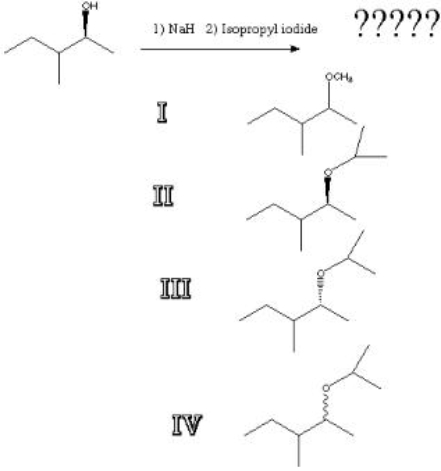
A) I
B) II
C) III
D) IV
A) I
B) II
C) III
D) IV
سؤال
What is the correct order of reagents needed for the following reaction? 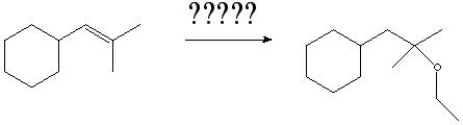
A) 1) Hg(OAc)2, THF:H2O 2) NaBH4, OH-
B) 1) BH3:THF 2) H2O2, OH-
C) 1) Hg(O2CCF3)2, THF:CH3CH2OH 2) NaBH4, OH-
D) 1) MMPP 2) H+ 3) NaH 4) Ethyl iodide
A) 1) Hg(OAc)2, THF:H2O 2) NaBH4, OH-
B) 1) BH3:THF 2) H2O2, OH-
C) 1) Hg(O2CCF3)2, THF:CH3CH2OH 2) NaBH4, OH-
D) 1) MMPP 2) H+ 3) NaH 4) Ethyl iodide
سؤال
What is the product of the following reaction? 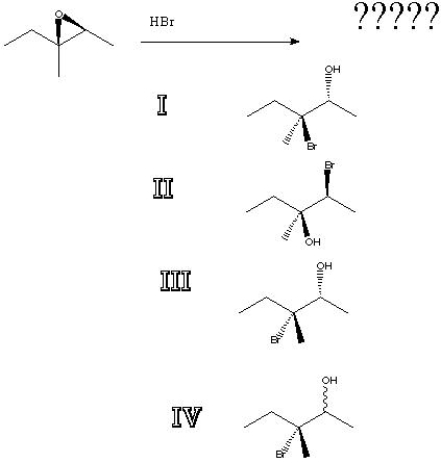
A) I
B) II
C) III
D) IV
A) I
B) II
C) III
D) IV
سؤال
What is the correct order of reagents needed for the following reaction? 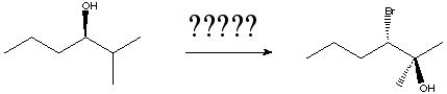
A) 1) Sodium Methoxide/Methanol 2) MMPP 3) NaBr
B) 1) NaH, Ts-Cl 2) Sodium Methoxide/Methanol 3) MMPP 4) NaBr
C) 1) NaH, Ts-Cl 2) Sodium Methoxide/Methanol 3) MMPP 4) HBr D) 1) Sodium Methoxide/Methanol 2) MMPP 3) HBr
A) 1) Sodium Methoxide/Methanol 2) MMPP 3) NaBr
B) 1) NaH, Ts-Cl 2) Sodium Methoxide/Methanol 3) MMPP 4) NaBr
C) 1) NaH, Ts-Cl 2) Sodium Methoxide/Methanol 3) MMPP 4) HBr D) 1) Sodium Methoxide/Methanol 2) MMPP 3) HBr
سؤال
سؤال
سؤال
What is the correct order of reagents needed for the following reaction? 
A) KMnO4, OH-, H2O, cold
B) 1) OsO4, pyridine 2) NaHSO3, H2O
C) 1) MMPP 2) H3O+
D) all of the above
E) none of the above
A) KMnO4, OH-, H2O, cold
B) 1) OsO4, pyridine 2) NaHSO3, H2O
C) 1) MMPP 2) H3O+
D) all of the above
E) none of the above
سؤال

فتح الحزمة
قم بالتسجيل لفتح البطاقات في هذه المجموعة!
Unlock Deck
Unlock Deck
1/15

العب

ملء الشاشة (f)
Deck 11: Alcohols and Ethers
1
Which of the following reagent combinations give Markovnikov products?
A) Oxymercuration-Demercuration
B) Hydroboration-Oxidation
C) 1) MMPP 2) H3O+
D) A and B
E) A and C
F) B and C
G) all of the above
H) none of the above
A) Oxymercuration-Demercuration
B) Hydroboration-Oxidation
C) 1) MMPP 2) H3O+
D) A and B
E) A and C
F) B and C
G) all of the above
H) none of the above
Oxymercuration-Demercuration
2
What is the product of the following reaction?
A) I
B) II
C) III
D) IV
A) I
B) II
C) III
D) IV
II
3
What is the product of the following reaction?
A) I
B) II
C) III
D) IV
A) I
B) II
C) III
D) IV
III
4
What is the product of the following reaction?
A) I
B) II
C) III
D) IV
A) I
B) II
C) III
D) IV
فتح الحزمة
افتح القفل للوصول البطاقات البالغ عددها 15 في هذه المجموعة.
فتح الحزمة
k this deck
5
What is the product of the following reaction?
A) I
B) II
C) III
D) IV
A) I
B) II
C) III
D) IV
فتح الحزمة
افتح القفل للوصول البطاقات البالغ عددها 15 في هذه المجموعة.
فتح الحزمة
k this deck
6
Which of the following give inversion of configuration when added to an alcohol?
A) NaH, Tosyl chloride
B) TBDMS-Cl, imidazole, DMF
C) PBr3
D) A and B
E) A and C
F) B and C
G) all of the above
H) none of the above
A) NaH, Tosyl chloride
B) TBDMS-Cl, imidazole, DMF
C) PBr3
D) A and B
E) A and C
F) B and C
G) all of the above
H) none of the above
فتح الحزمة
افتح القفل للوصول البطاقات البالغ عددها 15 في هذه المجموعة.
فتح الحزمة
k this deck
7
What is the correct order of reagents needed for the following reaction?
A) 1) Hg(OAc)2, THF:H2O 2) NaBH4, OH-3) TBDMS-Cl, imidazole, DMF 4) Potassium tert-butoxide 5) HBr/H2O2 6) TBAF/THF
B) 1) Potassium tert-butoxide 2) 1 eq. HBr/H2O2 3) Hg(OAc)2, THF:H2O 4) NaBH4, OH-(assume that terminalalkenes react in preference to internal alkenes)
C) 1) Hg(OAc)2, THF:H2O 2) NaBH4, OH- 3) TBDMS-Cl, imidazole, DMF
4) Potassium tert-butoxide 5) BH3:THF 6 ) H2O2, OH- 7)PBr3 8) TBAF/THF
D) all of the above
A) 1) Hg(OAc)2, THF:H2O 2) NaBH4, OH-3) TBDMS-Cl, imidazole, DMF 4) Potassium tert-butoxide 5) HBr/H2O2 6) TBAF/THF
B) 1) Potassium tert-butoxide 2) 1 eq. HBr/H2O2 3) Hg(OAc)2, THF:H2O 4) NaBH4, OH-(assume that terminalalkenes react in preference to internal alkenes)
C) 1) Hg(OAc)2, THF:H2O 2) NaBH4, OH- 3) TBDMS-Cl, imidazole, DMF
4) Potassium tert-butoxide 5) BH3:THF 6 ) H2O2, OH- 7)PBr3 8) TBAF/THF
D) all of the above
فتح الحزمة
افتح القفل للوصول البطاقات البالغ عددها 15 في هذه المجموعة.
فتح الحزمة
k this deck
8
What is the product of the following reaction?
A) I
B) II
C) III
D) IV
A) I
B) II
C) III
D) IV
فتح الحزمة
افتح القفل للوصول البطاقات البالغ عددها 15 في هذه المجموعة.
فتح الحزمة
k this deck
9
What is the correct order of reagents needed for the following reaction?
A) 1) Hg(OAc)2, THF:H2O 2) NaBH4, OH-
B) 1) BH3:THF 2) H2O2, OH-
C) 1) Hg(O2CCF3)2, THF:CH3CH2OH 2) NaBH4, OH-
D) 1) MMPP 2) H+ 3) NaH 4) Ethyl iodide
A) 1) Hg(OAc)2, THF:H2O 2) NaBH4, OH-
B) 1) BH3:THF 2) H2O2, OH-
C) 1) Hg(O2CCF3)2, THF:CH3CH2OH 2) NaBH4, OH-
D) 1) MMPP 2) H+ 3) NaH 4) Ethyl iodide
فتح الحزمة
افتح القفل للوصول البطاقات البالغ عددها 15 في هذه المجموعة.
فتح الحزمة
k this deck
10
What is the product of the following reaction?
A) I
B) II
C) III
D) IV
A) I
B) II
C) III
D) IV
فتح الحزمة
افتح القفل للوصول البطاقات البالغ عددها 15 في هذه المجموعة.
فتح الحزمة
k this deck
11
What is the correct order of reagents needed for the following reaction?
A) 1) Sodium Methoxide/Methanol 2) MMPP 3) NaBr
B) 1) NaH, Ts-Cl 2) Sodium Methoxide/Methanol 3) MMPP 4) NaBr
C) 1) NaH, Ts-Cl 2) Sodium Methoxide/Methanol 3) MMPP 4) HBr D) 1) Sodium Methoxide/Methanol 2) MMPP 3) HBr
A) 1) Sodium Methoxide/Methanol 2) MMPP 3) NaBr
B) 1) NaH, Ts-Cl 2) Sodium Methoxide/Methanol 3) MMPP 4) NaBr
C) 1) NaH, Ts-Cl 2) Sodium Methoxide/Methanol 3) MMPP 4) HBr D) 1) Sodium Methoxide/Methanol 2) MMPP 3) HBr
فتح الحزمة
افتح القفل للوصول البطاقات البالغ عددها 15 في هذه المجموعة.
فتح الحزمة
k this deck
12
Which of the following reagent combinations, when added to an alkene, give regiospecific and stereospecific products?
A) Oxymercuration-Demercuration
B) Hydroboration-Oxidation
C) 1) MMPP 2) H3O+
D) A and B
E) A and C
F) B and C
G) all of the above
H) none of the above
A) Oxymercuration-Demercuration
B) Hydroboration-Oxidation
C) 1) MMPP 2) H3O+
D) A and B
E) A and C
F) B and C
G) all of the above
H) none of the above
فتح الحزمة
افتح القفل للوصول البطاقات البالغ عددها 15 في هذه المجموعة.
فتح الحزمة
k this deck
13
Which of the following reagent combinations give Markovnikov products?
A) 1) MMPP 2) HBr
B) 1) MMPP 2) NaBr
C) 1) MMPP 2) H3O+
D) A and B
E) A and C
F) B and C
G) all of the above
H) none of the above
A) 1) MMPP 2) HBr
B) 1) MMPP 2) NaBr
C) 1) MMPP 2) H3O+
D) A and B
E) A and C
F) B and C
G) all of the above
H) none of the above
فتح الحزمة
افتح القفل للوصول البطاقات البالغ عددها 15 في هذه المجموعة.
فتح الحزمة
k this deck
14
What is the correct order of reagents needed for the following reaction?
A) KMnO4, OH-, H2O, cold
B) 1) OsO4, pyridine 2) NaHSO3, H2O
C) 1) MMPP 2) H3O+
D) all of the above
E) none of the above
A) KMnO4, OH-, H2O, cold
B) 1) OsO4, pyridine 2) NaHSO3, H2O
C) 1) MMPP 2) H3O+
D) all of the above
E) none of the above
فتح الحزمة
افتح القفل للوصول البطاقات البالغ عددها 15 في هذه المجموعة.
فتح الحزمة
k this deck
15
Crown ethers are examples of phase-transfer catalysts (PTC). PTC takes the ionic nucleophile and brings it into the organic layer. There they pick up the leaving group anion and bring it back into the aqueous layer. The leaving group is transferred for another nucleophile and the whole process continues. PTC allows SN2 reactions to occur in the best possible solvent, ___ .
A) polar protic
B) polar aprotic
C) nonpolar protic
D) nonpolar aprotic
A) polar protic
B) polar aprotic
C) nonpolar protic
D) nonpolar aprotic
فتح الحزمة
افتح القفل للوصول البطاقات البالغ عددها 15 في هذه المجموعة.
فتح الحزمة
k this deck
فتح الحزمة
افتح القفل للوصول البطاقات البالغ عددها 15 في هذه المجموعة.






