







 تكلم مع الذكاء الاصطناعي


Deck 6: The Reactions of Alkenes the Stereochemistry of Addition Reactions
ملء الشاشة (f)

سؤال
Which of the following compounds reacts most rapidly with HCl?
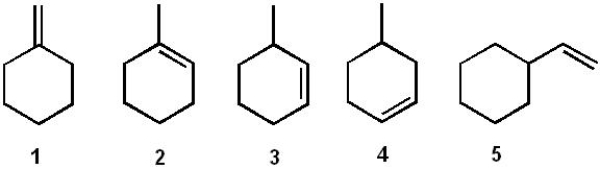
A) 1
B) 2
C) 3
D) 4
E) 5
A) 1
B) 2
C) 3
D) 4
E) 5

سؤال
سؤال
Which set of reagents would be the best choice for the transformation shown below? 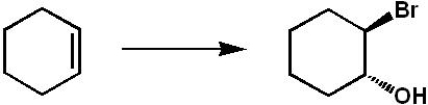
A) Br2/CH3OH
B) Br2/H2O
C) 1. Br2 2. H2O
D) 1. Br2 2. NaOH
E) 1. BH3 2. Br2 3. NaOH, H2O2, H2O
A) Br2/CH3OH
B) Br2/H2O
C) 1. Br2 2. H2O
D) 1. Br2 2. NaOH
E) 1. BH3 2. Br2 3. NaOH, H2O2, H2O
سؤال
Assuming that a single carbocation rearrangement occurs, which of the following molecules is the major product of this reaction?
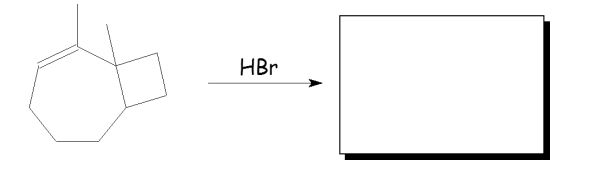
A)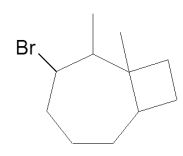
B)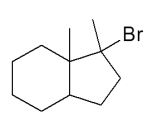
C)
D)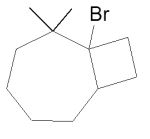
E)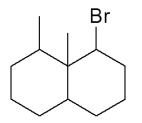
A)
B)
C)
D)
E)
سؤال
Which set of reagents would be the best choice to accomplish the transformation shown below? 
A) H2O, H2SO4
B) CH3OH, H2SO4
C) H2O/H2O2/NaOH
D) 1. BH3/THF 2. HO-,H2O2, H2O
E) 1. NaBH4 2. H3O+
A) H2O, H2SO4
B) CH3OH, H2SO4
C) H2O/H2O2/NaOH
D) 1. BH3/THF 2. HO-,H2O2, H2O
E) 1. NaBH4 2. H3O+
سؤال
How many and what type of isomers are formed in the following reaction: 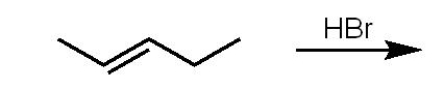
A) 2 - 2 constitutional isomers
B) 2 - 1 pair of enantiomers
C) 3 - 1 pair of enantiomers and
1 constitutional isomer
D) 3 - 1 pair of enantiomers and 1 meso compound
E) 4 - 2 pairs of enantiomers
A) 2 - 2 constitutional isomers
B) 2 - 1 pair of enantiomers
C) 3 - 1 pair of enantiomers and
1 constitutional isomer
D) 3 - 1 pair of enantiomers and 1 meso compound
E) 4 - 2 pairs of enantiomers
سؤال
What is the systematic name for the epoxide shown here?
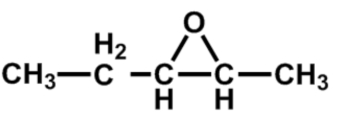
A) 1-methyl-2-ethyloxide
B) 1-ethyl-2-methyloxirane
C) 2-ethyl-3-methyloxirane
D) 2,3-epoxypentane
E) C and D
A) 1-methyl-2-ethyloxide
B) 1-ethyl-2-methyloxirane
C) 2-ethyl-3-methyloxirane
D) 2,3-epoxypentane
E) C and D
سؤال
Which of the following molecules is a possible starting material in this ozonolysis reaction? 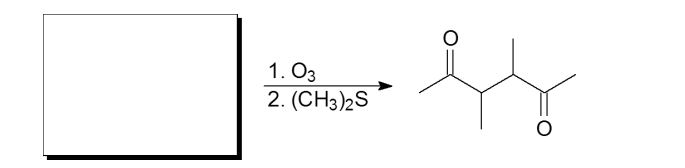
A)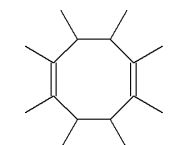
B)
C)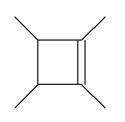
D)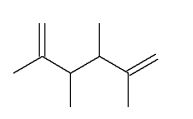
E) molecules A, C, and D
A)
B)
C)
D)
E) molecules A, C, and D
سؤال
سؤال
In the following reaction, what is the configuration of the products? 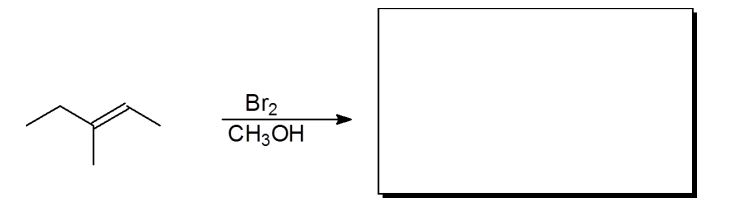
A) 2R 3R and 2R 3S
B) 2S 3S and 2R 3S
C) 2R 3R and 2S 3S
D) 2S 3R and 2R 3S
E) No stereoisomers form.
A) 2R 3R and 2R 3S
B) 2S 3S and 2R 3S
C) 2R 3R and 2S 3S
D) 2S 3R and 2R 3S
E) No stereoisomers form.

فتح الحزمة
قم بالتسجيل لفتح البطاقات في هذه المجموعة!
Unlock Deck
Unlock Deck
1/10

العب

ملء الشاشة (f)
Deck 6: The Reactions of Alkenes the Stereochemistry of Addition Reactions
1
Which of the following compounds reacts most rapidly with HCl?
A) 1
B) 2
C) 3
D) 4
E) 5
A) 1
B) 2
C) 3
D) 4
E) 5
1
2
Predict the major product of the reaction of 1-methylcyclohexene + HBr.
A) 1-bromo-2-methylcyclohexene
B) 1-bromo-1-methylcyclohexane
C) 2-bromo-1-methylcyclohexane
D) bromocyclohexane
E) 1-methylcyclohexene
A) 1-bromo-2-methylcyclohexene
B) 1-bromo-1-methylcyclohexane
C) 2-bromo-1-methylcyclohexane
D) bromocyclohexane
E) 1-methylcyclohexene
1-bromo-1-methylcyclohexane
3
Which set of reagents would be the best choice for the transformation shown below?
A) Br2/CH3OH
B) Br2/H2O
C) 1. Br2 2. H2O
D) 1. Br2 2. NaOH
E) 1. BH3 2. Br2 3. NaOH, H2O2, H2O
A) Br2/CH3OH
B) Br2/H2O
C) 1. Br2 2. H2O
D) 1. Br2 2. NaOH
E) 1. BH3 2. Br2 3. NaOH, H2O2, H2O
Br2/H2O
4
Assuming that a single carbocation rearrangement occurs, which of the following molecules is the major product of this reaction?
A)
B)
C)
D)
E)
A)
B)
C)
D)
E)
فتح الحزمة
افتح القفل للوصول البطاقات البالغ عددها 10 في هذه المجموعة.
فتح الحزمة
k this deck
5
Which set of reagents would be the best choice to accomplish the transformation shown below?
A) H2O, H2SO4
B) CH3OH, H2SO4
C) H2O/H2O2/NaOH
D) 1. BH3/THF 2. HO-,H2O2, H2O
E) 1. NaBH4 2. H3O+
A) H2O, H2SO4
B) CH3OH, H2SO4
C) H2O/H2O2/NaOH
D) 1. BH3/THF 2. HO-,H2O2, H2O
E) 1. NaBH4 2. H3O+
فتح الحزمة
افتح القفل للوصول البطاقات البالغ عددها 10 في هذه المجموعة.
فتح الحزمة
k this deck
6
How many and what type of isomers are formed in the following reaction:
A) 2 - 2 constitutional isomers
B) 2 - 1 pair of enantiomers
C) 3 - 1 pair of enantiomers and
1 constitutional isomer
D) 3 - 1 pair of enantiomers and 1 meso compound
E) 4 - 2 pairs of enantiomers
A) 2 - 2 constitutional isomers
B) 2 - 1 pair of enantiomers
C) 3 - 1 pair of enantiomers and
1 constitutional isomer
D) 3 - 1 pair of enantiomers and 1 meso compound
E) 4 - 2 pairs of enantiomers
فتح الحزمة
افتح القفل للوصول البطاقات البالغ عددها 10 في هذه المجموعة.
فتح الحزمة
k this deck
7
What is the systematic name for the epoxide shown here?
A) 1-methyl-2-ethyloxide
B) 1-ethyl-2-methyloxirane
C) 2-ethyl-3-methyloxirane
D) 2,3-epoxypentane
E) C and D
A) 1-methyl-2-ethyloxide
B) 1-ethyl-2-methyloxirane
C) 2-ethyl-3-methyloxirane
D) 2,3-epoxypentane
E) C and D
فتح الحزمة
افتح القفل للوصول البطاقات البالغ عددها 10 في هذه المجموعة.
فتح الحزمة
k this deck
8
Which of the following molecules is a possible starting material in this ozonolysis reaction?
A)
B)
C)
D)
E) molecules A, C, and D
A)
B)
C)
D)
E) molecules A, C, and D
فتح الحزمة
افتح القفل للوصول البطاقات البالغ عددها 10 في هذه المجموعة.
فتح الحزمة
k this deck
9
Which of the following statements is true about a stereoselective reaction?
A) It forms more of one constitutional isomer than of another.
B) It forms more of one stereoisomer isomer than another.
C) Each stereoisomer forms a different stereoisomeric product or a different set of stereoisomeric products.
D) A stereoselective reaction must be stereospecific.
E) all of the above
A) It forms more of one constitutional isomer than of another.
B) It forms more of one stereoisomer isomer than another.
C) Each stereoisomer forms a different stereoisomeric product or a different set of stereoisomeric products.
D) A stereoselective reaction must be stereospecific.
E) all of the above
فتح الحزمة
افتح القفل للوصول البطاقات البالغ عددها 10 في هذه المجموعة.
فتح الحزمة
k this deck
10
In the following reaction, what is the configuration of the products?
A) 2R 3R and 2R 3S
B) 2S 3S and 2R 3S
C) 2R 3R and 2S 3S
D) 2S 3R and 2R 3S
E) No stereoisomers form.
A) 2R 3R and 2R 3S
B) 2S 3S and 2R 3S
C) 2R 3R and 2S 3S
D) 2S 3R and 2R 3S
E) No stereoisomers form.
فتح الحزمة
افتح القفل للوصول البطاقات البالغ عددها 10 في هذه المجموعة.
فتح الحزمة
k this deck
فتح الحزمة
افتح القفل للوصول البطاقات البالغ عددها 10 في هذه المجموعة.






