Deck 15: Reactions of Carboxylic Acids and Carboxylic Acid Derivatives

ملء الشاشة (f)
exit full mode
سؤال
What is the name of the compound shown here?
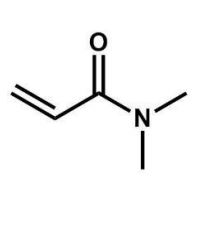
<strong>What is the name of the compound shown here?  </strong> A) N-methyl-N-methylpropanamide B) N,N-dimethylaminoacrylate C) N,N-dimethylpropanamine D) N,N-dimethylpropanamide E) N,N-dimethylpropenamide <div style=padding-top: 35px>

A) N-methyl-N-methylpropanamide
B) N,N-dimethylaminoacrylate
C) N,N-dimethylpropanamine
D) N,N-dimethylpropanamide
E) N,N-dimethylpropenamide
استخدم زر المسافة أو
up arrow
down arrow
لقلب البطاقة.
سؤال
What is the name of the compound shown here?
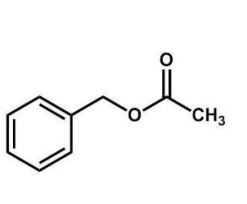
<strong>What is the name of the compound shown here?  </strong> A) acetyl benzene B) benzene acetic ester C) benzyl acetate D) methyl benzoate E) phenyl acetate <div style=padding-top: 35px>

A) acetyl benzene
B) benzene acetic ester
C) benzyl acetate
D) methyl benzoate
E) phenyl acetate
سؤال
Which of the following statements is not true about the reactions of carboxylic acid derivatives?

A) Carboxylic acid derivatives form a tetrahedral intermediate.
B) The weaker base will be the leaving group.
C) Less reactive derivatives can be converted directly into more reactive derivatives.
D) For a reaction to occur, the added group must be a stronger base than the group attached to the acyl group.
E) The weakest bond in the reaction is the pi bond, so it breaks first.
سؤال
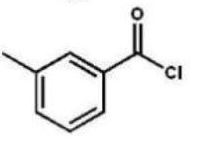
Which carboxylic acid derivative is most readily hydrolyzed by aqueous base?

A) <strong>Which carboxylic acid derivative is most readily hydrolyzed by aqueous base?</strong> A)   B)   C)   D)   E) Carboxylic acid derivatives hydrolyze by the same mechanism and at the same approximate rate <div style=padding-top: 35px>
B) <strong>Which carboxylic acid derivative is most readily hydrolyzed by aqueous base?</strong> A)   B)   C)   D)   E) Carboxylic acid derivatives hydrolyze by the same mechanism and at the same approximate rate <div style=padding-top: 35px>
C) <strong>Which carboxylic acid derivative is most readily hydrolyzed by aqueous base?</strong> A)   B)   C)   D)   E) Carboxylic acid derivatives hydrolyze by the same mechanism and at the same approximate rate <div style=padding-top: 35px>
D) <strong>Which carboxylic acid derivative is most readily hydrolyzed by aqueous base?</strong> A)   B)   C)   D)   E) Carboxylic acid derivatives hydrolyze by the same mechanism and at the same approximate rate <div style=padding-top: 35px>
E) Carboxylic acid derivatives hydrolyze by the same mechanism and at the same approximate rate
سؤال
In nucleophilic acyl substitution reactions under basic conditions,____________.

A) protonation of the carbonyl group is followed by nucleophilic attack
B) loss of the leaving group is followed by formation of an acylium ion
C) an SN2 reaction occurs
D) the nucleophile must be a weaker base than the leaving group
E) nucleophilic addition to the carbonyl is followed by loss of a leaving group
سؤال
Which of the following reactions will proceed to the right? <strong>Which of the following reactions will proceed to the right?  </strong> A) excess H<sub>2</sub>O, HCl, heat B) phenol, HCl C) CH<sub>3</sub>NH<sub>2</sub>, heat D) NaNH<sub>2</sub> E) all except B <div style=padding-top: 35px>
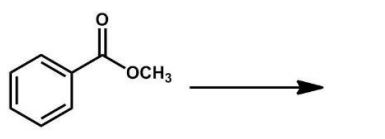
A) excess H2O, HCl, heat
B) phenol, HCl
C) CH3NH2, heat
D) NaNH2
E) all except B
سؤال
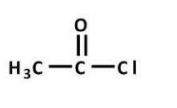
Which of the following carboxylic acid derivatives could be used in this reaction?
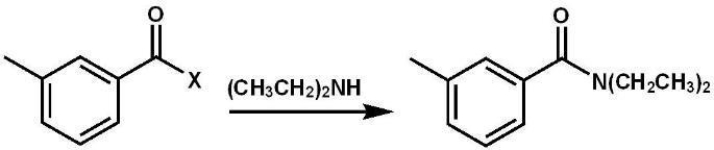
<strong>Which of the following carboxylic acid derivatives could be used in this reaction?   For X =</strong> A) ?Br B) ?Cl C) ?SCH<sub>3</sub> D) ?OCH<sub>3</sub> E) all of the above <div style=padding-top: 35px> For X =

A) ?Br
B) ?Cl
C) ?SCH3
D) ?OCH3
E) all of the above
سؤال
What are the expected products of the following reaction? <strong>What are the expected products of the following reaction?  </strong> A) a, b B) a, d C) c, b D) c, d E) a, e <div style=padding-top: 35px>
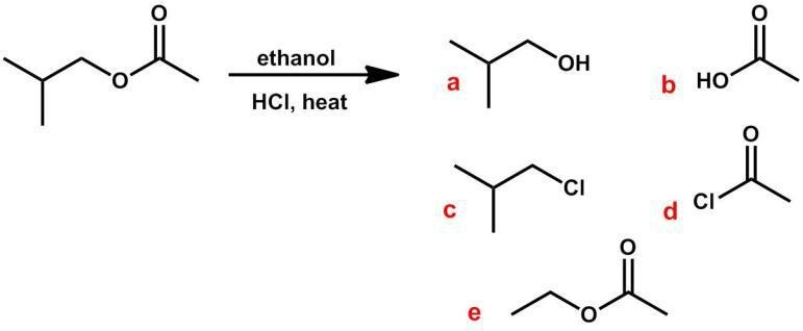
A) a, b
B) a, d
C) c, b
D) c, d
E) a, e
سؤال
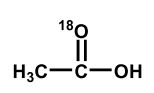
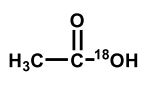
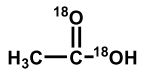
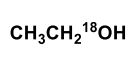
Upon aqueous hydrolysis of 18O-labeled ethyl acetate, which oxygen(s) will be labeled in the final reaction mixture after mild acidification?
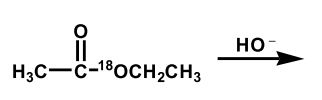
<strong>Upon aqueous hydrolysis of <sup>18</sup>O-labeled ethyl acetate, which oxygen(s) will be labeled in the final reaction mixture after mild acidification?  </strong> A)   B)   C)   D)   E)   <div style=padding-top: 35px>

A) <strong>Upon aqueous hydrolysis of <sup>18</sup>O-labeled ethyl acetate, which oxygen(s) will be labeled in the final reaction mixture after mild acidification?  </strong> A)   B)   C)   D)   E)   <div style=padding-top: 35px>
B) <strong>Upon aqueous hydrolysis of <sup>18</sup>O-labeled ethyl acetate, which oxygen(s) will be labeled in the final reaction mixture after mild acidification?  </strong> A)   B)   C)   D)   E)   <div style=padding-top: 35px>
C) <strong>Upon aqueous hydrolysis of <sup>18</sup>O-labeled ethyl acetate, which oxygen(s) will be labeled in the final reaction mixture after mild acidification?  </strong> A)   B)   C)   D)   E)   <div style=padding-top: 35px>
D) <strong>Upon aqueous hydrolysis of <sup>18</sup>O-labeled ethyl acetate, which oxygen(s) will be labeled in the final reaction mixture after mild acidification?  </strong> A)   B)   C)   D)   E)   <div style=padding-top: 35px>
E) <strong>Upon aqueous hydrolysis of <sup>18</sup>O-labeled ethyl acetate, which oxygen(s) will be labeled in the final reaction mixture after mild acidification?  </strong> A)   B)   C)   D)   E)   <div style=padding-top: 35px>
سؤال
Which compound is the product of the following reaction sequence? <strong>Which compound is the product of the following reaction sequence?  </strong> A)   B)   C)   D)   E)   <div style=padding-top: 35px>

A) <strong>Which compound is the product of the following reaction sequence?  </strong> A)   B)   C)   D)   E)   <div style=padding-top: 35px>
B) <strong>Which compound is the product of the following reaction sequence?  </strong> A)   B)   C)   D)   E)   <div style=padding-top: 35px>
C) <strong>Which compound is the product of the following reaction sequence?  </strong> A)   B)   C)   D)   E)   <div style=padding-top: 35px>
D) <strong>Which compound is the product of the following reaction sequence?  </strong> A)   B)   C)   D)   E)   <div style=padding-top: 35px>
E) <strong>Which compound is the product of the following reaction sequence?  </strong> A)   B)   C)   D)   E)   <div style=padding-top: 35px>
سؤال
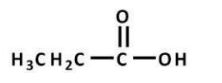
Which set of reagents will produce the indicated product? <strong>Which set of reagents will produce the indicated product?  </strong> A) 1. H<sub>2</sub>CrO<sub>4</sub> 2. SOCl<sub>2</sub>/pyridine 3. H<sub>2</sub>O B) 1. TsCl/pyridine 2. NaCN 3. H<sub>3</sub>O<sup>+</sup>/? 4. SOCl<sub>2</sub>/pyridine C) 1. Acetic anhydride 2. SOCl<sub>2</sub>/pyridine D) 1. Acetic acid/H<sub>3</sub>O<sup>+</sup> 2. PCl<sub>3</sub>/pyridine E) 1. Ethyl acetate/H<sub>3</sub>O<sup>+</sup> 2. NaCl <div style=padding-top: 35px>
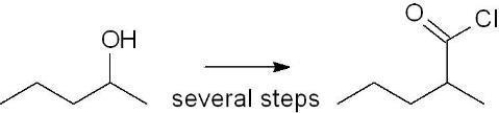
A) 1. H2CrO4 2. SOCl2/pyridine 3. H2O
B) 1. TsCl/pyridine 2. NaCN 3. H3O+/? 4. SOCl2/pyridine
C) 1. Acetic anhydride 2. SOCl2/pyridine
D) 1. Acetic acid/H3O+ 2. PCl3/pyridine
E) 1. Ethyl acetate/H3O+ 2. NaCl
سؤال
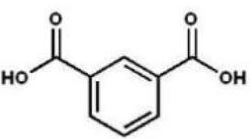
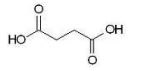
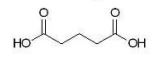
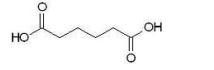
Which of the following dicarboxylic acids has the most similar pKa1 and pKa2 values?

A) <strong>Which of the following dicarboxylic acids has the most similar pK<sub>a1</sub> and pK<sub>a2</sub> values?</strong> A)   B)   C)   D)   E)   <div style=padding-top: 35px>
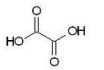
B) <strong>Which of the following dicarboxylic acids has the most similar pK<sub>a1</sub> and pK<sub>a2</sub> values?</strong> A)   B)   C)   D)   E)   <div style=padding-top: 35px>
C) <strong>Which of the following dicarboxylic acids has the most similar pK<sub>a1</sub> and pK<sub>a2</sub> values?</strong> A)   B)   C)   D)   E)   <div style=padding-top: 35px>
D) <strong>Which of the following dicarboxylic acids has the most similar pK<sub>a1</sub> and pK<sub>a2</sub> values?</strong> A)   B)   C)   D)   E)   <div style=padding-top: 35px>
E) <strong>Which of the following dicarboxylic acids has the most similar pK<sub>a1</sub> and pK<sub>a2</sub> values?</strong> A)   B)   C)   D)   E)   <div style=padding-top: 35px>
فتح الحزمة
قم بالتسجيل لفتح البطاقات في هذه المجموعة!
Unlock Deck
Unlock Deck
1/12
auto play flashcards
العب
simple tutorial
ملء الشاشة (f)
exit full mode
Deck 15: Reactions of Carboxylic Acids and Carboxylic Acid Derivatives
1
What is the name of the compound shown here?
<strong>What is the name of the compound shown here?  </strong> A) N-methyl-N-methylpropanamide B) N,N-dimethylaminoacrylate C) N,N-dimethylpropanamine D) N,N-dimethylpropanamide E) N,N-dimethylpropenamide

A) N-methyl-N-methylpropanamide
B) N,N-dimethylaminoacrylate
C) N,N-dimethylpropanamine
D) N,N-dimethylpropanamide
E) N,N-dimethylpropenamide
N,N-dimethylpropenamide
2
What is the name of the compound shown here?
<strong>What is the name of the compound shown here?  </strong> A) acetyl benzene B) benzene acetic ester C) benzyl acetate D) methyl benzoate E) phenyl acetate

A) acetyl benzene
B) benzene acetic ester
C) benzyl acetate
D) methyl benzoate
E) phenyl acetate
benzyl acetate
3
Which of the following statements is not true about the reactions of carboxylic acid derivatives?

A) Carboxylic acid derivatives form a tetrahedral intermediate.
B) The weaker base will be the leaving group.
C) Less reactive derivatives can be converted directly into more reactive derivatives.
D) For a reaction to occur, the added group must be a stronger base than the group attached to the acyl group.
E) The weakest bond in the reaction is the pi bond, so it breaks first.
Less reactive derivatives can be converted directly into more reactive derivatives.
4
Which carboxylic acid derivative is most readily hydrolyzed by aqueous base?

A) <strong>Which carboxylic acid derivative is most readily hydrolyzed by aqueous base?</strong> A)   B)   C)   D)   E) Carboxylic acid derivatives hydrolyze by the same mechanism and at the same approximate rate
B) <strong>Which carboxylic acid derivative is most readily hydrolyzed by aqueous base?</strong> A)   B)   C)   D)   E) Carboxylic acid derivatives hydrolyze by the same mechanism and at the same approximate rate
C) <strong>Which carboxylic acid derivative is most readily hydrolyzed by aqueous base?</strong> A)   B)   C)   D)   E) Carboxylic acid derivatives hydrolyze by the same mechanism and at the same approximate rate
D) <strong>Which carboxylic acid derivative is most readily hydrolyzed by aqueous base?</strong> A)   B)   C)   D)   E) Carboxylic acid derivatives hydrolyze by the same mechanism and at the same approximate rate
E) Carboxylic acid derivatives hydrolyze by the same mechanism and at the same approximate rate
فتح الحزمة
افتح القفل للوصول البطاقات البالغ عددها 12 في هذه المجموعة.
فتح الحزمة
k this deck
5
In nucleophilic acyl substitution reactions under basic conditions,____________.

A) protonation of the carbonyl group is followed by nucleophilic attack
B) loss of the leaving group is followed by formation of an acylium ion
C) an SN2 reaction occurs
D) the nucleophile must be a weaker base than the leaving group
E) nucleophilic addition to the carbonyl is followed by loss of a leaving group
فتح الحزمة
افتح القفل للوصول البطاقات البالغ عددها 12 في هذه المجموعة.
فتح الحزمة
k this deck
6
Which of the following reactions will proceed to the right? <strong>Which of the following reactions will proceed to the right?  </strong> A) excess H<sub>2</sub>O, HCl, heat B) phenol, HCl C) CH<sub>3</sub>NH<sub>2</sub>, heat D) NaNH<sub>2</sub> E) all except B

A) excess H2O, HCl, heat
B) phenol, HCl
C) CH3NH2, heat
D) NaNH2
E) all except B
فتح الحزمة
افتح القفل للوصول البطاقات البالغ عددها 12 في هذه المجموعة.
فتح الحزمة
k this deck
7
Which of the following carboxylic acid derivatives could be used in this reaction?
<strong>Which of the following carboxylic acid derivatives could be used in this reaction?   For X =</strong> A) ?Br B) ?Cl C) ?SCH<sub>3</sub> D) ?OCH<sub>3</sub> E) all of the above For X =

A) ?Br
B) ?Cl
C) ?SCH3
D) ?OCH3
E) all of the above
فتح الحزمة
افتح القفل للوصول البطاقات البالغ عددها 12 في هذه المجموعة.

فتح الحزمة
k this deck
8
What are the expected products of the following reaction? <strong>What are the expected products of the following reaction?  </strong> A) a, b B) a, d C) c, b D) c, d E) a, e

A) a, b
B) a, d
C) c, b
D) c, d
E) a, e
فتح الحزمة
افتح القفل للوصول البطاقات البالغ عددها 12 في هذه المجموعة.

فتح الحزمة
k this deck
9
Upon aqueous hydrolysis of 18O-labeled ethyl acetate, which oxygen(s) will be labeled in the final reaction mixture after mild acidification?
<strong>Upon aqueous hydrolysis of <sup>18</sup>O-labeled ethyl acetate, which oxygen(s) will be labeled in the final reaction mixture after mild acidification?  </strong> A)   B)   C)   D)   E)

A) <strong>Upon aqueous hydrolysis of <sup>18</sup>O-labeled ethyl acetate, which oxygen(s) will be labeled in the final reaction mixture after mild acidification?  </strong> A)   B)   C)   D)   E)
B) <strong>Upon aqueous hydrolysis of <sup>18</sup>O-labeled ethyl acetate, which oxygen(s) will be labeled in the final reaction mixture after mild acidification?  </strong> A)   B)   C)   D)   E)
C) <strong>Upon aqueous hydrolysis of <sup>18</sup>O-labeled ethyl acetate, which oxygen(s) will be labeled in the final reaction mixture after mild acidification?  </strong> A)   B)   C)   D)   E)
D) <strong>Upon aqueous hydrolysis of <sup>18</sup>O-labeled ethyl acetate, which oxygen(s) will be labeled in the final reaction mixture after mild acidification?  </strong> A)   B)   C)   D)   E)
E) <strong>Upon aqueous hydrolysis of <sup>18</sup>O-labeled ethyl acetate, which oxygen(s) will be labeled in the final reaction mixture after mild acidification?  </strong> A)   B)   C)   D)   E)
فتح الحزمة
افتح القفل للوصول البطاقات البالغ عددها 12 في هذه المجموعة.
فتح الحزمة
k this deck
10
Which compound is the product of the following reaction sequence? <strong>Which compound is the product of the following reaction sequence?  </strong> A)   B)   C)   D)   E)

A) <strong>Which compound is the product of the following reaction sequence?  </strong> A)   B)   C)   D)   E)
B) <strong>Which compound is the product of the following reaction sequence?  </strong> A)   B)   C)   D)   E)
C) <strong>Which compound is the product of the following reaction sequence?  </strong> A)   B)   C)   D)   E)
D) <strong>Which compound is the product of the following reaction sequence?  </strong> A)   B)   C)   D)   E)
E) <strong>Which compound is the product of the following reaction sequence?  </strong> A)   B)   C)   D)   E)
فتح الحزمة
افتح القفل للوصول البطاقات البالغ عددها 12 في هذه المجموعة.
فتح الحزمة
k this deck
11
Which set of reagents will produce the indicated product? <strong>Which set of reagents will produce the indicated product?  </strong> A) 1. H<sub>2</sub>CrO<sub>4</sub> 2. SOCl<sub>2</sub>/pyridine 3. H<sub>2</sub>O B) 1. TsCl/pyridine 2. NaCN 3. H<sub>3</sub>O<sup>+</sup>/? 4. SOCl<sub>2</sub>/pyridine C) 1. Acetic anhydride 2. SOCl<sub>2</sub>/pyridine D) 1. Acetic acid/H<sub>3</sub>O<sup>+</sup> 2. PCl<sub>3</sub>/pyridine E) 1. Ethyl acetate/H<sub>3</sub>O<sup>+</sup> 2. NaCl

A) 1. H2CrO4 2. SOCl2/pyridine 3. H2O
B) 1. TsCl/pyridine 2. NaCN 3. H3O+/? 4. SOCl2/pyridine
C) 1. Acetic anhydride 2. SOCl2/pyridine
D) 1. Acetic acid/H3O+ 2. PCl3/pyridine
E) 1. Ethyl acetate/H3O+ 2. NaCl
فتح الحزمة
افتح القفل للوصول البطاقات البالغ عددها 12 في هذه المجموعة.
فتح الحزمة
k this deck
12
Which of the following dicarboxylic acids has the most similar pKa1 and pKa2 values?

A) <strong>Which of the following dicarboxylic acids has the most similar pK<sub>a1</sub> and pK<sub>a2</sub> values?</strong> A)   B)   C)   D)   E)
B) <strong>Which of the following dicarboxylic acids has the most similar pK<sub>a1</sub> and pK<sub>a2</sub> values?</strong> A)   B)   C)   D)   E)
C) <strong>Which of the following dicarboxylic acids has the most similar pK<sub>a1</sub> and pK<sub>a2</sub> values?</strong> A)   B)   C)   D)   E)
D) <strong>Which of the following dicarboxylic acids has the most similar pK<sub>a1</sub> and pK<sub>a2</sub> values?</strong> A)   B)   C)   D)   E)
E) <strong>Which of the following dicarboxylic acids has the most similar pK<sub>a1</sub> and pK<sub>a2</sub> values?</strong> A)   B)   C)   D)   E)
فتح الحزمة
افتح القفل للوصول البطاقات البالغ عددها 12 في هذه المجموعة.
فتح الحزمة
k this deck
locked card icon
فتح الحزمة
افتح القفل للوصول البطاقات البالغ عددها 12 في هذه المجموعة.