







 تكلم مع الذكاء الاصطناعي


Deck 7: How Cells Release Chemical Energy
ملء الشاشة (f)

سؤال

سؤال
سؤال
سؤال
سؤال
سؤال
سؤال
سؤال
سؤال
سؤال
سؤال
سؤال
سؤال
سؤال
سؤال
سؤال
سؤال
سؤال
سؤال
سؤال
سؤال
سؤال
سؤال
سؤال
سؤال
سؤال
سؤال
سؤال
سؤال
سؤال
سؤال
سؤال
سؤال
سؤال
سؤال
سؤال
سؤال
سؤال
سؤال
سؤال
سؤال
Figure 7.7 Labeling. Use these molecules to label the major inputs and/or outputs of the Krebs cycle on the figure below.
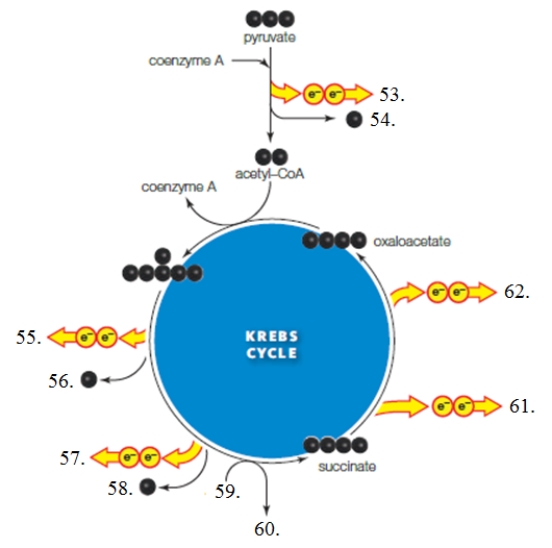
a.CO₂
b.NADH
c.ADP + Pi
d.FADH₂
e.ATP
What molecule corresponds to the item labeled as "53" in the accompanying figure?
a.CO₂
b.NADH
c.ADP + Pi
d.FADH₂
e.ATP
What molecule corresponds to the item labeled as "53" in the accompanying figure?
سؤال
Figure 7.7 Labeling. Use these molecules to label the major inputs and/or outputs of the Krebs cycle on the figure below.
a.CO₂
b.NADH
c.ADP + Pi
d.FADH₂
e.ATP
What molecule corresponds to the item labeled as "56" in the accompanying figure?
a.CO₂
b.NADH
c.ADP + Pi
d.FADH₂
e.ATP
What molecule corresponds to the item labeled as "56" in the accompanying figure?
سؤال
سؤال
Figure 7.7 Labeling. Use these molecules to label the major inputs and/or outputs of the Krebs cycle on the figure below.
a.CO₂
b.NADH
c.ADP + Pi
d.FADH₂
e.ATP
What molecule corresponds to the item labeled as "59" in the accompanying figure?
a.CO₂
b.NADH
c.ADP + Pi
d.FADH₂
e.ATP
What molecule corresponds to the item labeled as "59" in the accompanying figure?
سؤال
Figure 7.7 Labeling. Use these molecules to label the major inputs and/or outputs of the Krebs cycle on the figure below.
a.CO₂
b.NADH
c.ADP + Pi
d.FADH₂
e.ATP
What molecule corresponds to the item labeled as "57" in the accompanying figure?
a.CO₂
b.NADH
c.ADP + Pi
d.FADH₂
e.ATP
What molecule corresponds to the item labeled as "57" in the accompanying figure?
سؤال
سؤال
سؤال
Figure 7.7 Labeling. Use these molecules to label the major inputs and/or outputs of the Krebs cycle on the figure below.
a.CO₂
b.NADH
c.ADP + Pi
d.FADH₂
e.ATP
What molecule corresponds to the item labeled as "54" in the accompanying figure?
a.CO₂
b.NADH
c.ADP + Pi
d.FADH₂
e.ATP
What molecule corresponds to the item labeled as "54" in the accompanying figure?
سؤال
سؤال
سؤال
سؤال
Figure 7.7 Labeling. Use these molecules to label the major inputs and/or outputs of the Krebs cycle on the figure below.
a.CO₂
b.NADH
c.ADP + Pi
d.FADH₂
e.ATP
What molecule corresponds to the item labeled as "60" in the accompanying figure?
a.CO₂
b.NADH
c.ADP + Pi
d.FADH₂
e.ATP
What molecule corresponds to the item labeled as "60" in the accompanying figure?
سؤال
سؤال
سؤال
سؤال
سؤال
سؤال
سؤال
Figure 7.7 Labeling. Use these molecules to label the major inputs and/or outputs of the Krebs cycle on the figure below.
a.CO₂
b.NADH
c.ADP + Pi
d.FADH₂
e.ATP
What molecule corresponds to the item labeled as "55" in the accompanying figure?
a.CO₂
b.NADH
c.ADP + Pi
d.FADH₂
e.ATP
What molecule corresponds to the item labeled as "55" in the accompanying figure?
سؤال
Figure 7.7 Labeling. Use these molecules to label the major inputs and/or outputs of the Krebs cycle on the figure below.
a.CO₂
b.NADH
c.ADP + Pi
d.FADH₂
e.ATP
What molecule corresponds to the item labeled as "58" in the accompanying figure?
a.CO₂
b.NADH
c.ADP + Pi
d.FADH₂
e.ATP
What molecule corresponds to the item labeled as "58" in the accompanying figure?
سؤال
سؤال
سؤال
سؤال
سؤال
سؤال
سؤال
سؤال
Figure 7.7 Labeling. Use these molecules to label the major inputs and/or outputs of the Krebs cycle on the figure below.
a.CO₂
b.NADH
c.ADP + Pi
d.FADH₂
e.ATP
What molecule corresponds to the item labeled as "61" in the accompanying figure?
a.CO₂
b.NADH
c.ADP + Pi
d.FADH₂
e.ATP
What molecule corresponds to the item labeled as "61" in the accompanying figure?
سؤال
سؤال
سؤال
Figure 7.7 Labeling. Use these molecules to label the major inputs and/or outputs of the Krebs cycle on the figure below.
a.CO₂
b.NADH
c.ADP + Pi
d.FADH₂
e.ATP
What molecule corresponds to the item labeled as "62" in the accompanying figure?
a.CO₂
b.NADH
c.ADP + Pi
d.FADH₂
e.ATP
What molecule corresponds to the item labeled as "62" in the accompanying figure?
سؤال
سؤال
سؤال
سؤال

فتح الحزمة
قم بالتسجيل لفتح البطاقات في هذه المجموعة!
Unlock Deck
Unlock Deck
1/75

العب

ملء الشاشة (f)
Deck 7: How Cells Release Chemical Energy
1
The breakdown of ____ yields acetyl-CoA and carbon dioxide.
A) phosphoglycerate
B) pyruvate
C) oxaloacetate
D) PGAL
E) fructose bisphosphate
A) phosphoglycerate
B) pyruvate
C) oxaloacetate
D) PGAL
E) fructose bisphosphate
B
2
How many net ATP molecules are produced per molecule of glucose broken down during glycolysis?
A) one
B) two
C) four
D) 36
E) 38
A) one
B) two
C) four
D) 36
E) 38
B
3
How many ATP are spent before a glucose molecule can be broken down to release energy?
A) one
B) two
C) three
D) four
E) six
A) one
B) two
C) three
D) four
E) six
B
4
What type of cells is especially impacted by defects in the mitochondria?
A) lung cells
B) skin cells
C) heart cells
D) nerve cells
E) bone cells
A) lung cells
B) skin cells
C) heart cells
D) nerve cells
E) bone cells
فتح الحزمة
افتح القفل للوصول البطاقات البالغ عددها 75 في هذه المجموعة.
فتح الحزمة
k this deck
5
When molecules are broken apart in respiration, ____.
A) the heat produced is used to drive biological reactions
B) the oxygen in the compounds that are broken apart is used as an energy source
C) the energy released is channeled into molecules of ATP
D) ATP is converted into ADP
E) ADP is released as a waste product
A) the heat produced is used to drive biological reactions
B) the oxygen in the compounds that are broken apart is used as an energy source
C) the energy released is channeled into molecules of ATP
D) ATP is converted into ADP
E) ADP is released as a waste product
فتح الحزمة
افتح القفل للوصول البطاقات البالغ عددها 75 في هذه المجموعة.
فتح الحزمة
k this deck
6
What is the correct operational sequence of the three processes listed below?
I)glycolysis
II)electron transport chain
III)Krebs cycle
A) I → II → III
B) II → I → III
C) III → I → II
D) II → III → I
E) I → III → II
I)glycolysis
II)electron transport chain
III)Krebs cycle
A) I → II → III
B) II → I → III
C) III → I → II
D) II → III → I
E) I → III → II
فتح الحزمة
افتح القفل للوصول البطاقات البالغ عددها 75 في هذه المجموعة.
فتح الحزمة
k this deck
7
What process requires oxygen to function?
A) aerobic respiration
B) anaerobic respiration
C) alcoholic fermentation
D) lactate fermentation
E) substrate-level phosphorylation
A) aerobic respiration
B) anaerobic respiration
C) alcoholic fermentation
D) lactate fermentation
E) substrate-level phosphorylation
فتح الحزمة
افتح القفل للوصول البطاقات البالغ عددها 75 في هذه المجموعة.
فتح الحزمة
k this deck
8
Where in a cell does glycolysis occur?
A) cytoplasm
B) Golgi body
C) nucleoid
D) mitochondrion
E) rough endoplasmic reticulum
A) cytoplasm
B) Golgi body
C) nucleoid
D) mitochondrion
E) rough endoplasmic reticulum
فتح الحزمة
افتح القفل للوصول البطاقات البالغ عددها 75 في هذه المجموعة.
فتح الحزمة
k this deck
9
For animals, the final hydrogen acceptor in cellular respiration is ____.
A) NADP+
B) sulfur
C) oxygen
D) magnesium
E) phosphorus
A) NADP+
B) sulfur
C) oxygen
D) magnesium
E) phosphorus
فتح الحزمة
افتح القفل للوصول البطاقات البالغ عددها 75 في هذه المجموعة.
فتح الحزمة
k this deck
10
Which molecule is a six carbon compound?
A) PEP
B) PGAL
C) fructose-1, 6-biphosphate
D) pyruvate
E) phosphoglycerate (PGA)
A) PEP
B) PGAL
C) fructose-1, 6-biphosphate
D) pyruvate
E) phosphoglycerate (PGA)
فتح الحزمة
افتح القفل للوصول البطاقات البالغ عددها 75 في هذه المجموعة.
فتح الحزمة
k this deck
11
Substrate-level phosphorylation transfers phosphate groups directly from ____ to ADP.
A) a substrate
B) coenzymes
C) the electron transfer chain
D) ATP
E) the Krebs cycle
A) a substrate
B) coenzymes
C) the electron transfer chain
D) ATP
E) the Krebs cycle
فتح الحزمة
افتح القفل للوصول البطاقات البالغ عددها 75 في هذه المجموعة.
فتح الحزمة
k this deck
12
Substrate-level phosphorylation ____.
A) occurs during glycolysis
B) requires the presence of oxygen
C) is a precursor for the phosphorylation of glucose
D) is the source for the majority of the ATP produced in aerobic respiration
E) occurs in the mitochondria
A) occurs during glycolysis
B) requires the presence of oxygen
C) is a precursor for the phosphorylation of glucose
D) is the source for the majority of the ATP produced in aerobic respiration
E) occurs in the mitochondria
فتح الحزمة
افتح القفل للوصول البطاقات البالغ عددها 75 في هذه المجموعة.
فتح الحزمة
k this deck
13
Which of the following has the greatest total energy?
A) cAMP
B) ADP
C) ATP
D) glucose
E) NADPH
A) cAMP
B) ADP
C) ATP
D) glucose
E) NADPH
فتح الحزمة
افتح القفل للوصول البطاقات البالغ عددها 75 في هذه المجموعة.
فتح الحزمة
k this deck
14
During the third stage of aerobic respiration, electrons and hydrogen ions released by the reactions of the first two stages are picked up by ____.
A) photosynthetic enzymes and ATP
B) CO₂ and H₂O
C) iron and glucose
D) NAD+ and FAD
E) O₂ and ATP
A) photosynthetic enzymes and ATP
B) CO₂ and H₂O
C) iron and glucose
D) NAD+ and FAD
E) O₂ and ATP
فتح الحزمة
افتح القفل للوصول البطاقات البالغ عددها 75 في هذه المجموعة.
فتح الحزمة
k this deck
15
Aerobic respiration ____.
A) evolved and enabled living organisms to utilize energy stored in glucose most efficiently
B) occurs only in animal cells because plants carry out photosynthesis
C) utilizes fat as its primary energy source
D) occurs at the same rate throughout all cells of the body
E) is the only cellular mechanism that yields ATP
A) evolved and enabled living organisms to utilize energy stored in glucose most efficiently
B) occurs only in animal cells because plants carry out photosynthesis
C) utilizes fat as its primary energy source
D) occurs at the same rate throughout all cells of the body
E) is the only cellular mechanism that yields ATP
فتح الحزمة
افتح القفل للوصول البطاقات البالغ عددها 75 في هذه المجموعة.
فتح الحزمة
k this deck
16
Pyruvate is the end product of ____.
A) glycolysis
B) acetyl-CoA formation
C) fermentation
D) the Krebs cycle
E) the citric acid cycle
A) glycolysis
B) acetyl-CoA formation
C) fermentation
D) the Krebs cycle
E) the citric acid cycle
فتح الحزمة
افتح القفل للوصول البطاقات البالغ عددها 75 في هذه المجموعة.
فتح الحزمة
k this deck
17
How many net ATP are generated in aerobic respiration?
A) two
B) eight
C) 10
D) 32
E) 36
A) two
B) eight
C) 10
D) 32
E) 36
فتح الحزمة
افتح القفل للوصول البطاقات البالغ عددها 75 في هذه المجموعة.
فتح الحزمة
k this deck
18
In the breakdown of glucose, a phosphorylated six-carbon compound is split into two three-carbon compounds, which are named ____.
A) PGAL
B) pyruvate
C) acetyl-CoA
D) lactate
E) acetaldehyde
A) PGAL
B) pyruvate
C) acetyl-CoA
D) lactate
E) acetaldehyde
فتح الحزمة
افتح القفل للوصول البطاقات البالغ عددها 75 في هذه المجموعة.
فتح الحزمة
k this deck
19
For glycolysis to begin, ____.
A) glucose must enter the mitochondria
B) there must be an input of energy from ATP
C) oxygen must be available
D) some hydrogen acceptors must be available
E) there must be an input of energy from ADP
A) glucose must enter the mitochondria
B) there must be an input of energy from ATP
C) oxygen must be available
D) some hydrogen acceptors must be available
E) there must be an input of energy from ADP
فتح الحزمة
افتح القفل للوصول البطاقات البالغ عددها 75 في هذه المجموعة.
فتح الحزمة
k this deck
20
Glycolysis depends upon a continuous supply of NAD+ and ____.
A) NADP
B) pyruvate
C) glucose
D) NADH
E) H₂O
A) NADP
B) pyruvate
C) glucose
D) NADH
E) H₂O
فتح الحزمة
افتح القفل للوصول البطاقات البالغ عددها 75 في هذه المجموعة.
فتح الحزمة
k this deck
21
When glucose is used as the energy source, the largest amount of ATP is produced in ____.
A) glycolysis
B) acetyl-CoA formation
C) the Krebs cycle
D) substrate-level phosphorylation
E) electron transfer phosphorylation
A) glycolysis
B) acetyl-CoA formation
C) the Krebs cycle
D) substrate-level phosphorylation
E) electron transfer phosphorylation
فتح الحزمة
افتح القفل للوصول البطاقات البالغ عددها 75 في هذه المجموعة.
فتح الحزمة
k this deck
22
Select the one most appropriate choice for each.
a.produces NADH and CO₂; pyruvate oxidized
b.produces ATP, NADH, and CO₂
c.splits glucose into two pyruvate molecules
d.regenerates NAD+as pyruvate is converted to ethanol or lactate
e.uses a membrane-bound system that sets up production of ATP
acetyl-CoA formation
a.produces NADH and CO₂; pyruvate oxidized
b.produces ATP, NADH, and CO₂
c.splits glucose into two pyruvate molecules
d.regenerates NAD+as pyruvate is converted to ethanol or lactate
e.uses a membrane-bound system that sets up production of ATP
acetyl-CoA formation
فتح الحزمة
افتح القفل للوصول البطاقات البالغ عددها 75 في هذه المجموعة.
فتح الحزمة
k this deck
23
The breakdown of ____ for energy production results in the formation of ammonia as a waste product.
A) carbohydrates
B) fats
C) proteins
D) carbohydrates and fats
E) fats and proteins
A) carbohydrates
B) fats
C) proteins
D) carbohydrates and fats
E) fats and proteins
فتح الحزمة
افتح القفل للوصول البطاقات البالغ عددها 75 في هذه المجموعة.
فتح الحزمة
k this deck
24
The final step of the Krebs cycle regenerates ____.
A) pyruvate
B) acetyl-CoA
C) fructose bisphosphate
D) oxaloacetate
E) citrate
A) pyruvate
B) acetyl-CoA
C) fructose bisphosphate
D) oxaloacetate
E) citrate
فتح الحزمة
افتح القفل للوصول البطاقات البالغ عددها 75 في هذه المجموعة.
فتح الحزمة
k this deck
25
The energy used to generate most of the ATP formed in aerobic respiration is released when electrons are passed from NADH along a chain to ____.
A) oxygen
B) acetyl CoA
C) FADH
D) CO₂.
E) NADPH
A) oxygen
B) acetyl CoA
C) FADH
D) CO₂.
E) NADPH
فتح الحزمة
افتح القفل للوصول البطاقات البالغ عددها 75 في هذه المجموعة.
فتح الحزمة
k this deck
26
Fats provide more energy than carbohydrates because they ____.
A) are larger molecules
B) require more oxidation reactions to breakdown fully
C) are hydrophilic
D) are liquid
E) are partially oxidized initially
A) are larger molecules
B) require more oxidation reactions to breakdown fully
C) are hydrophilic
D) are liquid
E) are partially oxidized initially
فتح الحزمة
افتح القفل للوصول البطاقات البالغ عددها 75 في هذه المجموعة.
فتح الحزمة
k this deck
27
What is lost when acetyl-CoA enters into the Krebs cycle?
A) pyruvate
B) coenzyme A
C) fructose bisphosphate
D) oxaloacetate
E) citrate
A) pyruvate
B) coenzyme A
C) fructose bisphosphate
D) oxaloacetate
E) citrate
فتح الحزمة
افتح القفل للوصول البطاقات البالغ عددها 75 في هذه المجموعة.
فتح الحزمة
k this deck
28
Select the one most appropriate choice for each.
a.produces NADH and CO₂; pyruvate oxidized
b.produces ATP, NADH, and CO₂
c.splits glucose into two pyruvate molecules
d.regenerates NAD+as pyruvate is converted to ethanol or lactate
e.uses a membrane-bound system that sets up production of ATP
glycolysis
a.produces NADH and CO₂; pyruvate oxidized
b.produces ATP, NADH, and CO₂
c.splits glucose into two pyruvate molecules
d.regenerates NAD+as pyruvate is converted to ethanol or lactate
e.uses a membrane-bound system that sets up production of ATP
glycolysis
فتح الحزمة
افتح القفل للوصول البطاقات البالغ عددها 75 في هذه المجموعة.
فتح الحزمة
k this deck
29
The electron transfer chain is located ____.
A) on the inner membrane of the mitochondria
B) on the inner membrane of the chloroplasts
C) in the fluid part of the chloroplast
D) throughout the cytoplasm of the cell
E) on the plasma membrane of eukaryotes
A) on the inner membrane of the mitochondria
B) on the inner membrane of the chloroplasts
C) in the fluid part of the chloroplast
D) throughout the cytoplasm of the cell
E) on the plasma membrane of eukaryotes
فتح الحزمة
افتح القفل للوصول البطاقات البالغ عددها 75 في هذه المجموعة.
فتح الحزمة
k this deck
30
During which phase of aerobic respiration is FADH₂ produced?
A) glycolysis
B) ethanol production
C) acetyl-CoA formation
D) the Krebs cycle
E) glycolysis and the Krebs cycle
A) glycolysis
B) ethanol production
C) acetyl-CoA formation
D) the Krebs cycle
E) glycolysis and the Krebs cycle
فتح الحزمة
افتح القفل للوصول البطاقات البالغ عددها 75 في هذه المجموعة.
فتح الحزمة
k this deck
31
In the conversion of pyruvate to ethanol, what is produced?
A) acetaldehyde only
B) carbon dioxide only
C) NADH only
D) acetaldehyde and carbon dioxide
E) acetaldehyde, carbon dioxide, and NADH
A) acetaldehyde only
B) carbon dioxide only
C) NADH only
D) acetaldehyde and carbon dioxide
E) acetaldehyde, carbon dioxide, and NADH
فتح الحزمة
افتح القفل للوصول البطاقات البالغ عددها 75 في هذه المجموعة.
فتح الحزمة
k this deck
32
Electron transfer phosphorylation yields____ ATPs.
A) four
B) two
C) three
D) 32
E) zero
A) four
B) two
C) three
D) 32
E) zero
فتح الحزمة
افتح القفل للوصول البطاقات البالغ عددها 75 في هذه المجموعة.
فتح الحزمة
k this deck
33
In the mitochondria, hydrogen is actively pumped to the ____.
A) inner membrane
B) outer membrane
C) intermembrane space
D) matrix
E) cytoplasm
A) inner membrane
B) outer membrane
C) intermembrane space
D) matrix
E) cytoplasm
فتح الحزمة
افتح القفل للوصول البطاقات البالغ عددها 75 في هذه المجموعة.
فتح الحزمة
k this deck
34
If fermentation pathways follow glycolysis, ____.
A) CO₂ will be one of the products as pyruvate is converted to lactate
B) the two NADH molecules produced during glycolysis will (depending on the organism) be used to reduce pyruvate to either lactate or ethanol and CO₂
C) ATP will be required to convert pyruvate to either lactate or ethanol and CO₂
D) oxidative phosphorylation occurs either on the plasma membrane or on derivatives of the plasma membrane
E) ATP will be required to convert lactate to pyruvate and CO₂
A) CO₂ will be one of the products as pyruvate is converted to lactate
B) the two NADH molecules produced during glycolysis will (depending on the organism) be used to reduce pyruvate to either lactate or ethanol and CO₂
C) ATP will be required to convert pyruvate to either lactate or ethanol and CO₂
D) oxidative phosphorylation occurs either on the plasma membrane or on derivatives of the plasma membrane
E) ATP will be required to convert lactate to pyruvate and CO₂
فتح الحزمة
افتح القفل للوصول البطاقات البالغ عددها 75 في هذه المجموعة.
فتح الحزمة
k this deck
35
Select the one most appropriate choice for each.
a.produces NADH and CO₂; pyruvate oxidized
b.produces ATP, NADH, and CO₂
c.splits glucose into two pyruvate molecules
d.regenerates NAD+as pyruvate is converted to ethanol or lactate
e.uses a membrane-bound system that sets up production of ATP
fermentation
a.produces NADH and CO₂; pyruvate oxidized
b.produces ATP, NADH, and CO₂
c.splits glucose into two pyruvate molecules
d.regenerates NAD+as pyruvate is converted to ethanol or lactate
e.uses a membrane-bound system that sets up production of ATP
fermentation
فتح الحزمة
افتح القفل للوصول البطاقات البالغ عددها 75 في هذه المجموعة.
فتح الحزمة
k this deck
36
During the Krebs cycle, ____.
A) substrate-level phosphorylation occurs
B) oxaloacetate is consumed
C) electrons and H+ are removed from the coenzymes NADH and FADH
D) molecules of carbon dioxide are consumed
E) oxidative phosphorylation occurs
A) substrate-level phosphorylation occurs
B) oxaloacetate is consumed
C) electrons and H+ are removed from the coenzymes NADH and FADH
D) molecules of carbon dioxide are consumed
E) oxidative phosphorylation occurs
فتح الحزمة
افتح القفل للوصول البطاقات البالغ عددها 75 في هذه المجموعة.
فتح الحزمة
k this deck
37
The yield from each pyruvate in the second stage of aerobic respiration includes ____.
A) four NADH
B) one FADH+
C) two ATP
D) six CO₂
E) six ATP
A) four NADH
B) one FADH+
C) two ATP
D) six CO₂
E) six ATP
فتح الحزمة
افتح القفل للوصول البطاقات البالغ عددها 75 في هذه المجموعة.
فتح الحزمة
k this deck
38
The breakdown of ____ into cellular energy can involve glycolysis.
A) carbohydrates
B) fats
C) proteins
D) carbohydrates and fats
E) fats and proteins
A) carbohydrates
B) fats
C) proteins
D) carbohydrates and fats
E) fats and proteins
فتح الحزمة
افتح القفل للوصول البطاقات البالغ عددها 75 في هذه المجموعة.
فتح الحزمة
k this deck
39
Bakers use alcoholic fermentation to produce ____, which causes dough to rise.
A) alcohol
B) ATP
C) butyric acid
D) carbon dioxide
E) none of these
A) alcohol
B) ATP
C) butyric acid
D) carbon dioxide
E) none of these
فتح الحزمة
افتح القفل للوصول البطاقات البالغ عددها 75 في هذه المجموعة.
فتح الحزمة
k this deck
40
Lactate fermentation transfers the electrons and hydrogen ions carried by NADH directly to ____.
A) acetaldehyde
B) pyruvate
C) carbon dioxide
D) oxygen
E) myoglobin
A) acetaldehyde
B) pyruvate
C) carbon dioxide
D) oxygen
E) myoglobin
فتح الحزمة
افتح القفل للوصول البطاقات البالغ عددها 75 في هذه المجموعة.
فتح الحزمة
k this deck
41
Figure 7.7 Labeling. Use these molecules to label the major inputs and/or outputs of the Krebs cycle on the figure below.
a.CO₂
b.NADH
c.ADP + Pi
d.FADH₂
e.ATP
What molecule corresponds to the item labeled as "53" in the accompanying figure?
a.CO₂
b.NADH
c.ADP + Pi
d.FADH₂
e.ATP
What molecule corresponds to the item labeled as "53" in the accompanying figure?
فتح الحزمة
افتح القفل للوصول البطاقات البالغ عددها 75 في هذه المجموعة.
فتح الحزمة
k this deck
42
Figure 7.7 Labeling. Use these molecules to label the major inputs and/or outputs of the Krebs cycle on the figure below.
a.CO₂
b.NADH
c.ADP + Pi
d.FADH₂
e.ATP
What molecule corresponds to the item labeled as "56" in the accompanying figure?
a.CO₂
b.NADH
c.ADP + Pi
d.FADH₂
e.ATP
What molecule corresponds to the item labeled as "56" in the accompanying figure?
فتح الحزمة
افتح القفل للوصول البطاقات البالغ عددها 75 في هذه المجموعة.
فتح الحزمة
k this deck
43
Select the one most appropriate choice for each.
a.produces NADH and CO₂; pyruvate oxidized
b.produces ATP, NADH, and CO₂
c.splits glucose into two pyruvate molecules
d.regenerates NAD+as pyruvate is converted to ethanol or lactate
e.uses a membrane-bound system that sets up production of ATP
electron transfer phosphorylation
a.produces NADH and CO₂; pyruvate oxidized
b.produces ATP, NADH, and CO₂
c.splits glucose into two pyruvate molecules
d.regenerates NAD+as pyruvate is converted to ethanol or lactate
e.uses a membrane-bound system that sets up production of ATP
electron transfer phosphorylation
فتح الحزمة
افتح القفل للوصول البطاقات البالغ عددها 75 في هذه المجموعة.
فتح الحزمة
k this deck
44
Figure 7.7 Labeling. Use these molecules to label the major inputs and/or outputs of the Krebs cycle on the figure below.
a.CO₂
b.NADH
c.ADP + Pi
d.FADH₂
e.ATP
What molecule corresponds to the item labeled as "59" in the accompanying figure?
a.CO₂
b.NADH
c.ADP + Pi
d.FADH₂
e.ATP
What molecule corresponds to the item labeled as "59" in the accompanying figure?
فتح الحزمة
افتح القفل للوصول البطاقات البالغ عددها 75 في هذه المجموعة.
فتح الحزمة
k this deck
45
Figure 7.7 Labeling. Use these molecules to label the major inputs and/or outputs of the Krebs cycle on the figure below.
a.CO₂
b.NADH
c.ADP + Pi
d.FADH₂
e.ATP
What molecule corresponds to the item labeled as "57" in the accompanying figure?
a.CO₂
b.NADH
c.ADP + Pi
d.FADH₂
e.ATP
What molecule corresponds to the item labeled as "57" in the accompanying figure?
فتح الحزمة
افتح القفل للوصول البطاقات البالغ عددها 75 في هذه المجموعة.
فتح الحزمة
k this deck
46
Classification. Use the five processes listed below for the following questions.
a.glycolysis
b.aerobic respiration
c.electron transfer phosphorylation
d.alcoholic fermentation
e.lactate fermentation
In this process, the net energy yield is equal to two molecules of ATP, and the final product is ethanol.
a.glycolysis
b.aerobic respiration
c.electron transfer phosphorylation
d.alcoholic fermentation
e.lactate fermentation
In this process, the net energy yield is equal to two molecules of ATP, and the final product is ethanol.
فتح الحزمة
افتح القفل للوصول البطاقات البالغ عددها 75 في هذه المجموعة.
فتح الحزمة
k this deck
47
Classification. Use the five processes listed below for the following questions.
a.glycolysis
b.aerobic respiration
c.electron transfer phosphorylation
d.alcoholic fermentation
e.lactate fermentation
This process is responsible for the largest ATP production.
a.glycolysis
b.aerobic respiration
c.electron transfer phosphorylation
d.alcoholic fermentation
e.lactate fermentation
This process is responsible for the largest ATP production.
فتح الحزمة
افتح القفل للوصول البطاقات البالغ عددها 75 في هذه المجموعة.
فتح الحزمة
k this deck
48
Figure 7.7 Labeling. Use these molecules to label the major inputs and/or outputs of the Krebs cycle on the figure below.
a.CO₂
b.NADH
c.ADP + Pi
d.FADH₂
e.ATP
What molecule corresponds to the item labeled as "54" in the accompanying figure?
a.CO₂
b.NADH
c.ADP + Pi
d.FADH₂
e.ATP
What molecule corresponds to the item labeled as "54" in the accompanying figure?
فتح الحزمة
افتح القفل للوصول البطاقات البالغ عددها 75 في هذه المجموعة.
فتح الحزمة
k this deck
49
Classification. Use the five compounds listed below for the following questions.
a.ethanol
b.pyruvate
c.lactate
d.citrate
e.acetaldehyde
This compound is utilized in alcoholic fermentation and lactate fermentation.
a.ethanol
b.pyruvate
c.lactate
d.citrate
e.acetaldehyde
This compound is utilized in alcoholic fermentation and lactate fermentation.
فتح الحزمة
افتح القفل للوصول البطاقات البالغ عددها 75 في هذه المجموعة.
فتح الحزمة
k this deck
50
Classification. Use the five processes listed below for the following questions.
a.glycolysis
b.aerobic respiration
c.electron transfer phosphorylation
d.alcoholic fermentation
e.lactate fermentation
This process precedes the Krebs cycle.
a.glycolysis
b.aerobic respiration
c.electron transfer phosphorylation
d.alcoholic fermentation
e.lactate fermentation
This process precedes the Krebs cycle.
فتح الحزمة
افتح القفل للوصول البطاقات البالغ عددها 75 في هذه المجموعة.
فتح الحزمة
k this deck
51
Classification. Use the five compounds listed below for the following questions.
a.ethanol
b.pyruvate
c.lactate
d.citrate
e.acetaldehyde
This compound is made in many dough-based products consumed by humans
a.ethanol
b.pyruvate
c.lactate
d.citrate
e.acetaldehyde
This compound is made in many dough-based products consumed by humans
فتح الحزمة
افتح القفل للوصول البطاقات البالغ عددها 75 في هذه المجموعة.
فتح الحزمة
k this deck
52
Figure 7.7 Labeling. Use these molecules to label the major inputs and/or outputs of the Krebs cycle on the figure below.
a.CO₂
b.NADH
c.ADP + Pi
d.FADH₂
e.ATP
What molecule corresponds to the item labeled as "60" in the accompanying figure?
a.CO₂
b.NADH
c.ADP + Pi
d.FADH₂
e.ATP
What molecule corresponds to the item labeled as "60" in the accompanying figure?
فتح الحزمة
افتح القفل للوصول البطاقات البالغ عددها 75 في هذه المجموعة.
فتح الحزمة
k this deck
53
Classification. Use the five processes listed below for the following questions.
a.glycolysis
b.aerobic respiration
c.electron transfer phosphorylation
d.alcoholic fermentation
e.lactate fermentation
This process yields the most energy overall.
a.glycolysis
b.aerobic respiration
c.electron transfer phosphorylation
d.alcoholic fermentation
e.lactate fermentation
This process yields the most energy overall.
فتح الحزمة
افتح القفل للوصول البطاقات البالغ عددها 75 في هذه المجموعة.
فتح الحزمة
k this deck
54
Select the one most appropriate choice for each.
a.produces NADH and CO₂; pyruvate oxidized
b.produces ATP, NADH, and CO₂
c.splits glucose into two pyruvate molecules
d.regenerates NAD+as pyruvate is converted to ethanol or lactate
e.uses a membrane-bound system that sets up production of ATP
the Krebs cycle
a.produces NADH and CO₂; pyruvate oxidized
b.produces ATP, NADH, and CO₂
c.splits glucose into two pyruvate molecules
d.regenerates NAD+as pyruvate is converted to ethanol or lactate
e.uses a membrane-bound system that sets up production of ATP
the Krebs cycle
فتح الحزمة
افتح القفل للوصول البطاقات البالغ عددها 75 في هذه المجموعة.
فتح الحزمة
k this deck
55
Classification. Use the five processes listed below for the following questions.
a.glycolysis
b.aerobic respiration
c.electron transfer phosphorylation
d.alcoholic fermentation
e.lactate fermentation
In this one-step process, the final product is lactate.
a.glycolysis
b.aerobic respiration
c.electron transfer phosphorylation
d.alcoholic fermentation
e.lactate fermentation
In this one-step process, the final product is lactate.
فتح الحزمة
افتح القفل للوصول البطاقات البالغ عددها 75 في هذه المجموعة.
فتح الحزمة
k this deck
56
Classification. Use the five compounds listed below for the following questions.
a.ethanol
b.pyruvate
c.lactate
d.citrate
e.acetaldehyde
This compound is the end product of glycolysis.
a.ethanol
b.pyruvate
c.lactate
d.citrate
e.acetaldehyde
This compound is the end product of glycolysis.
فتح الحزمة
افتح القفل للوصول البطاقات البالغ عددها 75 في هذه المجموعة.
فتح الحزمة
k this deck
57
Classification. Use the five compounds listed below for the following questions.
a.ethanol
b.pyruvate
c.lactate
d.citrate
e.acetaldehyde
This compound is produced by fast-twitch muscle fibers.
a.ethanol
b.pyruvate
c.lactate
d.citrate
e.acetaldehyde
This compound is produced by fast-twitch muscle fibers.
فتح الحزمة
افتح القفل للوصول البطاقات البالغ عددها 75 في هذه المجموعة.
فتح الحزمة
k this deck
58
Classification. Use the five compounds listed below for the following questions.
a.ethanol
b.pyruvate
c.lactate
d.citrate
e.acetaldehyde
This compound is an intermediate product of alcoholic fermentation but not lactate fermentation.
a.ethanol
b.pyruvate
c.lactate
d.citrate
e.acetaldehyde
This compound is an intermediate product of alcoholic fermentation but not lactate fermentation.
فتح الحزمة
افتح القفل للوصول البطاقات البالغ عددها 75 في هذه المجموعة.
فتح الحزمة
k this deck
59
Figure 7.7 Labeling. Use these molecules to label the major inputs and/or outputs of the Krebs cycle on the figure below.
a.CO₂
b.NADH
c.ADP + Pi
d.FADH₂
e.ATP
What molecule corresponds to the item labeled as "55" in the accompanying figure?
a.CO₂
b.NADH
c.ADP + Pi
d.FADH₂
e.ATP
What molecule corresponds to the item labeled as "55" in the accompanying figure?
فتح الحزمة
افتح القفل للوصول البطاقات البالغ عددها 75 في هذه المجموعة.
فتح الحزمة
k this deck
60
Figure 7.7 Labeling. Use these molecules to label the major inputs and/or outputs of the Krebs cycle on the figure below.
a.CO₂
b.NADH
c.ADP + Pi
d.FADH₂
e.ATP
What molecule corresponds to the item labeled as "58" in the accompanying figure?
a.CO₂
b.NADH
c.ADP + Pi
d.FADH₂
e.ATP
What molecule corresponds to the item labeled as "58" in the accompanying figure?
فتح الحزمة
افتح القفل للوصول البطاقات البالغ عددها 75 في هذه المجموعة.
فتح الحزمة
k this deck
61
Discuss how photosynthesis is a natural partner for aerobic respiration.
فتح الحزمة
افتح القفل للوصول البطاقات البالغ عددها 75 في هذه المجموعة.
فتح الحزمة
k this deck
62
How many molecules of ATP are produced at each stage of aerobic respiration?
فتح الحزمة
افتح القفل للوصول البطاقات البالغ عددها 75 في هذه المجموعة.
فتح الحزمة
k this deck
63
Acetyl-CoA is produced when ____________________ is broken down.
فتح الحزمة
افتح القفل للوصول البطاقات البالغ عددها 75 في هذه المجموعة.
فتح الحزمة
k this deck
64
Write the equation that summarizes the aerobic respiration pathway.
فتح الحزمة
افتح القفل للوصول البطاقات البالغ عددها 75 في هذه المجموعة.
فتح الحزمة
k this deck
65
The electron transport chain begins when ____________________ or ____________________ are oxidized.
فتح الحزمة
افتح القفل للوصول البطاقات البالغ عددها 75 في هذه المجموعة.
فتح الحزمة
k this deck
66
In a mitochondrion, a mutation occurs such that the protein responsible for accepting electrons from FADH₂ no longer functions. How will this affect ATP production?
فتح الحزمة
افتح القفل للوصول البطاقات البالغ عددها 75 في هذه المجموعة.
فتح الحزمة
k this deck
67
Glycolysis requires ATP input in order to produce ____________________ and ____________________.
فتح الحزمة
افتح القفل للوصول البطاقات البالغ عددها 75 في هذه المجموعة.
فتح الحزمة
k this deck
68
Figure 7.7 Labeling. Use these molecules to label the major inputs and/or outputs of the Krebs cycle on the figure below.
a.CO₂
b.NADH
c.ADP + Pi
d.FADH₂
e.ATP
What molecule corresponds to the item labeled as "61" in the accompanying figure?
a.CO₂
b.NADH
c.ADP + Pi
d.FADH₂
e.ATP
What molecule corresponds to the item labeled as "61" in the accompanying figure?
فتح الحزمة
افتح القفل للوصول البطاقات البالغ عددها 75 في هذه المجموعة.
فتح الحزمة
k this deck
69
Why do some muscle cells produce ATP via lactate fermentation?
فتح الحزمة
افتح القفل للوصول البطاقات البالغ عددها 75 في هذه المجموعة.
فتح الحزمة
k this deck
70
During alcoholic fermentation, ____________________ is converted into ethanol.
فتح الحزمة
افتح القفل للوصول البطاقات البالغ عددها 75 في هذه المجموعة.
فتح الحزمة
k this deck
71
Figure 7.7 Labeling. Use these molecules to label the major inputs and/or outputs of the Krebs cycle on the figure below.
a.CO₂
b.NADH
c.ADP + Pi
d.FADH₂
e.ATP
What molecule corresponds to the item labeled as "62" in the accompanying figure?
a.CO₂
b.NADH
c.ADP + Pi
d.FADH₂
e.ATP
What molecule corresponds to the item labeled as "62" in the accompanying figure?
فتح الحزمة
افتح القفل للوصول البطاقات البالغ عددها 75 في هذه المجموعة.
فتح الحزمة
k this deck
72
Why is the total ATP produced via aerobic respiration different from the net ATP produced?
فتح الحزمة
افتح القفل للوصول البطاقات البالغ عددها 75 في هذه المجموعة.
فتح الحزمة
k this deck
73
What molecule is the common entry point to aerobic respiration for carbohydrates, proteins and fats?
فتح الحزمة
افتح القفل للوصول البطاقات البالغ عددها 75 في هذه المجموعة.
فتح الحزمة
k this deck
74
What is the ultimate fate of the carbon atoms in a glucose molecule that goes through aerobic respiration?
فتح الحزمة
افتح القفل للوصول البطاقات البالغ عددها 75 في هذه المجموعة.
فتح الحزمة
k this deck
75
What is the most important product of stage 2 of aerobic respiration?
فتح الحزمة
افتح القفل للوصول البطاقات البالغ عددها 75 في هذه المجموعة.
فتح الحزمة
k this deck
فتح الحزمة
افتح القفل للوصول البطاقات البالغ عددها 75 في هذه المجموعة.






